







Biotechnology Bulletin ›› 2026, Vol. 42 ›› Issue (6): 314-325.doi: 10.13560/j.cnki.biotech.bull.1985.2025-0465
LI Xu-long1,2,3( ), XU Shi-qiang2,3, ZHANG Long2,3, LI Jing-yu2,3, HE Wei-xian1,2,3, CHEN Li-kai1, WANG Ji-hua1,2,3()
Received:2025-05-07
Online:2026-06-26
Published:2026-07-11
Contact:
WANG Ji-hua
E-mail:2370269175@qq.com;wangjihua@gdaas.cn
LI Xu-long, XU Shi-qiang, ZHANG Long, LI Jing-yu, HE Wei-xian, CHEN Li-kai, WANG Ji-hua. Genome-wide Identification, Evolution and Expression Pattern Analysis of Terpene Synthase Gene Family in Morinda officinalis[J]. Biotechnology Bulletin, 2026, 42(6): 314-325.
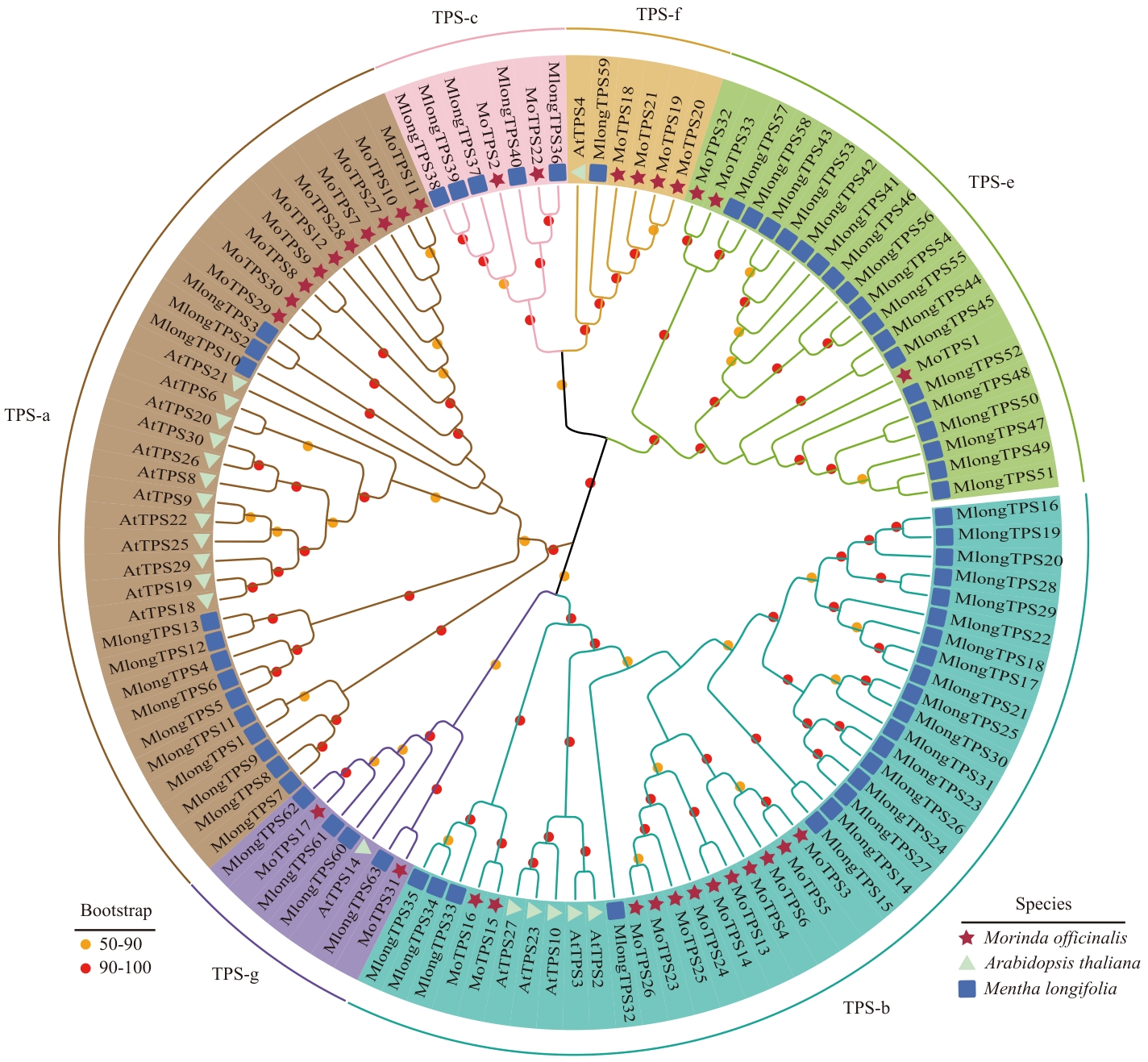
Fig. 1 Phylogenetic tree of the TPS gene family in M. officinalis, A. thaliana, and M. longifolia
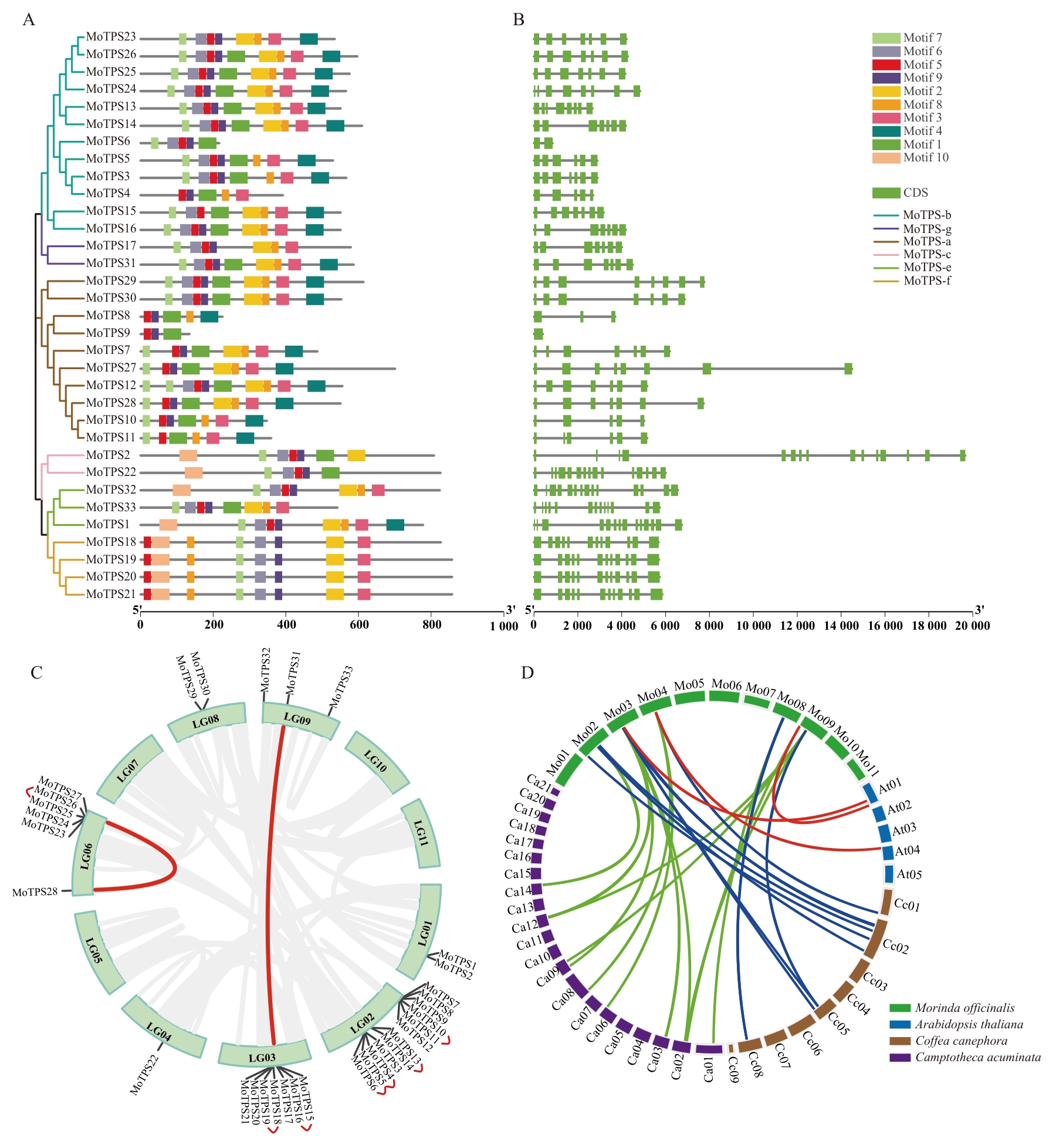
Fig. 2 Conserved motifs (A), gene structure (B), chromosomal distribution (C) of TPS gene family in M. officinalis, and collinearity analysis of TPS gene in M. officinalis, A. thaliana, C. canephora and C. acuminata (D)
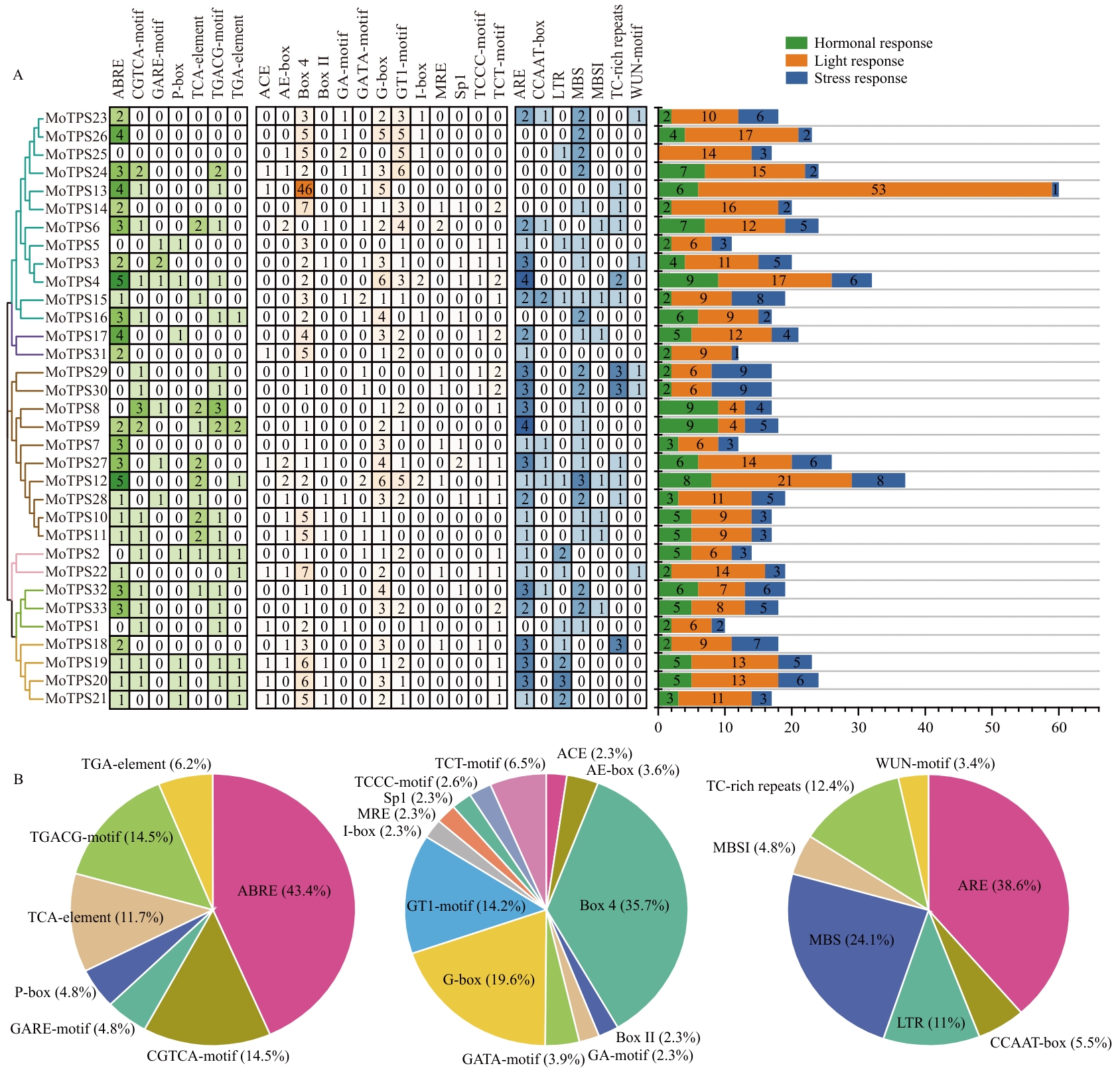
Fig. 3 Prediction of cis-acting element distribution in the promoter of TPS gene family in M. officinalis (A), and the proportion of each cis-acting element in hormone, light response, and stress response elements (B)
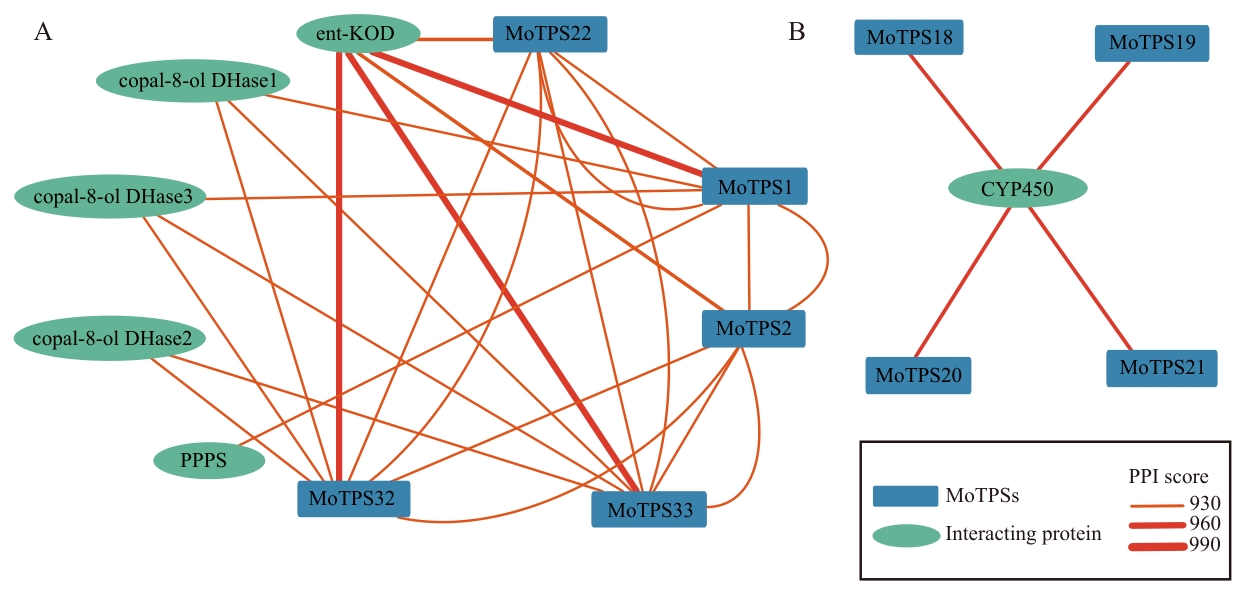
Fig. 4 Prediction and analysis of the protein-protein interaction network analysis of TPS proteins in M. officinalis
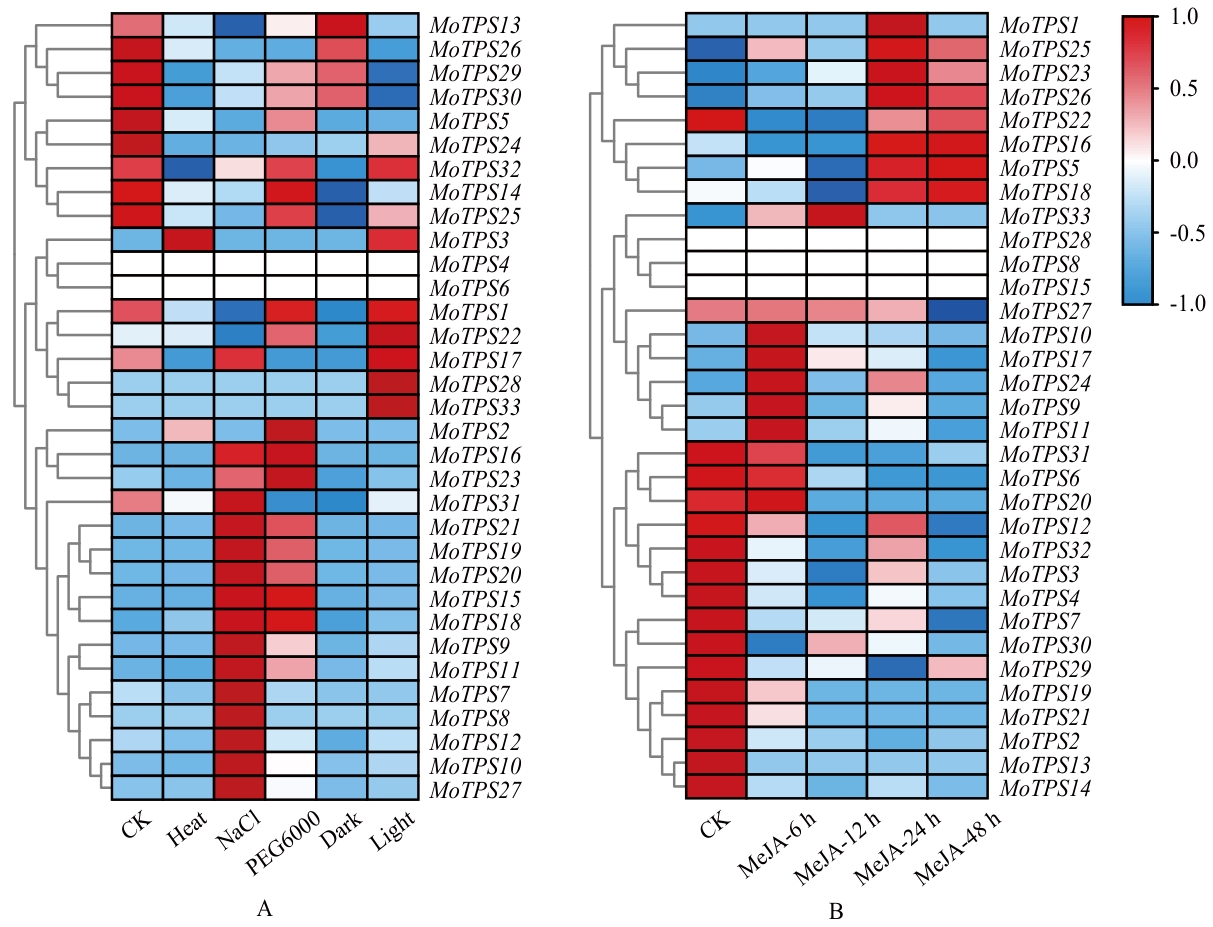
Fig. 5 Analysis of expression pattern of TPS gene family in M. officinalis under abiotic stress (A) and MeJA induction (B)
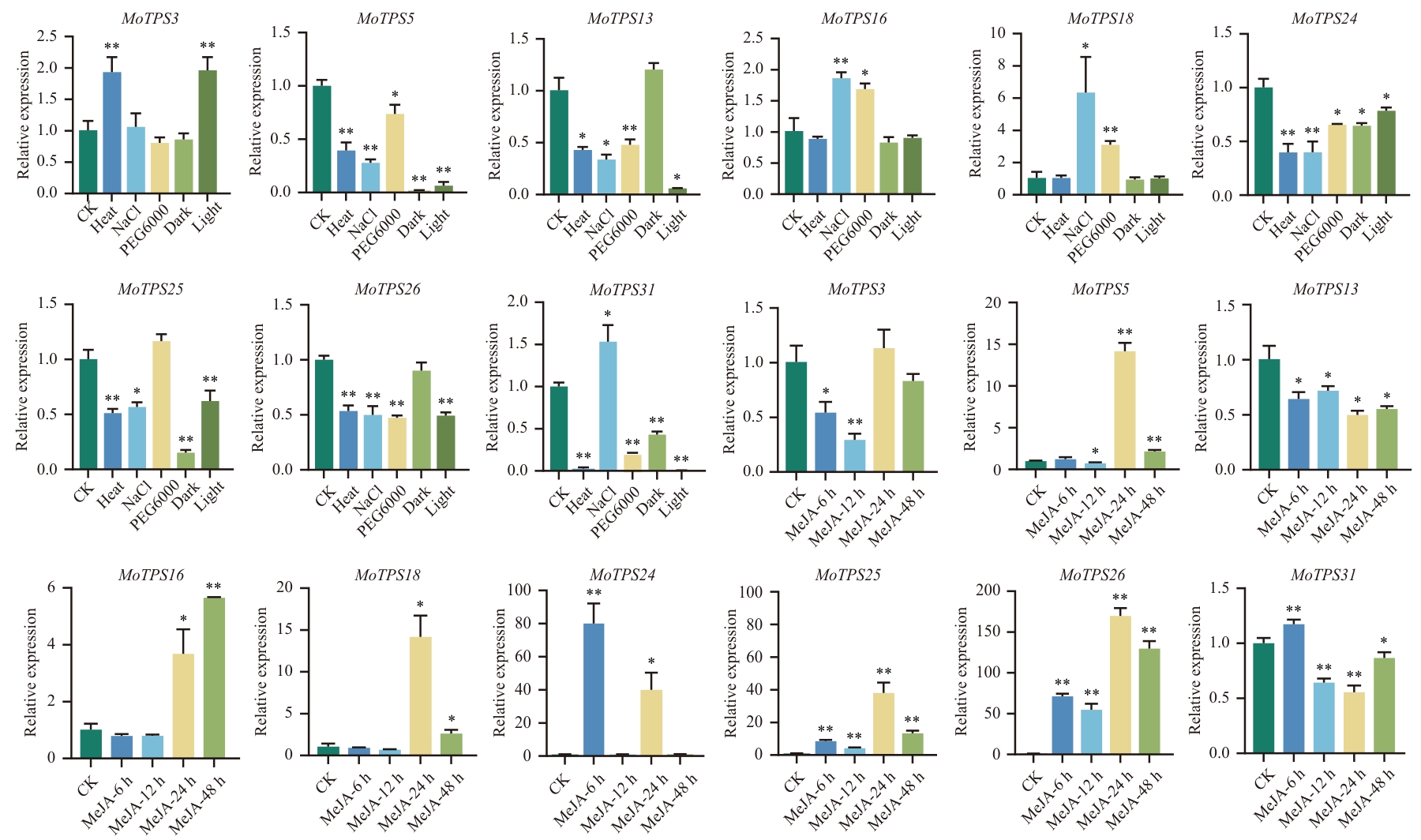
Fig. 6 Expression verification of TPS gene by RT-qPCR in M. officinalis under abiotic stress and MeJA treatment
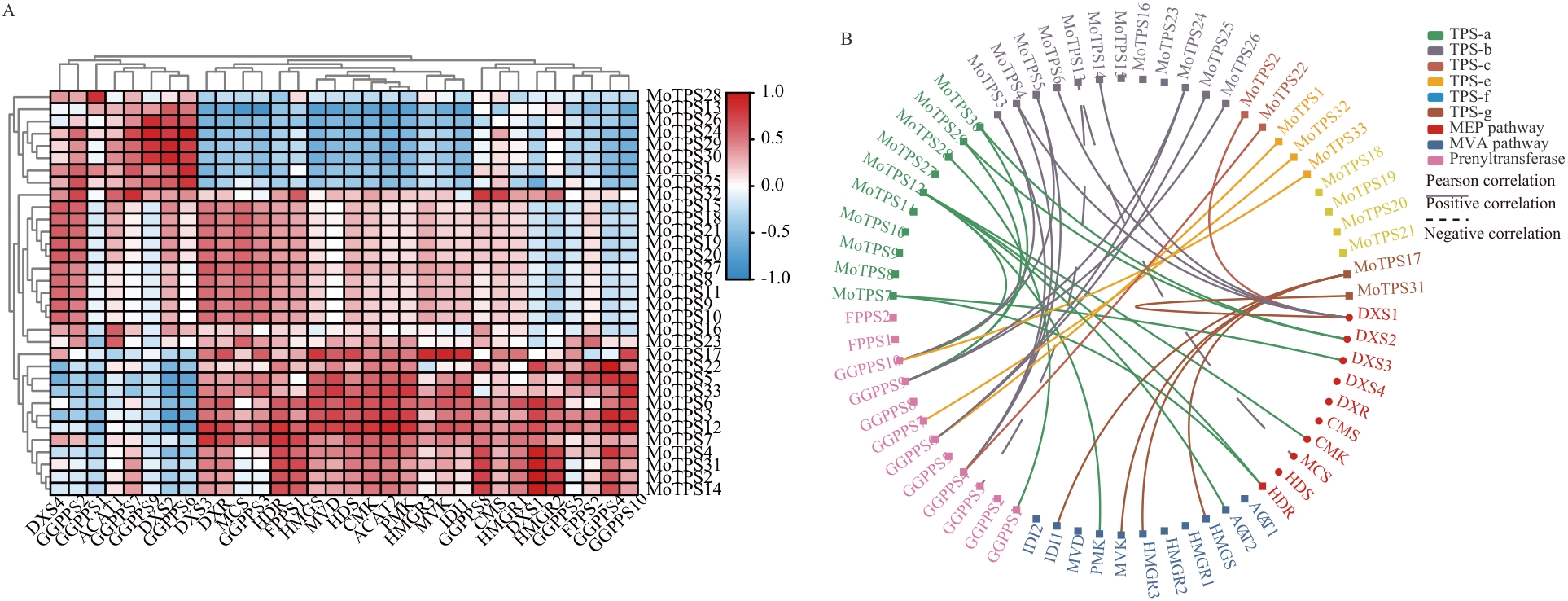
Fig. 7 Heatmap of the expression correlation between TPS family genes in M. officinalis and structure genes of terpenoid synthesis pathway (A), and correlation network diagram among some significantly correlated genes (B)
| [1] | Zhang JH, Xin HL, Xu YM, et al. Morinda officinalis How.-A comprehensive review of traditional uses, phytochemistry and pharmacology [J]. J Ethnopharmacol, 2018, 213: 230-255. |
| [2] | 沈燚, 张奇, 刘梦琴, 等. 巴戟天属植物环烯醚萜类化学成分及生物活性研究进展 [J]. 药学实践杂志, 2020, 38(2): 110-114, 119. |
| Shen Y, Zhang Q, Liu MQ, et al. Research on chemical components and biological activities of the iridoids in Morinda genus [J]. J Pharm Pract, 2020, 38(2): 110-114, 119. | |
| [3] | Chen F, Tholl D, Bohlmann J, et al. The family of terpene synthases in plants: a mid-size family of genes for specialized metabolism that is highly diversified throughout the Kingdom [J]. Plant J, 2011, 66(1): 212-229. |
| [4] | Aubourg S, Lecharny A, Bohlmann J. Genomic analysis of the terpenoid synthase (AtTPS) gene family of Arabidopsis thaliana [J]. Mol Genet Genom, 2002, 267(6): 730-745. |
| [5] | Zhou F, Pichersky E. The complete functional characterisation of the terpene synthase family in tomato [J]. New Phytol, 2020, 226(5): 1341-1360. |
| [6] | Martin DM, Aubourg S, Schouwey MB, et al. Functional annotation, genome organization and phylogeny of the grapevine (Vitis vinifera) terpene synthase gene family based on genome assembly, FLcDNA cloning, and enzyme assays [J]. BMC Plant Biol, 2010, 10(1): 226. |
| [7] | 零唯, 覃艳红, 黄鼎, 等. 绞股蓝萜类合成酶(TPS)基因家族鉴定及其在非生物胁迫下的表达分析 [J]. 中国中药杂志, 2023, 48(4): 930-938. |
| Ling W, Qin YH, Huang D, et al. Identification of terpene synthase gene family in Gynostemma pentaphyllum and expression pattern analysis under abiotic stresses [J]. China J Chin Mater Med, 2023, 48(4): 930-938. | |
| [8] | Bohlmann J, Meyer-Gauen G, Croteau R. Plant terpenoid synthases: molecular biology and phylogenetic analysis [J]. Proc Natl Acad Sci U S A, 1998, 95(8): 4126-4133. |
| [9] | Jia QD, Brown R, Köllner TG, et al. Origin and early evolution of the plant terpene synthase family [J]. Proc Natl Acad Sci U S A, 2022, 119(15): 1-9. |
| [10] | Jiang SY, Jin JJ, Sarojam R, et al. A comprehensive survey on the terpene synthase gene family provides new insight into its evolutionary patterns [J]. Genome Biol Evol, 2019, 11(8): 2078-2098. |
| [11] | 许文杰, 娄千, 陈启桢, 等. 基于全基因组的栀子花香成分合成TPS基因系统分析 [J]. 植物科学学报, 2024, 42(1): 85-95. |
| Xu WJ, Lou Q, Chen QZ, et al. Systematic analysis of TPS genes for the synthesis of floral aroma components of Gardenia jasminoides J.Ellis based on the whole genome [J]. Plant Sci J, 2024, 42(1): 85-95. | |
| [12] | 贾聪玲, 舒娟, 党静洁, 等. 荆芥萜类合成酶(TPS)基因家族鉴定与分析 [J]. 中国中药杂志, 2023, 48(22): 6039-6050. |
| Jia CL, Shu J, Dang JJ, et al. Identification and analysis of terpene synthase (TPS) gene family in Schizonepeta tenuifolia [J]. China J Chin Mater Med, 2023, 48(22): 6039-6050. | |
| [13] | 王刚, 崔媛, 李启东, 等. 忍冬TPS基因家族鉴定及其在蚜虫危害下的表达分析 [J]. 中国中药杂志, 2025, 50(8): 2116-2129. |
| Wang G, Cui Y, Li QD, et al. Identification of Lonicera japonica TPS gene family and expression analysis under aphid damage [J]. China J Chin Mater Med, 2025, 50(8): 2116-2129. | |
| [14] | 周成城, 谢德金, 叶友杰, 等. 巴戟天MoTPS基因及其启动子克隆与分析 [J]. 分子植物育种, 2021, 19(9): 2889-2898. |
| Zhou CC, Xie DJ, Ye YJ, et al. Cloning and analysis of MoTPS and its promoter in Morinda officinalis how [J]. Mol Plant Breed, 2021, 19(9): 2889-2898. | |
| [15] | Wang JH, Xu SQ, Mei Y, et al. A high-quality genome assembly of Morinda officinalis, a famous native southern herb in the Lingnan region of Southern China [J]. Hortic Res, 2021, 810.1038: s41438-21-00551-w. |
| [16] | Chen CJ, Chen H, Zhang Y, et al. TBtools: an integrative toolkit developed for interactive analyses of big biological data [J]. Mol Plant, 2020, 13(8): 1194-1202. |
| [17] | Cannon SB, Mitra A, Baumgarten A, et al. The roles of segmental and tandem gene duplication in the evolution of large gene families in Arabidopsis thaliana [J]. BMC Plant Biol, 2004, 4(1): 10. |
| [18] | Chen ZQ, Vining KJ, Qi XW, et al. Genome-wide analysis of terpene synthase gene family in Mentha longifolia and catalytic activity analysis of a single terpene synthase [J]. Genes, 2021, 12(4): 518. |
| [19] | Chen CJ, Wu Y, Li JW, et al. TBtools-II: a “one for all, all for one” bioinformatics platform for biological big-data mining [J]. Mol Plant, 2023, 16(11): 1733-1742. |
| [20] | Singh S, Chhatwal H, Pandey A. Deciphering the complexity of terpenoid biosynthesis and its multi-level regulatory mechanism in plants [J]. J Plant Growth Regul, 2024, 43(10): 3320-3336. |
| [21] | 李金燃, 张麒功, 陈丝雨, 等. 栀子TPS基因家族鉴定及与萜类物质代谢的相关性分析 [J]. 沈阳农业大学学报, 2024, 55(1): 66-78. |
| Li JR, Zhang QG, Chen SY, et al. Identification of TPS genes family in Gardenia jasminoides and its relationship with terpenoid metabolism [J]. J Shenyang Agric Univ, 2024, 55(1): 66-78. | |
| [22] | Diao S, Zhang YN, Luan QF, et al. Identification of TPS-d subfamily genes and functional characterization of three monoterpene synthases in slash pine [J]. Ind Crops Prod, 2022, 188: 115609. |
| [23] | Guo J, Zhou XT, Dai KL, et al. Comprehensive analysis of YABBY gene family in foxtail millet (Setaria italica) and functional characterization of SiDL [J]. J Integr Agric, 2022, 21(10): 2876-2887. |
| [24] | Jin KM, Zhuo RY, Xu D, et al. Genome-wide identification of the expansin gene family and its potential association with drought stress in moso bamboo [J]. Int J Mol Sci, 2020, 21(24): 9491. |
| [25] | Qiao X, Yin H, Li LT, et al. Different modes of gene duplication show divergent evolutionary patterns and contribute differently to the expansion of gene families involved in important fruit traits in pear (Pyrus bretschneideri) [J]. Front Plant Sci, 2018, 9: 161. |
| [26] | Zhang Z, Tian YL, Qiao X, et al. Integrated analysis of terpenoid profiles and full-length transcriptome reveals the central pathways of sesquiterpene biosynthesis in Atractylodes chinensis (DC.) koidz [J]. Int J Mol Sci, 2025, 26(3): 1074. |
| [27] | Valifard M, Mohsenzadeh S, Kholdebarin B, et al. Effect of salt stress on terpenoid biosynthesis in Salvia mirzayanii: from gene to metabolite [J]. J Hortic Sci Biotechnol, 2019, 94(3): 389-399. |
| [28] | Bergman ME, Dudareva N. Plant specialized metabolism: Diversity of terpene synthases and their products [J]. Curr Opin Plant Biol, 2024, 81: 102607. |
| [29] | Wang Q, Jiang J, Liang YW, et al. Expansion and functional divergence of terpene synthase genes in angiosperms: a driving force of terpene diversity [J]. Hortic Res, 2025, 12(1): uhae272. |
| [30] | Spyropoulou EA, Haring MA, Schuurink RC. RNA sequencing on Solanum lycopersicum trichomes identifies transcription factors that activate terpene synthase promoters [J]. BMC Genom, 2014, 15(1): 402. |
| [31] | Nieuwenhuizen NJ, Chen XY, Wang MY, et al. Natural variation in monoterpene synthesis in kiwifruit: transcriptional regulation of terpene synthases by NAC and ETHYLENE-INSENSITIVE3-like transcription factors [J]. Plant Physiol, 2015, 167(4): 1243-1258. |
| [1] | XIONG Shi-fa, CHEN Yi-cun, WU Li-wen, SHI Xiang, ZHANG Sheng-jiao, PENG Fang-you, CHEN Tao-mei, WANG Yang-dong. Identification and Functional Analysis of the TCP Gene Family in Quercus fabri [J]. Biotechnology Bulletin, 2026, 42(6): 258-266. |
| [2] | MENG Hong-yu, LIU Ya-nan, WU Jun-xin, SHEN Qiong. Identification and Analysis of the NAC Transcription Factors Gene Family in Cucurbita moschata Duch. [J]. Biotechnology Bulletin, 2026, 42(6): 237-249. |
| [3] | GUO Miao, XU Jia-jia, SUN Tian-guo, CAI Can, CAO Wan-di, BAO Ji-xing, SHA Wei, ZHANG Mei-juan, PENG Yi-fang, MA Tian-yi. Overexpression of RcOLEO1 Enhanced the Tolerance of Arabidopsis thaliana toDrought and High-temperature Stress [J]. Biotechnology Bulletin, 2026, 42(5): 312-322. |
| [4] | LIANG Hui-qi, CHEN Yi-cun, WANG Yang-dong, ZHAO Yun-xiao, GAO Ming. Identification and Expression Analysis of the PAT1 Gene Subfamily in Litsea cubeba during Graft Union Healing [J]. Biotechnology Bulletin, 2026, 42(5): 302-311. |
| [5] | ZHANG Xin, CHEN Cheng, HUO Yuan-Bo, HUANG Ren-Li, ZHANG Li, ZHANG Kai, TONG Hua-rong, YUAN Lian-Yu. Cloning of the CsCRD1 in Tea Plants and Its Impact on Chlorophyll Biosynthesis [J]. Biotechnology Bulletin, 2026, 42(5): 280-291. |
| [6] | CHEN Deng-ke, LAN Gang, XIA Zhi, HOU Bao-guo, YANG Liu-liu, CAO Cai-rong, LI Peng-bo, WU Cui-cui. Identification of ZF-HD Gene Family in Arachis hypogaea and Analysis in Response to Abiotic Stress [J]. Biotechnology Bulletin, 2026, 42(4): 114-128. |
| [7] | FENG Cheng-hao, DANG Yu-le, WANG Zhi-ze, NIE Wei-dan, YANG Zhong-min, DU Chong. Screening of Differentially Expressed Genes in Tomato Defense against Meloidogyne incognita Based on RNA-seq and Expression Characteristics Analysis of RPP13 Gene [J]. Biotechnology Bulletin, 2026, 42(4): 141-152. |
| [8] | NI Fei-fei, CHEN Yi-cun, GAO Ming, ZHANG Sheng-jiao, PENG Fang-you, CHEN Tao-mei, ZHAO Yun-xiao, WANG Yang-dong. Identification of Litsea cubebaTCP Genes and Their Roles in the Regulation of Terpenoid Biosynthesis [J]. Biotechnology Bulletin, 2026, 42(4): 227-238. |
| [9] | SU Yan-zhu, LI Da, ZHANG Ai-ai, LIU Yong-guang, ZHANG Xiu-rong, XUE Qi-qin. Identification and Expression Analysis of CAD Gene Family in Soybean(Glycine max (L.) Merr.) [J]. Biotechnology Bulletin, 2026, 42(4): 101-113. |
| [10] | SUN Ting, ZHANG Yan, LIU Yu-shan, FENG Yuan-yuan, QIN Heng-shan, ZHANG Jun, HE Xiao-gang, ZHANG Jing-rong. Cloning and Functional Analysis of AeF3H Gene in Okra [J]. Biotechnology Bulletin, 2026, 42(4): 153-160. |
| [11] | CUI Zhi-han, WEI Qing-zhen, HU Na, BAO Chong-lai, WANG Hua-sen. Research Progress in IQD Genes in Horticultural Crops [J]. Biotechnology Bulletin, 2026, 42(3): 230-241. |
| [12] | ZHANG Gao-xiang, WU Yu-bi, GUO Ya-jing, JI Wei, YANG Zhong-yi. Identification and Expression Analysis of WD40 Gene Family in Grape [J]. Biotechnology Bulletin, 2026, 42(3): 324-337. |
| [13] | YIN Yue, QIN Xiao-ya, MI Jia, AN Wei, HE Jun, ZHANG Feng-feng. Identification of FBN Gene Family and Its Relationship with Carotenoids Metabolism in Lyciumbarbarum [J]. Biotechnology Bulletin, 2026, 42(3): 338-348. |
| [14] | LI Tian-yuan, QI Xin-liang, LIU Shan, ZHANG Jian-cheng, WANG Peng-fei, ZHANG Shuai, JIA Lu-ting, MU Xiao-peng. Identification of Cerasus humilisSPL Gene Family and Expression Analysis during Fruit Development [J]. Biotechnology Bulletin, 2026, 42(3): 362-373. |
| [15] | XU Ze, ZHOU Chen-ping, KUANG Rui-bin, WU Xia-ming, YANG Min, LIU Chuan-he, HE Han, WEI Yue-rong. Identification of PG Gene Family and Their Roles in Papaya Fruit Softening [J]. Biotechnology Bulletin, 2026, 42(3): 349-361. |
| Viewed | ||||||
|
Full text |
|
|||||
|
Abstract |
|
|||||
