







Biotechnology Bulletin ›› 2026, Vol. 42 ›› Issue (5): 280-291.doi: 10.13560/j.cnki.biotech.bull.1985.2025-1048
ZHANG Xin1( ), CHEN Cheng1, HUO Yuan-Bo1, HUANG Ren-Li1, ZHANG Li1, ZHANG Kai2, TONG Hua-rong1, YUAN Lian-Yu1()
Received:2025-09-29
Online:2026-05-26
Published:2026-06-10
Contact:
YUAN Lian-Yu
E-mail:15085472240@163.com;yuanlianyu88@163.com
ZHANG Xin, CHEN Cheng, HUO Yuan-Bo, HUANG Ren-Li, ZHANG Li, ZHANG Kai, TONG Hua-rong, YUAN Lian-Yu. Cloning of the CsCRD1 in Tea Plants and Its Impact on Chlorophyll Biosynthesis[J]. Biotechnology Bulletin, 2026, 42(5): 280-291.
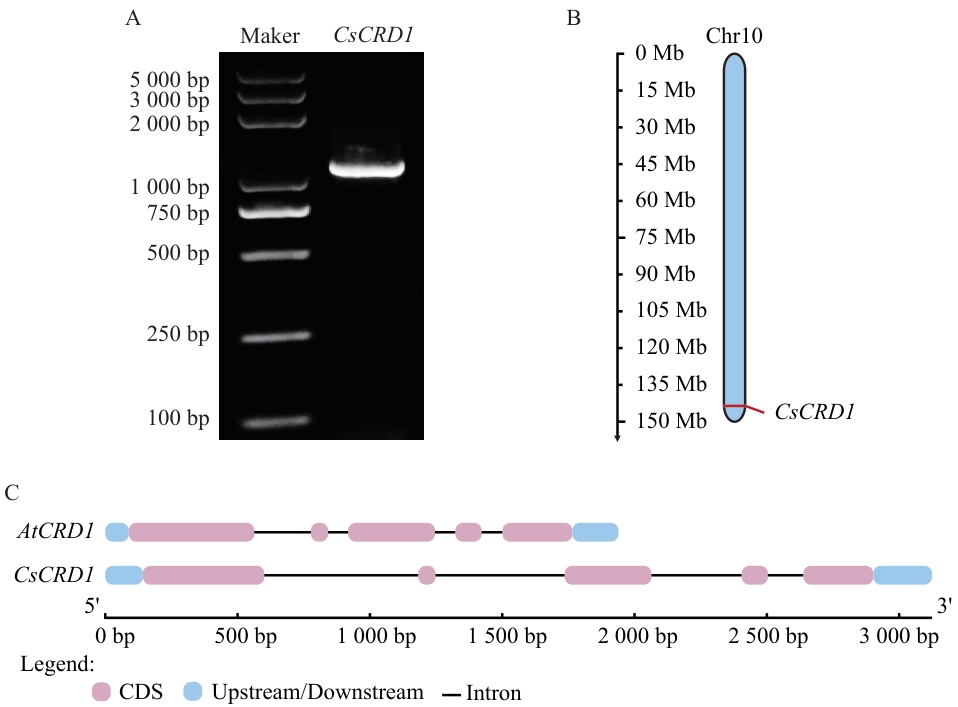
Fig. 1 Cloning and characterization analysis of CsCRD1 gene in tea plantA: Agarose gel electrophoresis image of the CsCRD1 gene. B: Chromosomal localization of CsCRD1 gene. C: Gene structural analysis of CsCRD1

Fig. 2 Analysis of phylogenetic tree of CRD1 proteins and its sequence characteristics in plantA: Phylogenetic tree of CRD1 proteins in plant. The CRD1 homologous proteins used to construct the phylogenetic tree come from tea plant (Camellia sinensis, CsCRD1), Arabidopsis (Arabidopsis thaliana, AtCRD1), tomato (Solanum lycopersicum, Solyc10T002193), corn (Zea mays, Zm00001d040463), rice (Oryza sativa, LOC_Os02g46700), cotton (Gossypium darwinii, Godar.D01G235000), mustard (Brassica juncea, Carub.0005s2368), arugula (Eruca vesicaria, Eruve.0383s0052), poplar (Populus trichocarpa, Potri.006G027300), grape (Vitis vinifera, VIT_208s0040g00390), cucumber (Cucumis sativus, Cucsa.059080), sweet orange (Citrus sinensis, orange1.1g014877m), pecan (Carya illinoinensis Pawnee, CiPaw.09G162600), clementine (Citrus clementina, Ciclev10011842m), and Miscanthus (Miscanthus, Misin06G112500). B: Conserved motifs of CRD1 proteins in plant. C: The schematic representation for conserved structural domains of CRD1 proteins in plant. D: Amino acid multiple sequence alignment of CRD1 proteins in plant. Blue-black: Amino acid identity is 100%. Pink: Amino acid identity is 75%. Blue: amino acid identity is 50%. ▬ indicates predicted the typical conserved domain Rubreythin of CRD1 protein in plants
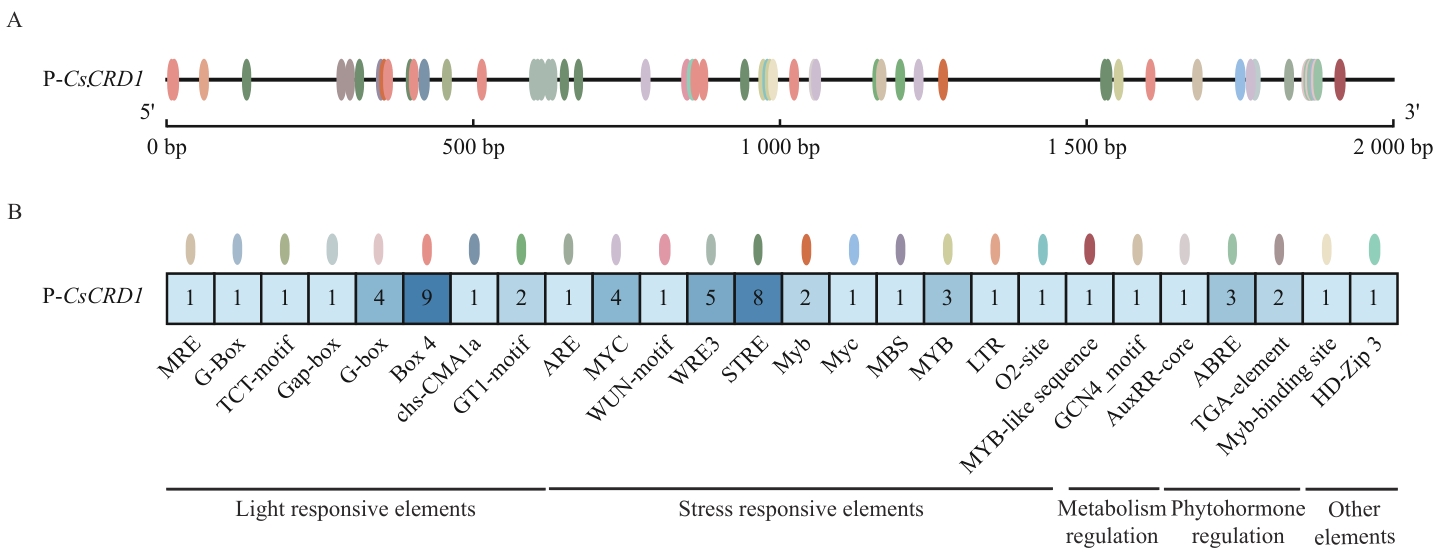
Fig. 3 Analysis of cis-acting elements in the promoters of gene CsCRD1 in tea plantA: Distribution of cis-acting elements in the promoter. B: Quantity of cis-acting elements in the promoter
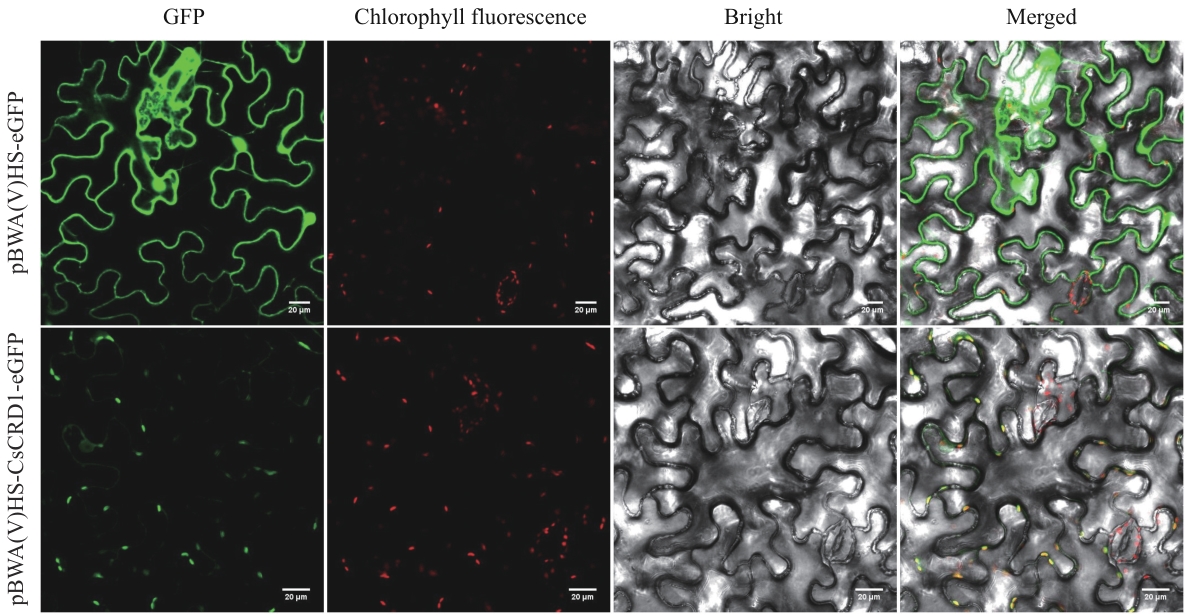
Fig. 4 Subcellular localization of CsCRD1 protein in tea plantGFP: Green fluorescent signal. Chlorophyll fluorescence: chloroplast autofluorescence. Bright: Bright field. Merged: Signal merge
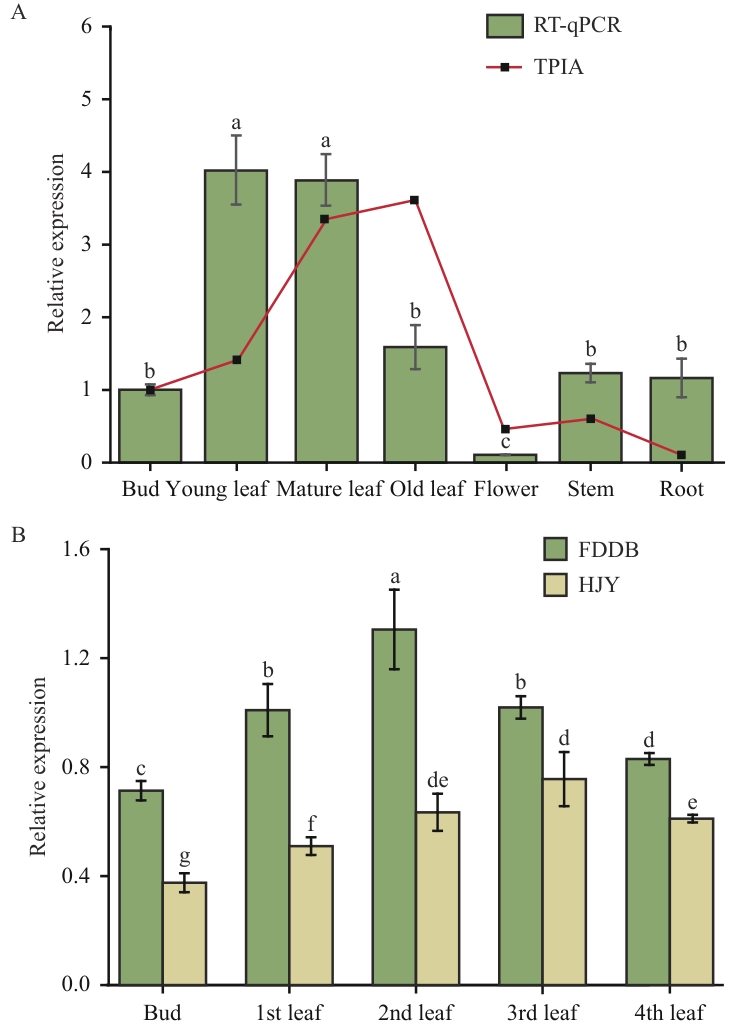
Fig. 5 Analysis of tissue-specific expression of CsCRD1 gene in tea plantA: Relative expression of the CsCRD1 gene in different tissues of the tea plant. B: Relative expression of the CsCRD1 gene in different leaf development stages of leaves from ‘Fudingdabaicha’ (FDDB) and ‘Huangjinye’ (HJY). Different lowercase letters indicate significant differences at P<0.05 level (One-way ANOVA with Tukey’s post hoc test). The same below
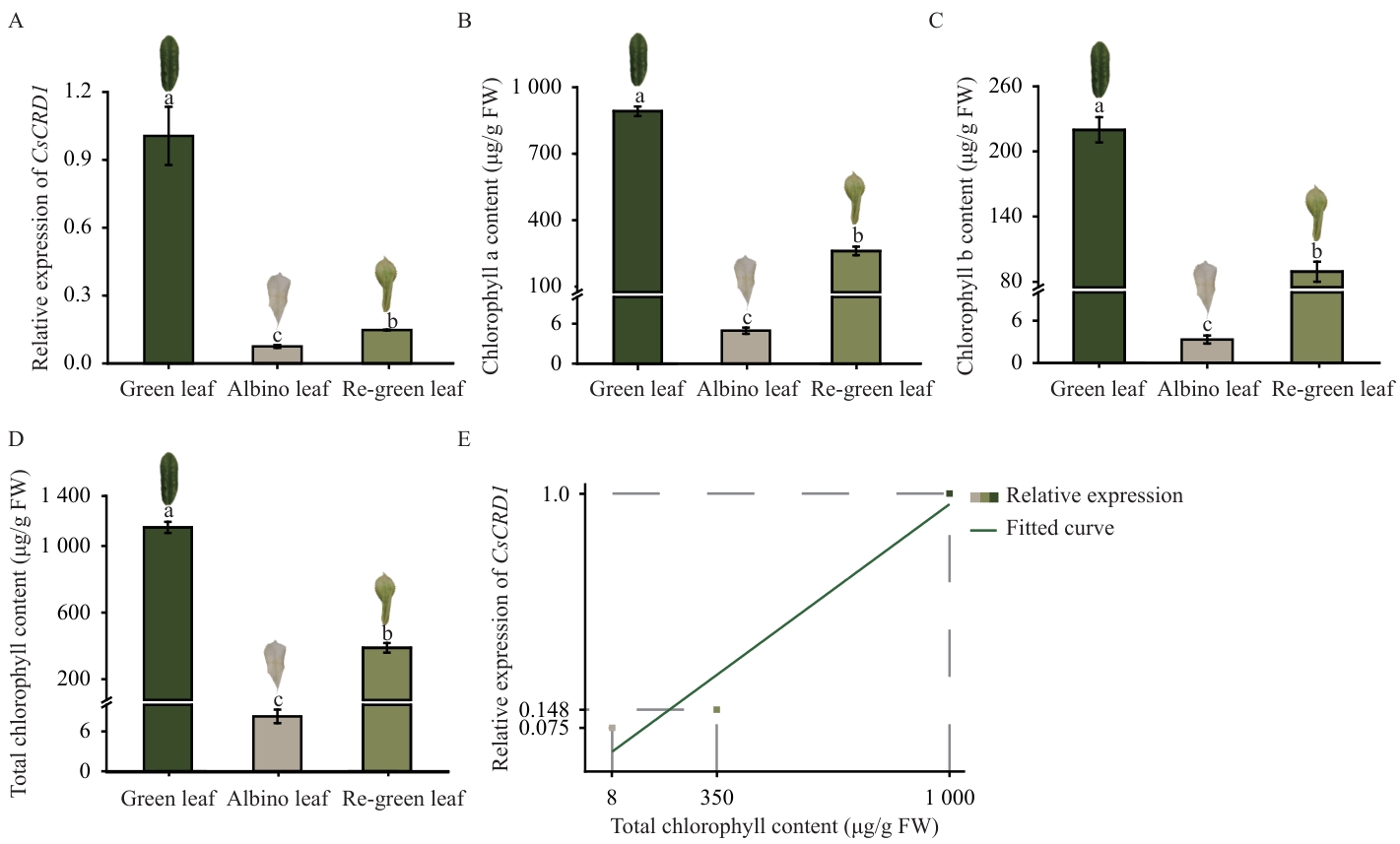
Fig. 6 Expression analysis of the CsCRD1 gene during the leaf color change process in tea plantsA: Relative expression of the CsCRD1 gene. B: Chlorophyll a content. C: Chlorophyll b content. D: Total chlorophyll content. E: Correlation analysis between total chlorophyll content and the relative expression of the CsCRD1 gene
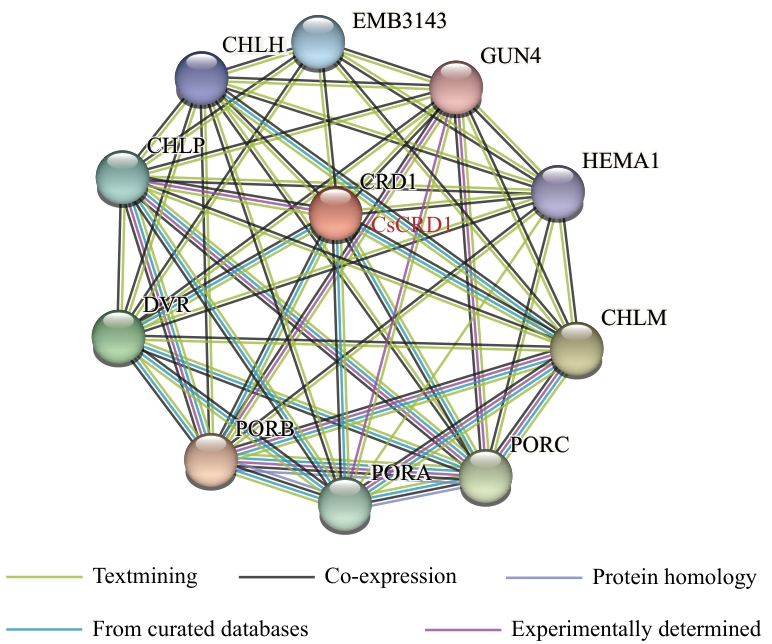
Fig. 7 Interacting network analysis of CsCRD1 protein in tea plant
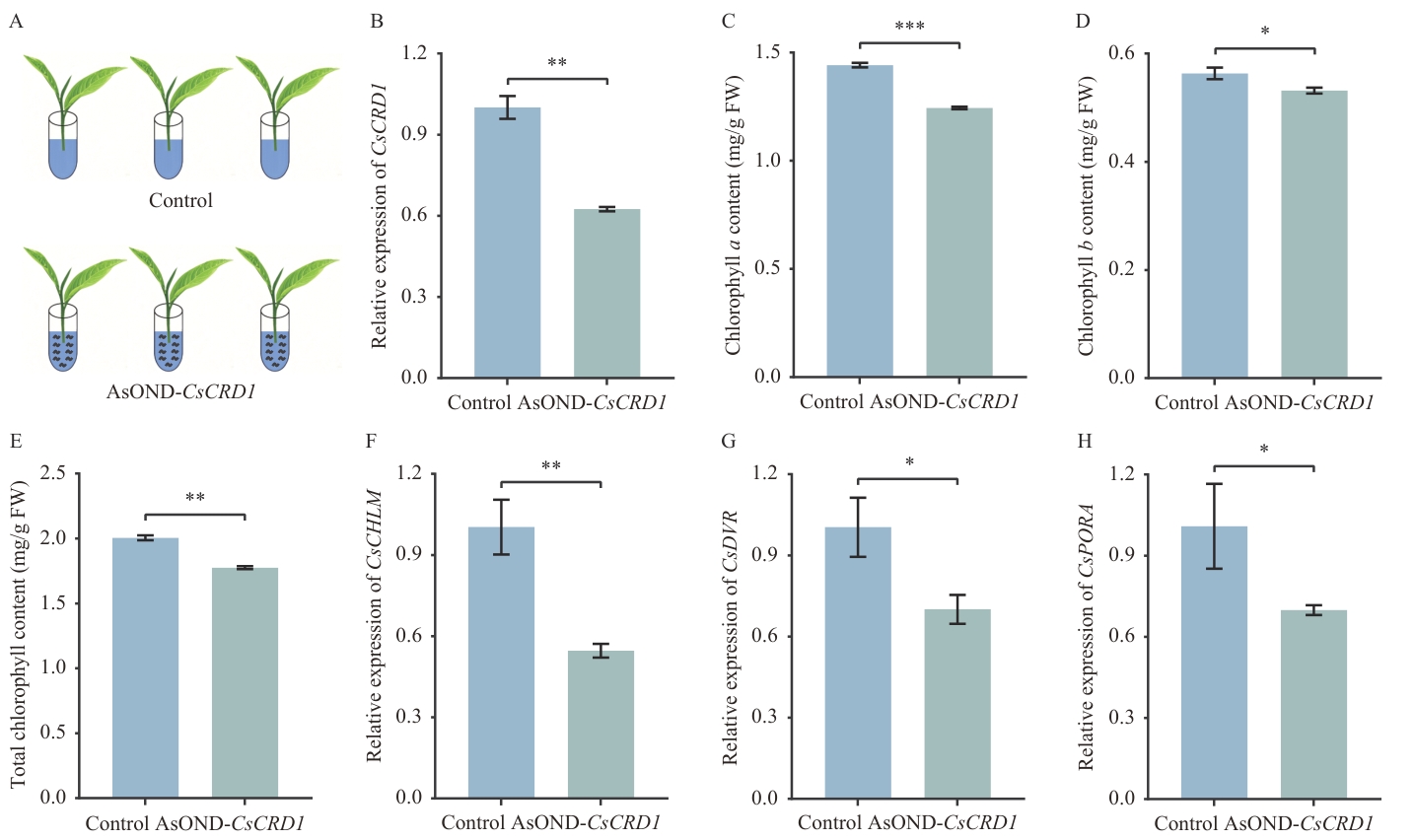
Fig. 8 Analysis of the impact of CsCRD1 gene silencing on chlorophyll biosynthesis in tea plantsA: Schematic diagram of CsCRD1 gene AsODN silencing. B: Relative expression of the CsCRD1 gene after AsODNs-CsCRD1 silencing. C‒E: Changes in chlorophyll content after CsCRD1 gene silencing. F‒H: Relative expressions of chlorophyll biosynthesis-related genes after CsCRD1 gene silencing. *, ** and *** indicate the significances of P<0.05, P<0.01, and P<0.001, respectively (one-way ANOVA with Tukey’s post hoc test)
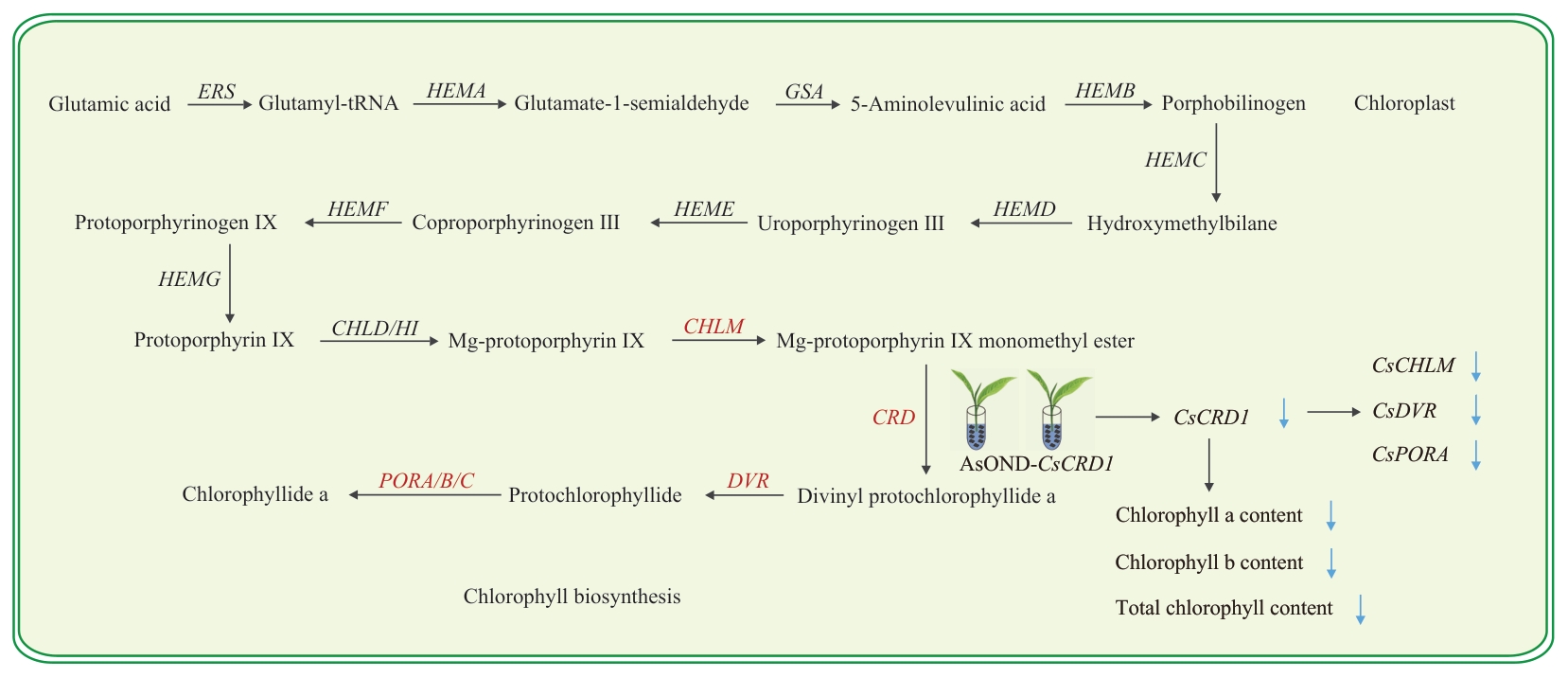
Fig. 9 Effects of CsCRD1 gene on chlorophyll biosynthesis in tea plants
| [1] | 王开荣. 白化茶种质资源综合性状研究 [D]. 杭州: 浙江大学, 2006. |
| Wang KR. The research on the comprehensive characters of albino tea as germplasm resources [D]. Hangzhou: Zhejiang University, 2006. | |
| [2] | Cai WH, Zheng XQ, Liang YR. High-light-induced degradation of photosystem Ⅱ subunits’ involvement in the albino phenotype in tea plants [J]. Int J Mol Sci, 2022, 23(15): 8522. |
| [3] | Xiong JY, Wen GP, Song J, et al. Knockout of the chlorophyll a oxygenase gene OsCAO1 reduces chilling tolerance in rice seedlings [J]. Genes, 2024, 15(6): 721. |
| [4] | Ye JJ, Lin XY, Yang ZX, et al. The light-harvesting chlorophyll a/b-binding proteins of photosystem Ⅱ family members are responsible for temperature sensitivity and leaf color phenotype in albino tea plant [J]. J Adv Res, 2024, 66: 87-104. |
| [5] | Li CF, Ma JQ, Huang DJ, et al. Comprehensive dissection of metabolic changes in albino and green tea cultivars [J]. J Agric Food Chem, 2018, 66(8): 2040-2048. |
| [6] | Zhang CY, Wang MH, Gao XZ, et al. Multi-omics research in albino tea plants: Past, present, and future [J]. Sci Hortic, 2020, 261: 108943. |
| [7] | Kumari M, Clarke HJ, Small I, et al. Albinism in plants: a major bottleneck in wide hybridization, androgenesis and doubled haploid culture [J]. Crit Rev Plant Sci, 2009, 28(6): 393-409. |
| [8] | 史琳, 陈彦. 植物白化基因的作用机制与研究进展 [J]. 安徽农业科学, 2017, 45(12): 132-135. |
| Shi L, Chen Y. Function mechanism and research progress of plant albino gene [J]. J Anhui Agric Sci, 2017, 45(12): 132-135. | |
| [9] | Fan YG, Zhao XX, Wang HY, et al. Effects of light intensity on metabolism of light-harvesting pigment and photosynthetic system in Camellia sinensis L. cultivar ‘Huangjinya’ [J]. Environ Exp Bot, 2019, 166: 103796. |
| [10] | Tian YY, Wang HY, Zhang ZQ, et al. An Rna-seq analysis reveals differential transcriptional responses to different light qualities in leaf color of Camellia sinensis cv. huangjinya [J]. J Plant Growth Regul, 2022, 41(2): 612-627. |
| [11] | Ma CL, Chen L, Wang XC, et al. Differential expression analysis of different albescent stages of ‘Anji Baicha’ (Camellia sinensis (L.) O. Kuntze) using cDNA microarray [J]. Sci Hortic, 2012, 148: 246-254. |
| [12] | Chen XF, Li JJ, Yu Y, et al. STAY-GREEN and light-harvesting complex Ⅱ chlorophyll a/b binding protein are involved in albinism of a novel albino tea germplasm ‘Huabai 1’ [J]. Sci Hortic, 2022, 293: 110653. |
| [13] | Wu ZJ, Liu KY, Zhang X, et al. CsNYC1a mediates chlorophyll degradation and albino trait formation in the Arbor-type tea plant Camellia nanchuanica [J]. J Agric Food Chem, 2024, 72(24): 14087-14098. |
| [14] | Liu WM, Liu SY, Zhang KY, et al. Chlorophyllase is transcriptionally regulated by CsMYB308/CsDOF3 in young leaves of tea plant [J]. Hortic Plant J, 2023, 9(6): 1162-1176. |
| [15] | Liu XY, Cheng X, Cao JJ, et al. GOLDEN 2-LIKE transcription factors regulate chlorophyll biosynthesis and flavonoid accumulation in response to UV-B in tea plants [J]. Hortic Plant J, 2023, 9(5): 1055-1066. |
| [16] | Zhang CY, Liu HR, Wang JY, et al. A key mutation in magnesium chelatase I subunit leads to a chlorophyll-deficient mutant of tea (Camellia sinensis) [J]. J Exp Bot, 2024, 75(3): 935-946. |
| [17] | Zhang XN, Tong JW, Wen BB, et al. The phytochrome-interacting factor CsPIF3a positively regulates chlorophyll biosynthesis in tea plants (Camellia sinensis) [J]. Plant Physiol Biochem, 2025, 229: 110419. |
| [18] | Liu XY, Cheng X, Cao JJ, et al. UV-B regulates seasonal greening of albino leaves by modulating CsHY5-inhibiting chlorophyll biosynthesis in Camellia sinensis cv. Huangkui [J]. Plant Sci, 2023, 328: 111569. |
| [19] | Stenbaek A, Jensen PE. Redox regulation of chlorophyll biosynthesis [J]. Phytochemistry, 2010, 71(8/9): 853-859. |
| [20] | Xue YJ, Dong HX, Huang HR, et al. Mutation in Mg-protoporphyrin Ⅸ monomethyl ester (oxidative) cyclase gene ZmCRD1 causes chlorophyll-deficiency in maize [J]. Front Plant Sci, 2022, 13: 912215. |
| [21] | Kong WY, Yu XW, Chen HY, et al. The catalytic subunit of magnesium-protoporphyrin Ⅸ monomethyl ester cyclase forms a chloroplast complex to regulate chlorophyll biosynthesis in rice [J]. Plant Mol Biol, 2016, 92(1/2): 177-191. |
| [22] | Wang XX, Huang RF, Quan RD. Mutation in Mg-protoporphyrin Ⅸ monomethyl ester cyclase decreases photosynthesis capacity in rice [J]. PLoS One, 2017, 12(1): e0171118. |
| [23] | Li CY, Hu SY, Yang WT, et al. Conversion obstacle from Mg-protoporphyrin Ⅸ to protochlorophyllide might be responsible for chlorophyll-deficient phenotype of the Huangjinya’s albino offspring [J]. Plant Physiol Biochem, 2024, 212: 108778. |
| [24] | Wu ZJ, Tian C, Jiang Q, et al. Selection of suitable reference genes for qRT-PCR normalization during leaf development and hormonal stimuli in tea plant (Camellia sinensis) [J]. Sci Rep, 2016, 6: 19748. |
| [25] | Pfaffl MW. A new mathematical model for relative quantification in real-time RT-PCR [J]. Nucleic Acids Res, 2001, 29(9): e45. |
| [26] | Chazaux M, Schiphorst C, Lazzari G, et al. Precise estimation of chlorophyll a, b and carotenoid content by deconvolution of the absorption spectrum and new simultaneous equations for Chl determination [J]. Plant J, 2022, 109(6): 1630-1648. |
| [27] | Tang QH, Liu KY, Yue C, et al. CsXDH1 gene promotes caffeine catabolism induced by continuous strong light in tea plant [J]. Hortic Res, 2023, 10(6): uhad090. |
| [28] | Yamatani H, Ito T, Nishimura K, et al. Genetic analysis of chlorophyll synthesis and degradation regulated by BALANCE of CHLOROPHYLL METABOLISM [J]. Plant Physiol, 2022, 189(1): 419-432. |
| [29] | Eckhardt U, Grimm B, Hörtensteiner S. Recent advances in chlorophyll biosynthesis and breakdown in higher plants [J]. Plant Mol Biol, 2004, 56(1): 1-14. |
| [30] | Tripathy BC, Pattanayak GK. Chlorophyll biosynthesis in higher plants [M]//Photosynthesis. Dordrecht: Springer Netherlands, 2011: 63-94. |
| [31] | Gadjieva R, Axelsson E, Olsson U, et al. Analysis of Gun phenotype in barley magnesium chelatase and Mg-protoporphyrin Ⅸ monomethyl ester cyclase mutants [J]. Plant Physiol Biochem, 2005, 43(10/11): 901-908. |
| [32] | Yamanashi K, Minamizaki K, Fujita Y. Identification of the chlE gene encoding oxygen-independent Mg-protoporphyrin Ⅸ monomethyl ester cyclase in cyanobacteria [J]. Biochem Biophys Res Commun, 2015, 463(4): 1328-1333. |
| [33] | Luo J, Wang H, Chen SJ, et al. CmNAC73 mediates the formation of green color in Chrysanthemum flowers by directly activating the expression of chlorophyll biosynthesis genes HEMA1 and CRD1 [J]. Genes, 2021, 12(5): 704. |
| [34] | Tottey S, Block MA, Allen M, et al. Arabidopsis CHL27, located in both envelope and thylakoid membranes, is required for the synthesis of protochlorophyllide [J]. Proc Natl Acad Sci USA, 2003, 100(26): 16119-16124. |
| [35] | Li C, Ma FR, Jiao RJ, et al. Mutation in Mg-protoporphyrin Ⅸ monomethyl ester cyclase causes yellow and spotted leaf phenotype in rice [J]. Plant Mol Biol Report, 2019, 37(4): 253-264. |
| [1] | SUN Ting, ZHANG Yan, LIU Yu-shan, FENG Yuan-yuan, QIN Heng-shan, ZHANG Jun, HE Xiao-gang, ZHANG Jing-rong. Cloning and Functional Analysis of AeF3H Gene in Okra [J]. Biotechnology Bulletin, 2026, 42(4): 153-160. |
| [2] | XU Meng-ge, SONG Huo-yan, LUO Jia, SU Yi, ZHOU Hui-wen, WANG Can, KONG Ke-ke. Expression Analysis and Interaction Protein Screening of GmRLK19 in Soybean [J]. Biotechnology Bulletin, 2026, 42(4): 92-100. |
| [3] | SU Yan-zhu, LI Da, ZHANG Ai-ai, LIU Yong-guang, ZHANG Xiu-rong, XUE Qi-qin. Identification and Expression Analysis of CAD Gene Family in Soybean(Glycine max (L.) Merr.) [J]. Biotechnology Bulletin, 2026, 42(4): 101-113. |
| [4] | LIU Qing-yuan, WU Hong-qi, CHEN Xiu-e, CHEN Jian, JIANG Yuan-ze, HE Yan-zi, YU Qi-wei, LIU Ren-xiang. Function of Transcription Factor NtMYB96a in Regulating the Tolerance of Tobacco to Drought [J]. Biotechnology Bulletin, 2026, 42(4): 239-250. |
| [5] | CHEN Deng-ke, LAN Gang, XIA Zhi, HOU Bao-guo, YANG Liu-liu, CAO Cai-rong, LI Peng-bo, WU Cui-cui. Identification of ZF-HD Gene Family in Arachis hypogaea and Analysis in Response to Abiotic Stress [J]. Biotechnology Bulletin, 2026, 42(4): 114-128. |
| [6] | ZHANG Gao-xiang, WU Yu-bi, GUO Ya-jing, JI Wei, YANG Zhong-yi. Identification and Expression Analysis of WD40 Gene Family in Grape [J]. Biotechnology Bulletin, 2026, 42(3): 324-337. |
| [7] | LIU Lin-ya, LIU Huan-yan, LIANG Xin-yu, SONG Shu-yi, HE Bin, WANG Xu-ying, HUANG Ya-cheng. Genome-wide Identification and Expression Analysis of BGAL Gene Family in Actinidiachinensis var. Hongyang [J]. Biotechnology Bulletin, 2026, 42(3): 312-323. |
| [8] | LI Tian-yuan, QI Xin-liang, LIU Shan, ZHANG Jian-cheng, WANG Peng-fei, ZHANG Shuai, JIA Lu-ting, MU Xiao-peng. Identification of Cerasus humilisSPL Gene Family and Expression Analysis during Fruit Development [J]. Biotechnology Bulletin, 2026, 42(3): 362-373. |
| [9] | YIN Yue, QIN Xiao-ya, MI Jia, AN Wei, HE Jun, ZHANG Feng-feng. Identification of FBN Gene Family and Its Relationship with Carotenoids Metabolism in Lyciumbarbarum [J]. Biotechnology Bulletin, 2026, 42(3): 338-348. |
| [10] | YANG Zi-han, LI Kui-xiu, LI Jun-liang, LYU Wen-hui, HE Wen-ting, LIU Xu-yan, LIU Guan-ze. Identification and Expression Analysis of the RALF Gene Family in Panax notoginseng [J]. Biotechnology Bulletin, 2026, 42(2): 278-292. |
| [11] | LIU Meng-ru, XIA Lin, LIU Rui-xia, YAN Xin-ke, YANG Jun, ZHANG Jing-hua, WU Ming-zhu. Cloning and Functional Analysis of Tobacco Polyphenol Oxidase NtPPO1-2 Gene [J]. Biotechnology Bulletin, 2026, 42(2): 218-227. |
| [12] | REN Yun-er, WU Guo-qiang, CHENG Bin, WEI Ming. Genome-wide Identification of the BvATGs Genes Family in Sugar Beet (Beta vulgaris L.) and Analysis of Their Expression Pattern under Salt Stress [J]. Biotechnology Bulletin, 2026, 42(1): 184-197. |
| [13] | YANG Yue-qin, XING Ying, ZHONG Zi-he, TIAN Wei-jun, YANG Xue-qing, WANG Jian-xu. Expression and Functional Analysis of OsMATE34 in Rice under Mercury Stress [J]. Biotechnology Bulletin, 2026, 42(1): 86-94. |
| [14] | YANG Juan, FENG Hui, JI Nai-zhe, SUN Li-ping, WANG Yun, ZHANG Jia-nan, ZHAO Shi-wei. Cloning and Functional Analysis of AP2/ERF Transcription Factors RcERF4 and RcRAP2-12 in Rose [J]. Biotechnology Bulletin, 2026, 42(1): 150-160. |
| [15] | WU Cui-cui, CHEN Deng-ke, LAN Gang, XIA Zhi, LI Peng-bo. Bioinformatics Analysis of Peanut Transcription Factor AhHDZ70 and Its Tolerances to Salt and Drought [J]. Biotechnology Bulletin, 2026, 42(1): 198-207. |
| Viewed | ||||||
|
Full text |
|
|||||
|
Abstract |
|
|||||
