







Biotechnology Bulletin ›› 2026, Vol. 42 ›› Issue (6): 87-97.doi: 10.13560/j.cnki.biotech.bull.1985.2025-1016
Previous Articles Next Articles
ZHAO Wen-juan, LI Hui, YANG Xue-ying, WANG Zhao-lu, ZHU Jian-bo( )
)
Received:2025-09-23
Online:2026-06-26
Published:2026-07-11
Contact:
ZHU Jian-bo
E-mail:zjbshz@162.com
ZHAO Wen-juan, LI Hui, YANG Xue-ying, WANG Zhao-lu, ZHU Jian-bo. Establishment of a Genetic Transformation System for Potato ‘Xinjiang No. 2’[J]. Biotechnology Bulletin, 2026, 42(6): 87-97.
试验编号 Test number | 6-苄氨基嘌呤 6-Benzylaminopurine(6-BA) | 2,4-二氯苯氧乙酸 2,4-Dichlorophenoxyacetic acid (2,4-D) | 萘乙酸 1-Naphthaleneacetic acid (NAA) | 3-吲哚乙酸 Indole-3-acetic acid (IAA) | 6-糠氨基嘌呤 Kinetin (KT) | 玉米素核苷 Zeatin riboside (ZR) |
|---|---|---|---|---|---|---|
| C1 | 2.0 | 0 | 0.6 | 0 | 0 | 0 |
| C2 | 2.0 | 0.8 | 0 | 0 | 0 | 0 |
| C3 | 0 | 0 | 0 | 0.2 | 0 | 2.0 |
| C4 | 2.0 | 0.6 | 0 | 0 | 0.4 | 0 |
Table 1 Effects of different hormone combinations on callus induction (mg/L)
试验编号 Test number | 6-苄氨基嘌呤 6-Benzylaminopurine(6-BA) | 2,4-二氯苯氧乙酸 2,4-Dichlorophenoxyacetic acid (2,4-D) | 萘乙酸 1-Naphthaleneacetic acid (NAA) | 3-吲哚乙酸 Indole-3-acetic acid (IAA) | 6-糠氨基嘌呤 Kinetin (KT) | 玉米素核苷 Zeatin riboside (ZR) |
|---|---|---|---|---|---|---|
| C1 | 2.0 | 0 | 0.6 | 0 | 0 | 0 |
| C2 | 2.0 | 0.8 | 0 | 0 | 0 | 0 |
| C3 | 0 | 0 | 0 | 0.2 | 0 | 2.0 |
| C4 | 2.0 | 0.6 | 0 | 0 | 0.4 | 0 |
试验编号 Test number | 6-苄氨基嘌呤 6-Benzylaminopurine (6-BA) | 6-糠氨基嘌呤 Kinetin (KT) | 玉米素 Zeatin (ZT) | 3-吲哚乙酸 Indole-3-acetic acid (IAA) | 赤霉素 Gibberellin A₃ (GA3) | 2,4-二氯苯氧乙酸 2,4-Dichlorophenoxyacetic acid (2,4-D) |
|---|---|---|---|---|---|---|
| S1 | 2.0 | 0.2 | 1.0 | 0 | 0 | 0 |
| S2 | 2.0 | 0 | 2.0 | 0 | 1.0 | 0 |
Table 2 Effects of different hormone combinations on callus differentiation (mg/L)
试验编号 Test number | 6-苄氨基嘌呤 6-Benzylaminopurine (6-BA) | 6-糠氨基嘌呤 Kinetin (KT) | 玉米素 Zeatin (ZT) | 3-吲哚乙酸 Indole-3-acetic acid (IAA) | 赤霉素 Gibberellin A₃ (GA3) | 2,4-二氯苯氧乙酸 2,4-Dichlorophenoxyacetic acid (2,4-D) |
|---|---|---|---|---|---|---|
| S1 | 2.0 | 0.2 | 1.0 | 0 | 0 | 0 |
| S2 | 2.0 | 0 | 2.0 | 0 | 1.0 | 0 |
预培养时间 Pre-cultivation time (d) | 外植体数 Number of explants | 愈伤数 Number of callus | 愈伤形成率 Callus formation rate (%) | 再生芽数 Number of regenerated buds | 出苗率 Seedling emergence rate (%) | 转化频率 Conversion frequency (%) |
|---|---|---|---|---|---|---|
| 0 | 60 | 2 | 3.3 | 0 | 0 | 0 |
| 1 | 60 | 21 | 35.0 | 4 | 19.0 | 0 |
| 2 | 60 | 49 | 81.7 | 23 | 46.9 | 21.73 |
| 3 | 60 | 39 | 65.0 | 11 | 28.2 | 9.1 |
| 4 | 60 | 11 | 18.3 | 1 | 9.1 | 0 |
Table 3 Effects of pre-culture duration on the induction and differentiation of callus tissue in explants
预培养时间 Pre-cultivation time (d) | 外植体数 Number of explants | 愈伤数 Number of callus | 愈伤形成率 Callus formation rate (%) | 再生芽数 Number of regenerated buds | 出苗率 Seedling emergence rate (%) | 转化频率 Conversion frequency (%) |
|---|---|---|---|---|---|---|
| 0 | 60 | 2 | 3.3 | 0 | 0 | 0 |
| 1 | 60 | 21 | 35.0 | 4 | 19.0 | 0 |
| 2 | 60 | 49 | 81.7 | 23 | 46.9 | 21.73 |
| 3 | 60 | 39 | 65.0 | 11 | 28.2 | 9.1 |
| 4 | 60 | 11 | 18.3 | 1 | 9.1 | 0 |
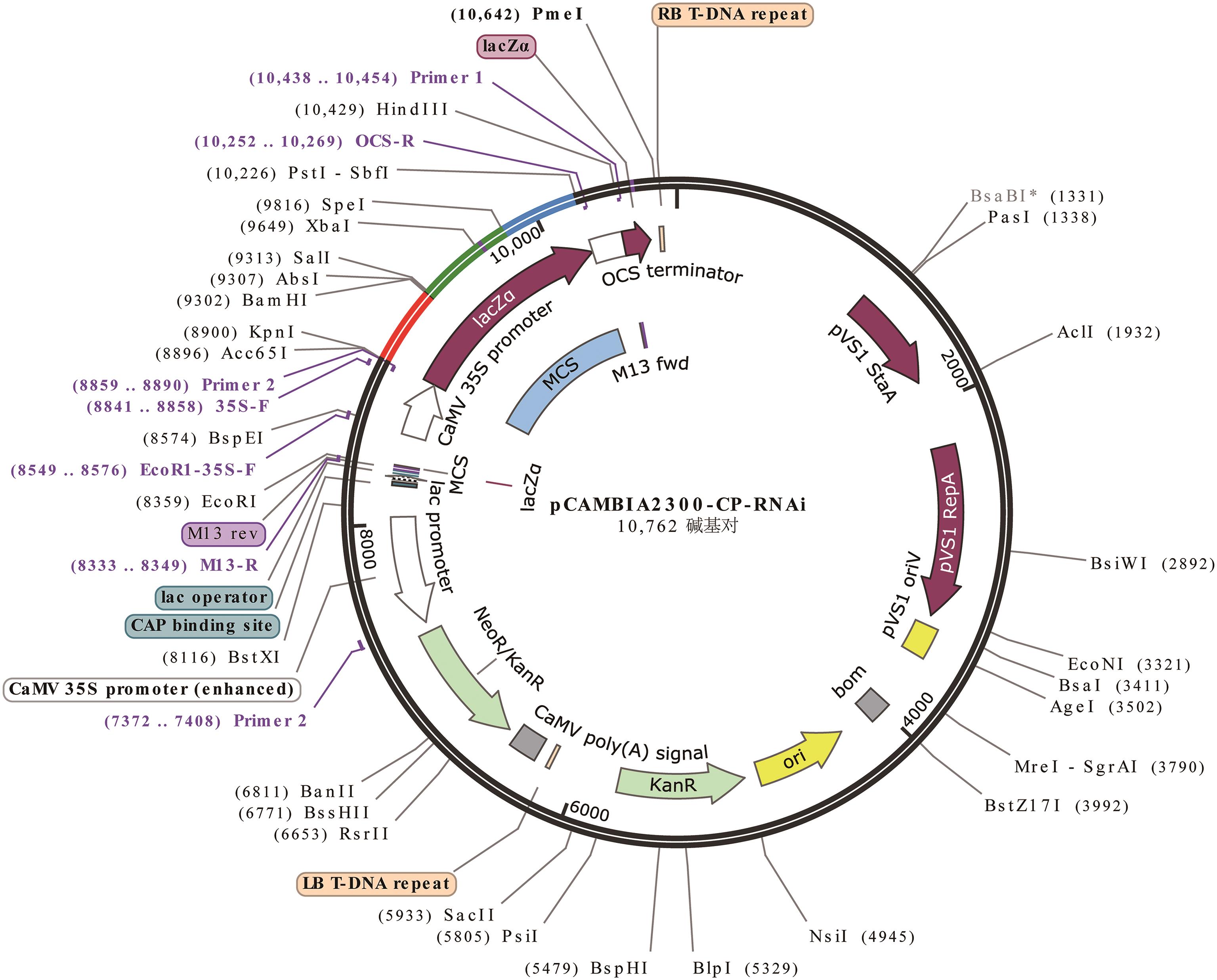
Fig. 1 pCAMBIA2300-CP-RNAi vector
处理 Treatment | 外植体数 Number of explants | 愈伤数 Number of callus | 愈伤形成率 Callus formation rate (%) | 愈伤组织形态 Morphology of callus tissue |
|---|---|---|---|---|
| C1 | 60 | 27 | 45 | 白色须状物 |
| C2 | 60 | 51 | 85 | 鲜绿色、结构紧密 |
| C3 | 60 | 40 | 66.7 | 黄绿色,结构松散 |
| C4 | 60 | 30 | 50 | 白色须状物、结构松散 |
Table 4 Selection of induction medium for stem segment callus of explants
处理 Treatment | 外植体数 Number of explants | 愈伤数 Number of callus | 愈伤形成率 Callus formation rate (%) | 愈伤组织形态 Morphology of callus tissue |
|---|---|---|---|---|
| C1 | 60 | 27 | 45 | 白色须状物 |
| C2 | 60 | 51 | 85 | 鲜绿色、结构紧密 |
| C3 | 60 | 40 | 66.7 | 黄绿色,结构松散 |
| C4 | 60 | 30 | 50 | 白色须状物、结构松散 |
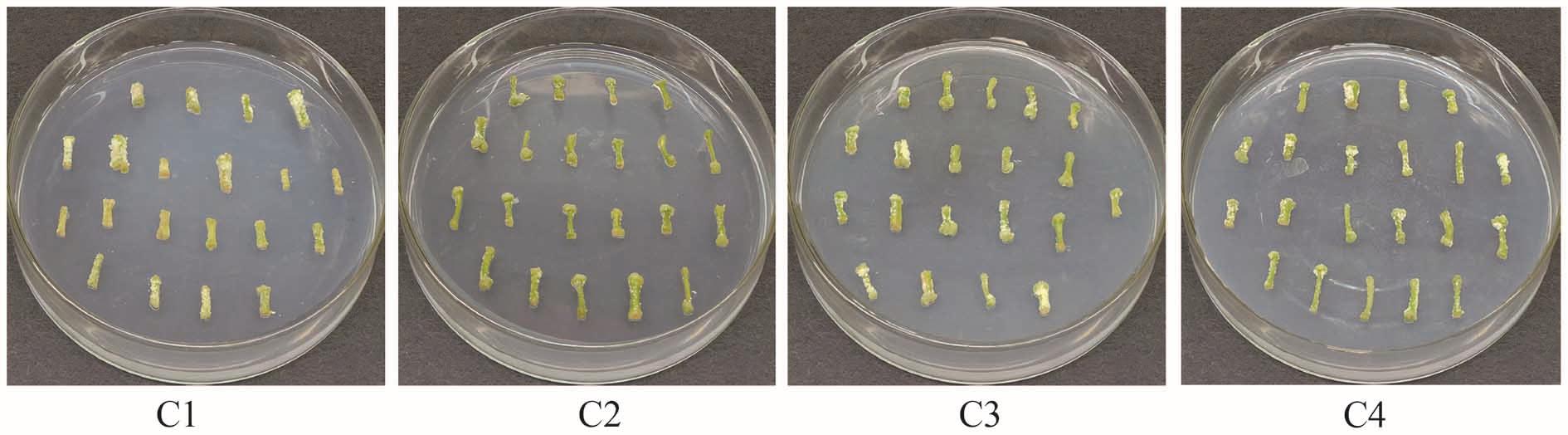
Fig. 2 Selection of induction medium for stem segment callus tissue from explants
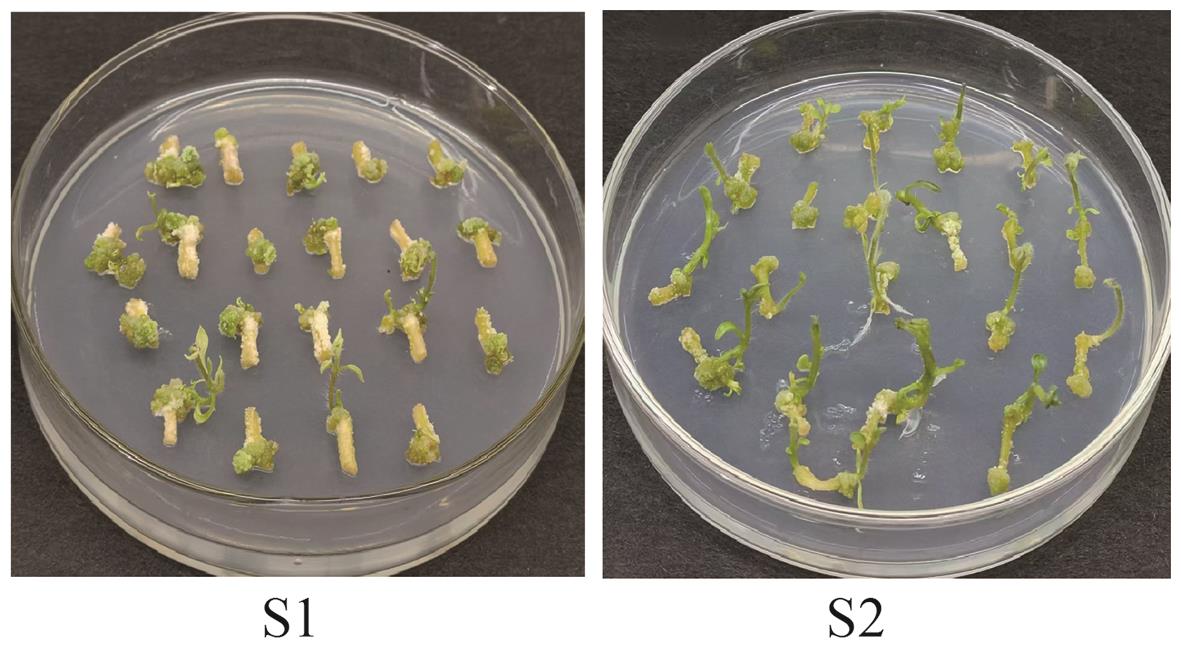
Fig. 3 Selection of differentiation medium for stem segment explant callus tissue
卡那霉素浓度 Kanamycin concentration (mg/L) | 外植体数 Number of explants | 再生芽数 Number of regenerated buds | 出苗率 Seedling emergence rate (%) | 转化频率 Conversion frequency(%) |
|---|---|---|---|---|
| 0 | 60 | 54 | 90 | 3.7 |
| 25 | 60 | 48 | 80 | 6.3 |
| 50 | 60 | 31 | 51.7 | 23.53 |
| 75 | 60 | 17 | 28.3 | 17.7 |
| 100 | 60 | 0 | 0 | 0 |
Table 5 Effects of different kanamycin concentrations on plant regeneration
卡那霉素浓度 Kanamycin concentration (mg/L) | 外植体数 Number of explants | 再生芽数 Number of regenerated buds | 出苗率 Seedling emergence rate (%) | 转化频率 Conversion frequency(%) |
|---|---|---|---|---|
| 0 | 60 | 54 | 90 | 3.7 |
| 25 | 60 | 48 | 80 | 6.3 |
| 50 | 60 | 31 | 51.7 | 23.53 |
| 75 | 60 | 17 | 28.3 | 17.7 |
| 100 | 60 | 0 | 0 | 0 |
卡那霉素浓度 Kanamycin concentration (mg/L) | 外植体数 Number of explants | 生根外植体数 Number of rooting explants | 生根率 Rooting rate (%) |
|---|---|---|---|
| 0 | 40 | 40 | 100 |
| 50 | 40 | 40 | 100 |
| 75 | 40 | 0 | 0 |
| 100 | 40 | 0 | 0 |
Table 6 Effects of different kanamycin concentrations on plant rooting
卡那霉素浓度 Kanamycin concentration (mg/L) | 外植体数 Number of explants | 生根外植体数 Number of rooting explants | 生根率 Rooting rate (%) |
|---|---|---|---|
| 0 | 40 | 40 | 100 |
| 50 | 40 | 40 | 100 |
| 75 | 40 | 0 | 0 |
| 100 | 40 | 0 | 0 |
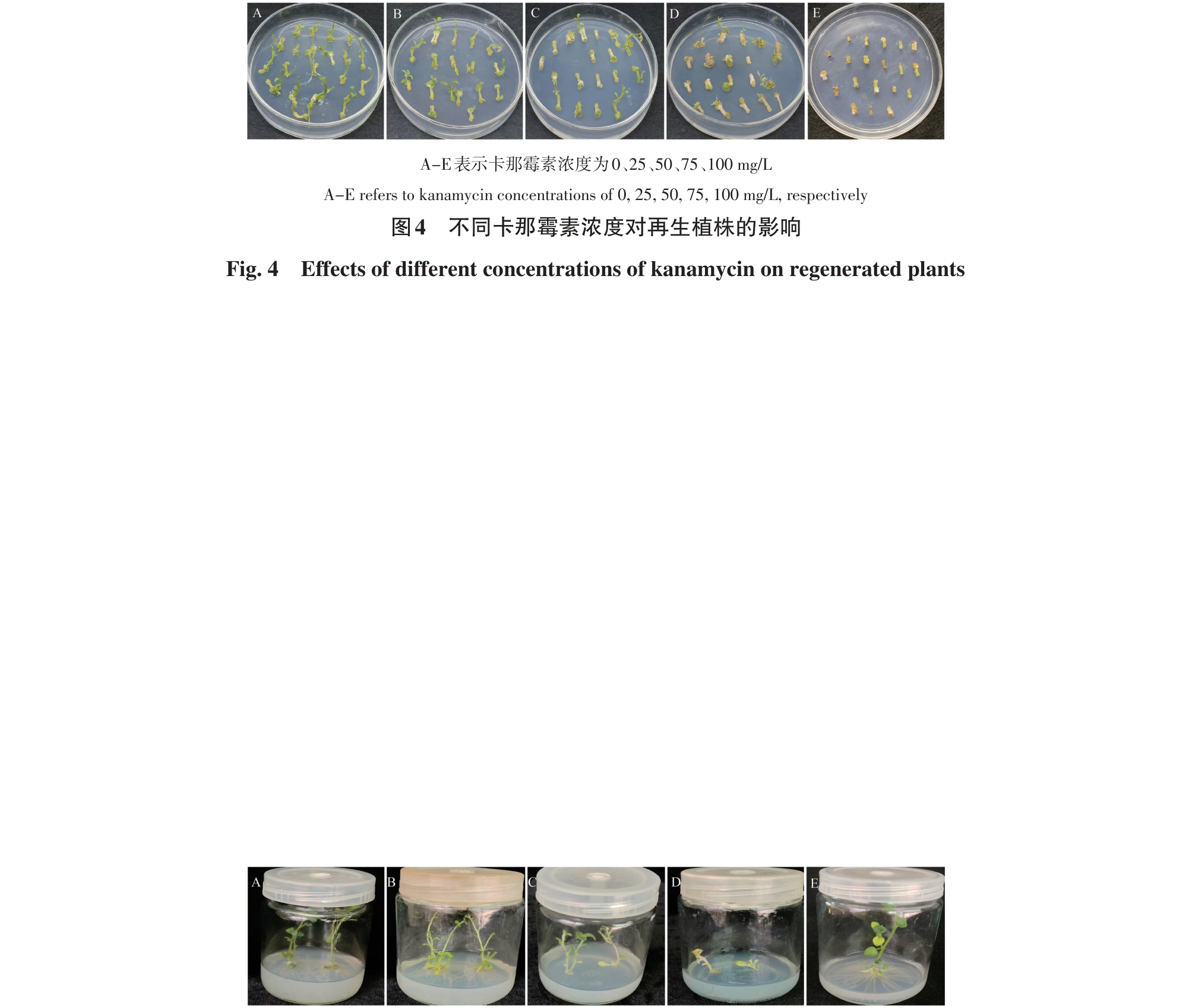
Fig. 5 Effects of different concentrations of kanamycin on plant rootingA-D indicate kanamycin concentrations of 0, 50, 75, and 100 mg/L, respectively, while E refers to the rooting status of transgenic plants under a 75 mg/L kanamycin concentration
处理 Treatment | 羧苄青霉素浓度 Carbenicillin concentration (mg/L) | 特美汀浓度 Timentin concentration (mg/L) | 诱导愈伤培养 Induced callus culture | 诱导出芽培养 Induced budding culture | 生根培养 Rooting culture |
|---|---|---|---|---|---|
| 1 | 100 | 0 | 染菌 | 染菌 | 染菌 |
| 2 | 200 | 0 | 染菌 | 染菌 | 染菌 |
| 3 | 300 | 0 | 染菌 | 染菌 | 染菌 |
| 4 | 0 | 100 | 染菌 | 染菌 | 染菌 |
| 5 | 0 | 200 | 未染菌 | 未染菌 | 未染菌 |
| 6 | 0 | 300 | 未染菌 | 未染菌 | 未染菌 |
Table 7 Effects of different types and concentrations of antibacterial agents on conversion
处理 Treatment | 羧苄青霉素浓度 Carbenicillin concentration (mg/L) | 特美汀浓度 Timentin concentration (mg/L) | 诱导愈伤培养 Induced callus culture | 诱导出芽培养 Induced budding culture | 生根培养 Rooting culture |
|---|---|---|---|---|---|
| 1 | 100 | 0 | 染菌 | 染菌 | 染菌 |
| 2 | 200 | 0 | 染菌 | 染菌 | 染菌 |
| 3 | 300 | 0 | 染菌 | 染菌 | 染菌 |
| 4 | 0 | 100 | 染菌 | 染菌 | 染菌 |
| 5 | 0 | 200 | 未染菌 | 未染菌 | 未染菌 |
| 6 | 0 | 300 | 未染菌 | 未染菌 | 未染菌 |

Fig. 6 Effects of different types and concentrations of antibacterial agents on conversionA-C refer to concentrations of carbenicillin at 100, 200, and 300 mg/L, while D-F refer to concentrations of timentin at 100, 200, and 300 mg/L
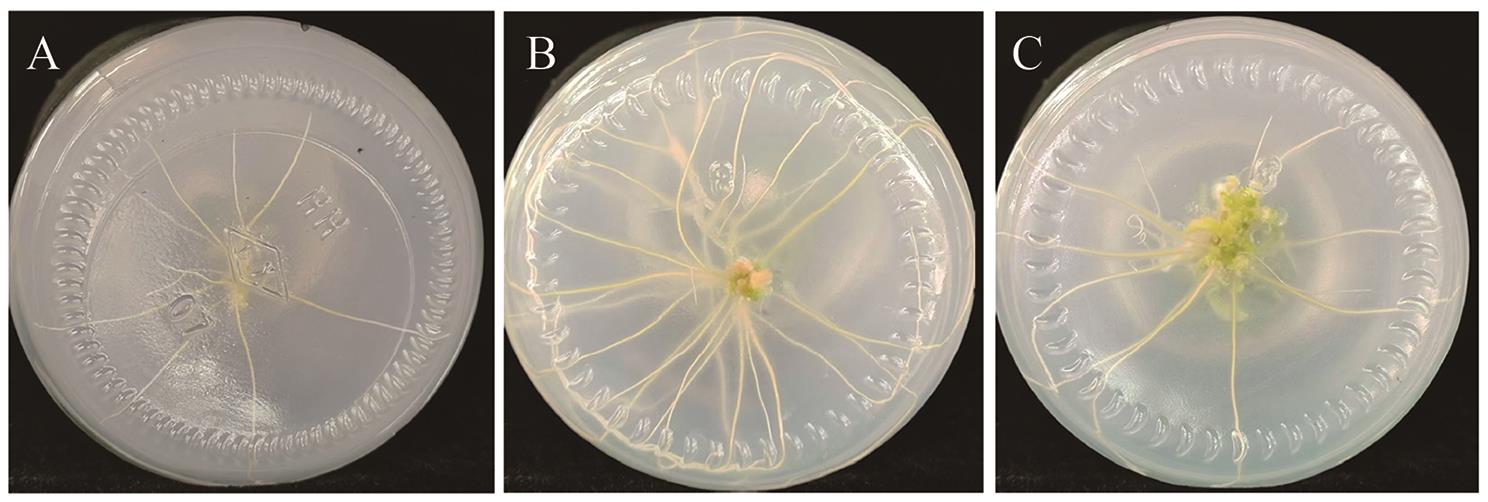
Fig. 7 Effects of different concentrations of IAA on the root induction and regeneration of transformed plantsA-C indicate IAA concentrations of 0.2, 0.6, and 1.2 mg/L
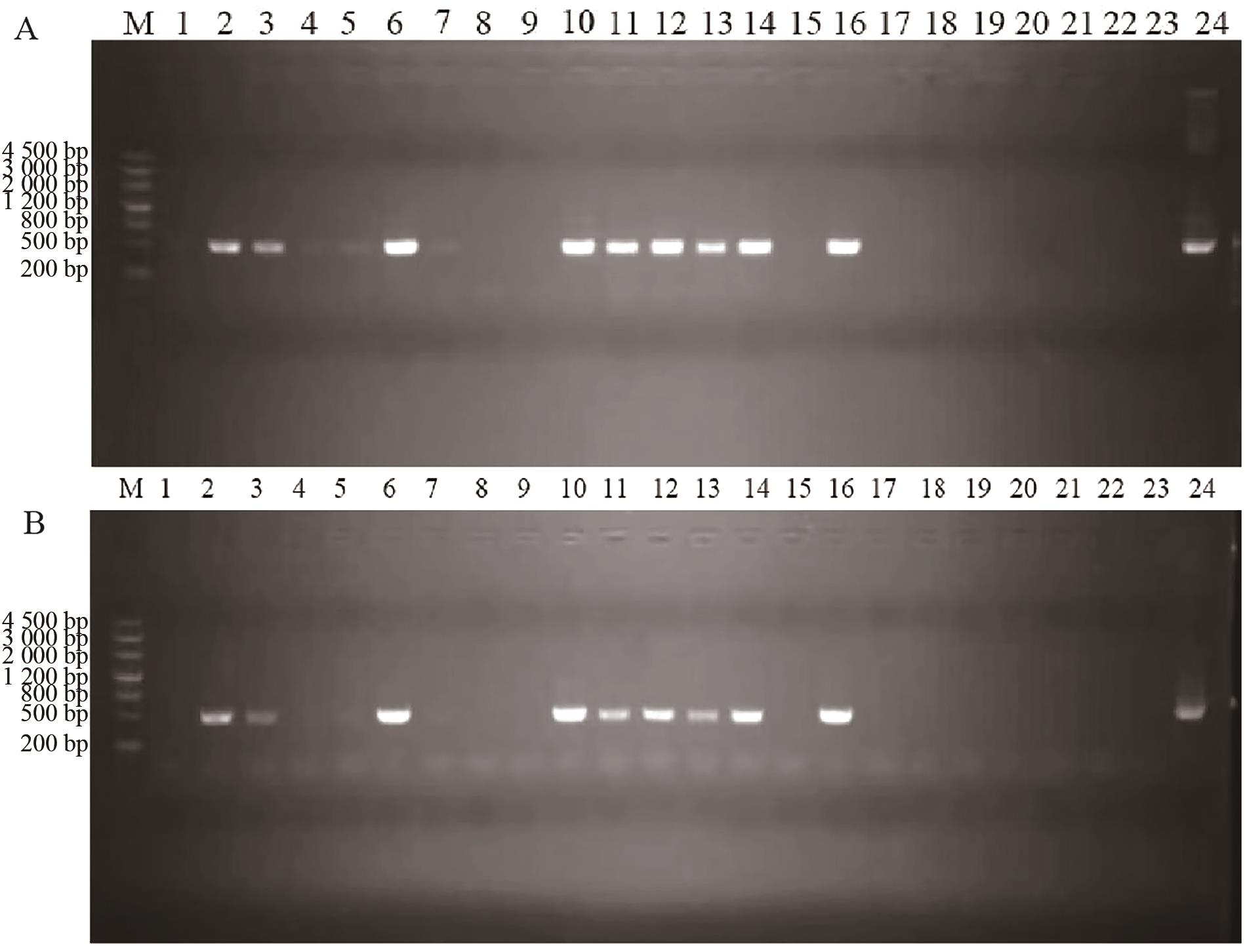
Fig. 8 PCR positive detection of regenerated plantsA: PCR products corresponding to primers CP-F and CP-R. B: PCR products corresponding to primers CP-f and CP-r. M: Marker; 1-21: transforming plants; 22: negative control; 23: blank control; 24: positive control
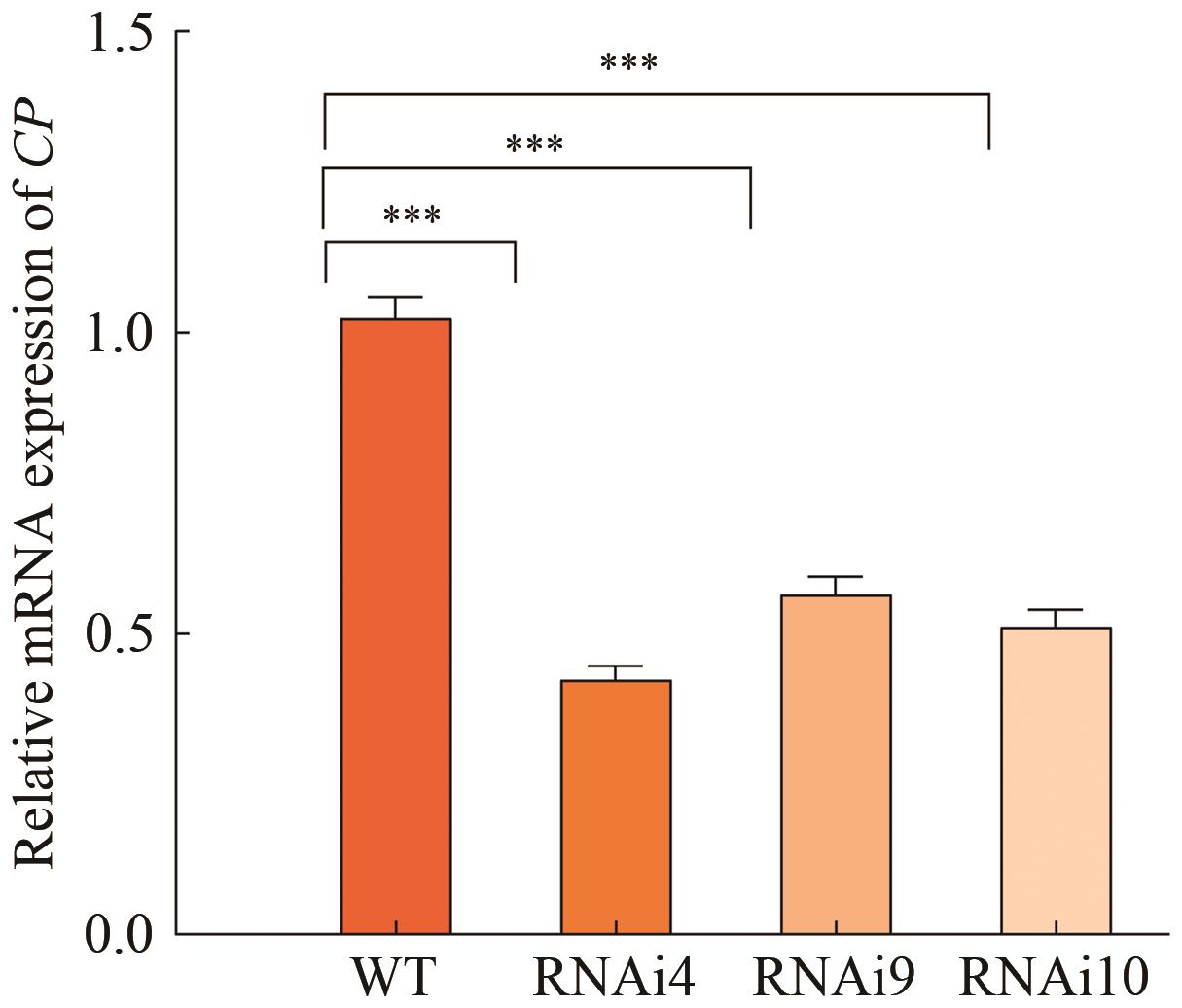
Fig. 9 CP gene relative expression in wild-type and transgenic plants
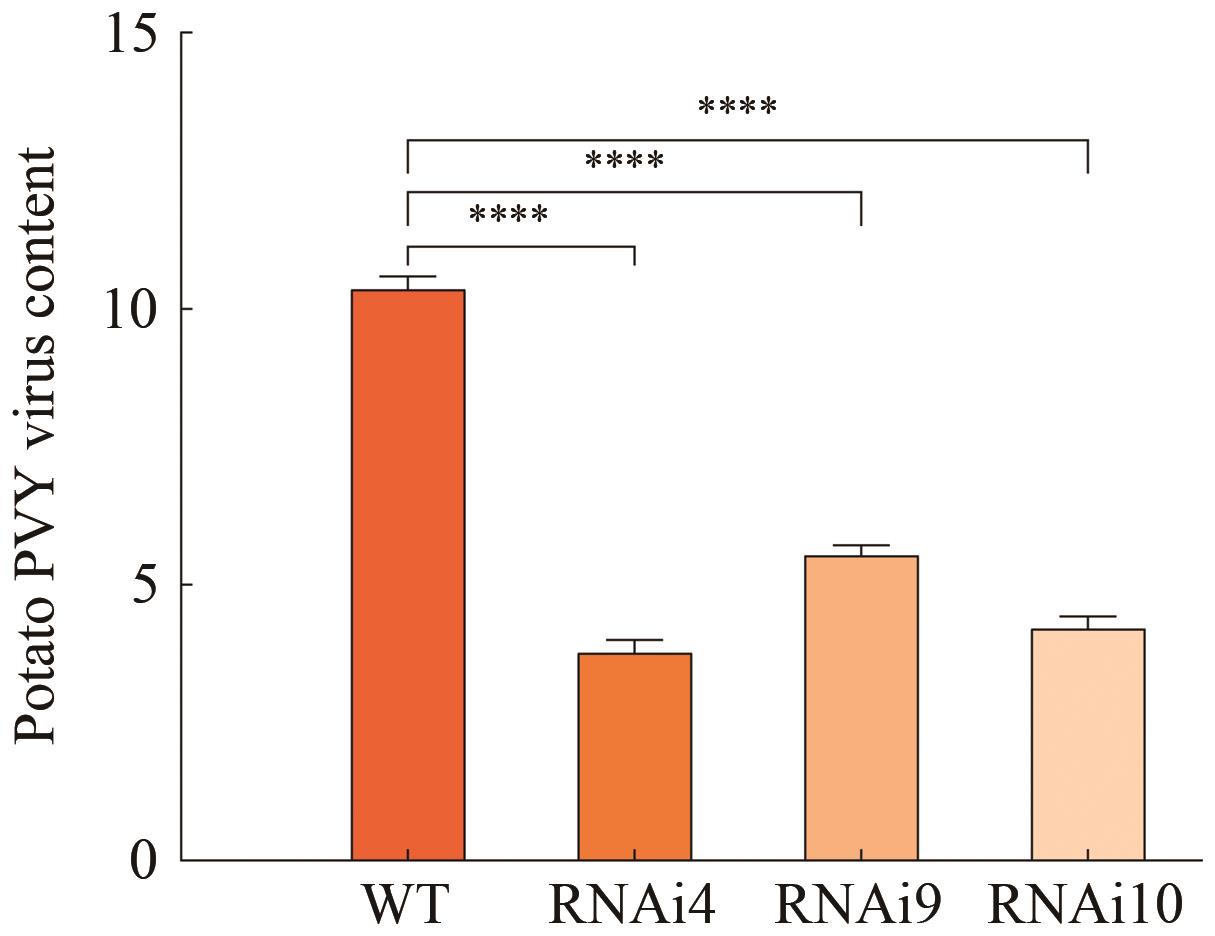
Fig. 10 Determination of potato PVY virus content in wild-type and transgenic plants
| [23] | 杨春, 王桂梅. 愈伤组织再生马铃薯脱毒苗生产体系的建立 [J]. 中国马铃薯, 2008, 22(3): 137-139. |
| Yang C, Wang GM. Establishment of production system for regenerated virus-free potato plantlets through callus tissue [J]. Chin Potato J, 2008, 22(3): 137-139. | |
| [24] | 熊伟, 马耀华, 胡碧波, 等. 根癌农杆菌介导的马铃薯转化系统的优化 [J]. 广西农业生物科学, 2007, 26(1): 1-7. |
| Xiong W, Ma YH, Hu BB, et al. Optimized Agrobacterium-mediated transformation system for potato [J]. J Guangxi Agric Biol Sci, 2007, 26(1): 1-7. | |
| [25] | 叶明旺, 张春芝, 黄三文. 二倍体栽培马铃薯高效遗传转化体系的建立 [J]. 中国农业科学, 2018, 51(17): 3249-3257. |
| Ye MW, Zhang CZ, Huang SW. Construction of high efficient genetic transformation system for diploid potatoes [J]. Sci Agric Sin, 2018, 51(17): 3249-3257. | |
| [26] | 张西英, 张爱萍, 刘江娜. 马铃薯遗传转化体系的优化建立及其主要影响因素 [J]. 基因组学与应用生物学, 2019, 38(7): 3174-3179. |
| Zhang XY, Zhang AP, Liu JN. Optimization establishment of the genetic transformation system of potato and its main influencing factors [J]. Genom Appl Biol, 2019, 38(7): 3174-3179. | |
| [27] | 张丽, 宋玉霞, 巩檑, 等. 农杆菌介导的马铃薯转化研究进展 [J]. 分子植物育种, 2015, 13(7): 1660-1667. |
| Zhang L, Song YX, Gong L, et al. Progress on genetic transformation of potato mediated by Agrobacterium [J]. Mol Plant Breed, 2015, 13(7): 1660-1667. | |
| [28] | 宋倩娜, 梅超, 霍利光, 等. 马铃薯品种‘并薯6号’遗传转化体系的建立 [J]. 中国马铃薯, 2021, 35(5): 385-396. |
| Song QN, Mei C, Huo LG, et al. Establishment of genetic transformation system for potato variety ‘Bingshu 6’ [J]. Chin Potato J, 2021, 35(5): 385-396. | |
| [29] | 蒋继滨, 高冬丽, 朱曦鉴, 等. 二倍体马铃薯基因编辑载体快速验证体系的建立 [J]. 种子, 2019, 38(10): 29-33. |
| Jiang JB, Gao DL, Zhu XJ, et al. Establishment of a rapid verification system for diploid potato gene editing vector [J]. Seed, 2019, 38(10): 29-33. | |
| [30] | 杨亚萍, 李永兰, 等. 发根农杆菌抑菌剂的抑菌效果及对茶组培苗丛生芽的影响 [J]. 茶叶科学, 2015, 35(5): 437-441, 442. |
| Yang YP, Li YL, Liang YR, et al. Antibiotics inhibition to Agrobaceterium rhizogenes and effect to tea multiple shoots [J]. J Tea Sci, 2015, 35(5): 437-441, 442. | |
| [31] | 牛颜冰, 郭失迷, 宋艳波, 等. RNA沉默-新型的植物病毒病害防治策略 [J]. 中国生态农业学报, 2005, 13(2): 47-50. |
| Niu YB, Guo SM, Song YB, et al. RNA silencing-a new strategy for the control of virus diseases in plants [J]. Chin J Eco Agric, 2005, 13(2): 47-50. | |
| [32] | 赵爽, 王琦, 李艳红. 植物病毒诱导的基因沉默效应的分子机制 [J]. 植物生理学通讯, 2007, 43(2): 384-390. |
| Zhao S, Wang Q, Li YH. Molecular mechanism of virus induced gene silencing in plants [J]. Plant Physiol Commun, 2007, 43(2): 384-390. | |
| [33] | Wang MB, Abbott DC, Waterhouse PM. A single copy of a virus-derived transgene encoding hairpin RNA gives immunity to barley yellow dwarf virus [J]. Mol Plant Pathol, 2000, 1(6): 347-356. |
| [1] | Birch PRJ, Bryan G, Fenton B, et al. Crops that feed the world 8: Potato: are the trends of increased global production sustainable? [J]. Food Secur, 2012, 4(4): 477-508. |
| [2] | 朱雪瑞, 季静, 王罡, 等. 马铃薯不同组织的诱导分化及其对遗传转化效率的影响 [J]. 中国生物工程杂志, 2016, 36(10): 53-59. |
| Zhu XR, Ji J, Wang G, et al. Influence on the conversion efficiency of induced differentiation of various potato tissues [J]. China Biotechnol, 2016, 36(10): 53-59. | |
| [3] | Zhou Q, Tang D, Huang W, et al. Haplotype-resolved genome analyses of a heterozygous diploid potato [J]. Nat Genet, 2020, 52(10): 1018-1023. |
| [4] | 文博霖, 万敏, 胡建军, 等. 马铃薯川芋50遗传转化及基因编辑体系的建立 [J]. 生物技术通报, 2025, 41(4): 88-97. |
| Wen BL, Wan M, Hu JJ, et al. Establishment of genetic transformation and gene editing system for a potato cultivar Chuanyu 50 [J]. Biotechnol Bull, 2025, 41(4): 88-97. | |
| [5] | 张贵合, 郭华春. PVY和PVS病毒复合侵染对马铃薯光合及营养品质的影响 [J]. 西北植物学报, 2017, 37(8): 1569-1576. |
| Zhang GH, Guo HC. Variation of photosynthesis and nutritional quality of potato after infection with PVY and PVS complex virus [J]. Acta Bot Boreali Occidentalia Sin, 2017, 37(8): 1569-1576. | |
| [6] | 王拴福. 马铃薯退化与脱毒种薯应用 [J]. 种子, 2014, 33(2): 125-126. |
| Wang SF. Potato degeneration and the application of virus-free potato seed [J]. Seed, 2014, 33(2): 125-126. | |
| [7] | Gao FL, Kawakubo S, Ho SYW, et al. The evolutionary history and global spatio-temporal dynamics of potato virus Y [J]. Virus Evol, 2020, 6(2): veaa056. |
| [8] | 蔡一鸣. MSH1 RNAi干扰载体的构建及转基因芥菜的获得 [D]. 重庆: 西南大学, 2014. |
| Cai YM. Construction of MSH1 RNAi expression vector and its transformation to Brassica juncea [D]. Chongqing: Southwest University, 2014. | |
| [9] | 李奇科, 陶刚, 等. 马铃薯Y病毒CP基因RNAi载体构建与干涉效果测定 [J]. 基因组学与应用生物学, 2009, 28(3): 460-464. |
| Li QK, Tao G, Qiu YB, et al. RNAi vector targeting and interference effect determination of PVY CP gene [J]. Genom Appl Biol, 2009, 28(3): 460-464. | |
| [10] | 姜芳. 马铃薯Y病毒CP基因不同区段对发夹RNA和人工的miRNA介导的病毒抗性的影响 [D]. 泰安: 山东农业大学, 2011. |
| Jiang F. Special origin of PVY CP influences the resistance of hairpin RNA and artificial miRNA expressing plants against PVY [D]. Tai’an: Shandong Agricultural University, 2011. | |
| [11] | 齐恩芳, 贾小霞, 刘石, 等. 利用RNA干扰介导抗病性获得兼抗四种病毒的转基因马铃薯 [J]. 植物保护学报, 2019, 46(1): 192-200. |
| Qi EF, Jia XX, Liu S, et al. Production of transgenic potato plants resistant to four viruses via RNAi-mediated virus resistance [J]. J Plant Prot, 2019, 46(1): 192-200. | |
| [12] | 李楠楠, 左玉玲, 等. 重组CP多克隆抗体在马铃薯卷叶病毒DAS-ELISA检测中的应用 [J]. 华北农学报, 2011, 26(6): 85-88. |
| Li NN, Zuo YL, Sui JM, et al. Application of polyclonal antibody against the recombinant CP to the DAS-ELISA detection of potato leafroll virus [J]. Acta Agric Boreali Sin, 2011, 26(6): 85-88. | |
| [13] | 康霞, 徐刚, 王玉萍. 根癌农杆菌(Agrobacterium tumefaciens)介导的马铃薯高效遗传转化体系筛选及优化 [J]. 中国沙漠, 2016, 36(1): 225-231. |
| Kang X, Xu G, Wang YP. Screening and optimization Agrobacterium tumefaciens mediated potato genetic transformation system [J]. J Desert Res, 2016, 36(1): 225-231. | |
| [14] | 罗源. 马铃薯再生体系的建立及HAL1基因遗传转化研究 [D]. 杨凌: 西北农林科技大学, 2007. |
| Luo Y. Establishment of efficient regeneration system of potato and transformation of HAL1 gene [D]. Yangling: Northwest A F University, 2007. | |
| [15] | 鲍红春, 李小雷, 王建平, 等. 马铃薯品种陇薯5号茎段再生体系的建立 [J]. 内蒙古农业科技, 2014, 42(2): 31-32. |
| Bao HC, Li XL, Wang JP, et al. Establishment of regeneration system for potato variety longshu No.5 [J]. Inn Mong Agric Sci Technol, 2014, 42(2): 31-32. | |
| [16] | 康哲秀, 吴京姬, 郎贤波, 等. 马铃薯延薯4号再生体系建立 [J]. 黑龙江农业科学, 2016(12): 11-13. |
| Kang ZX, Wu JJ, Lang XB, et al. Establishment of the regeneration system of potato variety Yanshu 4 [J]. Heilongjiang Agric Sci, 2016(12): 11-13. | |
| [17] | 牛瑜琦. 马铃薯晋薯16号再生体系建立及遗传转化研究 [D]. 太原: 山西大学, 2021. |
| Niu YQ. Establishment of regeneration system and genetic transformation of potato Jinshu 16 [D]. Taiyuan: Shanxi University, 2021. | |
| [18] | 李晶. 马铃薯再生体系的建立及遗传转化的研究 [D]. 哈尔滨: 东北农业大学, 2003. |
| Li J. Establishment of the regeneration system and study for the genetic transformation of potato [D]. Harbin: Northeast Agricultural University, 2003. | |
| [19] | 王清, 王蒂, 戴朝曦, 等. 奈乙酸、2, 4-D对马铃薯愈伤组织细胞染色体倍性的影响 [J]. 甘肃农业大学学报, 1997, 32(4): 304-307. |
| Wang Q, Wang D, Dai ZX, et al. Effect of NAA and 2,4-D and their concentrations on chromosomeploidy of potato calli in vitro culture [J]. J Gansu Agric Univ, 1997, 32(4): 304-307. | |
| [20] | 杨明贺, 朱旭, 李楠, 等. 马铃薯茎段高频再生体系的建立 [J]. 东北农业科学, 2019, 44(1): 57-62. |
| Yang MH, Zhu X, Li N, et al. Establishment of stem-based high-frequency regeneration procedure for potato [J]. J Northeast Agric Sci, 2019, 44(1): 57-62. | |
| [21] | 王萍, 王罡, 季静. 马铃薯两个基因型不同外植体的组织培养与植株再生 [J]. 中国马铃薯, 2006, 20(6): 326-328. |
| Wang P, Wang G, Ji J. Tissue culture and plant regeneration of various explants of two potato genotypes [J]. Chin Potato J, 2006, 20(6): 326-328. | |
| [22] | 程永芳, 张丽, 宋玉霞. 马铃薯高效遗传转化受体体系的建立 [J]. 西北农业学报, 2016, 25(9): 1350-1357. |
| Cheng YF, Zhang L, Song YX. Establishment of receptor system of high efficient genetic transformation in Solanum tuberosum L [J]. Acta Agric Boreali Occidentalis Sin, 2016, 25(9): 1350-1357. |
| [1] | HUANG Dan-dan, WU Yun-yi, ZOU Jian-hua, YU Ting, ZHU Yan-hui, YANG Mei-hong, DONG Wen-li, GAO Dong-li. Cloning and Interaction Analysis of StPTST2a Gene in Potato [J]. Biotechnology Bulletin, 2025, 41(7): 172-180. |
| [2] | LUO Yi-fei, XU Ya, LU Si-qi, GAO Yuan-yuan, GOU Zhan, FANG Hong, SHANG Yi, TENG Lin-lin. Analysis of Volatile Components in Solanum tuberosum L. Plants Infected with Phytophthora infestans [J]. Biotechnology Bulletin, 2025, 41(11): 247-260. |
| [3] | PENG Yu-jia, LI Wen-cui, LIU Yong-bo. Research Progress in the Evolution Mechanisms for Insect Resistance to Insecticides and Bt-transgenic Plants [J]. Biotechnology Bulletin, 2024, 40(4): 40-51. |
| [4] | ZHANG Yu, SHI Lei, GONG Lei, NIE Feng-jie, YANG Jiang-wei, LIU Xuan, YANG Wen-jing, ZHANG Guo-hui, XIE Rui-xia, ZHANG Li. Genome-wide Identification of Potato WOX Gene Family and Its Expression Analysis in in vitro Regeneration and Abiotic Stress [J]. Biotechnology Bulletin, 2024, 40(3): 170-180. |
| [5] | GUO Wen-fang, WANG Nan, LI Gang-qiang, XU Fang-fang, YANG Cai-feng, LIU De-hu. Comparative Analysis of Identification Methods of CP4-EPSPS Transgenic Cotton Plants [J]. Biotechnology Bulletin, 2017, 33(4): 114-118. |
| [6] | Shu Hongmei, Guo Shuqiao, Gong Yuanyong, Ni Wanchao. Construction of Root Expression Vector of Brassinosteroid Gene BAS1 and Genetic Transformation into Tobacco [J]. Biotechnology Bulletin, 2015, 31(6): 106-110. |
| [7] | Lang Yaoling, Guan Xiaoyan, Bai Guohui, Liu Jianguo. Research Progress on Methods of Removing Marker Genes in Transgenic Plants [J]. Biotechnology Bulletin, 2015, 31(5): 41-47. |
| [8] | Su Mingxing, Sun Yinghao, Shi He, Li Qiuli. Research Methods of Abiotic Stress-related Transcription Factors in Plants [J]. Biotechnology Bulletin, 2015, 31(1): 51-60. |
| Viewed | ||||||
|
Full text |
|
|||||
|
Abstract |
|
|||||
