







Biotechnology Bulletin ›› 2026, Vol. 42 ›› Issue (9): 178-185.doi: 10.13560/j.cnki.biotech.bull.1985.2025-1092
LIU Ran, ZHAO Pan, ZHOU Xin-yi, SU Yu-ting, ZHENG Shu-ya, GAO Hong-bo, GUO Hui-hong( )
)
Received:2025-10-16
Online:2026-09-26
Published:2026-09-16
Contact:
GUO Hui-hong
E-mail:guohh@bjfu.edu.cn
LIU Ran, ZHAO Pan, ZHOU Xin-yi, SU Yu-ting, ZHENG Shu-ya, GAO Hong-bo, GUO Hui-hong. Auxin Induces and Regulates the Expressions of PagHAM4a/PagHAM4b and Affects the Secondary Xylem Development in Poplar[J]. Biotechnology Bulletin, 2026, 42(9): 178-185.
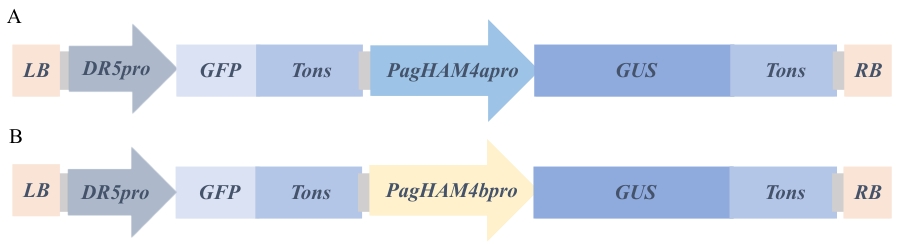
Fig. 1 Schematic diagram of the dual-reporter gene plant expression vector structureA: A dual-reporter gene plant expression vector in which DR5 promoter drives the GFP reporter gene and the PagHAM4a-specific promoter drives the GUS reporter gene. B: A dual-reporter gene plant expression vector in which DR5 promoter drives the GFP reporter gene and the PagHAM4b-specific promoter drives the GUS reporter gene; DR5pro: Auxin-response promoter. GFP: Green fluorescent protein gene. Tons: Terminator of the nopaline synthase gene. PagHAM4apro/PagHAM4bpro: Specific promoter of the PagHAM4a and PagHAM4b gene. GUS: β-glucuronidase gene
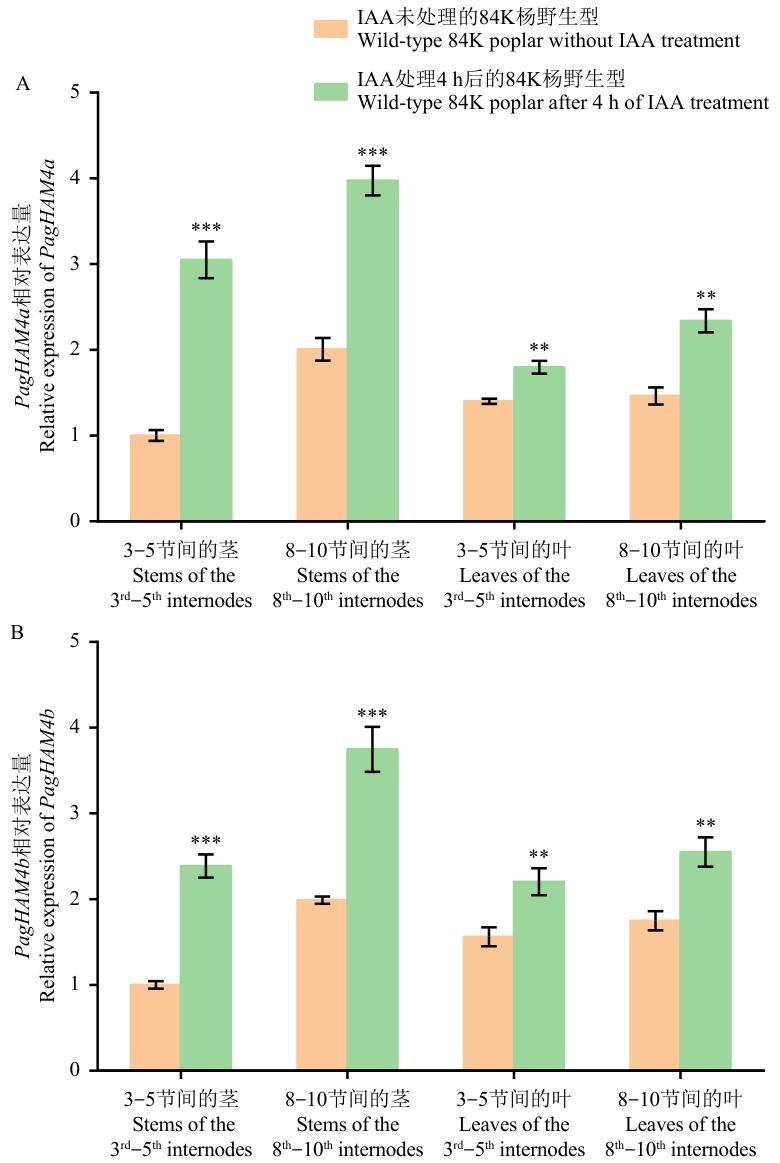
Fig. 2 Expressions of PagHAM4a and PagHAM4b in the stems and leaves of 84K poplar after exogenous IAA treatmentA: PagHAM4a; B: PagHAM4b. Stems and leaves from 3rd‒5th internodes: The internodes during the early stage of secondary growth and the leaves corresponding to those internodes. Stems and leaves from 8th‒10th internodes: The internodes that have showed significant secondary growth and the leaves corresponding to those internodes. *P<0.05; **P<0.01; ***P<0.001. The same below
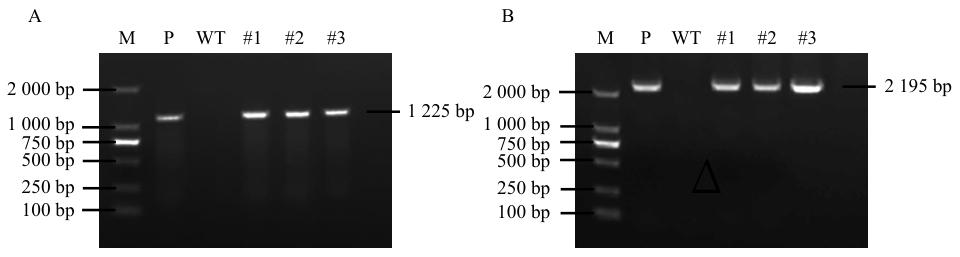
Fig. 3 PCR identification of transgenic plants containing a dual reporter gene plant expression vectorA: PCR identification of PagHAM4a transgenic plants. B: PCR identification of PagHAM4b transgenic plants. M: DNA marker. P: Plasmids containing the DR5pro::GFP-PagHAM4apro::GUS and DR5pro::GFP-PagHAM4bpro::GUS vector. WT: 84K poplar. #1, #2, #3: Transgenic plants
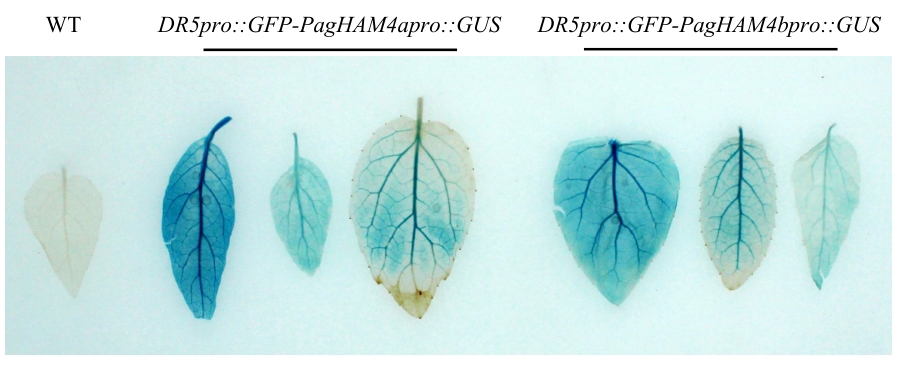
Fig. 4 GUS assay of transgenic plants
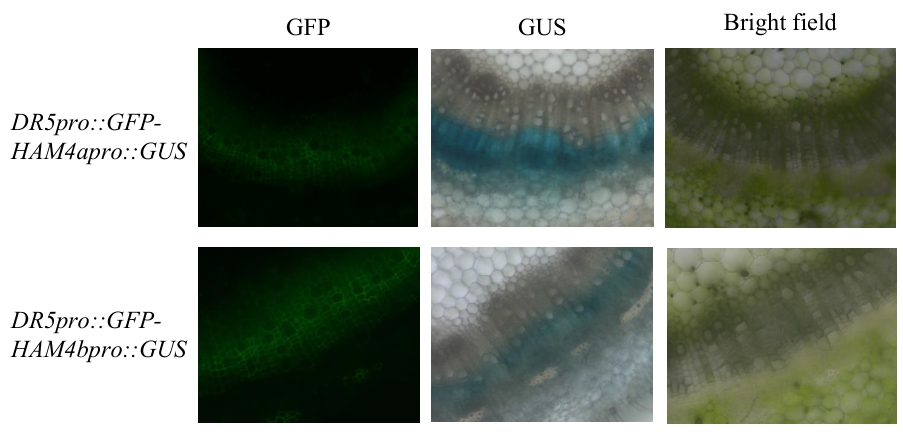
Fig. 5 GFP fluorescence and GUS staining in internodes 7th‒9th of secondary stems from transgenic plants
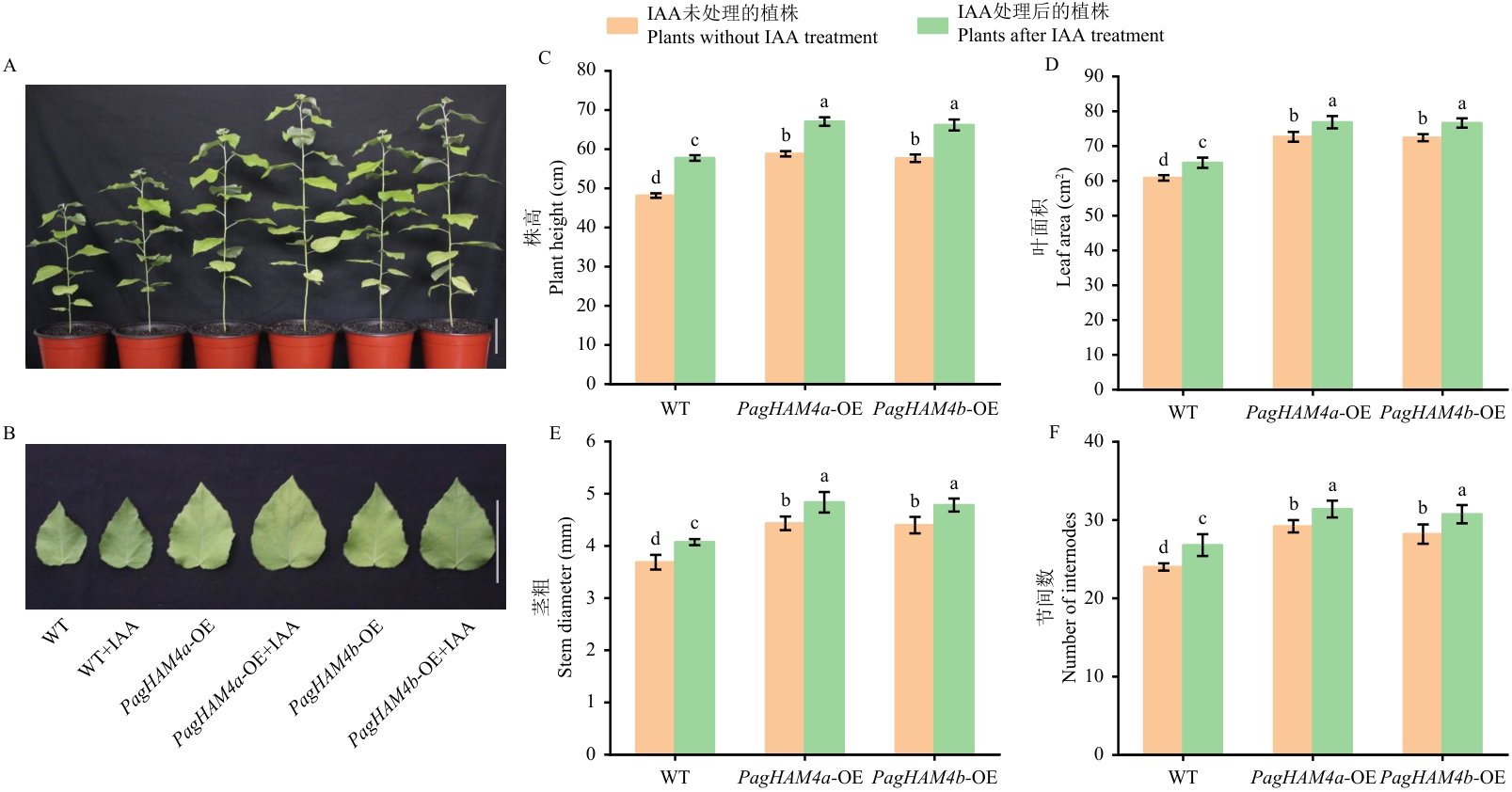
Fig. 6 Phenotype of wild-type 84K poplar and 84K poplar overexpressing PagHAM4a/PagHAM4b after exogenous IAA treatmentA: External morphological characteristics of plants after exogenous IAA treatment (Bar=10 cm). B: Leaves of plants after exogenous IAA treatment (Bar=10 cm). C: Plant height. D: Leaf area. E: Stem diameter. F: Internode number. WT: 84K plants; PagHAM4a-OE/PagHAM4b-OE: Plants overexpressing PagHAM4a/PagHAM4b in 84K poplar. Different letters indicate significant differences (P<0.05). The same below
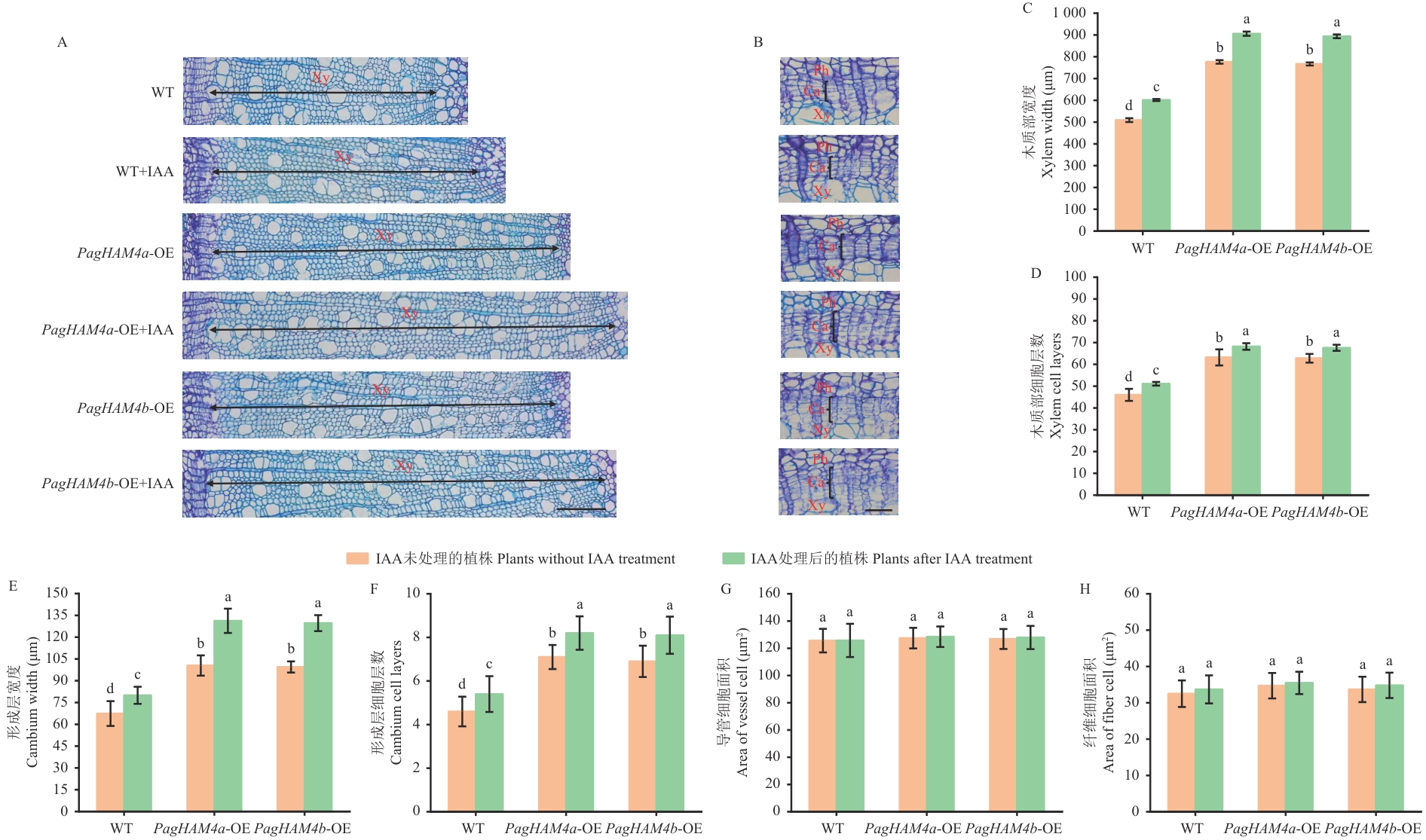
Fig. 7 Internal tissue struction phenotype of wild-type 84K poplar and 84K poplar overexpressing PagHAM4a/PagHAM4b after exogenous IAA treatmentA: Cross-sections of the 20th internode of stems from 84K poplar and 84K poplar overexpressing PagHAM4a/PagHAM4b (Bar=100 μm). B: Cambium region of the 20th internode in stems of 84K poplar and 84K poplar overexpressing PagHAM4a/PagHAM4b (Bar=100 μm). C: Xylem width. D: Xylem cell layer number. E: Cambium width. F: Cambium cell layer number. G: Vessel cell area. H: Fiber cell area. Ph: Phloem. Xy: Xylem. Ca: Cambium
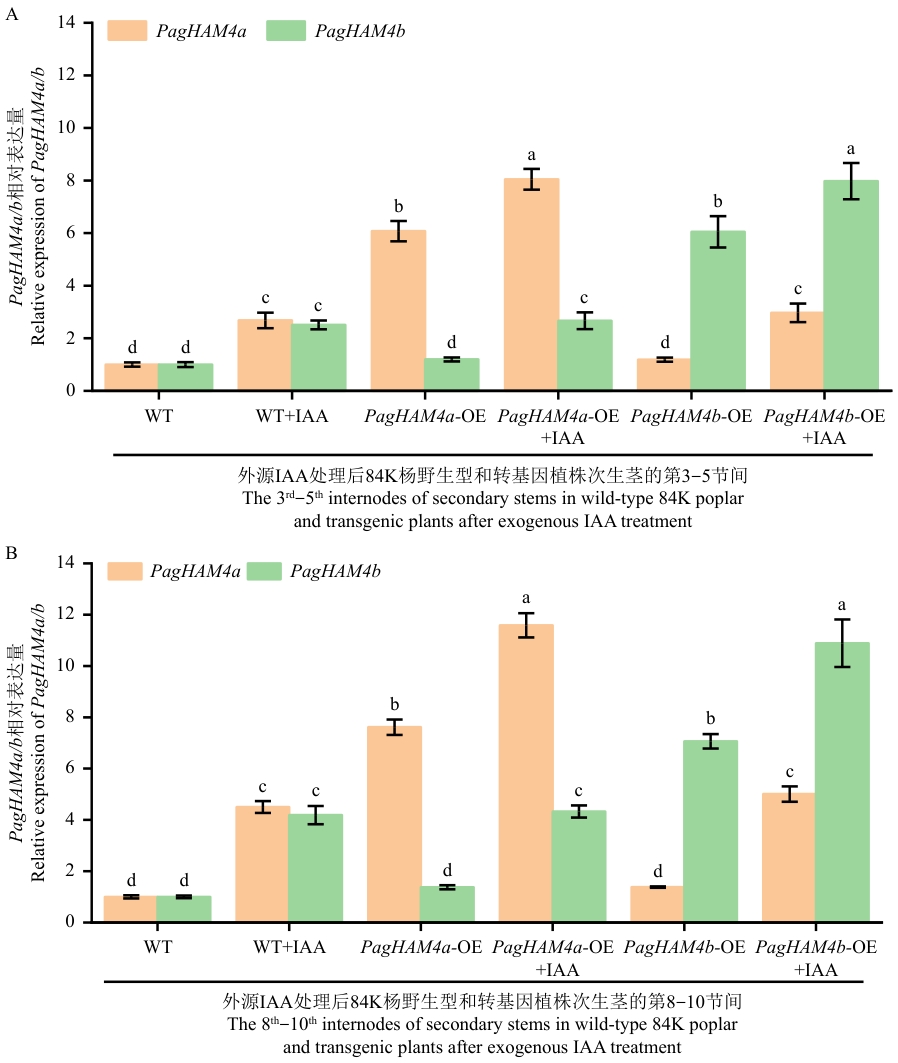
Fig. 8 Expressions of PagHAM4a and PagHAM4b in wild-type and transgenic 84K poplar plants after exogenous IAA treatmentA: 3rd‒5th internodes; B: 8th‒10th internodes
| [1] | Xu CZ, Shen Y, He F, et al. Auxin-mediated Aux/IAA-ARF-HB signaling cascade regulates secondary xylem development in Populus [J]. New Phytol, 2019, 222(2): 752-767. |
| [2] | Sun PF, Wang HL, Zhao P, et al. The regulation of xylem development by transcription factors and their upstream microRNAs [J]. Int J Mol Sci, 2022, 23(17): 10134. |
| [3] | Chai GH, Qi G, Cao YP, et al. Poplar PdC3H17 and PdC3H18 are direct targets of PdMYB3 and PdMYB21, and positively regulate secondary wall formation in Arabidopsis and poplar [J]. New Phytol, 2014, 203(2): 520-534. |
| [4] | Kim MH, Bae EK, Lee H, et al. Current understanding of the genetics and molecular mechanisms regulating wood formation in plants [J]. Genes, 2022, 13(7): 1181. |
| [5] | Li RH, Wang ZF, Wang JW, et al. Combining single-cell RNA sequencing with spatial transcriptome analysis reveals dynamic molecular maps of cambium differentiation in the primary and secondary growth of trees [J]. Plant Commun, 2023, 4(5): 100665. |
| [6] | Ye ZH, Zhong RQ. Molecular control of wood formation in trees [J]. J Exp Bot, 2015, 66(14): 4119-4131. |
| [7] | Brackmann K, Qi JY, Gebert M, et al. Spatial specificity of auxin responses coordinates wood formation [J]. Nat Commun, 2018, 9(1): 875. |
| [8] | Sugimoto H, Tanaka T, Muramoto N, et al. Transcription factor NTL9 negatively regulates Arabidopsis vascular cambium development during stem secondary growth [J]. Plant Physiol, 2022, 190(3): 1731-1746. |
| [9] | Wessels B, Seyfferth C, Escamez S, et al. An AP2/ERF transcription factor ERF139 coordinates xylem cell expansion and secondary cell wall deposition [J]. New Phytol, 2019, 224(4): 1585-1599. |
| [10] | Zhang JX, Liu YD, Li CH, et al. PtomtAPX is an autonomous lignification peroxidase during the earliest stage of secondary wall formation in Populus tomentosa Carr [J]. Nat Plants, 2022, 8(7): 828-839. |
| [11] | Hou J, Xu HM, Fan D, et al. MiR319a-targeted PtoTCP20 regulates secondary growth via interactions with PtoWOX4 and PtoWND6 in Populus tomentosa [J]. New Phytol, 2020, 228(4): 1354-1368. |
| [12] | Xiao RX, Zhang C, Guo XR, et al. MYB transcription factors and its regulation in secondary cell wall formation and lignin biosynthesis during xylem development [J]. Int J Mol Sci, 2021, 22(7): 3560. |
| [13] | Hu J, Su HL, Cao H, et al. AUXIN RESPONSE FACTOR7 integrates gibberellin and auxin signaling via interactions between DELLA and AUX/IAA proteins to regulate cambial activity in poplar [J]. Plant Cell, 2022, 34(7): 2688-2707. |
| [14] | Zhao P, Yu QL, He YM, et al. PagHAM4a-PagSCL21 and PagHAM4b-PagTCP20 modules positively regulate cambial activity and its differentiation into secondary xylem in poplar [J]. J Exp Bot, 2024, 75(22): 7174-7189. |
| [15] | Guo YY, Wu HY, Li X, et al. Identification and expression of GRAS family genes in maize (Zea mays L.) [J]. PLoS One, 2017, 12(9): e0185418. |
| [16] | Geng Y, Zhou Y. N-terminal region is required for functions of the HAM family member [J]. Plant Signal Behav, 2021, 16(10): 1940001. |
| [17] | Han H, Geng Y, Guo L, et al. The overlapping and distinct roles of HAM family genes in Arabidopsis shoot meristems [J]. Front Plant Sci, 2020, 11: 541968. |
| [18] | Liu S, Fu XK, Wang Y, et al. The auxin-PLETHORA 5 module regulates wood fibre development in Populus tomentosa [J]. Nat Plants, 2025, 11(3): 580-594. |
| [19] | Duan EC, Lin QB, Wang YH, et al. The transcriptional hub SHORT INTERNODES1 integrates hormone signals to orchestrate rice growth and development [J]. Plant Cell, 2023, 35(8): 2871-2886. |
| [20] | Tang XF, Wang D, Liu Y, et al. Dual regulation of xylem formation by an auxin-mediated PaC3H17-PaMYB199 module in Populus [J]. New Phytol, 2020, 225(4): 1545-1561. |
| [21] | von der Mark C, Cruz TMD, Blanco-Touriñan N, et al. Bipartite phosphoinositide-dependent modulation of auxin signaling during xylem differentiation in Arabidopsis thaliana roots [J]. New Phytol, 2022, 236(5): 1734-1747. |
| [22] | Immanen J, Nieminen K, Smolander OP, et al. Cytokinin and auxin display distinct but interconnected distribution and signaling profiles to stimulate cambial activity [J]. Curr Biol, 2016, 26(15): 1990-1997. |
| [23] | Wang HL, Zhao P, He YM, et al. Transcriptome and miRNAs profiles reveal regulatory network and key regulators of secondary xylem formation in “84K” poplar [J]. Int J Mol Sci, 2023, 24(22): 16438. |
| [24] | Livak KJ, Schmittgen TD. Analysis of relative gene expression data using real-time quantitative PCR and the 2-ΔΔCT method [J]. Methods, 2001, 25(4): 402-408. |
| [25] | Zhong RQ, McCarthy RL, Lee CH, et al. Dissection of the transcriptional program regulating secondary wall biosynthesis during wood formation in poplar [J]. Plant Physiol, 2011, 157(3): 1452-1468. |
| [26] | Zheng S, He JJ, Lin ZS, et al. Two MADS-box genes regulate vascular cambium activity and secondary growth by modulating auxin homeostasis in Populus [J]. Plant Commun, 2021, 2(5): 100134. |
| [27] | Mäkilä R, Wybouw B, Smetana O, et al. Gibberellins promote polar auxin transport to regulate stem cell fate decisions in cambium [J]. Nat Plants, 2023, 9(4): 631-644. |
| [28] | Yuan HM, Zhao LJ, Guo WD, et al. Exogenous application of phytohormones promotes growth and regulates expression of wood formation-related genes in Populus simonii × P. nigra [J]. Int J Mol Sci, 2019, 20(3): 792. |
| [29] | Yang LW, Zhu S. The interconnected relationship between auxin concentration gradient changes in Chinese fir radial stems and dynamic cambial activity [J]. Forests, 2022, 13(10): 1698. |
| [30] | 苏玉婷, 王慧林, 赵盼, 等. 杨树PagNAC47及其启动子克隆与功能分析 [J]. 园艺学报, 2025, 52(7): 1828-1842. |
| Su YT, Wang HL, Zhao P, et al. Cloning and functional analysis of PagNAC47 gene and its promoter from poplar [J]. Acta Hortic Sin, 2025, 52(7): 1828-1842. | |
| [31] | Johnsson C, Jin X, Xue WY, et al. The plant hormone auxin directs timing of xylem development by inhibition of secondary cell wall deposition through repression of secondary wall NAC-domain transcription factors [J]. Physiol Plant, 2019, 165(4): 673-689. |
| [32] | 赵盼. PagHAM4a-PagSCL21和PagHAM4b-PagTCP20模块调控杨树次生木质部形成的分子机制[D]. 北京: 北京林业大学, 2025. |
| Zhao P. The molecular mechanism of the PagHAM4a-PagSCL21 and PagHAM4b-PagTCP20 modules regulating secondary xylem formation in poplar. [D]. Beijing: Beijing Forestry University, 2025. |
| [1] | CAO Yuan-yuan, ZHOU Shu-hao, ZHANG Hai-rong, CUI Xiao-na. Unfolded Protein Response Enhances Plant Resistance to Disease by Regulating Tryptophan Metabolism [J]. Biotechnology Bulletin, 2025, 41(8): 155-164. |
| [2] | ZHANG Hui, LU Wen-cai, WANG Dong, LIU Qian, MA Lian-jie. Identification of Bacillus cereus YT2-1C with High Indoleacetic Acid Yield and Its Growth-promoting Effect [J]. Biotechnology Bulletin, 2025, 41(5): 300-309. |
| [3] | KOU Bei-sen, CHENG Meng-meng, GUO Xue-qin, GE Bin, LIU Di, LU Hai, LI Hui. Effects of Histone Deacetylase Inhibitor TSA Treatment on the Stem Development of Poplar [J]. Biotechnology Bulletin, 2025, 41(1): 240-251. |
| [4] | LIANG Jia-lin, ZHAO Shuang, LI Xing-er, ZHAO Cheng-zhou, LI Ping. Identification of Aux/IAA Gene Family in Corydalis hendersonii Hemsl. and Analysis on Their Expression Pattern under UVB Treatment [J]. Biotechnology Bulletin, 2024, 40(12): 182-192. |
| [5] | CHANG Lu-yin, WANG Zhong-hua, LI Feng-min, GAO Zi-yuan, ZHANG Hui-hong, WANG Yi, LI Fang, HAN Yan-lai, JIANG Ying. Screening Multi-functional Rhizobacteria from Maize Rhizosphere and Their Ehancing Effects on Winter Wheat-Summer Maize Rotation System [J]. Biotechnology Bulletin, 2024, 40(1): 231-242. |
| [6] | LUO Yi, ZHANG Li-juan, HUANG Wei, WANG Ning, Wuerlika MAITIHASEM, SHI Chong, WANG Wei. Identification of a Uranium-resistant Strain and Its Growth-promoting Properties [J]. Biotechnology Bulletin, 2023, 39(5): 286-296. |
| [7] | MA Jun, XU Tong-da. Non-canonical Auxin Signaling Pathway in Plants [J]. Biotechnology Bulletin, 2020, 36(7): 15-22. |
| [8] | WAN Shui-xia, WANG Jing, LI Fan, JIANG Guang-yue, XU Wen-jing, LIU Zuo-jun. Screening and Identification of Phosphate Solubilizing Bacteria from Maize Rhizosphere Soil and Its Growth Promoting Effect [J]. Biotechnology Bulletin, 2020, 36(5): 98-103. |
| [9] | JIANG Huan-huan, QI Pei-shi, WANG Tong, CHI Xiao-yuan, CHEN Ming-na. Screening of Multi-function Nitrogen-fixing Bacteria in Peanut Rhizosphere and Their Tolerances to Saline [J]. Biotechnology Bulletin, 2019, 35(3): 24-30. |
| [10] | ZHENG Wei, ZHOU Tao, JIANG Wei-ke, LI Jun, XIAO Cheng-hong, YANG Chang-gui, ZHANG Chen, GONG An-hui, WEI De-qun, BI Yan. Effects of Exogenous Paclobutrazol and GA3 Treatment on the Accumulation of Endogenous IAA and Transcriptional Level of Related Genes in the Development of Tuberous Toot of Pseudostellaria heterophylla [J]. Biotechnology Bulletin, 2019, 35(2): 46-52. |
| [11] | MA Jin-jin, GE Bei-bei, SHI Li-ming, LIU Bing-hua, WEI Qiu-he, ZHANG Ke-cheng. Optimization of Fermentation Medium for Streptomyces roseoflavus NKZ-259 [J]. Biotechnology Bulletin, 2019, 35(2): 85-92. |
| [12] | WU Dan ZHANG Zhi-peng MA Yu-chao. Isolation,Identification and Characterization of Arsenic-tolerant Bacteria from Lead-zinc Mine Tailing [J]. Biotechnology Bulletin, 2017, 33(5): 210-218. |
| [13] | HU Xiao, HOU Xu, YUAN Xue, GUAN Dan, LIU Yue-ping. Research Progress on Mechanism of ARF and Aux/IAA Regulating Fruit Development and Ripening [J]. Biotechnology Bulletin, 2017, 33(12): 37-44. |
| [14] | YANG Yang, GAO Ke-xiang, WU Yan, LIU Xiao-guang. Indole-3-acetic Acid-mediated Cross-kingdom Signalling Involved in Plant-bacteria Interactions [J]. Biotechnology Bulletin, 2016, 32(8): 14-21. |
| [15] | WAN Bing-bing, LIU Ye, WU Yue, ZHANG Dong-yan, WANG Guo-wen, JIANG Ying. Screening and Identification of Maize Growth-promoting Rhizobacteria and Its Promoting Effects on Maize [J]. Biotechnology Bulletin, 2016, 32(8): 169-176. |
| Viewed | ||||||
|
Full text |
|
|||||
|
Abstract |
|
|||||
