







Biotechnology Bulletin ›› 2026, Vol. 42 ›› Issue (9): 169-177.doi: 10.13560/j.cnki.biotech.bull.1985.2025-1354
ZHANG Jing1,2( ), LI Yuan-yuan1, WANG Yan1, JIANG Ya-jie1, YANG Han-bing1, CHAI Wen-chen1,2, HUO Chen-si1,2, LUO Dan1,2, YAN Shi-jiang1
Received:2025-12-11
Online:2026-09-26
Published:2026-09-16
Contact:
ZHANG Jing
E-mail:zhangjing_1010@126.com
ZHANG Jing, LI Yuan-yuan, WANG Yan, JIANG Ya-jie, YANG Han-bing, CHAI Wen-chen, HUO Chen-si, LUO Dan, YAN Shi-jiang. Cloning and Flowering Regulation Mechanism of BoFLC3 in Broccoli[J]. Biotechnology Bulletin, 2026, 42(9): 169-177.
植株 Group | 抽薹时间 Bolting time (d) | 莲座叶片数 Number of leaves | 初花时间 Time to first flowering (d) | 初花期株高 Plant height at first flowering (cm) | 初花期花薹粗 Flower stalk diameter at first flowering (mm) |
|---|---|---|---|---|---|
| WT | 27.8±2.0c | 8.4±0.9c | 35.6±2.1c | 10.3±2.2b | 0.68±0.07b |
| OE1 | 31.4±3.8b | 10±0.9b | 39.4±1.9b | 14.8±1.0a | 0.65±0.05b |
| OE2 | 38.4±6.8a | 12.9±2.2a | 42.7±3.7a | 8.5±2.7c | 0.78±0.08a |
Table 1 Phenotypic analysis of Arabidopsis plants overexpressing BoFLC3 at T3 generation
植株 Group | 抽薹时间 Bolting time (d) | 莲座叶片数 Number of leaves | 初花时间 Time to first flowering (d) | 初花期株高 Plant height at first flowering (cm) | 初花期花薹粗 Flower stalk diameter at first flowering (mm) |
|---|---|---|---|---|---|
| WT | 27.8±2.0c | 8.4±0.9c | 35.6±2.1c | 10.3±2.2b | 0.68±0.07b |
| OE1 | 31.4±3.8b | 10±0.9b | 39.4±1.9b | 14.8±1.0a | 0.65±0.05b |
| OE2 | 38.4±6.8a | 12.9±2.2a | 42.7±3.7a | 8.5±2.7c | 0.78±0.08a |
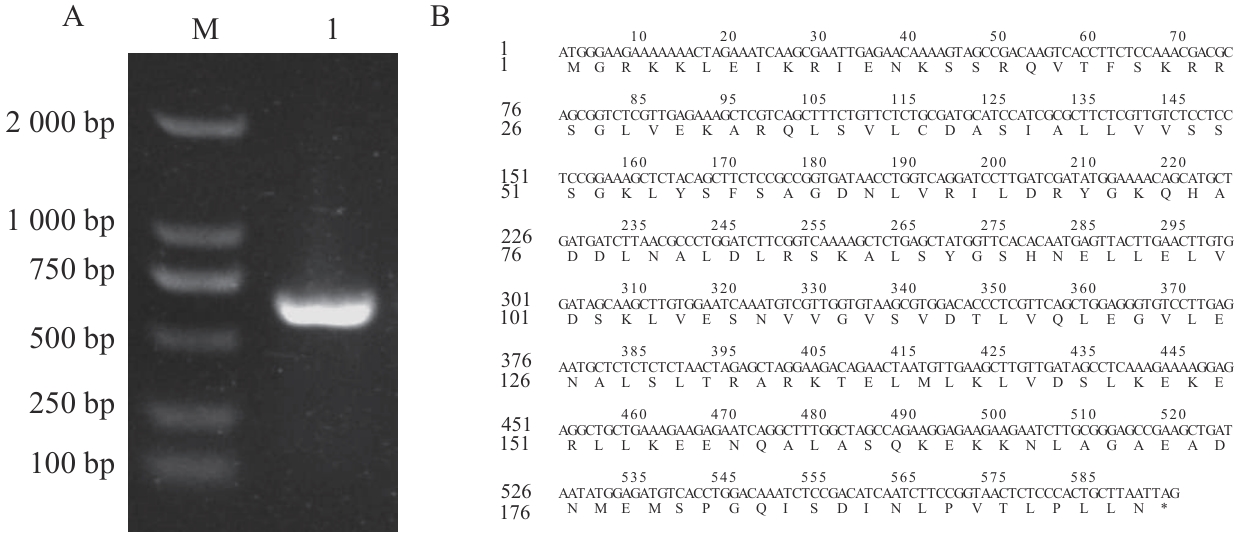
Fig. 1 Cloning and deduced amino acid sequence of BoFLC3A: PCR amplification of BoFLC3 (M: 2 000 bp DNA marker; 1: BoFLC3). B: The nucleotide and amino acid sequences of BoFLC3
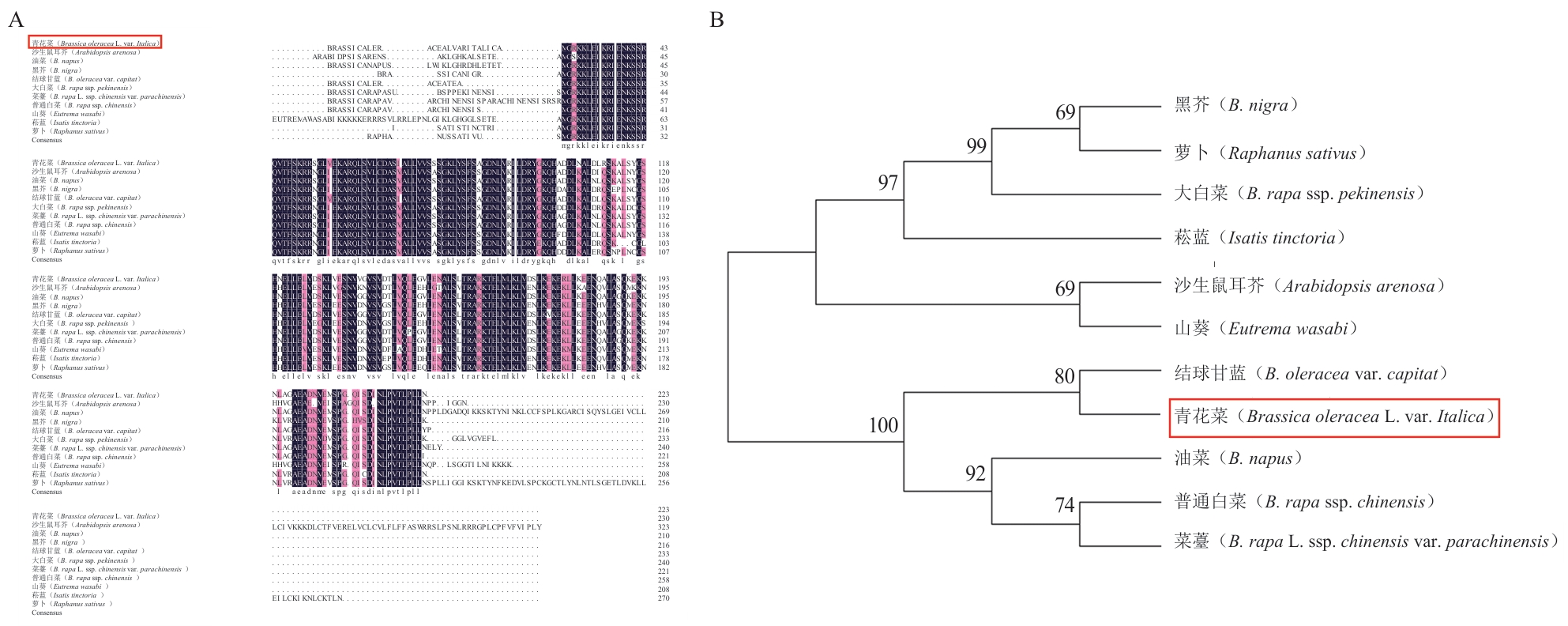
Fig. 2 Sequence alignment and phylogenetic analysis of BoFLC3 proteinA: Sequence alignment of BoFLC3 with homologous FLC proteins from diverse species. B: Phylogenetic tree of BoFLC3 and related FLC proteins. Red box indicates the species used in this study
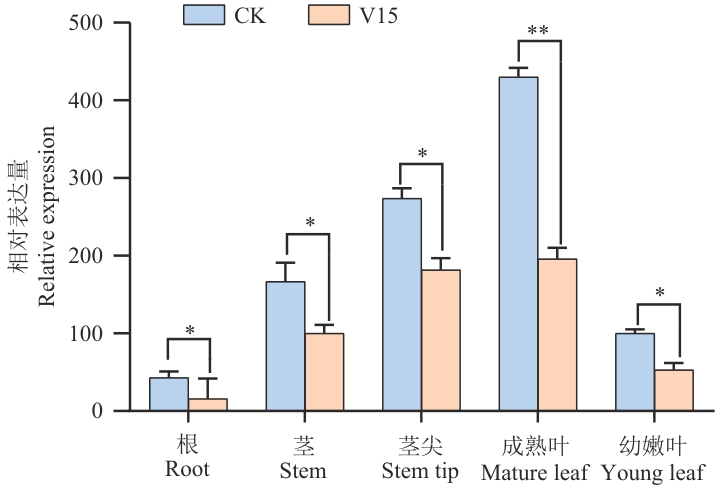
Fig. 3 Tissue expression pattern of BoFLC3 in broccoliCK: Control plant grown at 25 ℃/17 ℃. V15: Plants treated at 17 ℃/9 ℃ for 15 d. * P<0.05, ** P<0.01
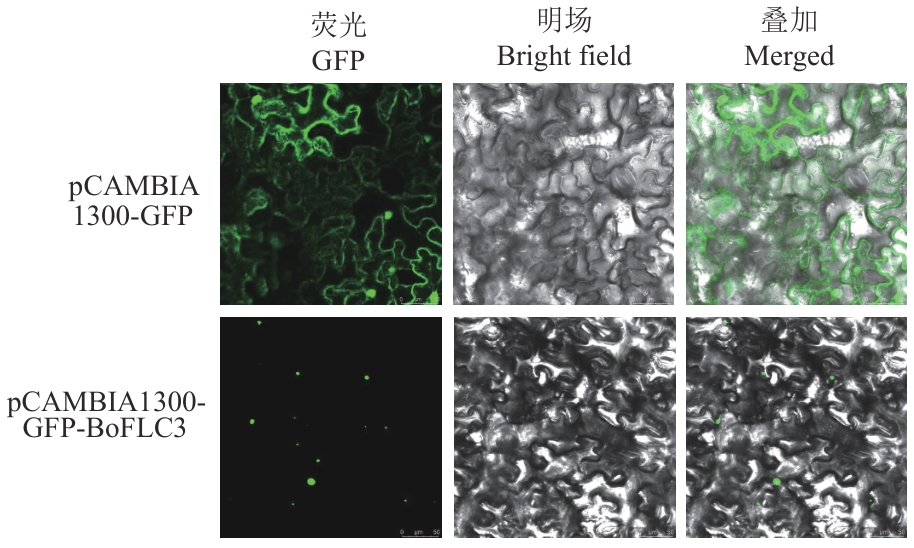
Fig. 4 Subcellular localization of BoFLC3
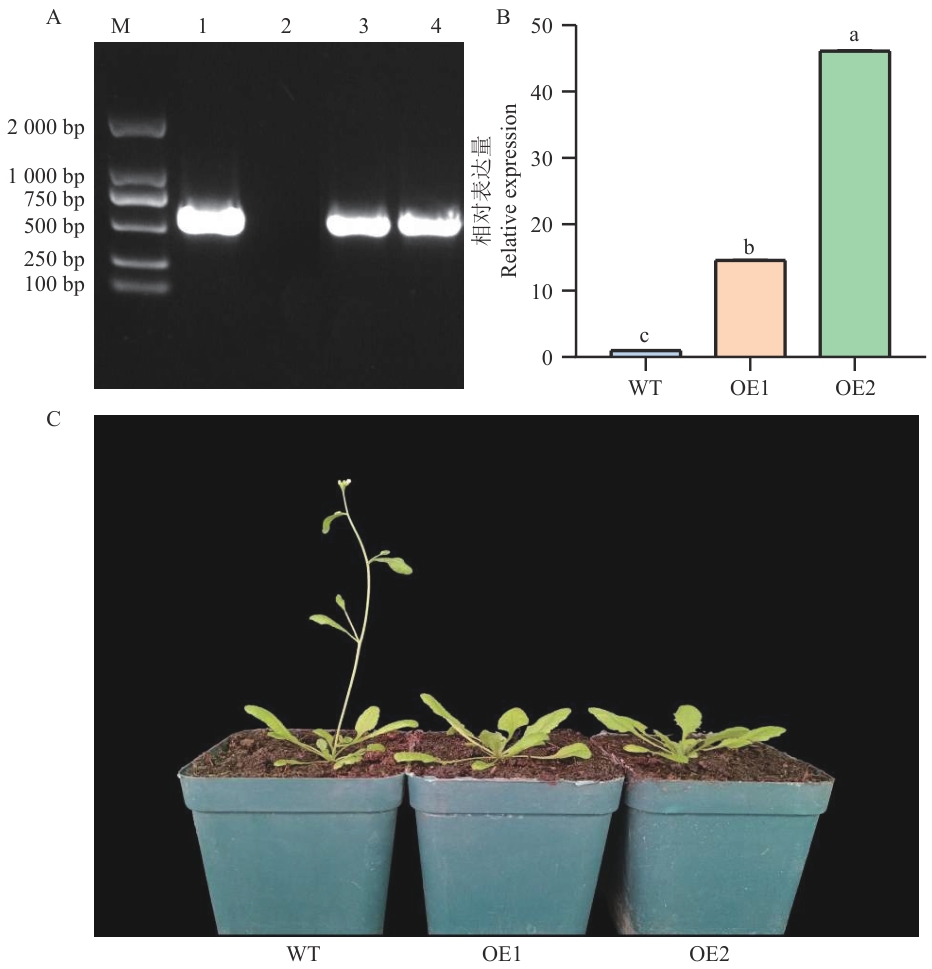
Fig. 5 Identification of transgenic Arabidopsis plantsA: PCR verification of BoFLC3 in transgenic Arabidopsis plants (M: 2 000 bp DNA marker, 1: pBI121-BoFLC3 plasmid (positive control), 2: wild-type (negative control), 3‒4: transgenic Arabidopsis plants). B: The relative expression level of BoFLC3 in transgenic plants. C: Phenotypes of BoFLC3 overexpression transgenic Arabidopsis plants. WT: Wild type. OE: BoFLC3 overexpression lines. Different letters indicate significant differences at P<0.05. The same below
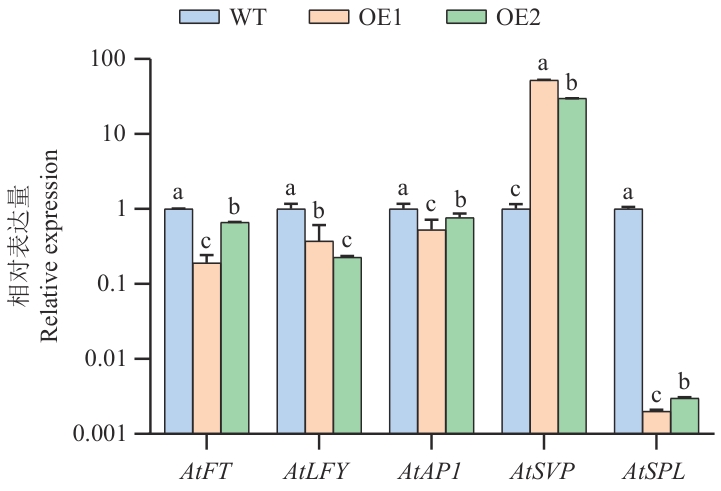
Fig. 6 Effects of BoFLC3 overexpression on the expression of flowering-related genes in Arabidopsis
| [1] | Kim DH. Current understanding of flowering pathways in plants: focusing on the vernalization pathway in Arabidopsis and several vegetable crop plants [J]. Hortic Environ Biotechnol, 2020, 61(2): 209-227. |
| [2] | Wigge PA. Ambient temperature signalling in plants [J]. Curr Opin Plant Biol, 2013, 16(5): 661-666. |
| [3] | 袁玺垒, 王振山, 贾小平, 等. 光周期调控植物开花分子机制以及CCT基因家族研究进展 [J]. 浙江农业学报, 2020, 32(6): 1133-1140. |
| Yuan XL, Wang ZS, Jia XP, et al. Research advances on molecular mechanisms of photoperiod-regulation plant flowering and CCT gene family [J]. Acta Agric Zhejiangensis, 2020, 32(6): 1133-1140. | |
| [4] | Theißen G. Development of floral organ identity: stories from the MADS house [J]. Curr Opin Plant Biol, 2001, 4(1): 75-85. |
| [5] | 何财林, 卢晶, 郭会会, 等. 藜麦MADS-box基因家族的全基因组鉴定和表达分析 [J]. 生物技术通报, 2025, 41(1): 157-172. |
| He CL, Lu J, Guo HH, et al. Genome-wide identification and expression analysis of the MADS-box gene family in quinoa [J]. Biotechnol Bull, 2025, 41(1): 157-172. | |
| [6] | Sharma N, Ruelens P, D'Hauw M, et al. A flowering locus C homolog is a vernalization-regulated repressor in Brachypodium and is cold regulated in wheat [J]. Plant Physiol, 2017, 173(2): 1301-1315. |
| [7] | Sharma N, Geuten K, Giri BS, et al. The molecular mechanism of vernalization in Arabidopsis and cereals: role of Flowering Locus C and its homologs [J]. Physiol Plant, 2020, 170(3): 373-383. |
| [8] | Wei QZ, Hu TH, Xu XF, et al. The new variation in the promoter region of FLOWERING LOCUS T is involved in flowering in Brassica rapa [J]. Genes, 2022, 13(7): 1162. |
| [9] | Michaels SD, Amasino RM. FLOWERING LOCUS C encodes a novel MADS domain protein that acts as a repressor of flowering [J]. Plant Cell, 1999, 11(5): 949. |
| [10] | Kim SY, Park BS, Kwon SJ, et al. Delayed flowering time in Arabidopsis and Brassica rapa by the overexpression of FLOWERING LOCUS C (FLC) homologs isolated from Chinese cabbage (Brassica rapa L. ssp. pekinensis) [J]. Plant Cell Rep, 2007, 26(3): 327-336. |
| [11] | 程凯. 矮牵牛MADS-box基因家族鉴定和FLC-like基因功能验证 [D]. 武汉: 华中农业大学, 2019. |
| Cheng K. Identification of MADS-box gene family and functional verification of FLC-like genes in Petunia [D]. Wuhan: Huazhong Agricultural University, 2019. | |
| [12] | Li YY, Yang HB, Jia PN, et al. The MADS-box transcription factor BoAGL8 is involved in regulating flowering in broccoli [J]. Horticulturae, 2025, 11(10): 1227. |
| [13] | Kim S, Kim JA, Kang H, et al. A premature stop codon in BrFLC2 transcript results in early flowering in oilseed-type Brassica rapa plants [J]. Plant Mol Biol, 2022, 108(3): 241-255. |
| [14] | Yuan YX, Wu J, Sun RF, et al. A naturally occurring splicing site mutation in the Brassica rapa FLC1 gene is associated with variation in flowering time [J]. J Exp Bot, 2009, 60(4): 1299-1308. |
| [15] | Ilahy R, Tlili I, Pék Z, et al. Pre- and post-harvest factors affecting glucosinolate content in broccoli [J]. Front Nutr, 2020, 7: 147. |
| [16] | 董岩, 崔轶男, 刘斯超, 等. 青花菜栽培技术及产业发展 [J]. 园艺与种苗, 2023, 43(12): 36-38. |
| Dong Y, Cui YN, Liu SC, et al. Cultivation technology and industrial development of Brassica oleracea. var. italica [J]. Hortic Seed, 2023, 43(12): 36-38. | |
| [17] | Livak KJ, Schmittgen TD. Analysis of relative gene expression data using real-time quantitative PCR and the 2-ΔΔCT method [J]. Methods, 2001, 25(4): 402-408. |
| [18] | Hofgen R, Willmitzer L. Storage of competent cells for Agrobacterium transformation [J]. Nucl Acids Res, 1988, 16(20): 9877. |
| [19] | Routier C, Hermida-Carrera C, Stavrinidou E. Investigating the effect of syringe infiltration on Nicotiana tabacum (tobacco) [J]. ACS Agric Sci Technol, 2025, 5(1): 28-35. |
| [20] | Zhang XR, Henriques R, Lin SS, et al. Agrobacterium-mediated transformation of Arabidopsis thaliana using the floral dip method [J]. Nat Protoc, 2006, 1(2): 641-646. |
| [21] | Okazaki K, Sakamoto K, Kikuchi R, et al. Mapping and characterization of FLC homologs and QTL analysis of flowering time in Brassica oleracea [J]. Theor Appl Genet, 2007, 114(4): 595-608. |
| [22] | Moon H, Hwang BH, Park M, et al. Time course transcriptomic analysis of cabbage (Brassica oleracea ssp. capitata L.) during vernalization [J]. J Plant Biol, 2024, 67(4): 317-332. |
| [23] | Itabashi E, Shea DJ, Fukino N, et al. Comparison of cold responses for orthologs of cabbage vernalization-related genes [J]. Hort J, 2019, 88(4): 462-470. |
| [24] | Li QF, Peng A, Yang JQ, et al. A 215-bp indel at intron I of BoFLC2 affects flowering time in Brassica oleracea var. capitata during vernalization [J]. Theor Appl Genet, 2022, 135(8): 2785-2797. |
| [25] | Guo N, Wang SY, Wang TY, et al. A graph-based pan-genome of Brassica oleracea provides new insights into its domestication and morphotype diversification [J]. Plant Commun, 2024, 5(2): 100791. |
| [26] | Zhang YN, Zhou YP, Chen QH, et al. Molecular basis of flowering time regulation in Arabidopsis [J]. Chin Bull Bot, 2014, 49(4): 469-482. |
| [27] | Luo X, He YH. Experiencing winter for spring flowering: a molecular epigenetic perspective on vernalization [J]. J Integr Plant Biol, 2020, 62(1): 104-117. |
| [28] | 于锡宏, 蒋欣梅. 不同温度对青花菜花芽分化的影响 [J]. 植物生理学通讯, 2007, 43(1): 89-92. |
| Yu XH, Jiang XM. Effect of different temperature on flower-bud differentiation of broccoli (Brassica oleracea var. italica plenk.) [J]. Plant Physiol Commun, 2007, 43(1): 89-92. | |
| [29] | Whittaker C, Dean C. The FLC locus: a platform for discoveries in epigenetics and adaptation [J]. Annu Rev Cell Dev Biol, 2017, 33: 555-575. |
| [30] | 周麟笔, 马关鹏, 赵夏云, 等. 大白菜BrFLC及BrFRI-LIKE基因对低温的响应及其与抽薹性状的关系研究 [J]. 种子, 2023, 42(4): 41-48. |
| Zhou LB, Ma GP, Zhao XY, et al. Response of BrFLC and BrFRI-LIKE genes to low temperature and their relationship with bolting trait in Chinese cabbage [J]. Seed, 2023, 42(4): 41-48. | |
| [31] | Chai WC, He X, Wen BY, et al. The molecular mechanism of relatively low-temperature-induced broccoli flower bud differentiation revealed by transcriptomic profiling [J]. Horticulturae, 2023, 9(12): 1353. |
| [32] | 张长生, 魏滔, 周玉萍, 等. FLC调控植物成花的分子机制研究新进展 [J]. 植物学报, 2021, 56(6): 651-663. |
| Zhang CS, Wei T, Zhou YP, et al. Progress in flowering regulation mechanisms of FLC [J]. Chin Bull Bot, 2021, 56(6): 651-663. | |
| [33] | Tadege M, Sheldon CC, Helliwell CA, et al. Control of flowering time by FLC orthologues in Brassica napus [J]. Plant J, 2001, 28(5): 545-553. |
| [34] | He YH, Chen T, Zeng XL. Genetic and epigenetic understanding of the seasonal timing of flowering [J]. Plant Commun, 2020, 1(1): 100008. |
| [35] | 臧丽娜. 白桦成花调控因子BpFLC及BpSVP协同调控晚花的作用机理研究 [D]. 哈尔滨: 东北林业大学, 2016. |
| Zang LN. Synergistic regulation of the mechanism of late flowering by BpFLC and BpSVP [D]. Harbin: Northeast Forestry University, 2016. | |
| [36] | Huang T, Böhlenius H, Eriksson S, et al. The mRNA of the Arabidopsis gene FT moves from leaf to shoot apex and induces flowering [J]. Science, 2005, 309(5741): 1694-1696. |
| [37] | Jang S, Torti S, Coupland G. Genetic and spatial interactions between FT, TSF and SVP during the early stages of floral induction in Arabidopsis [J]. Plant J, 2009, 60(4): 614-625. |
| [38] | Park KH, Kim SB, Jung JH. Analysis of temperature effects on the protein accumulation of the FT-FD module using newly generated Arabidopsis transgenic plants [J]. Plant Direct, 2023, 7(12): e552. |
| [39] | Deng WW, Ying H, Helliwell CA, et al. FLOWERING LOCUS C (FLC) regulates development pathways throughout the life cycle of Arabidopsis [J]. Proc Natl Acad Sci U S A, 2011, 108(16): 6680-6685. |
| [40] | Capovilla G, Schmid M, Pose D. Control of flowering by ambient temperature [J]. J Exp Bot, 2015, 66(1): 59-69. |
| [41] | Mateos JL, Madrigal P, Tsuda K, et al. Combinatorial activities of short vegetative phase and flowering locus c define distinct modes of flowering regulation in Arabidopsis [J]. Genome Biol, 2015, 16: 31. |
| [42] | 余海霞. 芒果MADS-box基因家族的挖掘与MiFLC和MiAP1s基因的功能研究 [D]. 南宁: 广西大学, 2022. |
| Yu HX. Analysis of the MADS-box gene family and functional study of MiFLC and MiAP1s genes in mango [D]. Nanning: Guangxi University, 2022. |
| [1] | WANG Jian-bo, LI Shi-ya, XING He-xuan, ZHOU Rui-jin, LI Gui-rong, WANG Ling. Functional Analysis of the Trehalose-6-phosphate Synthase Gene VvTPS10 in Salt Tolerance and Growth and Development of Grapevine [J]. Biotechnology Bulletin, 2026, 42(8): 188-196. |
| [2] | RAN Dan-dan, TAI Sen-lin, OU Xiao-hong, ZHOU Tao, XU Jiao. Genome-wide Identification and Characterization of UDP-glycosyltransferase Gene Family in Gastrodia elata [J]. Biotechnology Bulletin, 2026, 42(7): 163-172. |
| [3] | LI Xu-long, XU Shi-qiang, ZHANG Long, LI Jing-yu, HE Wei-xian, CHEN Li-kai, WANG Ji-hua. Genome-wide Identification, Evolution and Expression Pattern Analysis of Terpene Synthase Gene Family in Morinda officinalis [J]. Biotechnology Bulletin, 2026, 42(6): 314-325. |
| [4] | ZHAO Wen-juan, LI Hui, YANG Xue-ying, WANG Zhao-lu, ZHU Jian-bo. Establishment of a Genetic Transformation System for Potato ‘Xinjiang No. 2’ [J]. Biotechnology Bulletin, 2026, 42(6): 87-97. |
| [5] | XIONG Shi-fa, CHEN Yi-cun, WU Li-wen, SHI Xiang, ZHANG Sheng-jiao, PENG Fang-you, CHEN Tao-mei, WANG Yang-dong. Identification and Functional Analysis of the TCP Gene Family in Quercus fabri [J]. Biotechnology Bulletin, 2026, 42(6): 258-266. |
| [6] | LIANG Hui-qi, CHEN Yi-cun, WANG Yang-dong, ZHAO Yun-xiao, GAO Ming. Identification and Expression Analysis of the PAT1 Gene Subfamily in Litsea cubeba during Graft Union Healing [J]. Biotechnology Bulletin, 2026, 42(5): 302-311. |
| [7] | FENG Cheng-hao, DANG Yu-le, WANG Zhi-ze, NIE Wei-dan, YANG Zhong-min, DU Chong. Screening of Differentially Expressed Genes in Tomato Defense against Meloidogyne incognita Based on RNA-seq and Expression Characteristics Analysis of RPP13 Gene [J]. Biotechnology Bulletin, 2026, 42(4): 141-152. |
| [8] | NI Fei-fei, CHEN Yi-cun, GAO Ming, ZHANG Sheng-jiao, PENG Fang-you, CHEN Tao-mei, ZHAO Yun-xiao, WANG Yang-dong. Identification of Litsea cubebaTCP Genes and Their Roles in the Regulation of Terpenoid Biosynthesis [J]. Biotechnology Bulletin, 2026, 42(4): 227-238. |
| [9] | SUN Ting, ZHANG Yan, LIU Yu-shan, FENG Yuan-yuan, QIN Heng-shan, ZHANG Jun, HE Xiao-gang, ZHANG Jing-rong. Cloning and Functional Analysis of AeF3H Gene in Okra [J]. Biotechnology Bulletin, 2026, 42(4): 153-160. |
| [10] | YUAN Meng-bo, ZHAO Guang-wei, HE Yu-hua, HUANG Xiang, XU Yong-yang, ZHANG Jian, KONG Wei-hu, TIAN Xiao-qin, HU Ke-yun, TANG Ling-li. Functional Study of CmCRC Gene Influencing Sex Differentiation in Melon [J]. Biotechnology Bulletin, 2026, 42(3): 294-301. |
| [11] | XU Ze, ZHOU Chen-ping, KUANG Rui-bin, WU Xia-ming, YANG Min, LIU Chuan-he, HE Han, WEI Yue-rong. Identification of PG Gene Family and Their Roles in Papaya Fruit Softening [J]. Biotechnology Bulletin, 2026, 42(3): 349-361. |
| [12] | WANG Shang-feng, CHENG Bin, WANG Ruo-ruo, DING Yan-qing, XU Jian-xia, CAO Ning, GAO Xu, LI Wen-zhen, ZHANG Li-yi. Gene Mapping of Sorghum Flowering Time and Prediction of Candidate Genes Based on BSA-seq [J]. Biotechnology Bulletin, 2026, 42(2): 197-206. |
| [13] | ZHANG Dong-ling, ZHANG Yin-sheng, WANG Jian-jun, YE Fei-yu, LU Zi-han, MA Chen-chen, LIU Hua-feng, HU De-sheng, DENG Ya-zhou, CAO Li-ru. Expression Characteristics and Functions of HSFs Transcription Factors Family in Maize under Drought Stress [J]. Biotechnology Bulletin, 2026, 42(2): 178-187. |
| [14] | NONG Wei-you, ZHAO Chang-zu, QIAN Zhen-feng, DING Qian, WANG Yu-jie, CHEN Shu-ying, HE Li-lian, LI Fu-sheng. Identification of the EfBBX Gene Family in Erianthus fulvus and Analysis of Its Expression Patterns Under Cold Stress [J]. Biotechnology Bulletin, 2026, 42(2): 267-277. |
| [15] | YANG Juan, FENG Hui, JI Nai-zhe, SUN Li-ping, WANG Yun, ZHANG Jia-nan, ZHAO Shi-wei. Cloning and Functional Analysis of AP2/ERF Transcription Factors RcERF4 and RcRAP2-12 in Rose [J]. Biotechnology Bulletin, 2026, 42(1): 150-160. |
| Viewed | ||||||
|
Full text |
|
|||||
|
Abstract |
|
|||||
