







Biotechnology Bulletin ›› 2026, Vol. 42 ›› Issue (11): 124-133.doi: 10.13560/j.cnki.biotech.bull.1985.2025-1260
LI Chang-yan1, XIA Kang-li2,3, WANG Meng2, YANG Feng2, GUO Xue-ping2, HU Zhao-yang2, ZHOU Yue-long2, LIU Shi-qiang2, ZHOU Yong2( )
Received:2025-11-20
Online:2026-11-26
Published:2026-11-03
Contact:
ZHOU Yong
E-mail:yongzhou@jxau.edu.cn
LI Chang-yan, XIA Kang-li, WANG Meng, YANG Feng, GUO Xue-ping, HU Zhao-yang, ZHOU Yue-long, LIU Shi-qiang, ZHOU Yong. Cloning and Functional Characterization of Cucumber CsWRKY12 Gene in Drought Tolerance[J]. Biotechnology Bulletin, 2026, 42(11): 124-133.
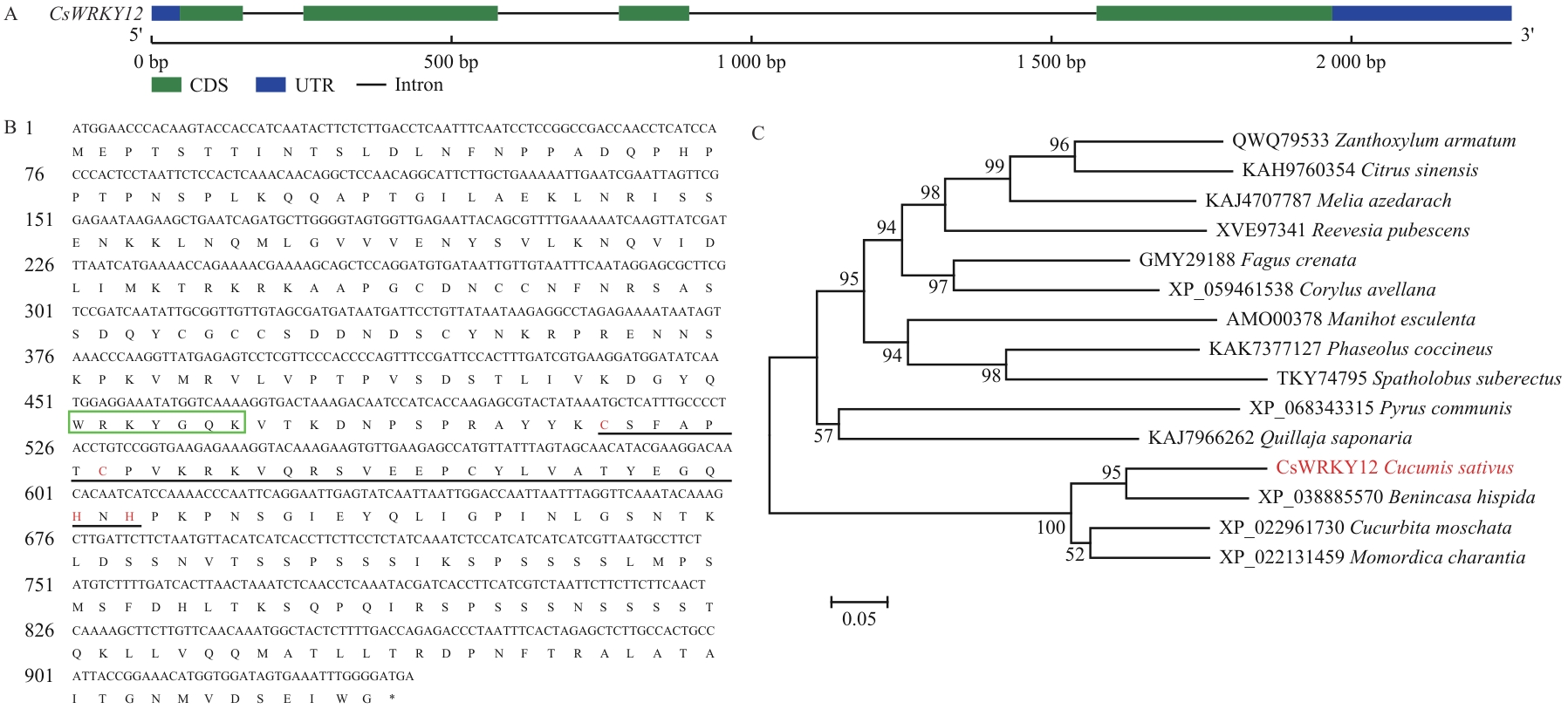
Fig. 1 Sequence analyses of the CsWRKY12 gene and its encoded proteinA: Gene structure analysis of CsWRKY12. B: Analysis of the encoded protein sequence of CsWRKY12. The green box represents the WRKY domain, the black line indicates the C2H2 domain, and the conserved C and H residues are marked in red. C: Phylogenetic analysis of CsWRKY12 and its homologous proteins
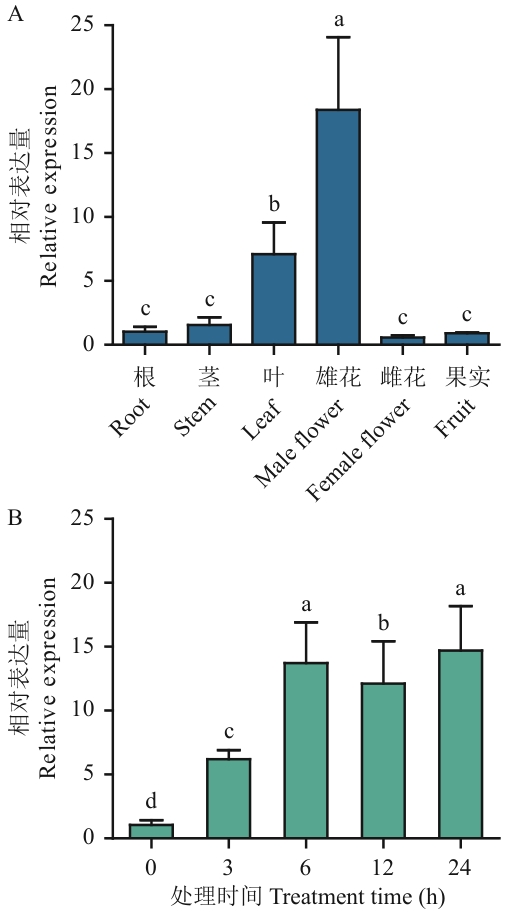
Fig. 2 Expression patterns of CsWRKY12 gene in different tissues (A) and under different time of drought stress in cucumber (B)Data are means ± SE of three replicates. Different lowercase letters indicate significant differences at P<0.05. The same below
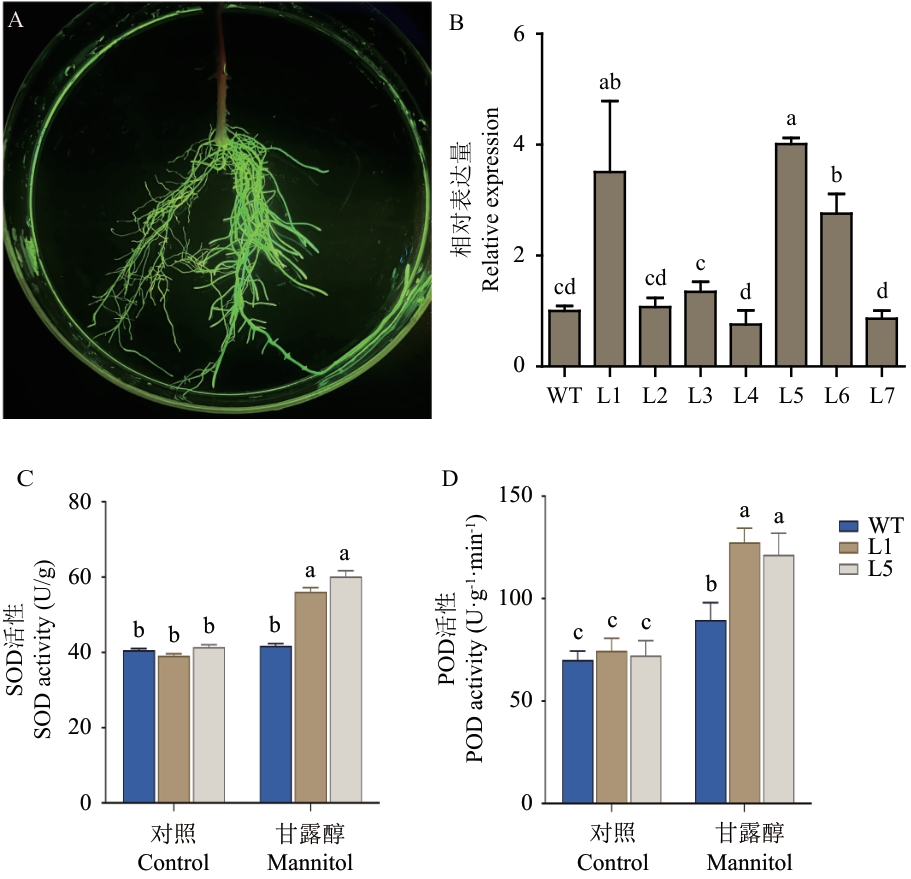
Fig. 3 Analysis of CsWRKY12-overexpressing cucumber hairy roots under drought stressA: Schematic diagram of fluorescence expression in CsWRKY12-GFP hairy root transformation. B: Determination of relative expression levels of CsWRKY12 in cucumber hairy roots. C: Determination of superoxide dismutase (SOD) activity. D: Determination of peroxidase (POD) activity
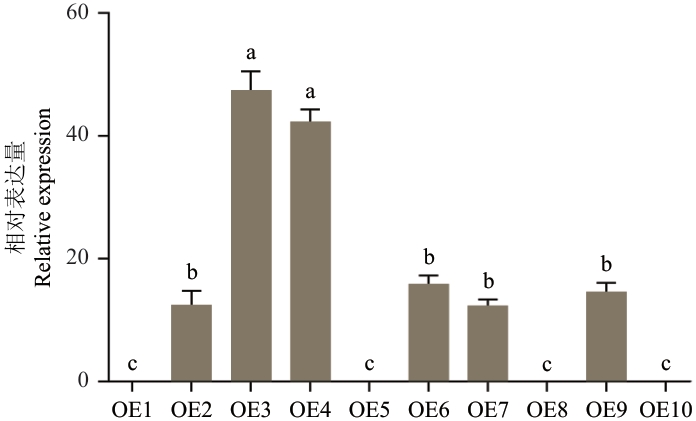
Fig. 4 Expression levels of the CsWRKY12 gene in overexpression (OE) transgenic Arabidopsis lines
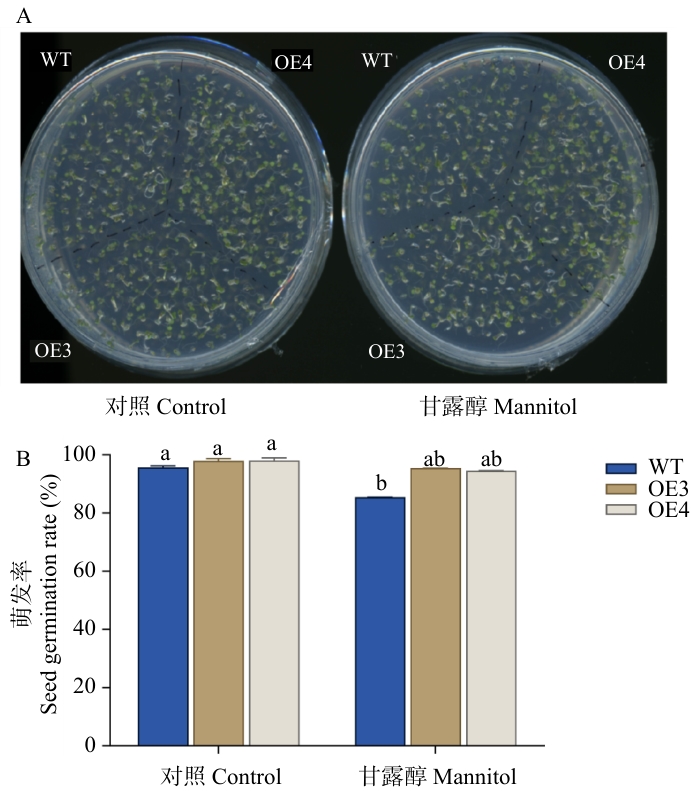
Fig. 5 Seed germination of overexpression (OE) and wild-type (WT) Arabidopsis under drought stressA: Phenotype of seed germination under drought stress simulated by 300 mmol/L mannitol treatment. B: Determination of seed germination rate under drought stress
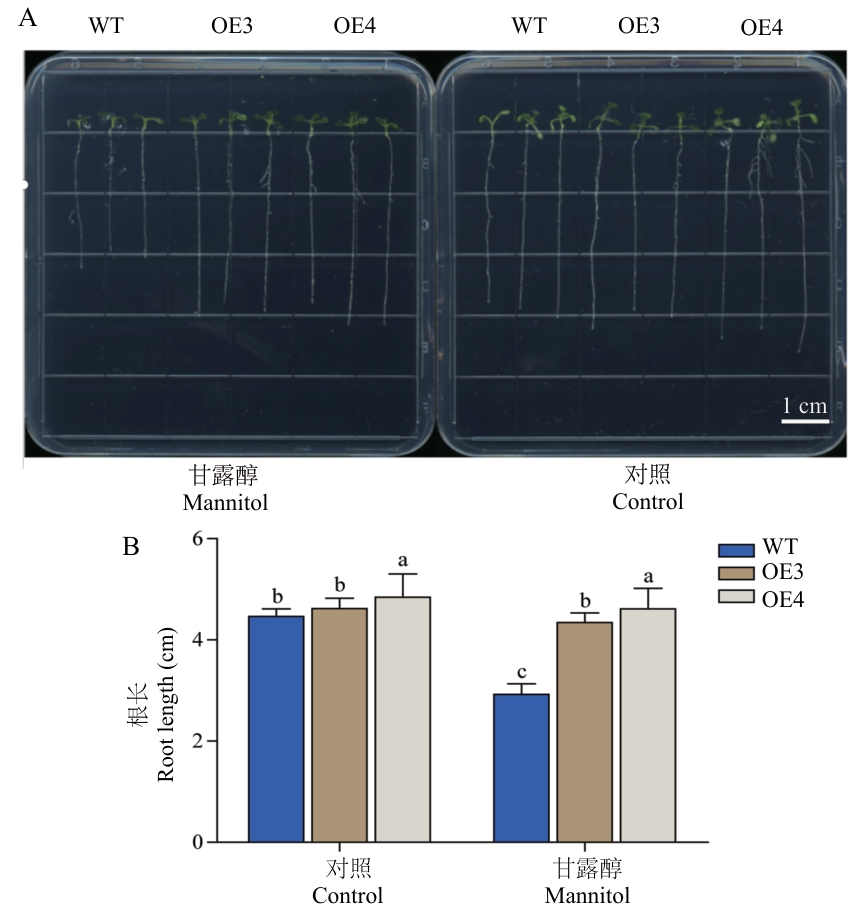
Fig. 6 Analysis of root length in overexpression (OE) and wild-type (WT) Arabidopsis plants under drought stressA: Root length phenotype of Arabidopsis plants under drought stress simulated by 200 mmol/L mannitol treatment. B: Determination of the relative root length of Arabidopsis plants under drought stress
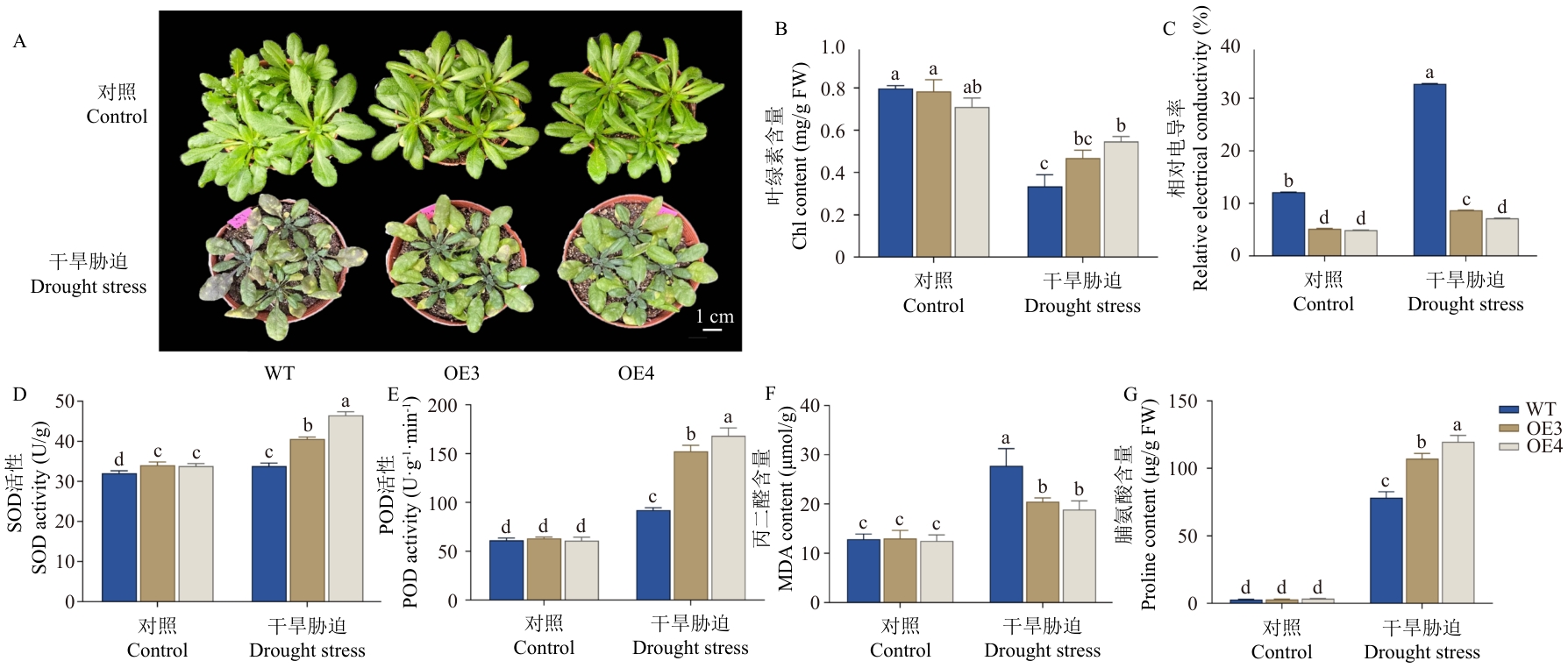
Fig. 7 Phenotype (A) and stress-related physiological indices (B-G) in overexpression (OE) and wild-type (WT) Arabidopsis plants under drought stress
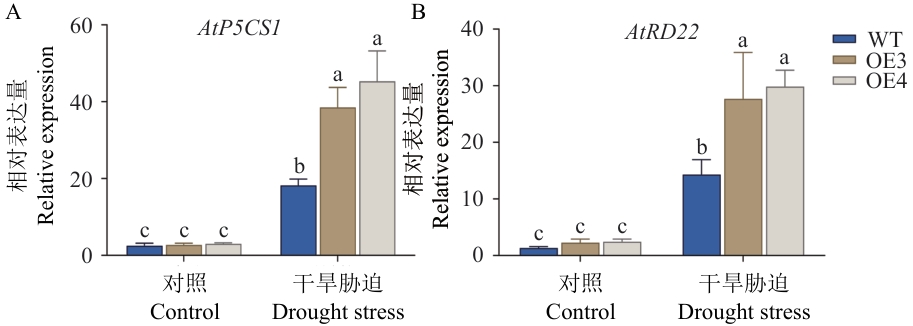
Fig. 8 Expression of stress related-genes in overexpression (OE) and wild-type (WT) Arabidopsis plants under drought stress
| [1] | Goyal P, Devi R, Verma B, et al. WRKY transcription factors: evolution, regulation, and functional diversity in plants [J]. Protoplasma, 2023, 260(2): 331-348. |
| [2] | Xia KL, Zhou ZY, Hu YS, et al. Identification of the group III WRKY subfamily and preliminary functional characterization of CsWRKY59 in cucumber [J]. J Plant Biochem Biotechnol, 2025, 34(1): 271-283. |
| [3] | Mahiwal S, Pahuja S, Pandey GK. Review: Structural-functional relationship of WRKY transcription factors: Unfolding the role of WRKY in plants [J]. Int J Biol Macromol, 2024, 257(Pt 2): 128769. |
| [4] | Ishiguro S, Nakamura K. Characterization of a cDNA encoding a novel DNA-binding protein, SPF1 that recognizes SP8 sequences in the 5′ upstream regions of genes coding for sporamin and beta-amylase from sweet potato [J]. Mol Gen Genet, 1994, 244(6): 563-571. |
| [5] | Li TT, Li B, Wang YY, et al. WRKY transcription factors in rice: key regulators orchestrating development and stress resilience [J]. Plant Cell Environ, 2025, 48(11): 8388-8406. |
| [6] | Bataller S, Davis JA, Gu LK, et al. Disruption of the OsWRKY71 transcription factor gene results in early rice seed germination under normal and cold stress conditions [J]. BMC Plant Biol, 2024, 24(1): 1090. |
| [7] | Sun ZG, Ji Y, Liu S, et al. The TgWRKY24 transcription factor is involved in releasing seed dormancy by responding to abscisic acid signals in Tulipa thianschanica [J]. BMC Plant Biol, 2025, 25(1): 1494. |
| [8] | Fang X, Wu H, Huang WC, et al. The WRKY transcription factor ZmWRKY92 binds to GA synthesis-related genes to regulate maize plant height [J]. Plant Physiol Biochem, 2024, 207: 108422. |
| [9] | Xie LH, Yan TX, Li L, et al. The WRKY transcription factor AaGSW2 promotes glandular trichome initiation in Artemisia annua [J]. J Exp Bot, 2021, 72(5): 1691-1701. |
| [10] | Huang YJ, Pang CJ, Yu YB, et al. Soybean GmWRKY44 transcription factor activates SOC1 and LFY to promote flowering in Arabidopsis thaliana [J]. Plant Cell Rep, 2025, 44(10): 226. |
| [11] | Zhang W, Tang SF, Li XY, et al. Arabidopsis WRKY1 promotes monocarpic senescence by integrative regulation of flowering, leaf senescence, and nitrogen remobilization [J]. Mol Plant, 2024, 17(8): 1289-1306. |
| [12] | Wang H, Zhang SH, Feng YC, et al. MdMAPK6-mediated phosphorylation of MdWRKY9 regulates apple fruit ripening through interaction with MdERF5L [J]. Hortic Res, 2025, 12(11): uhaf200. |
| [13] | Fu XQ, Peng BW, Hassani D, et al. AaWRKY9 contributes to light- and jasmonate-mediated to regulate the biosynthesis of artemisinin in Artemisia annua [J]. New Phytol, 2021, 231(5): 1858-1874. |
| [14] | Chen HY, Ji HY, Huang WK, et al. Transcription factor CrWRKY42 coregulates chlorophyll degradation and carotenoid biosynthesis in citrus [J]. Plant Physiol, 2024, 195(1): 728-744. |
| [15] | Mirzaei L, Abbasi S, Fazli M. WRKY transcription factors enhance plant defense responses against viral pathogens: a review [J]. Funct Plant Biol, 2025, 52(10): FP25093. |
| [16] | Cheng W, Wang N, Li Y, et al. CaWRKY01-10 and CaWRKY08-4 confer pepper’s resistance to Phytophthora capsici infection by directly activating a cluster of defense-related genes [J]. J Agric Food Chem, 2024, 72(20): 11682-11693. |
| [17] | Shi XT, Xiong YH, Zhang K, et al. The ANIP1-OsWRKY62 module regulates both basal defense and Pi9-mediated immunity against Magnaporthe oryzae in rice [J]. Mol Plant, 2023, 16(4): 739-755. |
| [18] | Liu Q, Li X, Yan SJ, et al. OsWRKY67 positively regulates blast and bacteria blight resistance by direct activation of PR genes in rice [J]. BMC Plant Biol, 2018, 18(1): 257. |
| [19] | Wang S, Han SY, Zhou XG, et al. Phosphorylation and ubiquitination of OsWRKY31 are integral to OsMKK10-2-mediated defense responses in rice [J]. Plant Cell, 2023, 35(6): 2391-2412. |
| [20] | Liu DM, He J, Li Q, et al. A WRKY transcription factor confers broad-spectrum resistance to biotic stresses and yield stability in rice [J]. Proc Natl Acad Sci USA, 2025, 122(10): e2411164122. |
| [21] | Li GZ, Liu J, Wang YY, et al. TaWRKY24-1D, interacts with TaERFL1a, regulates DHAR-mediated ASA-GSH biosynthesis to enhance drought tolerance in wheat [J]. Plant Growth Regul, 2024, 104(2): 713-725. |
| [22] | Jiang WW, Lv AM, Huang YQ, et al. The ArWRKY57-ArWRKY70-ArLEA5 module: Key regulators of drought tolerance in Anoectochilus roxburghii [J]. Int J Biol Macromol, 2025, 328: 147596. |
| [23] | Yang Y, Liu J, Zhou XH, et al. Eggplant WRKY26 functions as a positive regulator of cold tolerance by inducing autophagy [J]. Plant Physiol Biochem, 2025, 227: 110188. |
| [24] | Chen S, Liao NN, Bi HY, et al. RsWRKY49 promotes cold tolerance via activating the expression of RsCBF2 and RsNR2 in radish (Raphanus sativus L.) [J]. Plant J, 2025, 122(5): e70256. |
| [25] | Wu Z, Li T, Cao X, et al. Lily WRKY factor LlWRKY22 promotes thermotolerance through autoactivation and activation of LlDREB2B [J]. Hortic Res, 2022, 9: uhac186. |
| [26] | Zhang ZJ, Yang C, Xi J, et al. The MdHSC70-MdWRKY75 module mediates basal apple thermotolerance by regulating the expression of heat shock factor genes [J]. Plant Cell, 2024, 36(9): 3631-3653. |
| [27] | Lu KK, Song RF, Guo JX, et al. CycC1;1-WRKY75 complex-mediated transcriptional regulation of SOS1 controls salt stress tolerance in Arabidopsis [J]. Plant Cell, 2023, 35(7): 2570-2591. |
| [28] | Wang XM, Li H, Wang JY, et al. The WRKY transcription factor SbWRKY51 positively regulates salt tolerance of sorghum [J]. Plant Sci, 2026, 362: 112741. |
| [29] | Jiang YZ, Tong SF, Chen NN, et al. The PalWRKY77 transcription factor negatively regulates salt tolerance and abscisic acid signaling in Populus [J]. Plant J, 2021, 105(5): 1258-1273. |
| [30] | Zhang MX, Zhao RR, Huang K, et al. The OsWRKY63-OsWRKY76-OsDREB1B module regulates chilling tolerance in rice [J]. Plant J, 2022, 112(2): 383-398. |
| [31] | Luan QQ, Chen CH, Liu MY, et al. CsWRKY50 mediates defense responses to Pseudoperonospora cubensis infection in Cucumis sativus [J]. Plant Sci, 2019, 279: 59-69. |
| [32] | Zhang Y, Yu HJ, Yang XY, et al. CsWRKY46, a WRKY transcription factor from cucumber, confers cold resistance in transgenic-plant by regulating a set of cold-stress responsive genes in an ABA-dependent manner [J]. Plant Physiol Biochem, 2016, 108: 478-487. |
| [33] | Chen CH, Chen XQ, Han J, et al. Genome-wide analysis of the WRKY gene family in the cucumber genome and transcriptome-wide identification of WRKY transcription factors that respond to biotic and abiotic stresses [J]. BMC Plant Biol, 2020, 20(1): 443. |
| [34] | Yang YX, Guang YL, Wang F, et al. Characterization of phytochrome-interacting factor genes in pepper and functional analysis of CaPIF8 in cold and salt stress [J]. Front Plant Sci, 2021, 12: 746517. |
| [35] | Livak KJ, Schmittgen TD. Analysis of relative gene expression data using real-time quantitative PCR and the 2-ΔΔCt method [J]. Methods, 2001, 25(4): 402-408. |
| [36] | Zhao LR, Liu YW, Zhu Y, et al. Transcription factor OsWRKY11 induces rice heading at low concentrations but inhibits rice heading at high concentrations [J]. J Integr Plant Biol, 2024, 66(7): 1385-1407. |
| [37] | Sun MX, Yang MQ, Dang XY, et al. The GhWRKY46-GhGAI module mediates cotton flowering by regulating the expression of flowering promotion factors [J]. Plant Cell Environ, 2025, 48(7): 5448-5464. |
| [38] | Lee H, Cha J, Choi C, et al. Rice WRKY11 plays a role in pathogen defense and drought tolerance [J]. Rice, 2018, 11(1): 5. |
| [39] | Wei W, Liang DW, Bian XH, et al. GmWRKY54 improves drought tolerance through activating genes in abscisic acid and Ca2+ signaling pathways in transgenic soybean [J]. Plant J, 2019, 100(2): 384-398. |
| [40] | Ge MM, Tang Y, Guan YJ, et al. TaWRKY31, a novel WRKY transcription factor in wheat, participates in regulation of plant drought stress tolerance [J]. BMC Plant Biol, 2024, 24(1): 27. |
| [41] | Xu K, Wang P. CpWRKY51 enhances drought and salt resistance in Cucurbita pepo via activating CpPYL2-mediated PYL-PP2C-SnRK2 pathway [J]. J Plant Physiol, 2025, 315: 154652. |
| [42] | Mei P, Tang SK, Ling Q, et al. Dual regulation of thermotolerance and drought tolerance by LrWRKY16 through LrHSP17.2-mediated homeostasis and ROS scavenging in Lilium regale [J]. Plant Physiol Biochem, 2025, 229: 110402. |
| [43] | Kang GJ, Yan D, Chen XL, et al. HbWRKY82, a novel IIc WRKY transcription factor from Hevea brasiliensis associated with abiotic stress tolerance and leaf senescence in Arabidopsis [J]. Physiol Plant, 2021, 171(1): 151-160. |
| [44] | Xiang XY, Chen J, Xu WX, et al. Dehydration-induced WRKY transcriptional factor MfWRKY70 of Myrothamnus flabellifolia enhanced drought and salinity tolerance in Arabidopsis [J]. Biomolecules, 2021, 11(2): 327. |
| [45] | Liu Y, Cao YP. Overexpression of GmWRKY17, a class IIb WRKY transcription factor from Glycine max, enhances drought tolerance in Arabidopsis plants [J]. Plant Growth Regul, 2024, 104(1): 253-265. |
| [1] | YUAN Shu-qi, ZHANG Yan-fang, NIE Yu-shan, LI Na, SUO Ning-ning, TAN Gui-lian, HUO Xiu-wen. Identification of HXKs in Yam and Validation of Proteins Interacting with DoHXK3 [J]. Biotechnology Bulletin, 2026, 42(9): 306-315. |
| [2] | NIE Yu-shan, ZHANG Yan-fang, YUAN Shu-qi, LI Na, SUO Ning-ning, TAN Gui-lian, HUO Xiu-wen. Identification of the AGPL Gene Family in Yam and Screening of DoAGPL1 Interacting Proteins [J]. Biotechnology Bulletin, 2026, 42(9): 316-326. |
| [3] | FAN Li-jin, SONG Xiao-fei, LI Xiao-li, YAN Li-ying, XIE Yang. Integrated Transcriptome and Metabolome Analysis Reveals Key Regulatory Pathways Underlying Delayed Female Corolla Opening in Cucumber [J]. Biotechnology Bulletin, 2026, 42(9): 147-156. |
| [4] | TAN Shu, SHEN Hong-jian, GAO Xiao-lei, YIN Qian, ZOU Feng. Genome-wide Identification of the MYB Transcription Factor Family in Camellia oleifera and Functional Analysis of CoMYB107 in Stamen Development [J]. Biotechnology Bulletin, 2026, 42(9): 196-209. |
| [5] | DONG Xiang-xiang, HOU Wei-wei, MIAO Bai-ling, CHEN Juan-juan, LI Liang-jie, ZHAI Min, ZHU Qing-song, LIU Song-hu. Overexpression of FvBBX22 from Fragaria Vesca Promotes Anthocyanin Synthesis and Delays Flowering Time in Arabidopsis thaliana [J]. Biotechnology Bulletin, 2026, 42(9): 231-237. |
| [6] | SUN Chang-sheng, YU Wan-cong, WANG Yi-heng, ZHANG Gui-xia, LAN Qing-kuo, WANG Yong. Advances in Salt Tolerance of Cucumber: From Germplasm Screening, Evaluation to Molecular Mechanism [J]. Biotechnology Bulletin, 2026, 42(8): 35-46. |
| [7] | LYU Zheng, LIAN Ru-ying, LIU Yi-de, LIU Yi-ke, NING Qiang, WANG Shu-ping. Wheat HD-Zip Gene Family: Identification and Response to Fusarium graminearum [J]. Biotechnology Bulletin, 2026, 42(8): 123-132. |
| [8] | QIN Juan, LU Wei-Wen, LI Jia-Hui, LI Chen, LI Bin, WANG Zhi-ye. Cloning and Expression Analysis of Two G6PDH Genes from Safflower [J]. Biotechnology Bulletin, 2026, 42(8): 217-228. |
| [9] | CHEN Cui, LAN Li-xia, SU Meng-yu, WENG Nian-dong, ZHANG Zhen. Cloning and Functional Identification of Apple Protein Phosphatase Gene MdPP2C24 [J]. Biotechnology Bulletin, 2026, 42(8): 153-161. |
| [10] | WANG Hong-rui, ZHAO Yi-ru, RAO Shu-pei, CHEN Jin-huan. Research on the Function of LrCYP78A5 Gene from Lycium ruthenicum in Response to Drought and Salt Stress [J]. Biotechnology Bulletin, 2026, 42(7): 182-192. |
| [11] | YAN Xiao-guang, DU Yan-wei, MA Zhi-yuan, WANG Bin, WANG Guo-liang, HU Dan-zhu. Genome-wide Identification and Expression Pattern Analysis of ZmDIR Gene Family in Maize [J]. Biotechnology Bulletin, 2026, 42(7): 126-137. |
| [12] | ZHOU Tao, LI Ya-qiang, HE Hui-juan, HU Hai-fang, CHEN Tong-seng, PAN Yue, WANG Tian-bin. Establishment of Hairy Root Genetic Transformation System in Xanthoceras sorbifolium Mediated by Agrobacterium rhizogenes [J]. Biotechnology Bulletin, 2026, 42(7): 97-104. |
| [13] | ZHANG Ya-ning, MAO Chun-li, HU Zhi-yong, YANG Dan, WU Jia-hai, WANG Bi-xian, HUANG Lin-kai. Genome-wide Analysis of Dof Transcription Factors in Elephant Grass and Their Response to Cold Stress [J]. Biotechnology Bulletin, 2026, 42(6): 267-278. |
| [14] | LI Wan, WU Ya-qian, WU Fang, ZHAO Yong-ping. The Functional Study of StDREB4 Gene in Response to Salt and Drought Stress in Potato [J]. Biotechnology Bulletin, 2026, 42(6): 53-63. |
| [15] | DUAN Ya-xin, LI Cheng-chen, PAN Yu-ling, WANG Li, AN Kang, LI Xiao-bo, ZHU Guang-tao, LIU Ji-tao. Identification and Functional Analysis of the LEA_2 Gene Family in Potato in Response to Cold Stress and Hormones [J]. Biotechnology Bulletin, 2026, 42(6): 40-52. |
| Viewed | ||||||
|
Full text |
|
|||||
|
Abstract |
|
|||||
