







Biotechnology Bulletin ›› 2026, Vol. 42 ›› Issue (10): 153-159.doi: 10.13560/j.cnki.biotech.bull.1985.2025-1326
XUE Meng-meng, GENG Yi-xuan, HAN Xu-le, YANG Shi-jin( )
)
Received:2025-12-05
Online:2026-10-26
Published:2026-10-15
Contact:
YANG Shi-jin
E-mail:yangsj@nxu.edu.cn
XUE Meng-meng, GENG Yi-xuan, HAN Xu-le, YANG Shi-jin. Overexpression of VaHY5 Gene from Vitis amurensis Enhances Tolerance to Cold Stress in Arabidopsis thaliana[J]. Biotechnology Bulletin, 2026, 42(10): 153-159.
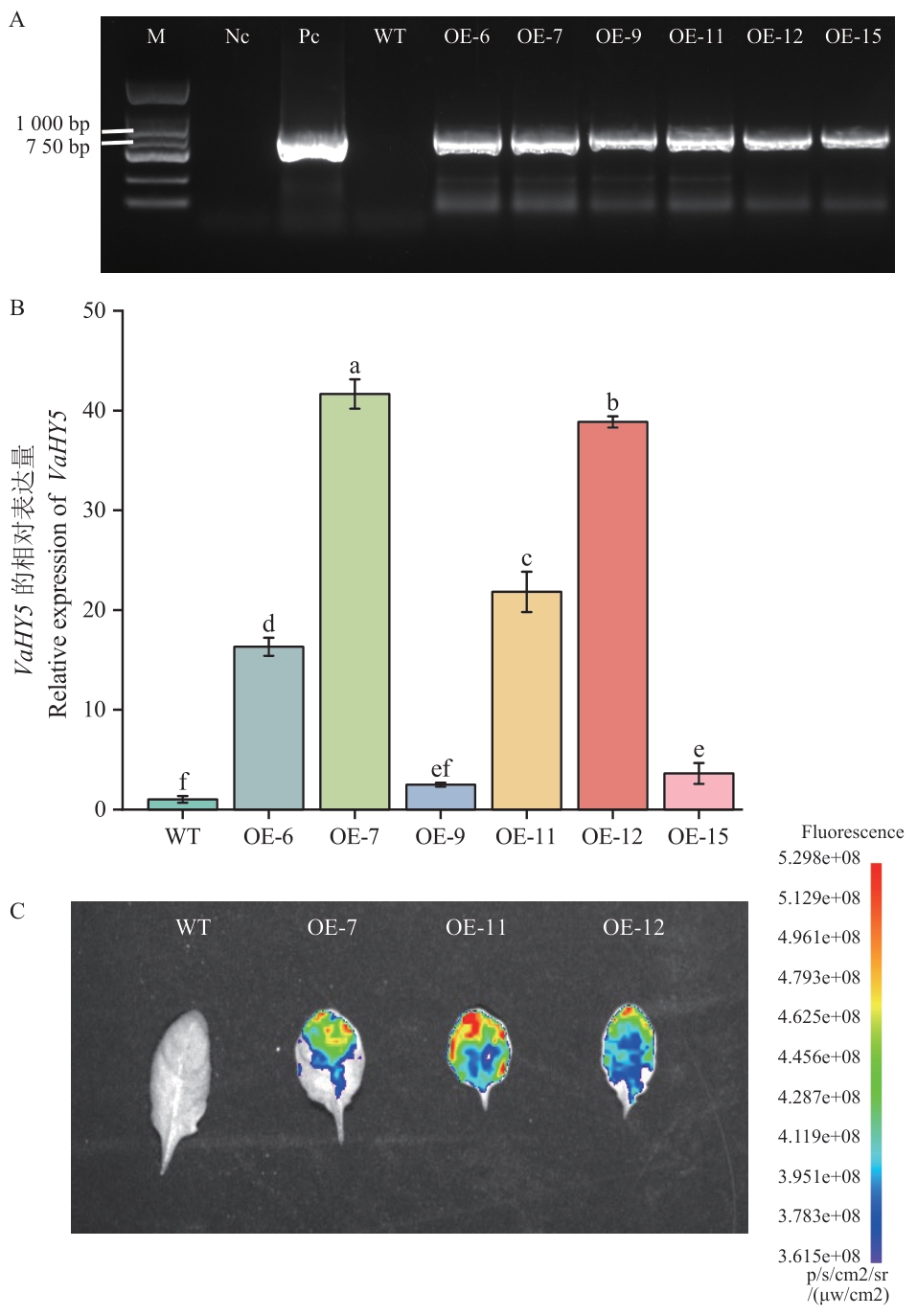
Fig. 1 Identification of Arabidopsis overexpressing VaHY5 and detection of VaHY5 relative expressionA: PCR detection. B: RT-qPCR detection of WT and transgenic Arabidopsis lines. C: Live imaging. M: DNA marker DL2000. Nc: Negative control. Pc: Positive control. WT: Wild-type Arabidopsis. OE-6-OE-15: different lines of transgenic Arabidopsis. Error bars represent standard error. Different lowercase letters indicate significant differences (P<0.05). The same below
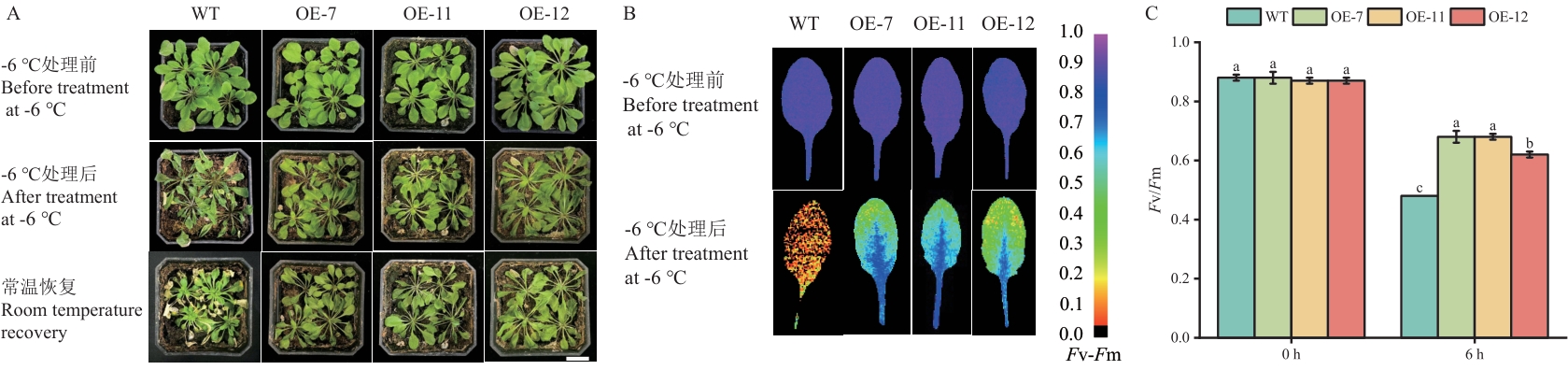
Fig. 2 Phenotype of VaHY5 overexpressing Arabidopsis and chlorophyll fluorescence measurementsA: Phenotypes of WT and transgenic lines under low-temperature stress (scale is 1 cm). B: Chlorophyll fluorescence imaging. C: Fv/Fm value
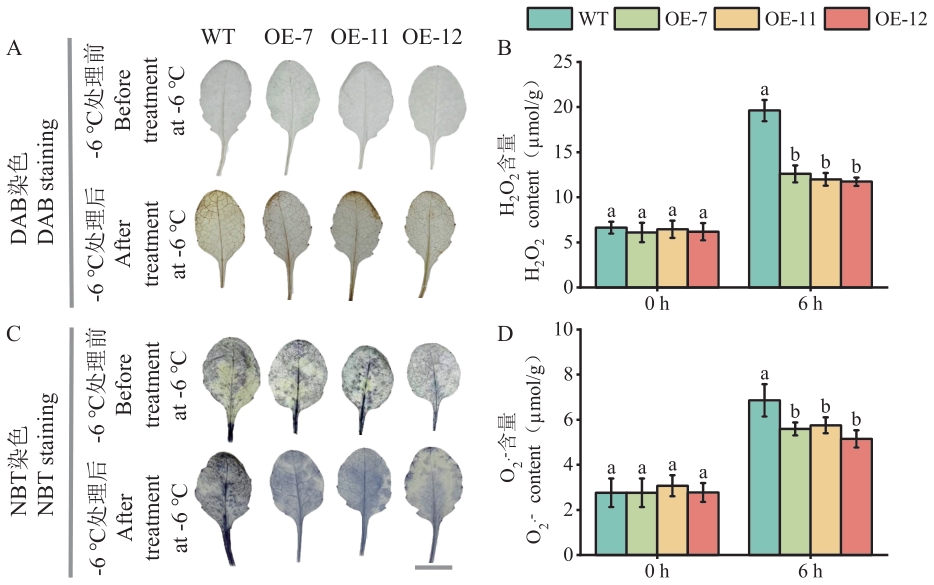
Fig. 3 Histochemical staining and determination of H2O2 and O2·- content
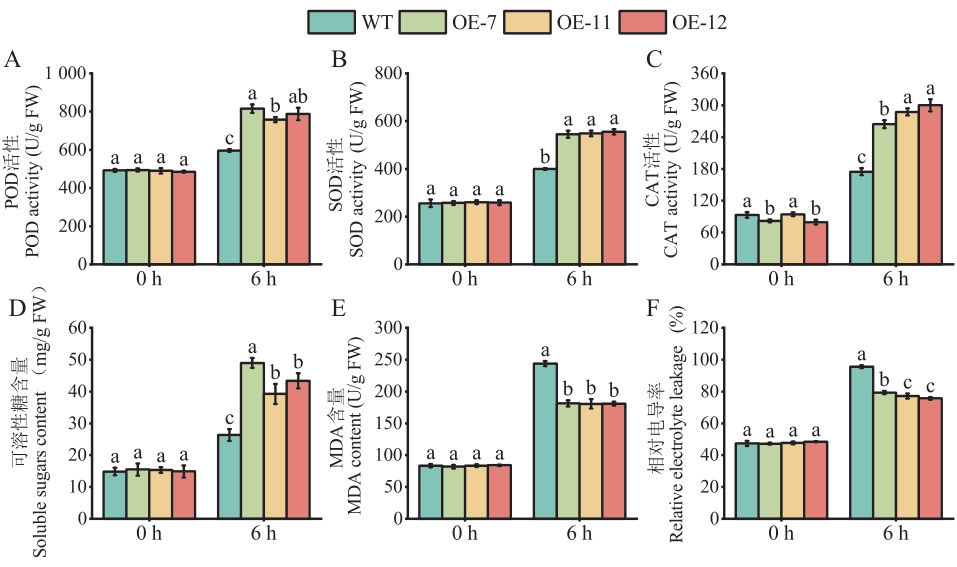
Fig. 4 Measurement of physiological indicators in wild-type and transgenic Arabidopsis under cold stress
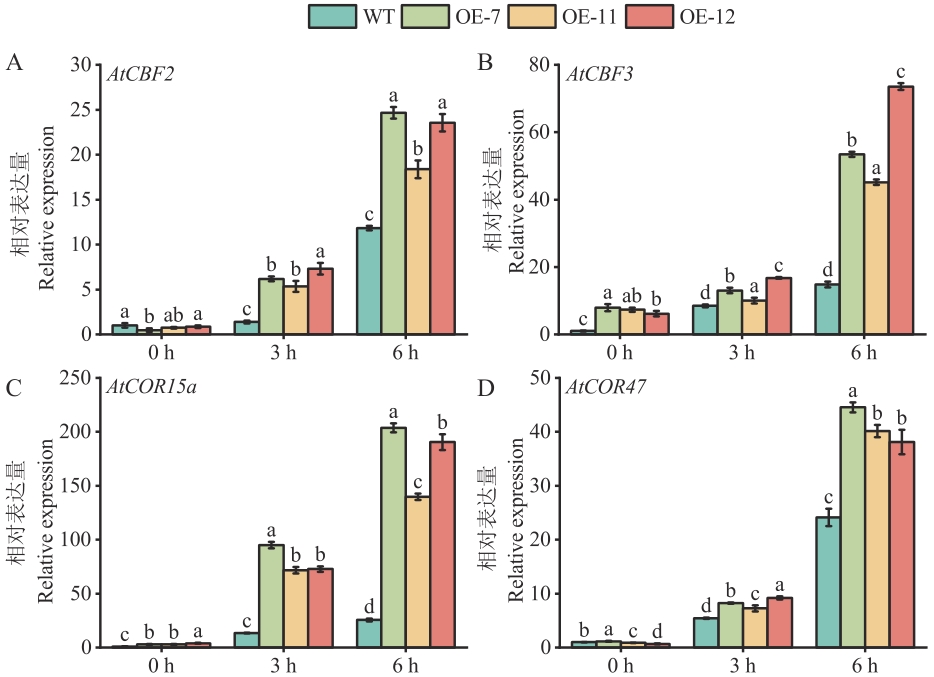
Fig. 5 Expression analysis of cold stress-related genes in wild-type and transgenic Arabidopsis under low-temperature stress
| [1] | 薛婷婷, 张佳佳, 聂榕博, 等. 中国酿酒葡萄越冬特性与保护措施研究进展 [J]. 中国农业大学学报, 2025, 30(5): 83-95. |
| Xue TT, Zhang JJ, Nie RB, et al. Research progress on winter survival characteristics and protection measures of wine grapes in China [J]. J China Agric Univ, 2025, 30(5): 83-95. | |
| [2] | Kidokoro S, Shinozaki K, Yamaguchi-Shinozaki K. Transcriptional regulatory network of plant cold-stress responses [J]. Trends Plant Sci, 2022, 27(9): 922-935. |
| [3] | Xi ZM, Wang ZZ, Fang YL, et al. Effects of 24-epibrassinolide on antioxidation defense and osmoregulation systems of young grapevines (V. vinifera L.) under chilling stress [J]. Plant Growth Regul, 2013, 71(1): 57-65. |
| [4] | Ma JH, Yan XX, Qi XC, et al. The transcription factor VaWRKY72 from Vitis amurensis positively regulates cold tolerance in Arabidopsis thaliana and grapevine [J]. Plant Mol Biol, 2025, 115(5): 109. |
| [5] | Meng L, Zhou HM, Tan LS, et al. VaWRKY65 contributes to cold tolerance through dual regulation of soluble sugar accumulation and reactive oxygen species scavenging in Vitis amurensis [J]. Hortic Res, 2025, 12(4): uhae367. |
| [6] | Yu QH, Zheng QL, Liu C, et al. Phosphorylation-dependent VaMYB4a regulates cold stress in grapevine by inhibiting VaPIF3 and activating VaCBF4 [J]. Plant Physiol, 2025, 197(2): kiaf035. |
| [7] | Ritonga FN, Chen S. Physiological and molecular mechanism involved in cold stress tolerance in plants [J]. Plants, 2020, 9(5): 560. |
| [8] | Thomashow MF. PLANT COLD ACCLIMATION freezing tolerance genes and regulatory mechanisms [J]. Annu Rev Plant Physiol Plant Mol Biol, 1999, 50: 571-599. |
| [9] | Rubio S, Noriega X, Pérez FJ. Abscisic acid (ABA) and low temperatures synergistically increase the expression of CBF/DREB1 transcription factors and cold-hardiness in grapevine dormant buds [J]. Ann Bot, 2019, 123(4): 681-689. |
| [10] | 窦雪婷, 朱熙, 张宁, 等. 马铃薯低温胁迫相关基因StHY5的功能分析 [J]. 园艺学报, 2025, 52(7): 1745-1757. |
| Dou XT, Zhu X, Zhang N, et al. Functional analysis of StHY5 associated with low-temperature stress in potato [J]. Acta Hortic Sin, 2025, 52(7): 1745-1757. | |
| [11] | Jing YJ, Zhang D, Wang X, et al. Arabidopsis chromatin remodeling factor PICKLE interacts with transcription factor HY5 to regulate hypocotyl cell elongation [J]. Plant Cell, 2013, 25(1): 242-256. |
| [12] | Cluis CP, Mouchel CF, Hardtke CS. The Arabidopsis transcription factor HY5 integrates light and hormone signaling pathways [J]. Plant J, 2004, 38(2): 332-347. |
| [13] | Lee J, He K, Stolc V, et al. Analysis of transcription factor HY5 genomic binding sites revealed its hierarchical role in light regulation of development [J]. Plant Cell, 2007, 19(3): 731-749. |
| [14] | Wang F, Zhang LY, Chen XX, et al. SlHY5 integrates temperature, light, and hormone signaling to balance plant growth and cold tolerance [J]. Plant Physiol, 2019, 179(2): 749-760. |
| [15] | Zhang LY, Jiang XC, Liu QY, et al. The HY5 and MYB15 transcription factors positively regulate cold tolerance in tomato via the CBF pathway [J]. Plant Cell Environ, 2020, 43(11): 2712-2726. |
| [16] | Lin R, Zhang WJ, Tian R, et al. CPK27 enhances cold tolerance by promoting flavonoid biosynthesis through phosphorylating HY5 in tomato [J]. New Phytol, 2025, 246(5): 2174-2191. |
| [17] | Liang L, Sui XY, Xiao JC, et al. ERD14 regulation by the HY5- or HY5-MED2 module mediates the cold signal transduction of Asparagus bean [J]. Plant J, 2025, 121: e17172. |
| [18] | Liu GC, Zhang Z, Tian Y, et al. VvbZIP22 regulates quercetin synthesis to enhances cold resistance in grape [J]. Plant Sci, 2025, 350: 112293. |
| [19] | Clough SJ, Bent AF. Floral dip: a simplified method for Agrobacterium-mediated transformation of Arabidopsis thaliana [J]. Plant J, 1998, 16(6): 735-743. |
| [20] | 李金璐, 王硕, 于婧, 等. 一种改良的植物DNA提取方法 [J]. 植物学报, 2013, 48(1): 72-78. |
| Li JL, Wang S, Yu J, et al. A modified CTAB protocol for plant DNA extraction [J]. Chin Bull Bot, 2013, 48(1): 72-78. | |
| [21] | Patwari P, Salewski V, Gutbrod K, et al. Surface wax esters contribute to drought tolerance in Arabidopsis [J]. Plant J, 2019, 98(4): 727-744. |
| [22] | 郑一羽, 王仕玉, 罗富寻, 等. 茄梨HY5基因的克隆及生物信息学分析 [J]. 中国南方果树, 2025, 54(1): 117-121. |
| Zheng YY, Wang SY, Luo FX, et al. Cloning and bioinformatics analysis of HY5 gene of Clapp’s favorite [J]. South China Fruits, 2025, 54(1): 117-121. | |
| [23] | 张瑶瑶, 吕晓元, 赵方贵, 等. 葡萄VvZF-HD11基因克隆及表达特性分析 [J]. 农业生物技术学报, 2025, 33(3): 547-560. |
| Zhang YY, Lyu XY, Zhao FG, et al. Cloning and expression characteristics analysis of VvZF-HD11 gene in grape (Vitis vinifera) [J]. J Agric Biotechnol, 2025, 33(3): 547-560. | |
| [24] | Shi YT, Ding YL, Yang SH. Cold signal transduction and its interplay with phytohormones during cold acclimation [J]. Plant Cell Physiol, 2015, 56(1): 7-15. |
| [25] | Qian ZF, He LL, Li FS. Understanding cold stress response mechanisms in plants: an overview [J]. Front Plant Sci, 2024, 15: 1443317. |
| [26] | Li SH, Liu S, Zhang Q, et al. The interaction of ABA and ROS in plant growth and stress resistances [J]. Front Plant Sci, 2022, 13: 1050132. |
| [27] | Gangappa SN, Botto JF. The multifaceted roles of HY5 in plant growth and development [J]. Mol Plant, 2016, 9(10): 1353-1365. |
| [28] | Zhang Y, Liu X, Shi YJ, et al. The B-box transcription factor BnBBX22.A07 enhances salt stress tolerance by indirectly activating BnWRKY33.C03 [J]. Plant Cell Environ, 2024, 47(12): 5424-5442. |
| [29] | Ali Z, Sun YZ, Ma ZD, et al. VvHY5 and VvBEE1 antagonistically control resveratrol biosynthesis to mitigate high light-induced damage in grapevine [J]. J Integr Plant Biol, 2025, 67(4): 993-1008. |
| [30] | Liu JY, Shi YT, Yang SH. Insights into the regulation of C-repeat binding factors in plant cold signaling [J]. J Integr Plant Biol, 2018, 60(9): 780-795. |
| [31] | Gilmour SJ, Fowler SG, Thomashow MF. Arabidopsis transcriptional activators CBF1, CBF2, and CBF3 have matching functional activities [J]. Plant Mol Biol, 2004, 54(5): 767-781. |
| [32] | Zhang YJ, Yang JS, Guo SJ, et al. Over-expression of the Arabidopsis CBF1 gene improves resistance of tomato leaves to low temperature under low irradiance [J]. Plant Biol, 2011, 13(2): 362-367. |
| [1] | LIU Na-wei, QIAN Meng-ying, ZHANG Hong-ying, WANG Zhao-jun, CUI Hong, YAN Xiao-xiao. NtWUN Negatively Regulates Tobacco Trichome Development [J]. Biotechnology Bulletin, 2026, 42(9): 128-136. |
| [2] | HE Jing-jing, PENG Mao-la-zhuan, YAO Xiao-hua, YAO You-hua, WU Kun-lun, CUI Yong-mei. Cloning and Functional Characterization of HvNAC53 from Hulless Barley [J]. Biotechnology Bulletin, 2026, 42(8): 142-152. |
| [3] | WANG Jian-bo, LI Shi-ya, XING He-xuan, ZHOU Rui-jin, LI Gui-rong, WANG Ling. Functional Analysis of the Trehalose-6-phosphate Synthase Gene VvTPS10 in Salt Tolerance and Growth and Development of Grapevine [J]. Biotechnology Bulletin, 2026, 42(8): 188-196. |
| [4] | FAN Fan, LI Meng-jiao, YANG Xian-peng, CUI Li-li. Screening and Functional Analysis of a Triphenyl Phosphate-tolerant Mutant in Arabidopsis thaliana [J]. Biotechnology Bulletin, 2026, 42(7): 226-235. |
| [5] | DONG Ya-ru, NIE Yu-xia, ZHU Hong, WANG Zhao-hong, LIU Hui-fen, GUO Guang. Overexpression of Mulberry MnERF2 Enhances Resistance to Drought in Arabidopsis thaliana [J]. Biotechnology Bulletin, 2026, 42(4): 182-189. |
| [6] | XU Yu-jiao, SUN Yu-shuai, LIU Dao-qi, ZHANG Li, ZHANG Zhi-chang, YAO Yu-xin. Functional Analysis of VvHSP18.2 Overexpression in Regulating Salt-alkali Resistance in Grapevines [J]. Biotechnology Bulletin, 2026, 42(4): 161-169. |
| [7] | GUO Dao-xiang, SU Quan, LI Ao-ting, WANG Yan, CHEN Qing, WANG Xiao-rong, HE Wen. Identification of the MYB Gene Family in Pomelo (Citrus grandis) and Functional Analysis in Chlorosis of Graft Incompatibility [J]. Biotechnology Bulletin, 2026, 42(4): 170-181. |
| [8] | NONG Wei-you, ZHAO Chang-zu, QIAN Zhen-feng, DING Qian, WANG Yu-jie, CHEN Shu-ying, HE Li-lian, LI Fu-sheng. Identification of the EfBBX Gene Family in Erianthus fulvus and Analysis of Its Expression Patterns Under Cold Stress [J]. Biotechnology Bulletin, 2026, 42(2): 267-277. |
| [9] | GAO Liang, CUI Xin-yuan, LIU Ming-yuan, HAN Lei. Identification of Malate Dehydrogenase MDH Gene Family and Functional Characterization of VvMDH10 in Grape [J]. Biotechnology Bulletin, 2026, 42(10): 142-152. |
| [10] | ZENG Ting, ZHANG Lan, LUO Rui. Functional Analysis of the Transcription Factor MpR2R3-MYB17 in Regulating Gemma Development in Marchantia polymorpha L. [J]. Biotechnology Bulletin, 2026, 42(1): 208-217. |
| [11] | LI Shan, MA Deng-hui, MA Hong-yi, YAO Wen-kong, YIN Xiao. Identification and Expression Analysis of SKP1 Gene Family in Grapevine (Vitis vinifera L.) [J]. Biotechnology Bulletin, 2025, 41(9): 147-158. |
| [12] | LI Kai-jie, WU Yao, LI Dan-dan. Cloning of Gene CtbHLH128 in Safflower and Response Function Regulating Drought Stress [J]. Biotechnology Bulletin, 2025, 41(8): 234-241. |
| [13] | LAI Shi-yu, LIANG Qiao-lan, WEI Lie-xin, NIU Er-bo, CHEN Ying-e, ZHOU Xin, YANG Si-zheng, WANG Bo. The Role of NbJAZ3 in the Infection of Nicotiana benthamiana by Alfalfa Mosaic Virus [J]. Biotechnology Bulletin, 2025, 41(8): 186-196. |
| [14] | LI Ya-qiong, GESANG La-mao, CHEN Qi-di, YANG Yu-huan, HE Hua-zhuan, ZHAO Yao-fei. Heterologous Overexpression of Sorghum SbSnRK2.1 Enhances the Resistance to Salt Stress in Arabidopsis [J]. Biotechnology Bulletin, 2025, 41(8): 115-123. |
| [15] | LIN Jia-yi, CHEN Qiang, ZHANG Lei, LIU Hong-xin, ZHENG Xiao-ming, PANG Hong-bo. Research Progress in Melatonin in Plant Low-temperature Stress [J]. Biotechnology Bulletin, 2025, 41(7): 37-48. |
| Viewed | ||||||
|
Full text |
|
|||||
|
Abstract |
|
|||||
