







Biotechnology Bulletin ›› 2026, Vol. 42 ›› Issue (10): 27-36.doi: 10.13560/j.cnki.biotech.bull.1985.2026-0100
SU Xiao-mei, LIU Shu-mei, LYU Hong-jun, YANG Zong-hui, HOU Li-xia( )
)
Received:2026-01-22
Online:2026-10-26
Published:2026-10-15
Contact:
HOU Li-xia
E-mail:houlx2006@163.com
SU Xiao-mei, LIU Shu-mei, LYU Hong-jun, YANG Zong-hui, HOU Li-xia. Development and Application of Insertion-deletion (InDel) Markers in Tomato Based on Whole-genome Re-sequencing Data[J]. Biotechnology Bulletin, 2026, 42(10): 27-36.
群体类型 Group type | 平均次要等位基因频率 Mean MAF | 平均观测杂合度 Mean Ho | 平均期望杂合度 Mean He | 平均多态信息含量 Mean PIC |
|---|---|---|---|---|
| 普通鲜食番茄 Fresh tomato (B) | 0.207 4 | 0.254 8 | 0.264 0 | 0.208 8 |
| 口感番茄 Flavor tomato (K) | 0.168 0 | 0.242 7 | 0.232 4 | 0.190 1 |
| 加工番茄 Processing tomato (P) | 0.205 1 | 0.179 7 | 0.282 3 | 0.227 2 |
| 樱桃番茄 Cherry tomato (Y) | 0.279 1 | 0.337 0 | 0.360 6 | 0.284 9 |
| 总计 Total | 0.279 8 | 0.253 6 | 0.369 3 | 0.294 5 |
Table 1 Genetic diversity parameters of different tomato types
群体类型 Group type | 平均次要等位基因频率 Mean MAF | 平均观测杂合度 Mean Ho | 平均期望杂合度 Mean He | 平均多态信息含量 Mean PIC |
|---|---|---|---|---|
| 普通鲜食番茄 Fresh tomato (B) | 0.207 4 | 0.254 8 | 0.264 0 | 0.208 8 |
| 口感番茄 Flavor tomato (K) | 0.168 0 | 0.242 7 | 0.232 4 | 0.190 1 |
| 加工番茄 Processing tomato (P) | 0.205 1 | 0.179 7 | 0.282 3 | 0.227 2 |
| 樱桃番茄 Cherry tomato (Y) | 0.279 1 | 0.337 0 | 0.360 6 | 0.284 9 |
| 总计 Total | 0.279 8 | 0.253 6 | 0.369 3 | 0.294 5 |
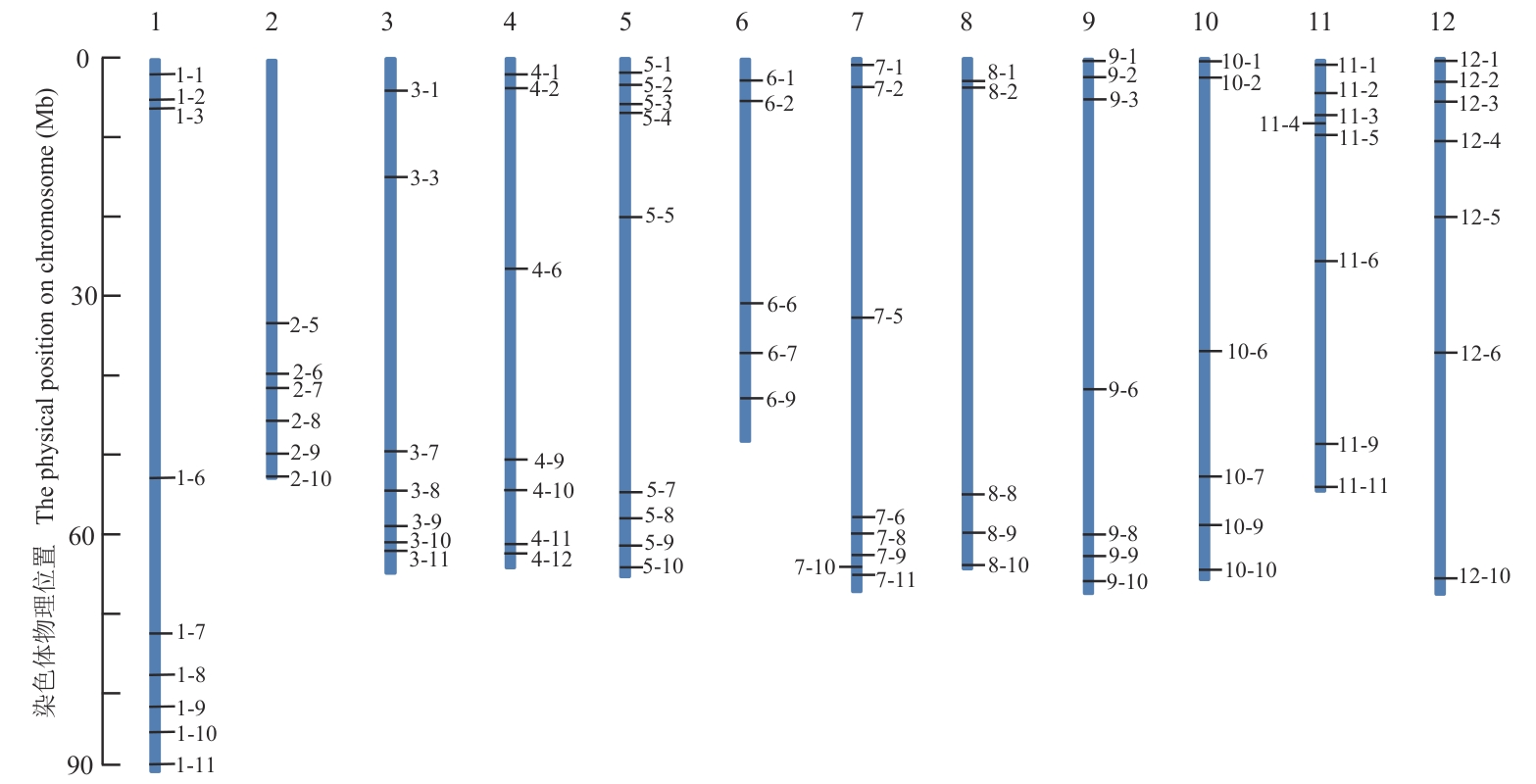
Fig. 1 Physical positions of 84 InDel markers on the tomato reference genome (SL4.0)
群体类型 Group type | 普通鲜食番茄 Fresh tomato (B) | 口感番茄 Flavor tomato (K) | 加工番茄 Processing tomato (P) | 樱桃番茄 Cherry tomato (Y) |
|---|---|---|---|---|
| 普通鲜食番茄 Fresh tomato (B) | 0.213 2 | — | — | — |
| 口感番茄 Flavor tomato (K) | 0.261 9 | 0.185 5 | — | — |
| 加工番茄 Processing tomato (P) | 0.315 3 | 0.345 7 | 0.259 9 | — |
| 樱桃番茄 Cherry tomato (Y) | 0.412 2 | 0.429 0 | 0.420 8 | 0.296 8 |
Table 2 Genetic distance matrix among different tomato types
群体类型 Group type | 普通鲜食番茄 Fresh tomato (B) | 口感番茄 Flavor tomato (K) | 加工番茄 Processing tomato (P) | 樱桃番茄 Cherry tomato (Y) |
|---|---|---|---|---|
| 普通鲜食番茄 Fresh tomato (B) | 0.213 2 | — | — | — |
| 口感番茄 Flavor tomato (K) | 0.261 9 | 0.185 5 | — | — |
| 加工番茄 Processing tomato (P) | 0.315 3 | 0.345 7 | 0.259 9 | — |
| 樱桃番茄 Cherry tomato (Y) | 0.412 2 | 0.429 0 | 0.420 8 | 0.296 8 |
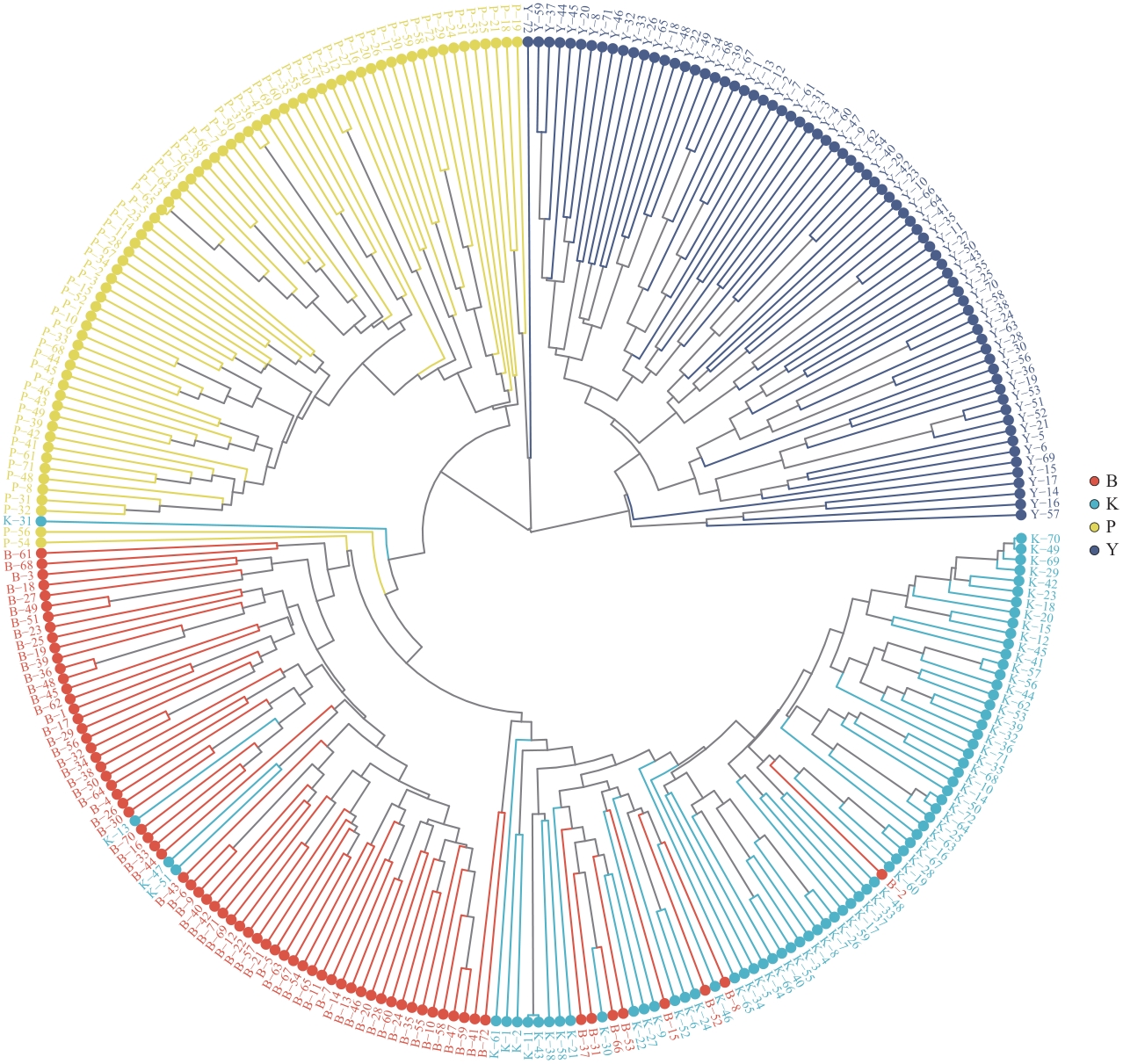
Fig. 2 Phylogenetic tree of 288 tomato varieties based on 84 InDel markers using the UPGMA methodB: Fresh tomato. K: Flavor tomato. P: Processing tomato. Y: Cherry tomato. The same below
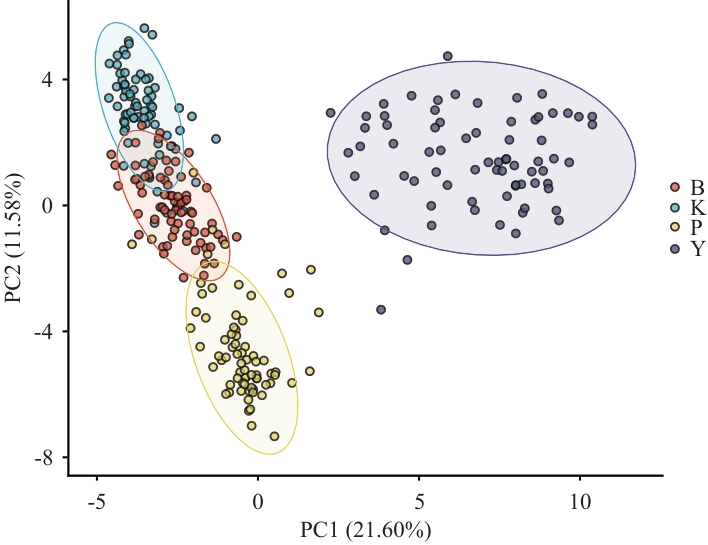
Fig. 3 Principal component analysis (PCA) of 288 tomato varieties based on 84 InDel markersPC1: Explained 21.60% of the total genetic variation; PC2: explained 11.58% of the total genetic variation
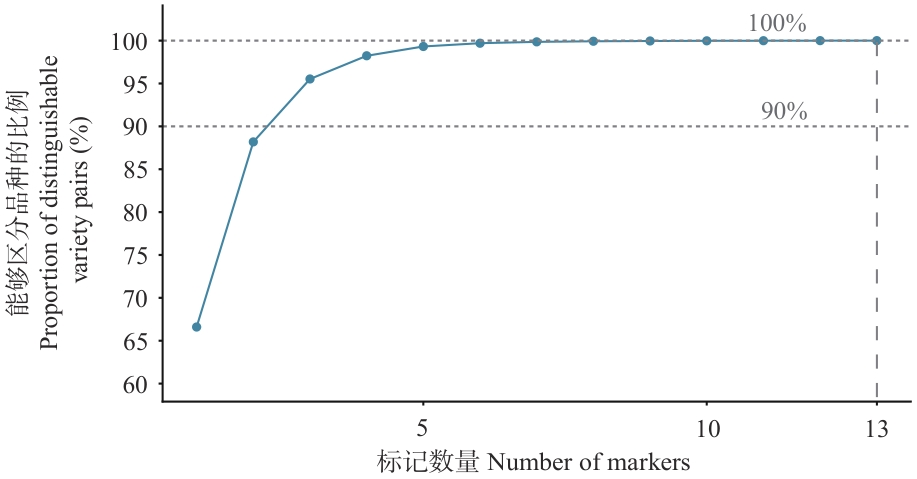
Fig. 4 Efficiency of tomato variety identification using different numbers of InDel markers

Fig. 5 DNA fingerprints of four tomato types based on core markersIn the fingerprint, different colors represent the homozygous type consistent with the reference genome (a, blue), heterozygous type (h, white) and variant homozygous type (b, red), respectively
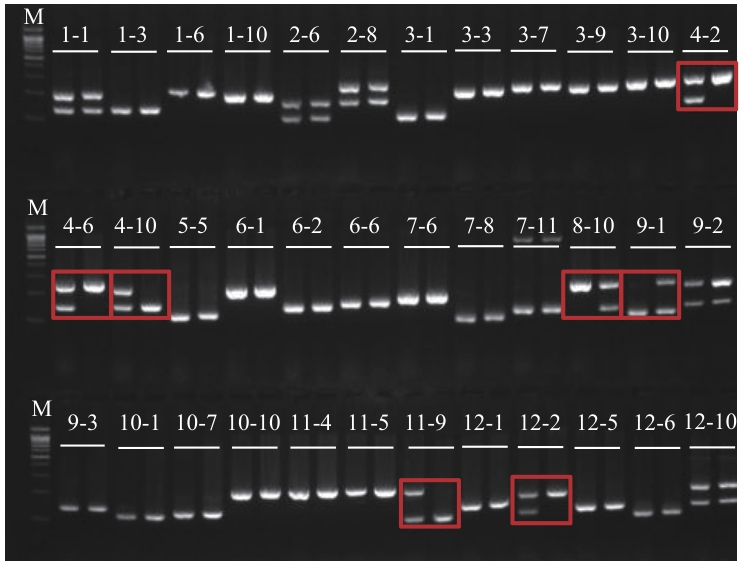
Fig. 6 Authenticity identification of two flavor tomato varieties based on a core set of 36 markersThe red box indicates polymorphic markers between the two varieties. M: 100 bp DNA marker
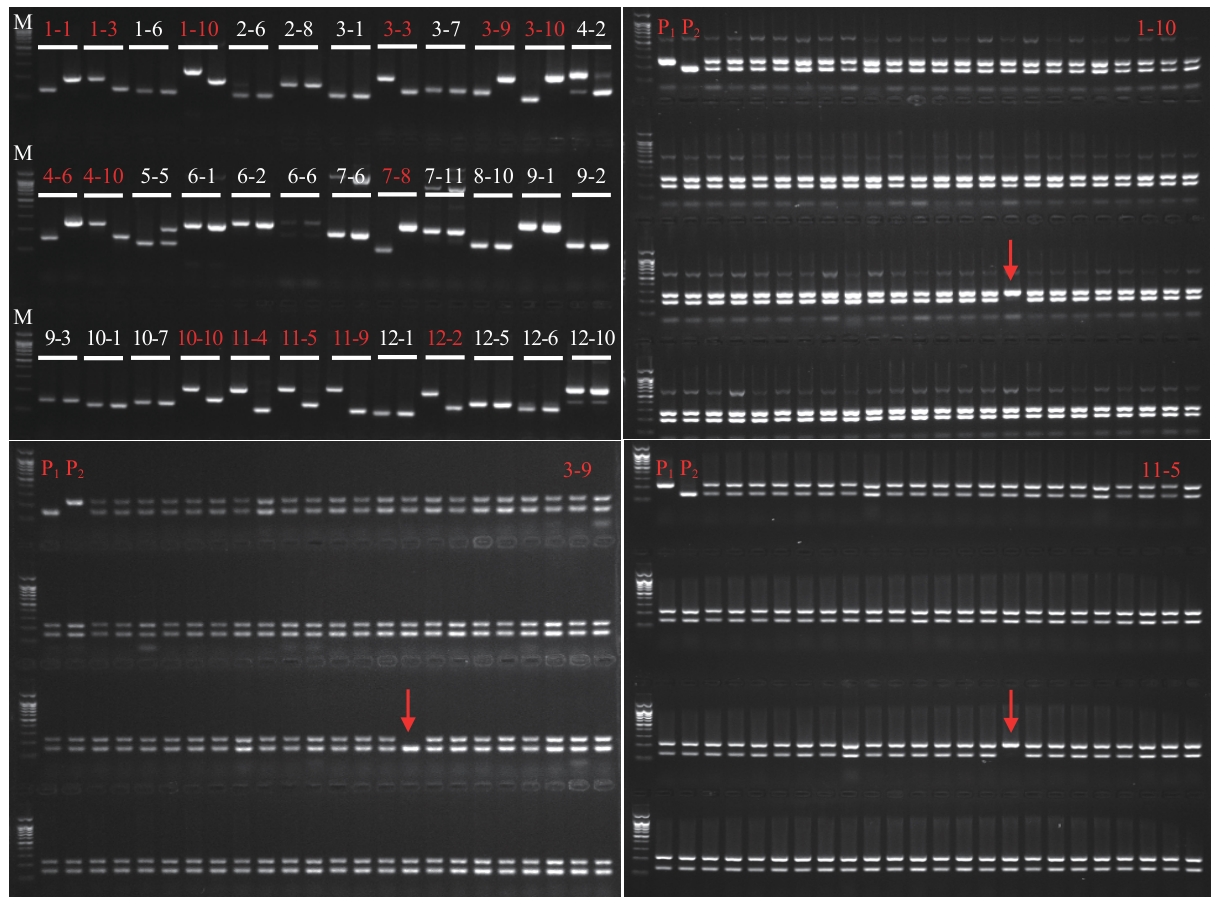
Fig. 7 Purity identification of the hybrid 'Pinfan 1933' based on molecular markersP1: The female parent. P2: The male parent. The red arrows indicate the off-type plants. The red numbers indicate the markers that can be used for purity identification
| [1] | Blanca J, Montero-Pau J, Sauvage C, et al. Genomic variation in tomato, from wild ancestors to contemporary breeding accessions [J]. BMC Genom, 2015, 16: 257. |
| [2] | 李君明, 项朝阳, 王孝宣, 等. “十三五”我国番茄产业现状及展望 [J]. 中国蔬菜, 2021(2): 13-20. |
| Li JM, Xiang CY, Wang XX, et al. Current situation of tomato industry in China during ‘the thirteenth Five-Year Plan’ period and future prospect [J]. China Veg, 2021(2): 13-20. | |
| [3] | 李剑, 谢昊, 豆丹丹, 等. DNA分子标记在作物品种鉴定中的应用展望 [J]. 安徽农业科学, 2026, 54(7): 5-9. |
| Li J, Xie H, Dou DD, et al. Prospects of DNA molecular markers in crop variety identification [J]. J Anhui Agric Sci, 2026, 54(7): 5-9. | |
| [4] | Zhang J, Ren J, Yang JJ, et al. Evaluation of SNP fingerprinting for variety identification of tomato by DUS testing [J]. Agric Commun, 2023, 1(1): 100006. |
| [5] | 苏国钊, 李嫒嫒, 刘中华, 等. 苦瓜品种SSR分子标记鉴定技术体系构建与应用 [J]. 中国农业科学, 2024, 57(11): 2227-2242. |
| Su GZ, Li AA, Liu ZH, et al. Construction and application of SSR marker identification system for bitter gourd varieties [J]. Sci Agric Sin, 2024, 57(11): 2227-2242. | |
| [6] | 朱海峰, 王天鹏, 全瀚仪, 等. 基于KASP标记的芥菜种质资源分子身份证构建 [J]. 中国蔬菜, 2025(3): 34-45. |
| Zhu HF, Wang TP, Quan HY, et al. Construction of molecular identity card for mustard germplasm resources based on KASP markers [J]. China Veg, 2025(3): 34-45. | |
| [7] | 胡娜, 魏庆镇, 庞鸿涛, 等. 茄科作物DNA指纹图谱研究进展及其在遗传育种的应用 [J]. 中国蔬菜, 2025(10): 34-44. |
| Hu N, Wei QZ, Pang HT, et al. Research progress of DNA fingerprinting of Solanaceae crops and its application in genetic breeding [J]. China Veg, 2025(10): 34-44. | |
| [8] | 洪晓如, 吴智明, 陈汉才, 等. 基于重测序的芥蓝(Brassica alboglabra)全基因组InDel标记开发 [J]. 分子植物育种, 2021, 19(4): 1190-1201. |
| Hong XR, Wu ZM, Chen HC, et al. Development of InDel markers for Brassica alboglabra based on whole-genome re-sequencing data [J]. Mol Plant Breed, 2021, 19(4): 1190-1201. | |
| [9] | Zhang YY, Shi J, Shen CQ, et al. Discovery of DNA polymorphisms via genome-resequencing and development of molecular markers between two barley cultivars [J]. Plant Cell Rep, 2022, 41(12): 2279-2292. |
| [10] | Jin L, Zhao LP, Wang YL, et al. Genetic diversity of 324 cultivated tomato germplasm resources using agronomic traits and InDel markers [J]. Euphytica, 2019, 215(4): 69. |
| [11] | 张辉, 李鑫, 王志敏, 等. 基于核心InDel标记樱桃番茄种质资源的遗传多样性分析与应用 [J]. 中国蔬菜, 2023(10): 26-36. |
| Zhang H, Li X, Wang ZM, et al. Genetic diversity analysis and application of cherry tomato germplasm based on core InDel markers [J]. China Veg, 2023(10): 26-36. | |
| [12] | Adedze YMN, Lu X, Xia YC, et al. Agarose-resolvable InDel markers based on whole genome re-sequencing in cucumber [J]. Sci Rep, 2021, 11: 3872. |
| [13] | Yang JC, Meng PX, Mi H, et al. The development of ideal insertion and deletion (InDel) markers and initial indel map variation in cucumber using re-sequenced data [J]. BMC Genom, 2025, 26: 391. |
| [14] | Guo GJ, Zhang GL, Pan BG, et al. Development and application of InDel markers for Capsicum spp. based on whole-genome re-sequencing [J]. Sci Rep, 2019, 9: 3691. |
| [15] | Qureshi M, Ulusoy D, Kasapoğlu S, et al. Novel InDel marker development in pepper (Capsicum annuum L.) by ddRADSeq [J]. Trop Plant Biol, 2025, 18: 83. |
| [16] | 尤园园, 王帅, 方莹莹, 等. 茄子全基因组InDel变异特征及分子标记开发和应用 [J]. 园艺学报, 2024, 51(3): 520-532. |
| You YY, Wang S, Fang YY, et al. Variation characteristics of insertion-deletion (InDel) and molecular markers development and application in eggplant based on whole genome re-sequencing data [J]. Acta Hortic Sin, 2024, 51(3): 520-532. | |
| [17] | 杨易, 黎庭耀, 李国景, 等. 基于重测序的长豇豆基因组InDel标记开发及应用 [J]. 园艺学报, 2022, 49(4): 778-790. |
| Yang Y, Li TY, Li GJ, et al. Development and application of insertion-deletion (InDel) markers in asparagus bean based on whole genome re-sequencing data [J]. Acta Hortic Sin, 2022, 49(4): 778-790. | |
| [18] | Liu KW, Men WJ, Feng JX, et al. Development and application of InDels and SNPs markers based on whole-genome resequencing in Chinese cabbage [J]. Hortic Environ Biotechnol, 2025, 66(5): 1073-1088. |
| [19] | Yang JJ, Wang YY, Shen HL, et al. In silico identification and experimental validation of insertion-deletion polymorphisms in tomato genome [J]. DNA Res, 2014, 21(4): 429-438. |
| [20] | Zhou Y, Zhang ZY, Bao ZG, et al. Graph pangenome captures missing heritability and empowers tomato breeding [J]. Nature, 2022, 606(7914): 527-534. |
| [21] | 杨洁, 赫佳, 王丹碧, 等. InDel标记的研究和应用进展 [J]. 生物多样性, 2016, 24(2): 237-243. |
| Yang J, He J, Wang DB, et al. Progress in research and application of InDel markers [J]. Biodivers Sci, 2016, 24(2): 237-243. | |
| [22] | Duan Y, Gan P, Lin QY, et al. Genetic diversity analysis and core marker identification of shanlan upland rice landraces using highly informative InDel markers [J]. Agriculture, 2026, 16(1): 2. |
| [23] | Porras-Hurtado L, Ruiz Y, Santos C, et al. An overview of STRUCTURE: applications, parameter settings, and supporting software [J]. Front Genet, 2013, 4: 98. |
| [24] | Wang Y, Wu XH, Li YW, et al. Identification and validation of a core single-nucleotide polymorphism marker set for genetic diversity assessment, fingerprinting identification, and core collection development in bottle gourd [J]. Front Plant Sci, 2021, 12: 747940. |
| [25] | 田红丽, 杨扬, 范亚明, 等. 用于玉米品种真实性鉴定的最优核心SNP位点集的研发 [J]. 作物学报, 2024, 50(5): 1115-1123. |
| Tian HL, Yang Y, Fan YM, et al. Development of an optimal core SNP loci set for maize variety genuineness identification [J]. Acta Agron Sin, 2024, 50(5): 1115-1123. | |
| [26] | Wang T, Li HT, Zhu H, et al. Comparative analyses of genetic variation in a tomato (Solanum lycopersicum L.) germplasm collection with single nucleotide polymorphism and insertion-deletion markers [J]. Russ J Genet, 2019, 55(2): 204-211. |
| [27] | Merk HL, Yarnes SC, Van Deynze A, et al. Trait diversity and potential for selection indices based on variation among regionally adapted processing tomato germplasm [J]. J Amer Soc Hort Sci, 2012, 137(6): 427-437. |
| [28] | Phan NT, Kim MK, Sim SC. Genetic variations of F1 tomato cultivars revealed by a core set of SSR and InDel markers [J]. Sci Hortic, 2016, 212: 155-161. |
| [29] | Kim M, Jung JK, Shim EJ, et al. Genome-wide SNP discovery and core marker sets for DNA barcoding and variety identification in commercial tomato cultivars [J]. Sci Hortic, 2021, 276: 109734. |
| [30] | Sim SC, Kim M, Chung SM, et al. Assessing the genetic variation in cultivated tomatoes (Solanum lycopersicum L.) using genome-wide single nucleotide polymorphisms [J]. Hortic Environ Biotechnol, 2015, 56(6): 800-810. |
| [31] | Víquez-Zamora M, Vosman B, van de Geest H, et al. Tomato breeding in the genomics era: insights from a SNP array [J]. BMC Genom, 2013, 14: 354. |
| [1] | TAN Shu, SHEN Hong-jian, GAO Xiao-lei, YIN Qian, ZOU Feng. Genome-wide Identification of the MYB Transcription Factor Family in Camellia oleifera and Functional Analysis of CoMYB107 in Stamen Development [J]. Biotechnology Bulletin, 2026, 42(9): 196-209. |
| [2] | TUERXUN Di-li-bai-er, YAKUPU Zu-li-hu-ma-er, BAO Hui-fang, ZHAN Fa-qiang, YANG Rong, SHI Ying-wu, YANG Hong-mei, CHU Min, FANG Shi-jie, WANG Ning. Biological Function and Whole-genome Analysis of Actinobacteria Strain GNLJ-7 Isolated from Tomato Rhizosphere [J]. Biotechnology Bulletin, 2026, 42(8): 276-286. |
| [3] | GAO Guo-liang, ZHANG Qiao-ling, FENG Wen-jie, GAO Fa-rui, GAO Bo, ZONG Ke-dong, GE Lin, LI Shang-xian, WANG Qiu-yun, HUANG Xin-cheng. Whole-genome Analysis and Precision Breeding Strategies for a Novel Japonica Rice Variety Jiru Dao 1 [J]. Biotechnology Bulletin, 2026, 42(8): 106-112. |
| [4] | HE Hao-di, LIANG Zhen-pu, ZHANG Guo-zhi, FANG Shi-jie, ZHANG Xiao-xia. Isolation and Plant Growth-promoting Characterization of a Salt-alkali Tolerant Bacillus cabrialesii Strain [J]. Biotechnology Bulletin, 2026, 42(8): 312-322. |
| [5] | JIANG Jing, LYU Shi-peng, CHEN Hao-lin, XIONG Ting, SUN Xiao-yan, LI Jie, CHEN Can-can, WANG Gao-fu, REN Hang-xing. Genome-Wide Association Analysis of Litter Size Trait in Four Goat Breeds in Southwest China [J]. Biotechnology Bulletin, 2026, 42(7): 341-350. |
| [6] | DING Hong-xia, GAO Gui-wen, HUANG Yu-lan, ZHAO Rui, HUANG Yi-bo, FENG He-xin, LONG Sha. Whole-genome Analysis and Functional Verification of a Phosphate-solubilizing Bacterium Isolated from Traditional Chinese Medicine Residues [J]. Biotechnology Bulletin, 2026, 42(7): 304-314. |
| [7] | GAO Fei, ZHANG Yu-xi, MU Di, CHEN Zheng, CHEN Hong-yan. Isolation, Identification, and Whole-genome Sequencing Analysis of Murine-Derived Limosilactobacillus reuteri [J]. Biotechnology Bulletin, 2026, 42(7): 315-327. |
| [8] | GUO Jia-xin, WANG Meng-xia, MA Yao-wu, ZHANG Qi-yu, ZHANG Zhen-yu, LIU Hai-tao, PEI Jiu-bo, JIANG Ying. Screening, Identification, and Whole-genome Analysis of a Cadmium-tolerant Plant Growth-promoting Bacterium [J]. Biotechnology Bulletin, 2026, 42(7): 257-268. |
| [9] | YANG Dong-sheng, NIU Yu-chi, LU Qian-qian, FAN Jing-yong, LIU Yu-lei, LIU Quan, GUO Li-ping, HAO Shui-yuan. Construction and Analysis of SSR Fingerprint for 29Sorghum sudanense Germplasm Materials [J]. Biotechnology Bulletin, 2026, 42(6): 198-207. |
| [10] | FENG Cheng-hao, DANG Yu-le, WANG Zhi-ze, NIE Wei-dan, YANG Zhong-min, DU Chong. Screening of Differentially Expressed Genes in Tomato Defense against Meloidogyne incognita Based on RNA-seq and Expression Characteristics Analysis of RPP13 Gene [J]. Biotechnology Bulletin, 2026, 42(4): 141-152. |
| [11] | LIU Miao, LIN Tao, JIA Le-song, HU Feng, LI Tao, LI Zhi-wan, LIU Mei-fang, ZHENG Fang-yan, CUI Long. From Wild to Cultivated: Evolution and Regulatory Mechanisms of Tomato Fruit Color [J]. Biotechnology Bulletin, 2026, 42(3): 187-202. |
| [12] | LI Ya-ni, HAN Hong-yu, GENG Meng-shuang, MI Ruo-lan, Wang Wei-qi, Yu Wen-jing, MENG Xian-wen, LI Chuan-you. Mechanistic Study on ChiC-mediated Regulation Mechanism of Tomato Resistance to Botrytis cinerea [J]. Biotechnology Bulletin, 2026, 42(3): 255-262. |
| [13] | CHENG Yun-xia, ZHANG Jun-hong, YE Jie. Advances in the Genetic Regulation of Soluble Solid Accumulation in Tomato Fruits [J]. Biotechnology Bulletin, 2026, 42(3): 145-155. |
| [14] | YAN Chen-lin, LI Fan, YAN Chun-ting, CHENG Jiao-wen, HU Kai-lin, YE Zhi-biao, SONG Jian-wen. Advances in Genes Related to Tomato Fruit Morphogenesis [J]. Biotechnology Bulletin, 2026, 42(3): 172-186. |
| [15] | DU Dan, GUO Xiang, HU Xin, PAN Yu. Advances in the Regulatory Mechanisms of Plastid Development on Fruit Ripening and Quality [J]. Biotechnology Bulletin, 2026, 42(3): 48-59. |
| Viewed | ||||||
|
Full text |
|
|||||
|
Abstract |
|
|||||
