






Biotechnology Bulletin ›› 2026, Vol. 42 ›› Issue (11): 263-273.doi: 10.13560/j.cnki.biotech.bull.1985.2026-0180
CHEN Ying-hong1,2,3, CAO Xian-hui1,2,3, YI Pei-qin1,2,3, ZHAN Ruo-ting1,2,3, MA Dong-ming1,2,3,4,5( )
Received:2026-02-05
Online:2026-11-26
Published:2026-11-03
Contact:
MA Dong-ming
E-mail:madm@gzucm.edu.cn
CHEN Ying-hong, CAO Xian-hui, YI Pei-qin, ZHAN Ruo-ting, MA Dong-ming. Functional Characterization and Enzymatic Properties of the O-Glycosyltransferase CjUGT10 from Cirsium japonicum Fisch. ex DC.[J]. Biotechnology Bulletin, 2026, 42(11): 263-273.
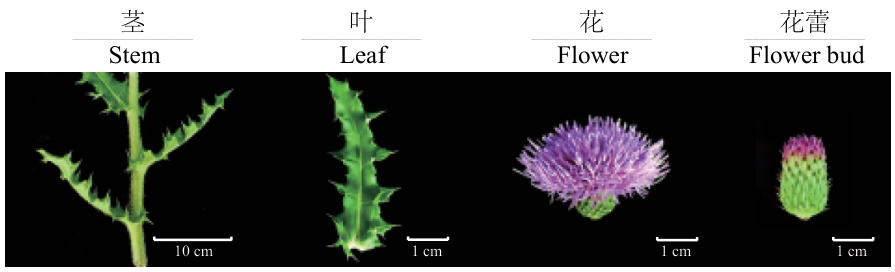
Fig. 1 Samples from different tissues of C. japonicum
引物名称 Primer name | 引物序列 Primer sequence(5′-3′) | 用途 Purpose |
|---|---|---|
| CjUGT10-F | ATGATTGAACATAGATTCAATCACTCCACCCC | ORF序列扩增 |
| CjUGT10-R | TTAGCTTAATTTCCCAGCACTGGCT | |
| pMAL-Cj10-F | GAAGGATTTCACATATGATGGCTTCCAATCTTCACTTTCTTGT (Ned Ⅰ) | ORF序列扩增 |
| pMAL-Cj10-R | GTTTTATTTGAAGCTTTTAGCCAGCCAAGCCCTTATTTTTATG (Hind Ⅲ) | |
| qCjGAPDH-F | TCATGGCCAATGGAAGCACA | 大蓟内参基因 |
| qCjGAPDH-R | ACCACCCTTCAAGTGAGCAG | |
| qGlcT10-F | CTCTCTTGATCCGTGGGTGG | 实时荧光定量PCR |
| qGlcT10-R | GCTCCTGAAACTGAGGCCAT |
Table 1 Primer sequences used in this study
引物名称 Primer name | 引物序列 Primer sequence(5′-3′) | 用途 Purpose |
|---|---|---|
| CjUGT10-F | ATGATTGAACATAGATTCAATCACTCCACCCC | ORF序列扩增 |
| CjUGT10-R | TTAGCTTAATTTCCCAGCACTGGCT | |
| pMAL-Cj10-F | GAAGGATTTCACATATGATGGCTTCCAATCTTCACTTTCTTGT (Ned Ⅰ) | ORF序列扩增 |
| pMAL-Cj10-R | GTTTTATTTGAAGCTTTTAGCCAGCCAAGCCCTTATTTTTATG (Hind Ⅲ) | |
| qCjGAPDH-F | TCATGGCCAATGGAAGCACA | 大蓟内参基因 |
| qCjGAPDH-R | ACCACCCTTCAAGTGAGCAG | |
| qGlcT10-F | CTCTCTTGATCCGTGGGTGG | 实时荧光定量PCR |
| qGlcT10-R | GCTCCTGAAACTGAGGCCAT |
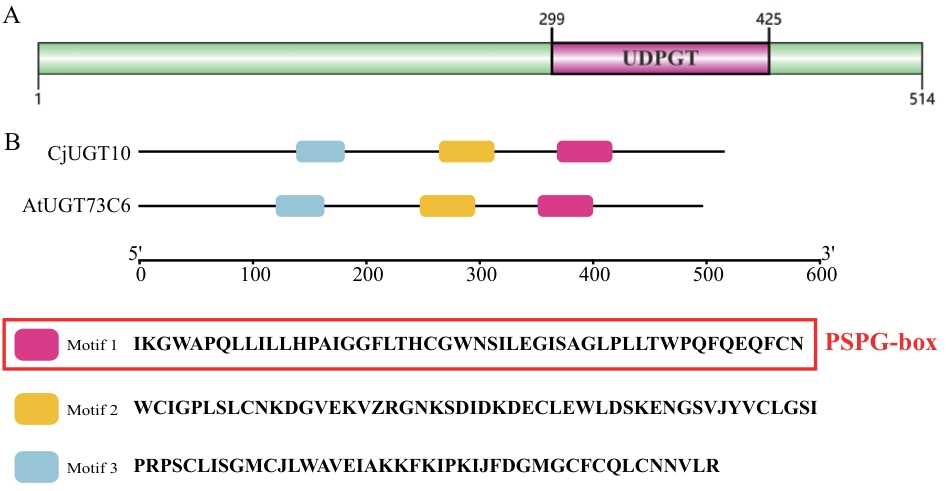
Fig. 2 Domain architecture (A) and conserved motifs (B) of CjUGT10The purple region indicates the characteristic domain PF00201 of the UGT family in figure A; and the red box indicates PSPG-box in figure B
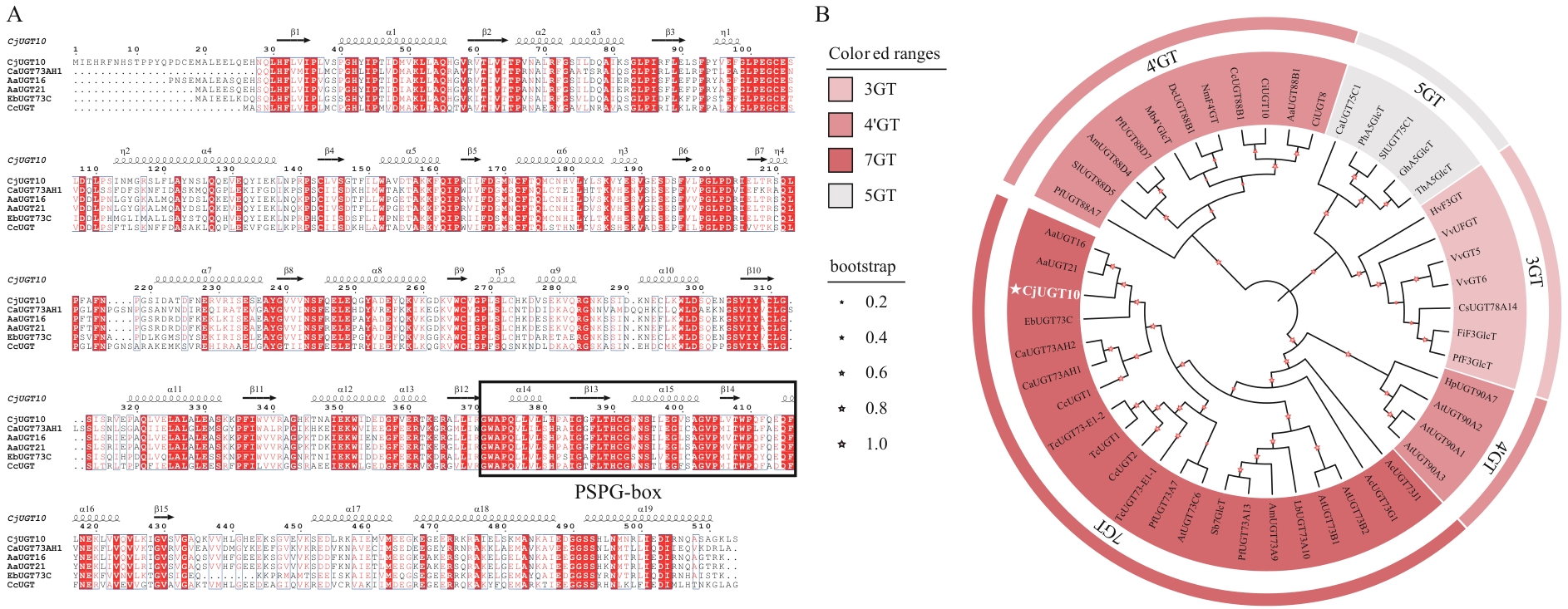
Fig. 3 Multiple sequence alignment (A) and phylogenetic tree analysis (B) of CjUGT10 and UGT73 familyThe black box in figure A represents PSPG conserved domains of UGT73 family
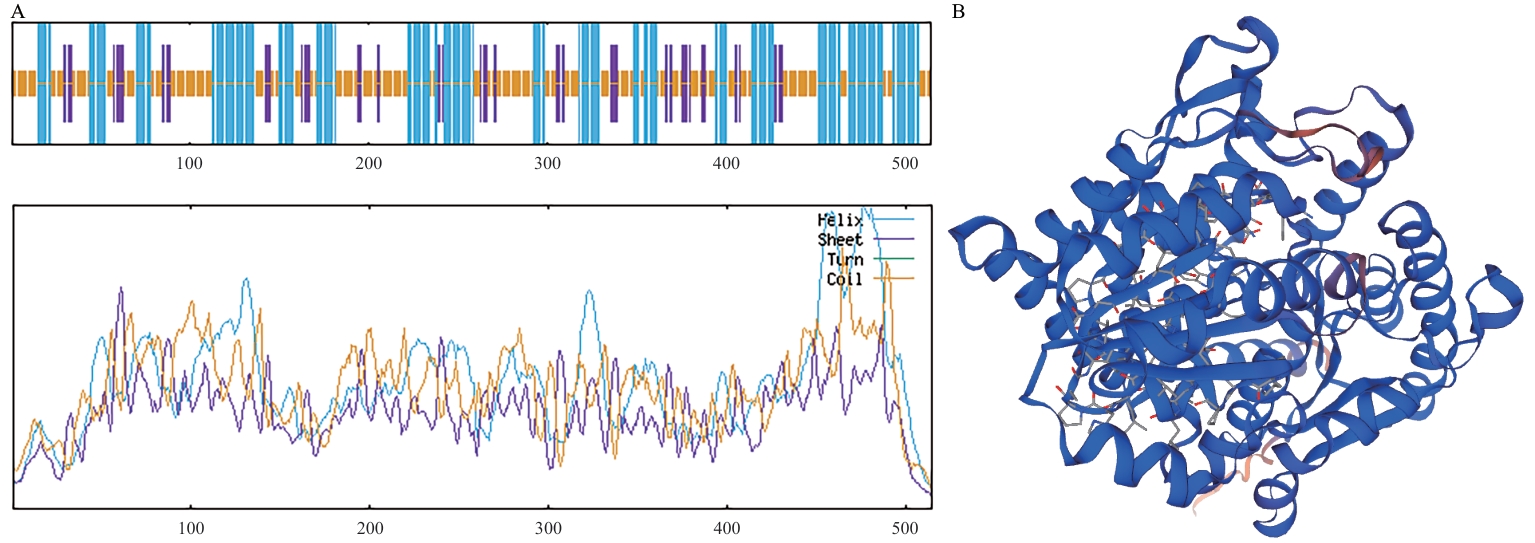
Fig. 4 Secondary structure prediction (A) and tertiary structure prediction (B) of CjUGT10
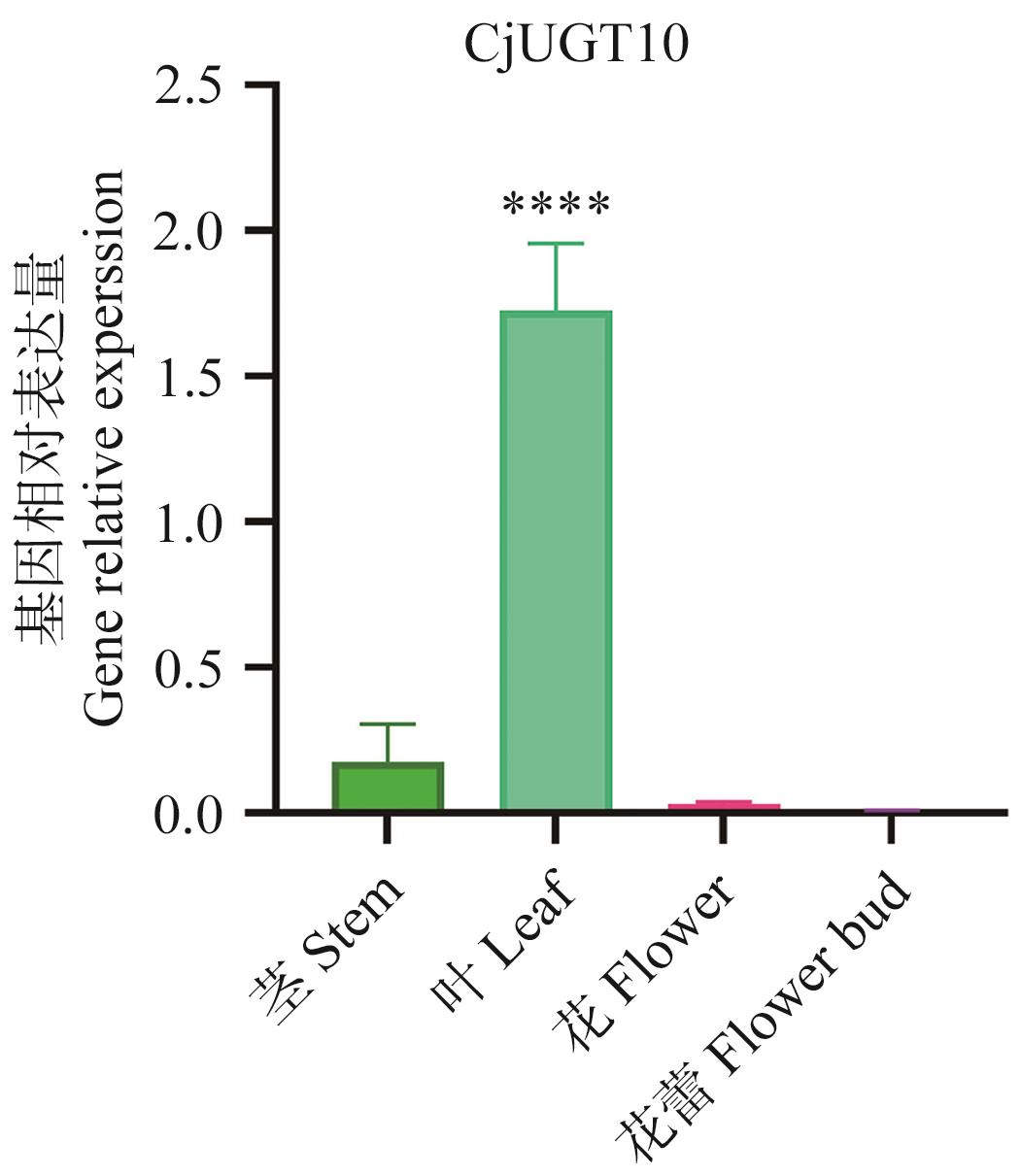
Fig. 5 Tissue expression pattern of CjUGT10
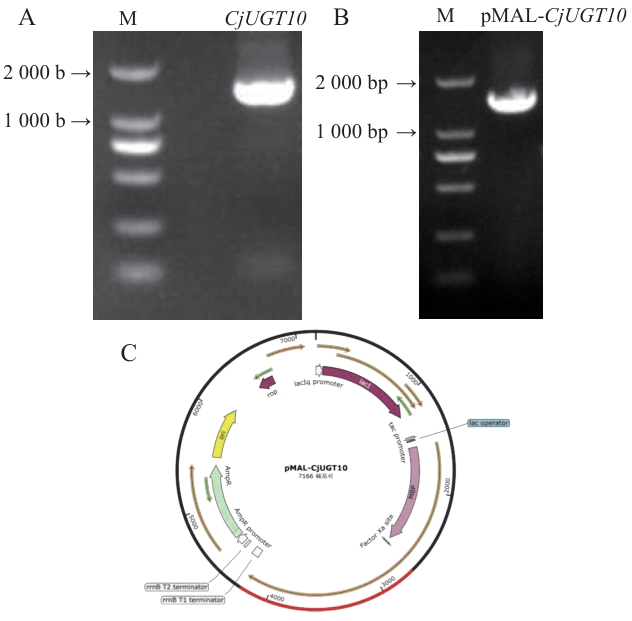
Fig. 6 Cloning of CjUGT10 gene (A) and vector construction (B)A: Agarose gel electrophoresis of PCR-amplified CjUGT10 gene, M: DL2000 DNA marker. B: Colony PCR results of the pMAL-CjUGT10 recombinant expression vector. M: DL2000 DNA marker. C: The plasmid map of pMAL-CjUGT10
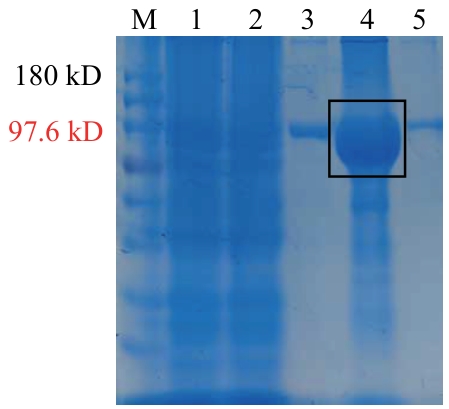
Fig. 7 SDS-PAGE analysis of recombinant CjUGT10 proteinM: Protein marker; 1: supernatant protein; 2: flow-through fraction; 3: wash fraction; 4: MBP-tagged protein elution; 5: protein after PD10 desalting
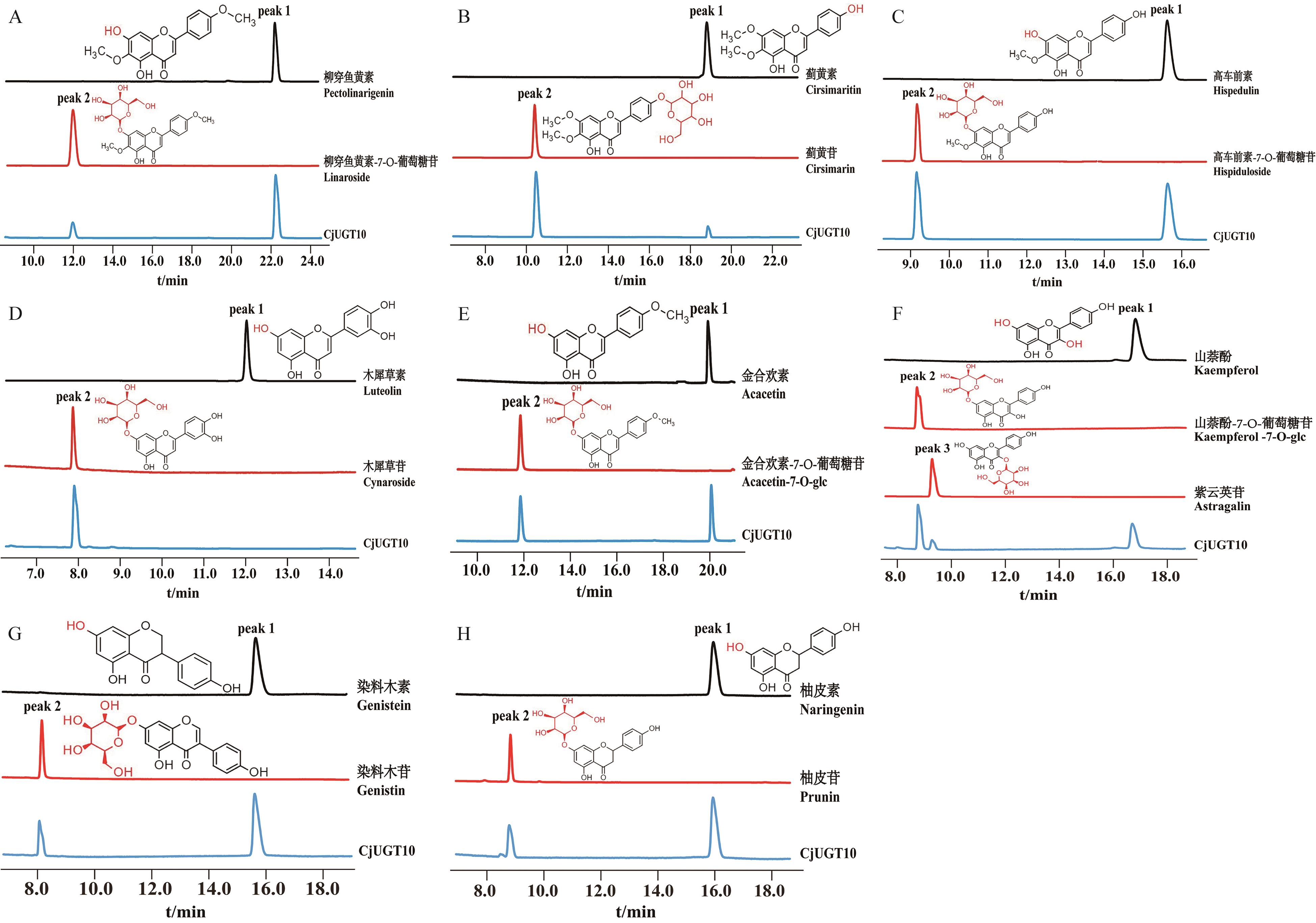
Fig. 8 HPLC profiles of in vitro enzymatic reactions of CjUGT10 with eight flavonoid substratesA-H: HPLC chromatograms of enzymatic reactions with eight flavonoid substrates, respectively. Black: Control; red: standard; blue: reaction. Peak 1: Substrate; Peak 2: 7-O- or 4'-O-glucoside; Peak 3: kaempferol-3-O-glucoside
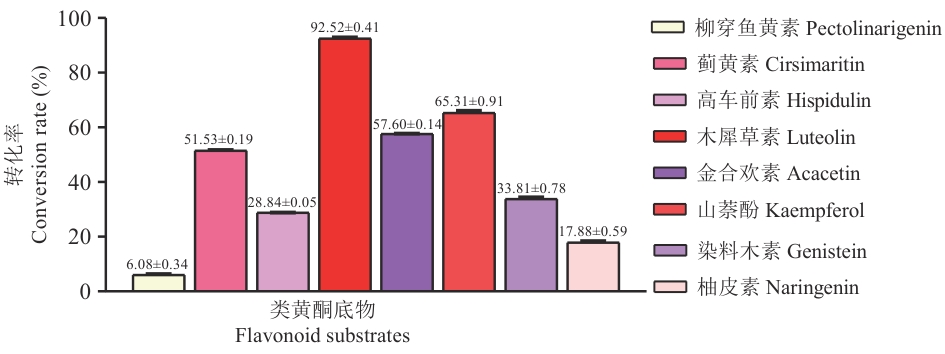
Fig. 9 Conversion rates of CjUGT10 for eight flavonoid substrates

Fig. 10 Kinetic curves of CjUGT10 with four flavonoid substratesA-D: The kinetic curves of CjUGT10 with pectolinarigenin, cirsimaritin, hispidulin, and luteolin, respectively. Vmax: Maximum reaction rate (μmol/L·s); Km: Michaelis constant (μmol/L); kcat: turnover number (1/s); kcat/Km: catalytic efficiency (L/(μmol·s))
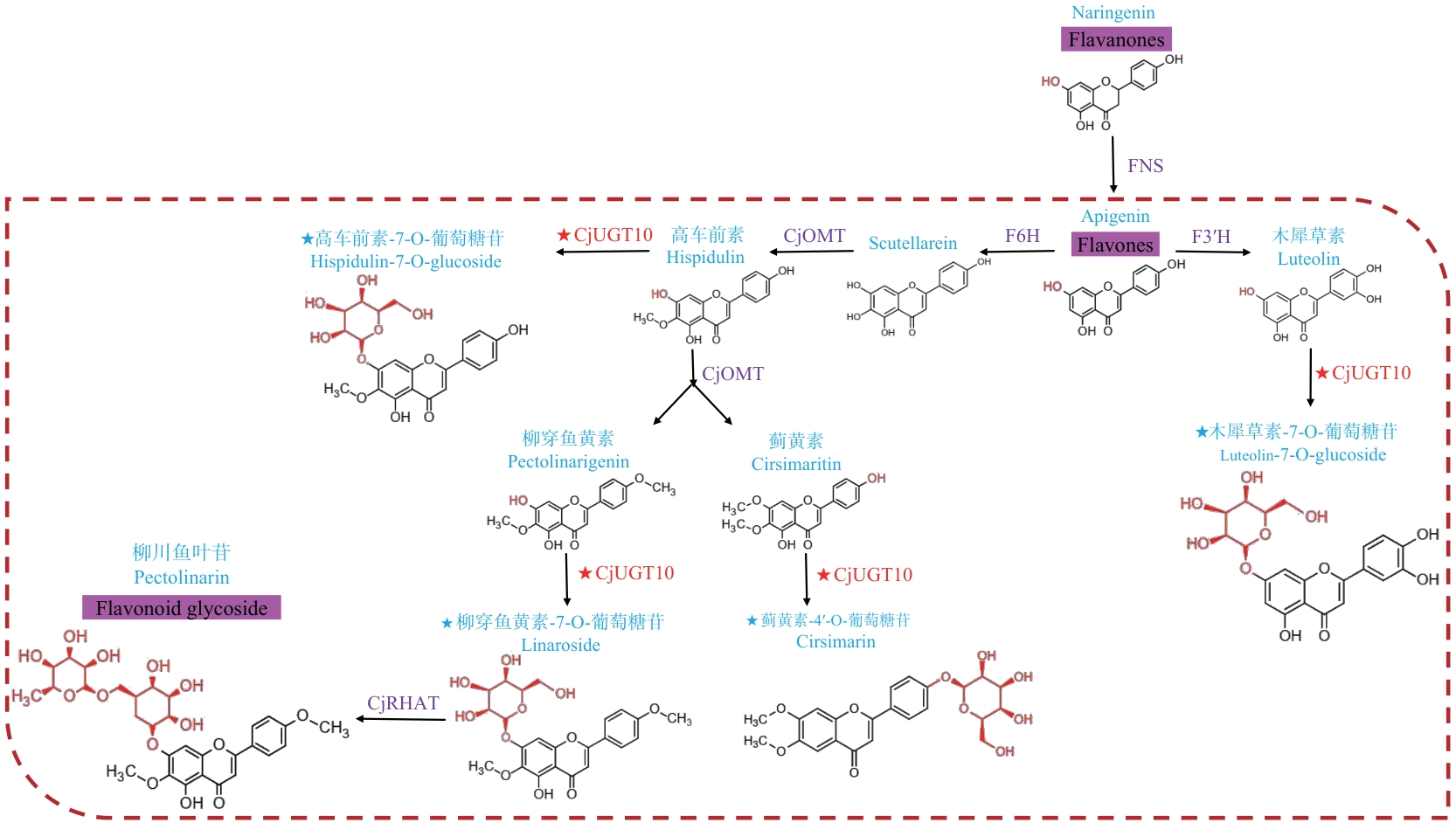
Fig. 11 Proposed biosynthetic routes of four key flavonoid glucosides mediated by CjUGT10 in C. japonicumRed stars indicate CjUGT10-catalyzed glucosylation sites. The schematic shows four biosynthetic pathways in C. japonicum leading to the production of pectolinarigenin-7-O-glucoside, cirsimaritin-4'-O-glucoside (Cirsimarin), luteolin-7-O-glucoside, and hispidulin-7-O-glucoside. Upstream steps are based on previously reported flavonoid biosynthesis pathways[31-32]; and CjUGT10-mediated reactions were validated in this study
| [1] | Guan HF, Zhang YZ, Li JS, et al. Analysis of the UDP-glucosyltransferase (UGT) gene family and its functional involvement in drought and salt stress tolerance in Phoebe bournei [J]. Plants, 2024, 13(5): 722. |
| [2] | 姚宇, 顾佳珺, 孙超, 等. 植物类黄酮UDP-糖基转移酶研究进展 [J]. 生物技术通报, 2022, 38(12): 47-57. |
| Yao Y, Gu JJ, Sun C, et al. Advances in plant flavonoids UDP-glycosyltransferase [J]. Biotechnol Bull, 2022, 38(12): 47-57. | |
| [3] | 李敏, 苗明三. 大蓟的化学、药理及临床应用特点 [J]. 中医学报, 2016, 31(2): 262-265. |
| Li M, Miao MS. Chemical analysis, pharmacology and clinical application characteristics of Cirsium japonicum [J]. Acta Chin Med, 2016, 31(2): 262-265. | |
| [4] | 赵静, 孟庆山, 荣飞, 等. 基于高效液相色谱法和多成分定量测定大蓟配方颗粒中5种有效成分 [J]. 品牌与标准化, 2025(5): 16-18. |
| Zhao J, Meng QS, Rong F, et al. Determination of five active components in Cirsium japonicum formula granules based on HPLC and multi-component quantitative [J]. Brand Stand, 2025(5): 16-18. | |
| [5] | 国家药典委员会. 中华人民共和国药典——2025年版 [M]. 北京: 中国医药科技出版社, 2025. |
| National Pharmacopoeia Commission. Pharmacopoeia of the People’s Republic of China (2025 Edition) [M]. Beijing: China Medical Science Press, 2025. | |
| [6] | Lee M, Park J, Yoo H, et al. Hispidulin-7-O-neohesperidoside from Cirsium japonicum var. ussuriense attenuates the production of inflammatory mediators in LPS-induced raw 264.7 cells and HT-29 cells [J]. Phcog Mag, 2017, 13(52): 707. |
| [7] | Liu PQ, Li Q, Zhu GH, et al. Characterization of the glucuronidating pathway of pectolinarigenin, the major active constituent of the Chinese medicine Daji, in humans and its influence on biological activities [J]. J Ethnopharmacol, 2024, 319: 117280. |
| [8] | Patel DK. Biological importance, therapeutic benefit and analytical aspects of bioactive flavonoid pectolinarin in the nature [J]. Drug Metab Lett, 2021, 14(2): 117-125. |
| [9] | Yoon S, Kim M, Shin S, et al. Effect of Cirsium japonicum flower extract on skin aging induced by glycation [J]. Molecules, 2022, 27(7): 2093. |
| [10] | 王佳蕊, 孙培媛, 柯瑾, 等. 苦荞糖基转移酶基因FtUGT143的克隆及表达分析 [J]. 生物技术通报, 2023, 39(8): 204-212. |
| Wang JR, Sun PY, Ke J, et al. Cloning and expression analyses of C-glycosyltransferase gene FtUGT143 in Fagopyrum tataricum [J]. Biotechnol Bull, 2023, 39(8): 204-212. | |
| [11] | 王媛媛, 刘云清, 徐晶宇, 等. 葡萄UDP-糖基转移酶家族的全基因组表征、进化和表达分析 [J]. 食品科学, 2025, 46(14): 134-146. |
| Wang YY, Liu YQ, Xu JY, et al. Genome-wide characterization, evolution and expression profiling of the UDP-glycosyltransferase family in grapes (Vitis vinifera) [J]. Food Sci, 2025, 46(14): 134-146. | |
| [12] | 蔡鑫博, 刘楠, 李佳, 等. 红花黄酮类糖基转移酶基因CtUGT49功能表征及酶学特性分析 [J]. 中国中药杂志, 2023, 48(24): 6624-6634. |
| Cai XB, Liu N, Li J, et al. Functional characterization and enzymatic properties of flavonoid glycosyltransferase gene CtUGT49 in Carthamus tinctorius [J]. China J Chin Mater Med, 2023, 48(24): 6624-6634. | |
| [13] | 齐书艺, 王璐暖, 何贝轩, 等. 红花黄酮生物合成途径糖基转移酶基因CtUGT25的功能研究 [J]. 药学学报, 2024, 59(6): 1854-1863. |
| Qi SY, Wang LN, He BX, et al. Functional study of glycosyltransferase genes CtUGT25 in the flavone biosynthesis pathway of Carthamus tinctorius L [J]. Acta Pharm Sin, 2024, 59(6): 1854-1863. | |
| [14] | 谭政委, 鲁丹丹, 李磊, 等. 红花类黄酮3-O-糖基转移酶基因CtUF3GT的克隆及功能鉴定 [J]. 药学学报, 2022, 57(8): 2543-2551. |
| Tan ZW, Lu DD, Li L, et al. Identification and characterization of flavonoid 3-O-glycosyltrans-ferase gene CtUF3GT from safflower (Carthamus tinctorius L.) [J]. Acta Pharm Sin, 2022, 57(8): 2543-2551. | |
| [15] | Xu Y, Cao YP, Tie FF, et al. Generation of suspension cell cultures with high syringin content and anti-inflammatory activity through overexpressing glycotransferase SiUGT72BZ2 in Saussurea involucrata [J]. Plant Biotechnol J, 2025, 23(5): 1713-1724. |
| [16] | Zhang RM, John Martin JJ, Liu XY, et al. Joint analysis of transcriptional metabolism for flavonoid synthesis during different developmental periods in oil palm exocarp [J]. Front Plant Sci, 2025, 16: 1530673. |
| [17] | Shang DL, Ma QG, Wei RR. Cytotoxic phenylpropanoid glycosides from Cirsium japonicum [J]. J Asian Nat Prod Res, 2016, 18(12): 1122-1130. |
| [18] | Pei TL, Yan MX, Li T, et al. Characterization of UDP-glycosyltransferase family members reveals how major flavonoid glycoside accumulates in the roots of Scutellaria baicalensis [J]. BMC Genom, 2022, 23: 169. |
| [19] | Deng YN, Yang P, Zhang QL, et al. Genomic insights into the evolution of flavonoid biosynthesis and O-methyltransferase and glucosyltransferase in Chrysanthemum indicum [J]. Cell Rep, 2024, 43(2): 113725. |
| [20] | Aubuchon LN, Schmiederer K, Lee SG. Comparative structural analysis of plant uridine diphosphate (UDP)-dependent glycosyltransferases (UGTs) in plant specialized metabolism: structures of plant UGTs for biosynthesis of steviol glycosides [J]. Phytochem Rev, 2023, 22(2): 385-406. |
| [21] | Petrich J, Alvarez CE, Gómez Cano L, et al. Functional characterization of a maize UDP-glucosyltransferase involved in the biosynthesis of flavonoid 7-O-glucosides and di-O-glucosides [J]. Plant Physiol Biochem, 2025, 221: 109583. |
| [22] | Tian SL, Yang YY, Wu T, et al. Functional characterization of a flavone synthase that participates in a kumquat flavone metabolon [J]. Front Plant Sci, 2022, 13: 826780. |
| [23] | Yang F, Zhang L, Zhang X, et al. Genome-wide investigation of UDP-Glycosyltransferase family in Tartary buckwheat (Fagopyrum tataricum) [J]. BMC Plant Biol, 2024, 24: 249. |
| [24] | Soubeyrand E, Latimer S, Bernert AC, et al. 3-O-glycosylation of kaempferol restricts the supply of the benzenoid precursor of ubiquinone (Coenzyme Q) in Arabidopsis thaliana [J]. Phytochemistry, 2021, 186: 112738. |
| [25] | Zhang CB, Shi JC, Deng R, et al. Plant natural product biosynthesis through metabolon engineering [J]. J Integr Plant Biol, 2026, 68(4): 967-984. |
| [26] | Yu KJ, Song YS, Lin JX, et al. The complexities of proanthocyanidin biosynthesis and its regulation in plants [J]. Plant Commun, 2023, 4(2): 100498. |
| [27] | Ye YN, Chen ZL, Wu YL, et al. Purification process and in vitro and in vivo bioactivity evaluation of pectolinarin and linarin from Cirsium japonicum [J]. Molecules, 2022, 27(24): 8695. |
| [28] | Xu P, Li JH, Chen CT, et al. Integrated transcriptomic and metabolomic analyses reveal tissue-specific accumulation and expression patterns of monoterpene glycosides, gallaglycosides, and flavonoids in Paeonia lactiflora Pall [J]. BMC Genom, 2025, 26: 561. |
| [29] | Verma B, Arora P, Hussain S, et al. UGT708 glycosyltransferases: Nature’s architects of C-glycosides [J]. Biotechnol Adv, 2026, 87: 108787. |
| [30] | Wang YM, Zhang JX, Wang P, et al. Integrated transcriptomic and metabolomic analysis reveals tissue-specific flavonoid biosynthesis and MYB-mediated regulation of UGT71A1 in Panax quinquefolius [J]. Int J Mol Sci, 2025, 26(6): 2669. |
| [31] | Wang RJ, Wang C, Du JK. Plant UGTs: Functional diversity, catalytic mechanisms and rational design for metabolic engineering [J]. Biotechnol Adv, 2026, 89: 108872. |
| [32] | de Barros Rates A, Cesarino I. Pour some sugar on me: The diverse functions of phenylpropanoid glycosylation [J]. J Plant Physiol, 2023, 291: 154138. |
| [33] | Ren CH, Qian JF, Wang YC, et al. Flavonoid UDP-glycosyltransferase in plants: functional identification, substrate recognition mechanism, and biotechnology application [J]. Phytochem Rev, 2025, 24(5): 4451-4474. |
| [34] | Li XF, Wei F, Quan CQ, et al. Identification of key modules and genes in response to high-temperature stress in Platostoma palustre based on WGCNA [J]. BMC Plant Biol, 2025, 25: 695. |
| [35] | Liu J, Wang JX, Chen MJ, et al. Multi-omics analyses uncover the mechanism underlying polyploidization-enhanced steviol glycosides biosynthesis in Stevia rebaudiana [J]. Plants, 2024, 13(18): 2542. |
| [36] | Yin XJ, Xiang YP, Huang FQ, et al. Comparative genomics of the medicinal plants Lonicera macranthoides and L. japonica provides insight into genus genome evolution and hederagenin-based saponin biosynthesis [J]. Plant Biotechnol J, 2023, 21(11): 2209-2223. |
| [37] | 吴慧琴, 王延宏, 刘涵, 等. 辣椒UGT基因家族的鉴定及表达分析 [J]. 生物技术通报, 2024, 40(9): 198-211. |
| Wu HQ, Wang YH, Liu H, et al. Identification and expression analysis of UGT gene family in pepper [J]. Biotechnol Bull, 2024, 40(9): 198-211. | |
| [38] | 杨敏, 龙雨青, 曾娟, 等. 灰毡毛忍冬UGTPg17、UGTPg36基因克隆及功能研究 [J]. 生物技术通报, 2023, 39(10): 256-267. |
| Yang M, Long YQ, Zeng J, et al. Cloning and function analysis of gene UGTPg17 and UGTPg36 in Lonicera macranthoides [J]. Biotechnol Bull, 2023, 39(10): 256-267. | |
| [39] | Nakayama T, Takahashi S, Waki T. Formation of flavonoid metabolons: functional significance of protein-protein interactions and impact on flavonoid chemodiversity [J]. Front Plant Sci, 2019, 10: 821. |
| [40] | Moore Pollard ER, Ellestad PA, Cliver BR, et al. Gene duplication dynamics and regulatory evolution shape the diversification of Asteraceae [J]. bioRxiv Prepr Serv Biol, 2025. |
| [41] | Yang Q, Zhang YC, Qu XL, et al. Genome-wide analysis of UDP-glycosyltransferases family and identification of UGT genes involved in abiotic stress and flavonol biosynthesis in Nicotiana tabacum [J]. BMC Plant Biology, 2023, 23(1): 204. |
| [42] | 彭朝凤, 夏琳, 刘瑞霞, 等. 基于VIGS和CRISPR/Cas9技术的烟草NtPPO5基因功能分析 [J]. 生物技术通报, 2026, 42(4): 251-262. |
| Peng CF, Xia L, Liu RX, et al. Functional analysis of the tobacco NtPPO5 gene using VIGS and CRISPR/Cas9 technology [J]. Biotechnol Bull, 2026, 42(4): 251-262. | |
| [43] | Lovelock SL, Crawshaw R, Basler S, et al. The road to fully programmable protein catalysis [J]. Nature, 2022, 606(7912): 49-58. |
| [1] | YUE Li-ping, WANG Ai-fan, WANG Shan, LI Xue-long, CHEN Yu-xiang, SU Xiu-juan. Cloning and Functional Analysis of LaCKX1 Gene Related to Regulation of Floret Number in Lavandula angustifolia [J]. Biotechnology Bulletin, 2026, 42(9): 238-247. |
| [2] | DONG Xiang-xiang, HOU Wei-wei, MIAO Bai-ling, CHEN Juan-juan, LI Liang-jie, ZHAI Min, ZHU Qing-song, LIU Song-hu. Overexpression of FvBBX22 from Fragaria Vesca Promotes Anthocyanin Synthesis and Delays Flowering Time in Arabidopsis thaliana [J]. Biotechnology Bulletin, 2026, 42(9): 231-237. |
| [3] | ZHANG Zhong-wen, WANG Wei-min, XIAO Zhi-liang, SHI Jiu-chang, HAO Xian-wei, WANG Wei, XIE Peng-gang, XU Jia-dan, ZHAO Jiong-ping, YANG Ai-guo. Mechanism of NtPLA2A-mediated Hormone Signaling Pathway in Enhancing Tobacco Resistance to Bacterial Wilt [J]. Biotechnology Bulletin, 2026, 42(8): 207-216. |
| [4] | RAN Dan-dan, TAI Sen-lin, OU Xiao-hong, ZHOU Tao, XU Jiao. Genome-wide Identification and Characterization of UDP-glycosyltransferase Gene Family in Gastrodia elata [J]. Biotechnology Bulletin, 2026, 42(7): 163-172. |
| [5] | AN Fei-fei, LUO Xiu-qin, CAI Jie, XUE Jing-jing, ZHU Wen-li. Cloning of MeMYB106 in Cassava and Its Function in Anthocyanin Biosynthesis of Leaves [J]. Biotechnology Bulletin, 2026, 42(6): 13-21. |
| [6] | ZHANG Xin, CHEN Cheng, HUO Yuan-Bo, HUANG Ren-Li, ZHANG Li, ZHANG Kai, TONG Hua-rong, YUAN Lian-Yu. Cloning of the CsCRD1 in Tea Plants and Its Impact on Chlorophyll Biosynthesis [J]. Biotechnology Bulletin, 2026, 42(5): 280-291. |
| [7] | JIN Xuan, XIANG Fen, DAI Cui-ting, YANG Hui, LI Sai-jun, LIU Hong-yan, QIAN Si-wei, LIN Wan-huang, LI Wei. Cloning and Expression Analysis of CsTDIFL and Its Regulation on Amino Acid Synthesis in Tea Plants (Camellia sinensis) [J]. Biotechnology Bulletin, 2026, 42(5): 323-331. |
| [8] | SUN Ting, ZHANG Yan, LIU Yu-shan, FENG Yuan-yuan, QIN Heng-shan, ZHANG Jun, HE Xiao-gang, ZHANG Jing-rong. Cloning and Functional Analysis of AeF3H Gene in Okra [J]. Biotechnology Bulletin, 2026, 42(4): 153-160. |
| [9] | LIU Meng-ru, XIA Lin, LIU Rui-xia, YAN Xin-ke, YANG Jun, ZHANG Jing-hua, WU Ming-zhu. Cloning and Functional Analysis of Tobacco Polyphenol Oxidase NtPPO1-2 Gene [J]. Biotechnology Bulletin, 2026, 42(2): 218-227. |
| [10] | LIU Bao-cai, HU Xue-bo, ZHAO Yun-qing, HUANG Ying-zhen, ZHANG Wu-jun, CHEN Jing-ying. Cloning and Expression Analysis of Glycosyltransferase Genes Involved in Gastrodin Biosynthesis in Pholidota chinensis Lindl. [J]. Biotechnology Bulletin, 2026, 42(11): 164-173. |
| [11] | LIN Rong-yan, KONG Lan, WU Jian-she, LIN Bing, ZHONG Huai-qin. Cloning and Expression Analysis of ChChlH Gene in Cymbidium hybrid [J]. Biotechnology Bulletin, 2026, 42(10): 229-237. |
| [12] | NI Ying, LI Lei, WANG Jin-xuan, MA Bo, MENG Xin, LENG Ping-sheng, WU Jing, HU Zeng-hui. Cloning and Functional Analysis of So4CL Gene in Syringa oblata [J]. Biotechnology Bulletin, 2026, 42(1): 139-149. |
| [13] | XU Xiao-ping, YANG Cheng-long, HE Xing, GUO Wen-jie, WU Jian, FANG Shao-zhong. Cloning of the LoAPS1 and Its Function Analysis during the Process of Dormancy Release in Lilium [J]. Biotechnology Bulletin, 2025, 41(9): 195-206. |
| [14] | DONG Xiang-xiang, MIAO Bai-ling, XU He-juan, CHEN Juan-juan, LI Liang-jie, GONG Shou-fu, ZHU Qing-song. Bioinformatics Analysis and Flowering Regulation Function of FveBBX20 Gene in Woodland Strawberry [J]. Biotechnology Bulletin, 2025, 41(9): 115-123. |
| [15] | ZHANG Yong-yan, GUO Si-jian, LI Jing, HAO Si-yi, LI Rui-de, LIU Jia-peng, CHENG Chun-zhen. Gene Cloning and Functional Analysis of the Anthocyanin-related VcGSTF19 Gene in Blueberry (Vaccinium corymbosum L.) [J]. Biotechnology Bulletin, 2025, 41(9): 139-146. |
| Viewed | ||||||
|
Full text |
|
|||||
|
Abstract |
|
|||||
