






Biotechnology Bulletin ›› 2026, Vol. 42 ›› Issue (11): 318-327.doi: 10.13560/j.cnki.biotech.bull.1985.2026-0250
REN Yan-xiao1,2, WEN Sai1( ), TAN Tian-wei2
Received:2026-03-02
Online:2026-11-26
Published:2026-07-30
Contact:
WEN Sai
E-mail:wensai@btbu.edu.cn
REN Yan-xiao, WEN Sai, TAN Tian-wei. Expression, Purification and Preliminary Identification of Recombinant Human Interleukin-27[J]. Biotechnology Bulletin, 2026, 42(11): 318-327.
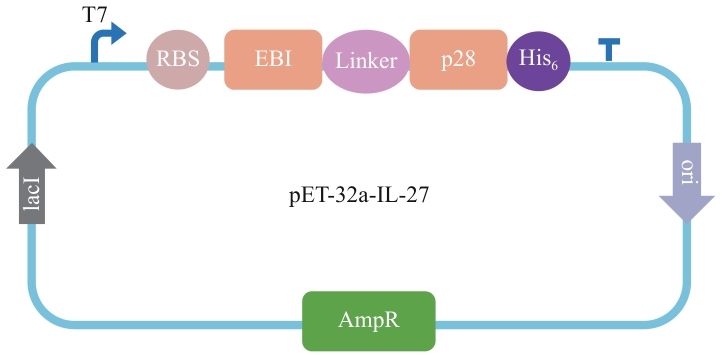
Fig. 1 Schematic diagram of vector construction for pET-32a-IL-27
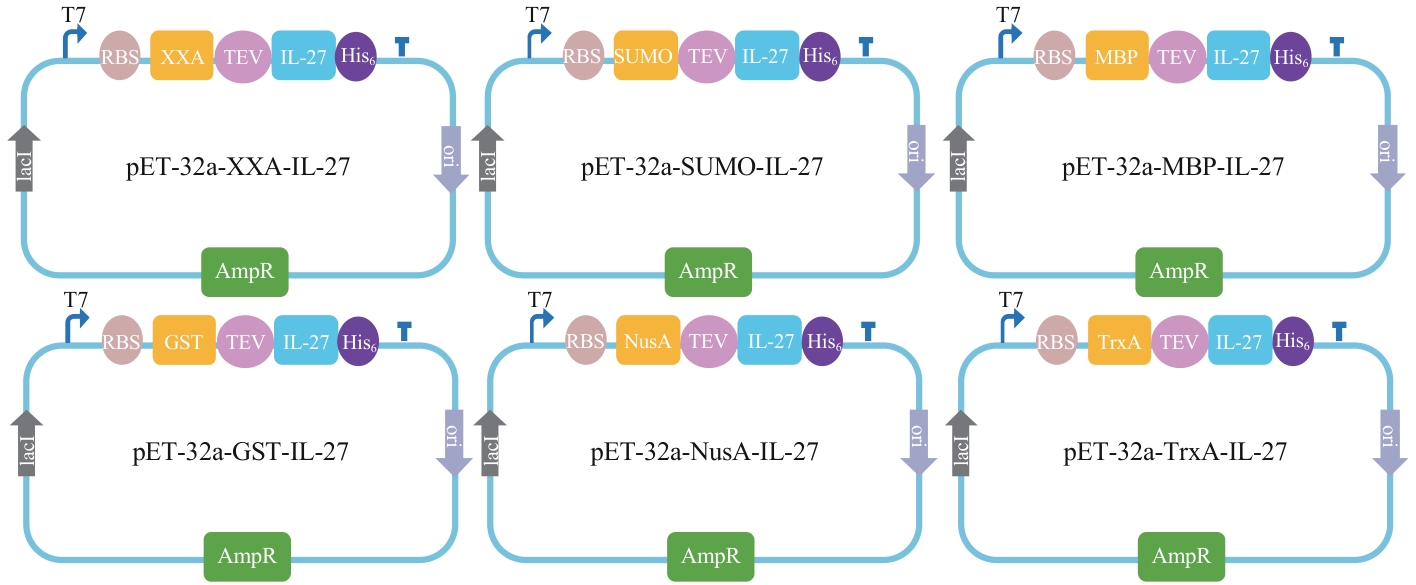
Fig. 2 Schematic diagram of constructing vector with different tags
| No. | 质粒 Plasmid | 伴侣蛋白质 Chaperone protein | 启动子 Promoter | 诱导物 Inducer | 抗性标记 Selection marker |
|---|---|---|---|---|---|
| 1 | pG-KJE8 | dnaK-dnaJ-grpE groES-groEL | araB Pzt-1 | L-Arabinose Tetracycline | Cm |
| 2 | pGro7 | groES-groEL | araB | L-Arabinose | Cm |
| 3 | pKJE7 | dnaK-dnaJ-grpE | araB | L-Arabinose | Cm |
| 4 | pG-Tf2 | groES-groEL-tig | Pzt-1 | Tetracycline | Cm |
| 5 | pTf16 | tig | araB | L-Arabinose | Cm |
Table 1 Types of chaperone proteins encoded by each plasmid and inducers
| No. | 质粒 Plasmid | 伴侣蛋白质 Chaperone protein | 启动子 Promoter | 诱导物 Inducer | 抗性标记 Selection marker |
|---|---|---|---|---|---|
| 1 | pG-KJE8 | dnaK-dnaJ-grpE groES-groEL | araB Pzt-1 | L-Arabinose Tetracycline | Cm |
| 2 | pGro7 | groES-groEL | araB | L-Arabinose | Cm |
| 3 | pKJE7 | dnaK-dnaJ-grpE | araB | L-Arabinose | Cm |
| 4 | pG-Tf2 | groES-groEL-tig | Pzt-1 | Tetracycline | Cm |
| 5 | pTf16 | tig | araB | L-Arabinose | Cm |
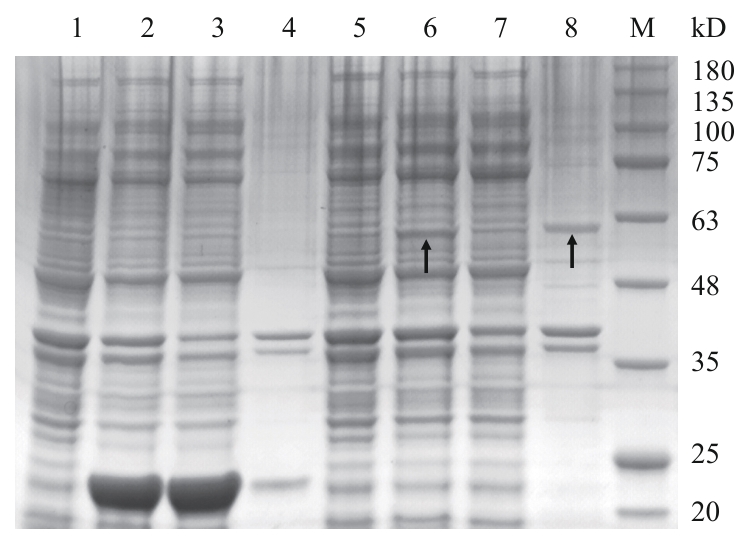
Fig. 3 SDS-PAGE electrophoresis analysis of various protein expression form1: pET-32a (+) uninduced; 2: pET-32a (+) whole cells; 3: pET-32a (+) intracellular supernatant; 4: pET-32a (+) intracellular pellet (the band at approximately 20 kD corresponds to the tag polypeptide expressed by the empty vector); 5: IL-27 uninduced; 6: IL-27 whole cells; 7: IL-27 intracellular supernatant; 8: IL-27 intracellular pellet; M: protein marker
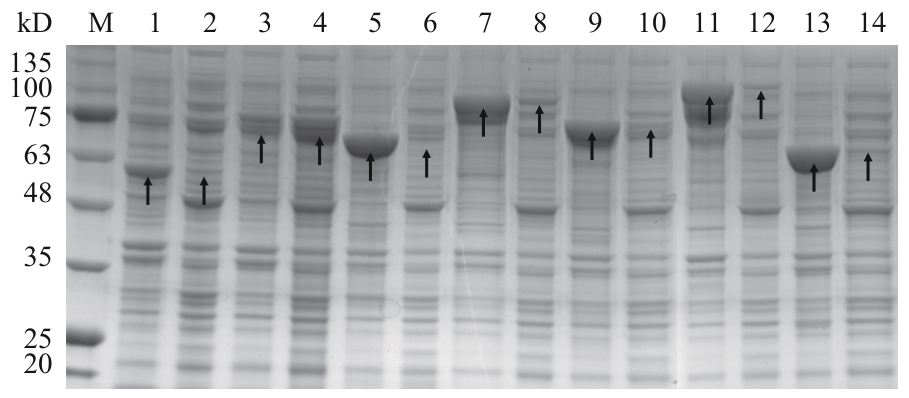
Fig. 4 SDS-PAGE analysis of the effects of different solubility tags on the soluble expression of rh IL-27M: Protein marker; 1: IL-27 intracellular pellet; 2: IL-27 intracellular supernatant (54 kD); 3: XXA-IL-27 intracellular pellet; 4: XXA-IL-27 intracellular supernatant (71 kD); 5: SUMO-IL-27 intracellular pellet; 6: SUMO-IL-27 intracellular supernatant (66 kD); 7: MBP-IL-27 intracellular pellet; 8: MBP-IL-27 intracellular supernatant (91 kD); 9: GST-IL-27 intracellular pellet; 10: GST-IL-27 intracellular supernatant (76 kD); 11: NusA-IL-27 intracellular pellet; 12: NusA-IL-27 intracellular supernatant (105 kD); 13: TrxA-IL-27 intracellular pellet; 14: TrxA-IL-27 intracellular supernatant (66 kD)
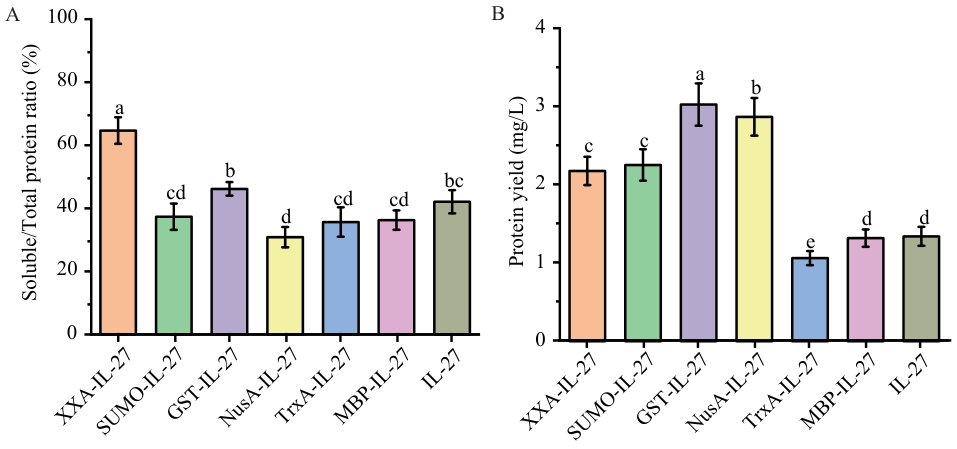
Fig. 5 Densitometric analysis of rh IL-27 solubility (A) and ELISA quantification of total expression levels (B) with different solubility-enhancing tagsDifferent letters indicate significant differences among groups (P<0.05). The same below
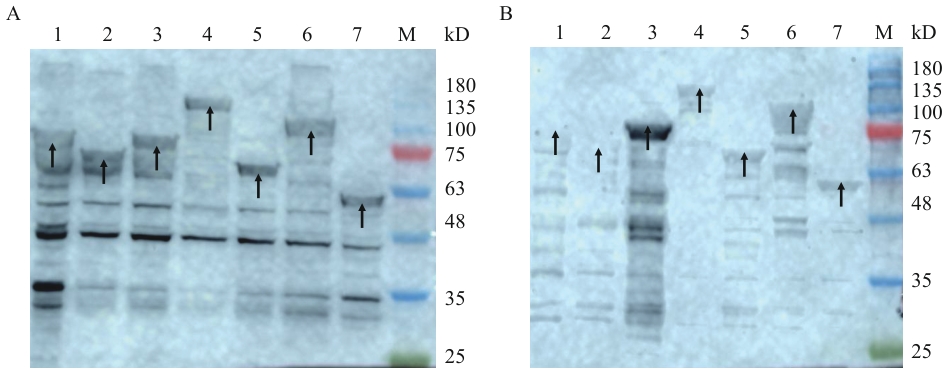
Fig. 6 Western blot identification of expressed productsA: Anti-His-tag antibody; B: anti-IL-27 polyclonal antibody; 1: XXA-IL-27 (71 kD); 2: SUMO-IL-27 (66 kD); 3: GST-IL-27 (76 kD); 4: NusA-IL-27 (105 kD); 5: TrxA-IL-27 (66 kD); 6: MBP-IL-27 (91 kD); 7: IL-27 (54 kD); M: protein marker
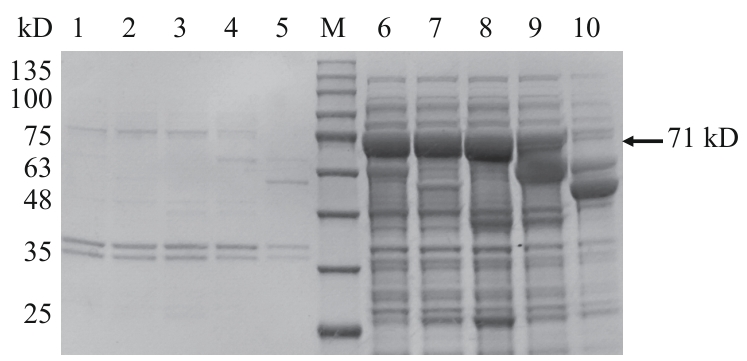
Fig. 7 SDS-PAGE analysis of the effects of chaperone co-expression on XXA-IL-27 solubilityM: Protein marker; 1: XXA-IL-27 (pKJE7) intracellular pellet; 2: XXA-IL-27 (pTf16) intracellular pellet; 3: XXA-IL-27 (pGro7) intracellular pellet; 4: XXA-IL-27 (pG-KJE8) intracellular pellet; 5: XXA-IL-27 (pG-Tf2) intracellular pellet; 6: XXA-IL-27 (pKJE7) intracellular supernatant; 7: XXA-IL-27 (pTf16) intracellular supernatant; 8: XXA-IL-27 (pGro7) intracellular supernatant; 9: XXA-IL-27 (pG-KJE8) intracellular supernatant; 10: XXA-IL-27 (pG-Tf2) intracellular supernatant
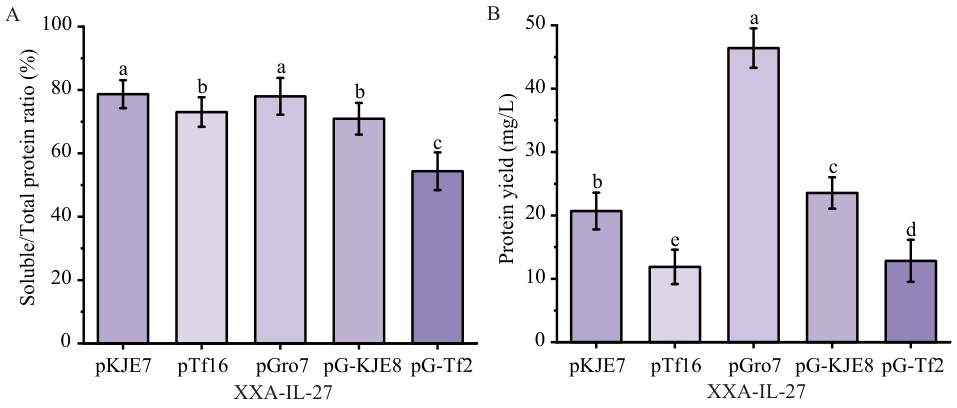
Fig. 8 Densitometric analysis of XXA-IL-27 solubility (A) and ELISA quantification of total expression levels (B) upon co-expressed with different chaperones
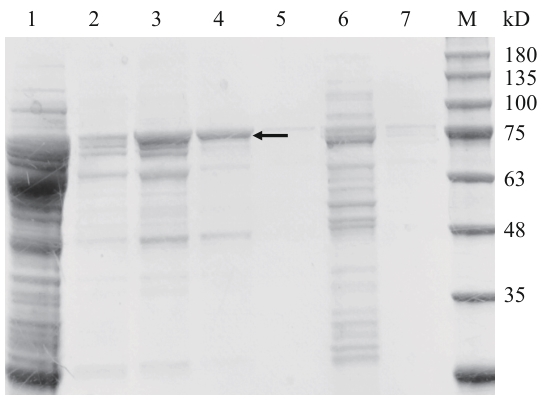
Fig. 9 SDS-PAGE analysis of rh XXA-IL-27 purificationM: Protein marker; 1: flow-through; 2: 20 mmol/L imidazole; 3: 30 mmol/L imidazole; 4: 75 mmol/L imidazole; 5: 150 mmol/L imidazole; 6: 300 mmol/L imidazole; 7: 500 mmol/L imidazole (unconcentrated eluate)
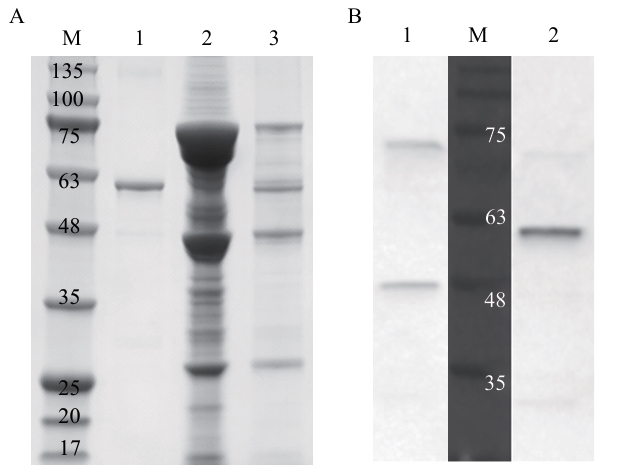
Fig. 10 SDS-PAGE (A) and Western blot (B) analysis of TEV cleavageM: Protein marker; (A) 1: TEV protease; 2: XXA-IL-27 before cleavage; 3: XXA-IL-27 after cleavage; (B) 1: XXA-IL before cleavage; 2: XXA-IL after cleavage
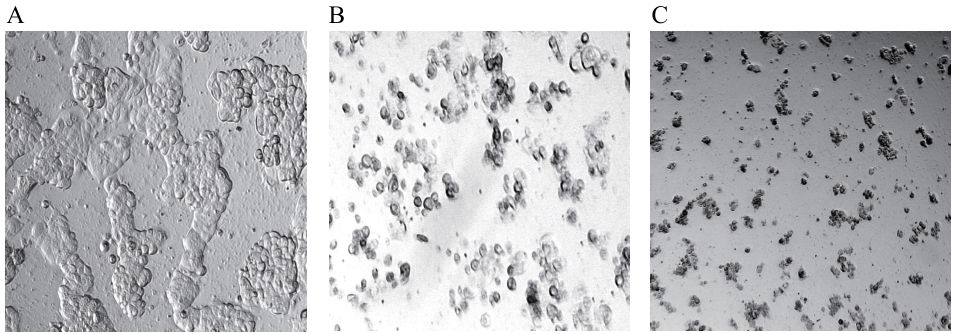
Fig. 11 Effect of XXA-IL-27 treatment for 48 h on the morphology of MCF-7 cellsA: Control group; B: 5 μg/mL treatment group; C: 30 μg/mL treatment group
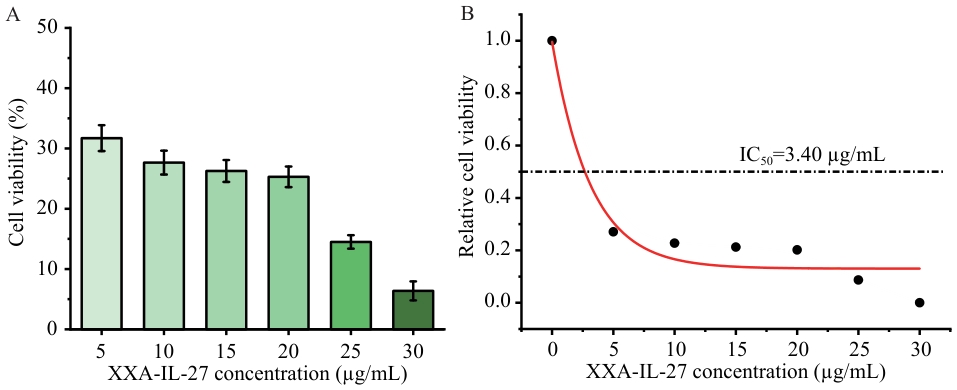
Fig. 12 Effect of XXA-IL-27 on MCF-7 cell viability and corresponding IC50 assessmentA: Bar chart of cell viability; B: dose-response profile and IC50 fitting curve
| [1] | Pflanz S, Timans JC, Cheung J, et al. IL-27, a heterodimeric cytokine composed of EBI3 and p28 protein, induces proliferation of naive CD4+ T cells [J]. Immunity, 2002, 16(6): 779-790. |
| [2] | Maleki AH, Rajabivahid M, Khosh E, et al. Harnessing IL-27: challenges and potential in cancer immunotherapy [J]. Clin Exp Med, 2025, 25: 34. |
| [3] | Kourko O, Seaver K, Odoardi N, et al. IL-27, IL-30, and IL-35: a cytokine triumvirate in cancer [J]. Front Oncol, 2019, 9: 969. |
| [4] | Matsui M, Kishida T, Nakano H, et al. Interleukin-27 activates natural killer cells and suppresses NK-resistant head and neck squamous cell carcinoma through inducing antibody-dependent cellular cytotoxicity [J]. Cancer Res, 2009, 69(6): 2523-2530. |
| [5] | Martin AK, Hedberg J, Hernandez-Aguirre I, et al. Oncolytic HSV-IL27 expression improves CD8 T cell function and therapeutic activity in syngeneic glioma models [J]. J Immunother Cancer, 2025, 13(7): e012227. |
| [6] | Sørensen HP, Mortensen KK. Soluble expression of recombinant proteins in the cytoplasm of Escherichia coli [J]. Microb Cell Fact, 2005, 4: 1. |
| [7] | Rosano GL, Ceccarelli EA. Recombinant protein expression in Escherichia coli: advances and challenges [J]. Front Microbiol, 2014, 5: 172. |
| [8] | Francis DM, Page R. Strategies to optimize protein expression in E. coli [J]. CP Protein Science, 2010, 61(1): 5.24.1-29. |
| [9] | Ghosh S, Rasheedi S, Rahim SS, et al. Method for enhancing solubility of the expressed recombinant proteins in Escherichia coli [J]. BioTechniques, 2004, 37(3): 418-423. |
| [10] | Costa S, Almeida A, Castro A, et al. Fusion tags for protein solubility, purification and immunogenicity in Escherichia coli: the novel Fh8 system [J]. Front Microbiol, 2014, 5: 63. |
| [11] | Liu ZH, Huang D, Fu XJ, et al. Comparison of three commonly used fusion tags for the expression of nanobodies in the cytoplasm of Escherichia coli [J]. Biotechnol Biotechnol Equip, 2018, 32(2): 462-469. |
| [12] | Marblestone JG, Edavettal SC, Lim Y, et al. Comparison of SUMO fusion technology with traditional gene fusion systems: Enhanced expression and solubility with SUMO [J]. Protein Sci, 2006, 15(1): 182-189. |
| [13] | Steinmetz EJ, Auldridge ME. Screening fusion tags for improved recombinant protein expression in E. coli with the expresso® solubility and expression screening system [J]. CP Protein Science, 2017, 90(1): 5.27. 1-20. |
| [14] | Chen SM, Shan B, Luo YC, et al. Molecular chaperone effects on recombinant yield and binding characteristics of an ABA-specific scFv in Escherichia coli [J]. Front Bioeng Biotechnol, 2025, 13: 1643833. |
| [15] | Xie X, Wu P, Huang XC, et al. Retro-protein XXA is a remarkable solubilizing fusion tag for inclusion bodies [J]. Microb Cell Fact, 2022, 21: 51. |
| [16] | Hunter CA, Kastelein R. Interleukin-27: balancing protective and pathological immunity [J]. Immunity, 2012, 37(6): 960-969. |
| [17] | Baghban R, Farajnia S, Rajabibazl M, et al. Yeast expression systems: overview and recent advances [J]. Mol Biotechnol, 2019, 61(5): 365-384. |
| [18] | McKenzie EA, Abbott WM. Expression of recombinant proteins in insect and mammalian cells [J]. Methods, 2018, 147: 40-49. |
| [19] | Anfinsen CB. Principles that govern the folding of protein chains [J]. Science, 1973, 181(4096): 223-230. |
| [20] | Dill KA, MacCallum JL. The protein-folding problem, 50 years on [J]. Science, 2012, 338(6110): 1042-1046. |
| [21] | Vallejo LF, Rinas U. Strategies for the recovery of active proteins through refolding of bacterial inclusion body proteins [J]. Microb Cell Fact, 2004, 3: 11. |
| [22] | Paraskevopoulou V, Falcone F. Polyionic tags as enhancers of protein solubility in recombinant protein expression [J]. Microorganisms, 2018, 6(2): 47. |
| [23] | Kim YE, Hipp MS, Bracher A, et al. Molecular chaperone functions in protein folding and proteostasis [J]. Annu Rev Biochem, 2013, 82: 323-355. |
| [24] | Saibil H. Chaperone machines for protein folding, unfolding and disaggregation [J]. Nat Rev Mol Cell Biol, 2013, 14(10): 630-642. |
| [25] | Hayer-Hartl M, Bracher A, Hartl FU. The GroEL-GroES chaperonin machine: a nano-cage for protein folding [J]. Trends Biochem Sci, 2016, 41(1): 62-76. |
| [26] | Balchin D, Hayer-Hartl M, Hartl FU. In vivo aspects of protein folding and quality control [J]. Science, 2016, 353(6294): aac4354. |
| [27] | Chen XY, Zaro JL, Shen WC. Fusion protein linkers: Property, design and functionality [J]. Adv Drug Deliv Rev, 2013, 65(10): 1357-1369. |
| [28] | Waugh DS. Making the most of affinity tags [J]. Trends Biotechnol, 2005, 23(6): 316-320. |
| [29] | Scapin G, Cagdas E, Grav LM, et al. Implications of glycosylation for the development of selected cytokines and their derivatives for medical use [J]. Biotechnol Adv, 2024, 77: 108467. |
| [30] | Yap WB, Nadarajah S, Shidik N, et al. Cytotoxicity, regulation of apoptotic and anti-apoptotic gene expression by IL-27 in MCF-7 and MDA-MB-231 breast cancer cell lines [J]. J Sains Kesihatan Malays, 2018, 16: 15-22. |
| [1] | HE Qi-chen, YANG Yang, ALIYA Waili, TANG Xin-yue, LI Zhong-xi, CHEN Yong-kun, CHEN Ling-na. Investigation into the Family Characteristics of the Lavender Copper Amine Oxidase Gene and the Role of LaCuAO1 in Bioamine Degradation [J]. Biotechnology Bulletin, 2026, 42(1): 114-124. |
| [2] | WANG Ting, WANG Yi-dan, REN Shu-jin, MA Ting, JIN Meng-jun, YANG Cheng-de. Cloning and Expression Analysis of Pectate Lyase Gene CcPL20552 from Colletotrichum coccodes [J]. Biotechnology Bulletin, 2025, 41(5): 290-299. |
| [3] | XIANG Chun-fan, LI Le-song, WANG Juan, LIANG Yan-li, YANG Sheng-chao, LI Meng-fei, ZHAO Yan. Functional Identification and Expression Analysis of Cinnamonyl Alcohol Dehydrogenase AsCAD in Angelica sinensis [J]. Biotechnology Bulletin, 2025, 41(2): 295-308. |
| [4] | LI Ming, LIU Xiang-yu, WANG Yi-na, HE Si-mei, SHA Ben-cai. Cloning and Functional Characterization of 6-OMT Gene Related to Isocorydine Biosynthesis in Dactylicapnos scandens [J]. Biotechnology Bulletin, 2025, 41(2): 309-320. |
| [5] | SUN Hui-qiong, ZHANG Chun-lai, WANG Xi-liang, XU Hong-shen, DOU Miao-miao, YANG Bo-hui, CHAI Wen-ting, ZHAO Shan-shan, JIANG Xiao-dong. Identification, Expression and DNA Variation Analysis of FLS Gene Family in Chenopodium quinoa [J]. Biotechnology Bulletin, 2024, 40(7): 172-182. |
| [6] | ZHANG Na, LIU Meng-nan, QU Zhan-fan, CUI Yi-ping, NI Jia-yao, WANG Hua-zhong. Alternative Translation of Wheat Enolase-encoding Gene ENO2 and Its Prokaryotic Expression [J]. Biotechnology Bulletin, 2024, 40(5): 112-119. |
| [7] | PAN Ping-ping, XU Zhi-hao, ZHANG Yi-wen, LI Qing, WANG Zhong-hua. Prokaryotic Expression, Subcellular Localization and Expression Analysis of PcCHS Gene from Polygonatum cyrtonema Hua [J]. Biotechnology Bulletin, 2024, 40(5): 280-289. |
| [8] | ZHONG Yun, LIN Chun, LIU Zheng-jie, DONG Chen-wen-hua, MAO Zi-chao, LI Xing-yu. Cloning and Prokaryotic Expression Analysis of Asparagus Saponin Synthesis Related Glycosyltransferase Genes [J]. Biotechnology Bulletin, 2024, 40(4): 255-263. |
| [9] | HAO Nan, GENG Shan, ZHAO Yu-wei, HOU Zhi-han, ZHAO Bin, LIU Ying-chao. Cloning and Expression Analysis of FvALT from Fusarium verticillioides [J]. Biotechnology Bulletin, 2024, 40(12): 256-263. |
| [10] | MEI Huan, LI Yue, LIU Ke-meng, LIU Ji-hua. Study on the Biosynthesis of l-SLR by Efficient Prokaryotic Expression of Berberine Bridge Enzyme [J]. Biotechnology Bulletin, 2023, 39(7): 277-287. |
| [11] | DONG Cong, GAO Qing-hua, WANG Yue, LUO Tong-yang, WANG Qing-qing. Increasing the Expression of FAD-dependent Glucose Dehydrogenase by Recombinant Pichia pastoris Using a Combined Strategy [J]. Biotechnology Bulletin, 2023, 39(6): 316-324. |
| [12] | TENG Meng-xin, XU Ya, HE Jing, WANG Qi, QIAO Fei, LI Jing-yang, LI Xin-guo. Cloning and Prokaryotic Expression Analysis of MaMC6 in Banana [J]. Biotechnology Bulletin, 2023, 39(12): 179-186. |
| [13] | SUO Qing-qing, WU Nan, YANG Hui, LI Li, WANG Xi-feng. Prokaryotic Expression,Antibody Preparation and Application of Rice Caffeoyl Coenzyme A-O-methyltransferase Gene [J]. Biotechnology Bulletin, 2022, 38(8): 135-141. |
| [14] | QIN Xue-jing, WANG Yu-han, CAO Yi-bo, ZHANG Ling-yun. Prokaryotic Expression and Preparation of Polyclonal Antibody of PwHAP5 Gene in Picea wilsonii [J]. Biotechnology Bulletin, 2022, 38(8): 142-149. |
| [15] | WANG Guang-li, FAN Chan, WANG Hui, LU Hui-fang, XIA Ling-yin, HUANG Jian, MIN Xun. Prokaryotic Expression,Purification,Identification,and Polyclonal Antibody Preparation of Vibrio cholerae Hemolysin HlyA [J]. Biotechnology Bulletin, 2022, 38(7): 269-277. |
| Viewed | ||||||
|
Full text |
|
|||||
|
Abstract |
|
|||||
