







Biotechnology Bulletin ›› 2026, Vol. 42 ›› Issue (5): 37-50.doi: 10.13560/j.cnki.biotech.bull.1985.2026-0025
SUN Zhuo1,2,3( ), LEI Meng-yuan1, LIN Hong-mei1,2, LYU Ze-liang1,2, HAN Zhong-ming1,2(), YANG Li-min1,2()
Received:2026-01-08
Online:2026-05-26
Published:2026-06-10
Contact:
HAN Zhong-ming, YANG Li-min
E-mail:329575068@163.com;hanzm2008@126.com;ylmh777@126.com
SUN Zhuo, LEI Meng-yuan, LIN Hong-mei, LYU Ze-liang, HAN Zhong-ming, YANG Li-min. Research Advances on Rhizosphere Microbiome-mediated Control of Medicinal Plant Diseases[J]. Biotechnology Bulletin, 2026, 42(5): 37-50.
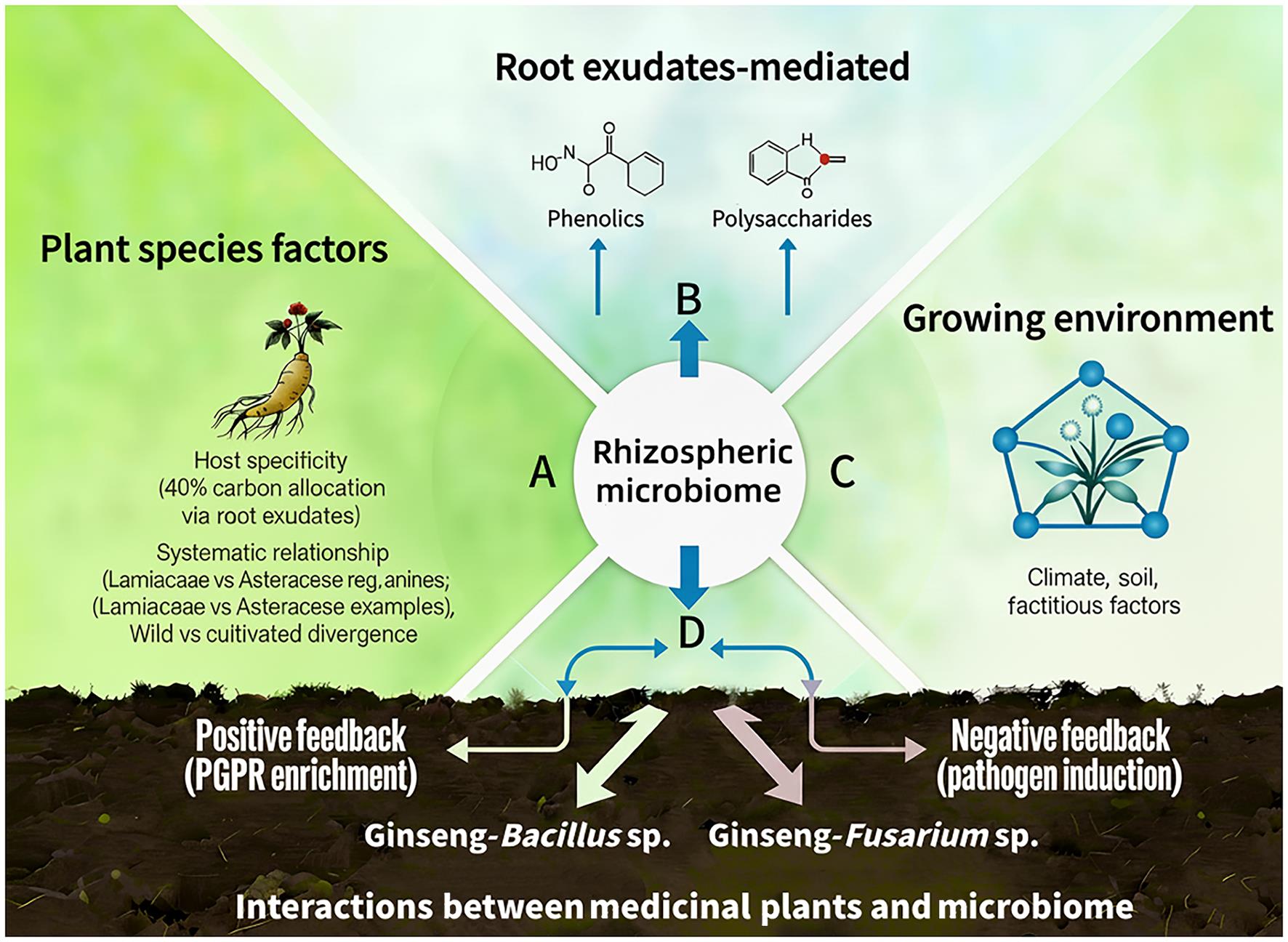
Fig. 1 Key factors driving the formation of microbiome communities in the rhizosphere of medicinal plantsA: Plant species factors; B: root exudates-mediated; C: plant growing environment; D: positive-negative feedback regulation mechanism of the rhizospheric microbiome
序号 Number | 生防微生物 Biocontrol agents | 登记证号 Registration certificate number | 剂型与登记类型 Formulation and registration type | 药用作物及病害 Crops and target diseases | 推荐使用标准或规程 Recommended standards or regulations |
|---|---|---|---|---|---|
| 1 | 枯草芽胞杆菌 Bacillus subtilis | PD20160669(制剂) | 可湿性粉剂(WP) 杀菌剂(美国拜沃) | 人参立枯病、灰霉病、根腐病等 | 人参优质种植技术规范(GB/T 34789-2017)等 |
| 2 | 甲基营养型芽胞杆菌 Bacillus methylotrophicus | PD20181602(母药) | 可湿性粉剂(WP) 杀菌剂(华北制药集团爱诺) | 人参、三七、大蒜等根腐病 | 非林地人参绿色生产技术规程(DB22T 3607-2023)等 |
| 3 | 解淀粉芽胞杆菌 Bacillus amyloliquefaciens | PD20240498(母药) | 悬浮剂(SC) 杀菌剂(武汉科诺生物) | 人参、三七等根腐病 | 植物类中药材病害综合防治技术规范 总则 (T/CACM 1570.1-2024)等 |
| 4 | 贝莱斯芽胞杆菌 Bacillus velezensis | PD20211360(制剂) | 可湿性粉剂(WP) 杀菌剂(四川百事东旺生物) | 半夏细菌性软腐病、当归根腐病、烟草黑胫病等 | 烟草病虫害防治技术规范(YC/T 391-2011)等 |
| 5 | 多黏类芽胞杆菌 Paenibacillus polymyxa | PD20171137(制剂) | 可湿性粉剂(WP) 杀菌剂(山西临猗中晋化工) | 人参立枯病等 | 人参安全生产 农药使用规范(DB22/T 1233-2019)等 |
| 6 | 哈茨木霉 Trichoderma harzianum | PD20140319(制剂) | 可湿性粉剂(WP) 杀菌剂(美国拜沃) | 人参灰霉病、人参立枯病等 | 人参优质种植技术规范(GB/T 34789-2017)等 |
| 7 | 淡紫拟青霉 Paecilomyces lilacinus | PD20252900(制剂) | 颗粒剂(GR) 杀线虫剂(云南绿戎生物) | 白术、地黄等线虫病 | 植物类中药材病害综合防治技术规范 地黄(T/CACM 1570.5-2024)等 |
| 8 | 侧孢长枝木霉菌 Trichoderma longibrachiatum | 微生物肥2018准字6138号 | 微生物菌剂(河北博海生物) | 川芎叶斑病、白术根腐病等 | 白术根腐病防控技术规程(DB50/T 1524-2023)等 |
| 9 | 木霉菌 Trichoderma sp. | PD20096832(母药) | 可湿性粉剂(WP) 杀菌剂(山东泰诺) | 黄芩灰霉病、白粉病、根腐病等 | 黄芩主要病虫害绿色防控技术规程(DB14/T 3384-2025)等 |
| 10 | 金龟子绿僵菌 Metarhizium anisopliae | PD20220377(制剂) | 可湿性粉剂(WP) 杀虫剂(宁夏中微泰克) | 蛴螬及虫害伴生的黄连根腐病、白绢病 | 中药材 药用植物主要病虫害生物防治技术规程 第1部分:黄连(DB42/T 2083.1-2023)等 |
| 11 | 球孢白僵菌 Beauveria bassiana | PD20102133(制剂) | 可湿性粉剂(WP) 杀虫剂(江西天人生态) | 蛴螬及虫害伴生的半夏猝倒病、软腐病及白绢病 | 中药材 药用植物主要病虫害生物防治技术规程 第2部分:半夏(DB42/T 2083.2-2024)等 |
Table 1 Application of single-function strains in disease management of medicinal plants
序号 Number | 生防微生物 Biocontrol agents | 登记证号 Registration certificate number | 剂型与登记类型 Formulation and registration type | 药用作物及病害 Crops and target diseases | 推荐使用标准或规程 Recommended standards or regulations |
|---|---|---|---|---|---|
| 1 | 枯草芽胞杆菌 Bacillus subtilis | PD20160669(制剂) | 可湿性粉剂(WP) 杀菌剂(美国拜沃) | 人参立枯病、灰霉病、根腐病等 | 人参优质种植技术规范(GB/T 34789-2017)等 |
| 2 | 甲基营养型芽胞杆菌 Bacillus methylotrophicus | PD20181602(母药) | 可湿性粉剂(WP) 杀菌剂(华北制药集团爱诺) | 人参、三七、大蒜等根腐病 | 非林地人参绿色生产技术规程(DB22T 3607-2023)等 |
| 3 | 解淀粉芽胞杆菌 Bacillus amyloliquefaciens | PD20240498(母药) | 悬浮剂(SC) 杀菌剂(武汉科诺生物) | 人参、三七等根腐病 | 植物类中药材病害综合防治技术规范 总则 (T/CACM 1570.1-2024)等 |
| 4 | 贝莱斯芽胞杆菌 Bacillus velezensis | PD20211360(制剂) | 可湿性粉剂(WP) 杀菌剂(四川百事东旺生物) | 半夏细菌性软腐病、当归根腐病、烟草黑胫病等 | 烟草病虫害防治技术规范(YC/T 391-2011)等 |
| 5 | 多黏类芽胞杆菌 Paenibacillus polymyxa | PD20171137(制剂) | 可湿性粉剂(WP) 杀菌剂(山西临猗中晋化工) | 人参立枯病等 | 人参安全生产 农药使用规范(DB22/T 1233-2019)等 |
| 6 | 哈茨木霉 Trichoderma harzianum | PD20140319(制剂) | 可湿性粉剂(WP) 杀菌剂(美国拜沃) | 人参灰霉病、人参立枯病等 | 人参优质种植技术规范(GB/T 34789-2017)等 |
| 7 | 淡紫拟青霉 Paecilomyces lilacinus | PD20252900(制剂) | 颗粒剂(GR) 杀线虫剂(云南绿戎生物) | 白术、地黄等线虫病 | 植物类中药材病害综合防治技术规范 地黄(T/CACM 1570.5-2024)等 |
| 8 | 侧孢长枝木霉菌 Trichoderma longibrachiatum | 微生物肥2018准字6138号 | 微生物菌剂(河北博海生物) | 川芎叶斑病、白术根腐病等 | 白术根腐病防控技术规程(DB50/T 1524-2023)等 |
| 9 | 木霉菌 Trichoderma sp. | PD20096832(母药) | 可湿性粉剂(WP) 杀菌剂(山东泰诺) | 黄芩灰霉病、白粉病、根腐病等 | 黄芩主要病虫害绿色防控技术规程(DB14/T 3384-2025)等 |
| 10 | 金龟子绿僵菌 Metarhizium anisopliae | PD20220377(制剂) | 可湿性粉剂(WP) 杀虫剂(宁夏中微泰克) | 蛴螬及虫害伴生的黄连根腐病、白绢病 | 中药材 药用植物主要病虫害生物防治技术规程 第1部分:黄连(DB42/T 2083.1-2023)等 |
| 11 | 球孢白僵菌 Beauveria bassiana | PD20102133(制剂) | 可湿性粉剂(WP) 杀虫剂(江西天人生态) | 蛴螬及虫害伴生的半夏猝倒病、软腐病及白绢病 | 中药材 药用植物主要病虫害生物防治技术规程 第2部分:半夏(DB42/T 2083.2-2024)等 |
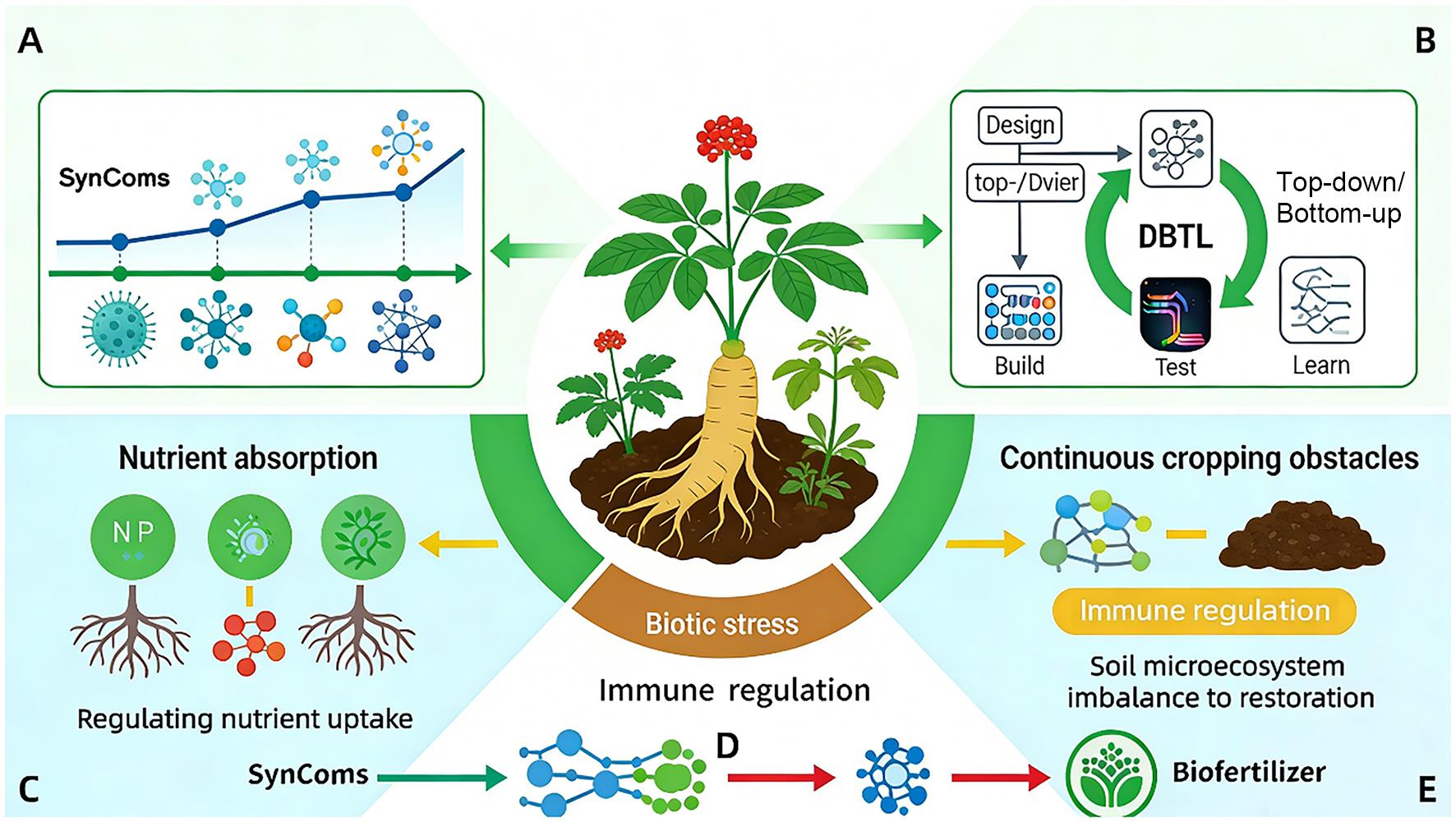
Fig. 2 Construction of SynComs and its biological mechanisms in improving the quality of medicinal plantsA: Preliminary construction of SynComs. B: Construction strategy of SynComs based on bottom-up or top-down. C: SynComs regulate the nutrient supply of rhizospheric soil. D: SynComs induce medicinal plant systemic resistance. E: SynComs repair microecological imbalance of medicinal plant cropland
| [1] | 黄菊, 李耿, 张霄潇, 等. 新时期下中医药产业发展的有关思考 [J]. 中国中药杂志, 2022, 47(17): 4799-4813. |
| Huang J, Li G, Zhang XX, et al. Relevant thoughts on development of traditional Chinese medicine industry in new era [J]. China J Chin Mater Med, 2022, 47(17): 4799-4813. | |
| [2] | 赵江怡, 孙志蓉, 张子龙. 我国中药材种植模式研究进展 [J]. 中国现代中药, 2021, 23(2): 372-380. |
| Zhao JY, Sun ZR, Zhang ZL. Research progress of planting model of Chinese materia medica in China [J]. Mod Chin Med, 2021, 23(2): 372-380. | |
| [3] | Wang KG, Lu QF, Dou ZC, et al. A review of research progress on continuous cropping obstacles [J]. Front Agric Sci Eng, 2024, 11(2): 253-270. |
| [4] | 吴红淼, 林文雄. 药用植物连作障碍研究评述和发展透视 [J]. 中国生态农业学报: 中英文, 2020, 28(6): 775-793. |
| Wu HM, Lin WX. A commentary and development perspective on the consecutive monoculture problems of medicinal plants [J]. Chin J Eco Agric, 2020, 28(6): 775-793. | |
| [5] | Jangpangi D, Patni B, Chandola V, et al. Medicinal plants in a changing climate: understanding the links between environmental stress and secondary metabolite synthesis [J]. Front Plant Sci, 2025, 16: 1587337. |
| [6] | 杨昌贵, 江维克, 杨野, 等. 中药材生产常见病害及用药特征分析与建议 [J]. 中国中药杂志, 2023, 48(11): 2925-2930. |
| Yang CG, Jiang WK, Yang Y, et al. Common diseases and drug use characteristics of Chinese herbal medicines and suggestions [J]. China J Chin Mater Med, 2023, 48(11): 2925-2930. | |
| [7] | 沈燕, 仲建锋, 黄亚威, 等. 植物类中药材生产过程中质量安全研究进展 [J]. 江苏农业学报, 2022, 38(1): 268-277. |
| Shen Y, Zhong JF, Huang YW, et al. Advances in the quality and safety of Chinese herbal medicines in the pro-ducing process [J]. Jiangsu J Agric Sci, 2022, 38(1): 268-277. | |
| [8] | 杨露, 辛建攀, 田如男. 根际微生物对植物重金属胁迫的缓解作用及其机理研究进展 [J]. 生物技术通报, 2022, 38(3): 213-225. |
| Yang L, Xin JP, Tian RN. Research progress in the mitigative effects of rhizosphere microorganisms on heavy metal stress in plants and their mechanisms [J]. Biotechnol Bull, 2022, 38(3): 213-225. | |
| [9] | Negre Rodríguez M, Pioppi A, Kovács ÁT. The role of plant host genetics in shaping the composition and functionality of rhizosphere microbiomes [J]. mSystems, 2025, 10(8): e00041-e00024. |
| [10] | Compant S, Cassan F, Kostić T, et al. Harnessing the plant microbiome for sustainable crop production [J]. Nat Rev Microbiol, 2025, 23(1): 9-23. |
| [11] | Busby PE, Soman C, Wagner MR, et al. Research priorities for harnessing plant microbiomes in sustainable agriculture [J]. PLoS Biol, 2017, 15(3): e2001793. |
| [12] | 荀卫兵, 张瑞福, 沈其荣. 根际微生物组功能补偿装配的概念、内涵和展望 [J]. 土壤学报, 2024, 61(6): 1481-1491. |
| Xun WB, Zhang RF, Shen QR. Functional compensatory assembly of rhizosphere microbiome: concept, content, and outlook [J]. Acta Pedol Sin, 2024, 61(6): 1481-1491. | |
| [13] | Trivedi P, Leach JE, Tringe SG, et al. Plant-microbiome interactions: from community assembly to plant health [J]. Nat Rev Microbiol, 2020, 18(11): 607-621. |
| [14] | Ye XF, Li ZK, Luo X, et al. A predatory myxobacterium controls cucumber Fusarium wilt by regulating the soil microbial community [J]. Microbiome, 2020, 8: 49. |
| [15] | Yang SD, Liu HW, Xie PH, et al. Emerging pathways for engineering the rhizosphere microbiome for optimal plant health [J]. J Agric Food Chem, 2023, 71(11): 4441-4449. |
| [16] | Panth M, Hassler SC, Baysal-Gurel F. Methods for management of soilborne diseases in crop production [J]. Agriculture, 2020, 10(1): 16. |
| [17] | 曾庆超, 赵亚男, 张睿哲, 等. 植物病害生防合成菌群的研究进展 [J]. 植物保护, 2025, 51(5): 143-152. |
| Zeng QC, Zhao YN, Zhang RZ, et al. Research advances in synthetic microbiota communities for the biological control of plant diseases [J]. Plant Prot, 2025, 51(5): 143-152. | |
| [18] | Banerjee S, van der Heijden MGA. Soil microbiomes and one health [J]. Nat Rev Microbiol, 2023, 21(1): 6-20. |
| [19] | 徐文静, 靳晓东, 杨秋生. 植物根际微生物的影响因素研究进展 [J]. 河南农业科学, 2014, 43(5): 6-12. |
| Xu WJ, Jin XD, Yang QS. Research progress on factors influencing plant rhizosphere microorganism [J]. J Henan Agric Sci, 2014, 43(5): 6-12. | |
| [20] | Bais HP, Weir TL, Perry LG, et al. The role of root exudates in rhizosphere interactions with plants and other organisms [J]. Annu Rev Plant Biol, 2006, 57: 233-266. |
| [21] | Lareen A, Burton F, Schäfer P. Plant root-microbe communication in shaping root microbiomes [J]. Plant Mol Biol, 2016, 90(6): 575-587. |
| [22] | Deng SW, Caddell DF, Xu G, et al. Genome wide association study reveals plant loci controlling heritability of the rhizosphere microbiome [J]. ISME J, 2021, 15(11): 3181-3194. |
| [23] | Dwivedi SL, Vetukuri RR, Kelbessa BG, et al. Exploitation of rhizosphere microbiome biodiversity in plant breeding [J]. Trends Plant Sci, 2025, 30(9): 1033-1045. |
| [24] | Cheng SS, Gong X, Xue WF, et al. Evolutionarily conserved core microbiota as an extended trait in nitrogen acquisition strategy of herbaceous species [J]. New Phytol, 2024, 244(4): 1570-1584. |
| [25] | 关佳莉, 丛悦, 徐媛媛, 等. 不同种植模式下黄芪根际环境与活性成分相关性研究 [J]. 中草药, 2025, 56(12): 4399-4409. |
| Guan JL, Cong Y, Xu YY, et al. Correlation between rhizosphere environment and contents of active components of Astragali Radix from different cropping modes [J]. Chin Tradit Herb Drugs, 2025, 56(12): 4399-4409. | |
| [26] | 王悦, 杨贝贝, 王浩, 等. 不同种植模式下丹参根际土壤微生物群落结构变化 [J]. 生态学报, 2019, 39(13): 4832-4843. |
| Wang Y, Yang BB, Wang H, et al. Variation in microbial community structure in the rhizosphere soil of Salvia miltiorrhiza Bunge under three cropping modes [J]. Acta Ecol Sin, 2019, 39(13): 4832-4843. | |
| [27] | 李运涛, 孟忠祥, 董晋, 等. 不同药用植物根际土壤原核微生物多样性研究 [J]. 微生物学杂志, 2024, 44(1): 90-99. |
| Li YT, Meng ZX, Dong J, et al. Diversity of prokaryotic microorganisms in rhizosphere soil of different medicinal plants [J]. J Microbiol, 2024, 44(1): 90-99. | |
| [28] | Liu F, Dong WL, An Y, et al. Pilot investigation of the rhizosphere microbial communities and metabolism of two cultivars of Polygonatum cyrtonema Hua [J]. Front Microbiol, 2025, 16: 1615900. |
| [29] | Esma T, Ahlem R, Boutheina T, et al. Contribution to the study of the relationship between gammaproteobacteria and rhizobia in legume species of the genus Hedysarum [J]. Legume Res Int J, 2020, 43(6): 872-877. |
| [30] | 李芳, 邓杰, 戈秀梅, 等. 药用植物与根际微生物相互作用的研究进展 [J]. 中国农学通报, 2025, 41(16): 99-107. |
| Li F, Deng J, Ge XM, et al. Research progress on interaction between medicinal plants and rhizosphere microorganisms [J]. Chin Agric Sci Bull, 2025, 41(16): 99-107. | |
| [31] | Li Y, Zhang KW, Zhang H, et al. Organic pollutant-induced long-distance ROS signaling drives plant systemic acquired acclimation via rhizomicrobiota [J]. Nat Commun, 2025, 16: 9077. |
| [32] | Philippot L, Raaijmakers JM, Lemanceau P, et al. Going back to the roots: the microbial ecology of the rhizosphere [J]. Nat Rev Microbiol, 2013, 11(11): 789-799. |
| [33] | Turner TR, James EK, Poole PS. The plant microbiome [J]. Genome Biol, 2013, 14(6): 209. |
| [34] | Bulgarelli D, Rott M, Schlaeppi K, et al. Revealing structure and assembly cues for Arabidopsis root-inhabiting bacterial microbiota [J]. Nature, 2012, 488(7409): 91-95. |
| [35] | 孟缘, 付心雨, 鞠吉东, 等. 根际微生物介导药用植物-土壤负反馈形成连作障碍的作用机制 [J]. 科技导报, 2023, 41(16): 82-88. |
| Meng Y, Fu XY, Ju JD, et al. Mechanism of rhizosphere microorganisms mediating the negative feedback formation of continuous cropping barrier between medicinal plants and soil [J]. Sci Technol Rev, 2023, 41(16): 82-88. | |
| [36] | Coats VC, Rumpho ME. The rhizosphere microbiota of plant invaders: an overview of recent advances in the microbiomics of invasive plants [J]. Front Microbiol, 2014, 5: 368. |
| [37] | 杨莉, 于俐, 孙卓, 等. 人参根系分泌物中有机酸及皂苷对人参病原菌与生防菌的化感差异研究 [J]. 中国农业科技导报, 2022, 24(6): 145-155. |
| Yang L, Yu L, Sun Z, et al. Allelopathic effects of organic acids and saponins in ginseng root exudates on pathogenic and biocontrol bacteria [J]. J Agric Sci Technol, 2022, 24(6): 145-155. | |
| [38] | 保丽美. 三七连作过程中酚酸和皂苷类自毒物质对其根际土壤微生物的影响研究 [D]. 昆明: 昆明理工大学, 2022. |
| Bao LM. Effects of phenolic acids and saponins on rhizosphere soil microorganisms during continuous cropping of Panax notoginseng [D]. Kunming: Kunming University of Science and Technology, 2022. | |
| [39] | 焦晓林, 杜静, 毕晓宝, 等. 西洋参中酚酸及皂苷成分对病原菌的作用 [J]. 中国农学通报, 2015, 31(17): 105-110. |
| Jiao XL, Du J, Bi XB, et al. Effect of phenolic acid and ginsenosides in American ginseng on the growth of pathogenic fungi [J]. Chin Agric Sci Bull, 2015, 31(17): 105-110. | |
| [40] | Zhang B, Weston LA, Li MJ, et al. Rehmannia glutinosa replant issues: root exudate-rhizobiome interactions clearly influence replant success [J]. Front Microbiol, 2020, 11: 1413. |
| [41] | Zuluaga MYA, de Oliveira ALM, Valentinuzzi F, et al. An insight into the role of the organic acids produced by Enterobacter sp. strain 15S in solubilizing tricalcium phosphate: in situ study on cucumber [J]. BMC Microbiol, 2023, 23: 184. |
| [42] | 张亮, 杨宇虹, 李倩, 等. 自生固氮菌活化土壤无机磷研究 [J]. 生态学报, 2013, 33(7): 2157-2164. |
| Zhang L, Yang YH, Li Q, et al. Mobilization of inorganic phosphorus from soils by five azotobacters [J]. Acta Ecol Sin, 2013, 33(7): 2157-2164. | |
| [43] | 张永祥, 张宝, 林亮华, 等. 地黄根系分泌物中毛蕊花糖苷招募的根际微生物群落结构及功能 [J]. 中国实验方剂学杂志, 2024, 30(9): 156-165. |
| Zhang YX, Zhang B, Lin LH, et al. Structure and function of rhizomicrobes recruited by acteoside in root exudates of Rehmannia glutinosa [J]. Chin J Exp Tradit Med Formulae, 2024, 30(9): 156-165. | |
| [44] | Thakur M, Khushboo, Shah S, et al. Unlocking the secrets of rhizosphere microbes: a new dimension for agriculture [J]. Symbiosis, 2024, 92(3): 305-322. |
| [45] | Jia HM, Zhou J, Zhao WC, et al. β-Elemonic acid mediated enrichment of Paenibacillus to help Salvia miltiorrhiza Bunge alleviate drought stress [J]. Microbiome, 2025, 13: 153. |
| [46] | Liu HJ, Su YW, Ye C, et al. Nucleotides enriched under heat stress recruit beneficial rhizomicrobes to protect plants from heat and root-rot stresses [J]. Microbiome, 2025, 13: 160. |
| [47] | 邓文辉, 宋珂辰, 张浩, 等. 降水变化条件下荒漠草原优势植物根际微生物群落结构和多样性特征研究 [J]. 草业学报, 2025, 34(5): 12-26. |
| Deng WH, Song KC, Zhang H, et al. Structure and diversity characteristics of the rhizosphere microbial community of dominant plants on the desert steppe under changing precipitation [J]. Acta Prataculturae Sin, 2025, 34(5): 12-26. | |
| [48] | 张二豪, 刘盼盼, 何萍, 等. 甘青青兰根际土壤理化性质及微生物群落结构特征分析 [J]. 中国农业科技导报, 2024, 26(3): 201-213. |
| Zhang EH, Liu PP, He P, et al. Physiochemical properties and microbial community structure in rhizosphere soil of Dracocephalum tanguticum [J]. J Agric Sci Technol, 2024, 26(3): 201-213. | |
| [49] | 丛微, 喻海茫, 于晶晶, 等. 人参种植对林地土壤细菌群落结构和代谢功能的影响 [J]. 生态学报, 2021, 41(1): 162-171. |
| Cong W, Yu HM, Yu JJ, et al. Effects of Ginseng cultivation on soil microbial community structure and metabolic functions in forest land [J]. Acta Ecol Sin, 2021, 41(1): 162-171. | |
| [50] | 寇佩雯, 刘长乐, 许祎珂, 等. 蒙东地区三种药用植物根际微生物群落特性研究 [J]. 中国农学通报, 2023, 39(33): 58-67. |
| Kou PW, Liu CL, Xu YK, et al. Characteristics of rhizosphere microbial community of three medicinal plants in eastern Inner Mongolia [J]. Chin Agric Sci Bull, 2023, 39(33): 58-67. | |
| [51] | Xiao CH, Xu CY, Zhang JQ, et al. Soil microbial communities affect the growth and secondary metabolite accumulation in Bletilla striata (Thunb.) Rchb. f [J]. Front Microbiol, 2022, 13: 916418. |
| [52] | Ramirez-Villacis DX, Leon-Reyes A, Pieterse CMJ, et al. Born to rewild: Reconnecting beneficial plant-microbiome alliances for resilient future crops [J]. Cell Host Microbe, 2025, 33(8): 1241-1255. |
| [53] | Cao XH, Yuan QJ, Hu CC, et al. Wild wisdom meets cultivation: comparative rhizomicrobiome analysis unveils the key role of Paraburkholderia in growth promotion and disease suppression in Coptis chinensis [J]. Microbiome, 2025, 13: 150. |
| [54] | Feng PY, Qin T, Chen WF, et al. Diversity of rhizosphere microbial communities and environmental variables in wild and cultivated Scutellaria baicalensis Georgi and their effect on flavonoid [J]. Ann Microbiol, 2025, 75: 20. |
| [55] | 刘世鹏, 韦洁敏, 李智, 等. 连作对附子根际土壤微生物群落结构的影响 [J]. 中国微生态学杂志, 2020, 32(5): 520-526. |
| Liu SP, Wei JM, Li Z, et al. Effect of continuous cropping on structure of microbial community in Aconitum carmichaeli Debx rhizosphere soil [J]. Chin J Microecol, 2020, 32(5): 520-526. | |
| [56] | Wu HM, Wu LK, Wang JY, et al. Mixed phenolic acids mediated proliferation of pathogens Talaromyces helicus and kosakonia sacchari in continuously monocultured Radix pseudostellariae rhizosphere soil [J]. Front Microbiol, 2016, 7: 335. |
| [57] | Yu ZT, Lu T, Qian HF. Pesticide interference and additional effects on plant microbiomes [J]. Sci Total Environ, 2023, 888: 164149. |
| [58] | 杨姗姗, 仲彩萍, 王仪, 等. 草甘膦对党参生长根腐病及根际土壤微生物的影响 [J]. 中国现代中药, 2022, 24(10): 1932-1938. |
| Yang SS, Zhong CP, Wang Y, et al. Effects of glyphosate on growth, root rot and rhizosphere soil microbes of Codonopsis pilosula [J]. Mod Chin Med, 2022, 24(10): 1932-1938. | |
| [59] | 艾超, 孙静文, 王秀斌, 等. 植物根际沉积与土壤微生物关系研究进展 [J]. 植物营养与肥料学报, 2015, 21(5): 1343-1351. |
| Ai C, Sun JW, Wang XB, et al. Advances in the study of the relationship between plant rhizodeposition and soil microorganism [J]. J Plant Nutr Fertil, 2015, 21(5): 1343-1351. | |
| [60] | Li PF, Dini-Andreote F, Jiang JD. Exploiting microbial competition to promote plant health [J]. Trends Plant Sci, 2024, 29(10): 1056-1058. |
| [61] | 周冬宇, 李杨, 邢咏梅, 等. 药用植物微生物组及其与药用植物次生代谢产物的关系 [J]. 微生物学通报, 2022, 49(9): 3989-4003. |
| Zhou DY, Li Y, Xing YM, et al. Microbiome of medicinal plants and its effect on medicinal plant secondary metabolites: a review [J]. Microbiol China, 2022, 49(9): 3989-4003. | |
| [62] | 冯静, 周冰谦, 刘谦, 等. 丹参植株邻苯二甲酸与立枯丝核菌菌丝生长互作研究 [J]. 山东科学, 2020, 33(5): 34-42. |
| Feng J, Zhou BQ, Liu Q, et al. Study on the interaction between phthalic acid and Rhizoctonia solani mycelium growth of Salvia miltiorrhiza Bge. [J]. Shandong Sci, 2020, 33(5): 34-42. | |
| [63] | Gu SH, Wei Z, Shao ZY, et al. Competition for iron drives phytopathogen control by natural rhizosphere microbiomes [J]. Nat Microbiol, 2020, 5(8): 1002-1010. |
| [64] | 曾美娟, 钟永嘉, 刁勇. 药用植物根际促生菌促生机理研究进展 [J]. 生物技术通报, 2017, 33(11): 13-18. |
| Zeng MJ, Zhong YJ, Diao Y. Promoting mechanism of plant growth-promoting rhizobacteria in medicinal plants [J]. Biotechnol Bull, 2017, 33(11): 13-18. | |
| [65] | Liu-Xu L, González-Hernández AI, Camañes G, et al. Harnessing green helpers: nitrogen-fixing bacteria and other beneficial microorganisms in plant-microbe interactions for sustainable agriculture [J]. Horticulturae, 2024, 10(6): 621. |
| [66] | Clegg T, Gross T. Cross-feeding creates tipping points in microbiome diversity [J]. Proc Natl Acad Sci U S A, 2025, 122(19): e2425603122. |
| [67] | 陈飞飞, 徐诗怡, 孔佳慧, 等. 植物有益微生物及其在病害中的生防机制研究进展 [J]. 中国生物防治学报, 2025, 41(5): 1263-1275. |
| Chen FF, Xu SY, Kong JH, et al. Review of plant beneficial microorganisms and their biocontrol mechanism in controlling plant disease [J]. Chin J Biol Control, 2025, 41(5): 1263-1275. | |
| [68] | Ellatif SA, Abdel Razik ES, AL-surhanee AA, et al. Enhanced production, cloning, and expression of a xylanase gene from endophytic fungal strain Trichoderma harzianum kj831197.1: unveiling the in vitro anti-fungal activity against phytopathogenic fungi [J]. JoF, 2022, 8(5): 447. |
| [69] | Tyśkiewicz R, Nowak A, Ozimek E, et al. Trichoderma: the current status of its application in agriculture for the biocontrol of fungal phytopathogens and stimulation of plant growth [J]. Int J Mol Sci, 2022, 23(4): 2329. |
| [70] | 杨萍, 杨谦. 木霉重寄生过程分子机制的研究进展 [J]. 中国农学通报, 2012, 28(27): 163-166. |
| Yang P, Yang Q. Research progress on molecular mechanism of Trichoderma mycoparasitism [J]. Chin Agric Sci Bull, 2012, 28(27): 163-166. | |
| [71] | Pastor N, Palacios S, Torres AM. Microbial consortia containing fungal biocontrol agents, with emphasis on Trichoderma spp. current applications for plant protection and effects on soil microbial communities [J]. Eur J Plant Pathol, 2023, 167(4): 593-620. |
| [72] | Kubiak A, Wolna-Maruwka A, Pilarska AA, et al. Fungi of the Trichoderma genus: future perspectives of benefits in sustainable agriculture [J]. Appl Sci, 2023, 13(11): 6434. |
| [73] | 梅超, 余进德, 隋文静, 等. 重寄生枝孢菌的鉴定及转录组学分析 [J]. 江苏农业科学, 2023, 51(5): 19-29. |
| Mei C, Yu JD, Sui WJ, et al. Identification and transcriptomic analysis of mycoparasites [J]. Jiangsu Agric Sci, 2023, 51(5): 19-29. | |
| [74] | 郝艳飞. 生防菌盾壳霉LaeA基因的克隆与功能研究 [D]. 武汉: 华中农业大学, 2015. |
| Hao YF. Cloning and functional analysis of LaeA gene in the mycoparasite Coniothyrium minitans [D]. Wuhan: Huazhong Agricultural University, 2015. | |
| [75] | Chen QQ, Liu B, Wang JP, et al. Antifungal lipopeptides produced by Bacillus sp. FJAT-14262 isolated from rhizosphere soil of the medicinal plant Anoectochilus roxburghii [J]. Appl Biochem Biotechnol, 2017, 182(1): 155-167. |
| [76] | Yoshihara A, Shimatani M, Sakata M, et al. Quorum sensing inhibition attenuates the virulence of the plant pathogen Ralstonia solanacearum species complex [J]. ACS Chem Biol, 2020, 15(11): 3050-3059. |
| [77] | 史承飞, 刘辉, 吴婷. 农田土壤产二甲基硫醚(DMS)细菌的筛选及其特性分析 [J]. 环境科学学报, 2016, 36(1): 223-231. |
| Shi CF, Liu H, Wu T. Isolation and characterization of dimethyl sulfide-producing bacteria (DSPB) from agricultural soils [J]. Acta Sci Circumstantiae, 2016, 36(1): 223-231. | |
| [78] | Wang LX, Zhang XY, Lu JH, et al. Microbial diversity and interactions: Synergistic effects and potential applications of Pseudomonas and Bacillus consortia [J]. Microbiol Res, 2025, 293: 128054. |
| [79] | Lyng M, Kovács ÁT. Frenemies of the soil: Bacillus and Pseudomonas interspecies interactions [J]. Trends Microbiol, 2023, 31(8): 845-857. |
| [80] | Lee BD, Dutta S, Ryu H, et al. Induction of systemic resistance in Panax ginseng against Phytophthora cactorum by native Bacillus amyloliquefaciens HK34 [J]. J Ginseng Res, 2015, 39(3): 213-220. |
| [81] | He Y, Miao XY, Xia YD, et al. The research of antagonistic endophytic bacterium Bacillus velezensis CSUFT-BV4 for growth promotion and induction of resistance to anthracnose in Camellia oleifera [J]. Microorganisms, 2024, 12(4): 763. |
| [82] | Liu YP, Lu R, Tian GX, et al. Root-secreted saponins weaken soil disease suppression ability by shaping rhizosphere microbial communities in Panax notoginseng [J]. Microbiol Res, 2025, 299: 128263. |
| [83] | Li ZF, Bai XL, Jiao S, et al. A simplified synthetic community rescues Astragalus mongholicus from root rot disease by activating plant-induced systemic resistance [J]. Microbiome, 2021, 9: 217. |
| [84] | 国家质量监督检验检疫总局, 中国国家标准化管理委员会. 人参优质种植技术规范: [S]. 北京: 中国标准出版社, 2017-11-01. |
| General Administration of Quality Supervision, Inspection and Quarantine of the People's Republic of China, Standardization Administration of the People's Republic of China. Cold of practice on good quality cultivation of ginseng: [S]. Beijing: Standards Press of China, 2017-11-01. | |
| [85] | 高微微, 张薇薇, 张西梅, 等. 中药材根腐病发生特点与新形势下的防控策略 [J]. 中国中药杂志, 2025, 50(13): 3561-3568. |
| Gao WW, Zhang WW, Zhang XM, et al. Occurrence characteristics of traditional Chinese medicine (TCM) root rot and prevention and control strategies against it under new situations [J]. China J Chin Mater Med, 2025, 50(13): 3561-3568. | |
| [86] | Nigar D, Khan MS. Bacterial antagonism as a sustainable strategy for okra wilt disease management: Insights into biochemical and cellular alterations in Fusarium oxysporum infected plants [J]. Physiol Mol Plant Pathol, 2026, 142: 103040. |
| [87] | 汪宏凯, 周雅琦, 蒋春号, 等. 农业微生物种质资源及其在作物病虫害防控中的研究进展 [J]. 植物保护, 2025, 51(5): 131-142, 177. |
| Wang HK, Zhou YQ, Jiang CH, et al. Research advances in agricultural microbial germplasm resources and their applications in crop pest and disease management [J]. Plant Prot, 2025, 51(5): 131-142, 177. | |
| [88] | Bacon CW, Hinton DM, Porter JK, et al. Fusaric acid, a Fusarium verticillioides metabolite, antagonistic to the endophytic biocontrol bacterium Bacillus mojavensis [J]. Can J Bot, 2004, 82(7): 878-885. |
| [89] | Villavicencio-Vásquez M, Espinoza-Lozano F, Espinoza-Lozano L, et al. Biological control agents: mechanisms of action, selection, formulation and challenges in agriculture [J]. Front Agron, 2025, 7: 1578915. |
| [90] | 穆朋, 金桥, 刘政波, 等. 合成微生物群落构建技术在药用植物栽培领域的应用 [J]. 中草药, 2022, 53(8): 2506-2516. |
| Mu P, Jin Q, Liu ZB, et al. Application on construction technology of synthetic microbial communities in field of medicinal plant cultivation [J]. Chin Tradit Herb Drugs, 2022, 53(8): 2506-2516. | |
| [91] | Sibbitts J, Sellens KA, Jia S, et al. Cellular analysis using microfluidics [J]. Anal Chem, 2018, 90(1): 65-85. |
| [92] | 刘莎, 陈从英. 肠道微生物培养的研究进展及应用 [J]. 微生物学报, 2023, 63(3): 881-899. |
| Liu S, Chen CY. Research progress and application of gut microorganism culture [J]. Acta Microbiol Sin, 2023, 63(3): 881-899. | |
| [93] | 祝英, 彭轶楠, 巩晓芳, 等. 不同微生物菌剂对当归苗生长及根际土微生物和养分的影响 [J]. 应用与环境生物学报, 2017, 23(3): 511-519. |
| Zhu Y, Peng YN, Gong XF, et al. Effects of different microbial agents on growth of Angelica sinensis and microorganism population and nutrients of rhizosphere soil [J]. Chin J Appl Environ Biol, 2017, 23(3): 511-519. | |
| [94] | Castrillo G, Teixeira PJPL, Paredes SH, et al. Root microbiota drive direct integration of phosphate stress and immunity [J]. Nature, 2017, 543(7646): 513-518. |
| [95] | 吴林坤, 吴红淼, 朱铨, 等. 不同改良措施对太子参根际土壤酚酸含量及特异菌群的影响 [J]. 应用生态学报, 2016, 27(11): 3623-3630. |
| Wu LK, Wu HM, Zhu Q, et al. Effects of different amendments on contents of phenolic acids and specific microbes in rhizosphere of Pseudostellaria heterophylla [J]. Chin J Appl Ecol, 2016, 27(11): 3623-3630. | |
| [96] | Delgado-Baquerizo M, Singh BK, Liu YR, et al. Integrating ecological and evolutionary frameworks for SynCom success [J]. New Phytol, 2025, 246(5): 1922-1933. |
| [97] | 张爱华, 雷锋杰, 强薇, 等. 2株拮抗菌剂复配对西洋参立枯病和锈腐病的防治及促生长作用 [J]. 湖南农业大学学报: 自然科学版, 2014, 40(6): 611-614. |
| Zhang AH, Lei FJ, Qiang W, et al. Control effect of combination of two antagonistic strains to seedling blight and root rust rot disease of Panax quinquefolium and its growth-enhancing effect to P. quinquefolium [J]. J Hunan Agric Univ Nat Sci, 2014, 40(6): 611-614. | |
| [98] | Fifani B, Steels S, Helmus C, et al. Coculture of Trichoderma harzianum and Bacillus velezensis based on metabolic cross-feeding modulates lipopeptide production [J]. Microorganisms, 2022, 10(5): 1059. |
| [99] | 刘贵猛, 谭树朋, 孙文献, 等. AMF和PGPR对生姜青枯病的影响 [J]. 菌物研究, 2017, 15(1): 1-7. |
| Liu GM, Tan SP, Sun WX, et al. Effects of arbuscular mycorrhizal fungi and plant growth-promoting rhizobacteria on bacterial wilt of ginger [J]. J Fungal Res, 2017, 15(1): 1-7. |
| [1] | ZHANG Li, LI Kai-xuan, MA Zhi-yuan, JIANG Mei-tong, ZHANG Jia-bao, LIANG Yu-ting. Research Progress of Synthetic Microbiome in the Regulation of Agricultural Soil Health [J]. Biotechnology Bulletin, 2026, 42(5): 16-26. |
| [2] | QU Hang, ZHANG Zhun, ZHANG Ye-zhuo, LIU Xi-lin, LI Ye. Cutting-edge Applications and Advancements of Molecular Simulation in Plant Systems [J]. Biotechnology Bulletin, 2026, 42(2): 136-148. |
| [3] | LIU Yu-shi, LI Zhen, ZOU Yu-chen, TANG Wei-wei, LI Bin. Advances in Spatial Metabolomics in Medicinal Plants [J]. Biotechnology Bulletin, 2025, 41(9): 22-31. |
| [4] | PENG Tian-tian, MA Yun-long, XU Pei-dong, CHEN Di, XIE Bing-yan, LI Yan. Mechanisms and Applications of Bacillus in Controlling Plant Diseases [J]. Biotechnology Bulletin, 2025, 41(8): 42-52. |
| [5] | ZHENG Min-min, LIU Jie, ZHAO Qing. Research Progress and Prospects of Biological Studies on the Medicinal Plant Scutellaria baicalensis [J]. Biotechnology Bulletin, 2023, 39(2): 10-23. |
| [6] | AN Chang, LU Lin, SHEN Meng-qian, CHEN Sheng-zhen, YE Kang-zhuo, QIN Yuan, ZHENG Ping. Research Progress of bHLH Gene Family in Plants and Its Application Prospects in Medical Plants [J]. Biotechnology Bulletin, 2023, 39(10): 1-16. |
| [7] | ZHANG Chan, WU You-gen, YU Jing, YANG Dong-mei, YAO Guang-long, YANG Hua-geng, ZHANG Jun-feng, CHEN Ping. Molecular Mechanism of Terpenoids Synthesis Intermediated by Light and Jasmonates Signals [J]. Biotechnology Bulletin, 2022, 38(8): 32-40. |
| [8] | ZHANG Hao, LIU Miao-miao, LIU Xiao-na, LI Zong-yu, ZHAO Li-li, YANG Qing-xiang. Impact of Endophytic Microorganisms on the Pharmaco-active Compounds Production in Medicinal Plants:A Review [J]. Biotechnology Bulletin, 2022, 38(8): 41-51. |
| [9] | WANG Ning, LI Hui-xiu, LI Ji, DING Guo-chun. Advances in Compost Regulation of Rhizospheric Microbiome to Suppress Plant Diseases [J]. Biotechnology Bulletin, 2022, 38(5): 4-12. |
| [10] | ZHOU Zheng, LI Qing, CHEN Wan-sheng, ZHANG Lei. Research Strategies of Natural Products Biosynthesis Pathways and Key Enzymes in Medicinal Plants [J]. Biotechnology Bulletin, 2021, 37(8): 25-34. |
| [11] | ZHANG Jie, XIA Ming-cong, ZHU Wen-qian, LIANG Juan, SUN Run-hong, XU Wen, WU Chao, YANG Li-rong. Screening of Bacillus sp. Against Vegetable Root-knot Nematode and Study on Its Biocontrol Mechanism [J]. Biotechnology Bulletin, 2021, 37(7): 175-182. |
| [12] | LU Yu-fang, SHI Wei-ming. Rhizospheric Chemical Signals and Soil Nutrient Transformation [J]. Biotechnology Bulletin, 2020, 36(9): 14-24. |
| [13] | SUN Yu, CHANG Jing-jing, TIAN Chun-jie. Technical Systems of Reorganization and Construction of Crop Rhizosphere Microbiome [J]. Biotechnology Bulletin, 2020, 36(9): 25-30. |
| [14] | YAN Wu-ping, WU You-gen, YU Jing ,YANG Dong-mei, ZHANG Jun-feng. Research Progress and Prospect of microRNA in Medicinal Plants [J]. Biotechnology Bulletin, 2019, 35(8): 178-185. |
| [15] | REN Meng-yun, CHEN Yan-jun, ZHANG Dun, DU Le-shan, LIU Fang, GUAN Xiao, ZHANG Yin-dong. Application and Research Progress of Inter-simple Sequence Repeat(ISSR)Marker in Medicinal Plants [J]. Biotechnology Bulletin, 2017, 33(4): 63-69. |
| Viewed | ||||||
|
Full text |
|
|||||
|
Abstract |
|
|||||
