







Biotechnology Bulletin ›› 2026, Vol. 42 ›› Issue (8): 251-262.doi: 10.13560/j.cnki.biotech.bull.1985.2025-1038
SHEN Rui-xue1, GUO Zi-qing1, PANG Xing-chen2, LI Zhi-yuan3, DING Wei4, DONG Qi5, Li Sen1, SONG Hong-xia1( )
)
Received:2025-09-26
Online:2026-08-26
Published:2026-08-17
Contact:
SONG Hong-xia
E-mail:13834836584@sxau.edu.cn
SHEN Rui-xue, GUO Zi-qing, PANG Xing-chen, LI Zhi-yuan, DING Wei, DONG Qi, Li Sen, SONG Hong-xia. Combined Transcriptome and Metabolome Analysis Elucidates the Mechanism of Open-field Overwintering in ‘Zezhou’ Celery[J]. Biotechnology Bulletin, 2026, 42(8): 251-262.
比较的样品对 The sample pairs for comparison | 代谢物名称 Metabolite name | 类型 Class | Up/down |
|---|---|---|---|
| ZRY vs CRY | 5-乙酰水杨酸 5-Acetylsalicylic acid | 苯丙素类和聚酮类 Phenylpropanoids and polyketides | Up |
矢车菊-3-芸香苷 Cyanidin-3-rutinoside | 苯丙素类和聚酮类 Phenylpropanoids and polyketides | Up | |
γ-亚麻酸 Gamma-linolenic acid | 脂质和类脂分子 Lipids and lipid-like molecules | Up | |
| ZR vs ZRY | 水杨酸 Salicylic acid | 苯环型化合物 Benzenoids | Up |
| 酪醇 Tyrosol | 苯环型化合物 Benzenoids | Up | |
| 反式玉米素9-O-葡萄糖苷 trans-zeatin 9-O-glucoside | / | Up | |
| 景天庚酮糖-7-磷酸 s7p | 有机含氧化合物 Organic oxygen compounds | Up | |
| D-(-)-甘露醇 D-(-)-Mannitol | 有机含氧化合物 Organic oxygen compounds | Up | |
| D-脯氨酸 D-Proline | 有机酸及其衍生物 Organic acids and derivatives | Up |
Table 1 ZRY vs CRY, ZR vs ZRY cold resistance differential metabolites
比较的样品对 The sample pairs for comparison | 代谢物名称 Metabolite name | 类型 Class | Up/down |
|---|---|---|---|
| ZRY vs CRY | 5-乙酰水杨酸 5-Acetylsalicylic acid | 苯丙素类和聚酮类 Phenylpropanoids and polyketides | Up |
矢车菊-3-芸香苷 Cyanidin-3-rutinoside | 苯丙素类和聚酮类 Phenylpropanoids and polyketides | Up | |
γ-亚麻酸 Gamma-linolenic acid | 脂质和类脂分子 Lipids and lipid-like molecules | Up | |
| ZR vs ZRY | 水杨酸 Salicylic acid | 苯环型化合物 Benzenoids | Up |
| 酪醇 Tyrosol | 苯环型化合物 Benzenoids | Up | |
| 反式玉米素9-O-葡萄糖苷 trans-zeatin 9-O-glucoside | / | Up | |
| 景天庚酮糖-7-磷酸 s7p | 有机含氧化合物 Organic oxygen compounds | Up | |
| D-(-)-甘露醇 D-(-)-Mannitol | 有机含氧化合物 Organic oxygen compounds | Up | |
| D-脯氨酸 D-Proline | 有机酸及其衍生物 Organic acids and derivatives | Up |
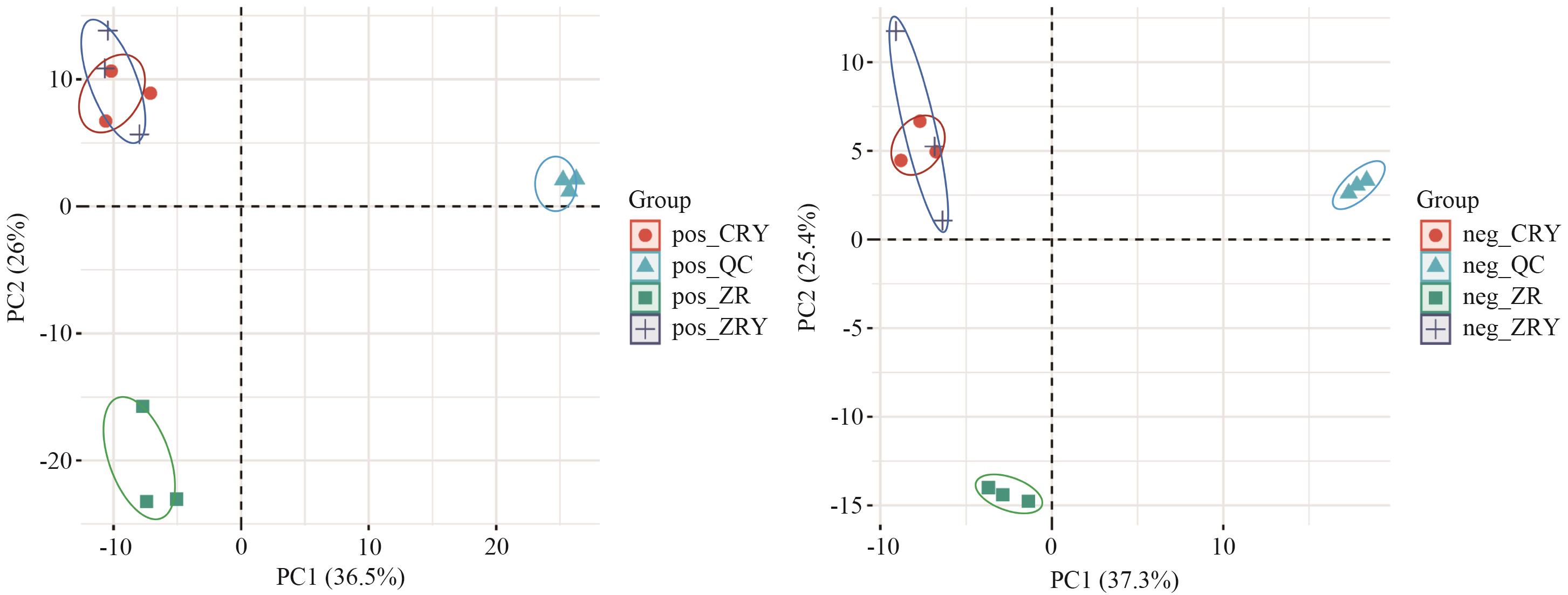
Fig. 1 PCA analysis of samples in positive ion (pos) and negative ion (neg) modes
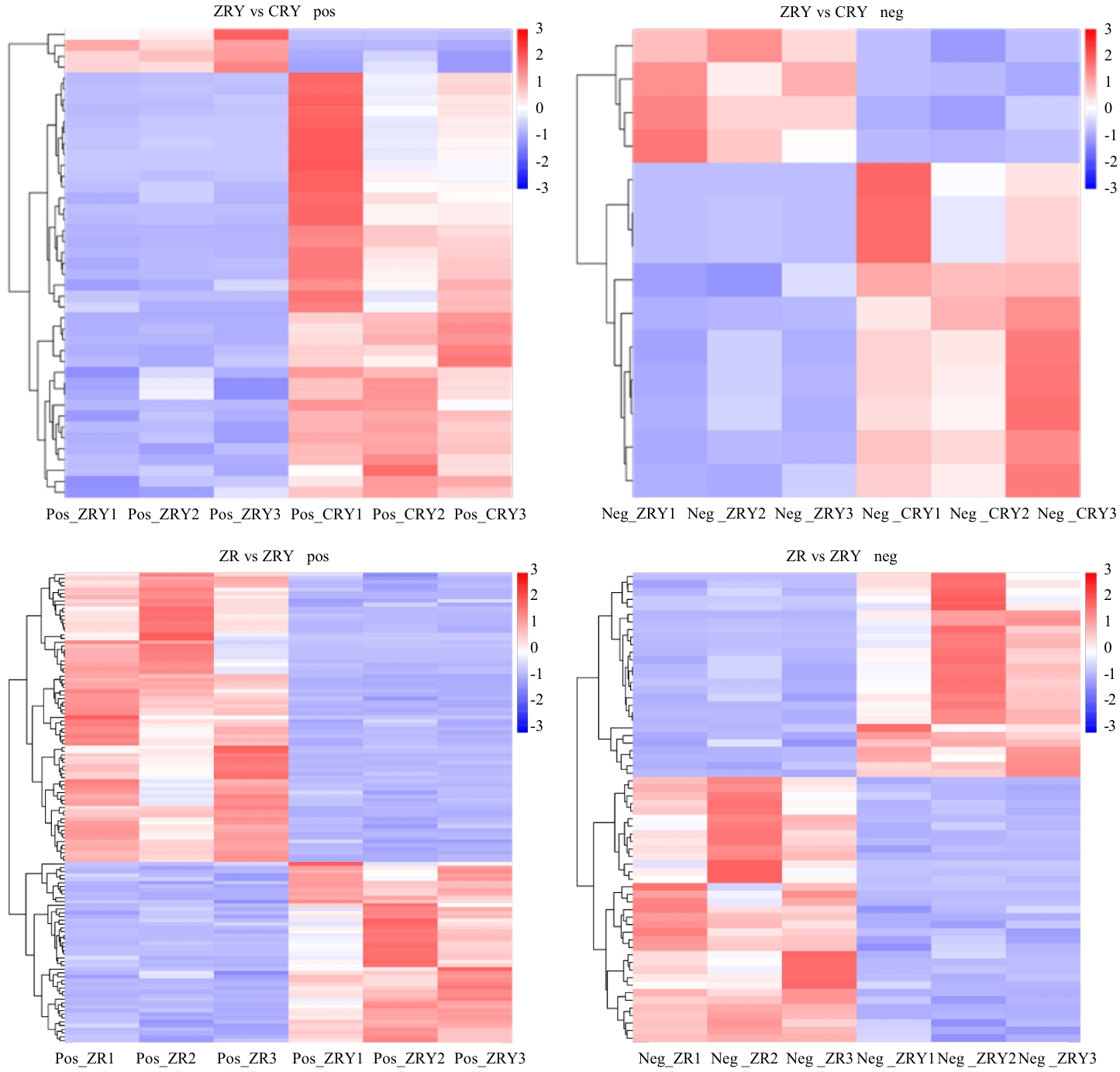
Fig. 2 Cluster heat map of differential metabolites in positive ion (pos) and negative ion (neg) modes
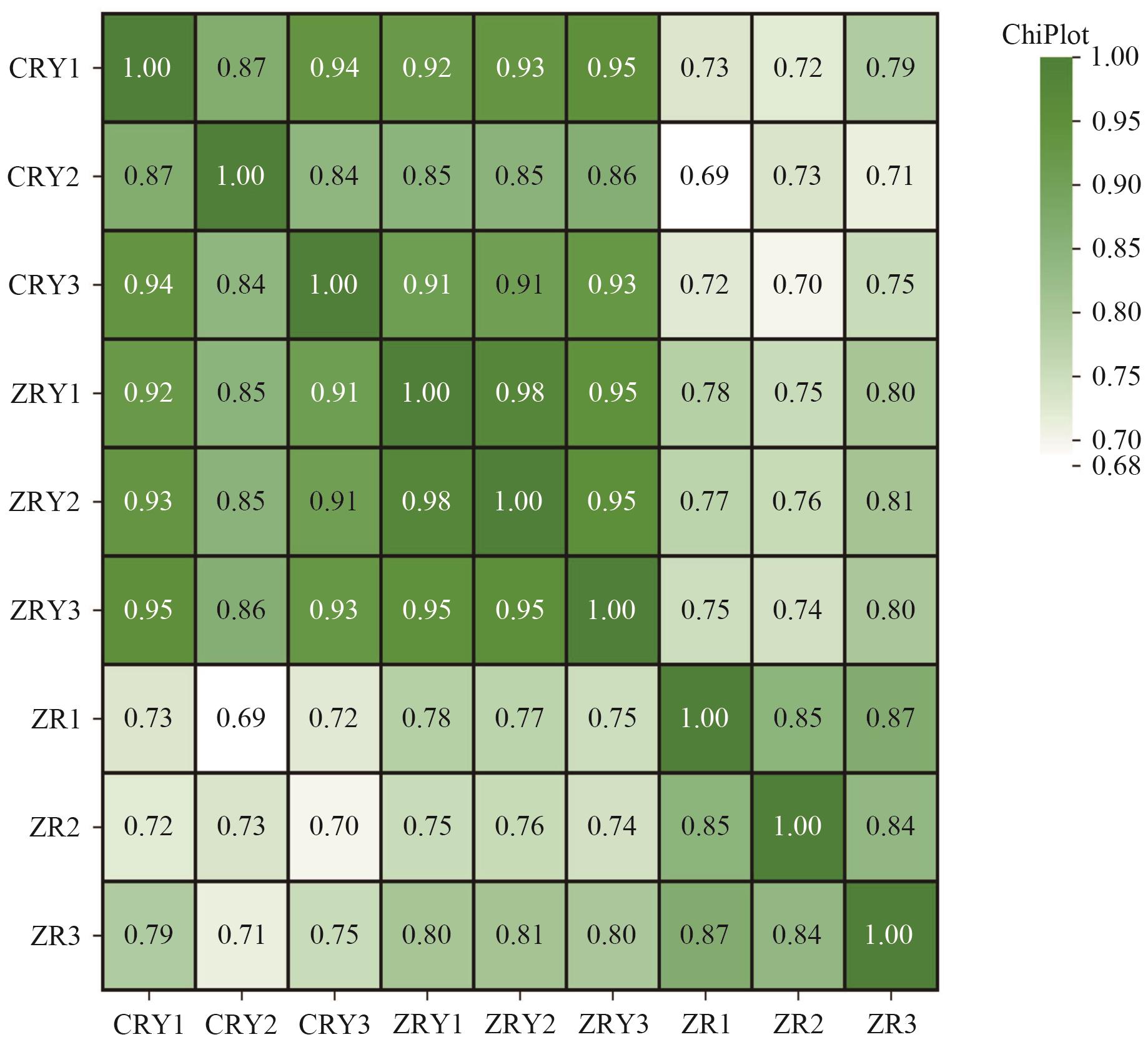
Fig. 3 Correlation heat map between samples
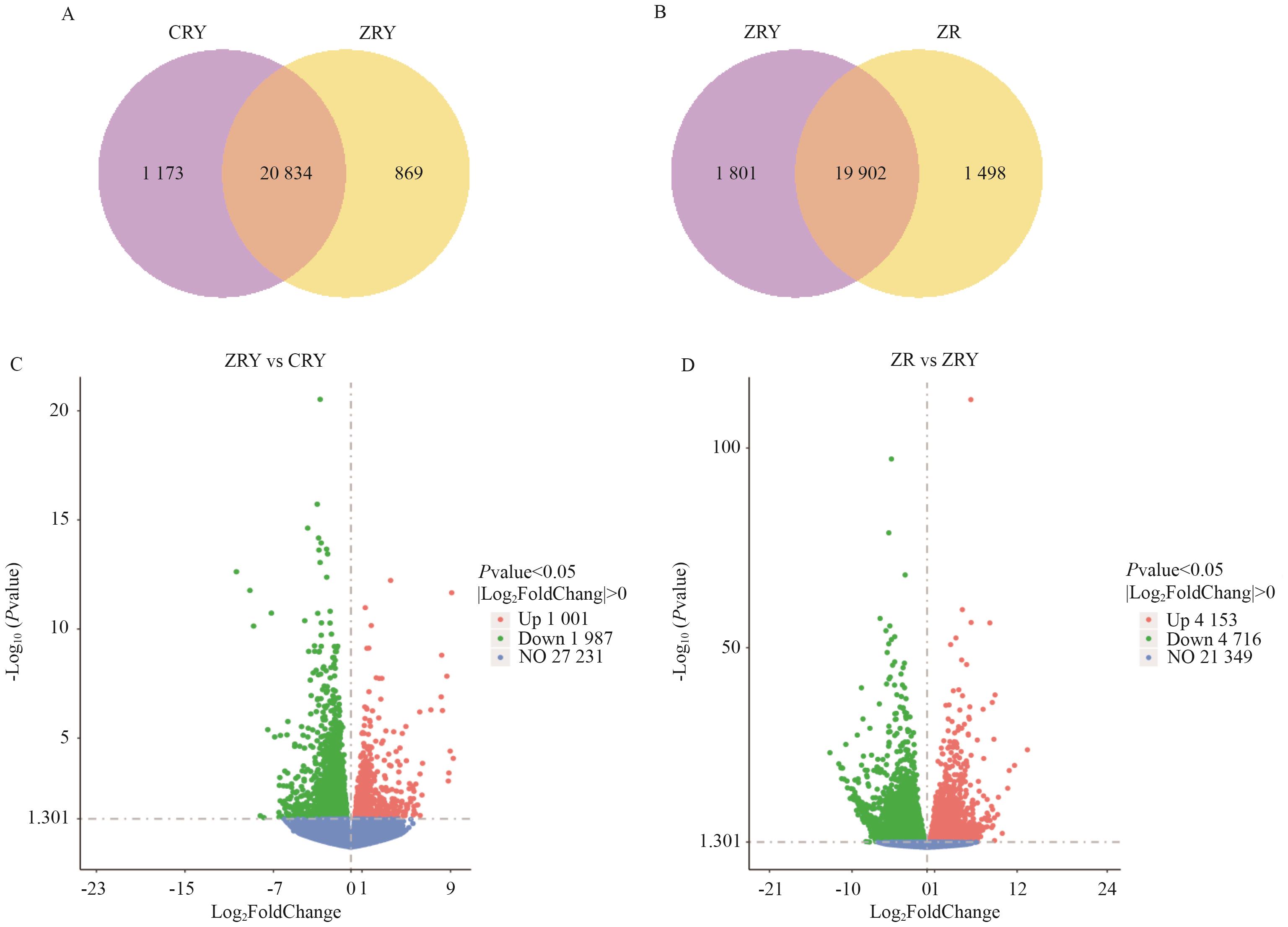
Fig. 4 Differential expression gene Venn diagram (A, B) and volcano map (C, D) of ZRY vs CRY and ZR vs ZRY
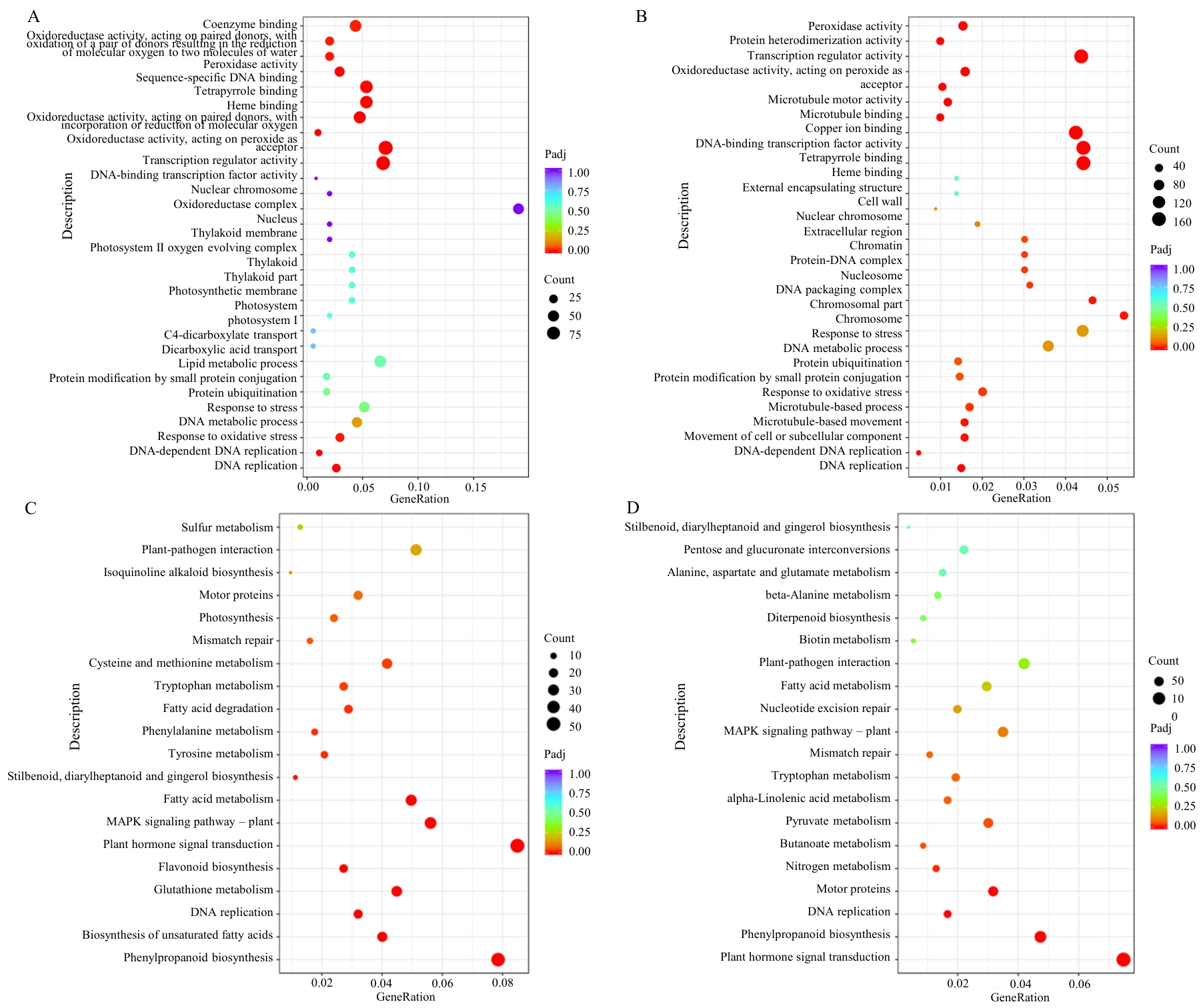
Fig. 5 GO enrichment analysis and KEGG pathway analysis of differentially expressed genes in ZRY vs CRY (A, C) and ZR vs ZRY (B, D)The horizontal axis indicates the ratio of the number of differentially expressed genes annotated to the KEGG pathway to the total number of differentially expressed genes. The vertical axis indicates the KEGG pathways. The size of the points indicates the number of genes annotated to the corresponding KEGG pathway, while the color gradient from red to purple reflects increasingly significant enrichment
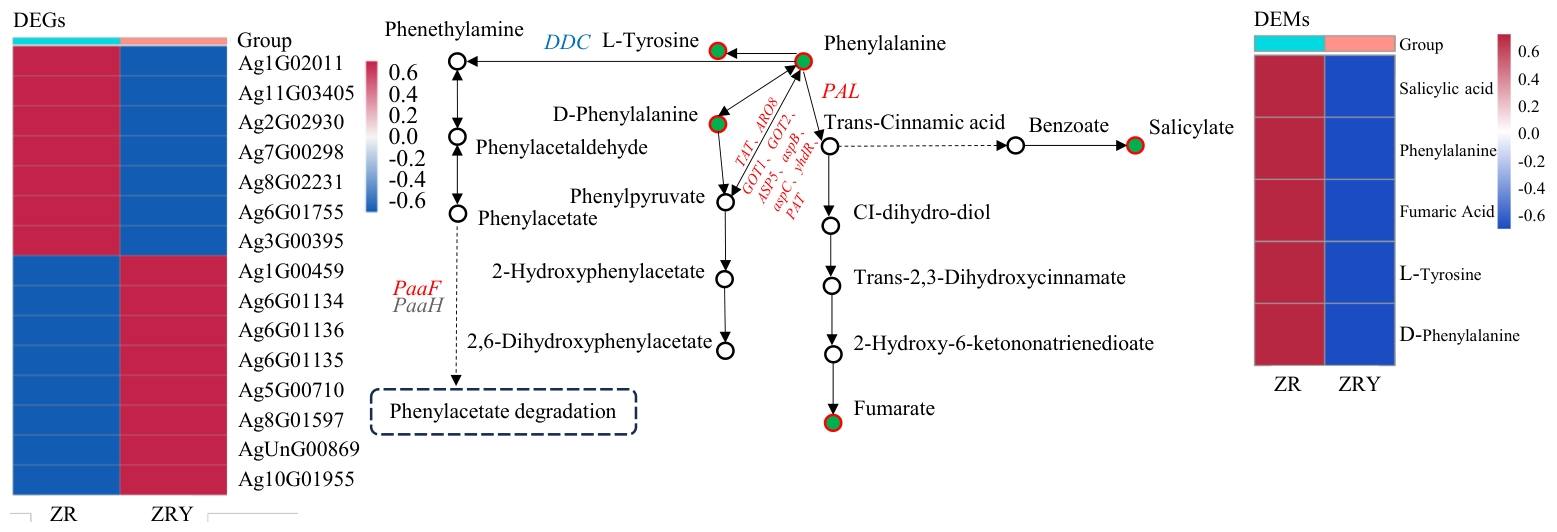
Fig. 6 Differentially expressed genes and differentially accumulated metabolites in the phenylpropanoid biosynthesis pathway in ZR vs ZRYIn the phenylalanine metabolic pathway, blue indicates down-regulated and red indicates up-regulated. The transcriptome heat map indicates the expressions of the gene in different samples (FPKM), and the metabolome heat map indicates the accumulation of metabolites in different samples
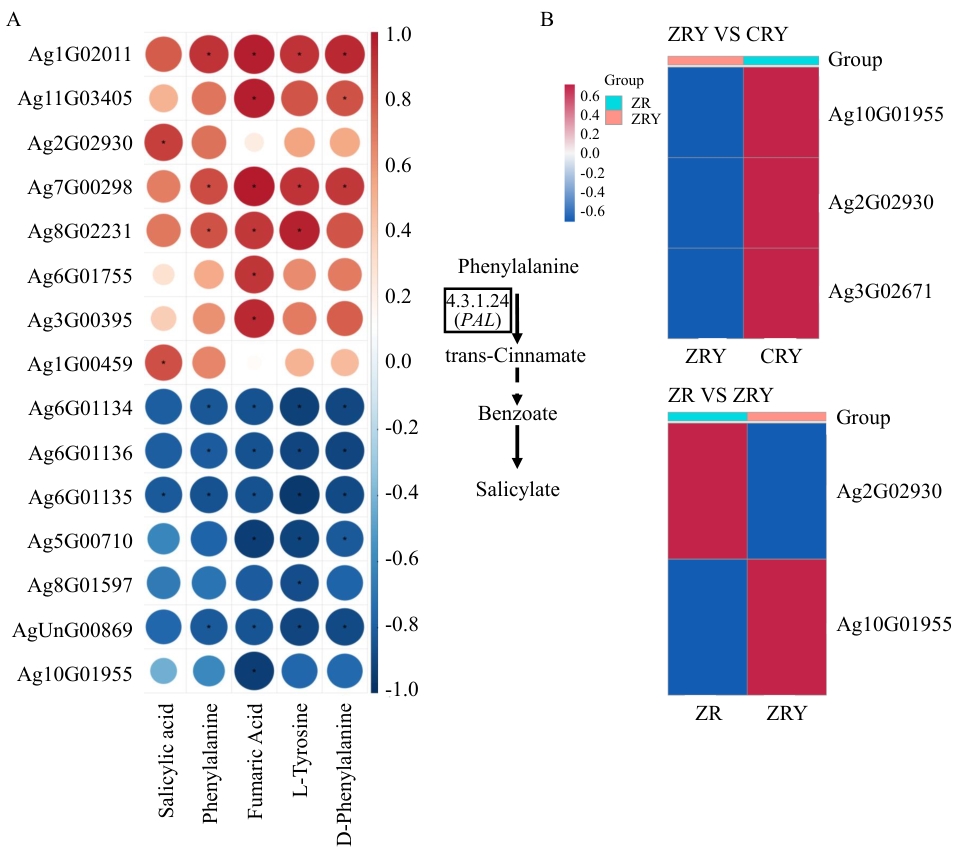
Fig. 7 Correlation analysis between differentially expressed genes and differentially accumulated metabolites in the phenylpropanoid biosynthesis pathway in (A), and salicylic acid synthesis pathway and related differentially expressed gene heat map (B)In correlation analysis, red indicates positive correlation and blue indicates negative correlation. In the heat map, red indicates up-regulated expression and blue indicates down-regulated expression. A: ZR vs ZRY; B: ZRY vs CRY, ZR vs ZRY
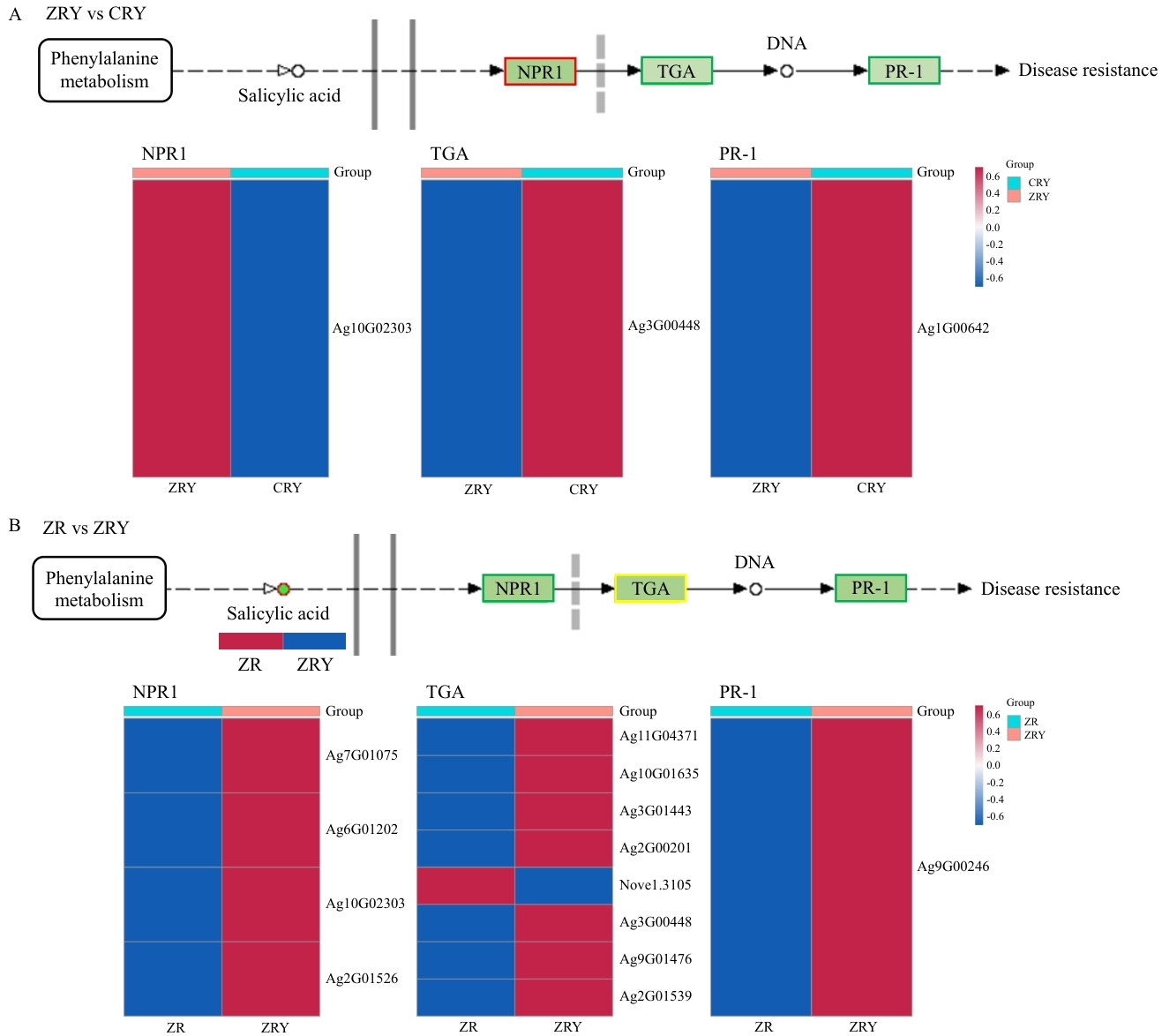
Fig. 8 Salicylic acid signal transduction pathway and related differential gene expression heat mapIn the salicylic acid signaling pathway, boxes indicate enzymes, circles indicate metabolites, red indicates up-regulation, green indicates down-regulation, and yellow indicates both up- and down-regulation. In the heatmap of differentially expressed genes, blue indicates down-regulation, and red indicates up-regulation
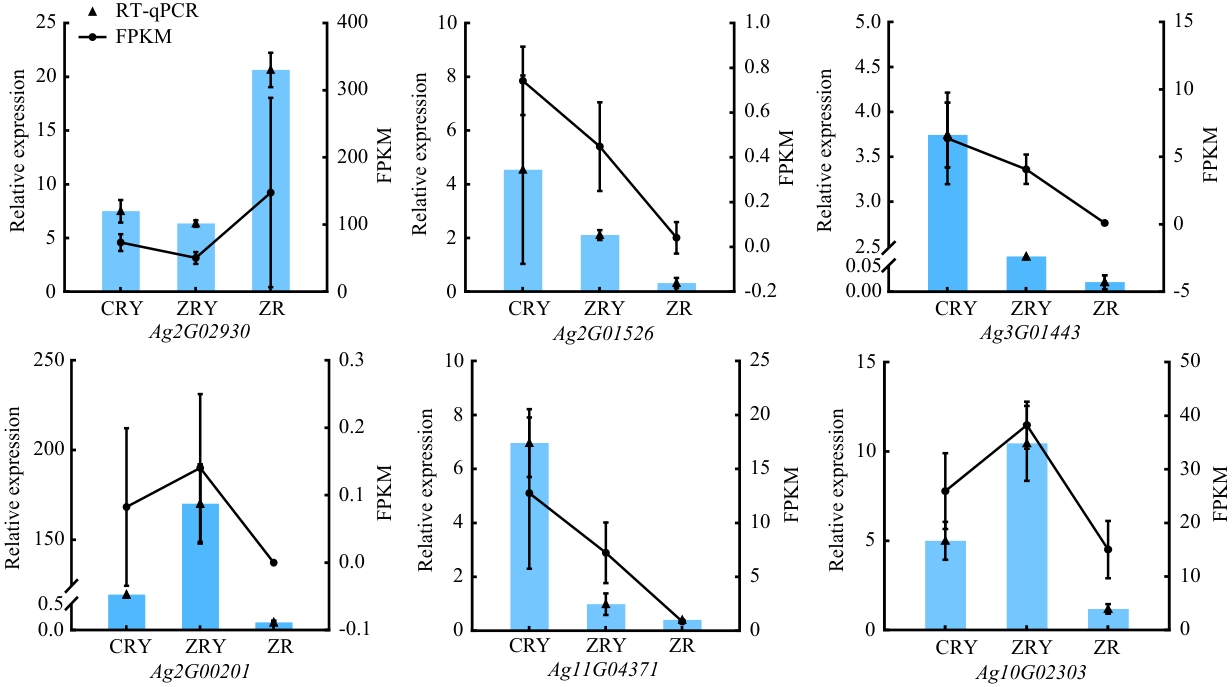
Fig. 9 RT-qPCR validation of differentially expressed genes in celery (Apium graveolens L.) roots
| [1] | 宋中喜, 刘少军, 焦健. 芹菜秋露地栽培技术研究 [J]. 种子科技, 2022, 40(8): 64-66. |
| Song ZX, Liu SJ, Jiao J. Study on cultivation techniques of celery in autumn open field [J]. Seed Sci Technol, 2022, 40(8): 64-66. | |
| [2] | 贾湘璐, 粟智勇, 赵文军, 等. 低温对植物生理的影响及生长调节剂的缓解作用研究进展 [J]. 热带农业科学, 2025, 45(4): 177-188. |
| Jia XL, Su ZY, Zhao WJ, et al. Research progress on the effects of low temperature on plant physiology and the alleviation effects of plant growth regulators [J]. Chin J Trop Agric, 2025, 45(4): 177-188. | |
| [3] | 王俊峰, 孔维国, 张煜, 等. 植物抗寒基因表达调控研究进展 [J]. 西北植物学报, 2012, 32(4): 852-858. |
| Wang JF, Kong WG, Zhang Y, et al. Advance in expression and regulation of cold-resistant genes of plants [J]. Acta Bot Boreali Occidentalia Sin, 2012, 32(4): 852-858. | |
| [4] | 赖铭, 陈佳, 张军, 等. 植物低温胁迫响应机制及提高抗冷性研究进展 [J/OL]. 分子植物育种, 2023: 1-11. . |
| Lai M, Chen J, Zhang J, et al. Research progress in plant response mechanism to low temperature stress and improvement of cold resistance [J/OL]. Mol Plant Breed, 2023: 1-11. . | |
| [5] | 张晓丹, 尹铮, 刘清晨, 等. 基于代谢组和转录组联合解析山桃响应冻害机制 [J]. 生物技术通报, 2025, 41(12): 225-239. |
| Zhang XD, Yin Z, Liu QC, et al. Integrated metabolomic and transcriptomic analysis reveals the mechanism of Prunus davidiana response to freezing stress [J]. Biotechnol Bull, 2025, 41(12): 225-239. | |
| [6] | 王芳, 李峪曦, 蒋路平, 等. 低温胁迫下植物分子响应机制研究进展 [J]. 世界林业研究, 2020, 33(6): 15-21. |
| Wang F, Li YX, Jiang LP, et al. Research advances in molecular response mechanisms of plants under low temperature stress [J]. World For Res, 2020, 33(6): 15-21. | |
| [7] | Verma V, Ravindran P, Kumar PP. Plant hormone-mediated regulation of stress responses [J]. BMC Plant Biol, 2016, 16: 86. |
| [8] | 张思懿, 崔博文, 王佳玲, 等. 非生物胁迫下植物根系的生理与分子响应研究进展 [J]. 浙江农业学报, 2024, 36(10): 2391-2401. |
| Zhang SY, Cui BW, Wang JL, et al. Research progress on physiological and molecular responses of plant roots under abiotic stress [J]. Acta Agric Zhejiangensis, 2024, 36(10): 2391-2401. | |
| [9] | Vlot AC, Dempsey DA, Klessig DF. Salicylic acid, a multifaceted hormone to combat disease [J]. Annu Rev Phytopathol, 2009, 47: 177-206. |
| [10] | Shin H, Min K, Arora R. Exogenous salicylic acid improves freezing tolerance of spinach (Spinacia oleracea L.) leaves [J]. Cryobiology, 2018, 81: 192-200. |
| [11] | 原永兵, 曹宗巽. 水杨酸在植物体内的作用 [J]. 植物学通报, 1994, 29(3): 1-9. |
| Yuan YB, Cao ZX. The role of salicylic acid in plants [J]. Chin Bull Bot, 1994, 29(3): 1-9. | |
| [12] | 张阳, 姜晶. 乙酰水杨酸对夜间亚低温番茄幼苗抗寒性的影响 [J]. 中国农学通报, 2012, 28(25): 239-242. |
| Zhang Y, Jiang J. Effects of acetyl salicylic acid on cold resistance of tomato seedlings under sub-low nighttime temperature [J]. Chin Agric Sci Bull, 2012, 28(25): 239-242. | |
| [13] | 王文霞, 李曙光, 白雪芳, 等. 不饱和脂肪酸及其衍生物在植物抗逆反应中的作用 [J]. 植物生理学通讯, 2004(6): 741-748. |
| Wang WX, Li SG, Bai XF, et al. Functions of unsaturated fatty acid and derivates in plant defense reactions [J]. Plant Physiol Commun, 2004(6): 741-748. | |
| [14] | Howe GA, Schilmiller AL. Oxylipin metabolism in response to stress [J]. Curr Opin Plant Biol, 2002, 5(3): 230-236. |
| [15] | 周同永, 任飞, 邓黎, 等. γ-亚麻酸及其生理生化功能研究进展 [J]. 贵州农业科学, 2011, 39(3): 53-58. |
| Zhou TY, Ren F, Deng L, et al. Research progress in physiological and biochemical function of γ-linolenic acid [J]. Guizhou Agric Sci, 2011, 39(3): 53-58. | |
| [16] | 吴淑娟. 微孔草γ-亚麻酸在逆境中的生物学功能及其调控机制 [D]. 兰州: 兰州大学, 2013. |
| Wu SJ. The biological function and the regulation mechanism of γ-linolenic acid in Microula sikkimensis under stresses [D]. Lanzhou: Lanzhou University, 2013. | |
| [17] | 钱文春, 柳丽萍, 钟石, 等. 不同品种桑椹中的矢车菊-3-芸香苷(C3Y)含量及桑椹C3Y的抗氧化作用 [J]. 蚕业科学, 2014, 40(3): 506-512. |
| Qian WC, Liu LP, Zhong S, et al. Content and anti-oxidant activity of cyanidin-3-rutinoside from mulberry fruit of different varieties [J]. Acta Sericologica Sin, 2014, 40(3): 506-512. | |
| [18] | Tulio AZ Jr, Reese RN, Wyzgoski FJ, et al. Cyanidin 3-rutinoside and cyanidin 3-xylosylrutinoside as primary phenolic antioxidants in black raspberry [J]. J Agric Food Chem, 2008, 56(6): 1880-1888. |
| [19] | 马令法. 红景天抗冻性和外源物质对其低温胁迫下生长影响的研究 [D]. 兰州: 甘肃农业大学, 2014. |
| Ma LF. Study on freezing resistance of Rhodiola and low temperature stress growing of exogenous substances [D]. Lanzhou: Gansu Agricultural University, 2014. | |
| [20] | 耿浩, 王韶丽, 郭林, 等. 甘露醇对海水胁迫下小麦种子萌发及幼苗生长的影响 [J]. 基因组学与应用生物学, 2011, 30(2): 218-223. |
| Geng H, Wang SL, Guo L, et al. Effect of mannitol on wheat germination and seedling growth under seawater stress [J]. Genom Appl Biol, 2011, 30(2): 218-223. | |
| [21] | Mechri B, Tekaya M, Attia F, et al. Drought stress improved the capacity of Rhizophagus irregularis for inducing the accumulation of oleuropein and mannitol in olive (Olea europaea) roots [J]. Plant Physiol Biochem, 2020, 156: 178-191. |
| [22] | Kitagawa Y, Yoshizaki K. Water stress-induced chilling tolerance in rice; putative relationship between chilling tolerance and Ca2+ flux [J]. Plant Sci, 1998, 137(1): 73-85. |
| [23] | 盖志佳. 低温胁迫对玉米幼苗脯氨酸积累的影响 [J]. 现代化农业, 2023(12): 2-4. |
| Gai ZJ. Effects of low temperature stress on proline accumulation in maize seedlings [J]. Mod Agric, 2023(12): 2-4. | |
| [24] | 孙梦颖, 王春雨, 郭伟珍, 等. 4个梨品种在低温胁迫下的生理响应及耐寒性评价 [J]. 江苏农业科学, 2025, 53(12): 189-194. |
| Sun MY, Wang CY, Guo WZ, et al. Physiological responses of four pear cultivars under low-temperature stress and evaluation of their cold resistance [J]. Jiangsu Agric Sci, 2025, 53(12): 189-194. | |
| [25] | Geng LF, Zhuang YY, Sui YJ, et al. Molecular mechanism of response to low-temperature during the natural overwintering period of Rosa persica [J]. Plant Cell Rep, 2025, 44(4): 88. |
| [26] | Sangwan S, Shameem N, Yashveer S, et al. Role of salicylic acid in combating heat stress in plants: insights into modulation of vital processes [J]. Front Biosci (Landmark Ed), 2022, 27(11): 310. |
| [27] | 田云. 水杨酸受体NPR1在植物低温胁迫应答中的新功能 [J]. 生物学杂志, 2018, 35(6): 9-10. |
| Tian Y. The novel function of SA receptor NPR1 in cold response in plant [J]. J Biol, 2018, 35(6): 9-10. | |
| [28] | Sun YL, Detchemendy TW, Pajerowska-Mukhtar KM, et al. NPR1 in JazzSet with pathogen effectors [J]. Trends Plant Sci, 2018, 23(6): 469-472. |
| [29] | Silva KJP, Mahna N, Mou ZL, et al. NPR1 as a transgenic crop protection strategy in horticultural species [J]. Hortic Res, 2018, 5: 15. |
| [30] | Dong CJ, Li L, Shang QM, et al. Endogenous salicylic acid accumulation is required for chilling tolerance in cucumber (Cucumis sativus L.) seedlings [J]. Planta, 2014, 240(4): 687-700. |
| [31] | Liu YN, Xu L, Wu MS, et al. Three-step biosynthesis of salicylic acid from benzoyl-CoA in plants [J]. Nature, 2025, 645(8079): 201-207. |
| [1] | CHEN Yi-yan, ZHANG Dong-er, ZHANG Tao, LIU Yu-hao, TANG Jie, SHENG Xia-bing, HU Yuan-yi, AI Zhi-yong, LI Ying-jiang, LIU Xiao-lin. Analysis on Function of Rice OsSULTR2;2 and Regulation of Seedling Tolerance to Salt [J]. Biotechnology Bulletin, 2026, 42(7): 116-125. |
| [2] | WANG Hong-rui, ZHAO Yi-ru, RAO Shu-pei, CHEN Jin-huan. Research on the Function of LrCYP78A5 Gene from Lycium ruthenicum in Response to Drought and Salt Stress [J]. Biotechnology Bulletin, 2026, 42(7): 182-192. |
| [3] | DONG Ya-ru, XIU Yu, ZHAO Dong-xiao, ZHU Hong, ZHU Lin, LIU Hui-fen. Transcriptome-wide Identification of the GRAS Gene Family in Mulberry and Analysis of MnGRAS22 in Response to Salt Stress [J]. Biotechnology Bulletin, 2026, 42(7): 193-203. |
| [4] | WEI Xiao, LI Yan-yan, YUAN Qin-feng, YAO Jing-wu, CAO Chun-xia, HUANG Da-ye. Identification of a Biocontrol Strain Isolated from Tobacco Rhizosphere and Its Biocontrol Potential Analysis [J]. Biotechnology Bulletin, 2026, 42(7): 279-291. |
| [5] | WANG Jia-bin, HU Yue, CHEN Jia-jie, WANG Meng, HE Xiu-yun, LI Zhi-yong, LI Jian, WANG Mei-na. Combined Metabolomic and Transcriptomic Analysis in Different Parts of Paphiopedilum purpuratum [J]. Biotechnology Bulletin, 2026, 42(6): 279-293. |
| [6] | WANG Yu-kun, YUAN Yuan, WANG Bin, ZHU Yun-na, REN Xiao-qiang, REN Fei, YE Hong. Integrated Analysis of Transcriptome and Lipid Metabolome Reveals the Differences in α-Linolenic Acid Synthesis Regulation in Different Perilla frutescens [J]. Biotechnology Bulletin, 2026, 42(4): 129-140. |
| [7] | LIU Qing-yuan, WU Hong-qi, CHEN Xiu-e, CHEN Jian, JIANG Yuan-ze, HE Yan-zi, YU Qi-wei, LIU Ren-xiang. Function of Transcription Factor NtMYB96a in Regulating the Tolerance of Tobacco to Drought [J]. Biotechnology Bulletin, 2026, 42(4): 239-250. |
| [8] | YANG Ting, YANG Zong-tao, AI Jing, WANG Yu-tong, LI Yan-ye, DENG jun, LIU Jia-yong, ZHAO Yong, ZHANG Yue-bin. Analysis of Phenotypic Characteristics and Root Transcriptomics of Sugarcane with Different Genotypes [J]. Biotechnology Bulletin, 2026, 42(4): 190-201. |
| [9] | WANG Xiao-yi, LI Jin-yan, XING Xing, ZHU Hong-liang. Screening and Functional Analysis of Ethylene-responsive Genes Regulating Tomato Fruit Ripening and Respiration [J]. Biotechnology Bulletin, 2026, 42(3): 275-282. |
| [10] | WANG Shang-feng, CHENG Bin, WANG Ruo-ruo, DING Yan-qing, XU Jian-xia, CAO Ning, GAO Xu, LI Wen-zhen, ZHANG Li-yi. Gene Mapping of Sorghum Flowering Time and Prediction of Candidate Genes Based on BSA-seq [J]. Biotechnology Bulletin, 2026, 42(2): 197-206. |
| [11] | FAN Rong-hui, LUO Yuan-hua, CHEN Yi-quan, FANG Neng-yan, CHEN Yan, ZHONG Huai-qin, YE Xiu-xian. Comparative Analysis of Floral Scent Formation between ‘Jinhui’ and Onc. ‘Sharry Baby’ of Oncidium hybridum [J]. Biotechnology Bulletin, 2026, 42(1): 105-113. |
| [12] | LIU Jian-guo, LIU Ge-er, GUO Ying-xin, WANG Bin, WANG Yu-kun, LU Jin-feng, HUANG Wen-ting, ZHU Yun-na. Integrate Transcriptomic and Metabolomic Analysis of Fruits Quality Differences between ‘Guiyou No. 1’ and ‘Shatianyou’ Pomelo (Citrus maxima) [J]. Biotechnology Bulletin, 2025, 41(9): 168-181. |
| [13] | LIU Ze-zhou, DUAN Nai-bin, YUE Li-xin, WANG Qing-hua, YAO Xing-hao, GAO Li-min, KONG Su-ping. Analysis of Wax Components and Screening of Wax-deficient Gene Ggl-1 in Garlic (Allium sativum L.) [J]. Biotechnology Bulletin, 2025, 41(9): 219-231. |
| [14] | YAN Meng-yang, LIANG Xiao-yang, DAI Jun-ang, ZHANG Yan, GUAN Tuan, ZHANG Hui, LIU Liang-bo, SUN Zhi-hua. Screening of Amoxicillin-degrading Bacteria and Study on Its Degradation Mechanisms [J]. Biotechnology Bulletin, 2025, 41(9): 314-325. |
| [15] | BAI Yu-guo, LI Wan-di, LIANG Jian-ping, SHI Zhi-yong, LU Geng-long, LIU Hong-jun, NIU Jing-ping. Growth-promoting Mechanism of Trichoderma harzianum T9131 on Astragalus membranaceus Seedlings [J]. Biotechnology Bulletin, 2025, 41(8): 175-185. |
| Viewed | ||||||
|
Full text |
|
|||||
|
Abstract |
|
|||||
