







Biotechnology Bulletin ›› 2026, Vol. 42 ›› Issue (9): 342-354.doi: 10.13560/j.cnki.biotech.bull.1985.2026-0087
ZHAO Meng-die, XUE Wei-shi, WANG Jia-bang, LI Ling, YANG Ru-meng, WU Jun-jun( )
)
Received:2026-01-21
Online:2026-09-26
Published:2026-09-16
Contact:
WU Jun-jun
E-mail:wujunjun@jiangnan.edu.cn
ZHAO Meng-die, XUE Wei-shi, WANG Jia-bang, LI Ling, YANG Ru-meng, WU Jun-jun. Synthesis of Antioxidant Protein Material by Escherichia coli and Its Applications in Promoting Wound Healing[J]. Biotechnology Bulletin, 2026, 42(9): 342-354.
氨基酸序列 AA sequences | 名称 Name | 碱基序列 Base sequences | 引物序列 Primer sequences (5′-3′) | 参考文献 References |
|---|---|---|---|---|
| AMRLTYNKPCLYGT | RP1 | GCTATGAGGCTAACATATAATAAACCCTGTCTGTACGGTACC | F1: GCTATGAGGCTAACATATAATTGACTCGAGCACCACCACCA R1: ATTATATGTTAGCCTCATAGCACCGCTACCACCGCTACCCGGGGCGC F2: AAACCCTGTCTGTACGGTACCTGACTCGAGCACCACCACC R2:GGTACCGTACAGACAGGGTTTATTATATGTTAGCCTCATAGCACCGCTAC | [ |
| LMGQW | MPH | CTGATGGGCCAGTGGTAA | F: CTGATGGGCCAGTGGTAATGACTCGAGCACCACCACC R: TTACCACTGGCCCATCAGACCGCTACCACCGCTACCCGGC | [ |
| SDITRPGGNM | PP | AGCGATATTACCCGCCCGGGCGGCAACATGTAA | F:AGCGATATTACCCGCCCGGGCGGCAACATGTAATGACTCGAGCACCACCACC R:TTACATGTTGCCGCCCGGGCGGGTAATATCGCTACCGCTACCACCGCTACCCGGC | [ |
| YYIVS | Ⅳ5C | TACTACATCGTGAGCTAA | F: TACTACATCGTGAGCTAATGACTCGAGCACCACCACC R:TTAGCTCACGATGTAGTAACCGCTACCACCGCTACCCGGC | [ |
| SETYELRK | ABA | AGCGAAACCTATGAACTGCGCAAATAA | F: AGCGAAACCTATGAACTGCGCAAATAATGACTCGAGCACCACCACC R: TTATTTGCGCAGTTCATAGGTTTCGCTACCGCTACCACCGCTACCCGGC | [ |
| GRGDSPG | RGD | GGCCGCGGCGATAGCCCGGGC | / | [ |
Table 1 Amino acid and corresponding nucleotide sequences of the exposed active site of the protein, and primer sequences used in this study
氨基酸序列 AA sequences | 名称 Name | 碱基序列 Base sequences | 引物序列 Primer sequences (5′-3′) | 参考文献 References |
|---|---|---|---|---|
| AMRLTYNKPCLYGT | RP1 | GCTATGAGGCTAACATATAATAAACCCTGTCTGTACGGTACC | F1: GCTATGAGGCTAACATATAATTGACTCGAGCACCACCACCA R1: ATTATATGTTAGCCTCATAGCACCGCTACCACCGCTACCCGGGGCGC F2: AAACCCTGTCTGTACGGTACCTGACTCGAGCACCACCACC R2:GGTACCGTACAGACAGGGTTTATTATATGTTAGCCTCATAGCACCGCTAC | [ |
| LMGQW | MPH | CTGATGGGCCAGTGGTAA | F: CTGATGGGCCAGTGGTAATGACTCGAGCACCACCACC R: TTACCACTGGCCCATCAGACCGCTACCACCGCTACCCGGC | [ |
| SDITRPGGNM | PP | AGCGATATTACCCGCCCGGGCGGCAACATGTAA | F:AGCGATATTACCCGCCCGGGCGGCAACATGTAATGACTCGAGCACCACCACC R:TTACATGTTGCCGCCCGGGCGGGTAATATCGCTACCGCTACCACCGCTACCCGGC | [ |
| YYIVS | Ⅳ5C | TACTACATCGTGAGCTAA | F: TACTACATCGTGAGCTAATGACTCGAGCACCACCACC R:TTAGCTCACGATGTAGTAACCGCTACCACCGCTACCCGGC | [ |
| SETYELRK | ABA | AGCGAAACCTATGAACTGCGCAAATAA | F: AGCGAAACCTATGAACTGCGCAAATAATGACTCGAGCACCACCACC R: TTATTTGCGCAGTTCATAGGTTTCGCTACCGCTACCACCGCTACCCGGC | [ |
| GRGDSPG | RGD | GGCCGCGGCGATAGCCCGGGC | / | [ |
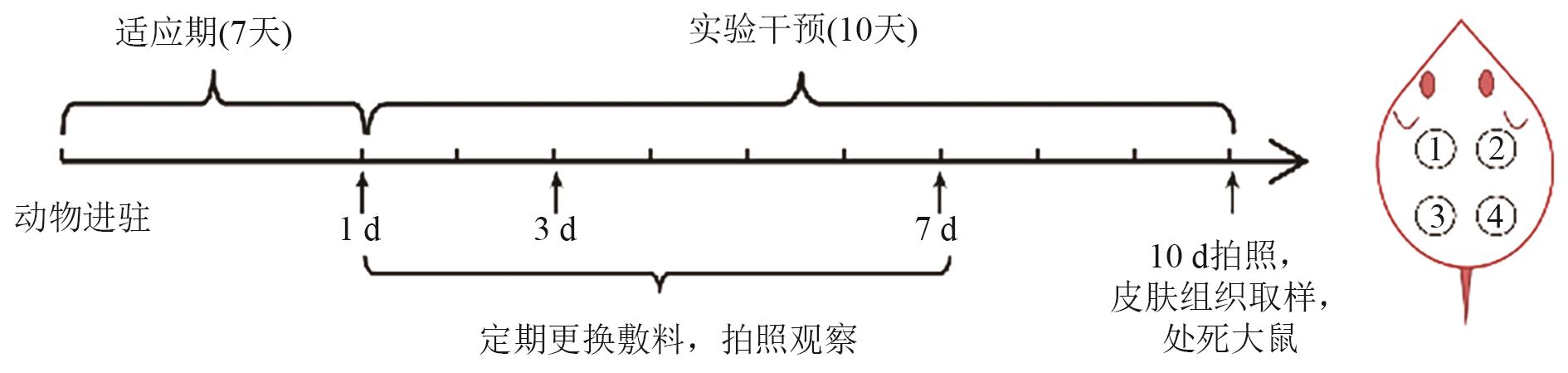
Fig. 1 Flowchart of the rat full-thickness wound healing experiment
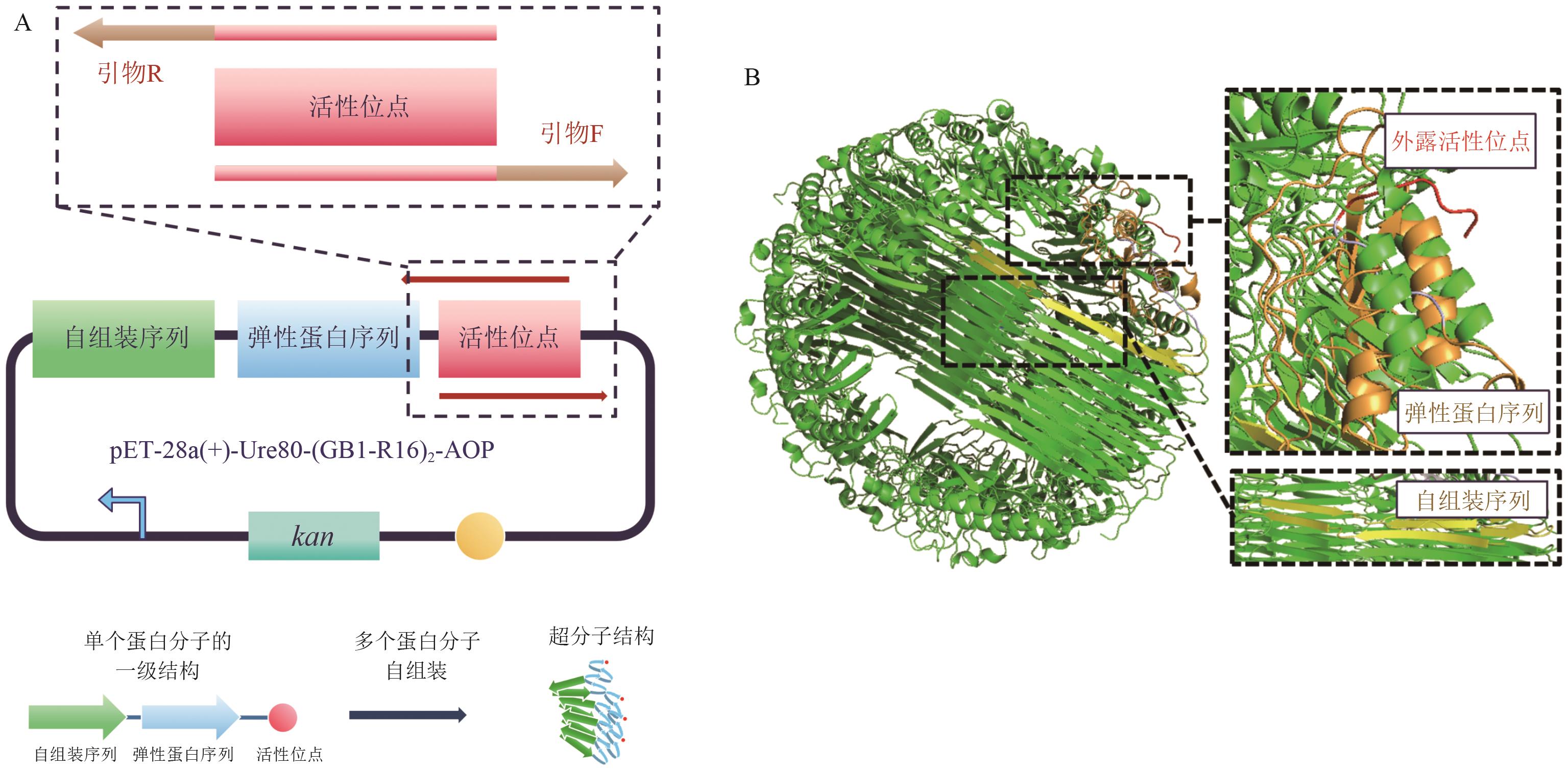
Fig. 2 Construction of antioxidant proteins based on self-assembling elastin-like sequencesA: Schematic diagram of recombinant protein expression plasmid construction via inverse PCR. B: Schematic diagram of the primary structure of a single protein molecule and the self-assembled hydrogel structure. C: Structure diagram of the self-assembled protein predicted by AlphaFold 3. The yellow region represents the self-assembling sequence of one protein molecule, the orange region represents the elastin-like sequence, and the red region represents the exposed active site
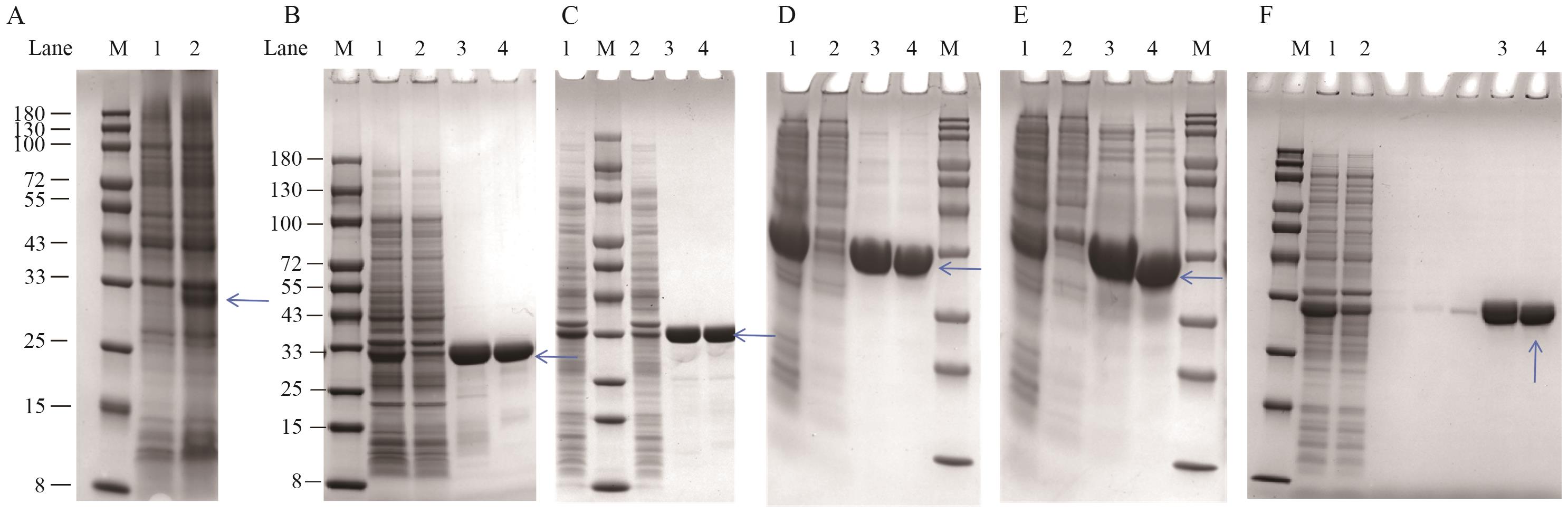
Fig. 3 Protein expression and purification gel imagesA: Gel images of protein expression in E. coli before and after induction during protein fermentation. M: Marker; 1: before induction; 2: after induction. B-E: Gel images showing the purification of 80-2-MPH, 80-2-PP, 80-2-RP1, 80-2-Ⅳ5C, and 80-2-ABA, respectively. The molecular weight of each protein was approximately 27 kD. M: Marker; 1: cell lysate; 2: flow-through; 3: Ni-column eluted protein after washing; 4: desalted protein
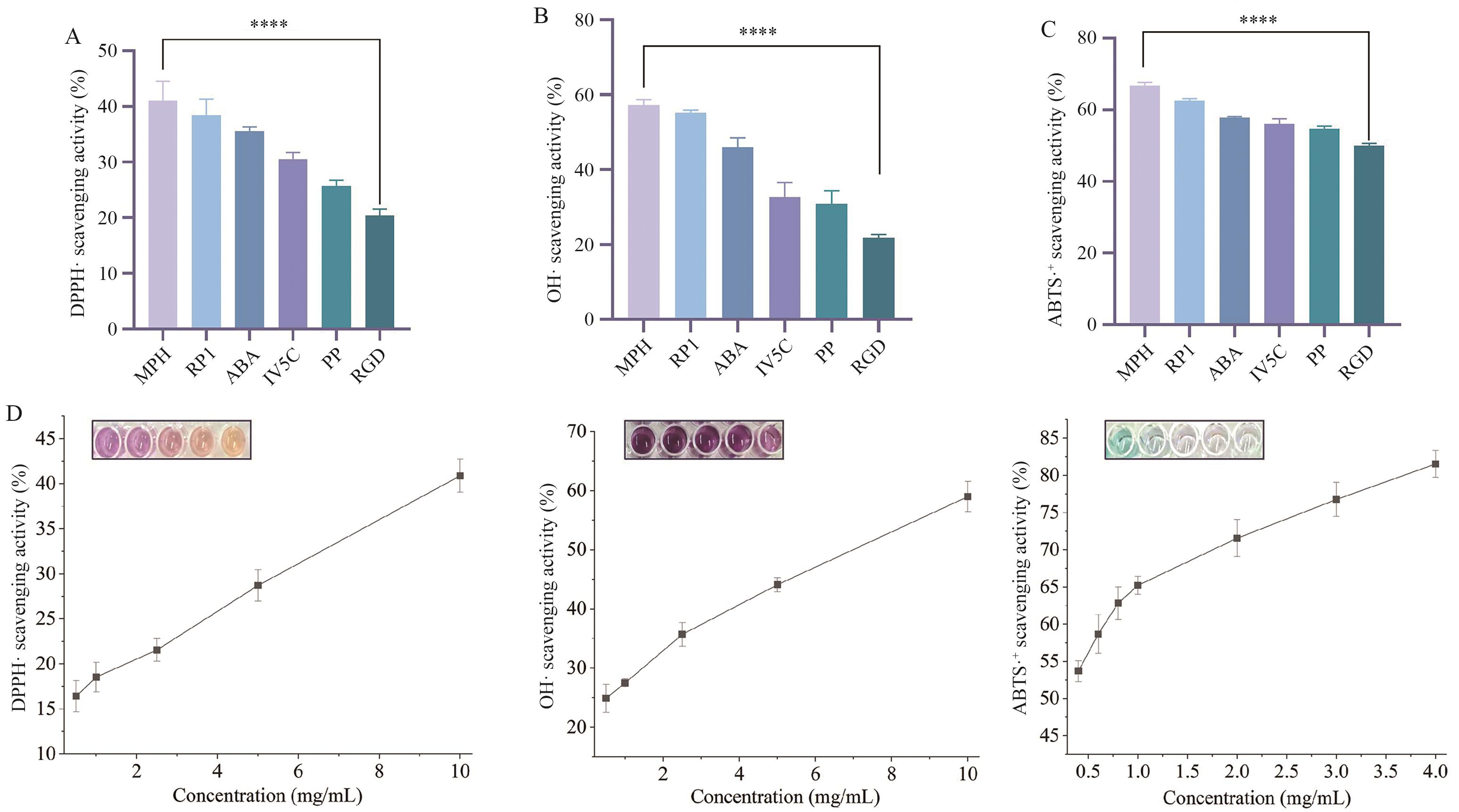
Fig. 4 Chemical experiment characterizes the antioxidant properties of different proteinsA: DPPH· scavenging rate of different proteins. B: ABTS+· free radical scavenging rate. C: ·OH scavenging rate of different proteins. D: Free radical scavenging ability of different concentrations of 80-2-MPH. The photos show the effect of free radical scavenging. ****P<0.000 1, data are reported as mean ± SD (n=3), the same below
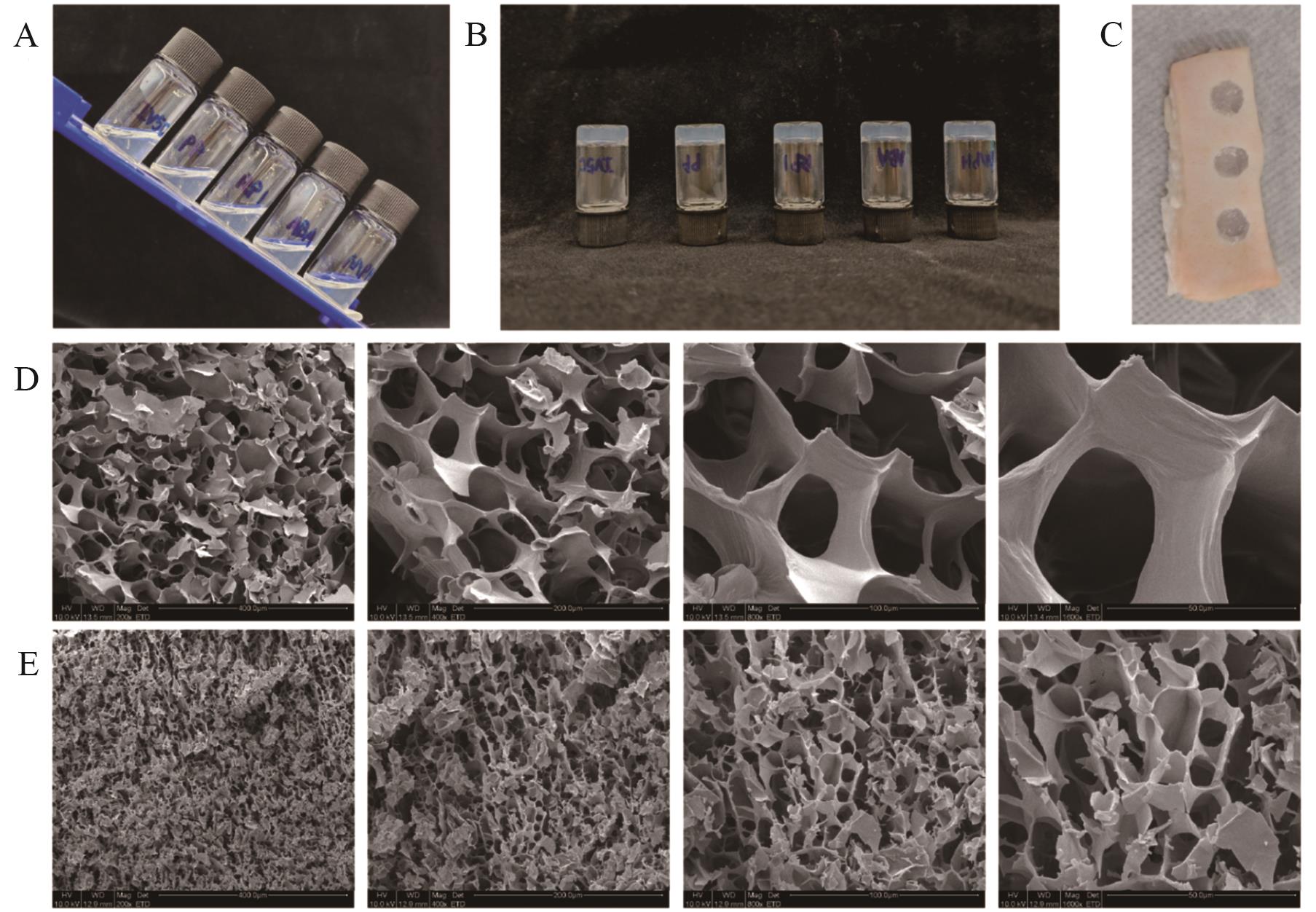
Fig. 5 Characterization of hydrogel gelation propertiesA: Different proteins were dissolved in physiological saline at a concentration of 1% (w/v), and no gelation occurred. From left to right: 80-2-Ⅳ5C, 80-2-PP, 80-2-RP1, 80-2-ABA, and 80-2-MPH. B: The protein self-assembled into a hydrogel after standing. C: After gelation at 4% (w/v), the protein hydrogel was applied to a porcine skin defect using a syringe to mimic its use as a wound dressing. D: Scanning electron microscopy images showing the network structure of the hydrogel at 5% (w/v). E: Scanning electron microscopy images showing the network structure of the hydrogel at 10% (w/v)
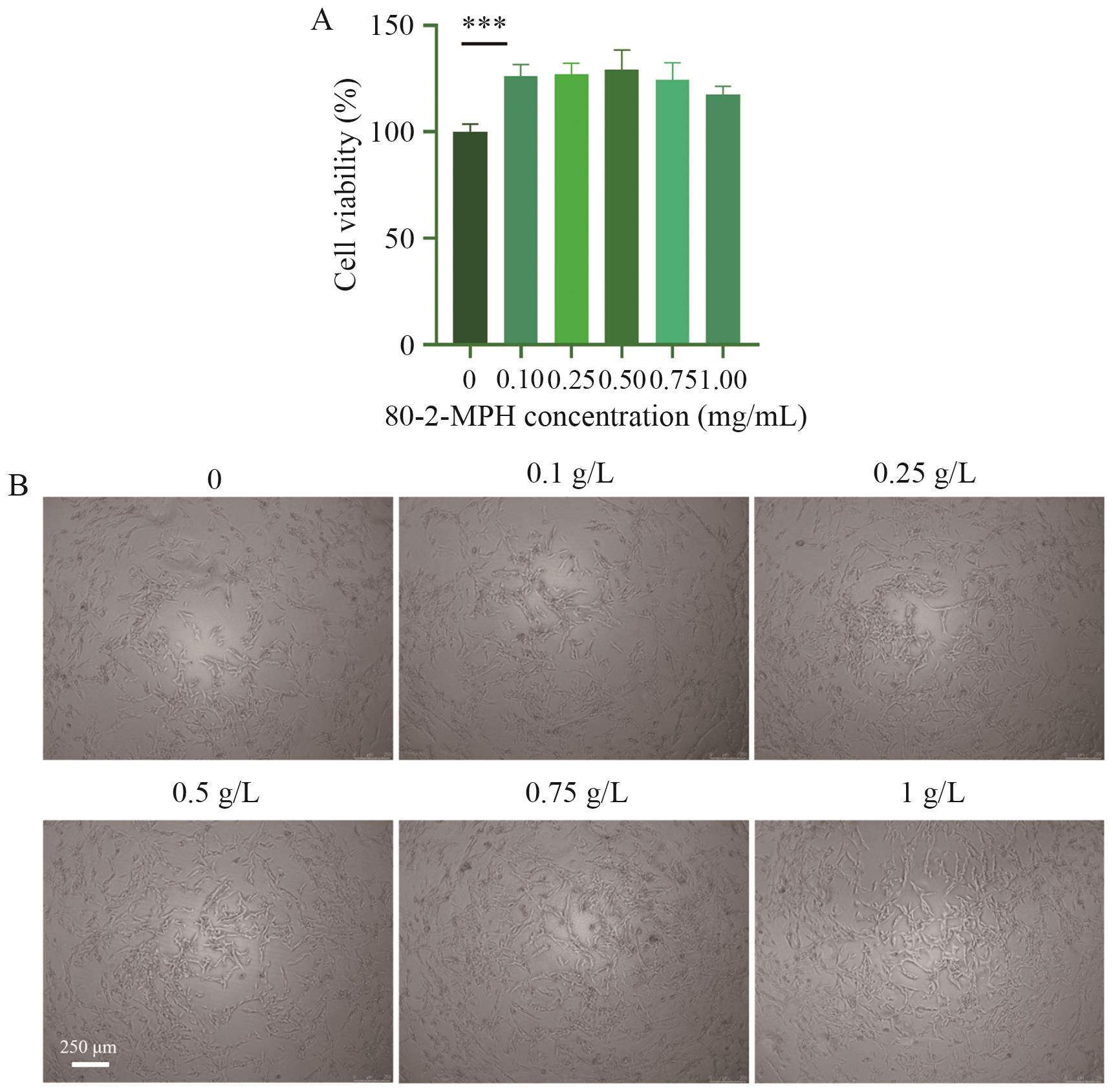
Fig. 6 Biological activity of 80-2-MPH proteinA: Verification of the biocompatibility of 80-2-MPH. Cells were cultured in complete medium containing different concentrations of 80-2-MPH, and cell viability was detected using the CCK-8 kit. B: Scanning electron microscopy images showing cell morphology in each group. ***P<0.001
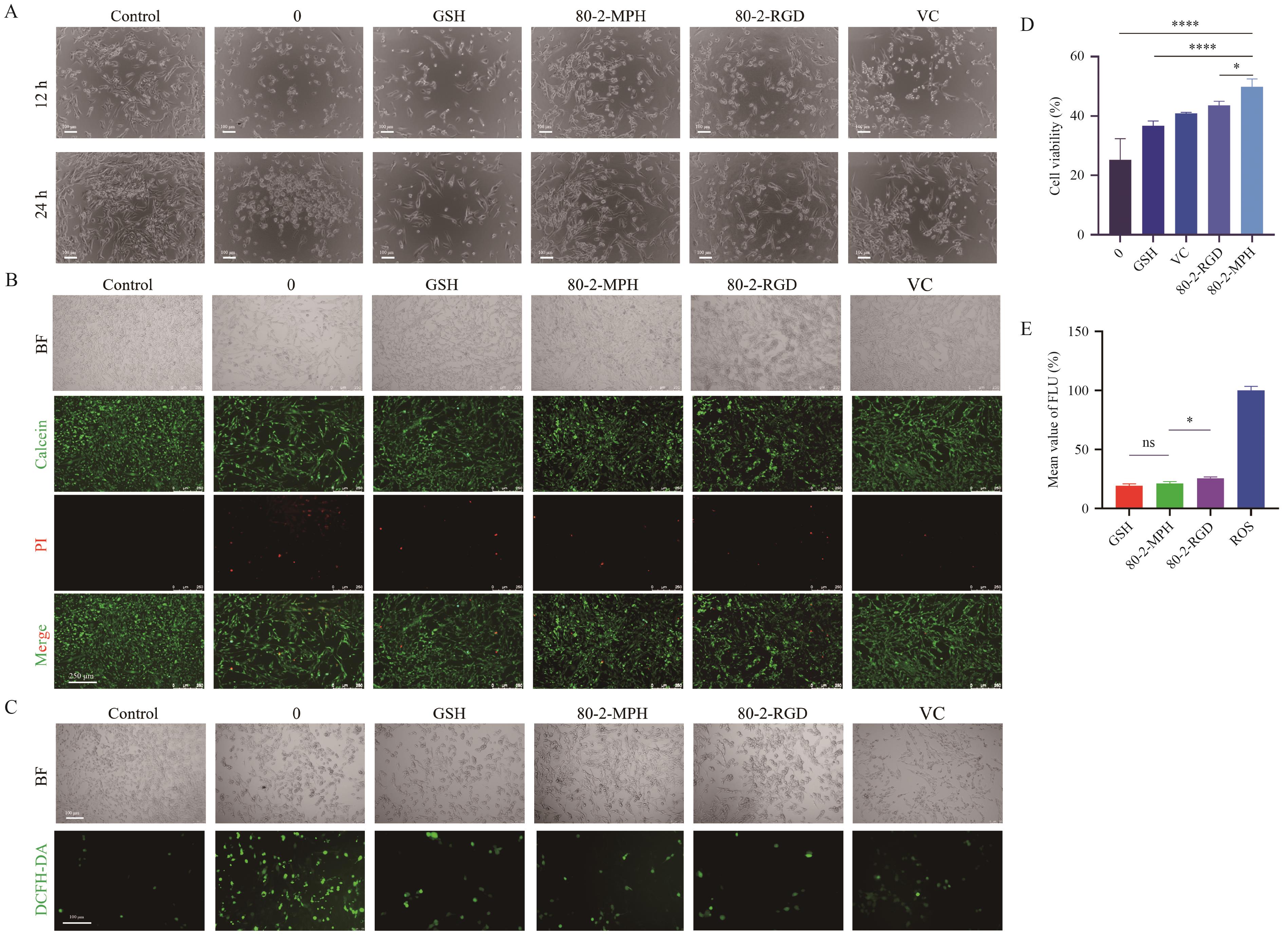
Fig. 7 Effect of 80-2-MPH on the repair of cellular oxidative damage and the scavenging of intracellular reactive oxygen speciesA: Cell morphology at 12 h and 24 h after damage repair. B: Live/dead cell staining at 12 h after damage repair. C: Detection of reactive oxygen species in cells using DCFH-DA. D: Cell viability was measured by CCK-8 assay in each group at 12 h of repair. Data are reported as means ± SD (n=4). E: Detection of relative reactive oxygen species content in cells using flow cytometry. *P<0.05
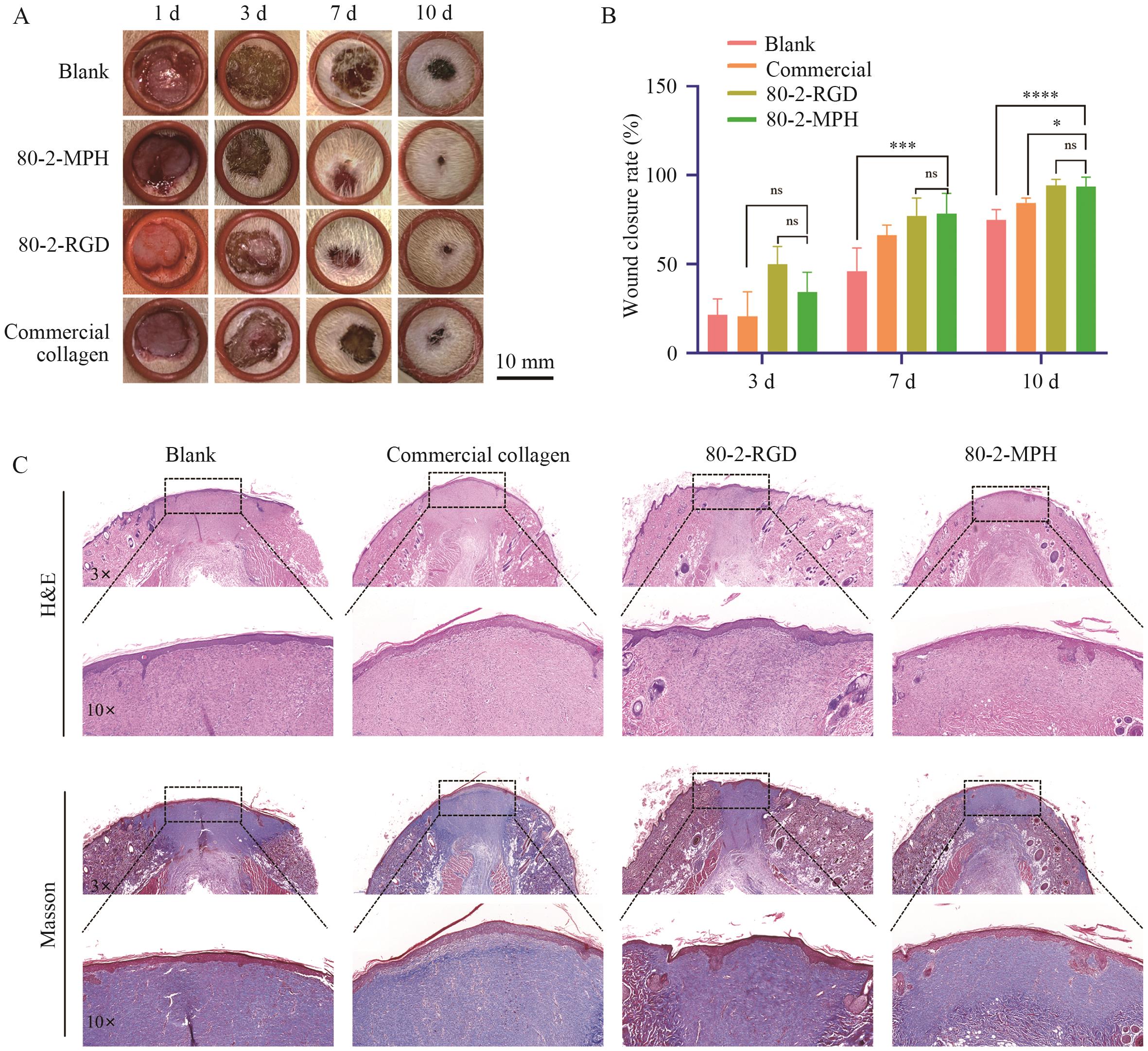
Fig. 8 Closure of full-thickness wounds in ratsA: Wound healing in different groups of rats was recorded at regular intervals. B: Wound closure rate in different groups of rats. Data are reported as means ± SD (n=6). C: H&E staining and Masson staining of skin samples
| [1] | Sun J, Su JJ, Ma C, et al. Fabrication and mechanical properties of engineered protein-based adhesives and fibers [J]. Adv Mater, 2020, 32(6): 1906360. |
| [2] | Zhao ZL, Deng JJ, Fan DD. Green biomanufacturing in recombinant collagen biosynthesis: trends and selection in various expression systems [J]. Biomater Sci, 2023, 11(16): 5439-5461. |
| [3] | Xu R, Luo GX, Xia HS, et al. Novel bilayer wound dressing composed of silicone rubber with particular micropores enhanced wound re-epithelialization and contraction [J]. Biomaterials, 2015, 40: 1-11. |
| [4] | Ahmed SR, Mostafa EM, Musa A, et al. Wound healing and antioxidant properties of Launaea procumbens supported by metabolomic profiling and molecular docking [J]. Antioxidants, 2022, 11(11): 2258. |
| [5] | Mouthuy PA, Snelling SJB, Dakin SG, et al. Biocompatibility of implantable materials: an oxidative stress viewpoint [J]. Biomaterials, 2016, 109: 55-68. |
| [6] | Dan A, Sharma D, Singh H, et al. A dynamically crosslinked, self-adapting, injectable gelatin-chondroitin sulfate hydrogel with antibacterial and antioxidant properties for treatment of deep and irregular wounds [J]. J Mater Chem B, 2025, 13(25): 7293-7310. |
| [7] | Ding RJ, Xu XC, Ding HY, et al. A multifunctional injectable hydrogel accelerates hemostasis and wound healing via synergistic tissue adhesion, antimicrobial activity, and ROS scavenging [J]. ACS Appl Mater Interfaces, 2025, 17(44): 60255-60268. |
| [8] | Li Y, Sun ZH, Chai SR, et al. Tissue-like soft dual-network hydrogel patch with instant/tunable adhesion and microenvironment modulation for infected wound healing [J]. ACS Nano, 2025, 19(30): 27714-27730. |
| [9] | Kumar AG, Nair A, Sreejith S, et al. Biocompatible PVA-chitosan hydrogel enriched with collagen hydrolysate and Couroupita guianensis flower extract for enhanced wound-healing and antibacterial activity [J]. Polym Bull, 2025, 82(13): 7747-7769. |
| [10] | Yang MY, Liu PY, Cheng P, et al. Naturally derived hydrogel with antioxidant, angiogenesis and photothermal effect to accelerate infected diabetic wound healing and reduce scar formation [J]. Theranostics, 2025, 15(18): 9838-9861. |
| [11] | Stachowiak M, Mlynarczyk DT, Dlugaszewska J. Wondrous yellow molecule: are hydrogels a successful strategy to overcome the limitations of curcumin? [J]. Molecules, 2024, 29(8): 1757. |
| [12] | Guo QY, Zhang MM, Zheng JY, et al. A multifunctional MXene@CeO2-enhanced hydrogel dressing for synergistic photothermal antibacterial and antioxidative therapy in wound healing [J]. Adv Healthc Mater, 2025, 14(23): 2500656. |
| [13] | Wang WL, Lai YH, Huang CH, et al. Lumbrokinase-containing gelatin nanofibers with multiple bioactivities for effective skin wound healing [J]. Mater Today Bio, 2025, 32: 101713. |
| [14] | Yang M, Chen X, Chen ZX, et al. Thermoresponsive antioxidant metal-free carbon nanodot hydrogel: an effective therapeutic approach for ocular surface disease [J]. Sci Adv, 2025, 11(30): eadt8775. |
| [15] | Álvarez Z, Kolberg-Edelbrock AN, Sasselli IR, et al. Bioactive scaffolds with enhanced supramolecular motion promote recovery from spinal cord injury [J]. Science, 2021, 374(6569): 848-856. |
| [16] | Ogrodnik M. Aging: the wound that never starts healing [J]. Nat Commun, 2025, 16: 8732. |
| [17] | Yoshitomi T, Hirayama A, Nagasaki Y. The ROS scavenging and renal protective effects of pH-responsive nitroxide radical-containing nanoparticles [J]. Biomaterials, 2011, 32(31): 8021-8028. |
| [18] | Wang LL, Xue B, Zhang X, et al. Extracellular matrix-mimetic intrinsic versatile coating derived from marine adhesive protein promotes diabetic wound healing through regulating the microenvironment [J]. ACS Nano, 2024, 18(22): 14726-14741. |
| [19] | Wu JJ, Zhou L, Peng H, et al. A general and convenient peptide self-assembling mechanism for developing supramolecular versatile nanomaterials based on the biosynthetic hybrid amyloid-resilin protein [J]. Adv Mater, 2024, 36(4): 2304364. |
| [20] | 王兆石, 王召君, 董明盛, 等. 超分子弹性蛋白的促细胞增殖及抗氧化能力研究 [J]. 食品与生物技术学报, 2025, 44(1): 132-142. |
| Wang ZS, Wang ZJ, Dong MS, et al. Cell proliferation-promoting effect and antioxidant capacity of supramolecular elastin [J]. J Food Sci Biotechnol, 2025, 44(1): 132-142. | |
| [21] | Xu XQ, Lai R. The chemistry and biological activities of peptides from amphibian skin secretions [J]. Chem Rev, 2015, 115(4): 1760-1846. |
| [22] | Chi CF, Wang B, Deng YY, et al. Isolation and characterization of three antioxidant pentapeptides from protein hydrolysate of monkfish (Lophius litulon) muscle [J]. Food Res Int, 2014, 55: 222-228. |
| [23] | Harnedy PA, O’Keeffe MB, FitzGerald RJ. Fractionation and identification of antioxidant peptides from an enzymatically hydrolysed Palmaria palmata protein isolate [J]. Food Res Int, 2017, 100: 416-422. |
| [24] | Zhang M, Mu TH, Sun MJ. Purification and identification of antioxidant peptides from sweet potato protein hydrolysates by Alcalase [J]. J Funct Foods, 2014, 7: 191-200. |
| [25] | Wang QQ, Wang LY, Huang ZL, et al. Abalone peptide increases stress resilience and cost-free longevity via SKN-1-governed transcriptional metabolic reprogramming in C. elegans [J]. Aging Cell, 2024, 23(2): e14046. |
| [26] | 刘文睿. 超分子弹性蛋白水凝胶的合成生物设计与功能研究 [D]. 无锡: 江南大学, 2025. |
| Liu WR. Synthesis, biological design and functional study of supramolecular elastin hydrogel [D]. Wuxi: Jiangnan University, 2025. | |
| [27] | Züger S, Iwai H. Intein-based biosynthetic incorporation of unlabeled protein tags into isotopically labeled proteins for NMR studies [J]. Nat Biotechnol, 2005, 23(6): 736-740. |
| [28] | Xiao F, Xu T, Lu BY, et al. Guidelines for antioxidant assays for food components [J]. Food Front, 2020, 1(1): 60-69. |
| [29] | Zhao MY, Xiang JW, Meng Y, et al. Astragalus polysaccharide hydrogels with drug-carrying super self-assembly from natural herbs promote wound healing [J]. ACS Nano, 2025, 19(23): 21571-21588. |
| [30] | Wang CH, Yu DY, Liu W, et al. Bioinspired co-assembled hydrogels constructed from marine self-assembling peptides and polyphenol network: antioxidant and infected wound healing [J]. Antioxidants, 2025, 14(7): 785. |
| [31] | Yang FM, Wang N, Cui SH, et al. Marine-inspired self-assembled peptide hydrogel spatiotemporal treatment of bacterial-infected wounds [J]. Chem Eng J, 2025, 519: 165573. |
| [32] | Yang D, Zhao W, Zhang SY, et al. Dual self-assembly of puerarin and silk fibroin into supramolecular nanofibrillar hydrogel for infected wound treatment [J]. Adv Healthc Mater, 2024, 13(19): 2400071. |
| [33] | Sunil A, Hernández Rico YG, Abioye RO, et al. Biofunctional peptide hydrogel: self-assembly, rheological properties, and in vivo antioxidant activity of ovalbumin-derived peptide (VLVNAIVFKGL) [J]. J Agric Food Chem, 2025, 73(10): 5961-5969. |
| [34] | Chen JY, Wang X, Yuan XM, et al. Bioinspired multifunctional hydrogel loaded with netrin-1 for diabetic wound healing [J]. ACS Appl Mater Interfaces, 2025, 17(39): 54525-54536. |
| [35] | Fang Y, Xu K, Feng XC, et al. Bioactive self-adaptive hydrogel platform for integrated electrical stimulation therapy and clinical monitoring of postoperative wound [J]. ACS Sens, 2025, 10(10): 7757-7777. |
| [36] | Forman HJ, Zhang HQ. Targeting oxidative stress in disease: promise and limitations of antioxidant therapy [J]. Nat Rev Drug Discov, 2021, 20(9): 689-709. |
| [37] | Ramachandran V, Mohanasundaram T, Tiwari R, et al. Nrf2 mediated heme oxygenase-1 activation contributes to Diabetic Wound healing-an overview [J]. Drug Res (Stuttg), 2022, 72(9): 487-495. |
| [38] | Huang W, Guo QR, Wu HR, et al. Engineered exosomes loaded in intrinsic immunomodulatory hydrogels with promoting angiogenesis for programmed therapy of diabetic wounds [J]. ACS Nano, 2025, 19(14): 14467-14483. |
| [39] | Zhang W, Zhai WX, Xu M, et al. Constructing reinforced flexible wood-based hydrogels leveraging the ordered structure of wood for potential wound treatment [J]. ACS Sustainable Chem Eng, 2025, 13(15): 5689-5702. |
| [40] | Xue HQ, Gu QC, Zhong XQ, et al. Polysaccharide micelle hydrogel delivery Ginkgolide B for wound healing [J]. Mater Des, 2025, 257: 114505. |
| [41] | Wang ZX, Liu J, Chen QY, et al. Bioactive glycyrrhizic acid ionic liquid self-assembled nanomicelles for enhanced transdermal delivery of anti-photoaging signal peptides [J]. Adv Sci, 2025, 12(8): 2412581. |
| [42] | Xue B. Efficacy and cellular mechanism of biomimetic marine adhesive protein-based coating against skin photoaging [J]. Adv Healthc Mater, 2026, 15(10): 2402019. |
| [43] | Lian CX, Liu JW, Wei WY, et al. Mg-gallate metal-organic framework-based sprayable hydrogel for continuously regulating oxidative stress microenvironment and promoting neurovascular network reconstruction in diabetic wounds [J]. Bioact Mater, 2024, 38: 181-194. |
| [1] | REN Wen-bin, CHEN Deng-ke, WU Cui-cui. Bioinformatics Analysis and Salt Tolerance Study of the Peanut Transcription Factor AhZHD9 [J]. Biotechnology Bulletin, 2026, 42(9): 297-305. |
| [2] | LI Bo-yu, JIAN Chun-chen, HOU Jia-jun, QIAN Ming-yan, YANG Wen-qin, ZHANG Sheng-long, ZANG Chuan-gang, MA Fu-kai, ZHENG Long, GUAN Hong. Degradation of Corn Stover by Composite Microbial Consortia QY12-A4 and Purification of Antioxidant Lignin from Its Products [J]. Biotechnology Bulletin, 2026, 42(7): 292-303. |
| [3] | LI Can-ni, PAN Wei-song, WU Tai-ru, WU Chuan, Keung Eric Tsang Po, LI Wei-zhan. Research Progress in the Expression of Recombinant Proteins in Endosperm Bioreactors [J]. Biotechnology Bulletin, 2026, 42(7): 67-80. |
| [4] | DONG Ya-ru, XIU Yu, ZHAO Dong-xiao, ZHU Hong, ZHU Lin, LIU Hui-fen. Transcriptome-wide Identification of the GRAS Gene Family in Mulberry and Analysis of MnGRAS22 in Response to Salt Stress [J]. Biotechnology Bulletin, 2026, 42(7): 193-203. |
| [5] | WANG Bing-bing, ZHU Di, YANG Sheng-long, LI Yi-lin, YANG Qi, HE Miao-miao. Effects of Exogenous Melatonin on Disease Resistance of Potato under Late Blight Stress [J]. Biotechnology Bulletin, 2026, 42(6): 107-115. |
| [6] | MO Yan-ling, LIU Yuan-yuan, PEI Jia-ling, FAN Xiang-man, DENG Xing-lian, ZENG Jing, LIU Yi-hua. Study on the Mechanism of Exogenous Selenium Pretreatment Alleviating Cadmium Toxicity in Brassica juncea var. tumida Tsen et Lee Seedlings [J]. Biotechnology Bulletin, 2026, 42(6): 304-313. |
| [7] | WU Xia-ming, LIU Chuan-he, HE Han, ZHOU Chen-ping, YANG Min, KUANG Rui-bin, XU Ze, WEI Yue-rong. Research Progress in Molecular Response Mechanisms of Strawberry to High-Temperature Stress [J]. Biotechnology Bulletin, 2026, 42(6): 175-185. |
| [8] | REN Hong-yu, PANG Cui-ping, GU Yang, ZHOU Jia-hai. Multi-strategy Synergy Enhances the Diffraction Resolution of Protein Crystals [J]. Biotechnology Bulletin, 2026, 42(1): 76-85. |
| [9] | CHEN Qiang, YU Ying-fei, ZHANG Ying, ZHANG Chong. Regulatory Effect of Methyl Jasmonate on Postharvest Chilling Injury in Oriental Melon ‘Emerald’ [J]. Biotechnology Bulletin, 2025, 41(9): 105-114. |
| [10] | CAI Ru-feng, YANG Yu-xuan, YU Ji-zheng, LI Jia-nan. Artificial Intelligence Transforms Protein Engineering: From Structural Analysis to Synthetic Biology through Algorithmic Advancements [J]. Biotechnology Bulletin, 2025, 41(8): 1-10. |
| [11] | TONG De-li, ZHANG Xin, CHEN Jia-qing, HE Hai-sheng. Isolation of Endophytic Bacteria from Blueberry and Its Alleviative Effects on Brassica chinensis L. under Aluminum Stress [J]. Biotechnology Bulletin, 2025, 41(4): 302-311. |
| [12] | LU Tian-yi, LI Ai-peng, FEI Qiang. Research Progress in the Biosynthesis of Polylactic Acid [J]. Biotechnology Bulletin, 2025, 41(4): 47-60. |
| [13] | QIAN Qi, WANG Zeng-hui, SUN Rong-hua, LUO Ying-zhi, SU Liang-chen. Mechanism of Tolerance of Protein Phosphatase AhPDCP37 in Peanut to Drought [J]. Biotechnology Bulletin, 2025, 41(3): 98-103. |
| [14] | LIU Jie, WANG Fei, TAO Ting, ZHANG Yu-jing, CHEN Hao-ting, ZHANG Rui-xing, SHI Yu, ZHANG Yi. Overexpression of SlWRKY41 Improves the Tolerance of Tomato Seedlings to Drought [J]. Biotechnology Bulletin, 2025, 41(2): 107-118. |
| [15] | MA Shun, ZHAO Xu, LIU Xue, CHEN Guang-kun, GAO Yue, DING Jin, ZHANG Jing-yi, ZHAO Yi-meng, GONG Li-yu, LI Hong-tao. Effects of γ-Aminobutyric Acid on Antioxidant Capacity and Cecal Microbial Structure of Broilers [J]. Biotechnology Bulletin, 2025, 41(12): 351-359. |
| Viewed | ||||||
|
Full text |
|
|||||
|
Abstract |
|
|||||
