







Biotechnology Bulletin ›› 2026, Vol. 42 ›› Issue (7): 292-303.doi: 10.13560/j.cnki.biotech.bull.1985.2026-0026
LI Bo-yu1, JIAN Chun-chen1, HOU Jia-jun1, QIAN Ming-yan1, YANG Wen-qin2, ZHANG Sheng-long3, ZANG Chuan-gang2, MA Fu-kai2, ZHENG Long2( ), GUAN Hong1,2()
Received:2026-01-08
Online:2026-07-26
Published:2026-07-20
Contact:
ZHENG Long, GUAN Hong
E-mail:zhenglong@qmu.edu.cn;guanhong@qmu.edu.cn
LI Bo-yu, JIAN Chun-chen, HOU Jia-jun, QIAN Ming-yan, YANG Wen-qin, ZHANG Sheng-long, ZANG Chuan-gang, MA Fu-kai, ZHENG Long, GUAN Hong. Degradation of Corn Stover by Composite Microbial Consortia QY12-A4 and Purification of Antioxidant Lignin from Its Products[J]. Biotechnology Bulletin, 2026, 42(7): 292-303.
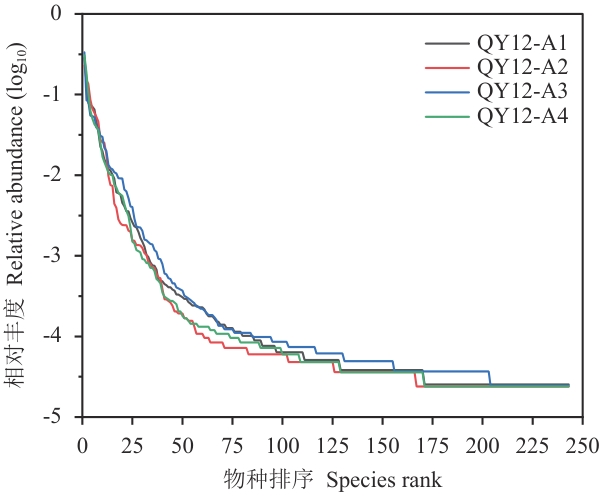
Fig. 1 Rank-abundance curves at the OTU level
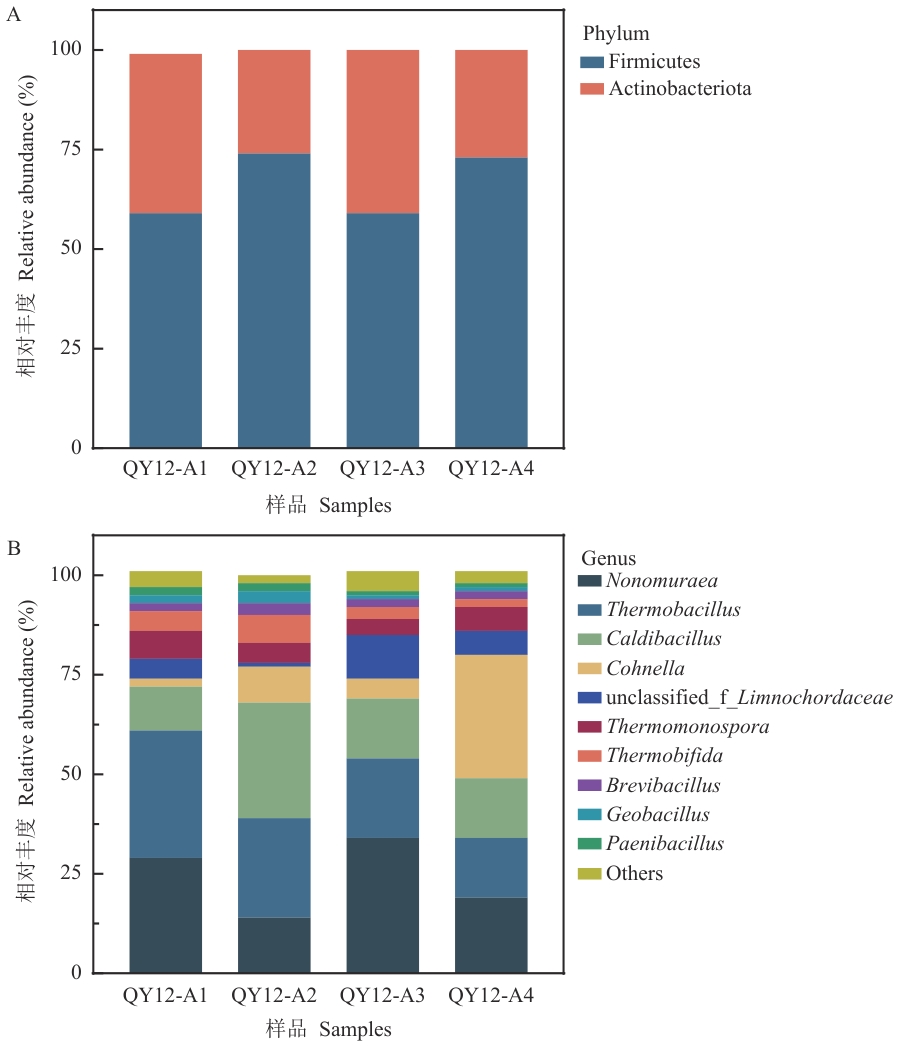
Fig. 2 Taxonomic overview of microbial communities during the domestication processA: Relative abundance of species at the phylum level. B: Relative abundance of species at the genus level
样品 Sample | 覆盖率 Good’s coverage (%) | 香农指数 Shannon index | 辛普森指数 Simpson index |
|---|---|---|---|
| QY12-A1 | 100 | 2.620 | 0.132 |
| QY12-A2 | 100 | 2.590 | 0.117 |
| QY12-A3 | 100 | 2.730 | 0.142 |
| QY12-A4 | 100 | 2.490 | 0.153 |
Table 1 Analysis of the α-diversity of the microbial consortium
样品 Sample | 覆盖率 Good’s coverage (%) | 香农指数 Shannon index | 辛普森指数 Simpson index |
|---|---|---|---|
| QY12-A1 | 100 | 2.620 | 0.132 |
| QY12-A2 | 100 | 2.590 | 0.117 |
| QY12-A3 | 100 | 2.730 | 0.142 |
| QY12-A4 | 100 | 2.490 | 0.153 |
| 样品Sample | 提取率Extraction rate (%, w/w) | 木质素 Lignin (%, w/w) | 总酚 Total phenols (%,w/w) | 总糖 Total sugars (%,w/w) | 糖醛酸 Uronic acids (%,w/w) | ||
|---|---|---|---|---|---|---|---|
酸可溶木质素 Acid-soluble lignin | 酸不溶木质素 Acid-insoluble lignin | 总木质素Total lignin | |||||
| SSF-A | 12.56±0.90 | 0.68±0.02 | 76.21±1.83 | 76.89±1.81 | 18.94±0.41 | 15.09±0.20 | 2.32±0.08 |
Table 2 Analysis of components in SSF-A
| 样品Sample | 提取率Extraction rate (%, w/w) | 木质素 Lignin (%, w/w) | 总酚 Total phenols (%,w/w) | 总糖 Total sugars (%,w/w) | 糖醛酸 Uronic acids (%,w/w) | ||
|---|---|---|---|---|---|---|---|
酸可溶木质素 Acid-soluble lignin | 酸不溶木质素 Acid-insoluble lignin | 总木质素Total lignin | |||||
| SSF-A | 12.56±0.90 | 0.68±0.02 | 76.21±1.83 | 76.89±1.81 | 18.94±0.41 | 15.09±0.20 | 2.32±0.08 |
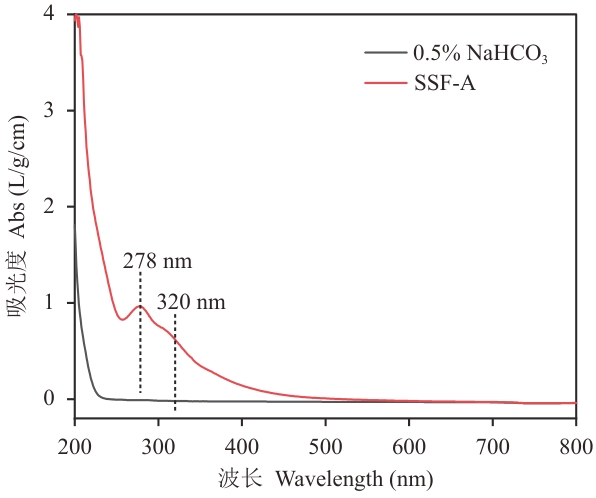
Fig. 3 UV-Vis spectra of SSF-A
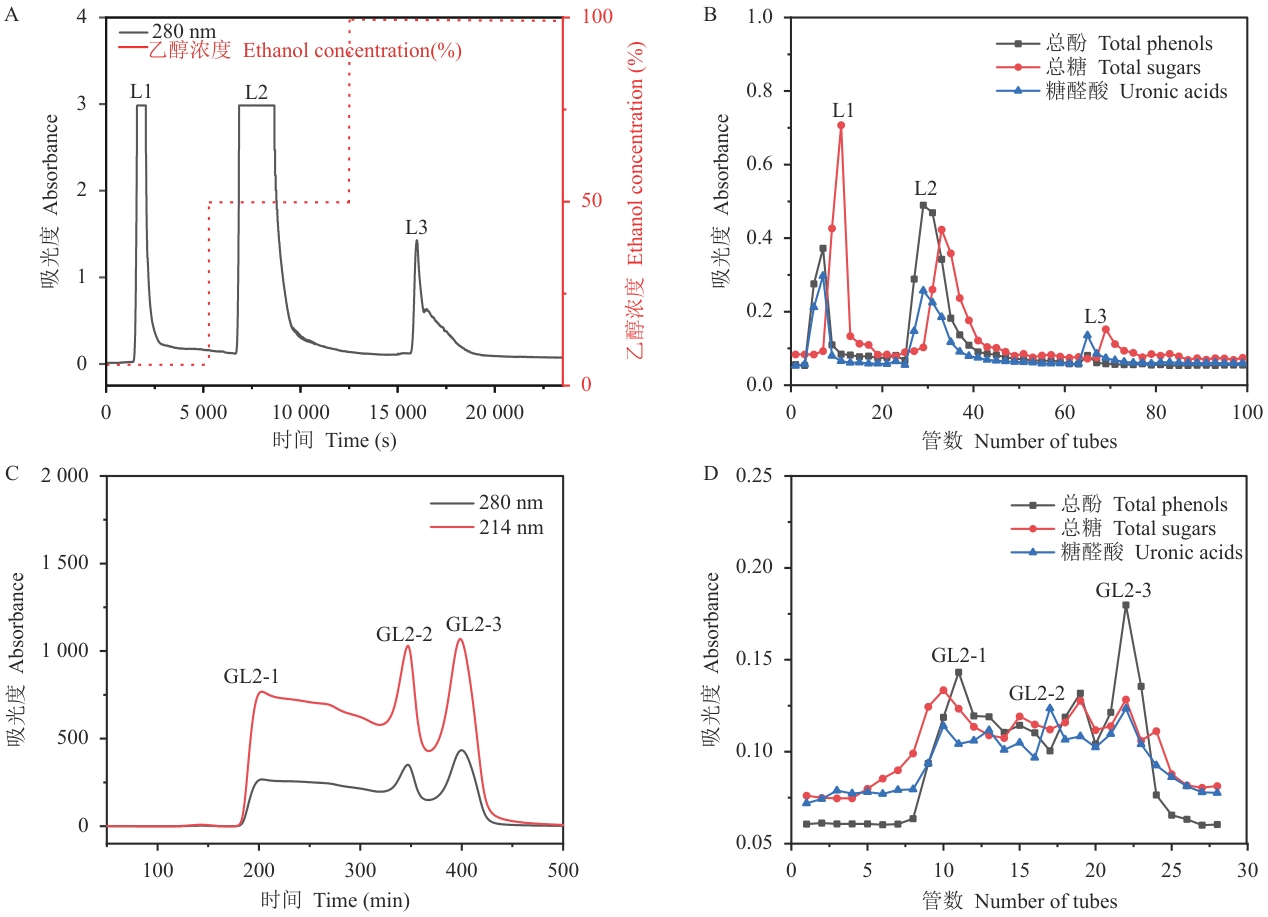
Fig. 4 Separation and purification profile of SSF-AA: Chromatogram profile of D101 macroporous resin column. B: Distribution curves of total phenols, total sugars, and uronic acids on D101 macroporous resin column. C: Chromatogram profile of Sephadex G-50 gel filtration column. D: Distribution curves of total phenols, total sugars, and uronic acids on Sephadex G-50 gel filtration
组分 Fraction | 总酚 Total phenols (%, w/w) | 总糖 Total sugars (%, w/w) | 糖醛酸 Uronic acids (%, w/w) |
|---|---|---|---|
| L1 | 10.30±0.86e | 19.30±1.10b | 3.56±0.21a |
| L2 | 17.37±0.18b | 15.09±0.20c | 2.07±0.22c |
| GL2-1 | 12.75±0.02d | 21.59±0.27a | 2.73±0.06b |
| GL2-2 | 15.85±0.51c | 14.63±0.81c | 1.47±0.30c |
| GL2-3 | 19.65±0.16a | 12.68±0.61d | 2.32±0.08d |
Table 3 Component analysis of fractions separated from SSF-A
组分 Fraction | 总酚 Total phenols (%, w/w) | 总糖 Total sugars (%, w/w) | 糖醛酸 Uronic acids (%, w/w) |
|---|---|---|---|
| L1 | 10.30±0.86e | 19.30±1.10b | 3.56±0.21a |
| L2 | 17.37±0.18b | 15.09±0.20c | 2.07±0.22c |
| GL2-1 | 12.75±0.02d | 21.59±0.27a | 2.73±0.06b |
| GL2-2 | 15.85±0.51c | 14.63±0.81c | 1.47±0.30c |
| GL2-3 | 19.65±0.16a | 12.68±0.61d | 2.32±0.08d |
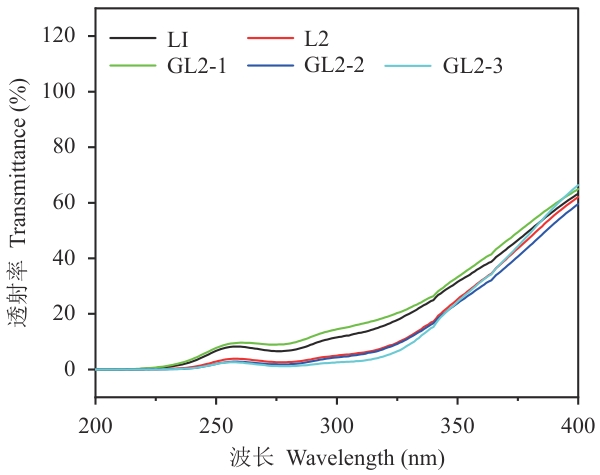
Fig. 5 UV transmittance spectra of fractions separated from SSF-A
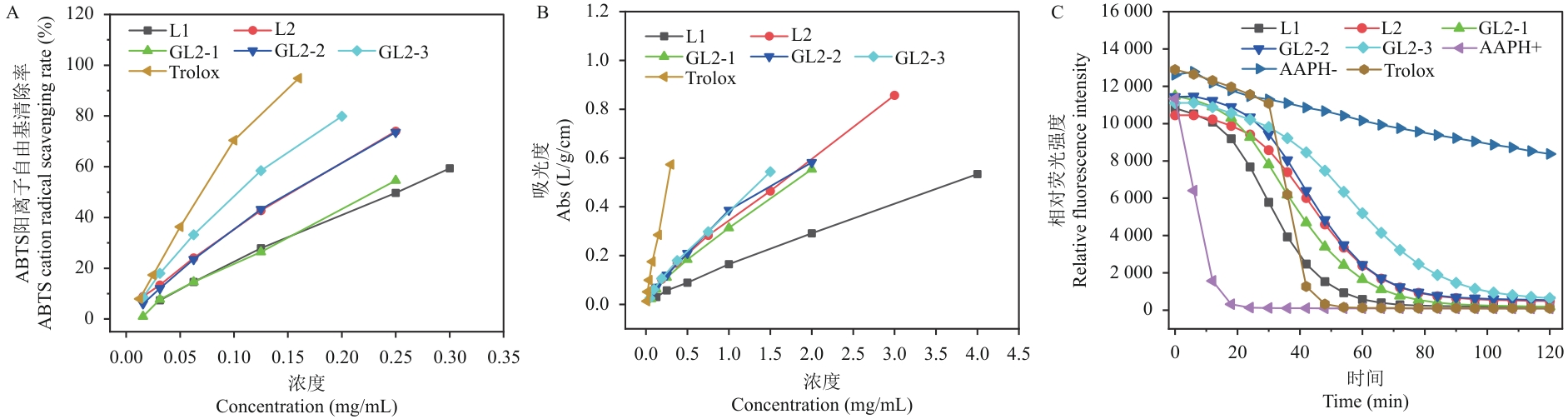
Fig. 6 Evaluation of antioxidant activity in fractions separated from SSF-AA: ABTS⁺· radical scavenging rate. B: Total reducing capacity. C: Fluorescence decay curve analysis
组分 Fraction | ABTS ABTS (IC50 μg/mL) | 总还原力 Reducing power (mg/mL) | 相对ORAC值 Relative ORAC value (mmol TE/g) |
|---|---|---|---|
| L1 | 241.60±10.75a | 3.38±0.04a | 1.50±0.07d |
| L2 | 120.50±3.54c | 1.33±0.01d | 2.44±0.08c |
| GL2-1 | 218.00±11.31b | 2.65±0.07b | 1.95±0.07b |
| GL2-2 | 127.50±0.71c | 1.51±0.04c | 2.41±0.02b |
| GL2-3 | 90.50±3.54b | 1.38±0.02d | 3.14±0.03a |
| Trolox | 58.00±5.66e | 0.26±0.01e | - |
Table 4 Evaluation of antioxidant activity of different fractions separated from SSF-A
组分 Fraction | ABTS ABTS (IC50 μg/mL) | 总还原力 Reducing power (mg/mL) | 相对ORAC值 Relative ORAC value (mmol TE/g) |
|---|---|---|---|
| L1 | 241.60±10.75a | 3.38±0.04a | 1.50±0.07d |
| L2 | 120.50±3.54c | 1.33±0.01d | 2.44±0.08c |
| GL2-1 | 218.00±11.31b | 2.65±0.07b | 1.95±0.07b |
| GL2-2 | 127.50±0.71c | 1.51±0.04c | 2.41±0.02b |
| GL2-3 | 90.50±3.54b | 1.38±0.02d | 3.14±0.03a |
| Trolox | 58.00±5.66e | 0.26±0.01e | - |
| [1] | Lizundia E, Armentano I, Luzi F, et al. Synergic effect of nanolignin and metal oxide nanoparticles into poly (l-lactide) bionanocomposites: material properties, antioxidant activity, and antibacterial performance [J]. ACS Appl Bio Mater, 2020, 3(8): 5263-5274. |
| [2] | Ragauskas AJ, Beckham GT, Biddy MJ, et al. Lignin valorization: improving lignin processing in the biorefinery [J]. Science, 2014, 344(6185): 1246843. |
| [3] | Zhu GZ, Ye DW, Chen XT, et al. Lignin-derived polyphenols with enhanced antioxidant activities by chemical demethylation and their structure-activity relationship [J]. Int J Biol Macromol, 2023, 237: 124030. |
| [4] | Nivedha M, Manisha M, Gopinath M, et al. Fractionation, characterization, and economic evaluation of alkali lignin from saw industry waste [J]. Bioresour Technol, 2021, 335: 125260. |
| [5] | Li KY, Zhong W, Li PH, et al. Recent advances in lignin antioxidant: Antioxidant mechanism, evaluation methods, influence factors and various applications [J]. Int J Biol Macromol, 2023, 251: 125992. |
| [6] | Mounguengui S, Saha Tchinda JB, Ndikontar MK, et al. Total phenolic and lignin contents, phytochemical screening, antioxidant and fungal inhibition properties of the heartwood extractives of ten Congo Basin tree species [J]. Ann For Sci, 2016, 73(2): 287-296. |
| [7] | Boarino A, Klok HA. Opportunities and challenges for lignin valorization in food packaging, antimicrobial, and agricultural applications [J]. Biomacromolecules, 2023, 24(3): 1065-1077. |
| [8] | Zhang Y, Naebe M. Lignin: a review on structure, properties, and applications as a light-colored UV absorber [J]. ACS Sustainable Chem Eng, 2021, 9(4): 1427-1442. |
| [9] | Barapatre A, Meena AS, Mekala S, et al. In vitro evaluation of antioxidant and cytotoxic activities of lignin fractions extracted from Acacia nilotica [J]. Int J Biol Macromol, 2016, 86: 443-453. |
| [10] | An LL, Wang GH, Jia HY, et al. Fractionation of enzymatic hydrolysis lignin by sequential extraction for enhancing antioxidant performance [J]. Int J Biol Macromol, 2017, 99: 674-681. |
| [11] | Costa CAE, Casimiro FM, Vega-Aguilar C, et al. Lignin valorization for added-value chemicals: kraft lignin versus lignin fractions [J]. ChemEngineering, 2023, 7(3): 42. |
| [12] | Chio C, Sain M, Qin WS. Lignin utilization: a review of lignin depolymerization from various aspects [J]. Renew Sustain Energy Rev, 2019, 107: 232-249. |
| [13] | Yao K, Wu QF, An R, et al. Hydrothermal pretreatment for deconstruction of plant cell wall: Part I. Effect on lignin-carbohydrate complex [J]. AlChE J, 2018, 64(6): 1938-1953. |
| [14] | Pang TR, Wang GH, Sun H, et al. Lignin fractionation: Effective strategy to reduce molecule weight dependent heterogeneity for upgraded lignin valorization [J]. Ind Crops Prod, 2021, 165: 113442. |
| [15] | 青格尔, 张必周, 王莉杰, 等. 玉米秸秆降解复配菌的构建及其协同效果评价 [J]. 玉米科学, 2024, 32(6): 46-54. |
| Qing GE, Zhang BZ, Wang LJ, et al. Construction and evaluation synergistic effect of corn straw degradation microbial compound [J]. J Maize Sci, 2024, 32(6): 46-54. | |
| [16] | 王新光, 田磊, 王恩泽, 等. 玉米秸秆高效降解微生物复合菌系的构建及降解效果评价 [J]. 生物技术通报, 2022, 38(4): 217-229. |
| Wang XG, Tian L, Wang EZ, et al. Construction of microbial consortium for efficient degradation of corn straw and evaluation of its degradation effect [J]. Biotechnol Bull, 2022, 38(4): 217-229. | |
| [17] | Gigli M, Crestini C. Fractionation of industrial lignins: opportunities and challenges [J]. Green Chem, 2020, 22(15): 4722-4746. |
| [18] | Yuan S, Li BY, Chang LY, et al. Characterization and antioxidant activity of differentiated fractionation lignin from corn stover [J]. Int J Biol Macromol, 2025, 303: 140538. |
| [19] | Zhang L, Peng WB, Wang F, et al. Fractionation and quantitative structural analysis of lignin from a lignocellulosic biorefinery process by gradient acid precipitation [J]. Fuel, 2022, 309: 122153. |
| [20] | Li YR, Zhao SY, Li YH, et al. Revealing the relationship between molecular weight of lignin and its color, UV-protecting property [J]. Int J Biol Macromol, 2022, 223: 1287-1296. |
| [21] | Crawford DL, Pometto AL III, Crawford RL. Lignin degradation by Streptomyces viridosporus: isolation and characterization of a new polymeric lignin degradation intermediate [J]. Appl Environ Microbiol, 1983, 45(3): 898-904. |
| [22] | Sluiter A, Hames B, Ruiz R, et al. Determination of structural carbohydrates and lignin in biomass, in: Laboratory Analytical Procedure (LAP) [R]. America 2008. |
| [23] | DuBois M, Gilles KA, Hamilton JK, et al. Colorimetric method for determination of sugars and related substances [J]. Anal Chem, 1956, 28(3): 350-356. |
| [24] | Bitter T, Muir HM. A modified uronic acid carbazole reaction [J]. Anal Biochem, 1962, 4(4): 330-334. |
| [25] | Masuko T, Minami A, Iwasaki N, et al. Carbohydrate analysis by a phenol-sulfuric acid method in microplate format [J]. Anal Biochem, 2005, 339(1): 69-72. |
| [26] | Cesaretti M, Luppi E, Maccari F, et al. A 96-well assay for uronic acid carbazole reaction [J]. Carbohydr Polym, 2003, 54(1): 59-61. |
| [27] | Magalhães LM, Santos F, Segundo MA, et al. Rapid microplate high-throughput methodology for assessment of Folin-Ciocalteu reducing capacity [J]. Talanta, 2010, 83(2): 441-447. |
| [28] | Guo H, Zang CG, Zheng L, et al. Novel antioxidant peptides from fermented whey protein by Lactobacillus rhamnosus B2-1: separation and identification by in vitro and in silico approaches [J]. J Agric Food Chem, 2024, 72(42): 23306-23319. |
| [29] | Chang CY, Wu KC, Chiang SH. Antioxidant properties and protein compositions of porcine haemoglobin hydrolysates [J]. Food Chem, 2007, 100(4): 1537-1543. |
| [30] | 周桐同, 郭皓, 欧艳曦, 等. 乳清蛋白源铜螯合肽抗氧化活性评价 [J]. 食品与发酵工业, 2022, 48(12): 220-225. |
| Zhou TT, Guo H, Ou YX, et al. Antioxidant activity of whey protein derived copper chelating peptide [J]. Food Ferment Ind, 2022, 48(12): 220-225. | |
| [31] | Yu CW, Reddy AP, Simmons CW, et al. Preservation of microbial communities enriched on lignocellulose under thermophilic and high-solid conditions [J]. Biotechnol Biofuels, 2015, 8: 206. |
| [32] | Fang XX, Li QM, Lin YQ, et al. Screening of a microbial consortium for selective degradation of lignin from tree trimmings [J]. Bioresour Technol, 2018, 254: 247-255. |
| [33] | Casciello C, Tonin F, Berini F, et al. A valuable peroxidase activity from the novel species Nonomuraea gerenzanensis growing on alkali lignin [J]. Biotechnol Rep, 2017, 13: 49-57. |
| [34] | Rakotoarivonina H, Revol PV, Aubry N, et al. The use of thermostable bacterial hemicellulases improves the conversion of lignocellulosic biomass to valuable molecules [J]. Appl Microbiol Biotechnol, 2016, 100(17): 7577-7590. |
| [35] | Fall I, Czerwiec Q, Abdellaoui S, et al. A thermostable bacterial catalase-peroxidase oxidizes phenolic compounds derived from lignins [J]. Appl Microbiol Biotechnol, 2023, 107(1): 201-217. |
| [36] | Lemos LN, Pereira RV, Quaggio RB, et al. Genome-centric analysis of a thermophilic and cellulolytic bacterial consortium derived from composting [J]. Front Microbiol, 2017, 8: 644. |
| [37] | Wushke S, Levin DB, Cicek N, et al. Facultative anaerobe Caldibacillus debilis GB1: characterization and use in a designed aerotolerant, cellulose-degrading coculture with Clostridium thermocellum [J]. Appl Environ Microbiol, 2015, 81(16): 5567-5573. |
| [38] | Arneodo JD, Etcheverry C, Thebe T, et al. Molecular evidence that cellulolytic bacterial genus Cohnella is widespread among Neotropical Nasutitermitinae from NE Argentina [J]. Rev Argent De Microbiol, 2019, 51(1): 77-80. |
| [39] | Gu JM, Qiu Q, Yu Y, et al. Bacterial transformation of lignin: key enzymes and high-value products [J]. Biotechnol Biofuels, 2024, 17: 2. |
| [40] | Yao WK, Cai DM, Huang FL, et al. Promoting lignin exploitability in compost: a cooperative microbial depolymerization mechanism [J]. Process Saf Environ Prot, 2023, 174: 856-868. |
| [41] | Vazquez-Olivo G, López-Martínez LX, Contreras-Angulo L, et al. Antioxidant capacity of lignin and phenolic compounds from corn stover [J]. Waste Biomass Valor, 2019, 10(1): 95-102. |
| [42] | Mensah M, Tia R, Adei E, et al. A DFT mechanistic study on base-catalyzed cleavage of the β-O-4 ether linkage in lignin: implications for selective lignin depolymerization [J]. Front Chem, 2022, 10: 793759. |
| [43] | Wang R, Wang GH, Xia Y, et al. Functionality study of lignin as a tyrosinase inhibitor: Influence of lignin heterogeneity on anti-tyrosinase activity [J]. Int J Biol Macromol, 2019, 128: 107-113. |
| [1] | YANG Tao, ZENG Fan-cheng, ZENG Yu-xiao, TAO Rui-yan, XUE Zhi-hong, TAO Qian, ZHONG Yang, JIANG Fan, XIONG Xing-yao, CHENG Xu. Construction of Efficient Microbial Consortia and Their Effects on Potato Growth [J]. Biotechnology Bulletin, 2026, 42(5): 89-100. |
| [2] | WEI Yu-jia, LI Yan, KANG Yu-han, GONG Xiao-nan, DU Min, TU Lan, SHI Peng, YU Zi-han, SUN Yan, ZHANG Kun. Cloning and Expression Analysis of the CrMYB4 Gene in Carex rigescens [J]. Biotechnology Bulletin, 2025, 41(7): 248-260. |
| [3] | ZHANG Xin, WU Ke-yi, ZHU Si-chen, LI Yu, LI Lan-zhou. Effect of Cultivation Conditions on the Content of Polysaccharide in Ganoderma tsugae and its Antioxidant Activity [J]. Biotechnology Bulletin, 2024, 40(11): 47-57. |
| [4] | YOU Zi-juan, CHEN Han-lin, DENG Fu-cai. Research Progress in the Extraction and Functional Activities of Bioactive Peptides from Fish Skin [J]. Biotechnology Bulletin, 2023, 39(7): 91-104. |
| [5] | WANG Yi-qing, WANG Tao, WEI Chao-ling, DAI Hao-min, CAO Shi-xian, SUN Wei-jiang, ZENG Wen. Identification and Interaction Analysis of SMAS Gene Family in Tea Plant(Camellia sinensis) [J]. Biotechnology Bulletin, 2023, 39(4): 246-258. |
| [6] | YAO Xiao-wen, LIANG Xiao, CHEN Qing, WU Chun-ling, LIU Ying, LIU Xiao-qiang, SHUI Jun, QIAO Yang, MAO Yi-ming, CHEN Yin-hua, ZHANG Yin-dong. Study on the Expression Pattern of Genes in Lignin Biosynthesis Pathway of Cassava Resisting to Tetranychus urticae [J]. Biotechnology Bulletin, 2023, 39(2): 161-171. |
| [7] | TU Xiao-yuan, CHU Lu-lu, WANG Mian, CHEN Bing-zhi, JIANG Yu-ji. Extraction of Polysaccharide from Hericium corallinum and Analysis on Its in vitro Antioxidant Activity [J]. Biotechnology Bulletin, 2023, 39(12): 276-286. |
| [8] | ZHAO Jia, ZHAO Fei-yan, SHEN Xin, GAO Guang-qi, SUN Zhi-hong. Advances in the Antioxidant Activities of Lactic Acid Bacteria and Their Applications [J]. Biotechnology Bulletin, 2023, 39(11): 182-190. |
| [9] | WANG Yu-yun, ZHAO Bing, MA Li-ting, LI Lan, DENG Ya-qin, XU Zhi. Humification Process and Microbial Driving Mechanism of Composting [J]. Biotechnology Bulletin, 2022, 38(5): 22-28. |
| [10] | HAN Dong-jing, WANG Zhi-hua, ZHOU Ning, LIU Guo-qing, YANG Shao-hua, WANG Wen-jun. Screening and Degradation Effect of Lignin-degrading Bacteria in Termite Nurseries [J]. Biotechnology Bulletin, 2022, 38(3): 113-120. |
| [11] | SUN Shu-fang, LUO Yong-li, LI Chun-hui, JIN Min, XU Qian. Determination of Lignin Monomer Crosslinking Structures in Wheat Stems by UPLC-MS/MS [J]. Biotechnology Bulletin, 2022, 38(10): 66-72. |
| [12] | WANG Hui, ZHANG Shun-bin, JIN He, WANG Han, ZHANG Geng-hua, XIA Shi-ning, CHEN Jing-sheng, DUAN Yu-xi. Potential Function of 4-coumaric Acid-CoA Ligase in Response to Soybean Cyst Nematode Stress [J]. Biotechnology Bulletin, 2021, 37(7): 71-80. |
| [13] | ZHAI Xu-hang, LI Xia, YUAN Ying-jin. Research Progress of Lignocellulose Pretreatment and Valorization Method [J]. Biotechnology Bulletin, 2021, 37(3): 162-174. |
| [14] | WANG Zhao-yu, CHANG Ming-chang, XU Li-jing, MENG Jun-long, ZUO Ning-ke, PAN Xu. Structural Characterization,Physicochemical Properties of Melanin from Fruiting Body,Hyphae and Spores of Ganoderma lucidum [J]. Biotechnology Bulletin, 2021, 37(11): 81-91. |
| [15] | LI Feng, HUANG Shu-shi. Isolation and Identification of Lignin-degrading Bacteria from the Gut of Termite and Their Degradation Characteristics [J]. Biotechnology Bulletin, 2020, 36(8): 61-68. |
| Viewed | ||||||
|
Full text |
|
|||||
|
Abstract |
|
|||||
