







Biotechnology Bulletin ›› 2025, Vol. 41 ›› Issue (3): 112-122.doi: 10.13560/j.cnki.biotech.bull.1985.2024-0923
FENG Xiao-kang( ), LIANG Qian, WANG Xue-feng, SUN Jie, XUE Fei()
Received:2024-09-24
Online:2025-03-26
Published:2025-03-20
Contact:
XUE Fei
E-mail:2364430810@qq.com;xuefei@shzu.edu.cn
FENG Xiao-kang, LIANG Qian, WANG Xue-feng, SUN Jie, XUE Fei. Identification of SEC1 Complex Components and Functional Validation of the GhSCY1 Gene in Cotton[J]. Biotechnology Bulletin, 2025, 41(3): 112-122.
| 名称 Name | 序列 Sequence (5′‒3′) | 用途 Purpose |
|---|---|---|
| V-GhSCY1-F | VIGS | |
| V-GhSCY1-R | ||
| q-GhSCY1-F | GTATCAACCCAGACGAGTCTTCAG | RT-qPCR |
| q-GhSCY1-R | AACTCCAAGACGAGATAAAGCC |
Table 1 Sequences of relevant primers used
| 名称 Name | 序列 Sequence (5′‒3′) | 用途 Purpose |
|---|---|---|
| V-GhSCY1-F | VIGS | |
| V-GhSCY1-R | ||
| q-GhSCY1-F | GTATCAACCCAGACGAGTCTTCAG | RT-qPCR |
| q-GhSCY1-R | AACTCCAAGACGAGATAAAGCC |

Fig. 1 Identification and evolutionary analysis of SEC1 system in cotton (Gossypium hirsutum)A: Evolutionary analysis of GhSCY1 (GH_A05G0068 and GH_D05G0074). B: Evolutionary analysis of GhSECA1 (GH_A12G1366 and GH_D12G1384). C: Evolutionary analysis of GhSECE1 (GH_A09G2370 and GH_D09G2311). D: Analysis of conserved domains in the SEC1 component. The protein sequences in Fig.1 A-C are derived from Arabidopsis thaliana, Zea mays, Oryza sativa, Nicotiana attenuata, Gossypium raimondii, Gossypium thurberi, Gossypium mustelinum, Gossypium barbadense, Gossypium hirsutum, Gossypium arboreum, Gossypium tomentosum, and Gossypium darwinii. The red symbols indicate internal node symbols, which denote the presumed ancestors; the green symbols indicate the nodes at the very end of the tree (leaf nodes), representing genes
基因名称 Gene name | 基因ID Gene ID | 氨基酸数 Number of amino acids | 分子量 Molecular weight/kD | 理论等电点 Theoretical pI | 不稳定系数 Instability index | 亲水性 GRAVY | 亚细胞定位 Subcellular location |
|---|---|---|---|---|---|---|---|
| GhSCY1A | GH_A05G0068 | 542 | 58.612 73 | 9.48 | 37.39 | 0.258 | 叶绿体Chloroplast |
| GhSCY1D | GH_D05G0074 | 542 | 58.709 83 | 9.56 | 36.39 | 0.244 | 叶绿体Chloroplast |
| GhSECA1A | GH_A12G1366 | 1 037 | 116.944 51 | 6.23 | 42.82 | -0.368 | 叶绿体Chloroplast |
| GhSECA1D | GH_D12G1384 | 1 037 | 116.993 61 | 6.33 | 43.19 | -0.366 | 叶绿体Chloroplast |
| GhSECE1A | GH_A09G2370 | 174 | 18.592 99 | 5.53 | 46.77 | -0.208 | 叶绿体Chloroplast |
| GhSECE1D | GH_D09G2311 | 174 | 18.489 82 | 5.34 | 50.07 | -0.208 | 叶绿体Chloroplast |
Table 2 Analysis of physicochemical properties and subcellular localization of the SEC1 system in cotton
基因名称 Gene name | 基因ID Gene ID | 氨基酸数 Number of amino acids | 分子量 Molecular weight/kD | 理论等电点 Theoretical pI | 不稳定系数 Instability index | 亲水性 GRAVY | 亚细胞定位 Subcellular location |
|---|---|---|---|---|---|---|---|
| GhSCY1A | GH_A05G0068 | 542 | 58.612 73 | 9.48 | 37.39 | 0.258 | 叶绿体Chloroplast |
| GhSCY1D | GH_D05G0074 | 542 | 58.709 83 | 9.56 | 36.39 | 0.244 | 叶绿体Chloroplast |
| GhSECA1A | GH_A12G1366 | 1 037 | 116.944 51 | 6.23 | 42.82 | -0.368 | 叶绿体Chloroplast |
| GhSECA1D | GH_D12G1384 | 1 037 | 116.993 61 | 6.33 | 43.19 | -0.366 | 叶绿体Chloroplast |
| GhSECE1A | GH_A09G2370 | 174 | 18.592 99 | 5.53 | 46.77 | -0.208 | 叶绿体Chloroplast |
| GhSECE1D | GH_D09G2311 | 174 | 18.489 82 | 5.34 | 50.07 | -0.208 | 叶绿体Chloroplast |
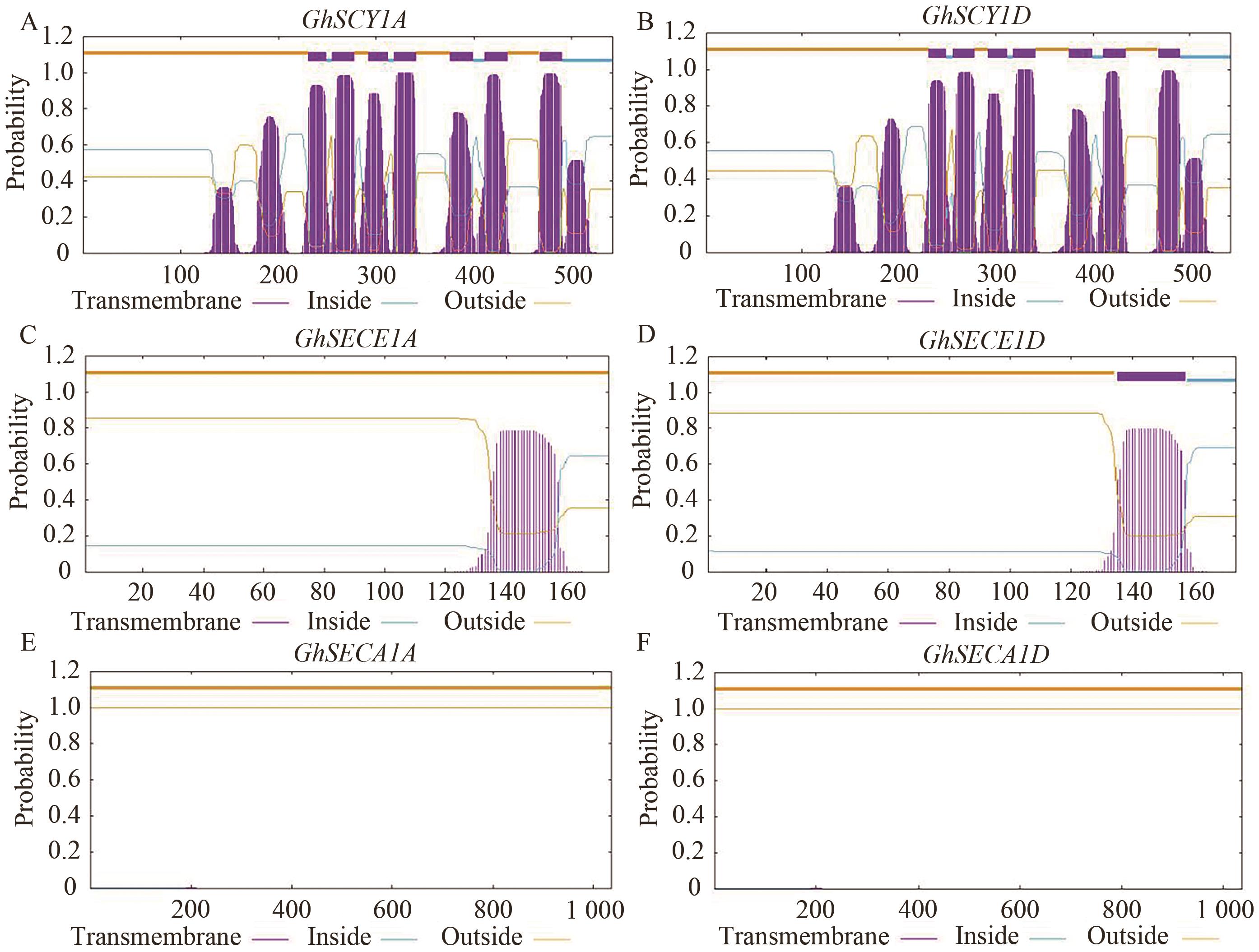
Fig. 2 Analysis of the transmembrane structure of the SEC1 systemic component in cottonThe number of purple squares in the figure indicates the number of transmembrane structures; A‒F indicate that GhSCY1A contains 7 transmembrane structures, GhSCY1D contains 7 transmembrane structures, GhSECE1A does not contain any transmembrane structures, GhSECE1D contains 1 transmembrane structure, and both GhSECA1A and GhSECA1D do not contain transmembrane structures

Fig. 3 Analysis on three-dimensional structural interactions analysis of SEC1 system components in cottonA: Interaction between GhSCY1, GhSECE1 and GhSECA1. B: Interaction between GhSCY1 and GhSECA1. C: Interaction between GhSCY1 and GhSECE1. D: Intercropping between GhSECE1 and GhSECA1. Green color: Protein structure of GhSCY1; blue color: protein structure of GhSECE1; yellow color: protein structure of GhSECA1; red color: region of interactions between proteins

Fig. 4 Analysis of cis-acting elements of SEC1 system in cotton
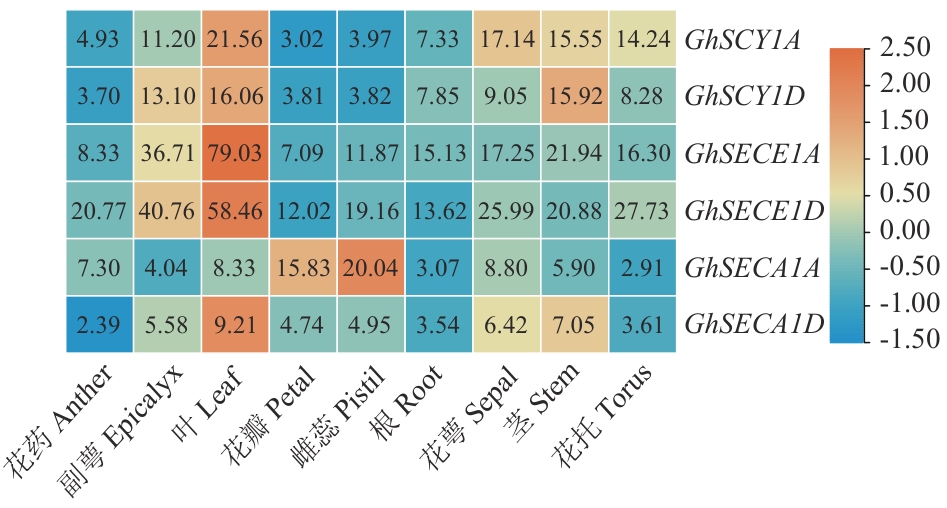
Fig. 5 Tissue expression analysis of SEC1 system in cotton

Fig. 6 Analysis of stress expression pattern of SEC1 system in cotton

Fig. 7 Phenotype, expression and pigment content after silencing of GhSCY1A/D gene in cottonA: Phenotype of GhCHLI silencing. B: Whole plant phenotype after silencing with TRV:00 and TRV:GhSCY1. C: Relative expressions of GhSCY1 in TRV:00 and TRV:GhSCY1 plants. D: Leaf phenotype after silencing with TRV:00 and TRV:GhSCY1. E: Total chlorophyll content after silencing with TRV:00 and TRV:GhSCY1. F: Carotenoid content after silencing with TRV:00 and TRV:GhSCY1. ***: Significant difference at the 0.01 level, ****: significant difference at the 0.001 level
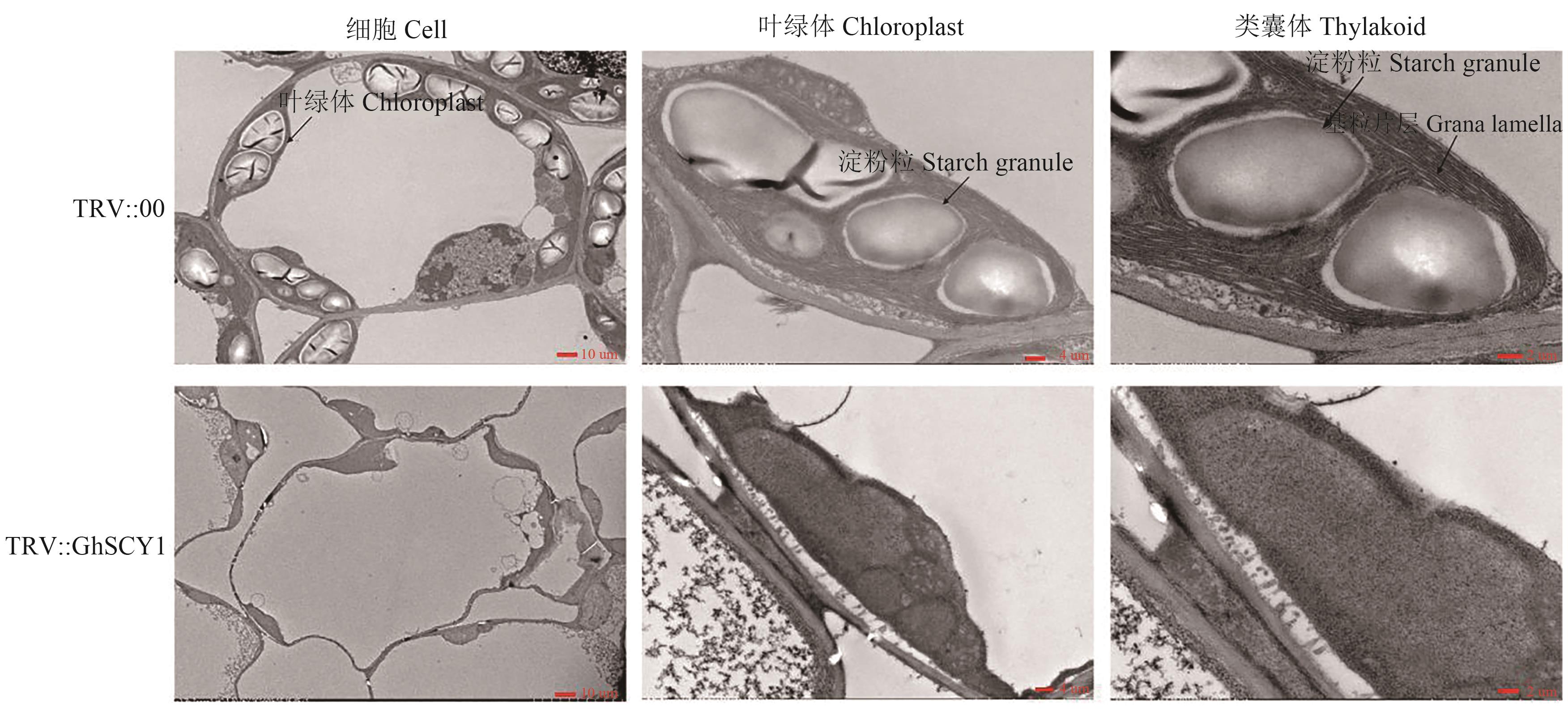
Fig. 8 Chloroplast structure after silencing of GhSCY1A/D gene in cotton
| 1 | Chen YZ, Fu MC, Li H, et al. High-oleic acid content, nontransgenic allotetraploid cotton (Gossypium hirsutum L.) generated by knockout of GhFAD2 genes with CRISPR/Cas9 system [J]. Plant Biotechnol J, 2021, 19(3): 424-426. |
| 2 | Liu RX, Xiao XH, Gong JW, et al. QTL mapping for plant height and fruit branch number based on RIL population of upland cotton [J]. J Cotton Res, 2020, 3(1): 5. |
| 3 | Paterson AH, Wendel JF, Gundlach H, et al. Repeated polyploidization of Gossypium genomes and the evolution of spinnable cotton fibres [J]. Nature, 2012, 492(7429): 423-427. |
| 4 | 许子怡, 程行, 沈奇, 等. 水稻黄绿叶突变体ygl3的鉴定与基因功能分析 [J]. 中国农业科学, 2021, 54(15): 3149-3157. |
| Xu ZY, Cheng X, Shen Q, et al. Identification and gene functional analysis of yellow green leaf mutant ygl3 in rice [J]. Sci Agric Sin, 2021, 54(15): 3149-3157. | |
| 5 | Jung KH, Hur J, Ryu CH, et al. Characterization of a rice chlorophyll-deficient mutant using the T-DNA gene-trap system [J]. Plant Cell Physiol, 2003, 44(5): 463-472. |
| 6 | 孙小秋, 王兵, 肖云华, 等. 水稻ygl98黄绿叶突变基因的精细定位与遗传分析 [J]. 作物学报, 2011, 37(6): 991-997. |
| Sun XQ, Wang B, Xiao YH, et al. Genetic analysis and fine-mapping of ygl98 yellow-green leaf gene in rice [J]. Acta Agron Sin, 2011, 37(6): 991-997. | |
| 7 | Mao GZ, Ma Q, Wei HL, et al. Fine mapping and candidate gene analysis of the virescent gene v1 in Upland cotton (Gossypium hirsutum) [J]. Mol Genet Genomics, 2018, 293(1): 249-264. |
| 8 | Zhu JK, Chen JD, Gao FK, et al. Rapid mapping and cloning of the virescent-1 gene in cotton by bulked segregant analysis-next generation sequencing and virus-induced gene silencing strategies [J]. J Exp Bot, 2017, 68(15): 4125-4135. |
| 9 | Shim KC, Kang YN, Song JH, et al. A frameshift mutation in the Mg-chelatase I subunit gene OsCHLI is associated with a lethal chlorophyll-deficient, yellow seedling phenotype in rice [J]. Plants (Basel), 2023, 12(15): 2831. |
| 10 | Fang GN, Yang SL, Ruan BP, et al. Isolation of TSCD11 gene for early chloroplast development under high temperature in rice [J]. Rice (N Y), 2020, 13(1): 49. |
| 11 | Huo YZ, Cheng MX, Tang MJ, et al. GhCTSF1, a short PPR protein with a conserved role in chloroplast development and photosynthesis, participates in intron splicing of rpoC1 and ycf3-2 transcripts in cotton [J]. Plant Commun, 2024, 5(6): 100858. |
| 12 | Roose JL, Frankel LK, Bricker TM. The PsbP domain protein 1 functions in the assembly of lumenal domains in photosystem I [J]. J Biol Chem, 2014, 289(34): 23776-23785. |
| 13 | Liu J, Yang HX, Lu QT, et al. PsbP-domain protein1, a nuclear-encoded thylakoid lumenal protein, is essential for photosystem I assembly in Arabidopsis [J]. Plant Cell, 2012, 24(12): 4992-5006. |
| 14 | Lu HJ, Xiao YY, Liu YX, et al. Integrative transcriptomics and proteomics analysis of a cotton mutant yl1 with a chlorophyll-reduced leaf [J]. Plants (Basel), 2024, 13(13): 1789. |
| 15 | 李劲宇, 安传敬, 刘小敏, 等. 叶绿体分裂分子机制研究进展 [J]. 植物生理学报, 2016, 52(11): 1733-1744. |
| Li JY, An CJ, Liu XM, et al. Recent progress in the molecular mechanism of chloroplast division [J]. Plant Physiol J, 2016, 52(11): 1733-1744. | |
| 16 | Xu XM, Ouyang M, Lu DD, et al. Protein sorting within chloroplasts [J]. Trends Cell Biol, 2021, 31(1): 9-16. |
| 17 | Richardson LGL, Singhal R, Schnell DJ. The integration of chloroplast protein targeting with plant developmental and stress responses [J]. BMC Biol, 2017, 15(1): 118. |
| 18 | Bauer J, Chen K, Hiltbunner A, et al. The major protein import receptor of plastids is essential for chloroplast biogenesis [J]. Nature, 2000, 403(6766): 203-207. |
| 19 | Hust B, Gutensohn M. Deletion of core components of the plastid protein import machinery causes differential arrest of embryo development in Arabidopsis thaliana [J]. Plant Biol, 2006, 8(1): 18-30. |
| 20 | Jarvis P, Chen LJ, Li H, et al. An Arabidopsis mutant defective in the plastid general protein import apparatus [J]. Science, 1998, 282(5386): 100-103. |
| 21 | Kikuchi S, Bédard J, Hirano M, et al. Uncovering the protein translocon at the chloroplast inner envelope membrane [J]. Science, 2013, 339(6119): 571-574. |
| 22 | Nakai M, Sugita D, Omata T, et al. Sec-Y protein is localized in both the cytoplasmic and thylakoid membranes in the Cyanobacterium synechococcus PCC7942 [J]. Biochem Biophys Res Commun, 1993, 193(1): 228-234. |
| 23 | Williams-Carrier R, Stiffler N, Belcher S, et al. Use of Illumina sequencing to identify transposon insertions underlying mutant phenotypes in high-copy Mutator lines of maize [J]. Plant J, 2010, 63(1): 167-177. |
| 24 | Zoschke R, Bock R. Chloroplast translation: structural and functional organization, operational control, and regulation [J]. Plant Cell, 2018, 30(4): 745-770. |
| 25 | Liu D, Wu ZM, Hou L. Loss-of-function mutation in SCY1 triggers chloroplast-to-nucleus retrograde signaling in Arabidopsis thaliana [J]. Biol Plant, 2015, 59(3): 469-476. |
| 26 | Yuan J, Henry R, McCaffery M, et al. SecA homolog in protein transport within chloroplasts: evidence for endosymbiont-derived sorting [J]. Science, 1994, 266(5186): 796-798. |
| 27 | Nakai M, Goto A, Nohara T, et al. Identification of the SecA protein homolog in pea chloroplasts and its possible involvement in thylakoidal protein transport [J]. J Biol Chem, 1994, 269(50): 31338-31341. |
| 28 | Schuenemann D, Amin P, Hartmann E, et al. Chloroplast SecY is complexed to SecE and involved in the translocation of the 33-kDa but not the 23-kDa subunit of the oxygen-evolving complex [J]. J Biol Chem, 1999, 274(17): 12177-12182. |
| 29 | Ballabani G, Forough M, Kessler F, et al. The journey of preproteins across the chloroplast membrane systems [J]. Front Physiol, 2023, 14: 1213866. |
| 30 | Fernandez DE. Two paths diverged in the stroma: targeting to dual SEC translocase systems in chloroplasts [J]. Photosynth Res, 2018, 138(3): 277-287. |
| 31 | Skalitzky CA, Martin JR, Harwood JH, et al. Plastids contain a second sec translocase system with essential functions[J]. Plant Physiol, 2011, 155(1): 354-369. |
| 32 | Chen CJ, Chen H, Zhang Y, et al. TBtools: an integrative toolkit developed for interactive analyses of big biological data [J]. Mol Plant, 2020, 13(8): 1194-1202. |
| 33 | Lichtenthaler HK. [34]chlorophylls and carotenoids: pigments of photosynthetic biomembranes [M]//Methods in Enzymology. Amsterdam: Elsevier, 1987: 350-382. |
| 34 | 程谟桢. 番茄黄化突变体ym的黄化迟熟机制与关键基因Slym1鉴定 [D]. 哈尔滨: 东北农业大学, 2021. |
| Cheng MZ. Mechanism of yellowing late ripening of tomato mutant ym and identification of key gene Slym1 [D]. Harbin: Northeast Agricultural University, 2021. | |
| 35 | Gao LL, Hong ZH, Wang YS, et al. Chloroplast proteostasis: a story of birth, life, and death [J]. Plant Commun, 2023, 4(1): 100424. |
| 36 | Zhang H, Zhou JF, Kan Y, et al. A genetic module at one locus in rice protects chloroplasts to enhance thermotolerance [J]. Science, 2022, 376(6599): 1293-1300. |
| 37 | 庄焜扬. 温度胁迫下番茄叶绿体与细胞核双定位WHIRLY1蛋白的功能分析 [D]. 泰安: 山东农业大学, 2020. |
| Zhuang KY. Functional analysis of WHIRLY1 protein with double localization in chloroplast and nucleus of tomato under temperature stress [D]. Tai'an: Shandong Agricultural University, 2020. |
| [1] | MA Li-hua, HOU Meng-juan, ZHU Xin-xia. Functional Studies of the Gossypium hirsutumGhNFD4 Gene in Response to Drought in Cotton [J]. Biotechnology Bulletin, 2025, 41(3): 104-111. |
| [2] | KONG Qing-yang, ZHANG Xiao-long, LI Na, ZHANG Chen-jie, ZHANG Xue-yun, YU Chao, ZHANG Qi-xiang, LUO Le. Identification and Expression Analysis of GRAS Transcription Factor Family in Rosa persica [J]. Biotechnology Bulletin, 2025, 41(1): 210-220. |
| [3] | YANG Wei-cheng, SUN Yan, YANG Qian, WANG Zhuang-lin, MA Ju-hua, XUE Jin-ai, LI Run-zhi. Genome-wide Identification of the FAX family in Gossypium hirsutum and Functional Analysis of GhFAX1 [J]. Biotechnology Bulletin, 2024, 40(3): 155-169. |
| [4] | WU Cui-cui, XIAO Shui-ping. Genome-wide Identification of HD-Zip Gene Family in Gossypium hirsutum L. and Expression Analysis in Response to Abiotic Stress [J]. Biotechnology Bulletin, 2024, 40(2): 130-145. |
| [5] | ZHANG Chao, WANG Zi-rui, SUN Ya-li, MAO Xin-chen, TANG Jia-qi, YU Heng-xiu. Functional Study of Vitamin B1 Synthesis-related Gene OsTHIC in Rice [J]. Biotechnology Bulletin, 2024, 40(2): 99-108. |
| [6] | ZHAN Yan, ZHOU Li-bin, JIN Wen-jie, DU Yan, YU Li-xia, QU Ying, MA Yong-gui, LIU Rui-yuan. Research Progress in Plant Leaf Color Mutation Induced by Radiation [J]. Biotechnology Bulletin, 2023, 39(8): 106-113. |
| [7] | WANG Yi-fan, HOU Lin-hui, CHANG Yong-chun, YANG Ya-jie, CHEN Tian, ZHAO Zhu-yue, RONG Er-hua, WU Yu-xiang. Synthesis and Character Identification of Allohexaploid Between Gossypium hirsutum and G. gossypioides [J]. Biotechnology Bulletin, 2023, 39(5): 168-176. |
| [8] | LI Jing-rui, WANG Yu-bo, XIE Zi-wei, LI Chang, WU Xiao-lei, GONG Bin-bin, GAO Hong-bo. Identification and Expression Analysis of PIN Gene Family in Melon Under High Temperature Stress [J]. Biotechnology Bulletin, 2023, 39(5): 192-204. |
| [9] | JIANG Lu-yuan, FENG Mei-jing, DU Yu-qing, DI Bao, CHEN Duan-fen, QIU De-you, YANG Yan-fang. Semi-lethal Low Temperature and Taxane Content of Taxus Under Low Temperature Stress [J]. Biotechnology Bulletin, 2023, 39(3): 232-242. |
| [10] | XING Yuan, SONG Jian, LI Jun-yi, ZHENG Ting-ting, LIU Si-chen, QIAO Zhi-jun. Identification of AP Gene Family and Its Response Analysis to Abiotic Stress in Setaria italica [J]. Biotechnology Bulletin, 2023, 39(11): 238-251. |
| [11] | MAO Ke-xin, WANG Hai-rong, AN Miao, LIU Teng-fei, WANG Shi-jin, LI Jian, LI Guo-tian. Identification of GRAS Gene Family and Expression Analysis Under Low Temperature Stress in Actinidia chinensis [J]. Biotechnology Bulletin, 2023, 39(11): 297-307. |
| [12] | YOU Chui-huai, XIE Jin-jin, ZHANG Ting, CUI Tian-zhen, SUN Xin-lu, ZANG Shou-jian, WU Yi-ning, SUN Meng-yao, QUE You-xiong, SU Ya-chun. Identification of the Lipoxygenase Gene GeLOX1 and Expression Analysis Under Low Temperature Stress in Gelsmium elegans [J]. Biotechnology Bulletin, 2023, 39(11): 318-327. |
| [13] | DUAN Min-jie, LI Yi-fei, YANG Xiao-miao, WANG Chun-ping, HUANG Qi-zhong, HUANG Ren-zhong, ZHANG Shi-cai. Identification of Zinc Finger Protein DnaJ-Like Gene Family in Capsicum annuum and Its Expression Analysis Responses to High Temperature Stress [J]. Biotechnology Bulletin, 2023, 39(1): 187-198. |
| [14] | JIN Jiao-jiao, LIU Zi-gang, MI Wen-bo, XU Ming-xia, ZOU Ya, XU Chun-mei, ZHAO Cai-xia. Identification of Low Temperature Stress-responsive Genes Regulating Photosynthetic Characteristics in the Leaves of Brassica napus by RNA-Seq [J]. Biotechnology Bulletin, 2022, 38(4): 126-142. |
| [15] | CUI Jie-bing, ZHANG Meng, ZHANG Ying-ting, XU Jin. Effects of Low Temperature Stress on Different Clones of Cryptomeria fortunei and Evaluation of Their Cold Resistance [J]. Biotechnology Bulletin, 2022, 38(3): 31-40. |
| Viewed | ||||||
|
Full text |
|
|||||
|
Abstract |
|
|||||
