







Biotechnology Bulletin ›› 2025, Vol. 41 ›› Issue (4): 323-334.doi: 10.13560/j.cnki.biotech.bull.1985.2024-0819
SONG Fen-fen1( ), DUAN Yan-xue1, SANG Yu1, WANG Ji-peng2, PENG Rui2, SUN Nian-xi2, LI Yong1()
Received:2024-08-23
Online:2025-04-26
Published:2025-04-25
Contact:
LI Yong
E-mail:1586860734@qq.com;liyongwf@swu.edu.cn
SONG Fen-fen, DUAN Yan-xue, SANG Yu, WANG Ji-peng, PENG Rui, SUN Nian-xi, LI Yong. Characteristics of the Mycosphere Microbial Community in Diseased and Healthy Morchella spp.Soil[J]. Biotechnology Bulletin, 2025, 41(4): 323-334.
组别 Group | 全磷 Total phosphorus/(g·kg-1) | 全钾 Total potassium/(g·kg-1) | 全氮 Total nitrogen/(g·kg-1) | 有效磷 Available phosphorus/(g·kg-1) | 有效钾 Available potassium/(mg·kg-1) | 有效氮 Alkaline nitrogen/(mg·kg-1) | 有机质 Soil organic matter/(g·kg-1) | pH |
|---|---|---|---|---|---|---|---|---|
| 健康羊肚菌HM | 0.27±0.01a | 8.55±0.06a | 1.56±0.08a | 27.69±1.12b | 167.50±9.57a | 148.96±1.58a | 2.07±0.05a | 6.47±0.18b |
| 患病羊肚菌DM | 0.29±0.02a | 8.60±0.05a | 1.66±0.07a | 31.35±1.54a | 165.00±5.77a | 146.72±8.82a | 2.07±0.10a | 6.87±0.15a |
Table 1 Soil physicochemical properties in diseased and healthy Morchella spp.
组别 Group | 全磷 Total phosphorus/(g·kg-1) | 全钾 Total potassium/(g·kg-1) | 全氮 Total nitrogen/(g·kg-1) | 有效磷 Available phosphorus/(g·kg-1) | 有效钾 Available potassium/(mg·kg-1) | 有效氮 Alkaline nitrogen/(mg·kg-1) | 有机质 Soil organic matter/(g·kg-1) | pH |
|---|---|---|---|---|---|---|---|---|
| 健康羊肚菌HM | 0.27±0.01a | 8.55±0.06a | 1.56±0.08a | 27.69±1.12b | 167.50±9.57a | 148.96±1.58a | 2.07±0.05a | 6.47±0.18b |
| 患病羊肚菌DM | 0.29±0.02a | 8.60±0.05a | 1.66±0.07a | 31.35±1.54a | 165.00±5.77a | 146.72±8.82a | 2.07±0.10a | 6.87±0.15a |
组别 Group | 蔗糖酶 Sucrase/(mg Glu·g-1·24 h-1) | 酸性磷酸酶 Acid phosphatase/(mg pNG·g-1·24 h-1) | 脲酶 Urease/(NH3·g-1·24 h-1) | 过氧化氢酶 Catalase/[mL(0.1 mol·L-1 K2MnO4)·g-1·24 h-1] |
|---|---|---|---|---|
| 健康羊肚菌HM | 3.45±0.96a | 6.72±0.35a | 2.39±0.15a | 19.75±4.18b |
| 患病羊肚菌DM | 0.92±0.37b | 4.58±0.49b | 0.99±0.80b | 27.85±2.19a |
Table 2 Enzymatic activities of soil around the rhizosphere growing the diseased and healthy Morchella spp.
组别 Group | 蔗糖酶 Sucrase/(mg Glu·g-1·24 h-1) | 酸性磷酸酶 Acid phosphatase/(mg pNG·g-1·24 h-1) | 脲酶 Urease/(NH3·g-1·24 h-1) | 过氧化氢酶 Catalase/[mL(0.1 mol·L-1 K2MnO4)·g-1·24 h-1] |
|---|---|---|---|---|
| 健康羊肚菌HM | 3.45±0.96a | 6.72±0.35a | 2.39±0.15a | 19.75±4.18b |
| 患病羊肚菌DM | 0.92±0.37b | 4.58±0.49b | 0.99±0.80b | 27.85±2.19a |
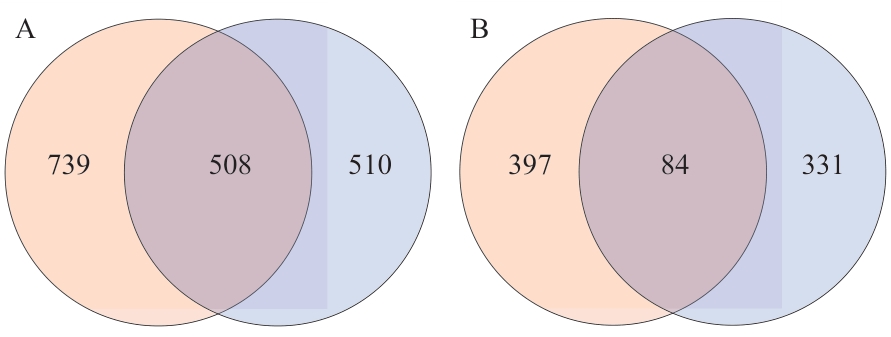
Fig. 1 OTUs of soil bacteria (A) and fungi (B) communities in the soils growing diseased and healthy Morchella
| 微生物 Microorganism | 组别 Group | Chao1指数 Chao1 index | ACE指数 ACE index | Shannon指数 Shannon index | 覆盖度 Coverage/% |
|---|---|---|---|---|---|
细菌 Bacteria | HM | 517.38±17.41a | 517.40±17.48a | 8.62±0.10a | 100.00 |
| DM | 349.50±48.77b | 349.59±48.79b | 6.86±0.36b | 99.98 | |
真菌 Fungi | HM | 154.29±15.78a | 158.76±17.02a | 3.03±1.32a | 99.98 |
| DM | 133.04±29.90a | 133.00±28.74a | 2.43±0.74a | 99.99 |
Table 3 Microbial alpha diversity index in the rhizosphere growing diseased and healthy Morchella spp.
| 微生物 Microorganism | 组别 Group | Chao1指数 Chao1 index | ACE指数 ACE index | Shannon指数 Shannon index | 覆盖度 Coverage/% |
|---|---|---|---|---|---|
细菌 Bacteria | HM | 517.38±17.41a | 517.40±17.48a | 8.62±0.10a | 100.00 |
| DM | 349.50±48.77b | 349.59±48.79b | 6.86±0.36b | 99.98 | |
真菌 Fungi | HM | 154.29±15.78a | 158.76±17.02a | 3.03±1.32a | 99.98 |
| DM | 133.04±29.90a | 133.00±28.74a | 2.43±0.74a | 99.99 |
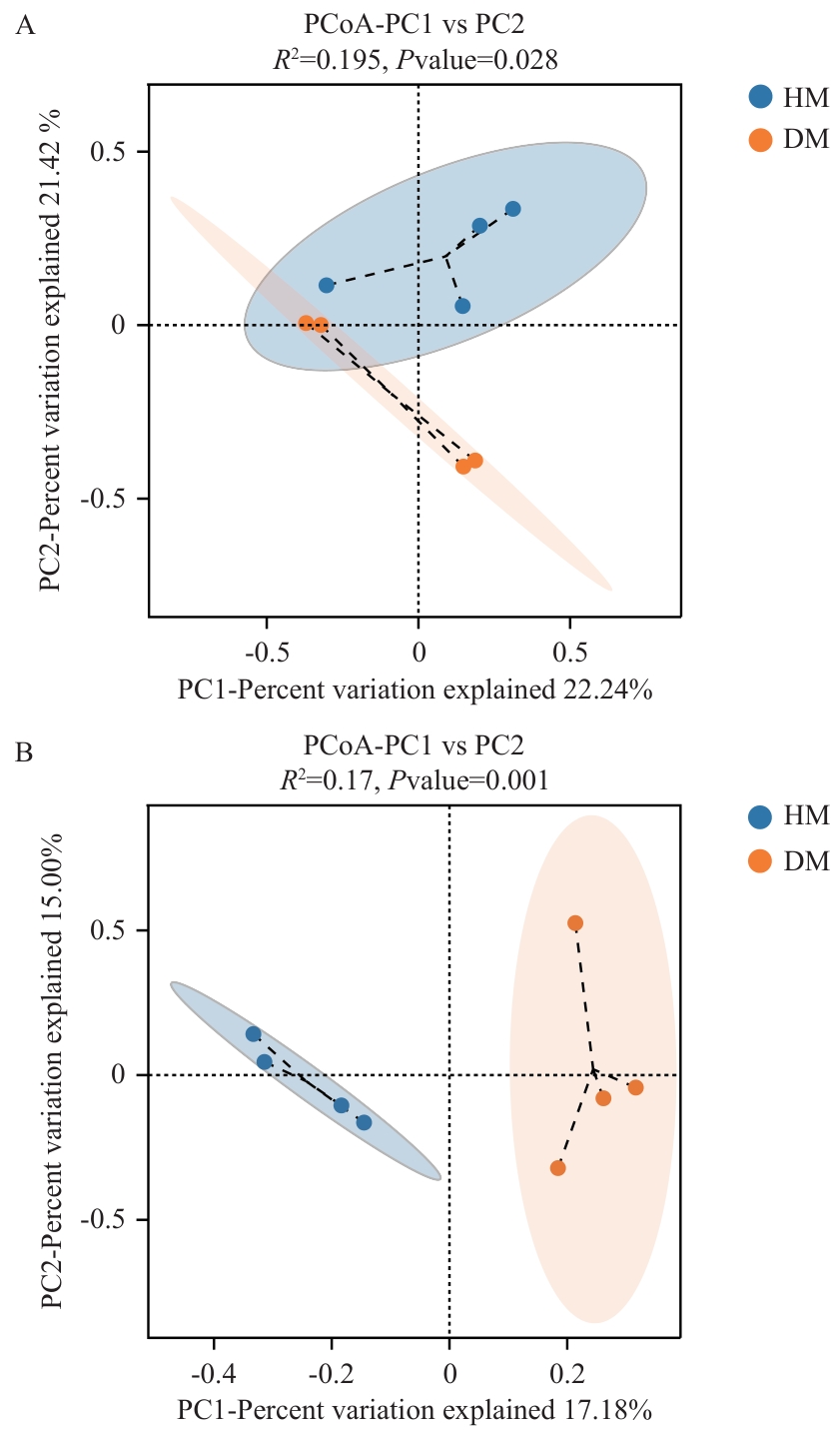
Fig. 2 Principal component analysis of soil bacterial (A) and fungi (B) communities in the soils growing diseased and healthy Morchella spp.
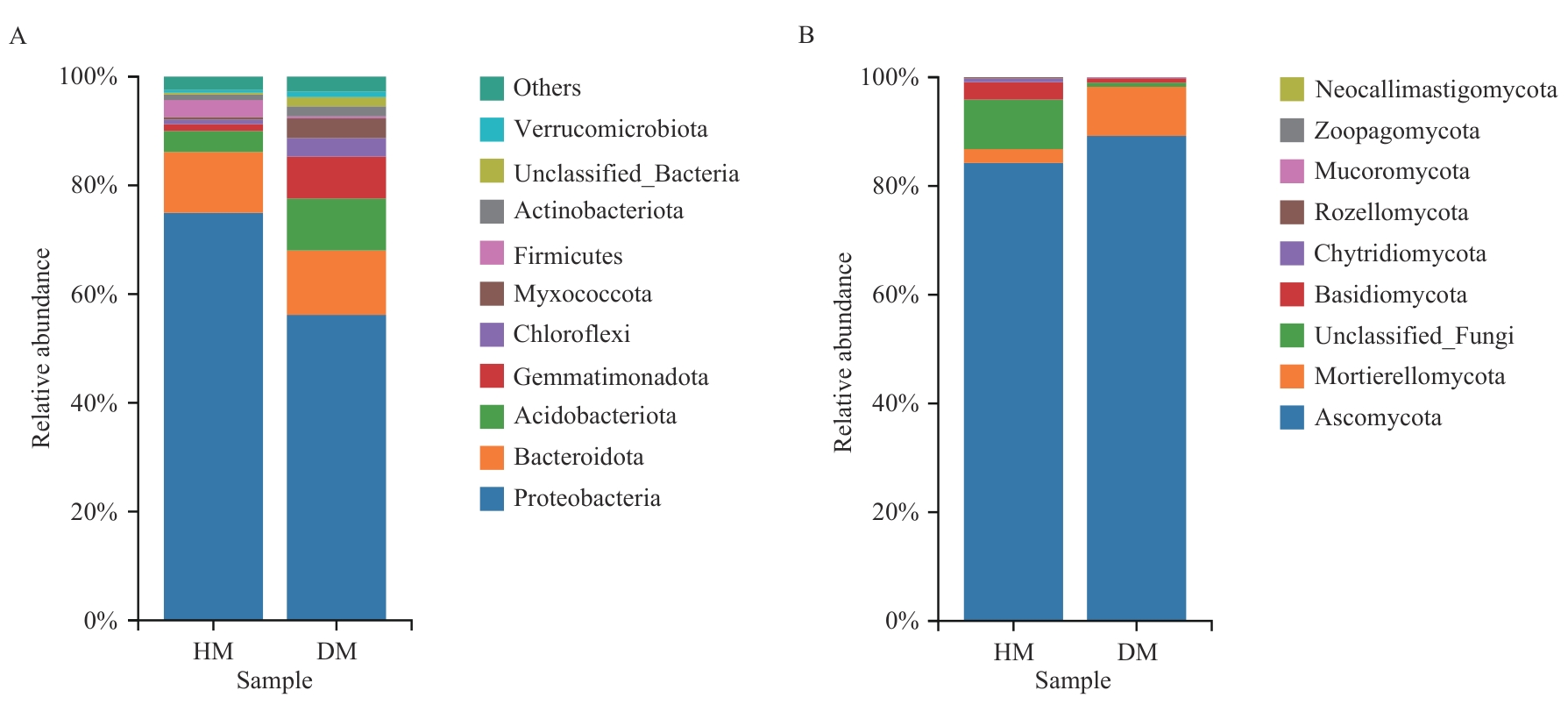
Fig. 3 Community composition of bacteria (A) and fungi (B) in the soils growing diseased and healthy Morchella spp. at phylum level (top 10)
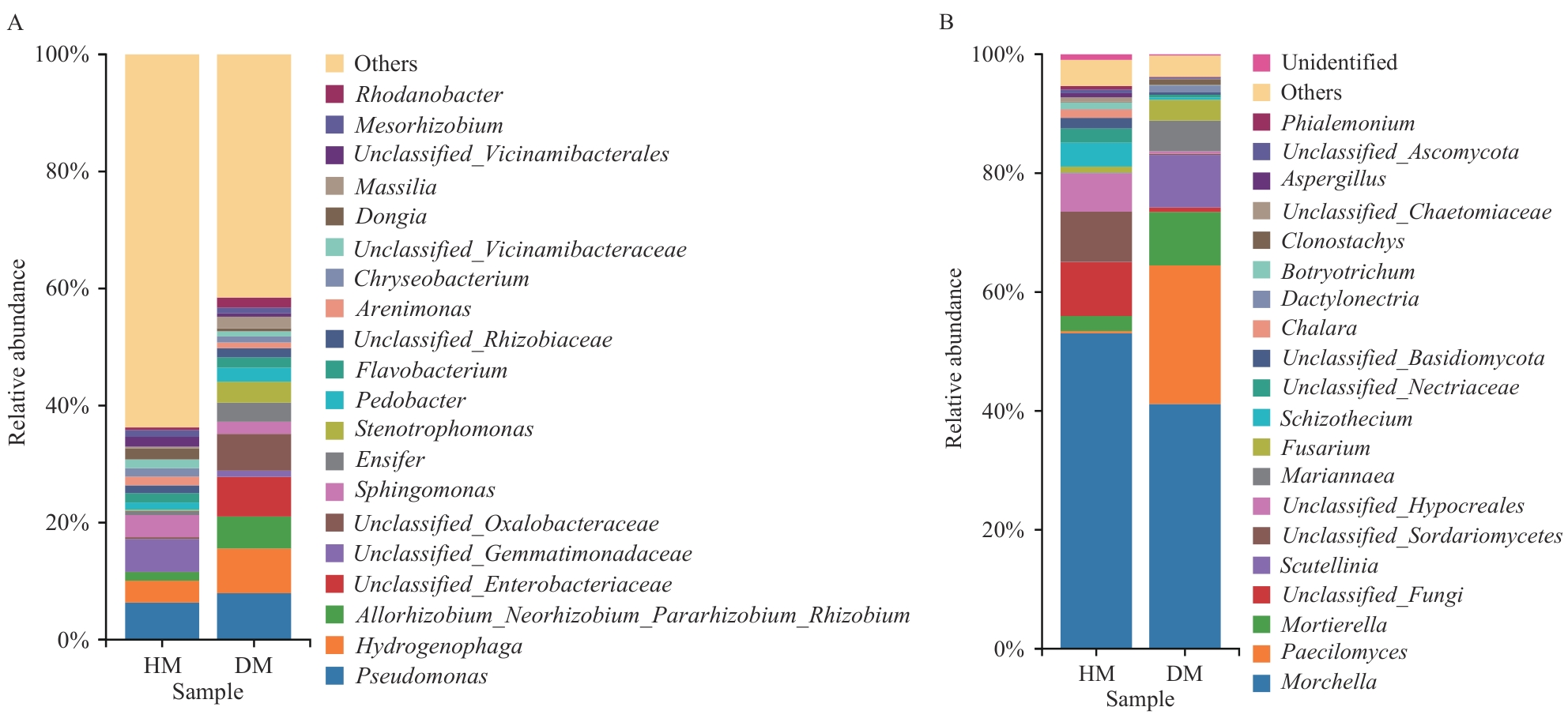
Fig. 4 Community composition of bacteria (A) and fungi (B) in the soils of diseased and healthy Morchella spp. at phylum level (top 20)
| 微生物类别 Microbial type | 分类 Taxonomy | 健康羊肚菌 HM/% | 患病羊肚菌DM/% |
|---|---|---|---|
| 细菌 Bacteria | Acidibacter | 0.87±0.56a | 0.11±0.05b |
| Biyi10 | 1.13±0.85a | 0.09±0.24b | |
| Bosea | 0.09±0.08b | 0.44±0.12a | |
| Candidatus_Koribacter | 0.46±0.34a | 0.07±0.16b | |
| Dongia | 1.88±0.97a | 0.47±0.74b | |
| Ellin6067 | 0.86±0.64a | 0.08±0.24b | |
| Enterobacter | 0.02±0.04b | 0.87±0.15a | |
| Flavisolibacter | 0.60±0.36a | 0.11±0.07b | |
| Flavitalea | 0.30±0.07a | 0.11±0.11b | |
| Gemmatimonas | 1.65±0.01a | 0.157±1.23b | |
| Haliangium | 0.91±0.29a | 0.07±0.30b | |
| IS_44 | 0.57±0.42a | 0.01±0.05b | |
| Lautropia | 0.26±0.25a | 0.03±0.02b | |
| Luteitalea | 0.87±0.54a | 0.19±0.26b | |
| Methylobacillus | 0.33±0.26a | 0.04±0.04b | |
| Nannocystis | 0.15±0.10a | 0.02±0.07b | |
| OLB13 | 0.49±0.29a | 0.02±0.37b | |
| Opitutus | 0.13±0.12a | 0.01±0.02b | |
| Pajaroellobacter | 0.09±0.03a | 0.00±0.03b | |
| Polaromonas | 0.15±0.14b | 1.22±0.74a | |
| Stella | 0.17±0.07a | 0.00±0.04b | |
| Stenotrophomonas | 0.15±0.12b | 3.54±0.39a | |
| Thalassobaculum | 0.13±0.08a | 0.03±0.04b | |
| UTBCD1 | 0.43±0.43a | 0.00±0.00b | |
| Variovorax | 0.28±0.27b | 1.37±0.26a | |
| 真菌 Fungi | Aspergillus | 0.69±0.48a | 0.08±0.04b |
| Fusarium | 1.00±0.69b | 3.50±1.92a | |
| Schizothecium | 4.01±3.03a | 0.39±0.50b | |
| Serendipita | 0.00±0.00a | 0.00±0.00b |
Table 4 Variation in relative abundance of microbial communities in the soils growing the diseased and healthy Morchella spp. at genus level
| 微生物类别 Microbial type | 分类 Taxonomy | 健康羊肚菌 HM/% | 患病羊肚菌DM/% |
|---|---|---|---|
| 细菌 Bacteria | Acidibacter | 0.87±0.56a | 0.11±0.05b |
| Biyi10 | 1.13±0.85a | 0.09±0.24b | |
| Bosea | 0.09±0.08b | 0.44±0.12a | |
| Candidatus_Koribacter | 0.46±0.34a | 0.07±0.16b | |
| Dongia | 1.88±0.97a | 0.47±0.74b | |
| Ellin6067 | 0.86±0.64a | 0.08±0.24b | |
| Enterobacter | 0.02±0.04b | 0.87±0.15a | |
| Flavisolibacter | 0.60±0.36a | 0.11±0.07b | |
| Flavitalea | 0.30±0.07a | 0.11±0.11b | |
| Gemmatimonas | 1.65±0.01a | 0.157±1.23b | |
| Haliangium | 0.91±0.29a | 0.07±0.30b | |
| IS_44 | 0.57±0.42a | 0.01±0.05b | |
| Lautropia | 0.26±0.25a | 0.03±0.02b | |
| Luteitalea | 0.87±0.54a | 0.19±0.26b | |
| Methylobacillus | 0.33±0.26a | 0.04±0.04b | |
| Nannocystis | 0.15±0.10a | 0.02±0.07b | |
| OLB13 | 0.49±0.29a | 0.02±0.37b | |
| Opitutus | 0.13±0.12a | 0.01±0.02b | |
| Pajaroellobacter | 0.09±0.03a | 0.00±0.03b | |
| Polaromonas | 0.15±0.14b | 1.22±0.74a | |
| Stella | 0.17±0.07a | 0.00±0.04b | |
| Stenotrophomonas | 0.15±0.12b | 3.54±0.39a | |
| Thalassobaculum | 0.13±0.08a | 0.03±0.04b | |
| UTBCD1 | 0.43±0.43a | 0.00±0.00b | |
| Variovorax | 0.28±0.27b | 1.37±0.26a | |
| 真菌 Fungi | Aspergillus | 0.69±0.48a | 0.08±0.04b |
| Fusarium | 1.00±0.69b | 3.50±1.92a | |
| Schizothecium | 4.01±3.03a | 0.39±0.50b | |
| Serendipita | 0.00±0.00a | 0.00±0.00b |
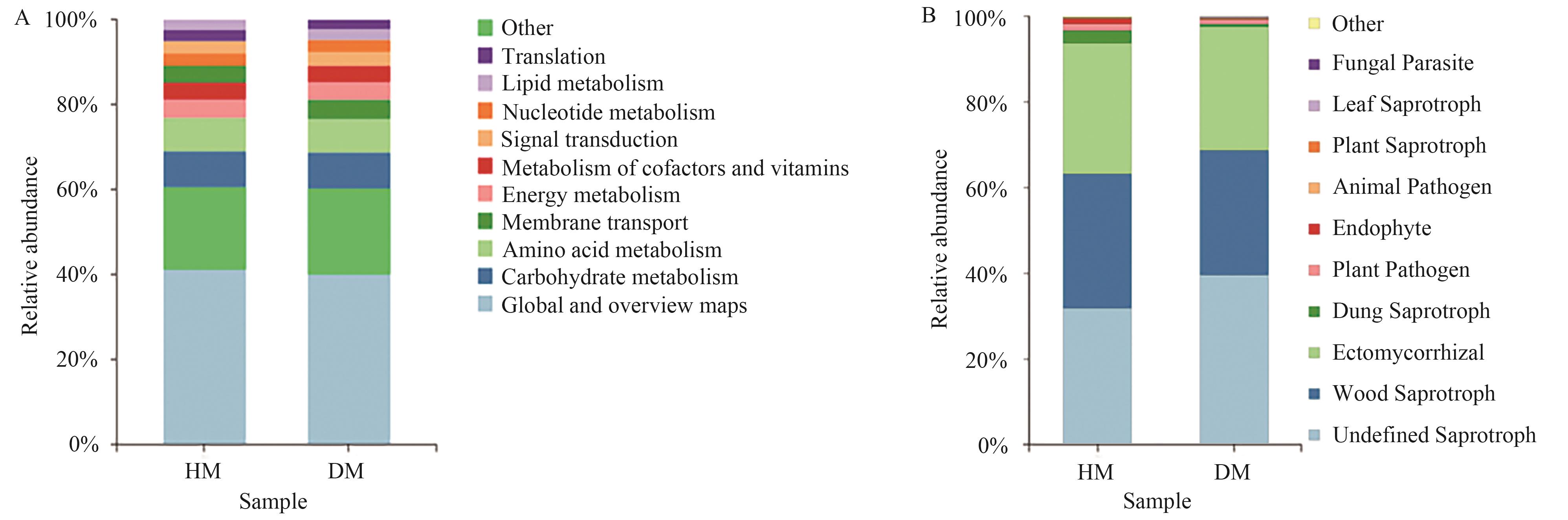
Fig. 5 Functional composition and relative abundance of bacteria (A) and fungi (B) in the soils growing Morchella spp.
微生物群落 Microbe community | 全氮 TN | 有效氮 AN | 有机质 SOM | pH |
|---|---|---|---|---|
细菌群落 Bacterial community | 0.022 | -0.103 | -0.075 | 0.292 |
真菌群落 Fungal community | 0.006 | 0.264 | -0.14 | 0.395* |
Table 5 Correlation analysis between bacterial and fungi community and physiochemical factors of soils
微生物群落 Microbe community | 全氮 TN | 有效氮 AN | 有机质 SOM | pH |
|---|---|---|---|---|
细菌群落 Bacterial community | 0.022 | -0.103 | -0.075 | 0.292 |
真菌群落 Fungal community | 0.006 | 0.264 | -0.14 | 0.395* |
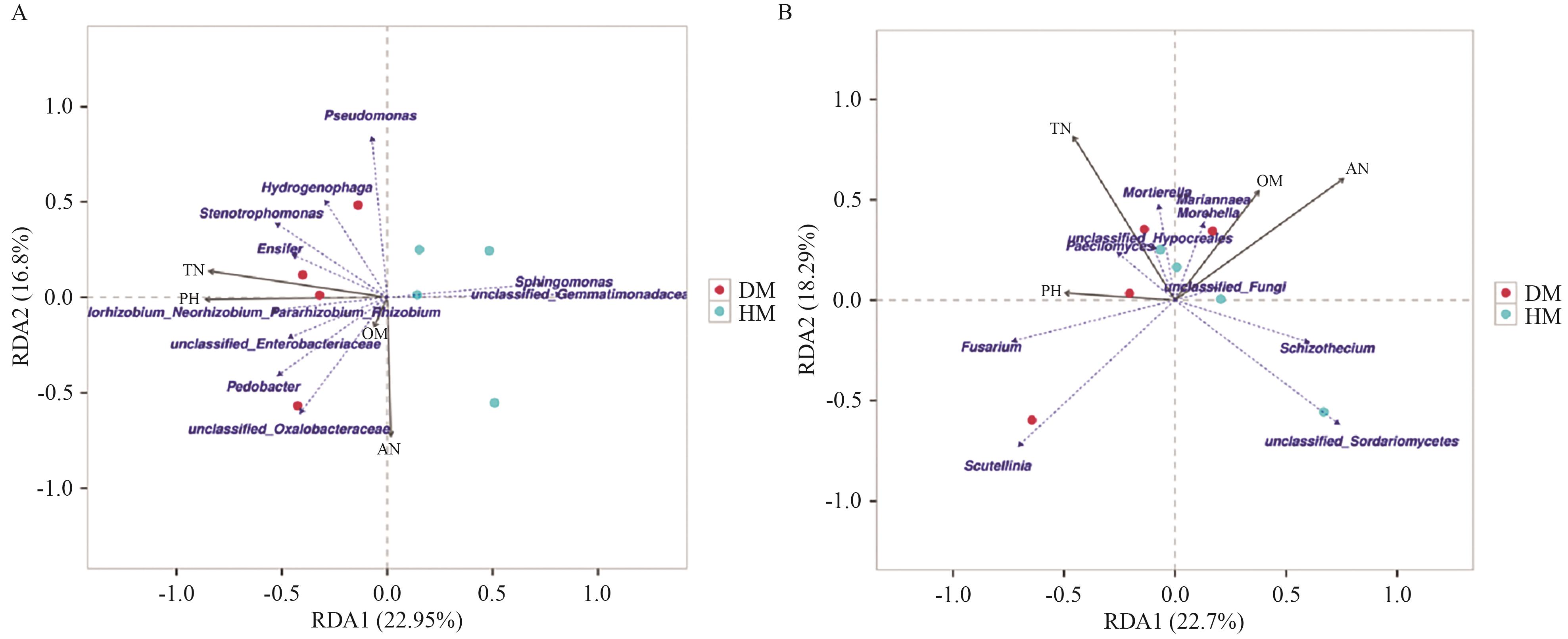
Fig. 6 Redundancy analysis between bacterial (A) and fungi (A) community and physiochemical characteristics after VIF screening
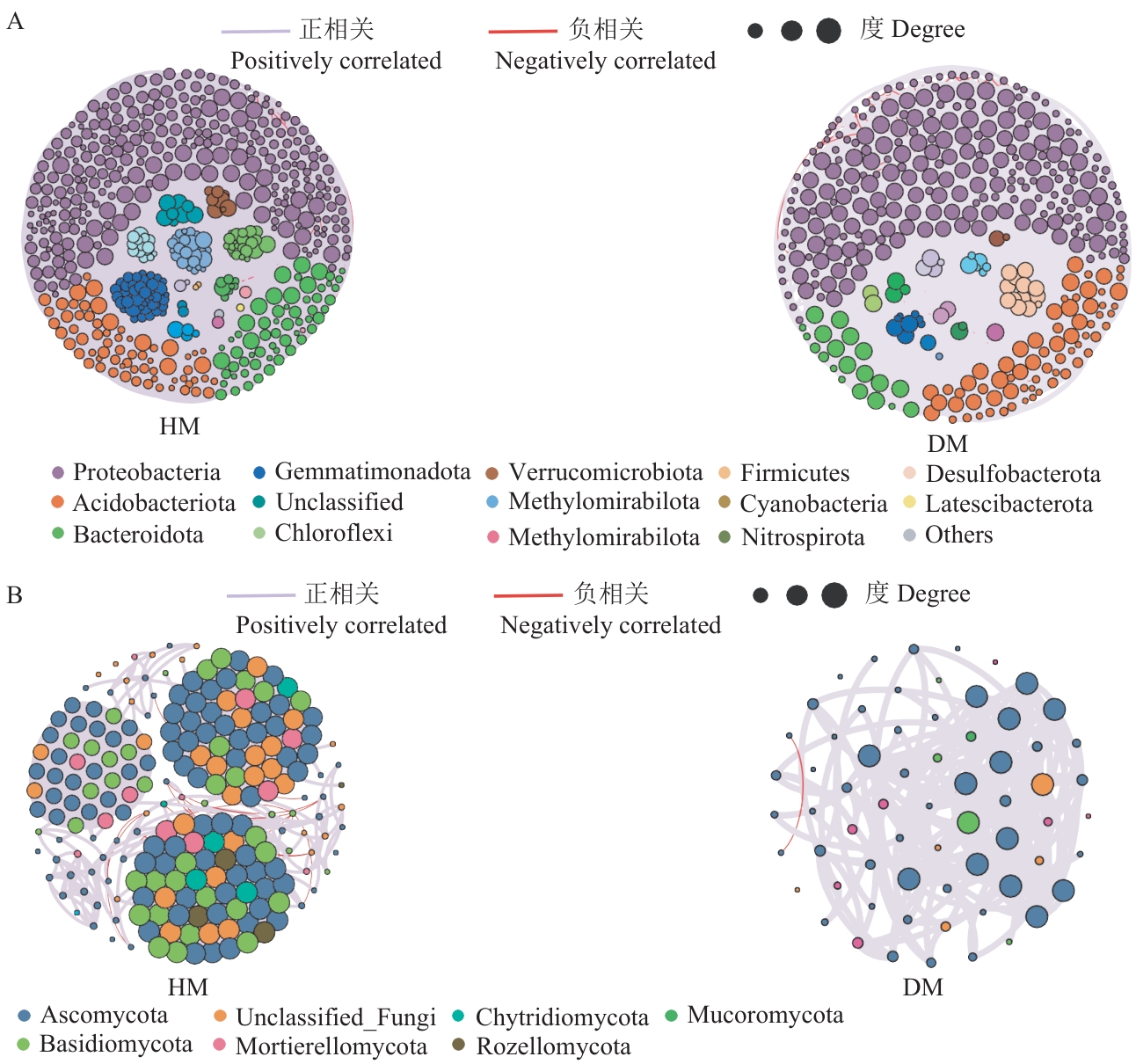
Fig. 7 Co-occurrence network of bacteria (A) and fungi (B) in the soils growing Morchella spp.
网络性质 Network properties | 细菌 Bacteria | 真菌 Fungi | ||
|---|---|---|---|---|
| 健康 HM | 患病 DM | 健康 HM | 患病 DM | |
| 平均度Average degree | 37.28 | 35.83 | 37.28 | 7.046 |
| 模块系数Modularity index | 1 | 0.76 | 0.65 | 0.56 |
| 总节点Total nodes | 562 | 386 | 209 | 65 |
| 总边Total edges | 10 515 | 6 530 | 3 896 | 164 |
| 正连接Positive edges | 10 076 | 6 402 | 3 881 | 162 |
| 负连接Negative edges | 439 | 128 | 15 | 2 |
Table 6 Topological properties of co-occurrence networks of bacterial and fungal communities in the soils growing healthy and diseased Morchella spp.
网络性质 Network properties | 细菌 Bacteria | 真菌 Fungi | ||
|---|---|---|---|---|
| 健康 HM | 患病 DM | 健康 HM | 患病 DM | |
| 平均度Average degree | 37.28 | 35.83 | 37.28 | 7.046 |
| 模块系数Modularity index | 1 | 0.76 | 0.65 | 0.56 |
| 总节点Total nodes | 562 | 386 | 209 | 65 |
| 总边Total edges | 10 515 | 6 530 | 3 896 | 164 |
| 正连接Positive edges | 10 076 | 6 402 | 3 881 | 162 |
| 负连接Negative edges | 439 | 128 | 15 | 2 |
| 11 | 刘建明, 冯吉昌, 吴之涛, 等. 河西地区羊肚菌白霉病病原鉴定及生物学特性研究 [J]. 北方园艺, 2023(17): 116-123. |
| Liu JM, Feng JC, Wu ZT, et al. Study on pathogen identification and biological morel of Morchella white mold disease in Hexi area [J]. North Hortic, 2023(17): 116-123. | |
| 12 | Sun JZ, Yu S, Lu YZ, et al. Proposal of a new family Pseudodiploösporeaceae fam. nov. (Hypocreales) based on phylogeny of Diploöspora longispora and Paecilomyces penicillatus [J]. Mycology, 2022, 14(1): 60-73. |
| 13 | Masaphy S. First report on Purpureocillium lilacinum infection of indoor-cultivated morel primordia [J]. Agriculture, 2022, 12(5): 695. |
| 14 | Zhu XT, Ma KL, Sun MY, et al. Isolation and identification of pathogens of Morchella sextelata bacterial disease [J]. Front Microbiol, 2023, 14: 1231353. |
| 15 | Yu FM, Jayawardena RS, Luangharn T, et al. Species diversity of fungal pathogens on cultivated mushrooms: a case study on morels (Morchella, Pezizales) [J]. Fungal Divers, 2024, 125(1): 157-220. |
| 16 | He XL, Peng WH, Miao RY, et al. White mold on cultivated morels caused by Paecilomyces penicillatus [J]. FEMS Microbiol Lett, 2017, 364(5). DOI:10.1093/femsle/fnx037 . |
| 17 | 余苗, 尹琪, 何培新. 羊肚菌白腐病病原菌的分离与鉴定 [J]. 北方园艺, 2020(7): 142-145. |
| Yu M, Yin Q, He PX. Isolation and identification of pathogen of morel white rot [J]. North Hortic, 2020(7): 142-145. | |
| 18 | 陈诚, 李强, 黄文丽, 等. 羊肚菌白霉病发生对土壤真菌群落结构的影响 [J]. 微生物学通报, 2017, 44(11): 2652-2659. |
| Chen C, Li Q, Huang WL, et al. Effects of Morchella white mold disease on soil fungal community structure [J]. Microbiol China, 2017, 44(11): 2652-2659. | |
| 19 | 孟庆国, 赵英同. 栽培羊肚菌常见病虫害及预防措施 [J]. 食用菌, 2021, 43(6): 66-67. |
| Meng QG, Zhao YT. Common pests and diseases of cultivated Morchella and their preventive measures [J]. Edible Fungi, 2021, 43(6): 66-67. | |
| 20 | 米其利, 李雪梅, 管莹, 等. 高通量测序在食品微生物生态学研究中的应用 [J]. 食品科学, 2016, 37(23): 302-308. |
| 1 | 杜习慧, 赵琪, 杨祝良. 羊肚菌的多样性、演化历史及栽培研究进展 [J]. 菌物学报, 2014, 33(2): 183-197. |
| Du XH, Zhao Q, Yang ZL. Diversity, evolutionary history and cultivation of morels: a review [J]. Mycosystema, 2014, 33(2): 183-197. | |
| 2 | 熊川, 黄文丽, 金鑫, 等. 一种羊肚菌源多肽MIP-16的分离纯化及其神经保护活性 [J]. 天然产物研究与开发, 2021, 33(9): 1519-1526. |
| Xiong C, Huang WL, Jin X, et al. Isolation and purification of a novel peptide from the fruiting bodies of Morchella importuna and its neuroprotective effect [J]. Nat Prod Res Dev, 2021, 33(9): 1519-1526. | |
| 3 | Wang DD, Yin ZQ, Ma LK, et al. Polysaccharide MCP extracted from Morchella esculenta reduces atherosclerosis in LDLR-deficient mice [J]. Food Funct, 2021, 12(11): 4842-4854. |
| 4 | Ramya H, Ravikumar KS, Fathimathu Z, et al. Morel mushroom, Morchella from Kashmir Himalaya: a potential source of therapeutically useful bioactives that possess free radical scavenging, anti-inflammatory, and arthritic edema-inhibiting activities [J]. Drug Chem Toxicol, 2022, 45(5): 2014-2023. |
| 5 | Du XH, Wu DM, He GQ, et al. Six new species and two new records of Morchella in China using phylogenetic and morphological analyses [J]. Mycologia, 2019, 111(5): 857-870. |
| 6 | 武冬梅, 李先义, 高能, 等. 采用多基因联合方法鉴定新疆野生羊肚菌 [J]. 分子植物育种, 2022, 20(7): 2420-2427. |
| Wu DM, Li XY, Gao N, et al. Taxonomic identification of wild Morchella in Xinjiang based on multigene [J]. Mol Plant Breed, 2022, 20(7): 2420-2427. | |
| 7 | 蔡英丽, 马晓龙, 路等学, 等. 野生羊肚菌Mel-21的系统发育分析和驯化 [J]. 食用菌学报, 2020, 27(3): 23-29. |
| Cai YL, Ma XL, Lu DX, et al. Phylogenetic analysis and domestication of wild morel Mel -21 [J]. Acta Edulis Fungi, 2020, 27(3): 23-29. | |
| 8 | 李建英, 华蓉, 孙达锋, 等. 羊肚菌白霉病病原菌及病害样地土壤真菌群落结构研究 [J]. 中国食用菌, 2022, 41(10): 50-54. |
| 20 | Mi QL, Li XM, Guan Y, et al. Application of high-throughput sequencing in food microbial ecology: a review [J]. Food Sci, 2016, 37(23): 302-308. |
| 21 | 卓娜, 伊丽, 浩斯娜, 等. 基于16S rRNA基因序列分析法比较苏尼特双峰驼和阿拉善双峰驼自然发酵酸驼乳的微生物多样性 [J]. 微生物学报, 2019, 59(10): 1948-1959. |
| Zhuo N, Yi L, Hao SN, et al. Application of 16S rRNA high-throughput sequencing for comparative study of the microbial diversity of traditional fermented Bactrian camel milk from Alxa Bactrian camel and Sonid Bactrian camel [J]. Acta Microbiol Sin, 2019, 59(10): 1948-1959. | |
| 22 | 吴振强, 戴瑞卿, 赖宝春, 等. 健康与感染枯萎病辣椒植株根际土壤真菌群落结构与多样性 [J]. 现代农业科技, 2020(7): 184-187. |
| Wu ZQ, Dai RQ, Lai BC, et al. Fungus community structure and diversity of rhizosphere soil of healthy and Fusarium wilt chilli plants [J]. Mod Agric Sci Technol, 2020(7): 184-187. | |
| 23 | Santhanam R, Luu VT, Weinhold A, et al. Native root-associated bacteria rescue a plant from a sudden-wilt disease that emerged during continuous cropping [J]. Proc Natl Acad Sci U S A, 2015, 112(36): E5013-E5020. |
| 24 | Bakker PAHM, Doornbos RF, Zamioudis C, et al. Induced systemic resistance and the rhizosphere microbiome [J]. Plant Pathol J, 2013, 29(2): 136-143. |
| 25 | 彭博, 边银丙, 龚钰华, 等. 大田栽培羊肚菌的病害及其综合防控技术 [J]. 食药用菌, 2024, 32(2): 129-135. |
| Peng B, Bian YB, Gong YH, et al. Diseases of Morchella and their comprehensive prevention and control techniques [J]. Edible Med Mushrooms, 2024, 32(2): 129-135. | |
| 26 | 鲍士旦. 土壤农化分析 [M]. 3版. 北京: 中国农业出版社, 2000. |
| Bao SD. Soil and agricultural chemistry analysis [M]. 3rd ed. Beijing: China Agriculture Press, 2000. | |
| 27 | 关松荫. 土壤酶及其研究法 [M]. 北京: 农业出版社, 1986. |
| 8 | Li JY, Hua R, Sun DF, et al. Research on white mold disease on Morchella spp. and fungal community structure of soil samples [J]. Edible Fungi China, 2022, 41(10): 50-54. |
| 9 | 苏文英, 刘晓梅, 纪伟, 等. 羊肚菌白霉病病原鉴定及生物学特性研究 [J]. 浙江农业科学, 2023, 64(1): 204-208. |
| Su WY, Liu XM, Ji W, et al. Pathogen identification and biological characteristics of Morchella esculenta [J]. J Zhejiang Agric Sci, 2023, 64(1): 204-208. | |
| 10 | Dong W, Chen BS, Zhang R, et al. Identification and characterization of peptaibols as the causing agents of Pseudodiploöspora longispora infecting the edible mushroom Morchella [J]. J Agric Food Chem, 2023, 71(47): 18385-18394. |
| 27 | Guan SY. Soil enzyme and its research method [M]. Beijing: Agriculture Press, 1986. |
| 28 | Li JR, Chen XZ, Li SM, et al. Variations of rhizospheric soil microbial communities in response to continuous Andrographis paniculata cropping practices [J]. Bot Stud, 2020, 61(1): 18. |
| 29 | Huang WJ, Sun DL, Fu JT, et al. Effects of continuous sugar beet cropping on rhizospheric microbial communities [J]. Genes, 2019, 11(1): 13. |
| 30 | Edgar RC. UPARSE: highly accurate OTU sequences from microbial amplicon reads [J]. Nat Methods, 2013, 10(10): 996-998. |
| 31 | Bokulich NA, Subramanian S, Faith JJ, et al. Quality-filtering vastly improves diversity estimates from Illumina amplicon sequencing [J]. Nat Methods, 2013, 10(1): 57-59. |
| 32 | Wang Q, Garrity GM, Tiedje JM, et al. Naive Bayesian classifier for rapid assignment of rRNA sequences into the new bacterial taxonomy [J]. Appl Environ Microbiol, 2007, 73(16): 5261-5267. |
| 33 | Quast C, Pruesse E, Yilmaz P, et al. The SILVA ribosomal RNA gene database project: improved data processing and web-based tools [J]. Nucleic Acids Res, 2013, 41(Database issue): D590-D596. |
| 34 | Kõljalg U, Henrik Nilsson R, Abarenkov K, et al. Towards a unified paradigm for sequence-based identification of fungi [J]. Mol Ecol, 2013, 22(21): 5271-5277. |
| 35 | 姚丽娟, 田春丽, 王立河, 等. 设施西瓜连作土壤生化性质及微生物群落变化 [J]. 中国土壤与肥料, 2024(3): 70-78. |
| Yao LJ, Tian CL, Wang LH, et al. Changes of soil biochemical properties and microbial community in continuous cropping of watermelon under greenhouse cultivation [J]. Soils Fertil Sci China, 2024(3): 70-78. | |
| 36 | Houfani AA, Větrovský T, Navarrete OU, et al. Cellulase-hemicellulase activities and bacterial community composition of different soils from Algerian ecosystems [J]. Microb Ecol, 2019, 77(3): 713-725. |
| 37 | 黄海莉, 宗宁, 何念鹏, 等. 青藏高原高寒草甸不同海拔土壤酶化学计量特征 [J]. 应用生态学报, 2019, 30(11): 3689-3696. |
| Huang HL, Zong N, He NP, et al. Characteristics of soil enzyme stoichiometry along an altitude gradient on Qinghai-Tibet Pla-teau alpine meadow, China [J]. Chin J Appl Ecol, 2019, 30(11): 3689-3696. | |
| 38 | 赵娟, 贾卫国, 刘伟成, 等. 草莓灰霉病菌拮抗放线菌的筛选及活性测定 [J]. 北方园艺, 2018(4): 59-65. |
| Zhao J, Jia WG, Liu WC, et al. Screening of antagonistic actinomycete against strawberry grey mould and activity determination of its fermentation broth [J]. North Hortic, 2018(4): 59-65. | |
| 39 | 边雪廉, 岳中辉, 焦浩, 等. 土壤酶对土壤环境质量指示作用的研究进展 [J]. 土壤, 2015, 47(4): 634-640. |
| Bian XL, Yue ZH, Jiao H, et al. Soil enzyme indication on soil environmental quality: a review [J]. Soils, 2015, 47(4): 634-640. | |
| 40 | 林睿. 土壤链霉菌拮抗致病疫霉及其对植物促生特性的研究 [D]. 呼和浩特: 内蒙古农业大学, 2019. |
| Lin R. Antagonism of Streptomyces terrestris against Phytophthora infestans and its characteristics of promoting plant growth [D]. Hohhot: Inner Mongolia Agricultural University, 2019. | |
| 41 | 何国兴, 宋建超, 温雅洁, 等. 不同根瘤菌肥对紫花苜蓿生产力及土壤肥力的综合影响 [J]. 草业学报, 2020, 29(5): 109-120. |
| He GX, Song JC, Wen YJ, et al. Effects of different Rhizobium fertilizers on alfalfa productivity and soil fertility [J]. Acta Prataculturae Sin, 2020, 29(5): 109-120. | |
| 42 | Tian XL, Wang DD, Mao ZC, et al. Infection of Plasmodiophora brassicae changes the fungal endophyte community of tumourous stem mustard roots as revealed by high-throughput sequencing and culture-dependent methods [J]. PLoS One, 2019, 14(6): e0214975. |
| 43 | 刘海洋, 姚举, 张仁福, 等. 黄萎病不同发生程度棉田中土壤微生物多样性 [J]. 生态学报, 2018, 38(5): 1619-1629. |
| Liu HY, Yao J, Zhang RF, et al. Analysis of soil microbial diversity in cotton fields differing in occurrence of cotton Verticillium wilt in Xinjiang [J]. Acta Ecol Sin, 2018, 38(5): 1619-1629. | |
| 44 | 张丽娟, 曲继松, 郭文忠, 等. 微生物菌肥对黄河上游地区设施土壤微生物及酶活性的影响 [J]. 中国土壤与肥料, 2014(5): 32-36, 99. |
| Zhang LJ, Qu JS, Guo WZ, et al. Effects of the microbial fertilizers on microorganism and enzymic activity in greenhouse soil on upper reaches of the Yellow River [J]. Soil Fertil Sci China, 2014(5): 32-36, 99. | |
| 45 | 张雪, 张学学, 胡鑫, 等. 皂角发酵物对红托竹荪病害防治及土壤主要微生物群落影响 [J]. 菌物学报, 2022, 41(4): 618-629. |
| Zhang X, Zhang XX, Hu X, et al. Effects of Gleditsia sinensis fermentation product on disease control and main soil microbial community of Dictyophora rubrovolvata [J]. Mycosystema, 2022, 41(4): 618-629. | |
| 46 | 姜艳鹏, 胡振华, 张翠静, 等. 枯草芽孢杆菌J22拮抗姜瘟阴沟肠杆菌的效果与机理研究 [J]. 江苏农业科学, 2023, 51(2): 125-134. |
| Jiang YP, Hu ZH, Zhang CJ, et al. Antagonistic effect and mechanism of Bacillus subtilis J22 against Enterobacter cloacae in ginger blast [J]. Jiangsu Agric Sci, 2023, 51(2): 125-134. | |
| 47 | Ujvári G, Turrini A, Avio L, et al. Possible role of arbuscular mycorrhizal fungi and associated bacteria in the recruitment of endophytic bacterial communities by plant roots [J]. Mycorrhiza, 2021, 31(5): 527-544. |
| 48 | Rhee SY, Mutwil M. Towards revealing the functions of all genes in plants [J]. Trends Plant Sci, 2014, 19(4): 212-221. |
| 49 | Mondo SJ, Jiménez DJ, Hector RE, et al. Genome expansion by allopolyploidization in the fungal strain Coniochaeta 2T2.1 and its exceptional lignocellulolytic machinery [J]. Biotechnol Biofuels, 2019, 12: 229. |
| 50 | 黄慧, 张晓勇, 郑欢, 等. 羊肚菌菌盖干腐病病原菌鉴定及培养特性研究 [J]. 植物保护, 2022, 48(1): 66-72. |
| Huang H, Zhang XY, Zheng H, et al. Identification and cultural characterization of Diploöspora longispora associated with Pileus rot disease on cultivated morel [J]. Plant Prot, 2022, 48(1): 66-72. | |
| 51 | 韩梦颖, 王雨桐, 高丽, 等. 降解秸秆微生物及秸秆腐熟剂的研究进展 [J]. 南方农业学报, 2017, 48(6): 1024-1030. |
| Han MY, Wang YT, Gao L, et al. Straw degradation microorganism and straw-decomposing inoculant: a review [J]. J South Agric, 2017, 48(6): 1024-1030. | |
| 52 | Mahdi LK, Miyauchi S, Uhlmann C, et al. The fungal root endophyte Serendipita vermifera displays inter-Kingdom synergistic beneficial effects with the microbiota in Arabidopsis thaliana and barley [J]. ISME J, 2022, 16(3): 876-889. |
| [1] | WEN Shao-fu, JIANG Run-hai, ZHU Cheng-qiang, ZHANG Mei, YU Xiao-qin, YANG Jie-hui, YANG Xiao-rong, HOU Xiu-li. Effects of Phosphate-solubilizing Bacteria on the Rhizosphere Soil Properties and Microbial Community Structure of Maize in Lead-contaminated Soil [J]. Biotechnology Bulletin, 2024, 40(9): 225-237. |
| [2] | LI Xue, LI Rong-ou, KONG Mei-yi, HUANG Lei. The Growth Promoting Effect of Bacillus amyloliquefaciens SQ-2 on Rice [J]. Biotechnology Bulletin, 2024, 40(2): 109-119. |
| [3] | XIE Tian-peng, ZHANG Jia-ning, DONG Yong-jun, ZHANG Jian, JING Ming. Effect of Premature Bolting on the Rhizosphere Soil Microenvironment of Angelica sinensis [J]. Biotechnology Bulletin, 2023, 39(7): 206-218. |
| [4] | ZHAO Zhong-juan, YANG Kai, HU Jin-dong, WEI Yan-li, LI Ling, XU Wei-sheng, LI Ji-shun. Effects of Trichoderma harzianum ST02 on the Growth of Peppermint and Physicochemical Properties of Root Zone Soil Under Salt Stress [J]. Biotechnology Bulletin, 2022, 38(7): 224-235. |
| [5] | YAN Hui-lin, LU Guang-xin, DENG Ye, GU Song-song, YAN Cheng-liang, MA Kun, ZHAO Yang-an, ZHANG Hai-juan, WANG Ying-cheng, ZHOU Xue-li, DOU Sheng-yun. Effects of Rhizobium Seed Dressing on the Soil Microbial Community of Grass-legume Mixtures in Alpine Regions [J]. Biotechnology Bulletin, 2022, 38(10): 204-215. |
| [6] | WU Qi-man, TIAN Shi-han, LI Yun-ye, PAN Ying-jie, ZHANG Ying. Effects of Microbial Fertilizer on Cucumis sativus L. Growth,Yield and Quality [J]. Biotechnology Bulletin, 2022, 38(1): 125-131. |
| [7] | LIU Ji-ai, SHU Ai-ping, LIU Guang-rong, LI Zu-zhang, LIU Zeng-bing, GAO Zheng. Research Progress on Effect of Fertilization on Soil Properties and Microbiome [J]. Biotechnology Bulletin, 2019, 35(9): 21-28. |
| Viewed | ||||||
|
Full text |
|
|||||
|
Abstract |
|
|||||
