







Biotechnology Bulletin ›› 2025, Vol. 41 ›› Issue (4): 312-322.doi: 10.13560/j.cnki.biotech.bull.1985.2024-0645
ZHAO Chun-duo1( ), LI Yu-e2, LIU You-jie2, WANG Xin-hang3, ZHAO Wei3, HUANG Yong-cheng3, LI Hu-lin1, JI Wen-xiu1()
Received:2024-07-07
Online:2025-04-26
Published:2025-04-25
Contact:
JI Wen-xiu
E-mail:2735175249@qq.com;jwxlyq@ybu.edu.cn
ZHAO Chun-duo, LI Yu-e, LIU You-jie, WANG Xin-hang, ZHAO Wei, HUANG Yong-cheng, LI Hu-lin, JI Wen-xiu. Effects of Rotating Cropping and Continuous Cropping on Soil Nutrients, Enzyme Activities and Microbial Community Structure of Rhizosphere Soil in Tobacco[J]. Biotechnology Bulletin, 2025, 41(4): 312-322.
目的基因 Target gene | 引物 Primer | 引物序列 Primer sequence (5′‒3′) |
|---|---|---|
| 16S rRNA(V3+V4) | 338F | ACTCCTACGGGAGGCAGCA |
| 806R | GGACTACHVGGGTWTCTAAT | |
| ITS | ITS1F | CTTGGTCATTTAGAGGAAGTAA |
| ITS4 | TCCTCCGCTTATTGATATGC |
Table 1 Amplified primers for soil bacteria and fungi
目的基因 Target gene | 引物 Primer | 引物序列 Primer sequence (5′‒3′) |
|---|---|---|
| 16S rRNA(V3+V4) | 338F | ACTCCTACGGGAGGCAGCA |
| 806R | GGACTACHVGGGTWTCTAAT | |
| ITS | ITS1F | CTTGGTCATTTAGAGGAAGTAA |
| ITS4 | TCCTCCGCTTATTGATATGC |
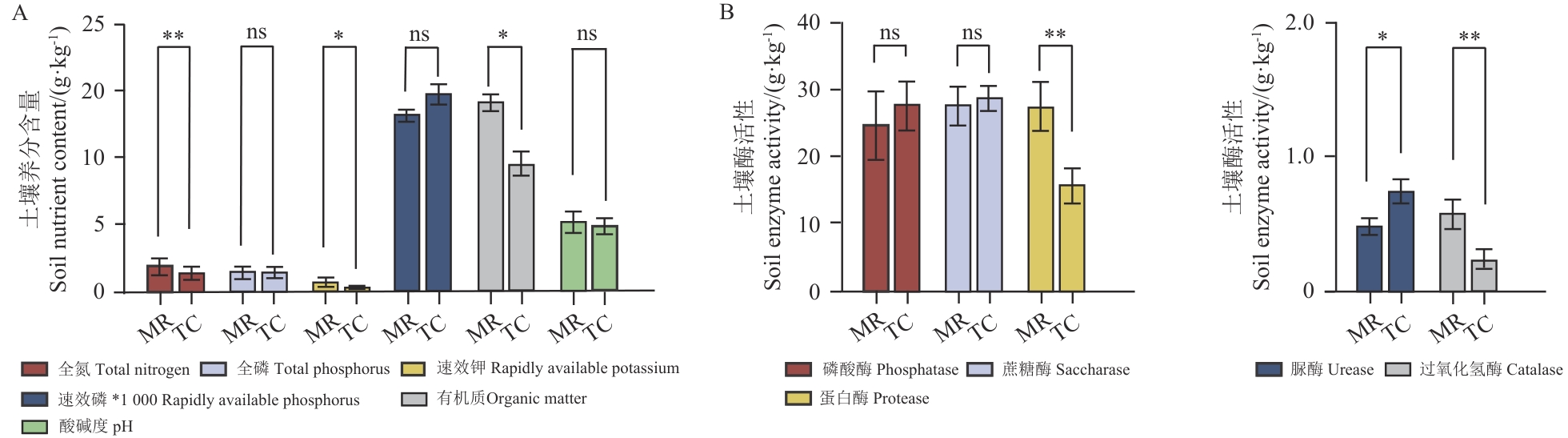
Fig. 1 Differences in soil nutrients and enzyme activities under different planting patternsMR: Corn-tobacco rotation. TC: Tobacco continuous cropping. *: P<0.05; **: P<0.01. The same below
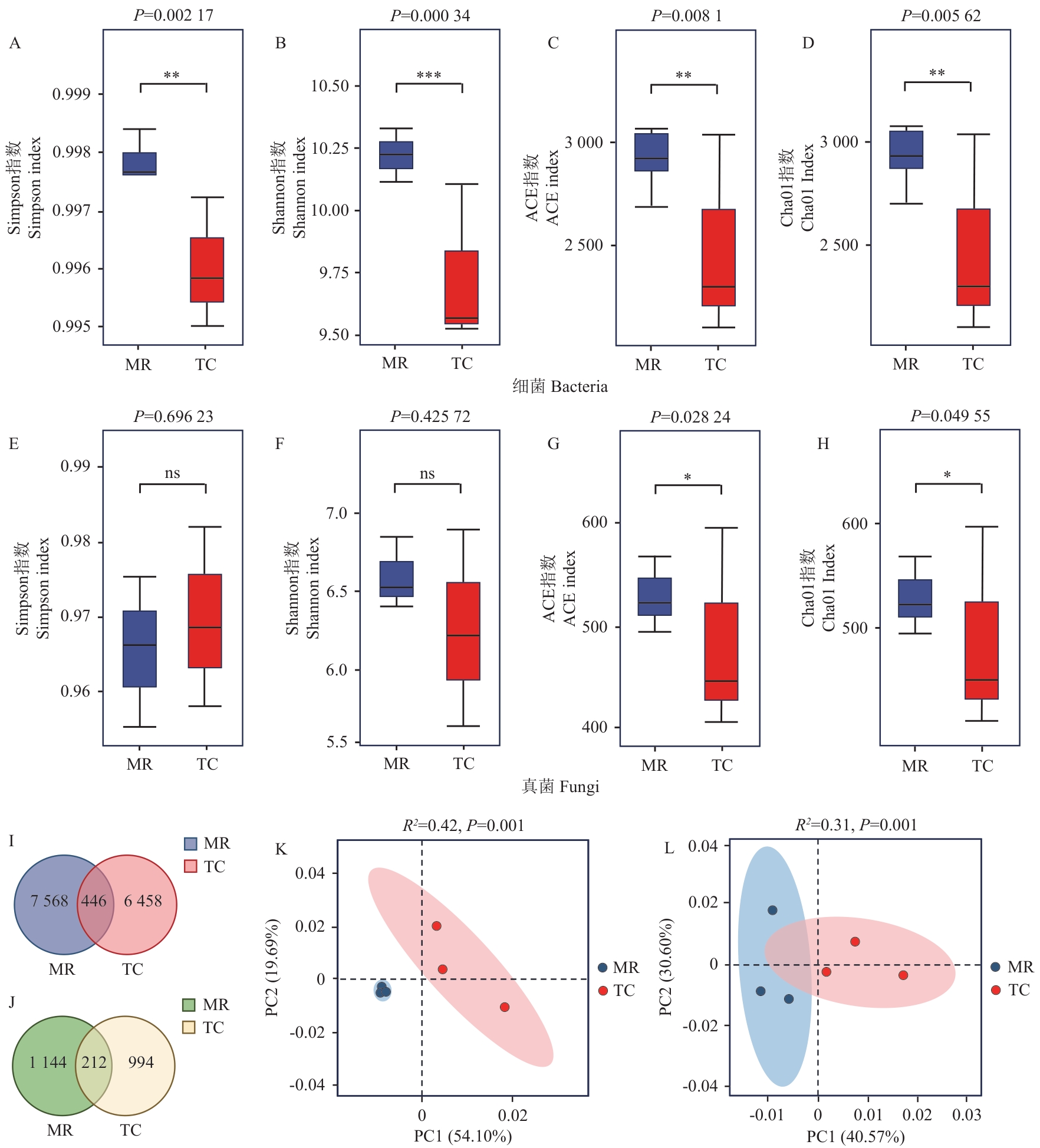
Fig. 2 Diversity of bacterial and fungal communities in rhizosphere soil under different planting patternsA: Bacterial Simpson index. B: Bacterial Shannon index. C: Bacterial Ace index. D: Bacterial Chao1 index. E: Fungal Simpson index. F: Fungal Shannon index. G: Fungal ACE index. H: Fungal Chao1 index. I: Bacterial Venn diagram. J: Fungi Venn diagram. K: Bacteria PCA analysis. l: Fungal PCA analysis. ***: P<0.001
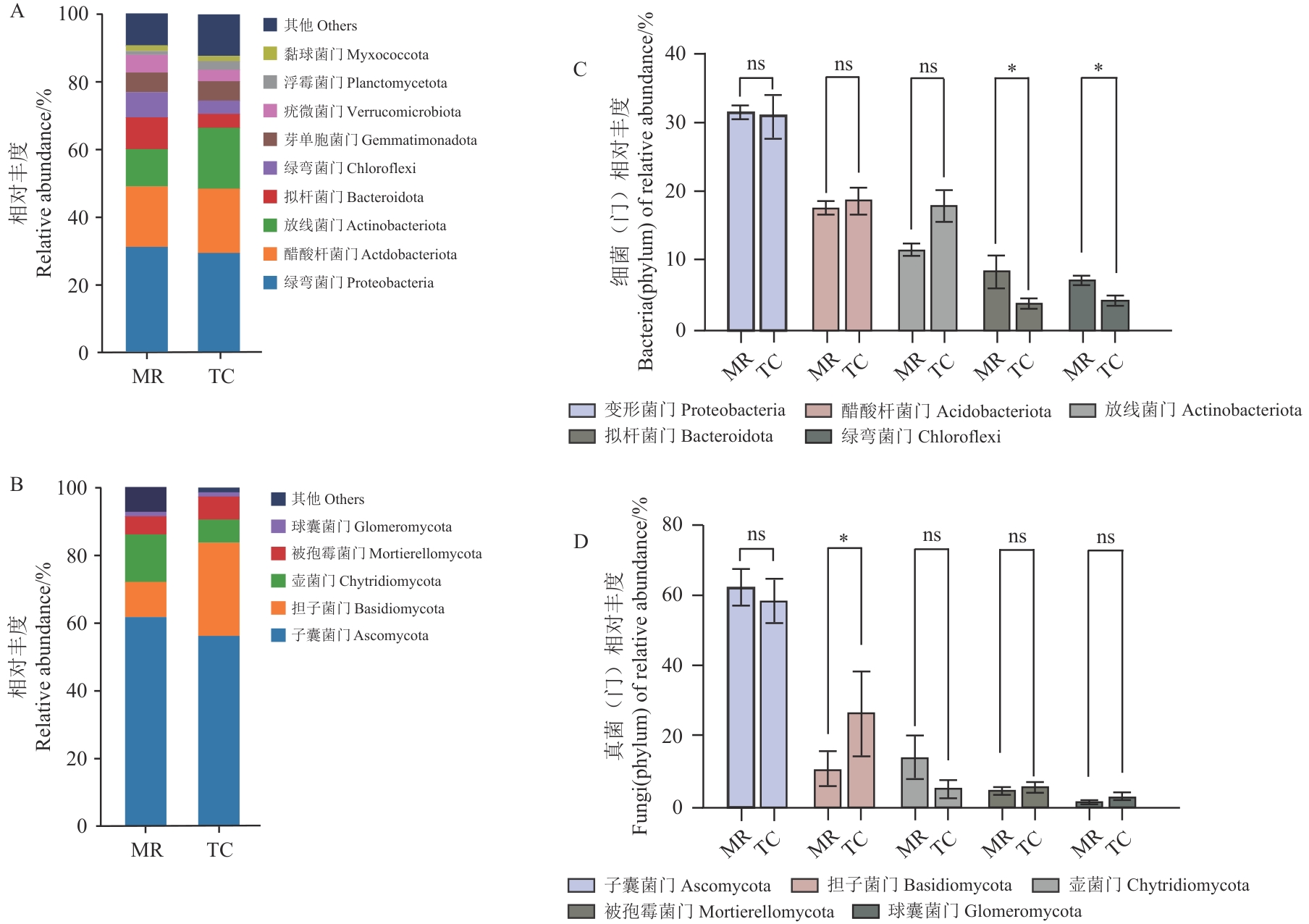
Fig. 3 Relative abundance of bacteria and fungi and differential species at the phylum level under different planting patternsA: Relative abundance of bacteria. B: Relative abundance of fungi. C: Bacterial differential species. D: Fungal differential species
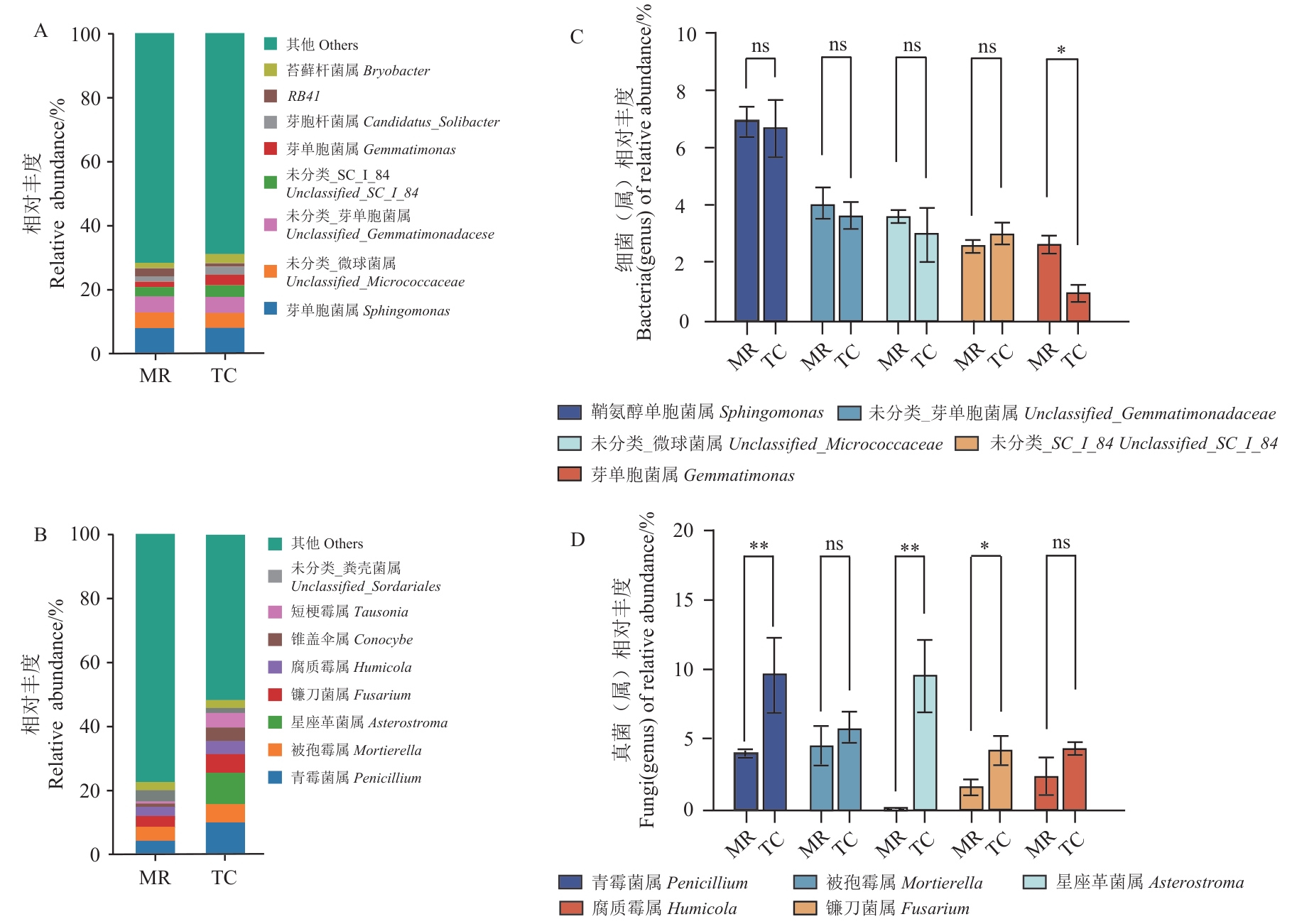
Fig. 4 Relative abundance of bacteria and fungi and differential species at the subordinate levels of different planting patternsA: Relative abundance of bacteria. B: Relative abundance of fungi. C: Bacterial differential species. D: Fungal differential species
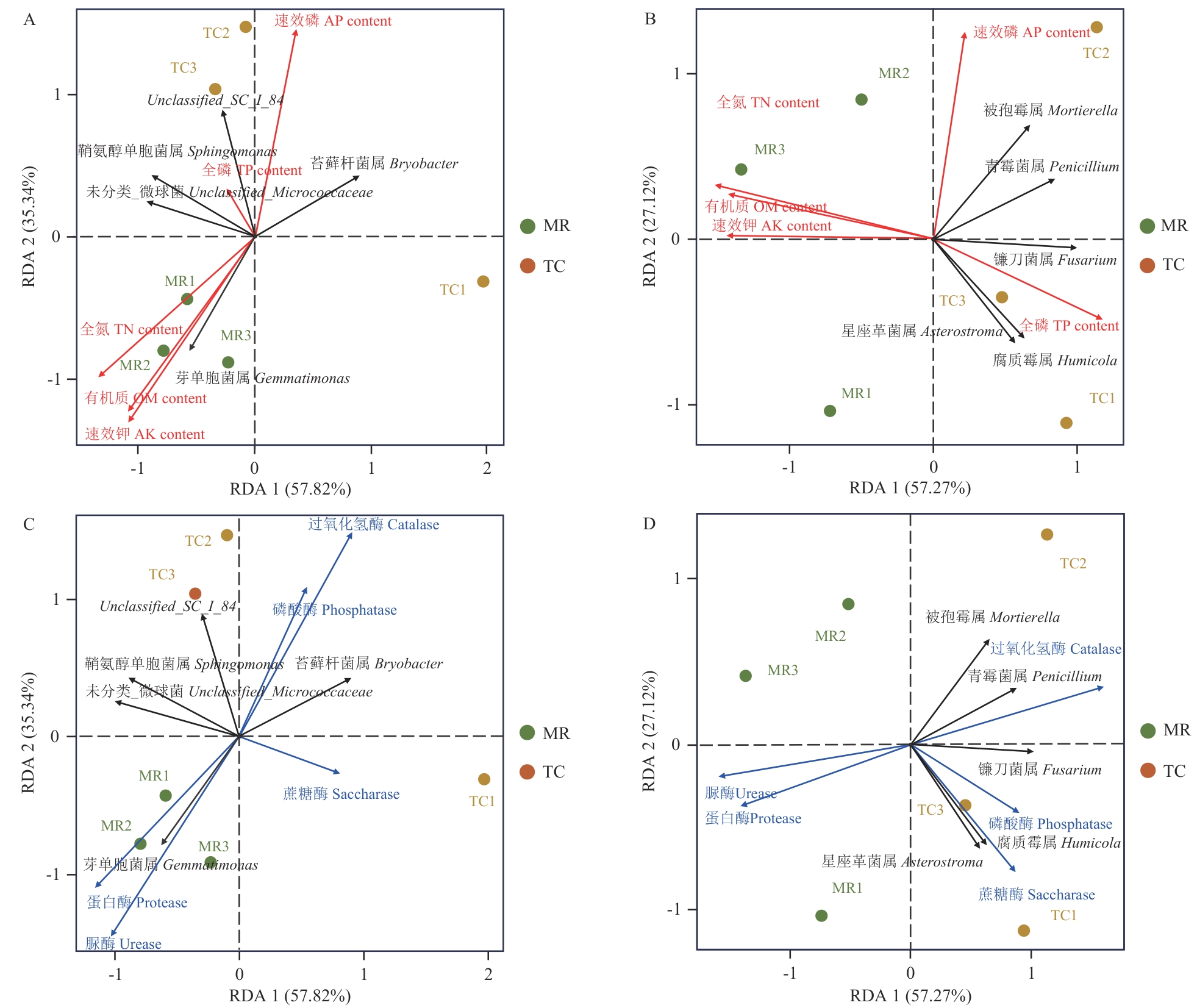
Fig. 5 Relationship between environmental factors and microbial communities under different planting patternsA: Redundancy analysis of bacterial level and soil nutrients. B: Redundant analysis of fungal genus level and soil nutrients. C: Redundancy analysis of bacterial level and enzyme activity. D: Redundant analysis of fungal genus level and enzyme activity
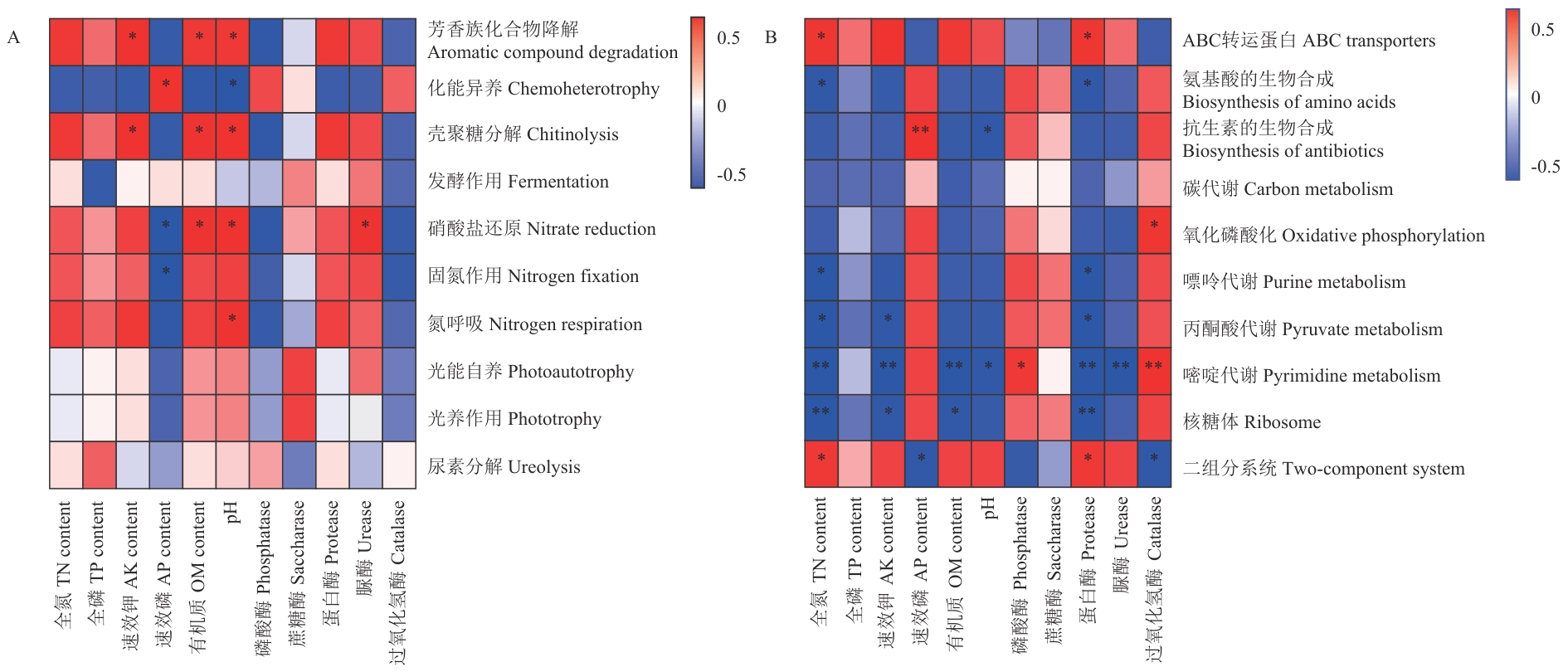
Fig. 6 Correlation analysis between microbial functional composition and soil propertiesA: Bacteria. B: Fungus
| 1 | 闫新甫, 孔劲松, 罗安娜, 等. 近20年全国烤烟产区种植规模消长变化分析 [J]. 中国烟草科学, 2021, 42(4): 92-101. |
| Yan XF, Kong JS, Luo AN, et al. Changes in planting scale of flue-cured tobacco production regions in China in recent 20 years [J]. Chin Tob Sci, 2021, 42(4): 92-101. | |
| 2 | 王鹏. 烟草连作障碍及防治研究进展 [J]. 安徽农学通报, 2023, 29(12): 24-26, 32. |
| Wang P. Research progress on obstacles and control of tobacco continuous cropping [J]. Anhui Agric Sci Bull, 2023, 29(12): 24-26, 32. | |
| 3 | 陈燕, 王铎, 李杰, 等. 烟秆生物质炭基肥对连作烤烟生长及质量的影响 [J]. 山东农业科学, 2023, 55(6): 129-135. |
| Chen Y, Wang D, Li J, et al. Effects of tobacco stem biochar-based fertilizer on growth and quality of continuous cropping flue-cured tobacco [J]. Shandong Agric Sci, 2023, 55(6): 129-135. | |
| 4 | 孙海航, 官会林, 王旭, 等. 生物炭对三七连作土壤性质及真菌群落的影响 [J]. 生物技术通报, 2023, 39(2): 221-231. |
| Sun HH, Guan HL, Wang X, et al. Effects of biochar on the soil properties and fungal community structure under continuous cropping of Panax notoginseng [J]. Biotechnol Bull, 2023, 39(2): 221-231. | |
| 5 | Bai YX, Wang G, Cheng YD, et al. Soil acidification in continuously cropped tobacco alters bacterial community structure and diversity via the accumulation of phenolic acids [J]. Sci Rep, 2019, 9(1): 12499. |
| 6 | Chen D, Zhou YJ, Wang M, et al. Succession pattern in soil micro-ecology under tobacco (Nicotiana tabacum L.) continuous cropping circumstances in Yunnan province of Southwest China [J]. Front Microbiol, 2022, 12: 785110. |
| 7 | Chen YD, Yang L, Zhang LM, et al. Autotoxins in continuous tobacco cropping soils and their management [J]. Front Plant Sci, 2023, 14: 1106033. |
| 8 | Zhou FF, Pan YH, Zhang XL, et al. Accumulation patterns of tobacco root allelopathicals across different cropping durations and their correlation with continuous cropping challenges [J]. Front Plant Sci, 2024, 15: 1326942. |
| 9 | Xuan PX, Ma HK, Deng XP, et al. Microbiome-mediated alleviation of tobacco replant problem via autotoxin degradation after long-term continuous cropping [J]. Imeta, 2024, 3(2): e189. |
| 10 | 赵信林, 宁甲兴, 胡清湘, 等. 百合连作障碍成因及防治技术研究进展 [J]. 南方农业学报, 2023, 54(6): 1753-1761. |
| Zhao XL, Ning JX, Hu QX, et al. Causes and control techniques for continuous cropping obstacles of lily: a review [J]. J South Agric, 2023, 54(6): 1753-1761. | |
| 11 | Chen D, Wang M, Wang G, et al. Functional organic fertilizers can alleviate tobacco (Nicotiana tabacum L.) continuous cropping obstacle via ameliorating soil physicochemical properties and bacterial community structure [J]. Front Bioeng Biotechnol, 2022, 10: 1023693. |
| 12 | 任淑君, 李萌, 陈雅琼, 等. 酚酸降解菌的分离、鉴定及其减轻烟草连作障碍的效果研究 [J]. 云南大学学报: 自然科学版, 2024, 46(2): 392-400. |
| Ren SJ, Li M, Chen YQ, et al. Isolation and identification of phenolic acid degrading bacteria and their effectiveness in alleviating tobacco continuous cropping obstacles [J]. J Yunnan Univ Nat Sci Ed, 2024, 46(2): 392-400. | |
| 13 | 贾喜霞, 师桂英, 黄炜, 等. 土壤消毒剂配施微生物有机肥及生防菌剂缓解设施茄子连作障碍的作用效应微生物菌剂 [J]. 分子植物育种, 2020, 18(13): 4492-4498. |
| Jia XX, Shi GY, Huang W, et al. Soil disinfectant combined with microorganic agent to alleviate eggplant consecutive replant problems in greenhouse [J]. Mol Plant Breed, 2020, 18(13): 4492-4498. | |
| 14 | 周旭东, 韩天华, 申云鑫, 等. 4种轮作模式下长期连作烟田土壤微生态的响应特征 [J]. 中国农业科技导报, 2024, 26(3): 174-187. |
| Zhou XD, Han TH, Shen YX, et al. Response characteristics of soil microecology in long-term continuous cropping tobacco field under 4 rotation patterns [J]. J Agric Sci Technol, 2024, 26(3): 174-187. | |
| 15 | del Carmen A González-Chávez M, Aitkenhead-Peterson JA, Gentry TJ, et al. Soil microbial community, C, N, and P responses to long-term tillage and crop rotation [J]. Soil Tillage Res, 2010, 106(2): 285-293. |
| 16 | 杜洋洋, 包媛媛, 刘项宇, 等. 连作和轮作对云南三个马铃薯主栽品种根际土壤真菌群落结构的影响 [J]. 中国土壤与肥料, 2023(12): 58-69. |
| Du YY, Bao YY, Liu XY, et al. Effects of continuous cropping and rotation on fungal community structure in rhizosphere soil of three potato cultivars in Yunnan [J]. Soil Fertil Sci China, 2023(12): 58-69. | |
| 17 | 齐虹凌, 贺国强, 李恒全, 等. 轮作与连作对烤烟不同生育期根际土壤细菌群落结构的影响 [J]. 中国烟草学报, 2015, 21(5): 42-48. |
| Qi HL, He GQ, Li HQ, et al. Effects of rotational and continuous cropping on bacterial community structures in rhizospheric soil at different growth stages of flue-cured tobacco [J]. Acta Tabacaria Sin, 2015, 21(5): 42-48. | |
| 18 | Liu L, Miao Q, Guo YX, et al. Bacterial and fungal communities regulated directly and indirectly by tobacco-rape rotation promote tobacco production [J]. Front Microbiol, 2024, 15: 1418090. |
| 19 | 孟祥佳, 刘洋, 黎妍妍, 等. 烟草——荞麦轮作对烟草黑胫病防治及土壤微生态的调控作用 [J]. 南方农业学报, 2022, 53(6): 1525-1535. |
| Meng XJ, Liu Y, Li YY, et al. Effects of tobacco-buckwheat rotation on regulation of tobacco black shank prevention and control and soil microenvironment [J]. J South Agric, 2022, 53(6): 1525-1535. | |
| 20 | 钏有聪, 张立猛, 焦永鸽, 等. 大蒜与烤烟轮作对烟草黑胫病的防治效果及作用机理初探 [J]. 中国烟草学报, 2016, 22(5): 55-62. |
| Chuan YC, Zhang LM, Jiao YG, et al. Control effects of tobacco and garlic rotation on tobacco black shank and a preliminary study on the inhibition mechanism [J]. Acta Tabacaria Sin, 2016, 22(5): 55-62. | |
| 21 | 杨洋, 杨懿德, 贺小蓉, 等. 烟草‒玉米轮作对烟草病毒病的影响 [J]. 江苏农业科学, 2020, 48(12): 88-93. |
| Yang Y, Yang YD, He XR, et al. Effect of tobacco-corn rotation on tobacco virus disease [J]. Jiangsu Agric Sci, 2020, 48(12): 88-93. | |
| 22 | 刘鹏飞, 王晓琴, 张美茜, 等. 不同轮作模式对桔梗生长、根际土壤微生物及土壤酶活性的影响 [J]. 生物资源, 2024, 46(2): 126-133. |
| Liu PF, Wang XQ, Zhang MX, et al. Effects of different rotation patterns on the growth, rhizosphere soil microorganisms, and soil enzyme activities of Platycodon grandiflorum (Jacq.) A. DC [J]. Biotic Resour, 2024, 46(2): 126-133. | |
| 23 | 黄文洁, 李明. 广藿香-薄荷轮作和广藿香连作对其品质及其根际土壤微生态的影响 [J]. 西南农业学报, 2024, 37(2): 276-285. |
| Huang WJ, Li M. Effects of patchouli-mint rotation and patchouli continuous cropping on its quality and rhizosphere soil microecology [J]. Southwest China J Agric Sci, 2024, 37(2): 276-285. | |
| 24 | Man YC, Zhang H, Huang J, et al. Combined effect of tetracycline and copper ion on catalase activity of microorganisms during the biological phosphorus removal [J]. J Environ Manage, 2022, 304: 114218. |
| 25 | 孙子隽, 钟国兴, 张少搏, 等. 化肥减量配施有机肥对植烟土壤理化特性和微生物群落结构的影响 [J]. 华北农学报, 2024, 39(3): 146-158. |
| Sun ZJ, Zhong GX, Zhang SB, et al. Effects of fertilizer reduction combined with organic fertilizer on physicochemical properties and microbial community structure of tobacco-planting soil [J]. Acta Agric Boreali Sin, 2024, 39(3): 146-158. | |
| 26 | 彭佳, 官会林, 王豪吉, 等. 轮作滇重楼与滇黄精对三七连作土壤真菌群落的调节效应 [J]. 云南师范大学学报: 自然科学版, 2024, 44(2): 61-68. |
| Peng J, Guan HL, Wang HJ, et al. Regulatory effects of rotation of Paris Polyphylla var. Yunnanensis and Polygonatum kingianum on soil fungal communities under continuous cropping of Panax notoginseng [J]. J Yunnan Norm Univ Nat Sci Ed, 2024, 44(2): 61-68. | |
| 27 | 王文静, 刘亚军, 胡启国, 等. 不同地膜覆盖与施肥方式对土壤质量及甘薯生长发育的影响 [J]. 江苏农业科学, 2024, 52(10): 62-68. |
| Wang WJ, Liu YJ, Hu QG, et al. Effects of different mulching and fertilization methods on soil quality and sweet potato growth [J]. Jiangsu Agric Sci, 2024, 52(10): 62-68. | |
| 28 | Yan HL, Wu SL, Li P, et al. Tobacco crop rotation enhances the stability and complexity of microbial networks [J]. Front Microbiol, 2024, 15: 1416256. |
| 29 | 吴寿明, 高正锋, 白茂军, 等. 烟草黑胫病不同发病程度与根际微生物间的响应关系 [J]. 中国土壤与肥料, 2023(7): 223-231. |
| Wu SM, Gao ZF, Bai MJ, et al. Response between different incidence of tobacco black shank disease and rhizosphere microorganisms [J]. Soil Fertil Sci China, 2023(7): 223-231. | |
| 30 | 黄俊杰, 陆雅海. 土壤拟杆菌与梭菌分解多糖类有机物质的研究进展与展望 [J]. 微生物学通报, 2022, 49(3): 1147-1157. |
| Huang JJ, Lu YH. Decomposition of soil polymeric organic matter by bacteroidetes and clostridia: progress and perspectives [J]. Microbiol China, 2022, 49(3): 1147-1157. | |
| 31 | 郝晓芬, 王根全, 郭二虎, 等. 连作、轮作对谷子根际细菌群落结构的影响 [J]. 农业环境科学学报, 2022, 41(3): 585-596. |
| Hao XF, Wang GQ, Guo EH, et al. Effects of continuous cropping and rotation on rhizosphere bacterial community structure of millet [J]. J Agro Environ Sci, 2022, 41(3): 585-596. | |
| 32 | 姚宇恒, 李景峰, 南丽丽, 等. 铜镍复合胁迫对鹰嘴紫云英根际土壤细菌群落的影响 [J]. 中国草地学报, 2024, 46(4): 90-99. |
| Yao YH, Li JF, Nan LL, et al. Response of Astragalus cicer rhizosphere soil properties to combined copper and nickel stress [J]. Chin J Grassland, 2024, 46(4): 90-99. | |
| 33 | 吴元华, 王左斌, 刘志恒, 等. 我国烟草新病害——靶斑病 [J]. 中国烟草学报, 2006, 12(6): 22, 51. |
| Wu YH, Wang ZB, Liu ZH, et al. A new tobacco disease in China-target spot disease [J]. Acta Tabacaria Sin, 2006, 12(6): 22, 51. | |
| 34 | 马永杰. 鄱阳湖沙化土地不同植被恢复方式下的土壤细菌群落特征研究 [D]. 南昌: 江西师范大学, 2020. |
| Ma YJ. Study on the characteristics of soil bacterial community under different vegetation restoration methods in desertification land of Poyang Lake [D]. Nanchang: Jiangxi Normal University, 2020. | |
| 35 | 陈海念. 植烟土壤土传病害区土壤微生物生态特征变化及其影响因素分析 [D]. 贵阳: 贵州大学, 2020. |
| Chen HN. Changes of soil microbial ecological characteristics and its influencing factors in tobacco-growing soil loam-borne disease areas [D]. Guiyang: Guizhou University, 2020. | |
| 36 | 安婧婧, 沈瑞清. 立枯丝核菌拮抗青霉菌筛选及抑菌机制初步研究 [J]. 西北农业学报, 2015, 24(12): 159-163. |
| An JJ, Shen RQ. Isolation, screening and biocontrol mechanism of antagonistic Penicillium against Rhizoctonia solani [J]. Acta Agric Boreali Occidentalis Sin, 2015, 24(12): 159-163. | |
| 37 | 张岳平. 镰刀菌真菌毒素产生与调控机制研究进展 [J]. 生命科学, 2011, 23(3): 311-316. |
| Zhang YP. The research advance of biosynthesis and regulation mechanism on Fusarium mycotoxins [J]. Chin Bull Life Sci, 2011, 23(3): 311-316. | |
| 38 | 刘世良. 中国叉丝革菌属及近缘属的分类与系统发育研究 [D]. 北京: 北京林业大学, 2019. |
| Liu SL. Taxonomy and phylogenesis of Cladosporium and its related genus in China [D]. Beijing: Beijing Forestry University, 2019. | |
| 39 | 邓春英, 孟庆峰. 中国贵州药用真菌资源Ⅲ担子菌门红菇目 [J]. 贵州科学, 2019, 37(4): 1-4. |
| Deng CY, Meng QF. Checklist of medicinal fungi in Guizhou. Ⅲ. Russulales, Basidiomycota [J]. Guizhou Sci, 2019, 37(4): 1-4. | |
| 40 | 郑立伟, 赵阳阳, 王一冰, 等. 不同连作年限甜瓜种植土壤性质和微生物多样性 [J]. 微生物学通报, 2022, 49(1): 101-114. |
| Zheng LW, Zhao YY, Wang YB, et al. Soil properties and microbial diversity in the muskmelon fields after continuous cropping for different years [J]. Microbiol China, 2022, 49(1): 101-114. | |
| 41 | 凌爱芬, 肖丽霞, 孙延国, 等. 轮间套作种植模式消除烟草连作障碍的机理研究进展 [J]. 安徽农业科学, 2022, 50(24): 1-4, 9. |
| Ling AF, Xiao LX, Sun YG, et al. Research progress on the mechanism of rotation and intercropping mode to eliminate tobacco continuous cropping obstacles [J]. J Anhui Agric Sci, 2022, 50(24): 1-4, 9. | |
| 42 | 刘福童, 李茂森, 闫超超, 等. 烤烟连作条件下土壤微生物群落结构变化及驱动因素分析 [J]. 华中农业大学学报, 2023, 42(2): 139-146. |
| Liu FT, Li MS, Yan CC, et al. Changing characteristics and driving factors of soil microbial community structure under continuous cropping of flue-cured tobacco [J]. J Huazhong Agric Univ, 2023, 42(2): 139-146. |
| [1] | LU Yong-jie, XIA Hai-qian, LI Yong-ling, ZHANG Wen-jian, YU Jing, ZHAO Hui-na, WANG Bing, XU Ben-bo, LEI Bo. Cloning and Expression Analysis of AP2/ERF Transcription Factor NtESR2 in Nicotiana tabacum [J]. Biotechnology Bulletin, 2025, 41(4): 266-277. |
| [2] | JI Ying-tong, GAO Jia-ning, QIAN Meng-ying, PAN Ning, ZHANG Jun, CUI Hong, YAN Xiao-xiao. Function Study of NtMYC2 Gene on Tobacco Trichome Development [J]. Biotechnology Bulletin, 2025, 41(4): 278-288. |
| [3] | TONG De-li, ZHANG Xin, CHEN Jia-qing, HE Hai-sheng. Isolation of Endophytic Bacteria from Blueberry and Its Alleviative Effects on Brassica chinensis L. under Aluminum Stress [J]. Biotechnology Bulletin, 2025, 41(4): 302-311. |
| [4] | MA Yao-wu, ZHANG Qi-yu, YANG Miao, JIANG Cheng, ZHANG Zhen-yu, ZHANG Yi-lin, LI Meng-sha, XU Jia-yang, ZHANG Bin, CUI Guang-zhou, JIANG Ying. Screening, Indentification and Promotion Performance Investigation of Tobacco Growth-promoting Rhizobacteria [J]. Biotechnology Bulletin, 2025, 41(3): 271-281. |
| [5] | HAN Meng-qiao, WU Jiang, LI Li-hua, WANG Zhao-yi, DENG Xi, WEI Feng-jie, REN Min, SUN Yang-yang, LI Fu-xin. Establishment and Optimization of a Tobacco Chromosome Preparation System [J]. Biotechnology Bulletin, 2025, 41(3): 44-50. |
| [6] | XIANG Chun-fan, LI Le-song, WANG Juan, LIANG Yan-li, YANG Sheng-chao, LI Meng-fei, ZHAO Yan. Functional Identification and Expression Analysis of Cinnamonyl Alcohol Dehydrogenase AsCAD in Angelica sinensis [J]. Biotechnology Bulletin, 2025, 41(2): 295-308. |
| [7] | XIANG Bo-ka, ZHOU Zuan-zuan, FENG Jia-hui, XIA Chen, LI Qi, CHEN Chun. Isolation and Identification of a Fungus from Moldy Tobacco Leaf and Study on Its Mold-causing Factors [J]. Biotechnology Bulletin, 2025, 41(2): 321-330. |
| [8] | ZHANG Man-yu, DONG Jia-cheng, GOU Fu-fan, GONG Chao-hui, LIU Qian, SUN Wen-liang, KONG zhen, HAO Jie, WANG Min, TIAN Chao-guang. Cloning, Expression, Characterization and Application of the Pectin Esterase MtCE12-1 from Myceliophthora thermophila [J]. Biotechnology Bulletin, 2024, 40(9): 291-300. |
| [9] | YU Xin-lei, HE Jie-wang, LIN Guo-ping, LI Jin-hai, WANG Da-ai, YUAN Yue-bin, LIU Sheng-gao, LI Zhi-hao, TAO De-xin. Metabolome Difference Analysis of Fermented Cigar Tobacco Leaves in Summer and Winter [J]. Biotechnology Bulletin, 2024, 40(6): 260-270. |
| [10] | JIANG Wen-ping, RAN Qiu-ping, LIU Jia-shu, ZHANG Hui-min, ZHANG Di, JIANG Zheng-bing, LI Hua-nan. Effects of Carbohydrate-binding Modules on the Enzymatic Properties of Xylanase [J]. Biotechnology Bulletin, 2024, 40(5): 269-279. |
| [11] | PAN Ping-ping, XU Zhi-hao, ZHANG Yi-wen, LI Qing, WANG Zhong-hua. Prokaryotic Expression, Subcellular Localization and Expression Analysis of PcCHS Gene from Polygonatum cyrtonema Hua [J]. Biotechnology Bulletin, 2024, 40(5): 280-289. |
| [12] | WANG Hao-jie, CHANG Dong, LI Jun-ying, MENG Hao-guang, JIANG Shi-jun, ZHOU Shuo-ye, CUI Jiang-kuan. Analysis of Microbial Community Changes and Stress-resistant Enzyme Activities of Flue-cured Tobacco Three-stage Seedling Raising in Different Habitats [J]. Biotechnology Bulletin, 2024, 40(4): 242-254. |
| [13] | LI Xue, LI Rong-ou, KONG Mei-yi, HUANG Lei. The Growth Promoting Effect of Bacillus amyloliquefaciens SQ-2 on Rice [J]. Biotechnology Bulletin, 2024, 40(2): 109-119. |
| [14] | LI Can, JIANG Xiang-ning, GAI Ying. Cloning of the LkF3H2 Gene in Larix kaempferi and Its Function in Regulating Flavonoid Metabolism [J]. Biotechnology Bulletin, 2024, 40(2): 245-252. |
| [15] | WU Qiao-yin, SHI You-zhi, LI Lin-lin, PENG Zheng, TAN Zai-yu, LIU Li-ping, ZHANG Juan, PAN Yong. In Situ Screening of Carotenoid Degrading Strains and the Application in Improving Quality and Aroma of Cigar [J]. Biotechnology Bulletin, 2023, 39(9): 192-201. |
| Viewed | ||||||
|
Full text |
|
|||||
|
Abstract |
|
|||||
