







Biotechnology Bulletin ›› 2025, Vol. 41 ›› Issue (7): 117-127.doi: 10.13560/j.cnki.biotech.bull.1985.2024-1266
Previous Articles Next Articles
ZHANG Ze( ), YANG Xiu-li(), NING Dong-xian()
Received:2024-12-27
Online:2025-07-26
Published:2025-07-22
Contact:
YANG Xiu-li, NING Dong-xian
E-mail:zhangzelab3027@163.com;yangxiuli1234@163.com;xmsndx@163.com
ZHANG Ze, YANG Xiu-li, NING Dong-xian. Identification of 4CL Gene Family in Arachis hypogaea L. and Expression Analysis in Response to Drought and Salt Stress[J]. Biotechnology Bulletin, 2025, 41(7): 117-127.
基因名称 Gene name | 正向引物 Forward primer (5′‒3′) | 反向引物 Reverse primer (5′‒3′) |
|---|---|---|
| Ahactin7 | TTGGAATGGGTCAGAAGGATGC | AGTGGTGCCTCAGTAAGAAGC |
| Ah4CL21 | GAGAGAGCGAGGATGAAGGC | AGCTCCTCTGACCACGATCT |
| Ah4CL22 | TCTTGGACAGAGCGGGGATA | GTGTCCTCTTCCAATGCCGA |
| Ah4CL28 | GCTACACTTGGACCCTTGCT | GGCAGAGGAAGGATGGTGTC |
| Ah4CL37 | AGCCCTTGTGCCTTTCTCTC | CATGGCCCTCAACTGAACCT |
| Ah4CL49 | CGAGAATTTGAGCAGCGTGG | ACTCCACCATCTCCTCCTCC |
| Ah4CL53 | CTCTGCACTCCCTCAACCTG | GCCTGGTTTACGCTCTCCTT |
Table 1 Genetic primers for RT-qPCR
基因名称 Gene name | 正向引物 Forward primer (5′‒3′) | 反向引物 Reverse primer (5′‒3′) |
|---|---|---|
| Ahactin7 | TTGGAATGGGTCAGAAGGATGC | AGTGGTGCCTCAGTAAGAAGC |
| Ah4CL21 | GAGAGAGCGAGGATGAAGGC | AGCTCCTCTGACCACGATCT |
| Ah4CL22 | TCTTGGACAGAGCGGGGATA | GTGTCCTCTTCCAATGCCGA |
| Ah4CL28 | GCTACACTTGGACCCTTGCT | GGCAGAGGAAGGATGGTGTC |
| Ah4CL37 | AGCCCTTGTGCCTTTCTCTC | CATGGCCCTCAACTGAACCT |
| Ah4CL49 | CGAGAATTTGAGCAGCGTGG | ACTCCACCATCTCCTCCTCC |
| Ah4CL53 | CTCTGCACTCCCTCAACCTG | GCCTGGTTTACGCTCTCCTT |

Fig. 1 Phylogenetic analysis of 4CL protein in peanut (Arachis hypogaea L.) and Arabidopsis thalianaDifferent regional colors indicate different classification subgroup branches, including Clade 4CL and Clade A‒F

Fig. 2 Analysis of chromosome distribution of 4CL gene in peanut

Fig. 3 Syntenic relationship of peanut 4CL gene family membersThe pink box indicates the peanut chromosomes, while the gray lines denote the positions of the 4CL genes in peanuts. The blue lines illustrate the collinearity observed between the Ah4CL genes

Fig. 4 Phylogenetic relationship (A), conserved motif (B), conserved domain (C), and gene structure (D) analysis of peanut 4CL family members
| 基序 Motif | 序列 Sequence | E值 E_value |
|---|---|---|
| Motif 1 | GWLHTGDLGYIDEDGYJFIVDRLKELIKYKGEQVAPAELEAVLYSHP | 3.8e-1 534 |
| Motif 2 | LLYSSGTTGLPKGVVLTHRGL | 1.8e-653 |
| Motif 3 | GEICIRGPTIMKGYLKBPEAT | 2.1e-581 |
| Motif 4 | DAAVVPRPDEEAGEVPCAFVV | 4.8e-540 |
| Motif 5 | VVFIDSJPKTSTGKILRKDLR | 2.8e-488 |
| Motif 6 | KSEDVYLWTLPMFHVNGLCFP | 2.8e-448 |
| Motif 7 | SPAFYELHLAVPMAGAVLTTANP | 7.2e-402 |
| Motif 8 | AVGGTNVCMRKFDAKAILEAIEKHKVT | 5.4e-457 |
| Motif 9 | PGAIVSQGYGMTETG | 6.9e-322 |
| Motif 10 | ITEEEIIEFCAKQVAPYKRPK | 3.5e-402 |
Table 2 Conserved motif sequences of peanut 4CL family proteins
| 基序 Motif | 序列 Sequence | E值 E_value |
|---|---|---|
| Motif 1 | GWLHTGDLGYIDEDGYJFIVDRLKELIKYKGEQVAPAELEAVLYSHP | 3.8e-1 534 |
| Motif 2 | LLYSSGTTGLPKGVVLTHRGL | 1.8e-653 |
| Motif 3 | GEICIRGPTIMKGYLKBPEAT | 2.1e-581 |
| Motif 4 | DAAVVPRPDEEAGEVPCAFVV | 4.8e-540 |
| Motif 5 | VVFIDSJPKTSTGKILRKDLR | 2.8e-488 |
| Motif 6 | KSEDVYLWTLPMFHVNGLCFP | 2.8e-448 |
| Motif 7 | SPAFYELHLAVPMAGAVLTTANP | 7.2e-402 |
| Motif 8 | AVGGTNVCMRKFDAKAILEAIEKHKVT | 5.4e-457 |
| Motif 9 | PGAIVSQGYGMTETG | 6.9e-322 |
| Motif 10 | ITEEEIIEFCAKQVAPYKRPK | 3.5e-402 |
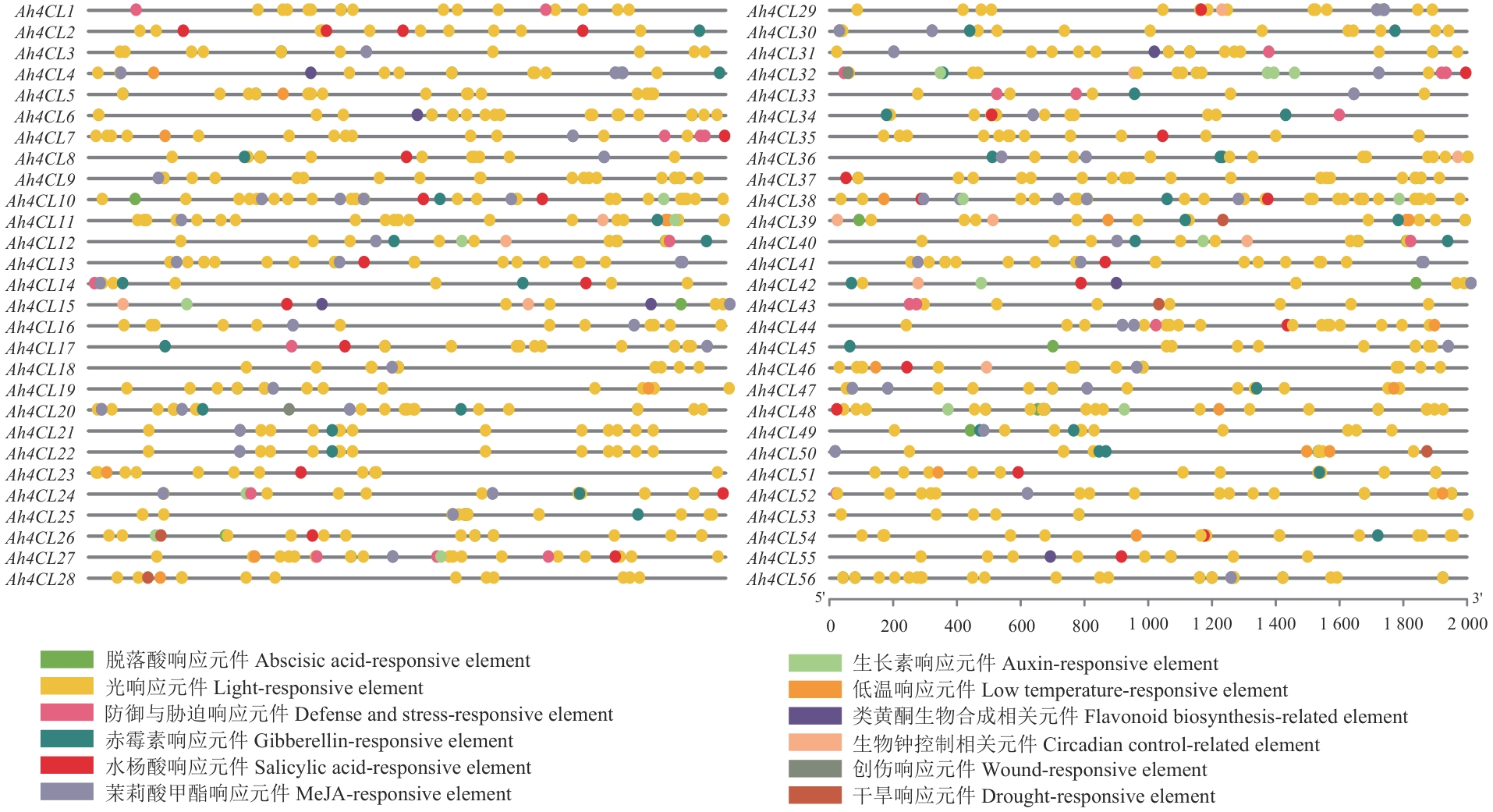
Fig. 5 Analysis of cis-acting elements in the promoter regions of peanut 4CL genes

Fig. 6 Expression analysis of peanut 4CL genes in different tissues (A) and after drought, salt and ABA treatment (B)

Fig. 7 Ah4CL28 and Ah4CL37 expression alterations after simulated drought treatmentSignificance analysis is conducted by Student's t-test, with * indicating P<0.05 and ** indicating P<0.01. The same below
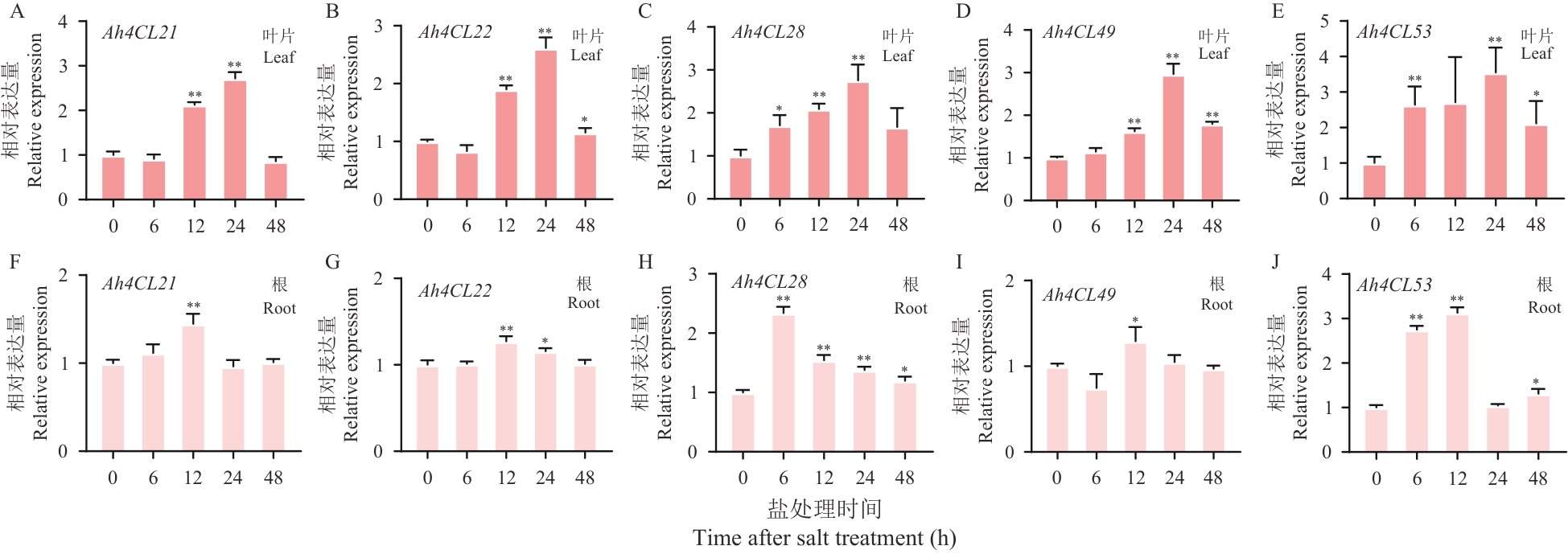
Fig. 8 Ah4CL21, Ah4CL22, Ah4CL28, Ah4CL49, and Ah4CL53 expression alterations after salt treatment
| [1] | 刘福星, 汪可欣, 张璐, 等. 国内油料作物市场整合关系研究——以油菜籽、花生和芝麻为例 [J]. 中国油料作物学报, 2022, 44(5): 957-965. |
| Liu FX, Wang KX, Zhang L, et al. Study on domestic market integration of oil crops—Taking rapeseed, peanut and sesame for examples [J]. Chin J Oil Crop Sci, 2022, 44(5): 957-965. | |
| [2] | 刘海东, 陈庆政, 林秀芳, 等. 干旱胁迫对花生生理特性与产质量的影响[J]. 贵州农业科学, 2022, 50: 25-34. |
| Liu HD, Chen QZ, Lin XF, et al. Effects of drought stress on physiological characteristics, yield and quality of peanut[J]. Guizhou Agricultural Sciences, 2022, 50: 25-34. | |
| [3] | 朱统国, 高华援, 周玉萍, 等. 花生耐盐性鉴定研究进展 [J]. 中国农学通报, 2014, 30(21): 19-23. |
| Zhu TG, Gao HY, Zhou YP, et al. Research advances on salt tolerance identification of peanut [J]. Chin Agric Sci Bull, 2014, 30(21): 19-23. | |
| [4] | 徐扬, 丁红, 张冠初, 等. 盐胁迫下花生种子萌发期代谢组学分析 [J]. 生物技术通报, 2023, 39(1): 199-213. |
| Xu Y, Ding H, Zhang GC, et al. Metabolomics analysis of germinating peanut seed under salt stress [J]. Biotechnol Bull, 2023, 39(1): 199-213. | |
| [5] | 徐扬, 张瑞英, 戴良香, 等. 盐胁迫下氮素对花生种子萌发和种子际细菌菌群结构的调控 [J]. 生物技术通报, 2024, 40(2): 253-265. |
| Xu Y, Zhang RY, Dai LX, et al. Regulation of nitrogen application on peanut seed germination and spermosphere bacterial community structure under salt stress [J]. Biotechnol Bull, 2024, 40(2): 253-265. | |
| [6] | Dong NQ, Lin HX. Contribution of phenylpropanoid metabolism to plant development and plant-environment interactions [J]. J Integr Plant Biol, 2021, 63(1): 180-209. |
| [7] | Schneider K, Hövel K, Witzel K, et al. The substrate specificity-determining amino acid code of 4-coumarate: CoA ligase [J]. Proc Natl Acad Sci USA, 2003, 100(14): 8601-8606. |
| [8] | Hahlbrock K, Scheel D. Physiology and molecular biology of phenylpropanoid metabolism [J]. Annu Rev Plant Physiol Plant Mol Biol, 1989, 40: 347-369. |
| [9] | Fulda M, Heinz E, Wolter FP. The fadD gene of Escherichia coli K12 is located close to rnd at 39.6 min of the chromosomal map and is a new member of the AMP-binding protein family [J]. Mol Gen Genet, 1994, 242(3): 241-249. |
| [10] | Stuible H, Büttner D, Ehlting J, et al. Mutational analysis of 4-coumarate: CoA ligase identifies functionally important amino acids and verifies its close relationship to other adenylate-forming enzymes [J]. FEBS Lett, 2000, 467(1): 117-122. |
| [11] | De Azevedo Souza C, Barbazuk B, Ralph SG, et al. Genome-wide analysis of a land plant-specific acyl: coenzyme A synthetase (ACS) gene family in Arabidopsis, poplar, rice and Physcomitrella [J]. New Phytol, 2008, 179(4): 987-1003. |
| [12] | Costa MA, Eric Collins R, Anterola AM, et al. An in silico assessment of gene function and organization of the phenylpropanoid pathway metabolic networks in Arabidopsis thaliana and limitations thereof [J]. Phytochemistry, 2003, 64(6): 1097-1112. |
| [13] | Shockey JM, Fulda MS, Browse J. Arabidopsis contains a large superfamily of acyl-activating enzymes. Phylogenetic and biochemical analysis reveals a new class of acyl-coenzyme a synthetases [J]. Plant Physiol, 2003, 132(2): 1065-1076. |
| [14] | Lavhale SG, Kalunke RM, Giri AP. Structural, functional and evolutionary diversity of 4-coumarate-CoA ligase in plants [J]. Planta, 2018, 248(5): 1063-1078. |
| [15] | Chowdhury MEK, Choi B, Cho BK, et al. Regulation of 4CL, encoding 4-coumarate: coenzyme a ligase, expression in kenaf under diverse stress conditions [J]. Plant OMICS, 2013, 6(4): 254-262. |
| [16] | Nie TK, Sun XX, Wang SL, et al. Genome-wide identification and expression analysis of the 4-coumarate: CoA ligase gene family in Solanum tuberosum [J]. Int J Mol Sci, 2023, 24(2): 1642. |
| [17] | Sun SC, Xiong XP, Zhang XL, et al. Characterization of the Gh4CL gene family reveals a role of Gh4CL7 in drought tolerance [J]. BMC Plant Biol, 2020, 20(1): 125. |
| [18] | Zhong J, Qing J, Wang Q, et al. Genome-wide identification and expression analyses of the 4-coumarate: CoA ligase (4CL) gene family in Eucommia ulmoides [J]. Forests, 2022, 13(8): 1253. |
| [19] | Bertioli DJ, Jenkins J, Clevenger J, et al. The genome sequence of segmental allotetraploid peanut Arachis hypogaea [J]. Nat Genet, 2019, 51(5): 877-884. |
| [20] | Zhao XB, Li CJ, Wan SB, et al. Transcriptomic analysis and discovery of genes in the response of Arachis hypogaea to drought stress [J]. Mol Biol Rep, 2018, 45(2): 119-131. |
| [21] | Zhang H, Zhao XB, Sun QX, et al. Comparative transcriptome analysis reveals molecular defensive mechanism of Arachis hypogaea in response to salt stress [J]. Int J Genomics, 2020, 2020: 6524093. |
| [22] | Chen CJ, Chen H, Zhang Y, et al. TBtools: an integrative toolkit developed for interactive analyses of big biological data [J]. Mol Plant, 2020, 13(8): 1194-1202. |
| [23] | Sahraeian SME, Mohiyuddin M, Sebra R, et al. Gaining comprehensive biological insight into the transcriptome by performing a broad-spectrum RNA-seq analysis [J]. Nat Commun, 2017, 8(1): 59. |
| [24] | Pfaffl MW. A new mathematical model for relative quantification in real-time RT-PCR [J]. Nucleic Acids Res, 2001, 29(9): e45. |
| [25] | Douglas CJ. Phenylpropanoid metabolism and lignin biosynthesis: from weeds to trees [J]. Trends Plant Sci, 1996, 1(6): 171-178. |
| [26] | Vogt T. Phenylpropanoid biosynthesis [J]. Mol Plant, 2010, 3(1): 2-20. |
| [27] | Sun HY, Li Y, Feng SQ, et al. Analysis of five rice 4-coumarate: coenzyme A ligase enzyme activity and stress response for potential roles in lignin and flavonoid biosynthesis in rice [J]. Biochem Biophys Res Commun, 2013, 430(3): 1151-1156. |
| [28] | Cheng Y, Ahammed GJ, Yao ZP, et al. Comparative genomic analysis reveals extensive genetic variations of WRKYs in Solanaceae and functional variations of CaWRKYs in pepper [J]. Front Genet, 2019, 10: 492. |
| [29] | 陈雷, 杨明达, 贺群岭, 等. 基于不同生育时期干旱对花生抗旱性的综合评定 [J]. 花生学报, 2024, 53(2): 31-38, 46. |
| Chen L, Yang MD, He QL, et al. Comprehensive evaluation on drought resistance of peanuts at different growth stages [J]. J Peanut Sci, 2024, 53(2): 31-38, 46. | |
| [30] | 吴兰荣, 陈静, 许婷婷, 等. 花生全生育期耐盐鉴定研究 [J]. 花生学报, 2005, 34(1): 20-24. |
| Wu LR, Chen J, Xu TT, et al. Identification of salt tolerance in peanut growth duration [J]. J Peanut Sci, 2005, 34(1): 20-24. | |
| [31] | Chen XH, Wang HT, Li XY, et al. Molecular cloning and functional analysis of 4-coumarate: CoA ligase 4 (4CL-like 1) from Fraxinus mandshurica and its role in abiotic stress tolerance and cell wall synthesis [J]. BMC Plant Biol, 2019, 19(1): 231. |
| [32] | Wang CH, Yu J, Cai YX, et al. Characterization and functional analysis of 4-coumarate: CoA ligase genes in mul-berry [J]. PLoS One, 2016, 11(5): e0155814. |
| [33] | 陈烨, 单思杰, 钟磊坚, 等. 甜橙过氧化氢酶基因CsCAT2启动子克隆及活性分析 [J]. 农业生物技术学报, 2024, 32(12): 2755-2763. |
| Chen Y, Shan SJ, Zhong LJ, et al. Cloning and activity analysis of the CsCAT2 promoter in Citrus sinensis [J]. J Agric Biotechnol, 2024, 32(12): 2755-2763. | |
| [34] | Danquah A, de Zelicourt A, Colcombet J, et al. The role of ABA and MAPK signaling pathways in plant abiotic stress responses [J]. Biotechnol Adv, 2014, 32(1): 40-52. |
| [35] | Liu QQ, Luo L, Zheng LQ. Lignins: biosynthesis and biological functions in plants [J]. Int J Mol Sci, 2018, 19(2): 335. |
| [36] | Shomali A, Das S, Arif N, et al. Diverse physiological roles of flavonoids in plant environmental stress responses and tolerance [J]. Plants, 2022, 11(22): 3158. |
| [1] | LI Xin-ni, LI Jun-yi, MA Xue-hua, HE Wei, LI Jia-li, YU Jia, CAO Xiao-ning, QIAO Zhi-jun, LIU Si-chen. Identification of the PMEI Gene Family of Pectin Methylesterase Inhibitor in Foxtail Millet and Analysis of Its Response to Abiotic Stress [J]. Biotechnology Bulletin, 2025, 41(7): 150-163. |
| [2] | FU Bo-han, MAO Hua, ZHAO Xin-cheng, LU Hong, OU Yong-bin, YAO Yin-an. Cloning of SOS1 Gene Promoters from Poplar and Analysis of Its Response to Salt Stress [J]. Biotechnology Bulletin, 2025, 41(7): 205-213. |
| [3] | LI Kai-yue, DENG Xiao-xia, YIN Yuan, DU Ya-tong, XU Yuan-jing, WANG Jing-hong, YU Song, LIN Ji-xiang. Identification of LEA Gene Family and Analysis on Its Response to Aluminum Stress in Ricinus communis L. [J]. Biotechnology Bulletin, 2025, 41(7): 128-138. |
| [4] | WANG Fang, QIAO Shuai, SONG Wei, CUI Peng-juan, LIAO An-zhong, TAN Wen-fang, YANG Song-tao. Genome-wide Identification of the IbNRT2 Gene Family and Its Expression in Sweet Potato [J]. Biotechnology Bulletin, 2025, 41(7): 193-204. |
| [5] | GONG Yu-han, CHEN Lan, SHANGFANG Hui-zi, HAO Ling-ying, LIU Shuo-qian. Identification and Expression Profile Analysis of the TRB Gene Family in Tea Plant [J]. Biotechnology Bulletin, 2025, 41(7): 214-225. |
| [6] | ZONG Jian-wei, DENG Hai-fang, CAI Yuan-yuan, CHANG Ya-wen, ZHU Ya-qi, YANG Yu-hua. Coupling Effect of AM Fungi on the Root Morphology and Leaf Structure of Xanthoceras sorbifolium Bunge under Drought Stress [J]. Biotechnology Bulletin, 2025, 41(6): 167-178. |
| [7] | QU Mei-ling, ZHOU Si-min, ZHANG Jing-yu, HE Jia-wei, ZHU Jia-yuan, LIU Xiao-rong, TONG Qiao-zhen, ZHOU Ri-bao, LIU Xiang-dan. Identification and Expression Analysis of bHLH Transcription Gene Family in Lonicera macranthoides [J]. Biotechnology Bulletin, 2025, 41(6): 256-268. |
| [8] | HUANG Dan, PENG Bing-yang, ZHANG Pan-pan, JIAO Yue, LYU Jia-bin. Identification of HD-Zip Gene Family in Camellia oleifera and Analysis of Its Expression under Abiotic Stress [J]. Biotechnology Bulletin, 2025, 41(6): 191-207. |
| [9] | CHENG Shan, WANG Hui-wei, CHEN Chen, ZHU Ya-jing, LI Chun-xin, BIE Hai, WANG Shu-feng, CHEN Xian-gong, ZHANG Xiang-ge. Cloning of MYB Transcription Factor Gene CeMYB154 and Analysis of Salt Tolerance Function in Cyperus esculentus [J]. Biotechnology Bulletin, 2025, 41(6): 218-228. |
| [10] | WANG Miao-miao, ZHAO Xiang-long, WANG Zhao-ming, LIU Zhi-peng, YAN Long-feng. Identification of TCP Gene Family in Medicago ruthenica and Their Expression Pattern Analysis under Drought Stress [J]. Biotechnology Bulletin, 2025, 41(6): 179-190. |
| [11] | SONG Hui-yang, SU Bao-jie, LI Jing-hao, MEI Chao, SONG Qian-na, CUI Fu-zhu, FENG Rui-yun. Cloning and Functional Analysis of the StAS2-15 Gene in Potato under Salt Stress [J]. Biotechnology Bulletin, 2025, 41(5): 119-128. |
| [12] | HE Wei, LI Jun-yi, LI Xin-ni, MA Xue-hua, XING Yuan, CAO Xiao-ning, QIAO Zhi-ju, LIU Si-chen. Genome-wide Identification of U-box E3 Ubiquitin Ligase Gene Family in Setaria italica and Response Analysis to Abiotic Stress [J]. Biotechnology Bulletin, 2025, 41(5): 104-118. |
| [13] | LUO Si-fang, ZHANG Zu-ming, XIE Li-fang, GUO Zi-jing, CHEN Zhao-xing, YANG Yue-hua, YAN Xiang, ZHANG Hong-ming. Genome-wide Identification of GATA Gene Family of Jindou Kumquat (Fortunella hindsii) and Their Expression Analysis in Fruit Development [J]. Biotechnology Bulletin, 2025, 41(5): 218-230. |
| [14] | YANG Chun, WANG Xiao-qian, WANG Hong-jun, CHAO Yue-hui. Cloning, Subcellular Localization and Expression Analysis of MtZHD4 Gene from Medicago truncatula [J]. Biotechnology Bulletin, 2025, 41(5): 244-254. |
| [15] | WANG Yi-min, LI Ying, DONG Hai-tao, ZHANG Heng-rui, CHANG Lu, GAO Tian-tian, HAN De-jun, WU Jian-hui. Evolutionary Patterns of SRO Family Proteins in the Polyploidization Process of Wheat [J]. Biotechnology Bulletin, 2025, 41(5): 70-81. |
| Viewed | ||||||
|
Full text |
|
|||||
|
Abstract |
|
|||||
