







Biotechnology Bulletin ›› 2026, Vol. 42 ›› Issue (5): 158-173.doi: 10.13560/j.cnki.biotech.bull.1985.2025-0823
WANG Yu1( ), WANG Yi-min2, GAO Han2, CHEN Bang-qing1, PENG Gang-zhi1, TAN Yan1, ZHENG Si-yi1, GAO Ben-wang1()
Received:2025-07-30
Online:2026-05-26
Published:2026-06-10
Contact:
GAO Ben-wang
E-mail:864336034@qq.com;953146673@qq.com
WANG Yu, WANG Yi-min, GAO Han, CHEN Bang-qing, PENG Gang-zhi, TAN Yan, ZHENG Si-yi, GAO Ben-wang. Characteristics and Assembly Mechanisms of Rhizosphere and Root Endosphere Microbial Communities in Davidia involucrata of Different Ages[J]. Biotechnology Bulletin, 2026, 42(5): 158-173.
| 样本 Sample | 酸碱度 pH | 有机碳 SOC (g/kg) | 总氮 TN (g/kg) | 有效磷 AP (mg/kg) | 速效钾 AK (mg/kg) |
|---|---|---|---|---|---|
| A | 6.09±0.31a | 82.16±7.59b | 4.56±0.62b | 7.50±0.38c | 244.66±29.09a |
| B | 5.97±0.22a | 165.64±58.77a | 5.72±0.94a | 12.52±1.40a | 264.46±22.32a |
| C | 5.75±0.30a | 158.22±70.75a | 6.02±0.76a | 9.10±0.81b | 248.25±35.25a |
Table 1 Physical and chemical properties of soil in Davidia involucrata
| 样本 Sample | 酸碱度 pH | 有机碳 SOC (g/kg) | 总氮 TN (g/kg) | 有效磷 AP (mg/kg) | 速效钾 AK (mg/kg) |
|---|---|---|---|---|---|
| A | 6.09±0.31a | 82.16±7.59b | 4.56±0.62b | 7.50±0.38c | 244.66±29.09a |
| B | 5.97±0.22a | 165.64±58.77a | 5.72±0.94a | 12.52±1.40a | 264.46±22.32a |
| C | 5.75±0.30a | 158.22±70.75a | 6.02±0.76a | 9.10±0.81b | 248.25±35.25a |
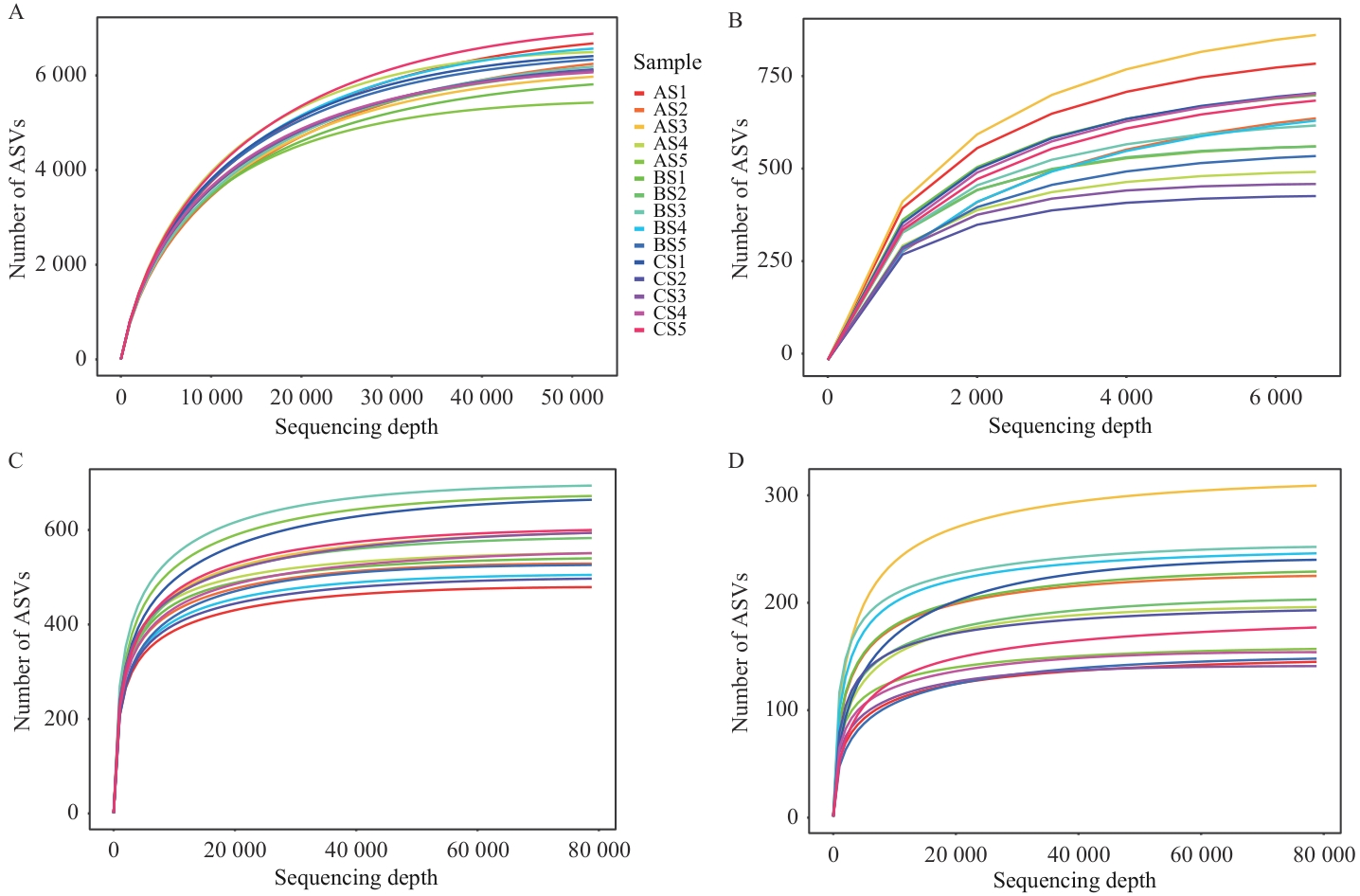
Fig. 1 Rarefaction curves of microbial communities of D. involucrataA: Rhizosphere bacteria. B: Root endosphere bacteria. C: Rhizosphere fungi. D: Root endosphere fungi. AS: Rhizosphere soil of near-mature forest. BS: Rhizosphere soil of mature forest. CS: Rhizosphere soil of old ancient forest. AR: Root tissue of near-mature forest. BR: Root tissue of mature forest. CR: Root tissue of ancient forest. The same below
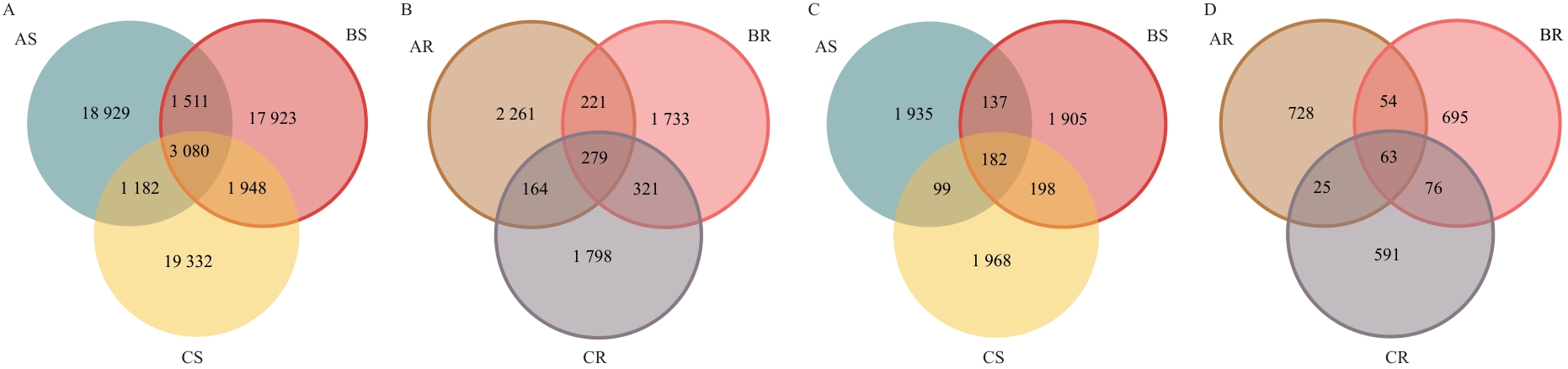
Fig. 2 Venn diagram of ASVs in microbial communities in the rhizosphere and root endosphere of D. involucrataA: Rhizosphere bacteria. B: Root endosphere bacteria. C: Rhizosphere fungi. D: Root endosphere fungi
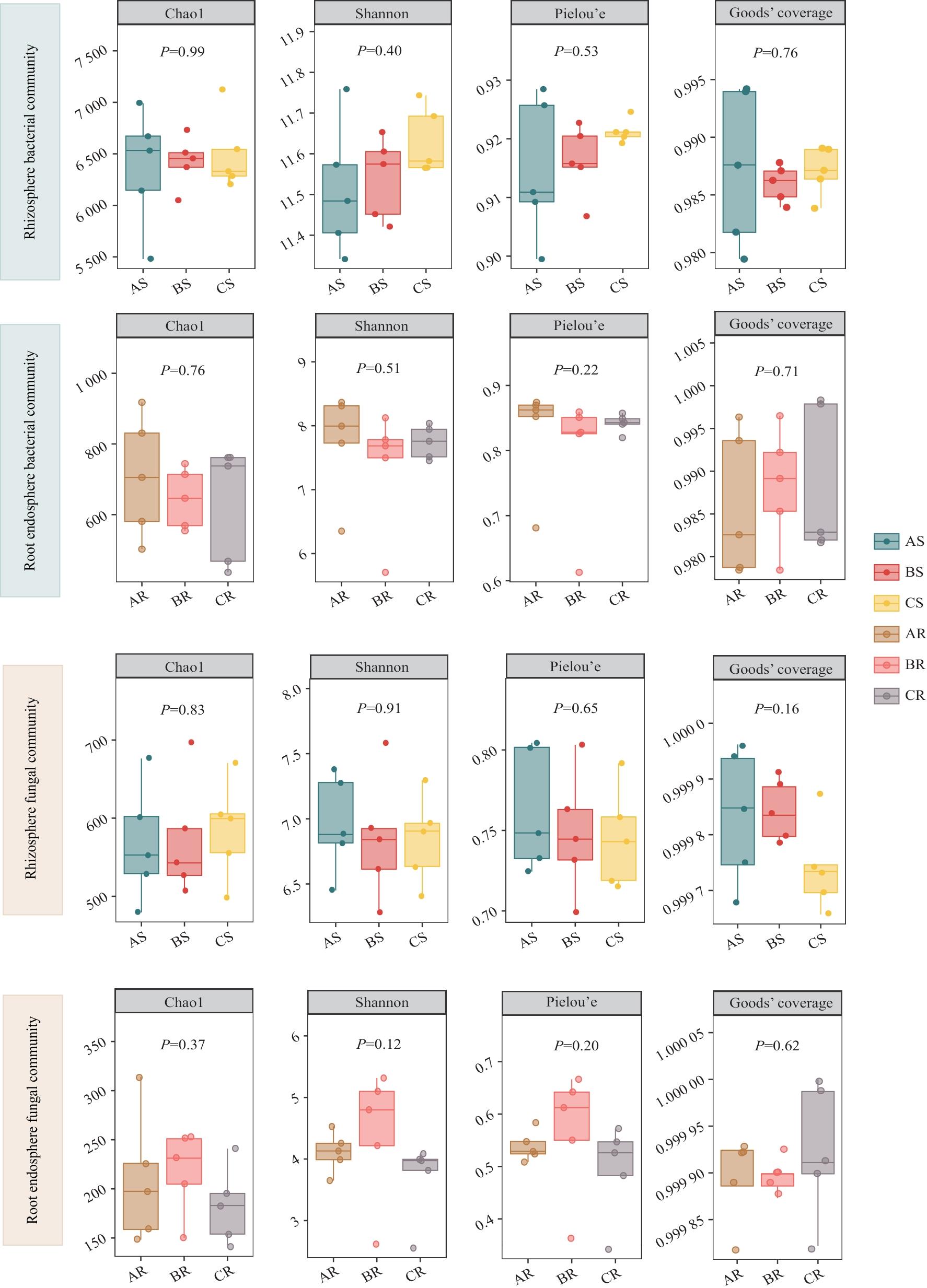
Fig. 3 Alpha-diversity indices of microbial communities in the rhizosphere and root endosphere of D. involucrata
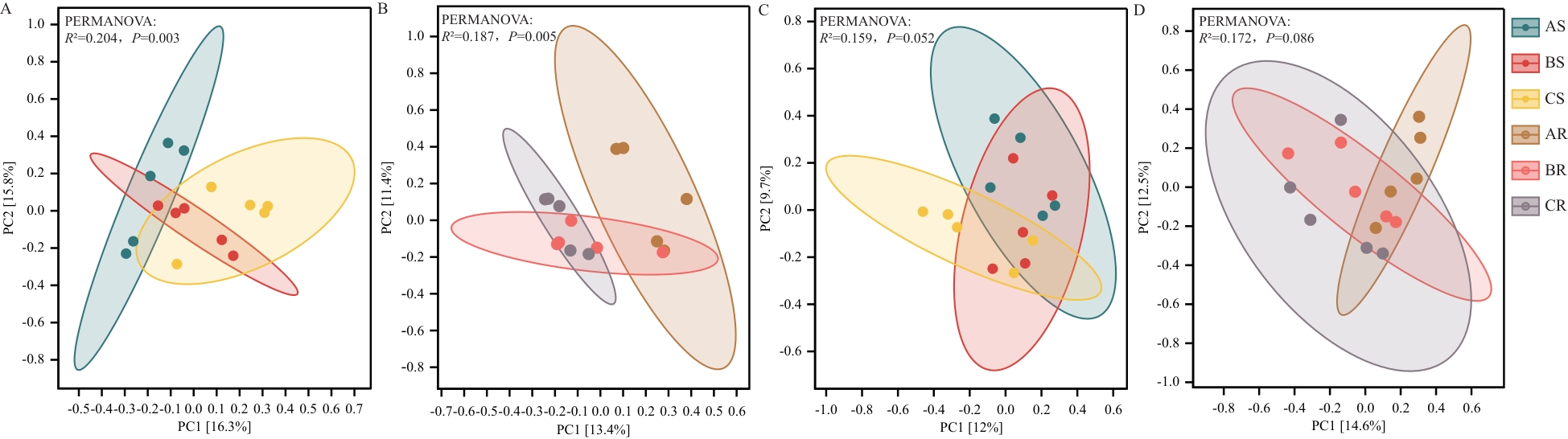
Fig. 4 Beta-diversity indices of microbial communities in the rhizosphere and root endosphere of D. involucrataA: Rhizosphere bacteria. B: Root endosphere bacteria. C: Rhizosphere fungi. D: Root endosphere fungi
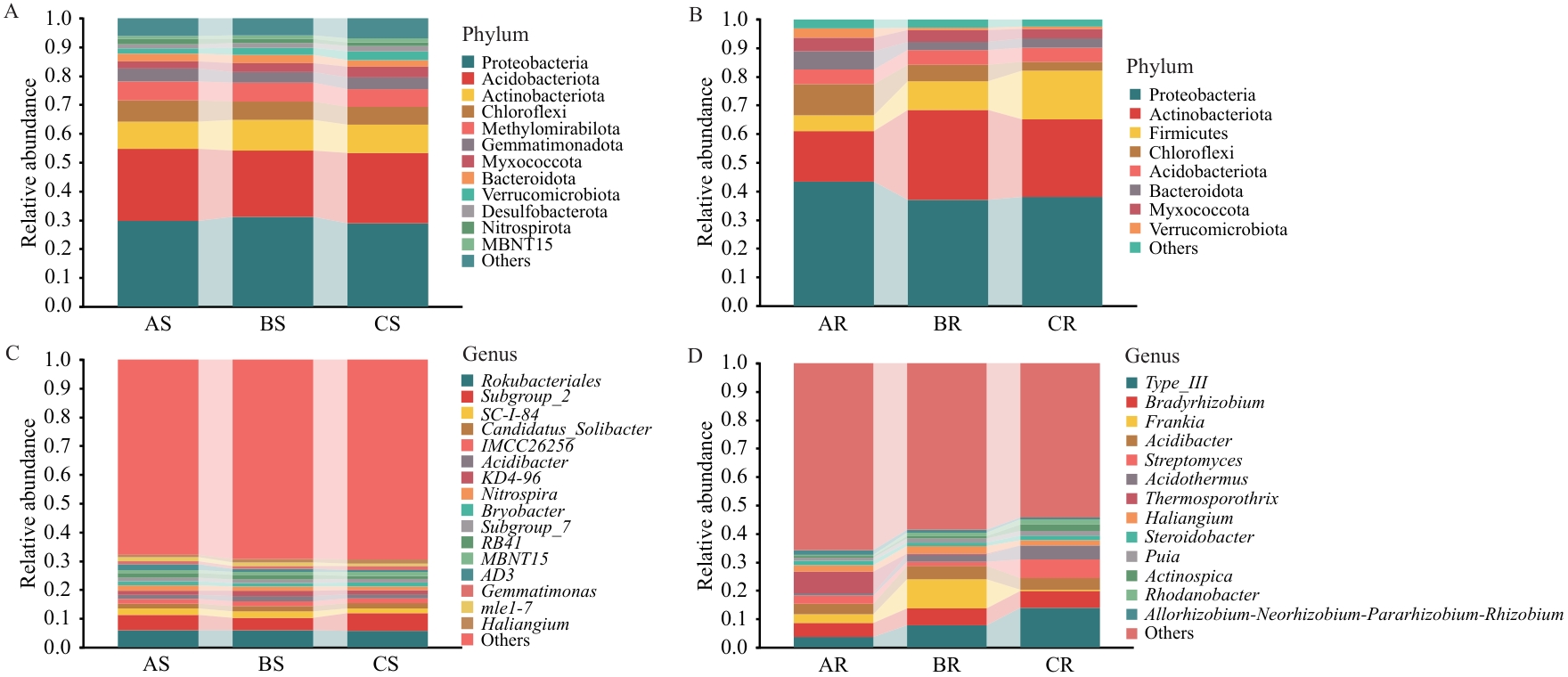
Fig. 5 Relative abundance of bacteria in the rhizosphere and root endosphere of Davidia involucrateA: Rhizosphere bacteria at phylum level. B: Root endosphere bacteria at phylum level. C: Rhizosphere bacteria at genus level. D: Root endosphere bacteria at genus level
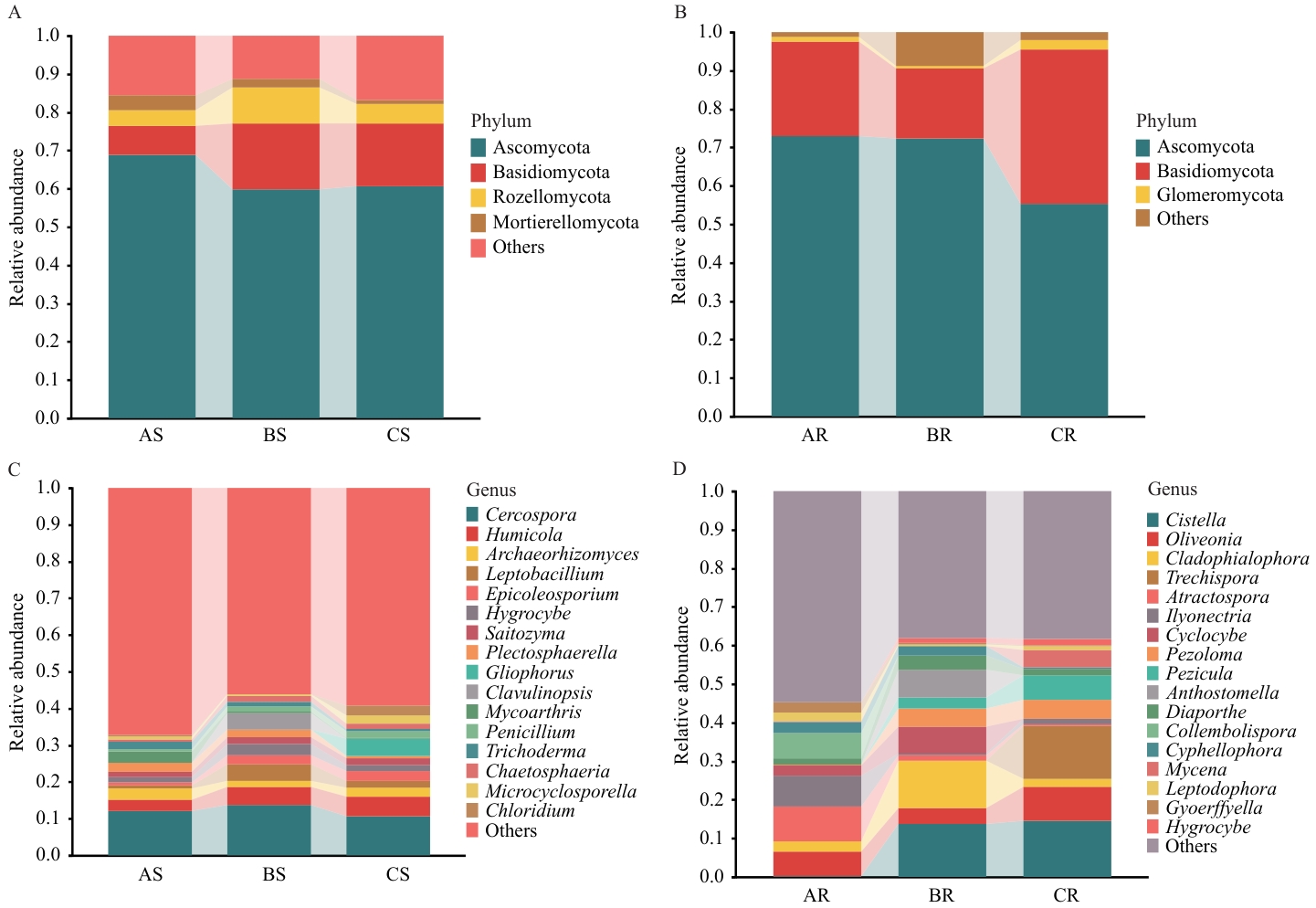
Fig. 6 Relative abundance of fungi in the rhizosphere and root endosphere of D. involucrateA: Rhizosphere fungi at phylum level. B: Root endosphere fungi at phylum level. C: Rhizosphere fungi at genus level. D: Root endosphere fungi at genus level
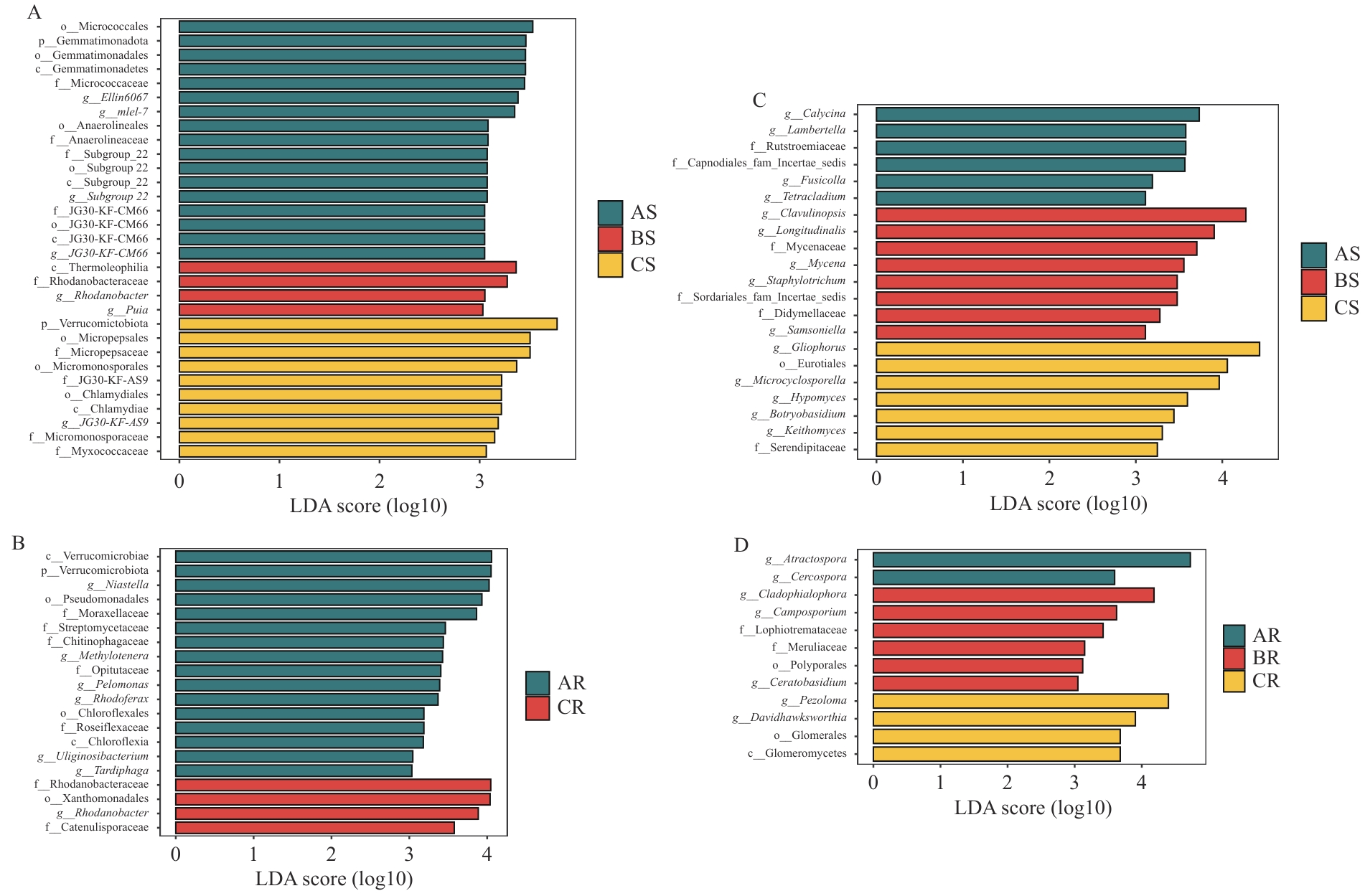
Fig. 7 LEfSe analysis of differential species among different tree ages of D. involucrataA: Rhizosphere bacteria. B: Root endosphere bacteria. C: Rhizosphere fungi. D: Root endosphere fungi
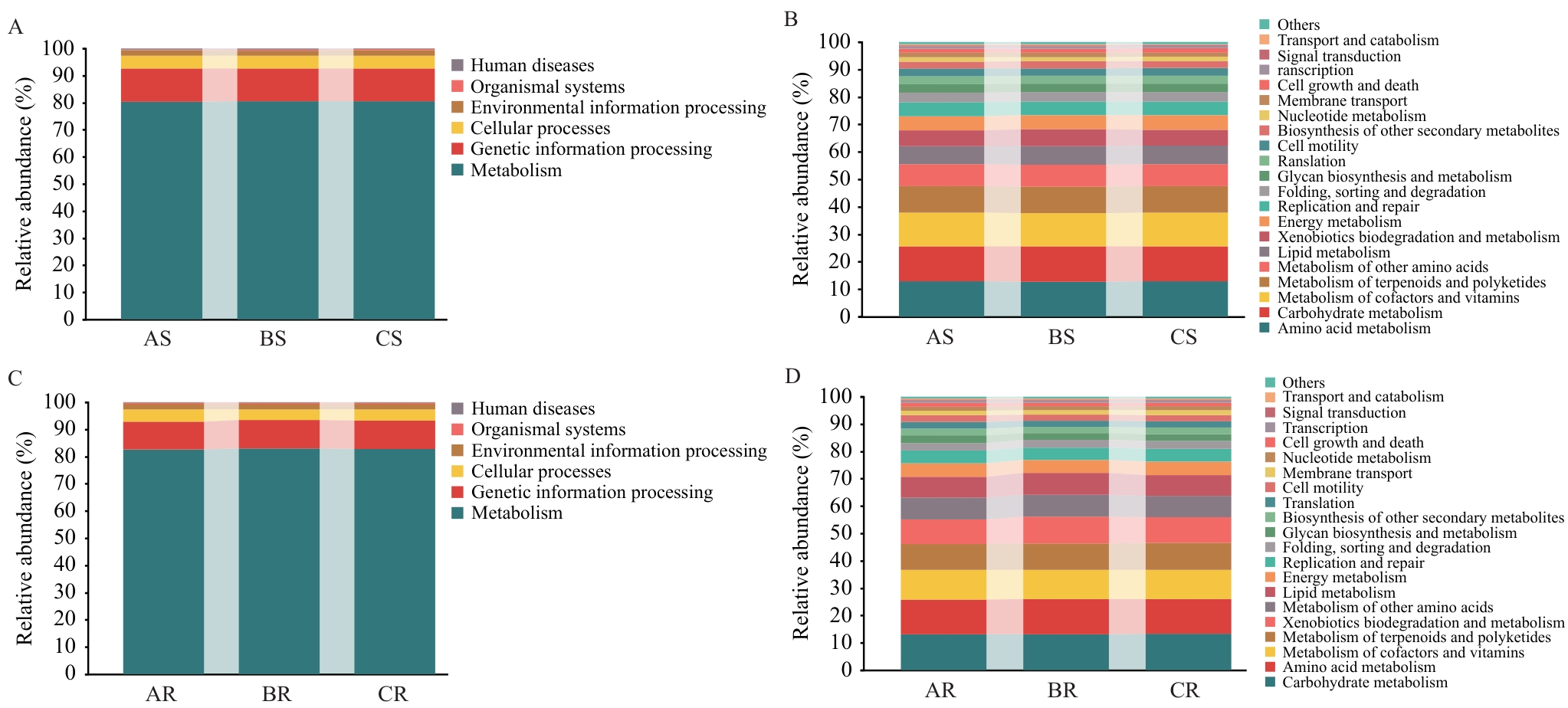
Fig. 8 Functional prediction of bacteria in the rhizosphere and root endosphere of D. involucrataA: L1 functions of rhizosphere bacteria. B: L2 functions of rhizosphere bacteria. C: L1 functions of root endosphere bacteria. D: L2 functions of root endosphere bacteria
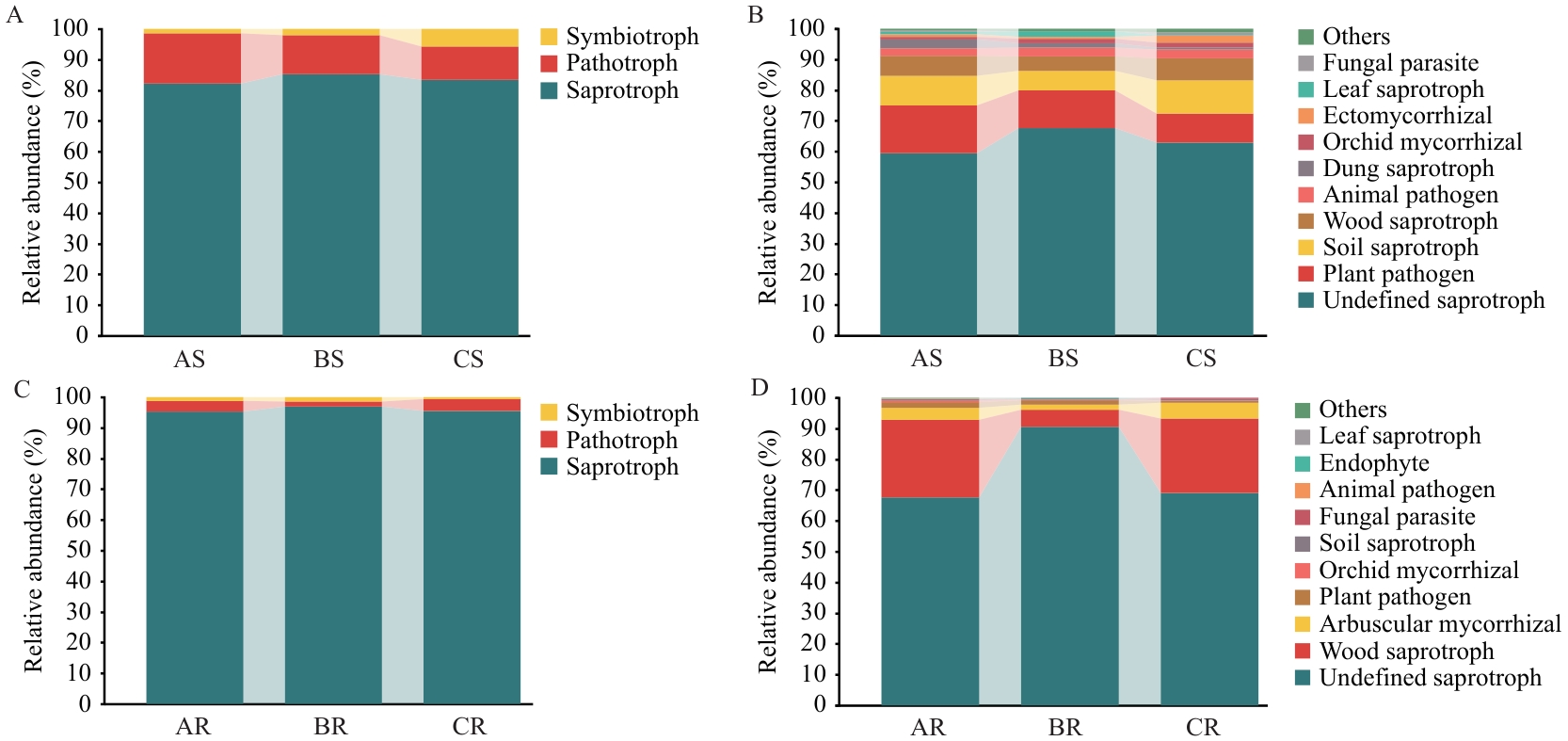
Fig. 9 Functional prediction of fungi in the rhizosphere and root endosphere of D. involucrataA: Rhizosphere fungi classified based on Trophic mode; B: Rhizosphere fungi classified based on Guild; C: Root endosphere fungi classified based on Trophic mode; D: Root endosphere fungi classified based on Guild
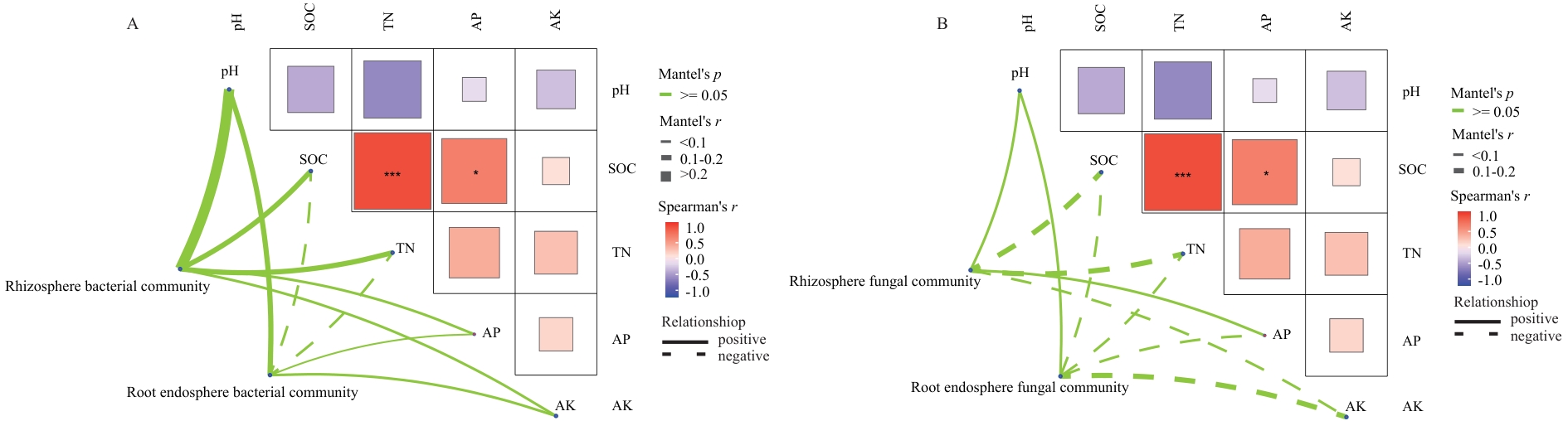
Fig. 10 Correlation between physicochemical factors and microbial communities in the rhizosphere and root endosphere of D.involucrataA: Bacteria. B: Fungi. *P<0.05; **P<0.01; ***P<0.001, the same below
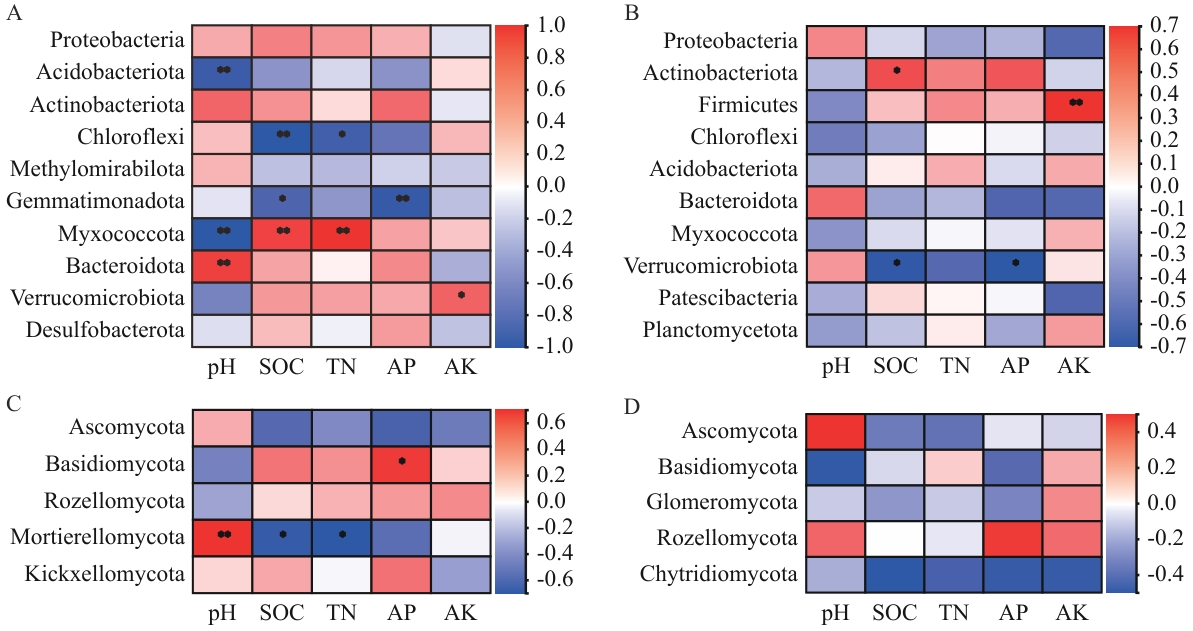
Fig. 11 Correlation of dominant bacterial phyla with soil physicochemical factors in rhizosphere and root endosphere communities of D. involucrataA: Rhizosphere bacteria. B: Root endosphere bacteria. C: Rhizosphere fungi. D: Root endosphere fungi
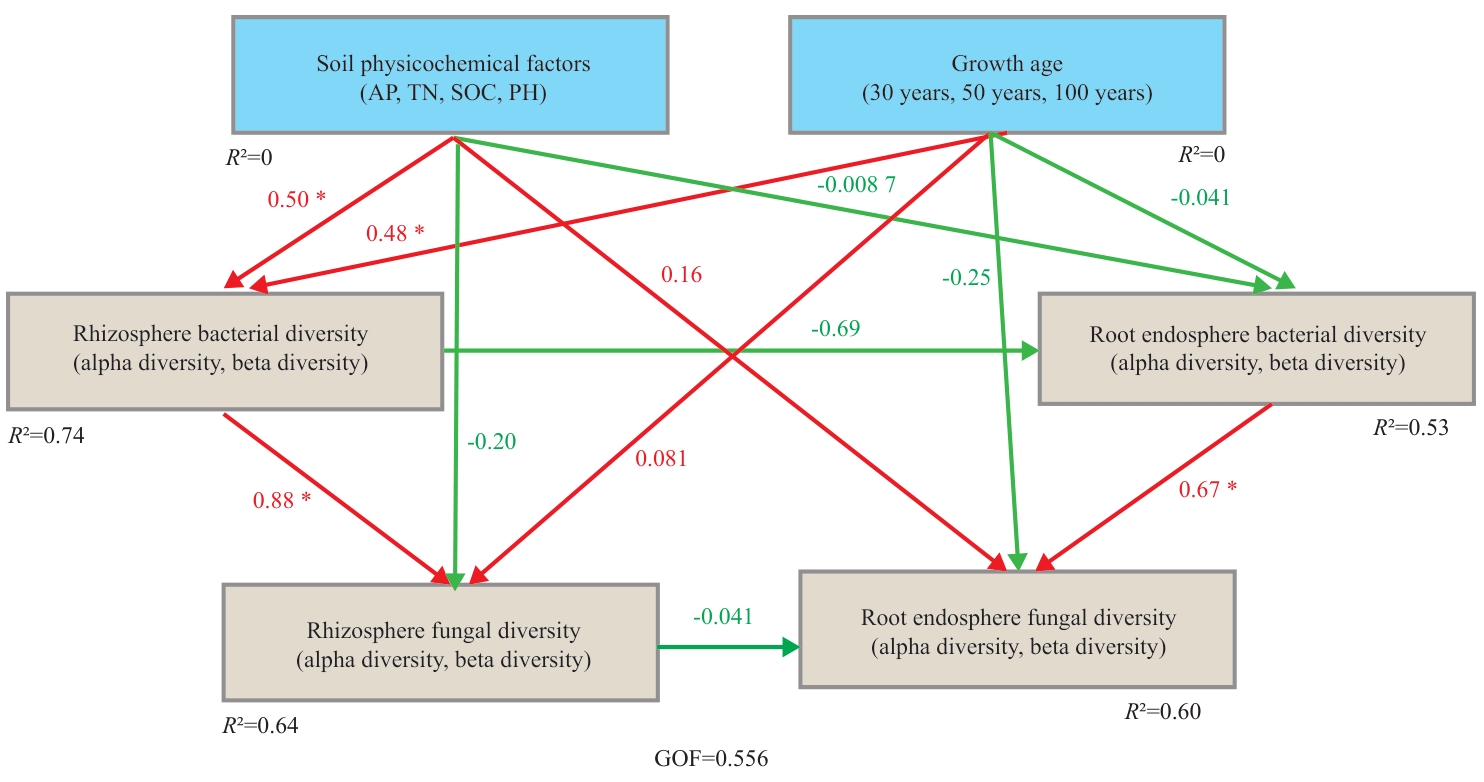
Fig. 12 Direct and indirect effects of soil factors on diversity of microbial communities in rhizosphere and root endosphere of D. involucrata
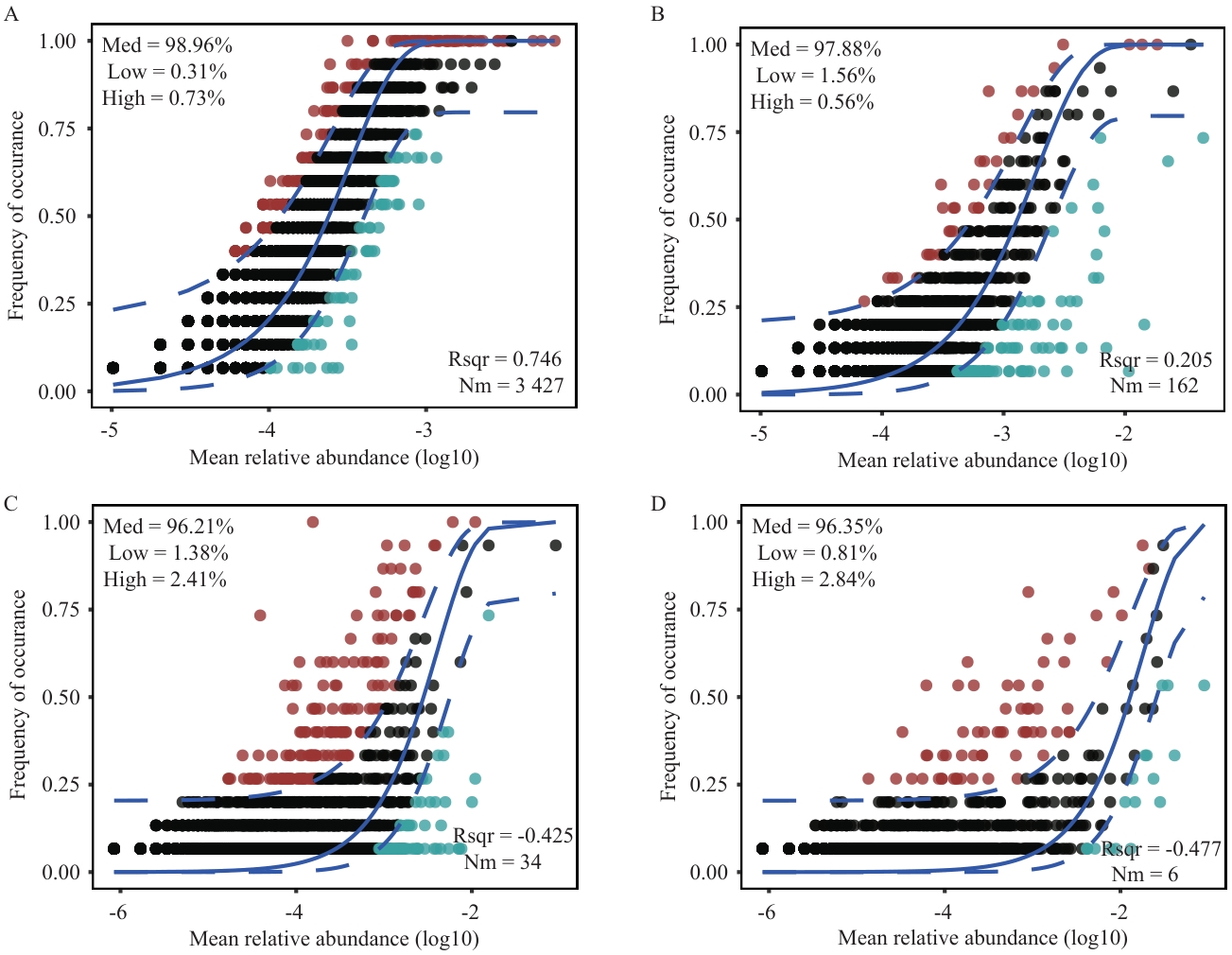
Fig. 13 Assembly processes of microbial communities in the rhizosphere and root endosphere of D. involucrata (based on neutral community model)A: Rhizosphere bacteria. B: Root endosphere bacteria. C: Rhizosphere fungi. D: Root endosphere fungi

Fig. 14 Analysis of modified stochasticity ratio for microbial communities in the rhizosphere and root endosphere of D. involucrataA: Rhizosphere bacteria. B: Root endosphere bacteria. C: Rhizosphere fungi. D: Root endosphere fungi
| [1] | He GD, Zhang ZM, Zhang JC, et al. Stoichiometric characteristics of nutrients in a soil-vegetation system of the rare plant Davidia involucrata Baill [J]. Glob Ecol Conserv, 2020, 24: e01266. |
| [2] | Li M, Dong XJ, Peng JQ, et al. De novo transcriptome sequencing and gene expression analysis reveal potential mechanisms of seed abortion in dove tree (Davidia involucrata Baill.) [J]. BMC Plant Biol, 2016, 16(1): 82. |
| [3] | Wang TX, Li WT, Cui HX, et al. Predicting the potential habitat distribution of relict plant Davidia involucrata in China based on the MaxEnt model [J]. Forests, 2024, 15(2): 272. |
| [4] | Liang ZC, Xie G, Ren YH, et al. Young dove trees tend to invest more biomass in vegetative and reproductive organs than old trees at the twig level [J]. Glob Ecol Conserv, 2024, 54: e03127. |
| [5] | Jin Y, Li X, Hu Y, et al. Diversity patterns of bacteria in the root zone of Davidia involucrata along an altitudinal gradient [J]. Forests, 2024, 15(11): 1920. |
| [6] | Berendsen RL, Pieterse CMJ, Bakker PAHM. The rhizosphere microbiome and plant health [J]. Trends Plant Sci, 2012, 17(8): 478-486. |
| [7] | Philippot SH L. Biochemical cycling in the rhizosphere having an impact on global change [J]. Plant Soil, 2009, 321(1/2): 61-81. |
| [8] | Philippot L, Raaijmakers JM, Lemanceau P, et al. Going back to the roots: the microbial ecology of the rhizosphere [J]. Nat Rev Microbiol, 2013, 11(11): 789-799. |
| [9] | Ling N, Wang TT, Kuzyakov Y. Rhizosphere bacteriome structure and functions [J]. Nat Commun, 2022, 13: 836. |
| [10] | Benson DR, Silvester WB. Biology of Frankia strains, actinomycete symbionts of actinorhizal plants [J]. Microbiol Rev, 1993, 57(2): 293-319. |
| [11] | Hamilton CE, Bauerle TL. A new currency for mutualism? Fungal endophytes alter antioxidant activity in hosts responding to drought [J]. Fungal Divers, 2012, 54(1): 39-49. |
| [12] | Luo JQ, Liu T, Diao FW, et al. Shift in rhizospheric and endophytic microbial communities of dominant plants around Sunit Alkaline Lake [J]. Sci Total Environ, 2023, 867: 161503. |
| [13] | Vellend M. Conceptual synthesis in community ecology [J]. Q Rev Biol, 2010, 85(2): 183-206. |
| [14] | Jiao S, Yang YF, Xu YQ, et al. Balance between community assembly processes mediates species coexistence in agricultural soil microbiomes across Eastern China [J]. ISME J, 2020, 14(1): 202-216. |
| [15] | Nemergut DR, Schmidt SK, Fukami T, et al. Patterns and processes of microbial community assembly [J]. Microbiol Mol Biol Rev, 2013, 77(3): 342-356. |
| [16] | Zhou JZ, Ning DL. Stochastic community assembly: does it matter in microbial ecology? [J]. Microbiol Mol Biol Rev, 2017, 81(4): e00002-17. |
| [17] | Gilbert B, Levine JM. Ecological drift and the distribution of species diversity [J]. Proc R Soc B, 2017, 284(1855): 20170507. |
| [18] | Pang XM, Chen MH, Miao PY, et al. Effects of different planting years on soil physicochemical indexes, microbial functional diversity and fruit quality of pear trees [J]. Agriculture, 2024, 14(2): 226. |
| [19] | Ma FF, Liu Y, Qi YX, et al. Tree age affects carbon sequestration potential via altering soil bacterial community composition and function [J]. Front Microbiol, 2024, 15: 1379409. |
| [20] | Lv JY, Huo CY, Zhang JL, et al. Host genotype and age shape the microbial community in the rhizosphere soils of Camellia forests [J]. Front Microbiol, 2024, 15: 1440255. |
| [21] | Wang Y, Dong LG, Zhang M, et al. Dynamic microbial community composition, co-occurrence pattern and assembly in rhizosphere and bulk soils along a coniferous plantation chronosequence [J]. Catena, 2023, 223: 106914. |
| [22] | Wang B, Huang SY, Li ZC, et al. Factors driving the assembly of prokaryotic communities in bulk soil and rhizosphere of Torreya grandis along a 900-year age gradient [J]. Sci Total Environ, 2022, 837: 155573. |
| [23] | Sparks DL, Page AL, Helmke PA, et al. Methods of Soil Analysis: Part 3 Chemical Methods [M]. Madison, WI, USA: Soil Science Society of America, American Society of Agronomy, 1996 |
| [24] | Cui XS, Meng TT, Zhu N, et al. Composition, function and driving factors of microbial communities in rhizosphere soil and root endophyte of Codonopsis pilosula in different years [J]. Rhizosphere, 2023, 27: 100712. |
| [25] | Bolyen E, Rideout JR, Dillon MR, et al. Author Correction: Reproducible, interactive, scalable and extensible microbiome data science using QIIME 2 [J]. Nat Biotechnol, 2019, 37(9): 1091. |
| [26] | Callahan BJ, McMurdie PJ, Rosen MJ, et al. DADA2: High-resolution sample inference from Illumina amplicon data [J]. Nat Meth, 2016, 13(7): 581-583. |
| [27] | Quast C, Pruesse E, Yilmaz P, et al. The SILVA ribosomal RNA gene database project: improved data processing and web-based tools [J]. Nucleic Acids Res, 2013, 41(D1): D590-D596. |
| [28] | Nilsson RH, Larsson KH, Taylor AFS, et al. The UNITE database for molecular identification of fungi: handling dark taxa and parallel taxonomic classifications [J]. Nucleic Acids Res, 2019, 47(D1): D259-D264. |
| [29] | Liu C, Cui YM, Li XZ, et al. Microeco: an R package for data mining in microbial community ecology [J]. FEMS Microbiol Ecol, 2021, 97(2): fiaa255. |
| [30] | Bray JR, Curtis JT. An ordination of the upland forest communities of southern Wisconsin [J]. Ecol Monogr, 1957, 27(4): 325-349. |
| [31] | Ramette A. Multivariate analyses in microbial ecology: Multivariate analyses in microbial ecology [J]. FEMS Microbiol Ecol, 2007, 62(2): 142-160. |
| [32] | McArdle BH, Anderson MJ. Fitting multivariate models to community data: a comment on distance-based redundancy analysis [J]. Ecology, 2001, 82(1): 290-297. |
| [33] | Segata N, Izard J, Waldron L, et al. Metagenomic biomarker discovery and explanation [J]. Genome Biol, 2011, 12(6): R60. |
| [34] | Zaura E, Keijser BJ, Huse SM, et al. Defining the healthy “core microbiome” of oral microbial communities [J]. BMC Microbiol, 2009, 9(1): 259. |
| [35] | Xiaofan Na CM. Monocropping decouples plant-bacteria interaction and strengthens phytopathogenic fungi colonization in the rhizosphere of a perennial plant species [J]. Plant Soil, 2019, 445(1/2): 549-564. |
| [36] | Gao XF, Chen HH, Govaert L, et al. Responses of zooplankton body size and community trophic structure to temperature change in a subtropical reservoir [J]. Ecol Evol, 2019, 9(22): 12544-12555. |
| [37] | Douglas GM, Maffei VJ, Zaneveld JR, et al. PICRUSt2 for prediction of metagenome functions [J]. Nat Biotechnol, 2020, 38(6): 685-688. |
| [38] | Nguyen NH, Song ZW, Bates ST, et al. FUNGuild: an open annotation tool for parsing fungal community datasets by ecological guild [J]. Fungal Ecol, 2016, 20: 241-248. |
| [39] | Sloan WT, Lunn M, Woodcock S, et al. Quantifying the roles of immigration and chance in shaping prokaryote community structure [J]. Environ Microbiol, 2006, 8(4): 732-740. |
| [40] | Ning DL, Deng Y, Tiedje JM, et al. A general framework for quantitatively assessing ecological stochasticity [J]. Proc Natl Acad Sci USA, 2019, 116(34): 16892-16898. |
| [41] | Liu JL, Ngoc Ha V, Shen Z, et al. Response of the rhizosphere microbial community to fine root and soil parameters following Robinia pseudoacacia L. afforestation [J]. Appl Soil Ecol, 2018, 132: 11-19. |
| [42] | Xu MP, Gao DX, Fu SY, et al. Long-term effects of vegetation and soil on the microbial communities following afforestation of farmland with Robinia pseudoacacia plantations [J]. Geoderma, 2020, 367: 114263. |
| [43] | Hong-bang Niu WL. An invasive Aster (Ageratina adenophora) invades and dominates forest understories in China: altered soil microbial communities facilitate the invader and inhibit natives [J]. Plant Soil, 2007, 294(1/2): 73-85. |
| [44] | Urbanová M, Šnajdr J, Baldrian P. Composition of fungal and bacterial communities in forest litter and soil is largely determined by dominant trees [J]. Soil Biol Biochem, 2015, 84: 53-64. |
| [45] | Langenfeld A, Prado S, Nay B, et al. Geographic locality greatly influences fungal endophyte communities in Cephalotaxus harringtonia [J]. Fungal Biol, 2013, 117(2): 124-136. |
| [46] | Wei Z, Gu YA, Friman VP, et al. Initial soil microbiome composition and functioning predetermine future plant health [J]. Sci Adv, 2019, 5(9): eaaw0759. |
| [47] | Xu MP, Jian JN, Wang JY, et al. Response of root nutrient resorption strategies to rhizosphere soil microbial nutrient utilization along Robinia pseudoacacia plantation chronosequence [J]. For Ecol Manag, 2021, 489: 119053. |
| [48] | Kong X, Han ZF, Tai X, et al. Maize (Zea mays L. Sp.) varieties significantly influence bacterial and fungal community in bulk soil, rhizosphere soil and phyllosphere [J]. FEMS Microbiol Ecol, 2020, 96(3): fiaa020. |
| [49] | Wu QH, Chen DW, Zhou WL, et al. Long-term fertilization has different impacts on bacterial communities and phosphorus forms in sugarcane rhizosphere and bulk soils under low-P stress [J]. Front Plant Sci, 2022, 13: 1019042. |
| [50] | 吕晶花, 李聪, 杨志东, 等. 纳帕海高原湿地土壤微生物群落对土地利用方式改变的响应 [J]. 土壤通报, 2023, 54(3): 682-694. |
| Lv JH, Li C, Yang ZD, et al. Responses of soil microbial communities to land use changes in the napahai plateau wetlands [J]. Chin J Soil Sci, 2023, 54(3): 682-694. | |
| [51] | Yang XW, Huang XX, Hu X, et al. Changes in rhizosphere and bulk soil microbial communities of tableland tea garden and ancient tea plantation in southwest China [J]. Agronomy, 2024, 14(7): 1388. |
| [52] | Yang YZ, Li Y, Hao K, et al. Microbial community composition and co-occurrence network analysis of the rhizosphere soil of the main constructive tree species in Helan Mountain of Northwest China [J]. Sci Rep, 2024, 14: 24557. |
| [53] | Dai ZM, Su WQ, Chen HH, et al. Long-term nitrogen fertilization decreases bacterial diversity and favors the growth of Actinobacteria and Proteobacteria in agro-ecosystems across the globe [J]. Glob Change Biol, 2018, 24(8): 3452-3461. |
| [54] | Leff JW, Jones SE, Prober SM, et al. Consistent responses of soil microbial communities to elevated nutrient inputs in grasslands across the globe [J]. Proc Natl Acad Sci U S A, 2015, 112(35): 10967-10972. |
| [55] | Jin Q, Zhang YY, Ma YY, et al. The composition and function of the soil microbial community and its driving factors before and after cultivation of Panax ginseng in farmland of different ages [J]. Ecol Indic, 2022, 145: 109748. |
| [56] | Guo JJ, Liu WB, Zhu C, et al. Bacterial rather than fungal community composition is associated with microbial activities and nutrient-use efficiencies in a paddy soil with short-term organic amendments [J]. Plant Soil, 2018, 424(1): 335-349. |
| [57] | Chen DW, Wang YH, Shi WJ, et al. Analysis of endophyte diversity of Rheum palmatum among different tissues and ages [J]. Arch Microbiol, 2022, 205(1): 14. |
| [58] | Tripathi BM, Stegen JC, Kim M, et al. Soil pH mediates the balance between stochastic and deterministic assembly of bacteria [J]. ISME J, 2018, 12(4): 1072-1083. |
| [59] | Fierer N. Embracing the unknown: disentangling the complexities of the soil microbiome [J]. Nat Rev Microbiol, 2017, 15(10): 579-590. |
| [60] | Ku YL, Han XT, Lei YT, et al. Different sensitivities and assembly mechanisms of the root-associated microbial communities of Robinia pseudoacacia to spatial variation at the regional scale [J]. Plant Soil, 2023, 486(1): 621-637. |
| [61] | Li J, Ai JM, Liu XD, et al. Environmental filtering drives the establishment of the distinctive rhizosphere, bulk, and root nodule bacterial communities of Sophora davidii in hilly and Gully Regions of the Loess Plateau of China [J]. Front Microbiol, 2022, 13: 945127. |
| [62] | Hu AY, Wang HJ, Cao MX, et al. Environmental filtering drives the assembly of habitat generalists and specialists in the coastal sand microbial communities of Southern China [J]. Microorganisms, 2019, 7(12): 598. |
| [63] | Zhong Y, Sorensen PO, Zhu GY, et al. Differential microbial assembly processes and co-occurrence networks in the soil-root continuum along an environmental gradient [J]. iMeta, 2022, 1(2): e18. |
| [64] | 吴林坤, 林向民, 林文雄. 根系分泌物介导下植物-土壤-微生物互作关系研究进展与展望 [J]. 植物生态学报, 2014, 38(3): 298-310. |
| Wu LK, Lin XM, Lin WX. Advances and perspective in research on plant-soil-microbe interactions mediated by root exudates [J]. Chin J Plant Ecol, 2014, 38(3): 298-310. | |
| [65] | Shu DT, Guo YQ, Zhang BG, et al. Rare prokaryotic sub-communities dominate the complexity of ecological networks and soil multinutrient cycling during long-term secondary succession in China's Loess Plateau [J]. Sci Total Environ, 2021, 774: 145737. |
| [66] | 曾青, 熊超, 尹梅, 等. 植物微生物组生态功能与群落构建过程研究进展 [J]. 生物多样性, 2023, 31(4): 186-202. |
| Zeng Q, Xiong C, Yin M, et al. Research progress on ecological functions and community assembly of plant microbiomes [J]. Biodivers Sci, 2023, 31(4): 186-202. | |
| [67] | Dini-Andreote F, Stegen JC, van Elsas JD, et al. Disentangling mechanisms that mediate the balance between stochastic and deterministic processes in microbial succession [J]. Proc Natl Acad Sci U S A, 2015, 112(11). |
| [68] | Zhao PY, Bao JB, Wang X, et al. Deterministic processes dominate soil microbial community assembly in subalpine coniferous forests on the Loess Plateau [J]. PeerJ, 2019, 7: e6746. |
| [1] | PENG Shan-lin, LIAO Zhuo-cheng, WANG Tao, LIU Zhi-yu, LIU Hai-yi, WANG Ting-ting, YANG Qin, WANG Zhe, TAI Huan-huan. Diversity and Functional Differences of Rhizosphere Microbial Communities in Maize Varieties with Different Resistance to Stalk Rot [J]. Biotechnology Bulletin, 2026, 42(5): 76-88. |
| [2] | HU Kuo-jun, HUANG Xiao-hui, HUANG Yi, ZHANG Yu-yu, DENG Zheng-yu, GUO Jun, ZENG Yin, YIN Hua-qun, ZHOU Xiang-ping, MENG De-long. Effects of Stropharia rugosoannulata Substrate on Tobacco Bacterial Wilt and Soil Microbial Function [J]. Biotechnology Bulletin, 2026, 42(5): 124-133. |
| [3] | PI Wen-zhi, WANG Qun, LIU Xin-yuan, WANG Zhu-jun. Community Assembly Mechanisms and Cross-niche Network Correlation between Robusta Coffee Cherry Surface and Soil Microbiomes [J]. Biotechnology Bulletin, 2026, 42(5): 147-157. |
| [4] | ZHANG Li, LI Kai-xuan, MA Zhi-yuan, JIANG Mei-tong, ZHANG Jia-bao, LIANG Yu-ting. Research Progress of Synthetic Microbiome in the Regulation of Agricultural Soil Health [J]. Biotechnology Bulletin, 2026, 42(5): 16-26. |
| [5] | YANG Tao, ZENG Fan-cheng, ZENG Yu-xiao, TAO Rui-yan, XUE Zhi-hong, TAO Qian, ZHONG Yang, JIANG Fan, XIONG Xing-yao, CHENG Xu. Construction of Efficient Microbial Consortia and Their Effects on Potato Growth [J]. Biotechnology Bulletin, 2026, 42(5): 89-100. |
| [6] | HE Ting-ting, LI Ling-juan. Research Progress in the Enhancement of Plant Resistance to Drought by Synthetic Microbial Communities [J]. Biotechnology Bulletin, 2026, 42(5): 51-62. |
| [7] | SUN Zhuo, LEI Meng-yuan, LIN Hong-mei, LYU Ze-liang, HAN Zhong-ming, YANG Li-min. Research Advances on Rhizosphere Microbiome-mediated Control of Medicinal Plant Diseases [J]. Biotechnology Bulletin, 2026, 42(5): 37-50. |
| [8] | ZHANG Jian-xia, JIANG Cheng-ying, WU Wen-jun, JIN Gao-ming, ZHANG Cong-cong, YAO Yu-fang, ZHANG Rong, QI Jian-li. Physicochemical Properties and Bacterial Community Characteristics of Rhizosphere Soil in Olive Orchards under Different Soil Conditions [J]. Biotechnology Bulletin, 2026, 42(4): 287-296. |
| [9] | ZHU Zhi-yan, SONG Zhi-wei, HE Shan, ZHANG De-qing, HE Yong, TIAN Zhi-hong. Identification and Control Characteristics of Antagonistic Bacteria against Tobacco Target Spot Disease [J]. Biotechnology Bulletin, 2026, 42(4): 310-320. |
| [10] | CHEN Zi-long, ZHANG Chao, HAO Wan-ting, SONG Xian-wei, CHEN Xin-yi, LU Lu, LI Peng-fei, ZHU Yi-chun. Study on the Influence and Mechanism of Reflux Ratio on Anaerobic Ammonia Oxidation System [J]. Biotechnology Bulletin, 2026, 42(2): 102-112. |
| [11] | MI Chun-xia, Shu XU, WANG Shou-xian, LIU Yu, SONG Qing-gang, SONG Shuang. Effect of Soil-casing Cultivation of Pleurotus ostreatus on Antibiotic Resistance Genes in Soil [J]. Biotechnology Bulletin, 2025, 41(6): 335-343. |
| [12] | CHEN Cai-ding, SONG Yun-jie, TIAN Meng-qing. Advance on the Changes of Rhizosphere Microbial Communities in the Growth Stages of the Four Major Staple Crops [J]. Biotechnology Bulletin, 2025, 41(6): 49-60. |
| [13] | ZHAO Qiang, CHEN Si-yu, PENG Fang-li, WANG Can, GAO Jie, ZHOU Ling-bo, ZHANG Guo-bing, JIANG Yu-wen, SHAO Ming-bo. Effects of Intercropping and Nitrogen Application on the Diversity and Functions of Soil Bacteria around Sorghum Rhizosphere [J]. Biotechnology Bulletin, 2025, 41(6): 307-316. |
| [14] | YE Liu-jian, MENG Jian-zong, QIN Fu-fang, HE Shuang, ZHU Qi-xia, WANG Xiao-hu, WEI Sheng-bo, ZHOU Li-qin. Identification, Enzymatic Characteristics, and Genomic Analysis of Strain D2 from Ancient Tea Forest [J]. Biotechnology Bulletin, 2025, 41(5): 267-279. |
| [15] | XIA Xin-yuan, XUE Dao-sheng, LI Xin-jing, LONG Jun-jie, LU Kai-xing, DING Wo-na, LI Meng-sha. Identification of Multi-function Growth-promoting Bacteria in Rice-oilseed Rape Rotation Soil and Its Effect on the Growth and Rhizosphere Bacterial Community of Oilseed Rape (Brassica napus) [J]. Biotechnology Bulletin, 2025, 41(4): 289-301. |
| Viewed | ||||||
|
Full text |
|
|||||
|
Abstract |
|
|||||
