







Biotechnology Bulletin ›› 2026, Vol. 42 ›› Issue (4): 251-262.doi: 10.13560/j.cnki.biotech.bull.1985.2025-1055
Previous Articles Next Articles
PENG Chao-feng1( ), XIA Lin1,2, LIU Rui-xia3, YAN Xin-ke1, MU Yang-wei1, LIU Meng-ru1, YANG Jun1, WU Ming-zhu1()
Received:2025-10-01
Online:2026-04-26
Published:2026-04-30
Contact:
WU Ming-zhu
E-mail:chaofengpeng@163.com;mingzhuwus@126.com
PENG Chao-feng, XIA Lin, LIU Rui-xia, YAN Xin-ke, MU Yang-wei, LIU Meng-ru, YANG Jun, WU Ming-zhu. Functional Analysis of the Tobacco NtPPO5 Gene Using VIGS and CRISPR/Cas9 Technology[J]. Biotechnology Bulletin, 2026, 42(4): 251-262.
| 引物名称 Primer name | 序列 Base sequence (5′‒3′) | 用途 Usage |
|---|---|---|
| NtPPO-F | ATGGCTTCTTCATTTGTTC | 基因克隆 |
| NtPPO-R | TTAACAAGGGACCAACTG | |
| NtPPO5-Q-F | TTCAAGCCACAACCAAGA | RT-qPCR检测NtPPO5基因 |
| NtPPO5-Q-R | TCACATCCAATTCCACATTC | |
| L25-F | CCCCTCACCACAGAGTCTGC | RT-qPCR检测内参基因 |
| L25-R | AAGGGTGTTGTTGTCCTCAATCTT | |
| NtPPO5-VIGS-F | TCGACGACAAGACCCTGCAGCCTCCTGTATCCAGATTTCG | 构建VIGS载体 |
| NtPPO5-VIGS-R | TGAGGAGAAGAGCCCTGCAGGATTCTCTCATAGAAGTATATGT | |
| Cas-F | GGGATCCGAAGAAGTACGGC | 基因编辑载体鉴定 |
| Cas-R | TATTCTCAGCCTGCTCCCTG | |
| NtPPO5-BJ-F | ggagtgagtacggtgtgcTTCCAAGTATCATGCAACCA | 基因编辑植株突变位点鉴定 |
| NtPPO5-BJ-R | gagttggatgctggatggGGATAGGAGGACAACAAGTG |
Table 1 Primer sequences used in this study
| 引物名称 Primer name | 序列 Base sequence (5′‒3′) | 用途 Usage |
|---|---|---|
| NtPPO-F | ATGGCTTCTTCATTTGTTC | 基因克隆 |
| NtPPO-R | TTAACAAGGGACCAACTG | |
| NtPPO5-Q-F | TTCAAGCCACAACCAAGA | RT-qPCR检测NtPPO5基因 |
| NtPPO5-Q-R | TCACATCCAATTCCACATTC | |
| L25-F | CCCCTCACCACAGAGTCTGC | RT-qPCR检测内参基因 |
| L25-R | AAGGGTGTTGTTGTCCTCAATCTT | |
| NtPPO5-VIGS-F | TCGACGACAAGACCCTGCAGCCTCCTGTATCCAGATTTCG | 构建VIGS载体 |
| NtPPO5-VIGS-R | TGAGGAGAAGAGCCCTGCAGGATTCTCTCATAGAAGTATATGT | |
| Cas-F | GGGATCCGAAGAAGTACGGC | 基因编辑载体鉴定 |
| Cas-R | TATTCTCAGCCTGCTCCCTG | |
| NtPPO5-BJ-F | ggagtgagtacggtgtgcTTCCAAGTATCATGCAACCA | 基因编辑植株突变位点鉴定 |
| NtPPO5-BJ-R | gagttggatgctggatggGGATAGGAGGACAACAAGTG |
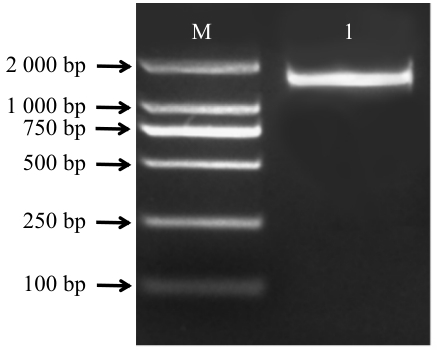
Fig. 1 Electrophoretogram of NtPPO5 gene amplified productM: DL2 000 DNA marker. 1: PCR amplification product of the NtPPO5 gene
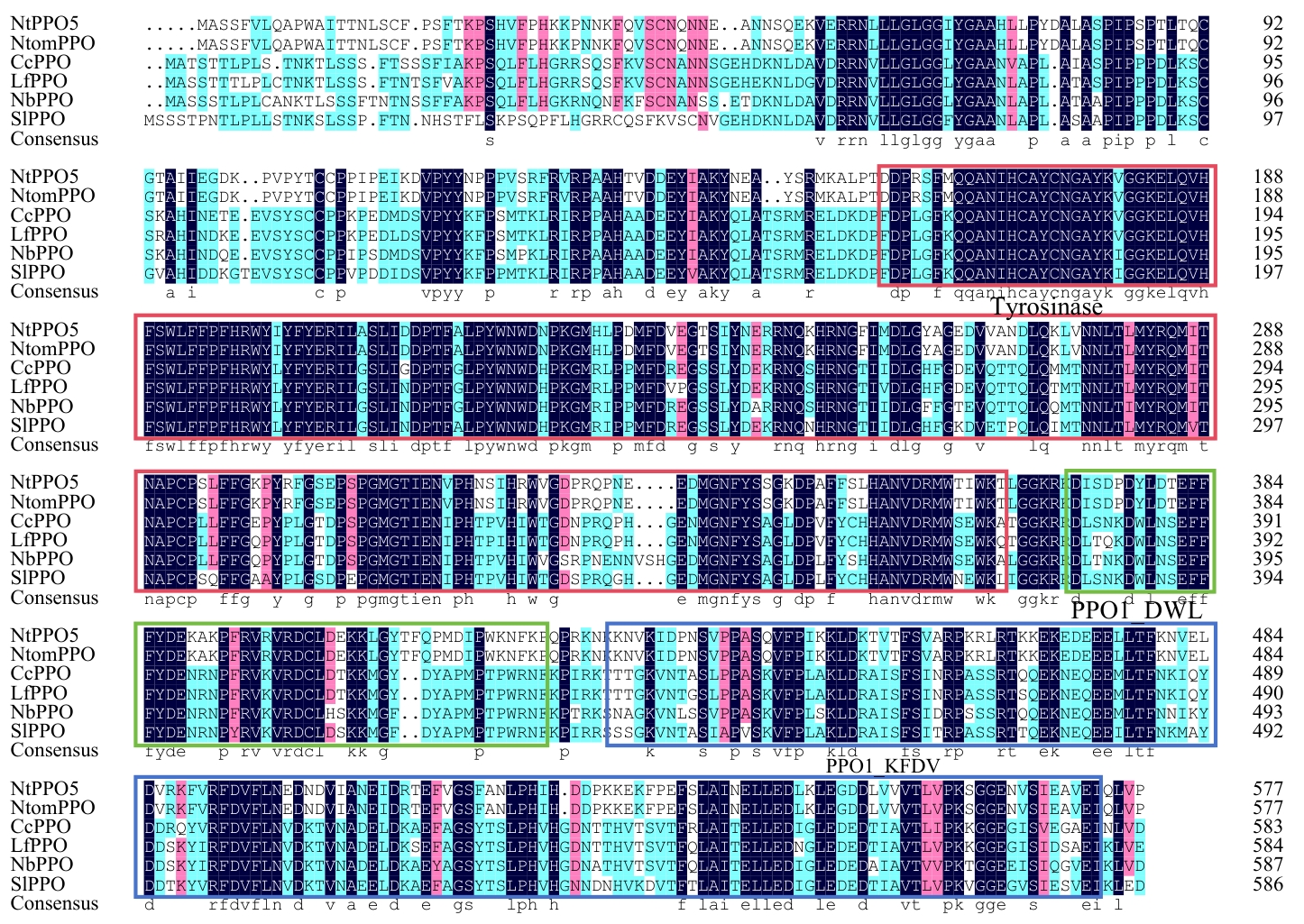
Fig. 2 Alignment of the amino acid sequences of NtPPO5 with other Solanaceae plants
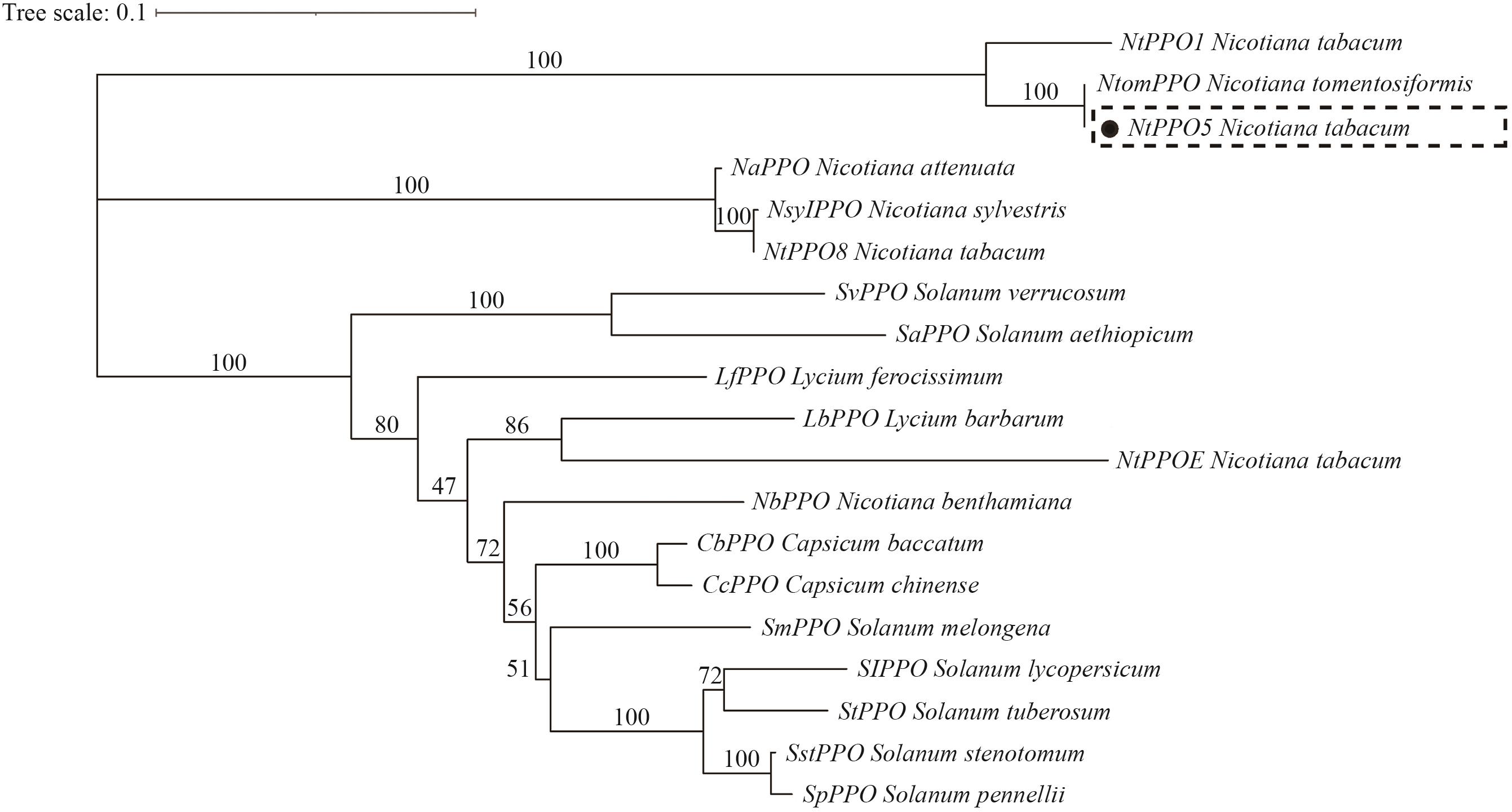
Fig. 3 Genetic evolutionary analysis of NtPPO5
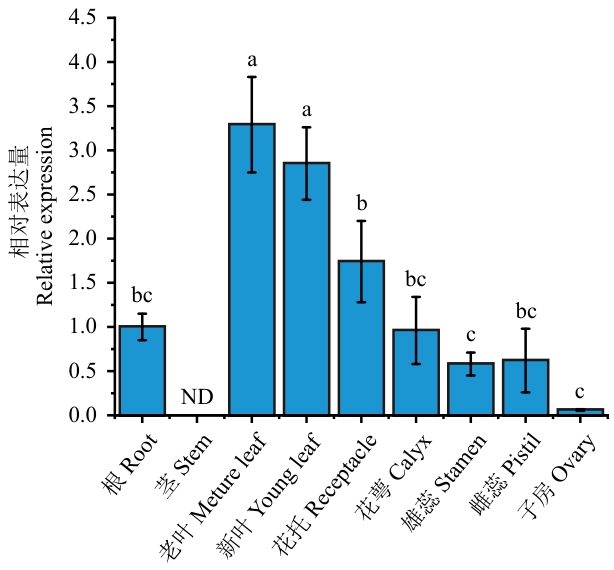
Fig. 4 Analysis of NtPPO5 gene expression in different tissues during the tobacco flowering stageDifferent lowercase letters indicate significant differences among tissues (P<0.05). The same below. ND:None detected
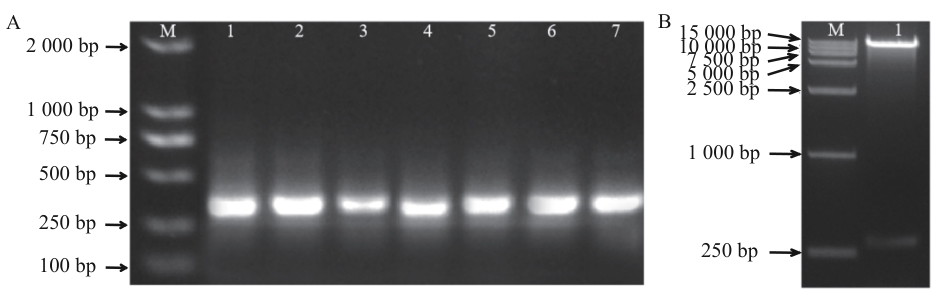
Fig. 5 Detection of pTRV2-NtPPO5 gene recombinant plasmidA: PCR results of pTRV2-NtPPO5 bacterial liquid (M: DL2 000 DNA marker. Lane 1-7: pTRV2-NtPPO5 bacterial liquid). B: Restriction enzyme digestion results of pTRV2-NtPPO5 plasmid (M: DL15 000 DNA marker. Lane 1: pTRV2-NtPPO5 plasmid)
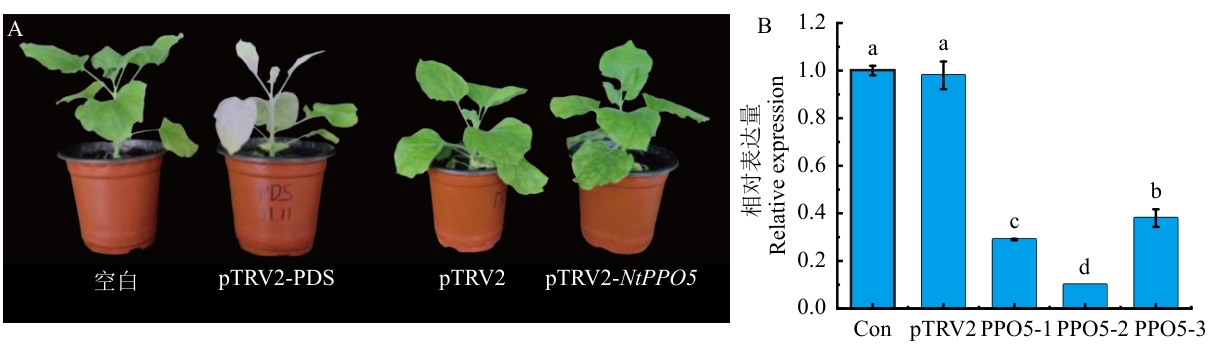
Fig. 6 Phenotypic characteristics and relative gene expressions of NtPPO5 gene silenced plantsA: Phenotype of blank control (Con), positive control (pTRV2-PDS), negative control (pTRV2), and experimental group (pTRV2-NtPPO5) plants at 15 d post-infiltration. B: Relative expression analysis of the NtPPO5 gene
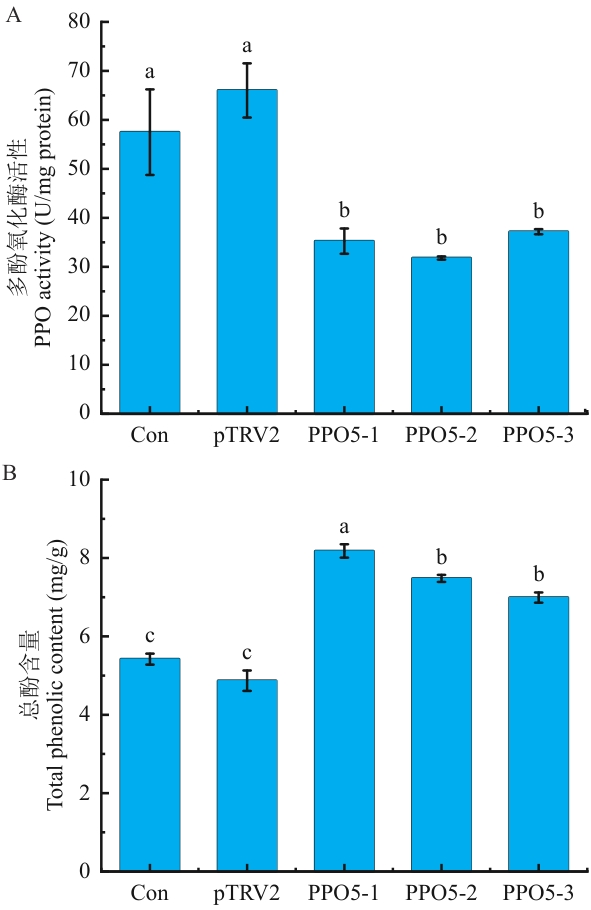
Fig. 7 Analysis of polyphenol oxidase (PPO) activity (A) and total phenolic content (B) in NtPPO5 transgenic plants

Fig. 8 Analysis of sequencing of NtPPO5 gene-edited plants
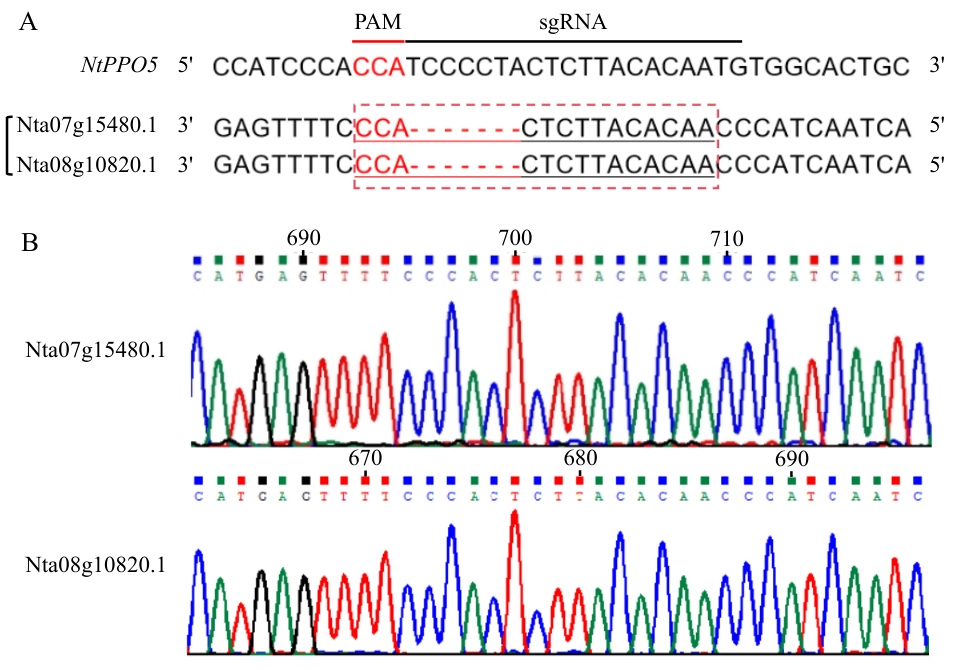
Fig. 9 Detection of CRISPR/Cas9-mediated knockout of the NtPPO5 gene vectorA: Schematic diagram of off-target gene sequences. B: Alignment of off-target gene sequencing results
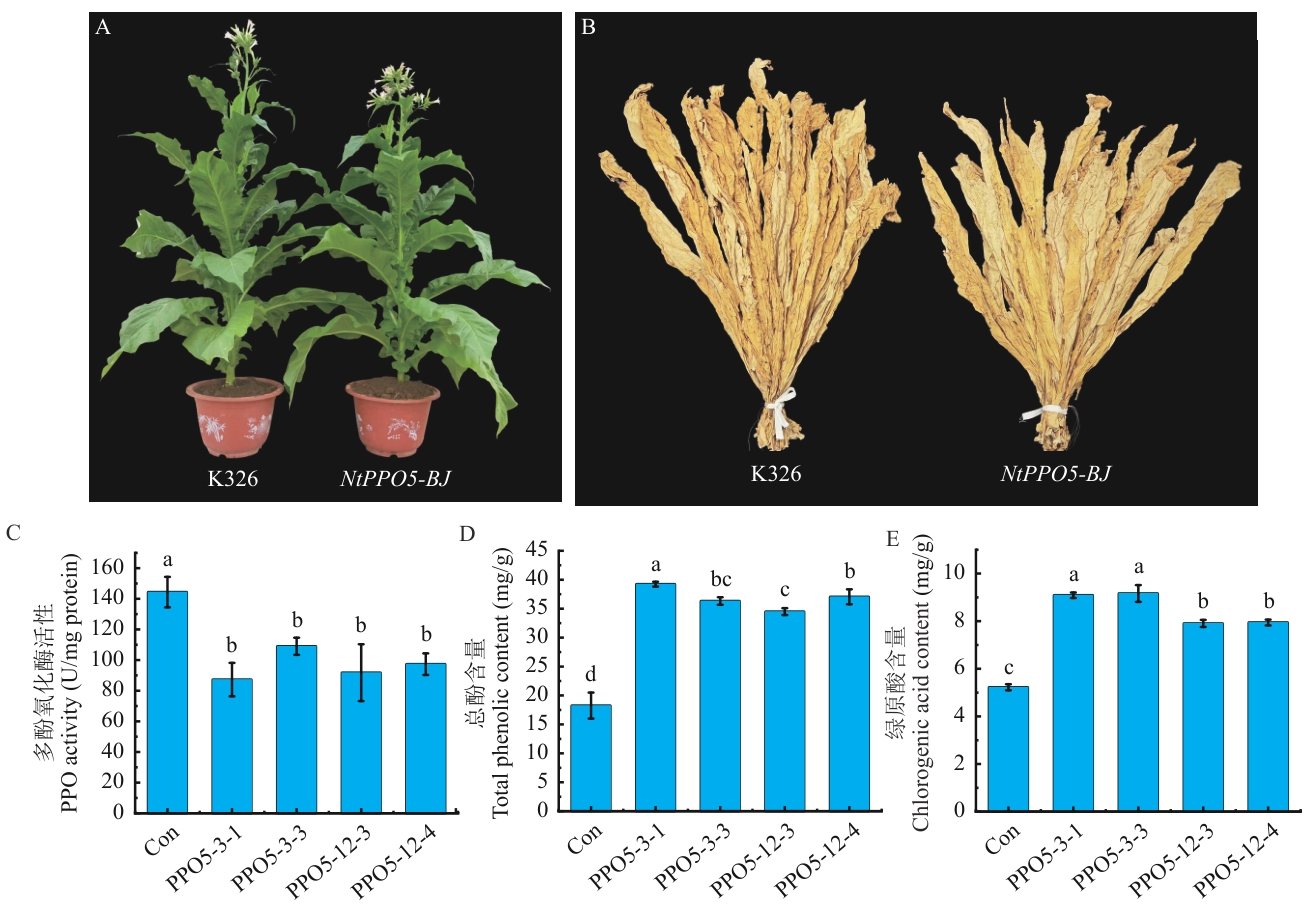
Fig. 10 Analysis of phenotype (A), cured tobacco phenotype (B), polyphenol oxidase activity (C), total phenolics (D), and chlorogenic acid content (E) in NtPPO5 gene-edited plants
| [1] | Bibhuti Bhusan Mishra BX. Polyphonel oxidases: biochemical and molecular characterization, distribution, role and its control [J]. Enz Eng, 2016, 5(1): 141-149. |
| [2] | Tran LT, Taylor JS, Constabel CP. The polyphenol oxidase gene family in land plants: Lineage-specific duplication and expansion [J]. BMC Genom, 2012, 13(1): 395. |
| [3] | Boeckx T, Winters AL, Webb KJ, et al. Polyphenol oxidase in leaves: is there any significance to the chloroplastic localization? [J]. J Exp Bot, 2015, 66(12): 3571-3579. |
| [4] | Liao T, Zhou L, Liu JP, et al. Inhibitory mechanism of salicylic acid on polyphenol oxidase: a cooperation between acidification and binding effects [J]. Food Chem, 2021, 348: 129100. |
| [5] | Peter W Thygesen IBD. Polyphenol oxidase in potato: a multigene family that exhibits differential expression patterns [J]. Plant Physiol, 1995, 109(2): 525-531. |
| [6] | Bisswanger H. Enzyme assays [J]. Perspect Sci, 2014, 1(1-6): 41-55. |
| [7] | 张海星,时王珂,郭蓉,等. 丹参多酚氧化酶互作的蛋白筛选与验证[J].中国重要杂志,2020, 45(11): 2523-2532. |
| Zhang HX, Shi WK, Guo R, et al. Screening and verification of proteins of Salvia miltiorrhiza polyphenol oxidase interaction [J]. China Journal of Chinese Materia Medica, 2020, 45(11): 2523-2532. | |
| [8] | Nicolas JJ, Richard‐Forget FC, Goupy PM, et al. Enzymatic browning reactions in apple and apple products [J]. Crit Rev Food Sci Nutr, 1994, 34(2): 109-157. |
| [9] | 李玉娥, 尹启生, 宋纪真, 等. 烟草酶促棕色化反应及调控技术研究进展 [J]. 中国烟草科学, 2008, 29(6): 71-77. |
| Li YE, Yin QS, Song JZ, et al. Research progress of enzymatic browning reaction of tobacco and its regulation technology [J]. Chin Tob Sci, 2008, 29(6): 71-77. | |
| [10] | 杨树勋. 烟草酶促棕色化反应机理及其调控研究进展 [J]. 作物研究, 2019, 33(3): 246-250. |
| Yang SX. Study on mechanism and regulation technology of enzymatic browning of tobacco [J]. Crop Res, 2019, 33(3): 246-250. | |
| [11] | 王传义, 吕国新, 朱启法, 等. 烤烟烘烤特性与烟草多酚氧化酶活性相关性研究 [J]. 湖北农业科学, 2016, 55(6): 1495-1499, 1503. |
| Wang CY, Lv GX, Zhu QF, et al. Study on the correlation between the baking characteristics of flue-cured tobacco and the activity of tobacco polyphenol oxidase [J]. Hubei Agric Sci, 2016, 55(6): 1495-1499, 1503. | |
| [12] | Rössner C, Lotz D, Becker A. VIGS goes viral: how VIGS transforms our understanding of plant science [J]. Annu Rev Plant Biol, 2022, 73(1): 703-728. |
| [13] | Silva-Martins G, Bolaji A, Moffett P. What does it take to be antiviral? An Argonaute-centered perspective on plant antiviral defense [J]. J Exp Bot, 2020, 71(20): 6197-6210. |
| [14] | Cody WB, Scholthof HB. Plant virus vectors 3.0: transitioning into synthetic genomics [J]. Annu Rev Phytopathol, 2019, 57: 211-230. |
| [15] | Burch-Smith TM, Anderson JC, Martin GB, et al. Applications and advantages of virus-induced gene silencing for gene function studies in plants [J]. Plant J, 2004, 39(5): 734-746. |
| [16] | Chen X, Yang BX, Huang W, et al. Comparative proteomic analysis reveals elevated capacity for photosynthesis in polyphenol oxidase expression-silenced Clematis terniflora DC. leaves [J]. Int J Mol Sci, 2018, 19(12): 3897. |
| [17] | Wang YF, Huang N, Ye N, et al. An efficient virus-induced gene silencing system for functional genomics research in walnut (Juglans regia L.) fruits [J]. Front Plant Sci, 2021, 12: 661633. |
| [18] | Yang XF, Wang GM, Mo ZH, et al. Transcriptomics unravel the mechanism of CiPPO1 and CiPPO2 involved in regulating pecan kernel pellicle browning during storage [J]. Sci Hortic, 2024, 336: 113412. |
| [19] | Garneau JE, Dupuis MÈ, Villion M, et al. The CRISPR/Cas bacterial immune system cleaves bacteriophage and plasmid DNA [J]. Nature, 2010, 468(7320): 67-71. |
| [20] | 姚恒, 杨大海, 白戈, 等. 利用CRISPR/Cas9技术定点敲除烟草多酚氧化酶基因NtPPO1 [J]. 生物技术通报, 2018,34(11): 97-102. |
| Yao H, Yang DH, Bai G, et al. Using CRISPR/Cas9 technology to knock out tobacco polyphenol oxidase gene NtPPO1 [J]. Biotechnol Bull, 2018,34(11): 97-102. | |
| [21] | 段杜薇, 田培, 李芳芳, 等. 多酚氧化酶基因NtPPOE差异表达的效应分析 [J]. 分子植物育种, 2021, 19(3): 724-729. |
| Duan DW, Tian P, Li FF, et al. Effect of differential expression of polyphenol oxidase gene NtPPOE [J]. Mol Plant Breed, 2021, 19(3): 724-729. | |
| [22] | 代卓毅, 李洪亮, 姚怡帆, 等. 编辑烤烟多酚氧化酶基因NtPP08后的效应分析 [J]. 中国烟草学报, 2022, 28(5): 73-83. |
| Dai ZY, Li HL, Yao YF, et al. Effect analysis of editing flue-cured tobacco polyphenol pxidase gene NtPPO8 [J]. Acta Tabacaria Sin, 2022, 28(5): 73-83. | |
| [23] | Zhang SX, Lin YC, Zeng XH, et al. Genome-wide characterization of polyphenol oxidase (PPO) gene family in tobacco and the molecular improvement of browning reaction for K326 tobacco leaves [J]. Ind Crops Prod, 2025, 235: 121765. |
| [24] | 李亦君, 夏琳, 杨小贝, 等. 基于CRISPR/Cas9技术的烟草NtHQT2基因敲除及功能分析 [J]. 烟草科技, 2024, 57(9): 33-39, 64. |
| Li YJ, Xia L, Yang XB, et al. Knockout and functional analysis of tobacco NtHQT2 gene based on CRISPR/Cas9 technology [J]. Tob Sci Technol, 2024, 57(9): 33-39, 64. | |
| [25] | Livak KJ, Schmittgen TD. Analysis of relative gene expression data using real-time quantitative PCR and the 2-ΔΔCT method [J]. Methods, 2001, 25(4): 402-408. |
| [26] | Richard W Joy IV MS. Cloning and characterization of polyphenol oxidase cDNAs of Phytolacca americana . [J]. Plant Physiol, 1995, 107(4): 1083-1089. |
| [27] | 王中, 赵利杰, 刘萍萍, 等. 烟草NtMYB59基因克隆及过表达对绿原酸含量的影响 [J]. 烟草科技, 2021, 54(5): 1-7. |
| Wang Z, Zhao LJ, Liu PP, et al. Cloning and over-expressing tobacco NtMYB59 gene and the effects on chlorogenic acid content [J]. Tob Sci Technol, 2021, 54(5): 1-7. | |
| [28] | Li LL, Xiao YJ, Wang BH, et al. A frameshift mutation in JAZ10 resolves the growth versus defense dilemma in rice [J]. Proc Natl Acad Sci USA, 2024, 121(52): e2413564121. |
| [29] | Wei XM, Shu J, Fahad S, et al. Polyphenol oxidases regulate pollen development through modulating flavonoids homeostasis in tobacco [J]. Plant Physiol Biochem, 2023, 198: 107702. |
| [30] | Wei XM, Tao KL, Liu ZM, et al. The PPO family in Nicotiana tabacum is an important regulator to participate in pollination [J]. BMC Plant Biol, 2024, 24(1): 102. |
| [31] | Vaughn KC, Lax AR, Duke SO. Polyphenol oxidase: The chloroplast oxidase with no established function [J]. Physiol Plant, 1988, 72(3): 659-665. |
| [32] | Wang YF, Guo ZP, Zhou RB, et al. JrPPO1/2 play distinct roles in regulating walnut fruit browning by different spatiotemporal expression and enzymatic characteristics [J]. Plant Physiol Biochem, 2024, 215: 109018. |
| [33] | Li L, Steffens JC. Overexpression of polyphenol oxidase in transgenic tomato plants results in enhanced bacterial disease resistance [J]. Planta, 2002, 215(2): 239-247. |
| [34] | Abdi K, Esmaeili N, Ebrahimzadeh H. Correlation between polyphenol oxidase (PPO) activity and total phenolic contents in Crocus sativus L. corms during dormancy and sprouting stages [J]. Phcog Mag, 2017, 13(51): 519. |
| [35] | Ayaz FA, Demir O, Torun H, et al. Characterization of polyphenoloxidase (PPO) and total phenolic contents in medlar (Mespilus germanica L.) fruit during ripening and over ripening [J]. Food Chem, 2008, 106(1): 291-298. |
| [36] | Ortega-García F, Blanco S, Peinado MÁ, et al. Polyphenol oxidase and its relationship with oleuropein concentration in fruits and leaves of olive (Olea europaea) cv. ‘Picual’ trees during fruit ripening [J]. Tree Physiol, 2008, 28(1): 45-54. |
| [37] | Orak HH. Total antioxidant activities, phenolics, anthocyanins, polyphenoloxidase activities of selected red grape cultivars and their correlations [J]. Sci Hortic, 2007, 111(3): 235-241. |
| [38] | Chi M, Bhagwat B, Lane WD, et al. Reduced polyphenol oxidase gene expression and enzymatic browning in potato (Solanum tuberosum L.) with artificial microRNAs [J]. BMC Plant Biol, 2014, 14: 62. |
| [39] | Innan H, Kondrashov F. The evolution of gene duplications: classifying and distinguishing between models [J]. Nat Rev Genet, 2010, 11(2): 97-108. |
| [40] | 刘银松, 林建枫, 张永毅, 等. 烟草PPO基因家族鉴定与不同成熟度烟叶烘烤过程中PPO活性分析 [J]. 中国烟草学报, 2023,29(3): 47-56. |
| Liu YS, Lin JF, Zhang YY, et al. Identification of tobacco PPO gene family and analysis of PPO activity during flue curing of tobacco at different maturity stages [J]. Acta Tabacaria Sin, 2023,29(3): 47-56. | |
| [41] | 孔俊豪, 孙庆磊, 涂云飞, 等. 多酚氧化酶酶学特性研究及其应用进展 [J]. 中国野生植物资源, 2011, 30(4): 13-17. |
| Kong JH, Sun QL, Tu YF, et al. Research progress on enzymatic characteristic and application of polyphenol oxidase [J]. Chinese Wild Plant Resources, 2011,30(4): 13-17. |
| [1] | LIU Qing-yuan, WU Hong-qi, CHEN Xiu-e, CHEN Jian, JIANG Yuan-ze, HE Yan-zi, YU Qi-wei, LIU Ren-xiang. Function of Transcription Factor NtMYB96a in Regulating the Tolerance of Tobacco to Drought [J]. Biotechnology Bulletin, 2026, 42(4): 239-250. |
| [2] | PENG Chu, SUN Juan-li, ZHENG Bei-bei, ZHANG Ruo-xi, HAN Yue-peng, ZHAO Yun. Research Progress in the Enzymatic Degradation Mechanism of Anthocyanins in Fruits [J]. Biotechnology Bulletin, 2026, 42(3): 133-144. |
| [3] | WANG Xiao-yi, LI Jin-yan, XING Xing, ZHU Hong-liang. Screening and Functional Analysis of Ethylene-responsive Genes Regulating Tomato Fruit Ripening and Respiration [J]. Biotechnology Bulletin, 2026, 42(3): 275-282. |
| [4] | LI Ya-ni, HAN Hong-yu, GENG Meng-shuang, MI Ruo-lan, Wang Wei-qi, Yu Wen-jing, MENG Xian-wen, LI Chuan-you. Mechanistic Study on ChiC-mediated Regulation Mechanism of Tomato Resistance to Botrytis cinerea [J]. Biotechnology Bulletin, 2026, 42(3): 255-262. |
| [5] | WANG Ting-ting, HE Meng-ya, SHENG Jia-shun, GAO Chen, CAI Han-fang, FU Tong, SUN Yu, GAO Teng-yun, ZHANG Tian-liu. Preparation of NCAPG Knockout Bovine Fibroblast Cell Lines Using CRISPR/Cas9 Technology [J]. Biotechnology Bulletin, 2026, 42(2): 317-324. |
| [6] | LIU Meng-ru, XIA Lin, LIU Rui-xia, YAN Xin-ke, YANG Jun, ZHANG Jing-hua, WU Ming-zhu. Cloning and Functional Analysis of Tobacco Polyphenol Oxidase NtPPO1-2 Gene [J]. Biotechnology Bulletin, 2026, 42(2): 218-227. |
| [7] | ZHANG Chi-hao, LIU Jin-nan, DONG Jia-le, CHAO Yue-hui. Construction of Alfalfa Yeast Expression Library and Screening and Identification of Salt-tolerance Genes [J]. Biotechnology Bulletin, 2026, 42(2): 239-249. |
| [8] | LYU Cheng-cong, HENG Meng, CHEN Si-qi, JIN Xue-hua. Cloning and Functional Analysis of ZhGSTF Related to Anthocyanin Transport Zantedeschia hybrida [J]. Biotechnology Bulletin, 2026, 42(1): 161-169. |
| [9] | ZHANG Chi-hao, LIU Jin-nan, CHAO Yue-hui. Cloning and Functional Analysis of a bZIP Transcription Factor MtbZIP29 from Medicago truncatula [J]. Biotechnology Bulletin, 2026, 42(1): 241-250. |
| [10] | ZENG Ting, ZHANG Lan, LUO Rui. Functional Analysis of the Transcription Factor MpR2R3-MYB17 in Regulating Gemma Development in Marchantia polymorpha L. [J]. Biotechnology Bulletin, 2026, 42(1): 208-217. |
| [11] | XU Xiao-ping, YANG Cheng-long, HE Xing, GUO Wen-jie, WU Jian, FANG Shao-zhong. Cloning of the LoAPS1 and Its Function Analysis during the Process of Dormancy Release in Lilium [J]. Biotechnology Bulletin, 2025, 41(9): 195-206. |
| [12] | ZHAI Ying, JI Jun-jie, CHEN Jiong-xin, YU Hai-wei, LI Shan-shan, ZHAO Yan, MA Tian-yi. Heterologous Overexpression of Soybean GmNF-YB24 Improves the Resistance of Transgenic Tobacco to Drought [J]. Biotechnology Bulletin, 2025, 41(8): 137-145. |
| [13] | LAI Shi-yu, LIANG Qiao-lan, WEI Lie-xin, NIU Er-bo, CHEN Ying-e, ZHOU Xin, YANG Si-zheng, WANG Bo. The Role of NbJAZ3 in the Infection of Nicotiana benthamiana by Alfalfa Mosaic Virus [J]. Biotechnology Bulletin, 2025, 41(8): 186-196. |
| [14] | YU Yong-xia, DU Zai-hui, ZHU Long-jiao, XU Wen-tao. Application and Research Progress of Gene Editing Technology in Bovine [J]. Biotechnology Bulletin, 2025, 41(8): 34-41. |
| [15] | HUANG Xu-sheng, ZHOU Ya-li, CHAI Xu-dong, WEN Jing, WANG Ji-ping, JIA Xiao-yun, LI Run-zhi. Cloning of Plastidial PfLPAT1B Gene from Perilla frutescens and Its Functional Analysis in Oil Biosynthesis [J]. Biotechnology Bulletin, 2025, 41(7): 226-236. |
| Viewed | ||||||
|
Full text |
|
|||||
|
Abstract |
|
|||||
