







Biotechnology Bulletin ›› 2026, Vol. 42 ›› Issue (5): 323-331.doi: 10.13560/j.cnki.biotech.bull.1985.2025-0918
JIN Xuan1,2,3( ), XIANG Fen2,3, DAI Cui-ting2,3, YANG Hui2,3, LI Sai-jun2,3, LIU Hong-yan2,3, QIAN Si-wei1,2,3, LIN Wan-huang1(), LI Wei2,3()
Received:2025-08-24
Online:2026-05-26
Published:2026-06-10
Contact:
LIN Wan-huang, LI Wei
E-mail:15770670351@163.com;linwhat@hunau.edu.cn;hncyslw@hunaas.cn
JIN Xuan, XIANG Fen, DAI Cui-ting, YANG Hui, LI Sai-jun, LIU Hong-yan, QIAN Si-wei, LIN Wan-huang, LI Wei. Cloning and Expression Analysis of CsTDIFL and Its Regulation on Amino Acid Synthesis in Tea Plants (Camellia sinensis)[J]. Biotechnology Bulletin, 2026, 42(5): 323-331.
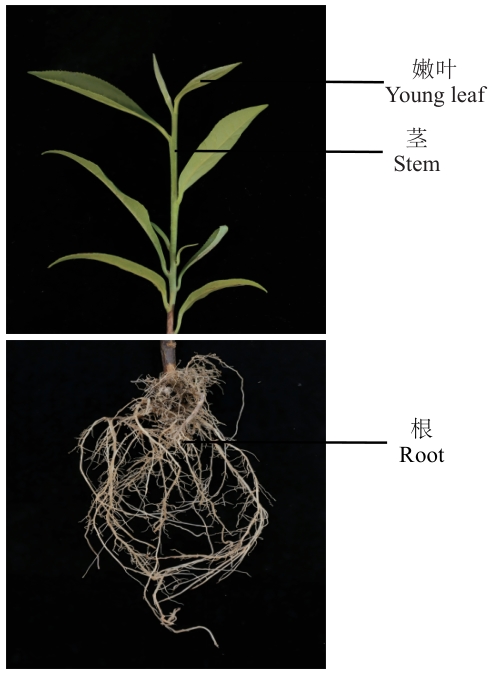
Fig. 1 Root, stem, and leaf of the tea plant (Camellia sinensis L.)
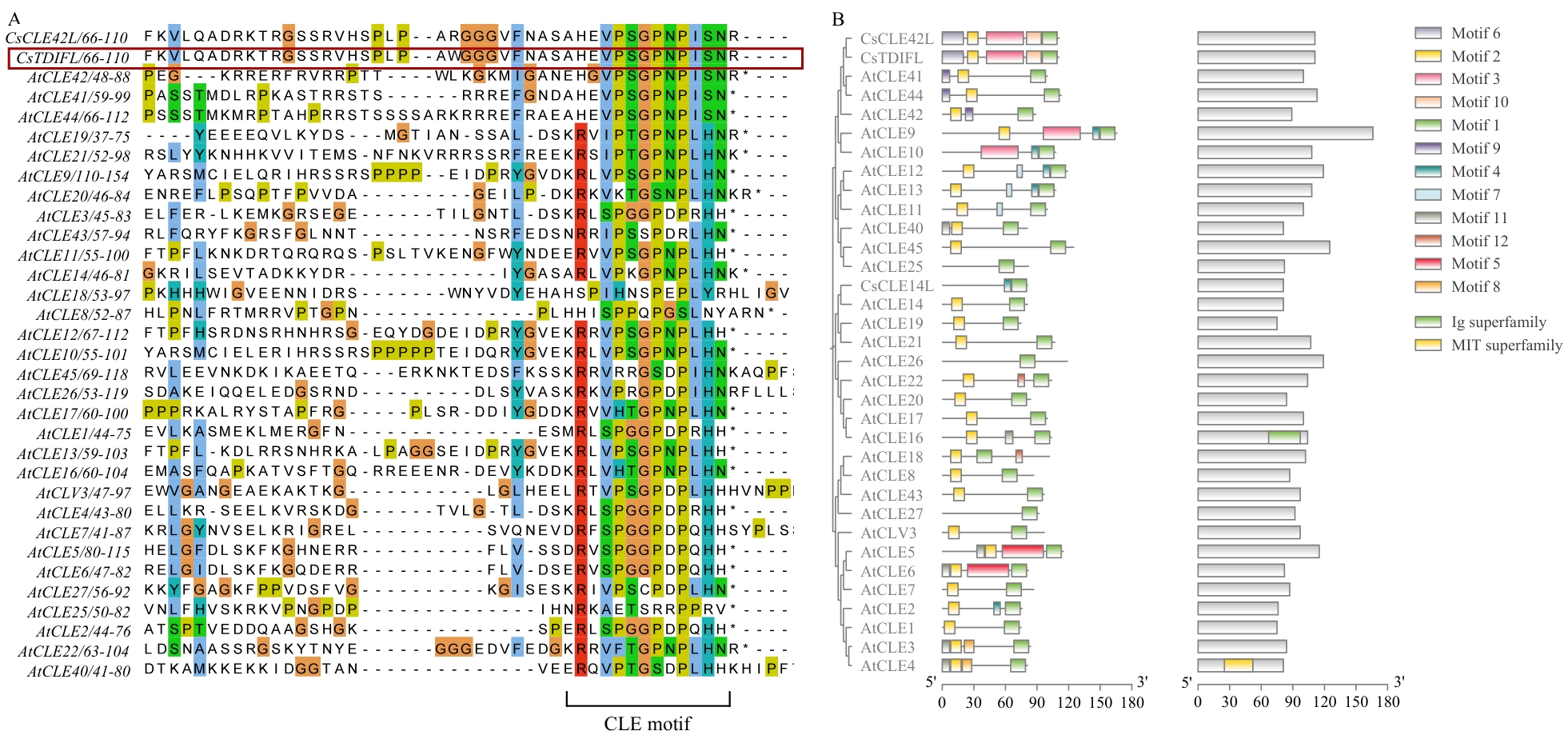
Fig. 2 Cloning, sequence homology and phylogenetic analysis of the CsTDIFL geneA:Amino acid sequence alignment analysis of CsTDIFL protein with the Arabidopsis CLE family. B:Phylogenetic tree and motif analysis of CsTDIFL protein and the Arabidopsis CLE family proteins
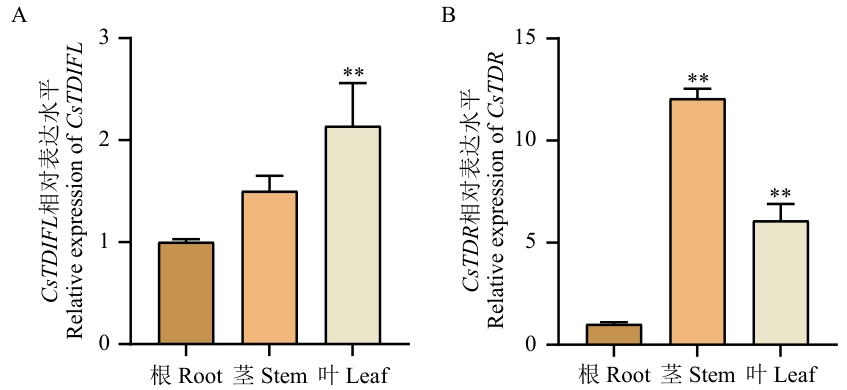
Fig. 3 Expressions of CsTDIFL and CsTDR in different tissues of tea plant** indicates extremely significant difference (P<0.01)
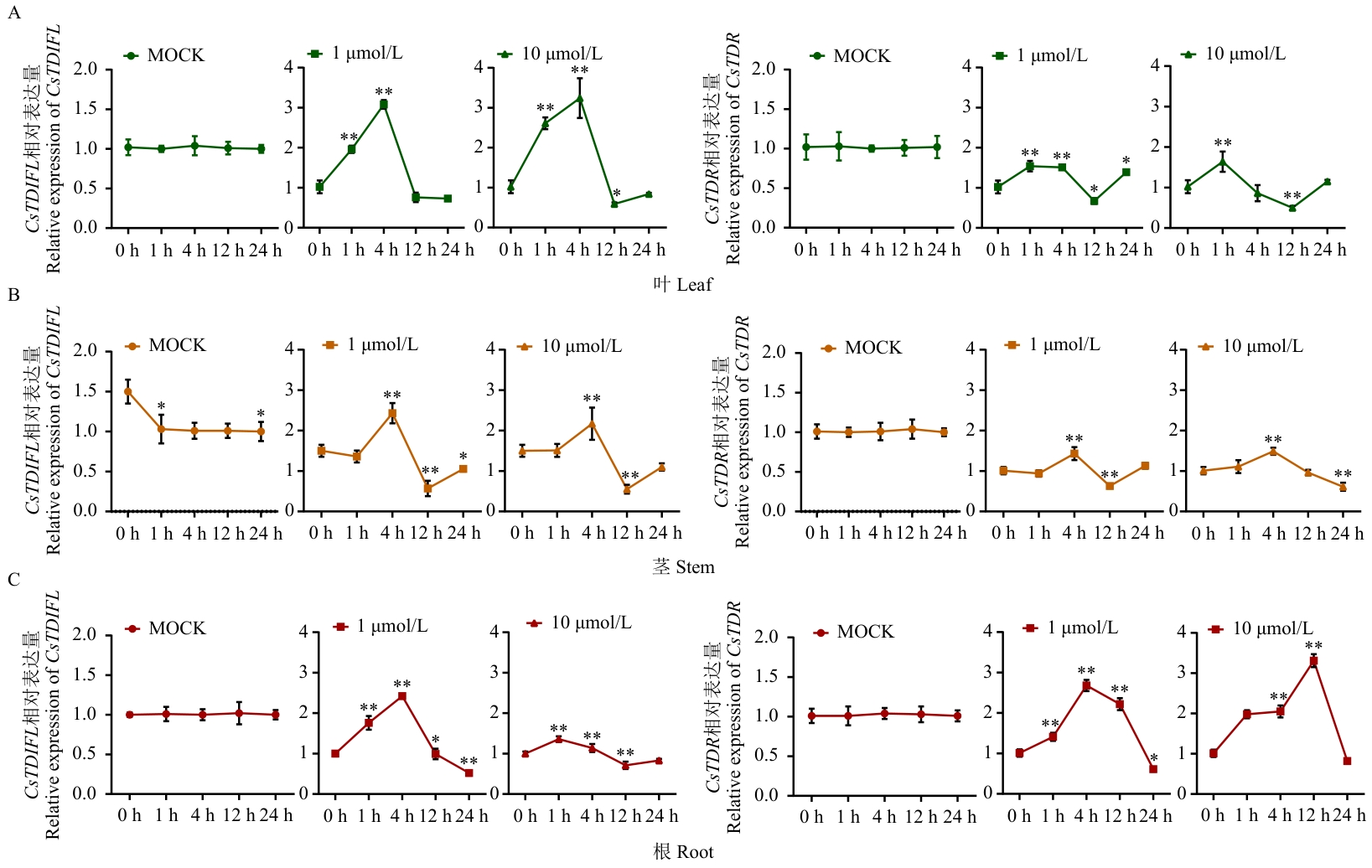
Fig. 4 Responses of CsTDIFL and CsTDR to exogenous TDIF peptide in tea plantA‒C refer to the relative expressions of CsTDIFL and CsTDR in tea tree leaf, stem, and root samples, respectively, under treatments of 0 μmol/L (MOCK), 1 μmol/L, and 10 μmol/L TDIF polypeptide hormone. The horizontal axis (1‒24 h) indicates the sampling time, with the pre-treatment time denoted as 0 h. The data in the figure (Panel A‒C) are the mean±SD of three biological replicates. * indicates a significant difference (P<0.05), and ** indicates a highly significant difference (P<0.01). The same below
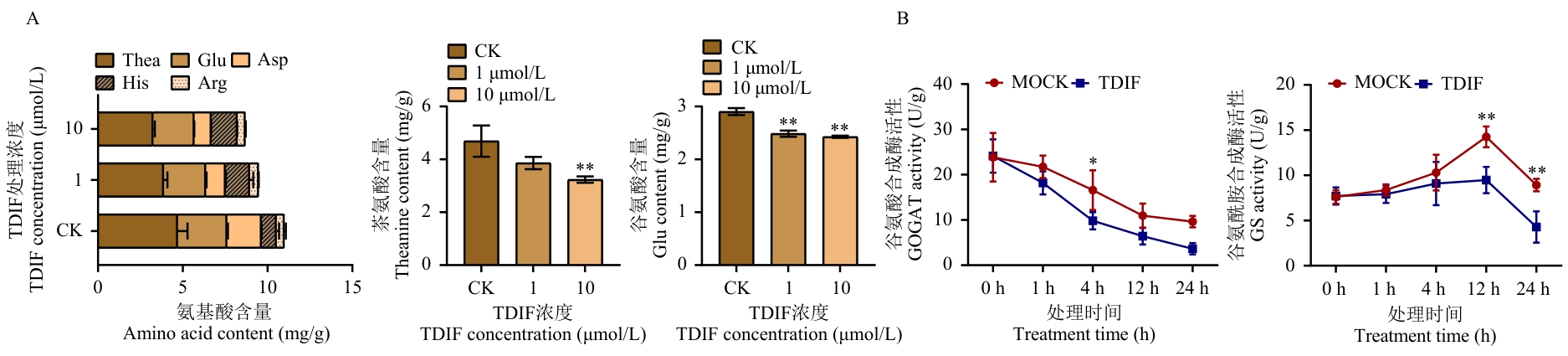
Fig. 5 Dynamics of amino acid contents and key nitrogen metabolic enzyme activities under TDIF treatmentA: Accumulation of major free amino acids after 24 h of TDIF treatment. B: Dynamic changes in key nitrogen metabolism enzyme activities under TDIF treatment at 0, 1, 4, 12, and 24 h
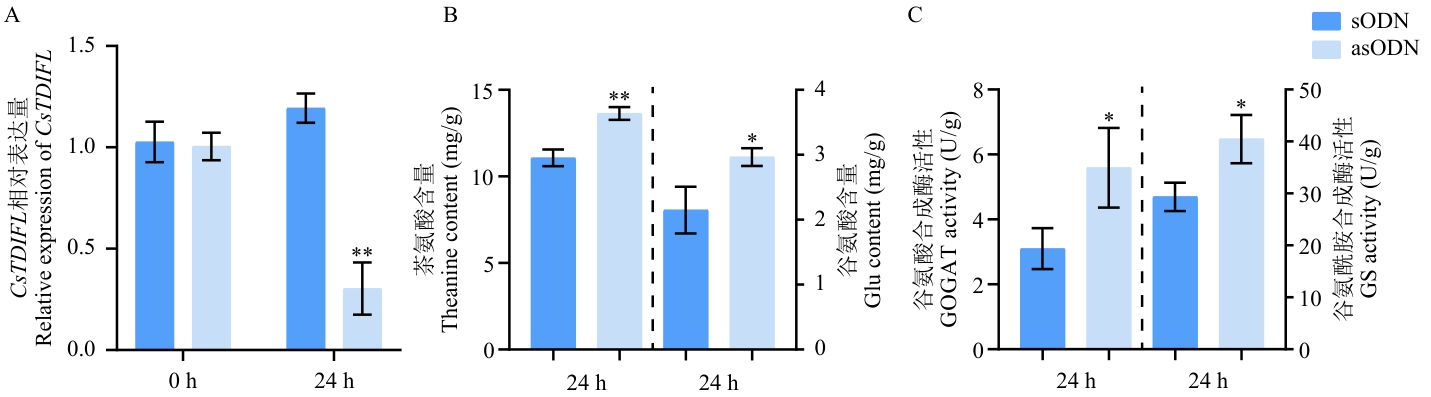
Fig. 6 Effects of antisense oligonucleotide inhibiting CsTDIFL on theanine contentA: CsTDIFL expressions after 24 h of asODN treatment. B: Theanine and glutamate contents after 24 h of asODN treatment. C: GOGAT/GS enzyme activity after 24 h of asODN treatment
| [1] | Khan SU, Khan MHU, Ahmar S, et al. Comprehensive study and multipurpose role of the CLV3/ESR-related (CLE) genes family in plant growth and development [J]. J Cell Physiol, 2021, 236(4): 2298-2317. |
| [2] | Song XF, Hou XL, Liu CM. CLE peptides: critical regulators for stem cell maintenance in plants [J]. Planta, 2021, 255(1): 5. |
| [3] | Fletcher JC. Recent advances in Arabidopsis CLE peptide signaling [J]. Trends Plant Sci, 2020, 25(10): 1005-1016. |
| [4] | Liu J, Li WJ, Wu G, et al. An update on evolutionary, structural, and functional studies of receptor-like kinases in plants [J]. Front Plant Sci, 2024, 15: 1305599. |
| [5] | Gao XM, Guo YF. CLE peptides in plants: proteolytic processing, structure-activity relationship, and ligand-receptor interaction [J]. J Integr Plant Biol, 2012, 54(10): 738-745. |
| [6] | Fletcher JC. CLAVATA3 signaling buffers Arabidopsis shoot apical meristem activity in response to photoperiod [J]. Int J Mol Sci, 2024, 25(17): 9357. |
| [7] | Kondo Y, Fukuda H. The TDIF signaling network [J]. Curr Opin Plant Biol, 2015, 28: 106-110. |
| [8] | Ito Y, Nakanomyo I, Motose H, et al. Dodeca-CLE peptides as suppressors of plant stem cell differentiation [J]. Science, 2006, 313(5788): 842-845. |
| [9] | Fisher K, Turner S. PXY, a receptor-like kinase essential for maintaining polarity during plant vascular-tissue development [J]. Curr Biol, 2007, 17(12): 1061-1066. |
| [10] | Xiao F, Zhou HP, Lin HH. Decoding small peptides: Regulators of plant growth and stress resilience [J]. J Integr Plant Biol, 2025, 67(3): 596-631. |
| [11] | Yaginuma H, Hirakawa Y, Kondo Y, et al. A novel function of TDIF-related peptides: promotion of axillary bud formation [J]. Plant Cell Physiol, 2011, 52(8): 1354-1364. |
| [12] | Zhang Y, Tan SY, Gao YH, et al. CLE42 delays leaf senescence by antagonizing ethylene pathway in Arabidopsis [J]. New Phytol, 2022, 235(2): 550-562. |
| [13] | Yue J, Yang HY, Yang SH, et al. TDIF overexpression in poplars retards internodal elongation and enhances leaf venation through interaction with other phytohormones [J]. Tree Physiol, 2020, 40(1): 60-72. |
| [14] | Yue J, Yang HY, Yang SH, et al. TDIF regulates auxin accumulation and modulates auxin sensitivity to enhance both adventitious root and lateral root formation in poplar trees [J]. Tree Physiol, 2020, 40(11): 1534-1547. |
| [15] | Kondo Y, Ito T, Nakagami H, et al. Plant GSK3 proteins regulate xylem cell differentiation downstream of TDIF-TDR signalling [J]. Nat Commun, 2014, 5: 3504. |
| [16] | 白婧平. TDIF多肽与生长素在拟南芥根发育中的相互作用机制研究 [D]. 天津: 天津大学, 2020. |
| Bai JP. Interactions between TDIF peptide and auxin in regulating Arabidopsis root development [D]. Tianjin: Tianjin University, 2020. | |
| [17] | 巩陶婉. CLEs多肽对植物外植体生长与发育的影响 [D]. 天津: 天津大学, 2019. |
| Gong TW. Effects of CLEs peptide on the growth and development of plant explants [D]. Tianjin: Tianjin University, 2019. | |
| [18] | Hu J, Hu XT, Yang Y, et al. Strigolactone signaling regulates cambial activity through repression of WOX4 by transcription factor BES1 [J]. Plant Physiol, 2022, 188(1): 255-267. |
| [19] | Ahammed GJ, Li X. Hormonal regulation of health-promoting compounds in tea (Camellia sinensis L.) [J]. Plant Physiol Biochem, 2022, 185: 390-400. |
| [20] | Xiang F, Su Y, Zhou LY, et al. Gibberellin promotes theanine synthesis by relieving the inhibition of CsWRKY71 on CsTSI in tea plant (Camellia sinensis) [J]. Hortic Res, 2025, 12(2): uhae317. |
| [21] | Di TM, Zhao L, Chen HM, et al. Transcriptomic and metabolic insights into the distinctive effects of exogenous melatonin and gibberellin on terpenoid synthesis and plant hormone signal transduction pathway in Camellia sinensis [J]. J Agric Food Chem, 2019, 67(16): 4689-4699. |
| [22] | Li ZX, Yang WJ, Ahammed GJ, et al. Developmental changes in carbon and nitrogen metabolism affect tea quality in different leaf position [J]. Plant Physiol Biochem, 2016, 106: 327-335. |
| [23] | Li W, Xiang F, Su Y, et al. Gibberellin increases the bud yield and theanine accumulation in Camellia sinensis (L.) Kuntze [J]. Molecules, 2021, 26(11): 3290. |
| [24] | Chen H, Song YJ, Li H, et al. Enhancing the adaptability of tea plants (Camellia sinensis L.) to high-temperature stress with small peptides and biosurfactants [J]. Plants, 2023, 12(15): 2817. |
| [25] | 李文凤, 兰平. 植物小肽研究进展Ⅰ: 来源、鉴定和调控 [J]. 土壤, 2019, 51(6): 1049-1056. |
| Li WF, Lan P. Research progress of plant signal peptide: origin, identification and regulation [J]. Soils, 2019, 51(6): 1049-1056. | |
| [26] | Bassiony A, Sun SJ, Yan KN, et al. Integrative approaches unravelling tea drought alleviation mechanisms primed by carbonyl volatiles and signal peptide [J]. Plant Physiol Biochem, 2025, 223: 109802. |
| [27] | Wei CL, Yang H, Wang SB, et al. Draft genome sequence of Camellia sinensis var. sinensis provides insights into the evolution of the tea genome and tea quality [J]. Proc Natl Acad Sci USA, 2018, 115(18): E4151-E4158. |
| [28] | 陈璐瑶, 李琴, 尹杰, 等. 不同加工工艺对贵州绿茶干茶色泽及品质成分的影响分析 [J]. 有机化学研究, 2023, 11(1): 26-35. |
| Chen LY, Li Q, Yin J, et al. Effect of different processing techniques on color and quality components of Guizhou green tea dry tea [J]. J Org Chem Res, 2023, 11(1): 26-35. | |
| [29] | Huang J, Wang YL, Yu J, et al. Evolutionary landscape of tea circular RNAs and its contribution to chilling tolerance of tea plant [J]. Int J Mol Sci, 2023, 24(2): 1478. |
| [30] | Li PH, Fu JM, Xu YJ, et al. CsMYB1 integrates the regulation of trichome development and catechins biosynthesis in tea plant domestication [J]. New Phytol, 2022, 234(3): 902-917. |
| [31] | Wan K, Lu KN, Gao MT, et al. Functional analysis of the cotton CLE polypeptide signaling gene family in plant growth and development [J]. Sci Rep, 2021, 11(1): 5060. |
| [32] | Fatima S, Zeb SZ, Tariq M, et al. Role of CLE peptide signaling in root-knot nematode parasitism of plants [J]. Planta, 2024, 261(1): 3. |
| [33] | Liu YS, Yang SH, Song YJ, et al. Gain-of-function analysis of poplar CLE genes in Arabidopsis by exogenous application and over-expression assays [J]. J Exp Bot, 67(8): 2309-2324. |
| [34] | Feng L, Yu YC, Lin SJ, et al. Tonoplast-localized theanine transporter CsCAT2 may mediate theanine storage in the root of tea plants (Camellia sinensis L.) [J]. Front Plant Sci, 2021, 12: 797854. |
| [35] | Hu SK, Zhang M, Yang YQ, et al. A novel insight into nitrogen and auxin signaling in lateral root formation in tea plant [Camellia sinensis (L.) O. Kuntze [J]. BMC Plant Biol, 2020, 20(1): 232. |
| [36] | Li X, Wei JP, Ahammed GJ, et al. Brassinosteroids attenuate moderate high temperature-caused decline in tea quality by enhancing theanine biosynthesis in Camellia sinensis L [J]. Front Plant Sci, 2018, 9: 1016. |
| [37] | Stührwohldt N, Scholl S, Lang LS, et al. The biogenesis of CLEL peptides involves several processing events in consecutive compartments of the secretory pathway [J]. eLife, 2020, 9: e55580. |
| [38] | Brück S, Pfannstiel J, Ingram G, et al. Analysis of peptide hormone maturation and processing specificity using isotope-labeled peptides [J]. Methods Mol Biol, 2023, 2581: 323-335. |
| [39] | Lin SJ, Chen ZP, Chen TT, et al. Theanine metabolism and transport in tea plants (Camellia sinensis L.): advances and perspectives [J]. Crit Rev Biotechnol, 2023, 43(3): 327-341. |
| [40] | Liu ML, Zhao MZ, Yang G, et al. Root morphology, nitrogen metabolism and amino acid metabolism in soybean under low phosphorus stress [J]. Sci Rep, 2024, 14(1): 28583. |
| [1] | ZHANG Xin, CHEN Cheng, HUO Yuan-Bo, HUANG Ren-Li, ZHANG Li, ZHANG Kai, TONG Hua-rong, YUAN Lian-Yu. Cloning of the CsCRD1 in Tea Plants and Its Impact on Chlorophyll Biosynthesis [J]. Biotechnology Bulletin, 2026, 42(5): 280-291. |
| [2] | SUN Ting, ZHANG Yan, LIU Yu-shan, FENG Yuan-yuan, QIN Heng-shan, ZHANG Jun, HE Xiao-gang, ZHANG Jing-rong. Cloning and Functional Analysis of AeF3H Gene in Okra [J]. Biotechnology Bulletin, 2026, 42(4): 153-160. |
| [3] | YANG Ting, YANG Zong-tao, AI Jing, WANG Yu-tong, LI Yan-ye, DENG jun, LIU Jia-yong, ZHAO Yong, ZHANG Yue-bin. Analysis of Phenotypic Characteristics and Root Transcriptomics of Sugarcane with Different Genotypes [J]. Biotechnology Bulletin, 2026, 42(4): 190-201. |
| [4] | LIU Meng-ru, XIA Lin, LIU Rui-xia, YAN Xin-ke, YANG Jun, ZHANG Jing-hua, WU Ming-zhu. Cloning and Functional Analysis of Tobacco Polyphenol Oxidase NtPPO1-2 Gene [J]. Biotechnology Bulletin, 2026, 42(2): 218-227. |
| [5] | NI Ying, LI Lei, WANG Jin-xuan, MA Bo, MENG Xin, LENG Ping-sheng, WU Jing, HU Zeng-hui. Cloning and Functional Analysis of So4CL Gene in Syringa oblata [J]. Biotechnology Bulletin, 2026, 42(1): 139-149. |
| [6] | XU Xiao-ping, YANG Cheng-long, HE Xing, GUO Wen-jie, WU Jian, FANG Shao-zhong. Cloning of the LoAPS1 and Its Function Analysis during the Process of Dormancy Release in Lilium [J]. Biotechnology Bulletin, 2025, 41(9): 195-206. |
| [7] | DONG Xiang-xiang, MIAO Bai-ling, XU He-juan, CHEN Juan-juan, LI Liang-jie, GONG Shou-fu, ZHU Qing-song. Bioinformatics Analysis and Flowering Regulation Function of FveBBX20 Gene in Woodland Strawberry [J]. Biotechnology Bulletin, 2025, 41(9): 115-123. |
| [8] | ZHANG Yong-yan, GUO Si-jian, LI Jing, HAO Si-yi, LI Rui-de, LIU Jia-peng, CHENG Chun-zhen. Gene Cloning and Functional Analysis of the Anthocyanin-related VcGSTF19 Gene in Blueberry (Vaccinium corymbosum L.) [J]. Biotechnology Bulletin, 2025, 41(9): 139-146. |
| [9] | LI Kai-jie, WU Yao, LI Dan-dan. Cloning of Gene CtbHLH128 in Safflower and Response Function Regulating Drought Stress [J]. Biotechnology Bulletin, 2025, 41(8): 234-241. |
| [10] | KANG Qin, WANG Xia, SHEN Ming-yang, XU Jing-tian, CHEN Shi-lan, LIAO Ping-yang, XU Wen-zhi, WU Wei, XU Dong-bei. Cloning and Expression Analysis of the UV-B Receptor Gene McUVR8 in Mentha canadensis L. [J]. Biotechnology Bulletin, 2025, 41(8): 255-266. |
| [11] | DONG Xu-kun, CHE Yong-mei, WANG Ming-shuo, LUO Zheng-gang, GUAN En-sen, ZHAO Fang-gui, YE Qing, LIU Xin. Effects of Co-treatment of Nano-silica and Bacillus cereus SS1 on the Growth of Tobacco [J]. Biotechnology Bulletin, 2025, 41(7): 292-298. |
| [12] | WEI Yu-jia, LI Yan, KANG Yu-han, GONG Xiao-nan, DU Min, TU Lan, SHI Peng, YU Zi-han, SUN Yan, ZHANG Kun. Cloning and Expression Analysis of the CrMYB4 Gene in Carex rigescens [J]. Biotechnology Bulletin, 2025, 41(7): 248-260. |
| [13] | ZHANG Jin-hao, DENG Hui, ZHANG Qing-zhuang, TAO Yu, ZHOU Chi, LI Xin. Modulation of the Growth, Quality, and Cadmium Content of Lily Bulbs by Bacillus velezensis XY40-1 [J]. Biotechnology Bulletin, 2025, 41(7): 281-291. |
| [14] | XU Hui-zhen, SHANTWANA Ghimire, RAJU Kharel, YUE Yun, SI Huai-jun, TANG Xun. Analysis of the Potato SUMO E3 Ligase Gene Family and Cloning and Expression Pattern of StSIZ1 [J]. Biotechnology Bulletin, 2025, 41(6): 119-129. |
| [15] | PEI Jing-qi, ZHAO Meng-ran, HUANG Chen-yang, WU Xiang-li. Discovery and Verification of a Functional Gene Influencing the Growth and Development of Pleurotus ostreatus [J]. Biotechnology Bulletin, 2025, 41(6): 327-334. |
| Viewed | ||||||
|
Full text |
|
|||||
|
Abstract |
|
|||||
