







Biotechnology Bulletin ›› 2026, Vol. 42 ›› Issue (5): 312-322.doi: 10.13560/j.cnki.biotech.bull.1985.2025-1043
GUO Miao( ), XU Jia-jia, SUN Tian-guo, CAI Can, CAO Wan-di, BAO Ji-xing, SHA Wei, ZHANG Mei-juan, PENG Yi-fang, MA Tian-yi()
Received:2025-09-28
Online:2026-05-26
Published:2026-06-10
Contact:
MA Tian-yi
E-mail:1066602752@qq.com;tyma@qqhru.edu.cn
GUO Miao, XU Jia-jia, SUN Tian-guo, CAI Can, CAO Wan-di, BAO Ji-xing, SHA Wei, ZHANG Mei-juan, PENG Yi-fang, MA Tian-yi. Overexpression of RcOLEO1 Enhanced the Tolerance of Arabidopsis thaliana toDrought and High-temperature Stress[J]. Biotechnology Bulletin, 2026, 42(5): 312-322.
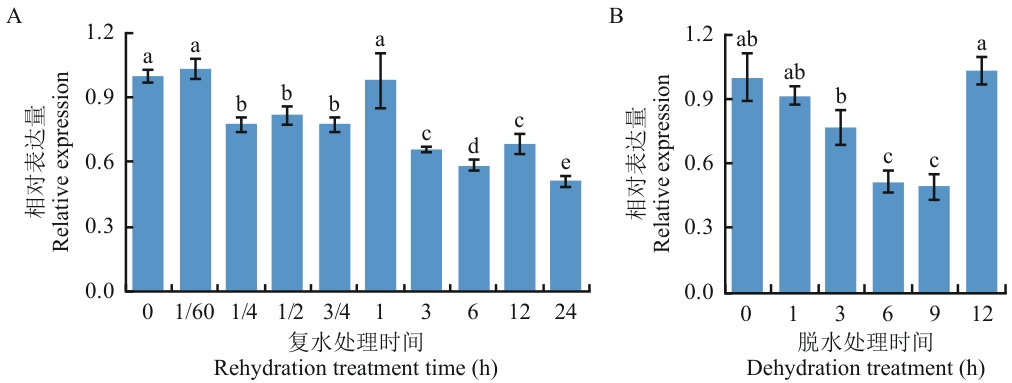
Fig. 1 Expression analysis of RcOLEO1 during rehydration and dehydration treatments of Racomitrium canescensThe error bars indicates the standard deviation, and the letters on the error bars indicate different significance (P<0.05), the same below
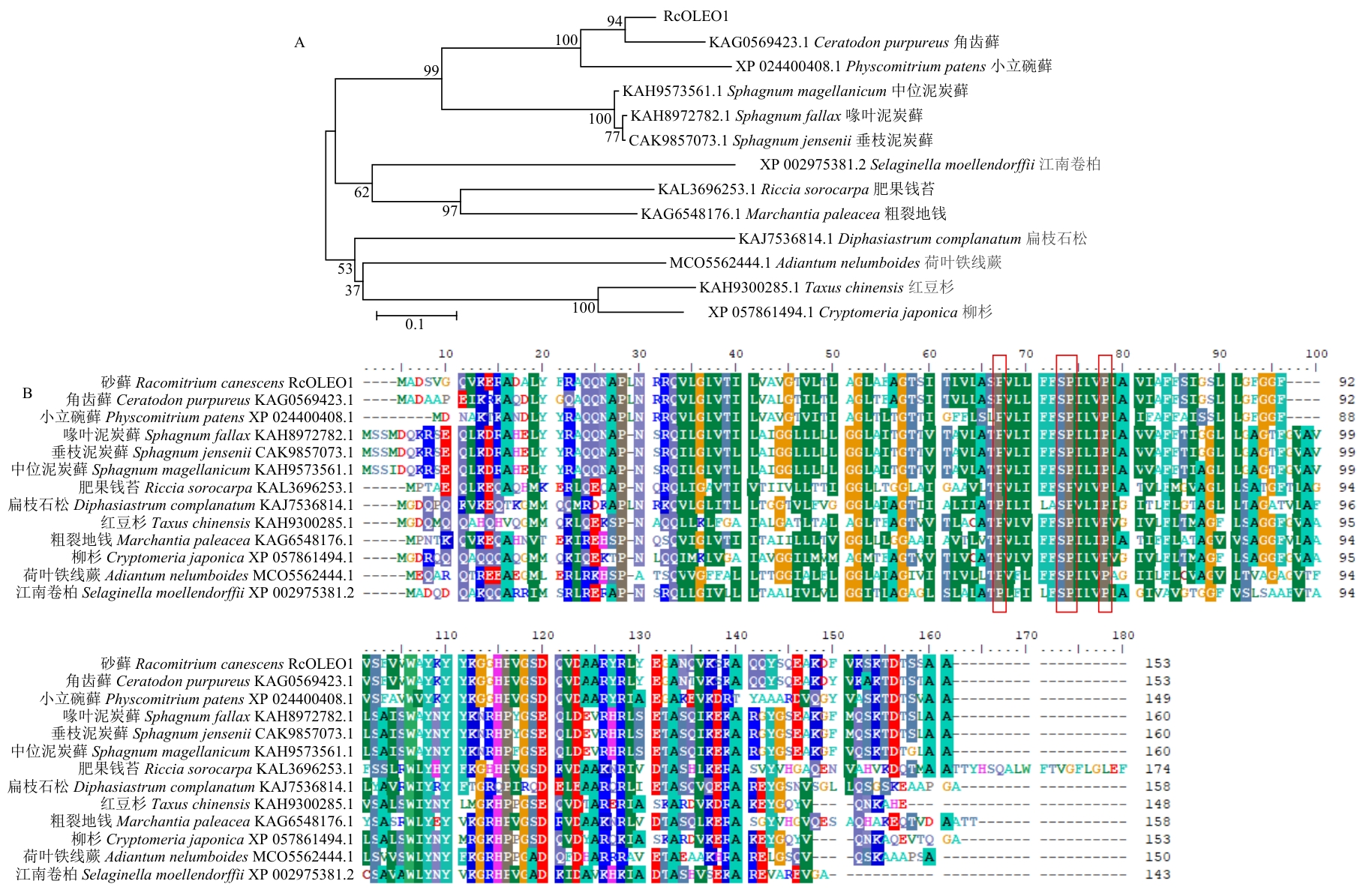
Fig. 2 Phylogenic analysis (A) and sequence alignment (B) of RcOLEO1 and homologous proteinsThe red boxes indicate the conserved proline knot motif
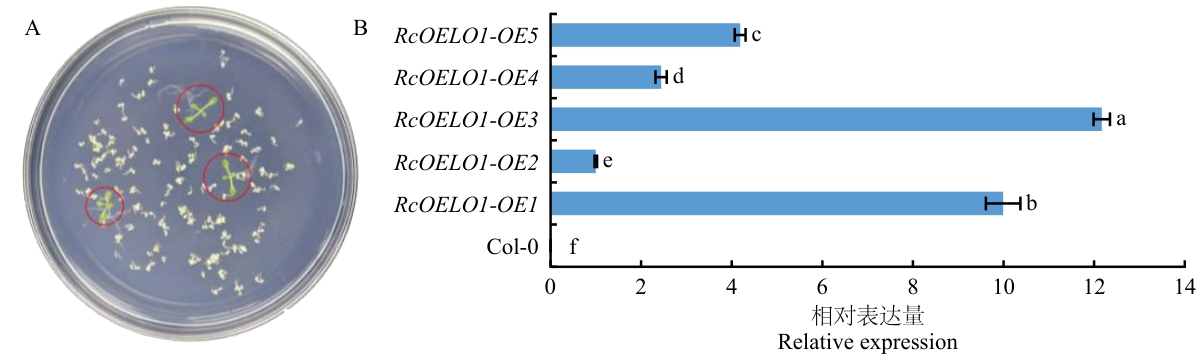
Fig. 3 Screening and characterization of RcOLEO1 overexpression transgenic A. thalianaA: Screening of T1 generation plants of transgenic A. thaliana overexpressing RcOLEO1.B: Identification of T2RcOLEO1 overexpression transgenic A. thaliana
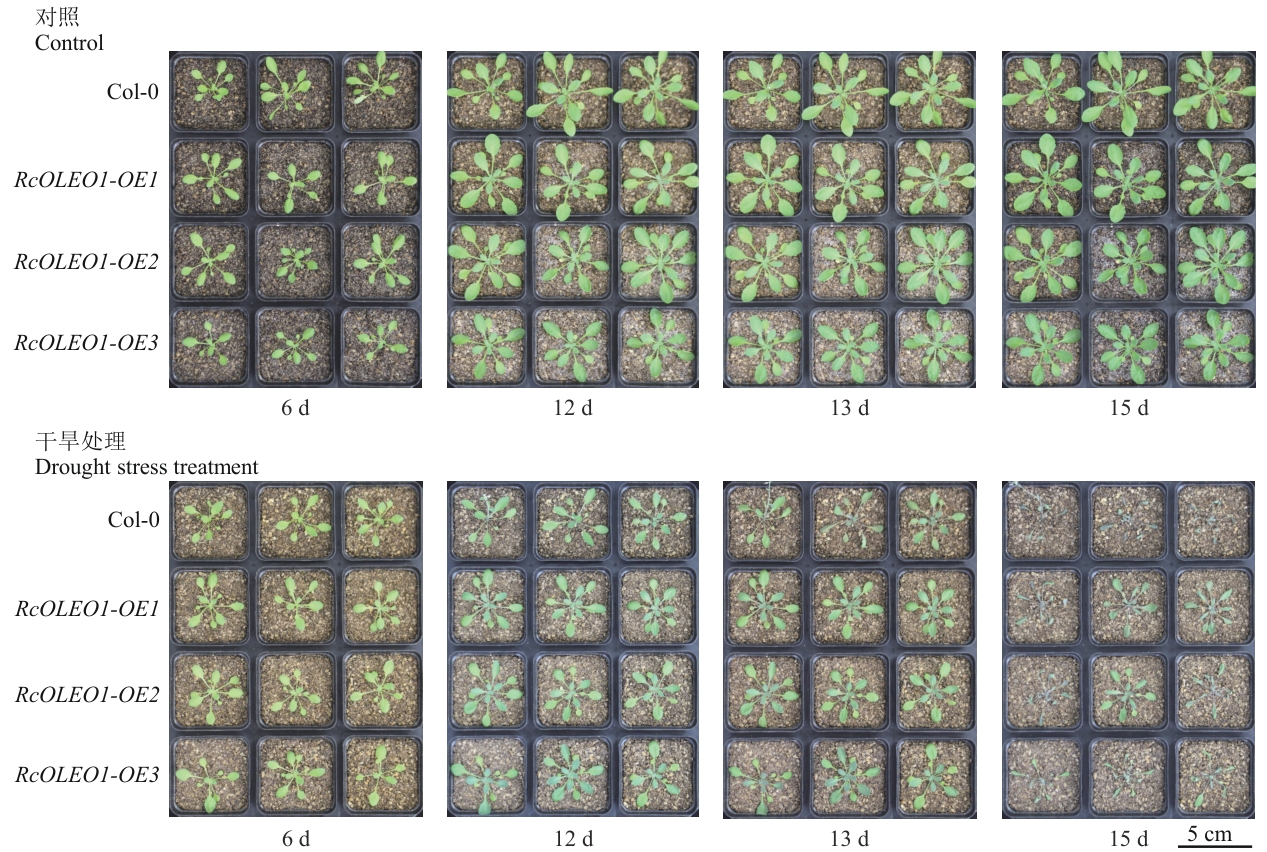
Fig. 4 Phenotypes of RcOLEO1 overexpression transgenic A. thaliana under drought stress
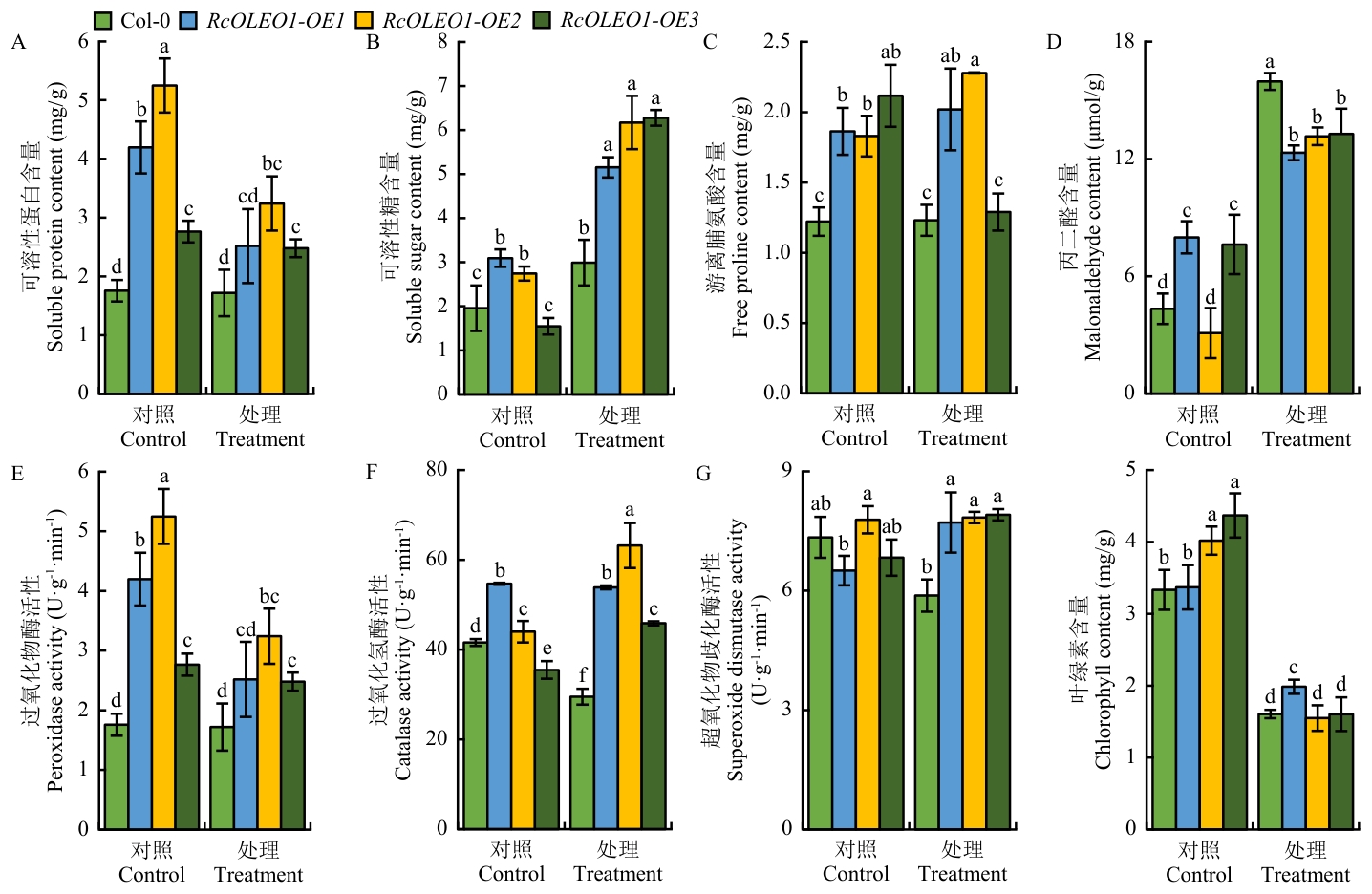
Fig. 5 Changes in physiological and biochemical indexes of wild-type and RcOLEO1 overexpression transgenic A. thaliana under drought treatment
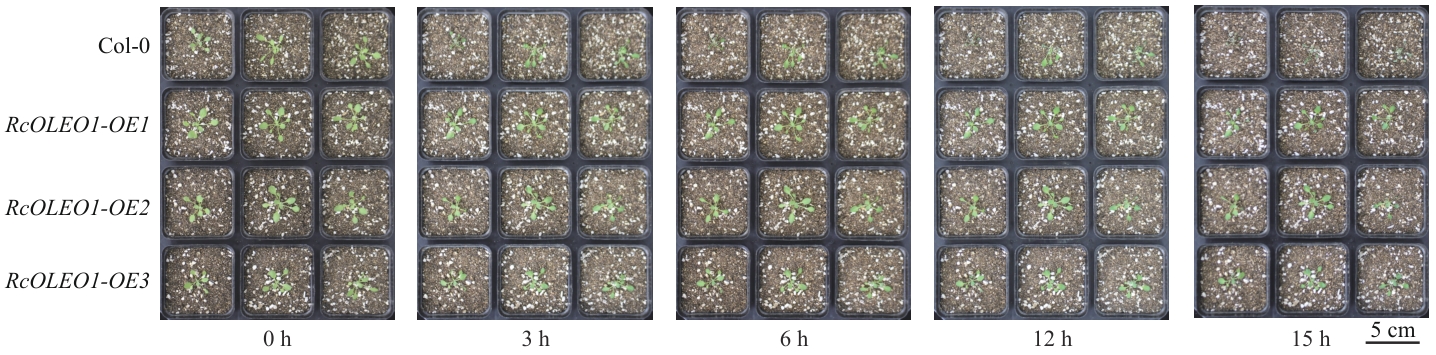
Fig. 6 Phenotypes of RcOLEO1 overexpression transgenic A. thaliana plants under 45 ℃ high-temperature treatment
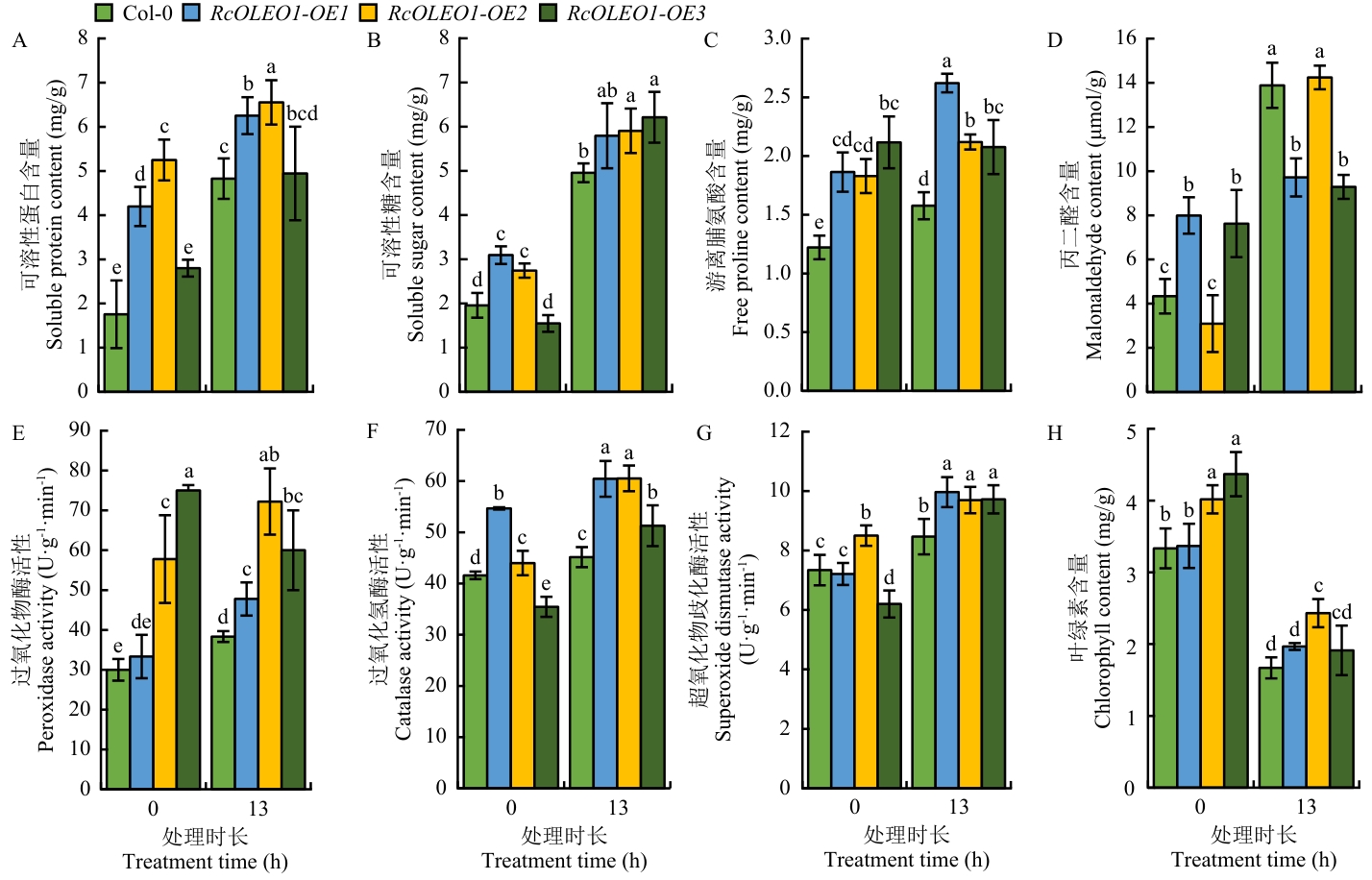
Fig. 7 Changes in physiological and biochemical indexes of wild-type and RcOLEO1 overexpression transgenic A. thaliana under 45 °C high-temperature treatment
| [1] | 祝亚丽, 刘洋, 孔祥慧, 等. 中国高温、干旱及其复合事件的研究进展和展望 [J]. 大气科学学报, 2025, 48(1): 26-36. |
| Zhu YL, Liu Y, Kong XH, et al. Research progress and prospect on the drought, heatwave, and compound drought and heatwave events in China [J]. Trans Atmos Sci, 2025, 48(1): 26-36. | |
| [2] | Wood AJ. The nature and distribution of vegetative desiccation-tolerance in hornworts, liverworts and mosses [J]. Bryologist, 2007, 110(2): 163-177. |
| [3] | 宋松泉, 刘军, 唐翠芳, 等. 种子耐脱水性的生理及分子机制研究进展 [J]. 中国农业科学, 2022, 55(6): 1047-1063. |
| Song SQ, Liu J, Tang CF, et al. Research progress on the physiology and its molecular mechanism of seed desiccation tolerance [J]. Sci Agric Sin, 2022, 55(6): 1047-1063. | |
| [4] | 李雯煜. 砂藓应答60 ℃高温胁迫的生理生化和蛋白质组学研究 [D]. 齐齐哈尔: 齐齐哈尔大学, 2019. |
| Li WY. Physiological, biochemical and proteomics research of Racomitrium canescens in response to 60 ℃ high temperature stresses [D]. Qiqihar: Qiqihar University, 2019. | |
| [5] | 赵浩强, 王小斐, 高少培. 植物油体蛋白基因家族研究进展 [J]. 遗传, 2022, 44(12): 1128-1140. |
| Zhao HQ, Wang XF, Gao SP. Progress on the functional role of oleosin gene family in plants [J]. Hereditas: Beijing, 2022, 44(12): 1128-1140. | |
| [6] | 胡佳, 刘春林. 植物油体研究进展 [J]. 植物学报, 2017, 52(5): 669-679. |
| Hu J, Liu CL. Research advances in plant oil body [J]. Chin Bull Bot, 2017, 52(5): 669-679. | |
| [7] | Huang AHC. Oleosins and oil bodies in seeds and other organs [J]. Plant Physiol, 1996, 110(4): 1055-1061. |
| [8] | Fang Y, Zhu RL, Mishler BD. Evolution of oleosin in land plants [J]. PLoS One, 2014, 9(8): e103806. |
| [9] | Tzen JT, Huang AH. Surface structure and properties of plant seed oil bodies [J]. J Cell Biol, 1992, 117(2): 327-335. |
| [10] | Shao Q, Liu XF, Su T, et al. New insights into the role of seed oil body proteins in metabolism and plant development [J]. Front Plant Sci, 2019, 10: 1568. |
| [11] | Huang AHC. Plant lipid droplets and their associated proteins: potential for rapid advances [J]. Plant Physiol, 2018, 176(3): 1894-1918. |
| [12] | Huang MD, Huang AHC. Bioinformatics reveal five lineages of oleosins and the mechanism of lineage evolution related to structure/function from green algae to seed plants [J]. Plant Physiol, 2015, 169(1): 453-470. |
| [13] | Zhang D, Zhang HY, Hu ZB, et al. Artificial selection on GmOLEO1 contributes to the increase in seed oil during soybean domestication [J]. PLoS Genet, 2019, 15(7): e1008267. |
| [14] | 陈晨, 王会伟, 李春鑫, 等. 油莎豆油体蛋白基因Oleosin的全基因组鉴定及功能分析 [J]. 植物遗传资源学报, 2025, 26(5): 1017-1030. |
| Chen C, Wang HW, Li CX, et al. Genome-wide identification and functional analysis of Oleosin genes in Cyperus esculentus L [J]. J Plant Genet Resour, 2025, 26(5): 1017-1030. | |
| [15] | Hu ML, Wu J, Xue XM, et al. Genome-wide identification and functional characterization of oleosin genes in peanut (Arachis hypogaea L.) [J]. Front Plant Sci, 2025, 16: 1623513. |
| [16] | 蒋茂双, 元香梅, 刘晓东, 等. 谷子Oleosin基因家族及其对干旱响应的分析 [J]. 山西农业大学学报: 自然科学版, 2018, 38(1): 16-20. |
| Jiang MS, Yuan XM, Liu XD, et al. Oleosin gene family of millet and its response to drought [J]. J Shanxi Agric Univ Nat Sci Ed, 2018, 38(1): 16-20. | |
| [17] | 郭新亚. 大豆油体蛋白基因GmOLE1和GmOLE2功能的初步研究 [D]. 南京: 南京农业大学, 2020. |
| Guo XY. Study on the functions of oleosin genes GmOLE1 and GmOLE2 from soybean [D]. Nanjing: Nanjing Agricultural University, 2020. | |
| [18] | 郭新亚, 章文华, 林峰. 大豆油体蛋白基因GmOLE2的功能分析 [J]. 南京农业大学学报, 2021, 44(3): 477-486. |
| Guo XY, Zhang WH, Lin F. Functional analysis of soybean oleosin gene GmOLE2 [J]. J Nanjing Agric Univ, 2021, 44(3): 477-486. | |
| [19] | 何汉琼, 姜洪进, 张文婧, 等. 蓖麻油体蛋白基因家族鉴定和盐碱胁迫响应分析 [J]. 种子, 2024, 43(8): 103-111. |
| He HQ, Jiang HJ, Zhang WJ, et al. Identification for oleosin gene family and analysis on its saline and alkaline stress response in Ricinus communis L [J]. Seed, 2024, 43(8): 103-111. | |
| [20] | Peng YF, Ma TY, Wang X, et al. Proteomic and transcriptomic responses of the desiccation-tolerant moss Racomitrium canescens in the rapid rehydration processes [J]. Genes, 2023, 14(2): 390. |
| [21] | 张梅娟, 沙伟. 东亚砂藓组织培养技术方法研究 [J]. 植物科学学报, 2013, 31(6): 616-622. |
| Zhang MJ, Sha W. Research on tissue culture technology of Racomitrium japonicum [J]. Plant Sci J, 2013, 31(6): 616-622. | |
| [22] | 沙伟, 王鑫, 张梅娟, 等. 砂藓抗高温相关基因RcDAPDC的克隆及表达分析 [J]. 分子植物育种, 2020, 18(24): 8092-8098. |
| Sha W, Wang X, Zhang MJ, et al. Cloning and expression analysis of high-temperature resistance related gene RcDAPDC in Racomitrium canescens [J]. Mol Plant Breed, 2020, 18(24): 8092-8098. | |
| [23] | 赵继发. 砂藓脱水胁迫响应查尔酮合成酶基因的克隆和抗逆性分析 [D]. 齐齐哈尔: 齐齐哈尔大学, 2023. |
| Zhao JF. Cloning and stress resistance analysis of RcCHS genes in response to dehydration stress in Racomitrium canescens [D]. Qiqihar: Qiqihar University, 2023. | |
| [24] | 唐宽宇. 砂藓耐脱水性相关基因RcTRX1、RcTRX2的克隆及抗逆性分析 [D]. 齐齐哈尔: 齐齐哈尔大学, 2023. |
| Tang KY. Cloning and stress resistance analysis of dehydration resistance related genes RcTRX1 and RcTRX2 of Racomitrium canescens [D]. Qiqihar: Qiqihar University, 2023. | |
| [25] | 马天意, 张时通, 朱巍巍, 等. 砂藓RcPLD基因的抗旱功能分析 [J]. 西北植物学报, 2021, 41(7): 1091-1100. |
| Ma TY, Zhang ST, Zhu WW, et al. Analysis of drought-resistance function of RcPLD gene from Racomitrium canescens [J]. Acta Bot Boreali Occidentalia Sin, 2021, 41(7): 1091-1100. | |
| [26] | 张春蕾, 沙伟, 张梅娟, 等. 砂藓生长素受体基因RcTIR1的克隆及表达分析 [J]. 基因组学与应用生物学, 2015, 34(1): 100-105. |
| Zhang CL, Sha W, Zhang MJ, et al. Cloning and expression analysis of auxin receptor gene RcTIR1 in Racomitrium canescens [J]. Genom Appl Biol, 2015, 34(1): 100-105. | |
| [27] | 马天意, 许家佳, 路文婧, 等. ‘金小童’大白菜BrcGASA3基因在盐碱胁迫下的表达分析及抗性鉴定 [J]. 生物技术通报, 2025, 41(2): 127-138. |
| Ma TY, Xu JJ, Lu WJ, et al. Expression analysis and resistance identification of BrcGASA3 in Chinese cabbage ‘Jinxiaotong’ cultivar under saline-alkali stress [J]. Biotechnol Bull, 2025, 41(2): 127-138. | |
| [28] | 王艺瑾. 油莎豆油体蛋白基因CeOle1和CeOle4克隆及功能研究 [D]. 长春: 吉林农业大学, 2023. |
| Wang YJ. Cloning and functional research of oleosin genes CeOle1 and CeOle4 in Cyperus esculentusis [D]. Changchun: Jilin Agricultural University, 2023. | |
| [29] | Abell BM, Holbrook LA, Abenes M, et al. Role of the proline knot motif in oleosin endoplasmic reticulum topology and oil body targeting [J]. Plant Cell, 1997, 9(8): 1481-1493. |
| [30] | 党瑗, 李维, 苗向, 等. 山杏油体蛋白基因PsOLE4克隆及其调控油脂累积功能分析 [J]. 生物技术通报, 2022, 38(11): 151-161. |
| Dang Y, Li W, Miao X, et al. Cloning of oleosin gene PsOLE4 from Prunus sibirica and its regulatory function analysis for oil accumulation [J]. Biotechnol Bull, 2022, 38(11): 151-161. | |
| [31] | 姜焕焕, 温思慧, 卢雨庭, 等. 二倍体野生种花生Oleosin基因家族全基因组鉴定及其表达分析 [J]. 中国油料作物学报, 2025, 47(1): 94-104. |
| Jiang HH, Wen SH, Lu YT, et al. Genome-wide analysis and stress-responsive expression profiling of the Oleosin gene family in diploid wild species Arachis duranensis and Arachis ipaensis [J]. Chin J Oil Crop Sci, 2025, 47(1): 94-104. | |
| [32] | Khan I, Awan SA, Rizwan M, et al. Silicon nanoparticles improved the osmolyte production, antioxidant defense system, and phytohormone regulation in Elymus sibiricus (L.) under drought and salt stress [J]. Environ Sci Pollut Res Int, 2024, 31(6): 8985-8999. |
| [33] | Wu YQ, Guo XY, Zhou XH, et al. Effects of drought stress on physiological properties of Gazania rigens L [J]. Adv Mater Res, 2014, 955-959: 217-221. |
| [34] | 谢亚军, 王兵, 梁新华, 等. 干旱胁迫对甘草幼苗活性氧代谢及保护酶活性的影响 [J]. 农业科学研究, 2008, 29(4): 19-22. |
| Xie YJ, Wang B, Liang XH, et al. Effect of drought stress on active oxygen metabolism and activities of protective enzymes of licorice seedlings [J]. J Agric Sci, 2008, 29(4): 19-22. | |
| [35] | 王亚凯. 多尺度叶绿素荧光与光合干旱胁迫响应机理及作物模型融合方法 [D]. 杨凌: 西北农林科技大学, 2023. |
| Wang YK. Multi-scale chlorophyll fluorescence and photosynthetic response mechanisms to drought stress and integration methods with crop model [D]. Yangling: Northwest A & F University, 2023. | |
| [36] | 张永超, 梁国玲, 秦燕, 等. 老芒麦衰老过程中叶片叶绿素和光合作用变化特征及对养分的响应 [J]. 草业学报, 2022, 31(1): 229-237. |
| Zhang YC, Liang GL, Qin Y, et al. Characteristics of chlorophyll and photosynthesis in leaves and their response to nutrients during aging of Elymus sibiricus [J]. Acta Prataculturae Sin, 2022, 31(1): 229-237. |
| [1] | ZHANG Xin, CHEN Cheng, HUO Yuan-Bo, HUANG Ren-Li, ZHANG Li, ZHANG Kai, TONG Hua-rong, YUAN Lian-Yu. Cloning of the CsCRD1 in Tea Plants and Its Impact on Chlorophyll Biosynthesis [J]. Biotechnology Bulletin, 2026, 42(5): 280-291. |
| [2] | JIANG Xin-hua, FANG Tian-yu, ZHANG Jing-jing, LI Xiang-yuan, ZHANG Bang-yue, LIAO Xiao-shan, RONG Duo-yan. Identification and Functional Analysis of the MpPP2A-C Gene in Marchantia polymorpha [J]. Biotechnology Bulletin, 2026, 42(4): 216-226. |
| [3] | ZHANG Gao-xiang, WU Yu-bi, GUO Ya-jing, JI Wei, YANG Zhong-yi. Identification and Expression Analysis of WD40 Gene Family in Grape [J]. Biotechnology Bulletin, 2026, 42(3): 324-337. |
| [4] | CHEN Chang-lu, YANG Zhi-fang, CAO Song-xiao, LI Yang-qing, YE Jing-feng, LYU Hai-yan, CHEN Shan-shan, CHEN Hao. Mechanism of Abscisic Acid and Ethylene Collaboratively Regulating the Softening of Oriental Melon Fruits [J]. Biotechnology Bulletin, 2026, 42(3): 302-311. |
| [5] | LI Tian-yuan, QI Xin-liang, LIU Shan, ZHANG Jian-cheng, WANG Peng-fei, ZHANG Shuai, JIA Lu-ting, MU Xiao-peng. Identification of Cerasus humilisSPL Gene Family and Expression Analysis during Fruit Development [J]. Biotechnology Bulletin, 2026, 42(3): 362-373. |
| [6] | XU Ze, ZHOU Chen-ping, KUANG Rui-bin, WU Xia-ming, YANG Min, LIU Chuan-he, HE Han, WEI Yue-rong. Identification of PG Gene Family and Their Roles in Papaya Fruit Softening [J]. Biotechnology Bulletin, 2026, 42(3): 349-361. |
| [7] | LIU Bao-cai, HU Xue-bo, ZHANG Wu-jun, ZHAO Yun-qing, HUANG Ying-zhen, CHEN Jing-ying. Screening of Internal Reference Gene for Pholidota chinensis and Their Applications [J]. Biotechnology Bulletin, 2026, 42(2): 158-168. |
| [8] | NI Ying, LI Lei, WANG Jin-xuan, MA Bo, MENG Xin, LENG Ping-sheng, WU Jing, HU Zeng-hui. Cloning and Functional Analysis of So4CL Gene in Syringa oblata [J]. Biotechnology Bulletin, 2026, 42(1): 139-149. |
| [9] | LYU Cheng-cong, HENG Meng, CHEN Si-qi, JIN Xue-hua. Cloning and Functional Analysis of ZhGSTF Related to Anthocyanin Transport Zantedeschia hybrida [J]. Biotechnology Bulletin, 2026, 42(1): 161-169. |
| [10] | YANG Juan, FENG Hui, JI Nai-zhe, SUN Li-ping, WANG Yun, ZHANG Jia-nan, ZHAO Shi-wei. Cloning and Functional Analysis of AP2/ERF Transcription Factors RcERF4 and RcRAP2-12 in Rose [J]. Biotechnology Bulletin, 2026, 42(1): 150-160. |
| [11] | WU Cui-cui, CHEN Deng-ke, LAN Gang, XIA Zhi, LI Peng-bo. Bioinformatics Analysis of Peanut Transcription Factor AhHDZ70 and Its Tolerances to Salt and Drought [J]. Biotechnology Bulletin, 2026, 42(1): 198-207. |
| [12] | CHEN Jing-huan, FANG Guo-nan, ZHU Wen-hao, YE Guang-ji, SU Wang, HE Miao-miao, YANG Sheng-long, ZHOU Yun. Starch Characterization and Related Gene Expression Analysis of Potato Germplasm Resources [J]. Biotechnology Bulletin, 2026, 42(1): 170-183. |
| [13] | CHEN Qiang, YU Ying-fei, ZHANG Ying, ZHANG Chong. Regulatory Effect of Methyl Jasmonate on Postharvest Chilling Injury in Oriental Melon ‘Emerald’ [J]. Biotechnology Bulletin, 2025, 41(9): 105-114. |
| [14] | CHENG Ting-ting, LIU Jun, WANG Li-li, LIAN Cong-long, WEI Wen-jun, GUO Hui, WU Yao-lin, YANG Jing-fan, LAN Jin-xu, CHEN Sui-qing. Genome-wide Identification of the Chalcone Isomerase Gene Family in Eucommia ulmoides and Analysis of Their Expression Patterns [J]. Biotechnology Bulletin, 2025, 41(9): 242-255. |
| [15] | XU Xiao-ping, YANG Cheng-long, HE Xing, GUO Wen-jie, WU Jian, FANG Shao-zhong. Cloning of the LoAPS1 and Its Function Analysis during the Process of Dormancy Release in Lilium [J]. Biotechnology Bulletin, 2025, 41(9): 195-206. |
| Viewed | ||||||
|
Full text |
|
|||||
|
Abstract |
|
|||||
