







Biotechnology Bulletin ›› 2026, Vol. 42 ›› Issue (5): 302-311.doi: 10.13560/j.cnki.biotech.bull.1985.2025-1133
LIANG Hui-qi( ), CHEN Yi-cun, WANG Yang-dong, ZHAO Yun-xiao, GAO Ming()
Received:2025-10-22
Online:2026-05-26
Published:2026-06-10
Contact:
GAO Ming
E-mail:liang13398769606@163.com;4862705@163.com
LIANG Hui-qi, CHEN Yi-cun, WANG Yang-dong, ZHAO Yun-xiao, GAO Ming. Identification and Expression Analysis of the PAT1 Gene Subfamily in Litsea cubeba during Graft Union Healing[J]. Biotechnology Bulletin, 2026, 42(5): 302-311.
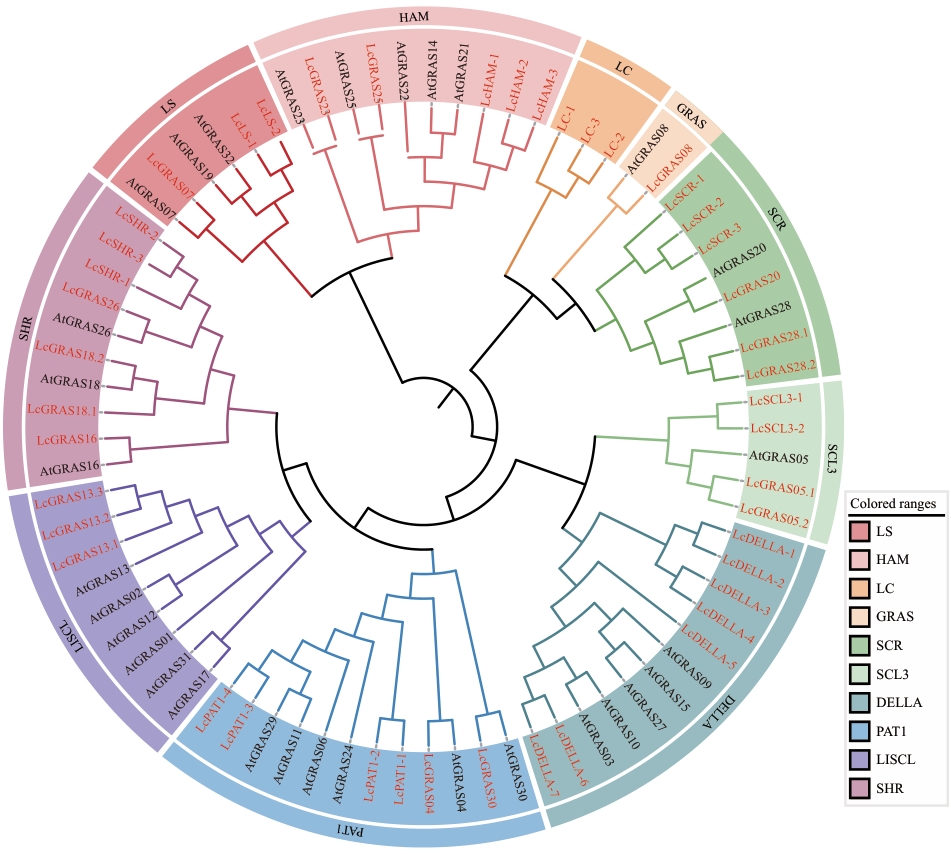
Fig. 1 Phylogenetic tree of GRAS genes from L. cubeba and A. thalianaThe red font indicates L. cubeba, the black font indicates A. thaliana
| 基因名称Gene name | 蛋白长度Number of amino acids (aa) | 分子量Molecular weight (kD) | 等电点Theoretical pI | 不稳定系数Instability index | 脂肪系数Aliphatic index | 亲水性平均值Grand average of hydropathicity | 亚细胞定位Subcellular localization |
|---|---|---|---|---|---|---|---|
| LcGRAS04 | 582 | 78.07 | 5.05 | 50.50 | 80.43 | -0.24 | Nucleus |
| LcGRAS30 | 591 | 86.07 | 6.41 | 57.11 | 78.83 | -0.32 | Nucleus |
| LcPAT1-1 | 583 | 71.07 | 5.46 | 53.31 | 83.60 | -0.43 | Nucleus |
| LcPAT1-2 | 579 | 110.07 | 5.84 | 56.06 | 79.36 | -0.41 | Nucleus |
| LcPAT1-3 | 589 | 69.07 | 5.49 | 50.44 | 82.77 | -0.27 | Nucleus |
| LcPAT1-4 | 586 | 60.07 | 5.76 | 48.94 | 80.89 | -0.31 | Cytoplasm |
| 平均值 Average | 585 | 79.07 | 5.67 | 52.73 | 80.98 | -0.33 | - |
Table 1 Physicochemical properties and subcellular localization of LcPAT1 protein
| 基因名称Gene name | 蛋白长度Number of amino acids (aa) | 分子量Molecular weight (kD) | 等电点Theoretical pI | 不稳定系数Instability index | 脂肪系数Aliphatic index | 亲水性平均值Grand average of hydropathicity | 亚细胞定位Subcellular localization |
|---|---|---|---|---|---|---|---|
| LcGRAS04 | 582 | 78.07 | 5.05 | 50.50 | 80.43 | -0.24 | Nucleus |
| LcGRAS30 | 591 | 86.07 | 6.41 | 57.11 | 78.83 | -0.32 | Nucleus |
| LcPAT1-1 | 583 | 71.07 | 5.46 | 53.31 | 83.60 | -0.43 | Nucleus |
| LcPAT1-2 | 579 | 110.07 | 5.84 | 56.06 | 79.36 | -0.41 | Nucleus |
| LcPAT1-3 | 589 | 69.07 | 5.49 | 50.44 | 82.77 | -0.27 | Nucleus |
| LcPAT1-4 | 586 | 60.07 | 5.76 | 48.94 | 80.89 | -0.31 | Cytoplasm |
| 平均值 Average | 585 | 79.07 | 5.67 | 52.73 | 80.98 | -0.33 | - |
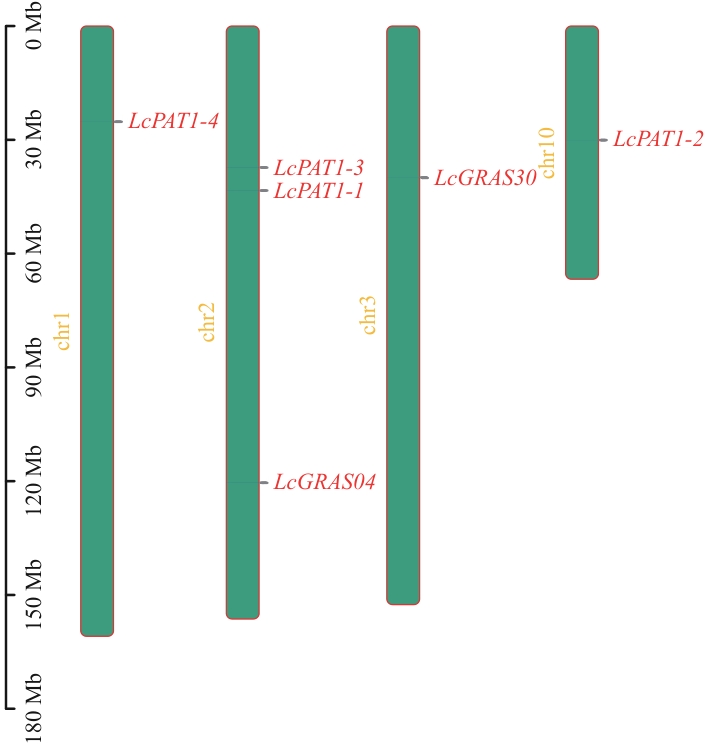
Fig. 2 Chromosomal localization of LcPAT1s genes
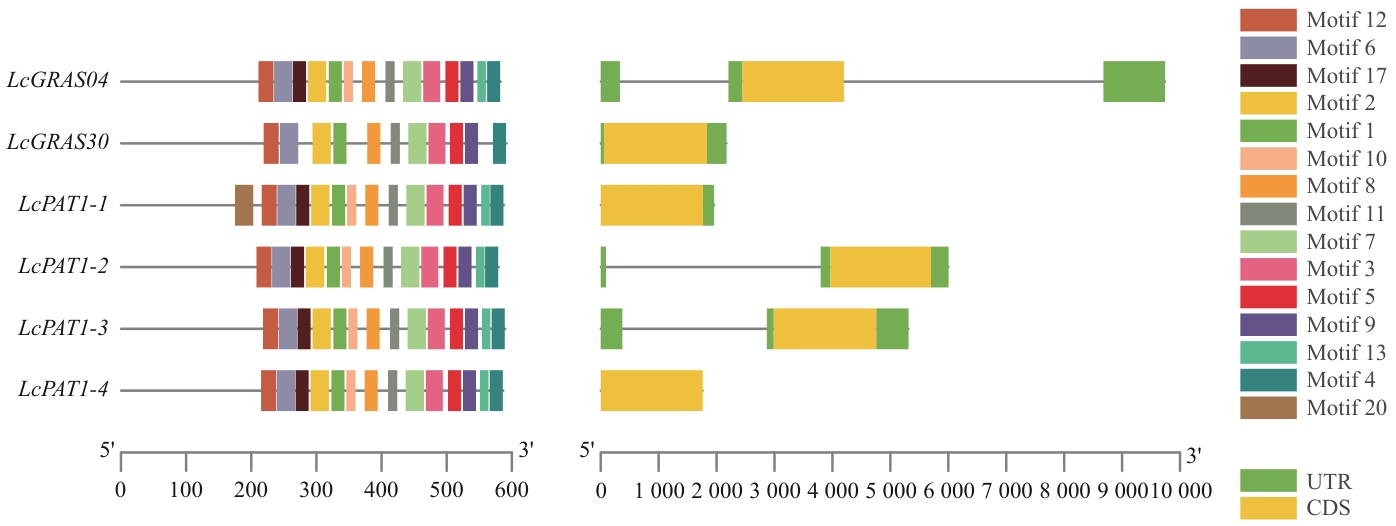
Fig. 3 Conserved motifs composition and gene structure prediction of the LcPAT1s genes
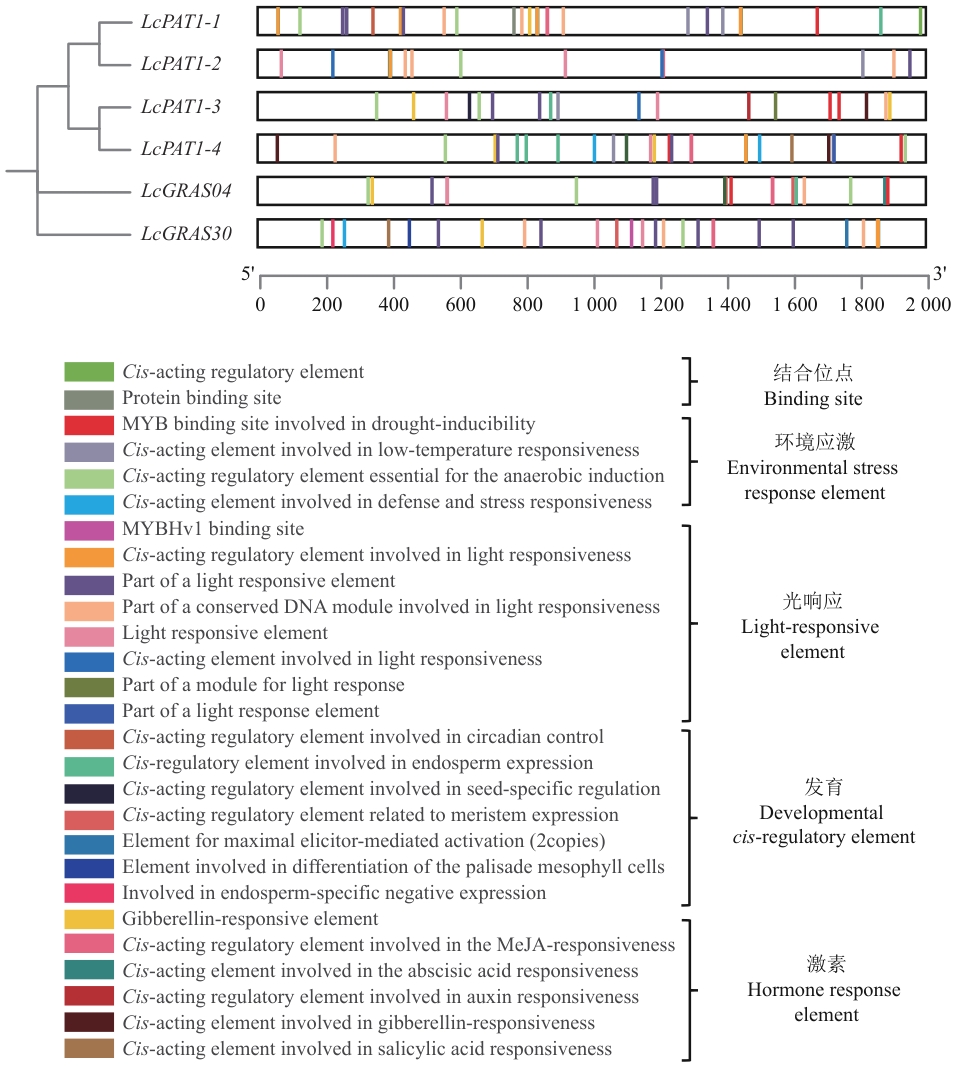
Fig. 4 Cis-acting element analysis of LcPAT1s transcription factor promoters
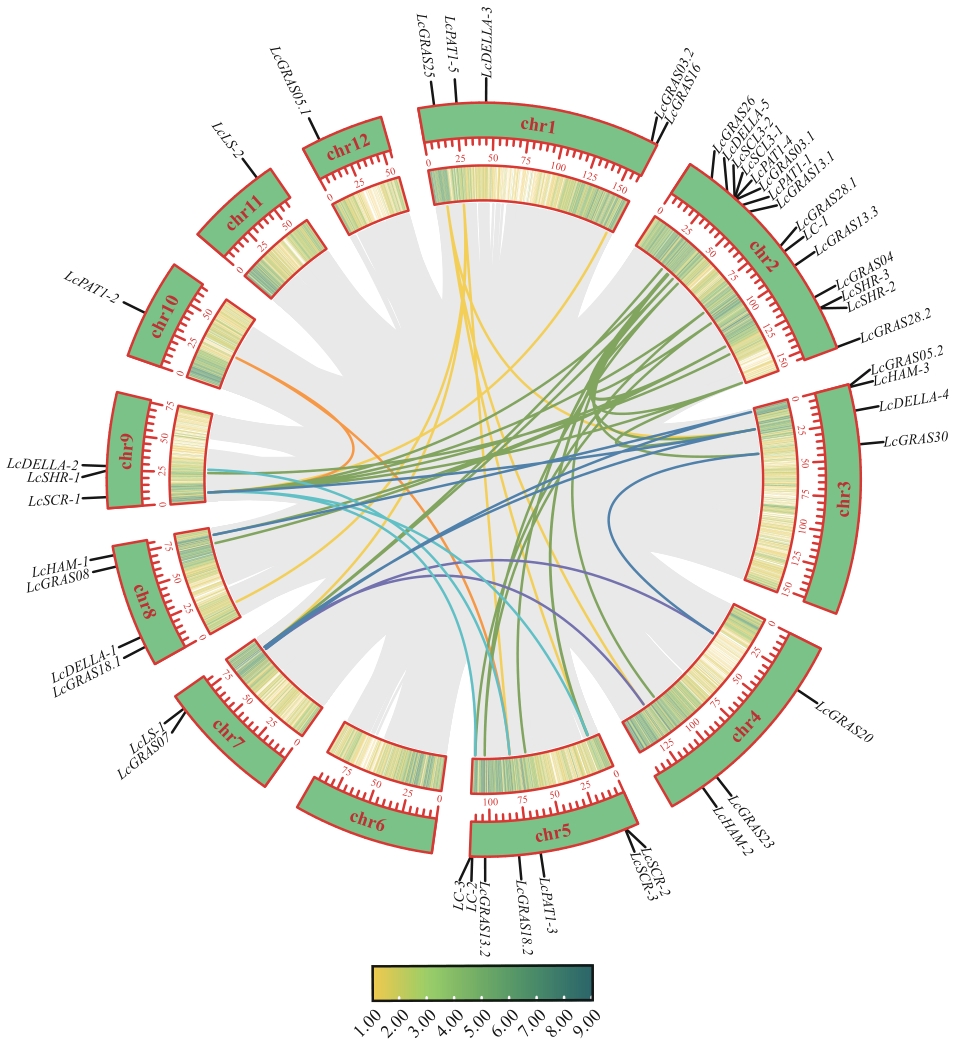
Fig. 5 Synteny analysis of LcPAT1s genes
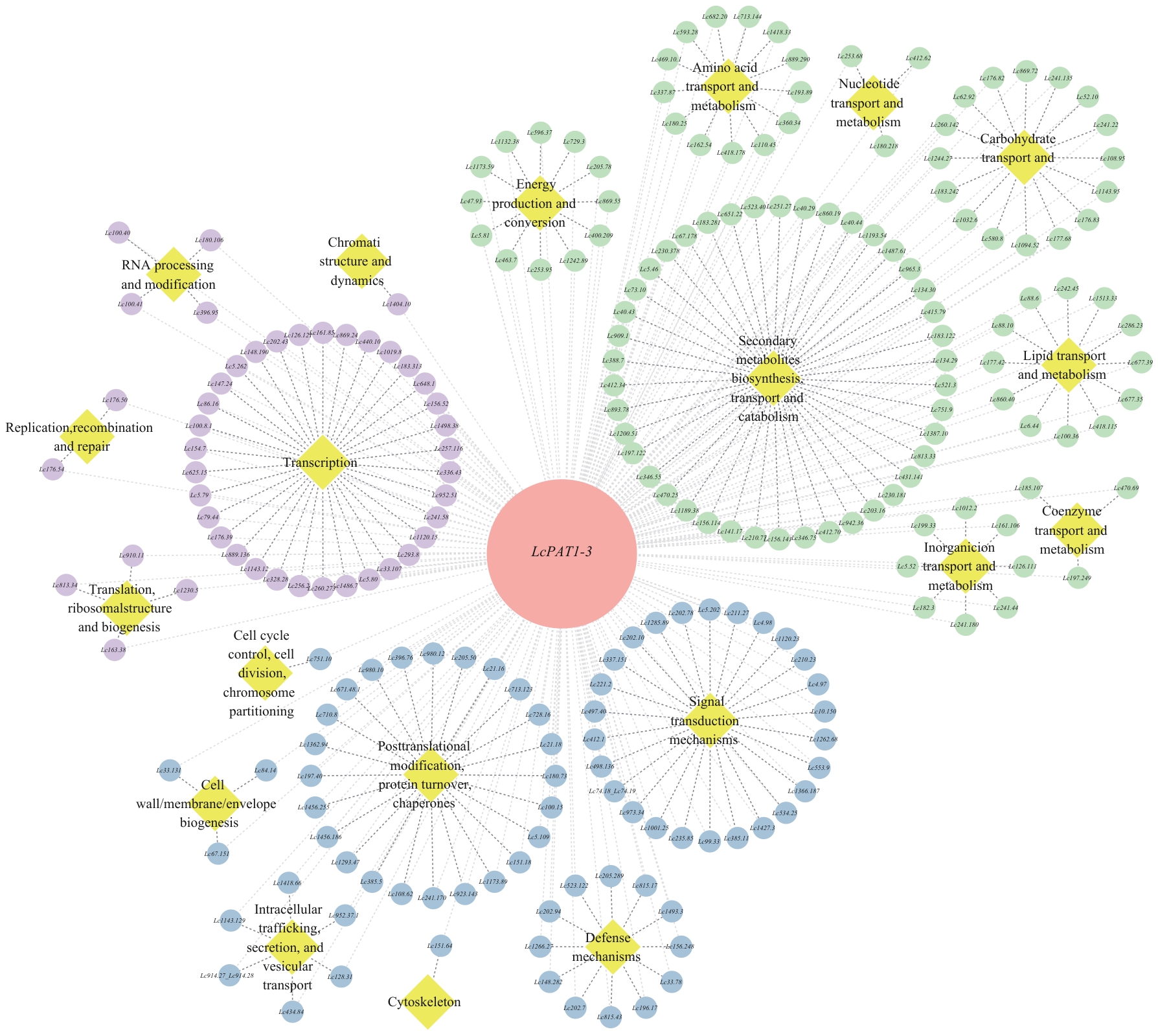
Fig. 6 Co-expression network diagram of LcPAT1-3Yellow diamonds indicate functional clusters based on COG annotations, while circles indicate genes. The color of each gene node corresponds to its functional category: Purple indicates information storage and processing, green indicates metabolism, and blue denotes cellular processes and signal transduction
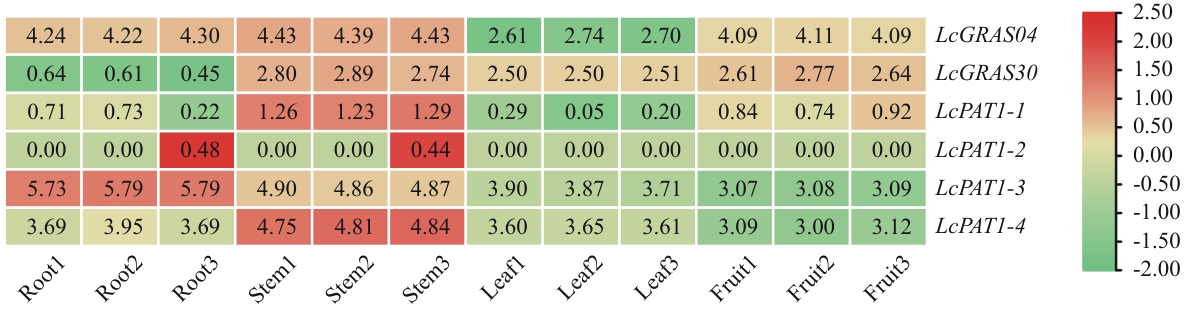
Fig. 7 Expression heatmap of gene LcPAT1s across different tissues based on transcriptome data in L. cubeba
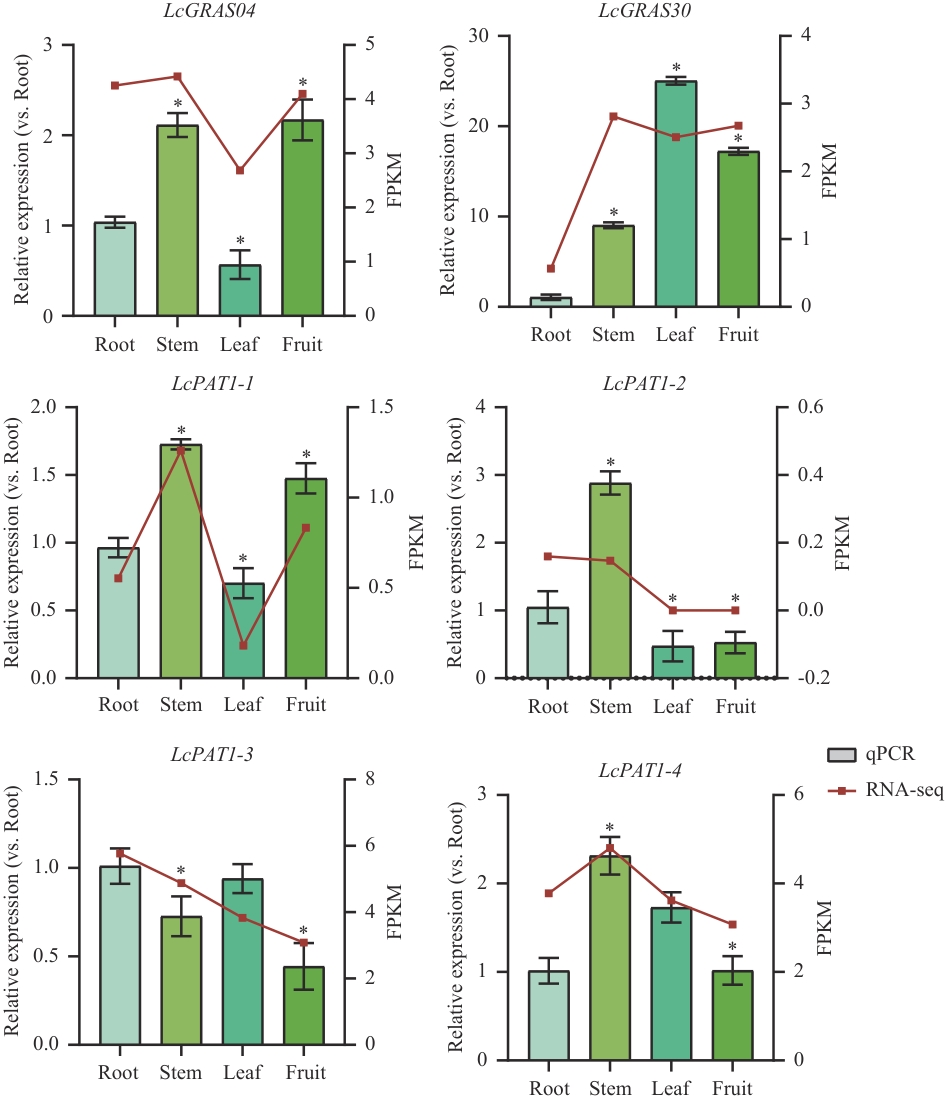
Fig. 8 Relative expressions of PAT1 subfamily genes in different tissues of L. cubebaThe RT-qPCR results (bar chart, left Y-axis) and transcriptome log₂(FPKM+1) values (line chart, right Y-axis) are presented in the same graph. The samples were collected from the same plants used for the transcriptome analysis. qPCR data are presented as mean ± SD (n=3). *P<0.05. The same below
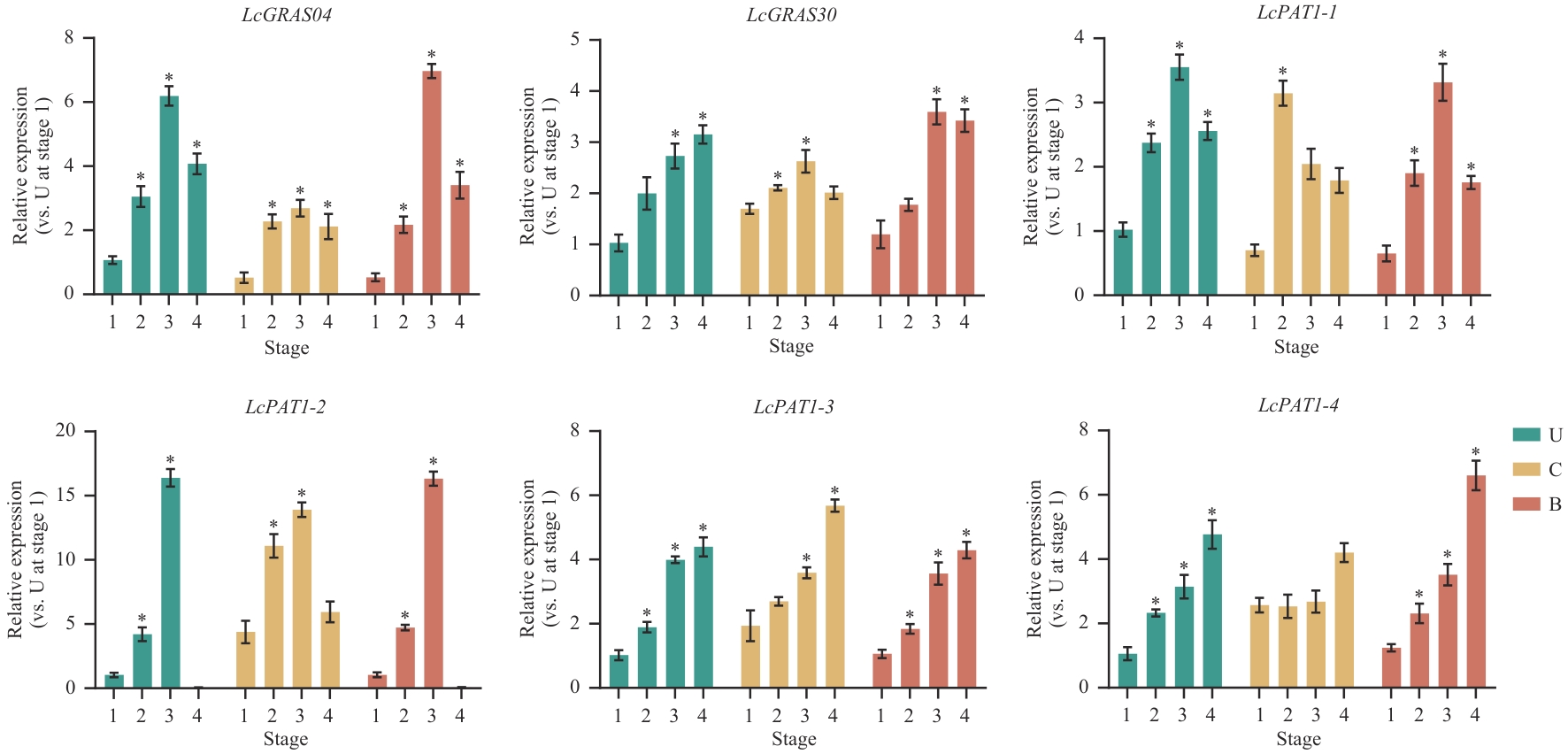
Fig. 9 Relative expressions of PAT1 subfamily genes during graft union healing in L. cubebaU: Upper region of the junction without grafted rootstock stem segment. C: Stem segment of rootstock and scion at the junction of grafting. B: Basal region of the junction without grafted rootstock stem segment. Stage1: Formation period of the isolation layer. 2: Formation period of callus tissue. 3: Cambium connection. 4: Differentiation period of vascular tissue
| [1] | Tian CG, Wan P, Sun SH, et al. Genome-wide analysis of the GRAS gene family in rice and Arabidopsis [J]. Plant Mol Biol, 2004, 54(4): 519-532. |
| [2] | Pysh LD, Wysocka-Diller JW, Camilleri C, et al. The GRAS gene family in Arabidopsis: sequence characterization and basic expression analysis of the SCARECROW-LIKE genes [J]. Plant J, 1999, 18(1): 111-119. |
| [3] | Sun XL, Jones WT, Rikkerink EHA. GRAS proteins: the versatile roles of intrinsically disordered proteins in plant signalling [J]. Biochem J, 2012, 442(1): 1-12. |
| [4] | Bolle C, Koncz C, Chua NH. PAT1, a new member of the GRAS family, is involved in phytochrome A signal transduction [J]. Genes Dev, 2000, 14(10): 1269-1278. |
| [5] | Muntha ST, Zhang LL, Zhou YF, et al. Phytochrome A signal transduction 1 and CONSTANS-LIKE 13 coordinately orchestrate shoot branching and flowering in leafy Brassica juncea [J]. Plant Biotechnol J, 2019, 17(7): 1333-1343. |
| [6] | Ren J, Zhang QW, Xu YF, et al. Decreased expression of a phosphoribosylanthranilate transferase-encoding gene, OsPAT1, causes lesion mimics in rice [J]. Int J Mol Sci, 2025, 26(19): 9428. |
| [7] | Feng M, Zhang A, Nguyen V, et al. A conserved graft formation process in Norway spruce and Arabidopsis identifies the PAT gene family as central regulators of wound healing [J]. Nat Plants, 2024, 10(1): 53-65. |
| [8] | Bisht A, Eekhout T, Canher B, et al. PAT1-type GRAS-domain proteins control regeneration by activating DOF3.4 to drive cell proliferation in Arabidopsis roots [J]. Plant Cell, 2023, 35(5): 1513-1531. |
| [9] | Chen YC, Wang YD, Han XJ, et al. Biology and chemistry of Litsea cubeba, a promising industrial tree in China [J]. J Essent Oil Res, 2013, 25(2): 103-111. |
| [10] | Melnyk CW, Gabel A, Hardcastle TJ, et al. Transcriptome dynamics at Arabidopsis graft junctions reveal an intertissue recognition mechanism that activates vascular regeneration [J]. Proc Natl Acad Sci USA, 2018, 115(10): E2447-E2456. |
| [11] | Chen YC, Li Z, Zhao YX, et al. The Litsea genome and the evolution of the laurel family [J]. Nat Commun, 2020, 11(1): 1675. |
| [12] | Ni FF, Zhao YX, Gao M, et al. LcMYB43 enhances monoterpene biosynthesis by activating 1-deoxy-D-xylulose-5-phosphate synthase gene expression in Litsea cubeba [J]. Int J Biol Macromol, 2025, 304(Pt 1): 140860. |
| [13] | Wang SS, Duan Z, Yan Q, et al. Genome-wide identification of the GRAS family genes in Melilotus albus and expression analysis under various tissues and abiotic stresses [J]. Int J Mol Sci, 2022, 23(13): 7403. |
| [14] | Wang N, Wang KY, Li SK, et al. Transcriptome-wide identification, evolutionary analysis, and GA stress response of the GRAS gene family in Panax ginseng C. A. Meyer [J]. Plants, 2020, 9(2): 190. |
| [15] | Guo YY, Wu HY, Li X, et al. Identification and expression of GRAS family genes in maize (Zea mays L.) [J]. PLoS One, 2017, 12(9): e0185418. |
| [16] | Yang Y, Agassin RH, Ji KS. Transcriptome-wide identification of the GRAS transcription factor family in Pinus massoniana and its role in regulating development and stress response [J]. Int J Mol Sci, 2023, 24(13): 10690. |
| [17] | He ZH, Tian ZZ, Zhang Q, et al. Genome-wide identification, expression and salt stress tolerance analysis of the GRAS transcription factor family in Betula platyphylla [J]. Front Plant Sci, 2022, 13: 1022076. |
| [18] | Hou SJ, Zhang QQ, Chen J, et al. Genome-wide identification and analysis of the GRAS transcription factor gene family in Theobroma cacao [J]. Genes, 2022, 14(1): 57. |
| [19] | 李晨, 赵雪惠, 王庆杰, 等. 桃GRAS家族全基因组鉴定与响应UV-B的表达模式分析 [J]. 中国农业科学, 2019, 52(24): 4567-4581. |
| Li C, Zhao XH, Wang QJ, et al. Genome identification of PpGRAS family and expression pattern analysis of responding to UV-B in peach [J]. Sci Agric Sin, 2019, 52(24): 4567-4581. | |
| [20] | Cenci A, Rouard M. Evolutionary analyses of GRAS transcription factors in angiosperms [J]. Front Plant Sci, 2017, 8: 273. |
| [21] | Cannon SB, Mitra A, Baumgarten A, et al. The roles of segmental and tandem gene duplication in the evolution of large gene families in Arabidopsis thaliana [J]. BMC Plant Biol, 2004, 4: 10. |
| [22] | Serivichyaswat PT, Kareem A, Feng M, et al. Auxin signaling in the cambium promotes tissue adhesion and vascular formation during Arabidopsis graft healing [J]. Plant Physiol, 2024, 196(2): 754-762. |
| [23] | Robert A Creelman MLT. Jasmonic acid/methyl jasmonate accumulate in wounded soybean hypocotyls and modulate wound gene expression [J]. Proc Natl Acad Sci U S A, 1992, 89(11): 4938-4941. |
| [24] | Ruan JJ, Zhou YX, Zhou ML, et al. Jasmonic acid signaling pathway in plants [J]. Int J Mol Sci, 2019, 20(10): 2479. |
| [25] | Li C, Xu MX, Cai X, et al. Jasmonate signaling pathway modulates plant defense, growth, and their trade-offs [J]. Int J Mol Sci, 2022, 23(7): 3945. |
| [26] | Bharath P, Gahir S, Raghavendra AS. Abscisic acid-induced stomatal closure: an important component of plant defense against abiotic and biotic stress [J]. Front Plant Sci, 2021, 12: 615114. |
| [27] | Wang LX, Liao YM, Liu JM, et al. Advances in understanding the graft healing mechanism: a review of factors and regulatory pathways [J]. Hortic Res, 2024, 11(8): uhae175. |
| [28] | Wang QH, Liu N, Yang RR, et al. Essential role of ABA signaling and related transcription factors in phenolic acid and lignin synthesis during muskmelon wound healing [J]. Front Plant Sci, 2024, 15: 1404477. |
| [29] | Jeyasri R, Muthuramalingam P, Karthick K, et al. Methyl jasmonate and salicylic acid as powerful elicitors for enhancing the production of secondary metabolites in medicinal plants: an updated review [J]. Plant Cell Tissue Organ Cult, 2023, 153(3): 447-458. |
| [30] | Feng M, Augstein F, Kareem A, et al. Plant grafting: Molecular mechanisms and applications [J]. Mol Plant, 2024, 17(1): 75-91. |
| [31] | Laura Ragni KN. Mobile gibberellin directly stimulates Arabidopsis hypocotyl xylem expansion [J]. Plant Cell, 2011, 23(4): 1322-1336. |
| [32] | Fan L, Wang RM, García-Caparrós P, et al. Genome-wide identification and functional analysis of the GRAS gene family in Medicago lupulina L [J]. BMC Genomics, 2025, 26(1): 682. |
| [33] | Tang GP, Ni TT, Pedro GC, et al. Identification and characterization of nine PAT1 genes subfamily in Medicago edgeworthii [J]. Plant Signal Behav, 2025, 20(1): 2527380. |
| [1] | ZHANG Shan, SUN Zhi-peng, ZHAO De-gang, ZHAO Yi-chen. Developing Highly Efficient Grafting Rootstocks Based on Eucommia ulmoides BGL Gene [J]. Biotechnology Bulletin, 2026, 42(5): 292-301. |
| [2] | YANG Ting, YANG Zong-tao, AI Jing, WANG Yu-tong, LI Yan-ye, DENG jun, LIU Jia-yong, ZHAO Yong, ZHANG Yue-bin. Analysis of Phenotypic Characteristics and Root Transcriptomics of Sugarcane with Different Genotypes [J]. Biotechnology Bulletin, 2026, 42(4): 190-201. |
| [3] | FENG Cheng-hao, DANG Yu-le, WANG Zhi-ze, NIE Wei-dan, YANG Zhong-min, DU Chong. Screening of Differentially Expressed Genes in Tomato Defense against Meloidogyne incognita Based on RNA-seq and Expression Characteristics Analysis of RPP13 Gene [J]. Biotechnology Bulletin, 2026, 42(4): 141-152. |
| [4] | NI Fei-fei, CHEN Yi-cun, GAO Ming, ZHANG Sheng-jiao, PENG Fang-you, CHEN Tao-mei, ZHAO Yun-xiao, WANG Yang-dong. Identification of Litsea cubebaTCP Genes and Their Roles in the Regulation of Terpenoid Biosynthesis [J]. Biotechnology Bulletin, 2026, 42(4): 227-238. |
| [5] | SUN Ting, ZHANG Yan, LIU Yu-shan, FENG Yuan-yuan, QIN Heng-shan, ZHANG Jun, HE Xiao-gang, ZHANG Jing-rong. Cloning and Functional Analysis of AeF3H Gene in Okra [J]. Biotechnology Bulletin, 2026, 42(4): 153-160. |
| [6] | LI Tian-yuan, QI Xin-liang, LIU Shan, ZHANG Jian-cheng, WANG Peng-fei, ZHANG Shuai, JIA Lu-ting, MU Xiao-peng. Identification of Cerasus humilisSPL Gene Family and Expression Analysis during Fruit Development [J]. Biotechnology Bulletin, 2026, 42(3): 362-373. |
| [7] | XU Ze, ZHOU Chen-ping, KUANG Rui-bin, WU Xia-ming, YANG Min, LIU Chuan-he, HE Han, WEI Yue-rong. Identification of PG Gene Family and Their Roles in Papaya Fruit Softening [J]. Biotechnology Bulletin, 2026, 42(3): 349-361. |
| [8] | ZHANG Dong-ling, ZHANG Yin-sheng, WANG Jian-jun, YE Fei-yu, LU Zi-han, MA Chen-chen, LIU Hua-feng, HU De-sheng, DENG Ya-zhou, CAO Li-ru. Expression Characteristics and Functions of HSFs Transcription Factors Family in Maize under Drought Stress [J]. Biotechnology Bulletin, 2026, 42(2): 178-187. |
| [9] | NONG Wei-you, ZHAO Chang-zu, QIAN Zhen-feng, DING Qian, WANG Yu-jie, CHEN Shu-ying, HE Li-lian, LI Fu-sheng. Identification of the EfBBX Gene Family in Erianthus fulvus and Analysis of Its Expression Patterns Under Cold Stress [J]. Biotechnology Bulletin, 2026, 42(2): 267-277. |
| [10] | YANG Juan, FENG Hui, JI Nai-zhe, SUN Li-ping, WANG Yun, ZHANG Jia-nan, ZHAO Shi-wei. Cloning and Functional Analysis of AP2/ERF Transcription Factors RcERF4 and RcRAP2-12 in Rose [J]. Biotechnology Bulletin, 2026, 42(1): 150-160. |
| [11] | ZHANG Chi-hao, LIU Jin-nan, CHAO Yue-hui. Cloning and Functional Analysis of a bZIP Transcription Factor MtbZIP29 from Medicago truncatula [J]. Biotechnology Bulletin, 2026, 42(1): 241-250. |
| [12] | WU Cui-cui, CHEN Deng-ke, LAN Gang, XIA Zhi, LI Peng-bo. Bioinformatics Analysis of Peanut Transcription Factor AhHDZ70 and Its Tolerances to Salt and Drought [J]. Biotechnology Bulletin, 2026, 42(1): 198-207. |
| [13] | ZHANG Chao-chao, HAN Kai-yuan, WANG Tong, CHEN Zhong. Cloning and Functional Analysis of PtoYABBY2 and PtoYABBY12 in Populus tomentosa [J]. Biotechnology Bulletin, 2025, 41(9): 256-264. |
| [14] | SHI Fa-chao, JIANG Yong-hua, LIU Hai-lun, WEN Ying-jie, YAN Qian. Cloning and Functional Analysis of LcTFL1 Gene in Litchi chinensis Sonn. [J]. Biotechnology Bulletin, 2025, 41(9): 159-167. |
| [15] | LIU Jia-li, SONG Jing-rong, ZHAO Wen-yu, ZHANG Xin-yuan, ZHAO Zi-yang, CAO Yi-bo, ZHANG Ling-yun. Identification of the R2R3-MYB Gene and Expression Analysis of Flavonoid Regulatory Genes in Blueberry [J]. Biotechnology Bulletin, 2025, 41(9): 124-138. |
| Viewed | ||||||
|
Full text |
|
|||||
|
Abstract |
|
|||||
