






Biotechnology Bulletin ›› 2026, Vol. 42 ›› Issue (10): 67-76.doi: 10.13560/j.cnki.biotech.bull.1985.2025-1439
CAO Hai-yan1, ZHANG Zi-tong1, MENG Zi-yu1, SONG Ji-ce2, HAO Xue-feng1, JIN Zhu-ping2( )
Received:2025-12-28
Online:2026-10-26
Published:2026-10-15
Contact:
JIN Zhu-ping
E-mail:jinzhuping@sxu.edu.cn
CAO Hai-yan, ZHANG Zi-tong, MENG Zi-yu, SONG Ji-ce, HAO Xue-feng, JIN Zhu-ping. Bioinformatic and Expression Analysis of the SiGeBP Gene Family in Setaria italica[J]. Biotechnology Bulletin, 2026, 42(10): 67-76.
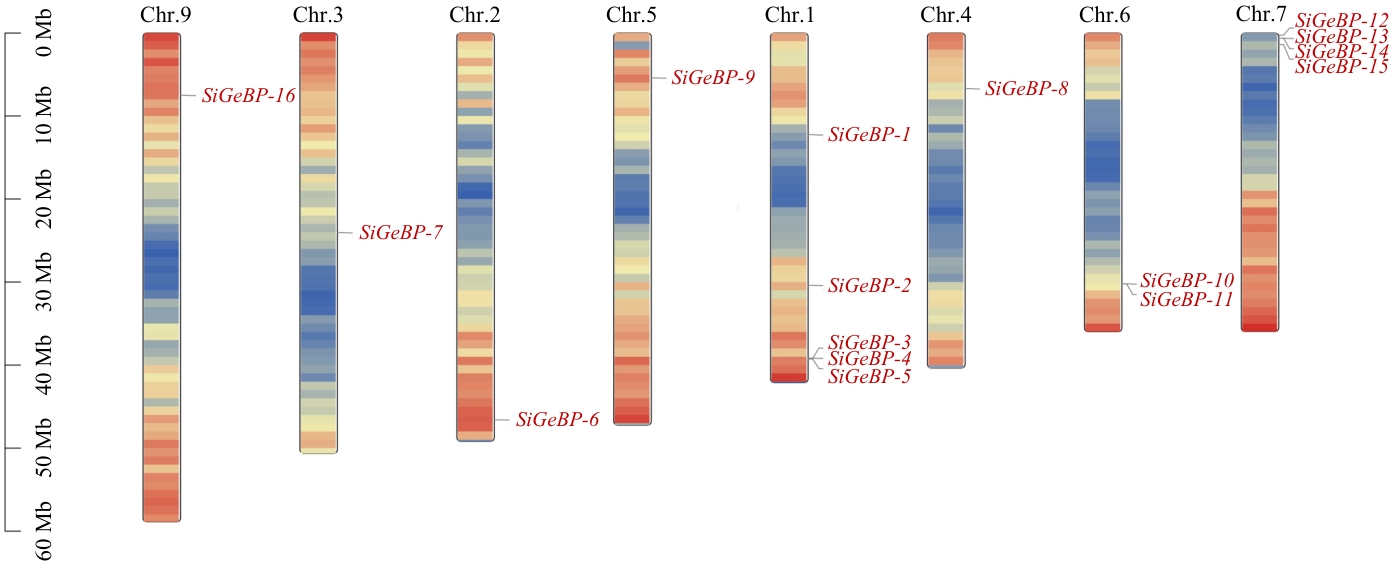
Fig. 1 Chromosomal localization of SiGeBP gene family
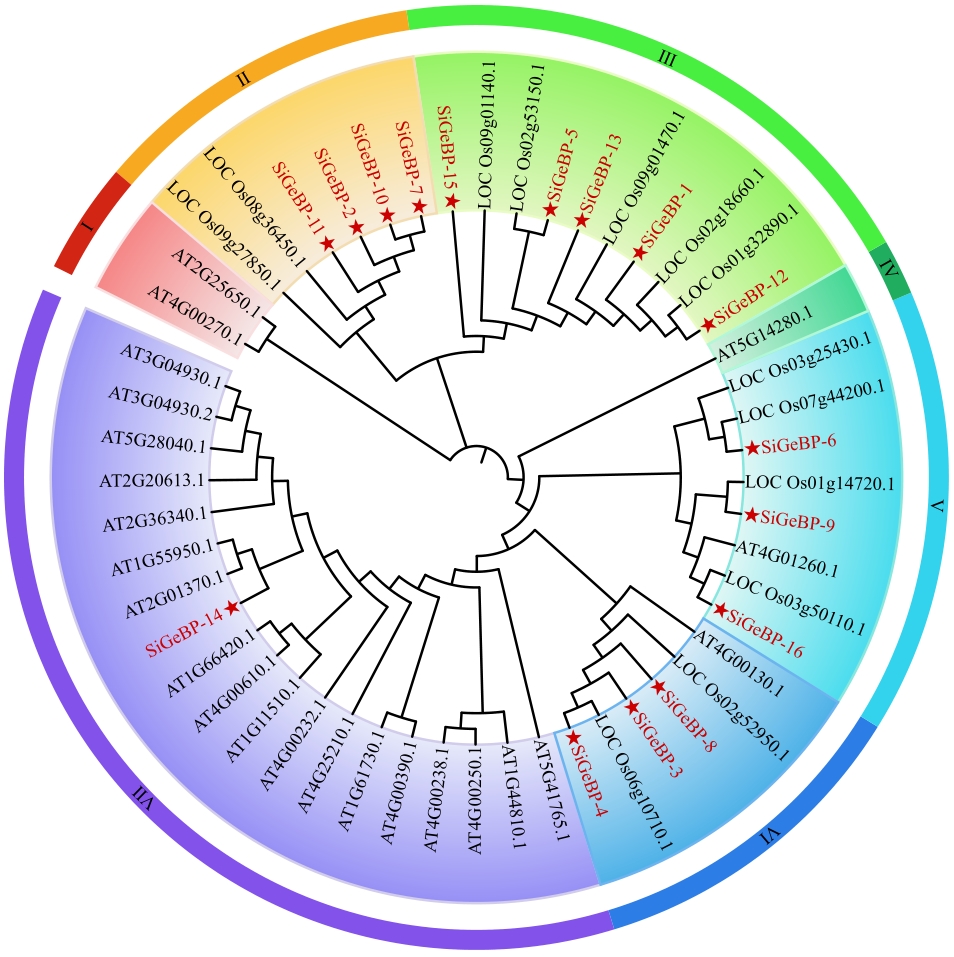
Fig. 2 Phylogenetic tree of GeBP proteins from Setaria italica, Arabidopsis thaliana and Oryza sativa
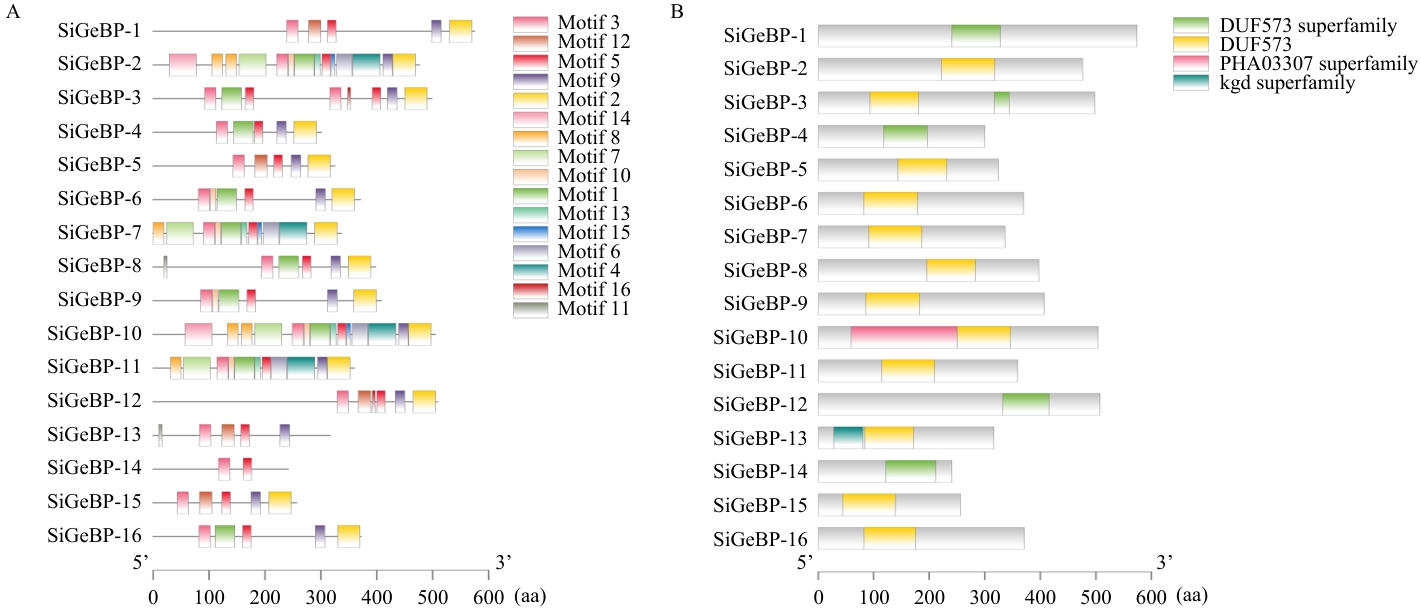
Fig. 3 Prediction of conserved motifs (A) and functional domain (B) of SiGeBP proteins
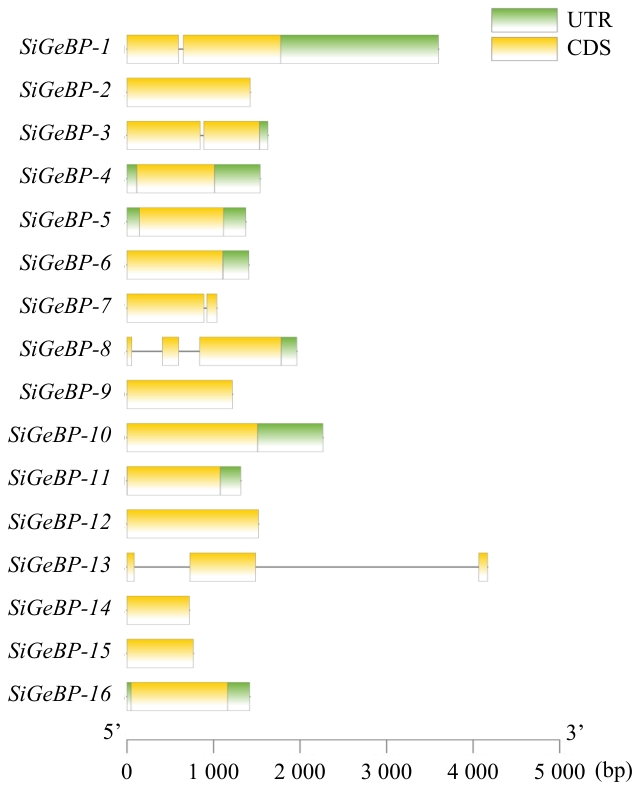
Fig. 4 Prediction of gene structure of SiGeBP gene family in S. italica
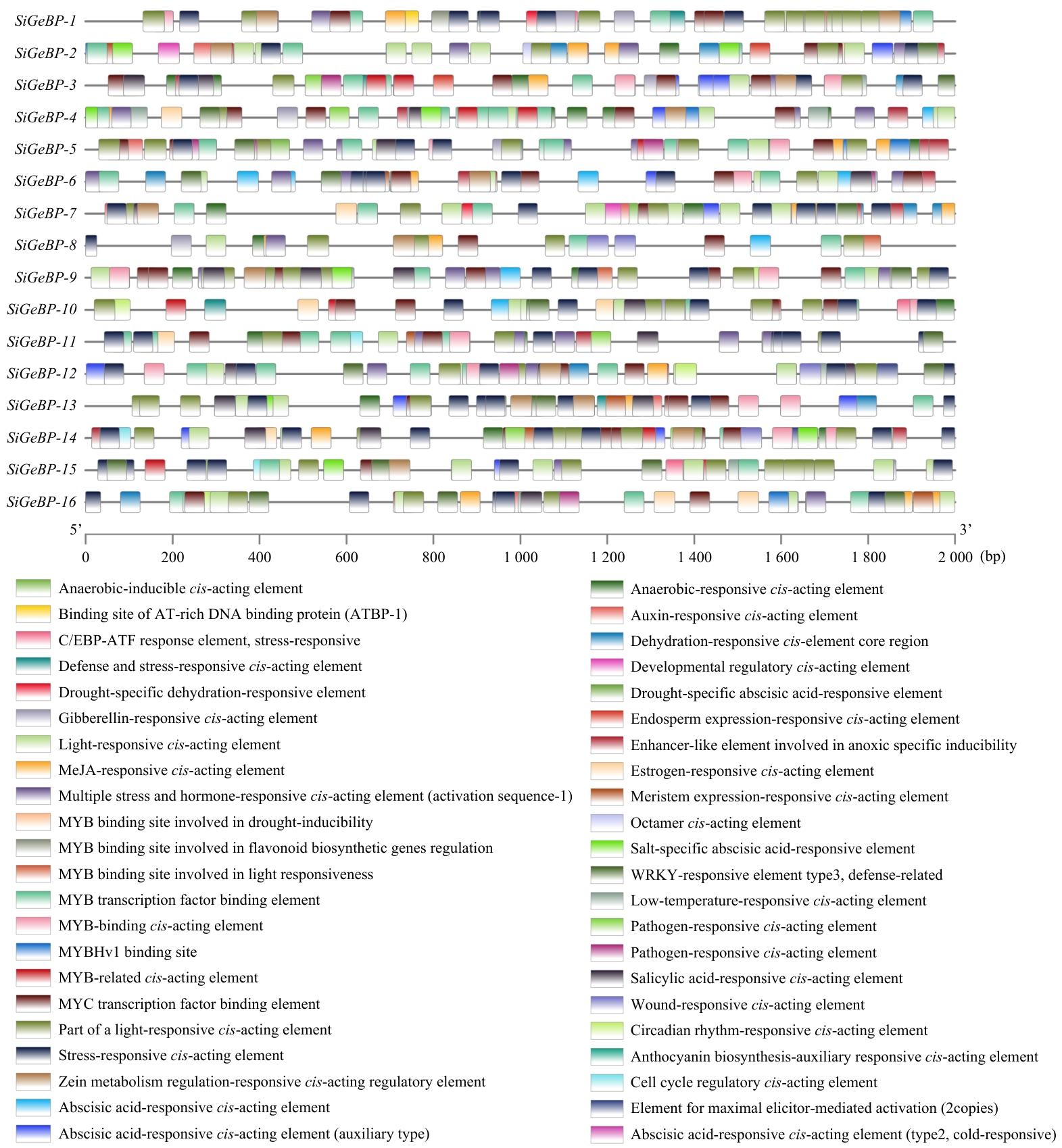
Fig. 5 Analysis of cis-acting elements of the SiGeBP gene family in S. italica
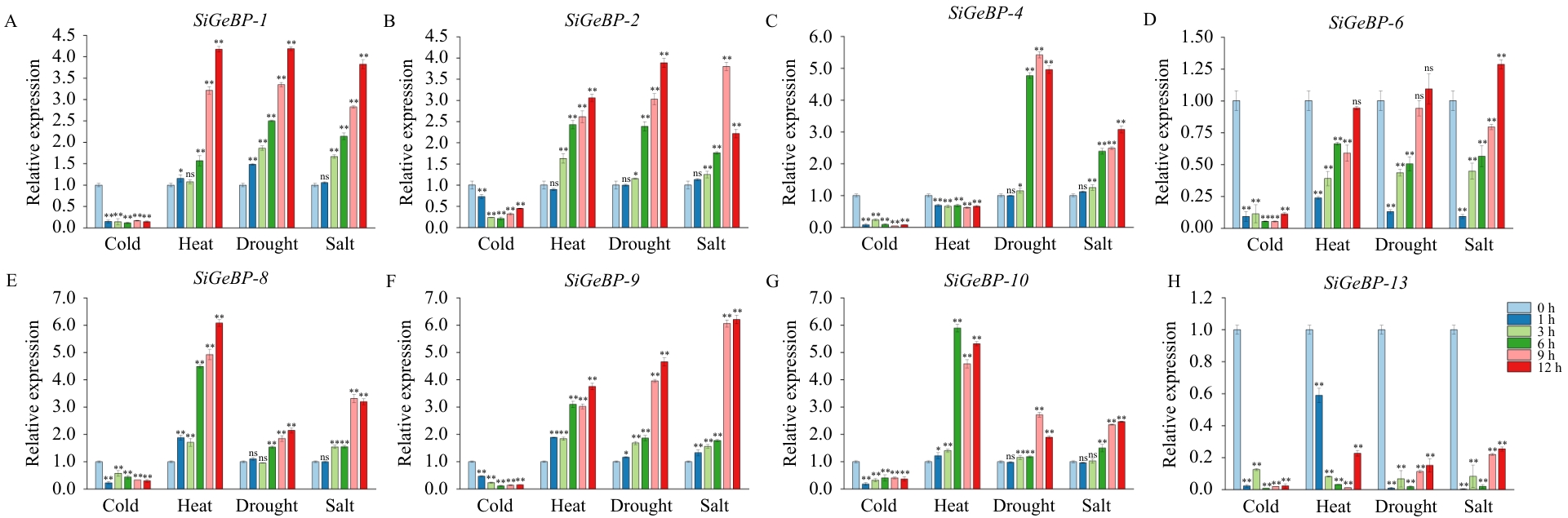
Fig. 6 Expression pattern analysis of the SiGeBP gene family under abiotic stresses*: Significant difference at the P<0.05 level. **: Highly significant difference at the P<0.01 level. ns: No significant difference. The same below
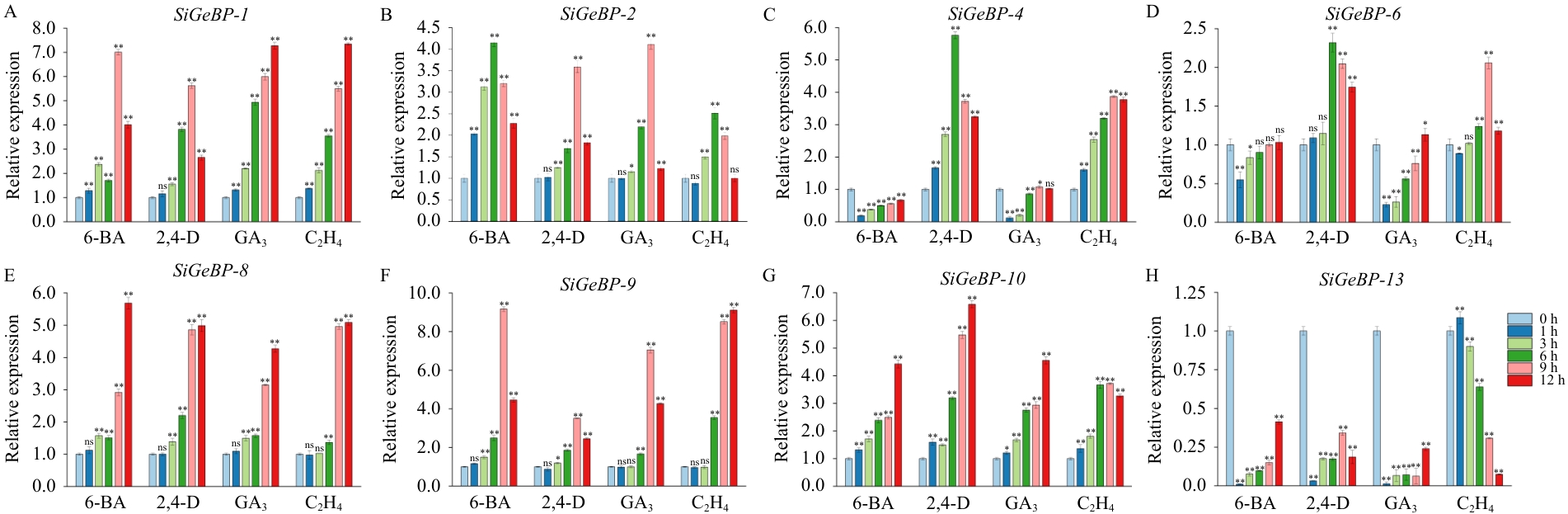
Fig. 7 Expression pattern analysis of the SiGeBP gene family under exogenous hormone treatments
| [1] | 钟姗辰, 武舒, 王黎, 等. 植物毛状体研究进展 [J]. 分子植物育种, 2023, 21(21): 7215-7224. |
| Zhong SC, Wu S, Wang L, et al. Advances in molecular mechanisms of plant trichomonas [J]. Mol Plant Breed, 2023, 21(21): 7215-7224. | |
| [2] | 韩金凤, 夏天, 刘一华, 等. 基因调控植物表皮毛发育的研究进展 [J]. 植物生理学报, 2023, 59(8): 1517-1523. |
| Han JF, Xia T, Liu YH, et al. Research progress on gene regulation of plant trichome development [J]. Plant Physiol J, 2023, 59(8): 1517-1523. | |
| [3] | Yang SL, Xue SD, Shan L, et al. The CsTM alters multicellular trichome morphology and enhances resistance against aphid by interacting with CsTIP1;1 in cucumber [J]. J Adv Res, 2025, 69: 17-30. |
| [4] | Heng SP, Li XL, Li M, et al. Two novel alleles of the MYB transcription factor BjA06.GL1 and BjB02.GL1 control leaf trichomes and enhance resistance to aphids in Brassica juncea [J]. Hortic Res, 2025, 12(2): uhae314. |
| [5] | Lan JQ, Zhang JZ, Yuan RR, et al. TCP transcription factors suppress Cotyledon trichomes by impeding a cell differentiation-regulating complex [J]. Plant Physiol, 2021, 186(1): 434-451. |
| [6] | Wu ML, Chang J, Han XQ, et al. A HD-ZIP transcription factor specifies fates of multicellular trichomes via dosage-dependent mechanisms in tomato [J]. Dev Cell, 2023, 58(4): 278-288. |
| [7] | Vanhoutte B, Schenkels L, Ceusters J, et al. Water and nutrient uptake in Vriesea cultivars: trichomes vs. roots [J]. Environ Exp Bot, 2017, 136: 21-30. |
| [8] | 阿拉依·哈那提, 刘艳霞, 兰海燕. 荒漠植物表皮毛的凝结水形成及吸收机制研究进展 [J]. 干旱区研究, 2024, 41(1): 114-123. |
| Hanati A, Liu YX, Lan HY. Research progress on the mechanism of formation, absorption and utilization of condensed water on leaf trichomes of desert plants [J]. Arid Zone Res, 2024, 41(1): 114-123. | |
| [9] | 刘晓梦, 唐宁, 陈泽雄, 等. 植物表皮毛发育研究进展 [J]. 园艺学报, 2021, 48(4): 705-718. |
| Liu XM, Tang N, Chen ZX, et al. Progress in plant trichome development research [J]. Acta Hortic Sin, 2021, 48(4): 705-718. | |
| [10] | 崔占虎, 黄显章, 李超, 等. 多组学策略在药用植物表皮毛次生代谢调控中的应用与展望 [J]. 中国现代中药, 2021, 23(3): 548-554. |
| Cui ZH, Huang XZ, Li C, et al. Application and prospect of multi-omics in regulation of secondary metabolism of trichome from medicinal plant [J]. Mod Chin Med, 2021, 23(3): 548-554. | |
| [11] | Saadat NP, van Aalst M, Brand A, et al. Shifts in carbon partitioning by photosynthetic activity increase terpenoid synthesis in glandular trichomes [J]. Plant J, 2023, 115(6): 1716-1728. |
| [12] | Zekri MA, Lang I. Lack of trichomes and variation in stomata properties influence the quantum efficiency of photosynthesis in Arabidopsis [J]. Environ Exp Bot, 2024, 227: 105948. |
| [13] | Curaba J, Herzog M, Vachon G. GeBP, the first member of a new gene family in Arabidopsis, encodes a nuclear protein with DNA-binding activity and is regulated by KNAT1 [J]. Plant J, 2003, 33(2): 305-317. |
| [14] | Chevalier F, Perazza D, Laporte F, et al. GeBP and GeBP-like proteins are noncanonical leucine-zipper transcription factors that regulate cytokinin response in Arabidopsis [J]. Plant Physiol, 2008, 146(3): 1142-1154. |
| [15] | 张瑞杰, 李明, 李迎超, 等. 红树莓GeBP基因家族鉴定及表达分析 [J]. 植物生理学报, 2024, 60(6): 1007-1015. |
| Zhang RJ, Li M, Li YC, et al. Identification and expression analysis of GeBP gene family in red raspberry [J]. Plant Physiol J, 2024, 60(6): 1007-1015. | |
| [16] | 朱贵爽, 李艳肖, 张安宁, 等. 蓖麻GeBP转录因子的全基因组鉴定与GeBP2基因的克隆、表达分析 [J]. 浙江农业学报, 2024, 36(8): 1731-1740. |
| Zhu GS, Li YX, Zhang AN, et al. Identification of RcGeBP transcription factor and cloning and expression analysis of RcGeBP2 gene in castor [J]. Acta Agric Zhejiangensis, 2024, 36(8): 1731-1740. | |
| [17] | 巩元勇, 赵丽华, 闫飞, 等. 大豆GeBP转录因子基因家族的生物信息学分析 [J]. 广西植物, 2022, 42(2): 294-303. |
| Gong YY, Zhao LH, Yan F, et al. Bioinformatics analysis of GeBP transcription factor gene family in Glycin max [J]. Guihaia, 2022, 42(2): 294-303. | |
| [18] | 李鸿燕, 唐泽成, 李嘉欣, 等. 拟南芥GeBP转录因子基因家族生物信息学分析[J]. 分子植物育种, 2024: 1-21. |
| Li HY, Tang ZC, Li JX, et al. Bioinformatics analysis of the GeBP transcription factor gene family in Arabidopsis thaliana [J]. Mol Plant Breed, 2024: 1-21. | |
| [19] | Khare D, Mitsuda N, Lee S, et al. Root avoidance of toxic metals requires the GeBP-LIKE 4 transcription factor in Arabidopsis thaliana [J]. New Phytol, 2017, 213(3): 1257-1273. |
| [20] | 孙瑞青, 杨楠, 刘志鑫, 等. 杧果GeBP转录因子家族基因的鉴定及表达分析 [J]. 经济林研究, 2021, 39(4): 137-147. |
| Sun RQ, Yang N, Liu ZX, et al. Identification and expression analysis of mango GeBP transcription factor family genes [J]. Nonwood For Res, 2021, 39(4): 137-147. | |
| [21] | 贾冠清, 刁现民. 中国谷子种业创新现状与未来展望 [J]. 中国农业科学, 2022, 55(4): 653-665. |
| Jia GQ, Diao XM. Current status and perspectives of innovation studies related to foxtail millet seed industry in China [J]. Sci Agric Sin, 2022, 55(4): 653-665. | |
| [22] | 李顺国, 刘斐, 刘猛, 等. 中国谷子产业和种业发展现状与未来展望 [J]. 中国农业科学, 2021, 54(3): 459-470. |
| Li SG, Liu F, Liu M, et al. Current status and future prospective of foxtail millet production and seed industry in China [J]. Sci Agric Sin, 2021, 54(3): 459-470. | |
| [23] | Rathinapriya P, Pandian S, Rakkammal K, et al. The protective effects of polyamines on salinity stress tolerance in foxtail millet (Setaria italica L.), an important C4 model crop [J]. Physiol Mol Biol Plants, 2020, 26(9): 1815-1829. |
| [24] | Zhao XT, Ma K, Li Z, et al. Transcriptome analysis reveals brassinolide signaling pathway control of foxtail millet seedling starch and sucrose metabolism under freezing stress, with implications for growth and development [J]. Int J Mol Sci, 2023, 24(14): 11590. |
| [25] | 王心悦, 陈畅, 李康平, 等. 谷子HMA基因家族的全基因组表征及其功能预测 [J]. 山西农业大学学报: 自然科学版, 2025, 45(4): 3-15. |
| Wang XY, Chen C, Li KP, et al. Genome-wide characterization and functional prediction of the heavy metal ATPase (HMA) gene family in foxtail millet [J]. J Shanxi Agric Univ Nat Sci Ed, 2025, 45(4): 3-15. | |
| [26] | Jing XQ, Deng N, Cai YD. Genome-wide identification and characterization of RopGEF gene family in C4 crops [J]. Genes, 2024, 15(9): 1112. |
| [27] | 贺日升, 肖硕定, 游亮, 等. 甘蓝型油菜BnGeBP基因家族的生物信息学分析及表达分析[J]. 分子植物育种, 2025: 1-14. |
| He RS, Xiao SD, You L, et al. Bioinformatics and expression analysis of the BnGeBP gene family in Brassica napus [J]. Molecular Plant Breeding, 2025: 1-14. | |
| [28] | 邵禹萌, 姚卓尔, 王鑫翌, 等. 毛果杨GeBP转录因子家族鉴定及表达分析 [J]. 林业与生态科学, 2025, 40(4): 389-398. |
| Shao YM, Yao ZE, Wang XY, et al. Identification and expression analysis of GeBP transcription factor family in Populus trichocarpa [J]. For Ecol Sci, 2025, 40(4): 389-398. | |
| [29] | Jeffares DC, Penkett CJ, Bähler J. Rapidly regulated genes are intron poor [J]. Trends Genet, 2008, 24(8): 375-378. |
| [30] | Chen Y, Ma T, Zhang TT, et al. Trends in the evolution of intronless genes in Poaceae [J]. Front Plant Sci, 2023, 14: 1065631. |
| [31] | Wang RL, Wu XY, Wang ZW, et al. Genome-wide identification and expression analysis of BrGeBP genes reveal their potential roles in cold and drought stress tolerance in Brassica rapa [J]. Int J Mol Sci, 2023, 24(17): 13597. |
| [32] | Cao HH, Wang DF, Li XL, et al. Genome-wide identification and expression profiling of SlGeBP gene family in response to hormone and abiotic stresses in Solanum lycopersicum L. [J]. Int J Mol Sci, 2025, 26(13): 6008. |
| [33] | Sun WN, Xia LJ, Deng JW, et al. Evolution and subfunctionalization of CIPK6 homologous genes in regulating cotton drought resistance [J]. Nat Commun, 2024, 15: 5733. |
| [34] | Sun SL, Liu DF, Luo W, et al. Domestication-selected COG4-OsbZIP23 module regulates chilling tolerance in rice [J]. Cell Rep, 2024, 43(11): 114965. |
| [1] | WANG Xin, CHEN Wei, SUN Bo. Regulatory Mechanism of Plant Floral Meristem Activity [J]. Biotechnology Bulletin, 2026, 42(9): 1-13. |
| [2] | ZHU Yun-tao, DU Yi-fan, ZUO Shi-min, XIONG Ye-hui. Research Progress in the Regulation of Plant Growth, Development, and Stress Responses by Small Peptide Hormones EPFs/EPFLs [J]. Biotechnology Bulletin, 2026, 42(9): 82-92. |
| [3] | ZHAO Xiong-wei, SHAO Li-tao, LI Meng-qing, LIANG Yi-xuan, ZHANG Jie-ru, CAO Yan-hua. Identification of Lysine Synthesis Pathway Genes and Analysis of the Regulation of AK Gene Variations in Foxtail Millet [J]. Biotechnology Bulletin, 2026, 42(9): 107-119. |
| [4] | ZHAO Jing-wei, CHANG Na, JIN Xiao-wei, ZHANG Li-quan. Cloning and Function Analysis of MfWRKY22 Gene in Medicago falcata [J]. Biotechnology Bulletin, 2026, 42(7): 236-245. |
| [5] | LIU Qian, WANG Zong-yan, LUO Jun-hao, WU Zhang-zhang, HU Zhen, LYU Jian-zhen, JIANG Liang. Mapping and Candidate Gene Analysis of the Major Gene Controlling Seed Shattering in Foxtail Millet Based on BSA-Seq [J]. Biotechnology Bulletin, 2026, 42(7): 138-147. |
| [6] | WU Xia-ming, LIU Chuan-he, HE Han, ZHOU Chen-ping, YANG Min, KUANG Rui-bin, XU Ze, WEI Yue-rong. Research Progress in Molecular Response Mechanisms of Strawberry to High-Temperature Stress [J]. Biotechnology Bulletin, 2026, 42(6): 175-185. |
| [7] | ZHANG Ai-cen, YAN Hui, MA Ju-kui, ZHANG Yun-gang, LI Qiang. Genome-wide Identification and Expression Analysis of DNA Methyltransferase and Demethylase Gene Family in Sweetpotato [J]. Biotechnology Bulletin, 2026, 42(6): 1-12. |
| [8] | GENG Ming-yan, FENG Hui, HE Lei, ZHANG Guo-zheng, WANG Jing. Growth-promoting Effect of Arcopilus aureus XBAa1 on Tobacco and Its Colonization in Tobacco Root [J]. Biotechnology Bulletin, 2026, 42(4): 321-331. |
| [9] | DU Dan, GUO Xiang, HU Xin, PAN Yu. Advances in the Regulatory Mechanisms of Plastid Development on Fruit Ripening and Quality [J]. Biotechnology Bulletin, 2026, 42(3): 48-59. |
| [10] | ZHAO Yan-xia, LI Qian, SUN Jia-bo, LIANG Hong-min, LI Bing-bing. Key Regulatory Genes and Molecular Networks Dissection Underlying Strawberry Fruit Quality Formation [J]. Biotechnology Bulletin, 2026, 42(3): 111-132. |
| [11] | CHENG Xue, FU Ying, CHAI Xiao-jiao, WANG Hong-yan, DENG Xin. Identification of LHC Gene Family in Setaria italica and Expression Analysis under Abiotic Stresses [J]. Biotechnology Bulletin, 2025, 41(8): 102-114. |
| [12] | HE Wei, LI Jun-yi, LI Xin-ni, MA Xue-hua, XING Yuan, CAO Xiao-ning, QIAO Zhi-ju, LIU Si-chen. Genome-wide Identification of U-box E3 Ubiquitin Ligase Gene Family in Setaria italica and Response Analysis to Abiotic Stress [J]. Biotechnology Bulletin, 2025, 41(5): 104-118. |
| [13] | KUANG Jian-hua, CHENG Zhi-peng, ZHAO Yong-jing, YANG Jie, CHEN Run-qiao, CHEN Long-qing, HU Hui-zhen. Expression Analysis of the GH3 Gene Family in Nelumbo nucifera underHormonal and Abiotic Stresses [J]. Biotechnology Bulletin, 2025, 41(2): 221-233. |
| [14] | GUO Hao-jie, WANG Cheng, YANG Fu-rong, DU Bing, MENG Chao-min. Cloning and Low-phosphorus Tolerance Analysis of SiSPX9 Gene in Foxtail Millet [J]. Biotechnology Bulletin, 2025, 41(12): 114-123. |
| [15] | WANG Ya-ping, JIN Lan, HAO Jin-feng, CHANG Ming, WANG Yan-dan, GAO Feng. Identification and Expression Characteristics Analysis of CmRGLG Gene Family in Melon [J]. Biotechnology Bulletin, 2025, 41(12): 156-167. |
| Viewed | ||||||
|
Full text |
|
|||||
|
Abstract |
|
|||||
