







生物技术通报 ›› 2026, Vol. 42 ›› Issue (6): 227-236.doi: 10.13560/j.cnki.biotech.bull.1985.2025-0998
• 研究报告 • 上一篇
刘嘉欢1( ), 曹德法1, 于玟瑶1, 邓红红2, 谭伦东3, 郭海4, 黄光卉4, 王均1, 王迅1(), 汪志辉1()
收稿日期:2025-09-22
出版日期:2026-06-26
发布日期:2026-07-11
通讯作者:
王迅,女,博士,副教授,研究方向 :柑橘遗传育种;E-mail: wx0104@sicau.edu.cn作者简介:刘嘉欢,女,硕士,研究方向 :柑橘遗传育种;E-mail: liujiahuan@stu.sicau.edu.cn
基金资助:
LIU Jia-huan1(), CAO De-fa1, YU Wen-yao1, DENG Hong-hong2, TAN Lun-dong3, GUO Hai4, HUANG Guang-hui4, WANG Jun1, WANG Xun1(), WANG Zhi-hui1()
Received:2025-09-22
Published:2026-06-26
Online:2026-07-11
摘要:
目的 探究花粉直感效应在晚熟柑橘果实性状改良中的作用,并利用SCoT分子标记高效鉴定杂种真实性,以期为选育成熟期适宜、品质优良的晚熟柑橘新品种提供理论依据与优质种质资源。 方法 以‘清见’‘爱媛38’‘沃柑’为母本,与9个父本配置12个杂交组合,统计坐果率与成苗率,测定杂交果实的单果重、纵横径、果形指数、可溶性固形物(TSS)含量等性状,评估花粉直感效应。利用SCoT分子标记对杂交后代进行真实性鉴定,并分析其遗传多样性。 结果 ‘清见’‘爱媛38’‘沃柑’作为母本的总坐果率分别为19.78%、12.31%和5.4%。不同父本花粉对果实性状表现出显著的花粉直感效应,其中‘塔罗科’作为父本对‘清见’果实可溶性固形物含量提升最为显著。SCoT分子标记从9个组合中鉴定出891株真实杂种,平均杂种率为99.78%。遗传多样性分析表明,各杂交组合后代的多态性比率介于42.11%‒94.59%之间,其中‘清见’ב明日见’组合的遗传多样性最高。 结论 花粉直感效应具有显著父母本依赖性,‘明日见’‘红韵香柑’‘黄果柑’分别为‘清见’‘爱媛38’‘沃柑’3种母本的最优父本;杂种后代遗传多样性高,主要源于亲本遗传背景差异及杂交过程中的基因重组;研究创制的杂交新种质为晚熟柑橘育种提供了核心材料,SCoT分子标记可高效应用于杂种鉴定。
刘嘉欢, 曹德法, 于玟瑶, 邓红红, 谭伦东, 郭海, 黄光卉, 王均, 王迅, 汪志辉. 晚熟柑橘花粉直感效应及SCoT分子标记鉴定[J]. 生物技术通报, 2026, 42(6): 227-236.
LIU Jia-huan, CAO De-fa, YU Wen-yao, DENG Hong-hong, TAN Lun-dong, GUO Hai, HUANG Guang-hui, WANG Jun, WANG Xun, WANG Zhi-hui. Xenia Effects in Late-maturing Citrus and Identification Using SCoT Molecular Markers[J]. Biotechnology Bulletin, 2026, 42(6): 227-236.
母本 Female parent | 父本 Male parents | 授粉数 Numbe of pollination | 坐果数 Number of fruits | 坐果率 Fruit-set rate (%) | 播种数 Number of seeds | 成苗数 Seedlings number | 成苗率 Survival rate (%) |
|---|---|---|---|---|---|---|---|
| 清见 Kiyomi tangor | 塔罗科 Tarocco | 99 | 3 | 3.03 | 0 | 0 | 0.00 |
| 红韵香柑 Hongyun Xianggan | 102 | 18 | 17.65 | 380 | 293 | 77.11 | |
| 媛红椪柑 Himeruby | 96 | 30 | 31.25 | 354 | 316 | 89.27 | |
| 明日见 Asumi | 72 | 22 | 30.56 | 316 | 199 | 62.97 | |
| 爱媛38 Ehime Kashi No. 38 | 明日见 Asumi | 74 | 9 | 12.16 | 51 | 10 | 19.61 |
| 甘平 Kanpei | 74 | 8 | 10.81 | 0 | 0 | 0.00 | |
| 美国糖橘 American sugar tangerine | 48 | 9 | 18.75 | 49 | 8 | 16.33 | |
| 红韵香柑 Hongyun Xianggan | 64 | 6 | 9.38 | 23 | 0 | 0.00 | |
| 沃柑 Orah | 大雅 Daya | 129 | 9 | 6.98 | 58 | 3 | 5.17 |
| 濑户见 Setomi | 167 | 9 | 5.39 | 38 | 4 | 10.53 | |
| 爱媛38 Ehime Kashi No. 38 | 86 | 2 | 2.33 | 36 | 16 | 44.44 | |
| 黄果柑 Huangguogan | 420 | 23 | 5.50 | 238 | 44 | 18.49 | |
| 总计 Total | 1 431 | 148 | 10.34 | 1 543 | 893 | 57.87 |
表1 12种杂交组合坐果率和成苗率统计
Table 1 Statistics on fruit setting rate and seedling rate of 12 hybrid combinations
母本 Female parent | 父本 Male parents | 授粉数 Numbe of pollination | 坐果数 Number of fruits | 坐果率 Fruit-set rate (%) | 播种数 Number of seeds | 成苗数 Seedlings number | 成苗率 Survival rate (%) |
|---|---|---|---|---|---|---|---|
| 清见 Kiyomi tangor | 塔罗科 Tarocco | 99 | 3 | 3.03 | 0 | 0 | 0.00 |
| 红韵香柑 Hongyun Xianggan | 102 | 18 | 17.65 | 380 | 293 | 77.11 | |
| 媛红椪柑 Himeruby | 96 | 30 | 31.25 | 354 | 316 | 89.27 | |
| 明日见 Asumi | 72 | 22 | 30.56 | 316 | 199 | 62.97 | |
| 爱媛38 Ehime Kashi No. 38 | 明日见 Asumi | 74 | 9 | 12.16 | 51 | 10 | 19.61 |
| 甘平 Kanpei | 74 | 8 | 10.81 | 0 | 0 | 0.00 | |
| 美国糖橘 American sugar tangerine | 48 | 9 | 18.75 | 49 | 8 | 16.33 | |
| 红韵香柑 Hongyun Xianggan | 64 | 6 | 9.38 | 23 | 0 | 0.00 | |
| 沃柑 Orah | 大雅 Daya | 129 | 9 | 6.98 | 58 | 3 | 5.17 |
| 濑户见 Setomi | 167 | 9 | 5.39 | 38 | 4 | 10.53 | |
| 爱媛38 Ehime Kashi No. 38 | 86 | 2 | 2.33 | 36 | 16 | 44.44 | |
| 黄果柑 Huangguogan | 420 | 23 | 5.50 | 238 | 44 | 18.49 | |
| 总计 Total | 1 431 | 148 | 10.34 | 1 543 | 893 | 57.87 |
| 杂交组合 Hybridization combinations | 筛选的特异性SCoT引物编号 Specific SCoT primer number for screening |
|---|---|
| 清见×媛红椪柑 Kiyomi tangor × Himeruby | SCoT12、SCoT13、SCoT15、SCoT21 |
| 清见×红韵香柑 Kiyomi tangor ×Hongyun Xianggan | SCoT 8、SCoT12、SCoT14、SCoT21 |
| 清见×明日见 Kiyomi tangor × Asumi | SCoT8、SCoT15、SCoT21、SCoT34 |
| 爱媛38×明日见 Ehime Kashi No. 38 × Asumi | SCoT8、SCoT 12、SCoT 13、SCoT15 |
| 爱媛38×美国糖橘 Ehime Kashi No. 38 × American sugar tangerine | SCoT8、SCoT12、SCoT15、SCoT21 |
| 沃柑×大雅 Orah × Daya | SCoT12、SCoT13、SCoT14、SCoT15 |
| 沃柑×濑户见 Orah × Setomi | SCoT12、SCoT13、SCoT21、SCoT25 |
| 沃柑×爱媛38 Orah × Ehime Kashi No. 38 | SCoT12、SCoT13、SCoT15、SCoT21 |
| 沃柑×黄果柑 Orah× Huanguogan | SCoT12、SCoT15、SCoT21、SCoT13 |
表2 每个杂交组合筛选出的SCoT引物
Table 2 SCoT primers screened for each hybridization combination
| 杂交组合 Hybridization combinations | 筛选的特异性SCoT引物编号 Specific SCoT primer number for screening |
|---|---|
| 清见×媛红椪柑 Kiyomi tangor × Himeruby | SCoT12、SCoT13、SCoT15、SCoT21 |
| 清见×红韵香柑 Kiyomi tangor ×Hongyun Xianggan | SCoT 8、SCoT12、SCoT14、SCoT21 |
| 清见×明日见 Kiyomi tangor × Asumi | SCoT8、SCoT15、SCoT21、SCoT34 |
| 爱媛38×明日见 Ehime Kashi No. 38 × Asumi | SCoT8、SCoT 12、SCoT 13、SCoT15 |
| 爱媛38×美国糖橘 Ehime Kashi No. 38 × American sugar tangerine | SCoT8、SCoT12、SCoT15、SCoT21 |
| 沃柑×大雅 Orah × Daya | SCoT12、SCoT13、SCoT14、SCoT15 |
| 沃柑×濑户见 Orah × Setomi | SCoT12、SCoT13、SCoT21、SCoT25 |
| 沃柑×爱媛38 Orah × Ehime Kashi No. 38 | SCoT12、SCoT13、SCoT15、SCoT21 |
| 沃柑×黄果柑 Orah× Huanguogan | SCoT12、SCoT15、SCoT21、SCoT13 |
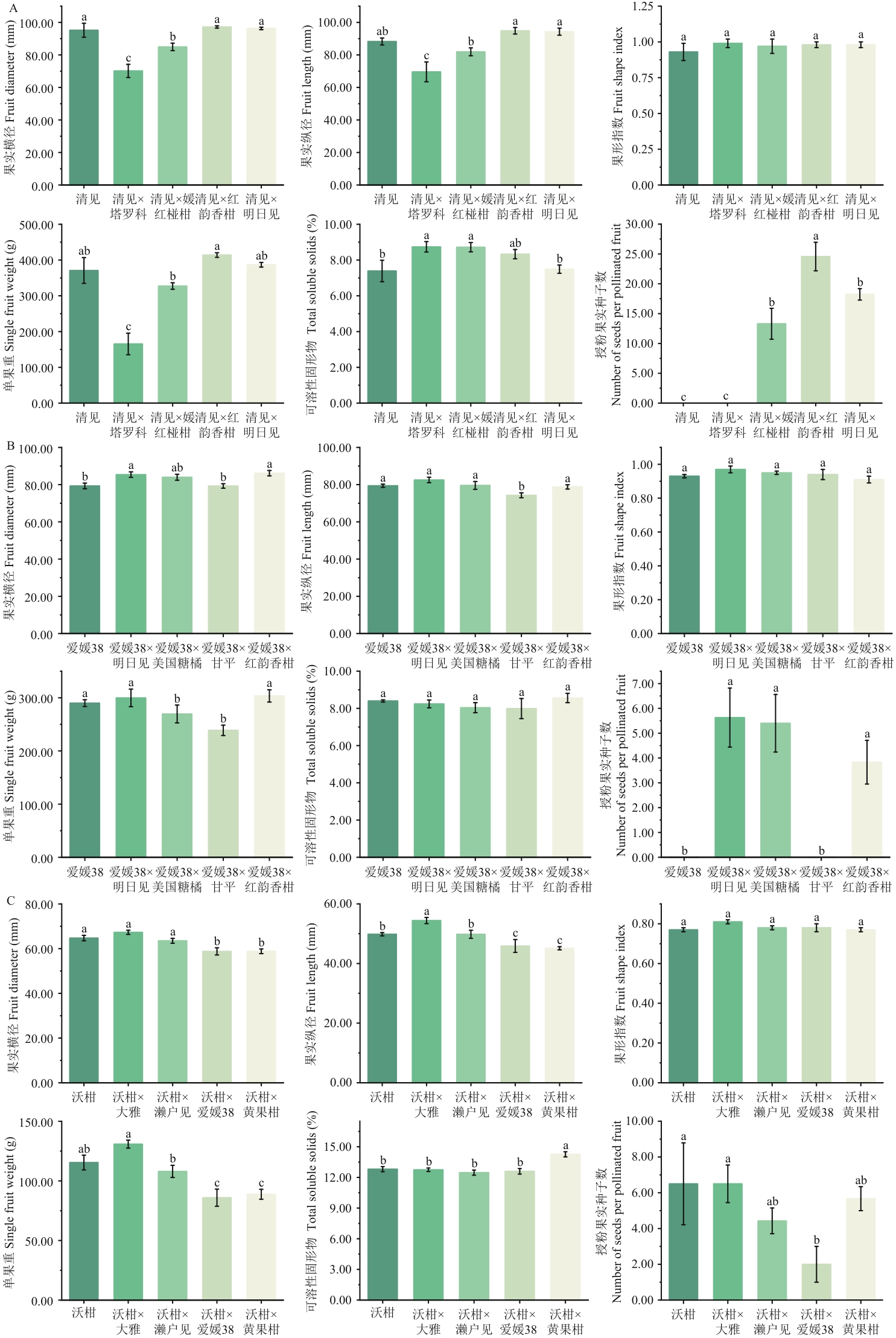
图1 杂交果实的表型A:清见(清见×塔罗科,清见×媛红椪柑,清见×红韵香柑,清见×明日见);B:爱媛38(爱媛38 ×明日见,爱媛38×美国糖橘,爱媛38×甘平,爱媛38×红韵香柑);C:沃柑(沃柑×大雅,沃柑×濑户见,沃柑×爱媛38,沃柑×黄果柑)。不同小写字母表示差异显著(P0.05)
Fig. 1 Phenotypes of hybrid fruitsA: Kiyomi tangor (Kiyomi tangor × Tarocco; Kiyomi tangor × Himeruby; Kiyomi tangor × Hongyun Xianggan; Kiyomi tangor × Asumi). B: Ehime Kashi No. 38 (Ehime Kashi No. 38 × Asumi; Ehime Kashi No. 38 × American sugar tangerine; Ehime Kashi No. 38 × Kanpei; Ehime Kashi No. 38 × Hongyun Xianggan). C: Orah (Orah × Daya; Orah × Setomi; Orah× Ehime Kashi No. 38; Orah× Huangguogan). Different lowercase letters indicate significant differences (P0.05)
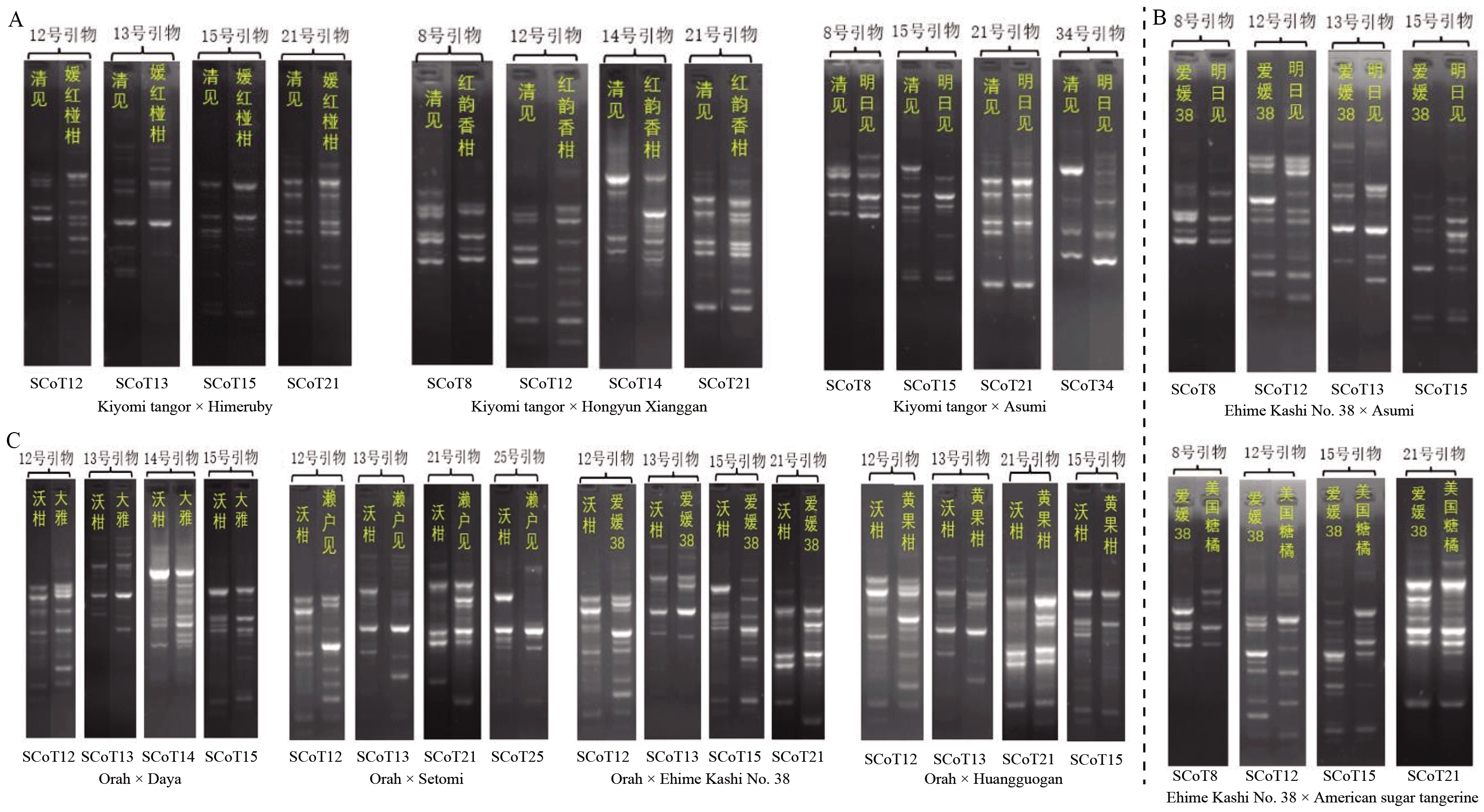
图2 每个杂交组合筛选出的特异性SCoT引物电泳图A:母本为‘清见’杂交组合的SCoT引物;B:母本为‘爱媛38’杂交组合的SCoT引物;C:母本为‘沃柑’杂交组合的SCoT引物
Fig. 2 Electrophoresis of specific SCoT primers screened for each hybrid combinationA: SCoT primers for hybrid combinations with ‘Kiyomi tangor’ as the female parent. B: SCoT primers for hybrid combinations with ‘Ehime Kashi No. 38’ as the female parent. C: SCoT primers for hybrid combinations with ‘Orah’ as the female parent
母本 Female parent | 父本 Male parent | F1代数 Number of hybrid F1 generations | 真杂种数 True hybrid quantity | 杂种率 Hybrid rate (%) |
|---|---|---|---|---|
| 清见 Kiyomi tangor | 媛红椪柑 Himeruby | 316 | 316 | 100 |
| 红韵香柑 Hongyun Xianggan | 293 | 292 | 99.66 | |
| 明日见 Asumi | 199 | 199 | 100 | |
| 爱媛38 Ehime Kashi No. 38 | 明日见 Asumi | 10 | 9 | 90 |
| 美国糖橘 American sugar tangerine | 8 | 8 | 100 | |
| 沃柑 Orah | 爱媛38 Ehime Kashi No. 38 | 16 | 16 | 100 |
| 大雅 Daya | 3 | 3 | 100 | |
| 濑户见 Setomi | 4 | 4 | 100 | |
| 黄果柑 Huangguogan | 44 | 44 | 100 | |
| 总计 Total | 893 | 891 | 99.78 |
表3 九种杂交组合杂种率统计
Table 3 Statistics of hybrid rates for 9 hybrid combinations
母本 Female parent | 父本 Male parent | F1代数 Number of hybrid F1 generations | 真杂种数 True hybrid quantity | 杂种率 Hybrid rate (%) |
|---|---|---|---|---|
| 清见 Kiyomi tangor | 媛红椪柑 Himeruby | 316 | 316 | 100 |
| 红韵香柑 Hongyun Xianggan | 293 | 292 | 99.66 | |
| 明日见 Asumi | 199 | 199 | 100 | |
| 爱媛38 Ehime Kashi No. 38 | 明日见 Asumi | 10 | 9 | 90 |
| 美国糖橘 American sugar tangerine | 8 | 8 | 100 | |
| 沃柑 Orah | 爱媛38 Ehime Kashi No. 38 | 16 | 16 | 100 |
| 大雅 Daya | 3 | 3 | 100 | |
| 濑户见 Setomi | 4 | 4 | 100 | |
| 黄果柑 Huangguogan | 44 | 44 | 100 | |
| 总计 Total | 893 | 891 | 99.78 |
母本 Female parent | 父本 Male parent | 总条带数 Total number of bands | 多态性条带数 Polymorphism band number | 多态性条带比率 Polymorphism bands ratio (%) | Nei’s基因多样性指数 Nei’s genetic diversity index (H) | Shannon信息指数 Shannon information index (I) |
|---|---|---|---|---|---|---|
清见 Kiyomi tangor | 媛红椪柑 Himeruby | 80 | 66 | 82.50 | 0.224 2 | 0.344 9 |
| 红韵香柑 Hongyun Xianggan | 62 | 34 | 54.84 | 0.179 7 | 0.265 1 | |
| 明日见 Asumi | 37 | 35 | 94.59 | 0.373 8 | 0.547 6 | |
| 总计 Total | 179 | 135 | 75.42 | - | - | |
| 平均值 Average | 59.67 | 45 | 75.41 | 0.259 0 | 0.382 8 | |
爱媛38 Ehime Kashi No. 38 | 明日见 Asumi | 39 | 20 | 51. 28 | 0. 199 2 | 0. 292 6 |
| 美国糖橘 American sugar tangerine | 38 | 16 | 42.11 | 0.174 6 | 0.250 9 | |
| 总计 Total | 77 | 36 | 46.75 | - | - | |
| 平均值 Average | 38.5 | 18 | 46.75 | 0.186 9 | 0.271 8 | |
沃柑 Orah | 大雅 Daya | 33 | 17 | 51.52 | 0.208 8 | 0.304 2 |
| 爱媛38 Ehime Kashi No. 38 | 49 | 32 | 65.31 | 0.220 2 | 0.327 5 | |
| 濑户见 Setomi | 34 | 19 | 55.88 | 0.232 7 | 0.336 1 | |
| 黄果柑 Huangguogan | 80 | 65 | 81.25 | 0.270 7 | 0.405 0 | |
| 总计 Total | 196 | 133 | 67.85 | - | - | |
| 平均值 Average | 49 | 33.25 | 67.85 | 0.233 1 | 0.343 2 |
表4 不同杂交组合的遗传多样性分析
Table 4 Genetic diversity analysis of different hybrid combinations
母本 Female parent | 父本 Male parent | 总条带数 Total number of bands | 多态性条带数 Polymorphism band number | 多态性条带比率 Polymorphism bands ratio (%) | Nei’s基因多样性指数 Nei’s genetic diversity index (H) | Shannon信息指数 Shannon information index (I) |
|---|---|---|---|---|---|---|
清见 Kiyomi tangor | 媛红椪柑 Himeruby | 80 | 66 | 82.50 | 0.224 2 | 0.344 9 |
| 红韵香柑 Hongyun Xianggan | 62 | 34 | 54.84 | 0.179 7 | 0.265 1 | |
| 明日见 Asumi | 37 | 35 | 94.59 | 0.373 8 | 0.547 6 | |
| 总计 Total | 179 | 135 | 75.42 | - | - | |
| 平均值 Average | 59.67 | 45 | 75.41 | 0.259 0 | 0.382 8 | |
爱媛38 Ehime Kashi No. 38 | 明日见 Asumi | 39 | 20 | 51. 28 | 0. 199 2 | 0. 292 6 |
| 美国糖橘 American sugar tangerine | 38 | 16 | 42.11 | 0.174 6 | 0.250 9 | |
| 总计 Total | 77 | 36 | 46.75 | - | - | |
| 平均值 Average | 38.5 | 18 | 46.75 | 0.186 9 | 0.271 8 | |
沃柑 Orah | 大雅 Daya | 33 | 17 | 51.52 | 0.208 8 | 0.304 2 |
| 爱媛38 Ehime Kashi No. 38 | 49 | 32 | 65.31 | 0.220 2 | 0.327 5 | |
| 濑户见 Setomi | 34 | 19 | 55.88 | 0.232 7 | 0.336 1 | |
| 黄果柑 Huangguogan | 80 | 65 | 81.25 | 0.270 7 | 0.405 0 | |
| 总计 Total | 196 | 133 | 67.85 | - | - | |
| 平均值 Average | 49 | 33.25 | 67.85 | 0.233 1 | 0.343 2 |
| [1] | Hu JB, Liu CC, Du ZZ, et al. Transposable elements cause the loss of self-incompatibility in citrus [J]. Plant Biotechnol J, 2024, 22(5): 1113-1131. |
| [2] | Jiao YL, Zhang SZ, Jin HT, et al. Fruit quality assessment based on mineral elements and juice properties in nine citrus cultivars [J]. Front Plant Sci, 2023, 14: 1280495. |
| [3] | 郭文武, 解凯东, 肖诗鑫, 等. 柑橘倍性育种的进展与思考 [C]//2012年园艺植物染色体倍性操作与遗传改良学术研讨会论文集. 重庆, 2012: 6. |
| Guo WW, Xie KD, Xiao SX, et al. Progress and perspectives on citrus ploidy breeding [C]// 2012 Symposium Abstracts on Chromosome Ploidy Manipulation and Genetic Improvement of Horticultural Plants. Chongqing, 2012: 6. | |
| [4] | Manzoor A, Ahmad T, Bashir MA, et al. Studies on colchicine induced chromosome doubling for enhancement of quality traits in ornamental plants [J]. Plants, 2019, 8(7): 194. |
| [5] | 罗赛男, 张文, 陈鹏, 等. 椪柑二倍体种间杂交胚抢救及后代倍性鉴定 [J]. 分子植物育种, 2021, 19(20): 6834-6841. |
| Luo SN, Zhang W, Chen P, et al. Identification of ploidy variation of ponkan embryo rescue plants [J]. Mol Plant Breed, 2021, 19(20): 6834-6841. | |
| [6] | 邓秀新, 王力荣, 李绍华, 等. 果树育种40年回顾与展望 [J]. 果树学报, 2019, 36(4): 514-520. |
| Deng XX, Wang LR, Li SH, et al. Retrospection and prospect of fruit breeding for last four decades in China [J]. J Fruit Sci, 2019, 36(4): 514-520. | |
| [7] | Qiao YX, Yu WJ, Li KJ, et al. Xenia effect on nutritional and flavor components of ‘jingbaili’ pear [J]. Foods, 2025, 14(1): 94. |
| [8] | Zhang HP, Liu CH, Yao JL, et al. Citrus mangshanensis pollen confers a Xenia effect on linalool oxide accumulation in pummelo fruit by enhancing the expression of a cytochrome P450 78A7 gene CitLO1 [J]. J Agric Food Chem, 2019, 67(34): 9468-9476. |
| [9] | Shahsavar AR, Shahhosseini A. The metaxenia effects of different pollen grains on secondary metabolites enzymes and sugars of ‘Piarom’ date palm fruit [J]. Sci Rep, 2022, 12(1): 10058. |
| [10] | 林航, 陈雪金, 吴咚咚, 等. 花粉直感效应对福桔和雪柑果实外在品质的影响 [J]. 福建农业科技, 2015, 46(7): 7-9. |
| Lin H, Chen XJ, Wu DD, et al. Effect of metaxenia effect on the fruit external quality of Fuzhou local orange and Xuegan [J]. Fujian Agric Sci Technol, 2015, 46(7): 7-9. | |
| [11] | 黄永敬, 唐小浪, 马培恰, 等. 不同花粉源对清见桔橙坐果及果实品质的影响 [J]. 广东农业科学, 2010, 37(11): 104-106. |
| Huang YJ, Tang XL, Ma PQ, et al. Effects of different pollen sources on fruit setting and fruit quality of Kiyomi [J]. Guangdong Agric Sci, 2010, 37(11): 104-106. | |
| [12] | 陈青英, 卢方良, 柳兴岳, 等. 授粉对玉环柚果实品质和裂果的影响 [J]. 中国果树, 2006(1): 26-27. |
| Chen QY, Lu FL, Liu XY, et al. Effect of pollination on fruit quality and fruit cracking of Yuhuan pomelo [J]. China Fruits, 2006(1): 26-27. | |
| [13] | Abouseada HH, Mohamed AH, Teleb SS, et al. Genetic diversity analysis in wheat cultivars using SCoT and ISSR markers, chloroplast DNA barcoding and grain SEM [J]. BMC Plant Biol, 2023, 23(1): 193. |
| [14] | 韩国辉, 向素琼, 汪卫星, 等. 柑橘SCoT分子标记技术体系的建立及其在遗传分析中的应用 [J]. 园艺学报, 2011, 38(7): 1243-1250. |
| Han GH, Xiang SQ, Wang WX, et al. Establishment and application of SCoT molecular marker system for Citrus [J]. Acta Hortic Sin, 2011, 38(7): 1243-1250. | |
| [15] | Collard BCY, MacKill DJ. Start codon targeted (SCoT) polymorphism: a simple, novel DNA marker technique for generating gene-targeted markers in plants [J]. Plant Mol Biol Report, 2009, 27(1): 86-93. |
| [16] | 陈勇, 雷天刚, 何永睿, 等. 柑橘杂种材料鉴定研究进展 [J]. 安徽农业科学, 2012, 40(16): 8825-8827. |
| Chen Y, Lei TG, He YR, et al. Research progress on identification of Citrus hybrid materials [J]. J Anhui Agric Sci, 2012, 40(16): 8825-8827. | |
| [17] | 陈虎, 何新华, 罗聪, 等. 龙眼24个品种的SCoT遗传多样性分析 [J]. 园艺学报, 2010, 37(10): 1651-1654. |
| Chen H, He XH, Luo C, et al. Analysis on the genetic diversity of 24 Longan (Dimocarpus longan) accessions by SCoT markers [J]. Acta Hortic Sin, 2010, 37(10): 1651-1654. | |
| [18] | Yao Y. Genetic relationship and evolution analysis among Malus Mill plant populations based on SCoT molecular markers [J]. Comput Math Methods Med, 2022, 2022: 1002624. |
| [19] | 刘超, 党江波, 魏烨昕, 等. SCoT分子标记技术初步应用于烟草属部分材料的遗传分析及种间杂种的鉴定 [J]. 中国烟草学报, 2013, 19(5): 107-111. |
| Liu C, Dang JB, Wei YX, et al. The application of SCoT molecular marker technology in genetic analysis and interspecific hybrid identification in genus Nicotiana [J]. Acta Tabacaria Sin, 2013, 19(5): 107-111. | |
| [20] | 陶伟, 李先民, 余海娟, 等. 金花茶SCoT-PCR反应体系的正交优化及引物筛选 [J]. 中药材, 2022, 45(12): 2839-2845. |
| Tao W, Li XM, Yu HJ, et al. Orthogonal optimization of SCoT-PCR reaction system and selection of primers in Camellia petelotii [J]. J Chin Med Mater, 2022, 45(12): 2839-2845. | |
| [21] | Wu XL, Zheng FQ, Xu CX, et al. Application of SCoT molecular markers in genetic diversity analysis of Shatangju mandarin (Citrus reticulata Blanco) [J]. Agricultural Science Technology, 2016,17(1): 34-37, 68. |
| [22] | 夏文文. 柚与枳杂种F1代遗传性状分析及抗寒性初步鉴定 [D]. 长沙: 湖南农业大学, 2020. |
| Xia WW. Analysis of the genetic traits of F1 hybrids between pomelo and Poncirus trifoliate and identification of their cold resistance property [D]. Changsha: Hunan Agricultural University, 2020. | |
| [23] | 张琳. 不同产区琯溪蜜柚的品质分析及克里曼丁橘有性杂交后代的杂种鉴定 [D]. 武汉: 华中农业大学, 2015. |
| Zhang L. The quality analysis of Guanxi pummelo from different production regions and the identification of hybrid from clementina’s sexual hybridization [D]. Wuhan: Huazhong Agricultural University, 2015. | |
| [24] | 李勋兰, 洪林, 王武, 等. 晚熟杂柑新品种果实品质综合评价 [J]. 果树学报, 2018, 35(2): 195-203. |
| Li XL, Hong L, Wang W, et al. Comprehensive evaluation of fruit quality of new late-maturing mandarin cultivars [J]. J Fruit Sci, 2018, 35(2): 195-203. | |
| [25] | 蒋林峰, 张新全, 黄琳凯, 等. 鸭茅品种的SCoT遗传变异分析 [J]. 草业学报, 2014, 23(1): 229-238. |
| Jiang LF, Zhang XQ, Huang LK, et al. Analysis of genetic diversity in a cocksfoot (Dactylis glomerata) variety using SCoT markers [J]. Acta Prataculturae Sin, 2014, 23(1): 229-238. | |
| [26] | 陈思羽, 何新华, 陈美燕, 等. SCoT和CBDP分子标记对沃柑实生苗遗传变异的检测 [J]. 分子植物育种, 2025, 23(8): 2583-2590. |
| Chen SY, He XH, Chen MY, et al. SCoT and CBDP molecular markers for the detection of genetic variation in orah seedlings [J]. Mol Plant Breed, 2025, 23(8): 2583-2590. | |
| [27] | 罗霆, 杨海霞, 岑华飞, 等. SCoT分子标记在割手密遗传图谱构建中的应用 [J]. 植物遗传资源学报, 2013, 14(4): 704-710. |
| Luo T, Yang HX, Cen HF, et al. Application of SCoT molecular marker in construction of molecular genetic linkage map of Saccharum spontaneum L [J]. J Plant Genet Resour, 2013, 14(4): 704-710. | |
| [28] | 张坤. 果肉全红型猕猴桃新种质的分子鉴定及其色泽形成机理初探 [D]. 雅安: 四川农业大学, 2022. |
| Zhang K. Molecular identification of new red-fleshed kiwifruit germplasm and its coloration mechanism [D]. Ya’an: Sichuan Agricultural University, 2022. | |
| [29] | Zeng QY, Zhao Y, Wang XR, et al. Hybridization potential and genetic influence of parental varieties on fruit size and set rate in Gleditsia sinensis [J]. Sci Rep, 2025, 15(1): 4165. |
| [30] | Deng LJ, Wang T, Hu J, et al. Effects of pollen sources on fruit set and fruit characteristics of ‘fengtangli’ plum (Prunus salicina Lindl.) based on microscopic and transcriptomic analysis [J]. Int J Mol Sci, 2022, 23(21): 12959. |
| [31] | Baguma JK, Mukasa SB, Ochwo-Ssemakula M, et al. Assessment of cassava pollen viability and ovule fertilizability under red-light, 6-benzyl adenine, and silver thiosulphate treatments [J]. Plants, 2024, 13(14): 1988. |
| [32] | 韩沙沙. 枇杷花粉管生长发育相关基因片段的克隆及表达分析 [D]. 重庆: 西南大学, 2015. |
| Han SS. Pollen tube growth and development related gene cloning and expression analysis of loquat [D]. Chongqing: Southwest University, 2015. | |
| [33] | 赵丹, 王飞, 酒立君, 等. 不同倍性柿品种的杂交亲和性及结实性研究 [J]. 西北农林科技大学学报: 自然科学版, 2012, 40(7): 141-148. |
| Zhao D, Wang F, Jiu LJ, et al. Study on cross compatibility and fecundity of different ploidy persimmon cultivars [J]. J Northwest A F Univ Nat Sci Ed, 2012, 40(7): 141-148. | |
| [34] | 杨鲁琼. 花粉直感对‘布鲁诺’、‘华特’猕猴桃果实品质影响的研究 [D]. 金华: 浙江师范大学, 2015. |
| Yang LQ. Effect of pollen Xenia on the fruit quality of kiwifruit, ‘Bruno’ and ‘White’ [D]. Jinhua: Zhejiang Normal University, 2015. | |
| [35] | Sharma S, Sundouri AS, Attri D, et al. Exploring the Xenia Effect: differential responses of six pollen parents with five maternal apple cultivars [J]. Appl Fruit Sci, 2024, 66(2): 361-371. |
| [36] | 毛桑隐, 路志浩, 张祥, 等. 花粉直感对马家柚果实品质的影响 [J]. 果树学报, 2023, 40(11): 2391-2402. |
| Mao SY, Lu ZH, Zhang X, et al. Effect of pollen allelopathy on fruit quality of Majiayue [J]. J Fruit Sci, 2023, 40(11): 2391-2402. | |
| [37] | 于立洋, 左力辉, 张军, 等. 花粉直感对4个新疆野苹果优系果实品质的影响 [J]. 分子植物育种, 2017, 15(9): 3667-3675. |
| Yu LY, Zuo LH, Zhang J, et al. Effect of Xenia on fruit quality of 4 Malus sieversii clones [J]. Mol Plant Breed, 2017, 15(9): 3667-3675. | |
| [38] | Curtolo M, Cristofani-Yaly M, Gazaffi R, et al. QTL mapping for fruit quality in citrus using DArTseq markers [J]. BMC Genomics, 2017, 18(1): 289. |
| [39] | 杨军, 游小妹, 陈常颂. 利用荧光SSR标记鉴定茶树自然杂交后代遗传背景 [J]. 西北植物学报, 2023, 43(12): 1981-1993. |
| Yang J, You XM, Chen CS. Genetic background identification of the natural hybrid progenies of tea on fluorescently labeled SSR [J]. Acta Bot Boreali Occidentalia Sin, 2023, 43(12): 1981-1993. | |
| [40] | Wang FL, Chen XZ, Huang ZF, et al. Phenotypic characterization and marker-trait association analysis using SCoT markers in Chrysanthemum (Chrysanthemum morifolium Ramat.) germplasm [J]. Genes, 2025, 16(6): 664. |
| [41] | 夏玲, 秦永华, 刘成明, 等. 荔枝SCoT-PCR反应体系的建立及其在遗传分析中的应用 [J]. 中国农学通报, 2014, 30(13): 147-156. |
| Xia L, Qin YH, Liu CM, et al. Establishment and application of SCoT-PCR system for Litchi [J]. Chin Agric Sci Bull, 2014, 30(13): 147-156. | |
| [42] | 王琳, 赵红艳, 王云达, 等. 酸枣选育新品种遗传多样性的SCoT标记分析 [J]. 中药材, 2023, 46(10): 2425-2429. |
| Wang L, Zhao HY, Wang YD, et al. SCoT lakel analysis on genetic diversity of new cultivars of Ziziphus jujuba var. spinosa [J]. J Chin Med Mater, 2023, 46(10): 2425-2429. | |
| [43] | Garmendia A, Beltrán R, Zornoza C, et al. Gibberellic acid in Citrus spp. flowering and fruiting: a systematic review [J]. PLoS One, 2019, 14(9): e0223147. |
| [44] | Rewers M, Lojko A, Olszewska D, et al. Diversity of genome size, endopolyploidy and SCoT markers in 20 Trigonella (Fabaceae) species [J]. J Appl Genet, 2024, 65(4): 693-703. |
| [1] | 杨东升, 牛誉驰, 卢倩倩, 樊敬镛, 刘雨雷, 刘权, 郭利平, 郝水源. 29份苏丹草种质材料的SSR指纹图谱构建及分析[J]. 生物技术通报, 2026, 42(6): 198-207. |
| [2] | 魏丽娜, 蒋景龙, 邓茜茜, 李岩, 李丽, 邓家锐, 丁德宽. 基于表型性状与SSR标记的香橼种质资源遗传多样性分析[J]. 生物技术通报, 2026, 42(4): 202-215. |
| [3] | 郭道祥, 苏全, 李奥婷, 王燕, 陈清, 王小蓉, 何文. 柚MYB基因家族的鉴定及其在砧穗不亲和叶片黄化中的功能分析[J]. 生物技术通报, 2026, 42(4): 170-181. |
| [4] | 卢瑶, 袁平平, 金鑫, 毛向红, 范向斌, 白小东. 基于SSR标记的马铃薯野生种和地方种遗传多样性分析和指纹图谱构建[J]. 生物技术通报, 2025, 41(9): 94-104. |
| [5] | 裴红霞, 汪露瑶, 李生梅, 高晶霞. 基于SCoT、SRAP和SSR分子标记的220份辣椒种质资源遗传多样性分析[J]. 生物技术通报, 2025, 41(8): 165-174. |
| [6] | 段敏杰, 李怡斐, 王春萍, 黄任中, 黄启中, 张世才. 辣椒果实颜色性状与SSR分子标记的关联分析及指纹图谱构建[J]. 生物技术通报, 2025, 41(7): 81-94. |
| [7] | 段永红, 杨欣, 于冠群, 夏俊俊, 宋陆帅, 白小东, 彭锁堂. 125份马铃薯种质资源遗传多样性及主成分分析[J]. 生物技术通报, 2025, 41(6): 130-143. |
| [8] | 于静, 于桂爽, 孙昊杰, 姜春姣, 苑广迪, 杨珍, 王志伟, 王超, 王传堂. 花生种用品质影响因素及相关标记研究[J]. 生物技术通报, 2025, 41(2): 284-294. |
| [9] | 贺涵, 刘传和, 喻梦凡, 袁梦萍, 魏岳荣, 杨敏, 邝瑞彬, 周陈平, 吴夏明, 徐泽. 基于重测序的菠萝基因组InDel标记的开发[J]. 生物技术通报, 2025, 41(2): 65-76. |
| [10] | 宋英培, 王灿, 周会汶, 孔可可, 许孟歌, 王瑞凯. 基于全基因组关联分析和遗传多样性的大豆裂荚性状解析[J]. 生物技术通报, 2025, 41(2): 97-106. |
| [11] | 杜雨晴, 蒋路园, 汪奕衡, 吴宸炜, 杨梦露, 刘旭升, 王晓君, 邱德有, 樊玮, 杨艳芳. 太行山地区南方红豆杉SSR遗传多样性分析[J]. 生物技术通报, 2025, 41(12): 214-224. |
| [12] | 胡衍铵, 代鑫吕, 钟娇艳, 李瑞民, 黄桂艳. 基于比较基因组学的柑橘耐黄龙病关键基因鉴定与功能解析[J]. 生物技术通报, 2025, 41(11): 282-292. |
| [13] | 毛向红, 卢瑶, 范向斌, 杜培兵, 白小东. 基于SSR荧光标记毛细管电泳的马铃薯品种遗传多样性分析及分子身份证构建[J]. 生物技术通报, 2024, 40(9): 131-140. |
| [14] | 李思琪, 张文臣, 杨柳, 付庆新, 洪新, 张海旺. 基于SSR标记的文冠果遗传多样性分析及指纹图谱构建[J]. 生物技术通报, 2024, 40(5): 74-83. |
| [15] | 雷美玲, 饶文华, 胡进锋, 岳琪, 吴祖建, 范国成. 黄龙病发病芦柑根际土壤细菌群落组成与多样性特征[J]. 生物技术通报, 2024, 40(2): 266-276. |
| 阅读次数 | ||||||
|
全文 |
|
|||||
|
摘要 |
|
|||||
