







生物技术通报 ›› 2026, Vol. 42 ›› Issue (11): 196-209.doi: 10.13560/j.cnki.biotech.bull.1985.2026-0276
• 研究报告 • 上一篇
韩美光, 孙英新, 郝金鹏, 耿兴雨, 张海航, 邸鹏, 杨利民, 程林( )
收稿日期:2026-03-10
出版日期:2026-11-26
发布日期:2026-11-03
通讯作者:
程林007105@jlau.edu.cn基金资助:
HAN Mei-guang, SUN Ying-xin, HAO Jin-peng, GENG Xing-yu, ZHANG Hai-hang, DI Peng, YANG Li-min, CHENG Lin()
Received:2026-03-10
Published:2026-11-26
Online:2026-11-03
摘要:
目的 挖掘黄芩SbNAC基因家族成员,分析其在干旱胁迫下的表达特征,为探究NAC转录因子调控黄芩苷生物合成的分子机制奠定基础。 方法 基于黄芩的全基因组数据,采用生物信息学方法对SbNAC基因家族的理化性质、染色体定位、基因结构、保守基序、顺式作用元件及共线性关系进行系统分析。结合转录组数据筛选响应干旱胁迫的关键NAC基因,利用实时荧光定量PCR技术分析SbNAC19、SbNAC64和SbNAC74在黄芩根、茎、叶、花中的表达模式,以及干旱(5% PEG)和干旱联合脱落酸(5% PEG+100 μmol/L ABA)处理下不同时间点的表达动态。利用高效液相色谱法检测各处理下的黄芩苷含量。 结果 从黄芩基因组中共鉴定出78个SbNAC基因,系统进化分析将NAC蛋白分为18个分支且各分支的结构相对保守,片段重复是基因扩增的主要驱动力,顺式作用元件分析发现该家族广泛参与非生物逆境胁迫及激素信号的响应调控。干旱联合脱落酸处理可提高黄芩苷含量。根据转录组数据筛选获得3个响应干旱胁迫的候选基因SbNAC19、SbNAC64和SbNAC74,酵母单杂交结果显示这3个基因均能特异性结合CACG核心序列,PEG及PEG+ABA处理诱导SbNAC19和SbNAC64表达上调,而SbNAC74表达下调,揭示其可能参与调控黄芩苷的生物合成。 结论 SbNAC家族参与黄芩干旱胁迫及ABA信号响应过程,SbNAC19、SbNAC64和SbNAC74对黄芩苷合成具有潜在调控作用。
韩美光, 孙英新, 郝金鹏, 耿兴雨, 张海航, 邸鹏, 杨利民, 程林. 黄芩NAC基因家族鉴定及干旱胁迫响应分析[J]. 生物技术通报, 2026, 42(11): 196-209.
HAN Mei-guang, SUN Ying-xin, HAO Jin-peng, GENG Xing-yu, ZHANG Hai-hang, DI Peng, YANG Li-min, CHENG Lin. Genome-wide Identification and Drought Stress Response Analysis of the NAC Gene Family in Scutellaria baicalensis[J]. Biotechnology Bulletin, 2026, 42(11): 196-209.
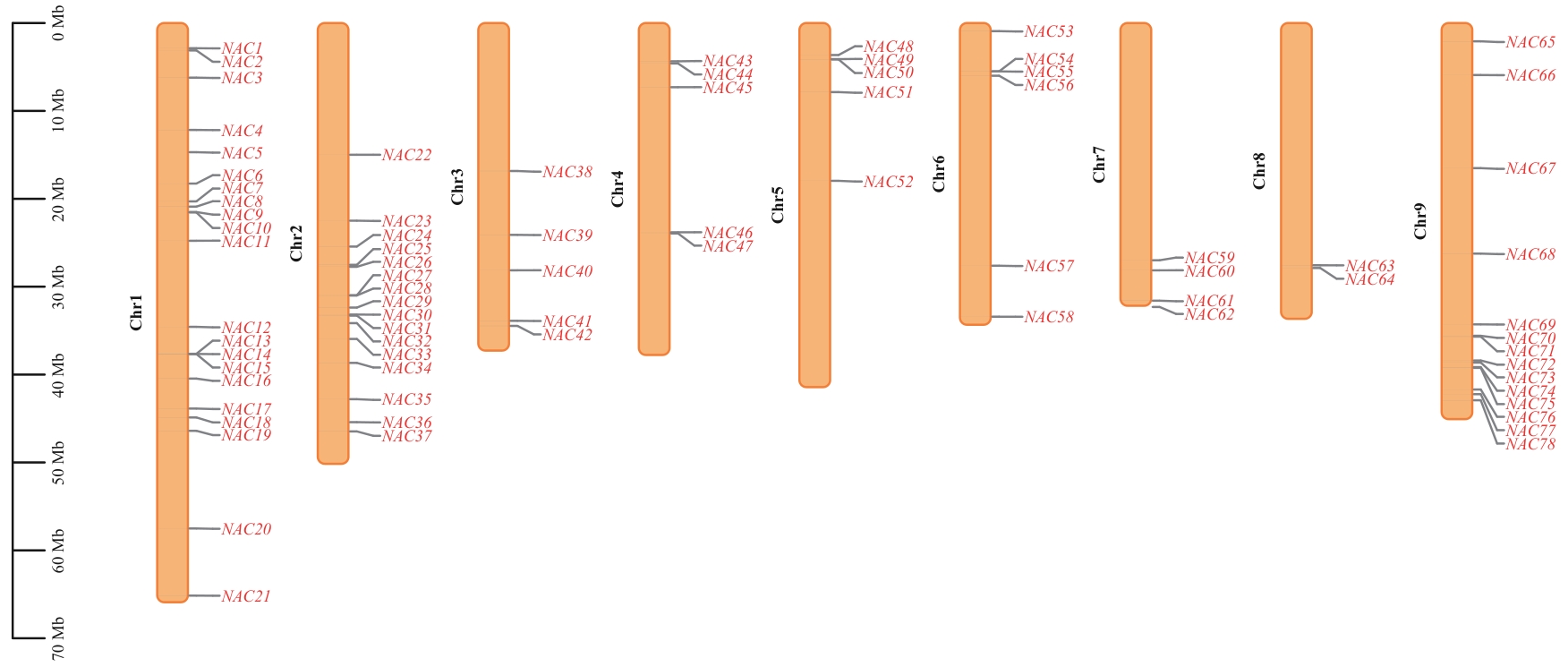
图1 SbNAC基因家族的染色体定位图谱Chr1-Chr9为1-9号染色体。左侧刻度为染色体长度(Mb),红色标注为NAC家族基因,引线指示基因在染色体上的具体位置
Fig. 1 Chromosomal location map of the SbNAC gene familyChr1-Chr9 represent chromosomes 1 to 9, respectively. The scale on the left indicates the physical length of chromosomes in megabase pairs (Mb). Red labels denote NAC family genes, and the connecting lines show the specific physical positions of these genes on the corresponding chromosomes
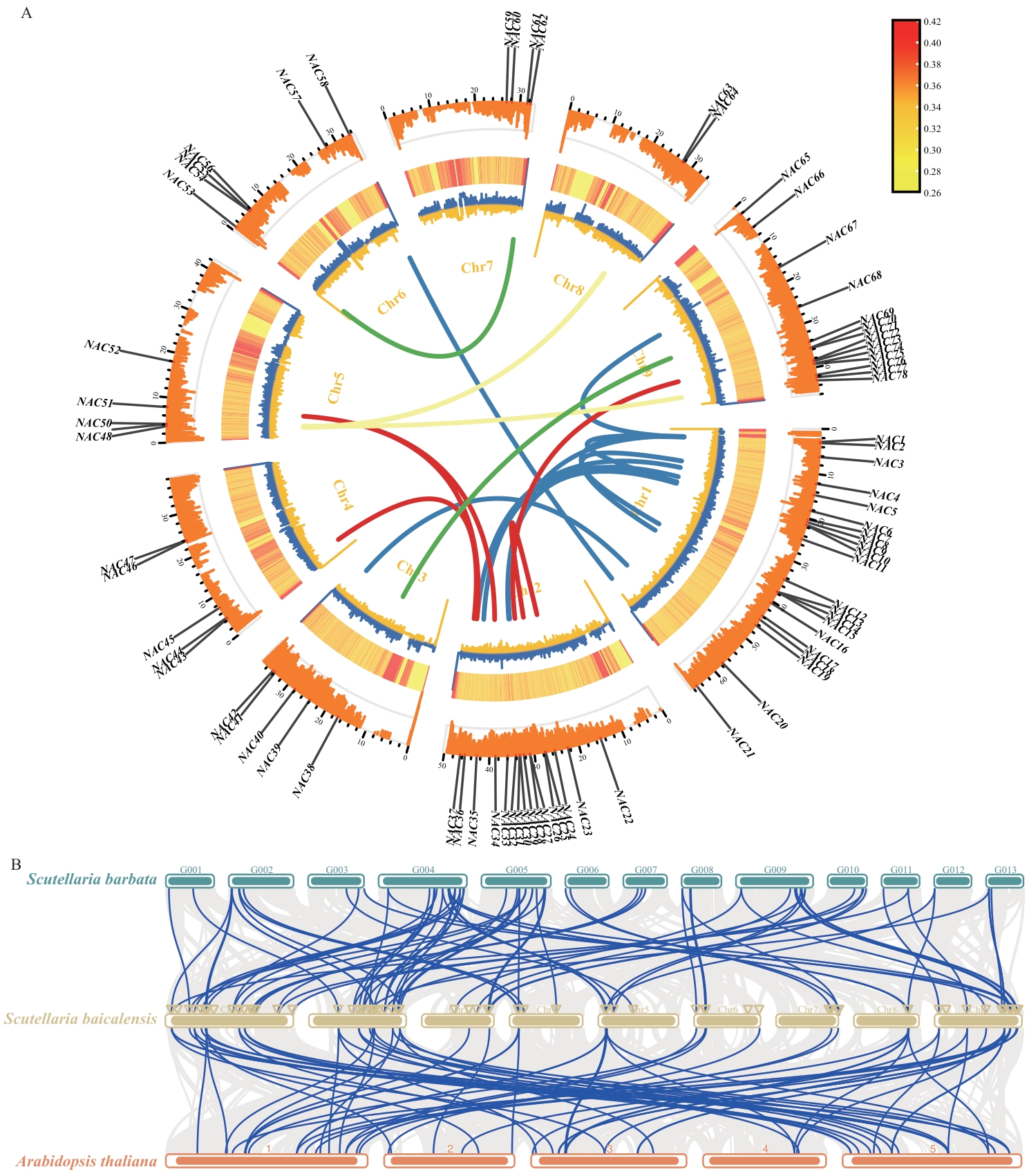
图2 SbNAC家族共线性分析A:黄芩种内;B:黄芩与拟南芥、半枝莲
Fig. 2 SbNAC family collinearity analysisA: Intraspecific S. baicalensis. B: S. baicalensis versus A. thaliana and S. barbata
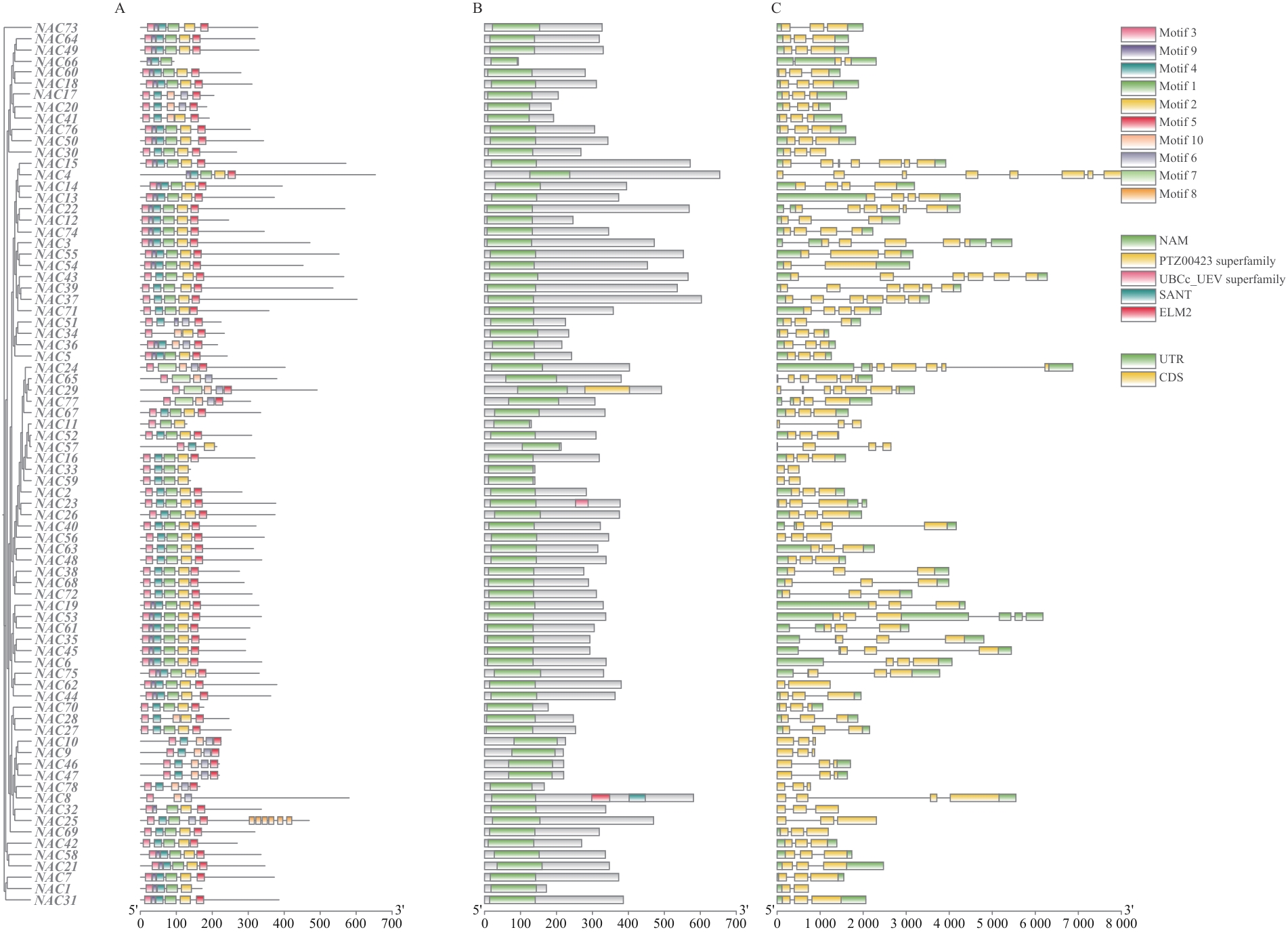
图3 SbNAC基因家族的基因结构分析A:保守基序分析,左侧为系统发育树,线条长度表示蛋白序列长度,底部标尺单位为氨基酸(aa);B:保守结构域分析,线条长度对应蛋白序列长度,底部标尺单位为氨基酸(aa);C:基因结构分析,线条长度对应基因序列长度,底部标尺单位为碱基对(bp)
Fig. 3 Gene structure analysis of the SbNAC gene familyA: Conserved motif analysis. The phylogenetic tree is constructed on the left. The line length indicates the protein sequence length, and the scale bar at the bottom is in amino acids (aa). B: Conserved domain analysis. The line length corresponds to the protein sequence length, and the scale bar at the bottom is in amino acids (aa). C: Gene structure analysis. The line length corresponds to the gene sequence length, and the scale bar at the bottom is in base pairs (bp)
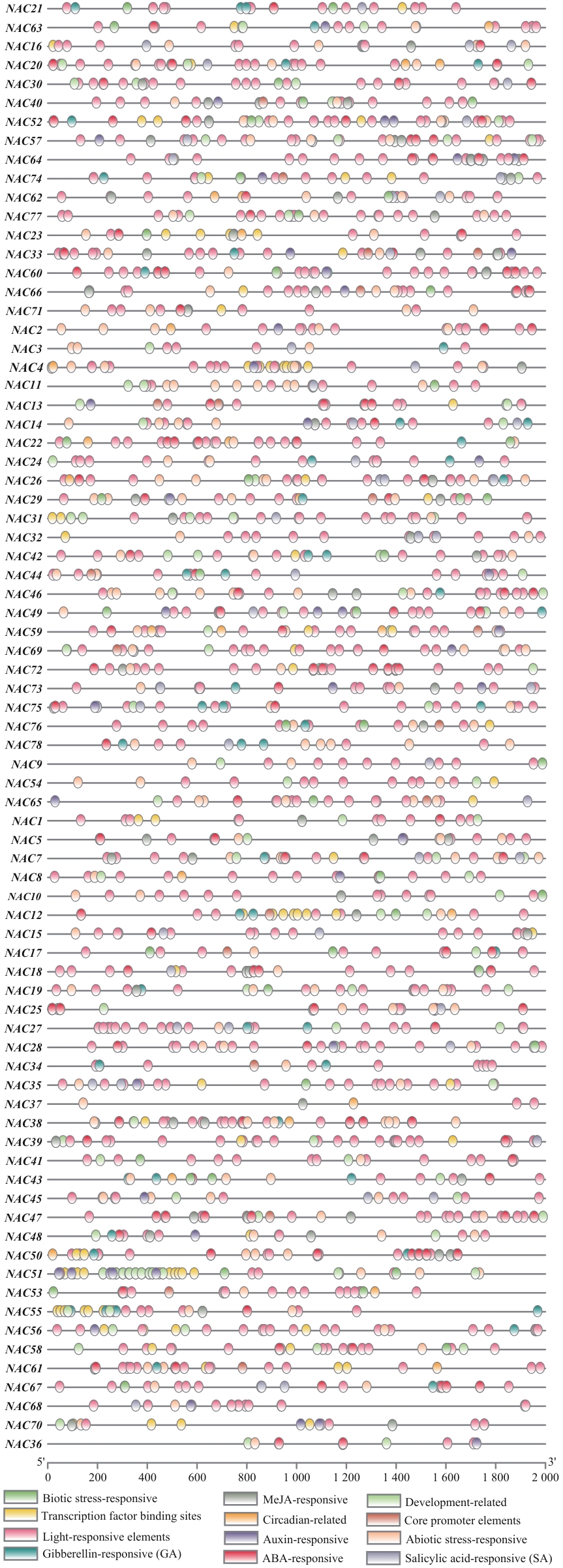
图4 SbNAC基因家族启动子区域顺式作用元件
Fig. 4 Cis-acting elements in promoter region of the SbNAC gene family
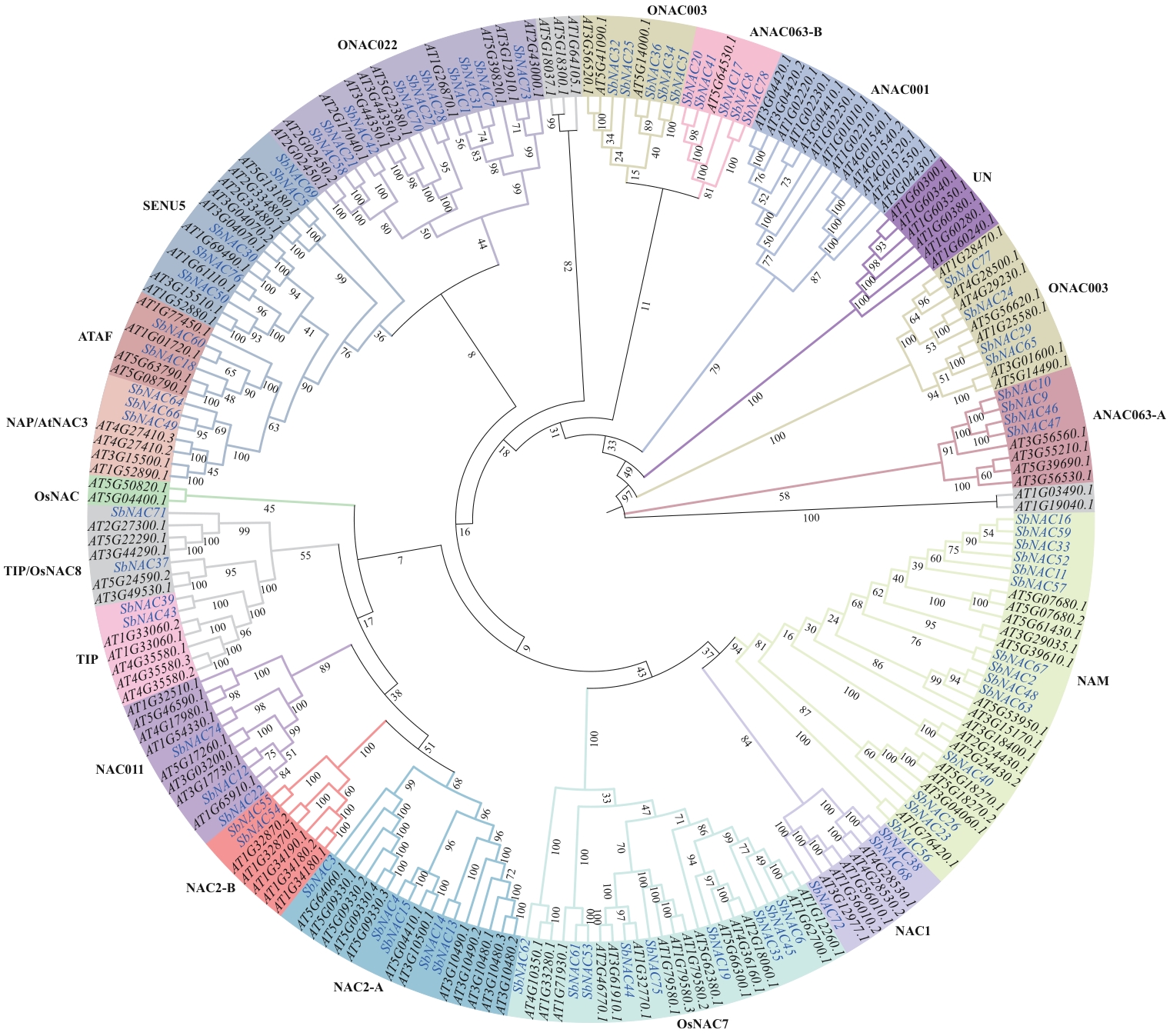
图5 黄芩和拟南芥NAC基因的系统发育关系采用最大似然法,分支节点数值为自展支持值(取值0-100),外圈不同颜色代表NAC家族的不同亚家族,进化树末端黑色字体为拟南芥NAC基因名称、蓝色字体为黄芩NAC基因名称
Fig. 5 Phylogenetic relationships between S. baicalensis and A. thaliana NAC genesThe maximum likelihood method was used. The values at branch nodes represent bootstrap values (ranging from 0 to 100). Different colors in the outer ring indicate different subfamilies of the NAC family. Gene names labeled in black at the terminals of the tree represent NAC genes from A. thaliana, while those in blue represent NAC genes from S. baicalensis
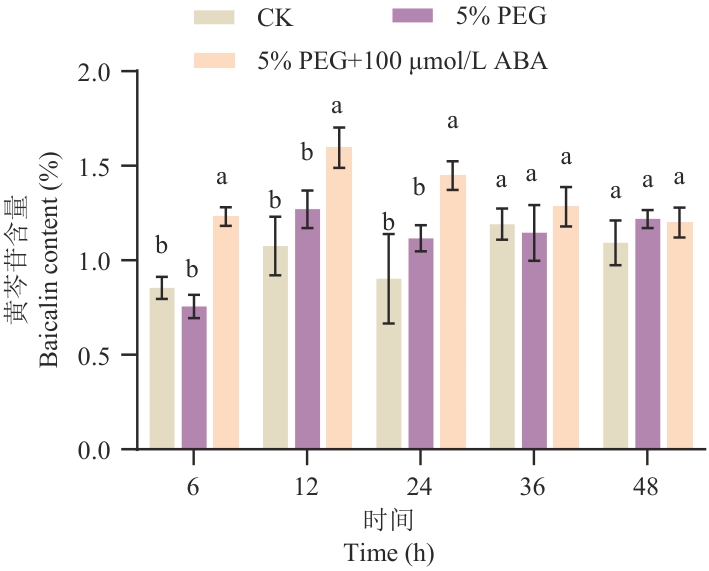
图6 干旱及干旱联合ABA处理下黄芩苷含量柱形代表3次生物学重复的黄芩苷含量平均值(%),误差线表示标准误(SE),不同字母表示处理间在0.05水平上差异显著(P<0.05)。下同
Fig. 6 Baicalin content under drought and drought combined with ABA treatmentColumns represent the mean baicalin content (%) of three biological replicates. Error bars indicate standard error (SE). Different letters indicate significant differences among treatments at 0.05 level (P<0.05). The same below
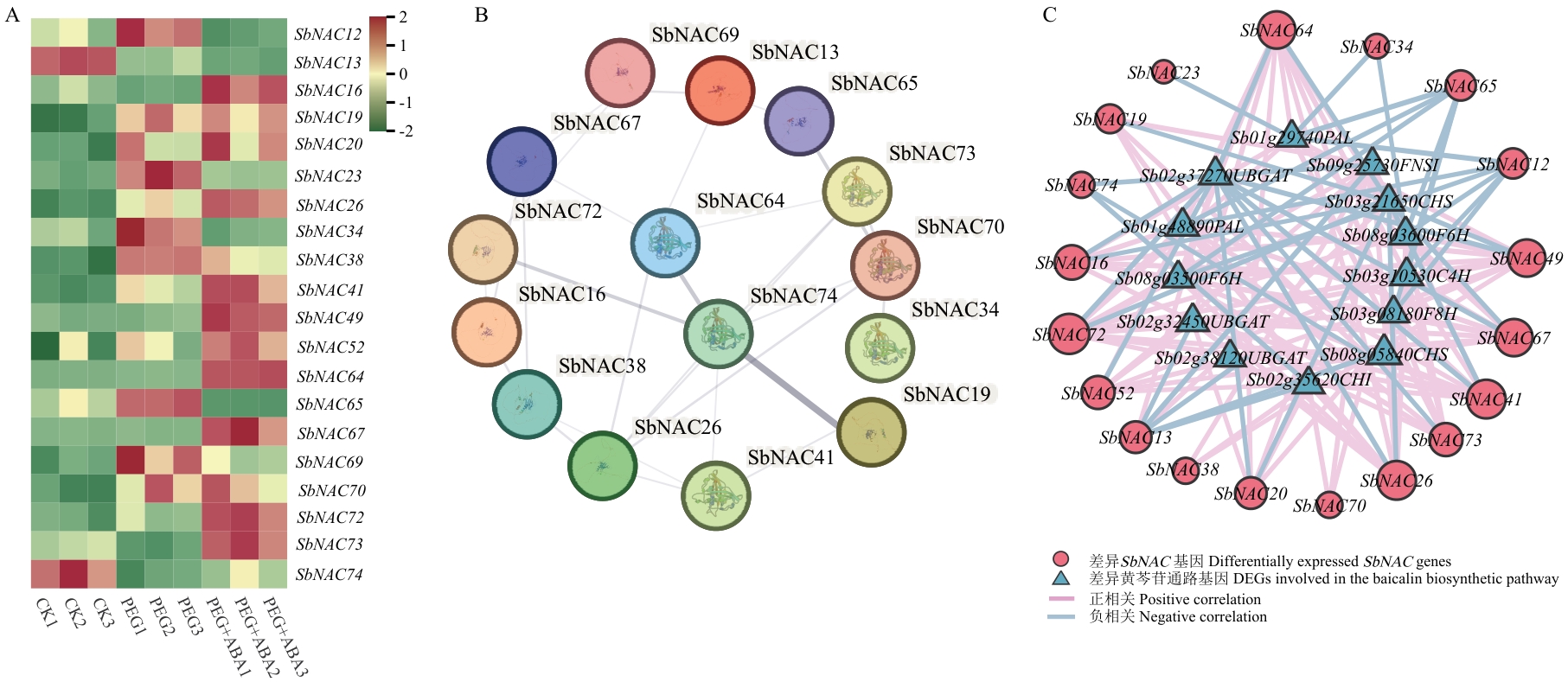
图7 黄芩NAC差异基因与黄芩苷通路差异关键酶间的相关性分析A:SbNAC差异基因热图;B:SbNAC差异蛋白互作网络图;C:SbNAC差异基因和黄芩苷合成通路关键酶差异基因相关性网络图
Fig. 7 Correlation analysis between NAC DEGs and key differential enzymes involved in the baicalin biosynthetic pathway in S. baicalensisA: Heatmap of SbNAC DEGs. B: Protein interaction network diagram of SbNAC. C: Correlation network diagram between SbNAC DEGs and key enzymes in the baicalin synthesis pathway
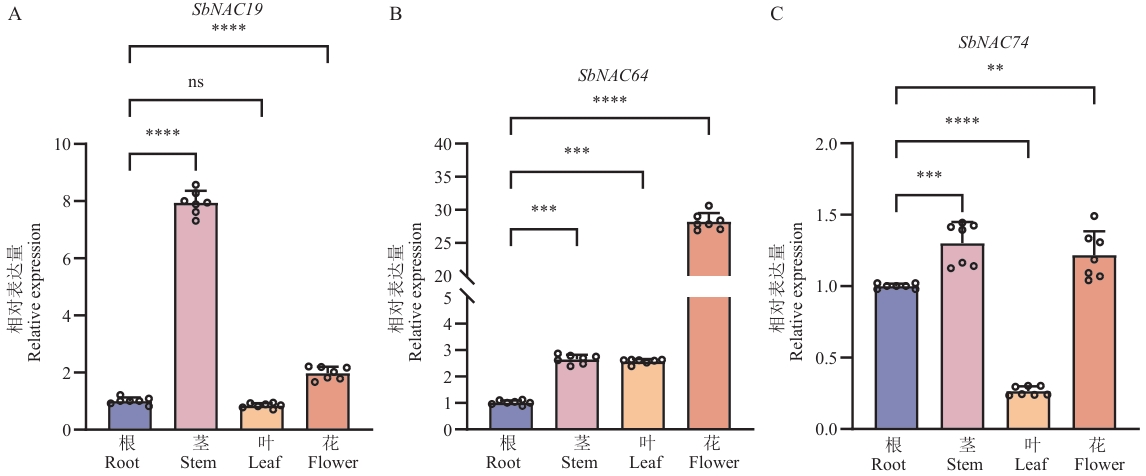
图8 SbNAC19、SbNAC64和SbNAC74基因组织表达特异性分析*, **, ***, **** 分别表示差异显著水平为P<0.05、P<0.01、P<0.001和P<0.000 1
Fig. 8 Tissue-specific expression pattern analysis of SbNAC19, SbNAC64, and SbNAC74 genes*, **, ***, and **** indicate significant differences at P<0.05, P<0.01, P<0.001, and P<0.000 1, respectively
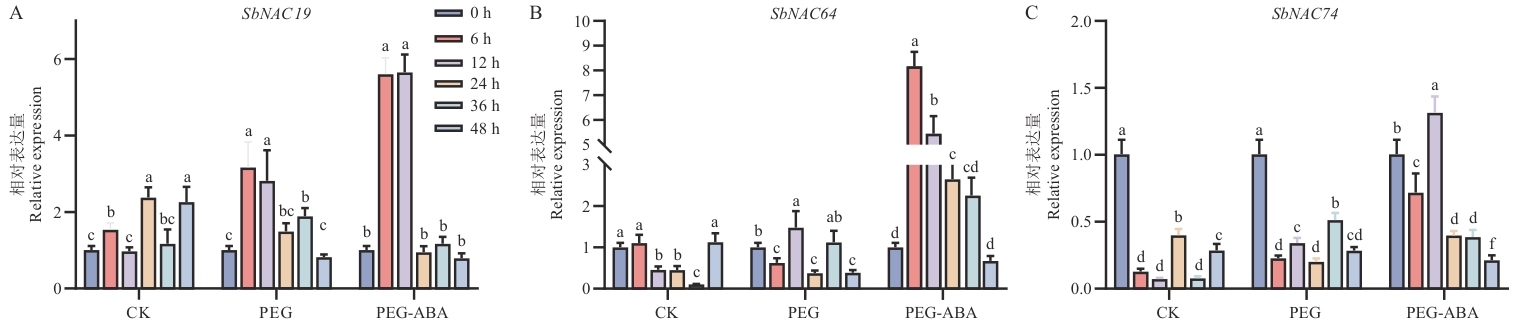
图9 不同处理下SbNAC19、SbNAC64和SbNAC74基因的表达差异
Fig. 9 Differential expression of SbNAC19, SbNAC64, and SbNAC74 genes under different treatments
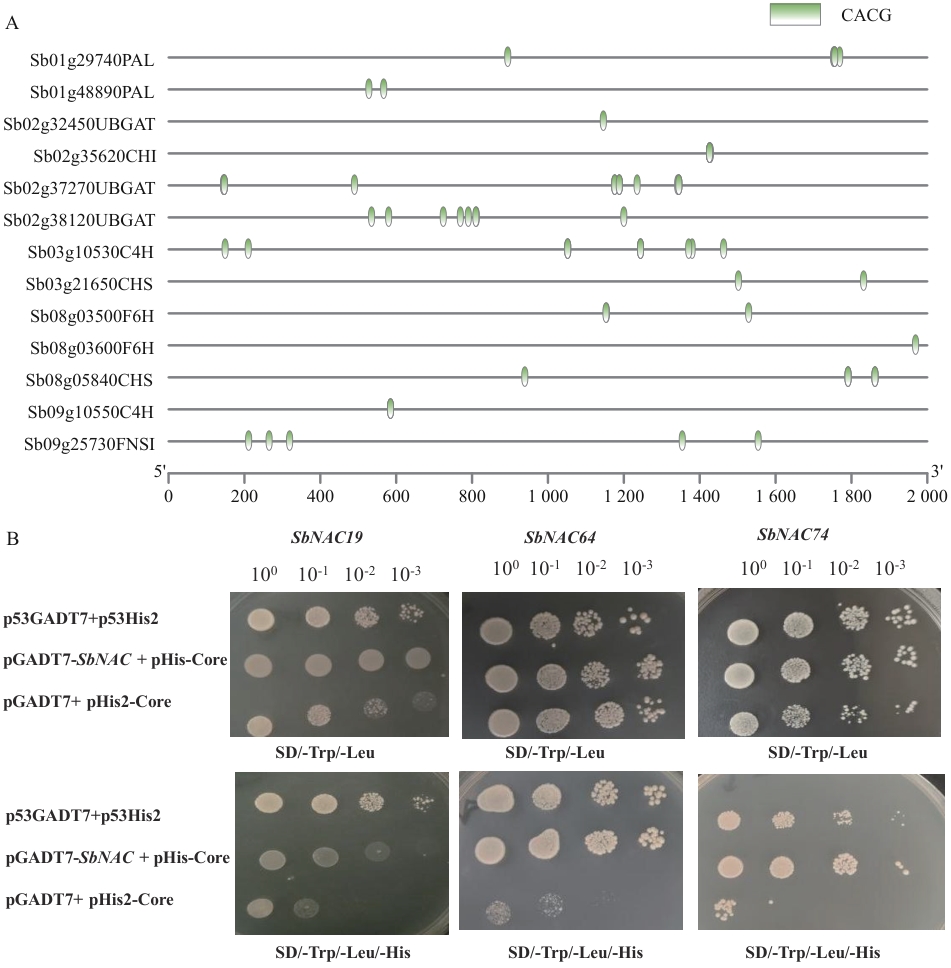
图10 顺式作用元件分析和酵母单杂交分析A:编码黄芩苷合成通路关键酶的差异基因顺式作用元件分析;B:酵母单杂交实验;p53GADT7+p53His2作为阳性对照,pGADT7-SbNAC19、SbNAC64和SbNAC74+ pHis2-Core作为实验组,pGADT7+pHis2-Core作为背景组
Fig. 10 Cis-acting element analysis and yeast one-hybrid assayA: Cis-acting elements analysis of differential genes encoding key enzymes in the baicalin synthesis pathway. B: Yeast one-hybrid assay: p53GADT7+p53His2 as positive control; pGADT7-SbNAC19, SbNAC64, and SbNAC74 + pHis2-Core as experimental group; pGADT7 + pHis2-Core as background group
| [1] | Zhao Q, Yang J, Cui MY, et al. The reference genome sequence of Scutellaria baicalensis provides insights into the evolution of wogonin biosynthesis [J]. Mol Plant, 2019, 12(7): 935-950. |
| [2] | 范灏奎, 李彪, 邹润, 等. 黄芩药理作用及其常用配伍药对研究进展 [J]. 现代中药研究与实践, 2025, 39(1): 91-96. |
| Fan HK, Li B, Zou R, et al. Research progress on pharmacological effects of Scutellaria baicalensis and its commonly used compatible drug pairs [J]. Res Pract Chin Med, 2025, 39(1): 91-96. | |
| [3] | Pei TL, Yan MX, Huang YB, et al. Specific flavonoids and their biosynthetic pathway in Scutellaria baicalensis [J]. Front Plant Sci, 2022, 13: 866282. |
| [4] | Guo DD, Zhu ZY, Wang Z, et al. Multi-omics landscape to decrypt the distinct flavonoid biosynthesis of Scutellaria baicalensis across multiple tissues [J]. Hortic Res, 2024, 11: uhad258. |
| [5] | Cheng L, Han M, Yang LM, et al. Changes in the physiological characteristics and baicalin biosynthesis metabolism of Scutellaria baicalensis Georgi under drought stress [J]. Ind Crops Prod, 2018, 122: 473-482. |
| [6] | 于婧瑶, 巩琛锐. 植物NAC转录因子的生物学功能研究进展 [J]. 河南科学, 2024, 42(11): 1589-1601. |
| Yu JY, Gong CR. Advances in biological functions of plant NAC transcription factors [J]. Henan Sci, 2024, 42(11): 1589-1601. | |
| [7] | 张丹, 马玉花. NAC转录因子在植物响应非生物胁迫中的作用 [J]. 生物技术通报, 2019, 35(12): 144-151. |
| Zhang D, Ma YH. The role of NAC transcription factors in plant response to abiotic stress [J]. Biotechnol Bull, 2019, 35(12): 144-151. | |
| [8] | Souer E, van Houwelingen A, Kloos D, et al. The No apical meristem gene of Petunia is required for pattern formation in embryos and flowers and is expressed at meristem and primordia boundaries [J]. Cell, 1996, 85(2): 159-170. |
| [9] | Nuruzzaman M, Sharoni AM, Kikuchi S. Roles of NAC transcription factors in the regulation of biotic and abiotic stress responses in plants [J]. Front Microbiol, 2013, 4: 248. |
| [10] | Zheng LL, Hu YF, Yang TZ, et al. A root cap-localized NAC transcription factor controls root halotropic response to salt stress in Arabidopsis [J]. Nat Commun, 2024, 15: 2061. |
| [11] | Xiong HY, He HD, Chang Y, et al. Multiple roles of NAC transcription factors in plant development and stress responses [J]. J Integr Plant Biol, 2025, 67(3): 510-538. |
| [12] | Wen BB, Zhao XH, Gong XY, et al. The NAC transcription factor MdNAC4 positively regulates nitrogen deficiency-induced leaf senescence by enhancing ABA biosynthesis in apple [J]. Mol Horticulture, 2023, 3: 5. |
| [13] | Mao Y, Xu J, Wang Q, et al. A natural antisense transcript acts as a negative regulator for the maize drought stress response gene ZmNAC48 [J]. J Exp Bot, 2021, 72(7): 2790-2806. |
| [14] | Tran CD, Rahman MM, Chu HD, et al. CaNAC67, a stress-responsive NAC transcription factor-encoding gene from chickpea (Cicer arietinum), improves drought tolerance in transgenic Arabidopsis thaliana [J]. Plant Physiol Biochem, 2025, 229: 110449. |
| [15] | Shi WT, Ye SX, Xin YT, et al. NAC transcription factor GmNAC035 exerts a positive regulatory role in enhancing salt stress tolerance in plants [J]. Plants, 2025, 14(9): 1391. |
| [16] | Dong YF, Tang MJ, Huang ZL, et al. The miR164a-NAM3 module confers cold tolerance by inducing ethylene production in tomato [J]. Plant J, 2022, 111(2): 440-456. |
| [17] | Guan QM, Yue XL, Zeng HT, et al. The protein phosphatase RCF2 and its interacting partner NAC019 are critical for heat stress-responsive gene regulation and thermotolerance in Arabidopsis [J]. Plant Cell, 2014, 26(1): 438-453. |
| [18] | Li XL, Yang X, Hu YX, et al. A novel NAC transcription factor from Suaeda liaotungensis K. enhanced transgenic Arabidopsis drought, salt, and cold stress tolerance [J]. Plant Cell Rep, 2014, 33(5): 767-778. |
| [19] | Song SS, Ran WX, Gao LH, et al. A functional study reveals CsNAC086 regulated the biosynthesis of flavonols in Camellia sinensis [J]. Planta, 2024, 259(6): 147. |
| [20] | Qu GY, Shen RB, Sun MW, et al. SmNAC68 transcription factor negatively regulate tanshinone biosynthesis under low-temperature conditions in Salvia miltiorrhiza [J]. Plant Sci, 2026, 366: 113058. |
| [21] | Liang XM, Qin SS, Wei GL, et al. Comprehensive analysis of the NAC transcription factor gene family in Sophora tonkinensis Gagnep [J]. BMC Plant Biol, 2025, 25: 530. |
| [22] | Shi MY, Zhang Y, Zhang T, et al. The NAC activator, MdNAC77L, regulates anthocyanin accumulation in red flesh apple [J]. Hortic Plant J, 2025, 11(6): 2009-2023. |
| [23] | Pei TL, Zhu SM, Liao WZ, et al. Gap-free genome assembly and CYP450 gene family analysis reveal the biosynthesis of anthocyanins in Scutellaria baicalensis [J]. Hortic Res, 2023, 10(12): uhad235. |
| [24] | 陆海芹, 李娜, 蒋凯旋, 等. NAC转录因子调控植物生长发育和胁迫应答的研究进展 [J]. 植物生理学报, 2024, 60(2): 271-283. |
| Lu HQ, Li N, Jiang KX, et al. Research advances on NAC transcription factors regulating plant development and stress responses [J]. Plant Physiol J, 2024, 60(2): 271-283. | |
| [25] | Ooka H. Comprehensive analysis of NAC family genes in Oryza sativa and Arabidopsis thaliana [J]. DNA Res, 2003, 10(6): 239-247. |
| [26] | 徐世强, 李静宇, 孙铭阳, 等. 穿心莲NAC基因家族的鉴定与表达分析 [J]. 中国农学通报, 2024, 40(36): 117-125. |
| Xu SQ, Li JY, Sun MY, et al. Identification and expression analysis of NAC gene family in Andrographis paniculate [J]. Chin Agric Sci Bull, 2024, 40(36): 117-125. | |
| [27] | 徐娇, 胡正平, 何华, 等. 川续断DaNAC基因家族成员的鉴定及表达分析 [J]. 药学学报, 2021, 56(12): 3325-3330. |
| Xu J, Hu ZP, He H, et al. Identification and expression analysis of the DaNAC transcription factor family in Dipsacus asper [J]. Acta Pharm Sin, 2021, 56(12): 3325-3330. | |
| [28] | 刘珊, 梁玉玲. 胀果甘草中NAC转录因子基因鉴定及盐胁迫下差异表达分析 [J]. 分子植物育种, 2020, 18(22): 7385-7394. |
| Liu S, Liang YL. Identification of NAC transcription factors and differentially expressed genes analysis under salt stress in Glycyrrhiza Inflata [J]. Mol Plant Breed, 2020, 18(22): 7385-7394. | |
| [29] | 任伟超, 米要磊, 孟祥霄, 等. 人参NAC基因家族成员的鉴定与表达分析 [J]. 世界科学技术-中医药现代化, 2021, 23(9): 3376-3387. |
| Ren WC, Mi YL, Meng XX, et al. Analysis of the identification and expression of NAC gene family members in Radix ginseng [J]. World Sci Technol Mod Tradit Chin Med, 2021, 23(9): 3376-3387. | |
| [30] | Liu SQ, Guan YL, Weng YH, et al. Genome-wide identification of the NAC gene family and its functional analysis in Liriodendron [J]. BMC Plant Biol, 2023, 23: 415. |
| [31] | Nuruzzaman M, Manimekalai R, Sharoni AM, et al. Genome-wide analysis of NAC transcription factor family in rice [J]. Gene, 2010, 465(1/2): 30-44. |
| [32] | Kunieda T, Mitsuda N, Ohme-Takagi M, et al. NAC family proteins NARS1/NAC2 and NARS2/NAM in the outer integument regulate embryogenesis in Arabidopsis [J]. Plant Cell, 2008, 20(10): 2631-2642. |
| [33] | Du ZK, You SX, Yang D, et al. Comprehensive analysis of the NAC transcription factor gene family in Kandelia obovata reveals potential members related to chilling tolerance [J]. Front Plant Sci, 2022, 13: 1048822. |
| [34] | González-Torres P, Rodríguez-Mateos F, Antón J, et al. Impact of homologous recombination on the evolution of prokaryotic core genomes [J]. mBio, 2019, 10: e02494-e02418. |
| [35] | You J, Zong W, Li XK, et al. The SNAC1-targeted gene OsSRO1c modulates stomatal closure and oxidative stress tolerance by regulating hydrogen peroxide in rice [J]. J Exp Bot, 2013, 64(2): 569-583. |
| [36] | Cui XY, Tang MH, Li L, et al. Expression patterns and molecular mechanisms regulating drought tolerance of soybean [Glycine max (L.) merr.] conferred by transcription factor gene GmNAC19 [J]. Int J Mol Sci, 2024, 25(4): 2396. |
| [37] | Fu CC, Han YC, Fan ZQ, et al. The papaya transcription factor CpNAC1 modulates carotenoid biosynthesis through activating phytoene desaturase genes CpPDS2/4 during fruit ripening [J]. J Agric Food Chem, 2016, 64(27): 5454-5463. |
| [38] | Wang JF, Lian WR, Cao YY, et al. Overexpression of BoNAC019, a NAC transcription factor from Brassica oleracea, negatively regulates the dehydration response and anthocyanin biosynthesis in Arabidopsis [J]. Sci Rep, 2018, 8: 13349. |
| [39] | Liu C, Zhao MZ, Ma HD, et al. The NAC transcription factor PgNAC41-2 gene involved in the regulation of ginsenoside biosynthesis in Panax ginseng [J]. Int J Mol Sci, 2023, 24(15): 11946. |
| [40] | 张玉秀, 刘培卫, 吕菲菲, 等. 白木香转录因子AsNAC2的克隆及表达分析 [J]. 中草药, 2022, 53(15): 4807-4812. |
| Zhang YX, Liu PW, Lv FF, et al. Molecular cloning and expression characterization of a transcription factor AsNAC2 in Aquilaria sinensis [J]. Chin Tradit Herb Drugs, 2022, 53(15): 4807-4812. | |
| [41] | 高妍夏, 王彬彬, 谢岩, 等. 北柴胡NAC转录因子家族的分子特征与表达分析 [J]. 西北农业学报, 2026, 35(1): 117-129. |
| Gao YX, Wang BB, Xie Y, et al. Molecular characterization and expression analysis of NAC family transcription factors in Bupleurum chinense DC [J]. Acta Agric Boreali Occidentalis Sin, 2026, 35(1): 117-129. | |
| [42] | Zhu B, Huo DA, Hong XX, et al. The Salvia miltiorrhiza NAC transcription factor SmNAC1 enhances zinc content in transgenic Arabidopsis [J]. Gene, 2019, 688: 54-61. |
| [43] | Sakuraba Y, Kim YS, Han SH, et al. The Arabidopsis transcription factor NAC016 promotes drought stress responses by repressing AREB1 transcription through a trifurcate feed-forward regulatory loop involving NAP [J]. Plant Cell, 2015, 27(6): 1771-1787. |
| [44] | Mao HD, Li SM, Chen B, et al. Variation in cis-regulation of a NAC transcription factor contributes to drought tolerance in wheat [J]. Mol Plant, 2022, 15(2): 276-292. |
| [45] | Tang WJ, Ye J, Yao XM, et al. Genome-wide associated study identifies NAC42-activated nitrate transporter conferring high nitrogen use efficiency in rice [J]. Nat Commun, 2019, 10: 5279. |
| [46] | Olsen AN, Ernst HA, Leggio LL, et al. NAC transcription factors: structurally distinct, functionally diverse [J]. Trends Plant Sci, 2005, 10(2): 79-87. |
| [47] | Li Y, Zhao LM, Guo CM, et al. OsNAC103, an NAC transcription factor negatively regulates plant height in rice [J]. Planta, 2024, 259(2): 35. |
| [48] | Liu WJ, Mei ZX, Yu L, et al. The ABA-induced NAC transcription factor MdNAC1 interacts with a bZIP-type transcription factor to promote anthocyanin synthesis in red-fleshed apples [J]. Hortic Res, 2023, 10(5): uhad049. |
| [1] | 王鑫, 陈炜, 孙博. 植物花分生组织活性的调控机制[J]. 生物技术通报, 2026, 42(9): 1-13. |
| [2] | 桑志鹏, 侯栋, 王慧婷, 岳宏忠, 李亚莉, 颉建明, 路雯, 许照泰. 黄瓜CsHXKs基因家族鉴定及CsHKL1.2调控花器官糖积累[J]. 生物技术通报, 2026, 42(9): 157-168. |
| [3] | 范丽金, 宋晓飞, 李晓丽, 闫立英, 谢洋. 基于转录组与代谢组解析黄瓜雌花花冠延迟开放的关键调控通路[J]. 生物技术通报, 2026, 42(9): 147-156. |
| [4] | 谭澍, 沈红建, 高晓磊, 尹倩, 邹锋. 油茶MYB转录因子家族鉴定及CoMYB107基因在雄蕊发育中的功能分析[J]. 生物技术通报, 2026, 42(9): 196-209. |
| [5] | 董向向, 侯威威, 缪百灵, 陈娟娟, 李亮杰, 翟敏, 朱庆松, 刘松虎. 过表达森林草莓FvBBX22促进拟南芥花青素合成和延迟开花时间[J]. 生物技术通报, 2026, 42(9): 231-237. |
| [6] | 申瑞雪, 郭子卿, 庞星辰, 李志远, 丁炜, 董琦, 李森, 宋红霞. 转录组和代谢组联合解析‘泽州芹菜’露地越冬的机制[J]. 生物技术通报, 2026, 42(8): 251-262. |
| [7] | 刘佳, 孟宇, 荆晓艳. 单细胞拉曼光谱揭示聚球藻PCC7942对无机碳源的利用偏好性[J]. 生物技术通报, 2026, 42(8): 331-340. |
| [8] | 陈义焰, 张冬儿, 张涛, 刘育灏, 唐杰, 盛夏冰, 胡远艺, 艾治勇, 李应将, 刘小林. 水稻OsSULTR2;2基因功能及调控苗期耐盐性分析[J]. 生物技术通报, 2026, 42(7): 116-125. |
| [9] | 危潇, 黎妍妍, 袁勤峰, 姚经武, 曹春霞, 黄大野. 一株分离自烟草根际的生防菌株鉴定及其生防潜力研究[J]. 生物技术通报, 2026, 42(7): 279-291. |
| [10] | 阎晓光, 杜艳伟, 马志远, 王彬, 王国梁, 胡丹珠. 玉米ZmDIR基因家族的全基因组鉴定与表达模式分析[J]. 生物技术通报, 2026, 42(7): 126-137. |
| [11] | 黄旭升, 周雅莉, 贾峥嵘, 沈珊, 陈锦钗, 周广立, 李鑫鑫, 王计平, 李润植, 贾小云. 紫苏ARF转录因子家族全基因组鉴定及其在非生物胁迫响应中的功能分析[J]. 生物技术通报, 2026, 42(7): 148-162. |
| [12] | 辛晴, 郑永杰, 李雨华, 涂白连, 刘新亮, 张月婷, 伍艳芳. 樟树MYC转录因子的全基因组鉴定与表达分析[J]. 生物技术通报, 2026, 42(7): 214-225. |
| [13] | 王鸿睿, 赵怡如, 饶书培, 陈金焕. 黑果枸杞 LrCYP78A5 基因在干旱与盐胁迫响应中的功能研究[J]. 生物技术通报, 2026, 42(7): 182-192. |
| [14] | 董亚茹, 修妤, 赵东晓, 朱红, 朱琳, 刘惠芬. 基于转录组的桑树GRAS基因家族鉴定及MnGRAS22盐胁迫响应分析[J]. 生物技术通报, 2026, 42(7): 193-203. |
| [15] | 李万, 武亚倩, 吴芳, 赵永平. 马铃薯StDREB4基因响应盐和干旱胁迫的功能研究[J]. 生物技术通报, 2026, 42(6): 53-63. |
| 阅读次数 | ||||||
|
全文 |
|
|||||
|
摘要 |
|
|||||
