







生物技术通报 ›› 2026, Vol. 42 ›› Issue (9): 157-168.doi: 10.13560/j.cnki.biotech.bull.1985.2025-1396
• 植物发育生物学专题 • 上一篇
桑志鹏1, 侯栋1,2( ), 王慧婷1, 岳宏忠2, 李亚莉2, 颉建明1, 路雯3, 许照泰4
收稿日期:2025-12-21
出版日期:2026-09-26
发布日期:2026-09-16
通讯作者:
侯栋houdong215@163.com基金资助:
SANG Zhi-peng1, HOU Dong1,2(), WANG Hui-ting1, YUE Hong-zhong2, LI Ya-li2, XIE Jian-ming1, LU Wen3, XU Zhao-tai4
Received:2025-12-21
Published:2026-09-26
Online:2026-09-16
摘要:
目的 探究黄瓜(Cucumis sativus L.)己糖激酶(CsHXKs)基因家族成员序列特征及表达规律,并验证CsHKL1.2在黄瓜花器官糖积累中的作用,为黄瓜花器官糖代谢调控及品质育种提供理论依据与基因资源。 方法 对黄瓜CsHXKs进行系统鉴定及生物信息学分析;基于RT-qPCR技术检测不同组织和花器官不同部位及非生物胁迫下CsHXKs的表达情况;利用亚细胞定位和基因沉默(virus-induced gene silencing, VIGS)技术验证候选基因的位置和功能。 结果 黄瓜CsHXKs家族包含6个成员,分布于4条染色体,编码蛋白长度为371‒547个氨基酸,分子量为40.4‒59.6 kD。系统进化分析将其分为6个亚类,同一亚类成员具有相似的基因结构和保守基序。CsHXKs具有光响应、低温、干旱、激素及防御相关顺式作用元件。在非生物胁迫下,CsHXKs基因呈现显著的诱导表达。CsHXK3和CsHKL3基因在根中高表达,CsHXK1/2、CsHKL1.1/1.2基因在花中特异表达,其中CsHKL1.2在雄花蜜腺中表达量最高。CsHKL1.2定位于叶绿体。沉默CsHKL1.2后,花器官的花药、雄花蜜腺、柱头、雌花蜜腺、子房等部位中的葡萄糖、果糖、蔗糖含量显著升高,其可溶性酸性转化酶、细胞质中性转化酶、磷酸果糖激酶、蔗糖合成酶、蔗糖磷酸合成酶、己糖激酶的酶活性明显下调。 结论 黄瓜CsHXKs不同成员可能具有不同的生物学功能,其中CsHKL1.2通过调控糖代谢相关酶活性参与花器官糖积累,初步验证了CsHKL1.2在黄瓜花器官糖代谢中的功能。
桑志鹏, 侯栋, 王慧婷, 岳宏忠, 李亚莉, 颉建明, 路雯, 许照泰. 黄瓜CsHXKs基因家族鉴定及CsHKL1.2调控花器官糖积累[J]. 生物技术通报, 2026, 42(9): 157-168.
SANG Zhi-peng, HOU Dong, WANG Hui-ting, YUE Hong-zhong, LI Ya-li, XIE Jian-ming, LU Wen, XU Zhao-tai. Identification of the Cucumber CsHXKs Gene Family and Regulation of Floral Organ Sugar Accumulation by CsHKL1.2[J]. Biotechnology Bulletin, 2026, 42(9): 157-168.
| 基因IDGene ID | 基因名称Gene name | 氨基酸数 Amino acid number | 分子量 Molecular weight (Da) | 等电点pI | 不稳定指数 Instability index | 脂肪系数 Aliphatic index | 总平均亲水性 Grand average of hydropathicity |
|---|---|---|---|---|---|---|---|
| CsaV3_2G001860.1 | CsHXK1 | 547 | 59 630.97 | 6.46 | 26.92 | 99.31 | -0.007 |
| CsaV3_1G039830.1 | CsHXK2 | 498 | 54 226.37 | 6.00 | 34.78 | 92.03 | -0.070 |
| CsaV3_3G045830.1 | CsHXK3 | 488 | 52 745.49 | 5.91 | 39.63 | 93.52 | -0.007 |
| CsaV3_6G039140.1 | CsHKL1.1 | 502 | 54 631.98 | 7.15 | 41.49 | 99.76 | 0.022 |
| CsaV3_1G043010.1 | CsHKL1.2 | 371 | 40 373.18 | 5.16 | 41.80 | 95.96 | -0.012 |
| CsaV3_6G044550.1 | CsHKL3 | 500 | 54 756.22 | 5.77 | 36.65 | 89.72 | -0.142 |
表1 HXK蛋白的理化性质分析
Table 1 Physicochemical property analysis of HXK proteins
| 基因IDGene ID | 基因名称Gene name | 氨基酸数 Amino acid number | 分子量 Molecular weight (Da) | 等电点pI | 不稳定指数 Instability index | 脂肪系数 Aliphatic index | 总平均亲水性 Grand average of hydropathicity |
|---|---|---|---|---|---|---|---|
| CsaV3_2G001860.1 | CsHXK1 | 547 | 59 630.97 | 6.46 | 26.92 | 99.31 | -0.007 |
| CsaV3_1G039830.1 | CsHXK2 | 498 | 54 226.37 | 6.00 | 34.78 | 92.03 | -0.070 |
| CsaV3_3G045830.1 | CsHXK3 | 488 | 52 745.49 | 5.91 | 39.63 | 93.52 | -0.007 |
| CsaV3_6G039140.1 | CsHKL1.1 | 502 | 54 631.98 | 7.15 | 41.49 | 99.76 | 0.022 |
| CsaV3_1G043010.1 | CsHKL1.2 | 371 | 40 373.18 | 5.16 | 41.80 | 95.96 | -0.012 |
| CsaV3_6G044550.1 | CsHKL3 | 500 | 54 756.22 | 5.77 | 36.65 | 89.72 | -0.142 |
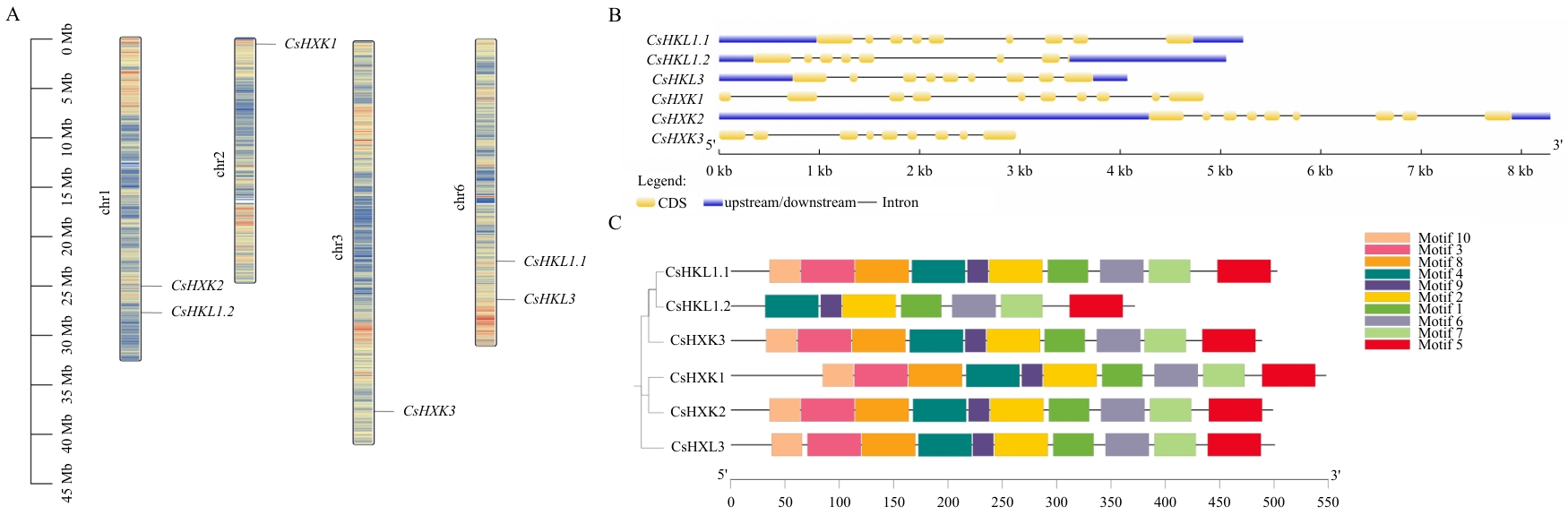
图1 黄瓜CsHXKs基因家族成员染色体定位(A)、基因结构(B)和保守基序分析(C)
Fig. 1 Chromosomal localization (A), gene structure (B) and conserved motif analysis (C) of the CsHXKs gene family in cucumber
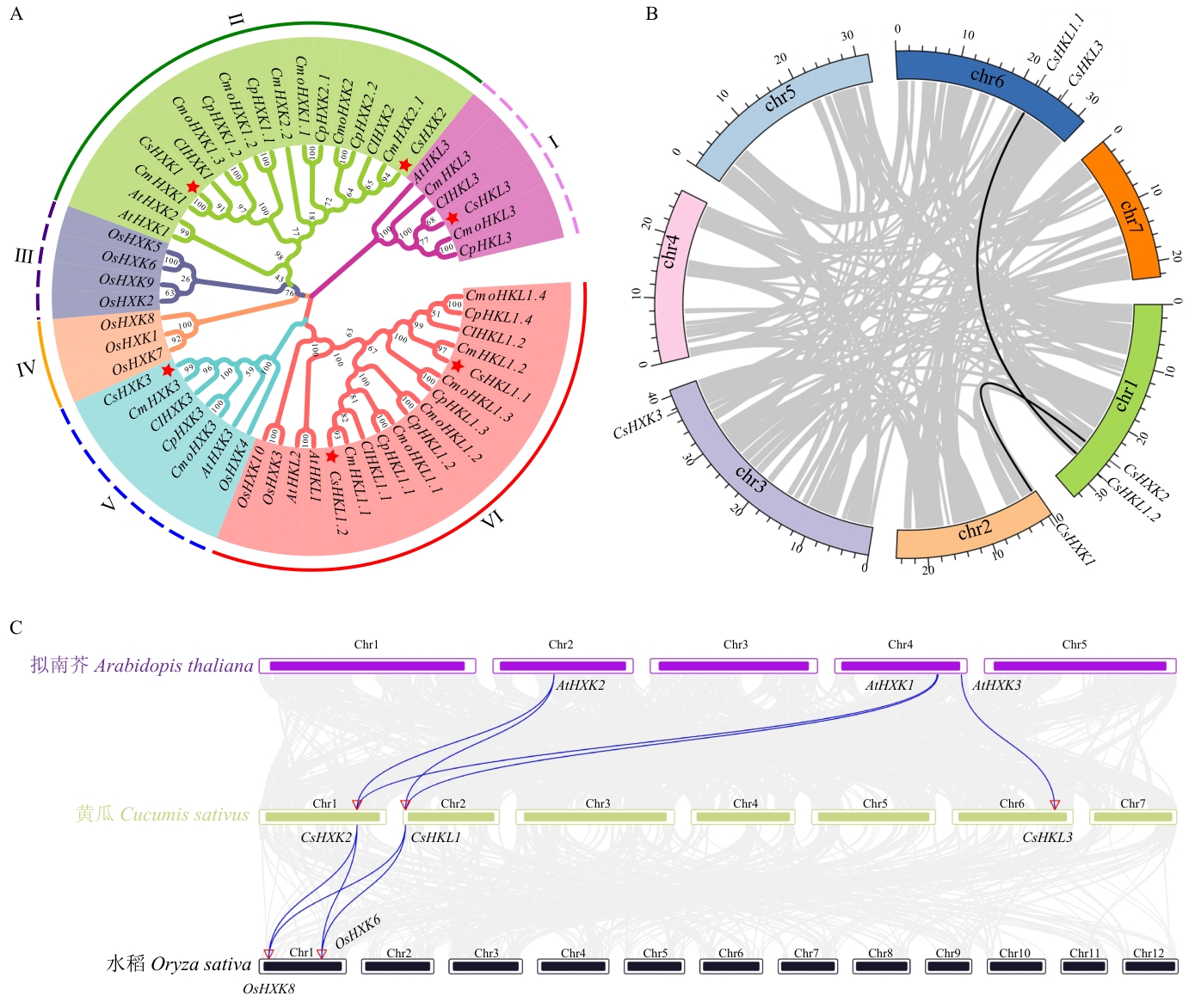
图2 CsHXKs基因家族系统进化树与共线性分析A:水稻(Os)、拟南芥(At)、黄瓜(Cs)、南瓜(Cmo)、甜瓜(Cm)、西瓜(Ci)和西葫芦(Cp)的HXK家族基因的系统进化树分析,红色五角星表示黄瓜CsHXKs家族成员;B:黄瓜基因组内共线性分析;C:黄瓜、拟南芥和水稻之间的共线性分析
Fig. 2 Phylogenetic tree and collinearity analysis of the CsHXKs gene familyA: Phylogenetic analysis of HXK family genes from Oryza sativa (Os), Arabidopsis thaliana (At), Cucumis sativus (Cs), Cucurbita moschata (Cmo), Cucumis melo (Cm), Citrullus lanatus (Ci) and Cucurbita pepo (Cp), red pentagrams indicate members of the CsHXKs gene family in cucumber. B: Collinearity analysis within the cucumber genome. C: Collinearity analysis among cucumber (C. sativus), A. thaliana and Oryza sativa
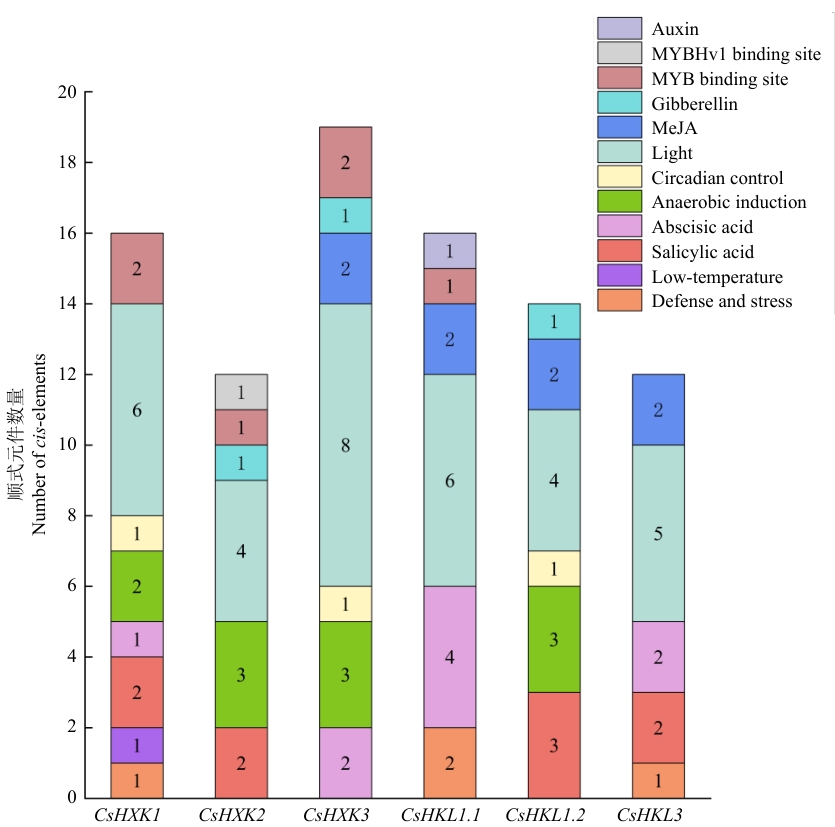
图3 CsHXKs基因家族成员顺式元件预测
Fig. 3 Prediction of cis-elements in the members of the CsHXKs gene family
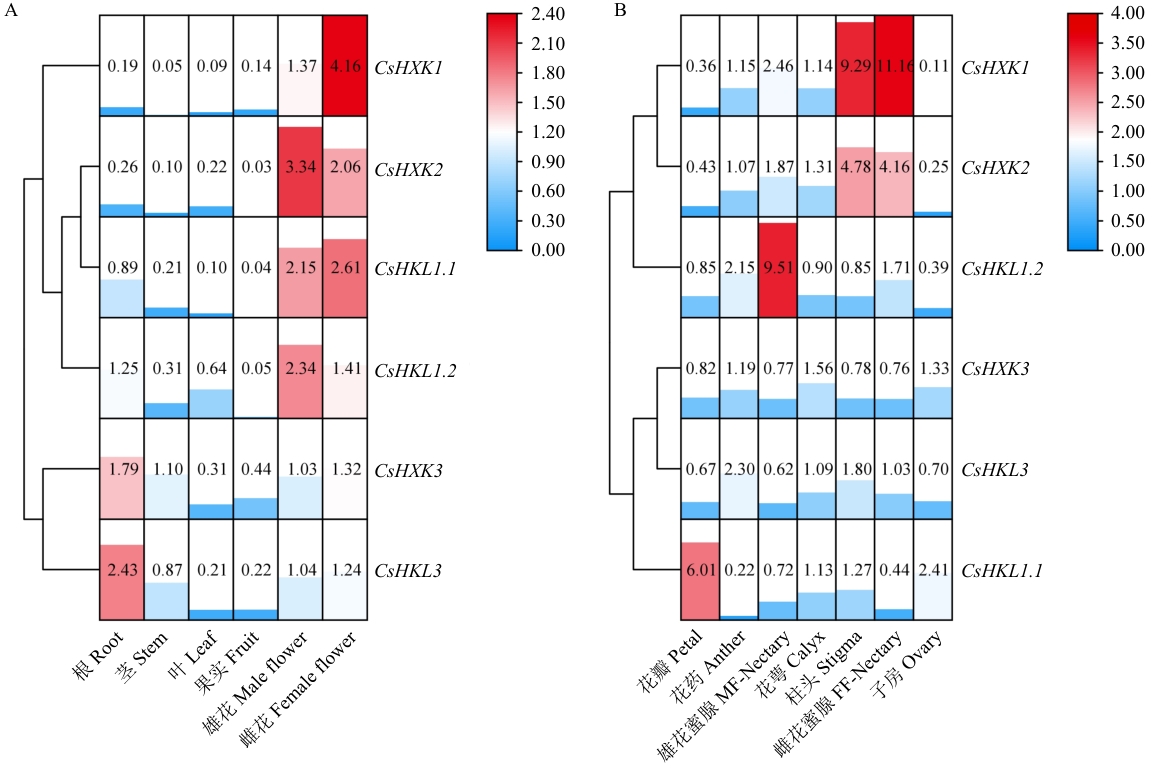
图4 黄瓜CsHXKs家族基因在不同组织器官中的表达A:植株不同组织;B:花器官不同部位;热图中的高度代表其在所有组织中的百分比
Fig. 4 Expressions of CsHXKs family genes in different tissues and organs of cucumberA: Different tissues of the plant. B: Different parts of floral organs. In the heatmap, the height indicates the percentage or proportion of each target in all tissues
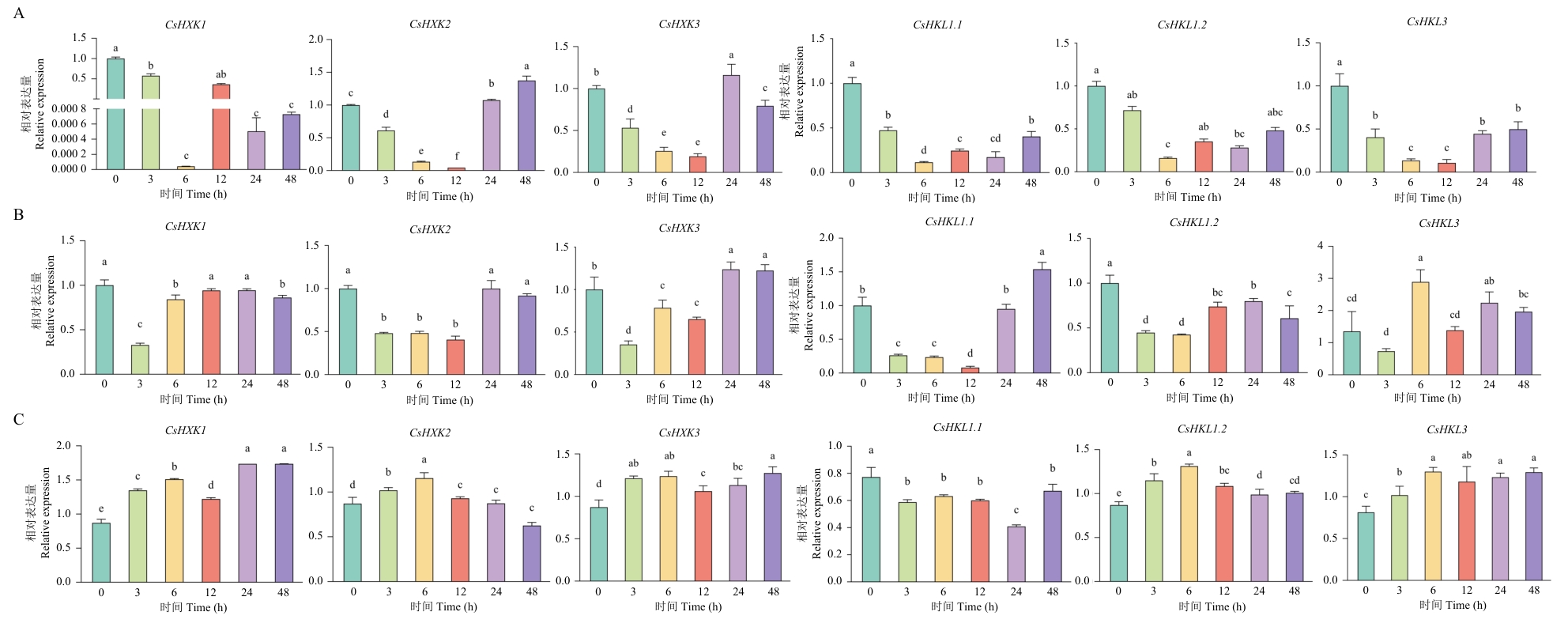
图5 黄瓜CsHXKs基因家族在非生物胁迫下的表达特性分析A:干旱胁迫;B:盐胁迫;C:低温胁迫;不同小写字母表示差异显著(P<0.05),误差线代表标准差(SD),n=3,下同
Fig. 5 Expression characterization analysis of the CsHXKs gene family in Cucumis sativus under abiotic stressesA: Drought stress. B: Salt stress. C: Low-temperature stress. Different lowercase letters indicate significant differences (P<0.05), error bars indicate the standard deviation (SD), n=3, the same below
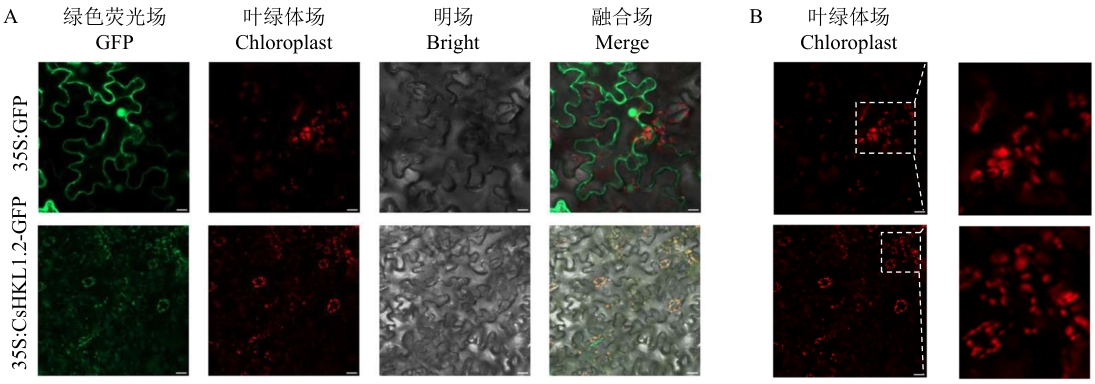
图6 CsHKL1.2亚细胞定位A:亚细胞定位;B:叶绿体场局部图片
Fig. 6 Subcellular localization of CsHKL1.2A: Subcellular localization. B: Magnified view of chloroplast

图7 CsHKL1.2的沉默效率以及沉默后对花不同部位糖含量的影响A:沉默效率;B:葡萄糖;C:果糖;D:蔗糖;*P<0.05,**P<0.01,***P<0.001,****P<0.000 1,ns表示差异不显著(P>0.05),下同
Fig. 7 Silencing efficiency of CsHKL1.2 and its effects on the sugar content in different floral tissues after silencingA: Silencing efficiency. B: Glucose. C: Fructose. D: Sucrose; *P<0.05, **P<0.01, ***P<0.001, ****P<0.000 1, ns indicates no significant difference (P>0.05). The same below
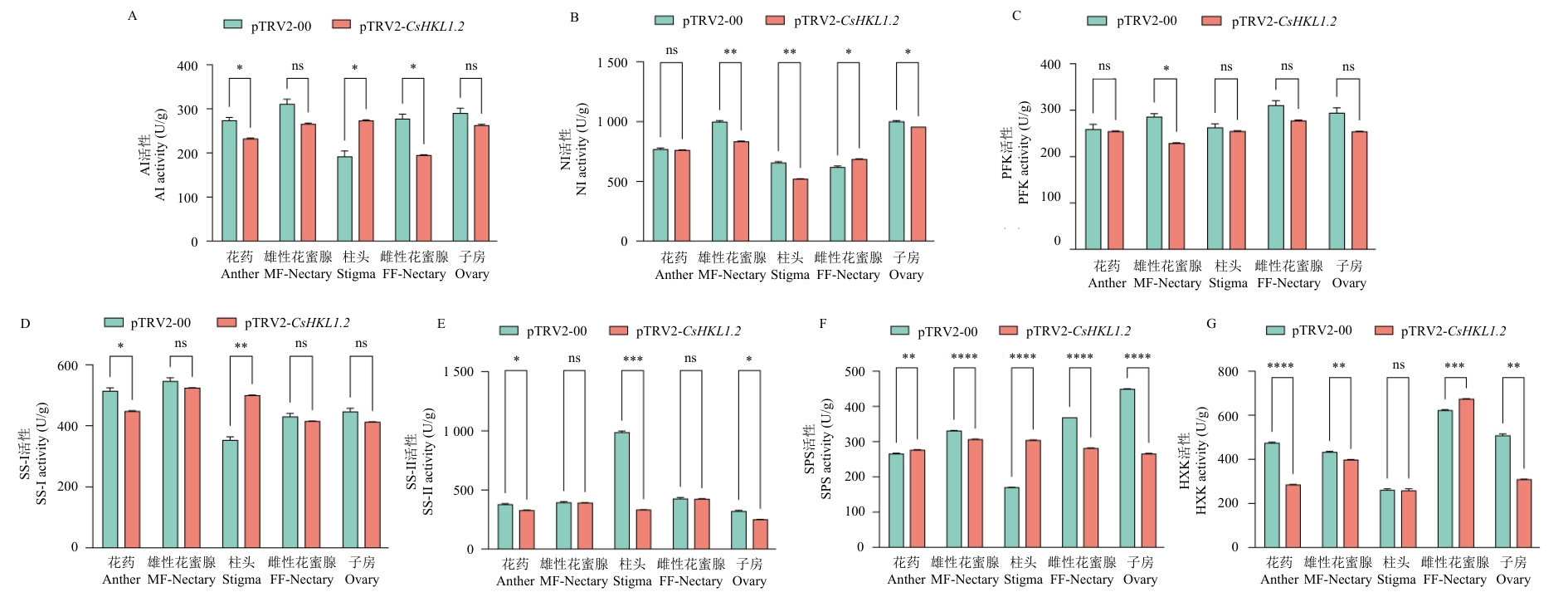
图8 沉默CsHKL1.2对黄瓜花不同部位糖代谢相关酶活性的影响A:可溶性酸性转化酶;B:细胞质中性转化酶;C:磷酸果糖激酶;D:蔗糖合成酶(分解方向);E:蔗糖合成酶(合成方向);F:蔗糖磷酸合成酶;G:己糖激酶
Fig. 8 Effects of CsHKL1.2 silencing on the activities of sugar metabolism-related enzymes in different floral parts of cucumberA: Soluble acid invertase. B: Cytoplasmic neutral invertase. C: Phosphofructokinase. D: Sucrose synthase (cleavage direction). E: Sucrose synthase (synthesis direction). F: Sucrose phosphate synthase. G: Hexokinase
| [1] | Granot D, Kelly G, Stein O, et al. Substantial roles of hexokinase and fructokinase in the effects of sugars on plant physiology and development [J]. J Exp Bot, 2014, 65(3): 809-819. |
| [2] | 黄骥, 王建飞, 张红生. 植物戊糖磷酸途径及其两个关键酶的研究进展 [J]. 植物学通报, 2004, 39(2): 139-145. |
| Huang J, Wang JF, Zhang HS. Advances on plant pentose phosphate pathway and its key enzymes [J]. Chin Bull Bot, 2004, 39(2): 139-145. | |
| [3] | Zhang C, Zhang LL, Fu JX, et al. Isolation and characterization of hexokinase genes PsHXK1 and PsHXK2 from tree peony (Paeonia suffruticosa Andrews) [J]. Mol Biol Rep, 2020, 47(1): 327-336. |
| [4] | Xiao WY, Sheen J, Jang JC. The role of hexokinase in plant sugar signal transduction and growth and development [J]. Plant Mol Biol, 2000, 44(4): 451-461. |
| [5] | Sarowar S, Lee JY, Ahn ER, et al. A role of hexokinases in plant resistance to oxidative stress and pathogen infection [J]. J Plant Biol, 2008, 51(5): 341-346. |
| [6] | Feng J, Zhao S, Chen XM, et al. Biochemical and structural study of Arabidopsis hexokinase 1 [J]. Acta Cryst, 2015, 71(2): 367-375. |
| [7] | Damari-Weissler H, Kandel-Kfir M, Gidoni D, et al. Evidence for intracellular spatial separation of hexokinases and fructokinases in tomato plants [J]. Planta, 2006, 224(6): 1495-1502. |
| [8] | Pérez-Díaz J, Batista-Silva W, Almada R, et al. Prunus Hexokinase 3 genes alter primary C-metabolism and promote drought and salt stress tolerance in Arabidopsis transgenic plants [J]. Sci Rep, 2021, 11: 7098. |
| [9] | Kumar MN, Jane WN, Verslues PE. Role of the putative osmosensor Arabidopsis histidinekinase 1 in dehydration avoidance and low-water-potential response [J]. Plant Physiol, 2013, 161(2): 942-953. |
| [10] | 张圣平, 顾兴芳. 黄瓜重要农艺性状的分子生物学 [J]. 中国农业科学, 2020, 53(1): 117-121. |
| Zhang SP, Gu XF. Molecular biology of important agronomic traits in cucumber [J]. Sci Agric Sin, 2020, 53(1): 117-121. | |
| [11] | 蒋静静, 屈锋, 苏春杰, 等. 不同肥水耦合对黄瓜产量品质及肥料偏生产力的影响 [J]. 中国农业科学, 2019, 52(1): 86-97. |
| Jiang JJ, Qu F, Su CJ, et al. Effects of different water and fertilizer coupling on yield and quality of cucumber and partial factor productivity of fertilizer [J]. Sci Agric Sin, 2019, 52(1): 86-97. | |
| [12] | Karve A, Rauh BL, Xia XX, et al. Expression and evolutionary features of the hexokinase gene family in Arabidopsis [J]. Planta, 2008, 228(3): 411-425. |
| [13] | Li HB, Wang SH, Chai S, et al. Graph-based pan-genome reveals structural and sequence variations related to agronomic traits and domestication in cucumber [J]. Nat Commun, 2022, 13: 682. |
| [14] | 高荣. 黄瓜SHMT基因家族分析及CsSHMT3响应盐胁迫的功能研究 [D]. 兰州: 甘肃农业大学, 2023. |
| Gao R. Identification of the SHMT gene family in Cucumis sativus and functional analysis of CsSHMT3 gene in response to salt stress [D]. Lanzhou: Gansu Agricultural University, 2023. | |
| [15] | 李映志, 刘胜辉, 朱祝英, 等. 高效液相色谱法测定菠萝蜜果实中的葡萄糖、果糖和蔗糖 [J]. 食品科学, 2014, 35(12): 84-87. |
| Li YZ, Liu SH, Zhu ZY, et al. Determination of glucose, fructose and sucrose in jackfruit by HPLC [J]. Food Sci, 2014, 35(12): 84-87. | |
| [16] | 贾东峰, 钱基权, 高欢, 等. 毛花猕猴桃成熟期果实品质和蔗糖代谢特征分析 [J]. 果树学报, 2024, 41(11): 2261-2271. |
| Jia DF, Qian JQ, Gao H, et al. Analysis of the fruit quality and the metabolic characteristics of sucrose in fruit of Actinidia eriantha at ripening stage [J]. J Fruit Sci, 2024, 41(11): 2261-2271. | |
| [17] | Rodríguez-Saavedra C, Morgado-Martínez LE, Burgos-Palacios A, et al. Moonlighting proteins: the case of the hexokinases [J]. Front Mol Biosci, 2021, 8: 701975. |
| [18] | Qi HL, Wang SN, Liu YH, et al. Identification of HXK gene family and expression analysis of salt tolerance in Buchloe dactyloides [J]. Int J Mol Sci, 2025, 26(2): 838. |
| [19] | Guan XY, Zhang Y, Zhou LJ, et al. Disruptions of sugar utilization and carbohydrate metabolism in rice developing anthers aggravated heat stress-induced pollen abortion [J]. Plant Physiol Biochem, 2023, 202: 107991. |
| [20] | Morelli AM, Scholkmann F. Should the standard model of cellular energy metabolism be reconsidered Possible coupling between the pentose phosphate pathway, glycolysis and extra-mitochondrial oxidative phosphorylation [J]. Biochimie, 2024, 221: 99-109. |
| [21] | Aguilera-Alvarado GP, Sánchez-Nieto S. Plant hexokinases are multifaceted proteins [J]. Plant Cell Physiol, 2017, 58(7): 1151-1160. |
| [22] | Wang YJ, Zheng YQ, Wang L, et al. Hexokinase gene CsHXK4 positively regulates cold resistance in tea plants (Camellia sinensis) [J]. Plant Physiol Biochem, 2025, 221: 109603. |
| [23] | Lee SK, Kim H, Cho JI, et al. Deficiency of rice hexokinase HXK5 impairs synthesis and utilization of starch in pollen grains and causes male sterility [J]. J Exp Bot, 2020, 71(1): 116-125. |
| [24] | Vanderwall M, Gendron JM. HEXOKINASE1 and glucose-6-phosphate fuel plant growth and development [J]. Development, 2023, 150(20): dev202346. |
| [25] | Li J, Liu Y, Zhang JL, et al. Suppression of a hexokinase gene SlHXK1 in tomato affects fruit setting and seed quality [J]. Plant Physiol Biochem, 2023, 205: 108160. |
| [26] | Li J, Chen GP, Zhang JL, et al. Suppression of a hexokinase gene, SlHXK1, leads to accelerated leaf senescence and stunted plant growth in tomato [J]. Plant Sci, 2020, 298: 110544. |
| [27] | Wu RQ, Lin XM, He JW, et al. Hexokinase1: a glucose sensor involved in drought stress response and sugar metabolism depending on its kinase activity in strawberry [J]. Front Plant Sci, 2023, 14: 1069830. |
| [28] | Li J, Yao X, Zhang JL, et al. Genome-wide identification and expression analysis of hexokinase gene family under abiotic stress in tomato [J]. Plants, 2025, 14(3): 441. |
| [29] | Jiao F, Chen Y, Zhang DD, et al. Genome-wide characterization of soybean hexokinase genes reveals a positive role of GmHXK15 in alkali stress response [J]. Plants, 2023, 12(17): 3121. |
| [30] | Li MJ, Feng FJ, Cheng LL. Expression patterns of genes involved in sugar metabolism and accumulation during apple fruit development [J]. PLoS One, 2012, 7(3): e33055. |
| [31] | Karve A, Xia XX, Moore BD. Arabidopsis Hexokinase-Like1 and Hexokinase1 form a critical node in mediating plant glucose and ethylene responses[J]. Plant Physiol, 2012, 158(4): 1965-1975. |
| [32] | Aguilera-Alvarado GP, Guevara-García ÁA, Estrada-Antolín SA, et al. Biochemical properties and subcellular localization of six members of the HXK family in maize and its metabolic contribution to embryo germination [J]. BMC Plant Biol, 2019, 19: 27. |
| [33] | Wu HX, Yan HM, Li BW, et al. GWAS and RNA-seq reveal novel loci and genes of low-nitrogen tolerance in cucumber (Cucumis sativus L.) [J]. Front Plant Sci, 2025, 16: 1602360. |
| [34] | Dong MM, Sun L, Wang WJ, et al. B3 superfamily in cucumber (Cucumis sativus L.): identification, evolution, expression patterns, and function in glandular trichome development [J]. Int J Mol Sci, 2025, 26(9): 4031. |
| [35] | Zhao BY, Qi KJ, Yi XR, et al. Identification of hexokinase family members in pear (Pyrus × bretschneideri) and functional exploration of PbHXK1 in modulating sugar content and plant growth [J]. Gene, 2019, 711: 143932. |
| [36] | Wang XQ, Li LM, Yang PP, et al. The role of hexokinases from grape berries (Vitis vinifera L.) in regulating the expression of cell wall invertase and sucrose synthase genes [J]. Plant Cell Rep, 2014, 33(2): 337-347. |
| [37] | Nookaraju A, Upadhyaya CP, Pandey SK, et al. Molecular approaches for enhancing sweetness in fruits and vegetables [J]. Sci Hortic, 2010, 127(1): 1-15. |
| [1] | 付彩霞, 张瑞花, 祝云俊, 李靖, 杨科, 王轩鹏. 拟南芥种子的胚与胚乳中pOp6/LhG4AtO表达系统的构建与验证[J]. 生物技术通报, 2026, 42(9): 120-127. |
| [2] | 王鑫, 陈炜, 孙博. 植物花分生组织活性的调控机制[J]. 生物技术通报, 2026, 42(9): 1-13. |
| [3] | 范丽金, 宋晓飞, 李晓丽, 闫立英, 谢洋. 基于转录组与代谢组解析黄瓜雌花花冠延迟开放的关键调控通路[J]. 生物技术通报, 2026, 42(9): 147-156. |
| [4] | 秦少敏, 苗晗, 董邵云, 官健涛, 顾兴芳, 李森, 刘小萍, 张圣平. 黄瓜CAD家族基因介导木质素沉积调控叶柄夹角建成[J]. 生物技术通报, 2026, 42(9): 137-146. |
| [5] | 马天意, 孙铭钰, 梁舒婷, 鲍薇, 秦旭洋, 张梅娟, 沙伟, 彭疑芳. 过表达砂藓RcFDH2基因提高拟南芥的耐旱性和耐高温性[J]. 生物技术通报, 2026, 42(8): 229-238. |
| [6] | 孙常胜, 尉万聪, 王一衡, 张桂霞, 兰青阔, 王永. 黄瓜耐盐种质筛选评价及分子机制研究进展[J]. 生物技术通报, 2026, 42(8): 35-46. |
| [7] | 辛晴, 郑永杰, 李雨华, 涂白连, 刘新亮, 张月婷, 伍艳芳. 樟树MYC转录因子的全基因组鉴定与表达分析[J]. 生物技术通报, 2026, 42(7): 214-225. |
| [8] | 赵静玮, 常娜, 金宵溦, 张立全. 黄花苜蓿MfWRKY22的克隆及抗逆性功能分析[J]. 生物技术通报, 2026, 42(7): 236-245. |
| [9] | 阎晓光, 杜艳伟, 马志远, 王彬, 王国梁, 胡丹珠. 玉米ZmDIR基因家族的全基因组鉴定与表达模式分析[J]. 生物技术通报, 2026, 42(7): 126-137. |
| [10] | 黄旭升, 周雅莉, 贾峥嵘, 沈珊, 陈锦钗, 周广立, 李鑫鑫, 王计平, 李润植, 贾小云. 紫苏ARF转录因子家族全基因组鉴定及其在非生物胁迫响应中的功能分析[J]. 生物技术通报, 2026, 42(7): 148-162. |
| [11] | 杨洁, 王玉婷, 冯成天, 何其光, 张明亮, 袁坤, 王真辉, 刘辉. 橡胶树HbTRXh2的克隆、表达及功能分析[J]. 生物技术通报, 2026, 42(6): 250-257. |
| [12] | 张艾岑, 闫会, 马居奎, 张允刚, 李强. 甘薯DNA甲基转移酶和去甲基化酶基因家族的全基因组鉴定与表达分析[J]. 生物技术通报, 2026, 42(6): 1-12. |
| [13] | 李旭龙, 徐世强, 张龙, 李静宇, 何伟贤, 陈立凯, 王继华. 巴戟天萜烯合成酶基因家族鉴定、进化及表达模式分析[J]. 生物技术通报, 2026, 42(6): 314-325. |
| [14] | 王家彬, 胡玥, 陈嘉杰, 王蒙, 何秀云, 李之勇, 李健, 王美娜. 紫纹兜兰不同部位的代谢组和转录组联合分析[J]. 生物技术通报, 2026, 42(6): 279-293. |
| [15] | 李琼瑶, 鲍瑞, 雷海涛, 杨苑姁, 韩丽珍. 抗逆促生菌恶臭假单胞菌对辣椒种子萌发及幼苗生长的影响[J]. 生物技术通报, 2026, 42(5): 257-271. |
| 阅读次数 | ||||||
|
全文 |
|
|||||
|
摘要 |
|
|||||
