







生物技术通报 ›› 2026, Vol. 42 ›› Issue (2): 102-112.doi: 10.13560/j.cnki.biotech.bull.1985.2025-0719
• 厌氧微生物专题(专题主编:承磊 研究员) • 上一篇 下一篇
陈仔龙1( ), 张超1,2(), 郝宛婷1, 宋贤威1, 陈欣怡1, 卢璐1, 李鹏飞1,2, 朱易春1,2
收稿日期:2025-07-04
出版日期:2026-02-26
发布日期:2026-03-17
通讯作者:
张超,男,博士,讲师,研究方向 :生物脱氮新技术;E-mail: 1403916177@qq.com作者简介:陈仔龙,男,硕士研究生,研究方向 :生物脱氮新技术;E-mail: 2546739685@qq.com
基金资助:
CHEN Zi-long1(), ZHANG Chao1,2(), HAO Wan-ting1, SONG Xian-wei1, CHEN Xin-yi1, LU Lu1, LI Peng-fei1,2, ZHU Yi-chun1,2
Received:2025-07-04
Published:2026-02-26
Online:2026-03-17
摘要:
目的 探究回流比对厌氧氨氧化系统脱氮性能的影响,并揭示其作用机制。 方法 设定三组回流比(0%、50%和100%),测定不同回流比时厌氧氨氧化系统脱氮性能、颗粒污泥特性、微生物群落结构和氮代谢相关功能基因。 结果 当回流比为100%时,系统稳定阶段的平均总氮去除率和平均NRR分别提高了9.32%和36.09 mg/(L‧d),脱氮性能更稳定,∆NO₂--N/∆NH₄⁺-N和∆NO₃--N/∆NH₄⁺-N更接近厌氧氨氧化理论值。出水氧化还原电位更低,改善了系统中的氧环境。颗粒污泥颜色更红,颗粒化程度提高,上浮现象明显减少。颗粒污泥中紧密结合型多糖和松散结合型多糖含量分别增加了22.59和24.00 mg/g VSS,形成了更稳定的抗剪切结构。颗粒污泥表面的C-O和C=C官能团增加,加快了系统中的电子转移。高通量测序表明,Candidatus Brocadia维持较高的相对丰度(38.61%),Denitratisoma的相对丰度增加了4.13%,同时,氮代谢相关功能基因narG、napA、narZ和nirS出现了上调。 结论 适当的回流比可有效提高厌氧氨氧化系统脱氮性能和运行稳定性。
陈仔龙, 张超, 郝宛婷, 宋贤威, 陈欣怡, 卢璐, 李鹏飞, 朱易春. 回流比对厌氧氨氧化系统的影响及作用机制研究[J]. 生物技术通报, 2026, 42(2): 102-112.
CHEN Zi-long, ZHANG Chao, HAO Wan-ting, SONG Xian-wei, CHEN Xin-yi, LU Lu, LI Peng-fei, ZHU Yi-chun. Study on the Influence and Mechanism of Reflux Ratio on Anaerobic Ammonia Oxidation System[J]. Biotechnology Bulletin, 2026, 42(2): 102-112.
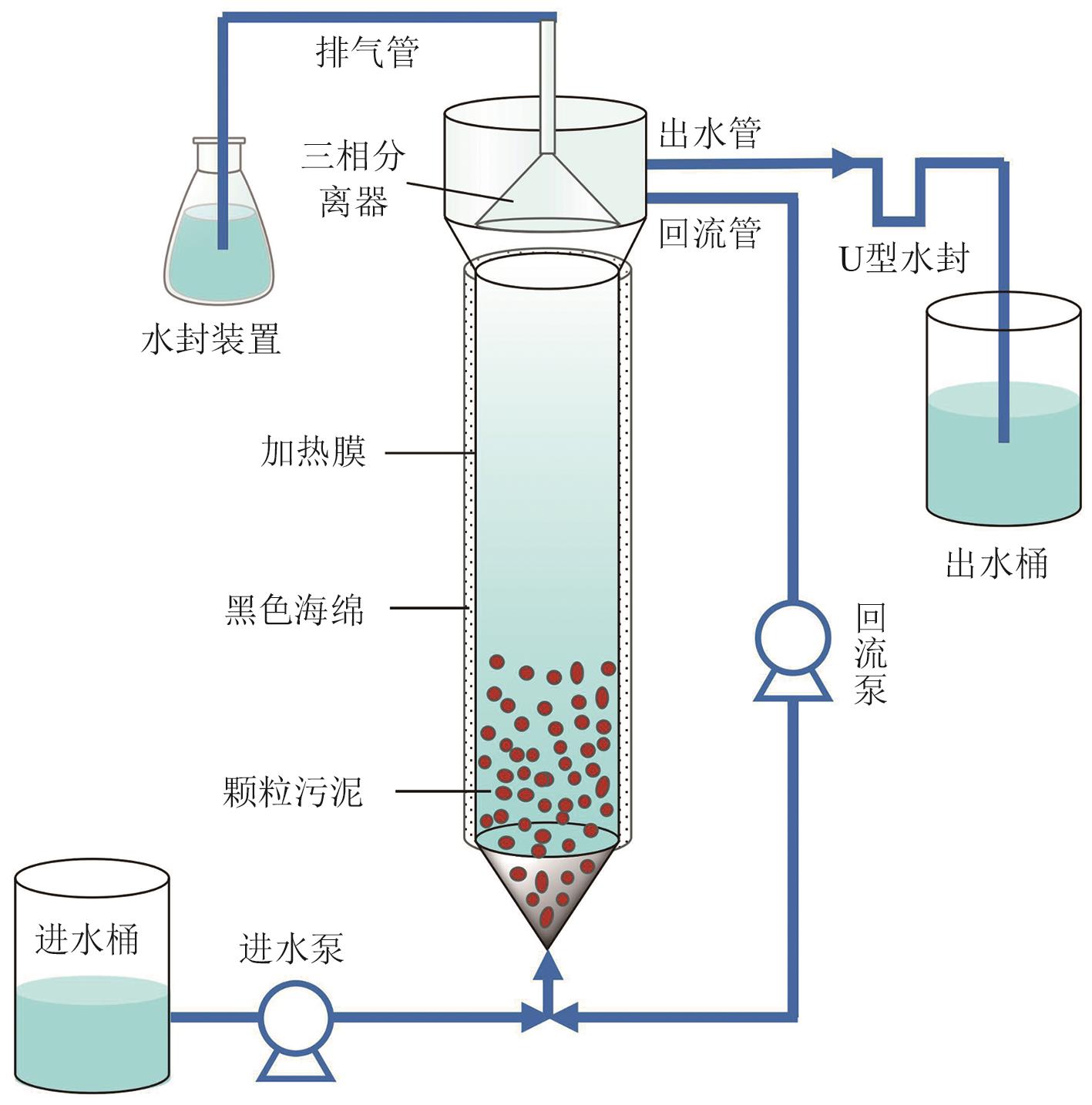
图1 UASB装置示意图
Fig. 1 Schematic diagram of UASB device
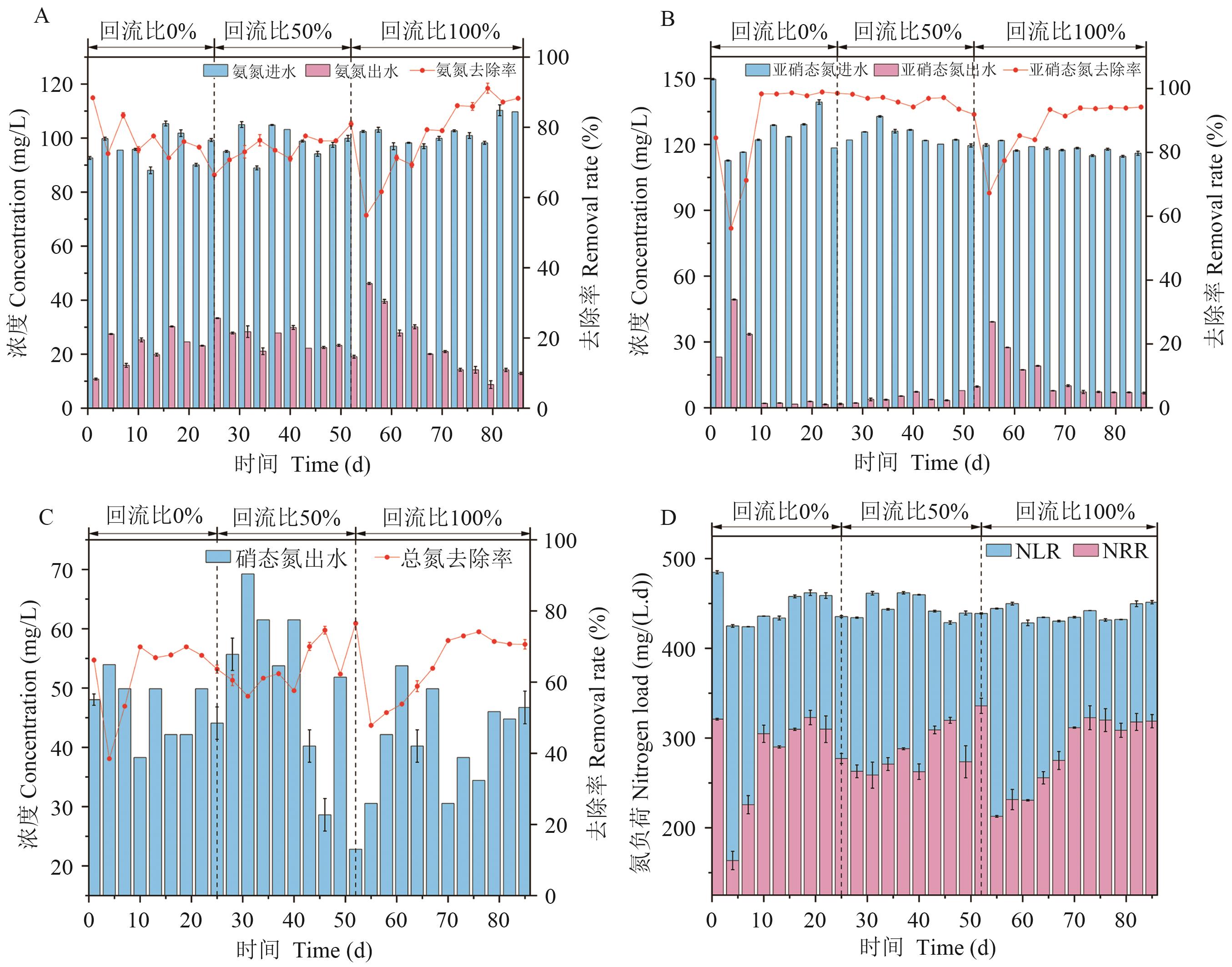
图2 不同回流比下氮的转化和去除A:氨氮的变化;B:亚硝态氮的变化;C:硝态氮和总氮的变化;D:NLR和NRR的变化
Fig. 2 Nitrogen transformation and removal under different reflux ratiosA: Changes in ammonia nitrogen; B: changes in nitrite nitrogen; C: changes in nitrate nitrogen and total nitrogen; D: changes in NLR and NRR
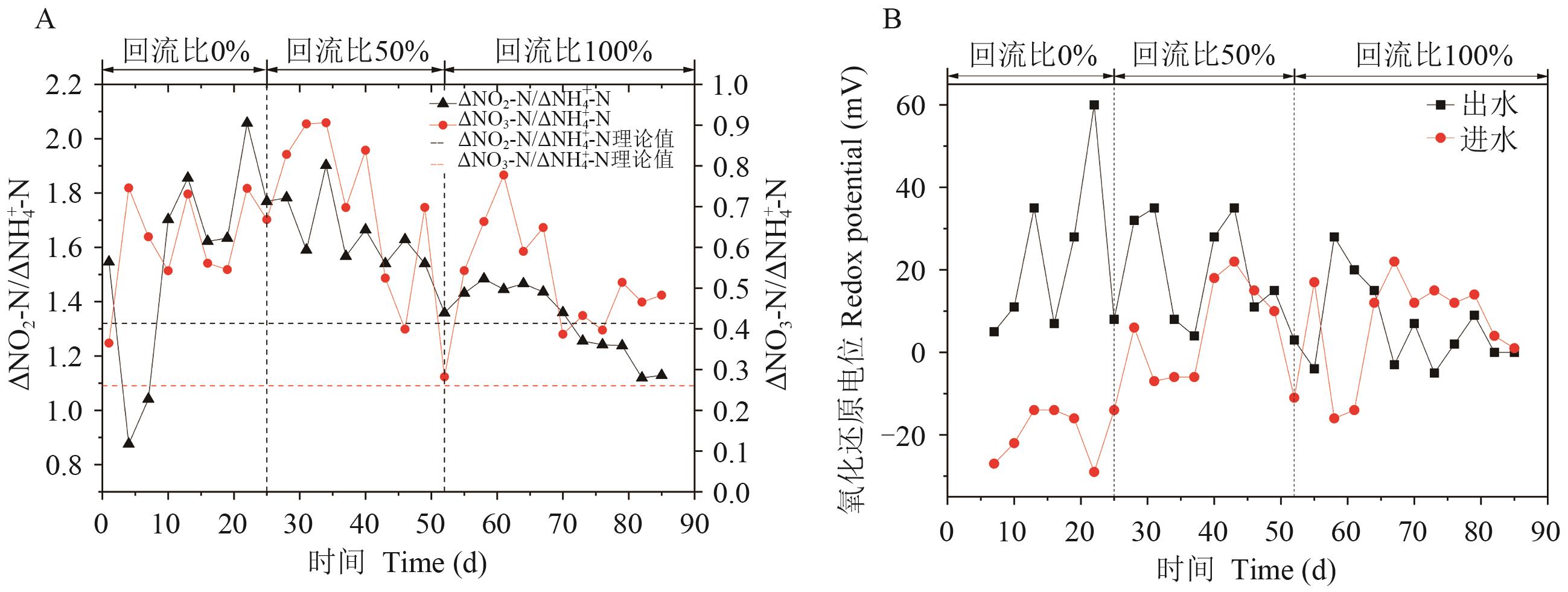
图3 不同回流比下化学计量比和氧化还原电位的变化A:化学计量比的变化;B:氧化还原电位的变化
Fig. 3 Variations in stoichiometric ratios and oxidation-reduction potential under different reflux ratiosA: Changes in stoichiometric ratio; B: changes in redox potential
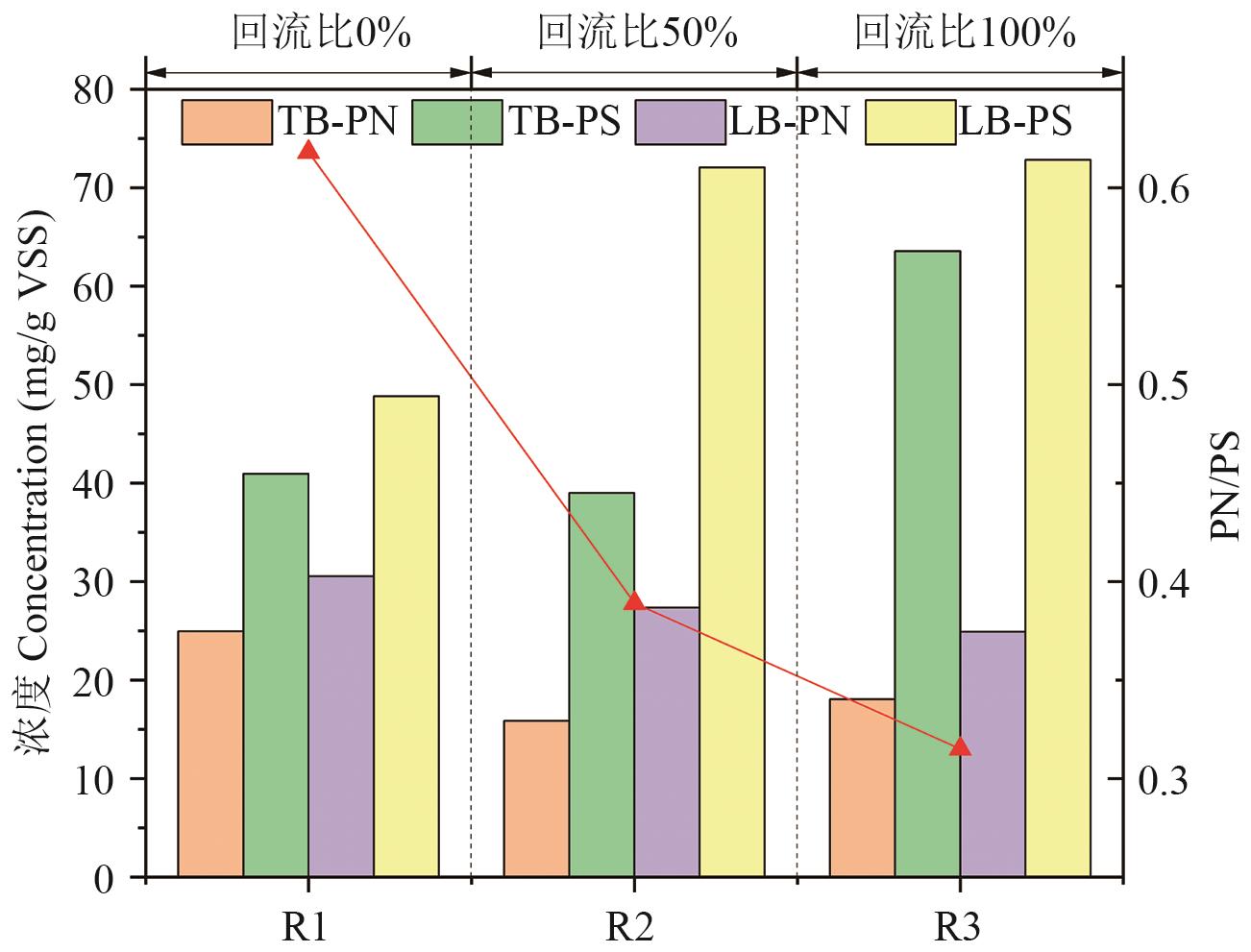
图5 不同回流比下污泥EPS组分及含量的变化R1、R2、R3分别代表回流比为0%、50%、100%,下同
Fig. 5 Variations in EPS composition and content of granule sludge under different reflux ratiosR1, R2, R3 indicate the reflux ratio of 0%, 50%, and 100%, respectively. The same below
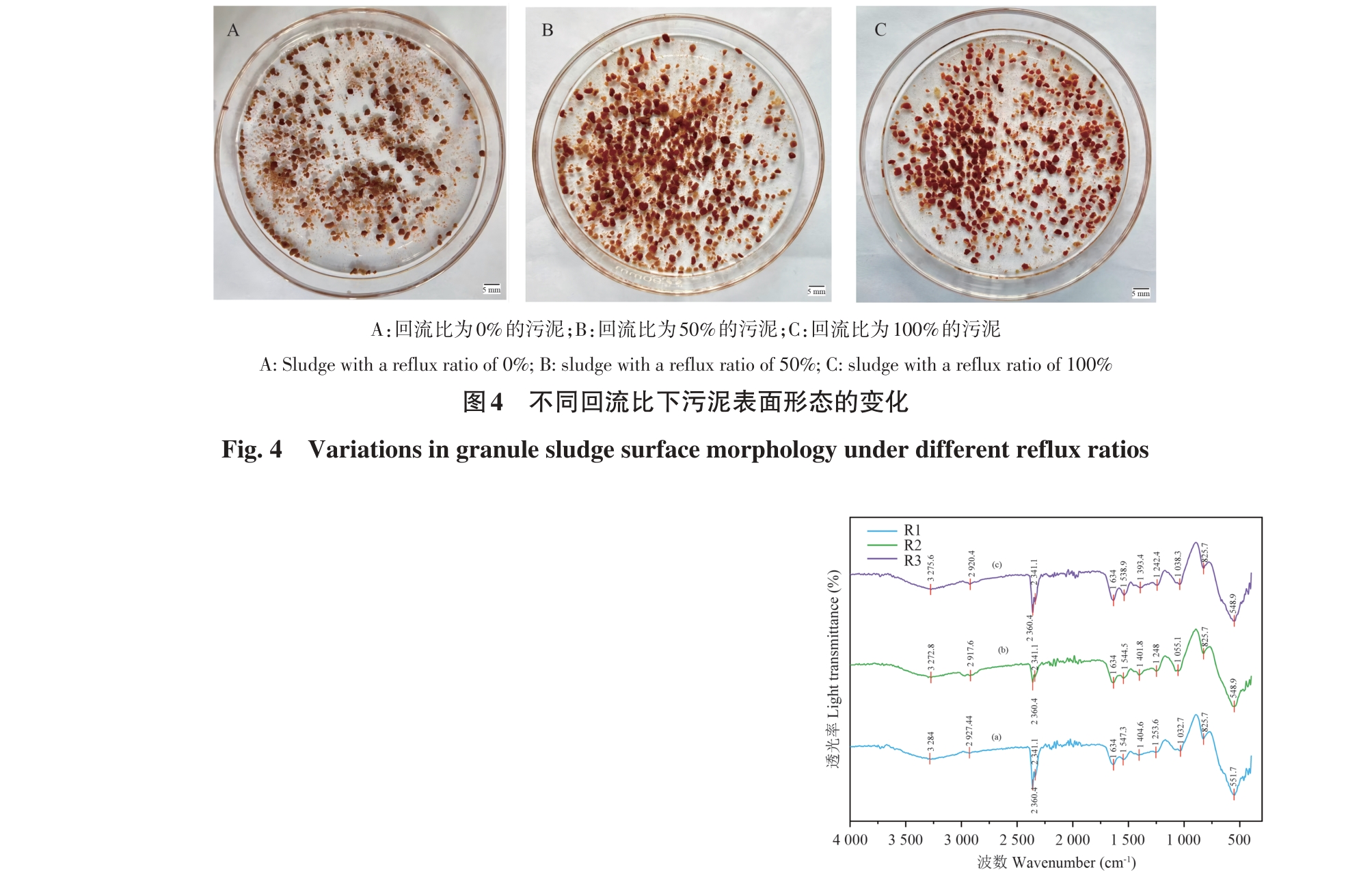
图6 不同回流比下污泥表面官能团的变化
Fig. 6 Variations in surface functional groups of granule sludge under different reflux ratios
| OTUs | Shannon | Chao1 | Ace | Simpson | Shannoneven | |
|---|---|---|---|---|---|---|
| R1 | 852 | 3.328 | 866 | 887 | 0.163 | 0.493 |
| R2 | 836 | 3.447 | 850 | 869 | 0.145 | 0.512 |
| R3 | 808 | 3.273 | 828 | 854 | 0.158 | 0.489 |
表1 不同回流比下Alpha多样性指数的变化
Table 1 Variations in alpha diversity indices under different reflux ratios
| OTUs | Shannon | Chao1 | Ace | Simpson | Shannoneven | |
|---|---|---|---|---|---|---|
| R1 | 852 | 3.328 | 866 | 887 | 0.163 | 0.493 |
| R2 | 836 | 3.447 | 850 | 869 | 0.145 | 0.512 |
| R3 | 808 | 3.273 | 828 | 854 | 0.158 | 0.489 |
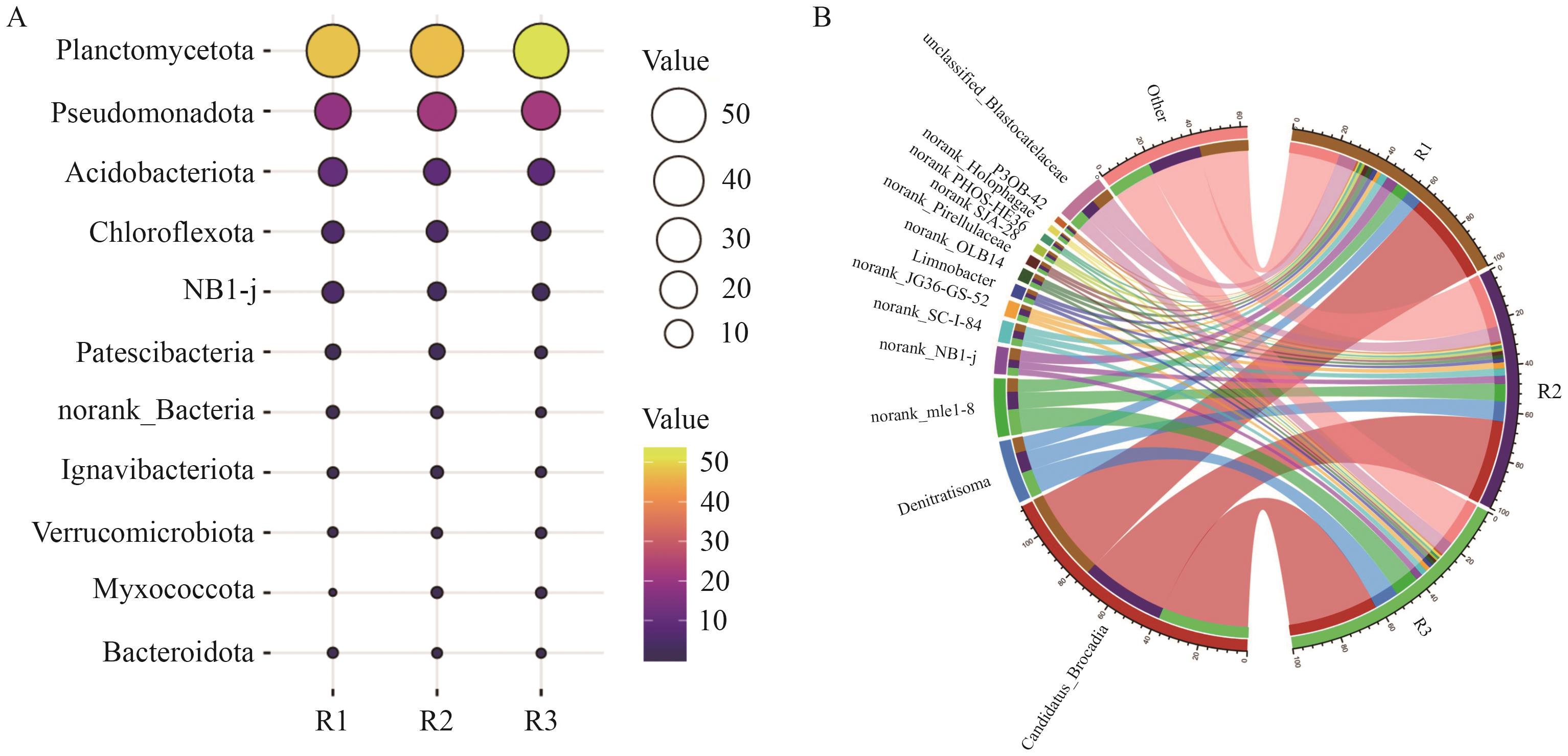
图7 不同回流比下微生物群落结构的变化A:门水平的相对丰度;B:属水平的相对丰度
Fig. 7 Variations in microbial community structure under different reflux ratiosA: Relative abundance at the phylum level; B: relative abundance at the genus level
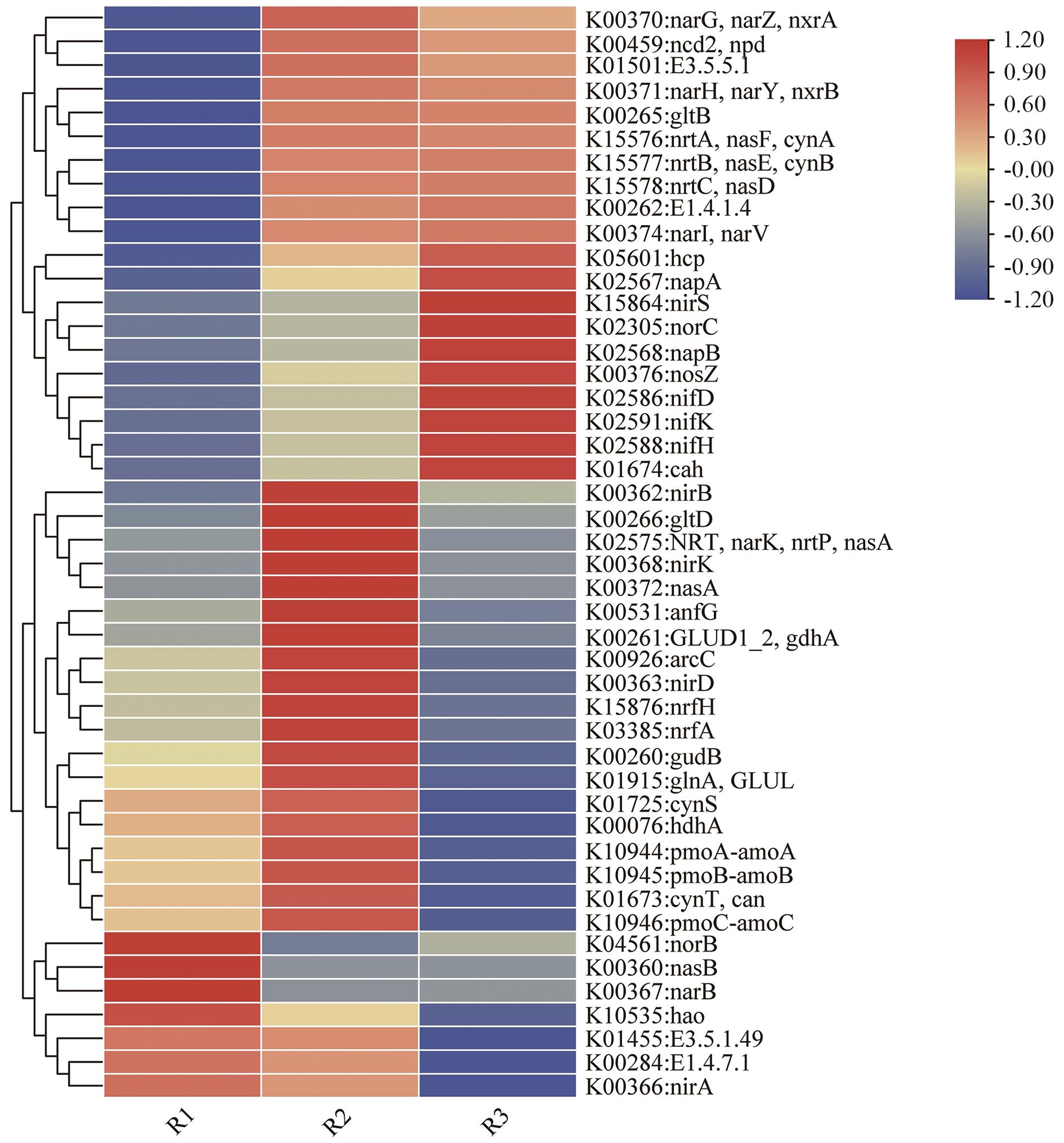
图8 氮代谢相关功能基因的变化
Fig. 8 Variations in nitrogen metabolism-related functional gene
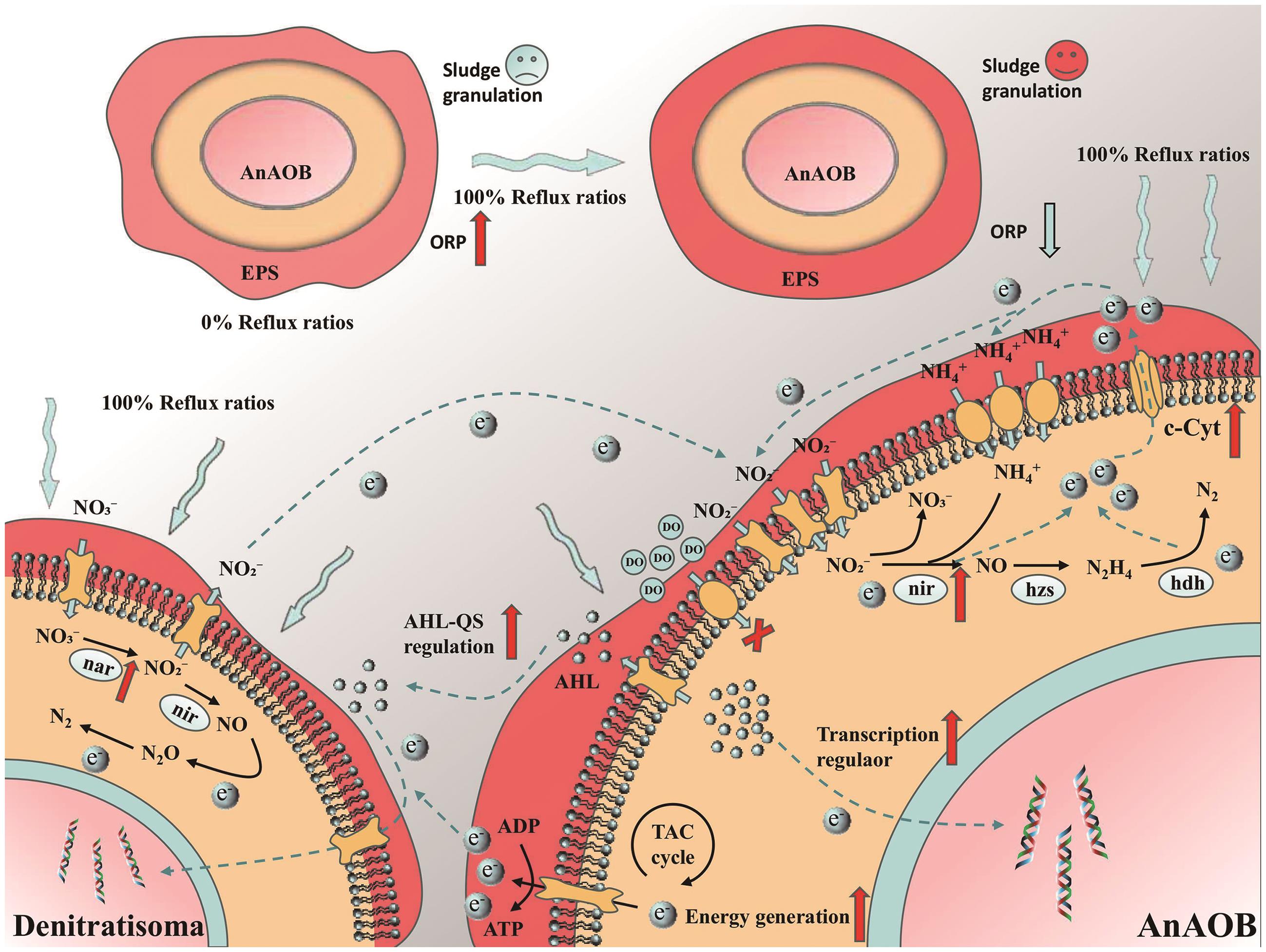
图9 出水回流对厌氧氨氧化系统的作用机制
Fig. 9 Underlying mechanism of effluent reflux in anammox systems
| [1] | Fu JR, Liao H, Wang ZL, et al. Effect of simultaneously addition of Fe3+ and reed straw biochar on nitrogen removal efficiency and GWP for Anammox [J]. Chem Eng J, 2025, 506: 160090. |
| [2] | 雷雪艳, 朱易春, 张超, 等. 零价铁耦合厌氧氨氧化系统高效同步脱氮除磷 [J]. 化工进展, 2025, 44(6): 3132-3143. |
| Lei XY, Zhu YC, Zhang C, et al. Efficient synchronous nitrogen and phosphorus removal in zero valent iron coupled anaerobic ammonia oxidation system [J]. Chem Ind Eng Prog, 2025, 44(6): 3132-3143. | |
| [3] | Chen XY, Liu LJ, Bi YM, et al. A review of anammox metabolic response to environmental factors: Characteristics and mechanisms [J]. Environ Res, 2023, 223: 115464. |
| [4] | Paritosh K, Kesharwani N. Biochar mediated high-rate anaerobic bioreactors: a critical review on high-strength wastewater treatment and management [J]. J Environ Manag, 2024, 355: 120348. |
| [5] | Cema G, Gutwiński P, Ziembińska-Buczyńska A, et al. Evaluation of the long-term effect of Cr(Ⅲ), Zn(Ⅱ), Cd(Ⅱ), Cu(Ⅱ), Ni(Ⅱ) and Pb(Ⅱ) on the anammox process in a continuous-flow anaerobic membrane-assisted bioreactor (AnMBR) [J]. Water Air Soil Pollut, 2025, 236(2): 86. |
| [6] | Yang JH, Huang DQ, Wu GG, et al. Quorum sensing-mediated microecological homeostasis in anammox consortia [J]. J Hazard Mater, 2025, 492: 138285. |
| [7] | 傅慧敏, 冷济轩, 翁勋, 等. 出水回流对Anammox颗粒特性及其微生物群落的影响 [J]. 中国环境科学, 2022, 42(4): 1663-1671. |
| Fu HM, Leng JX, Weng X, et al. The effects of effluent reflux on characteristics and microbial community of anammox granular sludge [J]. China Environ Sci, 2022, 42(4): 1663-1671. | |
| [8] | Zhang ZX, Xing W, Lu J, et al. Nitrogen removal and nitrous oxide emission in the partial nitritation/anammox process at different reflux ratios [J]. Sci Total Environ, 2024, 906: 167520. |
| [9] | 陆明羽, 殷记强, 姚凤根, 等. 回流比对DN-PN-ANAMMOX工艺处理中晚期垃圾渗滤液的影响 [J]. 环境科学研究, 2021, 34(4): 996-1005. |
| Lu MY, Yin JQ, Yao FG, et al. Effect of recycle ratios on partial nitrification-anammox with pre-denitrification of mature leachate treatment [J]. Res Environ Sci, 2021, 34(4): 996-1005. | |
| [10] | Yan ZC, Zeng R, Yang H. Sustainable treatment of high-ammonia-nitrogen organic wastewater via anaerobic ammonium oxidation (anammox) combined with effluent recirculation/micro-aeration [J]. Sustainability, 2025, 17(13): 5926. |
| [11] | Qi PQ, Li J, Dong HY, et al. Performance of anammox process treating nitrogen-rich saline wastewater: Kinetics and nitrite inhibition [J]. J Clean Prod, 2018, 199: 493-502. |
| [12] | Du R, Cao SB, Zhang HY, et al. Flexible nitrite supply alternative for mainstream anammox: advances in enhancing process stability [J]. Environ Sci Technol, 2020, 54(10): 6353-6364. |
| [13] | 雷雪艳, 晏雯雯, 张超, 等. 湿干比对不同人工快速渗滤系统处理厌氧折流板反应器出水的影响 [J]. 江西冶金, 2023, 43(3): 259-264. |
| Lei XY, Yan WW, Zhang C, et al. Effect of wet/dry ratio on anaerobic baffled reactor effluent treatment with different constructed rapid infiltration systems [J]. Jiangxi Metall, 2023, 43(3): 259-264. | |
| [14] | Xu DD, Fan JH, Pan C, et al. Dimension effect of anammox granule: Potential vs performance [J]. Sci Total Environ, 2021, 795: 148681. |
| [15] | Tang X, Guo YZ, Jiang B, et al. Metagenomic approaches to understanding bacterial communication during the anammox reactor start-up [J]. Water Res, 2018, 136: 95-103. |
| [16] | Chang BZ, Huang XL, Chen DZ, et al. How biofilm and granular sludge cope with dissolved oxygen exposure in anammox process: Performance, bioaccumulation characteristics and bacterial evolution [J]. J Environ Manag, 2025, 373: 123986. |
| [17] | Feng CJ, Lotti T, Lin YM, et al. Extracellular polymeric substances extraction and recovery from anammox granules: Evaluation of methods and protocol development [J]. Chem Eng J, 2019, 374: 112-122. |
| [18] | 高雪健, 张杰, 李冬, 等. 不同基质浓度对ANAMMOX菌短期储存的影响 [J]. 环境科学, 2018, 39(12): 5587-5595. |
| Gao XJ, Zhang J, Li D, et al. Effects of different substrate concentrations on the short-term storage of ANAMMOX bacteria [J]. Environ Sci, 2018, 39(12): 5587-5595. | |
| [19] | Wang S, Huang XX, Liu LJ, et al. Understanding the mechanism in aggregation ability between aerobic and anammox granular sludge from the perspective of exopolysaccharides [J]. J Water Process Eng, 2020, 38: 101629. |
| [20] | Zhang LH, Zhang J, Hu X. Analyzing the nitrogen removal performance and cold adaptation mechanism of immobilized cold-acclimation ANAMMOX granules at low temperatures [J]. Water Environ Res, 2024, 96(2): e10985. |
| [21] | Zhen JY, Zheng M, Wei W, et al. Extracellular electron transfer (EET) enhanced anammox process for progressive nitrogen removal: a review [J]. Chem Eng J, 2024, 482: 148886. |
| [22] | Witkabel P, Abendroth C. A systematic literature review of microbial anammox consortia in UASB/EGSB-reactors [J]. Chemosphere, 2024, 367: 143630. |
| [23] | Wang JX, Liang JD, Sun L, et al. Achieving reliable partial nitrification and anammox process using polyvinyl alcohol gel beads to treat low-strength ammonia wastewater [J]. Bioresour Technol, 2021, 324: 124669. |
| [24] | Lawson CE, Wu S, Bhattacharjee AS, et al. Metabolic network analysis reveals microbial community interactions in anammox granules [J]. Nat Commun, 2017, 8: 15416. |
| [25] | Pushpakumara BLDU, Tandon K, Willis A, et al. Unravelling microalgal-bacterial interactions in aquatic ecosystems through 16S rRNA gene-based co-occurrence networks [J]. Sci Rep, 2023, 13: 2743. |
| [26] | Choi D, Yun W, Choi Y, et al. Insights into thiosulfate-driven partial denitrification synergistically mediated by anaerobic ammonium oxidation: Biosynthesized signaling molecules and enzymatic collaboration [J]. Chem Eng J, 2025, 506: 160069. |
| [27] | Li JP, Zuo XT, Chen QQ, et al. Genome-resolved metagenomic analysis reveals a novel denitrifier with truncated nitrite reduction pathway from the genus SC-I-84 [J]. Water Res, 2025, 282: 123598. |
| [28] | 雷雪艳, 朱易春, 张超, 等. 常温有氧低基质下厌氧氨氧化二次启动及脱氮效能 [J]. 中国给水排水, 2025, 41(1): 16-24. |
| Lei XY, Zhu YC, Zhang C, et al. Secondary start-up and nitrogen removal performance of anammox under room temperature, aerobic, and low concentration substrate conditions [J]. China Water Wastewater, 2025, 41(1): 16-24. | |
| [29] | Zhen JY, Wang ZB, Ni BJ, et al. Synergistic integration of anammox and endogenous denitrification processes for the simultaneous carbon, nitrogen, and phosphorus removal [J]. Environ Sci Technol, 2024, 58(24): 10632-10643. |
| [30] | Lin BC, Hu TQ, Xu ZH, et al. Stratified biofilm structure of MABR enabling efficient ammonia removal from aquaculture medicated bath wastewater [J]. Water Res, 2025, 277: 123326. |
| [31] | Xiao Y, Yin XJ, Chen LJ, et al. Effects of illumination on nirS denitrifying and anammox bacteria in the rhizosphere of submerged macrophytes [J]. Sci Total Environ, 2021, 760: 143420. |
| [1] | 郝宛婷, 张超, 陈仔龙, 宋贤威, 高明原, 朱玉玺, 王世豪, 朱易春. 稀土钇对厌氧氨氧化系统的短期影响及作用机制[J]. 生物技术通报, 2026, 42(2): 113-120. |
| [2] | 侯鹰翔, 费思恬, 黎妮, 李兰, 宋松泉, 王伟平, 张超. 水稻miRNAs响应生物胁迫研究进展[J]. 生物技术通报, 2025, 41(7): 69-80. |
| [3] | 王一凡, 朱鸿亮. 植物PPR蛋白的功能及其作用机制[J]. 生物技术通报, 2025, 41(6): 27-37. |
| [4] | 马顺, 赵旭, 刘雪, 陈广坤, 高悦, 丁瑾, 张竞伊, 赵怡萌, 公丽玉, 李洪涛. γ-氨基丁酸对肉鸡抗氧化能力及盲肠菌群结构的影响[J]. 生物技术通报, 2025, 41(12): 351-359. |
| [5] | 许沛冬, 易剑锋, 陈迪, 潘磊, 谢丙炎, 赵文军. 贝莱斯芽孢杆菌生防次级代谢产物研究进展[J]. 生物技术通报, 2024, 40(3): 75-88. |
| [6] | 徐扬, 张瑞英, 戴良香, 张冠初, 丁红, 张智猛. 盐胁迫下氮素对花生种子萌发和种子际细菌菌群结构的调控[J]. 生物技术通报, 2024, 40(2): 253-265. |
| [7] | 肖亮, 吴正丹, 陆柳英, 施平丽, 尚小红, 曹升, 曾文丹, 严华兵. 木薯重要性状基因的研究进展[J]. 生物技术通报, 2023, 39(6): 31-48. |
| [8] | 董怡华, 王凌潇, 任涵雪, 陈峰. 一株耐低温异养硝化-好氧反硝化菌的分离鉴定及其脱氮特性[J]. 生物技术通报, 2023, 39(12): 237-249. |
| [9] | 陈广霞, 李秀杰, 蒋锡龙, 单雷, 张志昌, 李勃. 植物小分子信号肽参与非生物逆境胁迫应答的研究进展[J]. 生物技术通报, 2023, 39(11): 61-73. |
| [10] | 金云倩, 王彬, 郭书磊, 赵霖熙, 韩赞平. 赤霉素调控玉米种子活力的研究进展[J]. 生物技术通报, 2023, 39(1): 84-94. |
| [11] | 胡功政, 崔小蝶, 翟亚军, 贺丹丹. 细菌黏菌素耐药性及其逆转机制研究进展[J]. 生物技术通报, 2022, 38(9): 28-34. |
| [12] | 李潇凡, 耿丹丹, 毕瑜林, 江勇, 王志秀, 常国斌, 陈国宏, 白皓. miRNA的非经典作用机制研究进展[J]. 生物技术通报, 2022, 38(12): 1-10. |
| [13] | 田李, 李俊娇, 戴小枫, 张丹丹, 陈捷胤. 从功能基因到生物学性状:大丽轮枝菌致病性形成的分子基础[J]. 生物技术通报, 2022, 38(1): 51-69. |
| [14] | 高鹏飞, 席飞虎, 张泽宇, 胡凯强, 陈凯, 魏文桃, 丁家治, 顾连峰. 植物VIGS技术及其在林业科学中的研究进展[J]. 生物技术通报, 2021, 37(5): 141-153. |
| [15] | 陈一丹, 张昱, 杨洁, 张勤, 姜力. 基于转录组测序的奶牛产奶性状重要功能基因挖掘[J]. 生物技术通报, 2020, 36(9): 244-252. |
| 阅读次数 | ||||||
|
全文 |
|
|||||
|
摘要 |
|
|||||
