







生物技术通报 ›› 2026, Vol. 42 ›› Issue (6): 340-350.doi: 10.13560/j.cnki.biotech.bull.1985.2025-1004
• 研究报告 • 上一篇
李学冯1,2( ), 张宁波1,2, 龙君江2,3, 龙洋2,3, 金太花1, 吕慎金1, 樊雪梅1,2, 季久秀1(), 李永洙1,2()
收稿日期:2025-09-22
出版日期:2026-06-26
发布日期:2026-07-11
通讯作者:
季久秀,女,博士,讲师,研究方向 :动物遗传育种与繁殖;E-mail: Jijiuiu@lyu.edu.cn作者简介:李学冯,男,硕士研究生,研究方向 :家禽育种与营养生理;E-mail: 15168956251@163.com
基金资助:
LI Xue-feng1,2(), ZHANG Ning-bo1,2, LONG Jun-Jiang2,3, LONG Yang2,3, JIN Tai-hua1, LYU Shen-Jin1, FAN Xue-mei1,2, JI Jiu-xiu1(), LI Yong-zhu1,2()
Received:2025-09-22
Published:2026-06-26
Online:2026-07-11
摘要:
目的 在基础日粮中添加益生菌对沂蒙鸡杂交系生长性能、盲肠菌群多样性和短链脂肪酸含量的影响以及微生物功能差异预测分析。 方法 采用双因素试验设计,选取1日龄沂蒙鸡及其二元杂交和三元杂交健康雏鸡(公鸡)为主要研究对象,3个群体分6组,各群体分对照组(C组)和益生菌组(T组),即对照组沂蒙鸡(C1组)、二元杂交(C2组)和三元杂交(C3组),益生菌组沂蒙鸡(T1组)、二元杂交(T2组)和三元杂交(T3组),各组3个重复,每个重复15只,共270只,试验周期7周。 结果 1)益生菌可以显著改善1-42日龄沂蒙鸡杂交系生长性能(P0.05),在平均日增重和料重比中T3组表现最优,在平均日采食量中C2组最优,且益生菌与品种杂交对平均日采食量和料重比存在交互作用。2)在门水平上,C1组放线菌门显著高于C2组和C3组(P0.05);T2组放线菌门和脱铁杆菌门显著高于C2组(P0.05)。在属水平上,T3组拟杆菌属显著高于T1组(P0.05);T1组考拉杆菌属显著高于C1组(P0.05);T2组甲烷短杆菌属显著高于C2组(P0.05)。3)T组乙酸、丙酸和丁酸含量显著高于C组(P0.05),且益生菌与品种杂交对乙酸、丙酸、戊酸、异戊酸、丁酸和异丁酸存在交互效应(P0.05)。4)在KEGG功能预测中发现C组显著富集的代谢通路有辅因子和维生素代谢、果糖和甘露糖代谢等;T组显著富集的代谢通路有精氨酸和脯氨酸代谢、烟酸和烟酰胺代谢、蛋白质的消化和吸收和戊糖和葡萄糖醛酸的相互转化等。 结论 日粮中添加益生菌和构建杂交系能够改善沂蒙鸡生长性能和短链脂肪酸的生成,且存在交互作用,还可以改变盲肠菌群结构多样性,影响微生物功能代谢途径。
李学冯, 张宁波, 龙君江, 龙洋, 金太花, 吕慎金, 樊雪梅, 季久秀, 李永洙. 益生菌对沂蒙鸡杂交系生长性能、盲肠菌群多样性及短链脂肪酸的影响[J]. 生物技术通报, 2026, 42(6): 340-350.
LI Xue-feng, ZHANG Ning-bo, LONG Jun-Jiang, LONG Yang, JIN Tai-hua, LYU Shen-Jin, FAN Xue-mei, JI Jiu-xiu, LI Yong-zhu. Effects of Probiotics on Growth Performance, Cecal Flora Diversity and Short-chain Fatty Acid of Yimeng Chicken Hybrid Line[J]. Biotechnology Bulletin, 2026, 42(6): 340-350.
原料组成 Ingredient | 含量 Content (%) | 营养水平 Nutrient levels | 含量 Content (%) |
|---|---|---|---|
| 玉米 Corn | 55.95 | 粗蛋白质 Crude protein | 19.50 |
| 大豆粕 Soybean meal | 14.44 | 代谢能 ME/(MJ/kg) | 12.10 |
| 麸皮 Rice bran | 5.60 | 钙 Ca | 0.90 |
| 玉米胚芽粕 Corn germ meal | 5.00 | 总磷 Total phosphorus | 0.65 |
| 进口 DDGS | 10.00 | 有效磷 Available phosphorus | 0.45 |
| 石粉 Limestone | 1.00 | 赖氨酸 Lys | 1.15 |
| 玉米蛋白粉 Corn gluten meal | 5.00 | 蛋氨酸 Met | 0.39 |
| 磷酸氢钙 CaHPO4 | 1.20 | 蛋氨酸+胱氨酸 Met+Sys | 0.76 |
| DL-蛋氨酸 Met | 0.15 | 苏氨酸 Thr | 0.85 |
| 盐 NaCl | 0.30 | ||
| 70%赖氨酸 Lys | 0.25 | ||
| 70%氯化胆碱 Choline chloride | 0.10 | ||
| 预混料 Premix | 1.00 | ||
| 合计 Total | 100.00 |
表1 饲粮中主要组成及营养水平(风干物质)
Table 1 Main ingredients and nutritional level of ration (air-dry basis)
原料组成 Ingredient | 含量 Content (%) | 营养水平 Nutrient levels | 含量 Content (%) |
|---|---|---|---|
| 玉米 Corn | 55.95 | 粗蛋白质 Crude protein | 19.50 |
| 大豆粕 Soybean meal | 14.44 | 代谢能 ME/(MJ/kg) | 12.10 |
| 麸皮 Rice bran | 5.60 | 钙 Ca | 0.90 |
| 玉米胚芽粕 Corn germ meal | 5.00 | 总磷 Total phosphorus | 0.65 |
| 进口 DDGS | 10.00 | 有效磷 Available phosphorus | 0.45 |
| 石粉 Limestone | 1.00 | 赖氨酸 Lys | 1.15 |
| 玉米蛋白粉 Corn gluten meal | 5.00 | 蛋氨酸 Met | 0.39 |
| 磷酸氢钙 CaHPO4 | 1.20 | 蛋氨酸+胱氨酸 Met+Sys | 0.76 |
| DL-蛋氨酸 Met | 0.15 | 苏氨酸 Thr | 0.85 |
| 盐 NaCl | 0.30 | ||
| 70%赖氨酸 Lys | 0.25 | ||
| 70%氯化胆碱 Choline chloride | 0.10 | ||
| 预混料 Premix | 1.00 | ||
| 合计 Total | 100.00 |
项目 Item | 分组 Group | 品种 Breed | P-value | |||
|---|---|---|---|---|---|---|
| C1/T1 | C2/T2 | C3/T3 | Breed | P×B | ||
平均日增重 Average daily gain (ADG) | C | 8.51±1.28Bb | 9.80±1.66a | 9.60±1.83Ba | 0.001 | 0.057 |
| T | 9.30±1.24Ac | 10.25±1.58b | 11.33±1.78Aa | 0.001 | ||
| P-value | 0.010 | 0.113 | 0.001 | |||
平均日采食量 Average daily feed intake (ADFI) | C | 25.39±0.39b | 28.34±1.32Aa | 23.89±1.32Bb | 0.007 | 0.001 |
| T | 24.45±0.96b | 25.63±0.84Bab | 27.15±0.99Aa | 0.033 | ||
| P-value | 0.281 | 0.007 | 0.002 | |||
料重比 Feed/Gain (F/G) | C | 2.99±0.00Aa | 2.89±0.00Ab | 2.49±0.00Ac | 0.001 | 0.035 |
| T | 2.63±0.00Ba | 2.50±0.00Bb | 2.40±0.00Bc | 0.001 | ||
| P-value | 0.001 | 0.001 | 0.003 | |||
表2 益生菌对沂蒙鸡杂交系生长性能的影响
Table 2 Effects of probiotics on the growth performance of Yimeng chicken hybrid lines
项目 Item | 分组 Group | 品种 Breed | P-value | |||
|---|---|---|---|---|---|---|
| C1/T1 | C2/T2 | C3/T3 | Breed | P×B | ||
平均日增重 Average daily gain (ADG) | C | 8.51±1.28Bb | 9.80±1.66a | 9.60±1.83Ba | 0.001 | 0.057 |
| T | 9.30±1.24Ac | 10.25±1.58b | 11.33±1.78Aa | 0.001 | ||
| P-value | 0.010 | 0.113 | 0.001 | |||
平均日采食量 Average daily feed intake (ADFI) | C | 25.39±0.39b | 28.34±1.32Aa | 23.89±1.32Bb | 0.007 | 0.001 |
| T | 24.45±0.96b | 25.63±0.84Bab | 27.15±0.99Aa | 0.033 | ||
| P-value | 0.281 | 0.007 | 0.002 | |||
料重比 Feed/Gain (F/G) | C | 2.99±0.00Aa | 2.89±0.00Ab | 2.49±0.00Ac | 0.001 | 0.035 |
| T | 2.63±0.00Ba | 2.50±0.00Bb | 2.40±0.00Bc | 0.001 | ||
| P-value | 0.001 | 0.001 | 0.003 | |||
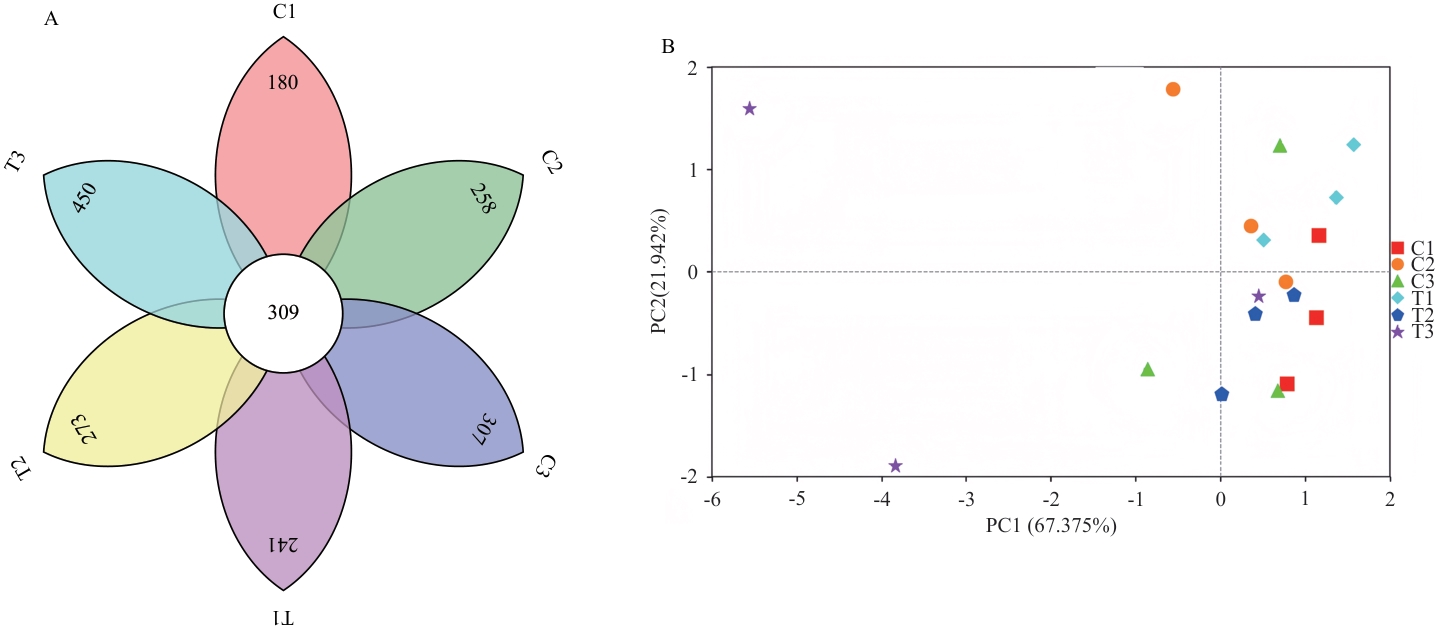
图1 沂蒙鸡杂交系肠道菌群韦恩图(A)和盲肠微生物β多样性PCA(B)
Fig. 1 Intestinal flora Wayne diagram (A) and cecal microbial β diversity PCA (B) of Yimeng chicken hybrid line
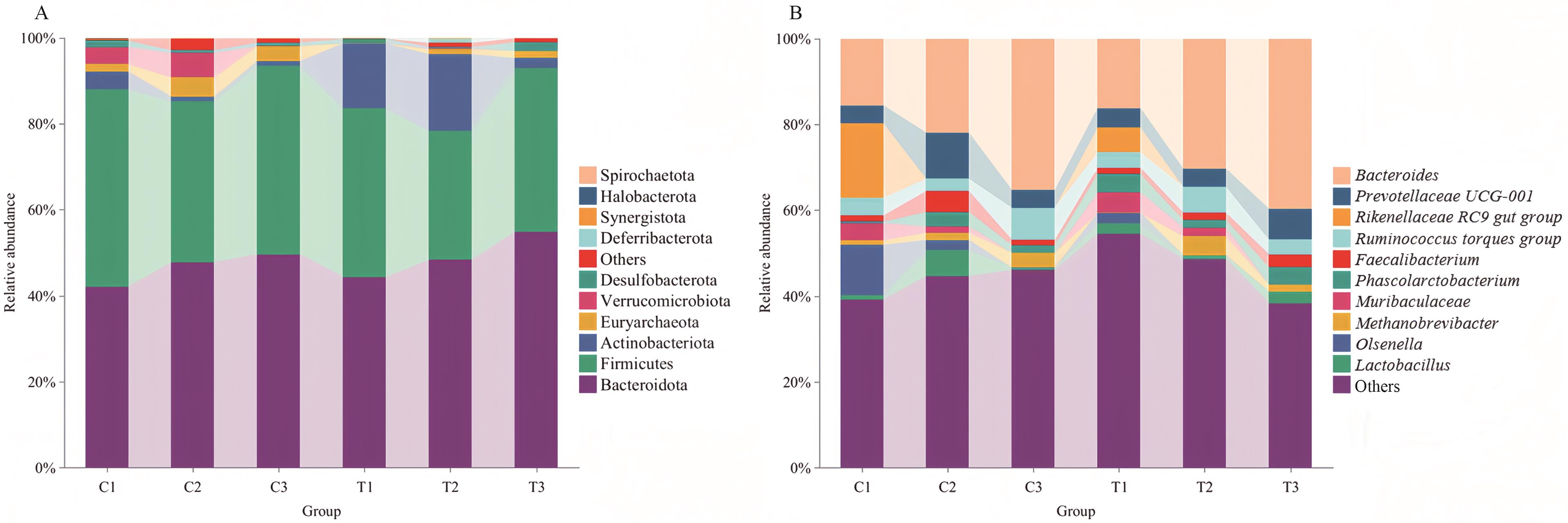
图2 益生菌对沂蒙鸡杂交系盲肠微生物门、属水平相对丰度柱状图
Fig. 2 Columnar diagram of relative abundance of probiotics on cecal microbial phylum and genus level of Yimeng chicken hybrid line
项目 Item | 分组 Group | 品种 Breed | P值 P-value | |||
|---|---|---|---|---|---|---|
| C1/T1 | C2/T2 | C3/T3 | Breed | P×B | ||
乙酸 Acetic acid (mg/kg) | C | 235.19±8.39Bc | 311.83±2.10Bb | 438.20±7.44Ba | 0.001 | 0.011 |
| T | 286.50±10.59Ac | 338.71±5.23Ab | 503.76±15.44Aa | 0.001 | ||
| P-value | 0.001 | 0.004 | 0.001 | |||
丙酸 Propionic acid (mg/kg) | C | 224.56±6.43c | 251.98±13.74Bb | 292.59±5.19Ba | 0.003 | 0.001 |
| T | 218.52±5.30c | 300.25±4.69Ab | 459.75±11.52Aa | 0.001 | ||
| P-value | 0.060 | 0.001 | 0.001 | |||
戊酸 Valeric acid (mg/kg) | C | 25.37±0.26Ab | 34.83±1.91Aa | 25.73±0.38Bb | 0.001 | 0.001 |
| T | 23.70±0.59Bb | 31.13±0.50Ba | 31.77±0.84Aa | 0.001 | ||
| P-value | 0.048 | 0.001 | 0.001 | |||
异戊酸 Isovaleric acid (mg/kg) | C | 6.69±0.07Ab | 13.21±0.23Aa | 3.77±0.17Bc | 0.001 | 0.001 |
| T | 5.28±0.17Bb | 6.17±0.19Ba | 4.92±0.17Ab | 0.007 | ||
| P-value | 0.001 | 0.001 | 0.005 | |||
丁酸 Butyric acid (mg/kg) | C | 101.79±2.44Bc | 131.81±2.50Ab | 163.59±2.48Ba | 0.001 | 0.001 |
| T | 138.54±2.95Ab | 121.26±2.94Bc | 203.74±7.16Aa | 0.001 | ||
| P-value | 0.001 | 0.003 | 0.003 | |||
异丁酸 Isobutyric acid (mg/kg) | C | 24.61±0.93Ab | 42.97±0.83Aa | 14.30±0.30Bc | 0.001 | 0.001 |
| T | 22.05±1.15Bb | 19.94±0.28Bb | 28.90±2.17Aa | 0.001 | ||
| P-value | 0.003 | 0.001 | 0.001 | |||
表3 益生菌对沂蒙鸡杂交系盲肠短链脂肪酸的影响
Table 3 Effects of probiotics on cecal short-chain fatty acids in Yimeng chicken hybrid lines
项目 Item | 分组 Group | 品种 Breed | P值 P-value | |||
|---|---|---|---|---|---|---|
| C1/T1 | C2/T2 | C3/T3 | Breed | P×B | ||
乙酸 Acetic acid (mg/kg) | C | 235.19±8.39Bc | 311.83±2.10Bb | 438.20±7.44Ba | 0.001 | 0.011 |
| T | 286.50±10.59Ac | 338.71±5.23Ab | 503.76±15.44Aa | 0.001 | ||
| P-value | 0.001 | 0.004 | 0.001 | |||
丙酸 Propionic acid (mg/kg) | C | 224.56±6.43c | 251.98±13.74Bb | 292.59±5.19Ba | 0.003 | 0.001 |
| T | 218.52±5.30c | 300.25±4.69Ab | 459.75±11.52Aa | 0.001 | ||
| P-value | 0.060 | 0.001 | 0.001 | |||
戊酸 Valeric acid (mg/kg) | C | 25.37±0.26Ab | 34.83±1.91Aa | 25.73±0.38Bb | 0.001 | 0.001 |
| T | 23.70±0.59Bb | 31.13±0.50Ba | 31.77±0.84Aa | 0.001 | ||
| P-value | 0.048 | 0.001 | 0.001 | |||
异戊酸 Isovaleric acid (mg/kg) | C | 6.69±0.07Ab | 13.21±0.23Aa | 3.77±0.17Bc | 0.001 | 0.001 |
| T | 5.28±0.17Bb | 6.17±0.19Ba | 4.92±0.17Ab | 0.007 | ||
| P-value | 0.001 | 0.001 | 0.005 | |||
丁酸 Butyric acid (mg/kg) | C | 101.79±2.44Bc | 131.81±2.50Ab | 163.59±2.48Ba | 0.001 | 0.001 |
| T | 138.54±2.95Ab | 121.26±2.94Bc | 203.74±7.16Aa | 0.001 | ||
| P-value | 0.001 | 0.003 | 0.003 | |||
异丁酸 Isobutyric acid (mg/kg) | C | 24.61±0.93Ab | 42.97±0.83Aa | 14.30±0.30Bc | 0.001 | 0.001 |
| T | 22.05±1.15Bb | 19.94±0.28Bb | 28.90±2.17Aa | 0.001 | ||
| P-value | 0.003 | 0.001 | 0.001 | |||
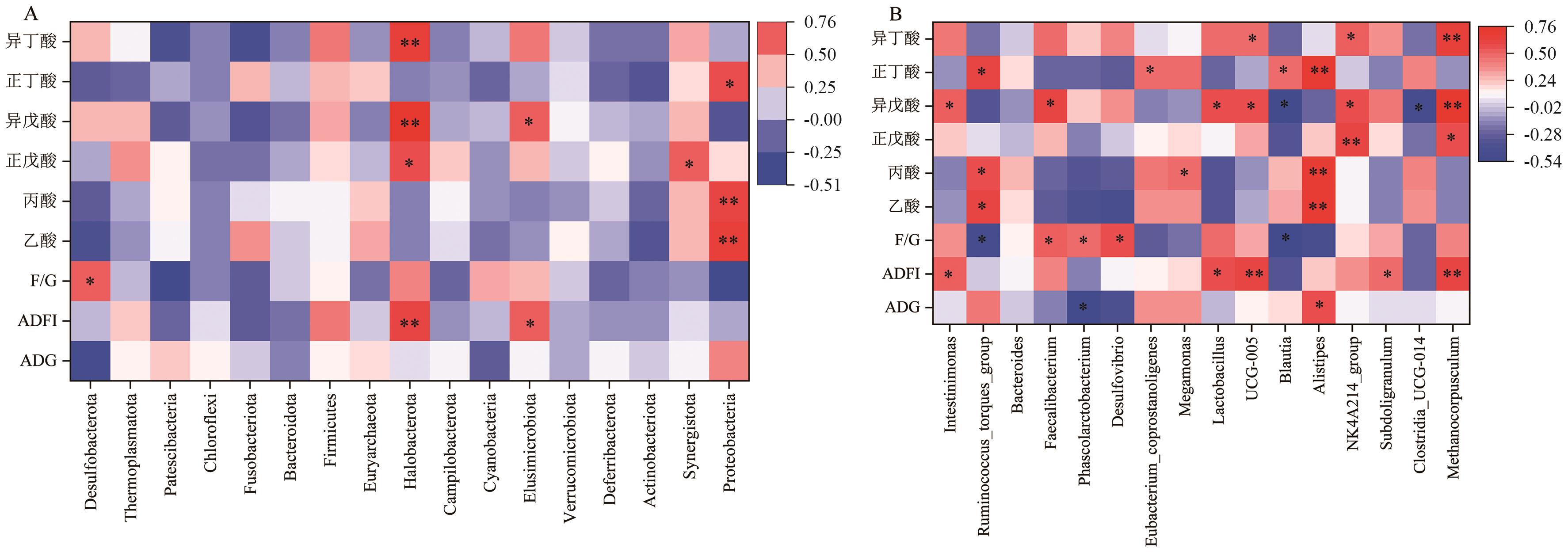
图3 42日龄沂蒙鸡杂交系盲肠微生物门、属与生长性能和短链脂肪酸的Pearson相关性分析*P0.05,**P0.01
Fig. 3 Pearson correlation analysis of cecal microbial phylum and genus with growth performance and short-chain fatty acids in 42-day-old Yimeng chicken hybrid lines
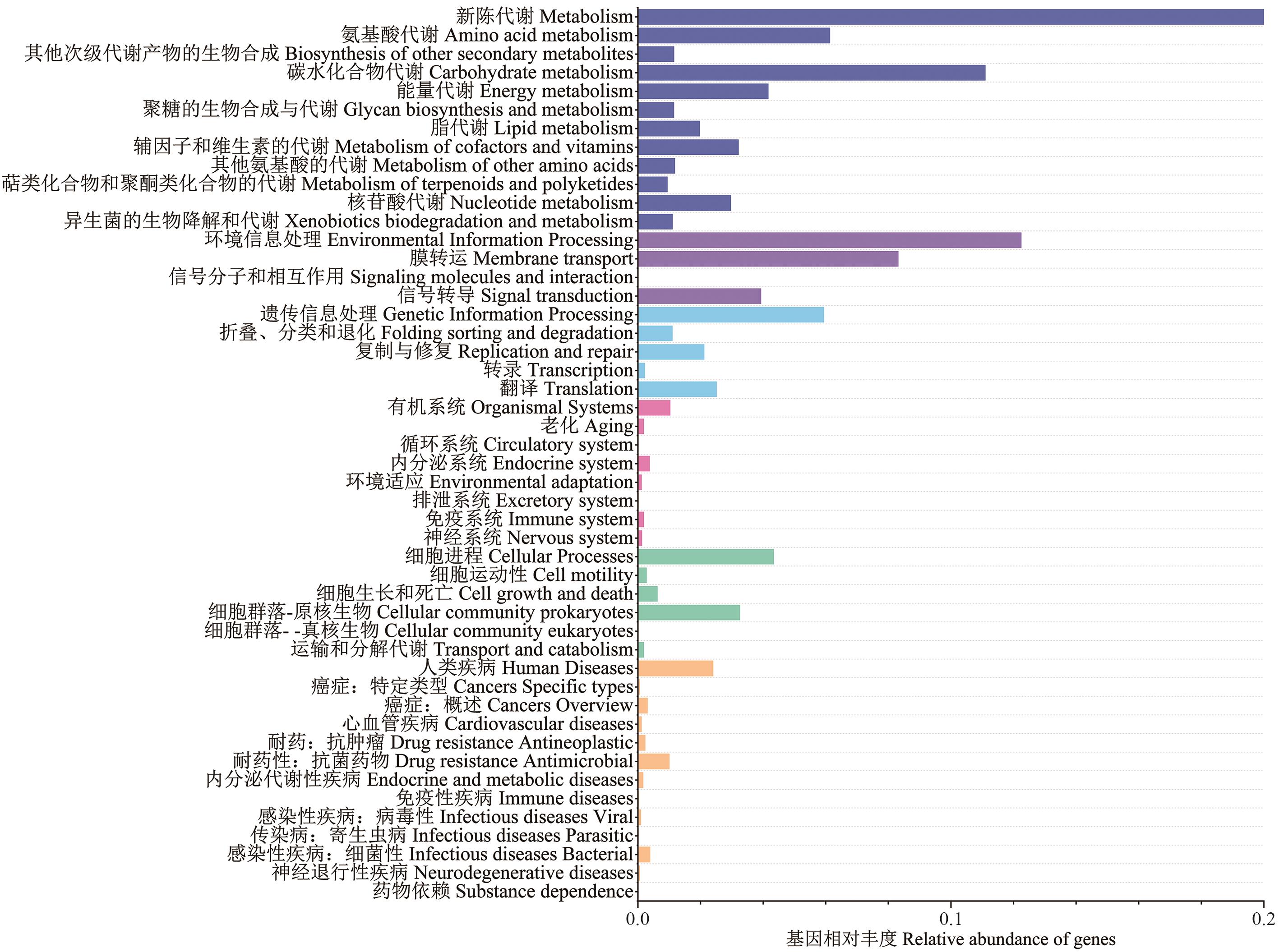
图4 沂蒙鸡杂交系盲肠菌群KEGG通路注释
Fig. 4 KEGG pathway annotation of cecal microbiota in Yimeng chicken hybrid lines
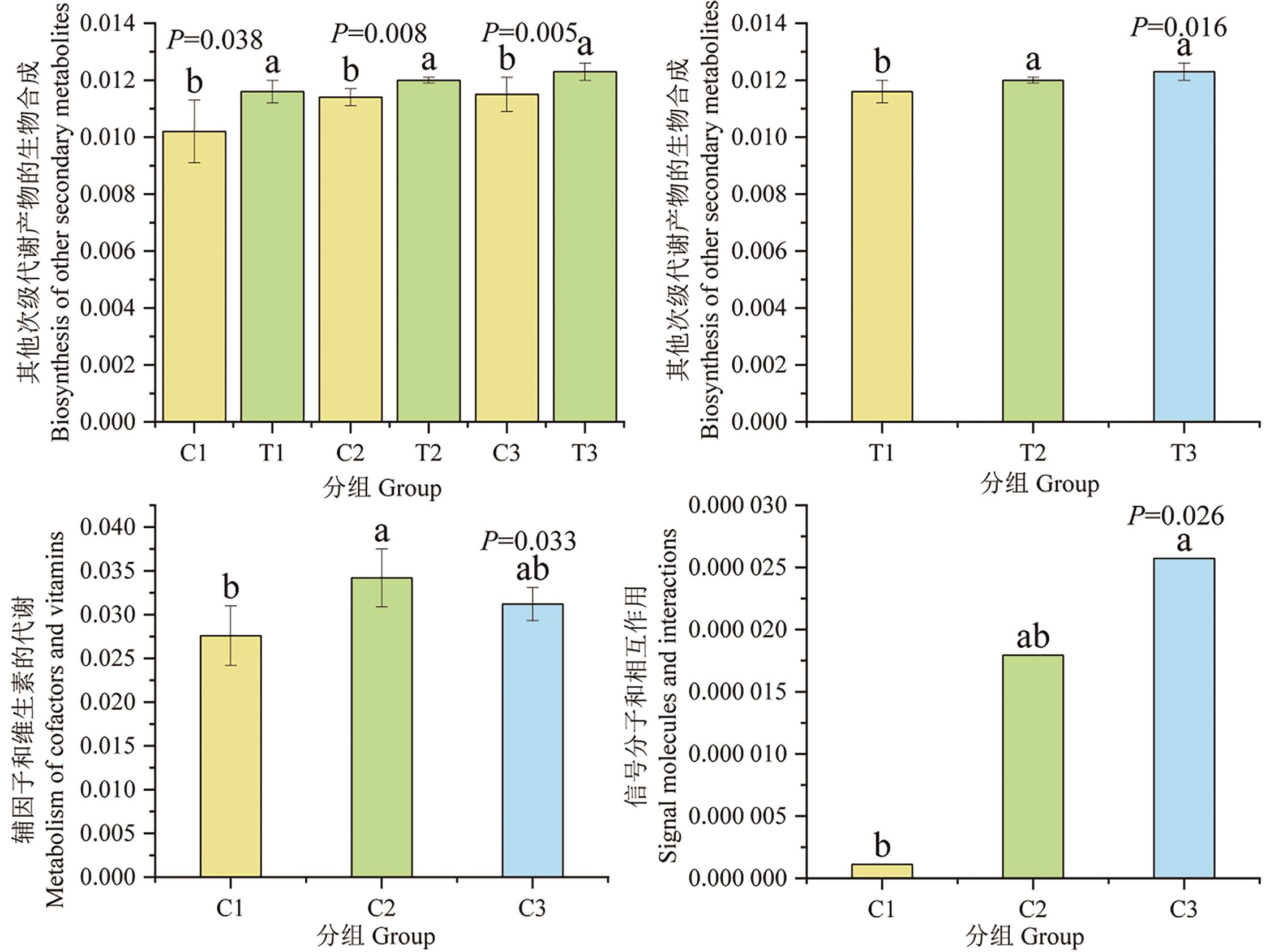
图5 沂蒙鸡杂交系肠道菌群KEGG通路富集差异分析(2级)不同小写字母表示差异显著(P0.05),下同
Fig. 5 Difference analysis of KEGG pathway enrichment of intestinal flora in Yimeng chicken hybrid line (level 2)Different letters indicate significant difference (P 0.05), the same below
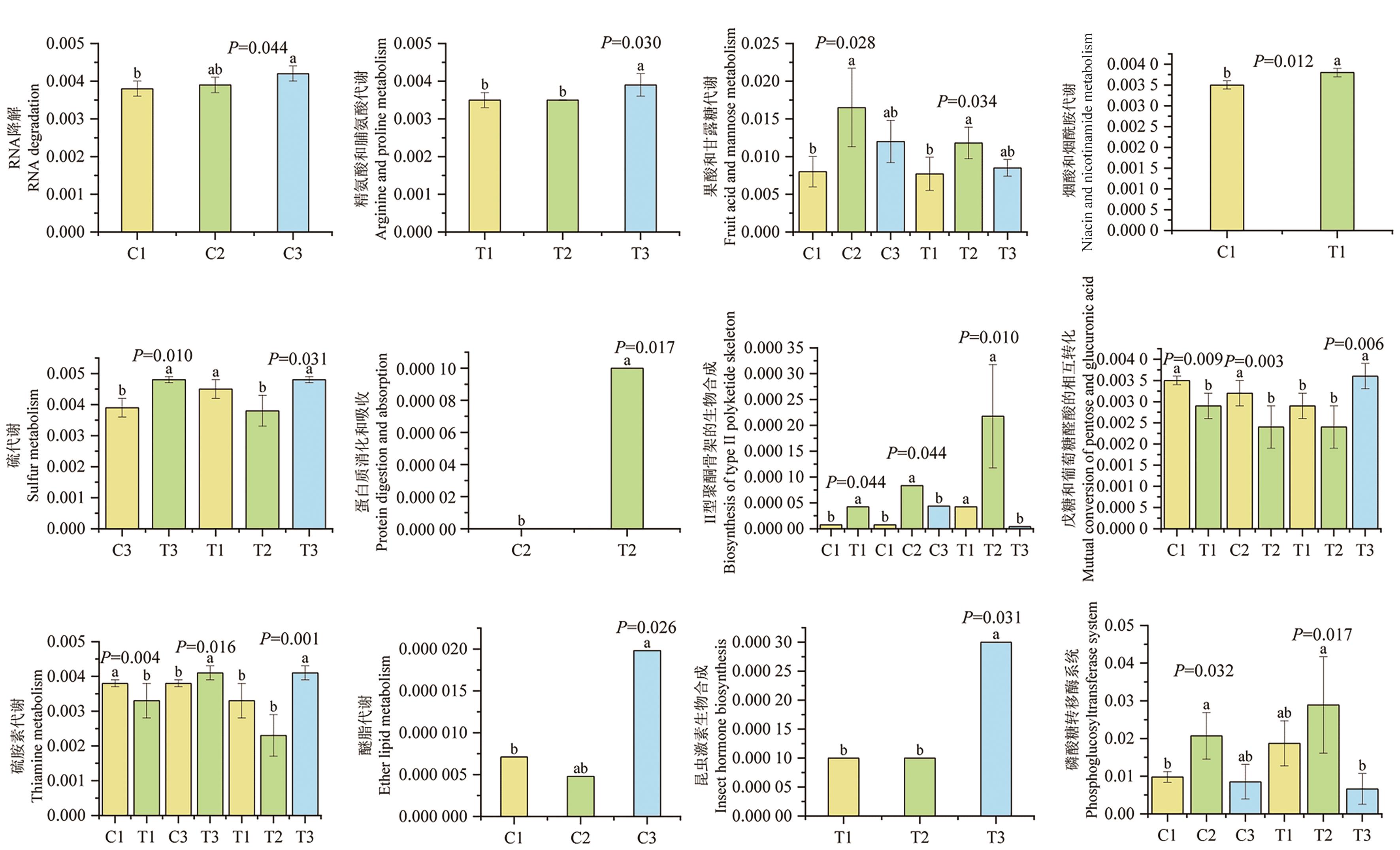
图6 沂蒙鸡杂交系肠道菌群KEGG通路富集差异分析(3级)
Fig. 6 Difference analysis of KEGG pathway enrichment of intestinal flora in Yimeng chicken hybrid line (level 3)
| [1] | Zhao JM, Yuan JW, Wang YM, et al. Assessment of feed efficiency and its relationship with egg quality in two purebred chicken lines and their reciprocal crosses [J]. Agriculture, 2022, 12(12): 2171. |
| [2] | Sungkhapreecha P, Chankitisakul V, Duangjinda M, et al. Combining abilities, heterosis, growth performance, and carcass characteristics in a diallel cross from black-bone chickens and Thai native chickens [J]. Animals, 2022, 12(13): 1602. |
| [3] | Negash F, Abegaz S, Tadesse Y, et al. Estimation of crossbreeding parameters for growth and feed efficiency traits in exotic chicken breed crosses with Fayoumi under reciprocal mating [J]. Sci Afr, 2023, 21: e01851. |
| [4] | Kabir S L. The dynamics of probiotics in enhancing poultry meat production and quality [J]. Int J Poult Sci, 2009, 3: 361-4. |
| [5] | Pan X, Cai YL, Kong LL, et al. Probiotic effects of Bacillus licheniformis DSM5749 on growth performance and intestinal microecological balance of laying hens [J]. Front Nutr, 2022, 9: 868093. |
| [6] | Casula G, Cutting SM. Bacillus Probiotics: spore germination in the gastrointestinal tract [J]. Appl Environ Microbiol, 2002, 68(5): 2344-2352. |
| [7] | Xiao YP, Xiang Y, Zhou WD, et al. Microbial community mapping in intestinal tract of broiler chicken [J]. Poult Sci, 2017, 96(5): 1387-1393. |
| [8] | Liu LX, Li QQ, Yang YJ, et al. Biological function of short-chain fatty acids and its regulation on intestinal health of poultry [J]. Front Vet Sci, 2021, 8: 736739. |
| [9] | Dibner JJ, Richards JD. Antibiotic growth promoters in agriculture: history and mode of action [J]. Poult Sci, 2005, 84(4): 634-643. |
| [10] | Corrêa-Oliveira R, Fachi JL, Vieira A, et al. Regulation of immune cell function by short-chain fatty acids [J]. Clin Transl Immunol, 2016, 5(4): e73. |
| [11] | Sleeth ML, Thompson EL, Ford HE, et al. Free fatty acid receptor 2 and nutrient sensing: a proposed role for fibre, fermentable carbohydrates and short-chain fatty acids in appetite regulation [J]. Nutr Res Rev, 2010, 23(1): 135-145. |
| [12] | Yin HD, Gilbert ER, Chen SY, et al. Effect of hybridization on carcass traits and meat quality of erlang mountainous chickens [J]. Asian-Australas J Anim Sci, 2013, 26(10): 1504-1510. |
| [13] | Hussien A, Ismael E, Elleithy E M, et al. Influence of Bacillus subtilis and Bacillus licheniformis probiotic supplementation via the drinking water on performance and gut health of broiler chickens [J]. J Adv Vet Res, 2023, 13(1): 94-102. |
| [14] | Stanley D, Geier MS, Denman SE, et al. Identification of chicken intestinal microbiota correlated with the efficiency of energy extraction from feed [J]. Vet Microbiol, 2013, 164(1/2): 85-92. |
| [15] | Khawaja T, Khan SH, Parveen A, et al. Growth performance, meat composition and haematological parameters of first generation of newly evolved hybridized pure chicken and their crossbred parents [J]. Vet Arhiv, 2016, 86(1): 135-148. |
| [16] | Adedeji TA, Amusan SA, Adebambo OA. Effect of chicken genotype on growth performance of pure and crossbred progenies in the development of a broiler line [J]. Int J Agric Innov Res, 2015, 4: 134-138. |
| [17] | 马萌, 杨利博. 枯草芽孢杆菌对肉鸡生产性能、屠宰性能及经济效益的影响 [J]. 中国饲料, 2024(20): 43-46. |
| Ma M, Yang LB. The Bacillus subtilis on production performance, slaughter performance and economic benefits of broilers [J]. China Feed, 2024(20): 43-46. | |
| [18] | Biswas S, Kim M H, Baek DH, et al. Probiotic mixture (Bacillus subtilis and Bacillus licheniformis) a potential in‐feedadditive toimprove broiler productionefficiency, nutrient digestibility, caecal microflora, meat qualityand todiminishhazardous odour emission[J]. J Anim Physiol An N, 2023, 107(4): 1065-1072. |
| [19] | Khasanah H, Kusbianto DE, Purnamasari L, et al. Modulation of chicken gut microbiota for enhanced productivity and health: a review [J]. Vet World, 2024: 1073-1083. |
| [20] | Magne F, Gotteland M, Gauthier L, et al. The firmicutes/bacteroidetes ratio: a relevant marker of gut dysbiosis in obese patients? [J]. Nutrients, 2020, 12(5): 1474. |
| [21] | Ranjani A, Dhanasekaran D, Gopinath PM. An introduction to Actinobacteria [M]//Actinobacteria - Basics and Biotechnological Applications: InTech, 2016 |
| [22] | Zhou CM, Gao XN, Cao XH, et al. Gut microbiota and serum metabolite potential interactions in growing layer hens exposed to high-ambient temperature [J]. Front Nutr, 2022, 9: 877975. |
| [23] | Du MF, Chen YP, Wang SQ, et al. Effects of dietary palygorskite supplementation on the growth performance, oxidative status, immune function, intestinal barrier and cecal microbial community of broilers [J]. Front Microbiol, 2022, 13: 985784. |
| [24] | Fan Y, Ju TT, Bhardwaj T, et al. Week-old chicks with high Bacteroides abundance have increased short-chain fatty acids and reduced markers of gut inflammation [J]. Microbiol Spectr, 2023, 11(2): e03616-22. |
| [25] | Dong XX, Hu B, Wan WL, et al. Effects of husbandry systems and Chinese indigenous chicken strain on cecum microbial diversity [J]. Asian-Australas J Anim Sci, 2020, 33(10): 1610-1616. |
| [26] | Qiu MH, Hu JQ, Peng H, et al. Research note: The gut microbiota varies with dietary fiber levels in broilers [J]. Poult Sci, 2022, 101(7): 101922. |
| [27] | Zeng S, Shao LQ, Zhao MM, et al. Effects of different rearing methods on the intestinal morphology, intestinal metabolites, and gut microbiota of Lueyang black-bone chickens [J]. Animals, 2025, 15(12): 1758. |
| [28] | Polansky O, Sekelova Z, Faldynova M, et al. Important metabolic pathways and biological processes expressed by chicken cecal microbiota [J]. Appl Environ Microbiol, 2016, 82(5): 1569-1576. |
| [29] | Rychlik I. Composition and function of chicken gut microbiota [J]. Animals, 2020, 10(1): 103. |
| [30] | Xiang H, Gan JK, Zeng DS, et al. Specific microbial taxa and functional capacity contribute to chicken abdominal fat deposition [J]. Front Microbiol, 2021, 12: 643025. |
| [31] | Zhang YY, Liu YS, Li JL, et al. Dietary resistant starch modifies the composition and function of caecal microbiota of broilers [J]. J Sci Food Agric, 2020, 100(3): 1274-1284. |
| [32] | Raman M, Ambalam P, Doble M. Short-chain fatty acids [M]//Probiotics and Bioactive Carbohydrates in Colon Cancer Management. New Delhi: Springer India, 2016: 97-115. |
| [33] | Ali Q, Ma S, La SK, et al. Microbial short-chain fatty acids: a bridge between dietary fibers and poultry gut health—a review [J]. Anim Biosci, 2022, 35(10): 1461-1478. |
| [34] | Aljumaah MR, Alkhulaifi MM, Abudabos AM, et al. Bacillus subtilis PB6 based probiotic supplementation plays a role in the recovery after the necrotic enteritis challenge [J]. PLoS One, 2020, 15(6): e0232781. |
| [35] | Xu YL, Yu Y, Shen YY, et al. Effects of Bacillus subtilis and Bacillus licheniformis on growth performance, immunity, short chain fatty acid production, antioxidant capacity, and cecal microflora in broilers [J]. Poult Sci, 2021, 100(9): 101358. |
| [36] | Miska KB, Fetterer RH, Wong EA. The mRNA expression of amino acid transporters, aminopeptidase N, and the di- and tri-peptide transporter PepT1 in the embryo of the domesticated chicken (Gallus gallus) shows developmental regulation [J]. Poult Sci, 2014, 93(9): 2262-2270. |
| [1] | 刘丽, 王辉, 关天舒, 李柏宏, 于舒怡. 葡萄脱落酸受体VvPYL4互作蛋白的筛选及互作蛋白基因表达[J]. 生物技术通报, 2025, 41(4): 188-197. |
| [2] | 马顺, 赵旭, 刘雪, 陈广坤, 高悦, 丁瑾, 张竞伊, 赵怡萌, 公丽玉, 李洪涛. γ-氨基丁酸对肉鸡抗氧化能力及盲肠菌群结构的影响[J]. 生物技术通报, 2025, 41(12): 351-359. |
| [3] | 刘梓琦, 钟沛, 李琴, 郭成, 张艳梅, 张乃锋, 屠焰, 刁其玉, 毕研亮. CRISPR/Cas9技术在益生菌编辑中的应用与进展[J]. 生物技术通报, 2025, 41(11): 89-99. |
| [4] | 周思延, 丁炜权, 董平, 翁含之, 胥睿睿, 康振. 大肠杆菌Nissle 1917的合成生物学平台开发及应用进展[J]. 生物技术通报, 2025, 41(11): 47-61. |
| [5] | 耿若涵, 王炳贺, 徐昌文, 钱虹萍, 林金星, 崔亚宁. 蛋白的翻译后修饰调控植物囊泡转运的研究进展[J]. 生物技术通报, 2024, 40(10): 139-148. |
| [6] | 焦帅, 付域泽, 崔凯, 张吉贤, 王杰, 毕研亮, 刁其玉, 张建新, 张乃锋. 短小芽孢杆菌对羔羊肠道炎症和屏障功能的影响[J]. 生物技术通报, 2024, 40(1): 344-352. |
| [7] | 刘娜, 焦京琳, 饶正华. 短链脂肪酸在动物样本中的检测方法研究进展[J]. 生物技术通报, 2022, 38(8): 84-91. |
| [8] | 蒋贤哲, 张博彦, 罗海玲, 张新盟, 王炳. 肠肝轴在动物营养代谢和免疫中的作用[J]. 生物技术通报, 2022, 38(7): 128-135. |
| [9] | 钟明月, 刘春妍, 颜妍, 张晓慧, 原海升, 徐国全, 张和平, 王玉珍. 乳双歧杆菌V9对高脂饮食诱导的NAFLD大鼠的改善作用[J]. 生物技术通报, 2022, 38(3): 181-187. |
| [10] | 马涛, 刁其玉. 益生菌调控幼龄畜禽消化道微生物研究进展[J]. 生物技术通报, 2020, 36(2): 17-26. |
| [11] | 王璐, 刘理想, 孙大明, 刘军花. 丁酸调控幼龄反刍动物瘤胃上皮发育研究进展[J]. 生物技术通报, 2020, 36(2): 49-57. |
| [12] | 刘宇, 丁倩雯, 冉超, 杨雅麟, 王安然, 张洪玲, 张进雄, 李解, Rolf Erik Olsen, Einar Ringø, 张震, 周志刚. 鱼虾肠道菌群代谢产物短链脂肪酸研究进展[J]. 生物技术通报, 2020, 36(2): 58-64. |
| [13] | 林淼, 王阔鹏, 陈映良, 孙文婧, 封丽梅, 胡梓轩. 乙醇对瘤胃液接种稻秸的体外发酵产物及细菌群落结构的影响[J]. 生物技术通报, 2020, 36(2): 91-99. |
| [14] | 刘淑君, 陈苗, 王凤忠, 包郁明, 辛凤姣, 温博婷. 谷氨酸(钠)对人体肠道菌群影响的体外发酵研究[J]. 生物技术通报, 2020, 36(12): 104-112. |
| [15] | 余洁, 刘昕, 张驰, 赵吉春, 李富华, 明建. 益生菌抗衰老作用机制研究进展[J]. 生物技术通报, 2020, 36(1): 167-174. |
| 阅读次数 | ||||||
|
全文 |
|
|||||
|
摘要 |
|
|||||
