







生物技术通报 ›› 2026, Vol. 42 ›› Issue (9): 276-285.doi: 10.13560/j.cnki.biotech.bull.1985.2026-0004
• 综述与专论 • 上一篇
童鑫1,2,3, 蒋贤哲1, 王炳1( )
)
收稿日期:2026-01-04
出版日期:2026-09-26
发布日期:2026-09-16
通讯作者:
王炳wangb@cau.edu.cn基金资助:
TONG Xin1,2,3, JIANG Xian-zhe1, WANG Bing1()
Received:2026-01-04
Published:2026-09-26
Online:2026-09-16
摘要:
胆汁酸作为脊椎动物的一种重要生物信号物质,主要通过激活法尼酯X受体(FXR)、G蛋白胆汁酸偶联受体1(TGR5)等胆汁酸受体,调节肠道、肝脏、脂肪等器官组织的脂肪细胞的功能,促进脂肪酸分解,改善糖脂代谢平衡。近年来的研究显示,胆汁酸在肥胖、糖尿病、脂肪肝等脂肪代谢性疾病中具有治疗功能,尤其在促进白色脂肪组织褐变、增强产热、调节胰岛素敏感性、减轻肥胖和脂肪性炎症疾病等方面展现了显著效果。此外,胆汁酸与肠道微生物的相互作用在调节能量平衡和脂质代谢健康方面起着关键作用,并展现出其在畜禽健康养殖中的有效调节作用。本文以胆汁酸在脂肪组织的代谢作用为切入点,系统总结胆汁酸信号参与体内不同部位脂肪组织代谢的关键信号路径和作用机理,为人类和动物的脂肪代谢性疾病和脂肪沉积调控研究和靶向干预提供新的思路和方法。
童鑫, 蒋贤哲, 王炳. 胆汁酸调控脂肪组织功能与脂质代谢的机制及其应用[J]. 生物技术通报, 2026, 42(9): 276-285.
TONG Xin, JIANG Xian-zhe, WANG Bing. Mechanisms and Applications of Bile Acids in Regulating Adipose Tissue Function and Lipid Metabolism[J]. Biotechnology Bulletin, 2026, 42(9): 276-285.
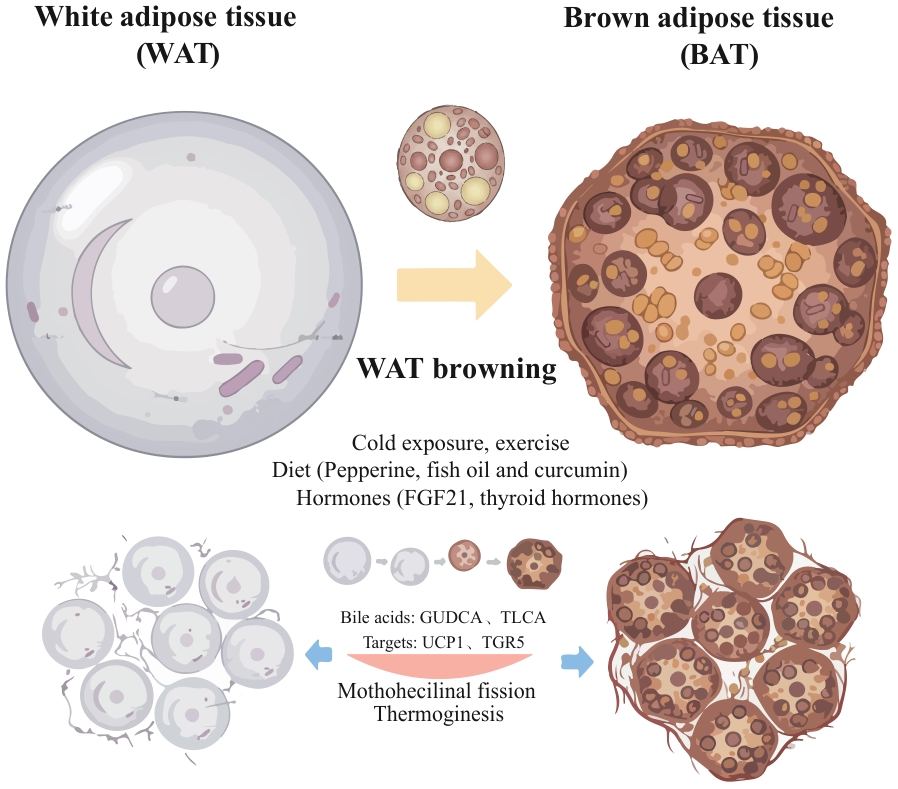
图1 白色脂肪棕色化过程
Fig. 1 Browning process of white adipose tissue
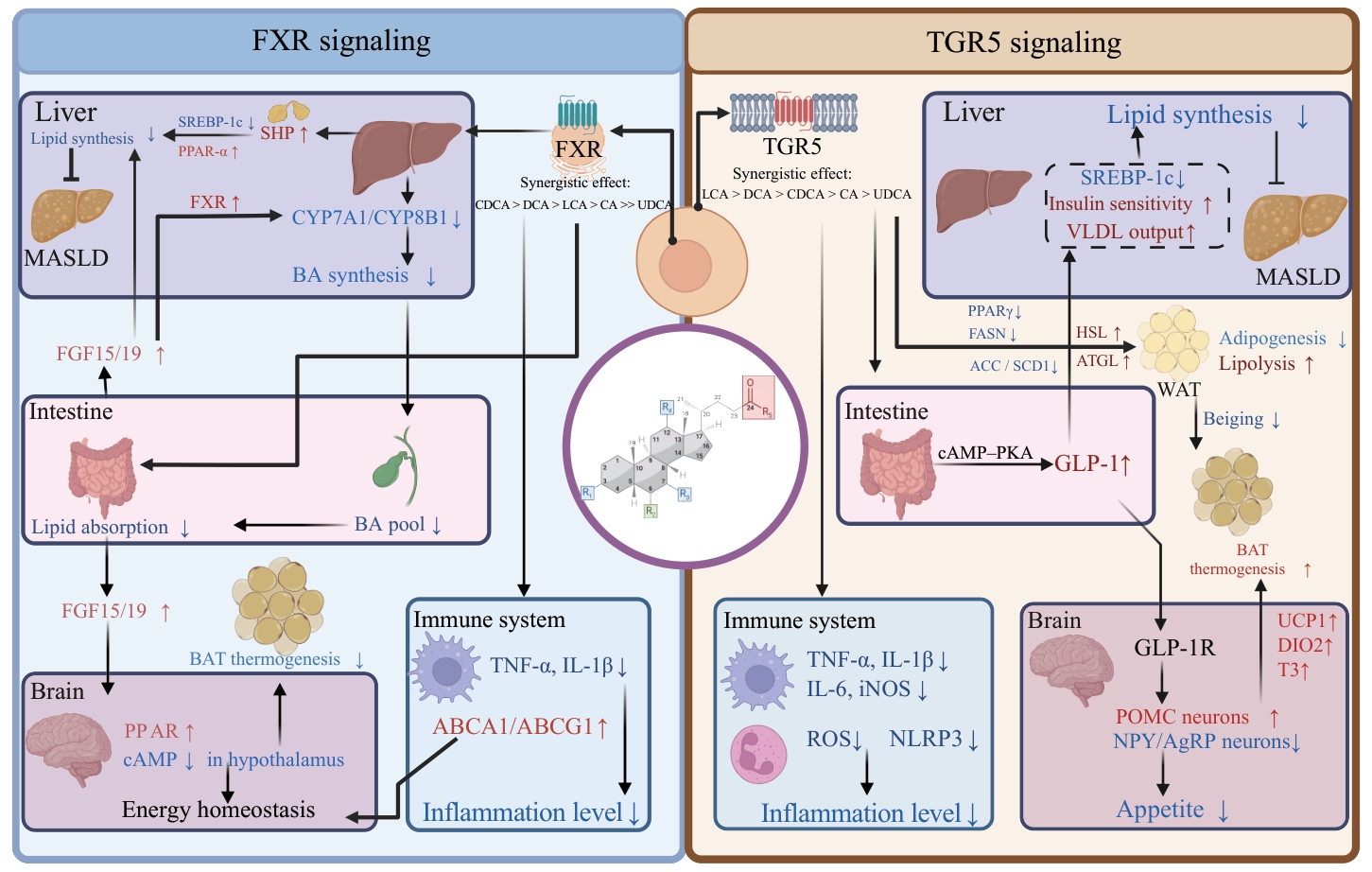
图2 胆汁酸受体FXR和TGR5对机体脂代谢的调节机制
Fig. 2 Regulatory mechanisms of bile acid receptors FXR and TGR5 on lipid metabolism in the body
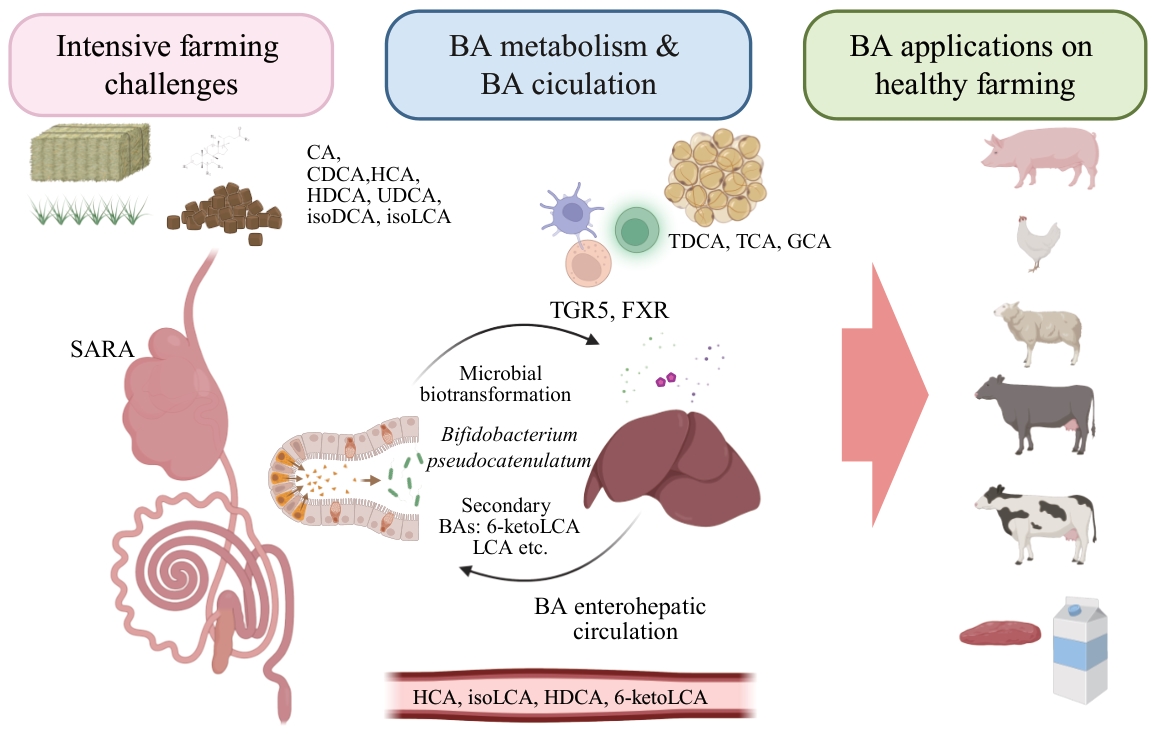
图3 肠肝轴介导胆汁酸信号在畜禽健康养殖中的应用前景
Fig. 3 Prospective applications of gut-liver axis-mediated bile acid signalling in health-oriented livestock and poultry production
| [1] | Collins SL, Stine JG, Bisanz JE, et al. Bile acids and the gut microbiota: metabolic interactions and impacts on disease [J]. Nat Rev Microbiol, 2023, 21(4): 236-247. |
| [2] | Funabashi M, Grove TL, Wang M, et al. A metabolic pathway for bile acid dehydroxylation by the gut microbiome [J]. Nature, 2020, 582(7813): 566-570. |
| [3] | Zhang BY, Jiang XZ, Yu Y, et al. Rumen microbiome-driven insight into bile acid metabolism and host metabolic regulation [J]. ISME J, 2024, 18(1): wrae098. |
| [4] | Schmid A, Karrasch T, Schäffler A. The emerging role of bile acids in white adipose tissue [J]. Trends Endocrinol Metab, 2023, 34(11): 718-734. |
| [5] | Li X, Yang J, Zhou XF, et al. Ketogenic diet-induced bile acids protect against obesity through reduced calorie absorption [J]. Nat Metab, 2024, 6(7): 1397-1414. |
| [6] | Lun WJ, Yan QH, Guo XH, et al. Mechanism of action of the bile acid receptor TGR5 in obesity [J]. Acta Pharm Sin B, 2024, 14(2): 468-491. |
| [7] | Yang J, de Vries HD, Mayeuf-Louchart A, et al. Role of bile acid receptor FXR in development and function of brown adipose tissue [J]. BBA Mol Cell Biol Lipds, 2023, 1868(2): 159257. |
| [8] | Chávez-Talavera O, Tailleux A, Lefebvre P, et al. Bile acid control of metabolism and inflammation in obesity, type 2 diabetes, dyslipidemia, and nonalcoholic fatty liver disease [J]. Gastroenterology, 2017, 152(7): 1679-1694.e3. |
| [9] | Schumacher M, DelCurto-Wyffels H, Thomson J, et al. Fat deposition and fat effects on meat quality—a review [J]. Animals, 2022, 12(12): 1550. |
| [10] | Fried SK, Lee MJ, Karastergiou K. Shaping fat distribution: New insights into the molecular determinants of depot- and sex-dependent adipose biology [J]. Obesity, 2015, 23(7): 1345-1352. |
| [11] | Nedergaard J, Bengtsson T, Cannon B. Unexpected evidence for active brown adipose tissue in adult humans [J]. Am J Physiol Endocrinol Metab, 2007, 293(2): E444-E452. |
| [12] | Scheja L, Heeren J. The endocrine function of adipose tissues in health and cardiometabolic disease [J]. Nat Rev Endocrinol, 2019, 15(9): 507-524. |
| [13] | Trayhurn P, Beattie JH. Physiological role of adipose tissue: white adipose tissue as an endocrine and secretory organ [J]. Proc Nutr Soc, 2001, 60(3): 329-339. |
| [14] | Nedergaard J, Cannon B. The browning of white adipose tissue: some burning issues [J]. Cell Metab, 2014, 20(3): 396-407. |
| [15] | Ziętak M, Kovatcheva-Datchary P, Markiewicz LH, et al. Altered microbiota contributes to reduced diet-induced obesity upon cold exposure [J]. Cell Metab, 2016, 23(6): 1216-1223. |
| [16] | Zhao L, Zhu QJ, Li MH, et al. Revisiting brown adipose tissue whitening: Physiological mechanisms and pathophysiological consequences [J]. J Physiol, 2025, 603(19): 5299-5326. |
| [17] | Machado SA, Pasquarelli-do-Nascimento G, Santos da Silva D, et al. Browning of the white adipose tissue regulation: new insights into nutritional and metabolic relevance in health and diseases [J]. Nutr Metab (Lond), 2022, 19: 61. |
| [18] | Jensen-Cody SO, Flippo KH, Claflin KE, et al. FGF21 signals to glutamatergic neurons in the ventromedial hypothalamus to suppress carbohydrate intake [J]. Cell Metab, 2020, 32(2): 273-286.e6. |
| [19] | Haczeyni F, Poekes L, Wang H, et al. Obeticholic acid improves adipose morphometry and inflammation and reduces steatosis in dietary but not metabolic obesity in mice [J]. Obesity, 2017, 25(1): 155-165. |
| [20] | Hu YL, Wu AM, Yan H, et al. Secondary bile acids are associated with body lipid accumulation in obese pigs [J]. Anim Nutr, 2024, 18: 246-256. |
| [21] | Fleishman JS, Kumar S. Bile acid metabolism and signaling in health and disease: molecular mechanisms and therapeutic targets [J]. Sig Transduct Target Ther, 2024, 9: 97. |
| [22] | Chiang JYL. The gut’s feeling on bile acid signaling in NAFLD [J]. Hepatobiliary Surg Nutr, 2018, 7(2): 151-153. |
| [23] | de Aguiar Vallim TQ, Tarling EJ, Edwards PA. Pleiotropic roles of bile acids in metabolism [J]. Cell Metab, 2013, 17(5): 657-669. |
| [24] | Xiang JW, Zhang ZY, Xie HY, et al. Effect of different bile acids on the intestine through enterohepatic circulation based on FXR [J]. Gut Microbes, 2021, 13: 1949095. |
| [25] | Shin DJ, Wang L. Bile acid-activated receptors: a review on FXR and other nuclear receptors [M]//Bile Acids and Their Receptors. Cham Springer International Publishing 2019: 51-72. |
| [26] | Lin XL, Xia L, Zhou YJ, et al. Crosstalk between bile acids and intestinal epithelium: multidimensional roles of farnesoid X receptor and takeda G protein receptor 5 [J]. Int J Mol Sci, 2025, 26(9): 4240. |
| [27] | Deckmyn B, Domenger D, Blondel C, et al. Farnesoid X receptor activation in brain alters brown adipose tissue function via the sympathetic system [J]. Front Mol Neurosci, 2022, 14: 808603. |
| [28] | Duboc H, Taché Y, Hofmann AF. The bile acid TGR5 membrane receptor: From basic research to clinical application [J]. Dig Liver Dis, 2014, 46(4): 302-312. |
| [29] | Cifuentes-Silva E, Cabello-Verrugio C. Bile acids as signaling molecules: role of ursodeoxycholic acid in cholestatic liver disease [J]. Curr Protein Pept Sci, 2024, 25(3): 206-214. |
| [30] | Svensson PA, Olsson M, Andersson-Assarsson JC, et al. The TGR5 gene is expressed in human subcutaneous adipose tissue and is associated with obesity, weight loss and resting metabolic rate [J]. Biochem Biophys Res Commun, 2013, 433(4): 563-566. |
| [31] | Broeders EPM, Nascimento EBM, Havekes B, et al. The bile acid chenodeoxycholic acid increases human brown adipose tissue activity [J]. Cell Metab, 2015, 22(3): 418-426. |
| [32] | Watanabe M, Houten SM, Mataki C, et al. Bile acids induce energy expenditure by promoting intracellular thyroid hormone activation [J]. Nature, 2006, 439(7075): 484-489. |
| [33] | Velazquez-Villegas LA, Perino A, Lemos V, et al. TGR5 signalling promotes mitochondrial fission and beige remodelling of white adipose tissue [J]. Nat Commun, 2018, 9: 245. |
| [34] | Ma H, Wu YQ, Li DL, et al. Gut microbiota drives the metabolic dysregulation in obesity-prone individuals by impairing GDCA-mediated activation of brown adipose thermogenesis and ileal GLP-1 secretion [J]. Acta Pharm Sin B, 2026, 16(2): 836-853. |
| [35] | Wang H, Wang JX, Cui H, et al. Inhibition of fatty acid uptake by TGR5 prevents diabetic cardiomyopathy [J]. Nat Metab, 2024, 6(6): 1161-1177. |
| [36] | Chao PT, Yang L, Aja S, et al. Knockdown of NPY expression in the dorsomedial hypothalamus promotes development of brown adipocytes and prevents diet-induced obesity [J]. Cell Metab, 2011, 13(5): 573-583. |
| [37] | Zangerolamo L, Carvalho M, Barbosa HCL. The critical role of the bile acid receptor TGR5 in energy homeostasis: insights into physiology and therapeutic potential [J]. Int J Mol Sci, 2025, 26(14): 6547. |
| [38] | Jiao N, Baker SS, Chapa-Rodriguez A, et al. Suppressed hepatic bile acid signalling despite elevated production of primary and secondary bile acids in NAFLD [J]. Gut, 2018, 67(10): 1881-1891. |
| [39] | Clifford BL, Sedgeman LR, Williams KJ, et al. FXR activation protects against NAFLD via bile-acid-dependent reductions in lipid absorption [J]. Cell Metab, 2021, 33(8): 1671-1684.e4. |
| [40] | Duan SN, Li X, Fan GF, et al. Targeting bile acid signaling for the treatment of liver diseases: From bench to bed [J]. Biomed Pharmacother, 2022, 152: 113154. |
| [41] | Kumar DP, Rajagopal S, Mahavadi S, et al. Activation of transmembrane bile acid receptor TGR5 stimulates insulin secretion in pancreatic β cells [J]. Biochem Biophys Res Commun, 2012, 427(3): 600-605. |
| [42] | Chen BT, Bai Y, Tong FL, et al. Glycoursodeoxycholic acid regulates bile acids level and alters gut microbiota and glycolipid metabolism to attenuate diabetes [J]. Gut Microbes, 2023, 15: 2192155. |
| [43] | Kjærgaard K, Frisch K, Sørensen M, et al. Obeticholic acid improves hepatic bile acid excretion in patients with primary biliary cholangitis [J]. J Hepatol, 2021, 74(1): 58-65. |
| [44] | Lee MH, Nuccio SP, Mohanty I, et al. How bile acids and the microbiota interact to shape host immunity [J]. Nat Rev Immunol, 2024, 24(11): 798-809. |
| [45] | Münzker J, Haase N, Till A, et al. Functional changes of the gastric bypass microbiota reactivate thermogenic adipose tissue and systemic glucose control via intestinal FXR-TGR5 crosstalk in diet-induced obesity [J]. Microbiome, 2022, 10: 96. |
| [46] | Iqbal M, Yu Q, Tang JQ, et al. Unraveling the gut microbiota’s role in obesity: key metabolites, microbial species, and therapeutic insights [J]. J Bacteriol, 2025, 207(5): e00479-e00424. |
| [47] | Ojeda ML, Nogales F, Carrasco López JA, et al. Microbiota-liver-bile salts axis, a novel mechanism involved in the contrasting effects of sodium selenite and selenium-nanoparticle supplementation on adipose tissue development in adolescent rats [J]. Antioxidants, 2023, 12(5): 1123. |
| [48] | Mancin L, Wu GD, Paoli A. Gut microbiota-bile acid-skeletal muscle axis [J]. Trends Microbiol, 2023, 31(3): 254-269. |
| [49] | Burrin D, Stoll B, Moore D. Digestive physiology of the pig symposium: Intestinal bile acid sensing is linked to key endocrine and metabolic signaling pathways12 [J]. J Anim Sci, 2013, 91(5): 1991-2000. |
| [50] | Zhu MM, Zheng YN, Lou SY, et al. Taurodeoxycholic, taurocholic, and glycocholic acids promote hepatic gluconeogenesis via TGR5 in dairy cows [J]. J Animal Sci Biotechnol, 2025, 16: 142. |
| [51] | Zha AD, Qi M, Deng YK, et al. Gut Bifidobacterium pseudocatenulatum protects against fat deposition by enhancing secondary bile acid biosynthesis [J]. iMeta, 2024, 3(6): e261. |
| [52] | Li YZ, Wang SP, Hu YR, et al. Dietary bile acid supplementation reveals beneficial effects on intestinal healthy status of tongue sole (Cynoglossus semiliaevis) [J]. Fish Shellfish Immunol, 2021, 116: 52-60. |
| [53] | Cao AZ, Lai WQ, Zhang WW, et al. Effects of porcine bile acids on growth performance, antioxidant capacity, blood metabolites and nutrient digestibility of weaned pigs [J]. Anim Feed Sci Technol, 2021, 276: 114931. |
| [54] | Lai WQ, Cao AZ, Li JT, et al. Effect of high dose of bile acids supplementation in broiler feed on growth performance, clinical blood metabolites, and organ development [J]. J Appl Poult Res, 2018, 27(4): 532-539. |
| [55] | Yang BW, Huang SM, Zhao GX, et al. Dietary supplementation of porcine bile acids improves laying performance, serum lipid metabolism and cecal microbiota in late-phase laying hens [J]. Anim Nutr, 2022, 11: 283-292. |
| [56] | Yin C, Tang SL, Liu L, et al. Effects of bile acids on growth performance and lipid metabolism during chronic heat stress in broiler chickens [J]. Animals, 2021, 11(3): 630. |
| [57] | Lai WQ, Huang WG, Dong B, et al. Effects of dietary supplemental bile acids on performance, carcass characteristics, serum lipid metabolites and intestinal enzyme activities of broiler chickens [J]. Poult Sci, 2018, 97(1): 196-202. |
| [58] | Hu YL, Sang N, Wu AM, et al. Different types of bile acids exhibit opposite regulatory effects on lipid metabolism in finishing pigs through bile acid receptors [J]. Anim Nutr, 2025, 21: 25-36. |
| [59] | Gharechahi J, Vahidi MF, Bahram M, et al. Metagenomic analysis reveals a dynamic microbiome with diversified adaptive functions to utilize high lignocellulosic forages in the cattle rumen [J]. ISME J, 2021, 15(4): 1108-1120. |
| [60] | Xue MY, Wu JJ, Xie YY, et al. Investigation of fiber utilization in the rumen of dairy cows based on metagenome-assembled genomes and single-cell RNA sequencing [J]. Microbiome, 2022, 10: 11. |
| [61] | Wang B, Zhang BY, Zhou L, et al. Multi-omics reveals diet-induced metabolic disorders and liver inflammation via microbiota-gut-liver axis [J]. J Nutr Biochem, 2023, 111: 109183. |
| [62] | Yu Y, Zhang BY, Jiang XZ, et al. Exploring the metabolomic landscape: Perilla frutescens as a promising enhancer of production, flavor, and nutrition in Tan lamb meat [J]. Meat Sci, 2024, 209: 109419. |
| [63] | Zhang ZP, Zhao SR, Zhang BY, et al. Multi-omics exploration of rumen microbiota-mediated liver and adipose metabolic adaptations in high-concentrate fed lambs [J]. Anim Nutriomics, 2025, 2: e25. |
| [64] | Wang B, Li HQ, Li Z, et al. Integrative network analysis revealed the molecular function of folic acid on immunological enhancement in a sheep model [J]. Front Immunol, 2022, 13: 913854. |
| [65] | Ma XH, Wang B, Xu ML, et al. Multiomics insights into rumen microbiome and function in grazing lambs: implications for nutrient absorption and grassland sustainability [J]. Microbiome, 2026, 14: 30. |
| [66] | He ZY, Ma YL, Yang SR, et al. Gut microbiota-derived ursodeoxycholic acid from neonatal dairy calves improves intestinal homeostasis and colitis to attenuate extended-spectrum β-lactamase-producing enteroaggregative Escherichia coli infection [J]. Microbiome, 2022, 10: 79. |
| [67] | Du XL, Liu MC, Trevisi E, et al. Expression of hepatic genes involved in bile acid metabolism in dairy cows with fatty liver [J]. J Dairy Sci, 2024, 107(10): 8629-8641. |
| [68] | Fan FX, Wu FC, Guo ZY, et al. Supplementation with ursodeoxycholic acid and bile salt benefits lactation performance, health, and rumen and fecal microbiota of transition dairy cows [J]. J Dairy Sci, 2025, 108(6): 5982-5996. |
| [69] | Li L, Li JX, Liu ZH, et al. Effects of supplementing bile acids on the production performance, fatty acid and bile acid composition, and gut microbiota in transition dairy cows [J]. J Animal Sci Biotechnol, 2025, 16: 83. |
| [70] | Chen YH, Yuan C, Yang TY, et al. Effects of bile acid supplementation on lactation performance, nutrient intake, antioxidative status, and serum biochemistry in mid-lactation dairy cows [J]. Animals, 2024, 14(2): 290. |
| [71] | 宋品, 侯曼曼, 陈悦, 等. 日粮添加胆汁酸对亚急性瘤胃酸中毒山羊生长性能、瘤胃发酵和菌群结构的影响 [J]. 畜牧与兽医, 2024, 56(5): 51-57. |
| Song P, Hou MM, Chen Y, et al. Effects of dietary bile acids on growth performance, rumen fermentation and microbial community structure of goat under subacute ruminal acidosis [J]. Anim Husb Vet Med, 2024, 56(5): 51-57. | |
| [72] | Hou MM, Song P, Chen Y, et al. Bile acids supplementation improves colonic mucosal barrier via alteration of bile acids metabolism and gut microbiota composition in goats with subacute ruminal acidosis (SARA) [J]. Ecotoxicol Environ Saf, 2024, 287: 117313. |
| [73] | Yin QY, Yu JJ, Li JX, et al. Enhancing milk quality and modulating rectal microbiota of dairy goats in starch-rich diet: the role of bile acid supplementation [J]. J Animal Sci Biotechnol, 2024, 15: 7. |
| [74] | Wang Y, Chen XD, Huws SA, et al. Ileal microbial microbiome and its secondary bile acids modulate susceptibility to nonalcoholic steatohepatitis in dairy goats [J]. Microbiome, 2024, 12: 247. |
| [75] | Zhang BY, Sun ZQ, Yu Z, et al. Transcriptome and targeted metabolome analysis provide insights into bile acids’ new roles and mechanisms on fat deposition and meat quality in lamb [J]. Food Res Int, 2022, 162: 111941. |
| [76] | Zhang ZP, Zhang BY, Jiang XZ, et al. Hyocholic acid retards renal fibrosis by regulating lipid metabolism and inflammatory response in a sheep model [J]. Int Immunopharmacol, 2023, 122: 110670. |
| [77] | Zhao HL, Zhu DW, Gao YY, et al. Bile acids modulate hepatic glycolipid metabolism via the microbiota-gut-liver axis in lambs [J]. J Nutr, 2025, 155(7): 2172-2184. |
| [1] | 马世杰, 李铮, 李蔚, 郭仰东, 张娜. 光信号调控园艺作物果实发育的研究进展[J]. 生物技术通报, 2026, 42(3): 5-18. |
| [2] | 康琴, 汪霞, 谌明洋, 徐静天, 陈诗兰, 廖平杨, 许文志, 吴卫, 徐东北. 薄荷UV-B受体基因McUVR8的克隆与表达分析[J]. 生物技术通报, 2025, 41(8): 255-266. |
| [3] | 李思博, 钱虹萍, 徐昌文, 王笑, 林金星, 崔亚宁. 植物内源激发子调控的胞内转运参与植物生长发育和逆境胁迫响应的研究进展[J]. 生物技术通报, 2025, 41(7): 17-27. |
| [4] | 刘丽, 王辉, 关天舒, 李柏宏, 于舒怡. 葡萄脱落酸受体VvPYL4互作蛋白的筛选及互作蛋白基因表达[J]. 生物技术通报, 2025, 41(4): 188-197. |
| [5] | 谢彦杰. 和而不同:根毛发育过程中生长素与氧化还原信号[J]. 生物技术通报, 2024, 40(6): 1-4. |
| [6] | 陈艳梅. 蛋白质翻译后修饰之间的互作关系及其协同调控机理[J]. 生物技术通报, 2024, 40(2): 1-8. |
| [7] | 熊心怡, 刘利平, 冯杰, 张劲松, 李德顺, 刘朋, 刘艳芳. 蛹虫草提取物对高尿酸血症大鼠的降尿酸作用及机制[J]. 生物技术通报, 2024, 40(11): 34-46. |
| [8] | 陈梦娇, 李洋洋, 邬倩. 谷氨酸受体蛋白调控植物生长与胁迫应答的研究进展[J]. 生物技术通报, 2024, 40(10): 62-75. |
| [9] | 刘艳, 孙静, 葛良鹏, 马继登, 张进威. 肠道微生物对宿主适应性免疫的影响[J]. 生物技术通报, 2024, 40(1): 113-126. |
| [10] | 胡海琳, 徐黎, 李晓旭, 王晨璨, 梅曼, 丁文静, 赵媛媛. 小肽激素调控植物生长发育及逆境生理研究进展[J]. 生物技术通报, 2023, 39(7): 13-25. |
| [11] | 李托, 李陇平, 屈雷. 有尾噬菌体的结构及其受体研究进展[J]. 生物技术通报, 2023, 39(6): 88-101. |
| [12] | 熊淑琪. 胆汁酸生理功能及其与肠道微生物互作研究进展[J]. 生物技术通报, 2023, 39(4): 187-200. |
| [13] | 叶红, 王玉昆. 植物PRR免疫受体功能研究进展[J]. 生物技术通报, 2023, 39(12): 1-15. |
| [14] | 陈广霞, 李秀杰, 蒋锡龙, 单雷, 张志昌, 李勃. 植物小分子信号肽参与非生物逆境胁迫应答的研究进展[J]. 生物技术通报, 2023, 39(11): 61-73. |
| [15] | 陈英, 王艺磊, 邹鹏飞. 大黄鱼TRAF6的克隆及表达分析[J]. 生物技术通报, 2022, 38(8): 233-243. |
| 阅读次数 | ||||||
|
全文 |
|
|||||
|
摘要 |
|
|||||
