







生物技术通报 ›› 2026, Vol. 42 ›› Issue (3): 5-18.doi: 10.13560/j.cnki.biotech.bull.1985.2025-1286
马世杰1( ), 李铮1, 李蔚2, 郭仰东1, 张娜1()
收稿日期:2025-11-26
出版日期:2026-03-26
发布日期:2026-04-23
通讯作者:
张娜,女,博士,副教授,研究方向 :蔬菜生长发育对环境的适应机理;E-mail: zhangna@cau.edu.cn作者简介:马世杰,男,博士研究生,研究方向 :果实发育对环境的适应性;E-mail: msj15130269191@163.com基金资助:
MA Shi-jie1(), LI Zheng1, LI Wei2, GUO Yang-dong1, ZHANG Na1()
Received:2025-11-26
Published:2026-03-26
Online:2026-04-23
摘要:
光是调控园艺作物果实发育的核心环境信号。目前,光信号调控果实发育的研究已经系统揭示了光受体(光敏色素、隐花色素、UVR8)通过核心转录因子(HY5、PIFs、COP1、BBX等)网络介导的分子通路,以及光质、光强、光周期对果实色泽、糖酸比、香气和重量等品质性状的特异性调控机制。本文综述了光信号在果实发育关键阶段的调控作用,重点涵盖其对果实早期发育过程的调控,以及在果实成熟进程中对果实品质形成的调控机制;同时重点总结了光信号通过调控乙烯、脱落酸和茉莉酸的相关通路,并与生长素和赤霉素等激素形成协同与拮抗调控网络,从而协调果实成熟进程与品质形成的分子与生理机制;讨论了不同光质、光强与光周期对果实发育的调控效应具有物种特异性与剂量依赖性。当前研究虽已揭示光信号调控果实发育的部分核心分子机制,但对于果实不同发育阶段的分子调控开关、多种光因子之间的协同量化模型、非模式园艺作物的独特机制及光信号与温度、水分和养分等其他环境因子协同调控等方面仍缺乏系统解析。未来可结合基因编辑与智能光控等技术,深入解析光信号整合多环境因子的分子机制,为设施园艺果实品质精准调控及作物遗传改良提供理论支撑,推动光调控技术标准化与规模化应用于优质果实生产。
马世杰, 李铮, 李蔚, 郭仰东, 张娜. 光信号调控园艺作物果实发育的研究进展[J]. 生物技术通报, 2026, 42(3): 5-18.
MA Shi-jie, LI Zheng, LI Wei, GUO Yang-dong, ZHANG Na. Research Progress in Light Signaling Regulation of Fruit Development in Horticultural Crops[J]. Biotechnology Bulletin, 2026, 42(3): 5-18.
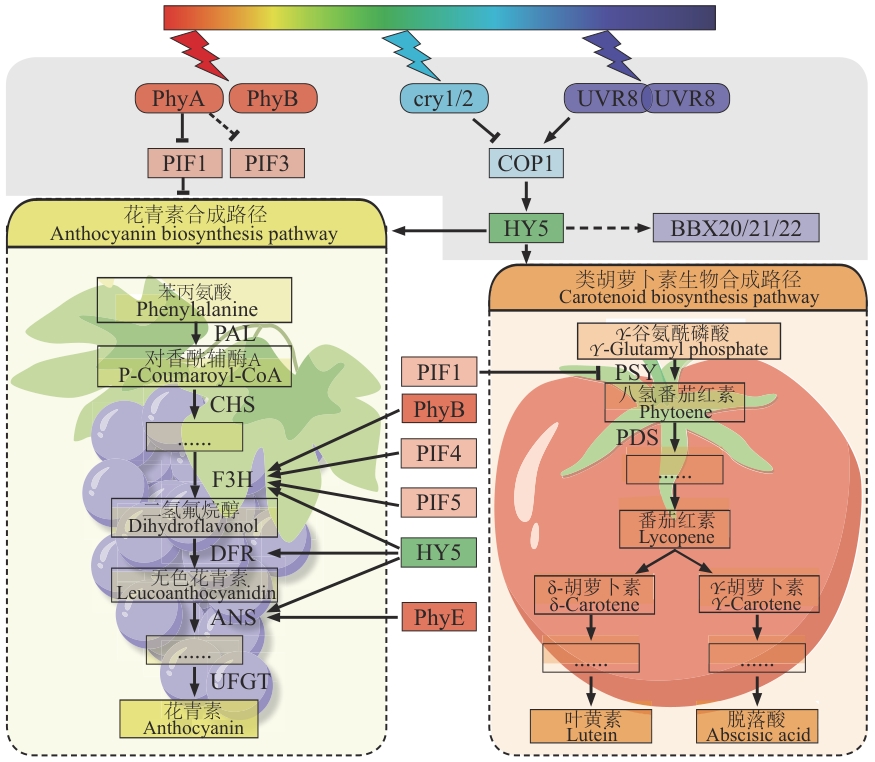
图1 光受体介导的果实花青素与类胡萝卜素合成途径的调控机制光受体(PhyA/PhyB/PhyE、CRY1/2、UVR8)感知不同波长的光后,通过信号传导调控果实花青素与类胡萝卜素合成途径。光照激活的光受体诱导光敏色素互作因子(PIF1/PIF3/PIF4/PIF5)降解,解除其对下游合成基因的抑制;同时通过COP1-HY5-BBX20/21/22信号轴正向调控花青素合成途径(PAL→CHS→......→UFGT)及类胡萝卜素合成途径(PSY→PDS→......→番茄红素/胡萝卜素)。箭头表示正调控,钝头箭头表示负调控
Fig. 1 Photoreceptor-mediated regulating mechanism of anthocyanin and carotenoid biosynthetic pathways in fruitsPhotoreceptors (PhyA/PhyB/PhyE, CRY1/2, and UVR8) perceive light of different wavelengths and regulate anthocyanin and carotenoid biosynthetic pathways in fruits through downstream signaling cascades. Light-activated photoreceptors induce the degradation of phytochrome‐interacting factors (PIF1, PIF3, PIF4, and PIF5), thereby releasing their repression on downstream biosynthetic genes; meanwhile, the COP1-HY5-BBX20/21/22 signaling module positively regulates the anthocyanin biosynthetic pathway (PAL→CHS→……→UFGT) and the carotenoid biosynthetic pathway (PSY→PDS→……→lycopene/carotene). Arrows indicate positive regulation, whereas blunt-ended arrows indicate negative regulation
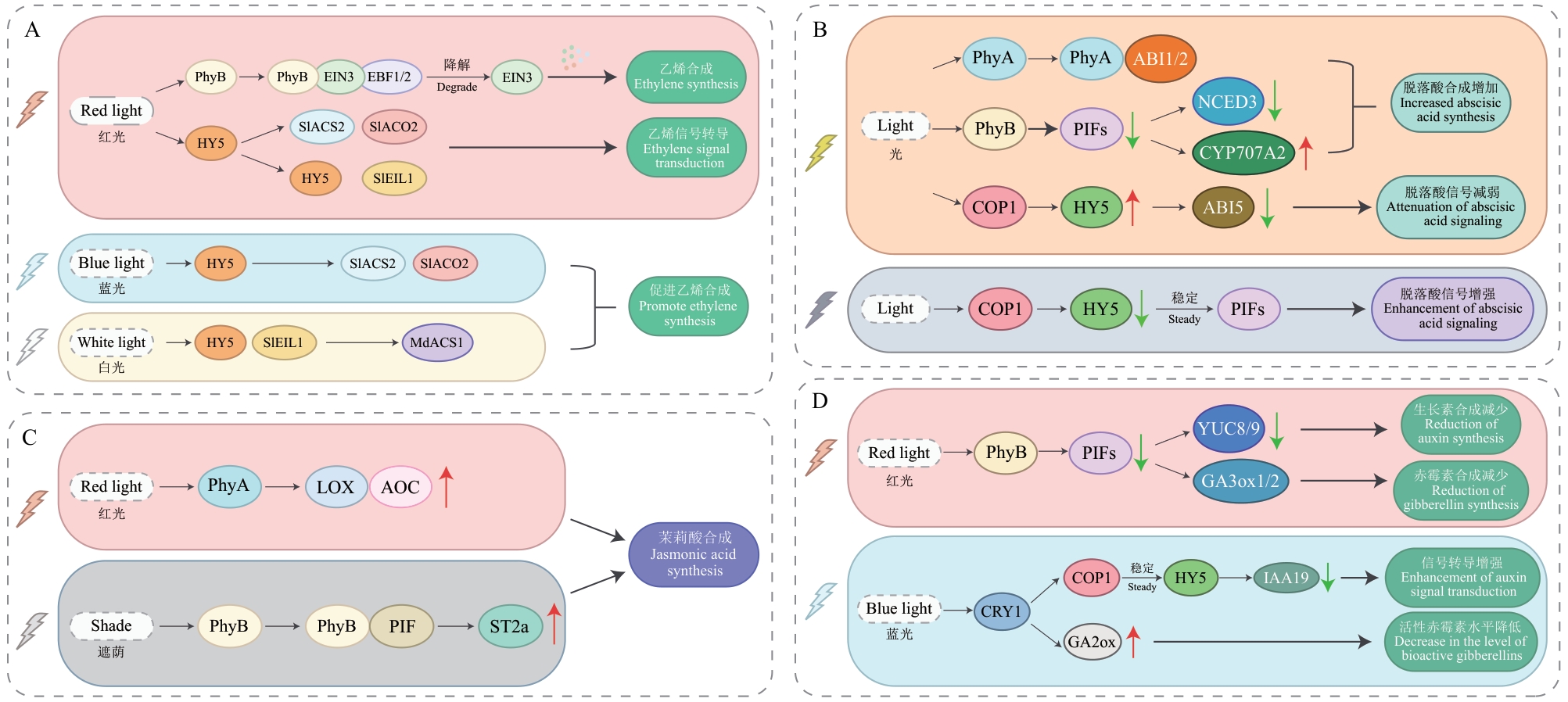
图2 光信号与激素信号协同调控的分子网络该图由4个模块组成,分别表示光信号对乙烯(ETH)、脱落酸(ABA)、茉莉酸(JA)、生长素(IAA)和赤霉素(GA)的调控,每个模块用A-D标注,箭头表示正调控,钝头箭头表示负调控。A:光受体(PhyB、CRY1)感知光信号(红光、蓝光、白光),通过EIN3、HY5等元件调控乙烯的生物合成与信号;B:光信号通过ABI1/2、NCED3、ABI5、PIFs等元件调控ABA合成及信号;C:光信号通过LOX、AOC、ST2a等元件影响茉莉酸生物合成;D:光信号通过YUC8/9、GA3ox1/2、IAA19、GA2ox等元件调节生长素和赤霉素的生物合成与信号传导
Fig. 2 Molecular network underlying the crosstalk between light signaling and hormone signalingThe figure consists of four modules (A-D) representing the regulation of ethylene (ETH), abscisic acid (ABA), jasmonic acid (JA), auxin (IAA), and gibberellin (GA) by light signaling. Arrows indicate positive regulation, and blunt-ended arrows indicate negative regulation. A: Photoreceptors (PhyB and CRY1) perceive light signals (red, blue, and white) and regulate ethylene biosynthesis and signaling via EIN3, HY5, and related components. B: Light signaling regulates ABA biosynthesis and signaling through ABI1/2, NCED3, ABI5, and PIFs. C: Light signaling influences jasmonic acid biosynthesis via LOX, AOC, and ST2a. D: Light signaling modulates auxin and gibberellin biosynthesis and signaling through YUC8/9, GA3ox1/2, IAA19, and GA2ox
光质 Light quality | 园艺作物 Horticultural crops | 效果 Effect | 参考文献Reference |
|---|---|---|---|
红光 Red light | 草莓 Fragaria × ananassa Duch, ‘Benihoppe’ | 果实亮度显著提升;维生素C含量显著增加;货架期延长 | [ |
| 辣椒 Capsicum annuum L. | 维生素C含量显著增加;货架期延长 | [ | |
| 金桔 F. crassifolia Swingle | 加速果实褪绿,果实色泽均匀性得到改善 | [ | |
| 西瓜 Citrullus lanatus Thunb | 瓜瓤着色提前5-10 d,采收时间显著提前 | [ | |
| 甜瓜 Cucumis melo L. | 酯类挥发性风味化合物含量显著提高;果实成熟时间显著缩短;可溶性固形物含量显著提升 | [ | |
| 柑橘 Citrus sinensis L. Osbeck | 类胡萝卜素含量显著提高 | [ | |
| 番茄 Solanum lycopersicum L. | 果实成熟时间显著缩短;可溶性固形物含量显著提高 | [ | |
| 香蕉 Musa nana Lour | 加速果实软化;提前达到糖度峰值;果实成熟时间显著提前 | [ | |
| 芒果 Mangifera indica L. | 果实转色更快;可溶性糖积累高峰提前;后熟软化进程加快 | [ | |
| 香梨 Pyrus sinkiangensis Yu | 果实转色加快;后熟软化进程加快 | [ | |
| 冬枣 Ziziphus jujuba Mill. | 果实转色加快;后熟软化进程加快 | [ | |
| 青皮桔 Citrus reticulata Blanco | 果实转色加快;后熟软化进程加快 | [ | |
| 羊角蜜甜瓜 Cucumis melo L. | 货架期出现“褪白转绿”现象 | [ | |
远红光 Far-red light | 番茄 Solanum lycopersicum L. | 可溶性固形物含量积累显著提高;维生素含量显著提高;果实大小略有增加;部分品种果实产量略有增加 | [ |
| 辣椒 Capsicum annuum L. | 果实产量显著减少;果实变小 | [ | |
蓝光 Blue light | 油桃 Prunus persica var. nectarine | 类胡萝卜素含量显著提高 | [ |
| 柑橘 Citrus sinensis L. Osbeck | 果实对绿霉病抗性提高,果实色泽更加均匀 | [ | |
| 梨 Pyrus ussuriensis | 延缓果实成熟 | [ | |
| 杨梅 Myrica rubra Sieb. and Zucc. cv. Biqi | 花青素含量显著提高 | [ | |
| 辣椒 Capsicum annuum L. | 辣椒素含量显著提高 | [ | |
紫外光 UV-B | 苹果 Malus × domestica | 单果重显著提高;果实成熟进程加快 | [ |
| 桃 Prunus persica L. Batsch | 萜类物质含量显著增加 | [ | |
| 蓝莓 Vaccinium spp. | 花青素含量显著增加 | [ | |
| 葡萄 Vitis vinifera L. | 多酚类物质显著增加 | [ | |
| 山竹 Garcinia mangostana L. | 货架期延长 | [ |
表1 不同光质对果实商品品质的调控效应
Table 1 Regulatory effects of different light spectra on commercial quality traits of fruits
光质 Light quality | 园艺作物 Horticultural crops | 效果 Effect | 参考文献Reference |
|---|---|---|---|
红光 Red light | 草莓 Fragaria × ananassa Duch, ‘Benihoppe’ | 果实亮度显著提升;维生素C含量显著增加;货架期延长 | [ |
| 辣椒 Capsicum annuum L. | 维生素C含量显著增加;货架期延长 | [ | |
| 金桔 F. crassifolia Swingle | 加速果实褪绿,果实色泽均匀性得到改善 | [ | |
| 西瓜 Citrullus lanatus Thunb | 瓜瓤着色提前5-10 d,采收时间显著提前 | [ | |
| 甜瓜 Cucumis melo L. | 酯类挥发性风味化合物含量显著提高;果实成熟时间显著缩短;可溶性固形物含量显著提升 | [ | |
| 柑橘 Citrus sinensis L. Osbeck | 类胡萝卜素含量显著提高 | [ | |
| 番茄 Solanum lycopersicum L. | 果实成熟时间显著缩短;可溶性固形物含量显著提高 | [ | |
| 香蕉 Musa nana Lour | 加速果实软化;提前达到糖度峰值;果实成熟时间显著提前 | [ | |
| 芒果 Mangifera indica L. | 果实转色更快;可溶性糖积累高峰提前;后熟软化进程加快 | [ | |
| 香梨 Pyrus sinkiangensis Yu | 果实转色加快;后熟软化进程加快 | [ | |
| 冬枣 Ziziphus jujuba Mill. | 果实转色加快;后熟软化进程加快 | [ | |
| 青皮桔 Citrus reticulata Blanco | 果实转色加快;后熟软化进程加快 | [ | |
| 羊角蜜甜瓜 Cucumis melo L. | 货架期出现“褪白转绿”现象 | [ | |
远红光 Far-red light | 番茄 Solanum lycopersicum L. | 可溶性固形物含量积累显著提高;维生素含量显著提高;果实大小略有增加;部分品种果实产量略有增加 | [ |
| 辣椒 Capsicum annuum L. | 果实产量显著减少;果实变小 | [ | |
蓝光 Blue light | 油桃 Prunus persica var. nectarine | 类胡萝卜素含量显著提高 | [ |
| 柑橘 Citrus sinensis L. Osbeck | 果实对绿霉病抗性提高,果实色泽更加均匀 | [ | |
| 梨 Pyrus ussuriensis | 延缓果实成熟 | [ | |
| 杨梅 Myrica rubra Sieb. and Zucc. cv. Biqi | 花青素含量显著提高 | [ | |
| 辣椒 Capsicum annuum L. | 辣椒素含量显著提高 | [ | |
紫外光 UV-B | 苹果 Malus × domestica | 单果重显著提高;果实成熟进程加快 | [ |
| 桃 Prunus persica L. Batsch | 萜类物质含量显著增加 | [ | |
| 蓝莓 Vaccinium spp. | 花青素含量显著增加 | [ | |
| 葡萄 Vitis vinifera L. | 多酚类物质显著增加 | [ | |
| 山竹 Garcinia mangostana L. | 货架期延长 | [ |
| [1] | Xie BX, Wei JJ, Zhang YT, et al. Supplemental blue and red light promote lycopene synthesis in tomato fruits [J]. J Integr Agric, 2019, 18(3): 590-598. |
| [2] | Heuvelink E, Acevedo-Siaca LG, Van de Poel B, et al. Tomato in the spotlight: light regulation of whole-plant physiology [J]. J Exp Bot, 2025, 76(21): 6289-6310. |
| [3] | Paik I, Huq E. Plant photoreceptors: Multi-functional sensory proteins and their signaling networks [J]. Semin Cell Dev Biol, 2019, 92: 114-121. |
| [4] | Xiao LR, Shibuya T, Kato K, et al. Effects of light quality on plant development and fruit metabolism and their regulation by plant growth regulators in tomato [J]. Sci Hortic, 2022, 300: 111076. |
| [5] | Butler WL, Hendricks SB, Siegelman HW. Actton spectra of phytochrome in vitro [J]. Photochem Photobiol, 1964, 3(4): 521-528. |
| [6] | Lu XD, Zhou CM, Xu PB, et al. Red-light-dependent interaction of phyB with SPA1 promotes COP1-SPA1 dissociation and photomorphogenic development in Arabidopsis [J]. Mol Plant, 2015, 8(3): 467-478. |
| [7] | Kiontke S, Göbel T, Brych A, et al. DASH-type cryptochromes - solved and open questions [J]. Biol Chem, 2020, 401(12): 1487-1493. |
| [8] | Fang F, Lin L, Zhang QW, et al. Mechanisms of UV-B light-induced photoreceptor UVR8 nuclear localization dynamics [J]. New Phytol, 2022, 236(5): 1824-1837. |
| [9] | Ang LH, Chattopadhyay S, Wei N, et al. Molecular interaction between COP1 and HY5 defines a regulatory switch for light control of Arabidopsis development [J]. Mol Cell, 1998, 1(2): 213-222. |
| [10] | Chattopadhyay S, Ang LH, Puente P, et al. Arabidopsis bZIP protein HY5 directly interacts with light-responsive promoters in mediating light control of gene expression [J]. Plant Cell, 1998, 10(5): 673-683. |
| [11] | Pacín M, Semmoloni M, Legris M, et al. Convergence of constitutive photomorphogenesis 1 and phytochrome interacting factor signalling during shade avoidance [J]. New Phytol, 2016, 211(3): 967-979. |
| [12] | Pedmale UV, Huang SC, Zander M, et al. Cryptochromes interact directly with PIFs to control plant growth in limiting blue light [J]. Cell, 2016, 164(1/2): 233-245. |
| [13] | Ni WM, Xu SL, González-Grandío E, et al. PPKs mediate direct signal transfer from phytochrome photoreceptors to transcription factor PIF3 [J]. Nat Commun, 2017, 8: 15236. |
| [14] | Podolec R, Ulm R. Photoreceptor-mediated regulation of the COP1/SPA E3 ubiquitin ligase [J]. Curr Opin Plant Biol, 2018, 45: 18-25. |
| [15] | Han X, Huang X, Deng XW. The photomorphogenic central repressor COP1: conservation and functional diversification during evolution [J]. Plant Commun, 2020, 1(3): 100044. |
| [16] | Schenk T, Trimborn L, Chen S, et al. Light-induced degradation of SPA2 via its N-terminal kinase domain is required for photomorphogenesis [J]. Plant Physiol, 2021, 187(1): 276-288. |
| [17] | Li YP, Shi YT, Li MZ, et al. The CRY2-COP1-HY5-BBX7/8 module regulates blue light-dependent cold acclimation in Arabidopsis [J]. Plant Cell, 2021, 33(11): 3555-3573. |
| [18] | Heng YQ, Jiang Y, Zhao XH, et al. BBX4, a phyB-interacting and modulated regulator, directly interacts with PIF3 to fine tune red light-mediated photomorphogenesis [J]. Proc Natl Acad Sci USA, 2019, 116(51): 26049-26056. |
| [19] | Song ZQ, Heng YQ, Bian YT, et al. BBX11 promotes red light-mediated photomorphogenic development by modulating phyB-PIF4 signaling [J]. aBIOTECH, 2021, 2(2): 117-130. |
| [20] | Lau OS, Deng XW. The photomorphogenic repressors COP1 and DET1: 20 years later [J]. Trends Plant Sci, 2012, 17(10): 584-593. |
| [21] | Dash M, Johnson LK, Malladi A. Severe shading reduces early fruit growth in apple by decreasing cell production and expansion [J]. J Amer Soc Hort Sci, 2012, 137(5): 275-282. |
| [22] | Okello RCO, Heuvelink E, de Visser PHB, et al. Fruit illumination stimulates cell division but has no detectable effect on fruit size in tomato (Solanum lycopersicum) [J]. Physiol Plant, 2015, 154(1): 114-127. |
| [23] | Frommer WB, Sonnewald U. Molecular analysis of carbon partitioning in solanaceous species [J]. J Exp Bot, 1995, 46(287): 587-607. |
| [24] | Yelle S, Hewitt JD, Robinson NL, et al. Sink metabolism in tomato fruit: III. analysis of carbohydrate assimilation in a wild species [J]. Plant Physiol, 1988, 87(3): 737-740. |
| [25] | 叶宇芸. 隐花色素CRY1和CRY2在草莓生长发育中的功能鉴定 [D]. 雅安: 四川农业大学, 2022. |
| Ye YY. Functional identification of cryptochrome CRY1 and CRY2 in strawberry growth and development [D]. Ya’an: Sichuan Agricultural University, 2022. | |
| [26] | Zhang JJ, Xu JY, Wang XM, et al. Light signal regulates endoreduplication and tomato fruit expansion through the SlPIF1a-SlTLFP8-SlCDKB2 module [J]. Proc Natl Acad Sci USA, 2025, 122(4): e2404445122. |
| [27] | Fu ZZ, Shang HQ, Jiang H, et al. Systematic identification of the light-quality responding anthocyanin synthesis-related transcripts in Petunia petals [J]. Hortic Plant J, 2020, 6(6): 428-438. |
| [28] | Cheng YY, Chen HL, Zhao YH, et al. Effect of light quality on polyphenol biosynthesis in three varieties of mung bean sprouts with different color seed coats [J]. Plant Cell Rep, 2023, 42(2): 253-268. |
| [29] | Liu ZJ, Zhang YQ, Wang JF, et al. Phytochrome-interacting factors PIF4 and PIF5 negatively regulate anthocyanin biosynthesis under red light in Arabidopsis seedlings [J]. Plant Sci, 2015, 238: 64-72. |
| [30] | Jiang MM, Ren L, Lian HL, et al. Novel insight into the mechanism underlying light-controlled anthocyanin accumulation in eggplant (Solanum melongena L.) [J]. Plant Sci, 2016, 249: 46-58. |
| [31] | Chen JS, Xu HF, Liu QL, et al. Shoot-to-root communication via GmUVR8-GmSTF3 photosignaling and flavonoid biosynthesis fine-tunes soybean nodulation under UV-B light [J]. New Phytol, 2024, 241(1): 209-226. |
| [32] | An JP, Qu FJ, Yao JF, et al. The bZIP transcription factor MdHY5 regulates anthocyanin accumulation and nitrate assimilation in apple [J]. Hortic Res, 2017, 4: 17023. |
| [33] | Ye JH, Lv YQ, Liu SR, et al. Effects of light intensity and spectral composition on the transcriptome profiles of leaves in shade grown tea plants (Camellia sinensis L.) and regulatory network of flavonoid biosynthesis [J]. Molecules, 2021, 26(19): 5836. |
| [34] | Zhang YZ, Xu SZ, Cheng YW, et al. Transcriptome profiling of anthocyanin-related genes reveals effects of light intensity on anthocyanin biosynthesis in red leaf lettuce [J]. PeerJ, 2018, 6: e4607. |
| [35] | Wu M, Si M, Li XY, et al. PbCOP1.1 contributes to the negative regulation of anthocyanin biosynthesis in pear [J]. Plants, 2019, 8(2): 39. |
| [36] | 高金汇. 多组学联合分析蓝光诱导紫色甜椒果实花青苷的合成机制 [D]. 泰安: 山东农业大学, 2024. |
| Gao JH. Joint multiomics analysis of the mechanism of blue light induced anthocyanin synthesis in purple pepper fruit [D]. Tai’an: Shandong Agricultural University, 2024. | |
| [37] | An JP, Wang XF, Espley RV, et al. An apple B-box protein MdBBX37 modulates anthocyanin biosynthesis and hypocotyl elongation synergistically with MdMYBs and MdHY5 [J]. Plant Cell Physiol, 2020, 61(1): 130-143. |
| [38] | Yang T, Ma HY, Li Y, et al. Apple MPK4 mediates phosphorylation of MYB1 to enhance light-induced anthocyanin accumulation [J]. Plant J, 2021, 106(6): 1728-1745. |
| [39] | Cunningham FX, Gantt E. Genes and enzymes of carotenoid biosynthesis in plants [J]. Annu Rev Plant Physiol Plant Mol Biol, 1998, 49: 557-583. |
| [40] | Llorente B, D’Andrea L, Ruiz-Sola MA, et al. Tomato fruit carotenoid biosynthesis is adjusted to actual ripening progression by a light-dependent mechanism [J]. Plant J, 2016, 85(1): 107-119. |
| [41] | Lingwan M, Pradhan AA, Kushwaha AK, et al. Photoprotective role of plant secondary metabolites: Biosynthesis, photoregulation, and prospects of metabolic engineering for enhanced protection under excessive light [J]. Environ Exp Bot, 2023, 209: 105300. |
| [42] | Liu CH, Cai LY, Han XX, et al. Temporary effect of postharvest UV-C irradiation on gene expression profile in tomato fruit [J]. Gene, 2011, 486(1/2): 56-64. |
| [43] | Cao SF, Liang MH, Shi LY, et al. Accumulation of carotenoids and expression of carotenogenic genes in peach fruit [J]. Food Chem, 2017, 214: 137-146. |
| [44] | Ni JB, Liao YF, Zhang MM, et al. Blue light simultaneously induces peel anthocyanin biosynthesis and flesh carotenoid/sucrose biosynthesis in mango fruit [J]. J Agric Food Chem, 2022, 70(50): 16021-16035. |
| [45] | Naeem M, Muqarab R, Waseem M. The Solanum melongena COP1 delays fruit ripening and influences ethylene signaling in tomato [J]. J Plant Physiol, 2019, 240: 152997. |
| [46] | Naeem M, Shahzad K, Saqib S, et al. The Solanum melongena COP1LIKE manipulates fruit ripening and flowering time in tomato (Solanum lycopersicum) [J]. Plant Growth Regul, 2022, 96(3): 369-382. |
| [47] | Fu P, Meacham-Hensold K, Siebers MH, et al. The inverse relationship between solar-induced fluorescence yield and photosynthetic capacity: benefits for field phenotyping [J]. J Exp Bot, 2021, 72(4): 1295-1306. |
| [48] | Shen MC, Wu WJ, Cheng PJ, et al. Low-molecular-weight-heparin can benefit women with recurrent pregnancy loss and sole protein S deficiency: a historical control cohort study from Taiwan [J]. Thromb J, 2016, 14: 44. |
| [49] | Chen JY, Zhu XY, Ren J, et al. Suppressor of overexpression of CO1 negatively regulates dark-induced leaf degreening and senescence by directly repressing pheophytinase and other senescence-associated genes in Arabidopsis [J]. Plant Physiol, 2017, 173(3): 1881-1891. |
| [50] | Tang WJ, Wang WQ, Chen DQ, et al. Transposase-derived proteins FHY3/FAR1 interact with PHYTOCHROME-INTERACTING FACTOR1 to regulate chlorophyll biosynthesis by modulating HEMB1 during deetiolation in Arabidopsis [J]. Plant Cell, 2012, 24(5): 1984-2000. |
| [51] | Jiang BC, Zhong ZH, Gu LF, et al. Light-induced LLPS of the CRY2/SPA1/FIO1 complex regulating mRNA methylation and chlorophyll homeostasis in Arabidopsis [J]. Nat Plants, 2023, 9(12): 2042-2058. |
| [52] | Li FL, Tahir MM, Yang CK, et al. Postharvest UV-a treatment promotes mango fruit pigmentation and ripening in a dose-dependent manner [J]. Postharvest Biol Technol, 2025, 230: 113836. |
| [53] | Li Y, Xing MH, Yang Q, et al. SmCIP7, a COP1 interactive protein, positively regulates anthocyanin accumulation and fruit size in eggplant [J]. Int J Biol Macromol, 2023, 234: 123729. |
| [54] | Zhang T, Zhang R, Zeng XY, et al. GLK transcription factors accompany ELONGATED HYPOCOTYL5 to orchestrate light-induced seedling development in Arabidopsis [J]. Plant Physiol, 2024, 194(4): 2400-2421. |
| [55] | Zhang Y, Zhu KY, Wang XJ, et al. Manipulation of artificial light environment improves plant biomass and fruit nutritional quality in tomato [J]. J Adv Res, 2025, 75: 79-93. |
| [56] | Campbell SM, Sims CA, Bartoshuk LM, et al. Manipulation of sensory characteristics and volatile compounds in strawberry fruit through the use of isolated wavelengths of light [J]. J Food Sci, 2020, 85(3): 771-780. |
| [57] | Zhou DD, Liu Q, Zhu T, et al. Effects of ultraviolet C on the quality and aroma volatile in peach fruit during postharvest storage [J]. Food Chem, 2024, 456: 139906. |
| [58] | Wei CY, Yang HZ, Ye BB, et al. Ubiquitination of the PpMADS2 transcription factor controls linalool production during UV-B irradiation in detached peach fruit [J]. Plant Physiol, 2025, 198(1): kiaf159. |
| [59] | Xue WY, Liu N, Lu PF, et al. Photosynthesis and fatty acid metabolism reveals the effects of shading treatment on the fruit aroma quality of cucumber (Cucumis sativus L.) [J]. Sci Hortic, 2024, 337: 113508. |
| [60] | Grzegorzewska M, Szwejda-Grzybowska J, Mieszczakowska-Frąc M, et al. Postharvest LED treatment of tomatoes harvested at an early stage of coloration [J]. Agronomy, 2024, 14(11): 2727. |
| [61] | Bin Arif A, Budiyanto A, Setiawan, et al. Application of red and blue LED light on cultivation and postharvest of tomatoes (Solanum lycopersicum L.) [J]. Scientifica, 2024, 2024(1): 3815651. |
| [62] | Xu YN, You CJ, Xu CB, et al. Red and blue light promote tomato fruit coloration through modulation of hormone homeostasis and pigment accumulation [J]. Postharvest Biol Technol, 2024, 207: 112588. |
| [63] | Yang MY, Luo ZS, Gao SN, et al. The chemical composition and potential role of epicuticular and intracuticular wax in four cultivars of table grapes [J]. Postharvest Biol Technol, 2021, 173: 111430. |
| [64] | Saini P, Bhatia S, Mahajan M, et al. Elongated hypocotyl5 negatively regulates decrease wax biosynthesis to increase survival during UV-B stress [J]. Plant Physiol, 2020, 184(4): 2091-2106. |
| [65] | Nassarawa SS, Luo ZS. Effect of light irradiation on sugar, phenolics, and GABA metabolism on postharvest grape (Vitis vinifera L.) during storage [J]. Food Bioprocess Technol, 2022, 15(12): 2789-2802. |
| [66] | Wu WY, Chen L, Liang RT, et al. The role of light in regulating plant growth, development and sugar metabolism: a review [J]. Front Plant Sci, 2025, 15: 1507628. |
| [67] | Shi H, Shen X, Liu RL, et al. The red light receptor phytochrome B directly enhances substrate-E3 ligase interactions to attenuate ethylene responses [J]. Dev Cell, 2016, 39(5): 597-610. |
| [68] | Wang WH, Wang PW, Li XJ, et al. The transcription factor SlHY5 regulates the ripening of tomato fruit at both the transcriptional and translational levels [J]. Hortic Res, 2021, 8(1): 83. |
| [69] | Li LX, Yang SK, Fang Y, et al. Transcription factors MdEIL1 and MdHY5 integrate ethylene and light signaling to promote chlorophyll degradation in mature apple peels [J]. Hortic Res, 2024, 12(3): uhae324. |
| [70] | Li H, Zhou YY, Qin XY, et al. Reconstitution of phytochrome A-mediated light modulation of the ABA signaling pathways in yeast [J]. Proc Natl Acad Sci USA, 2023, 120(34): e2302901120. |
| [71] | Liang S, Gao XX, Wang YJ, et al. Phytochrome-interacting factors regulate seedling growth through ABA signaling [J]. Biochem Biophys Res Commun, 2020, 526(4): 1100-1105. |
| [72] | Qi LJ, Liu S, Li C, et al. PHYTOCHROME-INTERACTING FACTORS interact with the ABA receptors PYL8 and PYL9 to orchestrate ABA signaling in darkness [J]. Mol Plant, 2020, 13(3): 414-430. |
| [73] | Yadukrishnan P, Datta S. Light and abscisic acid interplay in early seedling development [J]. New Phytol, 2021, 229(2): 763-769. |
| [74] | Robson F, Okamoto H, Patrick E, et al. Jasmonate and phytochrome A signaling in Arabidopsis wound and shade responses are integrated through JAZ1 stability [J]. Plant Cell, 2010, 22(4): 1143-1160. |
| [75] | Fernández-Milmanda GL, Crocco CD, Reichelt M, et al. A light-dependent molecular link between competition cues and defence responses in plants [J]. Nat Plants, 2020, 6(3): 223-230. |
| [76] | Jiang JS, Xiao YM, Chen H, et al. Retrograde induction of phyB orchestrates ethylene-auxin hierarchy to regulate growth [J]. Plant Physiol, 2020, 183(3): 1268-1280. |
| [77] | Mao ZL, Wei XX, Li L, et al. Arabidopsis cryptochrome 1 controls photomorphogenesis through regulation of H2A.Z deposition [J]. Plant Cell, 2021, 33(6): 1961-1979. |
| [78] | Liu CC, Ahammed GJ, Wang GT, et al. Tomato CRY1a plays a critical role in the regulation of phytohormone homeostasis, plant development, and carotenoid metabolism in fruits [J]. Plant Cell Environ, 2018, 41(2): 354-366. |
| [79] | Gong JL, Zeng YL, Meng QN, et al. Red light-induced kumquat fruit coloration is attributable to increased carotenoid metabolism regulated by FcrNAC22 [J]. J Exp Bot, 2021, 72(18): 6274-6290. |
| [80] | 宫金礼. 红光调控柑橘果实转色的分子及细胞生物学机制研究 [D]. 武汉: 华中农业大学, 2021. |
| Gong JL. Investigation on molecular and cellular mechanisms of red light-induced citrus fruit colouration [D]. Wuhan: Huazhong Agricultural University, 2021. | |
| [81] | Panjai L, Noga G, Fiebig A, et al. Effects of continuous red light and short daily UV exposure during postharvest on carotenoid concentration and antioxidant capacity in stored tomatoes [J]. Sci Hortic, 2017, 226: 97-103. |
| [82] | Zhang JY, Zhang YT, Song SW, et al. Supplementary red light results in the earlier ripening of tomato fruit depending on ethylene production [J]. Environ Exp Bot, 2020, 175: 104044. |
| [83] | 辛奇. 红光对芒果采后生理变化及营养物质代谢途径的影响 [D]. 邯郸: 河北工程大学, 2023. |
| Xin Q. Effects of red light on post-harvest physiological changes and nutrient material metabolism pathways of mango [D]. Handan: Hebei University of Engineering, 2023. | |
| [84] | Burbano-Erazo E, Francesca S, Simon-Moya M, et al. A shade-hyposensitive tomato line shows altered auxin homeostasis and higher fruit yield under high-density field conditions [J]. New Phytol, 2025, 247(6): 2839-2851. |
| [85] | Song Y, Lillywhite R. Effect of far-red and blue light irradiation on nutritional quality in postharvest cherry tomato [C]//Acta Horticulturae. Leuven, Belgium: ISHS, 2021: 167-174. |
| [86] | Chen SJ, Marcelis LFM, Offringa R, et al. Far-red light-enhanced apical dominance stimulates flower and fruit abortion in sweet pepper [J]. Plant Physiol, 2024, 195(2): 924-939. |
| [87] | Liu WT, Zhang LC, Ma L, et al. The HY5 transcription factor negatively regulates ethylene production by inhibiting ACS1 expression under blue light conditions in pear [J]. Hortic Plant J, 2023, 9(5): 920-930. |
| [88] | Shi LY, Cao SF, Chen W, et al. Blue light induced anthocyanin accumulation and expression of associated genes in Chinese bayberry fruit [J]. Sci Hortic, 2014, 179: 98-102. |
| [89] | Zhang YJ, Sun YJ, Wang Y, et al. Effects of blue and red LED treatments on carotenoid and soluble sugar metabolism in postharvest nectarine fruit and their correlation [J]. Plant Physiol Biochem, 2025, 224: 109897. |
| [90] | Chen SJ, Dalla Villa V, Kohlen W, et al. High ratio of blue: red light reduces fruit set in sweet pepper, which is associated with low starch content and hormonal changes [J]. Environ Exp Bot, 2024, 225: 105850. |
| [91] | Liu MX, Zhang AX, Yu H, et al. Postharvest application of ultraviolet-A and blue light irradiations boosted the accumulation of acetylated anthocyanins in the blueberry fruit and its potential regulatory mechanisms [J]. Postharvest Biol Technol, 2025, 222: 113371. |
| [92] | Sripong K, Jitareerat P, Uthairatanakij A. UV irradiation induces resistance against fruit rot disease and improves the quality of harvested mangosteen [J]. Postharvest Biol Technol, 2019, 149: 187-194. |
| [93] | Tsormpatsidis E, Ordidge M, Henbest RGC, et al. Harvesting fruit of equivalent chronological age and fruit position shows individual effects of UV radiation on aspects of the strawberry ripening process [J]. Environ Exp Bot, 2011, 74: 178-185. |
| [94] | 张云婷. 光质和低温对草莓果实花青素合成的影响及其分子机制 [D]. 雅安: 四川农业大学, 2019. |
| Zhang YT. Effects of light quality and low temperature on anthocyanin synthesis in strawberry and its molecular mechanism [D]. Ya’an: Sichuan Agricultural University, 2019. | |
| [95] | Jiang LY, Chen XP, Gu XJ, et al. Light quality and sucrose-regulated detached ripening of strawberry with possible involvement of abscisic acid and auxin signaling [J]. Int J Mol Sci, 2023, 24(6): 5681. |
| [96] | Pashkovskiy P, Sleptsov N, Vereschagin M, et al. Post-harvest red- and far-red-light irradiation and low temperature induce the accumulation of carotenoids, capsaicinoids, and ascorbic acid in Capsicum annuum L. green pepper fruit [J]. Foods, 2023, 12(8): 1715. |
| [97] | Lv TH, Zhao LL, Zhang ST, et al. ClPIF3-ClHY5 module regulates ClPSY1 to promote watermelon fruit lycopene accumulation earlier under supplementary red lighting [J]. Int J Mol Sci, 2022, 23(8): 4145. |
| [98] | Liu SJ, Liu Y, Wang TY, et al. The effects of different light storage conditions on volatile flavor compounds and sensory properties of melon fruit [J]. Food Biosci, 2022, 48: 101826. |
| [99] | 杨灿. CsPIF4介导红光调控柑橘果实类胡萝卜素积累的分子机制研究 [D]. 重庆: 西南大学, 2023. |
| Yang C. Study on the molecular mechanism of red light regulating carotenoid accumulation in citrusfruits mediated by CsPIF4 [D]. Chongqing: Southwest University, 2023. | |
| [100] | Zhou XQ, Cheng JH, Sun J, et al. Effect of red visible lighting on postharvest ripening of bananas via the regulation of energy metabolism [J]. Horticulturae, 2023, 9(7): 840. |
| [101] | Lafuente MT, Sampedro R, Romero P. Hormones metabolism as affected by LED blue light in citrus fruit [J]. Plant Physiol Biochem, 2024, 215: 108970. |
| [102] | 秦恒山. 蓝光对采后绿熟期辣椒果实中辣椒素类物质生物合成的影响 [D]. 泰安: 山东农业大学, 2024. |
| Qin HS. Effect of blue light on biosynthesis of capsaicin in postharvest green ripe pepper fruit [D]. Tai’an: Shandong Agricultural University, 2024. | |
| [103] | Henry-Kirk RA, Plunkett B, Hall M, et al. Solar UV light regulates flavonoid metabolism in apple (Malus × domestica) [J]. Plant Cell Environ, 2018, 41(3): 675-688. |
| [104] | 柳洪入. UV-B调控桃果实萜类途径香气物质的机制研究 [D]. 杭州: 浙江大学, 2017. |
| Liu HR. Study on the mechanism of UV-B regulating the aroma components of terpene pathway in peach fruit [D]. Hangzhou: Zhejiang University, 2017. | |
| [105] | Sunitha S, Loyola R, Alcalde JA, et al. The role of UV-B light on small RNA activity during grapevine berry development [J]. G3, 2019, 9(3): 769-787. |
| [106] | Ntagkas N, Woltering E, Nicole C, et al. Light regulation of vitamin C in tomato fruit is mediated through photosynthesis [J]. Environ Exp Bot, 2019, 158: 180-188. |
| [107] | 黄松, 刘勇鹏, 孙凯乐, 等. 不同LED光强补光对日光温室越冬番茄生长及产量品质的影响 [J]. 山东农业科学, 2023, 55(6): 62-68. |
| Huang S, Liu YP, Sun KL, et al. Effects of different LED light intensities on growth, yield and quality of overwintering tomato in solar greenhouse [J]. Shandong Agric Sci, 2023, 55(6): 62-68. | |
| [108] | 刘晓英. LED光源对樱桃番茄生育和光合作用影响的研究 [D]. 南京: 南京农业大学, 2010. |
| Liu XY. Effects of LED light source on growth and photosynthesis of cherry tomato [D]. Nanjing: Nanjing Agricultural University, 2010. | |
| [109] | 丁小涛, 姜玉萍, 王虹, 等. LED株间补光对番茄生长和果实品质的影响 [J]. 上海农业学报, 2016(6): 48-51. |
| Ding XT, Jiang YP, Wang H, et al. Effects of LED supplementary lighting among plants on tomato growth and fruit quality [J]. Acta Agric Shanghai, 2016(6): 48-51. | |
| [110] | Devadze G, Dannehl D, Nerlich A, et al. Prediction of secondary metabolites in hydroponically produced tomatoes: multivariate influence of abiotic climatic factors as well as photosynthesis and transpiration rates [J]. Front Plant Sci, 2025, 16: 1543699. |
| [111] | Hanssens J, DE SWAEF T, Steppe K. High light decreases xylem contribution to fruit growth in tomato [J]. Plant Cell Environ, 2015, 38(3): 487-498. |
| [112] | Masabni J, Sun YP, Niu GH, et al. Shade effect on growth and productivity of tomato and chili pepper [J]. HortTechnology, 2016, 26(3): 344-350. |
| [113] | Liu H, Zhang JQ, Tao JP, et al. A telomere-to-telomere gapless genome reveals SlPRR1 control of circadian rhythm and photoperiodic flowering in tomato [J]. Gigascience, 2025, 14: giaf058. |
| [114] | Xiang YL, Sapir T, Rouillard P, et al. Interaction between photoperiod and variation in circadian rhythms in tomato [J]. BMC Plant Biol, 2022, 22(1): 187. |
| [115] | Lifschitz E, Eviatar T, Rozman A, et al. The tomato FT ortholog triggers systemic signals that regulate growth and flowering and substitute for diverse environmental stimuli [J]. Proc Natl Acad Sci USA, 2006, 103(16): 6398-6403. |
| [116] | Ewas M, Khames E, Ziaf K, et al. The Tomato DOF Daily Fluctuations 1, TDDF1 acts as flowering accelerator and protector against various stresses [J]. Sci Rep, 2017, 7: 10299. |
| [117] | Teo J, Mohan R, Zhang SL, et al. Optimization of light and temperature in indoor farming to boost anthocyanin biosynthesis and accumulation in Indigo Rose tomato [J]. Veg Res, 2022, 2(1): 1-11. |
| [118] | Mei ZX, Li ZQ, Lu X, et al. Supplementation of natural light duration promotes accumulation of sugar and anthocyanins in apple (Malus domestica Borkh.) fruit [J]. Environ Exp Bot, 2023, 205: 105133. |
| [119] | 姚依林. 光调控和避雨栽培对蓝莓生理生化及果实品质的影响 [D]. 贵阳: 贵州大学, 2022. |
| Yao YL. Effects of light regulation and rain shelter cultivation on physiology, biochemistry and fruit quality of blueberry [D]. Guiyang: Guizhou University, 2022. | |
| [120] | Li TS, Yamane H, Tao R. Preharvest long-term exposure to UV-B radiation promotes fruit ripening and modifies stage-specific anthocyanin metabolism in highbush blueberry [J]. Hortic Res, 2021, 8(1): 67. |
| [121] | Zhu XD, Trouth F, Yang TB. Preharvest UV-B treatment improves strawberry quality and extends shelf life [J]. Horticulturae, 2023, 9(2): 211. |
| [122] | Wei ZW, Yang HY, Shi J, et al. Effects of different light wavelengths on fruit quality and gene expression of anthocyanin biosynthesis in blueberry (Vaccinium corymbosm) [J]. Cells, 2023, 12(9): 1225. |
| [123] | Wang JC, Li XM, Li JJ, et al. Manipulating the light systemic signal HY5 greatly improve fruit quality in tomato [J]. Adv Sci, 2025, 12(23): 2500110. |
| [124] | Yan JR, Liu J, Yang SD, et al. Light quality regulates plant biomass and fruit quality through a photoreceptor-dependent HY5-LHC/CYCB module in tomato [J]. Hortic Res, 2023, 10(12): uhad219. |
| [1] | 秦子璐, 孙海燕, 陈赢男. 植物表皮毛发育分子调控机制研究进展[J]. 生物技术通报, 2026, 42(9): 1-13. |
| [2] | 刘青媛, 吴洪启, 陈秀娥, 陈剑, 姜远泽, 何燕子, 喻奇伟, 刘仁祥. 转录因子NtMYB96a调控烟草耐旱性的功能研究[J]. 生物技术通报, 2026, 42(4): 239-250. |
| [3] | 刘娜, 曾宝珍, 贾兆星, 祝英方. 表观遗传调控番茄果实发育及成熟的研究进展[J]. 生物技术通报, 2026, 42(3): 37-47. |
| [4] | 胡秋玲, 陈灵, 黄嘉怡, 赵梓乔, 潘璐怡, 刘慧丽, 刘太波. 多胺调控果实发育的研究进展[J]. 生物技术通报, 2026, 42(3): 203-212. |
| [5] | 张高翔, 吴玉碧, 郭亚静, 纪薇, 杨忠义. 葡萄WD40基因家族鉴定及表达量分析[J]. 生物技术通报, 2026, 42(3): 324-337. |
| [6] | 罗龙鑫, 李智, 李彤, 冯资权, 翟欣悦, 梁成林, 张亚丽, 吴上, 李媛媛, 姜翰. 苹果果实糖分形成的分子基础[J]. 生物技术通报, 2026, 42(3): 156-171. |
| [7] | 李成泉, 史庆华, 杨晓玉. 园艺作物果实发育的miRNA调控网络:从分子机制到种质创新[J]. 生物技术通报, 2026, 42(3): 19-36. |
| [8] | 赵艳侠, 李倩, 孙家波, 梁红敏, 李冰冰. 草莓果实品质形成的关键调控基因及分子网络解析[J]. 生物技术通报, 2026, 42(3): 111-132. |
| [9] | 袁梦博, 赵光伟, 贺玉花, 黄祥, 徐永阳, 张健, 孔维虎, 田小琴, 户克云, 唐伶俐. CmCRC基因影响甜瓜性别分化的功能研究[J]. 生物技术通报, 2026, 42(3): 294-301. |
| [10] | 刘淼, 林涛, 贾乐松, 胡丰, 李涛, 李志万, 刘美芳, 郑方燕, 崔龙. 从野生到栽培:番茄果实色泽的演化与调控机制[J]. 生物技术通报, 2026, 42(3): 187-202. |
| [11] | 王鹤瑶, 孙红梅. 园艺植物表皮毛功能及其形成机制研究进展[J]. 生物技术通报, 2026, 42(3): 242-254. |
| [12] | 李天源, 亓新亮, 刘珊, 张建成, 王鹏飞, 张帅, 贾璐婷, 穆霄鹏. 欧李SPL基因家族的鉴定及在果实发育过程中的表达分析[J]. 生物技术通报, 2026, 42(3): 362-373. |
| [13] | 罗威, 宫奥, 仲阳, 胡迪, 周洪源, 张泓欣, 艾菊, 罗有卫, 高冬丽. 黄瓜SEPALLATA2基因敲除对果实及疣状结构发育的多效性影响[J]. 生物技术通报, 2026, 42(3): 283-293. |
| [14] | 付万祥, 王涛, 谭澍, 余思远, 熊欢, 邹锋. 外源糖对锥栗果实品质、淀粉酶活性及其基因表达的影响[J]. 生物技术通报, 2026, 42(3): 374-382. |
| [15] | 尹跃, 秦小雅, 米佳, 安巍, 何军, 张锋锋. 枸杞FBN基因家族鉴定及与类胡萝卜素代谢的相关性分析[J]. 生物技术通报, 2026, 42(3): 338-348. |
| 阅读次数 | ||||||
|
全文 |
|
|||||
|
摘要 |
|
|||||
