






生物技术通报 ›› 2026, Vol. 42 ›› Issue (10): 108-121.doi: 10.13560/j.cnki.biotech.bull.1985.2025-1287
• 研究报告 • 上一篇
王明珠1, 孙林涛1, 常英英1, 张江利1, 高锦1,2( ), 王瑞飞1,2, 张昊1,2, 李明军1, 杨清香1,2()
收稿日期:2025-11-26
出版日期:2026-10-26
发布日期:2026-10-15
通讯作者:
高锦gaojin@htu.edu.cn作者简介:第一联系人:同等贡献
基金资助:
WANG Ming-zhu1, SUN Lin-tao1, CHANG Ying-ying1, ZHANG Jiang-li1, GAO Jin1,2(), WANG Rui-fei1,2, ZHANG Hao1,2, LI Ming-jun1, YANG Qing-xiang1,2()
Received:2025-11-26
Published:2026-10-26
Online:2026-10-15
摘要:
目的 系统鉴定参薯(Dioscorea alata)WRKY基因家族成员并解析其基本特征,为研究该家族成员在参薯响应根结线虫胁迫中的功能奠定基础。 方法 基于参薯全基因组数据,利用生物信息学方法对DaWRKY基因家族进行系统鉴定,并分析其蛋白理化性质、系统进化关系、基因结构、染色体定位及启动子顺式作用元件。进一步结合转录组数据与RT-qPCR实验,分析DaWRKY基因在不同组织、南方根结线虫胁迫以及植物激素(ABA、JA、SA)处理下的表达模式。 结果 DaWRKY基因家族包含70个成员,编码蛋白氨基酸数量为127-651,均为亲水性蛋白,预测定位均在细胞核。系统进化分析将其划分为I、Ⅱ、Ⅲ三个亚族,其中II亚族占比最高(65.71%)。染色体定位结果显示,该家族成员不均匀分布在15条染色体上。表达谱分析表明,DaWRKY基因在根和微型块茎中显著富集。在南方根结线虫胁迫下,8个DaWRKY基因在7 d均上调表达,其中DaWRKY2上调表达倍数最高;在ABA处理中,仅DaWRKY33在1-5 d下调,而DaWRKY26上调最显著;JA处理诱导DaWRKY33、DaWRKY69表达呈现先降后升的趋势,且8个基因在12 h均表现为上调;SA处理中,除DaWRKY16外,其他基因均在12 h表达上调。 结论 鉴定出参薯70个DaWRKY转录因子,其中DaWRKY2、DaWRKY33、DaWRKY46等成员在根结线虫侵染与ABA、JA、SA等防御激素处理下显著响应,表明DaWRKY基因家族在参薯应对生物与非生物胁迫中发挥重要作用。
王明珠, 孙林涛, 常英英, 张江利, 高锦, 王瑞飞, 张昊, 李明军, 杨清香. 参薯WRKY基因家族鉴定及其在线虫胁迫响应及激素信号调控中的作用[J]. 生物技术通报, 2026, 42(10): 108-121.
WANG Ming-zhu, SUN Lin-tao, CHANG Ying-ying, ZHANG Jiang-li, GAO Jin, WANG Rui-fei, ZHANG Hao, LI Ming-jun, YANG Qing-xiang. Role of the WRKY Gene Family in Dioscorea alata L. in Response to Nematode Stress Response and Hormonal Signal Regulation[J]. Biotechnology Bulletin, 2026, 42(10): 108-121.
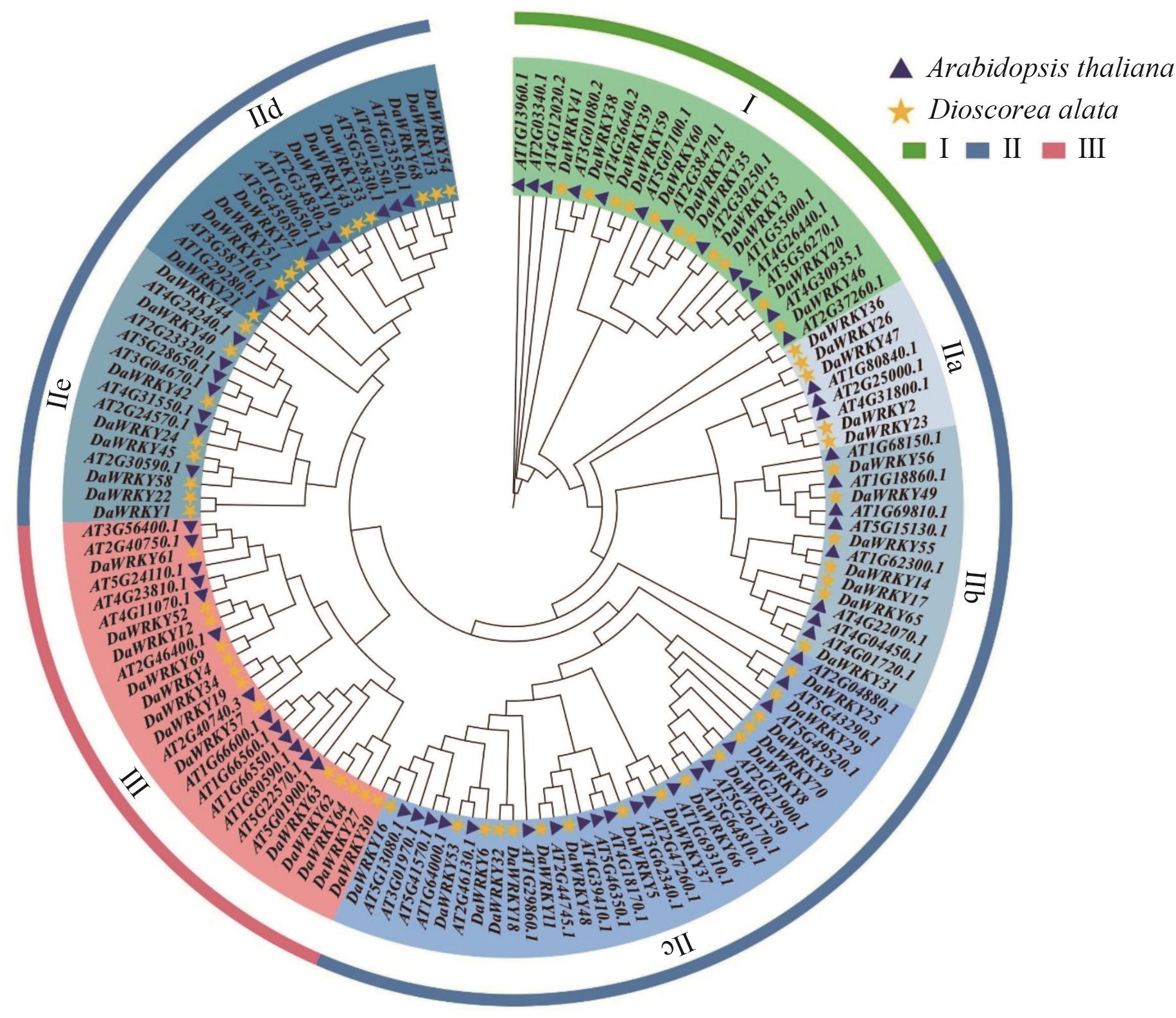
图1 参薯与拟南芥WRKY基因家族系统进化树
Fig. 1 Phylogenetic tree of WRKY gene family in D. alata and A. thaliana
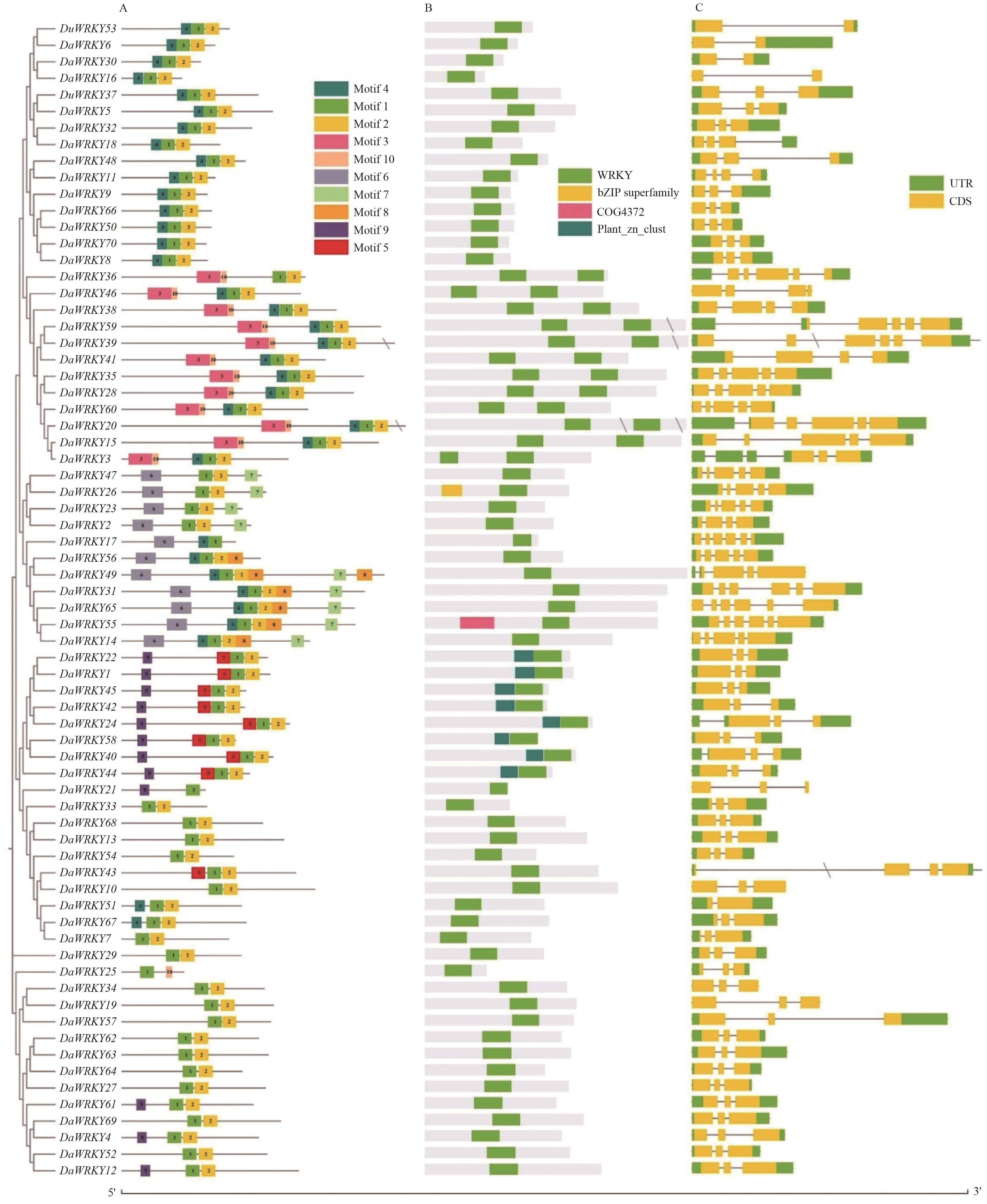
图2 DaWRKY的基序分布(A)、保守结构域(B)及基因结构分析(C)为便于排版,对较长的基因进行了部分截断(用\表示),示意图中只展示基序、结构域、CDS区的相对位置,不代表它们在基因或蛋白上所处的绝对位置
Fig. 2 Motif distribution (A), conserved domain (B), and gene structure (C) analysis of DaWRKYFor typesetting purposes, longer genes have been partially truncated (indicated by \). The schematic diagram only shows the relative positions of motifs, domains, and CDS regions, and does not indicate their absolute locations in the gene or protein
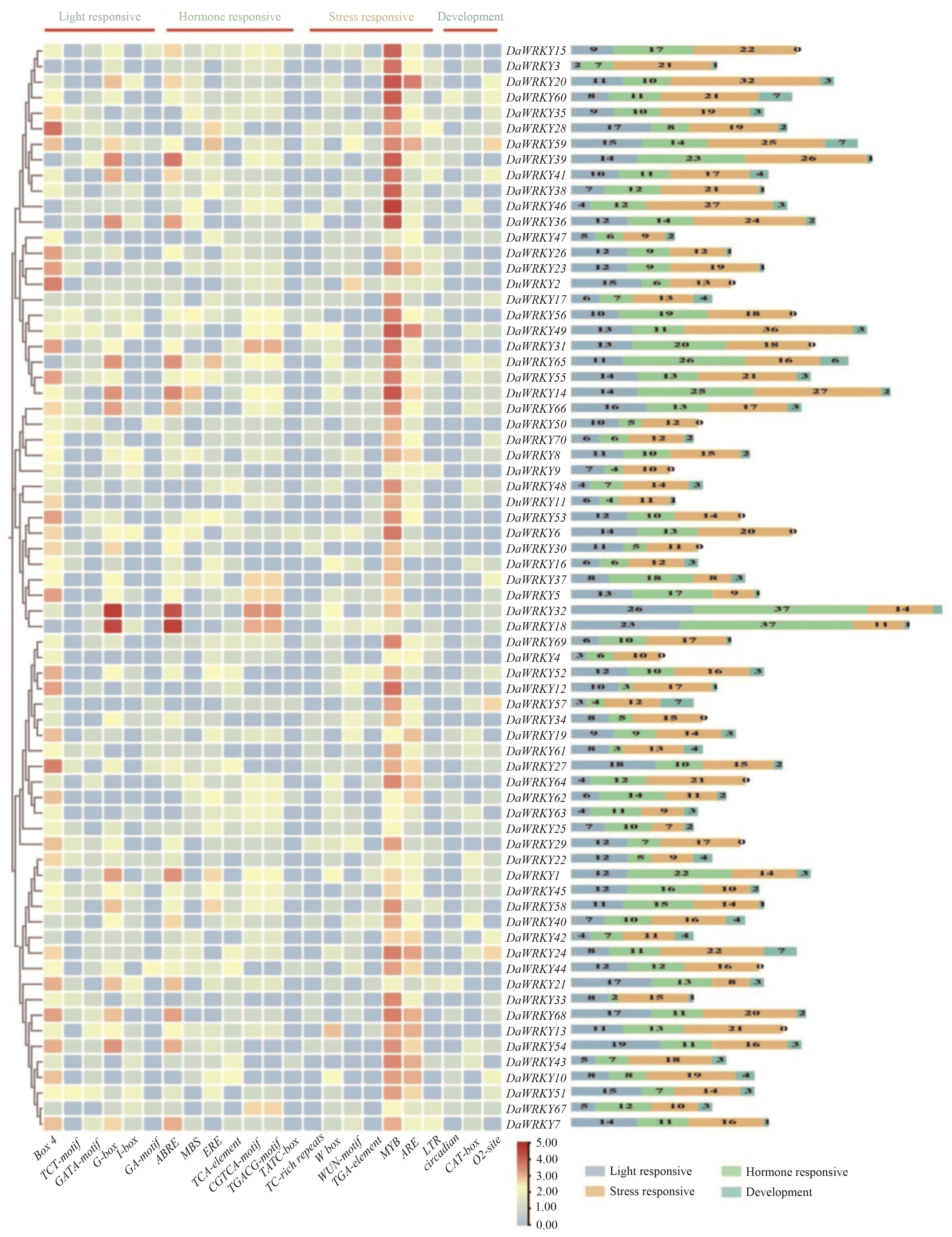
图3 DaWRKY基因顺式作用元件分析中间面板是显示顺式作用元件富集水平的热图。右边的堆积图显示了顺式作用元件的丰度:蓝色矩形表示光响应顺式作用元件;绿色矩形表示激素响应顺式元件;黄色矩形表示胁迫响应的顺式元件;青色矩形表示与生长和发育相关的顺式元件
Fig. 3 Analysis of the cis-acting elements of the DaWRKY geneThe central panel is a heatmap displaying the enrichment levels of cis-acting elements. The stacked bar chart on the right illustrates the abundance of cis-acting elements: blue rectangles represent light-responsive cis-acting elements; green rectangles, hormone-responsive cis-elements; yellow rectangles, stress-responsive cis-elements; while cyan rectangles denote cis-elements associated with growth and development
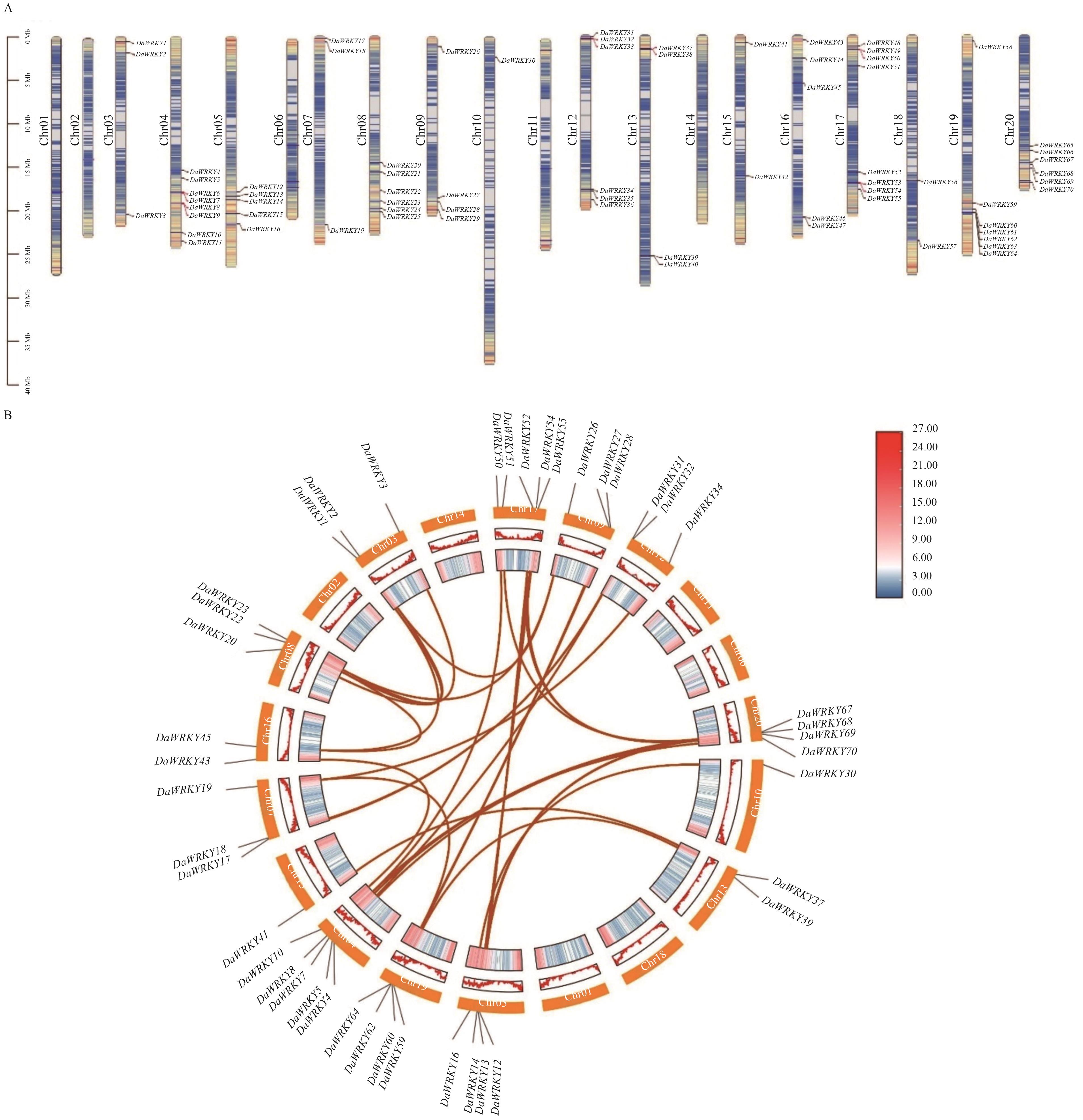
图4 参薯DaWRKY基因家族的染色体位置(A)和共线性分析(B)A:彩色矩形条表示D. alata的染色体;Chr1-20表示对应的染色体;红色粗轮廓表示基因串联重复,0-40 Mb的刻度表示染色体长度。B:红色线条表示片段重复,通过红色线条连接的两个基因是同源的。基因密度由热图(内圈)表示,外圈显示染色体的长度,最外圈的黑色线段表示基因在染色体上的定位
Fig. 4 Chromosomal location (A) and collinearity analysis (B) of DaWRKY gene family in D. alataA: Colored rectangular bars represent the chromosomes of D. alata; Chr1-20 indicate the corresponding chromosomes; the red thick outlines indicate gene tandem duplications, and the scale bar of 0-40 Mb represents the chromosome length. B: Red lines indicate segmental duplications, and the two genes connected by red lines are homologous. Gene density is represented by heatmap (inner circle), the outer circle shows the chromosome length, and the black line segments on the outermost circle indicate the gene locations on the chromosomes
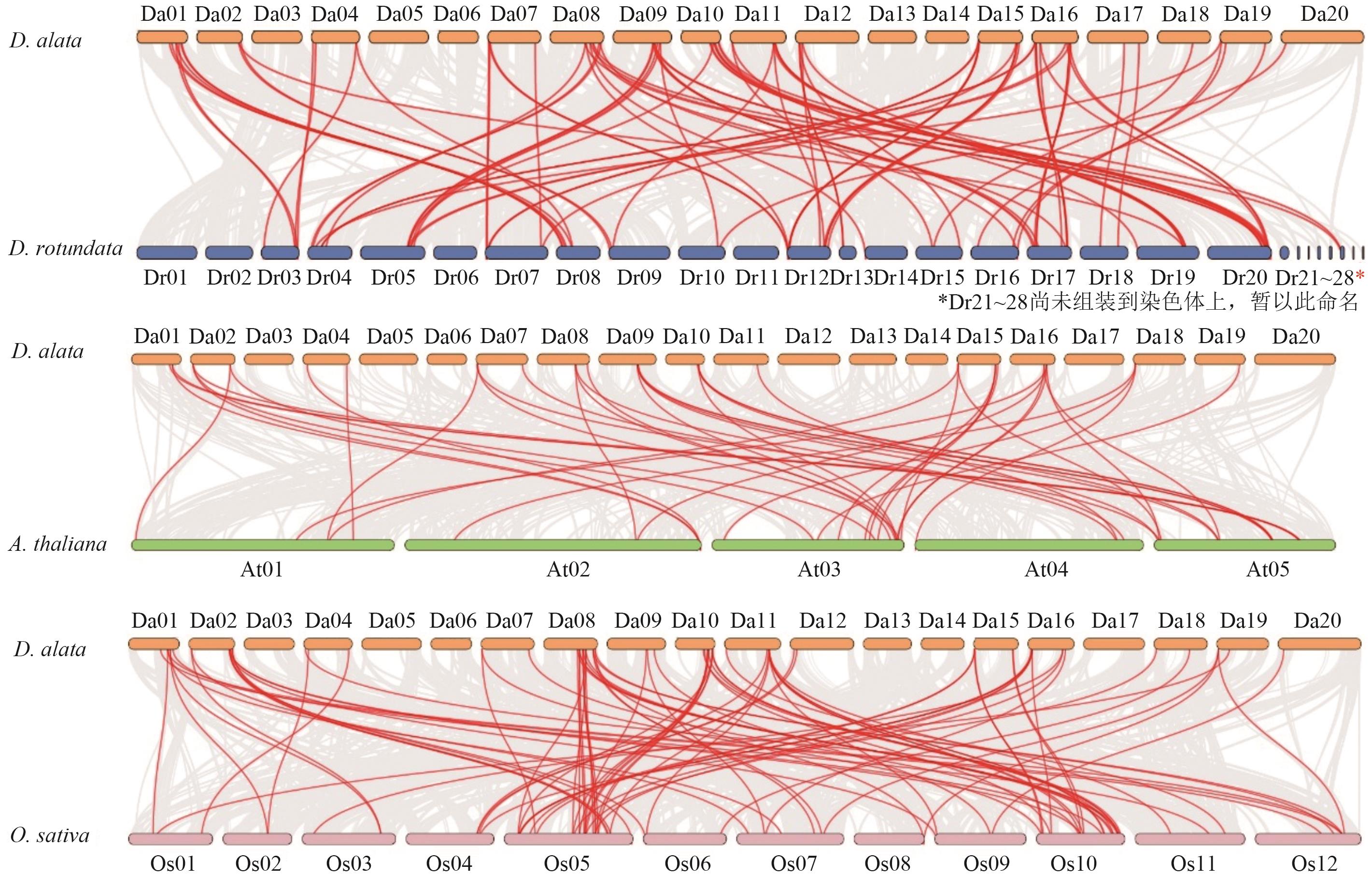
图5 参薯(D. alata)、几内亚山药(D. rotundata)、水稻(O. sativa)和拟南芥(A. thaliana)WRKY基因的共线性分析
Fig. 5 The collinearity analysis of WRKY genes in D. alata, D. rotundata, O. sativa, and A. thaliana
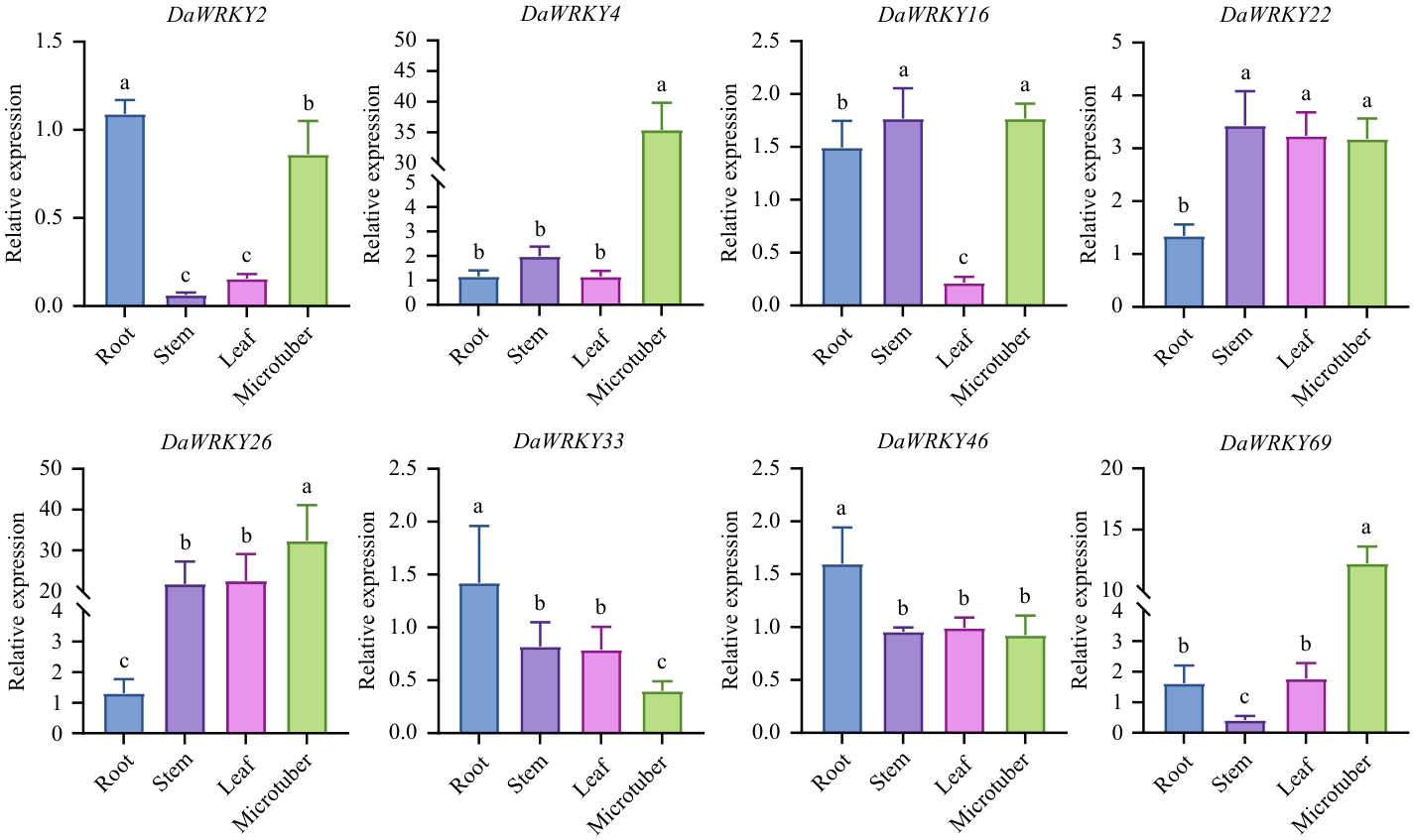
图6 DaWRKY基因在不同组织中的相对表达量不同小写字母表示组间存在显著差异(P<0.05),下同
Fig. 6 Relative expression of DaWRKY in different tissuesDifferent lowercase letters indicate significant differences among groups (P<0.05). The same below
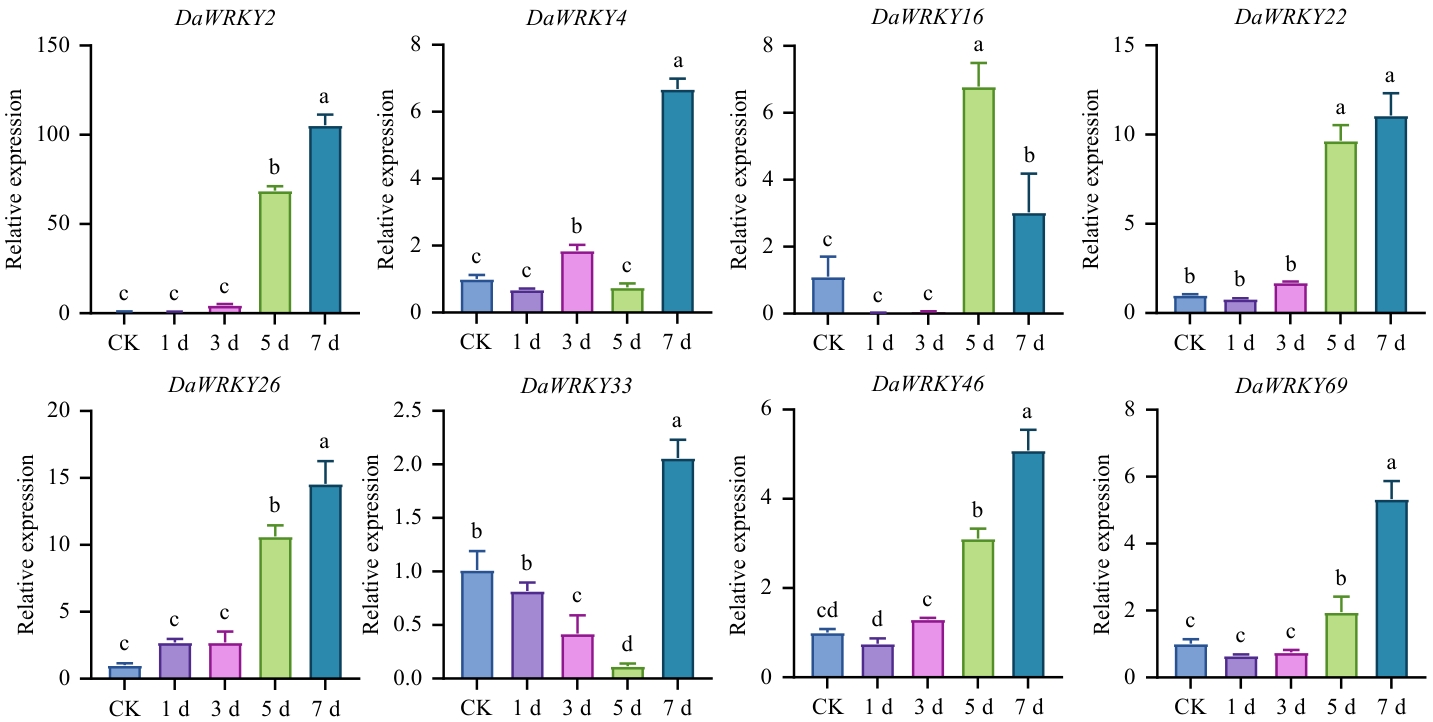
图7 DaWRKY基因在接种南方根结线虫不同时期的相对表达量
Fig. 7 Relative expression of DaWRKY genes at different stages after M. incognita inoculation
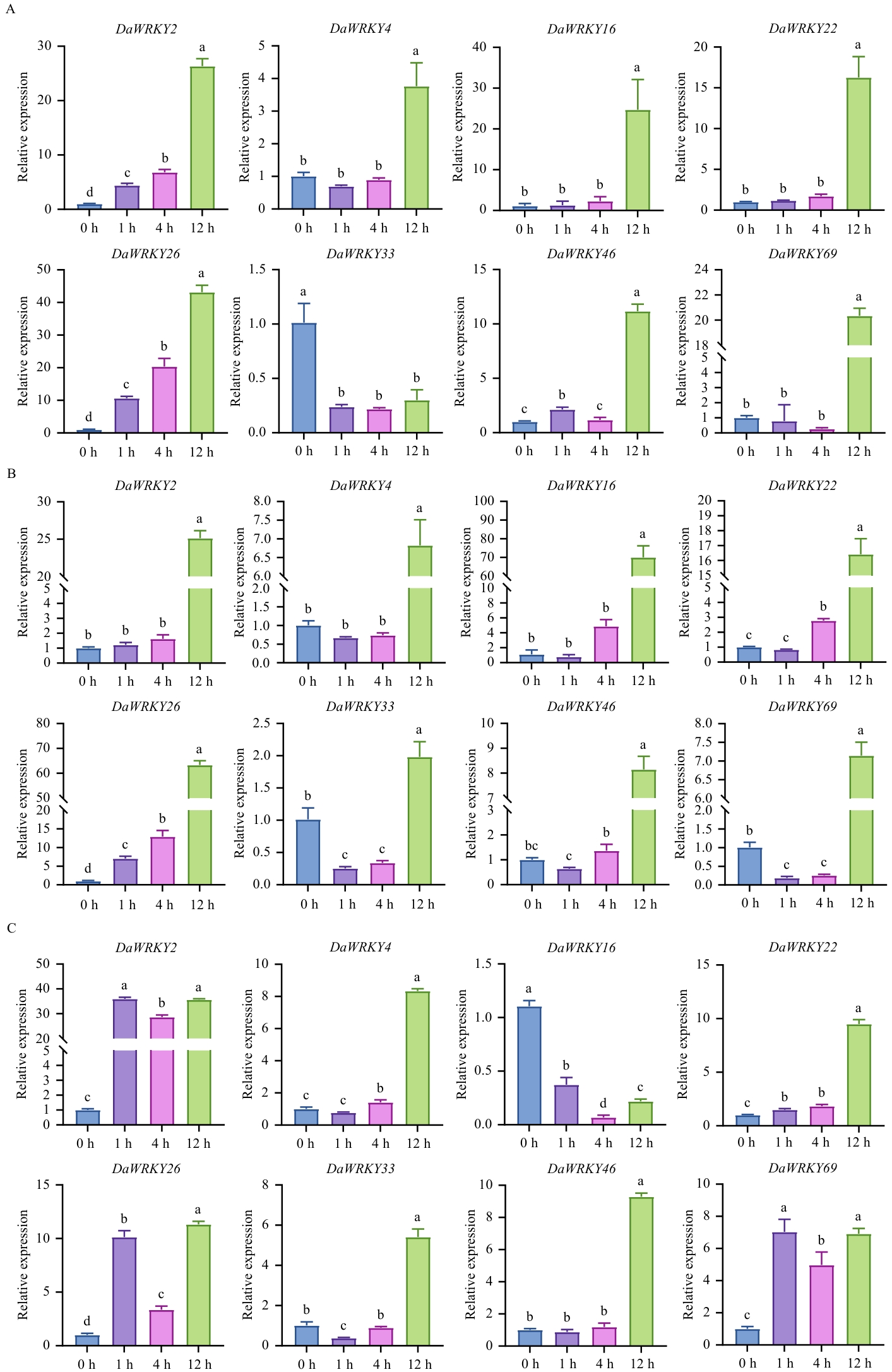
图8 DaWRKY基因在不同激素处理下不同时间的相对表达量A:ABA处理;B:MeJA处理;C:SA处理
Fig. 8 Relative expression of the DaWRKY gene at different time under various hormonal treatmentsA: Treatment with ABA. B: Treatment with MeJA. C: Treatment with SA
| [1] | 索宁宁, 张艳芳, 高圆丽, 等. 山药块茎膨大期淀粉积累及淀粉合成相关基因表达分析 [J]. 中国瓜菜, 2023, 36(3): 69-76. |
| Suo NN, Zhang YF, Gao YL, et al. Analysis of starch accumulation and starch synthesis-related gene expression during tuber expansion stage of yam [J]. China Cucurbits Veg, 2023, 36(3): 69-76. | |
| [2] | Tareen MBK, Saeed N, Sultan M, et al. Yam as functional food: bioactive properties, health benefits, and applications [J]. Food Nutr Health, 2025, 2: 16. |
| [3] | Ma FY, Wang RJ, Zhang Y, et al. Polysaccharides from Dioscorea opposita Thunb.: isolation, structural characterization, and anti-inflammatory and anti-tumor effects against hepatocellular carcinoma [J]. Chem Biol Technol Agric, 2023, 10: 43. |
| [4] | Sukumari Nath V, Kumar Mishra A, Kumar A, et al. Revisiting the role of transcription factors in coordinating the defense response against Citrus bark cracking viroid infection in commercial hop (Humulus lupulus L.) [J]. Viruses, 2019, 11(5): 419. |
| [5] | Jiang JJ, Ma SH, Ye NH, et al. WRKY transcription factors in plant responses to stresses [J]. J Integr Plant Biol, 2017, 59(2): 86-101. |
| [6] | Khoso MA, Hussain A, Ritonga FN, et al. WRKY transcription factors (TFs): Molecular switches to regulate drought, temperature, and salinity stresses in plants [J]. Front Plant Sci, 2022, 13: 1039329. |
| [7] | Yu XQ, Niu HQ, Zhang YM, et al. Transcription factor PagWRKY33 regulates gibberellin signaling and immune receptor pathways in Populus [J]. Plant Physiol, 2024, 197(1): kiae593. |
| [8] | Chen W, Huang BR. Cytokinin or ethylene regulation of heat-induced leaf senescence involving transcriptional modulation of WRKY in perennial ryegrass [J]. Physiol Plant, 2022, 174(5): e13766. |
| [9] | Zhang F, Wang F, Yang S, et al. MdWRKY100 encodes a group I WRKY transcription factor in Malus domestica that positively regulates resistance to Colletotrichum gloeosporioides infection [J]. Plant Sci, 2019, 286: 68-77. |
| [10] | Wang XH, Guo RR, Tu MX, et al. Ectopic expression of the wild grape WRKY transcription factor VqWRKY52 in Arabidopsis thaliana enhances resistance to the biotrophic pathogen powdery mildew but not to the necrotrophic pathogen Botrytis cinerea [J]. Front Plant Sci, 2017, 8: 97. |
| [11] | Chinnapandi B, Bucki P, Braun Miyara S. SlWRKY45, nematode-responsive tomato WRKY gene, enhances susceptibility to the root knot nematode; M. javanica infection [J]. Plant Signal Behav, 2017, 12(12): e1356530. |
| [12] | Chinnapandi B, Bucki P, Fitoussi N, et al. Tomato SlWRKY3 acts as a positive regulator for resistance against the root-knot nematode Meloidogyne javanica by activating lipids and hormone-mediated defense-signaling pathways [J]. Plant Signal Behav, 2019, 14(6): 1601951. |
| [13] | Ling J, Liu R, Hao YL, et al. Comprehensive analysis of the WRKY gene family in Cucumis metuliferus and their expression profile in response to an early stage of root knot nematode infection [J]. Front Plant Sci, 2023, 14: 1143171. |
| [14] | Bredeson JV, Lyons JB, Oniyinde IO, et al. Chromosome evolution and the genetic basis of agronomically important traits in greater yam [J]. Nat Commun, 2022, 13: 2001. |
| [15] | Finn RD, Clements J, Eddy SR. HMMER web server: interactive sequence similarity searching [J]. Nucleic Acids Res, 2011, 39(): W29-W37. |
| [16] | Marchler-Bauer A, Bo Y, Han LY, et al. CDD/SPARCLE: functional classification of proteins via subfamily domain architectures [J]. Nucleic Acids Res, 2017, 45(D1): D200-D203. |
| [17] | Zhang D, Gao FL, Jakovlić I, et al. PhyloSuite: an integrated and scalable desktop platform for streamlined molecular sequence data management and evolutionary phylogenetics studies [J]. Mol Ecol Resour, 2020, 20(1): 348-355. |
| [18] | Ronquist F, Teslenko M, van der Mark P, et al. MrBayes 3.2: efficient Bayesian phylogenetic inference and model choice across a large model space [J]. Syst Biol, 2012, 61(3): 539-542. |
| [19] | Wang YP, Tang HB, DeBarry JD, et al. MCScanX: a toolkit for detection and evolutionary analysis of gene synteny and collinearity [J]. Nucleic Acids Res, 2012, 40(7): e49. |
| [20] | Chen C, Chen H, He Y, et al. TBtools, a toolkit for biologists integrating various biological data handling tools with a user-friendly interface [PP/OL]. BioRxiv, 2018, 289660(10.1101): 289660. |
| [21] | Bailey TL, Boden M, Buske FA, et al. MEME Suite: tools for motif discovery and searching [J]. Nucleic Acids Res, 2009, 37(): W202-W208. |
| [22] | Lescot M, Déhais P, Thijs G, et al. PlantCARE, a database of plant cis-acting regulatory elements and a portal to tools for in silico analysis of promoter sequences [J]. Nucleic Acids Res, 2002, 30(1): 325-327. |
| [23] | 陈芝华, 陈木兰, 李丽红, 等. 参薯‘明淮1号’组培快繁技术研究 [J]. 云南农业大学学报: 自然科学, 2017, 32(3): 564-569. |
| Chen ZH, Chen ML, Li LH, et al. Study on rapid propagation technology of tissue culture of Dioscorea alata ‘minghuai No.1’ [J]. J Yunnan Agric Univ Nat Sci, 2017, 32(3): 564-569. | |
| [24] | Abd El-Aal EM, Shahen M, Sayed S, et al. In vivo and in vitro management of Meloidogyne incognita (Tylenchida: Heteroderidae) using rhizosphere bacteria, Pseudomonas spp. and Serratia spp. compared with oxamyl [J]. Saudi J Biol Sci, 2021, 28(9): 4876-4883. |
| [25] | Zhu SR, Estévez JM, Liao HD, et al. The RALF1-FERONIA complex phosphorylates eIF4E1 to promote protein synthesis and polar root hair growth [J]. Mol Plant, 2020, 13(5): 698-716. |
| [26] | 刘锐, 赵建龙, 谢丙炎, 等. 根结线虫诱导的巨型细胞及其形成机制 [J]. 生物技术通报, 2024, 40(3): 62-74. |
| Liu R, Zhao JL, Xie BY, et al. Giant cells induced by root-knot nematodes and its formation mechanisms [J]. Biotechnol Bull, 2024, 40(3): 62-74. | |
| [27] | 陈雪峰, 肖坤, 朱翔, 等. 抗南方根结线虫新疆野生樱桃李巨细胞的发育及CCS52B基因的作用 [J]. 园艺学报, 2015, 42(5): 843-852. |
| Chen XF, Xiao K, Zhu X, et al. Development of giant cells and roles of CCS52B gene work in Meloidogyne incognita resistant Prunus sogdiana [J]. Acta Hortic Sin, 2015, 42(5): 843-852. | |
| [28] | Xiong RQ, Peng ZH, Zhou H, et al. Correction: Genome-wide identification, structural characterization and gene expression analysis of the WRKY transcription factor family in pea (Pisum sativum L.) [J]. BMC Plant Biol, 2024, 24: 141. |
| [29] | Wu X, Li N, Wang B, et al. Genome-wide identification of WRKY gene family and expression analysis of key WRKY genes in response to Fusarium solani infection in Lycium barbarum [J]. Front Plant Sci, 2025, 16: 1543373. |
| [30] | Zheng LL, Qiu BL, Su LL, et al. Panax notoginseng WRKY transcription factor 9 is a positive regulator in responding to root rot pathogen Fusarium solani [J]. Front Plant Sci, 2022, 13: 930644. |
| [31] | Liu DM, He J, Li Q, et al. A WRKY transcription factor confers broad-spectrum resistance to biotic stresses and yield stability in rice [J]. Proc Natl Acad Sci U S A, 2025, 122(10): e2411164122. |
| [32] | Wang CT, Ru JN, Liu YW, et al. The maize WRKY transcription factor ZmWRKY40 confers drought resistance in transgenic Arabidopsis [J]. Int J Mol Sci, 2018, 19(9): 2580. |
| [33] | Huang H, Ma XC, Sun LL, et al. SlVQ15 recruits SlWRKY30IIc to link with jasmonate pathway in regulating tomato defence against root-knot nematodes [J]. Plant Biotechnol J, 2025, 23(1): 235-249. |
| [34] | Xing LN, Zhang YF, Ge MR, et al. Identification of WRKY gene family in Dioscorea opposita Thunb. reveals that DoWRKY71 enhanced the tolerance to cold and ABA stress [J]. PeerJ, 2024, 12: e17016. |
| [35] | 周建婵. 菊叶薯蓣WRKY转录因子的克隆及功能研究 [D]. 广州: 华南农业大学, 2020. |
| Zhou JC. Cloning and preliminary function analysis of WRKY transcription factors in Dioscorea composita [D]. Guangzhou: South China Agricultural University, 2020. | |
| [36] | 王丽娜, 王丰青, 智惊宇, 等. 盾叶薯蓣WRKY转录因子的鉴定和生物信息学分析 [J]. 中草药, 2016, 47(22): 4062-4071. |
| Wang LN, Wang FQ, Zhi JY, et al. Identification and bioinformatic analysis on rhizomes of Dioscorea zingiberensis WRKY transcription factor [J]. Chin Tradit Herb Drugs, 2016, 47(22): 4062-4071. | |
| [37] | 丁夏威, 田沺, 陈健文, 等. 甘薯WRKY基因家族鉴定及其响应茎腐病侵染的表达分析 [J]. 江苏农业科学, 2024, 52(21): 25-39. |
| Ding XW, Tian T, Chen JW, et al. Identification of WRKY gene family and their expression analysis in response to stem rot infection in Ipomoea batatas [J]. Jiangsu Agric Sci, 2024, 52(21): 25-39. | |
| [38] | 刘欣童, 陈慧杰, 陈双双, 等. 绣球WRKY基因家族全基因组鉴定及其响应叶斑病的表达分析 [J]. 华北农学报, 2025, 40(1): 93-103. |
| Liu XT, Chen HJ, Chen SS, et al. Genome-wide characterization of WRKY gene family in Hydrangea macrophylla and expression analysis in response to leaf spot disease [J]. Acta Agric Boreali Sin, 2025, 40(1): 93-103. | |
| [39] | 张雅玲, 邓朝军, 苏文炳, 等. 枇杷WRKY基因家族鉴定及其表达分析 [J]. 福建农业学报, 2025, 40(5): 487-499. |
| Zhang YL, Deng CJ, Su WB, et al. Identification and expressions of WRKY family in Eriobotrya japonica [J]. Fujian J Agric Sci, 2025, 40(5): 487-499. | |
| [40] | 秦娟, 卢蔚雯, 李斌, 等. 红花WRKY基因家族全基因组鉴定及其表达分析 [J]. 农业生物技术学报, 2025, 33(9): 1907-1920. |
| Qin J, Lu WW, Li B, et al. Genome wide identification and expression analysis of the WRKY gene family in safflower (Carthamus tinctorius) [J]. J Agric Biotechnol, 2025, 33(9): 1907-1920. | |
| [41] | Wang QS, Wang MH, Zhang XZ, et al. WRKY gene family evolution in Arabidopsis thaliana [J]. Genetica, 2011, 139(8): 973-983. |
| [42] | Lei L, Dong K, Liu SW, et al. Genome-wide identification of the WRKY gene family in blueberry (Vaccinium spp.) and expression analysis under abiotic stress [J]. Front Plant Sci, 2024, 15: 1447749. |
| [43] | 李宇静, 黄倩茹, 张爱冬, 等. 茄子SmMYB13基因在干旱胁迫响应中的功能 [J]. 浙江农业学报, 2025, 37(8): 1666-1679. |
| Li YJ, Huang QR, Zhang AD, et al. Function of the SmMYB13 gene in drought stress response in eggplant (Solanum melongena L.) [J]. Acta Agric Zhejiangensis, 2025, 37(8): 1666-1679. | |
| [44] | You HL, Tang D, Liu HX, et al. Chromosome ends initiate homologous chromosome pairing during rice meiosis [J]. Plant Physiol, 2024, 195(4): 2617-2634. |
| [45] | Tang J, Wang F, Hou XL, et al. Genome-wide fractionation and identification of wrky transcription factors in Chinese cabbage (Brassica rapa ssp. pekinensis) reveals collinearity and their expression patterns under abiotic and biotic stresses [J]. Plant Mol Biol Rep, 2014, 32(4): 781-795. |
| [46] | Huang H, Zhao WC, Qiao H, et al. SlWRKY45 interacts with jasmonate-ZIM domain proteins to negatively regulate defense against the root-knot nematode Meloidogyne incognita in tomato [J]. Hortic Res, 2022, 9: uhac197. |
| [47] | Liu DX, Fan JL, Ye Y, et al. The transcription factor BnaWRKY75 enhances resistance to the necrotrophic pathogen Sclerotinia sclerotiorum by promoting salicylic acid biosynthesis in oilseed rape [J]. J Exp Bot, 2025, 76(20): 5877-5893. |
| [1] | 宋文清, 陈智翔, 李雨倩, 王海龙, 邢国芳, 张杰伟. TIFY转录因子在植物生长发育和逆境胁迫响应中的作用[J]. 生物技术通报, 2026, 42(9): 70-81. |
| [2] | 郑淑雅, 苏玉婷, 何玉美, 赵盼, 周心怡, 刘冉, 刘平丽, 郭惠红. 杨树PagRAX2_16G及其启动子的克隆与功能分析[J]. 生物技术通报, 2026, 42(9): 186-195. |
| [3] | 陈宁一, 吴文彤, 赵国春, 贾黎明, 陈仲. 无患子SmHD-ZIP25和SmHD-ZIP29基因在花发育中的功能研究[J]. 生物技术通报, 2026, 42(9): 210-220. |
| [4] | 任文斌, 陈登科, 吴翠翠. 花生转录因子AhZHD9的生物信息学分析及耐盐性研究[J]. 生物技术通报, 2026, 42(9): 297-305. |
| [5] | 秦子璐, 孙海燕, 陈赢男. 植物表皮毛发育分子调控机制研究进展[J]. 生物技术通报, 2026, 42(9): 57-69. |
| [6] | 王建波, 李诗雅, 邢鹤炫, 周瑞金, 李桂荣, 王玲. 海藻糖-6-磷酸合成酶基因VvTPS10在葡萄耐盐和生长发育中的功能分析[J]. 生物技术通报, 2026, 42(8): 188-196. |
| [7] | 李梦茹, 钱超楠, 阚思蔚, 刘国元, 张健, 陈艳红. 旱柳SmERF B2-8基因在响应淹水胁迫中的功能研究[J]. 生物技术通报, 2026, 42(7): 204-213. |
| [8] | 辛晴, 郑永杰, 李雨华, 涂白连, 刘新亮, 张月婷, 伍艳芳. 樟树MYC转录因子的全基因组鉴定与表达分析[J]. 生物技术通报, 2026, 42(7): 214-225. |
| [9] | 张雅宁, 毛春力, 胡志勇, 杨丹, 吴佳海, 王碧娴, 黄琳凯. 象草Dof转录因子的全基因组分析及其对低温胁迫的响应[J]. 生物技术通报, 2026, 42(6): 267-278. |
| [10] | 翟莹, 高双, 计俊杰, 于海伟, 赵艳, 马天意, 张梅娟, 李珊珊. 工业大麻转录因子CsMYB12抗旱功能的研究[J]. 生物技术通报, 2026, 42(6): 294-303. |
| [11] | 安飞飞, 罗秀芹, 蔡杰, 薛晶晶, 朱文丽. 木薯MeMYB106基因克隆及其在叶片花青素合成中的功能[J]. 生物技术通报, 2026, 42(6): 13-21. |
| [12] | 董亚瑞, 栗锦烨, 崔庆晗, 贾玉鑫. 马铃薯核心MADS-box转录因子进化特性与功能预测[J]. 生物技术通报, 2026, 42(6): 64-76. |
| [13] | 沈晨, 车延年, 丁中平, 王祥文, 葛玉建, 符东青, 周亚星乔, 李瑞梅. 木薯采后生理变质相关基因MeGLYI-13上游转录因子的筛选[J]. 生物技术通报, 2026, 42(6): 98-106. |
| [14] | 郭威, 耿越, 梁晓, 刘迎, 伍春玲, 陈青. 抗、感木薯品种对木薯绵粉蚧蜡质合成基因表达的影响[J]. 生物技术通报, 2026, 42(6): 128-138. |
| [15] | 王江清, 张蝶, 王荟洁, 袁柱东, 付艳鸿, 黄娅楠, 王洪洋. 马铃薯AP2/ERF基因家族鉴定及响应致病疫霉胁迫的表达分析[J]. 生物技术通报, 2026, 42(6): 116-127. |
| 阅读次数 | ||||||
|
全文 |
|
|||||
|
摘要 |
|
|||||
