







Biotechnology Bulletin ›› 2025, Vol. 41 ›› Issue (10): 196-209.doi: 10.13560/j.cnki.biotech.bull.1985.2025-0462
Previous Articles Next Articles
WANG Bi-cheng1,2( ), JING Hai-qing1, WAN Kun1,2, ZHANG Ying-ying1,2, DING Jia-hao1, LI Run-zhi1, XUE Jin-ai1(), ZHANG Hai-ping2()
Received:2025-05-06
Online:2025-10-26
Published:2025-10-28
Contact:
XUE Jin-ai, ZHANG Hai-ping
E-mail:18656762826@163.com;306214803@qq.com;nkyzhp@126.com
WANG Bi-cheng, JING Hai-qing, WAN Kun, ZHANG Ying-ying, DING Jia-hao, LI Run-zhi, XUE Jin-ai, ZHANG Hai-ping. Identification of Soybean BCAT Gene Family and Functional Analysis of GmBCAT3 in Soybean Responses to Drought Stress[J]. Biotechnology Bulletin, 2025, 41(10): 196-209.
| 引物 Primer | 正向引物 Forward primer (5′-3′) | 反向引物 Reverse primer (5′-3′) | 用途 Purpose |
|---|---|---|---|
| GmBCAT1-q | TCCGCCACTCTGTCTTCTGATCC | GTTCCACCTCGTGTGCATTTCATG | RT-qPCR |
| GmBCAT2-q | TTTGGCTCCTGCACCTCAATACAC | GCACGGTCAAAGTTCTCCTCCAC | |
| GmBCAT3-q | TTGCTTCTTCGGGCTGGTTGTTC | CTAGGGTTGTGGCTCGGTAGAGG | |
| GmBCAT4-q | GGAACAGGAGCATCGTTAGGTGTG | GTGGTAGCTGCCAACAGGAGAAC | |
| GmBCAT5-q | CCAGTTGGCAGCTACCAGAAGG | GCACATCAGAGAATCCGTTGGC | |
| GmBCAT6-q | TGGCACCTTCTGTTGAGCAGTA | TGTCGTCCTTTGTAAGCGTTGG | |
| GmBCAT7-q | ACCAGTTTGTTGCTGCTGTGAA | CGGTTCCACCAGTGCCAGATAT | |
| GmBCAT8-q | AGCGAAGAATCAGCCTGTCAGAAG | ATTATGCGGCCATCGACCTTCAC | |
| GmBCAT9-q | GCCATCGCCTACTGTTGAGCAG | CGGTCCACTTCCCATTAGCAAAGG | |
| GmBCAT10-q | ATGCTTCTTGGCAGCGGAGTTC | CGAACAGTGGAGGGACCTGATTTC | |
| GmActin-q | AAGCTGTTCTCTCCTTGTACGCC | GCACAGTGTGAGACACACCATCA | 内参基因 |
| GmBCAT3-1302 | acgggggactcttgaccatggGAGATGCAATGTTCCAAAAAGGA | aagttcttctcctttactagtTTAATCAACTTCGACAATCCATCC | 过表达载体构建 |
| GmBCAT3-1300 | atacaccaaatcgactctagaGAGATGCAATGTTCCAAAAAGGA | gcccttgctcaccatggtaccATCAACTTCGACAATCCATCCC | 亚细胞定位载体构建 |
| NtActin-q | CAGTGGCCGTACAACAGGTA | AACCGAAGAATTGCATGAGG | 内参基因 |
| NtDHAD-q | CTATGGTGATGGTCATGGCACTTGG | ACCGCATCGCTAACCTTCTGGAA | RT-qPCR |
| NtBCKDH-q | CATTCTACATCCGATGACTCCACCAA | TCTTTGTCGTTCCACCAGCCATTT | |
| NtIVD-q | GCAGGCACAAGTGAGATCAGAAGAA | GAGAGGTGGGAGGTCGTCAATTTG |
Table 1 Primer sequences used in this study
| 引物 Primer | 正向引物 Forward primer (5′-3′) | 反向引物 Reverse primer (5′-3′) | 用途 Purpose |
|---|---|---|---|
| GmBCAT1-q | TCCGCCACTCTGTCTTCTGATCC | GTTCCACCTCGTGTGCATTTCATG | RT-qPCR |
| GmBCAT2-q | TTTGGCTCCTGCACCTCAATACAC | GCACGGTCAAAGTTCTCCTCCAC | |
| GmBCAT3-q | TTGCTTCTTCGGGCTGGTTGTTC | CTAGGGTTGTGGCTCGGTAGAGG | |
| GmBCAT4-q | GGAACAGGAGCATCGTTAGGTGTG | GTGGTAGCTGCCAACAGGAGAAC | |
| GmBCAT5-q | CCAGTTGGCAGCTACCAGAAGG | GCACATCAGAGAATCCGTTGGC | |
| GmBCAT6-q | TGGCACCTTCTGTTGAGCAGTA | TGTCGTCCTTTGTAAGCGTTGG | |
| GmBCAT7-q | ACCAGTTTGTTGCTGCTGTGAA | CGGTTCCACCAGTGCCAGATAT | |
| GmBCAT8-q | AGCGAAGAATCAGCCTGTCAGAAG | ATTATGCGGCCATCGACCTTCAC | |
| GmBCAT9-q | GCCATCGCCTACTGTTGAGCAG | CGGTCCACTTCCCATTAGCAAAGG | |
| GmBCAT10-q | ATGCTTCTTGGCAGCGGAGTTC | CGAACAGTGGAGGGACCTGATTTC | |
| GmActin-q | AAGCTGTTCTCTCCTTGTACGCC | GCACAGTGTGAGACACACCATCA | 内参基因 |
| GmBCAT3-1302 | acgggggactcttgaccatggGAGATGCAATGTTCCAAAAAGGA | aagttcttctcctttactagtTTAATCAACTTCGACAATCCATCC | 过表达载体构建 |
| GmBCAT3-1300 | atacaccaaatcgactctagaGAGATGCAATGTTCCAAAAAGGA | gcccttgctcaccatggtaccATCAACTTCGACAATCCATCCC | 亚细胞定位载体构建 |
| NtActin-q | CAGTGGCCGTACAACAGGTA | AACCGAAGAATTGCATGAGG | 内参基因 |
| NtDHAD-q | CTATGGTGATGGTCATGGCACTTGG | ACCGCATCGCTAACCTTCTGGAA | RT-qPCR |
| NtBCKDH-q | CATTCTACATCCGATGACTCCACCAA | TCTTTGTCGTTCCACCAGCCATTT | |
| NtIVD-q | GCAGGCACAAGTGAGATCAGAAGAA | GAGAGGTGGGAGGTCGTCAATTTG |
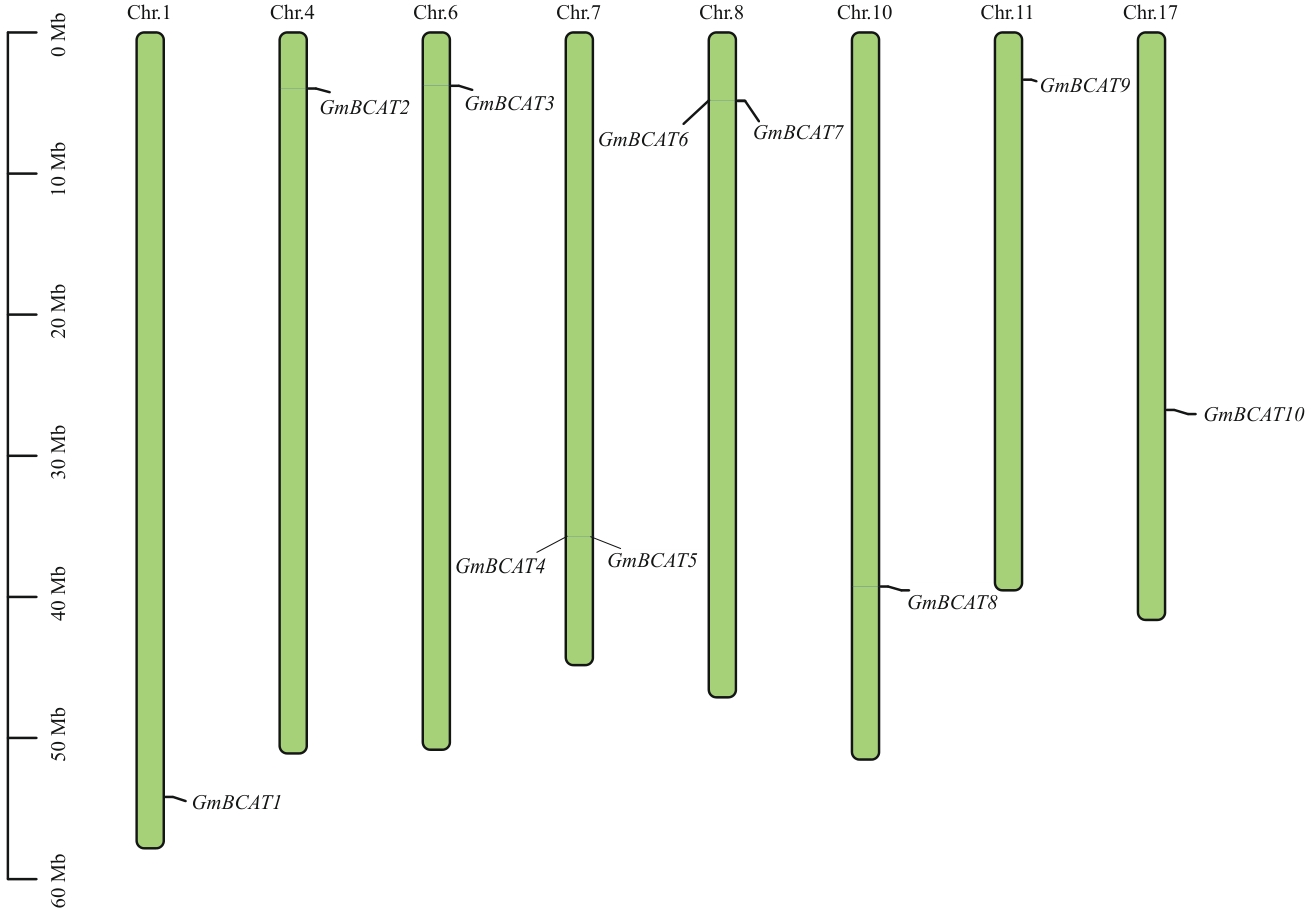
Fig. 1 Chromosome location of GmBCAT genes
| 蛋白Protein | 基因IDGene ID | 氨基酸数Number of amino acids | 分子量Molecular weight (kD) | 理论等电点Theoretical pI | 不稳定系数Instability index | 脂溶指数Aliphatic index | 亲水性GRAVY | 亚细胞定位Subcellular location |
|---|---|---|---|---|---|---|---|---|
| GmBCAT1 | Glyma.01G196300 | 406 | 44.58 | 5.77 | 54.72 | 94.09 | -0.036 | 叶绿体 Chloroplast |
| GmBCAT2 | Glyma.04G049200 | 384 | 41.99 | 6.76 | 43.72 | 84.82 | -0.209 | 叶绿体、线粒体 Chloroplast, mitochondrion |
| GmBCAT3 | Glyma.06G050100 | 462 | 50.80 | 8.51 | 45.85 | 80.43 | -0.223 | 叶绿体、线粒体 Chloroplast, mitochondrion |
| GmBCAT4 | Glyma.07G186000 | 358 | 38.79 | 5.23 | 38.97 | 81.70 | -0.121 | 叶绿体 Chloroplast |
| GmBCAT5 | Glyma.07G186100 | 359 | 38.57 | 6.83 | 42.88 | 88.27 | -0.043 | 叶绿体、线粒体 Chloroplast, mitochondrion |
| GmBCAT6 | Glyma.08G063000 | 354 | 38.96 | 5.44 | 33.76 | 80.14 | -0.172 | 细胞质 Cytoplasm |
| GmBCAT7 | Glyma.08G063300 | 357 | 38.47 | 5.52 | 46.83 | 87.93 | -0.025 | 叶绿体、线粒体 Chloroplast, mitochondrion |
| GmBCAT8 | Glyma.10G156701 | 244 | 27.07 | 8.78 | 33.47 | 97.09 | -0.211 | 细胞质 Cytoplasm |
| GmBCAT9 | Glyma.11G045300 | 412 | 45.18 | 6.08 | 56.27 | 92.96 | -0.072 | 叶绿体、线粒体 Chloroplast, mitochondrion |
| GmBCAT10 | Glyma.17G190800 | 382 | 42.24 | 9.05 | 40.49 | 88.51 | -0.15 | 叶绿体 Chloroplast |
Table 2 Analysis of the basic physicochemical properties of GmBCAT family members in soybean
| 蛋白Protein | 基因IDGene ID | 氨基酸数Number of amino acids | 分子量Molecular weight (kD) | 理论等电点Theoretical pI | 不稳定系数Instability index | 脂溶指数Aliphatic index | 亲水性GRAVY | 亚细胞定位Subcellular location |
|---|---|---|---|---|---|---|---|---|
| GmBCAT1 | Glyma.01G196300 | 406 | 44.58 | 5.77 | 54.72 | 94.09 | -0.036 | 叶绿体 Chloroplast |
| GmBCAT2 | Glyma.04G049200 | 384 | 41.99 | 6.76 | 43.72 | 84.82 | -0.209 | 叶绿体、线粒体 Chloroplast, mitochondrion |
| GmBCAT3 | Glyma.06G050100 | 462 | 50.80 | 8.51 | 45.85 | 80.43 | -0.223 | 叶绿体、线粒体 Chloroplast, mitochondrion |
| GmBCAT4 | Glyma.07G186000 | 358 | 38.79 | 5.23 | 38.97 | 81.70 | -0.121 | 叶绿体 Chloroplast |
| GmBCAT5 | Glyma.07G186100 | 359 | 38.57 | 6.83 | 42.88 | 88.27 | -0.043 | 叶绿体、线粒体 Chloroplast, mitochondrion |
| GmBCAT6 | Glyma.08G063000 | 354 | 38.96 | 5.44 | 33.76 | 80.14 | -0.172 | 细胞质 Cytoplasm |
| GmBCAT7 | Glyma.08G063300 | 357 | 38.47 | 5.52 | 46.83 | 87.93 | -0.025 | 叶绿体、线粒体 Chloroplast, mitochondrion |
| GmBCAT8 | Glyma.10G156701 | 244 | 27.07 | 8.78 | 33.47 | 97.09 | -0.211 | 细胞质 Cytoplasm |
| GmBCAT9 | Glyma.11G045300 | 412 | 45.18 | 6.08 | 56.27 | 92.96 | -0.072 | 叶绿体、线粒体 Chloroplast, mitochondrion |
| GmBCAT10 | Glyma.17G190800 | 382 | 42.24 | 9.05 | 40.49 | 88.51 | -0.15 | 叶绿体 Chloroplast |

Fig. 2 Phylogenetic tree of BCAT proteins from soybean, Arabidopsis and rice
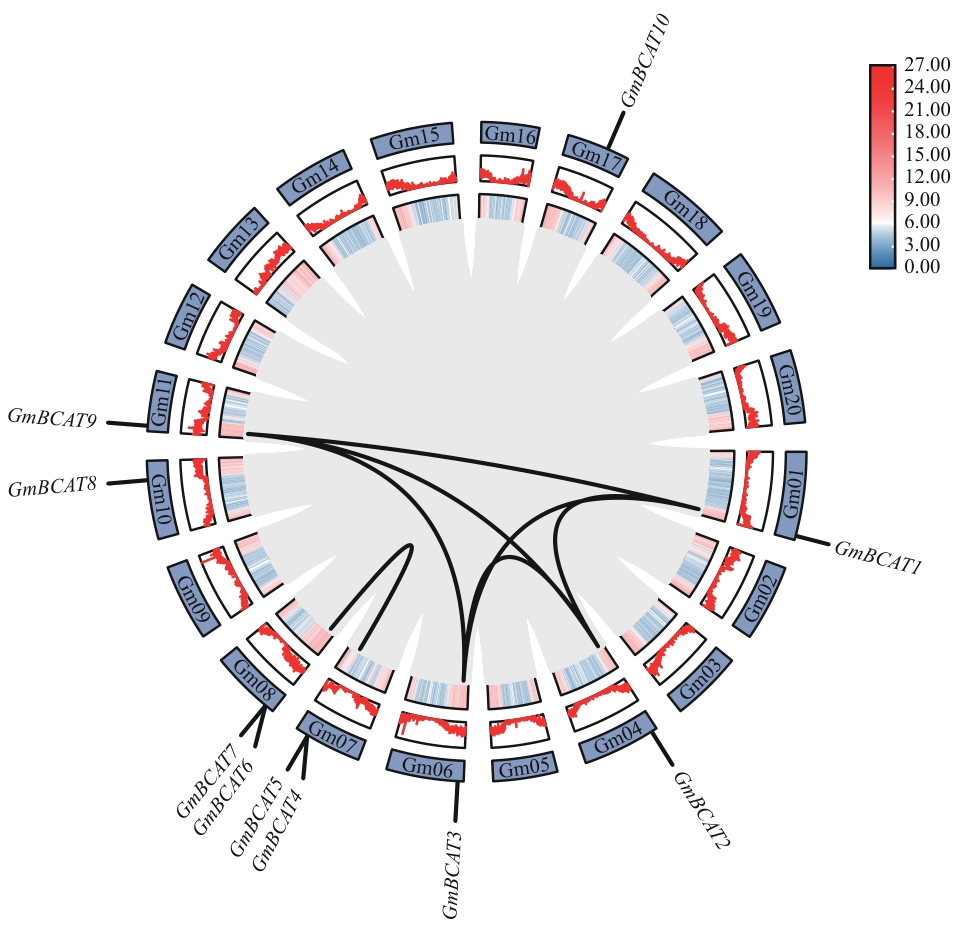
Fig. 3 Collinearity analysis of GmBCAT genes

Fig. 4 Conserved motif pattern and gene structure analysis of GmBCAT membersA: Grouping of GmBCAT members. B: Motif pattern. C: Protein domain. D: Gene structure. E: Conserved motif sequence

Fig. 5 Cis-acting elements analysis in promoter of GmBCATs genes

Fig. 6 Analysis of tissue expression of GmBCAT genes in soybeanSeed 1: 25 d after flowering. Seed 2: 35 d after flowering. Seed 3: 45 d after flowering. Different lowercase letters indicate significant difference (P<0.05). The same below

Fig. 7 Expression analysis of GmBCAT genes in soybean seedling under drought stress
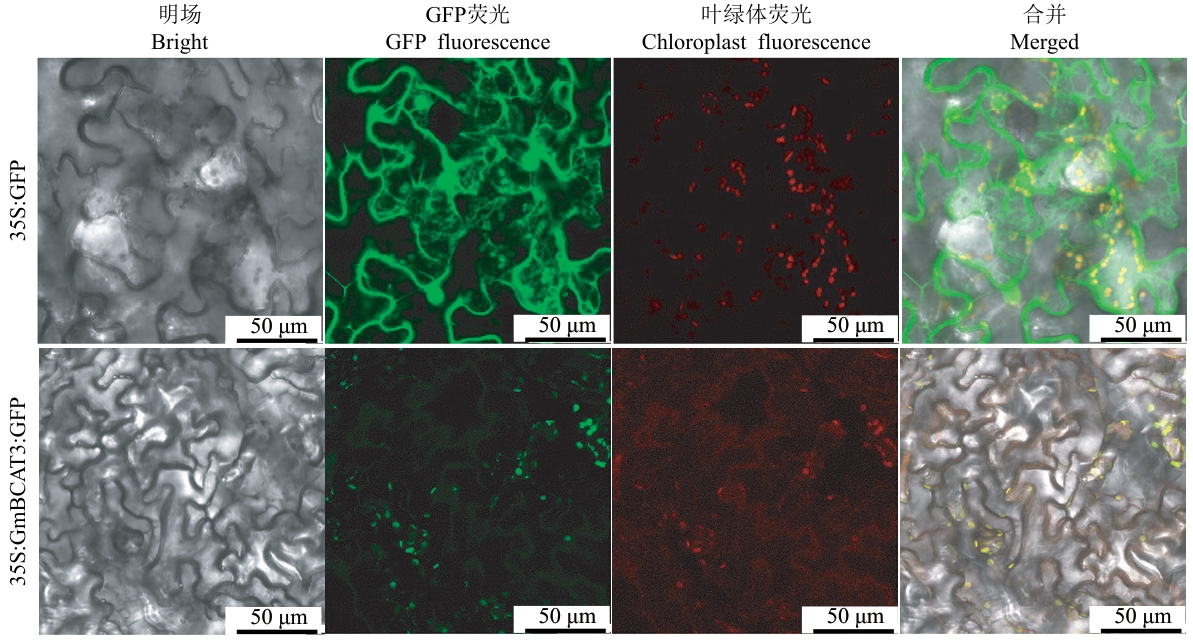
Fig. 8 Subcellular localization analysis of GmBCAT3 protein

Fig. 9 Phenotypes (A) and BCAAs contents in the leaves (B) of the wild type and GmBCAT3-transgenic tobacco plants

Fig. 10 Determination of physiological indexes of transgenic tobacco under drought stress
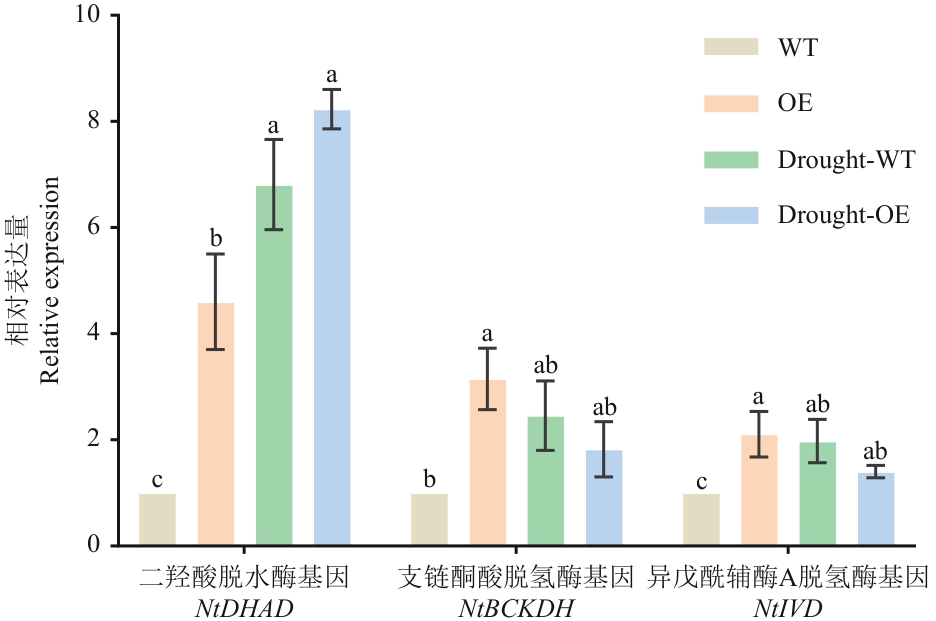
Fig. 11 Expression analysis of BCAAs metabolism-related genes in the GmBCAT3-transgenic tobacco
| [1] | 李傲辰. 大豆的主要营养成分及营养价值研究进展 [J]. 现代农业科技, 2020(23): 213-214, 218. |
| Li AC. Main nutrientional components and values of soybean [J]. Mod Agric Sci Technol, 2020(23): 213-214, 218. | |
| [2] | 金洁. 干旱胁迫下耐旱大豆叶片形态及生理特性 [D]. 沈阳: 沈阳农业大学, 2023. |
| Jin J. Morphological and physiological characteristics of drought-tolerant soybean leaves under drought stress [D]. Shenyang: Shenyang Agricultural University, 2023. | |
| [3] | 于佳鑫, 潘加莉, 张爽, 等. 大豆耐旱性研究进展 [J]. 南方农业, 2024, 18(17): 95-100. |
| Yu JX, Pan JL, Zhang S, et al. Research progress on drought tolerance of soybean [J]. South China Agric, 2024, 18(17): 95-100. | |
| [4] | Yan CJ, Song SH, Wang WB, et al. Screening diverse soybean genotypes for drought tolerance by membership function value based on multiple traits and drought-tolerant coefficient of yield [J]. BMC Plant Biol, 2020, 20(1): 321. |
| [5] | 高启. 大豆种植技术与病虫害防治技术的要点 [J]. 种子科技, 2024, 42(19): 124-126. |
| Gao Q. Key points of soybean planting technology and pest control technology [J]. Seed Sci Technol, 2024, 42(19): 124-126. | |
| [6] | 纪展波, 蒲伟凤, 李桂兰, 等. 野生大豆、半野生大豆和栽培大豆对苗期干旱胁迫的生理反应 [J]. 大豆科学, 2012, 31(4): 598-604. |
| Ji ZB, Pu WF, Li GL, et al. Physiological reaction of Glycine soja, Glycine gracilis and Glycine max to drought stress in seedling stage [J]. Soybean Sci, 2012, 31(4): 598-604. | |
| [7] | 张仟雨, 李萍, 宗毓铮, 等. 干旱对大豆生理及产量影响的研究 [J]. 华北农学报, 2016, 31(5): 140-145. |
| Zhang QY, Li P, Zong YZ, et al. Effects of drought on physiology and yield of soybean [J]. Acta Agric Boreali Sin, 2016, 31(5): 140-145. | |
| [8] | Poudel S, Vennam RR, Shrestha A, et al. Resilience of soybean cultivars to drought stress during flowering and early-seed setting stages [J]. Sci Rep, 2023, 13(1): 1277. |
| [9] | Bowne JB, Erwin TA, Juttner J, et al. Drought responses of leaf tissues from wheat cultivars of differing drought tolerance at the metabolite level [J]. Mol Plant, 2012, 5(2): 418-429. |
| [10] | Joshi V, Joung JG, Fei ZJ, et al. Interdependence of threonine, methionine and isoleucine metabolism in plants: accumulation and transcriptional regulation under abiotic stress [J]. Amino Acids, 2010, 39(4): 933-947. |
| [11] | Angelovici R, Lipka AE, Deason N, et al. Genome-wide analysis of branched-chain amino acid levels in Arabidopsis seeds [J]. Plant Cell, 2013, 25(12): 4827-4843. |
| [12] | Diebold R, Schuster J, Däschner K, et al. The branched-chain amino acid transaminase gene family in Arabidopsis encodes plastid and mitochondrial proteins [J]. Plant Physiol, 2002, 129(2): 540-550. |
| [13] | Zolman BK, Monroe-Augustus M, Thompson B, et al. chy1, an Arabidopsis mutant with impaired beta-oxidation, is defective in a peroxisomal beta-hydroxyisobutyryl-CoA hydrolase [J]. J Biol Chem, 2001, 276(33): 31037-31046. |
| [14] | Taylor NL, Heazlewood JL, Day DA, et al. Lipoic acid-dependent oxidative catabolism of alpha-keto acids in mitochondria provides evidence for branched-chain amino acid catabolism in Arabidopsis [J]. Plant Physiol, 2004, 134(2): 838-848. |
| [15] | Hare PD, Cress WA, Van Staden J. Dissecting the roles of osmolyte accumulation during stress [J]. Plant Cell Environ, 1998, 21(6): 535-553. |
| [16] | Wani SH, Singh NB, Haribhushan A, et al. Compatible solute engineering in plants for abiotic stress tolerance - role of Glycine betaine [J]. Curr Genomics, 2013, 14(3): 157-165. |
| [17] | Chen C, Naveed H, Chen KP. Research progress on branched-chain amino acid aminotransferases [J]. Front Genet, 2023, 14: 1233669. |
| [18] | Yobi A, Batushansky A, Oliver MJ, et al. Adaptive responses of amino acid metabolism to the combination of desiccation and low nitrogen availability in Sporobolus stapfianus [J]. Planta, 2019, 249(5): 1535-1549. |
| [19] | Knill T, Reichelt M, Paetz C, et al. Arabidopsis thaliana encodes a bacterial-type heterodimeric isopropylmalate isomerase involved in both Leu biosynthesis and the Met chain elongation pathway of glucosinolate formation [J]. Plant Mol Biol, 2009, 71(3): 227-239. |
| [20] | Knill T, Schuster J, Reichelt M, et al. Arabidopsis branched-chain aminotransferase 3 functions in both amino acid and glucosinolate biosynthesis[J]. Plant Physiol, 2008, 146(3): 1028-1039. |
| [21] | Lächler K, Imhof J, Reichelt M, et al. The cytosolic branched-chain aminotransferases of Arabidopsis thaliana influence methionine supply, salvage and glucosinolate metabolism [J]. Plant Mol Biol, 2015, 88(1/2): 119-131. |
| [22] | Shim JS, Jeong HI, Bang SW, et al. Drought-induced branched-chain amino acid aminotransferase enhances drought tolerance in rice [J]. Plant Physiol, 2023, 191(2): 1435-1447. |
| [23] | Corredor-Moreno P, Minter F, Davey PE, et al. The branched-chain amino acid aminotransferase TaBCAT1 modulates amino acid metabolism and positively regulates wheat rust susceptibility [J]. Plant Cell, 2021, 33(5): 1728-1747. |
| [24] | Zhang WF, Gong ZH, Wu MB, et al. Integrative comparative analyses of metabolite and transcript profiles uncovers complex regulatory network in tomato (Solanum lycopersicum L.) fruit undergoing chilling injury [J]. Sci Rep, 2019, 9(1): 4470. |
| [25] | Jin C, Sun YY, Shi YH, et al. Branched-chain amino acids regulate plant growth by affecting the homeostasis of mineral elements in rice [J]. Sci China Life Sci, 2019, 62(8): 1107-1110. |
| [26] | 孙阳阳. 水稻转录因子OsbZIP18和OsBCAT家族基因的功能研究 [D]. 武汉: 华中农业大学, 2020. |
| Sun YY. Functional study on rice transcription factors OsbZIP18 and OsBCAT family genes [D]. Wuhan: Huazhong Agricultural University, 2020. | |
| [27] | Maloney GS, Kochevenko A, Tieman DM, et al. Characterization of the branched-chain amino acid aminotransferase enzyme family in tomato [J]. Plant Physiol, 2010, 153(3): 925-936. |
| [28] | Buffagni V, Vurro F, Janni M, et al. Shaping durum wheat for the future: gene expression analyses and metabolites profiling support the contribution of BCAT genes to drought stress response [J]. Front Plant Sci, 2020, 11: 891. |
| [29] | Wu N, Jiang T, Feng YQ, et al. Genome-wide identification and expression analysis of soybean bHLH transcription factor and its molecular mechanism on grain protein synthesis [J]. Front Plant Sci, 2025, 16: 1481565. |
| [30] | Huang RL, Xiao D, Wang X, et al. Genome-wide identification, evolutionary and expression analyses of LEA gene family in peanut (Arachis hypogaea L.) [J]. BMC Plant Biol, 2022, 22(1): 155. |
| [31] | Yang JH, Zhang BH, Gu G, et al. Genome-wide identification and expression analysis of the R2R3-MYB gene family in tobacco (Nicotiana tabacum L.) [J]. BMC Genomics, 2022, 23(1): 432. |
| [32] | Zhu Y, Wu NN, Song WL, et al. Soybean (Glycine max) expansin gene superfamily origins: segmental and tandem duplication events followed by divergent selection among subfamilies [J]. BMC Plant Biol, 2014, 14: 93. |
| [33] | 谢炳春, 黄俊霖, 温松森, 等. 中国辣椒BCAT基因家族鉴定、表达分析及克隆 [J]. 广东农业科学, 2022, 49(12): 34-43. |
| Xie BC, Huang JL, Wen SS, et al. Identification, expression analysis and cloning of Capsicum chinense BCAT gene family [J]. Guangdong Agric Sci, 2022, 49(12): 34-43. | |
| [34] | Ashraf M, Foolad MR. Roles of Glycine betaine and proline in improving plant abiotic stress resistance [J]. Environ Exp Bot, 2007, 59(2): 206-216. |
| [35] | Cao WH, Liu J, He XJ, et al. Modulation of ethylene responses affects plant salt-stress responses [J]. Plant Physiol, 2007, 143(2): 707-719. |
| [36] | Han DG, Du M, Zhou ZY, et al. Overexpression of a Malus baccata NAC transcription factor gene MbNAC25 increases cold and salinity tolerance in Arabidopsis [J]. Int J Mol Sci, 2020, 21(4): 1198. |
| [37] | Xu CJ, Shan JM, Liu TM, et al. CONSTANS-LIKE 1a positively regulates salt and drought tolerance in soybean [J]. Plant Physiol, 2023, 191(4): 2427-2446. |
| [1] | LI Shan, MA Deng-hui, MA Hong-yi, YAO Wen-kong, YIN Xiao. Identification and Expression Analysis of SKP1 Gene Family in Grapevine (Vitis vinifera L.) [J]. Biotechnology Bulletin, 2025, 41(9): 147-158. |
| [2] | HUANG Guo-dong, DENG Yu-xing, CHENG Hong-wei, DAN Yan-nan, ZHOU Hui-wen, WU Lan-hua. Genome-wide Identification and Expression Analysis of the ZIP Gene Family in Soybean [J]. Biotechnology Bulletin, 2025, 41(9): 71-81. |
| [3] | GONG Hui-ling, XING Yu-jie, MA Jun-xian, CAI Xia, FENG Zai-ping. Identification of Laccase (LAC) Gene Family in Potato (Solanum tuberosum L.) and Its Expression Analysis under Salt Stresses [J]. Biotechnology Bulletin, 2025, 41(9): 82-93. |
| [4] | GUAN Zhi-hao, SHAN Zhi-yi, XIONG He, ZHAO Rui-xue. Computational Literature-based Knowledge Discovery for Soybean Coupling Traits [J]. Biotechnology Bulletin, 2025, 41(9): 345-356. |
| [5] | LI Ya-tao, ZHANG Zhi-peng, ZHAO Meng-yao, LYU Zhen, GAN Tian, WEI Hao, WU Shu-feng, MA Yu-chao. Whole Genome Analysis of Bradyrhizobium sp. Bd1 and the Negative Regulating Function of TetR3 during Cell Growth and Nodulation [J]. Biotechnology Bulletin, 2025, 41(9): 289-301. |
| [6] | HUA Wen-ping, LIU Fei, HAO Jia-xin, CHEN Chen. Identification and Expression Patterns Analysis of ADH Gene Family in Salvia miltiorrhiza [J]. Biotechnology Bulletin, 2025, 41(8): 211-219. |
| [7] | REN Rui-bin, SI Er-jing, WAN Guang-you, WANG Jun-cheng, YAO Li-rong, ZHANG Hong, MA Xiao-le, LI Bao-chun, WANG Hua-jun, MENG Ya-xiong. Identification and Expression Analysis of GH17 Gene Family of Pyrenophora graminea [J]. Biotechnology Bulletin, 2025, 41(8): 146-154. |
| [8] | ZENG Dan, HUANG Yuan, WANG Jian, ZHANG Yan, LIU Qing-xia, GU Rong-hui, SUN Qing-wen, CHEN Hong-yu. Genome-wide Identification and Expression Analysis of bZIP Transcription Factor Family in Dendrobium officinale [J]. Biotechnology Bulletin, 2025, 41(8): 197-210. |
| [9] | ZHU Li-juan, ZHANG Kai, WEN Xiao-lei, CHU Jia-hao, SHI Feng-yu, WANG Yan-li. Mining the Core Genes Being Tolerant to Cadmium in Wild Soybean by WGCNA [J]. Biotechnology Bulletin, 2025, 41(8): 124-136. |
| [10] | BAI Yu-guo, LI Wan-di, LIANG Jian-ping, SHI Zhi-yong, LU Geng-long, LIU Hong-jun, NIU Jing-ping. Growth-promoting Mechanism of Trichoderma harzianum T9131 on Astragalus membranaceus Seedlings [J]. Biotechnology Bulletin, 2025, 41(8): 175-185. |
| [11] | ZHAI Ying, JI Jun-jie, CHEN Jiong-xin, YU Hai-wei, LI Shan-shan, ZHAO Yan, MA Tian-yi. Heterologous Overexpression of Soybean GmNF-YB24 Improves the Resistance of Transgenic Tobacco to Drought [J]. Biotechnology Bulletin, 2025, 41(8): 137-145. |
| [12] | NIU Jing-ping, ZHAO Jing, GUO Qian, WANG Shu-hong, ZHAO Jin-zhong, DU Wei-jun, YIN Cong-cong, YUE Ai-qin. Identification and Induced Expression Analysis of Transcription Factors NAC in Soybean Resistance to Soybean Mosaic Virus Based on WGCNA [J]. Biotechnology Bulletin, 2025, 41(7): 95-105. |
| [13] | HAN Yi, HOU Chang-lin, TANG Lu, SUN Lu, XIE Xiao-dong, LIANG Chen, CHEN Xiao-qiang. Cloning and Preliminary Functional Analysis of HvERECTA Gene in Hordeum vulgare [J]. Biotechnology Bulletin, 2025, 41(7): 106-116. |
| [14] | GONG Yu-han, CHEN Lan, SHANGFANG Hui-zi, HAO Ling-ying, LIU Shuo-qian. Identification and Expression Profile Analysis of the TRB Gene Family in Tea Plant [J]. Biotechnology Bulletin, 2025, 41(7): 214-225. |
| [15] | LI Kai-yue, DENG Xiao-xia, YIN Yuan, DU Ya-tong, XU Yuan-jing, WANG Jing-hong, YU Song, LIN Ji-xiang. Identification of LEA Gene Family and Analysis on Its Response to Aluminum Stress in Ricinus communis L. [J]. Biotechnology Bulletin, 2025, 41(7): 128-138. |
| Viewed | ||||||
|
Full text |
|
|||||
|
Abstract |
|
|||||
