







Biotechnology Bulletin ›› 2026, Vol. 42 ›› Issue (6): 149-163.doi: 10.13560/j.cnki.biotech.bull.1985.2025-0985
ZHANG Li1,2,3( ), ZHANG Yu1,3, LIU Bin4, NIE Feng-jie1,3, GONG Lei5, HE Ze-xue1,3, LUO Li-jie1, LIU Li-li1, SI Huai-jun2,6()
Received:2025-09-13
Online:2026-06-26
Published:2026-07-11
Contact:
SI Huai-jun
E-mail:lesley119@163.com;hjsi@gsau.edu.cn
ZHANG Li, ZHANG Yu, LIU Bin, NIE Feng-jie, GONG Lei, HE Ze-xue, LUO Li-jie, LIU Li-li, SI Huai-jun. Molecular Mechanisms and Breeding Applications of Plant Shade Avoidance Response: From Light Signal Perception to Crop Improvement[J]. Biotechnology Bulletin, 2026, 42(6): 149-163.
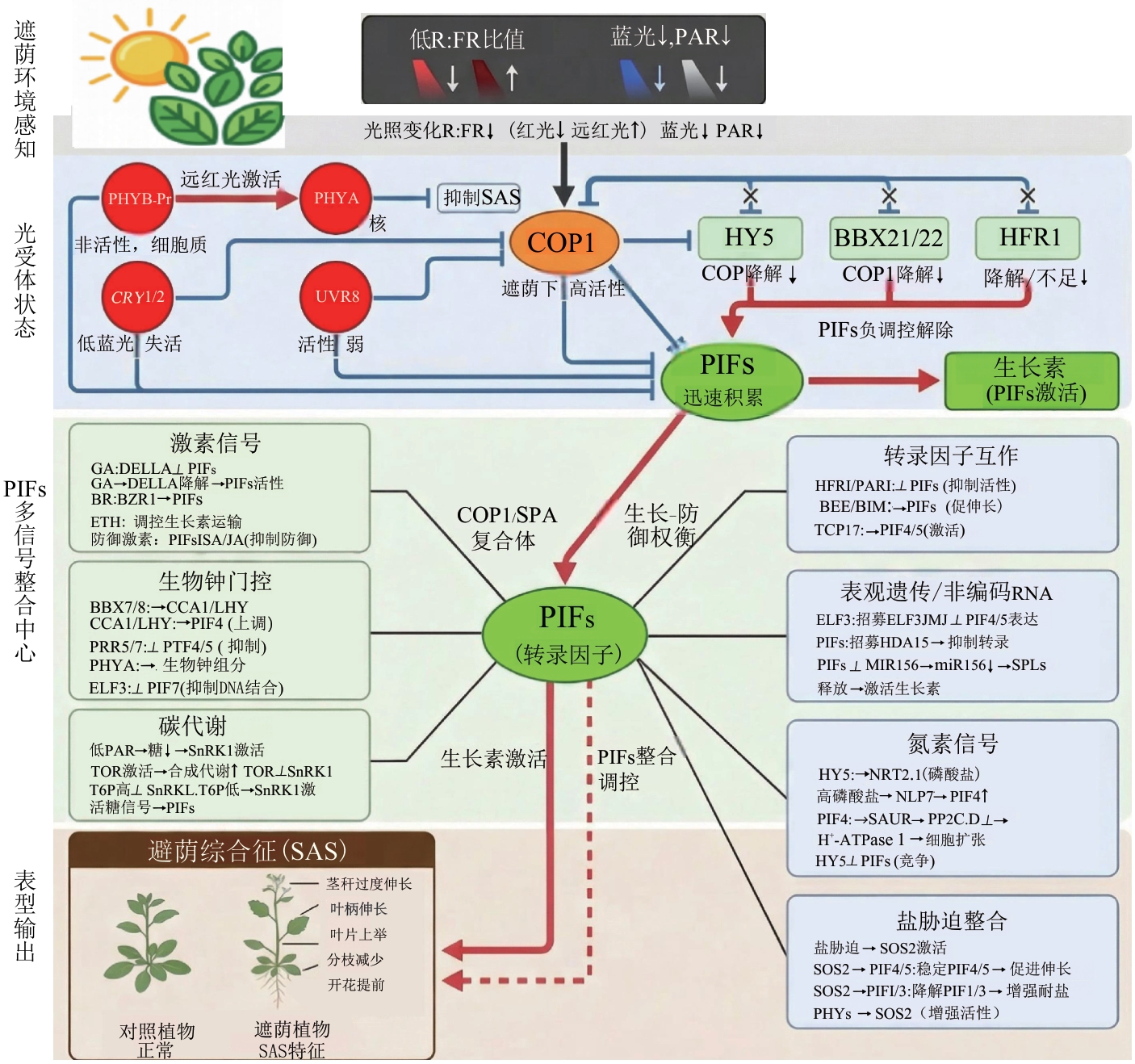
Fig. 1 Overview of light signal-mediated SAS regulation
基因类型 Gene type | 基因名称 Gene name | 作物种类 Crop type | 主要功能 Main function | 改良方法 Improvement method | 改良效果与应用价值 Improvement effect and application value | 参考文献 References |
|---|---|---|---|---|---|---|
| 光受体 | OsPHYB | 水稻 | 感知R∶FR比值变化,调控SAS | 过表达 | 增强稻瘟病抗性,增加分蘖数和籽粒大小,提高单株产量 | [ |
| AtPHYB | 马铃薯 | 感知R∶FR比值变化,调控SAS | 过表达 | 在高密度种植条件下显著提高块茎产量和数量,增加分枝数,提高所有冠层叶片的最大光合速率和气孔导度 | [ | |
| AtPHYA | 水稻 | 感知FR,介导远红光高辐照响应(FR-HIR) | 过表达 | 株高、节间长度和茎粗显著降低,每株穗数增加,谷物产量提高6%-21% | [ | |
| ZmPHYC | 玉米 | 调节开花时间和植株高度 | 过表达 | 适度降低株高和穗位高度,改善株型 | [ | |
| GmCRY1s | 大豆 | 感知蓝光强度并抑制PIFs介导的伸长生长 | 过表达 | 形成紧凑株型,提高高密度条件下单株产量 | [ | |
| SlUVR8 | 番茄 | 感知紫外辐射调控光形态建成 | 过表达 | 增强UV-B耐受性,促进果实叶绿体发育,提升在UV-B环境下抗逆性与营养品质 | [ | |
| 转录因子 | OsPIL1 | 水稻 | 调控节间伸长和抗逆性 | 过表达 | 增强水稻生长和稻瘟病抗性;异源转化提高柳枝稷生物量和糖化效率,用于纤维生物燃料乙醇生产 | [ |
| ZmSPL12 | 玉米 | D1的负调节因子,催化GA生物合成的最后一步 | 过表达 | 适度降低株高,显著增强抗倒伏性;在高密度种植条件下提高产量 | [ | |
| OsSPL14 | 水稻 | 调控分蘖和穗部发育 | 分子标记辅助选择 | 形成“少分蘖、大穗型”株型,已在多个商业品种上实现应用,适合高密度栽培 | [ | |
| ZmLG1 / ZmLG2 | 玉米 | 调控叶片-叶鞘边界和叶角 | CRISPR编辑 | 减小叶夹角,改良冠层结构,提高光能利用效率 | [ | |
| ZmTAC1 | 玉米 | 调控分枝/叶片角度 | 定向选择育种 | 形成更直立叶片和紧凑株型,实验条件下耐密性增强,产量增加19%-22% | [ | |
| GmCOP1b | 大豆 | 调控光形态建成和抗倒伏能力 | 基因编辑 | 在密植条件下增强抗倒伏能力,提高农艺性状与产量 | [ | |
| ZmPIF4/5 | 玉米 | SAS核心转导因子 | 定点突变 | 降低SAS反应强度;在高密度种植条件下增产15%-18% | [ | |
| ZmDBB2 | 玉米 | 与HY5互作抑制GA2ox表达,调控GA稳态及SAS反应 | RNAi抑制 | 调控植株高度,减弱SAS,有利于高密度种植条件下株型优化 | [ | |
| AtHFR1 | 小麦 | 与PIFs形成非DNA结合异源二聚体 | 异源过表达 | 降低株高,增加穗状花序数量;在种子萌发期间显著提高了其对渗透胁迫的耐受性,转基因品系籽粒产量比非转基因小麦增加18.2%-48.1% | [ | |
| BBX7/8 | 拟南芥 | 调控PIF4活性 | 过表达 | 优化SAS时间调控;提高环境适应性,参与光信号调控、发育与应答 | [ | |
| MED25 | 番茄 | Mediator复合体亚基,作为转录共激活因子介导 PIF4对遮荫响应基因的激活 | RNAi抑制 | 抑制遮荫诱导的下胚轴伸长,增强高密度种植适应性 | [ | |
| SlANT1 | 番茄 | 调控花青素积累并响应遮荫 | 启动子编辑 | 引发发育、生理和代谢重编程,潜在提升果实营养价值和环境适应性 | [ | |
| 激素合成酶/蛋白激酶 | AtSOS2 | 拟南芥 | 协同调控盐和遮荫双重胁迫响应 | 过表达 | 在光照和黑暗条件下均能提高植物对盐胁迫的耐受性 | [ |
| SD1(OsGA20ox2) | 水稻 | 调控GA合成与降解 | 基因编辑 | 株高降低15%-20%,穗粒数增加;抗倒伏性提高30%-35%,收获指数改善 | [ | |
| ZmGA20ox3/ZmGA20ox5 | 玉米 | 调控GA合成与降解 | 基因编辑 | 产生了半矮化玉米植株,对耐高密度种植的品种选育具有应用价值 | [ | |
| Rht-1 | 小麦 | 编码DELLA蛋白的Rht-B1b和Rht-D1b等位基因,GA信号负调控因子,与PIFs拮抗抑制SAS | 基因编辑 | 增强GA敏感性,调节植株高度,通过调控DELLA-PIF平衡优化群体结构 | [ | |
| 生物钟组分 | GmLHY1a/1b | 大豆 | 调控昼夜节律 | CRISPR编辑 | 解除耐旱抑制,显著提高干旱胁迫存活率 | [ |
Table 1 Application of key genes involved in the SAS regulatory network in major crop improvement
基因类型 Gene type | 基因名称 Gene name | 作物种类 Crop type | 主要功能 Main function | 改良方法 Improvement method | 改良效果与应用价值 Improvement effect and application value | 参考文献 References |
|---|---|---|---|---|---|---|
| 光受体 | OsPHYB | 水稻 | 感知R∶FR比值变化,调控SAS | 过表达 | 增强稻瘟病抗性,增加分蘖数和籽粒大小,提高单株产量 | [ |
| AtPHYB | 马铃薯 | 感知R∶FR比值变化,调控SAS | 过表达 | 在高密度种植条件下显著提高块茎产量和数量,增加分枝数,提高所有冠层叶片的最大光合速率和气孔导度 | [ | |
| AtPHYA | 水稻 | 感知FR,介导远红光高辐照响应(FR-HIR) | 过表达 | 株高、节间长度和茎粗显著降低,每株穗数增加,谷物产量提高6%-21% | [ | |
| ZmPHYC | 玉米 | 调节开花时间和植株高度 | 过表达 | 适度降低株高和穗位高度,改善株型 | [ | |
| GmCRY1s | 大豆 | 感知蓝光强度并抑制PIFs介导的伸长生长 | 过表达 | 形成紧凑株型,提高高密度条件下单株产量 | [ | |
| SlUVR8 | 番茄 | 感知紫外辐射调控光形态建成 | 过表达 | 增强UV-B耐受性,促进果实叶绿体发育,提升在UV-B环境下抗逆性与营养品质 | [ | |
| 转录因子 | OsPIL1 | 水稻 | 调控节间伸长和抗逆性 | 过表达 | 增强水稻生长和稻瘟病抗性;异源转化提高柳枝稷生物量和糖化效率,用于纤维生物燃料乙醇生产 | [ |
| ZmSPL12 | 玉米 | D1的负调节因子,催化GA生物合成的最后一步 | 过表达 | 适度降低株高,显著增强抗倒伏性;在高密度种植条件下提高产量 | [ | |
| OsSPL14 | 水稻 | 调控分蘖和穗部发育 | 分子标记辅助选择 | 形成“少分蘖、大穗型”株型,已在多个商业品种上实现应用,适合高密度栽培 | [ | |
| ZmLG1 / ZmLG2 | 玉米 | 调控叶片-叶鞘边界和叶角 | CRISPR编辑 | 减小叶夹角,改良冠层结构,提高光能利用效率 | [ | |
| ZmTAC1 | 玉米 | 调控分枝/叶片角度 | 定向选择育种 | 形成更直立叶片和紧凑株型,实验条件下耐密性增强,产量增加19%-22% | [ | |
| GmCOP1b | 大豆 | 调控光形态建成和抗倒伏能力 | 基因编辑 | 在密植条件下增强抗倒伏能力,提高农艺性状与产量 | [ | |
| ZmPIF4/5 | 玉米 | SAS核心转导因子 | 定点突变 | 降低SAS反应强度;在高密度种植条件下增产15%-18% | [ | |
| ZmDBB2 | 玉米 | 与HY5互作抑制GA2ox表达,调控GA稳态及SAS反应 | RNAi抑制 | 调控植株高度,减弱SAS,有利于高密度种植条件下株型优化 | [ | |
| AtHFR1 | 小麦 | 与PIFs形成非DNA结合异源二聚体 | 异源过表达 | 降低株高,增加穗状花序数量;在种子萌发期间显著提高了其对渗透胁迫的耐受性,转基因品系籽粒产量比非转基因小麦增加18.2%-48.1% | [ | |
| BBX7/8 | 拟南芥 | 调控PIF4活性 | 过表达 | 优化SAS时间调控;提高环境适应性,参与光信号调控、发育与应答 | [ | |
| MED25 | 番茄 | Mediator复合体亚基,作为转录共激活因子介导 PIF4对遮荫响应基因的激活 | RNAi抑制 | 抑制遮荫诱导的下胚轴伸长,增强高密度种植适应性 | [ | |
| SlANT1 | 番茄 | 调控花青素积累并响应遮荫 | 启动子编辑 | 引发发育、生理和代谢重编程,潜在提升果实营养价值和环境适应性 | [ | |
| 激素合成酶/蛋白激酶 | AtSOS2 | 拟南芥 | 协同调控盐和遮荫双重胁迫响应 | 过表达 | 在光照和黑暗条件下均能提高植物对盐胁迫的耐受性 | [ |
| SD1(OsGA20ox2) | 水稻 | 调控GA合成与降解 | 基因编辑 | 株高降低15%-20%,穗粒数增加;抗倒伏性提高30%-35%,收获指数改善 | [ | |
| ZmGA20ox3/ZmGA20ox5 | 玉米 | 调控GA合成与降解 | 基因编辑 | 产生了半矮化玉米植株,对耐高密度种植的品种选育具有应用价值 | [ | |
| Rht-1 | 小麦 | 编码DELLA蛋白的Rht-B1b和Rht-D1b等位基因,GA信号负调控因子,与PIFs拮抗抑制SAS | 基因编辑 | 增强GA敏感性,调节植株高度,通过调控DELLA-PIF平衡优化群体结构 | [ | |
| 生物钟组分 | GmLHY1a/1b | 大豆 | 调控昼夜节律 | CRISPR编辑 | 解除耐旱抑制,显著提高干旱胁迫存活率 | [ |
| [53] | Tian SY, Zhang S, Xu F, et al. The evening complex component ELF3 recruits H3K4me3 demethylases to repress PHYTOCHROME INTERACTING FACTOR4 and 5 in Arabidopsis [J]. Plant Cell, 2024, 37(1): koaf014. |
| [54] | Xie YR, Liu Y, Wang H, et al. Phytochrome-interacting factors directly suppress MIR156 expression to enhance shade-avoidance syndrome in Arabidopsis [J]. Nat Commun, 2017, 8: 348. |
| [55] | Hahm J, Kim K, Qiu YJ, et al. Increasing ambient temperature progressively disassembles Arabidopsis phytochrome B from individual photobodies with distinct thermostabilities [J]. Nat Commun, 2020, 11: 1660. |
| [56] | Kim C, Kim SJ, Jeong J, et al. High ambient temperature accelerates leaf senescence via PHYTOCHROME-INTERACTING FACTOR 4 and 5 in Arabidopsis [J]. Mol Cells, 2020, 43(7): 645-661. |
| [57] | Huang H, McLoughlin KE, Sorkin ML, et al. PCH1 regulates light, temperature, and circadian signaling as a structural component of phytochrome B-photobodies in Arabidopsis [J]. Proc Natl Acad Sci USA, 2019, 116(17): 8603-8608. |
| [58] | Chen D, Lyu MH, Kou XX, et al. Integration of light and temperature sensing by liquid-liquid phase separation of phytochrome B [J]. Mol Cell, 2022, 82(16): 3015-3029.e6. |
| [59] | Li H, Xue MD, Zhang HR, et al. A warm temperature-released negative feedback loop fine-tunes PIF4-mediated thermomorphogenesis in Arabidopsis [J]. Plant Commun, 2024, 5(5): 100833. |
| [60] | Jung JH, Barbosa AD, Hutin S, et al. A prion-like domain in ELF3 functions as a thermosensor in Arabidopsis [J]. Nature, 2020, 585(7824): 256-260. |
| [61] | Xu DQ, Deng XW. CBF-phyB-PIF module links light and low temperature signaling [J]. Trends Plant Sci, 2020, 25(10): 952-954. |
| [62] | Stamm P, Kumar PP. The phytohormone signal network regulating elongation growth during shade avoidance [J]. J Exp Bot, 2010, 61(11): 2889-2903. |
| [63] | Yang CW, Li L. Hormonal regulation in shade avoidance [J]. Front Plant Sci, 2017, 8: 1527. |
| [64] | de Lucas M, Prat S. PIFs get BRright: PHYTOCHROME INTERACTING FACTORs as integrators of light and hormonal signals [J]. New Phytol, 2014, 202(4): 1126-1141. |
| [1] | Casal JJ. Photoreceptor signaling networks in plant responses to shade [J]. Annu Rev Plant Biol, 2013, 64: 403-427. |
| [2] | Ballaré CL, Pierik R. The shade-avoidance syndrome: multiple signals and ecological consequences [J]. Plant Cell Environ, 2017, 40(11): 2530-2543. |
| [3] | Franklin KA. Shade avoidance [J]. New Phytol, 2008, 179(4): 930-944. |
| [4] | Whitelam GC, Patel S, Devlin PF. Phytochromes and photomorphogenesis in Arabidopsis [J]. Phil Trans R Soc Lond B, 1998, 353(1374): 1445-1453. |
| [5] | Wang XY, Gao XQ, Liu YL, et al. Progress of research on the regulatory pathway of the plant shade-avoidance syndrome [J]. Front Plant Sci, 2020, 11: 439. |
| [6] | Pierik R, de Wit M. Shade avoidance: phytochrome signalling and other aboveground neighbour detection cues [J]. J Exp Bot, 2014, 65(11): 2815-2824. |
| [7] | Martinez-Garcia JF, Rodriguez-Concepcion M. Molecular mechanisms of shade tolerance in plants [J]. New Phytol, 2023, 239(4): 1190-1202. |
| [8] | Warnasooriya SN, Brutnell TP. Enhancing the productivity of grasses under high-density planting by engineering light responses: from model systems to feedstocks [J]. J Exp Bot, 2014, 65(11): 2825-2834. |
| [9] | Fernández-Milmanda GL, Ballaré CL. Shade avoidance: expanding the color and hormone palette [J]. Trends Plant Sci, 2021, 26(5): 509-523. |
| [10] | Liu Y, Jafari F, Wang HY. Integration of light and hormone signaling pathways in the regulation of plant shade avoidance syndrome [J]. aBIOTECH, 2021, 2(2): 131-145. |
| [11] | Li L, Ljung K, Breton G, et al. Linking photoreceptor excitation to changes in plant architecture [J]. Genes Dev, 2012, 26(8): 785-790. |
| [12] | Nozue K, Harmer SL, Maloof JN. Genomic analysis of circadian clock-, light-, and growth-correlated genes reveals PHYTOCHROME-INTERACTING FACTOR5 as a modulator of auxin signaling in Arabidopsis [J]. Plant Physiol, 2011, 156(1): 357-372. |
| [13] | Zhang Y, Mayba O, Pfeiffer A, et al. A quartet of PIF bHLH factors provides a transcriptionally centered signaling hub that regulates seedling morphogenesis through differential expression-patterning of shared target genes in Arabidopsis [J]. PLoS Genet, 2013, 9(1): e1003244. |
| [65] | Iglesias MJ, Sellaro R, Zurbriggen MD, et al. Multiple links between shade avoidance and auxin networks [J]. J Exp Bot, 2018, 69(2): 213-228. |
| [66] | Willige BC, Isono E, Richter R, et al. Gibberellin regulates PIN-FORMED abundance and is required for auxin transport-dependent growth and development in Arabidopsis thaliana [J]. Plant Cell, 2011, 23(6): 2184-2195. |
| [67] | Fu XD, Harberd NP. Auxin promotes Arabidopsis root growth by modulating gibberellin response [J]. Nature, 2003, 421(6924): 740-743. |
| [68] | Jiang HK, Shui ZW, Xu L, et al. Gibberellins modulate shade-induced soybean hypocotyl elongation downstream of the mutual promotion of auxin and brassinosteroids [J]. Plant Physiol Biochem, 2020, 150: 209-221. |
| [69] | Rosado D, Ackermann A, Spassibojko O, et al. WRKY transcription factors and ethylene signaling modify root growth during the shade-avoidance response [J]. Plant Physiol, 2022, 188(2): 1294-1311. |
| [70] | Pierik R, Ballaré CL. Control of plant growth and defense by photoreceptors: from mechanisms to opportunities in agriculture [J]. Mol Plant, 2021, 14(1): 61-76. |
| [71] | Du JB, Jiang HK, Sun X, et al. Auxin and gibberellins are required for the receptor-like kinase ERECTA regulated hypocotyl elongation in shade avoidance in Arabidopsis [J]. Front Plant Sci, 2018, 9: 124. |
| [72] | Huot B, Yao J, Montgomery BL, et al. Growth-defense tradeoffs in plants: a balancing act to optimize fitness [J]. Mol Plant, 2014, 7(8): 1267-1287. |
| [73] | Bian YT, Song ZL, Liu CS, et al. The BBX7/8-CCA1/LHY transcription factor cascade promotes shade avoidance by activating PIF4 [J]. New Phytol, 2025, 245(2): 637-652. |
| [74] | Takase M, Mizoguchi T, Kozuka T, et al. The unique function of the Arabidopsis circadian clock gene PRR5 in the regulation of shade avoidance response [J]. Plant Signal Behav, 2013, 8(4): e23534. |
| [75] | Zhang Y, Pfeiffer A, Tepperman JM, et al. Central clock components modulate plant shade avoidance by directly repressing transcriptional activation activity of PIF proteins [J]. Proc Natl Acad Sci USA, 2020, 117(6): 3261-3269. |
| [76] | Fraser DP, Panter PE, Sharma A, et al. Phytochrome A elevates plant circadian-clock components to suppress shade avoidance in deep-canopy shade [J]. Proc Natl Acad Sci USA, 2021, 118(27): e2108176118. |
| [77] | Jiang YP, Yang CW, Huang S, et al. The ELF3-PIF7 interaction mediates the circadian gating of the shade response in Arabidopsis [J]. iScience, 2019, 22: 288-298. |
| [14] | Ballaré CL. Light regulation of plant defense [J]. Annu Rev Plant Biol, 2014, 65: 335-363. |
| [15] | de Wit M, Spoel SH, Sanchez-Perez GF, et al. Perception of low red: far-red ratio compromises both salicylic acid- and jasmonic acid-dependent pathogen defences in Arabidopsis [J]. Plant J, 2013, 75(1): 90-103. |
| [16] | Leone M, Keller MM, Cerrudo I, et al. To grow or defend? Low red: far-red ratios reduce jasmonate sensitivity in Arabidopsis seedlings by promoting DELLA degradation and increasing JAZ10 stability [J]. New Phytol, 2014, 204(2): 355-367. |
| [17] | SharathKumar M, Courbier S, Schepetilnikov M, et al. Light-mediated balances and trade-offs in plant energy and resource management [J]. J Exp Bot, 2026, 77(5): 1436-1451. |
| [18] | Carriedo LG, Maloof JN, Brady SM. Molecular control of crop shade avoidance [J]. Curr Opin Plant Biol, 2016, 30: 151-158. |
| [19] | Liu HH, Yang CW, Li L. Shade-induced stem elongation in rice seedlings: Implication of tissue-specific phytohormone regulation [J]. J Integr Plant Biol, 2016, 58(7): 614-617. |
| [20] | Fraser DP, Hayes S, Franklin KA. Photoreceptor crosstalk in shade avoidance [J]. Curr Opin Plant Biol, 2016, 33: 1-7. |
| [21] | Leivar P, Tepperman JM, Cohn MM, et al. Dynamic antagonism between phytochromes and PIF family basic helix-loop-helix factors induces selective reciprocal responses to light and shade in a rapidly responsive transcriptional network in Arabidopsis [J]. Plant Cell, 2012, 24(4): 1398-1419. |
| [22] | Castillon A, Shen H, Huq E. Phytochrome Interacting Factors: central players in phytochrome-mediated light signaling networks [J]. Trends Plant Sci, 2007, 12(11): 514-521. |
| [23] | Leivar P, Monte E, Al-Sady B, et al. The Arabidopsis phytochrome-interacting factor PIF7, together with PIF3 and PIF4, regulates responses to prolonged red light by modulating phyB levels [J]. Plant Cell, 2008, 20(2): 337-352. |
| [24] | Leivar P, Monte E, Cohn MM, et al. Phytochrome signaling in green Arabidopsis seedlings: impact assessment of a mutually negative phyB-PIF feedback loop [J]. Mol Plant, 2012, 5(3): 734-749. |
| [25] | de Wit M, Ljung K, Fankhauser C. Contrasting growth responses in Lamina and petiole during neighbor detection depend on differential auxin responsiveness rather than different auxin levels [J]. New Phytol, 2015, 208(1): 198-209. |
| [26] | Ruberti I, Sessa G, Ciolfi A, et al. Plant adaptation to dynamically changing environment: The shade avoidance response [J]. Biotechnol Adv, 2012, 30(5): 1047-1058. |
| [27] | Chory J. Light signal transduction: an infinite spectrum of possibilities [J]. Plant J, 2010, 61(6): 982-991. |
| [28] | Yang CW, Xie FM, Jiang YP, et al. Phytochrome a negatively regulates the shade avoidance response by increasing auxin/indole acidic acid protein stability [J]. Dev Cell, 2018, 44(1): 29-41.e4. |
| [29] | Song B, Zhao HL, Dong KM, et al. Phytochrome A inhibits shade avoidance responses under strong shade through repressing the brassinosteroid pathway in Arabidopsis [J]. Plant J, 2020, 104(6): 1520-1534. |
| [30] | Liu B, Zuo ZC, Liu HT, et al. Arabidopsis cryptochrome 1 interacts with SPA1 to suppress COP1 activity in response to blue light [J]. Genes Dev, 2011, 25(10): 1029-1034. |
| [31] | Boccaccini A, Legris M, Krahmer J, et al. Low blue light enhances phototropism by releasing Cryptochrome1-mediated inhibition of PIF4 expression [J]. Plant Physiol, 2020, 183(4): 1780-1793. |
| [32] | Hayes S, Velanis CN, Jenkins GI, et al. UV-B detected by the UVR8 photoreceptor antagonizes auxin signaling and plant shade avoidance [J]. Proc Natl Acad Sci U S A, 2014, 111(32): 11894-11899. |
| [33] | Mazza CA, Ballaré CL. Photoreceptors UVR8 and phytochrome B cooperate to optimize plant growth and defense in patchy canopies [J]. New Phytol, 2015, 207(1): 4-9. |
| [34] | Sharma A, Sharma B, Hayes S, et al. UVR8 disrupts stabilisation of PIF5 by COP1 to inhibit plant stem elongation in sunlight [J]. Nat Commun, 2019, 10: 4417. |
| [35] | Leivar P, Quail PH. PIFs: pivotal components in a cellular signaling hub [J]. Trends Plant Sci, 2011, 16(1): 19-28. |
| [36] | Paik I, Kathare PK, Kim JI, et al. Expanding roles of PIFs in signal integration from multiple processes [J]. Mol Plant, 2017, 10(8): 1035-1046. |
| [37] | Hornitschek P, Kohnen MV, Lorrain S, et al. Phytochrome interacting factors 4 and 5 control seedling growth in changing light conditions by directly controlling auxin signaling [J]. Plant J, 2012, 71(5): 699-711. |
| [78] | Xiong Y, Sheen J. The role of target of rapamycin signaling networks in plant growth and metabolism [J]. Plant Physiol, 2014, 164(2): 499-512. |
| [79] | Figueroa CM, Lunn JE. A tale of two sugars: trehalose 6-phosphate and sucrose [J]. Plant Physiol, 2016, 172(1): 7-27. |
| [80] | Chen XB, Yao QF, Gao XH, et al. Shoot-to-root mobile transcription factor HY5 coordinates plant carbon and nitrogen acquisition [J]. Curr Biol, 2016, 26(5): 640-646. |
| [81] | Pereyra ME, Costigliolo Rojas C, Jarrell AF, et al. PIF4 enhances the expression of SAUR genes to promote growth in response to nitrate [J]. Proc Natl Acad Sci USA, 2023, 120(39): e2304513120. |
| [82] | Han R, Ma L, Lv Y, et al. SALT OVERLY SENSITIVE2 stabilizes phytochrome-interacting factors PIF4 and PIF5 to promote Arabidopsis shade avoidance [J]. Plant Cell, 2023, 35(8): 2972-2996. |
| [83] | Ma L, Han R, Yang YQ, et al. Phytochromes enhance SOS2-mediated PIF1 and PIF3 phosphorylation and degradation to promote Arabidopsis salt tolerance [J]. Plant Cell, 2023, 35(8): 2997-3020. |
| [84] | Sheehan MJ, Kennedy LM, Costich DE, et al. Subfunctionalization of PhyB1 and PhyB2 in the control of seedling and mature plant traits in maize [J]. Plant J, 2007, 49(2): 338-353. |
| [85] | Wu GX, Zhao YP, Shen RX, et al. Characterization of maize phytochrome-interacting factors in light signaling and photomorphogenesis [J]. Plant Physiol, 2019, 181(2): 789-803. |
| [86] | Johnson JE, Field CB, Berry JA. The limiting factors and regulatory processes that control the environmental responses of C3, C3-C4 intermediate, and C4 photosynthesis [J]. Oecologia, 2021, 197(4): 841-866. |
| [87] | Pearcy RW, Franceschi VR. Photosynthetic characteristics and chloroplast ultrastructure of C3 and C4 tree species grown in high- and low-light environments [J]. Photosynth Res, 1986, 9(3): 317-331. |
| [88] | Kubásek J, Urban O, Šantrůček J. C4 plants use fluctuating light less efficiently than do C3 plants: a study of growth, photosynthesis and carbon isotope discrimination [J]. Physiol Plant, 2013, 149(4): 528-539. |
| [89] | Hendron RW, Kelly S. Subdivision of light signaling networks contributes to partitioning of C4 photosynthesis [J]. Plant Physiol, 2020, 182(3): 1297-1309. |
| [38] | Hao YQ, Zong XM, Ren P, et al. Basic helix-loop-helix (bHLH) transcription factors regulate a wide range of functions in Arabidopsis [J]. Int J Mol Sci, 2021, 22(13): 7152. |
| [39] | Roig-Villanova I, Bou-Torrent J, Galstyan A, et al. Interaction of shade avoidance and auxin responses: a role for two novel atypical bHLH proteins [J]. EMBO J, 2007, 26(22): 4756-4767. |
| [40] | Galstyan A, Cifuentes-Esquivel N, Bou-Torrent J, et al. The shade avoidance syndrome in Arabidopsis: a fundamental role for atypical basic helix-loop-helix proteins as transcriptional cofactors [J]. Plant J, 2011, 66(2): 258-267. |
| [41] | Hornitschek P, Lorrain S, Zoete V, et al. Inhibition of the shade avoidance response by formation of non-DNA binding bHLH heterodimers [J]. EMBO J, 2009, 28(24): 3893-3902. |
| [42] | Liu XC, Chen CY, Wang KC, et al. PHYTOCHROME INTERACTING FACTOR3 associates with the histone deacetylase HDA15 in repression of chlorophyll biosynthesis and photosynthesis in etiolated Arabidopsis seedlings [J]. Plant Cell, 2013, 25(4): 1258-1273. |
| [43] | Gu DC, Chen CY, Zhao ML, et al. Identification of HDA15-PIF1 as a key repression module directing the transcriptional network of seed germination in the dark [J]. Nucleic Acids Res, 2017, 45(12): 7137-7150. |
| [44] | Keuskamp DH, Pollmann S, Voesenek LACJ, et al. Auxin transport through PIN-FORMED 3 (PIN3) controls shade avoidance and fitness during competition [J]. Proc Natl Acad Sci USA, 2010, 107(52): 22740-22744. |
| [45] | Jia YB, Kong XP, Hu KQ, et al. PIFs coordinate shade avoidance by inhibiting auxin repressor ARF18 and metabolic regulator QQS [J]. New Phytol, 2020, 228(2): 609-621. |
| [46] | Feng SH, Martinez C, Gusmaroli G, et al. Coordinated regulation of Arabidopsis thaliana development by light and gibberellins [J]. Nature, 2008, 451(7177): 475-479. |
| [47] | Bai MY, Shang JX, Oh E, et al. Brassinosteroid, gibberellin and phytochrome impinge on a common transcription module in Arabidopsis [J]. Nat Cell Biol, 2012, 14(8): 810-817. |
| [48] | Cifuentes-Esquivel N, Bou-Torrent J, Galstyan A, et al. The bHLH proteins BEE and BIM positively modulate the shade avoidance syndrome in Arabidopsis seedlings [J]. Plant J, 2013, 75(6): 989-1002. |
| [49] | Nozue K, Tat AV, Kumar Devisetty U, et al. Shade avoidance components and pathways in adult plants revealed by phenotypic profiling [J]. PLoS Genet, 2015, 11(4): e1004953. |
| [50] | Crocco CD, Locascio A, Escudero CM, et al. The transcriptional regulator BBX24 impairs DELLA activity to promote shade avoidance in Arabidopsis thaliana [J]. Nat Commun, 2015, 6: 6202. |
| [51] | Osterlund MT, Hardtke CS, Wei N, et al. Targeted destabilization of HY5 during light-regulated development of Arabidopsis [J]. Nature, 2000, 405(6785): 462-466. |
| [52] | Pacín M, Semmoloni M, Legris M, et al. Convergence of constitutive photomorphogenesis 1 and phytochrome interacting factor signalling during shade avoidance [J]. New Phytol, 2016, 211(3): 967-979. |
| [90] | Krzeszowiec W, Novokreshchenova M, Gabryś H. Chloroplasts in C3 grasses move in response to blue-light [J]. Plant Cell Rep, 2020, 39(10): 1331-1343. |
| [91] | Wang B, Smith SM, Li JY. Genetic regulation of shoot architecture [J]. Annu Rev Plant Biol, 2018, 69: 437-468. |
| [92] | Molla KA, Sretenovic S, Bansal KC, et al. Precise plant genome editing using base editors and prime editors [J]. Nat Plants, 2021, 7(9): 1166-1187. |
| [93] | Lin QP, Zong Y, Xue CX, et al. Prime genome editing in rice and wheat [J]. Nat Biotechnol, 2020, 38(5): 582-585. |
| [94] | Hua K, Tao XP, Yuan FT, et al. Precise A·T to G·C base editing in the rice genome [J]. Mol Plant, 2018, 11(4): 627-630. |
| [95] | Miura K, Ikeda M, Matsubara A, et al. OsSPL14 promotes panicle branching and higher grain productivity in rice [J]. Nat Genet, 2010, 42(6): 545-549. |
| [96] | Hua K, Tao XP, Liang WY, et al. Simplified adenine base editors improve adenine base editing efficiency in rice [J]. Plant Biotechnol J, 2020, 18(3): 770-778. |
| [97] | Ren QR, Sretenovic S, Liu GQ, et al. Improved plant cytosine base editors with high editing activity, purity, and specificity [J]. Plant Biotechnol J, 2021, 19(10): 2052-2068. |
| [98] | Usman B, Nawaz G, Zhao N, et al. Programmed editing of rice (Oryza sativa L.) OsSPL16 gene using CRISPR/Cas9 improves grain yield by modulating the expression of pyruvate enzymes and cell cycle proteins [J]. Int J Mol Sci, 2021, 22(1): 249. |
| [99] | Li MR, Li XX, Zhou ZJ, et al. Reassessment of the four yield-related genes Gn1a, DEP1, GS3 and IPA1 in rice using a CRISPR/Cas9 system [J]. Front Plant Sci, 2016, 7: 377. |
| [100] | Abu Bakar Waqas M, Awan MJA, Amin I, et al. Engineering high yield basmati rice by editing multiple negative regulators of yield [J]. Mol Biol Rep, 2025, 52: 545. |
| [101] | Liu WS, Stewart CN. Plant synthetic promoters and transcription factors [J]. Curr Opin Biotechnol, 2016, 37: 36-44. |
| [102] | Cerqueira JVA, Zhu F, Mendes K, et al. Promoter replacement of ANT1 induces anthocyanin accumulation and triggers the shade avoidance response through developmental, physiological and metabolic reprogramming in tomato [J]. Hortic Res, 2023, 10(2): uhac254. |
| [103] | Wang ZD, Wang WF, Zhao DD, et al. Light-induced remodeling of phytochrome B enables signal transduction by phytochrome-interacting factor [J]. Cell, 2024, 187(22): 6235-6250.e19. |
| [104] | Cordeiro AM, Andrade L, Monteiro CC, et al. PHYTOCHROME-INTERACTING FACTORS: a promising tool to improve crop productivity [J]. J Exp Bot, 2022, 73(12): 3881-3897. |
| [105] | Pham VN, Kathare PK, Huq E. Phytochromes and phytochrome interacting factors [J]. Plant Physiol, 2018, 176(2): 1025-1038. |
| [106] | Jia HL, Guan ZY, Ding JY, et al. Structural insight into PIF6-mediated red light signal transduction of plant phytochrome B [J]. Cell Discov, 2025, 11: 51. |
| [107] | Chen HR, Wang WT, Chen X, et al. PIFs interact with SWI2/SNF2-related 1 complex subunit 6 to regulate H2A.Z deposition and photomorphogenesis in Arabidopsis [J]. J Genet Genom, 2023, 50(12): 983-992. |
| [108] | Shen H, Zhu L, Castillon A, et al. Light-induced phosphorylation and degradation of the negative regulator PHYTOCHROME-INTERACTING FACTOR1 from Arabidopsis depend upon its direct physical interactions with photoactivated phytochromes [J]. Plant Cell, 2008, 20(6): 1586-1602. |
| [109] | Lorrain S, Allen T, Duek PD, et al. Phytochrome-mediated inhibition of shade avoidance involves degradation of growth-promoting bHLH transcription factors [J]. Plant J, 2008, 53(2): 312-323. |
| [110] | Kikis EA, Oka Y, Hudson ME, et al. Residues clustered in the light-sensing knot of phytochrome B are necessary for conformer-specific binding to signaling partner PIF3 [J]. PLoS Genet, 2009, 5(1): e1000352. |
| [111] | Zhu L, Bu QY, Xu XS, et al. CUL4 forms an E3 ligase with COP1 and SPA to promote light-induced degradation of PIF1 [J]. Nat Commun, 2015, 6: 7245. |
| [112] | Wang F, Chen XX, Dong SJ, et al. Crosstalk of PIF4 and DELLA modulates CBF transcript and hormone homeostasis in cold response in tomato [J]. Plant Biotechnol J, 2020, 18(4): 1041-1055. |
| [113] | Li XR, Chen H, Yang S, et al. Phytochrome B promotes blast disease resistance and enhances yield in rice [J]. Plant Physiol, 2024, 196(4): 3023-3032. |
| [114] | Boccalandro HE, Ploschuk EL, Yanovsky MJ, et al. Increased phytochrome B alleviates density effects on tuber yield of field potato crops [J]. Plant Physiol, 2003, 133(4): 1539-1546. |
| [115] | Garg AK, Sawers RJH, Wang HY, et al. Light-regulated overexpression of an Arabidopsis phytochrome A gene in rice alters plant architecture and increases grain yield [J]. Planta, 2006, 223(4): 627-636. |
| [116] | Li QQ, Wu GX, Zhao YP, et al. CRISPR/Cas9-mediated knockout and overexpression studies reveal a role of maize phytochrome C in regulating flowering time and plant height [J]. Plant Biotechnol J, 2020, 18(12): 2520-2532. |
| [117] | Lyu XG, Cheng QC, Qin C, et al. GmCRY1s modulate gibberellin metabolism to regulate soybean shade avoidance in response to reduced blue light [J]. Mol Plant, 2021, 14(2): 298-314. |
| [118] | Li HR, Li YX, Deng H, et al. Tomato UV-B receptor SlUVR8 mediates plant acclimation to UV-B radiation and enhances fruit chloroplast development via regulating SlGLK2 [J]. Sci Rep, 2018, 8: 6097. |
| [119] | Liu XR, Zhang QW, Yang GQ, et al. Pivotal roles of Tomato photoreceptor SlUVR8 in seedling development and UV-B stress tolerance [J]. Biochem Biophys Res Commun, 2020, 522(1): 177-183. |
| [120] | Sakuraba Y, Kim EY, Paek NC. Roles of rice PHYTOCHROME-INTERACTING FACTOR-LIKE1 (OsPIL1) in leaf senescence [J]. Plant Signal Behav, 2017, 12(9): e1362522. |
| [121] | Todaka D, Nakashima K, Maruyama K, et al. Rice phytochrome-interacting factor-like protein OsPIL1 functions as a key regulator of internode elongation and induces a morphological response to drought stress [J]. Proc Natl Acad Sci USA, 2012, 109(39): 15947-15952. |
| [122] | Yan JP, Liu YR, Wang KX, et al. Overexpression of OsPIL1 enhanced biomass yield and saccharification efficiency in switchgrass [J]. Plant Sci, 2018, 276: 143-151. |
| [123] | Zhao TQ, Tang P, Liu CL, et al. Multi-omics approach reveals OsPIL1 as a regulator promotes rice growth, grain development, and blast resistance [J]. J Agric Food Chem, 2024, 72(3): 1822-1843. |
| [124] | Zhao BB, Xu MY, Zhao YP, et al. Overexpression of ZmSPL12 confers enhanced lodging resistance through transcriptional regulation of D1 in maize [J]. Plant Biotechnol J, 2022, 20(4): 622-624. |
| [125] | Jiao YQ, Wang YH, Xue DW, et al. Regulation of OsSPL14 by OsmiR156 defines ideal plant architecture in rice [J]. Nat Genet, 2010, 42(6): 541-544. |
| [126] | Wang J, Zhou L, Shi H, et al. A single transcription factor promotes both yield and immunity in rice [J]. Science, 2018, 361(6406): 1026-1028 |
| [127] | Tian F, Bradbury PJ, Brown PJ, et al. Genome-wide association study of leaf architecture in the maize nested association mapping population [J]. Nat Genet, 2011, 43(2): 159-162. |
| [128] | Ku LX, Wei XM, Zhang SF, et al. Cloning and characterization of a putative TAC1 ortholog associated with leaf angle in maize (Zea mays L.) [J]. PLoS One, 2011, 6(6): e20621. |
| [129] | Ji RH, Xu XY, Liu J, et al. Induced mutation in GmCOP1b enhances the performance of soybean under dense planting conditions [J]. Int J Mol Sci, 2022, 23(10): 5394. |
| [130] | Shi QB, Zhang HS, Song XY, et al. Functional characterization of the maize phytochrome-interacting factors PIF4 and PIF5 [J]. Front Plant Sci, 2017, 8: 2273.. |
| [131] | Wang XF, Jiao ZH, Zhang YH, et al. DBB2 regulates plant height and shade avoidance responses in maize [J]. J Integr Plant Biol, 2025, 67(5): 1323-1338. |
| [132] | Sun GH, Yang LH, Zhan WM, et al. HFR1, a bHLH transcriptional regulator from Arabidopsis thaliana, improves grain yield, shade and osmotic stress tolerances in common wheat [J]. Int J Mol Sci, 2022, 23(19): 12057. |
| [133] | Sun WJ, Han HY, Deng L, et al. Mediator subunit MED25 physically interacts with PHYTOCHROME INTERACTING FACTOR4 to regulate shade-induced hypocotyl elongation in tomato [J]. Plant Physiol, 2020, 184(3): 1549-1562. |
| [134] | Sasaki A, Ashikari M, Ueguchi-Tanaka M, et al. A mutant gibberellin-synthesis gene in rice [J]. Nature, 2002, 416(6882): 701-702. |
| [135] | Zhang JJ, Zhang XF, Chen RR, et al. Generation of transgene-free semidwarf maize plants by gene editing of gibberellin-Oxidase20-3 using CRISPR/Cas9 [J]. Front Plant Sci, 2020, 11: 1048. |
| [136] | Paciorek T, Chiapelli BJ, Wang JY, et al. Targeted suppression of gibberellin biosynthetic genes ZmGA20ox3 and ZmGA20ox5 produces a short stature maize ideotype [J]. Plant Biotechnol J, 2022, 20(6): 1140-1153. |
| [137] | Peng JR, Richards DE, Hartley NM, et al. ‘Green revolution’ genes encode mutant gibberellin response modulators [J]. Nature, 1999, 400(6741): 256-261. |
| [138] | Pearce S, Saville R, Vaughan SP, et al. Molecular characterization of Rht-1 dwarfing genes in hexaploid wheat [J]. Plant Physiol, 2011, 157(4): 1820-1831. |
| [139] | Wang K, Bu TT, Cheng Q, et al. Two homologous LHY pairs negatively control soybean drought tolerance by repressing the abscisic acid responses [J]. New Phytol, 2021, 229(5): 2660-2675. |
| [140] | Quint M, Delker C, Franklin KA, et al. Molecular and genetic control of plant thermomorphogenesis [J]. Nat Plants, 2016, 2: 15190. |
| [141] | Ainsworth EA, Ort DR. How do we improve crop production in a warming world? [J]. Plant Physiol, 2010, 154(2): 526-530. |
| [142] | Dimitriu MA, Lazar-Contes I, Roszkowski M, et al. Single-cell multiomics techniques: from conception to applications [J]. Front Cell Dev Biol, 2022, 10: 854317. |
| [143] | Rich-Griffin C, Stechemesser A, Finch J, et al. Single-cell transcriptomics: a high-resolution avenue for plant functional genomics [J]. Trends Plant Sci, 2020, 25(2): 186-197. |
| [144] | Wu RN, Veličković M, Burnum-Johnson KE. From single cell to spatial multi-omics: unveiling molecular mechanisms in dynamic and heterogeneous systems [J]. Curr Opin Biotechnol, 2024, 89: 103174. |
| [145] | Jaganathan D, Ramasamy K, Sellamuthu G, et al. CRISPR for crop improvement: an update review [J]. Front Plant Sci, 2018, 9: 985. |
| [146] | Liu QE, Yang F, Zhang JJ, et al. Application of CRISPR/Cas9 in crop quality improvement [J]. Int J Mol Sci, 2021, 22(8): 4206. |
| [147] | Zhan YL, Zhou YZ, Bai G, et al. Bagging improves the performance of deep learning-based semantic segmentation with limited labeled images: a case study of crop segmentation for high-throughput plant phenotyping [J]. Sensors, 2024, 24(11): 3420. |
| [148] | Liu ZZ, Sun L, Zhang Q. High similarity image recognition and classification algorithm based on convolutional neural network [J]. Comput Intell Neurosci, 2022, 2022: 2836486. |
| [1] | CHENG Yun-xia, ZHANG Jun-hong, YE Jie. Advances in the Genetic Regulation of Soluble Solid Accumulation in Tomato Fruits [J]. Biotechnology Bulletin, 2026, 42(3): 145-155. |
| [2] | JIANG Zhe-hui, WANG Xiao-long, WANG Shou-chuang, ZHOU Ke. Advances in the Elucidation of Metabolic Pathways and Molecular Breeding for Tomato Flavor [J]. Biotechnology Bulletin, 2026, 42(3): 60-78. |
| [3] | LI Cheng-quan, SHI Qing-hua, YANG Xiao-yu. microRNA-based Regulatory Network for Fruit Development of Horticultural Crops: From Molecular Mechanism to Germplasm Innovation [J]. Biotechnology Bulletin, 2026, 42(3): 19-36. |
| [4] | YANG Qing-qing, TANG Jia-qi, ZHANG Chang-quan, GAO Ji-ping, LIU Qiao-quan. Application and Prospect of KASP Marker Technology in Main Crops [J]. Biotechnology Bulletin, 2022, 38(4): 58-71. |
| [5] | LI Qian, JIANG Wen-bo, WANG Yu-xiang, ZHANG Bo, PANG Yong-zhen. Research Progresses on the Drought Resistance of Medicago at Molecular Level [J]. Biotechnology Bulletin, 2021, 37(8): 243-252. |
| [6] | YE Ming-wang, LI Can-hui, GONG Ming. Applications and Prospect of Genome Editing Techniques in Precise Potato Molecular Breeding [J]. Biotechnology Bulletin, 2020, 36(3): 9-17. |
| [7] | ZHANG Hai-miao, LI Yang, LIU Hai-feng, KONG Ling-guang, DING Xin-hua. Research Progress on Regulatory Genes of Important Agronomic Traits and Breeding Utilization in Rice [J]. Biotechnology Bulletin, 2020, 36(12): 155-169. |
| [8] | LI Chong-hui, YIN Jun-mei. Genetic Engineering Progress and Breeding Tactics on Blue Flowers [J]. Biotechnology Bulletin, 2019, 35(11): 160-168. |
| [9] | Wang Qiong, Liu Bobin, Kong Qianqian, Chen Jienan. Advances in Molecular Breeding of Energy Plant Jatropha curcas [J]. Biotechnology Bulletin, 2014, 30(3): 1-8. |
| Viewed | ||||||
|
Full text |
|
|||||
|
Abstract |
|
|||||
