







Biotechnology Bulletin ›› 2026, Vol. 42 ›› Issue (10): 88-97.doi: 10.13560/j.cnki.biotech.bull.1985.2026-0470
HU Rong-fang1, DING Jia-hao1, MA Ju-hua1, TAN Hui-jin1, SONG Ya-nan2, XUE Jin-ai1( )
Received:2026-04-24
Online:2026-10-26
Published:2026-10-15
Contact:
XUE Jin-ai
E-mail:xuejinai@sxau.edu.cn
HU Rong-fang, DING Jia-hao, MA Ju-hua, TAN Hui-jin, SONG Ya-nan, XUE Jin-ai. Cloning and Functional Characterization of the Lysophosphatidic Acid Acyltransferase Gene AsLPAAT5 in Avena sativa[J]. Biotechnology Bulletin, 2026, 42(10): 88-97.
引物名称 Primer name | 引物序列 Sequence(5′-3′) | 用途 Purpose |
|---|---|---|
| 1302-AsLPAAT5-F | acgggggactcttgaccatggATGTGGTTAGCCATGTTTCCATT | 载体构建 |
| 1302-AsLPAAT5-R | aagttcttctcctttactagtTCAGAGTTTCTTGGCATGTGCG | |
| pYES2.0-AsLPAAT5-F | gggaatattaagcttggtaccATGTGGTTAGCCATGTTTCCATT | 载体构建 |
| pYES2.0-AsLPAAT5-R | tacatgatgcggccctctagaTCAGAGTTTCTTGGCATGTGCG | |
| 1300-AsLPAAT5-F | gcccttgctcaccatggtaccATGTGGTTAGCCATGTTTCCATT | 载体构建 |
| 1300-AsLPAAT5-R | atacaccaaatcgactctagaGAGTTTCTTGGCATGTGCGC | |
| pET28A-AsLPAAT5-F | gcaagcttgtcgacggagctcATGTGGTTAGCCATGTTTCCATT | 载体构建 |
| pET28A-AsLPAAT5-R | ggataacaattcccctctagaTCAGAGTTTCTTGGCATGTGCG | |
| AsLPAAT5-qRT-F | ATACAAGCATCGGCTGCCAACT | qPCR |
| AsLPAAT5-qRT-R | CCTGAACCACACGGACGAGAAC | |
| AsEP-F | GCACAAGTGATGCCAGAATAGC | 内参基因 |
| AsEP-R | CGAGATGCATTAGATTCGTTGG |
Table 1 Primers used in this study
引物名称 Primer name | 引物序列 Sequence(5′-3′) | 用途 Purpose |
|---|---|---|
| 1302-AsLPAAT5-F | acgggggactcttgaccatggATGTGGTTAGCCATGTTTCCATT | 载体构建 |
| 1302-AsLPAAT5-R | aagttcttctcctttactagtTCAGAGTTTCTTGGCATGTGCG | |
| pYES2.0-AsLPAAT5-F | gggaatattaagcttggtaccATGTGGTTAGCCATGTTTCCATT | 载体构建 |
| pYES2.0-AsLPAAT5-R | tacatgatgcggccctctagaTCAGAGTTTCTTGGCATGTGCG | |
| 1300-AsLPAAT5-F | gcccttgctcaccatggtaccATGTGGTTAGCCATGTTTCCATT | 载体构建 |
| 1300-AsLPAAT5-R | atacaccaaatcgactctagaGAGTTTCTTGGCATGTGCGC | |
| pET28A-AsLPAAT5-F | gcaagcttgtcgacggagctcATGTGGTTAGCCATGTTTCCATT | 载体构建 |
| pET28A-AsLPAAT5-R | ggataacaattcccctctagaTCAGAGTTTCTTGGCATGTGCG | |
| AsLPAAT5-qRT-F | ATACAAGCATCGGCTGCCAACT | qPCR |
| AsLPAAT5-qRT-R | CCTGAACCACACGGACGAGAAC | |
| AsEP-F | GCACAAGTGATGCCAGAATAGC | 内参基因 |
| AsEP-R | CGAGATGCATTAGATTCGTTGG |
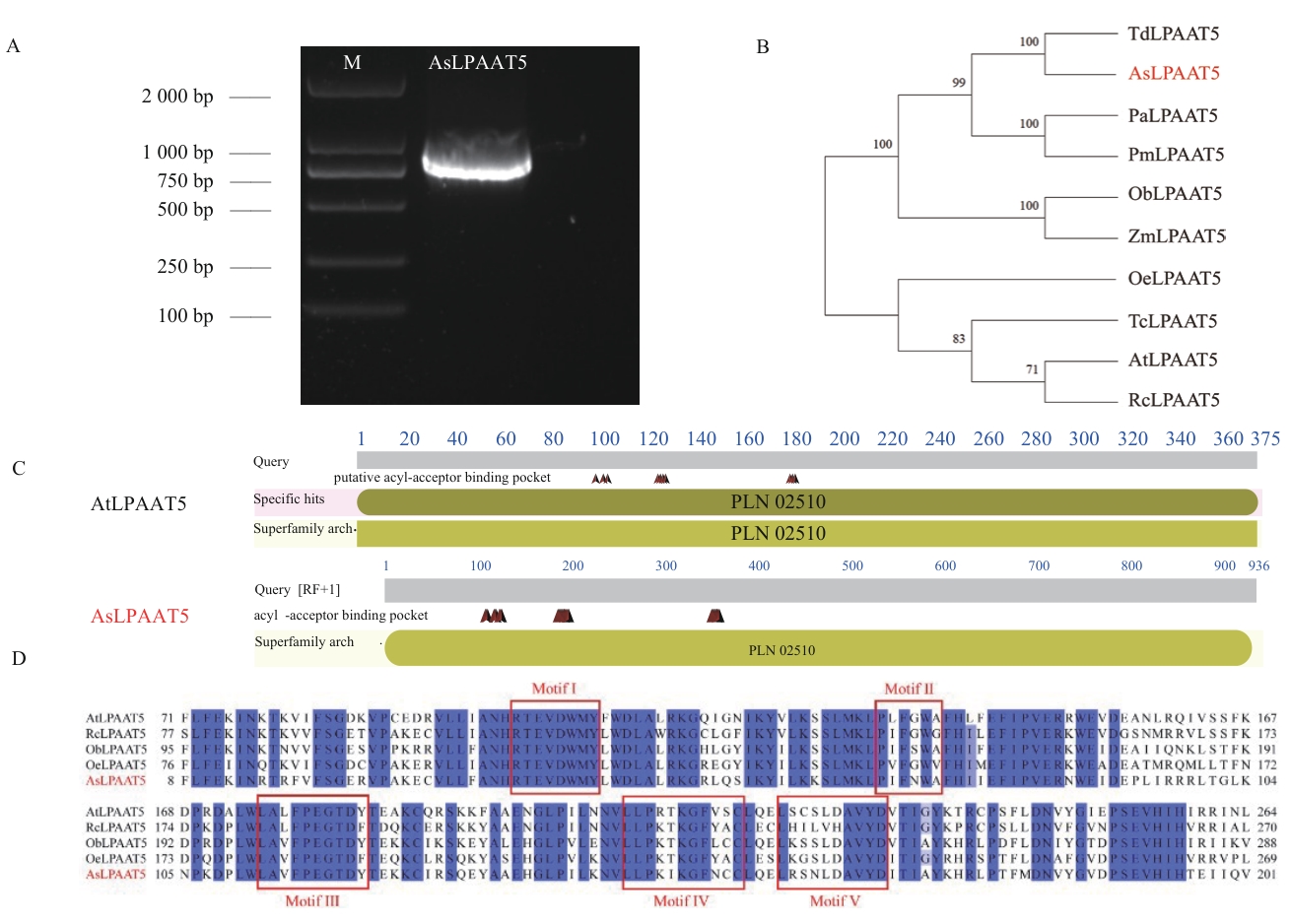
Fig. 1 Cloning and sequence characterization of AsLPAAT5 geneA: Cloning of AsLPAAT5, M: DNA marker DL 2000. B: Phylogenetic tree of LPAAT proteins from different plant species. C: Protein domain of AsLPAAT5. D: Conserved amino acid sequences of LPAAT5 proteins
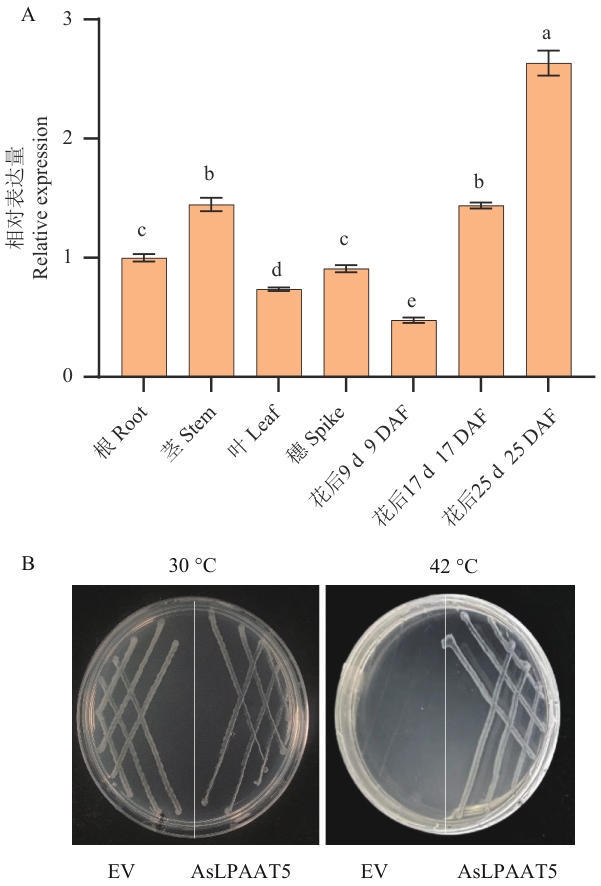
Fig. 2 Enzyme activity validation of AsLPAAT5 proteinA: Expression analysis of AsLPAAT5. B: Functional complementation test of AsLPAAT5 in the SM2-1 strain. Different lowercase letters indicate significant differences (P<0.05). The same below
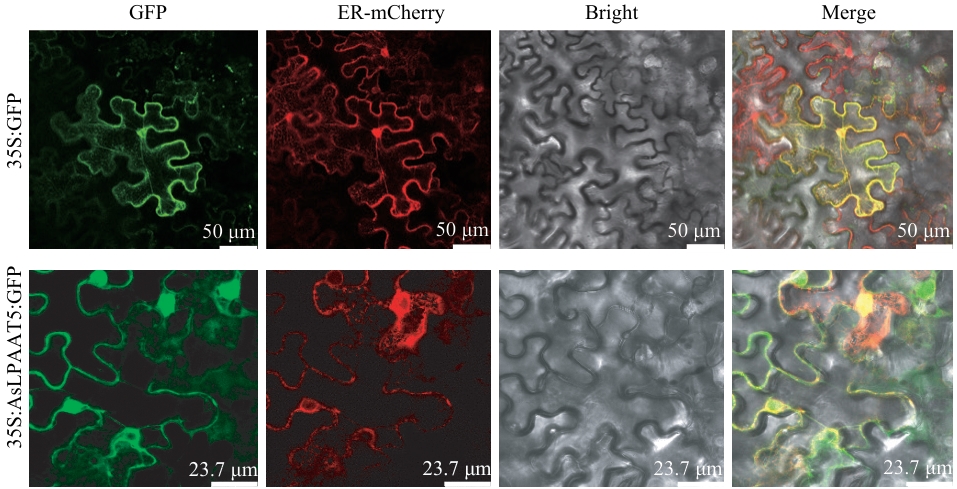
Fig. 3 Subcellular localization of AsLPAAT5 protein
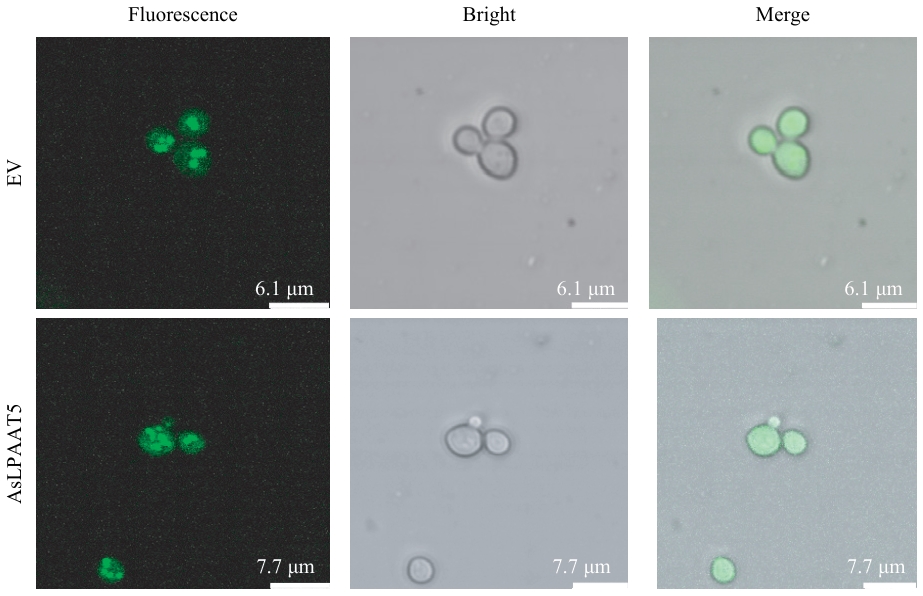
Fig. 4 Oil-bodies staining of transgenic yeast
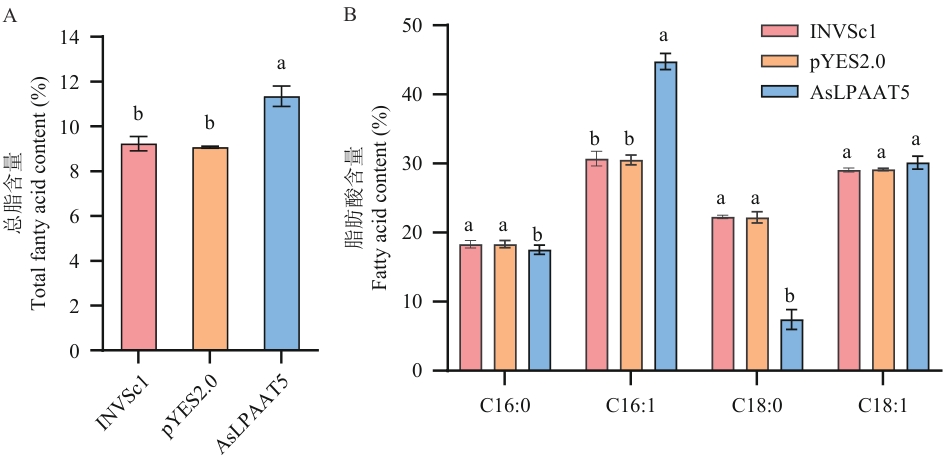
Fig. 5 Analysis of lipid content in AsLPAAT5 transgenic yeastA: Total fatty acid content of AsLPAAT5 transgenic yeast. B: Fatty acid content of AsLPAAT5 transgenic yeast
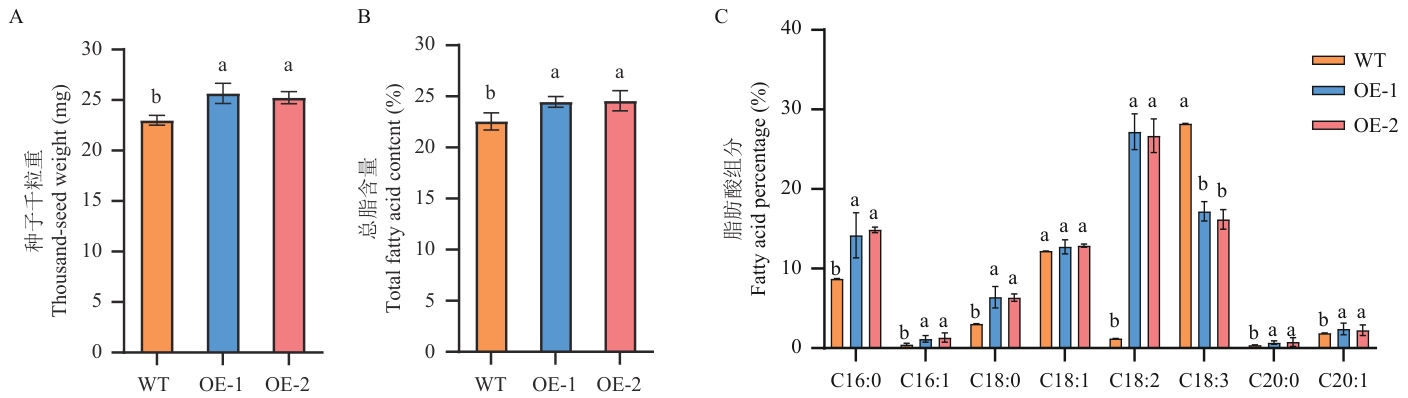
Fig. 6 Phenotypic and lipid analysis of transgenic ArabidopsisA: Thousand-seed weight of A. thaliana. B: Total fatty acid content. C: Fatty acid composition
| [1] | Banaś A, Debski H, Banaś W, et al. Lipids in grain tissues of oat (Avena sativa): differences in content, time of deposition, and fatty acid composition [J]. J Exp Bot, 2007, 58(10): 2463-2470. |
| [2] | Snell P, Wilkinson M, Taylor GJ, et al. Characterisation of grains and flour fractions from field grown transgenic oil-accumulating wheat expressing oat WRI1 [J]. Plants, 2022, 11(7): 889. |
| [3] | Heneen WK, Banaś A, Leonova S, et al. The distribution of oil in the oat grain [J]. Plant Signal Behav, 2009, 4(1): 55-56. |
| [4] | Grimberg Å, Wilkinson M, Snell P, et al. Transitions in wheat endosperm metabolism upon transcriptional induction of oil accumulation by oat endosperm WRINKLED1 [J]. BMC Plant Biol, 2020, 20: 235. |
| [5] | 陈磊. 燕麦的营养功能及综合加工利用 [J]. 食品与机械, 2012, 28(2): 236-237. |
| Chen L. Nutritional functions and process utilizations of oat [J]. Food Mach, 2012, 28(2): 236-237. | |
| [6] | 王龙龙. 花生二酰甘油酰基转移酶(DGAT)基因的克隆与分析 [D]. 济南: 山东师范大学, 2010. |
| Wang LL. Cloning and characterization of diacylglycerol acyltransferase (DGAT) gene in peanut (Arachis hypogaea L.) [D]. Jinan: Shandong Normal University, 2010. | |
| [7] | 张美莹, 莫倩, 齐秀双, 等. 牡丹PoLPAT2基因的克隆及表达分析 [J]. 浙江农业学报, 2025, 37(2): 321-328. |
| Zhang MY, Mo Q, Qi XS, et al. Cloning and expression analysis of peony PoLPAT2 gene [J]. Acta Agric Zhejiangensis, 2025, 37(2): 321-328. | |
| [8] | 吉白璐, 孙艺文, 刘万峰, 等. 烟草脂类合成关键基因NtLPAT的功能验证 [J]. 作物学报, 2025, 51(9): 2527-2537. |
| Ji BL, Sun YW, Liu WF, et al. Functional verification of the key gene NtLPAT involved in lipid biosynthesis in tobacco [J]. Acta Agron Sin, 2025, 51(9): 2527-2537. | |
| [9] | Yu B, Wakao S, Fan JL, et al. Loss of plastidic lysophosphatidic acid acyltransferase causes embryo-lethality in Arabidopsis [J]. Plant Cell Physiol, 2004, 45(5): 503-510. |
| [10] | Barroga NAM, Nguyen VC, Nakamura Y. The role of lysophosphatidic acid acyltransferase 1 in reproductive growth of Arabidopsis thaliana [J]. J Exp Bot, 2024, 75(22): 7190-7201. |
| [11] | 董芳, 迟晓元, 杨庆利, 等. 三个花生溶血磷脂酸酰基转移酶基因的克隆与序列分析 [J]. 花生学报, 2013(1): 1-11. |
| Dong F, Chi XY, Yang QL, et al. Cloning and sequence analysis of three lysophosphatidic acid acyltransferase (LPAT) encoding genes in peanut [J]. J Peanut Sci, 2013(1): 1-11. | |
| [12] | Zhang QY, Yu R, Sun DY, et al. PrLPAAT4, a putative lysophosphatidic acid acyltransferase from Paeonia rockii, plays an important role in seed fatty acid biosynthesis [J]. Molecules, 2017, 22(10): 1694. |
| [13] | 周雅莉, 黄旭升, 郝月茹, 等. 紫苏溶血磷脂酸酰基转移酶基因的克隆与功能分析 [J]. 生物工程学报, 2022, 38(8): 3014-3028. |
| Zhou YL, Huang XS, Hao YR, et al. Cloning and functional characterization of a lysophosphatidic acid acyltransferase gene from Perilla frutescens [J]. Chin J Biotechnol, 2022, 38(8): 3014-3028. | |
| [14] | 黄旭升, 周雅莉, 柴旭东, 等. 紫苏质体型PfLPAT1B基因的克隆及其在油脂合成中的功能分析 [J]. 生物技术通报, 2025, 41(7): 226-236. |
| Huang XS, Zhou YL, Chai XD, et al. Cloning of plastidial PfLPAT1B gene from Perilla frutescens and its functional analysis in oil biosynthesis [J]. Biotechnol Bull, 2025, 41(7): 226-236. | |
| [15] | Zhang K, He JJ, Yin YT, et al. Lysophosphatidic acid acyltransferase 2 and 5 commonly, but differently, promote seed oil accumulation in Brassica napus [J]. Biotechnol Biofuels, 2022, 15: 83. |
| [16] | Maisonneuve S, Guyot R, Delseny M, et al. A multigene family of lysophosphatidic acid acyltransferases of Arabidopsis thaliana [M]//Advanced Research on Plant Lipids. DordrechtSpringer Netherlands2003: 183-186. |
| [17] | Wattelet-Boyer V, Le Guédard M, Dittrich-Domergue F, et al. Lysophosphatidic acid acyltransferases: a link with intracellular protein trafficking in Arabidopsis root cells? [J]. J Exp Bot, 2022, 73(5): 1327-1343. |
| [18] | Angkawijaya AE, Nguyen VC, Nakamura Y. LYSOPHOSPHATIDIC ACID ACYLTRANSFERASES 4 and 5 are involved in glycerolipid metabolism and nitrogen starvation response in Arabidopsis [J]. New Phytol, 2019, 224(1): 336-351. |
| [19] | 尹永泰. 甘蓝型油菜溶血磷脂酰基转移酶家族基因的克隆与表达 [D]. 武汉: 华中科技大学, 2016. |
| Yin YT. Cloning and expressing of lysophosphatidic acid acyltransferases family genes from Brassica napus L. [J]. Wuhan: Huazhong University of Science and Technology, 2016. | |
| [20] | Chen G, Van Erp H, Martin-Moreno J, et al. Expression of Castor LPAT2 enhances ricinoleic acid content at the Sn-2 position of triacylglycerols in Lesquerella seed [J]. Int J Mol Sci, 2016, 17(4): 507. |
| [21] | Meesapyodsuk D, Chen Y, Ye SJ, et al. Co-expressing Eranthis hyemalis lysophosphatidic acid acyltransferase 2 and elongase improves two very long chain polyunsaturated fatty acid production in Brassica carinata [J]. Metab Eng Commun, 2021, 12: e00171. |
| [22] | 李昕儒. 油莎豆溶血磷脂酸酰基转移酶基因(CeLPATs)的鉴定及功能分析 [D]. 太谷: 山西农业大学, 2023. |
| Li XR. Identification and functional analysis of lysophosphatidic acid acyltransferase gene (CeLPATs) in Cyperus esculentus [D]. Taigu: Shanxi Agricultural University, 2023. | |
| [23] | 陈四龙, 黄家权, 雷永, 等. 花生溶血磷脂酸酰基转移酶基因的克隆与表达分析 [J]. 作物学报, 2012, 38(2): 245-255. |
| Chen SL, Huang JQ, Lei Y, et al. Cloning and expression analysis of lysophosphatidic acid acyltransferase (LPAT) encoding gene in peanut [J]. Acta Agron Sin, 2012, 38(2): 245-255. | |
| [24] | 丁检, 吴双, 蔡彩平, 等. 棉花溶血磷酸酯酰转移酶(LPAT)家族基因的发掘和表达分析 [J]. 作物学报, 2015, 41(3): 378-385. |
| Ding J, Wu S, Cai CP, et al. Genome-wide identification of lysophosphatidic acid acyltransferase gene family and their expression analysis in cotton [J]. Acta Agron Sin, 2015, 41(3): 378-385. | |
| [25] | Yang Z, Wang K, Aziz U, et al. Evaluation of duplicated reference genes for quantitative real-time PCR analysis in genome unknown hexaploid oat (Avena sativa L.) [J]. Plant Meth, 2020, 16: 138. |
| [26] | Zhou YL, Huang XS, Hu T, et al. Genome-wide analysis of glycerol-3-phosphate acyltransferase (GPAT) family in Perilla frutescens and functional characterization of PfGPAT9 crucial for biosynthesis of storage oils rich in high-value lipids [J]. Int J Mol Sci, 2023, 24(20): 15106. |
| [27] | Huang XS, Zhou YL, Shi XF, et al. PfbZIP85 transcription factor mediates ω-3 fatty acid-enriched oil biosynthesis by down-regulating PfLPAT1B gene expression in plant tissues [J]. Int J Mol Sci, 2024, 25(8): 4375. |
| [28] | 汪慧慧, 胡蓉, 岳宁燕, 等. 植物LPATs基因研究进展 [J]. 分子植物育种, 2020, 18(4): 1138-1143. |
| Wang HH, Hu R, Yue NY, et al. Research progress on lysophosphatidic acid acyltransferase (LPATs) gene in plants [J]. Mol Plant Breed, 2020, 18(4): 1138-1143. | |
| [29] | 王晓琳, 曲鹏, 甘明洋, 等. 橡胶树HbLPAT2基因的克隆与表达分析 [J]. 热带作物学报, 2024, 45(12): 2515-2523. |
| Wang XL, Qu P, Gan MY, et al. Cloning and expression analysis of HbLPAT2 gene from Hevea brasiliensis [J]. J Trop Crops, 2024, 45(12), 2515-2523. | |
| [30] | 杨琳, 徐宗乐, 崔玮桐, 等. 核桃溶血磷脂酸酰基转移酶基因家族分析 [J]. 河南农业大学学报, 2025, 59(6): 977-987. |
| Yang L, Xu ZL, Cui WT, et al. Analysis of the gene family of walnut lysophosphatidic acid acyltransferase [J]. J Henan Agric Univ, 2025, 59(6): 977-987. | |
| [31] | Maisonneuve S, Bessoule JJ, Lessire R, et al. Expression of rapeseed microsomal lysophosphatidic acid acyltransferase isozymes enhances seed oil content in Arabidopsis [J]. Plant Physiol, 2010, 152(2): 670-684. |
| [32] | Kim HJ, Silva JE, Iskandarov U, et al. Structurally divergent lysophosphatidic acid acyltransferases with high selectivity for saturated medium chain fatty acids from Cuphea seeds [J]. Plant J, 2015, 84(5): 1021-1033. |
| [33] | 张军平, 江木兰, 龚阳敏, 等. 三角褐指藻LPAAT基因在酵母中表达对脂肪酸的影响 [J]. 中国油料作物学报, 2012, 34(5): 483-488. |
| Zhang JP, Jiang ML, Gong YM, et al. Influence of expression of Phaeodactylum tricornutum LPAAT gene in yeast on oil content and fatty acid composition of TAG [J]. Chin J Oil Crop Sci, 2012, 34(5): 483-488. | |
| [34] | Wang YN, Yan JQ, Yang M, et al. EgMADS3 directly regulates EgLPAAT to mediate medium-chain fatty acids (MCFA) anabolism in the mesocarp of oil palm [J]. Plant Cell Rep, 2024, 43(4): 107. |
| [35] | Shams MR, Razvi K, Rahnama H, et al. Enhanced seed oil content by overexpressing LPAAT and WRI1 genes in tobacco plant [J]. Plant Cell Rep, 2025, 44(7): 163. |
| [1] | ZHENG Shu-ya, SU Yu-ting, HE Yu-mei, ZHAO Pan, ZHOU Xin-yi, LIU Ran, LIU Ping-li, GUO Hui-hong. Cloning and Functional Analysis of Gene PagRAX2_16G and Its Promoter from Poplar [J]. Biotechnology Bulletin, 2026, 42(9): 186-195. |
| [2] | DONG Xiang-xiang, HOU Wei-wei, MIAO Bai-ling, CHEN Juan-juan, LI Liang-jie, ZHAI Min, ZHU Qing-song, LIU Song-hu. Overexpression of FvBBX22 from Fragaria Vesca Promotes Anthocyanin Synthesis and Delays Flowering Time in Arabidopsis thaliana [J]. Biotechnology Bulletin, 2026, 42(9): 231-237. |
| [3] | LI Shu-ting, WANG Ying, DING Jia-hao, HU Rong-fang, LI Chen, SONG Ya-nan, XUE Jin-ai. Genome-wide Identification of the FAT Gene Family and Functional Analysis of CeFATA in Cyperus esculentus [J]. Biotechnology Bulletin, 2026, 42(8): 162-172. |
| [4] | AN Fei-fei, LUO Xiu-qin, CAI Jie, XUE Jing-jing, ZHU Wen-li. Cloning of MeMYB106 in Cassava and Its Function in Anthocyanin Biosynthesis of Leaves [J]. Biotechnology Bulletin, 2026, 42(6): 13-21. |
| [5] | XU Ze, ZHOU Chen-ping, KUANG Rui-bin, WU Xia-ming, YANG Min, LIU Chuan-he, HE Han, WEI Yue-rong. Identification of PG Gene Family and Their Roles in Papaya Fruit Softening [J]. Biotechnology Bulletin, 2026, 42(3): 349-361. |
| [6] | SUN Jin-liang, LI Xing-yan, ZHANG Bi-ru, MI Jun-zhen, LIU Jing-hui. Cloning of the Saline-alkali Response Gene AsGolS2 and Screening of Interacting Proteins in Oat [J]. Biotechnology Bulletin, 2026, 42(10): 77-87. |
| [7] | ZHANG Yong-yan, GUO Si-jian, LI Jing, HAO Si-yi, LI Rui-de, LIU Jia-peng, CHENG Chun-zhen. Gene Cloning and Functional Analysis of the Anthocyanin-related VcGSTF19 Gene in Blueberry (Vaccinium corymbosum L.) [J]. Biotechnology Bulletin, 2025, 41(9): 139-146. |
| [8] | HUANG Xu-sheng, ZHOU Ya-li, CHAI Xu-dong, WEN Jing, WANG Ji-ping, JIA Xiao-yun, LI Run-zhi. Cloning of Plastidial PfLPAT1B Gene from Perilla frutescens and Its Functional Analysis in Oil Biosynthesis [J]. Biotechnology Bulletin, 2025, 41(7): 226-236. |
| [9] | LI Rui, HU Ting, CHEN Shu-wei, WANG Yao, WANG Ji-ping. Positive Regulation of Anthocyanin Biosynthesis by PfMYB80 Transcription Factor in Perilla frutescens [J]. Biotechnology Bulletin, 2025, 41(6): 243-255. |
| [10] | CHENG Shan, WANG Hui-wei, CHEN Chen, ZHU Ya-jing, LI Chun-xin, BIE Hai, WANG Shu-feng, CHEN Xian-gong, ZHANG Xiang-ge. Cloning of MYB Transcription Factor Gene CeMYB154 and Analysis of Salt Tolerance Function in Cyperus esculentus [J]. Biotechnology Bulletin, 2025, 41(6): 218-228. |
| [11] | WU Ya, YAO Run, YANG Han-ting, LIU Wei, YANG Shuai, SONG Chi, CHEN Shi-lin. Genome-wide Identification and Expression Analysis of SDR Gene Family in Mentha suaveolens ‘Variegata’ [J]. Biotechnology Bulletin, 2025, 41(5): 175-185. |
| [12] | LIU Huan-huan, YANG Li-chun, LI Huo-gen. Cloning and Functional Analysis of LtMYB305 in Liriodendron tulipifera [J]. Biotechnology Bulletin, 2024, 40(4): 179-188. |
| [13] | ZHANG Yu-juan, LI Dong-hua, GONG Hui-hui, CUI Xin-xiao, GAO Chun-hua, ZHANG Xiu-rong, YOU Jun, ZHAO Jun-sheng. Cloning and Salt-tolerance Analysis of NAC Transcription Factor SiNAC77 from Sesamum indicum L. [J]. Biotechnology Bulletin, 2023, 39(11): 308-317. |
| [14] | CHEN Hao-ting, ZHANG Yu-jing, LIU Jie, DAI Ze-min, LIU Wei, SHI Yu, ZHANG Yi, LI Tian-lai. Functional Analysis of WRKY6 Gene in Tomato Under Low-phosphorus Stress [J]. Biotechnology Bulletin, 2023, 39(10): 136-147. |
| [15] | YU Qiu-lin, MA Jing-yi, ZHAO Pan, SUN Peng-fang, HE Yu-mei, LIU Shi-biao, GUO Hui-hong. Cloning and Functional Analysis of Gynostemma pentaphyllum GpMIR156a and GpMIR166b [J]. Biotechnology Bulletin, 2022, 38(7): 186-193. |
| Viewed | ||||||
|
Full text |
|
|||||
|
Abstract |
|
|||||
