







Biotechnology Bulletin ›› 2026, Vol. 42 ›› Issue (10): 77-87.doi: 10.13560/j.cnki.biotech.bull.1985.2025-1333
SUN Jin-liang, LI Xing-yan, ZHANG Bi-ru, MI Jun-zhen( ), LIU Jing-hui()
Received:2025-12-07
Online:2026-10-26
Published:2026-10-15
Contact:
MI Jun-zhen, LIU Jing-hui
E-mail:imaumjz@aliyun.com;cauljh@163.com
SUN Jin-liang, LI Xing-yan, ZHANG Bi-ru, MI Jun-zhen, LIU Jing-hui. Cloning of the Saline-alkali Response Gene AsGolS2 and Screening of Interacting Proteins in Oat[J]. Biotechnology Bulletin, 2026, 42(10): 77-87.
作用元件 Functional element | 序列 Sequence | 数量 Number | 功能 Function |
|---|---|---|---|
| ABRE | CACGTG | 1 | 参与脱落酸响应的顺式作用元件 |
| AAGAA-motif | GAAAGAA | 1 | 功能尚未明确表征 |
| AE-box | AGAAACTT | 1 | 光响应模块的组成部分 |
| ARE | AAACCA | 1 | 对厌氧诱导至关重要的顺式调控元件 |
| CAAT-box | CCAAT | 7 | 启动子和增强子区域中常见的顺式作用元件 |
| G-Box | CACGTG | 1 | 参与光响应的顺式调控元件 |
| LTR | CCGAAA | 2 | 参与低温响应的顺式作用元件 |
| MBS | CAACTG | 1 | 参与干旱诱导的MYB结合位点 |
| MYB | CAACAG | 1 | MYB转录因子的结合位点 |
| MYC | CATGTG | 3 | MYC转录因子的结合位点 |
| STRE | AGGGG | 2 | 干旱、盐碱等胁迫响应元件 |
| TCT-motif | TCTTAC | 2 | 光响应元件的一部分 |
| W box | TTGACC | 5 | WRKY转录因子的结合位点 |
Table 1 Major cis-acting elements in the AsGolS2 promoter region
作用元件 Functional element | 序列 Sequence | 数量 Number | 功能 Function |
|---|---|---|---|
| ABRE | CACGTG | 1 | 参与脱落酸响应的顺式作用元件 |
| AAGAA-motif | GAAAGAA | 1 | 功能尚未明确表征 |
| AE-box | AGAAACTT | 1 | 光响应模块的组成部分 |
| ARE | AAACCA | 1 | 对厌氧诱导至关重要的顺式调控元件 |
| CAAT-box | CCAAT | 7 | 启动子和增强子区域中常见的顺式作用元件 |
| G-Box | CACGTG | 1 | 参与光响应的顺式调控元件 |
| LTR | CCGAAA | 2 | 参与低温响应的顺式作用元件 |
| MBS | CAACTG | 1 | 参与干旱诱导的MYB结合位点 |
| MYB | CAACAG | 1 | MYB转录因子的结合位点 |
| MYC | CATGTG | 3 | MYC转录因子的结合位点 |
| STRE | AGGGG | 2 | 干旱、盐碱等胁迫响应元件 |
| TCT-motif | TCTTAC | 2 | 光响应元件的一部分 |
| W box | TTGACC | 5 | WRKY转录因子的结合位点 |
| 序号 No. | 基因标识符 Gene ID | 蛋白名称 Protein name | 分子功能 Molecular function |
|---|---|---|---|
| 4 | AVESA.00001b.r3.7Ag0000572 | 6-磷酸葡萄糖酸脱氢酶 6-phosphogluconate dehydrogenase | NADP结合;磷酸葡萄糖酸脱氢酶(脱羧)活性 |
| 5 | AVESA.00001b.r3.1Dg0003031 | 糖转运蛋白MST4 Sugar transport protein MST4 | 跨膜转运蛋白活性 |
| 9 | AVESA.00001b.r3.4Ag0001257 | 30S核糖体蛋白S13 30S ribosomal protein S13 | 核糖体结构组成;RNA结合;核酸结合 |
| 11 | AVESA.00001b.r3.2Cg0002211 | S-腺苷甲硫氨酸脱羧酶原酶 S-adenosylmethionine decarboxylase proenzyme | 腺苷甲硫氨酸脱羧酶活性 |
| 13 | AVESA.00001b.r3.7Cg0001500 | 丝氨酸羧肽酶样18 Serine carboxypeptidase-like 18 | 丝氨酸型羧肽酶活性 |
| 14 | AVESA.00001b.r3.2Dg0003272 | 未表征的氧化还原酶At1g06690 Uncharacterized oxidoreductase At1g06690 | 氧化还原酶活性 |
| 19 | AVESA.00001b.r3.6Cg0000485 | 蛋白质高叶绿素荧光表型173 Protein HIGH CHLOROPHYLL FLUORESCENCE PHENOTYPE 173 | RNA结合;光系统Ⅱ组装 |
| 24 | AVESA.00001b.r3.5Dg0001084 | 喹啉酸合成酶 Quinolinate synthase | [4Fe-4S]簇结合;喹啉酸合成酶A活性 |
| 25 | AVESA.00001b.r3.5Cg0003292 | 伴侣蛋白dnaJ GFA2 Chaperone protein dnaJ GFA2 | ATP结合;热休克蛋白结合;未折叠蛋白结合 |
| 34 | AVESA.00001b.r3.3Cg0001710 | SUN结构域包含蛋白2 SUN domain-containing protein 2 | 蛋白质-膜锚定活性 |
| 35 | AVESA.00001b.r3.6Cg0002056 | 外膜蛋白80 Outer envelope protein 80 | 叶绿体组织 |
| 39 | AVESA.00001b.r3.6Ag0001123 | 磷酸核酮糖激酶 Phosphoribulokinase | ATP结合;激酶活性;磷酸核酮糖激酶活性 |
| 40 | AVESA.00001b.r3.1Ag0001739 | 转录因子VOZ1 Transcription factor VOZ1 | 序列特异性DNA结合;锌离子结合 |
| 42 | AVESA.00001b.r3.7Cg0000571 | 过氧化物酶体(S)-2-羟基酸氧化酶GLO1 Peroxisomal (S)-2-hydroxy-acid oxidase GLO1 | 氧化还原酶活性;FMN结合 |
| 43 | AVESA.00001b.r3.5Dg0000088 | 丝氨酸/苏氨酸蛋白激酶OSK4 Serine/threonine protein kinase OSK4 | ATP结合;蛋白激酶活性 |
| 44 | AVESA.00001b.r3.7Dg0001328 | 木葡聚糖内转糖基化酶/水解酶蛋白8 Xyloglucan endotransglycosylase/hydrolase protein 8 | 水解酶活性;木葡聚糖;木糖基转移酶活性 |
| 54 | AVESA.00001b.r3.7Dg0002332 | 可能的α-甘露糖苷酶At5g13980 Probable alpha-mannosidase At5g13980 | 催化活性;α-甘露糖苷酶活性;碳水化合物结合 |
| 61 | AVESA.00001b.r3.3Ag0001245 | S-腺苷甲硫氨酸合成酶1 S-adenosylmethionine synthase 1 | ATP结合;甲硫氨酸腺苷转移酶活性 |
| 66 | AVESA.00001b.r3.7Ag0001375 | C末端加工肽酶3 Carboxyl-terminal-processing peptidase 3 | 蛋白质结合;丝氨酸型肽酶活性 |
| 68 | AVESA.00001b.r3.7Cg0002489 | 晚胚轴富集蛋白 Protein LATE ELONGATED HYPOCOTYL | 转录顺式调控区域结合 |
| 71 | AVESA.00001b.r3.1Dg0002098 | 蛋白酶Do样1 Protease Do-like 1 | 丝氨酸型内肽酶活性;蛋白质结合 |
| 72 | AVESA.00001b.r3.2Dg0003778 | 12S种子贮藏球蛋白1 12S seed storage globulin 1 | 营养储存物活性 |
| 80 | AVESA.00001b.r3.6Ag0000732 | 甲硫氨酸氨肽酶1D Methionine aminopeptidase 1D | 起始甲硫氨酰氨肽酶活性;金属离子结合;金属氨肽酶活性 |
| 84 | AVESA.00001b.r3.5Cg0000202 | 肽基-脯氨酰顺反异构酶FKBP16-3 Peptidyl-prolyl cis-trans isomerase FKBP16-3 | 肽基-脯氨酰顺反异构酶活性 |
| 85 | AVESA.00001b.r3.6Cg0002058 | 富马酰乙酰乙酰酶 Fumarylacetoacetase | 催化活性;延胡索酰乙酰乙酸酶活性 |
| 89 | AVESA.00001b.r3.6Ag0001269 | 伴侣蛋白dnaJ A6 Chaperone protein dnaJ A6 | 蛋白折叠;热休克蛋白结合;未折叠蛋白结合;Hsp70蛋白结合 |
| 90 | AVESA.00001b.r3.5Dg0002096 | 硫醇蛋白酶aleurain Thiol protease aleurain | 半胱氨酸型内肽酶活性 |
| 93 | AVESA.00001b.r3.5Dg0002008 | 聚泛素8 Polyubiquitin 8 | 蛋白质结合 |
| 94 | AVESA.00001b.r3.2Dg0002768 | 肽基-脯氨酰顺反异构酶FKBP20-2 Peptidyl-prolyl cis-trans isomerase FKBP20-2 | 肽基-脯氨酰顺反异构酶活性 |
| 96 | AVESA.00001b.r3.5Ag0002377 | 染色质重塑蛋白EBS Chromatin remodeling protein EBS | 染色质结合 |
| 6, 79, 91 | AVESA.00001b.r3.1Dg0002877, AVESA.00001b.r3.4Cg0003529, AVESA.00001b.r3.4Cg0003528 | 烯醇化酶 Enolase | 镁离子结合;磷酸丙酮酸水合酶活性 |
| 12, 16 | AVESA.00001b.r3.6Ag0000268, AVESA.00001b.r3.2Dg0001159 | 脂氧合酶2.3 Lipoxygenase 2.3 | 金属离子结合;氧化还原酶活性 |
| 53, 77, 81, 92 | AVESA.00001b.r3.6Dg0001185, AVESA.00001b.r3.6Ag0001496, AVESA.00001b.r3.7Dg0001656, AVESA.00001b.r3.6Cg0003509 | 甘油醛-3-磷酸脱氢酶 Glyceraldehyde-3-phosphate dehydrogenase | NAD结合;NADP结合;氧化还原酶活性 |
| 58, 83 | AVESA.00001b.r3.6Ag0002227, AVESA.00001b.r3.2Cg0000580 | 类囊体形成蛋白1 Protein THYLAKOID FORMATION1 | 光系统Ⅱ组装 |
| 2, 18, 33, 73 | AVESA.00001b.r3.2Cg0001041, AVESA.00001b.r3.2Dg0001209, AVESA.00001b.r3.1Cg0001552, AVESA.00001b.r3.Ung0000271 | 未知蛋白 Unknown protein |
Table 2 Candidate interacting proteins of AsGolS2
| 序号 No. | 基因标识符 Gene ID | 蛋白名称 Protein name | 分子功能 Molecular function |
|---|---|---|---|
| 4 | AVESA.00001b.r3.7Ag0000572 | 6-磷酸葡萄糖酸脱氢酶 6-phosphogluconate dehydrogenase | NADP结合;磷酸葡萄糖酸脱氢酶(脱羧)活性 |
| 5 | AVESA.00001b.r3.1Dg0003031 | 糖转运蛋白MST4 Sugar transport protein MST4 | 跨膜转运蛋白活性 |
| 9 | AVESA.00001b.r3.4Ag0001257 | 30S核糖体蛋白S13 30S ribosomal protein S13 | 核糖体结构组成;RNA结合;核酸结合 |
| 11 | AVESA.00001b.r3.2Cg0002211 | S-腺苷甲硫氨酸脱羧酶原酶 S-adenosylmethionine decarboxylase proenzyme | 腺苷甲硫氨酸脱羧酶活性 |
| 13 | AVESA.00001b.r3.7Cg0001500 | 丝氨酸羧肽酶样18 Serine carboxypeptidase-like 18 | 丝氨酸型羧肽酶活性 |
| 14 | AVESA.00001b.r3.2Dg0003272 | 未表征的氧化还原酶At1g06690 Uncharacterized oxidoreductase At1g06690 | 氧化还原酶活性 |
| 19 | AVESA.00001b.r3.6Cg0000485 | 蛋白质高叶绿素荧光表型173 Protein HIGH CHLOROPHYLL FLUORESCENCE PHENOTYPE 173 | RNA结合;光系统Ⅱ组装 |
| 24 | AVESA.00001b.r3.5Dg0001084 | 喹啉酸合成酶 Quinolinate synthase | [4Fe-4S]簇结合;喹啉酸合成酶A活性 |
| 25 | AVESA.00001b.r3.5Cg0003292 | 伴侣蛋白dnaJ GFA2 Chaperone protein dnaJ GFA2 | ATP结合;热休克蛋白结合;未折叠蛋白结合 |
| 34 | AVESA.00001b.r3.3Cg0001710 | SUN结构域包含蛋白2 SUN domain-containing protein 2 | 蛋白质-膜锚定活性 |
| 35 | AVESA.00001b.r3.6Cg0002056 | 外膜蛋白80 Outer envelope protein 80 | 叶绿体组织 |
| 39 | AVESA.00001b.r3.6Ag0001123 | 磷酸核酮糖激酶 Phosphoribulokinase | ATP结合;激酶活性;磷酸核酮糖激酶活性 |
| 40 | AVESA.00001b.r3.1Ag0001739 | 转录因子VOZ1 Transcription factor VOZ1 | 序列特异性DNA结合;锌离子结合 |
| 42 | AVESA.00001b.r3.7Cg0000571 | 过氧化物酶体(S)-2-羟基酸氧化酶GLO1 Peroxisomal (S)-2-hydroxy-acid oxidase GLO1 | 氧化还原酶活性;FMN结合 |
| 43 | AVESA.00001b.r3.5Dg0000088 | 丝氨酸/苏氨酸蛋白激酶OSK4 Serine/threonine protein kinase OSK4 | ATP结合;蛋白激酶活性 |
| 44 | AVESA.00001b.r3.7Dg0001328 | 木葡聚糖内转糖基化酶/水解酶蛋白8 Xyloglucan endotransglycosylase/hydrolase protein 8 | 水解酶活性;木葡聚糖;木糖基转移酶活性 |
| 54 | AVESA.00001b.r3.7Dg0002332 | 可能的α-甘露糖苷酶At5g13980 Probable alpha-mannosidase At5g13980 | 催化活性;α-甘露糖苷酶活性;碳水化合物结合 |
| 61 | AVESA.00001b.r3.3Ag0001245 | S-腺苷甲硫氨酸合成酶1 S-adenosylmethionine synthase 1 | ATP结合;甲硫氨酸腺苷转移酶活性 |
| 66 | AVESA.00001b.r3.7Ag0001375 | C末端加工肽酶3 Carboxyl-terminal-processing peptidase 3 | 蛋白质结合;丝氨酸型肽酶活性 |
| 68 | AVESA.00001b.r3.7Cg0002489 | 晚胚轴富集蛋白 Protein LATE ELONGATED HYPOCOTYL | 转录顺式调控区域结合 |
| 71 | AVESA.00001b.r3.1Dg0002098 | 蛋白酶Do样1 Protease Do-like 1 | 丝氨酸型内肽酶活性;蛋白质结合 |
| 72 | AVESA.00001b.r3.2Dg0003778 | 12S种子贮藏球蛋白1 12S seed storage globulin 1 | 营养储存物活性 |
| 80 | AVESA.00001b.r3.6Ag0000732 | 甲硫氨酸氨肽酶1D Methionine aminopeptidase 1D | 起始甲硫氨酰氨肽酶活性;金属离子结合;金属氨肽酶活性 |
| 84 | AVESA.00001b.r3.5Cg0000202 | 肽基-脯氨酰顺反异构酶FKBP16-3 Peptidyl-prolyl cis-trans isomerase FKBP16-3 | 肽基-脯氨酰顺反异构酶活性 |
| 85 | AVESA.00001b.r3.6Cg0002058 | 富马酰乙酰乙酰酶 Fumarylacetoacetase | 催化活性;延胡索酰乙酰乙酸酶活性 |
| 89 | AVESA.00001b.r3.6Ag0001269 | 伴侣蛋白dnaJ A6 Chaperone protein dnaJ A6 | 蛋白折叠;热休克蛋白结合;未折叠蛋白结合;Hsp70蛋白结合 |
| 90 | AVESA.00001b.r3.5Dg0002096 | 硫醇蛋白酶aleurain Thiol protease aleurain | 半胱氨酸型内肽酶活性 |
| 93 | AVESA.00001b.r3.5Dg0002008 | 聚泛素8 Polyubiquitin 8 | 蛋白质结合 |
| 94 | AVESA.00001b.r3.2Dg0002768 | 肽基-脯氨酰顺反异构酶FKBP20-2 Peptidyl-prolyl cis-trans isomerase FKBP20-2 | 肽基-脯氨酰顺反异构酶活性 |
| 96 | AVESA.00001b.r3.5Ag0002377 | 染色质重塑蛋白EBS Chromatin remodeling protein EBS | 染色质结合 |
| 6, 79, 91 | AVESA.00001b.r3.1Dg0002877, AVESA.00001b.r3.4Cg0003529, AVESA.00001b.r3.4Cg0003528 | 烯醇化酶 Enolase | 镁离子结合;磷酸丙酮酸水合酶活性 |
| 12, 16 | AVESA.00001b.r3.6Ag0000268, AVESA.00001b.r3.2Dg0001159 | 脂氧合酶2.3 Lipoxygenase 2.3 | 金属离子结合;氧化还原酶活性 |
| 53, 77, 81, 92 | AVESA.00001b.r3.6Dg0001185, AVESA.00001b.r3.6Ag0001496, AVESA.00001b.r3.7Dg0001656, AVESA.00001b.r3.6Cg0003509 | 甘油醛-3-磷酸脱氢酶 Glyceraldehyde-3-phosphate dehydrogenase | NAD结合;NADP结合;氧化还原酶活性 |
| 58, 83 | AVESA.00001b.r3.6Ag0002227, AVESA.00001b.r3.2Cg0000580 | 类囊体形成蛋白1 Protein THYLAKOID FORMATION1 | 光系统Ⅱ组装 |
| 2, 18, 33, 73 | AVESA.00001b.r3.2Cg0001041, AVESA.00001b.r3.2Dg0001209, AVESA.00001b.r3.1Cg0001552, AVESA.00001b.r3.Ung0000271 | 未知蛋白 Unknown protein |
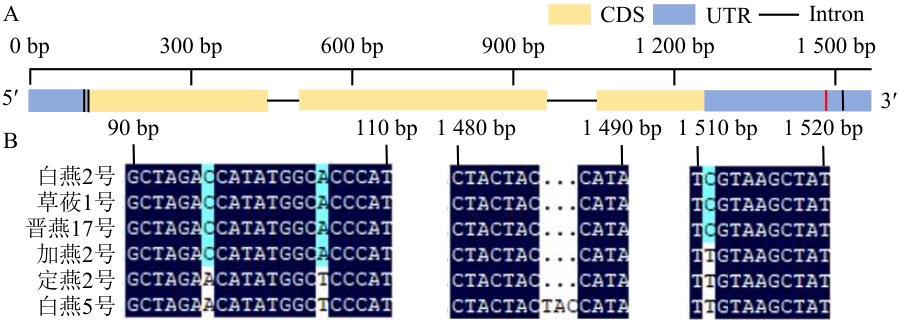
Fig. 1 Sequence polymorphism analysis of AsGolS2A: Schematic diagram of polymorphic sites. Black vertical lines indicate the mutation sites of single nucleotide; red vertical lines indicate insertion-deletion sites. B: Detailed list of the specific variation sites shown in Fig. A
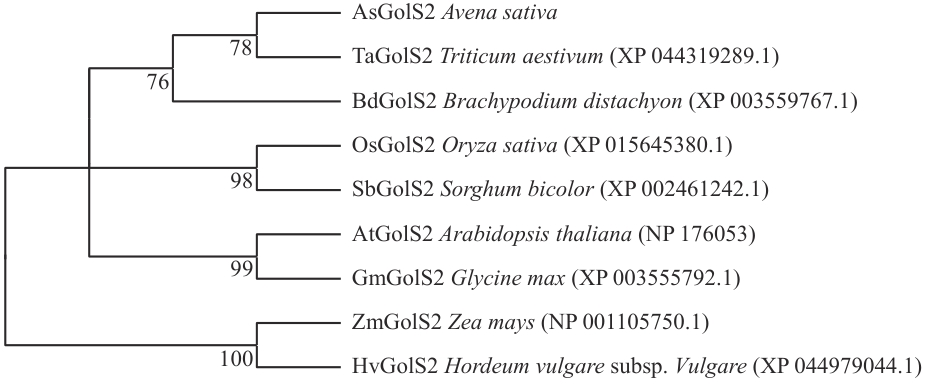
Fig. 2 Phylogenetic tree analysis of AsGolS2 and eight plant proteins
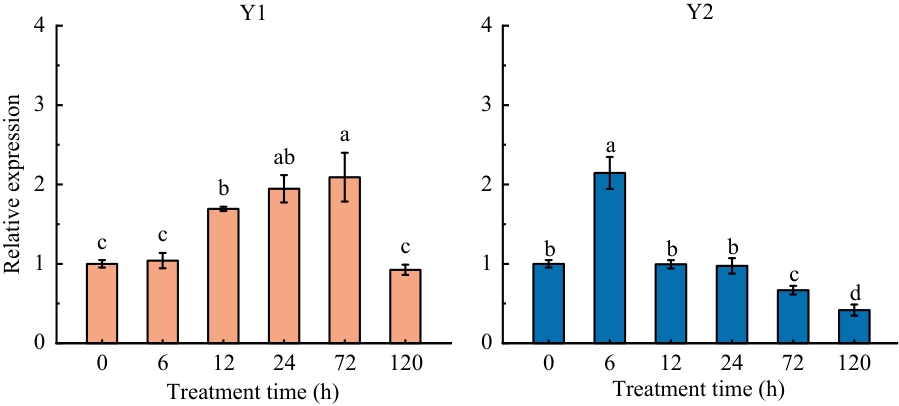
Fig. 3 Expressions of AsGolS2 gene in saline-alkali stress
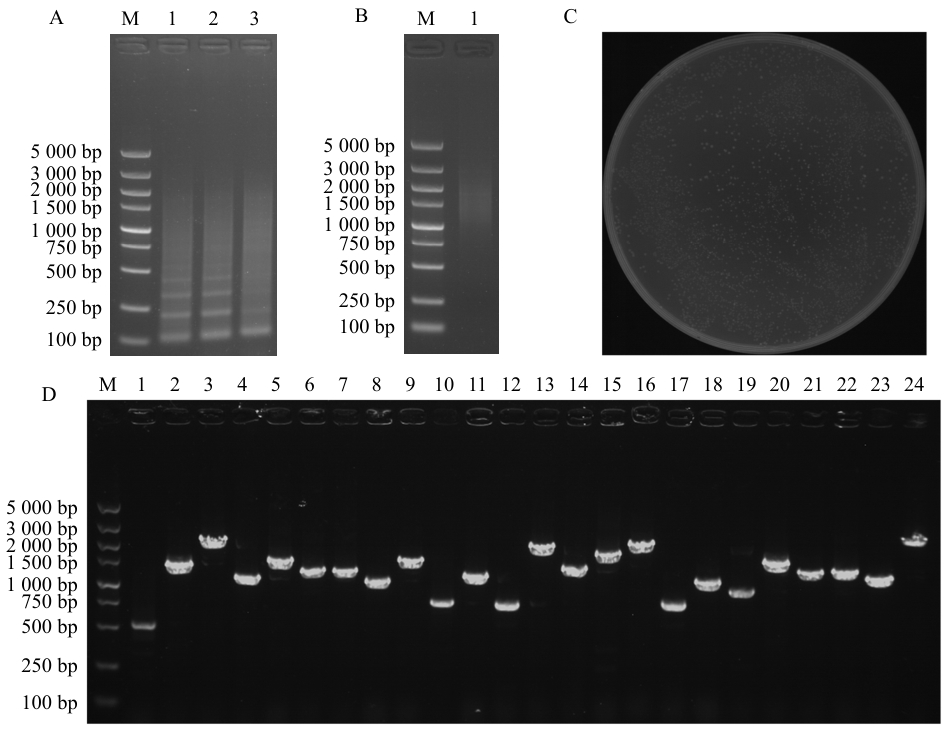
Fig. 4 Construction and quality assessment of the cDNA libraryA: Electrophoresis of dscDNA. M: Marker DL5 000. 1: Control (CK); 2: Y1; 3: Y2. B: Electrophoresis after normalization and removal of short fragments. C: Determination of library titer. D: Assessment of library quality
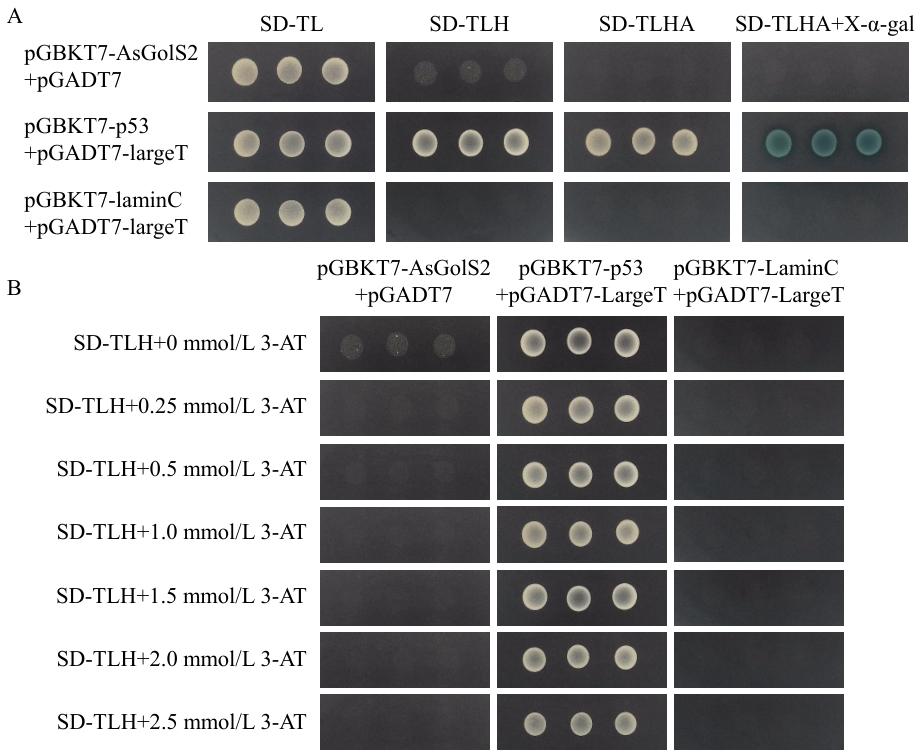
Fig. 5 Verification of bait vector auto-activation and selection of 3-AT concentrationA: Self-activation detection. B: 3-AT inhibition
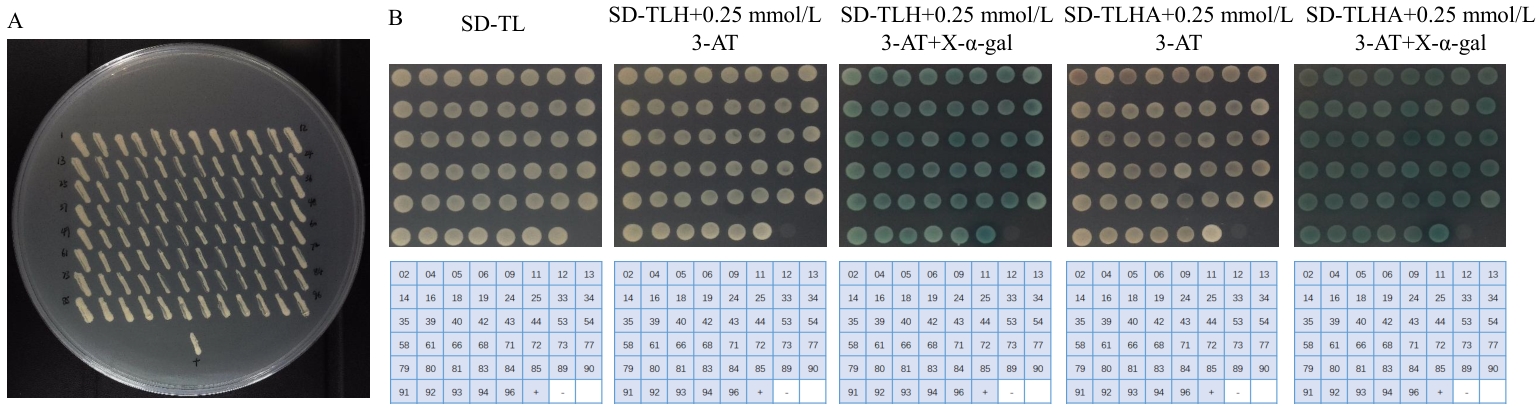
Fig. 6 Yeast two-hybrid (A) and reciprocal verification (B) results
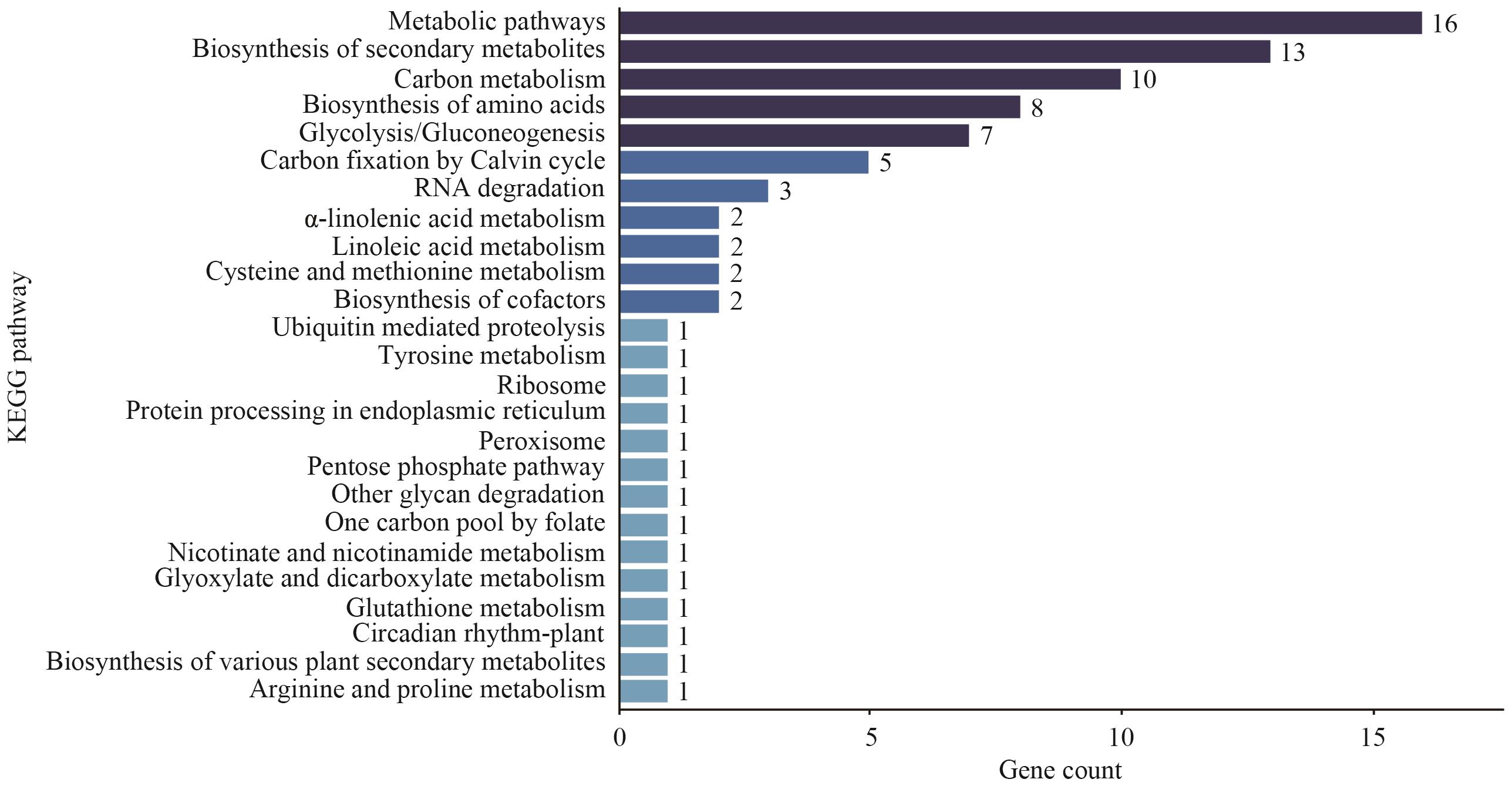
Fig. 7 KEGG pathway analysis of AsGolS2 interacting proteins
| [1] | Li PF, Mo F, Li DF, et al. Exploring agronomic strategies to improve oat productivity and control weeds: leaf type, row spacing, and planting density [J]. Can J Plant Sci, 2018, 98(5): 1084-1093. |
| [2] | Ma X, Pan J, Ju ZL, et al. Functional characterization of AsGRAS24 in Avena sativa reveals its role in enhancing salt tolerance via antioxidant and hormonal regulation in transgenic Arabidopsis thaliana [J]. BMC Plant Biol, 2025, 25: 1102. |
| [3] | Zhu GL, Liu J, Wu H, et al. The optimum mixed cropping ratio of oat and alfalfa enhanced plant growth, forage yield, and forage quality in saline soil [J]. Plants, 2024, 13(21): 3103. |
| [4] | Han LP, Eneji AE, Steinberger Y, et al. Comparative biomass production of six oat varieties in a saline soil ecology [J]. Commun Soil Sci Plant Anal, 2014, 45(19): 2552-2564. |
| [5] | 王伟伟, 赵振杰, 王志, 等. 盐胁迫下与小麦生理响应相关的耐盐基因研究进展 [J]. 生物技术通报, 2025, 41(5): 14-22. |
| Wang WW, Zhao ZJ, Wang Z, et al. Research progress in salt-tolerant genes related to physiological response of wheat to salt stress [J]. Biotechnol Bull, 2025, 41(5): 14-22. | |
| [6] | 张海燕, 汪宝卿, 冯向阳, 等. 不同时期干旱胁迫对甘薯生长和渗透调节能力的影响 [J]. 作物学报, 2020, 46(11): 1760-1770. |
| Zhang HY, Wang BQ, Feng XY, et al. Effects of drought treatments at different growth stages on growth and the activity of osmotic adjustment in sweet potato [Ipomoea batatas (L.) Lam.] [J]. Acta Agron Sin, 2020, 46(11): 1760-1770. | |
| [7] | ElSayed AI, Rafudeen MS, Golldack D. Physiological aspects of raffinose family oligosaccharides in plants: protection against abiotic stress [J]. Plant Biol J, 2014, 16(1): 1-8. |
| [8] | Nishizawa A, Yabuta Y, Shigeoka S. Galactinol and raffinose constitute a novel function to protect plants from oxidative damage[J]. Plant Physiol, 2008, 147(3): 1251-1263. |
| [9] | Sengupta S, Mukherjee S, Basak P, et al. Significance of galactinol and raffinose family oligosaccharide synthesis in plants [J]. Front Plant Sci, 2015, 6: 656. |
| [10] | dos Santos TB, Vieira LGE. Involvement of the galactinol synthase gene in abiotic and biotic stress responses: a review on current knowledge [J]. Plant Gene, 2020, 24: 100258. |
| [11] | Taji T, Ohsumi C, Iuchi S, et al. Important roles of drought- and cold-inducible genes for galactinol synthase in stress tolerance in Arabidopsis thaliana [J]. Plant J, 2002, 29(4): 417-426. |
| [12] | Jing QK, Chen AR, Lv ZY, et al. Systematic analysis of galactinol synthase and raffinose synthase gene families in potato and their expression patterns in development and abiotic stress responses [J]. Genes, 2023, 14(7): 1344. |
| [13] | Shimosaka E, Ozawa K. Overexpression of cold-inducible wheat galactinol synthase confers tolerance to chilling stress in transgenic rice [J]. Breed Sci, 2015, 65(5): 363-371. |
| [14] | Dai HB, Zhu ZH, Wang ZG, et al. Galactinol synthase 1 improves cucumber performance under cold stress by enhancing assimilate translocation [J]. Hortic Res, 2022, 9: uhab063. |
| [15] | Ma S, Lv JG, Li X, et al. Galactinol synthase gene 4 (CsGolS4) increases cold and drought tolerance in Cucumis sativus L. by inducing RFO accumulation and ROS scavenging [J]. Environ Exp Bot, 2021, 185: 104406. |
| [16] | He FY, Xu JF, Jian YQ, et al. Overexpression of galactinol synthase 1 from Solanum commersonii (ScGolS1) confers freezing tolerance in transgenic potato [J]. Hortic Plant J, 2023, 9(3): 541-552. |
| [17] | Ranjan A, Gautam S, Michael R, et al. Arsenic-induced galactinol synthase1 gene, AtGolS1, provides arsenic stress tolerance in Arabidopsis thaliana [J]. Environ Exp Bot, 2023, 207: 105217. |
| [18] | Wang YG, Liu HH, Wang SP, et al. Overexpression of a common wheat gene GALACTINOL SYNTHASE3 enhances tolerance to zinc in Arabidopsis and rice through the modulation of reactive oxygen species production [J]. Plant Mol Biol Rep, 2016, 34(4): 794-806. |
| [19] | Wang S, He PJ, Wang ZJ, et al. Galactinol synthase 4 influences plant height by affecting phenylpropanoid metabolism and the balance of soluble carbohydrates in tomato [J]. Plant Physiol Biochem, 2025, 220: 109484. |
| [20] | Zhang HD, Zhang KP, Zhao XY, et al. Galactinol synthase 2 influences the metabolism of chlorophyll, carotenoids, and ethylene in tomato fruits [J]. J Exp Bot, 2024, 75(11): 3337-3350. |
| [21] | Zhang HL, Sun Z, Feng S, et al. The C2H2-type zinc finger protein PhZFP1 regulates cold stress tolerance by modulating galactinol synthesis in Petunia hybrida [J]. J Exp Bot, 2022, 73(18): 6434-6448. |
| [22] | Song C, Chung WS, Lim CO. Overexpression of heat shock factor gene HsfA3 increases galactinol levels and oxidative stress tolerance in Arabidopsis [J]. Mol Cells, 2016, 39(6): 477-483. |
| [23] | Sonowal K, Gandass N, Kamble NU, et al. A seed-specific DNA-binding with One Finger transcription factor, RPBF, positively regulates galactinol synthase to maintain seed vigour in rice [J]. Plant Cell Physiol, 2024, 65(12): 2066-2079. |
| [24] | Kapoor A, Mondal S, Chaudhary A, et al. A topological review on protein-protein interactions: the development and promises in the era of omics [J]. J Proteins Proteom, 2024, 15(3): 523-544. |
| [25] | Singh A, Singhal C, Sharma AK, et al. An auxin regulated Universal stress protein (TaUSP3B-1) interacts with TaGolS and provides tolerance under drought stress and ER stress [J]. Physiol Plant, 2024, 176(3): e14390. |
| [26] | 张碧茹. 燕麦耐盐碱种质资源鉴定及候选基因功能验证 [D]. 呼和浩特: 内蒙古农业大学, 2024. |
| Zhang BR. Identification of saline-alkali tolerant oat germplasm resources and functional verification of candidate genes [D]. Hohhot: Inner Mongolia Agricultural University, 2024. | |
| [27] | Zhang BR, Mi JZ, Zhao BP, et al. Testing of saline-alkali tolerance in oat germplasm through integrated germination and field performance assessments [J]. Agronomy, 2025, 15(6): 1267. |
| [28] | 贾雯淇, 熊玉婷, 李曼, 等. GolS在植物非生物胁迫中的研究进展 [J]. 分子植物育种, 2025, 23(24): 8215-8223. |
| Jia WQ, Xiong YT, Li M, et al. Advances in GolS study in abiotic stress in plants [J]. Mol Plant Breed, 2025, 23(24): 8215-8223. | |
| [29] | Hardy EC, Balcerowicz M. Untranslated yet indispensable‒UTRs act as key regulators in the environmental control of gene expression [J]. J Exp Bot, 2024, 75(14): 4314-4331. |
| [30] | Xu Y, Fu XY. Reprogramming of plant central metabolism in response to abiotic stresses: a metabolomics view [J]. Int J Mol Sci, 2022, 23(10): 5716. |
| [31] | 何炜, 曲梦宇, 魏毅东, 等. 水稻磷酸核酮糖激酶基因胁迫诱导表达分析与互作蛋白筛选 [J]. 农业生物技术学报, 2023, 31(1): 1-14. |
| He W, Qu MY, Wei YD, et al. Expression analyses of phosphoribulokinase gene induced by stresses and its interacting protein screening in rice (Oryza sativa) [J]. J Agric Biotechnol, 2023, 31(1): 1-14. | |
| [32] | Yu AL, Xie Y, Pan XW, et al. Photosynthetic phosphoribulokinase structures: enzymatic mechanisms and the redox regulation of the Calvin-Benson-bassham cycle [J]. Plant Cell, 2020, 32(5): 1556-1573. |
| [33] | Tossounian MA, Zhang B, Gout I. The writers, readers, and erasers in redox regulation of GAPDH [J]. Antioxidants, 2020, 9(12): 1288. |
| [34] | 林世锋, 付强, 余婧, 等. 烟草胞质6-磷酸葡萄糖酸脱氢酶基因的克隆及表达分析 [J]. 生物技术通报, 2015, 31(5): 113-119. |
| Lin SF, Fu Q, Yu J, et al. Cloning and expression analysis of cytosolic 6-phosphogluconate dehydrogenase gene in tobacco (Nicotiana tabacum) [J]. Biotechnol Bull, 2015, 31(5): 113-119. | |
| [35] | Doering LN, Gerling N, Linnenbrügger L, et al. Evidence for dual targeting control of Arabidopsis 6-phosphogluconate dehydrogenase isoforms by N-terminal phosphorylation [J]. J Exp Bot, 2024, 75(10): 2848-2866. |
| [36] | Chern M, Bai W, Chen XW, et al. Reduced expression of glycolate oxidase leads to enhanced disease resistance in rice [J]. PeerJ, 2013, 1: e28. |
| [37] | Yin MM, Huang Z, Aslam A, et al. Genome-wide identification of SAMS gene family in Cucurbitaceae and the role of ClSAMS1 in watermelon tolerance to abiotic stress [J]. Plant Physiol Biochem, 2024, 211: 108708. |
| [38] | Zhu HY, He MW, Jahan M, et al. CsCDPK6, a CsSAMS1-interacting protein, affects polyamine/ethylene biosynthesis in cucumber and enhances salt tolerance by overexpression in tobacco [J]. Int J Mol Sci, 2021, 22(20): 11133. |
| [39] | 段敏杰, 李怡斐, 杨小苗, 等. 辣椒锌指蛋白DnaJ-Like基因家族鉴定及对高温胁迫的表达响应 [J]. 生物技术通报, 2023, 39(1): 187-198. |
| Duan MJ, Li YF, Yang XM, et al. Identification of zinc finger protein DnaJ-like gene family in Capsicum annuum and its expression analysis responses to high temperature stress [J]. Biotechnol Bull, 2023, 39(1): 187-198. | |
| [40] | Nie FH, Wang MH, Liu LL, et al. Genome-wide identification and bioinformatics analysis of the FK506 binding protein family in rice [J]. Genes, 2024, 15(7): 902. |
| [1] | SANG Zhi-peng, HOU Dong, WANG Hui-ting, YUE Hong-zhong, LI Ya-li, XIE Jian-ming, LU Wen, XU Zhao-tai. Identification of the Cucumber CsHXKs Gene Family and Regulation of Floral Organ Sugar Accumulation by CsHKL1.2 [J]. Biotechnology Bulletin, 2026, 42(9): 157-168. |
| [2] | YUAN Shu-qi, ZHANG Yan-fang, NIE Yu-shan, LI Na, SUO Ning-ning, TAN Gui-lian, HUO Xiu-wen. Identification of HXKs in Yam and Validation of Proteins Interacting with DoHXK3 [J]. Biotechnology Bulletin, 2026, 42(9): 306-315. |
| [3] | NIE Yu-shan, ZHANG Yan-fang, YUAN Shu-qi, LI Na, SUO Ning-ning, TAN Gui-lian, HUO Xiu-wen. Identification of the AGPL Gene Family in Yam and Screening of DoAGPL1 Interacting Proteins [J]. Biotechnology Bulletin, 2026, 42(9): 316-326. |
| [4] | REN Wen-bin, CHEN Deng-ke, WU Cui-cui. Bioinformatics Analysis and Salt Tolerance Study of the Peanut Transcription Factor AhZHD9 [J]. Biotechnology Bulletin, 2026, 42(9): 297-305. |
| [5] | DONG Xiang-xiang, HOU Wei-wei, MIAO Bai-ling, CHEN Juan-juan, LI Liang-jie, ZHAI Min, ZHU Qing-song, LIU Song-hu. Overexpression of FvBBX22 from Fragaria Vesca Promotes Anthocyanin Synthesis and Delays Flowering Time in Arabidopsis thaliana [J]. Biotechnology Bulletin, 2026, 42(9): 231-237. |
| [6] | CUI Xiu-yan, DAI Chun-yang, ZHANG Yi-ting, TIAN Xiang, CHEN Ling, QIAO Zhi-jun, WANG Hai-gang, WANG Jun-jie. Identification of the Pseudo-response Regulator PRR Gene Family in Broomcorn Millet and Its Response to Photoperiod [J]. Biotechnology Bulletin, 2026, 42(8): 133-141. |
| [7] | XIN Qing, ZHENG Yong-jie, LI Yu-hua, TU Bai-lian, LIU Xin-liang, ZHANG Yue-ting, WU Yan-fang. Genome-wide Identification and Expression Analysis of MYC Transcription Factors in Cinnamomum camphora [J]. Biotechnology Bulletin, 2026, 42(7): 214-225. |
| [8] | RAN Dan-dan, TAI Sen-lin, OU Xiao-hong, ZHOU Tao, XU Jiao. Genome-wide Identification and Characterization of UDP-glycosyltransferase Gene Family in Gastrodia elata [J]. Biotechnology Bulletin, 2026, 42(7): 163-172. |
| [9] | YAN Xiao-guang, DU Yan-wei, MA Zhi-yuan, WANG Bin, WANG Guo-liang, HU Dan-zhu. Genome-wide Identification and Expression Pattern Analysis of ZmDIR Gene Family in Maize [J]. Biotechnology Bulletin, 2026, 42(7): 126-137. |
| [10] | HUANG Xu-sheng, ZHOU Ya-li, JIA Zheng-rong, SHEN Shan, CHEN Jin-chai, ZHOU Guang-li, LI Xin-xin, WANG Ji-ping, LI Run-zhi, JIA Xiao-yun. Whole-genome Identification of the Perilla frutescens ARF Transcription Factor Family and Functional Analysis of Its Role in Abiotic Stress Responses [J]. Biotechnology Bulletin, 2026, 42(7): 148-162. |
| [11] | WANG Jiang-qing, ZHANG Die, WANG Hui-jie, YUAN Zhu-dong, FU Yan-hong, HUANG Ya-nan, WANG Hong-yang. Identification of the AP2/ERF Gene Family in Potato and Expression Analysis in Response to Phytophthora infestans Stress [J]. Biotechnology Bulletin, 2026, 42(6): 116-127. |
| [12] | ZHANG Ai-cen, YAN Hui, MA Ju-kui, ZHANG Yun-gang, LI Qiang. Genome-wide Identification and Expression Analysis of DNA Methyltransferase and Demethylase Gene Family in Sweetpotato [J]. Biotechnology Bulletin, 2026, 42(6): 1-12. |
| [13] | XIONG Shi-fa, CHEN Yi-cun, WU Li-wen, SHI Xiang, ZHANG Sheng-jiao, PENG Fang-you, CHEN Tao-mei, WANG Yang-dong. Identification and Functional Analysis of the TCP Gene Family in Quercus fabri [J]. Biotechnology Bulletin, 2026, 42(6): 258-266. |
| [14] | LI Xu-long, XU Shi-qiang, ZHANG Long, LI Jing-yu, HE Wei-xian, CHEN Li-kai, WANG Ji-hua. Genome-wide Identification, Evolution and Expression Pattern Analysis of Terpene Synthase Gene Family in Morinda officinalis [J]. Biotechnology Bulletin, 2026, 42(6): 314-325. |
| [15] | GUO Miao, XU Jia-jia, SUN Tian-guo, CAI Can, CAO Wan-di, BAO Ji-xing, SHA Wei, ZHANG Mei-juan, PENG Yi-fang, MA Tian-yi. Overexpression of RcOLEO1 Enhanced the Tolerance of Arabidopsis thaliana toDrought and High-temperature Stress [J]. Biotechnology Bulletin, 2026, 42(5): 312-322. |
| Viewed | ||||||
|
Full text |
|
|||||
|
Abstract |
|
|||||
