







Biotechnology Bulletin ›› 2025, Vol. 41 ›› Issue (4): 145-155.doi: 10.13560/j.cnki.biotech.bull.1985.2024-0804
LIU Tao1( ), WANG Zhi-qi1, WU Wen-bo1, SHI Wen-ting1, WANG Chao-nan1, DU Chong1,2, YANG Zhong-min1,2()
Received:2024-08-20
Online:2025-04-26
Published:2025-04-25
Contact:
YANG Zhong-min
E-mail:2258845061@qq.com;yangzhongmin161220@126.com
LIU Tao, WANG Zhi-qi, WU Wen-bo, SHI Wen-ting, WANG Chao-nan, DU Chong, YANG Zhong-min. Identification and Expression Analysis of the GRAM Gene Family in Potato[J]. Biotechnology Bulletin, 2025, 41(4): 145-155.
| 基因名称 Gene name | 上游引物 Forward primer(5'-3') | 下游引物 Reverse primer(5'-3') |
|---|---|---|
| Actin | GGATCTTGCTGGTCGTGATTTAAC | CATAGGCAAGCTTTTCCTTCATGT |
| TCTTTCCACTGCAACTGGTCCTG | ATGGGCGATCACTGCAAAAAGC |
Table 1 Primers for RT-qPCR
| 基因名称 Gene name | 上游引物 Forward primer(5'-3') | 下游引物 Reverse primer(5'-3') |
|---|---|---|
| Actin | GGATCTTGCTGGTCGTGATTTAAC | CATAGGCAAGCTTTTCCTTCATGT |
| TCTTTCCACTGCAACTGGTCCTG | ATGGGCGATCACTGCAAAAAGC |
基因名称 Gene name | 基因ID Gene ID | 蛋白长度 Amino acid length/aa | 分子量 Molecular mass/Da | 等电点 pI | 不稳定系数 Instability index | Aliphatic index | 亲水性 Hydropathicity | 亚细胞定位 Subcellular location |
|---|---|---|---|---|---|---|---|---|
| Soltu.DM.01G007240 | 叶绿体Chloroplast | |||||||
| Soltu.DM.01G030910 | 叶绿体Chloroplast | |||||||
| Soltu.DM.03G018700 | 细胞核Nuclear | |||||||
| Soltu.DM.03G025920 | 叶绿体Chloroplast | |||||||
| Soltu.DM.04G004990 | 细胞核Nuclear | |||||||
| Soltu.DM.04G005060 | 叶绿体Chloroplast | |||||||
| Soltu.DM.04G005070 | 叶绿体Chloroplast | |||||||
| Soltu.DM.04G005080 | 叶绿体Chloroplast | |||||||
| Soltu.DM.04G005090 | 叶绿体Chloroplast | |||||||
| Soltu.DM.04G005100 | 叶绿体Chloroplast | |||||||
| Soltu.DM.04G005110 | 细胞核Nuclear | |||||||
| Soltu.DM.04G005120 | 叶绿体Chloroplast | |||||||
| Soltu.DM.04G005130 | 叶绿体Chloroplast | |||||||
| Soltu.DM.04G005140 | 叶绿体Chloroplast | |||||||
| Soltu.DM.04G005150 | 叶绿体Chloroplast | |||||||
| Soltu.DM.04G005160 | 叶绿体Chloroplast | |||||||
| Soltu.DM.04G005170 | 叶绿体Chloroplast | |||||||
| Soltu.DM.04G005180 | 叶绿体Chloroplast | |||||||
| Soltu.DM.04G005190 | 叶绿体Chloroplast | |||||||
| Soltu.DM.04G008560 | 细胞核Nuclear | |||||||
| Soltu.DM.04G010140 | 叶绿体Chloroplast | |||||||
| Soltu.DM.06G014320 | 叶绿体Chloroplast | |||||||
| Soltu.DM.07G009230 | 细胞核Nuclear | |||||||
| Soltu.DM.08G005660 | 线粒体Mitochondrial | |||||||
| Soltu.DM.08G024750 | 细胞核Nuclear | |||||||
| Soltu.DM.11G003200 | 细胞质Cytoplasmic |
Table 2 Analysis of the properties of the GRAM family proteins in potato
基因名称 Gene name | 基因ID Gene ID | 蛋白长度 Amino acid length/aa | 分子量 Molecular mass/Da | 等电点 pI | 不稳定系数 Instability index | Aliphatic index | 亲水性 Hydropathicity | 亚细胞定位 Subcellular location |
|---|---|---|---|---|---|---|---|---|
| Soltu.DM.01G007240 | 叶绿体Chloroplast | |||||||
| Soltu.DM.01G030910 | 叶绿体Chloroplast | |||||||
| Soltu.DM.03G018700 | 细胞核Nuclear | |||||||
| Soltu.DM.03G025920 | 叶绿体Chloroplast | |||||||
| Soltu.DM.04G004990 | 细胞核Nuclear | |||||||
| Soltu.DM.04G005060 | 叶绿体Chloroplast | |||||||
| Soltu.DM.04G005070 | 叶绿体Chloroplast | |||||||
| Soltu.DM.04G005080 | 叶绿体Chloroplast | |||||||
| Soltu.DM.04G005090 | 叶绿体Chloroplast | |||||||
| Soltu.DM.04G005100 | 叶绿体Chloroplast | |||||||
| Soltu.DM.04G005110 | 细胞核Nuclear | |||||||
| Soltu.DM.04G005120 | 叶绿体Chloroplast | |||||||
| Soltu.DM.04G005130 | 叶绿体Chloroplast | |||||||
| Soltu.DM.04G005140 | 叶绿体Chloroplast | |||||||
| Soltu.DM.04G005150 | 叶绿体Chloroplast | |||||||
| Soltu.DM.04G005160 | 叶绿体Chloroplast | |||||||
| Soltu.DM.04G005170 | 叶绿体Chloroplast | |||||||
| Soltu.DM.04G005180 | 叶绿体Chloroplast | |||||||
| Soltu.DM.04G005190 | 叶绿体Chloroplast | |||||||
| Soltu.DM.04G008560 | 细胞核Nuclear | |||||||
| Soltu.DM.04G010140 | 叶绿体Chloroplast | |||||||
| Soltu.DM.06G014320 | 叶绿体Chloroplast | |||||||
| Soltu.DM.07G009230 | 细胞核Nuclear | |||||||
| Soltu.DM.08G005660 | 线粒体Mitochondrial | |||||||
| Soltu.DM.08G024750 | 细胞核Nuclear | |||||||
| Soltu.DM.11G003200 | 细胞质Cytoplasmic |
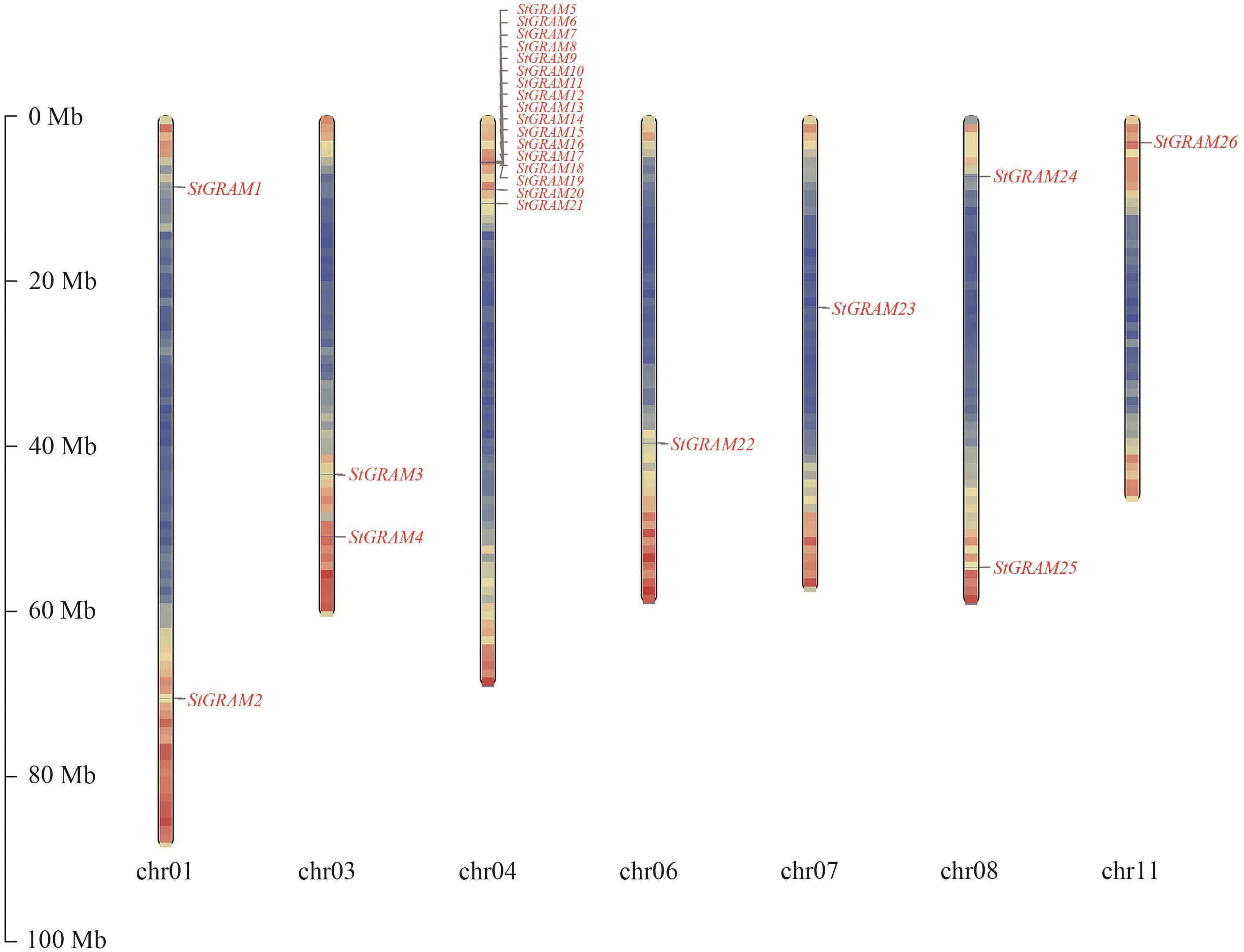
Fig. 1 Chromosome localization of GRAM genes in potato
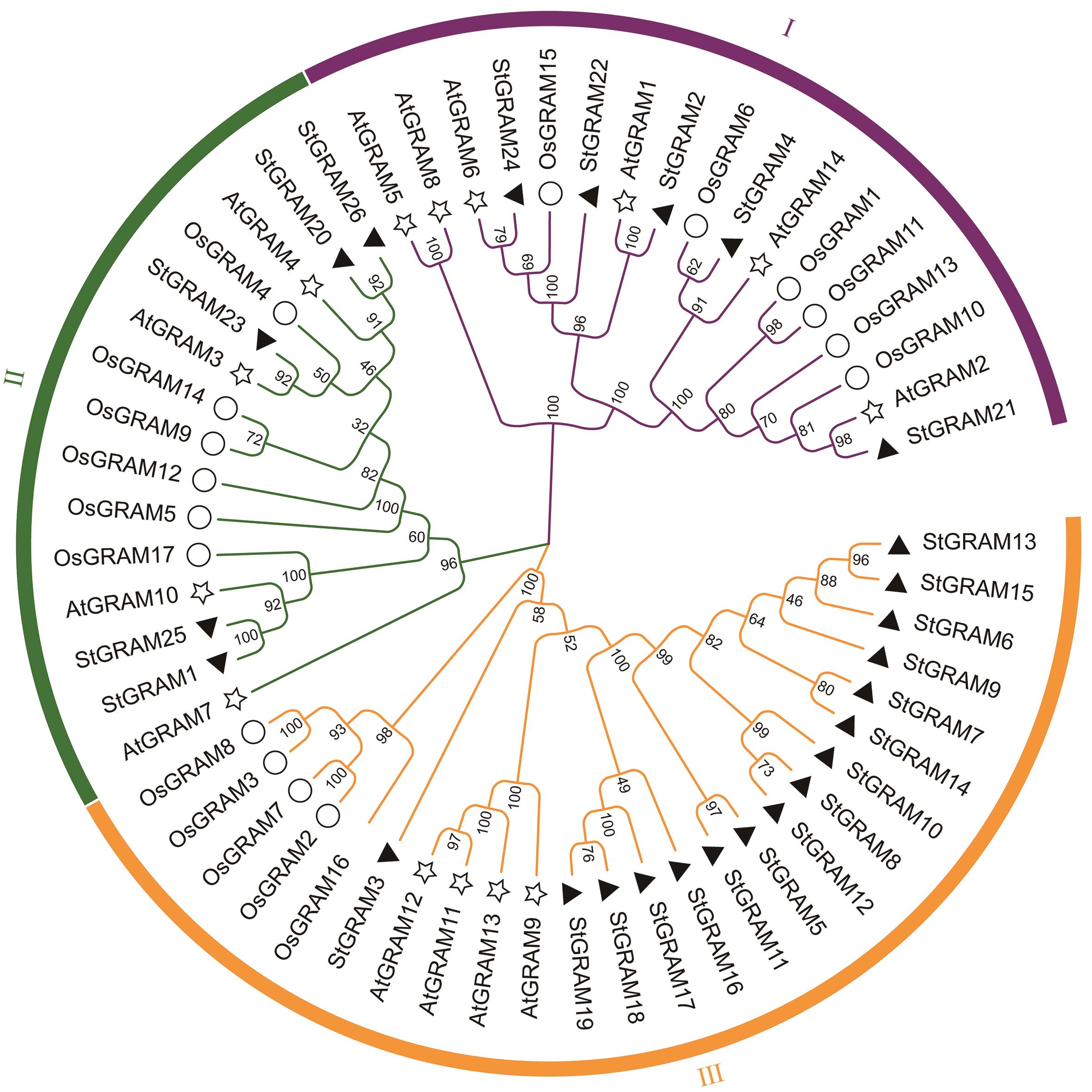
Fig. 2 Phylogenetic tree of GRAM proteins in Solanum tuberosum, Arabidopsis thaliana, and Oryza sativa

Fig. 3 Collinearity analysis of potato GRAM family genes(A)and collinearity analysis of GRAM genes across multiple species(B)In Figure A, the outer box indicates the chromosome skeleton, and the middle and inner boxes represent the gene density. The approximate distribution of each gene on the chromosome skeleton is marked by a short black line, and the long black line indicates the copy gene pair

Fig. 4 Phylogenetic tree (A), gene structure (B), and protein conserved motif (C) of StGRAM gene family

Fig. 5 Analysis of cis-acting elements in the promoter region
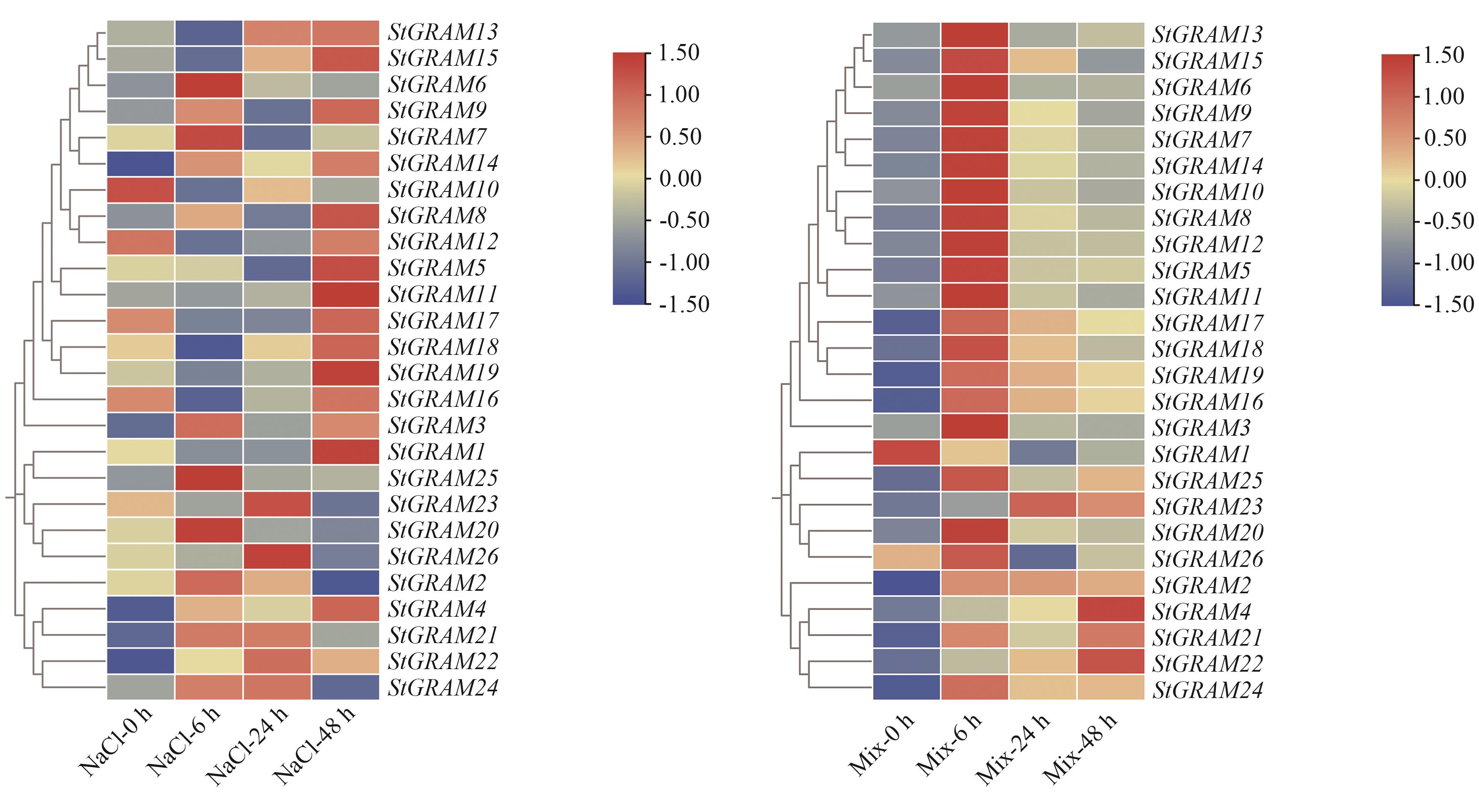
Fig. 6 Expressions of StGRAM after NaCl and Mix treatment at different time durations

Fig. 7 Changes in the expressions of StGRAM25 over time under different salt stressesDifferent lower letters indicate significant differences at P<0.05 level
| 1 | Tiwari S, Gupta SC, Chauhan PS, et al. An OsNAM gene plays important role in root rhizobacteria interaction in transgenic Arabidopsis through abiotic stress and phytohormone crosstalk [J]. Plant Cell Rep, 2021, 40(1): 143-155. |
| 2 | Doerks T, Strauss M, Brendel M, et al. GRAM, a novel domain in glucosyltransferases, myotubularins and other putative membrane-associated proteins [J]. Trends Biochem Sci, 2000, 25(10): 483-485. |
| 3 | Jiang SY, Ramamoorthy R, Ramachandran S. Comparative transcriptional profiling and evolutionary analysis of the GRAM domain family in eukaryotes [J]. Dev Biol, 2008, 314(2): 418-432. |
| 4 | Liu JH, Luo M, Cheng KJ, et al. Identification and characterization of a novel barley gene that is ABA-inducible and expressed specifically in embryo and aleurone [J]. J Exp Bot, 1999, 50(334): 727-728. |
| 5 | Ye ZX, Qiao L, Luo XY, et al. Genome-wide identification of cotton GRAM family proteins reveals that GRAM31 regulates fiber length [J]. J Exp Bot, 2021, 72(7): 2477-2490. |
| 6 | Jiang SY, Cai MN, Ramachandran S. The Oryza sativa no pollen (Osnop) gene plays a role in male gametophyte development and most likely encodes a C2-GRAM domain-containing protein [J]. Plant Mol Biol, 2005, 57(6): 835-853. |
| 7 | Mauri N, Fernández-Marcos M, Costas C, et al. GEM, a member of the GRAM domain family of proteins, is part of the ABA signaling pathway [J]. Sci Rep, 2016, 6: 22660. |
| 8 | Caro E, Castellano MM, Gutierrez C. A chromatin link that couples cell division to root epidermis patterning in Arabidopsis [J]. Nature, 2007, 447(7141): 213-217. |
| 9 | Templeton GW, Johnson JJ, Sieben NA, et al. GL2 EXPRESSION MODULATOR, a plant specific protein phosphatase one interactor that binds phosphoinositides [J]. Biochem Biophys Res Commun, 2020, 528(3): 607-611. |
| 10 | Fujii H, Zhu JK. Arabidopsis mutant deficient in 3 abscisic acid-activated protein kinases reveals critical roles in growth, reproduction, and stress [J]. Proc Natl Acad Sci USA, 2009, 106(20): 8380-8385. |
| 11 | Liu LY, Li N, Yao CP, et al. Functional analysis of the ABA-responsive protein family in ABA and stress signal transduction in Arabidopsis [J]. Chin Sci Bull, 2013, 58(31): 3721-3730. |
| 12 | Zheng CK, Zhou JJ, Zhang F, et al. OsABAR1, a novel GRAM domain-containing protein, confers drought and salt tolerance via an ABA-dependent pathway in rice [J]. Plant Physiol Biochem, 2020, 152: 138-146. |
| 13 | Tiwari S, Shweta S, Prasad M, et al. Genome-wide investigation of GRAM-domain containing genes in rice reveals their role in plant-rhizobacteria interactions and abiotic stress responses [J]. Int J Biol Macromol, 2020, 156: 1243-1257. |
| 14 | Choi DS, Hwang BK. Proteomics and functional analyses of pepper abscisic acid-responsive 1 (ABR1), which is involved in cell death and defense signaling [J]. Plant Cell, 2011, 23(2): 823-842. |
| 15 | Rowland O, Ludwig AA, Merrick CJ, et al. Functional analysis of Avr9/Cf-9 rapidly elicited genes identifies a protein kinase, ACIK1 that is essential for full Cf-9-dependent disease resistance in tomato [J]. Plant Cell, 2005, 17(1): 295-310. |
| 16 | Lorrain S, Lin BQ, Auriac MC, et al. Vascular associated death1, a novel GRAM domain-containing protein, is a regulator of cell death and defense responses in vascular tissues [J]. Plant Cell, 2004, 16(8): 2217-2232. |
| 17 | Khafif M, Balagué C, Huard-Chauveau C, et al. An essential role for the VASt domain of the Arabidopsis VAD1 protein in the regulation of defense and cell death in response to pathogens [J]. PLoS One, 2017, 12(7): e0179782. |
| 18 | Baron KN, Schroeder DF, Stasolla C. GEm-Related 5 (GER5), an ABA and stress-responsive GRAM domain protein regulating seed development and inflorescence architecture [J]. Plant Sci, 2014, 223: 153-166. |
| 19 | Lutaladio N, Castaldi L. Potato: the hidden treasure [J]. J Food Compos Anal, 2009, 22: 491-493. |
| 20 | Andrivon D. Potato facing global challenges: how, how much, how well? [J]. Potato Res, 2017, 60(3): 389-400. |
| 21 | Devaux A, Kromann P, Ortiz O. Potatoes for sustainable global food security [J]. Potato Res, 2014, 57(3): 185-199. |
| 22 | Hijmans RJ. The effect of climate change on global potato production [J]. Am J Potato Res, 2003, 80(4): 271-279. |
| 23 | Aghaei K, Ehsanpour AA, Komatsu S. Proteome analysis of potato under salt stress [J]. J Proteome Res, 2008, 7(11): 4858-4868. |
| 24 | Tiwari S, Muthamilarasan M, Lata CR. Genome-wide identification and expression analysis of Arabidopsis GRAM-domain containing gene family in response to abiotic stresses and PGPR treatment [J]. J Biotechnol, 2021, 325: 7-14. |
| 25 | Hoth S, Morgante M, Sanchez JP, et al. Genome-wide gene expression profiling in Arabidopsis thaliana reveals new targets of abscisic acid and largely impaired gene regulation in the abi1-1 mutant [J]. J Cell Sci, 2002, 115(Pt 24): 4891-4900. |
| 26 | Yazaki J, Shimatani Z, Hashimoto A, et al. Transcriptional profiling of genes responsive to abscisic acid and gibberellin in rice: phenotyping and comparative analysis between rice and Arabidopsis [J]. Physiol Genomics, 2004, 17(2): 87-100. |
| 27 | Blanc G, Wolfe KH. Widespread paleopolyploidy in model plant species inferred from age distributions of duplicate genes [J]. Plant Cell, 2004, 16(7): 1667-1678. |
| 28 | Cannon SB, Mitra A, Baumgarten A, et al. The roles of segmental and tandem gene duplication in the evolution of large gene families in Arabidopsis thaliana [J]. BMC Plant Biol, 2004, 4: 10. |
| 29 | Cao JJ, Li MY, Chen J, et al. Effects of MeJA on Arabidopsis metabolome under endogenous JA deficiency [J]. Sci Rep, 2016, 6: 37674. |
| 30 | Wang Y, Mostafa S, Zeng W, et al. Function and mechanism of jasmonic acid in plant responses to abiotic and biotic stresses [J]. Int J Mol Sci, 2021, 22(16): 8568. |
| [1] | ZHANG Yi-xuan, MA Yu, WANG Tong-tong, SHENG Su-ao, SONG Jia-feng, LYU Zhao-yan, ZHU Xiao-biao, HOU Hua-lan. Genome-wide Identification and Expression Profiles of DIR Gene Family in Potato [J]. Biotechnology Bulletin, 2025, 41(3): 123-136. |
| [2] | YU Ting, HUANG Dan-dan, ZHU Yan-hui, YANG Mei-hong, AI Ju, GAO Dong-li. Screening and Interaction Verification of Transcription Factors Stpatatin 05 Gene in Potato [J]. Biotechnology Bulletin, 2025, 41(3): 137-145. |
| [3] | QIN Yue, YANG Yan, ZHANG Lei, LU Li-li, LI Xian-ping, JIANG Wei. Identification and Comparative Analysis of the StGAox Genes in Diploid and Tetraploid Potatoes [J]. Biotechnology Bulletin, 2025, 41(3): 146-160. |
| [4] | WANG Chen, LIU Guo-mei, CHEN Chang, ZHANG Jin-long, YAO Lin, SUN Xuan, DU Chun-fang. Genome-wide Identification and Expression Analysis of CCDs Family in Brassia rapa L. [J]. Biotechnology Bulletin, 2025, 41(3): 161-170. |
| [5] | HAN Jiang-tao, ZHANG Shuai-bo, QIN Ya-rui, HAN Shuo-yang, ZHANG Ya-kang, WANG Ji-qing, DU Qing-jie, XIAO Huai-juan, LI Meng. Identification of β-amylase Gene Family in Melon and Their Response to Abiotic Stresses [J]. Biotechnology Bulletin, 2025, 41(3): 171-180. |
| [6] | SONG Shu-yi, JIANG Kai-xiu, LIU Huan-yan, HUANG Ya-cheng, LIU Lin-ya. Identification of the TCP Gene Family in Actinidia chinensis var. Hongyang and Their Expression Analysis in Fruit [J]. Biotechnology Bulletin, 2025, 41(3): 190-201. |
| [7] | MA Tian-yi, XU Jia-jia, LU Wen-jing, WU Yan, SHA Wei, ZHANG Mei-juan, PENG Yi-fang. Expression Analysis and Resistance Identification of BrcGASA3 in Chinese Cabbage ‘Jinxiaotong’ Cultivar under Saline-alkali Stress [J]. Biotechnology Bulletin, 2025, 41(2): 127-138. |
| [8] | XU Yuan-meng, MAO Jiao, WANG Meng-yao, WANG Shu, REN Jiang-ling, LIU Yu-han, LIU Si-chen, QIAO Zhi-jun, WANG Rui-yun, CAO Xiao-ning. Cloning and Expression Characteristics Analysis of Millet Genes PmDEP1 and PmEP3 [J]. Biotechnology Bulletin, 2025, 41(2): 150-162. |
| [9] | JIA Zi-jian, WANG Bao-qiang, CHEN Li-fei, WANG Yi-zhen, WEI Xiao-hong, ZHAO Ying. Expression Patterns of CHX Gene Family in Quinoa in Response to NO under Saline-alkali Stress [J]. Biotechnology Bulletin, 2025, 41(2): 163-174. |
| [10] | YAN Wei, CHEN Hui-ting, YE Qing, LIU Guang-chao, LIU Xin, HOU Li-xia. Identification of the Grape HCT Gene Family and Their Responses to Low-temperature Stress [J]. Biotechnology Bulletin, 2025, 41(2): 175-186. |
| [11] | KUANG Jian-hua, CHENG Zhi-peng, ZHAO Yong-jing, YANG Jie, CHEN Run-qiao, CHEN Long-qing, HU Hui-zhen. Expression Analysis of the GH3 Gene Family in Nelumbo nucifera underHormonal and Abiotic Stresses [J]. Biotechnology Bulletin, 2025, 41(2): 221-233. |
| [12] | QIAN Zheng-yi, WU Shao-fang, CAO Shu-yi, SONG Ya-xin, PAN Xin-feng, LI Zhao-wei, FAN Kai. Identification of the NAC Transcription Factors in Nymphaea colorata and Their Expression Analysis [J]. Biotechnology Bulletin, 2025, 41(2): 234-247. |
| [13] | HUANG Ying, YU Wen-jing, LIU Xue-feng, DIAO Gui-ping. Bioinformatics and Expression Pattern Analysis of Glutathione S-transferase in Populus davidiana × P. bolleana [J]. Biotechnology Bulletin, 2025, 41(2): 248-256. |
| [14] | YANG Yong, YUAN Guo-mei, KANG Xiao-xiao, LIU Ya-ming, WANG Dong-sheng, ZHANG Hai-e. Identification and Expression Analysis of Members of the SWEET Gene Family in Chinese Chestnut [J]. Biotechnology Bulletin, 2025, 41(2): 257-269. |
| [15] | XIANG Chun-fan, LI Le-song, WANG Juan, LIANG Yan-li, YANG Sheng-chao, LI Meng-fei, ZHAO Yan. Functional Identification and Expression Analysis of Cinnamonyl Alcohol Dehydrogenase AsCAD in Angelica sinensis [J]. Biotechnology Bulletin, 2025, 41(2): 295-308. |
| Viewed | ||||||
|
Full text |
|
|||||
|
Abstract |
|
|||||
