







Biotechnology Bulletin ›› 2025, Vol. 41 ›› Issue (9): 314-325.doi: 10.13560/j.cnki.biotech.bull.1985.2025-0287
YAN Meng-yang1( ), LIANG Xiao-yang1, DAI Jun-ang1, ZHANG Yan1, GUAN Tuan3, ZHANG Hui1,2, LIU Liang-bo1,2, SUN Zhi-hua1,2()
Received:2025-03-18
Online:2025-09-26
Published:2025-09-24
Contact:
SUN Zhi-hua
E-mail:1786176908@ qq.com;zhihuasun918@163.com
YAN Meng-yang, LIANG Xiao-yang, DAI Jun-ang, ZHANG Yan, GUAN Tuan, ZHANG Hui, LIU Liang-bo, SUN Zhi-hua. Screening of Amoxicillin-degrading Bacteria and Study on Its Degradation Mechanisms[J]. Biotechnology Bulletin, 2025, 41(9): 314-325.
基因名称 Gene | 引物名称 Primer | 引物序列 Sequence (5′-3′) | 产物长度 Product length (bp) |
|---|---|---|---|
| nlpC | nlpC-F nlpC-R | ATGCTGGAACTACTTTTTGTAATTGG GCCCTGATCACCCACAC | 188 |
| aac6-Ib | aac6-Ib-F aac6-Ib-R | AGGGCCTTTAGTGGTCG GCTTCTGTTCAGCACGT | 203 |
| astE | astE-F astE-R | CAACTCAAACTACCACCGAGA GGTGACGGCGAATAGC | 195 |
| astB | astB-F astB-R | ATCAAAGGCATACTGGCAGG ATCACCCGAACTAAATCTTGTTG | 113 |
Table 1 RT-qPCR primer sequence information
基因名称 Gene | 引物名称 Primer | 引物序列 Sequence (5′-3′) | 产物长度 Product length (bp) |
|---|---|---|---|
| nlpC | nlpC-F nlpC-R | ATGCTGGAACTACTTTTTGTAATTGG GCCCTGATCACCCACAC | 188 |
| aac6-Ib | aac6-Ib-F aac6-Ib-R | AGGGCCTTTAGTGGTCG GCTTCTGTTCAGCACGT | 203 |
| astE | astE-F astE-R | CAACTCAAACTACCACCGAGA GGTGACGGCGAATAGC | 195 |
| astB | astB-F astB-R | ATCAAAGGCATACTGGCAGG ATCACCCGAACTAAATCTTGTTG | 113 |

Fig. 1 Identification of strain AMX-1a-b: Growth images of strain AMX-1 in MSM screening medium and Gram staining microscopic images, respectively. c: Phylogenetic tree of strain AMX-1

Fig. 2 Growth curves of strain AMX-1

Fig. 3 Influence of environmental conditions on the degradation rate of AMXA-D: Effects of temperature, pH, initial concentration of AMX, and inoculum amount on AMX degradation by strain AMX-1, respectively; E: degradation curves of AMX under optimal conditions. Different letters indicate significant difference (P<0.05)
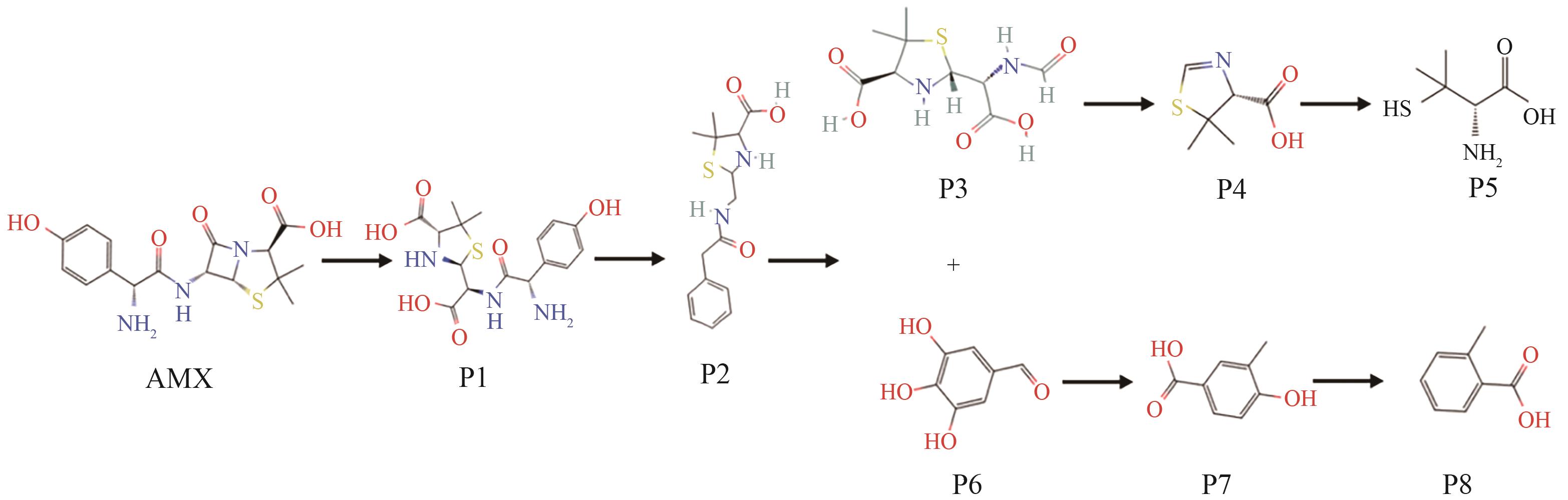
Fig. 4 Biodegradation products and degradation pathways of AMX

Fig. 5 Annotations of AMX-1 transcriptsA: Volcanic maps of differentially expressed genes; B: GO functional annotation of the transcriptome of strain AMX-1; C: KEGG functional annotation of the AMX-1 transcriptome
| Gene name | Gene description | FC(a/b) | Log2FC(a/b) | P value |
|---|---|---|---|---|
| yhbO | General stress protein | 12.696 | 3.666 350 812 | 3.15×10 -124 |
| lepB | Signal peptidase | 7.871 | 2.976 563 759 | 2.46×10 -66 |
| aac6-Ib | Aminoglycoside 6-adenylyltransferase | 5.194 | 2.376 838 | 9.44×10 -86 |
| nlpC | Endopeptidase | 7.125 | 2.832 941 | 4.06×10 -66 |
| astE | Succinylglutamate desuccinylase | 17.152 | 4.100 312 827 | 4.54×10 -41 |
| astB | Succinylarginine dihydrolase | 9.291 | 3.215 854 657 | 3.64×10 -26 |
Table 2 Differentially expressed genes in the AMX-degrading bacterium AMX-1
| Gene name | Gene description | FC(a/b) | Log2FC(a/b) | P value |
|---|---|---|---|---|
| yhbO | General stress protein | 12.696 | 3.666 350 812 | 3.15×10 -124 |
| lepB | Signal peptidase | 7.871 | 2.976 563 759 | 2.46×10 -66 |
| aac6-Ib | Aminoglycoside 6-adenylyltransferase | 5.194 | 2.376 838 | 9.44×10 -86 |
| nlpC | Endopeptidase | 7.125 | 2.832 941 | 4.06×10 -66 |
| astE | Succinylglutamate desuccinylase | 17.152 | 4.100 312 827 | 4.54×10 -41 |
| astB | Succinylarginine dihydrolase | 9.291 | 3.215 854 657 | 3.64×10 -26 |

Fig. 6 Validation of transcriptome resultsA: Validation of RT-qPCR results; B: functional validation of upregulated genes. *** P<0.001
| [24] | Sodhi KK, Kumar M, Singh DK. Potential application in amoxicillin removal of Alcaligenes sp. MMA and enzymatic studies through molecular docking [J]. Arch Microbiol, 2020, 202(6): 1489-1495. |
| [25] | Zhang WW, Wen YY, Niu ZL, et al. Isolation and characterization of sulfonamide-degrading bacteria Escherichia sp. HS21 and Acinetobacter sp. HS51 [J]. World J Microbiol Biotechnol, 2012, 28(2): 447-452. |
| [26] | Tian JC, Chen C, Lartey-Young G, et al. Biodegradation of cefalexin by two bacteria strains from sewage sludge [J]. R Soc Open Sci, 2023, 10(1): 220442. |
| [27] | Bhatt P, Jeon CH, Kim W. Tetracycline bioremediation using the novel Serratia marcescens strain WW1 isolated from a wastewater treatment plant [J]. Chemosphere, 2022, 298: 134344. |
| [28] | Gamage PL, Ren YX, Slape CM, et al. Oxidative degradation of polypropylene mesh in E. coli environment [J]. ACS Appl Bio Mater, 2019, 2(9): 4027-4036. |
| [29] | 上海市农业科学院. 一种完全降解 2,4-二硝基甲苯的大肠杆菌工程菌的构建及其应用:CN202111481483.8 [P]. 2021-12-06. |
| Shanghai Academy of Agricultural Sciences. Construction and application of an Escherichia coli engineering strain for complete degradation of 2,4-dinitrotoluene: CN202111481483.8 [P]. 2021-12-06. | |
| [30] | Wang LJ, Peng RH, Tian YS, et al. Metabolic engineering of Escherichia coli for efficient degradation of 4-fluorophenol [J]. AMB Express, 2022, 12(1): 55. |
| [31] | 高廷耀, 顾国维, 周琪. 水污染控制工程-上册 [M]. 4版. 北京: 高等教育出版社, 2014. |
| Gao TY, Gu GW, Zhou Q. Water pollution control project-volume I [M]. 4th ed. Beijing: Higher Education Press, 2014. | |
| [32] | 周小红, 李学英, 杨宪时, 等. 接种量对单增李斯特菌生长期及生长界面的影响 [J]. 食品工业科技, 2014, 35(18): 180-184. |
| Zhou XH, Li XY, Yang XS, et al. Effect of inoculum size on growth phase and growth interface of Listeria monocytogenes under different cultural conditions [J]. Sci Technol Food Ind, 2014, 35(18): 180-184. | |
| [1] | Kumar M, Jaiswal S, Sodhi KK, et al. Antibiotics bioremediation: perspectives on its ecotoxicity and resistance [J]. Environ Int, 2019, 124: 448-461. |
| [2] | Huttner A, Bielicki J, Clements MN, et al. Oral amoxicillin and amoxicillin-clavulanic acid: properties, indications and usage [J]. Clin Microbiol Infect, 2020, 26(7): 871-879. |
| [3] | Sodhi KK, Kumar M, Singh DK. Insight into the amoxicillin resistance, ecotoxicity, and remediation strategies [J]. J Water Process Eng, 2021, 39: 101858. |
| [4] | Barbosa F, Pinto E, Kijjoa A, et al. Targeting antimicrobial drug resistance with marine natural products [J]. Int J Antimicrob Agents, 2020, 56(1): 106005. |
| [5] | Aksu Demirezen D, Yıldız YŞ, Demirezen Yılmaz D. Amoxicillin degradation using green synthesized iron oxide nanoparticles: Kinetics and mechanism analysis [J]. Environ Nanotechnol Monit Manag, 2019, 11: 100219. |
| [6] | Zhang YQ, Xiao YJ, Zhong Y, et al. Comparison of amoxicillin photodegradation in the UV/H2O2 and UV/persulfate systems: Reaction kinetics, degradation pathways, and antibacterial activity [J]. Chem Eng J, 2019, 372: 420-428. |
| [7] | Martinez JL. Environmental pollution by antibiotics and by antibiotic resistance determinants [J]. Environ Pollut, 2009, 157(11): 2893-2902. |
| [8] | Li P, Wang YR, Huang B, et al. Antibiotics in wastewater of Guangdong, China: distribution patterns, and their environmental risk due to incomplete removal [J]. Sci Total Environ, 2022, 849: 157889. |
| [9] | Fu CX, Xu BT, Chen H, et al. Occurrence and distribution of antibiotics in groundwater, surface water, and sediment in Xiongan New Area, China, and their relationship with antibiotic resistance genes [J]. Sci Total Environ, 2022, 807(Pt 2): 151011. |
| [10] | Li S, Liu Y, Wu Y, et al. Antibiotics in global rivers [J]. Natl Sci Open, 2022, 1(2): 20220029. |
| [11] | Ben YJ, Hu M, Zhang XY, et al. Efficient detection and assessment of human exposure to trace antibiotic residues in drinking water [J]. Water Res, 2020, 175: 115699. |
| [12] | Chen ZB, Wang HC, Ren NQ, et al. Simultaneous removal and evaluation of organic substrates and NH3-N by a novel combined process in treating chemical synthesis-based pharmaceutical wastewater [J]. J Hazard Mater, 2011, 197: 49-59. |
| [13] | 周雅靓, 沙菁洲, 巫明毫, 等. 四川抗生素制药企业废水抗生素残留特征与风险评估 [J]. 中国抗生素杂志, 2021, 46(4): 346-352 |
| Zhou YL, Sha JZ, Wu MH, et al. Risk assessment of antibiotic residues and selective drug resistance in wastewater from antibiotic pharmaceutical enterprises in Sichuan [J]. Chinese Journal of Antibiotics, 2021,46(4):346-352 | |
| [14] | 刘烈, 李魁岭, 徐莉莉, 等. 电催化臭氧技术去除水中草酸的研究 [J]. 水处理技术, 2019, 45(8): 89-93, 102. |
| Liu L, Li KL, Xu LL, et al. Study on the degradation of oxalic acid in water by electro-peroxon technology [J]. Technol Water Treat, 2019, 45(8): 89-93, 102. | |
| [15] | Zhao JG, Li CT, Du XY, et al. Recent progress of carbon dots for air pollutants detection and photocatalytic removal: synthesis, modifications, and applications [J]. Small, 2022, 18(51): e2200744. |
| [16] | 刘元望, 李兆君, 冯瑶, 等. 微生物降解抗生素的研究进展 [J]. 农业环境科学学报, 2016, 35(2): 212-224. |
| Liu YW, Li ZJ, Feng Y, et al. Research progress in microbial degradation of antibiotics [J]. J Agro Environ Sci, 2016, 35(2): 212-224. | |
| [17] | Zhang T, Xu SY, Lin H, et al. Efficient degradation of tylosin by Klebsiella oxytoca TYL-T1 [J]. Sci Total Environ, 2022, 847: 157305. |
| [18] | Wei YJ, Zhou HK, Zhang J, et al. Insight into dominant cellulolytic bacteria from two biogas digesters and their glycoside hydrolase genes [J]. PLoS One, 2015, 10(6): e0129921. |
| [19] | Ahuactzin-Pérez M, Tlecuitl-Beristain S, García-Dávila J, et al. Degradation of di(2-ethyl hexyl) phthalate by Fusarium culmorum: Kinetics, enzymatic activities and biodegradation pathway based on quantum chemical modelingpathway based on quantum chemical modeling [J]. Sci Total Environ, 2016, 566/567: 1186-1193. |
| [20] | Elizalde-Velázquez A, Gómez-Oliván LM, Galar-Martínez M, et al. Amoxicillin in the aquatic environment, its fate and environmental risk [M]//Environmental Health Risk - Hazardous Factors to Living Species. InTech, 2016: 247-267. |
| [21] | Pereira JHOS, Reis AC, Homem V, et al. Solar photocatalytic oxidation of recalcitrant natural metabolic by-products of amoxicillin biodegradation [J]. Water Res, 2014, 65: 307-320. |
| [22] | Poudel RC, Joshi DR, Dhakal NR, et al. Occurrence of antibiotic resistant bacteria in environmental wastes [J]. Nat, 2010, 7(1): 151-157. |
| [23] | 耿歌. β-内酰胺类抗生素降解菌的分离鉴定及降解基因研究 [D]. 武汉: 华中师范大学, 2018. |
| Geng G. Isolation and identification of β-lactam antibiotic degrading bacteria and study on degrading genes [D]. Wuhan: Central China Normal University, 2018. | |
| [33] | 王春耀, 张德纯, 张名均, 等. 两歧双歧杆菌86321生长特性的研究 [J]. 中国微生态学杂志, 2011,23(8):706-708, 711. |
| Wang CY, Zhang DC, Zhang MJ, et al. Research on growth characteristics of Bifidobacterium bifidum 86321 [J]. Chinese Journal of Microecology, 2011,23(8):706-708, 711. | |
| [34] | Verma M., Haritash A.K.. Review of advanced oxidation processes(AOPs) for treatment of pharmaceutical wastewater [J]. Adv Environ Res, 2020, 9(1):1-17. |
| [35] | Yan L, Yan N, Gao XY, et al. Degradation of amoxicillin by newly isolated Bosea sp. ads-6 [J]. Sci Total Environ, 2022, 828: 154411. |
| [36] | Elizalde-Velázquez A, Gómez-Oliván LM, Galar-Martínez M, et al. Amoxicillin in the aquatic environment, its fate and environmental risk [M]//Environmental Health Risk - Hazardous Factors to Living Species. InTech, 2016: 247-267. |
| [1] | LIU Ze-zhou, DUAN Nai-bin, YUE Li-xin, WANG Qing-hua, YAO Xing-hao, GAO Li-min, KONG Su-ping. Analysis of Wax Components and Screening of Wax-deficient Gene Ggl-1 in Garlic (Allium sativum L.) [J]. Biotechnology Bulletin, 2025, 41(9): 219-231. |
| [2] | HUANG Xu-sheng, ZHOU Ya-li, CHAI Xu-dong, WEN Jing, WANG Ji-ping, JIA Xiao-yun, LI Run-zhi. Cloning of Plastidial PfLPAT1B Gene from Perilla frutescens and Its Functional Analysis in Oil Biosynthesis [J]. Biotechnology Bulletin, 2025, 41(7): 226-236. |
| [3] | WANG Yue-chen, HAN Xin-qi, WEI Wen-min, CUI Zhao-lan, LUO Yang-mei, CHEN Peng-ru, WANG Hai-gang, LIU long-long, ZHANG Li, WANG Lun. Biological Basis Study for Grain Shattering in Proso Millet and Identification of Genes Regulating Grain Shattering [J]. Biotechnology Bulletin, 2025, 41(7): 164-171. |
| [4] | RAO Jun, ZHAO Chen, LI Duan-hua, LIAO Hao, HUANG Jia-yu, WANG Lu. Application of Auto-induction Strategy in Ergothioneine Biosynthesis [J]. Biotechnology Bulletin, 2025, 41(1): 333-346. |
| [5] | ZHANG Jing-an, HU Xiao-long, CAO Bei-bei, LIAO Min, SHU Chang-long, ZHANG Jie, WANG Kui, CAO Hai-qun. Construction and Characterization of Rapid Visual Expression Vector for Bacillus thuringiensis [J]. Biotechnology Bulletin, 2025, 41(1): 95-102. |
| [6] | GAO Meng-meng, ZHAO Tian-yu, JIAO Xin-yue, LIN Chun-jing, GUAN Zhe-yun, DING Xiao-yang, SUN Yan-yan, ZHANG Chun-bao. Comparative Transcriptome Analysis of Cytoplasmic Male Sterile Line and Its Restorer Line in Soybean [J]. Biotechnology Bulletin, 2024, 40(7): 137-149. |
| [7] | BAI Zhi-yuan, XU Fei, YANG Wu, WANG Ming-gui, YANG Yu-hua, ZHANG Hai-ping, ZHANG Rui-jun. Transcriptome Analysis of Fertility Transformation in Weakly Restoring Hybrid F1 of Soybean Cytoplasmic Male Sterility [J]. Biotechnology Bulletin, 2024, 40(6): 134-142. |
| [8] | WANG Zhou, YU Jie, WANG Jin-hua, WANG Yong-ze, ZHAO Xiao. Anaerobic Expression of Lactate Dehydrogenase to Improve the D-lactic Acid Optical Purity Procluced by Escherichia coli [J]. Biotechnology Bulletin, 2024, 40(5): 290-299. |
| [9] | YANG Qi, WEI Zi-di, SONG Juan, TONG Kun, YANG Liu, WANG Jia-han, LIU Hai-yan, LUAN Wei-jiang, MA Xuan. Construction and Transcriptomic Analysis of Rice Histone H1 Triple Mutant [J]. Biotechnology Bulletin, 2024, 40(4): 85-96. |
| [10] | ZHUANG Ke, LIANG Zhi-xuan, HE Ying-ting, XIE Qiu-ling. Transfer of Antibiotic-resistance Gene AmpR by Escherichia coli DH5α Through Outer Membrane Vesicles [J]. Biotechnology Bulletin, 2024, 40(12): 275-281. |
| [11] | YANG Hong-yan, HAN Xiao, YANG Jian-jun. Scaling up Production of pDNA Plasmids in Disposable Bioreactors [J]. Biotechnology Bulletin, 2024, 40(1): 168-175. |
| [12] | CHEN Cai-ping, REN Hao, LONG Teng-fei, HE Bing, LU Zhao-xiang, SUN Jian. Research Advances in the Treatment of Inflammation Bowel Disease Using Escherichia coli Nissle 1917 [J]. Biotechnology Bulletin, 2023, 39(6): 109-118. |
| [13] | LI Yan-xia, WANG Jin-peng, FENG Fen, BAO Bin-wu, DONG Yi-wen, WANG Xing-ping, LUORENG Zhuo-ma. Effects of Escherichia coli Dairy Cow Mastitis on the Expressions of Milk-producing Trait Related Genes [J]. Biotechnology Bulletin, 2023, 39(2): 274-282. |
| [14] | WU Li-dan, RAN Xue-qin, NIU Xi, HUANG Shi-hui, LI Sheng, WANG Jia-fu. Genome Comparison and Virulence Factor Analysis of Pathogenic Escherichia coli from Porcine [J]. Biotechnology Bulletin, 2023, 39(12): 287-299. |
| [15] | LI Yi-ya, WU Yi-fan, DING Neng-shui, FAN Xiao-ping, CHEN Fan. Establishment of a Luciferase-assisted Quantitative Method for Measuring Ultrasonic Disruption of Escherichia coli Cells [J]. Biotechnology Bulletin, 2023, 39(12): 90-98. |
| Viewed | ||||||
|
Full text |
|
|||||
|
Abstract |
|
|||||
