







Biotechnology Bulletin ›› 2026, Vol. 42 ›› Issue (10): 198-206.doi: 10.13560/j.cnki.biotech.bull.1985.2026-0220
SHEN Qiong( ), LIU Ya-nan, MENG Hong-yu
Received:2026-02-24
Online:2026-10-26
Published:2026-10-15
Contact:
SHEN Qiong
E-mail:shenqiong08@163.com
SHEN Qiong, LIU Ya-nan, MENG Hong-yu. C-terminal Truncation of CmoNST1 Leads to Hull-less Seeds in Cucurbita moschata Duch.[J]. Biotechnology Bulletin, 2026, 42(10): 198-206.
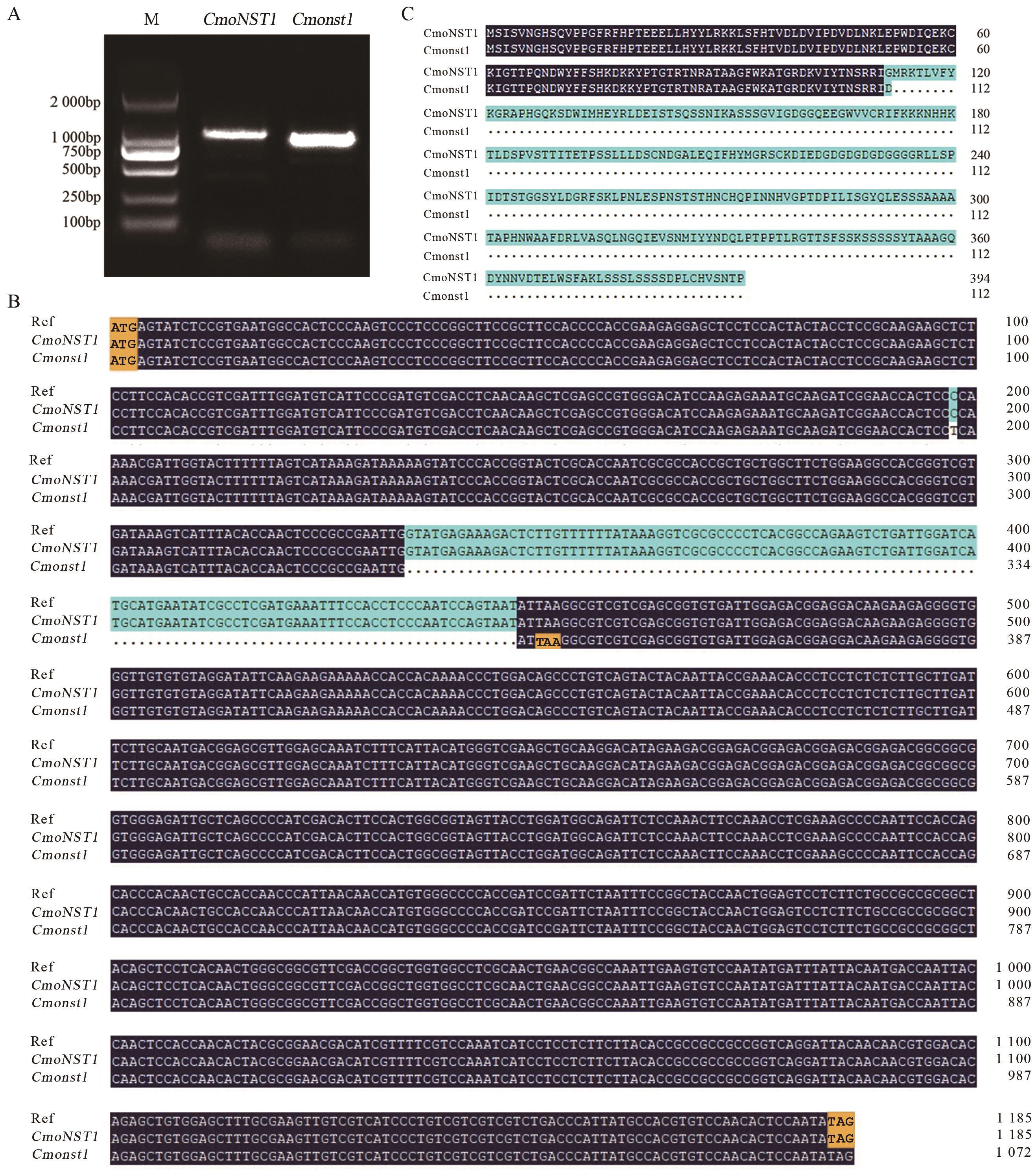
Fig. 1 Gene cloning and sequence analysis of CmoNST1 and Cmonst1 in pumpkinA: Electrophoresis analysis of full-length CDS amplification products of CmoNST1 and Cmonst1. B: Nucleotide sequence alignment of CmoNST1, Cmonst1, and the reference nucleotide sequence. C: Protein sequence alignment of CmoNST1 and Cmonst1. Ref: Reference sequence
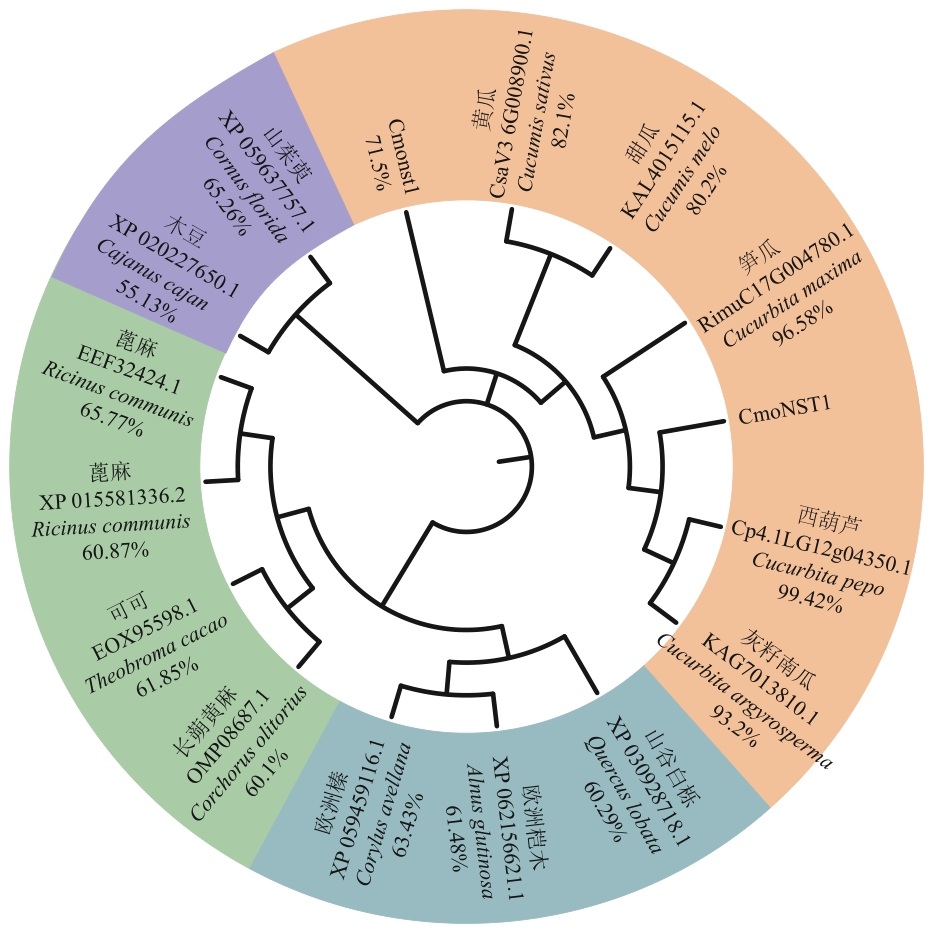
Fig. 2 Phylogenetic tree analysis of CmoNST1
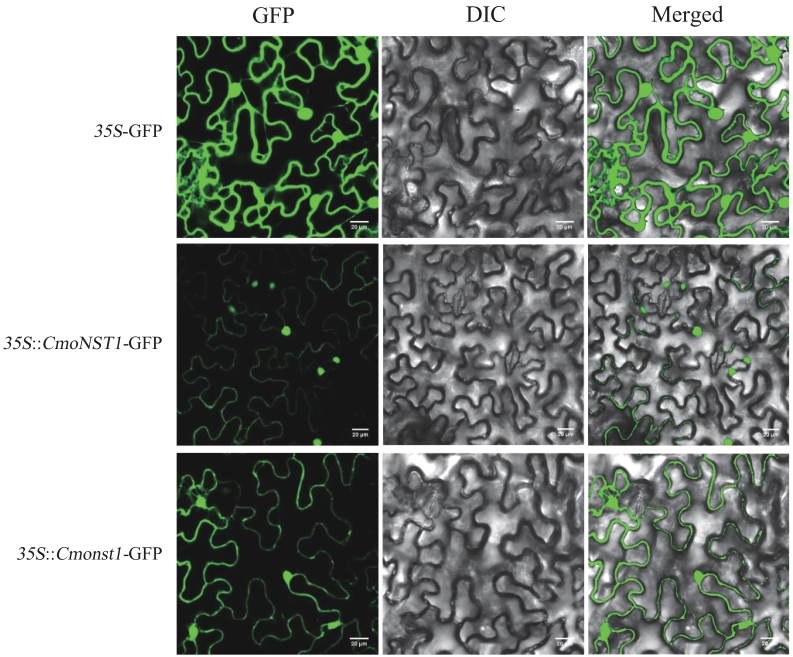
Fig. 3 Subcellular localization of CmoNST1 and Cmonst1From left to right: GFP green fluorescent protein, bright field, and merge. Scale bar = 20.0 μm
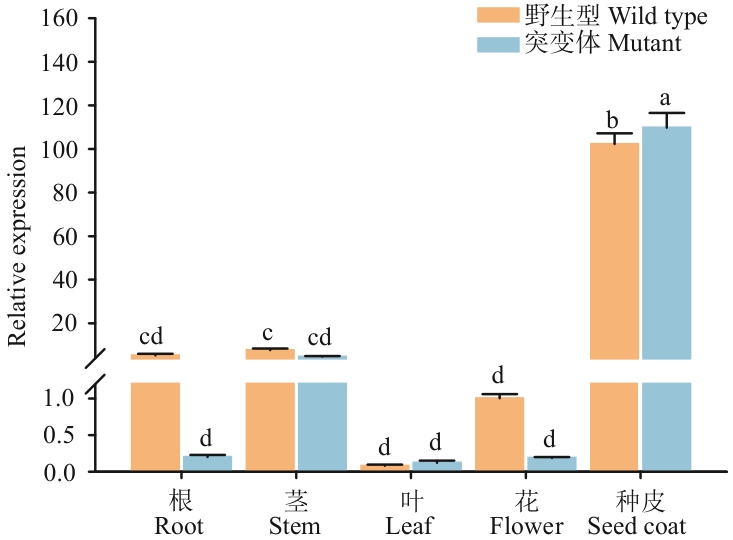
Fig. 4 Tissue‑specific expression analysis of CmoNST1 (wild type) and Cmonst1 (mutant)Different lower letters indicate significant differences (P<0.05)

Fig. 5 Effect of CsaV3_6G008900knockout on seed coat developmentA: Characterization of the vector. B: Contents of lignin, cellulose, and hemicellulose in the seed coat. C: Seed structure of the control cucumber. D: Seed structure of the mutant cucumber. M: DNA marker. 1‒3: Characterization of the vector. WT (Control): Wild-type cucumber seed. KO: Mutant cucumber seed with CsaV3_6G008900 knockout
| [1] | Singh A, Kumar V. Pumpkin seeds as nutraceutical and functional food ingredient for future: a review [J]. Grain Oil Sci Technol, 2024, 7(1): 12-29. |
| [2] | Bergantin C, Maietti A, Tedeschi P, et al. HPLC-UV/Vis-APCI-MS/MS determination of major carotenoids and their bioaccessibility from “delica” (Cucurbita maxima) and “violina” (Cucurbita moschata) pumpkins as food traceability markers [J]. Molecules, 2018, 23(11): 2791. |
| [3] | Vinayashree S, Vasu P. Biochemical, nutritional and functional properties of protein isolate and fractions from pumpkin (Cucurbita moschata var. kashi Harit) seeds [J]. Food Chem, 2021, 340: 128177. |
| [4] | Zraidi A., Pachner M, Lelley T. On the genetics and histology of the hull-less character of styrian lipid-pumpkin (Cucurbita pepo L.) [J]. Cucurbit Genet Coop Rep, 2003, 26: 57-61. |
| [5] | 申琼. 薄种皮南瓜种皮发育生理及分子标记筛选 [D]. 太谷: 山西农业大学, 2019. |
| Shen Q. Developmental physiology and screening molecular marker for hull-less seeds of Cucurbita moschata [D]. Taigu: Shanxi Agricultural University, 2019. | |
| [6] | Huss JC, Gierlinger N. Functional packaging of seeds [J]. New Phytol, 2021, 230(6): 2154-2163. |
| [7] | Figueiredo DD, Sharma RA. The mysterious dialogue between the embryo, endosperm, and seed coat, and its implications for seed traits [J]. J Exp Bot, 2026, 77(7): 1976-1990. |
| [8] | North H, Baud S, Debeaujon I, et al. Arabidopsis seed secrets unravelled after a decade of genetic and omics-driven research [J]. Plant J, 2010, 61(6): 971-981. |
| [9] | Kreft M, Zorec R, Janeš D, et al. Histolocalisation of the oil and pigments in the pumpkin seed [J]. Ann Appl Biol, 2009, 154(3): 413-418. |
| [10] | Shen Q, Wu LY, Zhao XH, et al. Comparative analysis of electron microscopic structure of seed testa, lignin and biosynthesis-related enzyme activities in hulled and hull-less seeds of Cucurbita moschata [J]. Sci Hortic, 2019, 245: 137-143. |
| [11] | Shen Q, Weng YQ. Alternative splicing of NAC transcription factor gene CmNST1 is associated with naked seed mutation in pumpkin, Cucurbita moschata [J]. Genes, 2023, 14(5): 962. |
| [12] | Raxwal VK, Riha K. The biological functions of nonsense-mediated mRNA decay in plants: RNA quality control and beyond [J]. Biochem Soc Trans, 2023, 51(1): 31-39. |
| [13] | Wang XW, Liu X, Song KX, et al. An insight into the roles of ubiquitin-specific proteases in plants: development and growth, morphogenesis, and stress response [J]. Front Plant Sci, 2024, 15: 1396634. |
| [14] | Huang WZ, Miao M, Kud J, et al. SlNAC1, a stress-related transcription factor, is fine-tuned on both the transcriptional and the post-translational level [J]. New Phytol, 2013, 197(4): 1214-1224. |
| [15] | Seet BT, Dikic I, Zhou MM, et al. Reading protein modifications with interaction domains [J]. Nat Rev Mol Cell Biol, 2006, 7(7): 473-483. |
| [16] | Mittag T, Pappu RV. A conceptual framework for understanding phase separation and addressing open questions and challenges [J]. Mol Cell, 2022, 82(12): 2201-2214. |
| [17] | Olsen AN, Ernst HA, Leggio LL, et al. NAC transcription factors: structurally distinct, functionally diverse [J]. Trends Plant Sci, 2005, 10(2): 79-87. |
| [18] | Mitsuda N, Seki M, Shinozaki K, et al. The NAC transcription factors NST1 and NST2 of Arabidopsis regulate secondary wall thickenings and are required for anther dehiscence [J]. Plant Cell, 2005, 17(11): 2993-3006. |
| [19] | Zhong RQ, Lee C, Ye ZH. Global analysis of direct targets of secondary wall NAC master switches in Arabidopsis [J]. Mol Plant, 2010, 3(6): 1087-1103. |
| [20] | Yu YT, Guo SG, Ren Y, et al. Quantitative transcriptomic and proteomic analysis of fruit development and ripening in watermelon (Citrullus lanatus) [J]. Front Plant Sci, 2022, 13: 818392. |
| [21] | Ahiakpa JK, Munir S, Karikari B, et al. Alternative splicing occurs in auxin-mediated trade-off between fruit development and quality in tomato [J]. BMC Plant Biol, 2025, 25: 1241. |
| [22] | Qüesta JI, Song J, Geraldo N, et al. Arabidopsis transcriptional repressor VAL1 triggers Polycomb silencing at FLC during vernalization [J]. Science, 2016, 353(6298): 485-488. |
| [23] | Liu L, Wu DP, Gu YJ, et al. Comprehensive profiling of alternative splicing landscape during secondary dormancy in oilseed rape (Brassica napus L.) [J]. Mol Breeding, 2022, 42(8): 44. |
| [24] | James AB, Sharples C, Laird J, et al. REVEILLE2 thermosensitive splicing: a molecular basis for the integration of nocturnal temperature information by the Arabidopsis circadian clock [J]. New Phytol, 2024, 241(1): 283-297. |
| [25] | van der Hoven TC, McFarlane ZG, Dinge S, et al. Temperature-dependent alternative splicing enables circadian adaptation to ambient temperature [J]. Plant Physiol, 2026, 200(2): kiaf689. |
| [26] | Xu WB, Wang M, Zhang XH, et al. Unraveling branch point-driven SR45a splicing dynamics in heat stress for plant adaptation [J]. Sci Adv, 2026, 12(13): eadz7859. |
| [27] | Huang C, Tang JW, Sun WQ, et al. Gibberellin modulates the post-transcriptional regulation of CsHDZ34 to positively regulate bud break in tea plants [J]. New Phytol, 2026, 249(4): 1850-1870. |
| [28] | Reboledo G, Agorio A, Ponce De León I. Moss transcription factors regulating development and defense responses to stress [J]. J Exp Bot, 2022, 73(13): 4546-4561. |
| [29] | Lu L, Fang JB, Xia N, et al. Phosphorylation of the transcription factor OsNAC29 by OsMAPK3 activates diterpenoid genes to promote rice immunity [J]. Plant Cell, 2024, 37(1): koae320. |
| [1] | ZHANG Zhong-wen, WANG Wei-min, XIAO Zhi-liang, SHI Jiu-chang, HAO Xian-wei, WANG Wei, XIE Peng-gang, XU Jia-dan, ZHAO Jiong-ping, YANG Ai-guo. Mechanism of NtPLA2A-mediated Hormone Signaling Pathway in Enhancing Tobacco Resistance to Bacterial Wilt [J]. Biotechnology Bulletin, 2026, 42(8): 207-216. |
| [2] | HE Jing-jing, PENG Mao-la-zhuan, YAO Xiao-hua, YAO You-hua, WU Kun-lun, CUI Yong-mei. Cloning and Functional Characterization of HvNAC53 from Hulless Barley [J]. Biotechnology Bulletin, 2026, 42(8): 142-152. |
| [3] | GUO Wei, GENG Yue, LIANG Xiao, LIU Ying, WU Chun-ling, CHEN Qing. Effects of Insect-resistant and Insect-susceptible Cassava Varieties on the Expression of Wax Biosynthesis Genes in Phenacoccus manihoti [J]. Biotechnology Bulletin, 2026, 42(6): 128-138. |
| [4] | MENG Hong-yu, LIU Ya-nan, WU Jun-xin, SHEN Qiong. Identification and Analysis of the NAC Transcription Factors Gene Family in Cucurbita moschata Duch. [J]. Biotechnology Bulletin, 2026, 42(6): 237-249. |
| [5] | ZHANG Ying-ying, WU Zhi-tao, CHANG Hao, XU Zhi-peng, YANG Xiao-long, YANG Ke-ze, WEI Yu-jie. Effects of Continuous Cropping Years on Rhizosphere Soil Properties and Microbial Community Structure of Astragalus membranaceus var. mongholicus [J]. Biotechnology Bulletin, 2026, 42(5): 174-184. |
| [6] | PENG Chao-feng, XIA Lin, LIU Rui-xia, YAN Xin-ke, MU Yang-wei, LIU Meng-ru, YANG Jun, WU Ming-zhu. Functional Analysis of the Tobacco NtPPO5 Gene Using VIGS and CRISPR/Cas9 Technology [J]. Biotechnology Bulletin, 2026, 42(4): 251-262. |
| [7] | LI Ya-ni, HAN Hong-yu, GENG Meng-shuang, MI Ruo-lan, Wang Wei-qi, Yu Wen-jing, MENG Xian-wen, LI Chuan-you. Mechanistic Study on ChiC-mediated Regulation Mechanism of Tomato Resistance to Botrytis cinerea [J]. Biotechnology Bulletin, 2026, 42(3): 255-262. |
| [8] | WANG Ting-ting, HE Meng-ya, SHENG Jia-shun, GAO Chen, CAI Han-fang, FU Tong, SUN Yu, GAO Teng-yun, ZHANG Tian-liu. Preparation of NCAPG Knockout Bovine Fibroblast Cell Lines Using CRISPR/Cas9 Technology [J]. Biotechnology Bulletin, 2026, 42(2): 317-324. |
| [9] | LIU Bao-cai, HU Xue-bo, ZHANG Wu-jun, ZHAO Yun-qing, HUANG Ying-zhen, CHEN Jing-ying. Screening of Internal Reference Gene for Pholidota chinensis and Their Applications [J]. Biotechnology Bulletin, 2026, 42(2): 158-168. |
| [10] | ZHANG Chi-hao, LIU Jin-nan, DONG Jia-le, CHAO Yue-hui. Construction of Alfalfa Yeast Expression Library and Screening and Identification of Salt-tolerance Genes [J]. Biotechnology Bulletin, 2026, 42(2): 239-249. |
| [11] | ZENG Ting, ZHANG Lan, LUO Rui. Functional Analysis of the Transcription Factor MpR2R3-MYB17 in Regulating Gemma Development in Marchantia polymorpha L. [J]. Biotechnology Bulletin, 2026, 42(1): 208-217. |
| [12] | YU Yong-xia, DU Zai-hui, ZHU Long-jiao, XU Wen-tao. Application and Research Progress of Gene Editing Technology in Bovine [J]. Biotechnology Bulletin, 2025, 41(8): 34-41. |
| [13] | BAI Yu-guo, LI Wan-di, LIANG Jian-ping, SHI Zhi-yong, LU Geng-long, LIU Hong-jun, NIU Jing-ping. Growth-promoting Mechanism of Trichoderma harzianum T9131 on Astragalus membranaceus Seedlings [J]. Biotechnology Bulletin, 2025, 41(8): 175-185. |
| [14] | NIU Jing-ping, ZHAO Jing, GUO Qian, WANG Shu-hong, ZHAO Jin-zhong, DU Wei-jun, YIN Cong-cong, YUE Ai-qin. Identification and Induced Expression Analysis of Transcription Factors NAC in Soybean Resistance to Soybean Mosaic Virus Based on WGCNA [J]. Biotechnology Bulletin, 2025, 41(7): 95-105. |
| [15] | WEI Yu-jia, LI Yan, KANG Yu-han, GONG Xiao-nan, DU Min, TU Lan, SHI Peng, YU Zi-han, SUN Yan, ZHANG Kun. Cloning and Expression Analysis of the CrMYB4 Gene in Carex rigescens [J]. Biotechnology Bulletin, 2025, 41(7): 248-260. |
| Viewed | ||||||
|
Full text |
|
|||||
|
Abstract |
|
|||||
