







Biotechnology Bulletin ›› 2026, Vol. 42 ›› Issue (9): 128-136.doi: 10.13560/j.cnki.biotech.bull.1985.2026-0339
LIU Na-wei, QIAN Meng-ying, ZHANG Hong-ying, WANG Zhao-jun, CUI Hong, YAN Xiao-xiao( )
)
Received:2026-03-26
Online:2026-09-26
Published:2026-09-16
Contact:
YAN Xiao-xiao
E-mail:xiaoxyan@henau.edu.cn
LIU Na-wei, QIAN Meng-ying, ZHANG Hong-ying, WANG Zhao-jun, CUI Hong, YAN Xiao-xiao. NtWUN Negatively Regulates Tobacco Trichome Development[J]. Biotechnology Bulletin, 2026, 42(9): 128-136.
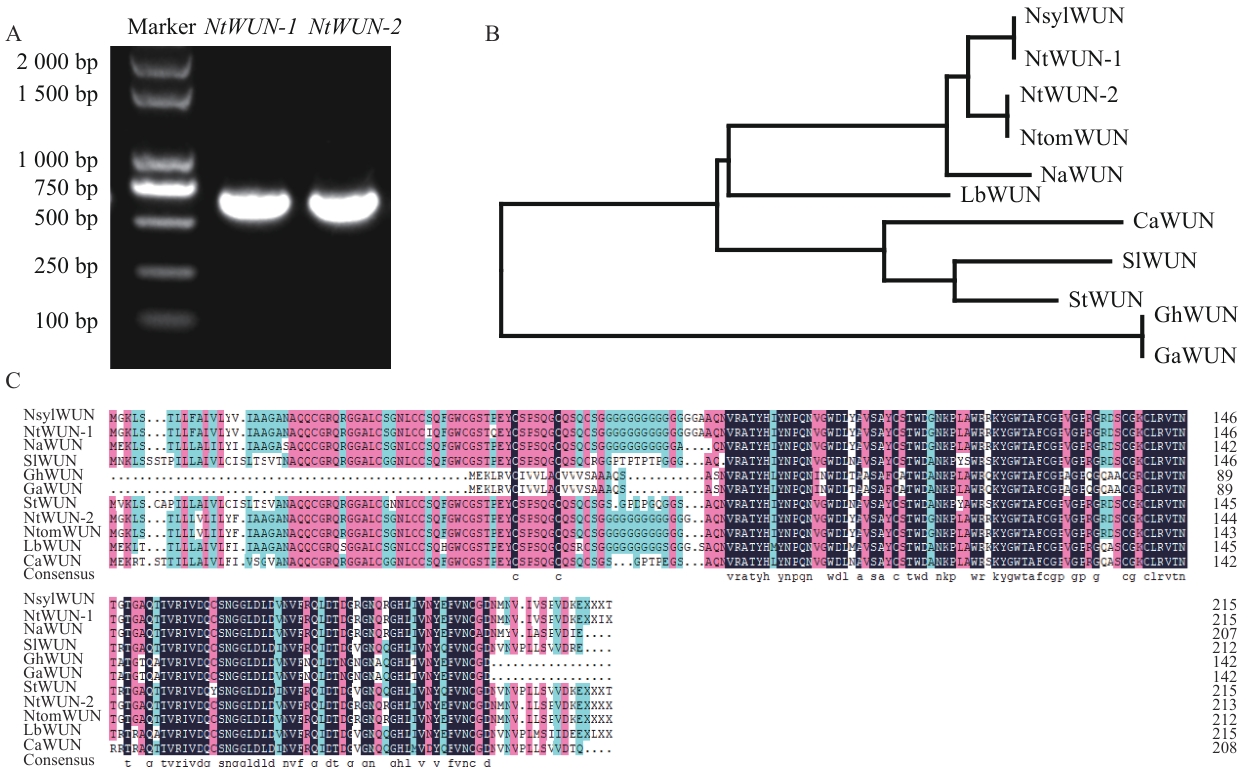
Fig. 1 Cloning and bioinformatics analysis of NtWUNA: PCR electrophoresis of NtWUN cloning. B: Phylogenetic tree of NtWUN and its homologous proteins. C: Multiple sequence alignment of NtWUN homologous proteins from closely related species. Nt: Nicotiana tabacum. Nsyl: N. sylvestris. Ntom: N. tomentosiformis. Na: N. attenuata. Lb: Lycium barbarum. Ca: Capsicum annuum. Sl: Solanum lycopersicum. St: Solanum tuberosum. Gh: Gossypium hirsutum. Ga: Gossypium arboreum
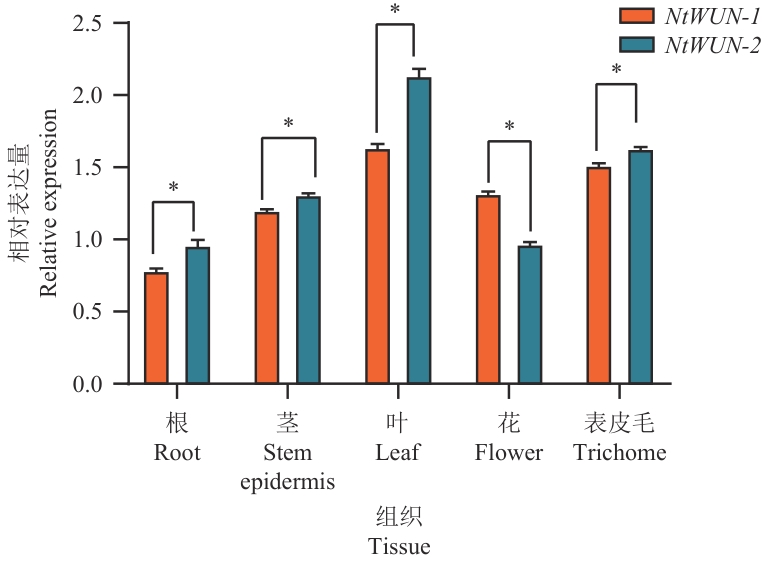
Fig. 2 Expression pattern of NtWUN in different tissues
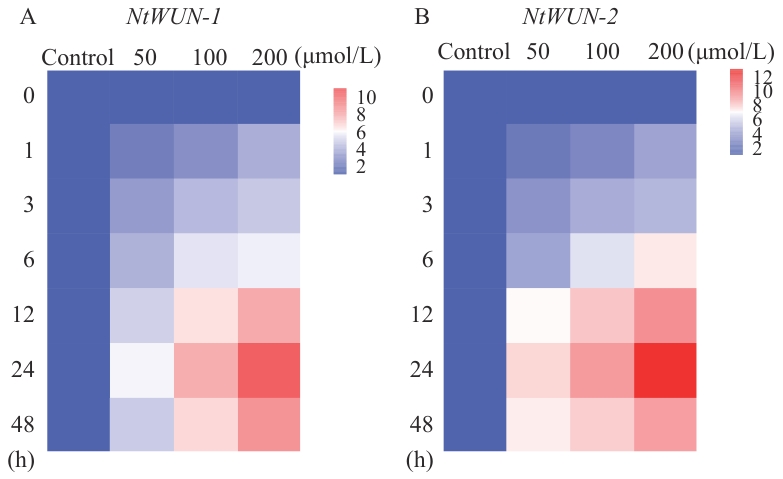
Fig. 3 Expression analysis of NtWUN in response to treatments with different concentrations of MeJA
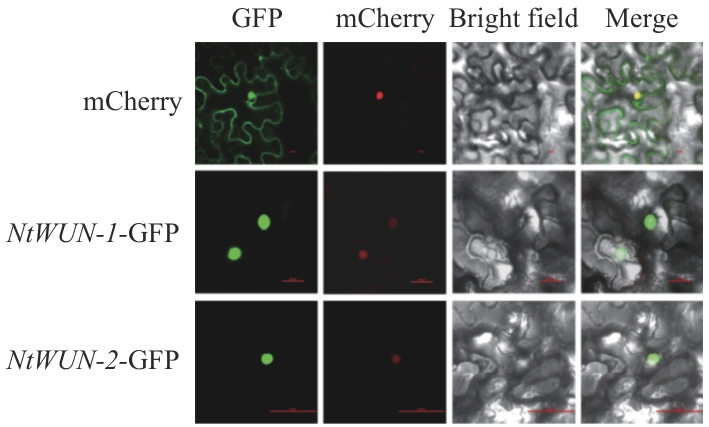
Fig. 4 Subcellular localization of the NtWUN protein
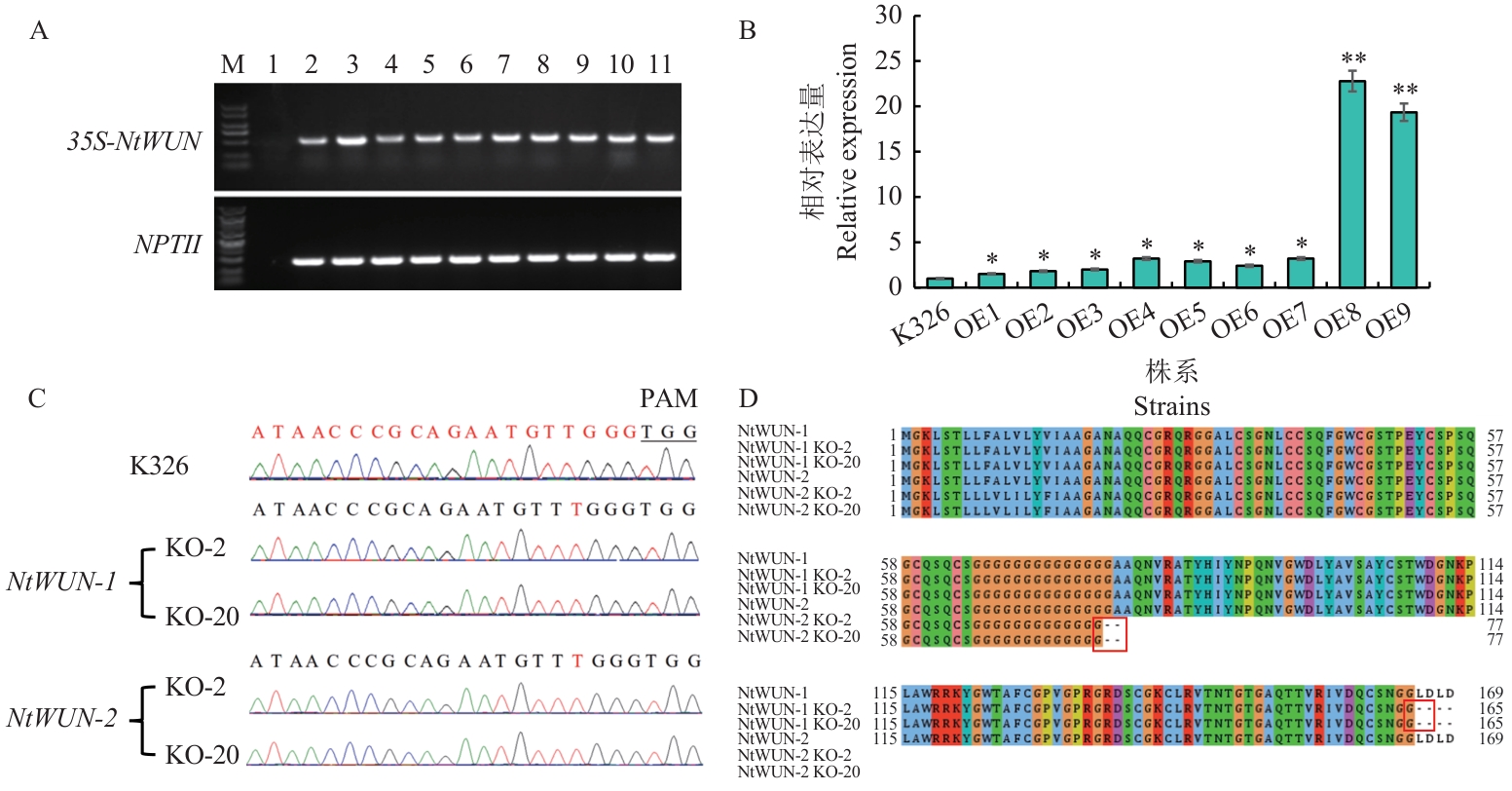
Fig. 5 Identification of NtWUN-overexpressing plants and homozygous knockout linesA: PCR identification of NtWUN overexpression positive lines (M: DNA marker 2 000; 1: ddH₂O; 2: NtWUN overexpression plasmid; 3-11: nine individual transgenic positive plants). B: Gene expression levels in NtWUN-2 overexpression positive plants (**P<0.01, with the expression level in K326 as reference 1). C: Sequencing analysis of the sgRNA region in homozygous knockout plants. D: Protein translation of NtWUN in homozygous mutant plants. Short horizontal lines within red boxes indicate premature translation termination
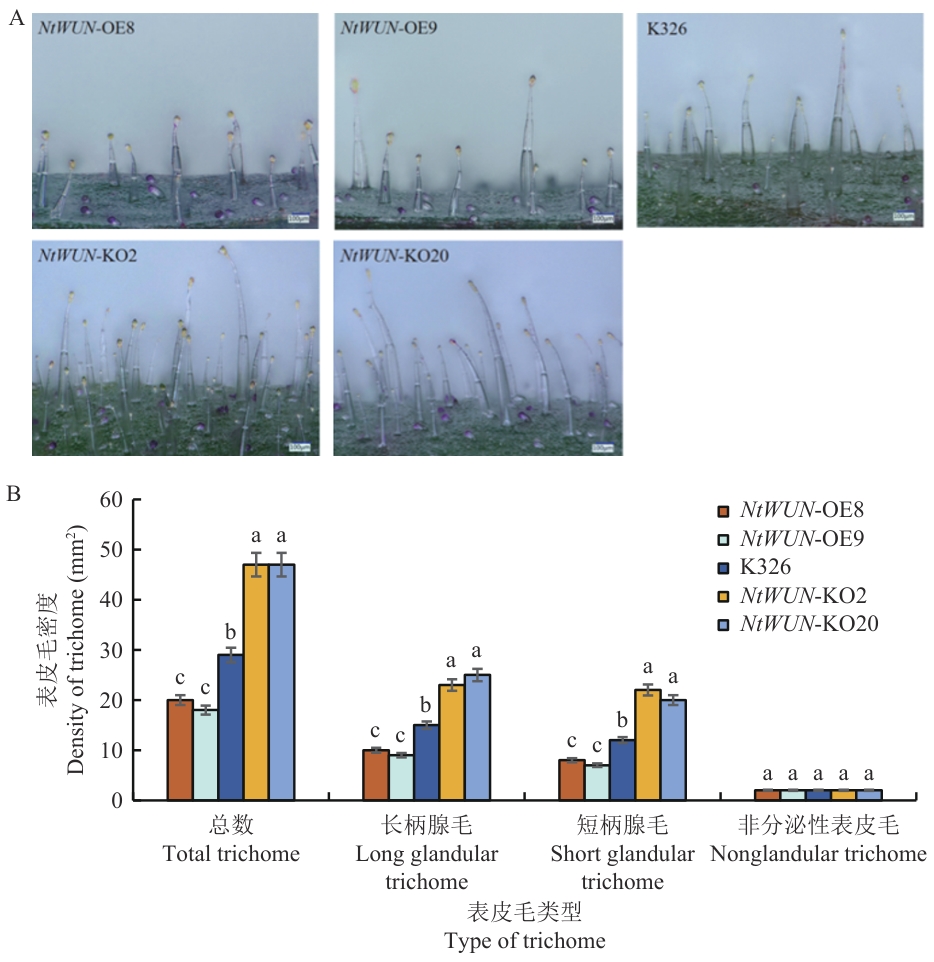
Fig. 6 Morphological observation (A) and density analysis (B) of trichomes on the leaf surfaceDifferent lowercase letters above the bars within the same group indicate significant differences at the 0.05 level
| [1] | Iwase A, Mitsuda N, Koyama T, et al. The AP2/ERF transcription factor WIND1 controls cell dedifferentiation in Arabidopsis [J]. Curr Biol, 2011, 21(6): 508-514. |
| [2] | 裴丹, 尚俏俏, 李佳琦, 等. AP2/ERF转录因子介导植物抗病反应研究进展 [J]. 植物病理学报, 2025, 55(6): 1181-1194. |
| Pei D, Shang QQ, Li JQ, et al. Progress on AP2/ERF transcription factor in regulating plant disease [J]. Acta Phytopathol Sin, 2025, 55(6): 1181-1194. | |
| [3] | 毛可欣, 李健, 吕巍, 等. 猕猴桃AP2/ERF家族成员鉴定与分析 [J]. 分子植物育种, 2025(2): 402-414. |
| Mao KX, Li J, Lü W, et al. Identification and analysis of AP2/ERF family members in Actinidia chinensis [J]. Mol Plant Breed, 2025(2): 402-414. | |
| [4] | Kuo A, Hla T. Regulation of cellular and systemic sphingolipid homeostasis [J]. Nat Rev Mol Cell Biol, 2024, 25(10): 802-821. |
| [5] | 邓江霞, 张国良, 李边豪, 等. WRKY类转录因子在植物激素ABA、SA和JA信号转导中的作用 [J]. 黑龙江农业科学, 2023(10): 138-144. |
| Deng JX, Zhang GL, Li BH, et al. Role of WRKY transcription factors in plant hormone ABA, SA and JA signal transduction [J]. Heilongjiang Agric Sci, 2023(10): 138-144. | |
| [6] | Dhatterwal P, Basu S, Mehrotra S, et al. Genome wide analysis of W-box element in Arabidopsis thaliana reveals TGAC motif with genes down regulated by heat and salinity [J]. Sci Rep, 2019, 9: 1681. |
| [7] | Zhang Y, Xia PG. The DREB transcription factor, a biomacromolecule, responds to abiotic stress by regulating the expression of stress-related genes [J]. Int J Biol Macromol, 2023, 243: 125231. |
| [8] | Rafik B, Ramsey Matthew R. Understanding transcriptional networks regulating initiation of cutaneous wound healing [J]. Yale J Biol Med, 93(1): 161-173. |
| [9] | 钱孟英, 李丽华, 宋正熊, 等. 洛阳烟区不同烤烟品种腺毛形态及分泌物特性比较分析 [J]. 江西农业学报, 2026(2): 17-24. |
| Qian MY, Li LH, Song ZX, et al. Comparison analysis of glandular trichomes morphology and secretion characteristics among different flue-cured tobacco varieties in Luoyang tobacco-planting area [J]. Acta Agric Jiangxi, 2026(2): 17-24. | |
| [10] | Ahmad M, Li S, Dong YM, et al. Nature’s shield: exploring nonglandular trichomes (NGT) as key players in plant defense mechanisms [J]. Plant Direct, 2025, 9(11): e70118. |
| [11] | Hao N, Kamiya T, Wu T. Morphology of glandular trichome and lignin-based structure for its function [J]. Fundam Res, 2026, 6(2): 834-836. |
| [12] | Ryu SM, Kim K, Jeon Y, et al. Integrative chemotaxonomic and micromorphological insights into Peucedanum (Apiaceae) [J]. Sci Rep, 2026, 16(1): 8762. |
| [13] | Dong MM, Xue SD, Bartholomew ES, et al. Transcriptomic and functional analysis provides molecular insights into multicellular trichome development [J]. Plant Physiol, 2022, 189(1): 301-314. |
| [14] | Liu LS, Campoli C, McKim SM. Transcriptional control of cuticle formation during development [J]. J Exp Bot, 2026, 77(11): 3410-3425. |
| [15] | 李晓佩, 王思宁, 史晶晶, 等. 植物表皮蜡质合成及调控因子WIN/SHN的研究进展 [J]. 生物技术通报, 2020, 36(12): 129-136. |
| Li XP, Wang SN, Shi JJ, et al. Progress of plant cuticular wax synthesis and its regulatory factor WIN/SHN [J]. Biotechnol Bull, 2020, 36(12): 129-136. | |
| [16] | Khoudi H. SHINE clade of ERF transcription factors: a significant player in abiotic and biotic stress tolerance in plants [J]. Plant Physiol Biochem, 2023, 195: 77-88. |
| [17] | Liu N, Chen J, Wang TH, et al. Overexpression of WAX INDUCER1/SHINE1 gene enhances wax accumulation under osmotic stress and oil synthesis in Brassica napus [J]. Int J Mol Sci, 2019, 20(18): 4435. |
| [18] | Chang J, Wu SR, You T, et al. Spatiotemporal formation of glands in plants is modulated by MYB-like transcription factors [J]. Nat Commun, 2024, 15: 2303. |
| [19] | Li JJ, Tang B, Li YX, et al. Rice SPL10 positively regulates trichome development through expression of HL6 and auxin-related genes [J]. J Integr Plant Biol, 2021, 63(8): 1521-1537. |
| [20] | Vanneste S, Pei YR, Friml J. Mechanisms of auxin action in plant growth and development [J]. Nat Rev Mol Cell Biol, 2025, 26(9): 648-666. |
| [21] | Liu H, Yao XH, Fan JW, et al. Cell wall invertase 3 plays critical roles in providing sugars during pollination and fertilization in cucumber [J]. Plant Physiol, 2024, 195(2): 1293-1311. |
| [22] | 张桂林, 唐伟林, 康琴, 等. 薄荷茉莉酸信号抑制子McJAZ8基因的鉴定与功能分析 [J]. 中国中药杂志, 2024, 49(3): 691-701. |
| Zhang GL, Tang WL, Kang Q, et al. Identification and functional analysis of jasmonic acid signaling repressor McJAZ8 gene in Mentha canadensis [J]. China J Chin Mater Med, 2024, 49(3): 691-701. | |
| [23] | 赵青平, 周索. 茉莉酸调节植物表皮毛发育的分子机理研究进展 [J]. 南阳师范学院学报, 2021, 20(6): 51-57. |
| Zhao QP, Zhou S. Research progress on molecular mechanism of jasmonate acid-mediated plant trichome development [J]. J Nanyang Norm Univ, 2021, 20(6): 51-57. | |
| [24] | Cao ZY, Li N. Genome-wide identification of the JAZ gene family in garlic (Allium sativum L.) and the functional role of AsJAZ17 in salt tolerance [J]. Plants, 2026, 15(10): 1543. |
| [25] | Chen TT, Liu H, Li YP, et al. AaSEPALLATA1 integrates jasmonate and light-regulated glandular secretory trichome initiation in Artemisia annua [J]. Plant Physiol, 2023, 192(2): 1483-1497. |
| [26] | Hua B, Chang J, Han XQ, et al. H and HL synergistically regulate jasmonate-triggered trichome formation in tomato [J]. Hortic Res, 2022, 9: uhab080. |
| [27] | 刘向阳, 张新要, 郑淑心, 等. NtJAZ1基因敲除对烟草MeJA应答反应的影响研究 [J]. 中国烟草学报, 2023, 29(3): 66-73. |
| Liu XY, Zhang XY, Zheng SX, et al. Effect of NtJAZ1 knockout on MeJA response in tobacco [J]. Acta Tabacaria Sin, 2023, 29(3): 66-73. | |
| [28] | 朱文奇, 张新要, 裴文毅, 等. NtJAZ9基因参与调控烟草腺毛发生的功能研究 [J]. 中国烟草学报, 2024, 30(4): 95-104. |
| Zhu WQ, Zhang XY, Pei WY, et al. Functional study on the role of NtJAZ9 gene in regulating the formation of tobacco glandular trichomes [J]. Acta Tabacaria Sin, 2024, 30(4): 95-104. | |
| [29] | 常思敏, 韦凤杰. 烟草集约化育苗理论与技术 [M]. 北京: 中国农业出版社, 2010. |
| Chang SM, Wei FJ. Theory and technology of tobacco intensive seedling raising [M]. Beijing: China Agriculture Press, 2010. | |
| [30] | Arocho A, Chen BY, Ladanyi M, et al. Validation of the 2-ΔΔCt calculation as an alternate method of data analysis for quantitative PCR of BCR-ABL P210 transcripts [J]. Diagn Mol Pathol, 2006, 15(1): 56-61. |
| [31] | 段史江, 陈小龙, 梁周虹, 等. NtLTP2基因在烟草根系发育中的功能分析 [J]. 烟草科技, 2023, 56(6): 1-7. |
| Duan SJ, Chen XL, Liang ZH, et al. Functional characterization of NtLTP2 in regulating tobacco root development [J]. Tob Sci Technol, 2023, 56(6): 1-7. | |
| [32] | 孟盈, 闫筱筱, 王召军, 等. NtCycB2基因表达对烟草腺毛发生的影响 [J]. 中国烟草学报, 2019, 25(2): 85-92, 98. |
| Meng Y, Yan XX, Wang ZJ, et al. Effects of NtCycB2 expression on tobacco trichomes [J]. Acta Tabacaria Sin, 2019, 25(2): 85-92, 98. | |
| [33] | 潘影, 张振远, 滕环瑜, 等. 烟草腺毛生物反应器材料的创制与性状分析 [J]. 烟草科技, 2023, 56(7): 1-7. |
| Pan Y, Zhang ZY, Teng HY, et al. Creation and characterization of tobacco glandular trichome bioreactor material [J]. Tob Sci Technol, 2023, 56(7): 1-7. | |
| [34] | 王奇, 李晓旭, 郭存, 等. 普通烟草NtNAC055基因的克隆、鉴定及表达分析 [J]. 中国烟草科学, 2021, 42(4): 50-57. |
| Wang Q, Li XX, Guo C, et al. Cloning, characterization and expression analysis of NtNAC055 in Nicotiana tabacum L [J]. Chin Tob Sci, 2021, 42(4): 50-57. | |
| [35] | Yan XX, Guan YY, Liu XY, et al. NtCycB2 gene knockout enhances resistance to high salinity stress in Nicotiana tabacum [J]. Ind Crops Prod, 2021, 171: 113886. |
| [36] | 季盈彤, 高嘉宁, 钱孟英, 等. 烟草NtJAZ11参与调控表皮毛发育的影响研究 [J]. 中国农业科技导报, 2026, 28(3): 63-73. |
| Ji YT, Gao JN, Qian MY, et al. Effects of NtJAZ11 on tobacco trichomes development [J]. J Agric Sci Technol, 2026, 28(3): 63-73. | |
| [37] | 李艳华, 张洪映, 魏跃伟, 等. 典型烤烟品种腺毛形态及分泌特性比较分析 [J]. 中国烟草学报, 2017, 23(2): 84-91. |
| Li YH, Zhang HY, Wei YW, et al. Comparison analysis of trichome morphology and secretion of typical flue-cured tobacco varieties [J]. Acta Tabacaria Sin, 2017, 23(2): 84-91. | |
| [38] | 高嘉宁, 王召军, 季盈彤, 等. NtWo基因对烟草表皮毛发育的影响研究 [J]. 中国烟草学报, 2025, 31(5): 48-59. |
| Gao JN, Wang ZJ, Ji YT, et al. Study on the effect of NtWo gene on epidermal hair development in tobacco [J]. Acta Tabacaria Sin, 2025, 31(5): 48-59. | |
| [39] | 闫美琦, 王琦, 李玉娥, 等. 林烟草与绒毛状烟草叶面表皮毛表型分化及分子基础的比较 [J]. 烟草科技, 2026, 59(1): 20-29. |
| Yan MQ, Wang Q, Li YE, et al. Phenotypic differentiations of leaf trichome of Nicotiana sylvestris and Nicotiana tomentosiformis and their molecular basis [J]. Tob Sci Technol, 2026, 59(1): 20-29. | |
| [40] | Hu HY, He X, Tu LL, et al. GhJAZ2 negatively regulates cotton fiber initiation by interacting with the R2R3-MYB transcription factor GhMYB25-like [J]. Plant J, 2016, 88(6): 921-935. |
| [41] | 吴致君,黎星辉,房婉萍,等.茶树CsRAV2转录因子基因的克隆与表达特性分析[J].茶叶科学, 2014, 34(3): 297-306. |
| Wu ZJ, Li XH, Fang WP, et al. Cloning and expression characteristic analysis of transcription factor gene CsRAV2 in Camellia sinensis [J]. J Tea Sci, 2014, 34(3): 297-306. | |
| [42] | Gao Y, Guo JQ, Zhao JF. Molecular mechanisms of Arabidopsis trichome development [J]. Chin Bull Bot, 2011, 46(1): 119-127. |
| [43] | Wang Y, Li Y, He SP, et al. The transcription factor ERF108 interacts with AUXIN RESPONSE FACTORs to mediate cotton fiber secondary cell wall biosynthesis [J]. Plant Cell, 2023, 35(11): 4133-4154. |
| [44] | 张麒, 陈静, 李俐, 等. 植物AP2/ERF转录因子家族的研究进展 [J]. 生物技术通报, 2018, 34(8): 1-7. |
| Zhang Q, Chen J, Li L, et al. Research progress on plant AP2/ERF transcription factor family [J]. Biotechnol Bull, 2018, 34(8): 1-7. | |
| [45] | Zhang JY, Zhang YT, Song SW, et al. Supplementary red light results in the earlier ripening of tomato fruit depending on ethylene production [J]. Environ Exp Bot, 2020, 175: 104044. |
| [46] | Wang ML, Wang YD, Li XZ, et al. Integration of metabolomics and transcriptomics reveals the regulation mechanism of the phenylpropanoid biosynthesis pathway in insect resistance traits in Solanum habrochaites [J]. Hortic Res, 2024, 11(2): uhad277. |
| [47] | Qin W, Xie LH, Li YP, et al. An R2R3-MYB transcription factor positively regulates the glandular secretory trichome initiation in Artemisia annua L [J]. Front Plant Sci, 2021, 12: 657156. |
| [1] | ZHANG Zhong-wen, WANG Wei-min, XIAO Zhi-liang, SHI Jiu-chang, HAO Xian-wei, WANG Wei, XIE Peng-gang, XU Jia-dan, ZHAO Jiong-ping, YANG Ai-guo. Mechanism of NtPLA2A-mediated Hormone Signaling Pathway in Enhancing Tobacco Resistance to Bacterial Wilt [J]. Biotechnology Bulletin, 2026, 42(8): 207-216. |
| [2] | ZENG Ya-dan, BI Jia-jun, LI Xing-long, CHANG Yue, JIAO De-ling, WEI Hong-jiang, ZHAO Heng. Construction and Efficiency Evaluation of the Cas12a-mediated Site-specific Knock-in System in Pig Cells [J]. Biotechnology Bulletin, 2026, 42(8): 72-80. |
| [3] | HE Jing-jing, PENG Mao-la-zhuan, YAO Xiao-hua, YAO You-hua, WU Kun-lun, CUI Yong-mei. Cloning and Functional Characterization of HvNAC53 from Hulless Barley [J]. Biotechnology Bulletin, 2026, 42(8): 142-152. |
| [4] | FAN Fan, LI Meng-jiao, YANG Xian-peng, CUI Li-li. Screening and Functional Analysis of a Triphenyl Phosphate-tolerant Mutant in Arabidopsis thaliana [J]. Biotechnology Bulletin, 2026, 42(7): 226-235. |
| [5] | DUAN Ya-xin, LI Cheng-chen, PAN Yu-ling, WANG Li, AN Kang, LI Xiao-bo, ZHU Guang-tao, LIU Ji-tao. Identification and Functional Analysis of the LEA_2 Gene Family in Potato in Response to Cold Stress and Hormones [J]. Biotechnology Bulletin, 2026, 42(6): 40-52. |
| [6] | ZHAI Ying, GAO Shuang, JI Jun-jie, YU Hai-wei, ZHAO Yan, MA Tian-yi, ZHANG Mei-juan, LI Shan-shan. Study on the Drought Resistance Function of the Transcription Factor CsMYB12 Gene in Industrial Hemp [J]. Biotechnology Bulletin, 2026, 42(6): 294-303. |
| [7] | GU Heng, ZHENG Dong, ZAI Zhou-ying, CHEN Gong-wei, YUE Yuan-zheng, WANG Liang-gui, YANG Xiu-lian. Functional Study of Osmanthus fragransOfSVB1 in Response to Salt Stress [J]. Biotechnology Bulletin, 2026, 42(5): 332-339. |
| [8] | HU Yi-chao, QIN Tian, SUN Jian-sheng, SU Zan, ZHOU Yi, LIU Jin-cang, LIU Zheng-qin, ZHANG Tong-zhuo, GUAN Ming-xin, MA Ting-ting, LI Juan. Screening of Tobacco Leaf Medium for Enriching Functional Microorganisms and Its Effect on Improving Flue-cured Tobacco Quality [J]. Biotechnology Bulletin, 2026, 42(5): 113-123. |
| [9] | ZHU Zhi-yan, SONG Zhi-wei, HE Shan, ZHANG De-qing, HE Yong, TIAN Zhi-hong. Identification and Control Characteristics of Antagonistic Bacteria against Tobacco Target Spot Disease [J]. Biotechnology Bulletin, 2026, 42(4): 310-320. |
| [10] | PENG Chao-feng, XIA Lin, LIU Rui-xia, YAN Xin-ke, MU Yang-wei, LIU Meng-ru, YANG Jun, WU Ming-zhu. Functional Analysis of the Tobacco NtPPO5 Gene Using VIGS and CRISPR/Cas9 Technology [J]. Biotechnology Bulletin, 2026, 42(4): 251-262. |
| [11] | LIU Qing-yuan, WU Hong-qi, CHEN Xiu-e, CHEN Jian, JIANG Yuan-ze, HE Yan-zi, YU Qi-wei, LIU Ren-xiang. Function of Transcription Factor NtMYB96a in Regulating the Tolerance of Tobacco to Drought [J]. Biotechnology Bulletin, 2026, 42(4): 239-250. |
| [12] | DONG Ya-ru, NIE Yu-xia, ZHU Hong, WANG Zhao-hong, LIU Hui-fen, GUO Guang. Overexpression of Mulberry MnERF2 Enhances Resistance to Drought in Arabidopsis thaliana [J]. Biotechnology Bulletin, 2026, 42(4): 182-189. |
| [13] | GUO Dao-xiang, SU Quan, LI Ao-ting, WANG Yan, CHEN Qing, WANG Xiao-rong, HE Wen. Identification of the MYB Gene Family in Pomelo (Citrus grandis) and Functional Analysis in Chlorosis of Graft Incompatibility [J]. Biotechnology Bulletin, 2026, 42(4): 170-181. |
| [14] | HU Qiu-ling, CHEN Ling, HUANG Jia-yi, ZHAO Zi-qiao, PAN Lu-yi, LIU Hui-li, LIU Tai-bo. Advances in the Regulation of Fruit Development by Polyamines [J]. Biotechnology Bulletin, 2026, 42(3): 203-212. |
| [15] | LIU Miao, LIN Tao, JIA Le-song, HU Feng, LI Tao, LI Zhi-wan, LIU Mei-fang, ZHENG Fang-yan, CUI Long. From Wild to Cultivated: Evolution and Regulatory Mechanisms of Tomato Fruit Color [J]. Biotechnology Bulletin, 2026, 42(3): 187-202. |
| Viewed | ||||||
|
Full text |
|
|||||
|
Abstract |
|
|||||
