







Biotechnology Bulletin ›› 2026, Vol. 42 ›› Issue (9): 137-146.doi: 10.13560/j.cnki.biotech.bull.1985.2026-0106
QIN Shao-min1,2, MIAO Han2, DONG Shao-yun2, GUAN Jian-tao2, GU Xing-fang2, LI Sen1, LIU Xiao-ping2( ), ZHANG Sheng-ping2()
Received:2026-01-23
Online:2026-09-26
Published:2026-09-16
Contact:
LIU Xiao-ping, ZHANG Sheng-ping
E-mail:liuxiaoping@caas.cn;zhangshengping@caas.cn
QIN Shao-min, MIAO Han, DONG Shao-yun, GUAN Jian-tao, GU Xing-fang, LI Sen, LIU Xiao-ping, ZHANG Sheng-ping. CsCAD Genes Mediate Lignin Deposition to Regulate Petiole Angle Formation in Cucumber[J]. Biotechnology Bulletin, 2026, 42(9): 137-146.
| 材料 Material | 节位15 Node15 (°) | 节位16 Node16 (°) | 节位17 Node17 (°) | 平均值 Mean (°) |
|---|---|---|---|---|
| R369 | 25.67 ± 0.67 | 26.00 ± 0.58 | 26.33 ± 0.67 | 26.00 ± 0.33 |
| R506 | 43.67 ± 1.76 | 44.33 ± 0.88 | 43.67 ± 1.76 | 43.89 ± 0.67 |
| R116 | 63.00 ± 3.46 | 61.33 ± 0.88 | 61.67 ± 3.33 | 62.00 ± 1.04 |
| R60 | 55.00 ± 1.73 | 55.33 ± 2.03 | 54.67 ± 0.33 | 55.00 ± 0.33 |
Table 1 Petiole angle measurements at nodes 15-17 in different cucumber materials
| 材料 Material | 节位15 Node15 (°) | 节位16 Node16 (°) | 节位17 Node17 (°) | 平均值 Mean (°) |
|---|---|---|---|---|
| R369 | 25.67 ± 0.67 | 26.00 ± 0.58 | 26.33 ± 0.67 | 26.00 ± 0.33 |
| R506 | 43.67 ± 1.76 | 44.33 ± 0.88 | 43.67 ± 1.76 | 43.89 ± 0.67 |
| R116 | 63.00 ± 3.46 | 61.33 ± 0.88 | 61.67 ± 3.33 | 62.00 ± 1.04 |
| R60 | 55.00 ± 1.73 | 55.33 ± 2.03 | 54.67 ± 0.33 | 55.00 ± 0.33 |
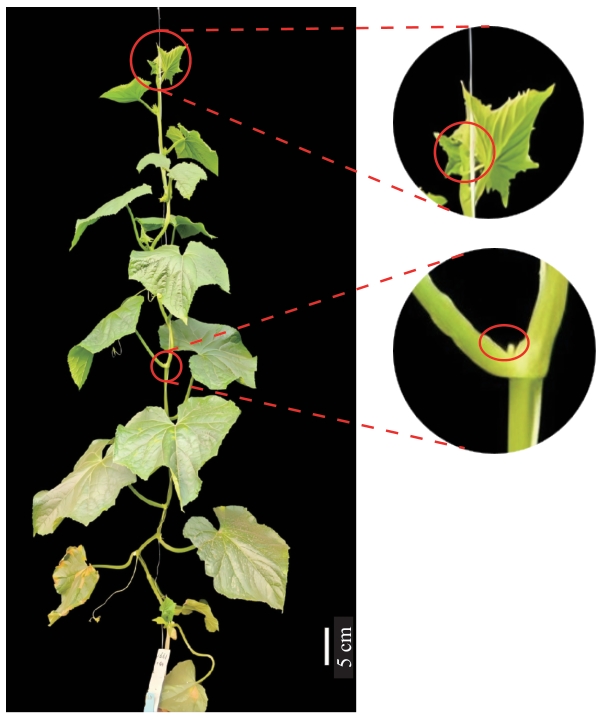
Fig. 1 Distribution diagram of plant sample collection sites
材料 Sample | 取样部位 Sampling part | 木质素含量 Lignin content (mg/g) | 百分含量 Percentage (%) |
|---|---|---|---|
| R116 | 近轴叶柄基部 | 91.87 ± 0.50 | 9.19 ± 0.04 |
| 生长点叶片 | 44.41 ± 4.17 | 4.44 ± 0.37 | |
| R60 | 近轴叶柄基部 | 96.10 ± 1.51 | 9.61 ± 0.15 |
| 生长点叶片 | 73.53 ± 1.32 | 7.35 ± 0.13 | |
| R369 | 近轴叶柄基部 | 145.89 ± 1.31 | 14.59 ± 0.13 |
| 生长点叶片 | 103.23 ± 0.87 | 10.32 ± 0.09 | |
| R506 | 近轴叶柄基部 | 140.36 ± 1.53 | 14.04 ± 0.15 |
| 生长点叶片 | 67.70 ± 0.44 | 6.77 ± 0.04 |
Table 2 Comparison of lignin content in adaxial petiole base and shoot-tip leaves among cucumber materials with different petiole angles
材料 Sample | 取样部位 Sampling part | 木质素含量 Lignin content (mg/g) | 百分含量 Percentage (%) |
|---|---|---|---|
| R116 | 近轴叶柄基部 | 91.87 ± 0.50 | 9.19 ± 0.04 |
| 生长点叶片 | 44.41 ± 4.17 | 4.44 ± 0.37 | |
| R60 | 近轴叶柄基部 | 96.10 ± 1.51 | 9.61 ± 0.15 |
| 生长点叶片 | 73.53 ± 1.32 | 7.35 ± 0.13 | |
| R369 | 近轴叶柄基部 | 145.89 ± 1.31 | 14.59 ± 0.13 |
| 生长点叶片 | 103.23 ± 0.87 | 10.32 ± 0.09 | |
| R506 | 近轴叶柄基部 | 140.36 ± 1.53 | 14.04 ± 0.15 |
| 生长点叶片 | 67.70 ± 0.44 | 6.77 ± 0.04 |
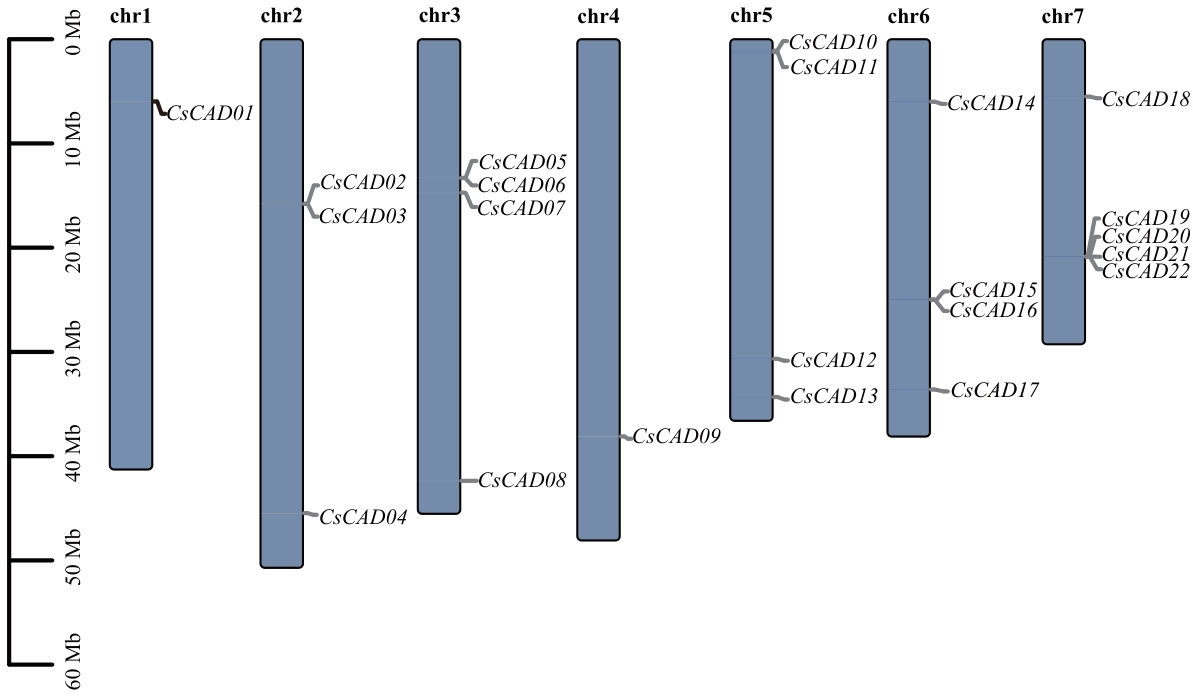
Fig. 2 Chromosomal distribution of the CsCAD gene family in cucumber
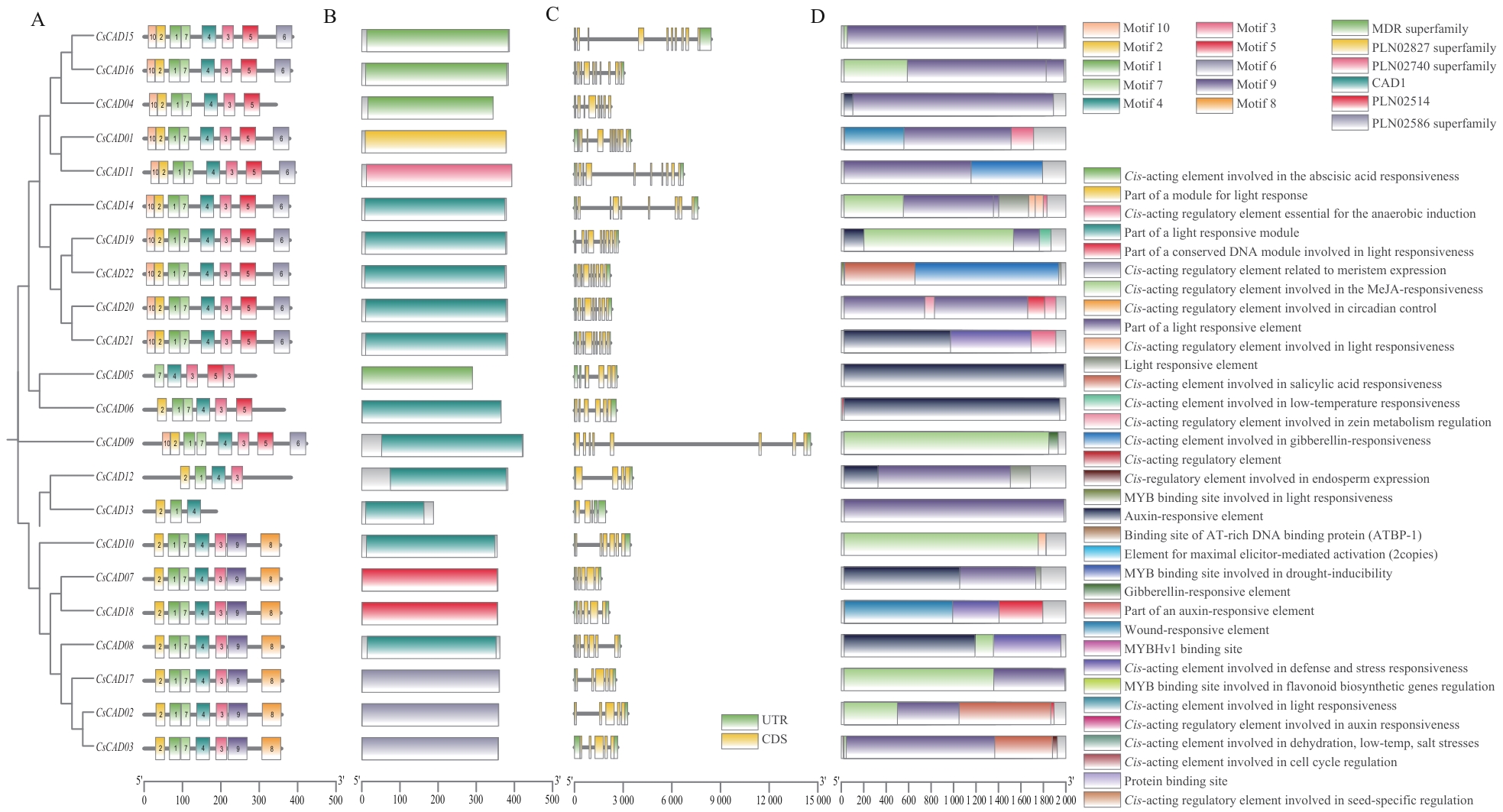
Fig. 3 Gene structure analysis of CsCADA: Phylogenetic tree and conserved motifs. B: Conserved domains. C: Gene structures. D: Cis-acting elements
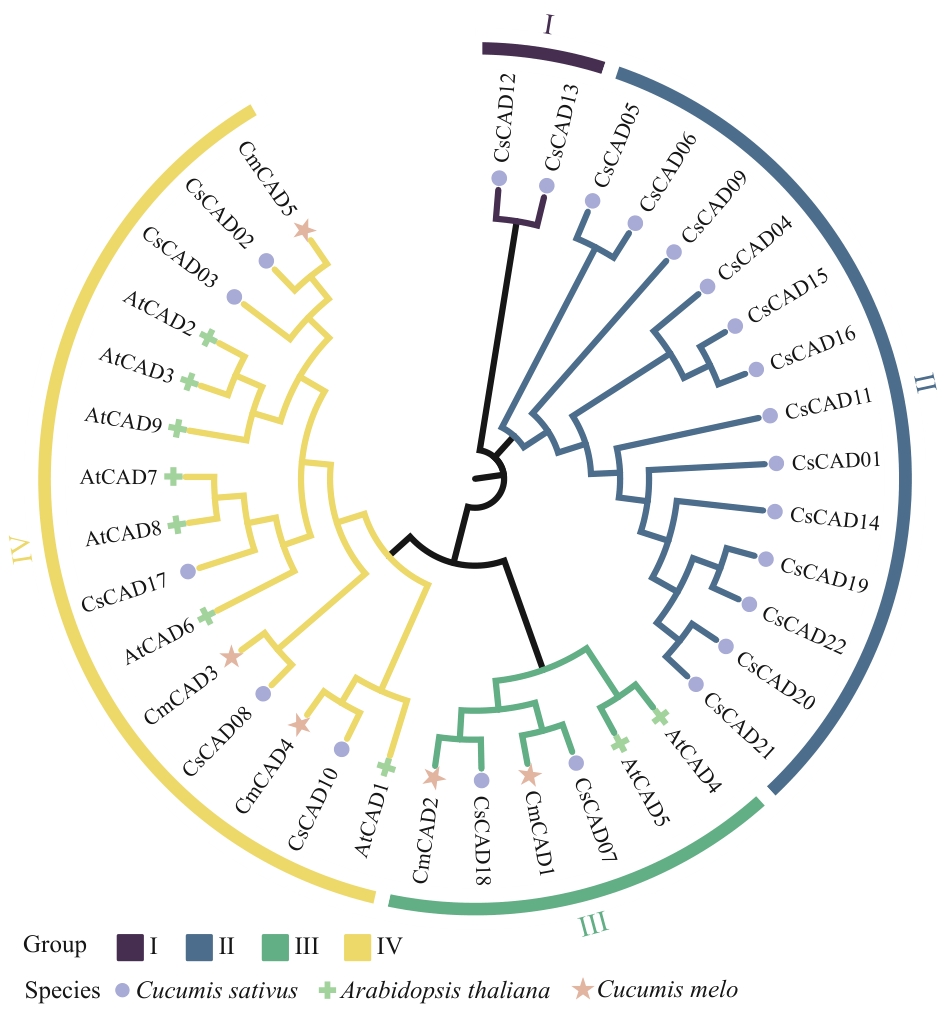
Fig. 4 Phylogenetic analysis of the CAD gene family
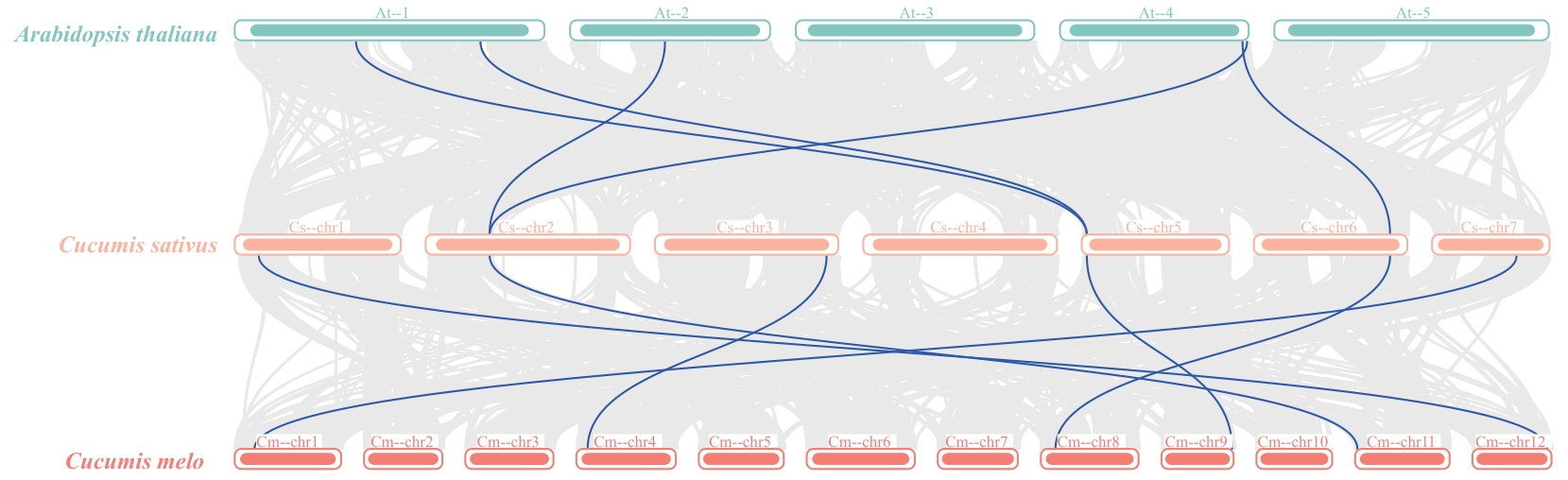
Fig. 5 Collinearity analysis of CsCAD genes among cucumber, Arabidopsis thaliana, and Cucumis melo
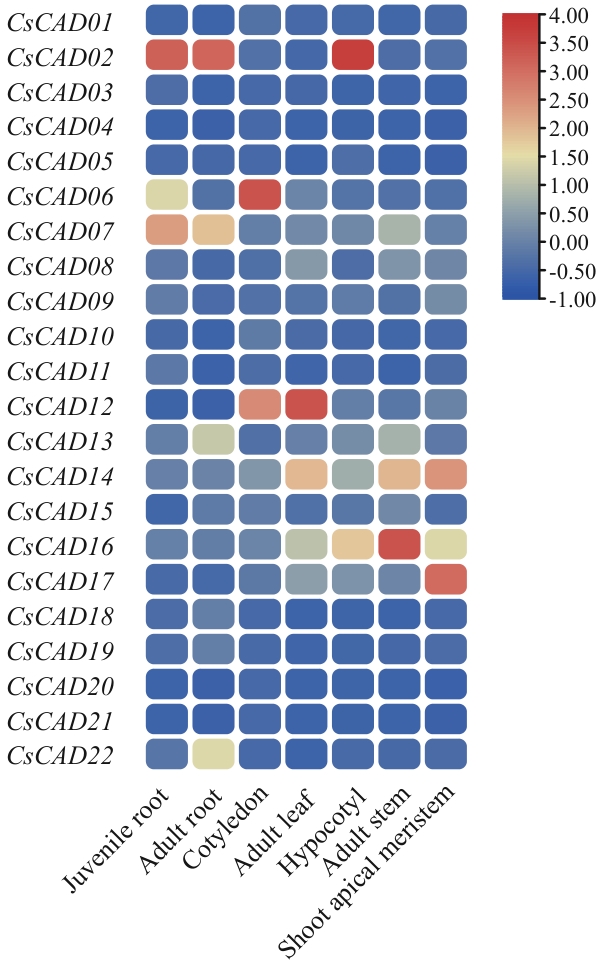
Fig. 6 Expression profiles of CsCAD genes across different tissues in cucumber
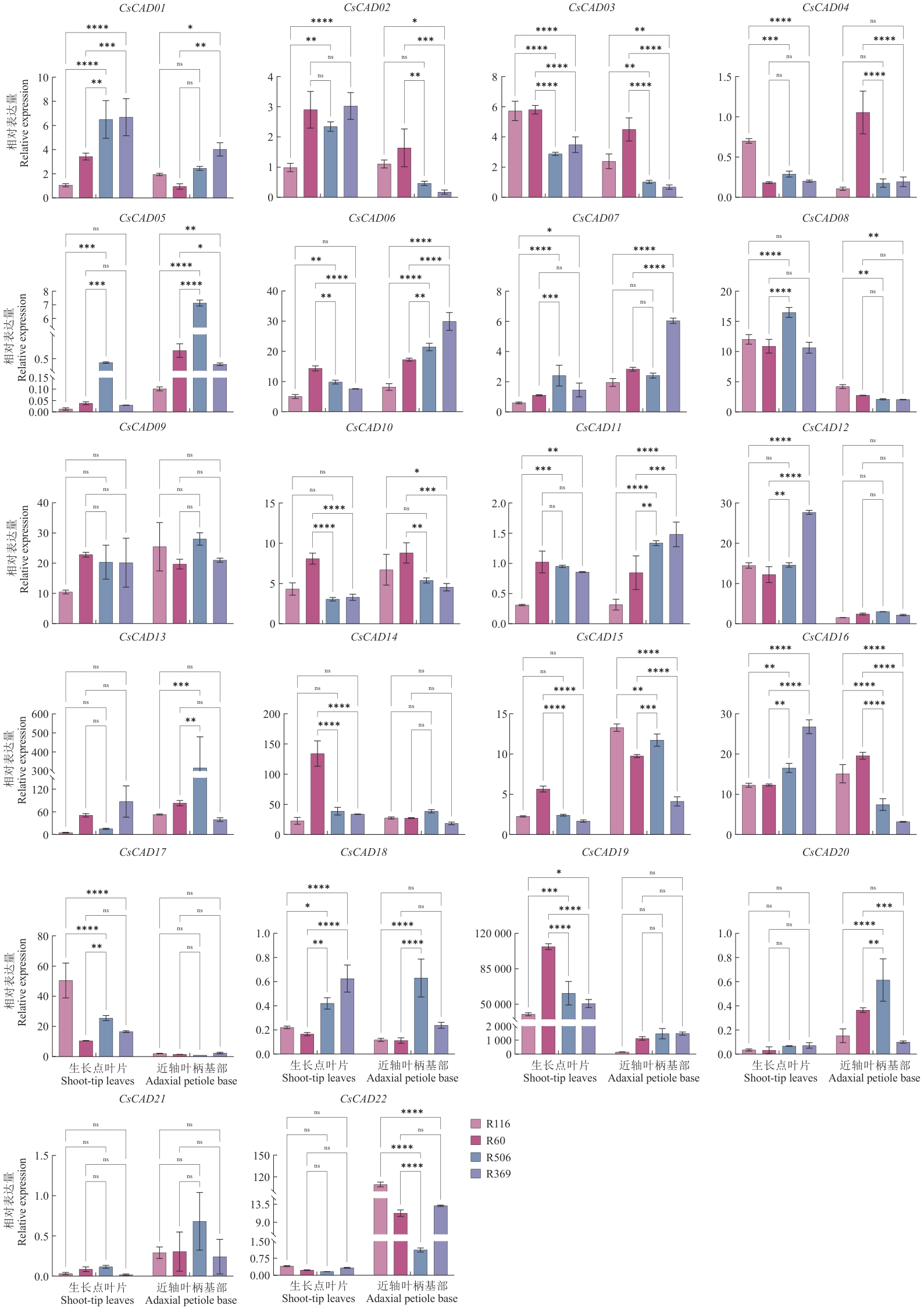
Fig. 7 Expression analysis of candidate CsCAD genes in adaxial petiole base and shoot-tip leaves of cucumber materials with different petiole anglesHorizontal lines and symbols above the bars indicate the significance of differences between groups. ns indicates no significant difference (P>0.05); asterisks indicate significant differences: * P<0.05, ** P<0.01, *** P<0.001, and **** P<0.000 1
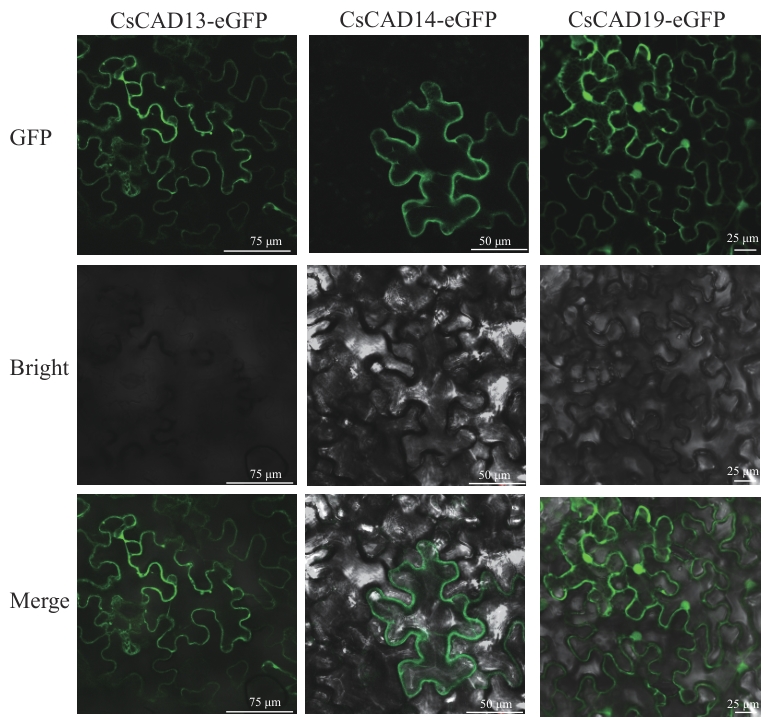
Fig. 8 Subcellular localization of CsCAD13, CsCAD14 and CsCAD19 proteins
| [1] | 张圣平, 董邵云, 官健涛, 等. 黄瓜抗病分子育种研究进展 [J]. 园艺学报, 2025, 52(3): 773-791. |
| Zhang SP, Dong SY, Guan JT, et al. Research progress on molecular breeding of disease resistance in cucumber [J]. Acta Hortic Sin, 2025, 52(3): 773-791. | |
| [2] | Cao YY, Zhong ZJ, Wang HY, et al. Leaf angle: a target of genetic improvement in cereal crops tailored for high-density planting [J]. Plant Biotechnol J, 2022, 20(3): 426-436. |
| [3] | Liu HC, Zhang J, Wang JX, et al. The rice R2R3 MYB transcription factor FOUR LIPS connects brassinosteroid signaling to lignin deposition and leaf angle [J]. Plant Cell, 2024, 36(11): 4768-4785. |
| [4] | Li HP, Zhang SL, Zhao YL, et al. Identification and characterization of cinnamyl alcohol dehydrogenase encoding genes involved in lignin biosynthesis and resistance to Verticillium dahliae in upland cotton (Gossypium hirsutum L.) [J]. Front Plant Sci, 2022, 13: 840397. |
| [5] | 刘威. 薄皮甜瓜肉桂醇脱氢酶(CAD)在非生物胁迫下参与木质素合成的功能探究 [D]. 沈阳: 沈阳农业大学, 2019. |
| Liu W. Functional research of CmCADs in lignin biosynthesis in oriental melon (Cucumis melo L.) under abiotic stresses [D]. Shenyang: Shenyang Agricultural University, 2019. | |
| [6] | Kim YH, Huh GH. Overexpression of cinnamyl alcohol dehydrogenase gene from sweetpotato enhances oxidative stress tolerance in transgenic Arabidopsis [J]. In Vitro Cell Dev Biol-Plant, 2019, 55(2): 172-179. |
| [7] | 尚军, 吴旺泽, 马永贵. 植物苯丙烷代谢途径 [J]. 中国生物化学与分子生物学报, 2022, 38(11): 1467-1476. |
| Shang J, Wu WZ, Ma YG. Phenylpropanoid metabolism pathway in plants [J]. Chin J Biochem Mol Biol, 2022, 38(11): 1467-1476. | |
| [8] | Muro-Villanueva F, Kim H, Ralph J, et al. H-lignin can be deposited independently of cinnamyl alcohol dehydrogenase c and d in Arabidopsis [J]. Plant Physiol, 2022, 189(4): 2015-2028. |
| [9] | Kim SJ, Kim MR, Bedgar DL, et al. Functional reclassification of the putative cinnamyl alcohol dehydrogenase multigene family in Arabidopsis [J]. Proc Natl Acad Sci U S A, 2004, 101(6): 1455-1460. |
| [10] | Özparpucu M, Gierlinger N, Burgert I, et al. The effect of altered lignin composition on mechanical properties of cinnamyl alcohol dehydrogenase (cad) deficient poplars [J]. Planta, 2018, 247(4): 887-897. |
| [11] | Tobias CM, Chow EK. Structure of the cinnamyl-alcohol dehydrogenase gene family in rice and promoter activity of a member associated with lignification [J]. Planta, 2005, 220(5): 678-688. |
| [12] | Li LG, Cheng XF, Leshkevich J, et al. The last step of syringyl monolignol biosynthesis in angiosperms is regulated by a novel gene encoding sinapyl alcohol dehydrogenase [J]. Plant Cell, 2001, 13(7): 1567-1586. |
| [13] | Guan JT, Miao H, Zhang ZH, et al. A near-complete cucumber reference genome assembly and Cucumber-DB, a multi-omics database [J]. Mol Plant, 2024, 17(8): 1178-1182. |
| [14] | 胡文冉, 郝晓燕, 赵准, 等. 棉花CAD基因家族的生物信息学分析 [J]. 生物技术进展, 2023, 13(3): 412-424. |
| Hu WR, Hao XY, Zhao Z, et al. Bioinformatic analysis of the CAD gene family in cotton [J]. Curr Biotechnol, 2023, 13(3): 412-424. | |
| [15] | 辛明, 姜赫然, 李英楠, 等. 黄瓜IDD基因家族鉴定及其在雌花花冠发育中的表达分析 [J]. 东北农业大学学报, 2024, 55(2): 19-31. |
| Xin M, Jiang HR, Li YN, et al. Genome-wide identification of IDD gene family and its expression in female flower corolla development in cucumber (Cucumis sativus L.) [J]. J Northeast Agric Univ, 2024, 55(2): 19-31. | |
| [16] | Hu L, Zhang X, Ni HH, et al. Identification and functional analysis of CAD gene family in pomegranate (Punica granatum) [J]. Genes, 2023, 14(1): 26. |
| [17] | Chen CJ, Chen H, Zhang Y, et al. TBtools: an integrative toolkit developed for interactive analyses of big biological data [J]. Mol Plant, 2020, 13(8): 1194-1202. |
| [18] | Lescot M, Déhais P, Thijs G, et al. PlantCARE, a database of plant cis-acting regulatory elements and a portal to tools for in silico analysis of promoter sequences [J]. Nucleic Acids Res, 2002, 30(1): 325-327. |
| [19] | 刘巳塬, 罗瑜杭, 邓思航, 等. 梅花肉桂醇脱氢酶基因的鉴定和功能分析 [J]. 植物遗传资源学报, 2025, 26(2): 356-368. |
| Liu SY, Luo YH, Deng SH, et al. Identification and functional analysis of cinnamyl alcohol dehydrogenase (PmCAD) genes in Prunus mume [J]. J Plant Genet Resour, 2025, 26(2): 356-368. | |
| [20] | 畅志鹏, 孙莹莹, 李佳阳, 等. 柠条CkCAD基因的克隆转化及其抗旱功能分析 [J]. 草业学报, 2021, 30(3): 68-80. |
| Chang ZP, Sun YY, Li JY, et al. Cloning and transformation of the CkCAD gene in Caragana korshinskii and analysis of its drought resistance function [J]. Acta Prataculturae Sin, 2021, 30(3): 68-80. | |
| [21] | 王贺萍, 孙震, 刘雨辰, 等. 蒙古冰草肉桂醇脱氢酶基因序列鉴定及功能分析 [J]. 植物学报, 2024, 59(2): 204-216. |
| Wang HP, Sun Z, Liu YC, et al. Sequence identification and functional analysis of cinnamyl alcohol dehydrogenase gene from Agropyron mongolicum [J]. Chin Bull Bot, 2024, 59(2): 204-216. | |
| [22] | An FF, Chen T, Zhu WL, et al. Systematic analysis of cinnamyl alcohol dehydrogenase family in cassava and validation of MeCAD13 and MeCAD28 in lignin synthesis and postharvest physiological deterioration [J]. Int J Mol Sci, 2024, 25(21): 11668. |
| [23] | Saballos A, Ejeta G, Sanchez E, et al. A genomewide analysis of the cinnamyl alcohol dehydrogenase family in sorghum [Sorghum bicolor (L.) moench] identifies SbCAD2 as the Brown midrib6 gene [J]. Genetics, 2009, 181(2): 783-795. |
| [24] | Wang L, Sun GH, Wang J, et al. Systematic characterization of cinnamyl alcohol dehydrogenase members revealed classification and function divergence in Haplomitrium mnioides [J]. J Plant Res, 2025, 138(1): 173-187. |
| [25] | Sibout R, Eudes A, Mouille G, et al. CINNAMYL ALCOHOL DEHYDROGENASE-C and -D are the primary genes involved in lignin biosynthesis in the floral stem of Arabidopsis [J]. Plant Cell, 2005, 17(7): 2059-2076. |
| [26] | 郝立冬, 张金汕, 张超, 等. 小麦肉桂醇脱氢酶基因家族的鉴定及其表达模式分析 [J/OL]. 分子植物育种, 2022. . |
| Hao LD, Zhang JS, Zhang C, et al. Identification and expression pattern analysis of cinnamyl alcohol dehydrogenase gene family in wheat [J/OL]. Mol Plant Breed, 2022. . | |
| [27] | 朱金鑫, 孙金金, 原晓龙, 等. 巴拉圭瓜多竹CAD基因的克隆与分析 [J]. 西部林业科学, 2017, 46(1): 6-11, 16. |
| Zhu JX, Sun JJ, Yuan XL, et al. Cloning and sequence analysis of cinnamoyl alcohol dehydrogenase gene from Guadua paraguayana [J]. J West China For Sci, 2017, 46(1): 6-11, 16. |
| [1] | FU Cai-xia, ZHANG Rui-hua, ZHU Yun-jun, LI Jing, YANG Ke, WANG Xuan-peng. Construction and Validation of the pOp6/LhG4AtO Expression System in the Embryo and Endosperm of Arabidopsis Seed [J]. Biotechnology Bulletin, 2026, 42(9): 120-127. |
| [2] | XIN Qing, ZHENG Yong-jie, LI Yu-hua, TU Bai-lian, LIU Xin-liang, ZHANG Yue-ting, WU Yan-fang. Genome-wide Identification and Expression Analysis of MYC Transcription Factors in Cinnamomum camphora [J]. Biotechnology Bulletin, 2026, 42(7): 214-225. |
| [3] | MENG Hong-yu, LIU Ya-nan, WU Jun-xin, SHEN Qiong. Identification and Analysis of the NAC Transcription Factors Gene Family in Cucurbita moschata Duch. [J]. Biotechnology Bulletin, 2026, 42(6): 237-249. |
| [4] | CHEN Deng-ke, LAN Gang, XIA Zhi, HOU Bao-guo, YANG Liu-liu, CAO Cai-rong, LI Peng-bo, WU Cui-cui. Identification of ZF-HD Gene Family in Arachis hypogaea and Analysis in Response to Abiotic Stress [J]. Biotechnology Bulletin, 2026, 42(4): 114-128. |
| [5] | LIU Lin-ya, LIU Huan-yan, LIANG Xin-yu, SONG Shu-yi, HE Bin, WANG Xu-ying, HUANG Ya-cheng. Genome-wide Identification and Expression Analysis of BGAL Gene Family in Actinidiachinensis var. Hongyang [J]. Biotechnology Bulletin, 2026, 42(3): 312-323. |
| [6] | ZHUANG Na, HE Hong-li, ZHANG Xing-zheng. Genome-wide Identification and Expression Analysis of the SMXL Gene Family in Medicago truncatula [J]. Biotechnology Bulletin, 2026, 42(2): 250-266. |
| [7] | CHENG Ting-ting, LIU Jun, WANG Li-li, LIAN Cong-long, WEI Wen-jun, GUO Hui, WU Yao-lin, YANG Jing-fan, LAN Jin-xu, CHEN Sui-qing. Genome-wide Identification of the Chalcone Isomerase Gene Family in Eucommia ulmoides and Analysis of Their Expression Patterns [J]. Biotechnology Bulletin, 2025, 41(9): 242-255. |
| [8] | GONG Yu-han, CHEN Lan, SHANGFANG Hui-zi, HAO Ling-ying, LIU Shuo-qian. Identification and Expression Profile Analysis of the TRB Gene Family in Tea Plant [J]. Biotechnology Bulletin, 2025, 41(7): 214-225. |
| [9] | SUN Tian-guo, YI Lan, QIN Xu-yang, QIAO Meng-xue, GU Xin-ying, HAN Yi, SHA Wei, ZHANG Mei-juan, MA Tian-yi. Genome-wide Identification of the DABB Gene Family in Brassica rapa ssp. pekinensis and Expression Analysis under Saline and Alkali Stress [J]. Biotechnology Bulletin, 2025, 41(4): 156-165. |
| [10] | SONG Shu-yi, JIANG Kai-xiu, LIU Huan-yan, HUANG Ya-cheng, LIU Lin-ya. Identification of the TCP Gene Family in Actinidia chinensis var. Hongyang and Their Expression Analysis in Fruit [J]. Biotechnology Bulletin, 2025, 41(3): 190-201. |
| [11] | XU Jia-yu, ZHAO Ge, TANG Ye, LIU Wen-wen, PENG Qing-zhong, WU Jia-he. Genome-wide Identification of WRKY Gene Family in Gossypium hirsutum and Expression Analysis of WRKY44 in Fiber Development [J]. Biotechnology Bulletin, 2025, 41(12): 124-138. |
| [12] | HE Cai-lin, LU Jing, GUO Hui-hui, LI Xiao-an, WU Qi. Genome-wide Identification and Expression Analysis of the MADS-box Gene Family in Quinoa [J]. Biotechnology Bulletin, 2025, 41(1): 157-172. |
| [13] | TIAN Xu-rui, HUO Xin-yi, GUO Yun-han, XIANG Lin, CHAN Zhu-long, WANG Yan-ping. Expression and Functional Analysis of Gene LoSAUR10 from Lilium Oriental Hybrids [J]. Biotechnology Bulletin, 2025, 41(1): 221-229. |
| [14] | CUI Yuan-yuan, WANG Zhao-yi, BAI Shuang-yu, REN Yu-zhao, DOU Fei-fei, LIU Cai-xia, LIU Feng-lou, WANG Zhang-jun, LI Qing-feng. Genome-wide Identification of Non-specific Phospholipase C Gene Family in Hordeum vulgare L. and Stress Expression Analysis at Seedling Stage [J]. Biotechnology Bulletin, 2024, 40(8): 74-82. |
| [15] | ZANG Wen-rui, MA Ming, CHE Gen, HASI Agula. Genome-wide Identification and Expression Pattern Analysis of BZR Transcription Factor Gene Family of Melon [J]. Biotechnology Bulletin, 2024, 40(7): 163-171. |
| Viewed | ||||||
|
Full text |
|
|||||
|
Abstract |
|
|||||
