







Biotechnology Bulletin ›› 2026, Vol. 42 ›› Issue (9): 327-341.doi: 10.13560/j.cnki.biotech.bull.1985.2025-1271
ZHANG Wen-jing1, MA Xin-rui1, XU Zi-lu1, LYU Hong1, QIN Nan1, YIN Hui1, ZHAO Xiao-jun1,2,3( ), REN Lu1,2,3()
Received:2025-11-20
Online:2026-09-26
Published:2026-09-16
Contact:
ZHAO Xiao-jun, REN Lu
E-mail:zhaoxiaojun0218@163.com;renlubaby@163.com
ZHANG Wen-jing, MA Xin-rui, XU Zi-lu, LYU Hong, QIN Nan, YIN Hui, ZHAO Xiao-jun, REN Lu. Effects of Combined Application of Trichoderma afroharzianum and Bacillus velezensis on Quinoa Basal Stem Rot and Rhizosphere Microecology[J]. Biotechnology Bulletin, 2026, 42(9): 327-341.
处理 Treatment | 发病率 Incidence (%) | 防治效果 Control effect (%) |
|---|---|---|
| T1 | 27.92±1.10b | 57.86±1.66c |
| T2 | 24.17±0.42c | 63.52±0.63b |
| T3 | 21.25±0.72cd | 67.92±1.09ab |
| T4 | 30.42±0.83b | 54.09±1.26c |
| T5 | 19.17±1.82d | 71.07±2.74a |
| T6 | 66.25±1.44a | - |
Table 1 Field control efficacy of different treatments against quinoa basal stem rot
处理 Treatment | 发病率 Incidence (%) | 防治效果 Control effect (%) |
|---|---|---|
| T1 | 27.92±1.10b | 57.86±1.66c |
| T2 | 24.17±0.42c | 63.52±0.63b |
| T3 | 21.25±0.72cd | 67.92±1.09ab |
| T4 | 30.42±0.83b | 54.09±1.26c |
| T5 | 19.17±1.82d | 71.07±2.74a |
| T6 | 66.25±1.44a | - |
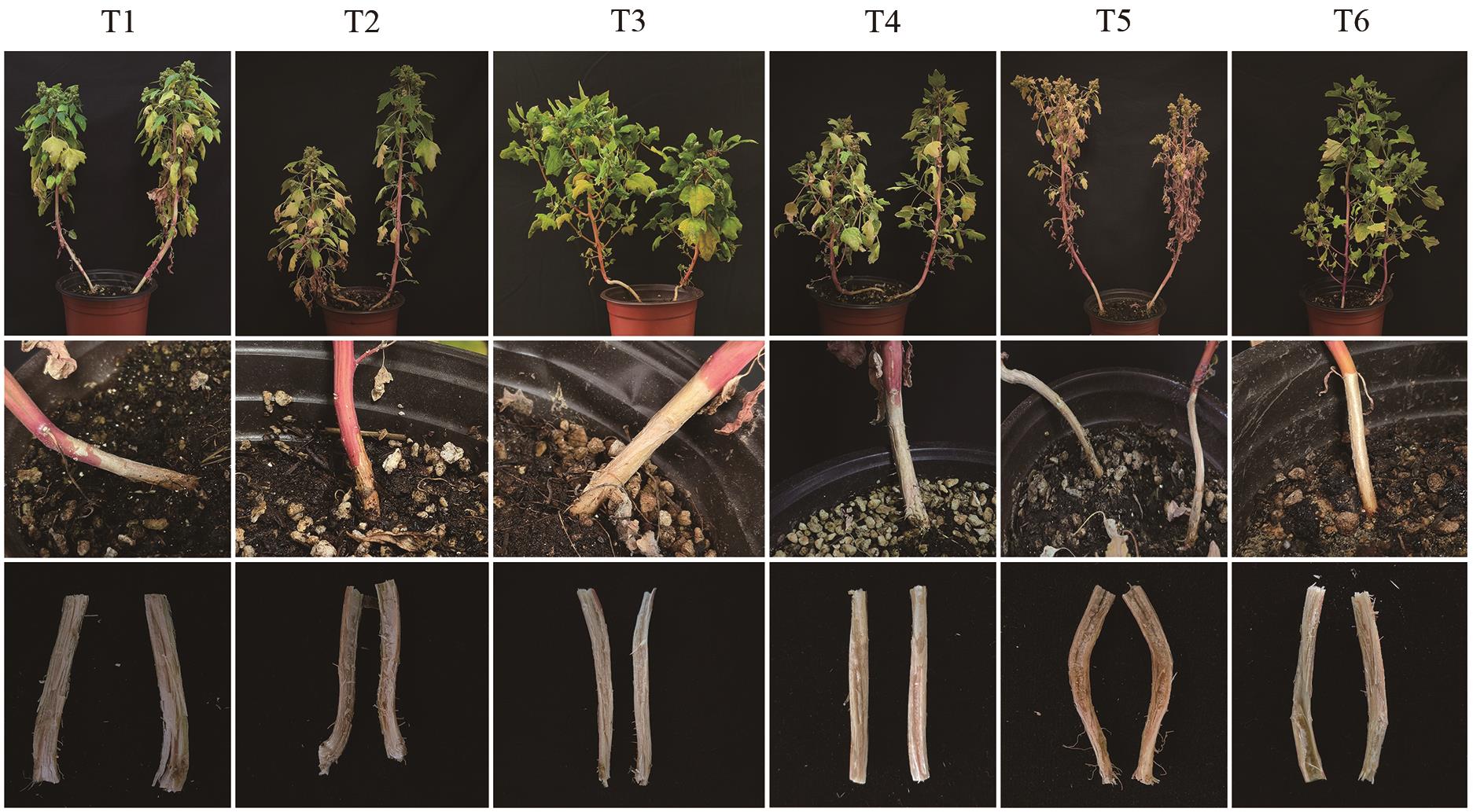
Fig. 1 Disease occurrence of quinoa basal stem rot under different treatmentsT1: YPTJ-1 WP 500-fold dilution, T2: LMNS-M9 WP 500-fold dilution. T3: Mixed microbial agent WP 500-fold dilution (The ratio of YPTJ-1 WP to LMNS-M9 WP is 7∶3). T4: 50% fludioxonil WP 5 000-fold dilution (positive chemical control). T5: Only F. solani spore suspension (negative control). T6: Only watering water (blank control). The same below
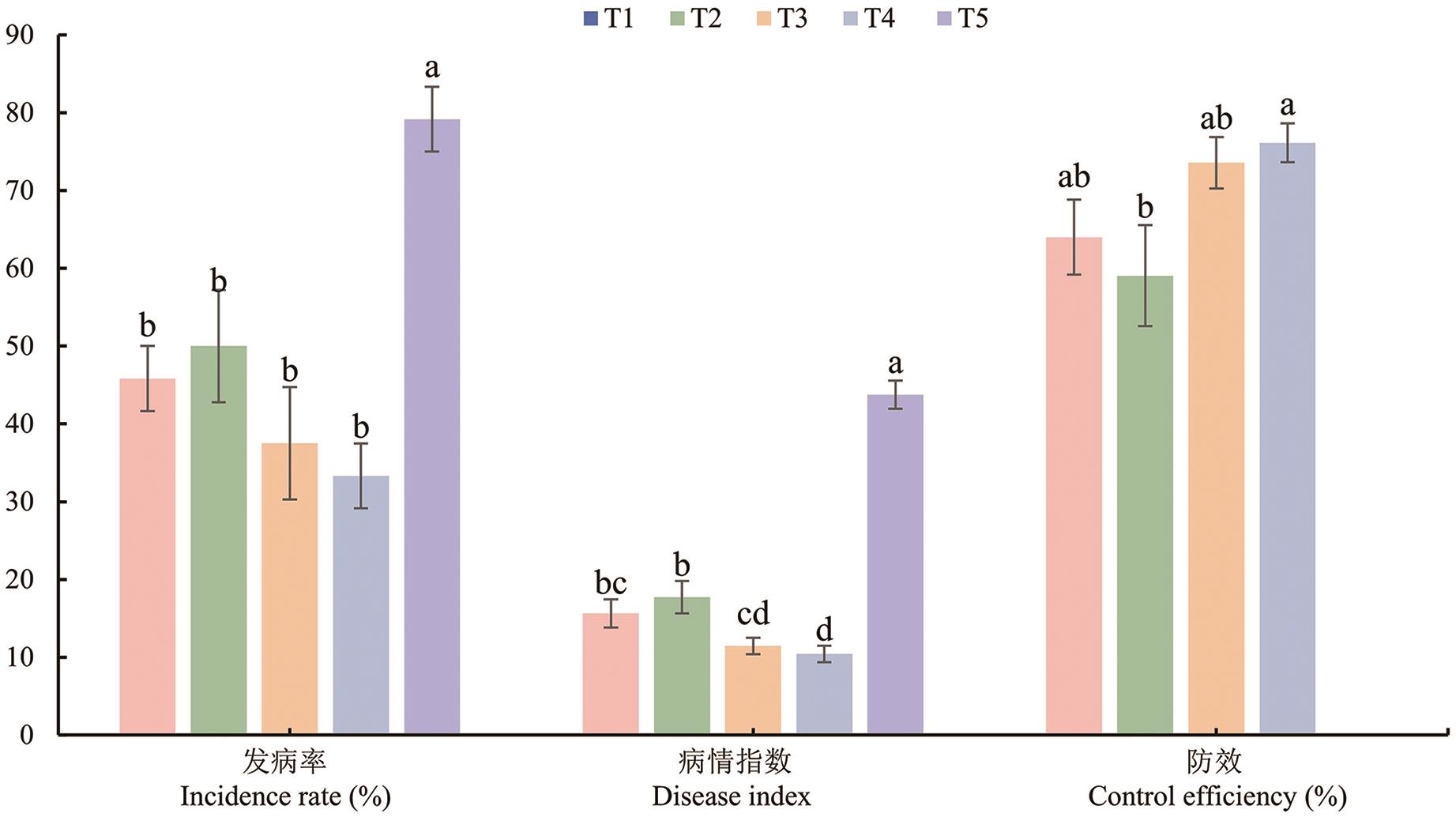
Fig. 2 Pot culture control efficacy of different treatments on quinoa basal stem rotDifferent lowercase letters indicate significant difference (P<0.05), the same below
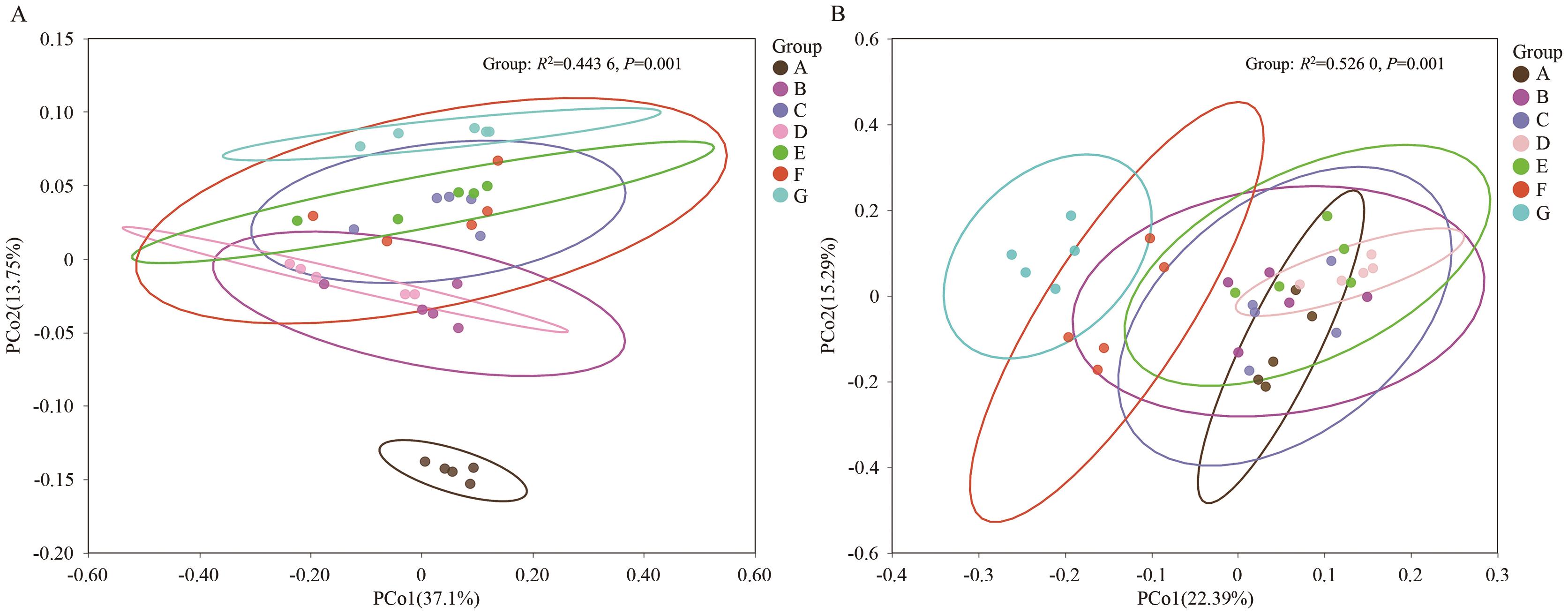
Fig. 3 Principal coordinate analysis (PCoA) of bacteria (A) and fungi (B) in the quinoa rhizosphere under different treatments
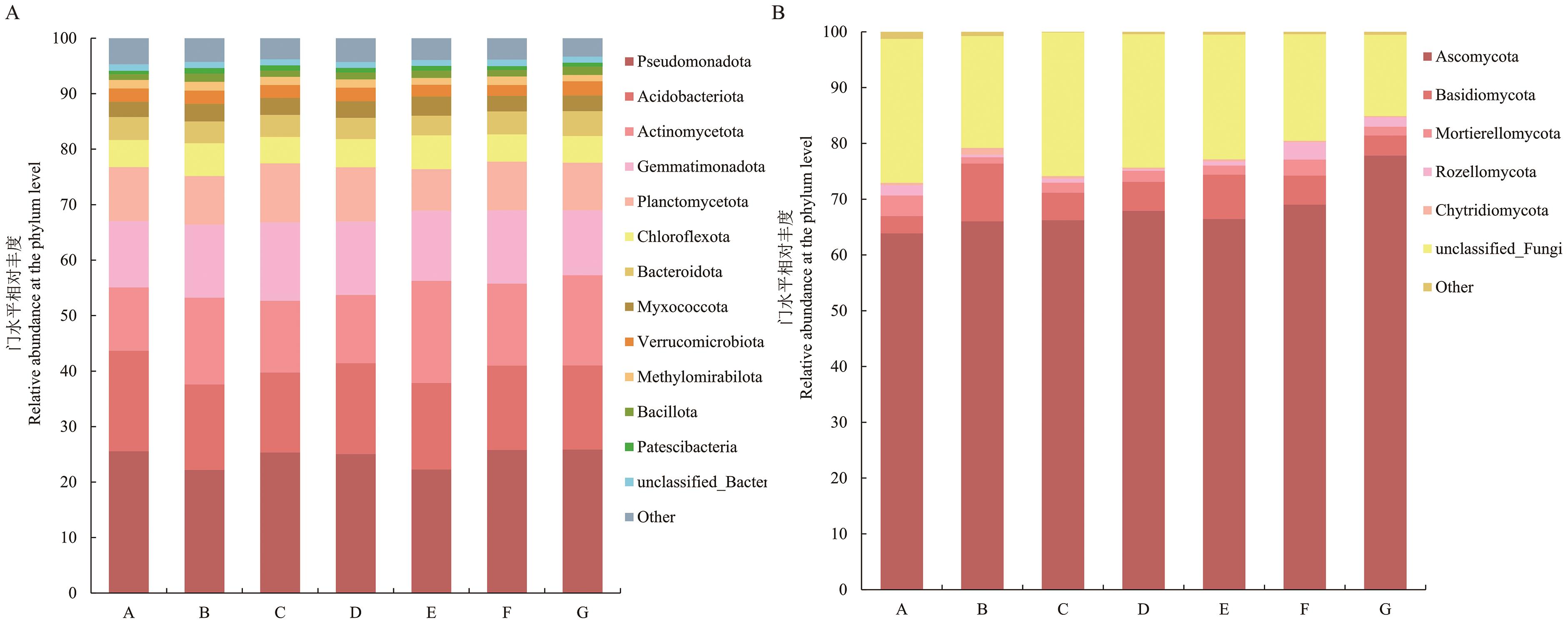
Fig. 4 Relative abundance of bacteria (A) and fungi (B) in the rhizosphere soil of quinoa under different treatments at the phylum levelMicrobial groups with a relative abundance of less than 1% are classified as other, the same below
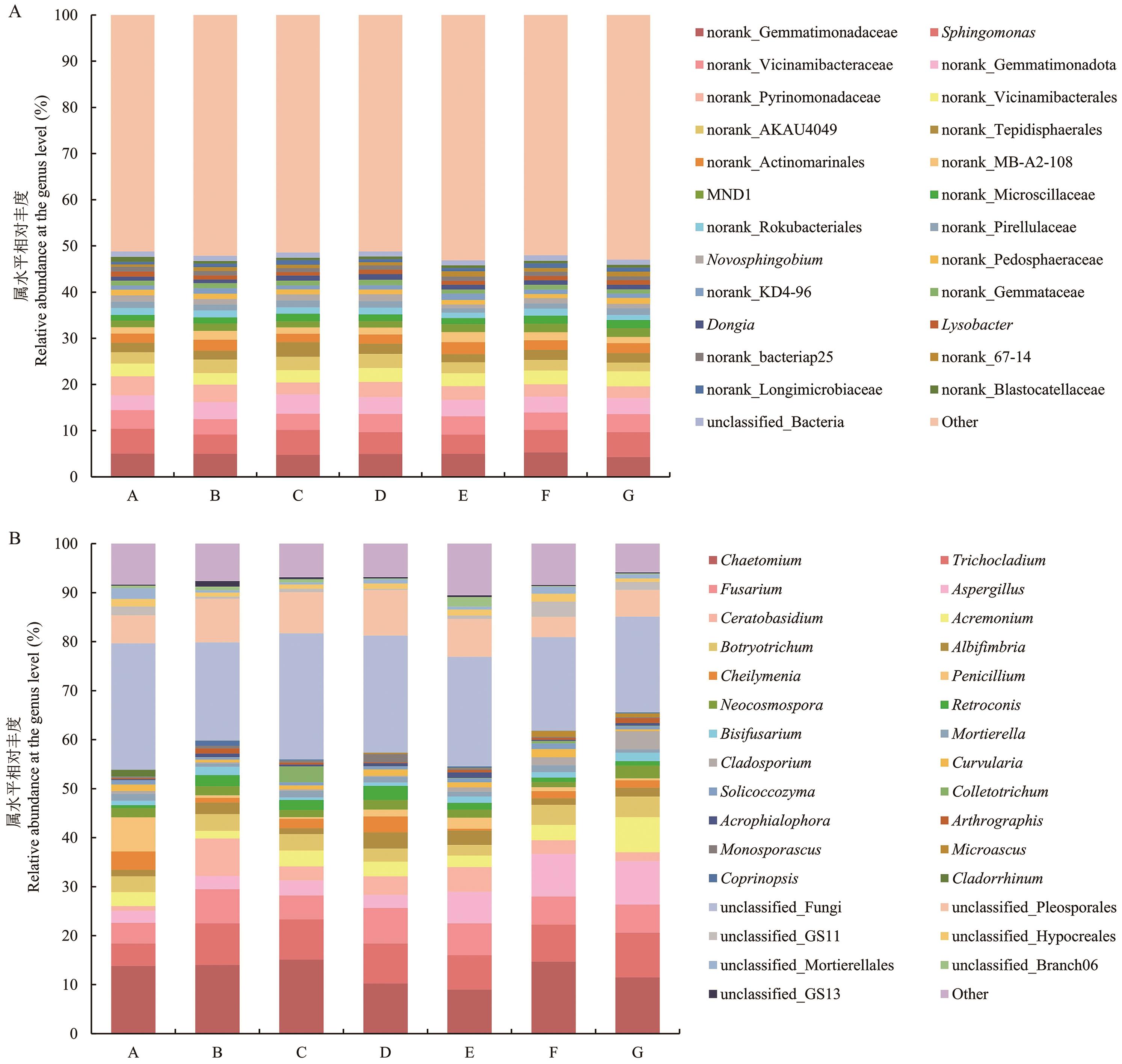
Fig. 5 Relative abundance of bacteria (A) and fungi (B) in the rhizosphere soil of quinoa under different treatments at the genus level
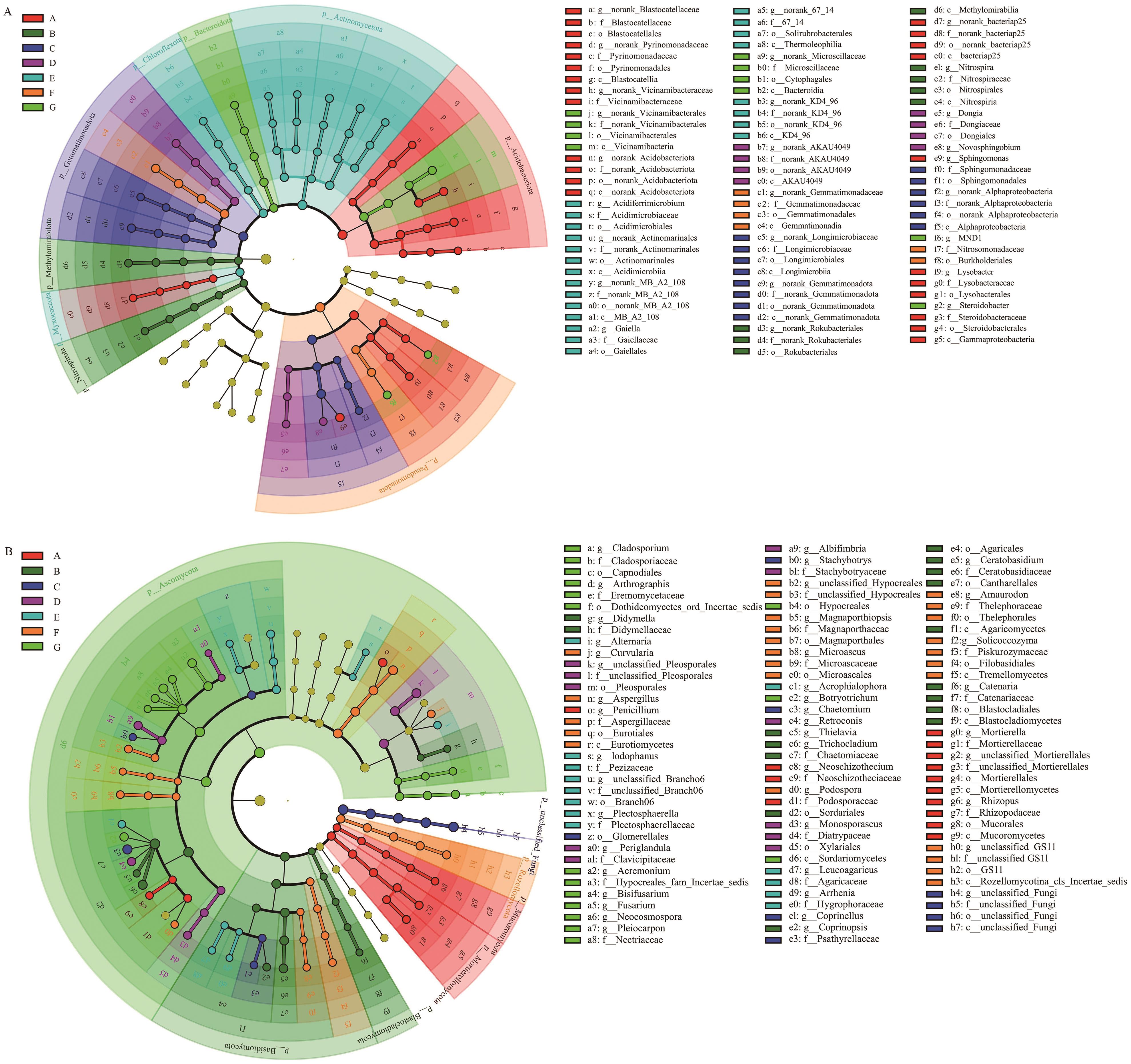
Fig. 6 Evolutionary branch diagram of differentially abundant microbial species in the quinoa rhizosphere soilThe circles radiated from the inside out in the figures represent the classification levels from genus to phylum. Different color nodes indicate significant enrichment in the corresponding groups, and light yellow nodes indicate microbial groups that have no significant effect on the differences between groups
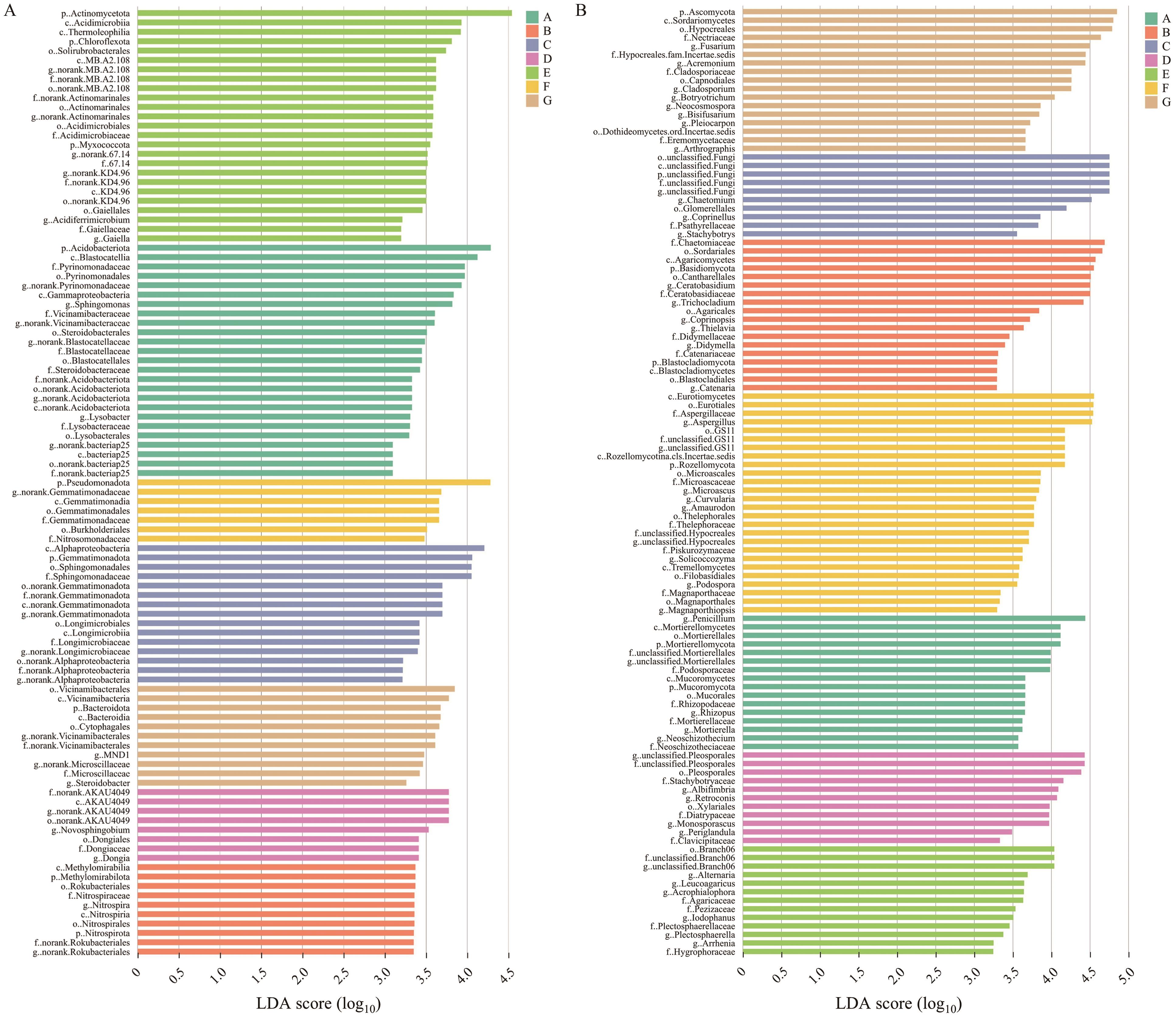
Fig. 7 LEfSe analysis of bacteria (A) and fungi (B) in quinoa rhizosphere soil
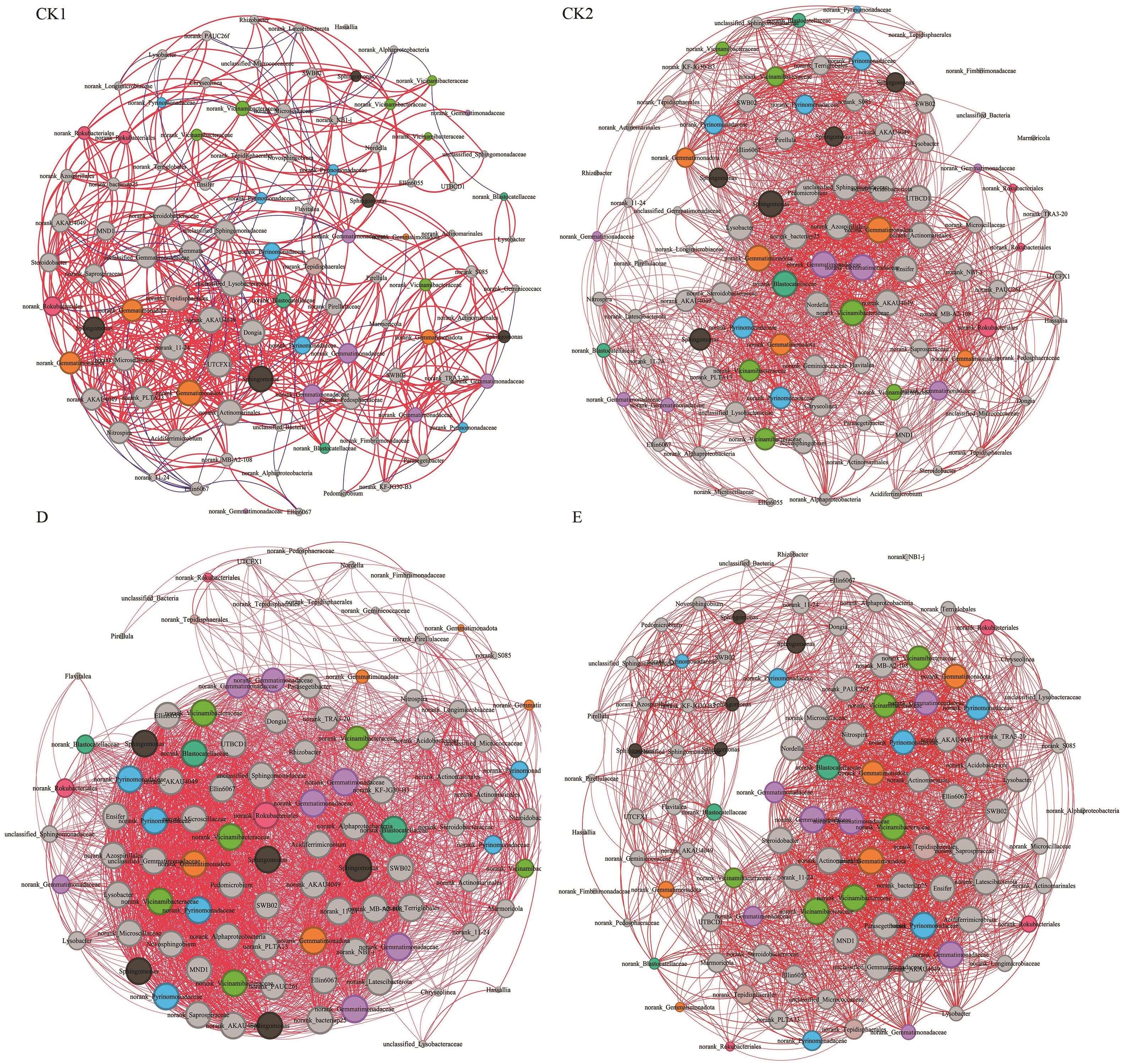
Fig. 8 Co-occurrence network analysis of soil bacteria under different treatmentsCK1: blank control, water only; CK2: negative control, inoculated with F.solani only; D: microbial agent control, B. subtilis treatment; E: compound microbial agent treatment (diluted 300-fold). The same below
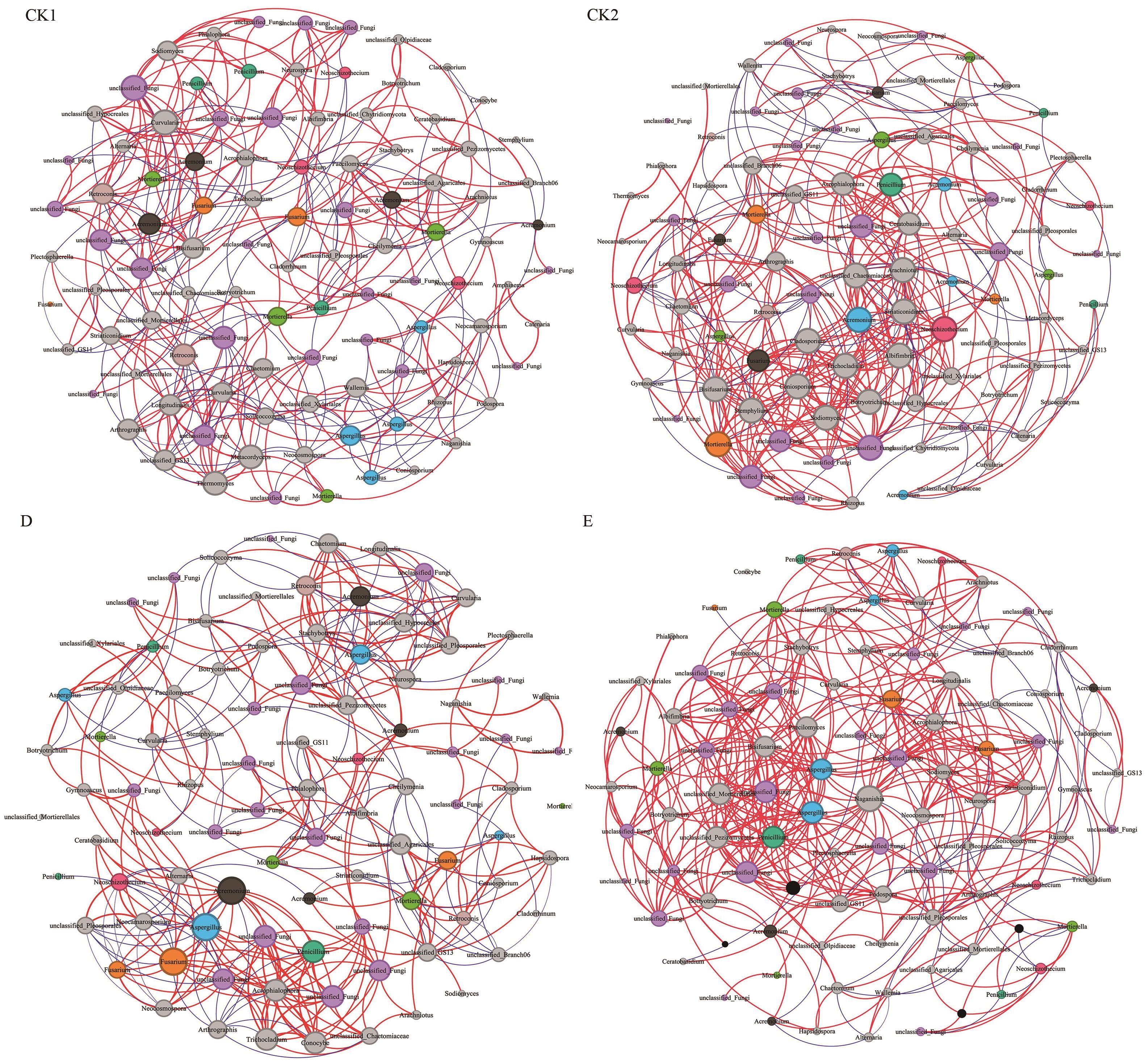
Fig. 9 Co-occurrence network analysis of soil fungi under different treatments
微生物 Microorganism | 处理 Treatment | 节点数 Node number | 边数 Edge number | 平均度 Average degree | 平均聚类系数 Average cluster coefficient | 平均路径长度 Average path distance | 模块化 Modularity |
|---|---|---|---|---|---|---|---|
细菌 Bacteria | CK1 | 100 | 616 | 12.32 | 0.572 | 3.404 | 0.558 |
| CK2 | 100 | 1 579 | 31.58 | 0.768 | 2.183 | 0.384 | |
| D | 100 | 2 464 | 49.28 | 0.765 | 1.843 | 0.260 | |
| E | 100 | 1 923 | 38.46 | 0.764 | 1.914 | 0.375 | |
真菌 Fungi | CK1 | 100 | 365 | 7.300 | 0.516 | 3.565 | 1.665 |
| CK2 | 97 | 407 | 8.392 | 0.521 | 3.499 | 0.710 | |
| D | 93 | 335 | 7.204 | 0.572 | 4.078 | 1.689 | |
| E | 97 | 430 | 8.866 | 0.589 | 3.790 | 0.624 |
Table 2 Topological properties of the co-occurrence network of soil bacterial and fungal communities under different treatments
微生物 Microorganism | 处理 Treatment | 节点数 Node number | 边数 Edge number | 平均度 Average degree | 平均聚类系数 Average cluster coefficient | 平均路径长度 Average path distance | 模块化 Modularity |
|---|---|---|---|---|---|---|---|
细菌 Bacteria | CK1 | 100 | 616 | 12.32 | 0.572 | 3.404 | 0.558 |
| CK2 | 100 | 1 579 | 31.58 | 0.768 | 2.183 | 0.384 | |
| D | 100 | 2 464 | 49.28 | 0.765 | 1.843 | 0.260 | |
| E | 100 | 1 923 | 38.46 | 0.764 | 1.914 | 0.375 | |
真菌 Fungi | CK1 | 100 | 365 | 7.300 | 0.516 | 3.565 | 1.665 |
| CK2 | 97 | 407 | 8.392 | 0.521 | 3.499 | 0.710 | |
| D | 93 | 335 | 7.204 | 0.572 | 4.078 | 1.689 | |
| E | 97 | 430 | 8.866 | 0.589 | 3.790 | 0.624 |
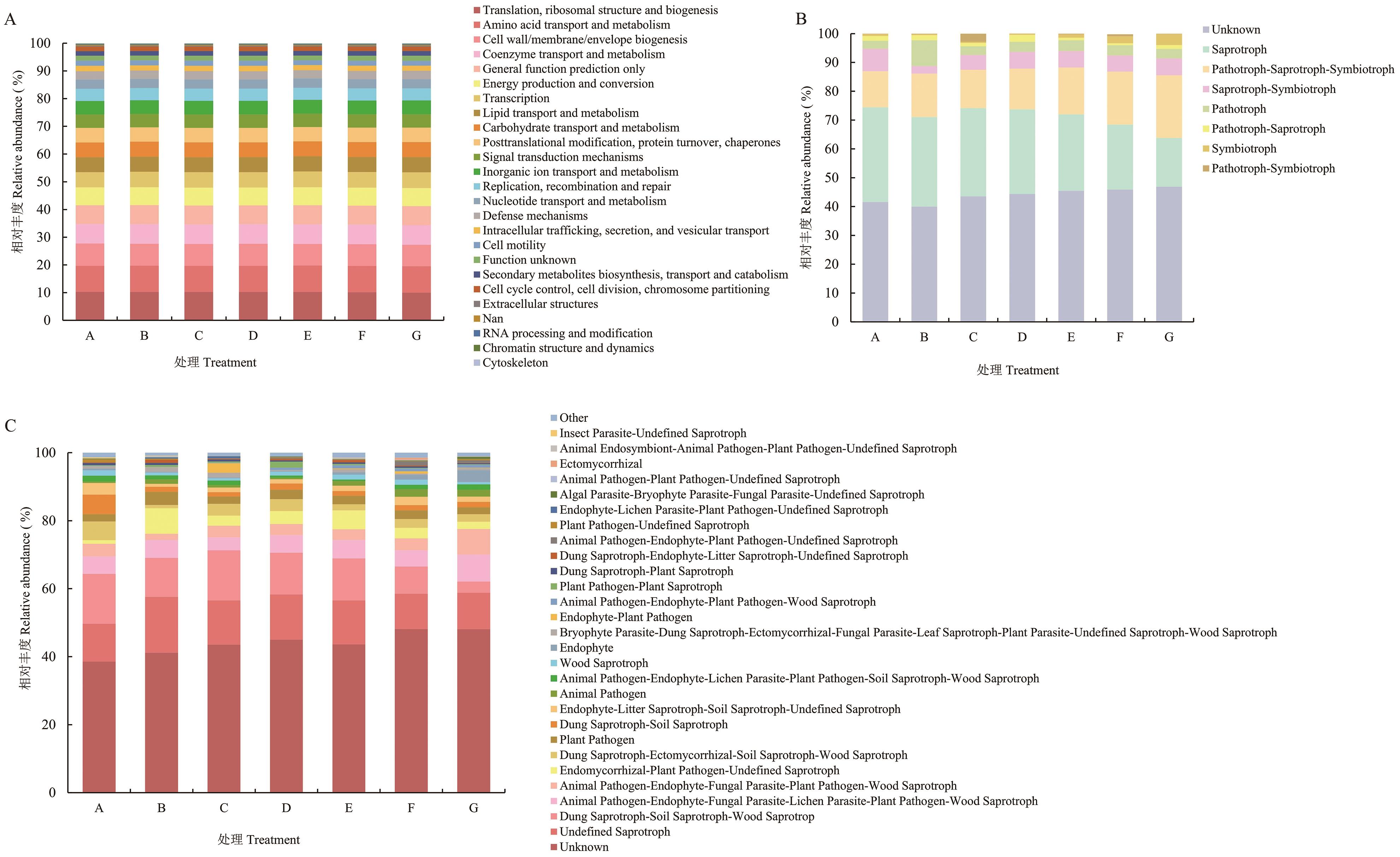
Fig. 10 Functional prediction of bacteria (A) and fungi (B, C) in quinoa rhizosphere soil of different treatment groups
| [1] | Wu LM, Wu HJ, Qiao JQ, et al. Novel routes for improving biocontrol activity of Bacillus based bioinoculants [J]. Front Microbiol, 2015, 6: 1395. |
| [2] | El-Beltagi HS, Osman A, Sitohy M, et al. Biocontrol effect of ginger glycoprotein and essential oil against Vicia faba damping-off caused by Fusarium solani and Rhizoctonia solani [J]. Kuwait J Sci, 2025, 52(3): 100437. |
| [3] | Pan C, Ye Y, Ma YC, et al. Cinnamaldehyde triggers fungal apoptosis in Fusarium solani by impairing cell structures and antioxidant defense through restricting glucose availability [J]. Food Biosci, 2025, 69: 106889. |
| [4] | Wang YZ, Bai JM, Zhou JQ, et al. First report of tobacco root rot caused by Fusarium oxysporum and Fusarium solani infection in Northeast China [J]. Plant Dis, 2025, 109(8): 1782. |
| [5] | Yin H, Tian M, Peng YF, et al. Characterization, phylogeny and pathogenicity of Fusarium solanicausing quinoa basal stem rot in Shanxi Province, China [J]. Plant Pathol, 2024, 73(2): 272-291. |
| [6] | He YQ, Han Q, Ayaz M, et al. Identification, characterization, and novel combination of fungicides against Fusarium pseudograminearum causing wheat crown rot in Anhui Province, China [J]. Plant Dis, 2025, 109(9): 1922-1929. |
| [7] | Heena Kaushal S, Hunjan MS, et al. Utilization of dropped Citrus reticulata Blanco fruit as a botanical fungicide to control foot rot disease in rice caused by Fusarium fujikuroi [J]. Eur J Plant Pathol, 2024, 170(4): 997-1012. |
| [8] | Liu H, Qu LX, Hu ZH, et al. Trichoderma guizhouense COTG-19 act as a potential biocontrol agent against Camellia oleifera anthracnose [J]. Pestic Biochem Physiol, 2025, 215: 106644. |
| [9] | Luo X, Sun K, Li HR, et al. Depletion of protective microbiota promotes the incidence of fruit disease [J]. ISME J, 2024, 18(1): wrae071. |
| [10] | Berendsen RL, Vismans G, Yu K, et al. Disease-induced assemblage of a plant-beneficial bacterial consortium [J]. ISME J, 2018, 12(6): 1496-1507. |
| [11] | 余春芳, 王展鹏, 谭宇航, 等. 白芨根腐病菌腐皮镰孢(Fusarium solani)拮抗菌筛选及抑菌机制 [J]. 微生物学通报, 2025, 52(6): 2666-2678. |
| Yu CF, Wang ZP, Tan YH, et al. Screening of antagonistic bacteria against Fusarium solani in Bletilla striata and investigation of their inhibitory mechanisms [J]. Microbiol China, 2025, 52(6): 2666-2678. | |
| [12] | 张文静, 徐紫璐, 吕红, 等. 藜麦茎基腐病拮抗菌LMNS-M9的发酵条件优化及可湿性粉剂研制 [J]. 中国生物防治学报, 2025, 41(4): 862-876. |
| Zhang WJ, Xu ZL, Lü H, et al. Optimization of fermentation conditions of antagonistic fungus LMNS-M9 against quinoa basal stem rot and development of wettable powder [J]. Chin J Biol Control, 2025, 41(4): 862-876. | |
| [13] | Abdelrhim AS, Abdellatif YMR, Hossain MA, et al. Comparative study of three biological control agents and two conventional fungicides against coriander damping-off and root rot caused by Rhizoctonia solani [J]. Plants, 2023, 12(8): 1694. |
| [14] | Li T, Shi XT, Wang JG, et al. Turning antagonists into allies: Bacterial-fungal interactions enhance the efficacy of controlling Fusariumwilt disease [J]. Sci Adv, 2025, 11(7): eads5089. |
| [15] | 李铮, 王艳, 晋玲, 等. 生防菌剂对当归麻口病防治效果及其根际土壤微生态调节 [J]. 农药, 2025, 64(4): 300-306, 312. |
| Li Z, Wang Y, Jin L, et al. Control of Angelica nematode and regulation of Angelica sinensis rhizosphere soil microecology by biocontrol agents [J]. Agrochemicals, 2025, 64(4): 300-306, 312. | |
| [16] | Li JY, Zhao QQ, Wuriyanghan H, et al. Biocontrol bacteria strains Y4 and Y8 alleviate tobacco bacterial wilt disease by altering their rhizosphere soil bacteria community [J]. Rhizosphere, 2021, 19: 100390. |
| [17] | Paasch BC, He SY. Toward understanding microbiota homeostasis in the plant Kingdom [J]. PLoS Pathog, 2021, 17(4): e1009472. |
| [18] | 方中达. 植病研究方法 [M]. 3版. 北京: 中国农业出版社, 1998. |
| Fang ZD. Research methods of plant diseases [M]. 3rd ed. Beijing: China Agriculture Press, 1998. | |
| [19] | 郭成瑾, 杨波, 王喜刚, 等. 种薯/土壤带菌对马铃薯生长及其干腐病发生的影响 [J]. 新疆农业科学, 2020, 57(12): 2310-2317. |
| Guo CJ, Yang B, Wang XG, et al. Effects of seed Tuber and soil borne inoculum on potato growth and its dry rot occurrence [J]. Xinjiang Agric Sci, 2020, 57(12): 2310-2317. | |
| [20] | Wang Q, Garrity GM, Tiedje JM, et al. Naïve Bayesian classifier for rapid assignment of rRNA sequences into the new bacterial taxonomy [J]. Appl Environ Microbiol, 2007, 73(16): 5261-5267. |
| [21] | Shao YT, Yin CY, Wu GJ, et al. Ketoacylsynthase-driven screening of antifungal Streptomyces sp. XH2 and its biocontrol efficacy against Botrytis cinerea in table grapes [J]. Postharvest Biol Technol, 2026, 232: 113936. |
| [22] | Ayyandurai M, Madhu GS, Manonmani K, et al. Coffee husk waste as a carrier for bioagents: development of Trichoderma-Bacillus consortia and their antimicrobials against soil borne Phytophthora cinnamomi Rands. in avocado [J]. Physiol Mol Plant Pathol, 2025, 139: 102755. |
| [23] | 李婷, 任萍, 马锐, 等. 木霉复合菌剂与拮抗性腐熟堆肥对水稻生长及稻瘟病的防控研究 [J]. 中国土壤与肥料, 2023(6): 219-224. |
| Li T, Ren P, Ma R, et al. Study on rice growth and biocontrol of rice blast by Trichoderma-containing microbial complex inoculants and compost with antagonistic effects [J]. Soils Fertil Sci China, 2023(6): 219-224. | |
| [24] | 胡展, 付祖姣, 郭照辉, 等. 复合微生物菌剂对水稻稻瘟病的生防效应 [J]. 微生物学通报, 2024, 51(2): 483-493. |
| Hu Z, Fu ZJ, Guo ZH, et al. Biocontrol effect of a composite microbial agent on rice blast [J]. Microbiol China, 2024, 51(2): 483-493. | |
| [25] | Moreno-Velandia CA, Izquierdo-García LF, Ongena M, et al. Soil sterilization, pathogen and antagonist concentration affect biological control of Fusarium wilt of cape gooseberry by Bacillus velezensis Bs006 [J]. Plant Soil, 2019, 435(1-2): 39-55. |
| [26] | Contreras-Cornejo HA, Macías-Rodríguez L, del-Val E, et al. Ecological functions of Trichoderma spp. and their secondary metabolites in the rhizosphere: interactions with plants [J]. FEMS Microbiol Ecol, 2016, 92(4): fiw036. |
| [27] | 李进. 娄彻氏链霉菌D74对草莓根腐病的防效及作用机制 [D]. 杨凌: 西北农林科技大学, 2022. |
| Li J. Control effect and mechanism of Streptomyces rochei D74 on strawberry root rot [D]. Yangling: Northwest A & F University, 2022. | |
| [28] | Li XY, Liu Q, Gao YG, et al. Effects of a co-bacterial agent on the growth, disease control, and quality of ginseng based on rhizosphere microbial diversity [J]. BMC Plant Biol, 2024, 24: 647. |
| [29] | Gu SH, Yang TJ, Shao ZY, et al. Siderophore-mediated interactions determine the disease suppressiveness of microbial consortia [J]. mSystems, 2020, 5(3): 10.1128/msystems.00811-00819. |
| [30] | Rashid TS, Awla HK, Sharifi R. Biocontrol potential of metabolites from Streptomyces sp., non-toxic Aspergillus fumigatus, and their co-cultures against tomato anthracnose [J]. Biochem Syst Ecol, 2025, 123: 105067. |
| [31] | Hui C, Jiang H, Liu B, et al. Chitin degradation and the temporary response of bacterial chitinolytic communities to chitin amendment in soil under different fertilization regimes [J]. Sci Total Environ, 2020, 705: 136003. |
| [32] | Wang FY, Zhang HQ, Liu HW, et al. Combating wheat yellow mosaic virus through microbial interactions and hormone pathway modulations [J]. Microbiome, 2024, 12: 200. |
| [33] | Ke Y, Ding BB, Zhang MM, et al. Study on inhibitory activity and mechanism of chitosan oligosaccharides on Aspergillus Flavus and Aspergillus Fumigatus [J]. Carbohydr Polym, 2022, 275: 118673. |
| [34] | Hassani MA, Durán P, Hacquard S. Microbial interactions within the plant holobiont [J]. Microbiome, 2018, 6: 58. |
| [35] | Ding LL, Tian LL, Li JY, et al. Grazing lowers soil multifunctionality but boosts soil microbial network complexity and stability in a subtropical grassland of China [J]. Front Microbiol, 2023, 13: 1027097. |
| [36] | Wu ZX, Hao ZP, Sun YQ, et al. Comparison on the structure and function of the rhizosphere microbial community between healthy and root-rot Panax notoginseng [J]. Appl Soil Ecol, 2016, 107: 99-107. |
| [37] | 潘美清, 唐莉娜, 吴长征, 等. 生物炭用量对烟草青枯病及土壤细菌群落的影响 [J]. 核农学报, 2024, 38(6): 1186-1195. |
| Pan MQ, Tang LN, Wu CZ, et al. Effects of biochar dosage on tobacco bacterial wilt and soil bacterial community [J]. J Nucl Agric Sci, 2024, 38(6): 1186-1195. | |
| [38] | 王亚月, 贾方方, 常栋, 等. 4种生防菌对烟草黑胫病的防治效果及对根际土壤微生物群落结构的影响 [J]. 烟草科技, 2022, 55(11): 23-31. |
| Wang YY, Jia FF, Chang D, et al. Effects of four biocontrol strains on tobacco black shank control and microorganism community structure of rhizosphere soil [J]. Tob Sci Technol, 2022, 55(11): 23-31. | |
| [39] | Toole DR, Zhao J, Martens-Habbena W, et al. Bacterial functional prediction tools detect but underestimate metabolic diversity compared to shotgun metagenomics in southwest Florida soils [J]. Appl Soil Ecol, 2021, 168: 104129. |
| [1] | TANG Xin-rui, XU Zhuo-hang-xu, GUO Lin-na, GUAN Er-qi, JIANG Di. Research Progress in Microbial Community Succession and Its Regulation of Fermentation Quality in Ensiled Total Mixed Rations [J]. Biotechnology Bulletin, 2026, 42(7): 22-33. |
| [2] | SU Yan-yan, ZUO Qiang, SONG Zhi-shuang, MU Lin-ying, LYU Jia-yin, XIAO Zi-min, LU Zhi-jun, XIE Hua. Identification and Functional Analysis of Disease Prevention and Growth Promotion of Bacillus velezensis BPC37 [J]. Biotechnology Bulletin, 2026, 42(7): 269-279. |
| [3] | PENG Hai-yan, LIU Jia-xin, SHI Yu-han, LI Xian-zhen, GUO Xiao-yu, YUAN Yue. Heterologous Expression and Enzymatic Properties of the Processive Endoglucanase BvCel5 [J]. Biotechnology Bulletin, 2026, 42(7): 351-360. |
| [4] | WANG Yu, LIAO Yong-qin, JIA Jian-peng, LIU Xin, SHI Zhu-li, SHI Zhu-feng, PU Te, HE Fei-fei, YANG Pei-wen. Effects of Phenolic Acid-degrading Bacterium Bacillus halotolerans YNK-FB0022 on Microbial Diversity in Soil Infected with Tomato Fusarium Wilt [J]. Biotechnology Bulletin, 2026, 42(5): 101-112. |
| [5] | ZHANG Man, DANG Jing-bo, JIANG Yuan, WEI Jie, XING Jie, WANG Zhe, SUN Li. Screening, Identification and Efficacy Determination of Biocontrol Bacteria against Pear Fire Blight [J]. Biotechnology Bulletin, 2026, 42(1): 279-293. |
| [6] | LYU Zhen, GAN Tian, HUO Si-yu, ZHAO Chen-di, ZHAO Meng-yao, LI Ya-tao, MA Yu-chao, GENG Yu-qing. Identification of Surfactin-producing Bacillus Velezensis C5A-1 and Evaluation of the Plant Growth-promoting Effects of Its Surfactin [J]. Biotechnology Bulletin, 2025, 41(9): 265-276. |
| [7] | SHI Yan-hua, LI Shuo, GAO Yu-zhu, ZHENG Bao-kun, ZHU Jie-hua, ZHANG Dai, YANG Zhi-hui. Analysis of the Growth-promoting Effects and Active Components of Volatile Organic Compounds Produced by Bacillus velezensis NZ-4 [J]. Biotechnology Bulletin, 2025, 41(8): 300-310. |
| [8] | ZHANG Jin-hao, DENG Hui, ZHANG Qing-zhuang, TAO Yu, ZHOU Chi, LI Xin. Modulation of the Growth, Quality, and Cadmium Content of Lily Bulbs by Bacillus velezensis XY40-1 [J]. Biotechnology Bulletin, 2025, 41(7): 281-291. |
| [9] | LYU Ji-min, LIU Wei, SUN Min, LI Hong-shun, PENG Zhen-xing, QIU Peng-fei, ZHU Qi-li. Screening, Identification and Optimization of Fermentation Conditions of Antagonistic Bacteria against Potato Early Blight [J]. Biotechnology Bulletin, 2025, 41(10): 175-185. |
| [10] | LIU Qian, MA Lian-jie, ZHANG Hui, WANG Dong, FAN Mao, LIAO Dun-xiu, ZHAO Zheng-wu, LU Wen-cai. Screening, Identification and Control Effects of Biocontrol Strain TN2 against Pepper Anthracnose [J]. Biotechnology Bulletin, 2025, 41(1): 287-297. |
| [11] | XU Pei-dong, YI Jian-feng, CHEN Di, PAN Lei, XIE Bing-yan, ZHAO Wen-jun. Research Progress in the Biocontrol Secondary Metabolites of Bacillus velezensis [J]. Biotechnology Bulletin, 2024, 40(3): 75-88. |
| [12] | MA Yun-tao, HU Li-na, SUN Wen-jing, TANG Lian-geng, SUN Si-yuan, DENG Xin-yu, SUN Li. Screening and Identification of Antagonistic Bacterium JK2 Against Fire Blight Disease and the Optimization of Its Fermentation Conditions [J]. Biotechnology Bulletin, 2024, 40(11): 202-213. |
| [13] | CHU Rui, LI Zhao-xuan, ZHANG Xue-qing, YANG Dong-ya, CAO Hang-hang, ZHANG Xue-yan. Screening and Identification of Antagonistic Bacillus spp. Against Cucumber Fusarium wilt and Its Biocontrol Effect [J]. Biotechnology Bulletin, 2023, 39(8): 262-271. |
| [14] | MA Jun-xiu, WU Hao-qiong, JIANG Wei, YAN Geng-xuan, HU Ji-hua, ZHANG Shu-mei. Screening and Identification of Broad-spectrum Antagonistic Bacterial Strains Against Vegetable Soft Rot Pathogen and Its Control Effects [J]. Biotechnology Bulletin, 2023, 39(7): 228-240. |
| [15] | ZHANG Le-le, WANG Guan, LIU Feng, HU Han-qiao, REN Lei. Isolation, Identification and Biocontrol Mechanism of an Antagonistic Bacterium Against Anthracnose on Mango Caused by Colletotrichum gloeosporioides [J]. Biotechnology Bulletin, 2023, 39(4): 277-287. |
| Viewed | ||||||
|
Full text |
|
|||||
|
Abstract |
|
|||||
