







Biotechnology Bulletin ›› 2026, Vol. 42 ›› Issue (9): 70-81.doi: 10.13560/j.cnki.biotech.bull.1985.2025-0914
Previous Articles Next Articles
SONG Wen-qing1,2, CHEN Zhi-xiang1, LI Yu-qian1,2, WANG Hai-long1, XING Guo-fang2( ), ZHANG Jie-wei1()
Received:2025-08-23
Online:2026-09-26
Published:2026-09-16
Contact:
XING Guo-fang, ZHANG Jie-wei
E-mail:sxauxgf@126.com;jwzhang919@163.com
SONG Wen-qing, CHEN Zhi-xiang, LI Yu-qian, WANG Hai-long, XING Guo-fang, ZHANG Jie-wei. Roles of TIFY Transcription Factors in Plant Growth, Development and Stress Adaptation[J]. Biotechnology Bulletin, 2026, 42(9): 70-81.
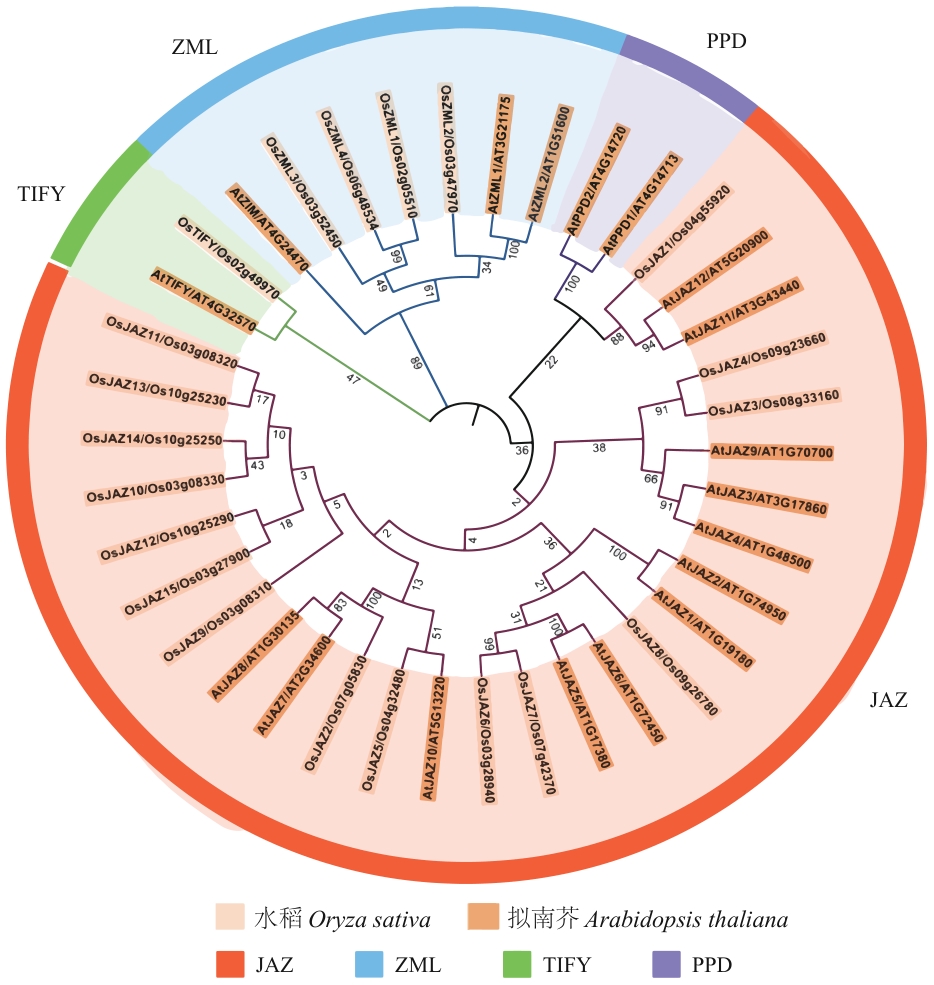
Fig. 1 Phylogenetic tree of the TIFY proteins in Oryza sativa and Arabidopsis thaliana
| 物种Species | 基因Gene | 功能Function | 参考文献 Reference |
|---|---|---|---|
| 拟南芥 Arabidopsis thaliana | TIFY8 | 叶绿素损失减缓、光系统II功能维持更久,延缓叶片衰老进程 | [ |
| 甘蓝型油菜 Brassica napus | BnaJAZ2 BnaJAZ3 | BnaJAZ2正向调控耐旱性 BnaJAZ3负向调控耐盐性 | [ |
| 辣椒 Capsicum annuum | CaTIFY7 CaTIFY10b | 提高植物叶片的活性氧含量,正向调控辣椒对低温胁迫的抗性 | [ |
| 菊花 Chrysanthemum morifolium | CmJAZ1-like CmBPE2 | CmJAZ1-like通过与CmBPE2相互作用,从而共同影响花瓣大小 | [ |
| 鹰嘴豆 Cicer arietinum | Ca4-TIFY4B | 调控植株活力相关性状(叶片大小、种子大小) | [ |
| 黄瓜 Cucumis sativus | CsJAZ2 CsJAZ6, CsZML2 | 过表达植株中ROS清除系统的POD、SOD和CAT酶活性显著降低,负调控黄瓜对灰霉病的抗性 | [ |
| 苦荞 Fagopyrum tataricum | FtJAZ10, FtJAZ12 | 抑制热诱导的细胞死亡,提高烟草对热胁迫的耐受能力 | [ |
| 大豆 Glycine max | GmTIFY10e, GmTIFY10g | 主根长度和鲜重均显著增高,正向调控植物的盐胁迫耐受性 | [ |
| 陆地棉 Gossypium hirsutum | GhTIFY9 | 棉花抗黄萎病反应的正向调控因子,增强棉花对黄萎病菌的敏感性 | [ |
| 枸杞 Lycium barbarum | LrJAZ2 | 气孔密度和气孔指数显著降低,叶片失水率下降,负调控植物气孔发育 | [ |
| 烟草 Nicotiana tabacum | NtTIFY7 | NtTIFY7 沉默植株对青枯病的敏感性显著增强。正向调控烟草对青枯病的抗性 | [ |
| 茄子 Solanum melongena | SmJAZ10 | 负向调控叶片叶绿素合成 | [ |
| 丹参 Salvia miltiorrhiza | SmWD40-170 | 促进根系生长和次生代谢物积累,调节气孔运动来应对干旱胁迫 | [ |
| 马铃薯 Solanum tuberosum | StJAZ23 | 促进根系发育,增强根系活力,提升抗氧化能力,调控胁迫相关激素积累 | [ |
| 蓝莓 Vaccinium corymbosum | VcTIFY6B, VcTIFY9, VcTIFY10A | 增加果实的横径、单果质量及种子数目,调控果实发育 | [ |
| 葡萄 Vitis vinifera | VvTIFY10A | 促进果实纵向生长、抑制横向生长,对果实形状产生调控作用 | [ |
| 玉米 Zea mays | ZmJAZ13 | 调节次生代谢产物和酶活性,增强植物对干旱和盐胁迫的耐受性 | [ |
Table 1 Plant TIFY genes and their functions from 2020 to 2025
| 物种Species | 基因Gene | 功能Function | 参考文献 Reference |
|---|---|---|---|
| 拟南芥 Arabidopsis thaliana | TIFY8 | 叶绿素损失减缓、光系统II功能维持更久,延缓叶片衰老进程 | [ |
| 甘蓝型油菜 Brassica napus | BnaJAZ2 BnaJAZ3 | BnaJAZ2正向调控耐旱性 BnaJAZ3负向调控耐盐性 | [ |
| 辣椒 Capsicum annuum | CaTIFY7 CaTIFY10b | 提高植物叶片的活性氧含量,正向调控辣椒对低温胁迫的抗性 | [ |
| 菊花 Chrysanthemum morifolium | CmJAZ1-like CmBPE2 | CmJAZ1-like通过与CmBPE2相互作用,从而共同影响花瓣大小 | [ |
| 鹰嘴豆 Cicer arietinum | Ca4-TIFY4B | 调控植株活力相关性状(叶片大小、种子大小) | [ |
| 黄瓜 Cucumis sativus | CsJAZ2 CsJAZ6, CsZML2 | 过表达植株中ROS清除系统的POD、SOD和CAT酶活性显著降低,负调控黄瓜对灰霉病的抗性 | [ |
| 苦荞 Fagopyrum tataricum | FtJAZ10, FtJAZ12 | 抑制热诱导的细胞死亡,提高烟草对热胁迫的耐受能力 | [ |
| 大豆 Glycine max | GmTIFY10e, GmTIFY10g | 主根长度和鲜重均显著增高,正向调控植物的盐胁迫耐受性 | [ |
| 陆地棉 Gossypium hirsutum | GhTIFY9 | 棉花抗黄萎病反应的正向调控因子,增强棉花对黄萎病菌的敏感性 | [ |
| 枸杞 Lycium barbarum | LrJAZ2 | 气孔密度和气孔指数显著降低,叶片失水率下降,负调控植物气孔发育 | [ |
| 烟草 Nicotiana tabacum | NtTIFY7 | NtTIFY7 沉默植株对青枯病的敏感性显著增强。正向调控烟草对青枯病的抗性 | [ |
| 茄子 Solanum melongena | SmJAZ10 | 负向调控叶片叶绿素合成 | [ |
| 丹参 Salvia miltiorrhiza | SmWD40-170 | 促进根系生长和次生代谢物积累,调节气孔运动来应对干旱胁迫 | [ |
| 马铃薯 Solanum tuberosum | StJAZ23 | 促进根系发育,增强根系活力,提升抗氧化能力,调控胁迫相关激素积累 | [ |
| 蓝莓 Vaccinium corymbosum | VcTIFY6B, VcTIFY9, VcTIFY10A | 增加果实的横径、单果质量及种子数目,调控果实发育 | [ |
| 葡萄 Vitis vinifera | VvTIFY10A | 促进果实纵向生长、抑制横向生长,对果实形状产生调控作用 | [ |
| 玉米 Zea mays | ZmJAZ13 | 调节次生代谢产物和酶活性,增强植物对干旱和盐胁迫的耐受性 | [ |
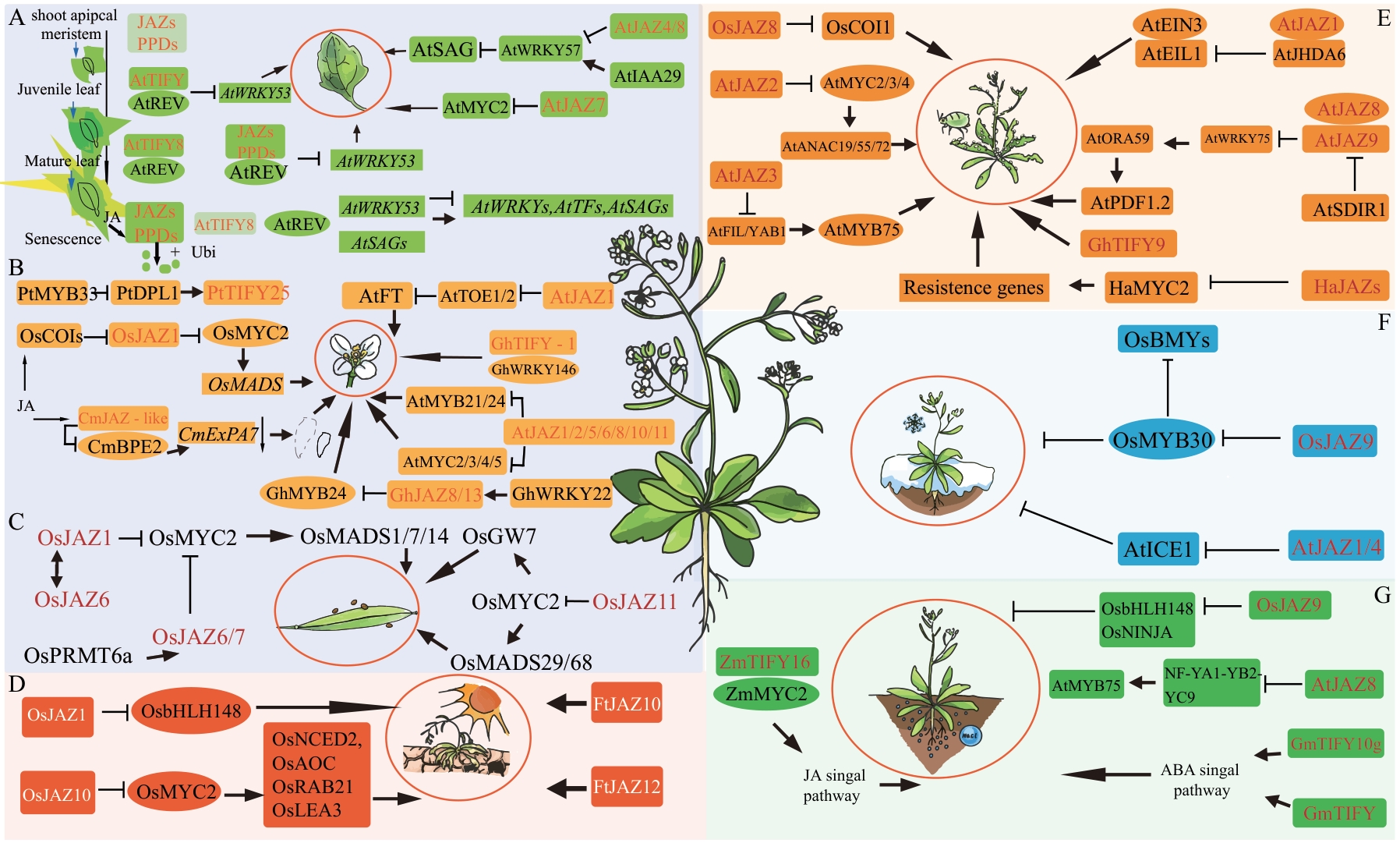
Fig. 2 Schematic model illuminating TIFY protein functionA: Pathways related to leaf development in plants. B: Pathways related to flower development. C: Pathways related to fruit and seed growth and development. D: Pathways related to drought stress response. E: Pathways related to biotic stress response. F: Pathways related to cold stress response. G: Pathways related to salt stress response. At: Arabidopsis thaliana. Os: Oryza sativa. Ah: Arachis hypogaea. Ft: Fagopyrum tataricum. Gh: Gossypium hirsutum. Gm: Glycine max. Ha: Helianthus annuus. Pt: Pinus tabuliformis. Zm: Zea mays
| [1] | Todeschini AL, Georges A, Veitia RA. Transcription factors: specific DNA binding and specific gene regulation [J]. Trends Genet, 2014, 30(6): 211-219. |
| [2] | Vanholme B, Grunewald W, Bateman A, et al. The tify family previously known as ZIM [J]. Trends Plant Sci, 2007, 12(6): 239-244. |
| [3] | Zhang LH, You J, Chan ZL. Identification and characterization of TIFY family genes in Brachypodium distachyon [J]. J Plant Res, 2015, 128(6): 995-1005. |
| [4] | Chung HS, Howe GA. A critical role for the TIFY motif in repression of jasmonate signaling by a stabilized splice variant of the JASMONATE ZIM-domain protein JAZ10 in Arabidopsis [J]. Plant Cell, 2009, 21(1): 131-145. |
| [5] | Bai YH, Meng YJ, Huang DL, et al. Origin and evolutionary analysis of the plant-specific TIFY transcription factor family [J]. Genomics, 2011, 98(2): 128-136. |
| [6] | Shikata M, Takemura M, Yokota A, et al. Arabidopsis ZIM, a plant-specific GATA factor, can function as a transcriptional activator [J]. Biosci Biotechnol Biochem, 2003, 67(11): 2495-2497. |
| [7] | 杨锐佳, 张中保, 吴忠义. 植物转录因子TIFY家族蛋白结构和功能的研究进展 [J]. 生物技术通报, 2020, 36(12): 121-128. |
| Yang RJ, Zhang ZB, Wu ZY. Progress of the structural and functional analysis of plant transcription factor TIFY protein family [J]. Biotechnol Bull, 2020, 36(12): 121-128. | |
| [8] | Chen Q, Dai R, Shuang S, et al. Genome-wide investigation of the TIFY transcription factors in alfalfa (Medicago sativa L.): identification, analysis, and expression [J]. BMC Plant Biol, 2024, 24(1): 840. |
| [9] | 胡利宗, 李超琼, 张雯露, 等. 菜豆TIFY基因的全基因组鉴定与系统进化分析 [J]. 分子植物育种, 2020, 18(10): 3132-3140. |
| Hu LZ, Li CQ, Zhang WL, et al. Genome-wide identification and phylogenetic analysis of the TIFY genes in common bean (Phaseolus vulgaris) [J]. Mol Plant Breed, 2020, 18(10): 3132-3140. | |
| [10] | 秦振芬, 孟祥霄, 温东, 等. 乌拉尔甘草TIFY基因家族鉴定及调控分析 [J]. 世界科学技术‒中医药现代化, 2022, 24(5): 1855-1864. |
| Qin ZF, Meng XX, Wen D, et al. Genome-wide identification and regulatory analysis of the TIFY gene family in Glycyrrhiza uralensis [J]. Mod Tradit Chin Med Mater Med World Sci Technol, 2022, 24(5): 1855-1864. | |
| [11] | 王跃. 杨树TIFY基因家族的鉴定和CRISPR/Cas9技术敲除PtWRKY36基因的研究 [D]. 合肥: 安徽农业大学, 2018. |
| Wang Y. Identification of TIFY gene family in poplar and the PtWRKY36 gene deletion using the technique of CRISPR/Cas9 gene editing [D]. Hefei: Anhui Agricultural University, 2018. | |
| [12] | 杨杰, 陈蓉, 胡文娟, 等. 甜橙TIFY基因家族的鉴定及其在成花诱导中的表达分析 [J]. 西北农业学报, 2022, 31(7): 866-875. |
| Yang J, Chen R, Hu WJ, et al. Identification of TIIFY gene family in Citrus sinensis and its expression analysis in flowering induction [J]. Acta Agric Boreali Occidentalis Sin, 2022, 31(7): 866-875. | |
| [13] | Xu L, Liu AL, Wang TY, et al. Characterization and coexpression analysis of the TIFY family genes in Euryale ferox related to leaf development [J]. Plants, 2023, 12(12): 2323. |
| [14] | 徐亚楠, 吴新燕, 邸浩辰, 等. 茶树CsJAZ3基因的克隆表达及其与咖啡碱含量的相关性 [J]. 分子植物育种, 2023, 21(18): 5974-5981. |
| Xu YN, Wu XY, Di HC, et al. Cloning and expression of CsJAZ3 gene in Camellia sinensis and its correlation with caffeine content [J]. Mol Plant Breed, 2023, 21(18): 5974-5981. | |
| [15] | 张月婷, 刘新亮, 戴小英, 等. 樟树TIFY转录因子家族鉴定与表达分析 [J]. 植物科学学报, 2024, 42(4): 466-477. |
| Zhang YT, Liu XL, Dai XY, et al. Identification and expression analysis of the TIFY transcription factor family of Cinnamomum camphora (L.) Presl [J]. Plant Sci J, 2024, 42(4): 466-477. | |
| [16] | Andrade Galan AG, Doll J, Saile SC, et al. The non-JAZ TIFY protein TIFY8 of Arabidopsis thaliana interacts with the HD-ZIP III transcription factor REVOLUTA and regulates leaf senescence [J]. Int J Mol Sci, 2023, 24(4): 3079. |
| [17] | Zhao XQ, He YQ, Liu YX, et al. JAZ proteins: Key regulators of plant growth and stress response [J]. Crop J, 2024, 12(6): 1505-1516. |
| [18] | 温东, 王梦月, 米要磊, 等. 中药火麻仁基原植物大麻的TIFY基因家族鉴定及功能分析 [J]. 中国实验方剂学杂志, 2020, 26(24): 134-143. |
| Wen D, Wang MY, Mi YL, et al. Genome-wide identification and characterization of TIFY gene family in medicinal plant Cannabis sativa [J]. Chin J Exp Tradit Med Formulae, 2020, 26(24): 134-143. | |
| [19] | Guan YX, Zhang QY, Li MH, et al. Genome-wide identification and expression pattern analysis of TIFY family genes reveal their potential roles in Phalaenopsis aphrodite flower opening [J]. Int J Mol Sci, 2024, 25(10): 5422. |
| [20] | 张晶星. 油松球花发育途径中PtMYB和PtJAZ关键基因鉴定及其调控网络构建 [D]. 北京: 北京林业大学, 2022. |
| Zhang JX. Identification of PtMYB and PtJAZ key genes and the construction of regulatory network during development of Pinus tabuliformis carr. strobilis [D]. Beijing: Beijing Forestry University, 2022. | |
| [21] | Trang Nguyen H, Thi Mai To H, Lebrun M, et al. Jasmonates-the master regulator of rice development, adaptation and defense [J]. Plants, 2019, 8(9): 339. |
| [22] | 曲达. 棉花GhMYC2-like的互作蛋白筛选与鉴定 [D]. 郑州: 郑州大学, 2022. |
| Qu D. Screening and identification of GhMYC2-like interacting proteins in Gossypium [D]. Zhengzhou: Zhengzhou University, 2022. | |
| [23] | Wang Y, Li Y, He SP, et al. A cotton (Gossypium hirsutum) WRKY transcription factor (GhWRKY22) participates in regulating anther/pollen development [J]. Plant Physiol Biochem, 2019, 141: 231-239. |
| [24] | Guan YX, Ding L, Jiang JF, et al. The TIFY family protein CmJAZ1-like negatively regulates petal size via interaction with the bHLH transcription factor CmBPE2 in Chrysanthemum morifolium [J]. Plant J, 2022, 112(6): 1489-1506. |
| [25] | 刘同金, 刘振洋, 班秋妍, 等. 丝瓜TIFY基因克隆及组织表达分析 [J]. 西北植物学报, 2024, 44(11): 1752-1759. |
| Liu TJ, Liu ZY, Ban QY, et al. Cloning and tissue expression analysis of TIFY genes in Luffa cylindrica [J]. Acta Bot Boreali Occidentalia Sin, 2024, 44(11): 1752-1759. | |
| [26] | 王丽丽, 邓鸿, 于润润, 等. 甜樱桃TIFY基因家族全基因组鉴定及在果实发育中的表达分析 [J/OL]. 分子植物育种, 2024. . |
| Wang LL, Deng H, Yu RR, et al. Genome-wide identification and expression enalysis of sweet cherry TIFY gene family in fruit development [J/OL]. Mol Plant Breed, 2024. . | |
| [27] | Liu LM, Bai N, Zheng YQ, et al. Genome-wide identification and analysis of TIFY family in highbush blueberry and their responses to exogenous jasmonic acid [J]. Sci Hortic, 2022, 305: 111391. |
| [28] | Tao JJ, Jia HM, Wu MT, et al. Genome-wide identification and characterization of the TIFY gene family in kiwifruit [J]. BMC Genomics, 2022, 23(1): 179. |
| [29] | 谢敏. 不同果形葡萄果实转录组分析及TIFY10A基因功能的初步分析 [D]. 兰州: 甘肃农业大学, 2021. |
| Xie M. Transcriptome analysis of different fruit-shaped grape (Vitis vinifera L.) and function analysis of TIFY10A gene [D]. Lanzhou: Gansu Agricultural University, 2021. | |
| [30] | 刘良淼. VcTIFYs调控蓝莓果实大小机制研究 [D]. 金华: 浙江师范大学, 2023. |
| Liu LM. Study on fruit-size regulation mechanism of bluebery TIFY members [D]. Jinhua: Zhejiang Normal University, 2023. | |
| [31] | Nguyen DT, Hayes JE, Harris J, et al. Fine mapping of a vigor QTL in chickpea (Cicer arietinum L.) reveals a potential role for Ca4_TIFY4B in regulating leaf and seed size [J]. Front Plant Sci, 2022, 13: 829566. |
| [32] | 姚雅鑫. 铭贤169小麦种子休眠与萌发相关基因的克隆和功能研究 [D]. 杨凌: 西北农林科技大学, 2023. |
| Yao YX. Molecular cloning and functional study of genes related to seed dormancy and germination in Mingxian 169 wheat [D]. Yangling: Northwest A & F University, 2023. | |
| [33] | Dong K, Wu FQ, Cheng SQ, et al. OsPRMT6a-mediated arginine methylation of OsJAZ1 regulates jasmonate signaling and spikelet development in rice [J]. Mol Plant, 2024, 17(6): 900-919. |
| [34] | 谢思艺, 周承哲, 朱晨, 等. 茶树CsTIFY家族全基因组鉴定及非生物胁迫和激素处理中主要基因表达分析 [J]. 园艺学报, 2022, 49(1): 100-116. |
| Xie SY, Zhou CZ, Zhu C, et al. Genome-wide identification and expression analysis of CsTIFY transcription factor family under abiotic stress and hormone treatments in Camellia sinensis [J]. Acta Hortic Sin, 2022, 49(1): 100-116. | |
| [35] | Wang HR, Zhang Y, Zhang L, et al. Genome-wide identification and characterization of the TIFY gene family and their expression patterns in response to MeJA and aluminum stress in centipedegrass (Eremochloa ophiuroides) [J]. Plants, 2024, 13(3): 462. |
| [36] | Sheng Y, Yu H, Pan HF, et al. Genome-wide analysis of the gene structure, expression and protein interactions of the peach (Prunus persica) TIFY gene family [J]. Front Plant Sci, 2022, 13: 792802. |
| [37] | Lv GB, Han R, Shi JJ, et al. Genome-wide identification of the TIFY family reveals JAZ subfamily function in response to hormone treatment in Betula platyphylla [J]. BMC Plant Biol, 2023, 23(1): 143. |
| [38] | 赵佳莹, 应宇鑫, 许张婷, 等. 掌叶覆盆子TIFY基因家族鉴定及表达分析 [J]. 核农学报, 2024, 38(10): 1823-1835. |
| Zhao JY, Ying YX, Xu ZT, et al. Identification and expression profiles of TIFY gene family in Rcbus chingii Hu [J]. J Nucl Agric Sci, 2024, 38(10): 1823-1835. | |
| [39] | 练从龙, 兰金旭, 杨晶凡, 等. 基于冬凌草全长转录组的TIFY基因家族鉴定与表达分析 [J]. 福建农业学报, 2024, 39(3): 290-301. |
| Lian CL, Lan JX, Yang JF, et al. Identification and expressions of TIFY family based on the full-length transcriptome in Isodon rubescens [J]. Fujian J Agric Sci, 2024, 39(3): 290-301. | |
| [40] | 张晶星, 马彦广, 王辉丽, 等. 油松JAZ基因家族特征及其与DELLA蛋白互作的功能域鉴定 [J]. 北京林业大学学报, 2022, 44(12): 12-22. |
| Zhang JX, Ma YG, Wang HL, et al. Characteristics of JAZ gene family of Pinus tabuliformis and identification of functional domain of its interaction with DELLA protein [J]. J Beijing For Univ, 2022, 44(12): 12-22. | |
| [41] | Zheng LL, Wan Q, Wang HG, et al. Genome-wide identification and expression of TIFY family in cassava (Manihot esculenta Crantz) [J]. Front Plant Sci, 2022, 13: 1017840. |
| [42] | 胡睿, 郭建秀, 郭小强, 等. 铁皮石斛DoTIFY基因家族全基因组鉴定及在原球茎发育过程中的表达 [J]. 生物学杂志, 2021, 38(5): 53-58. |
| Hu R, Guo JX, Guo XQ, et al. Genome-wide identification and analysis of the TIFY gene family in Dendrobium officinale Kimura et Migo during protocorm development [J]. J Biol, 2021, 38(5): 53-58. | |
| [43] | 于欣欣, 米要磊, 孟祥霄, 等. 人参TIFY基因家族鉴定与分析 [J]. 中华中医药学刊,2 022, 40(3): 72-76, 261-263. |
| Yu XX, Mi YL, Meng XX, et al. Identification and analysis of the TIFY gene family in Panax ginseng [J]. Chinese J Tradit Chin Med, 2022, 40(3): 72-76, 261-263. | |
| [44] | Li L, Liu YC, Huang Y, et al. Genome-wide identification of the TIFY family in Salvia miltiorrhiza reveals that SmJAZ3 interacts with SmWD40-170, a relevant protein that modulates secondary metabolism and development [J]. Front Plant Sci, 2021, 12: 630424. |
| [45] | 孙浩文, 曲硕, 刘芳, 等. 大豆胞囊线虫3号生理小种抗性相关TIFY基因生物信息学分析 [J]. 大豆科学, 2023, 42(5): 532-544. |
| Sun HW, Qu S, Liu F, et al. Bioinformatics analysis of TIFY genes related to resistance of soybean cyst nematode race 3 [J]. Soybean Sci, 2023, 42(5): 532-544. | |
| [46] | 曹凯, 卢佳锋, 周雅楠, 等. 茉莉酸响应列当寄生向日葵的相关差异表达基因分析 [J/OL]. 分子植物育种, 2025. . |
| Cao K, Lu JF, Zhou YN, et al. Analysis of differential gene expression related to jasmonic acid response of broomrape parasitizing sunflower [J/OL]. Mol Plant Breed, 2025. . | |
| [47] | 梅闯, 张小燕, 闫鹏, 等. 苹果TIFY家族基因鉴定及其在虫害胁迫下的表达分析 [J]. 园艺学报, 2021, 48(2): 233-242. |
| Mei C, Zhang XY, Yan P, et al. Identification of TIFY family in apple and their expression analysis under insect stress [J]. Acta Hortic Sin, 2021, 48(2): 233-242. | |
| [48] | Singh P, Mukhopadhyay K. Comprehensive molecular dissection of TIFY transcription factors reveal their dynamic responses to biotic and abiotic stress in wheat (Triticum aestivum L.) [J]. Sci Rep, 2021, 11(1): 9739. |
| [49] | Sen S. Genome-wide TIFY family in Arachis hypogaea in the perspective of legume JAZs [J]. J Crop Sci Biotechnol, 2022, 25(4): 465-488. |
| [50] | Tong SY, Chen Y, Wei YY, et al. Genome-wide identification and response to exogenous hormones and pathogens of the TIFY gene family in Fragaria ananassa [J]. Plant Growth Regul, 2024, 103(3): 787-802. |
| [51] | Chung HS, Koo AJK, Gao XL, et al. Regulation and function of Arabidopsis JASMONATE ZIM-domain genes in response to wounding and herbivory [J]. Plant Physiol, 2008, 146(3): 952-964. |
| [52] | Zhang HF, Liu ZW, Geng RM, et al. Genome-wide identification of the TIFY gene family in tobacco and expression analysis in response to Ralstonia solanacearum infection [J]. Genomics, 2024, 116(3): 110823. |
| [53] | Sen S, DasGupta M. Involvement of Arachis hypogaea Jasmonate ZIM domain/TIFY proteins in root nodule symbiosis [J]. J Plant Res, 2021, 134(2): 307-326. |
| [54] | Gimenez-Ibanez S, Boter M, Ortigosa A, et al. JAZ2 controls stomata dynamics during bacterial invasion [J]. New Phytol, 2017, 213(3): 1378-1392. |
| [55] | Ghorbel M, Brini F, Sharma A, et al. Role of jasmonic acid in plants: the molecular point of view [J]. Plant Cell Rep, 2021, 40(8): 1471-1494. |
| [56] | Zhu ZQ, An FY, Feng Y, et al. Derepression of ethylene-stabilized transcription factors (EIN3/EIL1) mediates jasmonate and ethylene signaling synergy in Arabidopsis [J]. Proc Natl Acad Sci USA, 2011, 108(30): 12539-12544. |
| [57] | Chen LG, Zhang LP, Xiang SY, et al. The transcription factor WRKY75 positively regulates jasmonate-mediated plant defense to necrotrophic fungal pathogens [J]. J Exp Bot, 2021, 72(4): 1473-1489. |
| [58] | Yamada S, Kano A, Tamaoki D, et al. Involvement of OsJAZ8 in jasmonate-induced resistance to bacterial blight in rice [J]. Plant Cell Physiol, 2012, 53(12): 2060-2072. |
| [59] | Han Y, Luthe D. Key genes in the JAZ signaling pathway are up-regulated faster and more abundantly in caterpillar-resistant maize [J]. J Chem Ecol, 2022, 48(2): 179-195. |
| [60] | 李秀青, 胡子曜, 雷建峰, 等. 棉花黄萎病抗性相关基因GhTIFY9的克隆与功能分析 [J]. 生物技术通报, 2022, 38(8): 127-134. |
| Li XQ, Hu ZY, Lei JF, et al. Cloning and functional analysis of gene GhTIFY9 related to cotton Verticillium wilt resistance [J]. Biotechnol Bull, 2022, 38(8): 127-134. | |
| [61] | He JC, Cheng YK, Xiao LD, et al. Comprehensive identification and expression analysis of the TIFY gene family in cucumber [J]. Not Bot Horti Agrobo, 2022, 50(2): 12703. |
| [62] | Dai ZN, Dong SY, Miao H, et al. Genome-wide identification of TIFY genes and their response to various pathogen infections in cucumber (Cucumis sativus L.) [J]. Sci Hortic, 2022, 295: 110814. |
| [63] | Liu K, Xu HY, Gao XB, et al. Pan-genome analysis of TIFY gene family and functional analysis of CsTIFY genes in cucumber [J]. Int J Mol Sci, 2024, 25(1): 185. |
| [64] | 袁晓, 蒋园园, 朱云娜, 等. JAZ家族基因在采后黄瓜低温贮藏条件下的表达分析 [J]. 浙江农业学报, 2024, 36(8): 1820-1831. |
| Yuan X, Jiang YY, Zhu YN, et al. Expression analysis of JAZ family genes in harvested cucumber fruit under cold storage condition [J]. Acta Agric Zhejiangensis, 2024, 36(8): 1820-1831. | |
| [65] | 李国华, 罗磊, 穆淑媛, 等. 青檀JAZ基因的鉴定及在低温胁迫下的表达 [J]. 分子植物育种, 2026, 24(14): 4612-4618. |
| Li GH, Luo L, Mu SY, et al. Identification of JAZ genes in Pteroceltis tatarinowii and their expression under low temperature stress [J]. Mol Plant Breed, 2026, 24(14): 4612-4618. | |
| [66] | Wang XD, Li N, Zan TX, et al. Genome-wide analysis of the TIFY family and function of CaTIFY7 and CaTIFY10b under cold stress in pepper (Capsicum annuum L.) [J]. Front Plant Sci, 2023, 14: 1308721. |
| [67] | Li GH, Manzoor MA, Chen R, et al. Genome-wide identification and expression analysis of TIFY genes under MeJA, cold and PEG-induced drought stress treatment in Dendrobium huoshanense [J]. Physiol Mol Biol Plants, 2024, 30(4): 527-542. |
| [68] | 车莉莉. 茉莉酸甲酯诱导VvJAZ13参与葡萄抗寒的分子机制研究 [D]. 兰州: 甘肃农业大学, 2024. |
| Che LL. Molecular mechanism of methyl jasmonate-induced VvJAZ13 involved in cold resistance in grape [D]. Lanzhou: Gansu Agricultural University, 2024. | |
| [69] | Lv Y, Yang M, Hu D, et al. The OsMYB30 transcription factor suppresses cold tolerance by interacting with a JAZ protein and suppressing β-amylase expression [J]. Plant Physiol, 2017, 173(2): 1475-1491. |
| [70] | Hu YR, Jiang LQ, Wang F, et al. Jasmonate regulates the inducer of cbf expression-C-repeat binding factor/DRE binding factor1 cascade and freezing tolerance in Arabidopsis [J]. Plant Cell, 2013, 25(8): 2907-2924. |
| [71] | 李晓静, 鲁海菊, 岳亮亮. 石榴TIFY基因家族的全基因组鉴定与表达分析 [J]. 江苏农业科学, 2024, 52(19): 41-50. |
| Li XJ, Lu HJ, Yue LL. Whole genome identification and expression analysis of TIFY gene family in Punica granatum L. [J]. Jiangsu Agric Sci, 2024, 52(19): 41-50. | |
| [72] | 袁芳玉. 石榴TIFY全基因组鉴定及表达分析 [D]. 合肥: 安徽农业大学, 2024. |
| Yuan FY. Genome-wide identification and analysis of the TIFY gene family in Punica granatum and expression analysis [D]. Hefei: Anhui Agricultural University, 2024. | |
| [73] | 沙伟, 卫杰, 张梅娟, 等. 砂藓干旱胁迫相关转录因子基因RcTIFY1的克隆及表达分析 [J]. 分子植物育种, 2023, 21(9): 2925-2932. |
| Sha W, Wei J, Zhang MJ, et al. Cloning and expression analysis of the drought stress related transcription factor gene RcTIFY1 of Racomitrium canescens [J]. Mol Plant Breed, 2023, 21(9): 2925-2932. | |
| [74] | 赵晓晓, 谢坤良, 张舒梦, 等. 柳枝稷TIFY基因家族的鉴定与分析 [J]. 草地学报, 2019, 27(5): 1126-1137. |
| Zhao XX, Xie KL, Zhang SM, et al. Identification and analysis of TIFY gene family of Panicum virgatum [J]. Acta Agrestia Sin, 2019, 27(5): 1126-1137. | |
| [75] | 李娜. 谷子干旱胁迫下转录组分析和TIFY基因家族分析 [D]. 太谷: 山西农业大学, 2020. |
| Li N. Transcriptome analysis under drought stress and TIFY gene family analysis of Setaria italica [D]. Taigu: Shanxi Agricultural University, 2020. | |
| [76] | Li SH, Li JY, Li DL, et al. Genome-wide identification of the eggplant jasmonate ZIM-domain (JAZ) gene family and functional characterization of SmJAZ10 in modulating chlorophyll synthesis in leaves [J]. Int J Biol Macromol, 2024, 283: 137804. |
| [77] | Zhang SP, Zheng DY, Gao YQ, et al. The TIFY transcription factor ZmJAZ13 enhances plant tolerance to drought and salt stress by interacting with ZmbHLH161 and ZmA0A1D6GLB9 [J]. Plant Sci, 2025, 352: 112388. |
| [78] | Zhao JQ, Li AJ, Xu M, et al. Genome-wide analysis of the TIFY family in Lycium and the negative regulation of stomatal development by LrJAZ2 gene [J]. Plant Physiol Biochem, 2024, 206: 108285. |
| [79] | Zhao ZX, Meng GH, Zamin I, et al. Genome-wide identification and functional analysis of the TIFY family genes in response to abiotic stresses and hormone treatments in Tartary buckwheat (Fagopyrum tataricum) [J]. Int J Mol Sci, 2023, 24(13): 10916. |
| [80] | Wang Y, Li N, Zhan JP, et al. Genome-wide analysis of the JAZ subfamily of transcription factors and functional verification of BnC08.JAZ1-1 in Brassica napus [J]. Biotechnol Biofuels Bioprod, 2022, 15(1): 93. |
| [81] | Zhao PY, Zheng JX, Xu QY, et al. Genome-wide identification and analysis of the JAZ gene family in rapeseed reveal JAZ2 and JAZ3 roles in drought and salt stress tolerance [J]. J Agric Food Chem, 2025, 73(33): 20955-20971. |
| [82] | 祁稼民, 许春苗, 肖斌. 马铃薯TIFY基因家族的全基因组鉴定及表达分析 [J]. 作物学报, 2024, 50(9): 2297-2309. |
| Qi JM, Xu CM, Xiao B. Genome-wide identification and expression analysis of TIFY gene family in potato (Solanum tuberosum L.) [J]. Acta Agron Sin, 2024, 50(9): 2297-2309. | |
| [83] | Pu ZF, Qin TY, Wang YH, et al. Genome-wide analysis of the JAZ gene family in potato and functional verification of StJAZ23 under drought stress [J]. Int J Mol Sci, 2025, 26(5): 2360. |
| [84] | Fu J, Wu H, Ma SQ, et al. OsJAZ1 attenuates drought resistance by regulating JA and ABA signaling in rice [J]. Front Plant Sci, 2017, 8: 2108. |
| [85] | Seo JS, Joo J, Kim MJ, et al. OsbHLH148, a basic helix-loop-helix protein, interacts with OsJAZ proteins in a jasmonate signaling pathway leading to drought tolerance in rice [J]. Plant J, 2011, 65(6): 907-921. |
| [86] | Wu YY, Sun Y, Wang WM, et al. OsJAZ10 negatively modulates the drought tolerance by integrating hormone signaling with systemic electrical activity in rice [J]. Plant Physiol Biochem, 2024, 211: 108683. |
| [87] | Lian CL, Zhang B, Li JJ, et al. Genome-wide identification, characterization and expression pattern analysis of TIFY family members in Artemisia argyi [J]. BMC Genomics, 2024, 25(1): 925. |
| [88] | 巩永永, 端木慧子. 甜菜TIFY基因家族的全基因组鉴定与生物信息学分析 [J]. 中国农学通报, 2022, 38(8): 17-24. |
| Gong YY, Duanmu HZ. TIFY gene family in sugar beet: whole genome identification and bioinformatics analysis [J]. Chin Agric Sci Bull, 2022, 38(8): 17-24. | |
| [89] | Liu XJ, Yu FY, Yang GY, et al. Identification of TIFY gene family in walnut and analysis of its expression under abiotic stresses [J]. BMC Genomics, 2022, 23(1): 190. |
| [90] | 刘梦迪, 倪守飞, 王月雪, 等. 大麦TIFY基因家族成员鉴定及表达分析 [J]. 南方农业学报, 2022, 53(2): 417-429. |
| Liu MD, Ni SF, Wang YX, et al. Identification and expression analysis of TIFY gene family members in barley [J]. J South Agric, 2022, 53(2): 417-429. | |
| [91] | 吴媛, 苏世贤, 尤春生, 等. 辣椒TIFY基因家族的鉴定与分析 [J]. 种子, 2023, 42(3): 1-10. |
| Wu Y, Su SX, You CS, et al. Identification and analysis of TIFY gene family in pepper [J]. Seed, 2023, 42(3): 1-10. | |
| [92] | 王昊宁, 周佩, 刘燕, 等. 月季TIFY基因家族的全基因组分析 [J]. 河南农业大学学报, 2022, 56(6): 990-997, 1060. |
| Wang HN, Zhou P, Liu Y, et al. Whole-genome analysis of the TIFY gene family in Rosa chinensis Jacq. [J]. J Henan Agric Univ, 2022, 56(6): 990-997, 1060. | |
| [93] | Sun H, Chen L, Li JY, et al. The JASMONATE ZIM-domain gene family mediates JA signaling and stress response in cotton [J]. Plant Cell Physiol, 2017, 58(12): 2139-2154. |
| [94] | Li X, Li CJ, Shi L, et al. Jasmonate signaling pathway confers salt tolerance through a NUCLEAR FACTOR-Y trimeric transcription factor complex in Arabidopsis [J]. Cell Rep, 2024, 43(3): 113825. |
| [95] | Wu H, Ye HY, Yao RF, et al. OsJAZ9 acts as a transcriptional regulator in jasmonate signaling and modulates salt stress tolerance in rice [J]. Plant Sci, 2015, 232: 1-12. |
| [96] | Liu YL, Zheng L, Jin LG, et al. Genome-wide analysis of the soybean TIFY family and identification of GmTIFY10e and GmTIFY10g response to salt stress [J]. Front Plant Sci, 2022, 13: 845314. |
| [97] | Zhao CY, Pan XW, Yu Y, et al. Overexpression of a TIFY family gene, GsJAZ2, exhibits enhanced tolerance to alkaline stress in soybean [J]. Mol Breed, 2020, 40(3): 33. |
| [98] | Zhang C, Yang RJ, Zhang TT, et al. ZmTIFY16, a novel maize TIFY transcription factor gene, promotes root growth and development and enhances drought and salt tolerance in Arabidopsis and Zea mays [J]. Plant Growth Regul, 2023, 100(1): 149-160. |
| [99] | 陈运梁. 外源茉莉酸甲酯对小桐子耐盐性和渗透调节的影响及其TIFY家族的鉴定 [D]. 昆明: 云南师范大学, 2024. |
| Chen YL. Effects of exogenous methyl jasmonate on salt tolerance and osmoregulation in Jatropha curcas and identification of its TIFY family [D]. Kunming: Yunnan Normal University, 2024. | |
| [100] | 刘永翔. 核桃TIFY基因家族的鉴定及分析 [D]. 杨凌: 西北农林科技大学, 2023. |
| Liu YX. Genome-wide identification and analysis of the TIFY family in walnut [D]. Yangling: Northwest A & F University, 2023. |
| [1] | ZHENG Shu-ya, SU Yu-ting, HE Yu-mei, ZHAO Pan, ZHOU Xin-yi, LIU Ran, LIU Ping-li, GUO Hui-hong. Cloning and Functional Analysis of Gene PagRAX2_16G and Its Promoter from Poplar [J]. Biotechnology Bulletin, 2026, 42(9): 186-195. |
| [2] | TAN Shu, SHEN Hong-jian, GAO Xiao-lei, YIN Qian, ZOU Feng. Genome-wide Identification of the MYB Transcription Factor Family in Camellia oleifera and Functional Analysis of CoMYB107 in Stamen Development [J]. Biotechnology Bulletin, 2026, 42(9): 196-209. |
| [3] | CHEN Ning-yi, WU Wen-tong, ZHAO Guo-chun, JIA Li-ming, CHEN Zhong. Functional Study of SmHD-ZIP25 and SmHD-ZIP29 Genes in Flower Development of Sapindus mukorossi [J]. Biotechnology Bulletin, 2026, 42(9): 210-220. |
| [4] | REN Wen-bin, CHEN Deng-ke, WU Cui-cui. Bioinformatics Analysis and Salt Tolerance Study of the Peanut Transcription Factor AhZHD9 [J]. Biotechnology Bulletin, 2026, 42(9): 297-305. |
| [5] | QIN Shao-min, MIAO Han, DONG Shao-yun, GUAN Jian-tao, GU Xing-fang, LI Sen, LIU Xiao-ping, ZHANG Sheng-ping. CsCAD Genes Mediate Lignin Deposition to Regulate Petiole Angle Formation in Cucumber [J]. Biotechnology Bulletin, 2026, 42(9): 137-146. |
| [6] | LIU Na-wei, QIAN Meng-ying, ZHANG Hong-ying, WANG Zhao-jun, CUI Hong, YAN Xiao-xiao. NtWUN Negatively Regulates Tobacco Trichome Development [J]. Biotechnology Bulletin, 2026, 42(9): 128-136. |
| [7] | QIN Zi-lu, SUN Hai-yan, CHEN Ying-nan. Research Progress in the Molecular Regulatory Mechanism of Plant Trichome Development [J]. Biotechnology Bulletin, 2026, 42(9): 57-69. |
| [8] | NIE Jia, LIN Hui-zi, TANG Zhe-yuan, CHEN Li-yu. Advances in Regulation of Anther Tapetum Development under Temperature Stress [J]. Biotechnology Bulletin, 2026, 42(9): 14-28. |
| [9] | GAO Guo-liang, ZHANG Qiao-ling, FENG Wen-jie, GAO Fa-rui, GAO Bo, ZONG Ke-dong, GE Lin, LI Shang-xian, WANG Qiu-yun, HUANG Xin-cheng. Whole-genome Analysis and Precision Breeding Strategies for a Novel Japonica Rice Variety Jiru Dao 1 [J]. Biotechnology Bulletin, 2026, 42(8): 106-112. |
| [10] | WANG Jian-bo, LI Shi-ya, XING He-xuan, ZHOU Rui-jin, LI Gui-rong, WANG Ling. Functional Analysis of the Trehalose-6-phosphate Synthase Gene VvTPS10 in Salt Tolerance and Growth and Development of Grapevine [J]. Biotechnology Bulletin, 2026, 42(8): 188-196. |
| [11] | LYU Zheng, LIAN Ru-ying, LIU Yi-de, LIU Yi-ke, NING Qiang, WANG Shu-ping. Wheat HD-Zip Gene Family: Identification and Response to Fusarium graminearum [J]. Biotechnology Bulletin, 2026, 42(8): 123-132. |
| [12] | LI Meng-ru, QIAN Chao-nan, KAN Si-wei, LIU Guo-yuan, ZHANG Jian, CHEN Yan-hong. Functional Study of Salix matsudanaSmERF B2-8 Gene in Response to Waterlogging Stress [J]. Biotechnology Bulletin, 2026, 42(7): 204-213. |
| [13] | RAN Dan-dan, TAI Sen-lin, OU Xiao-hong, ZHOU Tao, XU Jiao. Genome-wide Identification and Characterization of UDP-glycosyltransferase Gene Family in Gastrodia elata [J]. Biotechnology Bulletin, 2026, 42(7): 163-172. |
| [14] | DONG Ya-ru, XIU Yu, ZHAO Dong-xiao, ZHU Hong, ZHU Lin, LIU Hui-fen. Transcriptome-wide Identification of the GRAS Gene Family in Mulberry and Analysis of MnGRAS22 in Response to Salt Stress [J]. Biotechnology Bulletin, 2026, 42(7): 193-203. |
| [15] | YAN Xiao-guang, DU Yan-wei, MA Zhi-yuan, WANG Bin, WANG Guo-liang, HU Dan-zhu. Genome-wide Identification and Expression Pattern Analysis of ZmDIR Gene Family in Maize [J]. Biotechnology Bulletin, 2026, 42(7): 126-137. |
| Viewed | ||||||
|
Full text |
|
|||||
|
Abstract |
|
|||||
