







Biotechnology Bulletin ›› 2025, Vol. 41 ›› Issue (2): 270-283.doi: 10.13560/j.cnki.biotech.bull.1985.2024-0537
YANG Yong( ), CAO Rui, KANG Xiao-xiao, LIU Jing, WANG Xuan, ZHANG Hai-e()
Received:2024-06-04
Online:2025-02-26
Published:2025-02-28
Contact:
ZHANG Hai-e
E-mail:1725722566@qq.com;zhang33haie4@163.com
YANG Yong, CAO Rui, KANG Xiao-xiao, LIU Jing, WANG Xuan, ZHANG Hai-e. Identification and Expression Analysis of 13 Gene Families in the Chestnut Flavonoid Synthesis Pathway[J]. Biotechnology Bulletin, 2025, 41(2): 270-283.
| 基因 Gene | 正向引物 Forward primer (5′-3′) | 反向引物 Reverse primer (5′-3′) |
|---|---|---|
| CmLAR2 | GTGGAACCAGCCCTGACC | GGTAGGGCCAAGCAGCAA |
| CmCHI1 | AGCGTCTCTTCCGGGAGT | CGCCGAGGAACAGTGTGT |
| Cm4CL1 | TGACTCAGGCCGACGAGA | CGACTTGTTGTGCCACGC |
| CmC4H3 | AGGGTGTGGAGTTCGGGT | ATGCTCGCCGTAAACCGT |
| CmPAL1 | AGGCCCTCCAATGCAACC | CGGCAGTGACCTGAGCAA |
| CmPAL2 | CGACTCGTGCCGCTATGT | CGGAGTGGCAAGCATGGA |
| Cm4CL6 | ATCCAGAGGCCACGGCTA | CTCGGCAGGGGCTACTTG |
| CmANR3 | CACCGTTCGGTCTGACCC | GGGTGCATTGAAACTCTCTGG |
| CmActin | ATTCACGAGACCACCTACA | TGCCACAACCTTAATCTTCAT |
Table 1 Primer sequences
| 基因 Gene | 正向引物 Forward primer (5′-3′) | 反向引物 Reverse primer (5′-3′) |
|---|---|---|
| CmLAR2 | GTGGAACCAGCCCTGACC | GGTAGGGCCAAGCAGCAA |
| CmCHI1 | AGCGTCTCTTCCGGGAGT | CGCCGAGGAACAGTGTGT |
| Cm4CL1 | TGACTCAGGCCGACGAGA | CGACTTGTTGTGCCACGC |
| CmC4H3 | AGGGTGTGGAGTTCGGGT | ATGCTCGCCGTAAACCGT |
| CmPAL1 | AGGCCCTCCAATGCAACC | CGGCAGTGACCTGAGCAA |
| CmPAL2 | CGACTCGTGCCGCTATGT | CGGAGTGGCAAGCATGGA |
| Cm4CL6 | ATCCAGAGGCCACGGCTA | CTCGGCAGGGGCTACTTG |
| CmANR3 | CACCGTTCGGTCTGACCC | GGGTGCATTGAAACTCTCTGG |
| CmActin | ATTCACGAGACCACCTACA | TGCCACAACCTTAATCTTCAT |

Fig. 1 Phylogenetic tree of gene families of the flavonoid synthesis pathway

Fig. 2 Chromosome distribution of the 13 gene families

Fig. 3 Phylogenetic tree (A), protein structure (B), and gene structure (C) of the 13 gene family members
| 基因家族 Gene family | 以马可夫模型编号 Pfam ID | 结构域名称 Domain name |
|---|---|---|
| PAL | PF00221 | 芳香族氨基酸裂解酶 Aromatic amino acid lyase |
| 4CL | PF13193, PF00501 | AMP结合酶C末端结构域,AMP结合酶结构域 AMP-binding enzyme C-terminal domain, AMP-binding enzyme domain |
| CHS | PF02797, PF00195 | 查尔酮和二苯乙烯合酶,N/C末端结构域 Chalcone and stilbene synthases, N/C-terminal domain |
| CHI | PF02431 | 查尔酮黄烷酮异构酶 Chalcone-flavanone isomerase |
| LAR | PF05368 | NmrA-like结构域 NmrA-like domain |
| DFR | PF01370 | NAD依赖性差向异构酶结构域 NAD dependent epimerase domain |
| ANR | ||
| F3H | PF03171, PF14226 | 2OG-FeII_Oxy结构域,DIOX_N结构域 2OG-FeII_Oxy domain, DIOX_N domain |
| FLS | ||
| ANS | ||
| C4H | PF00067 | 细胞色素P450 Cytochrome P450 |
| F3′5′H | ||
| FNSII |
Table 2 Analysis of the protein structures of the 13 gene family members
| 基因家族 Gene family | 以马可夫模型编号 Pfam ID | 结构域名称 Domain name |
|---|---|---|
| PAL | PF00221 | 芳香族氨基酸裂解酶 Aromatic amino acid lyase |
| 4CL | PF13193, PF00501 | AMP结合酶C末端结构域,AMP结合酶结构域 AMP-binding enzyme C-terminal domain, AMP-binding enzyme domain |
| CHS | PF02797, PF00195 | 查尔酮和二苯乙烯合酶,N/C末端结构域 Chalcone and stilbene synthases, N/C-terminal domain |
| CHI | PF02431 | 查尔酮黄烷酮异构酶 Chalcone-flavanone isomerase |
| LAR | PF05368 | NmrA-like结构域 NmrA-like domain |
| DFR | PF01370 | NAD依赖性差向异构酶结构域 NAD dependent epimerase domain |
| ANR | ||
| F3H | PF03171, PF14226 | 2OG-FeII_Oxy结构域,DIOX_N结构域 2OG-FeII_Oxy domain, DIOX_N domain |
| FLS | ||
| ANS | ||
| C4H | PF00067 | 细胞色素P450 Cytochrome P450 |
| F3′5′H | ||
| FNSII |

Fig. 4 Statistics of the cis-acting elements for the 13 gene family members
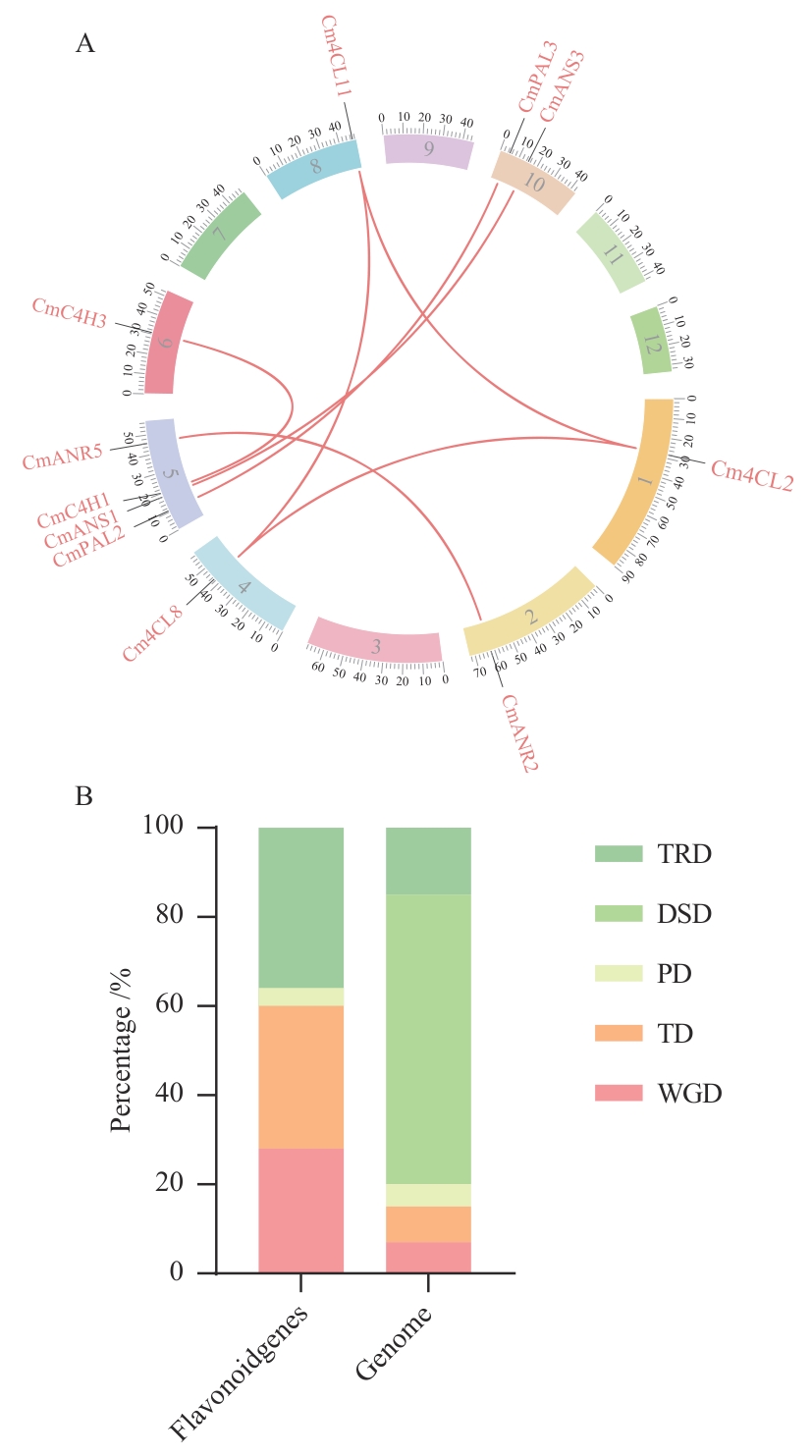
Fig. 5 Collinearity within 13 gene families (A) and gene pairs replication types (B)TRD, DSD, PD, TD and WGD indicate transposon duplication, dispersed duplication, proximal duplication, tandem duplication and whole genome duplication. The same below
| 复制类型 Duplication types | 基因对 Gene pairs | 非同义替换率 Ka | 同义替换率 Ks | 非同义替换率/同义替换率 Ka/Ks | |
|---|---|---|---|---|---|
| WGD | CmPAL3 | CmPAL2 | 0.123 822 763 | 1.465 415 048 | 0.084 496 719 |
| WGD | Cm4CL2 | Cm4CL11 | 0.383 354 993 | 1.384 646 007 | 0.276 861 372 |
| WGD | CmANR5 | CmANR2 | 0.549 975 334 | 2.288 010 781 | 0.240 372 702 |
| WGD | CmC4H1 | CmC4H3 | 0.085 827 583 | 1.945 979 279 | 0.044 105 086 |
| WGD | CmANS3 | CmANS1 | 0.219 052 838 | 1.816 044 933 | 0.120 620 825 |
| WGD | Cm4CL8 | Cm4CL2 | 0.366 520 820 | 1.302 665 198 | 0.281 362 257 |
| WGD | Cm4CL8 | Cm4CL11 | 0.372 236 766 | 1.132 735 123 | 0.328 617 661 |
| PD | Cm4CL14 | Cm4CL15 | 0.045 708 825 | 0.165 863 036 | 0.275 581 749 |
| TD | Cm4CL3 | Cm4CL4 | 0.143 933 551 | 0.443 981 508 | 0.324 188 167 |
| TD | CmPAL5 | CmPAL6 | 0.054 029 598 | 0.093 294 174 | 0.579 131 530 |
| TD | CmFNSII2 | CmFNSII3 | 0.139 352 161 | 0.427 416 010 | 0.326 034 023 |
| TD | CmDFR1 | CmDFR2 | 0.189 572 148 | 0.623 062 431 | 0.304 258 672 |
| TD | CmANR3 | CmANR4 | 0.137 094 524 | 0.393 608 899 | 0.348 301 384 |
| TD | Cm4CL4 | Cm4CL5 | 0.133 265 871 | 0.425 828 776 | 0.312 956 470 |
| TD | Cm4CL9 | Cm4CL10 | 0.103 441 680 | 0.273 134 833 | 0.378 720 204 |
| TD | CmPAL4 | CmPAL5 | 0.052 152 683 | 0.128 965 485 | 0.404 392 564 |
| TRD | CmCHS1 | CmCHS2 | 0.644 246 280 | NaN (high sequence divergence) | |
| TRD | CmCHS3 | CmCHS4 | 0.587 247 232 | 2.429 515 767 | 0.241 713 694 |
| TRD | CmLAR2 | CmLAR1 | 0.263 851 247 | 1.291 720 422 | 0.204 263 432 |
| TRD | CmF3'5'H1 | CmF3'5'H2 | 0.090 142 821 | 0.211 897 324 | 0.425 408 022 |
| TRD | CmFLS2 | CmFLS3 | 0.190 856 593 | 1.395 097 547 | 0.136 805 196 |
| TRD | CmANS2 | CmANS1 | 0.636 070 470 | 3.657 827 926 | 0.173 892 945 |
| TRD | CmFLS1 | CmFLS3 | 0.467 506 223 | 3.335 289 988 | 0.140 169 588 |
| TRD | CmANR7 | CmANR6 | 0.015 019 275 | 0.051 683 849 | 0.290 599 013 |
| TRD | Cm4CL6 | Cm4CL1 | 0.148 018 360 | 1.985 685 394 | 0.074 542 705 |
Table 3 Calculations of the gene-pairs Ka/Ks values
| 复制类型 Duplication types | 基因对 Gene pairs | 非同义替换率 Ka | 同义替换率 Ks | 非同义替换率/同义替换率 Ka/Ks | |
|---|---|---|---|---|---|
| WGD | CmPAL3 | CmPAL2 | 0.123 822 763 | 1.465 415 048 | 0.084 496 719 |
| WGD | Cm4CL2 | Cm4CL11 | 0.383 354 993 | 1.384 646 007 | 0.276 861 372 |
| WGD | CmANR5 | CmANR2 | 0.549 975 334 | 2.288 010 781 | 0.240 372 702 |
| WGD | CmC4H1 | CmC4H3 | 0.085 827 583 | 1.945 979 279 | 0.044 105 086 |
| WGD | CmANS3 | CmANS1 | 0.219 052 838 | 1.816 044 933 | 0.120 620 825 |
| WGD | Cm4CL8 | Cm4CL2 | 0.366 520 820 | 1.302 665 198 | 0.281 362 257 |
| WGD | Cm4CL8 | Cm4CL11 | 0.372 236 766 | 1.132 735 123 | 0.328 617 661 |
| PD | Cm4CL14 | Cm4CL15 | 0.045 708 825 | 0.165 863 036 | 0.275 581 749 |
| TD | Cm4CL3 | Cm4CL4 | 0.143 933 551 | 0.443 981 508 | 0.324 188 167 |
| TD | CmPAL5 | CmPAL6 | 0.054 029 598 | 0.093 294 174 | 0.579 131 530 |
| TD | CmFNSII2 | CmFNSII3 | 0.139 352 161 | 0.427 416 010 | 0.326 034 023 |
| TD | CmDFR1 | CmDFR2 | 0.189 572 148 | 0.623 062 431 | 0.304 258 672 |
| TD | CmANR3 | CmANR4 | 0.137 094 524 | 0.393 608 899 | 0.348 301 384 |
| TD | Cm4CL4 | Cm4CL5 | 0.133 265 871 | 0.425 828 776 | 0.312 956 470 |
| TD | Cm4CL9 | Cm4CL10 | 0.103 441 680 | 0.273 134 833 | 0.378 720 204 |
| TD | CmPAL4 | CmPAL5 | 0.052 152 683 | 0.128 965 485 | 0.404 392 564 |
| TRD | CmCHS1 | CmCHS2 | 0.644 246 280 | NaN (high sequence divergence) | |
| TRD | CmCHS3 | CmCHS4 | 0.587 247 232 | 2.429 515 767 | 0.241 713 694 |
| TRD | CmLAR2 | CmLAR1 | 0.263 851 247 | 1.291 720 422 | 0.204 263 432 |
| TRD | CmF3'5'H1 | CmF3'5'H2 | 0.090 142 821 | 0.211 897 324 | 0.425 408 022 |
| TRD | CmFLS2 | CmFLS3 | 0.190 856 593 | 1.395 097 547 | 0.136 805 196 |
| TRD | CmANS2 | CmANS1 | 0.636 070 470 | 3.657 827 926 | 0.173 892 945 |
| TRD | CmFLS1 | CmFLS3 | 0.467 506 223 | 3.335 289 988 | 0.140 169 588 |
| TRD | CmANR7 | CmANR6 | 0.015 019 275 | 0.051 683 849 | 0.290 599 013 |
| TRD | Cm4CL6 | Cm4CL1 | 0.148 018 360 | 1.985 685 394 | 0.074 542 705 |
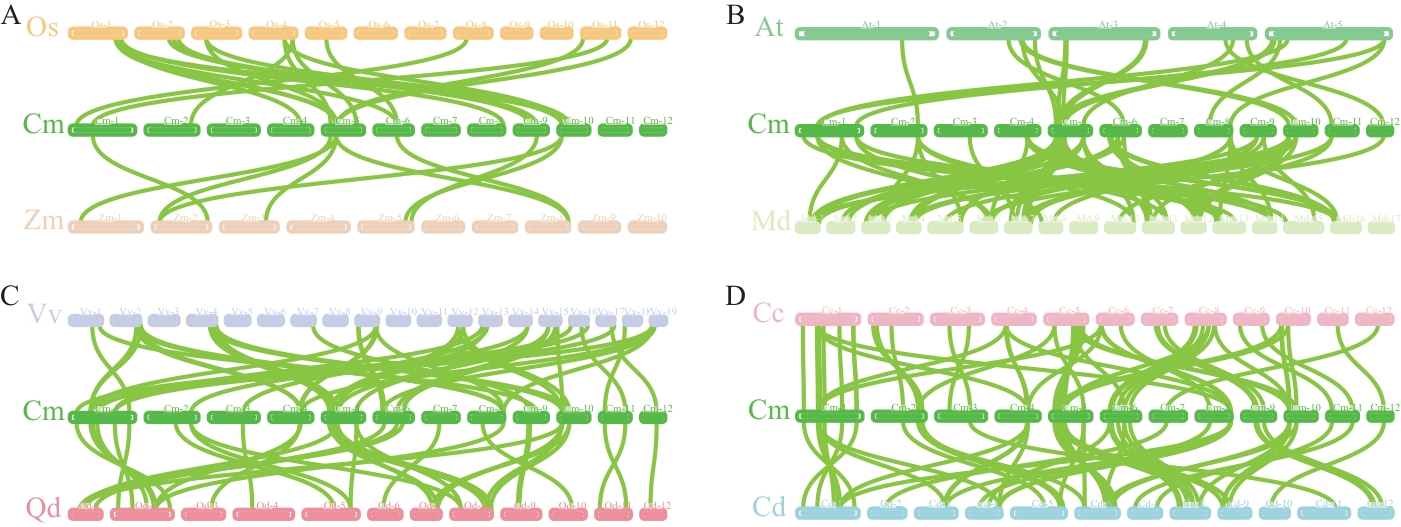
Fig. 6 Collinearity of flavonoid synthesis pathway genes between chestnut and speciesCm: Castanea mollissima; Os: Oryza sativa; Zm: Zea mays; At: Arabidopsis thaliana; Md: Malus domestica; Vv: Vitis vinifera; Qd: Quercus dentata; Cc: Castanea crenata; Cd: Castanea dentata
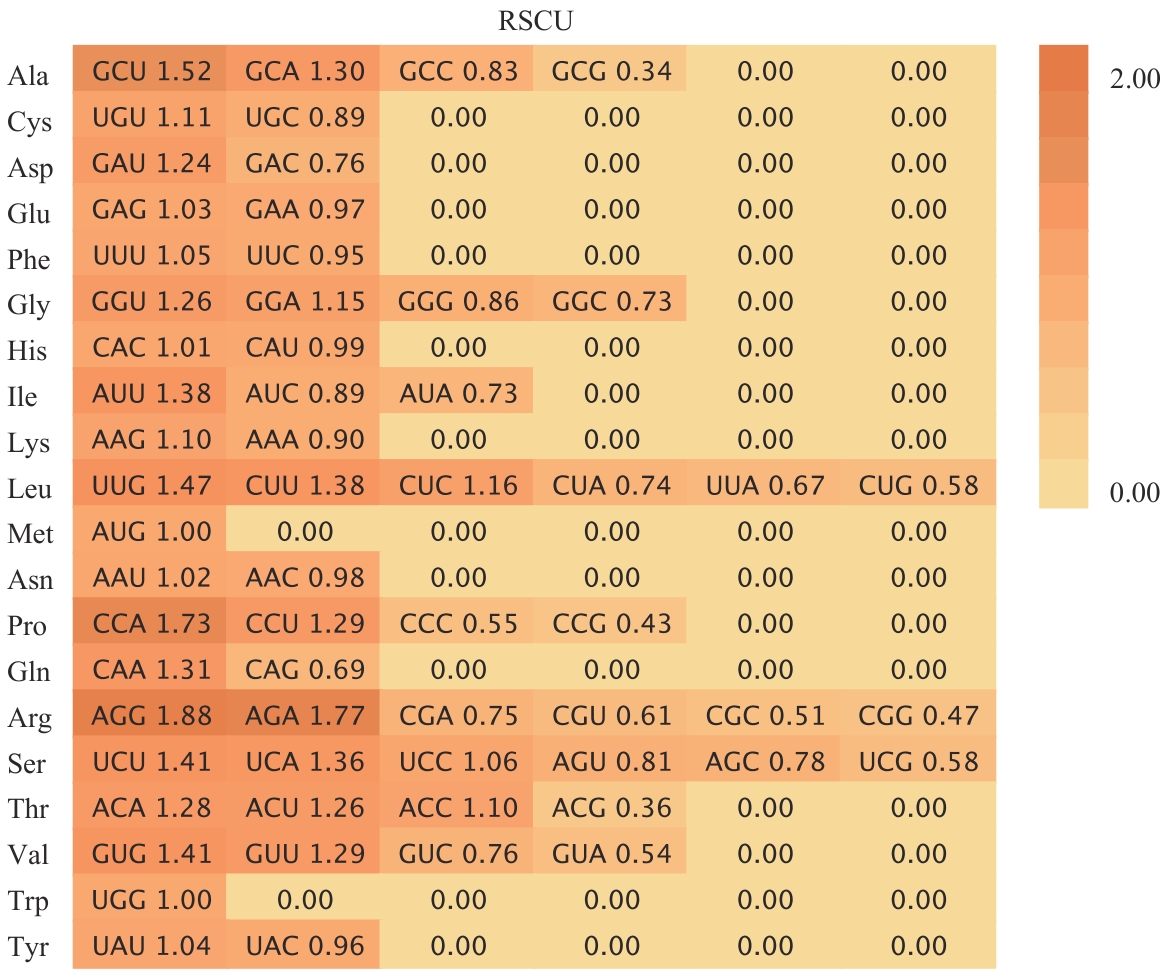
Fig. 7 RSCU values of the flavonoid synthesis pathway gene family in the chestnut

Fig. 8 Members of the Chinese chestnut flavonoids synthesis pathway gene familyA: Neutrality curve; B: ENC-plot plot; C: PR2-plot plot

Fig. 9 Expression pattern of genes in flavonoid synthesis pathway in chestnut fruit ripening (A) and PCD process of fruit top bud tissue (B)Nut 70, Nut 82 and Nut 94 indicate 70, 82, and 94 d of fruit ripening period, respectively; Bud20, Bud25, and Bud30 indicate the 20, 25, and 30 d bud tissue PCD period, respectively. The same below
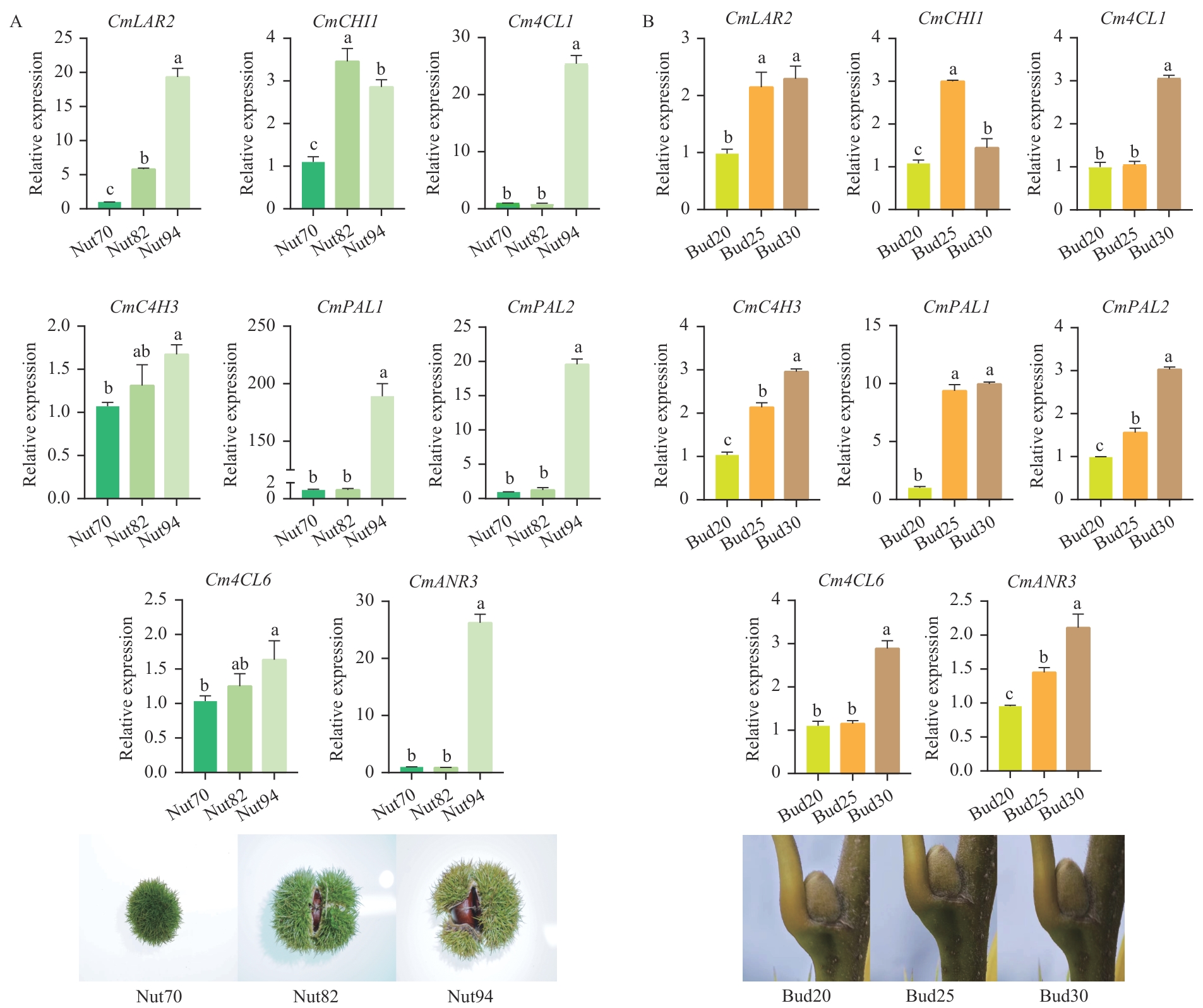
Fig. 10 Relative expressions of genes in flavonoid synthesis pathway in chestnut fruit ripening (A) and PCD process of fruit top bud tissue (B)Different lower letters indicate significantly difference at the 0.05 level
| 1 | Shen N, Wang TF, Gan Q, et al. Plant flavonoids: classification, distribution, biosynthesis, and antioxidant activity [J]. Food Chem, 2022, 383: 132531. |
| 2 | Li PQ, Ruan Z, Fei ZX, et al. Integrated transcriptome and metabolome analysis revealed that flavonoid biosynthesis may dominate the resistance of Zanthoxylum bungeanum against stem canker [J]. J Agric Food Chem, 2021, 69(22): 6360-6378. |
| 3 | Zhang PL, Liu J, Jia N, et al. Genome-wide identification and characterization of the bZIP gene family and their function in starch accumulation in Chinese chestnut (Castanea mollissima Blume) [J]. Front Plant Sci, 2023, 14: 1166717. |
| 4 | 樊晓芸, 郭素娟, 李艳华, 等. 板栗果实褐变度与总酚和总黄酮的相关性研究 [J]. 南京林业大学学报: 自然科学版, 2023, 47(6): 159-166. |
| Fan XY, Guo SJ, Li YH, et al. Study on correlation between browning degree of chestnut fruit and total phenols and flavonoids [J]. J Nanjing For Univ Nat Sci Ed, 2023, 47(6): 159-166. | |
| 5 | Zou J, Ge YN, Zhang Y, et al. Changes in flavor- and aroma-related fermentation metabolites and antioxidant activity of glutinous rice wine supplemented with Chinese chestnut (Castanea mollissima blume) [J]. Fermentation, 2022, 8(6): 266. |
| 6 | 黄雪薇, 雷嗣超, 涂芬, 等. 板栗壳黄酮结构分析及其对胰脂肪酶活力的抑制作用 [J]. 食品科学, 2021, 42 (21): 111-118. |
| Huang XW, Lei SC, Tu F, et al. Structural analysis and anti-pancreatic lipase activity of flavonoids from chestnut shells [J]. Food Sci, 2021, 42 (21): 111-118. | |
| 7 | Peng F, Yin HY, Du B, et al. Anti-fatigue activity of purified flavonoids prepared from chestnut (Castanea mollissima) flower [J]. J Funct Foods, 2021, 79: 104365. |
| 8 | Liu SA, Meng ZL, Zhang HY, et al. Identification and characterization of thirteen gene families involved in flavonoid biosynthesis in Ginkgo biloba [J]. Ind Crops Prod, 2022, 188: 115576. |
| 9 | 杜婷婷, 宋治华, 董碧莹, 等. 木豆类黄酮代谢通路关键基因家族的鉴定与表达分析 [J]. 农业生物技术学报, 2021, 29(12): 2289-2303. |
| Du TT, Song ZH, Dong BY, et al. Identification and expression analysis of key gene families in flavonoid metabolism pathway in pigeon pea (Cajanus cajan) [J]. J Agric Biotechnol, 2021, 29(12): 2289-2303. | |
| 10 | Wang JY, Zhang CH, Li YS. Genome-wide identification and expression profiles of 13 key structural gene families involved in the biosynthesis of rice flavonoid scaffolds [J]. Genes, 2022, 13(3): 410. |
| 11 | Deng YX, Li CL, Li HQ, et al. Identification and characterization of flavonoid biosynthetic enzyme genes in Salvia miltiorrhiza (Lamiaceae) [J]. Molecules, 2018, 23(6): 1467. |
| 12 | Han MG, Cui RF, Cui YP, et al. A flavonol synthase (FLS) gene, GhFLS1, was screened out increasing salt resistance in cotton [J]. Environ Sci Eur, 2023, 35(1): 37. |
| 13 | Wang M, Zhang Y, Zhu CY, et al. EkFLS overexpression promotes flavonoid accumulation and abiotic stress tolerance in plant [J]. Physiol Plant, 2021, 172(4): 1966-1982. |
| 14 | Hou QD, Li S, Shang CQ, et al. Genome-wide characterization of chalcone synthase genes in sweet cherry and functional characterization of CpCHS1 under drought stress [J]. Front Plant Sci, 2022, 13: 989959. |
| 15 | Zhang Y, Shu HY, Mumtaz MA, et al. Transcriptome and metabolome analysis of color changes during fruit development of pepper (Capsicum baccatum) [J]. Int J Mol Sci, 2022, 23(20): 12524. |
| 16 | Wang WQ, Pu YF, Wen H, et al. Transcriptome and weighted gene co-expression network analysis of jujube (Ziziphus jujuba Mill.) fruit reveal putative genes involved in proanthocyanin biosynthesis and regulation [J]. Food Sci Hum Wellness, 2023, 12(5): 1557-1570. |
| 17 | Li YP, Li HF, Wang SY, et al. Metabolomic and transcriptomic analyses of the flavonoid biosynthetic pathway in blueberry (Vaccinium spp.) [J]. Front Plant Sci, 2023, 14: 1082245. |
| 18 | Danon A, Delorme V, Mailhac N, et al. Plant programmed cell death: a common way to die [J]. Plant Physiol Biochem, 2000, 38(9): 647-655. |
| 19 | Petrov V, Hille J, Mueller-Roeber B, et al. ROS-mediated abiotic stress-induced programmed cell death in plants [J]. Front Plant Sci, 2015, 6: 69. |
| 20 | Wang GP, Zhang ZH, Kong DJ, et al. Programmed cell death is responsible for replaceable bud senescence in chestnut (Castanea mollissima BL.) [J]. Plant Cell Rep, 2012, 31(9): 1603-1610. |
| 21 | Guo Y, Zhang SH, Li Y, et al. A transcriptomic evaluation of the mechanism of programmed cell death of the replaceable bud in Chinese chestnut [J]. Open Life Sci, 2023, 18(1): 20220635. |
| 22 | Wang JP, Tian SL, Sun XL, et al. Construction of pseudomolecules for the Chinese chestnut (Castanea mollissima) genome [J]. G3, 2020, 10(10): 3565-3574. |
| 23 | Chen CJ, Wu Y, Li JW, et al. TBtools-II: a "one for all, all for one" bioinformatics platform for biological big-data mining [J]. Mol Plant, 2023, 16(11): 1733-1742. |
| 24 | Du LX, Lu C, Wang ZT, et al. GFAnno: integrated method for plant flavonoid biosynthesis pathway gene annotation [J]. Beverage Plant Res, 2024, 4(1). |
| 25 | Rozewicki J, Li SL, Amada KM, et al. MAFFT-DASH: integrated protein sequence and structural alignment [J]. Nucleic Acids Res, 2019, 47(W1): W5-W10. |
| 26 | Price MN, Dehal PS, Arkin AP. FastTree 2—approximately maximum-likelihood trees for large alignments [J]. PLoS One, 2010, 5(3): e9490. |
| 27 | Xie JM, Chen YR, Cai GJ, et al. Tree Visualization By One Table (tvBOT): a web application for visualizing, modifying and annotating phylogenetic trees [J]. Nucleic Acids Res, 2023, 51(W1): W587-W592. |
| 28 | Wang YP, Tang HB, Debarry JD, et al. MCScanX: a toolkit for detection and evolutionary analysis of gene synteny and collinearity [J]. Nucleic Acids Res, 2012, 40(7): e49. |
| 29 | Qiao X, Li QH, Yin H, et al. Gene duplication and evolution in recurring polyploidization-diploidization cycles in plants [J]. Genome Biol, 2019, 20(1): 38. |
| 30 | Gao Y, Lu Y, Song Y, et al. Analysis of codon usage bias of WRKY transcription factors in Helianthus annuus [J]. BMC Genom Data, 2022, 23(1): 46. |
| 31 | Zhang Y, Shen ZN, Meng XR, et al. Codon usage patterns across seven Rosales species [J]. BMC Plant Biol, 2022, 22(1): 65. |
| 32 | Li Q, Luo YY, Sha AJ, et al. Analysis of synonymous codon usage patterns in mitochondrial genomes of nine Amanita species [J]. Front Microbiol, 2023, 14: 1134228. |
| 33 | Yu LY, Fei C, Wang DS, et al. Genome-wide identification, evolution and expression profiles analysis of bHLH gene family in Castanea mollissima [J]. Front Genet, 2023, 14: 1193953. |
| 34 | 赵奇, 茹京娜, 李宜统, 等. 小麦Lhc基因家族鉴定与表达模式分析 [J]. 植物遗传资源学报, 2022, 23(6): 1766-1781. |
| Zhao Q, Ru JN, Li YT, et al. Identification and expression pattern analysis of Lhc gene family members in wheat [J]. J Plant Genet Resour, 2022, 23(6): 1766-1781. | |
| 35 | Liu H, Lyu HM, Zhu KK, et al. The emergence and evolution of intron-poor and intronless genes in intron-rich plant gene families [J]. Plant J, 2021, 105(4): 1072-1082. |
| 36 | Zhang LC, Song BB, Li B, et al. Genome-wide identification and expression analysis of fifteen gene families involved in anthocyanin synthesis in pear [J]. Horticulturae, 2024, 10(4): 335. |
| 37 | Yang WL, Li N, Fan YX, et al. Transcriptome analysis reveals abscisic acid enhancing drought resistance by regulating genes related to flavonoid metabolism in pigeon pea [J]. Environ Exp Bot, 2021, 191: 104627. |
| 38 | Eom SH, Ahn MA, Kim E, et al. Plant response to cold stress: cold stress changes antioxidant metabolism in heading type kimchi cabbage (Brassica rapa L. ssp. pekinensis) [J]. Antioxidants, 2022, 11(4): 700. |
| 39 | Wang CG, Zhang MY, Zhou JJ, et al. Transcriptome analysis and differential gene expression profiling of Wucai (Brassica campestris L.) in response to cold stress [J]. BMC Genomics, 2022, 23(1): 137. |
| 40 | Qu JJ, Liu LL, Guo ZX, et al. The ubiquitous position effect, synergistic effect of recent generated tandem duplicated genes in grapevine, and their co-response and overactivity to biotic stress [J]. Fruit Res, 2023, 3(1). |
| 41 | Fang C, Yang MY, Tang YC, et al. Dynamics of cis-regulatory sequences and transcriptional divergence of duplicated genes in soybean [J]. Proc Natl Acad Sci U S A, 2023, 120(44): e2303836120. |
| 42 | Xu YH, Zhang KJ, Zhang ZL, et al. A chromosome-level genome assembly for Dracaena cochinchinensis reveals the molecular basis of its longevity and formation of dragon's blood [J]. Plant Commun, 2022, 3(6): 100456. |
| [1] | YAN Wei, CHEN Hui-ting, YE Qing, LIU Guang-chao, LIU Xin, HOU Li-xia. Identification of the Grape HCT Gene Family and Their Responses to Low-temperature Stress [J]. Biotechnology Bulletin, 2025, 41(2): 175-186. |
| [2] | KUANG Jian-hua, CHENG Zhi-peng, ZHAO Yong-jing, YANG Jie, CHEN Run-qiao, CHEN Long-qing, HU Hui-zhen. Expression Analysis of the GH3 Gene Family in Nelumbo nucifera underHormonal and Abiotic Stresses [J]. Biotechnology Bulletin, 2025, 41(2): 221-233. |
| [3] | YANG Yong, YUAN Guo-mei, KANG Xiao-xiao, LIU Ya-ming, WANG Dong-sheng, ZHANG Hai-e. Identification and Expression Analysis of Members of the SWEET Gene Family in Chinese Chestnut [J]. Biotechnology Bulletin, 2025, 41(2): 257-269. |
| [4] | LI Yu-xin, LI Miao, DU Xiao-fen, HAN Kang-ni, LIAN Shi-chao, WANG Jun. Identification and Expression Analysis of SiSAP Gene Family in Foxtail Millet(Setaria italica) [J]. Biotechnology Bulletin, 2025, 41(1): 143-156. |
| [5] | KONG Qing-yang, ZHANG Xiao-long, LI Na, ZHANG Chen-jie, ZHANG Xue-yun, YU Chao, ZHANG Qi-xiang, LUO Le. Identification and Expression Analysis of GRAS Transcription Factor Family in Rosa persica [J]. Biotechnology Bulletin, 2025, 41(1): 210-220. |
| [6] | SONG Bing-fang, LIU Ning, CHENG Xin-yan, XU Xiao-bin, TIAN Wen-mao, GAO Yue, BI Yang, WANG Yi. Identification of Potato G6PDH Gene Family and Its Expression Analysis in Damaged Tubers [J]. Biotechnology Bulletin, 2024, 40(9): 104-112. |
| [7] | WU Hui-qin, WANG Yan-hong, LIU Han, SI Zheng, LIU Xue-qing, WANG Jing, YANG Yi, CHENG Yan. Identification and Expression Analysis of UGT Gene Family in Pepper [J]. Biotechnology Bulletin, 2024, 40(9): 198-211. |
| [8] | TAN Bo-wen, ZHANG Yi, ZHANG Peng, WANG Zhen-yu, MA Qiu-xiang. Identification and Bioinformatics Analysis of Gene in the Magnesium Transporter Family in Cassava [J]. Biotechnology Bulletin, 2024, 40(9): 20-32. |
| [9] | ZHOU Lin, HUANG Shun-man, SU Wen-kun, YAO Xiang, QU Yan. Identification of the bHLH Gene Family and Selection of Genes Related to Color Formation in Camellia reticulata [J]. Biotechnology Bulletin, 2024, 40(8): 142-151. |
| [10] | WANG Qian, ZHOU Jia-yan, WANG Qian, DENG Yu-ping, ZHANG Min-hui, CHEN Jing, YANG Jun, ZOU Jian. Identification and Expression Analysis of the YABBY Gene Family in Sunflower [J]. Biotechnology Bulletin, 2024, 40(8): 199-211. |
| [11] | LI Yong-hui, BAO Xing-xing, DUAN Yi-ke, ZHAO Yun-xia, YU Xiang-li, CHEN Yao, ZHANG Yan-zhao. Genome-wide Identification and Expression Features Analysis of the bZIP Family in Rhododendron henanense subsp. lingbaoense [J]. Biotechnology Bulletin, 2024, 40(8): 186-198. |
| [12] | ZHANG Ming-ya, PANG Sheng-qun, LIU Yu-dong, SU Yong-feng, NIU Bo-wen, HAN Qiong-qiong. Identification and Expression Analysis of FAD Gene Family in Solanum lycopersicum [J]. Biotechnology Bulletin, 2024, 40(7): 150-162. |
| [13] | HU Yong-bo, LEI Yu-tian, YANG Yong-sen, CHEN Xin, LIN Huang-fang, LIN Bi-ying, LIU Shuang, BI Ge, SHEN Bao-ying. Genome-wide Identification and Expression Pattern Analysis of the Bcl-2-related Anti-apoptotic Family in Cucumis sativus L. and Cucurbita moschata Duch. [J]. Biotechnology Bulletin, 2024, 40(6): 219-237. |
| [14] | CHANG Xue-rui, WANG Tian-tian, WANG Jing. Identification and Analysis of E2 Gene Family in Pepper(Capsicum annuum L.) [J]. Biotechnology Bulletin, 2024, 40(6): 238-250. |
| [15] | HOU Ya-qiong, LANG Hong-shan, WEN Meng-meng, GU Yi-yun, ZHU Run-jie, TANG Xiao-li. Identification and Expression Analysis of AcHSP20 Gene Family in Kiwifruit [J]. Biotechnology Bulletin, 2024, 40(5): 167-178. |
| Viewed | ||||||
|
Full text |
|
|||||
|
Abstract |
|
|||||
