







Biotechnology Bulletin ›› 2025, Vol. 41 ›› Issue (7): 248-260.doi: 10.13560/j.cnki.biotech.bull.1985.2025-0080
Previous Articles Next Articles
WEI Yu-jia1( ), LI Yan2, KANG Yu-han1, GONG Xiao-nan1, DU Min1, TU Lan1, SHI Peng1, YU Zi-han1, SUN Yan3(), ZHANG Kun1()
Received:2025-01-18
Online:2025-07-26
Published:2025-07-22
Contact:
SUN Yan, ZHANG Kun
E-mail:weiyujia0814@163.com;ctsoffice@163.com;zk61603@163.com
WEI Yu-jia, LI Yan, KANG Yu-han, GONG Xiao-nan, DU Min, TU Lan, SHI Peng, YU Zi-han, SUN Yan, ZHANG Kun. Cloning and Expression Analysis of the CrMYB4 Gene in Carex rigescens[J]. Biotechnology Bulletin, 2025, 41(7): 248-260.
| 引物名称 Primer name | 上游引物 Forward primer (5′‒3′) | 下游引物 Reverse primer (5′‒3′) |
|---|---|---|
| CrMYB4-CDS | ATGGGAAGAGCACCTTGCTG | CTATAATTGAGACATGTCCATTACTCCA |
| CrMYB4-qPCR | TAGATGGTCAGCAATAGCAGCAC | ACTCGGGTTGTGGCGTATTA |
| pGD-CrMYB4-GFP | CTCTCTACAAGATCTATGGGAAGAGCACCTTGCTG | CAGAATTCGAAGCTTGTAATTGAGACATGTCCATTACTCCA |
| CreIF-4α | CTCACGGGTTGGAGCGAGAA | CAGCAGAGAGGCATAGTCCCC |
Table 1 Primers and their sequences used in this study
| 引物名称 Primer name | 上游引物 Forward primer (5′‒3′) | 下游引物 Reverse primer (5′‒3′) |
|---|---|---|
| CrMYB4-CDS | ATGGGAAGAGCACCTTGCTG | CTATAATTGAGACATGTCCATTACTCCA |
| CrMYB4-qPCR | TAGATGGTCAGCAATAGCAGCAC | ACTCGGGTTGTGGCGTATTA |
| pGD-CrMYB4-GFP | CTCTCTACAAGATCTATGGGAAGAGCACCTTGCTG | CAGAATTCGAAGCTTGTAATTGAGACATGTCCATTACTCCA |
| CreIF-4α | CTCACGGGTTGGAGCGAGAA | CAGCAGAGAGGCATAGTCCCC |
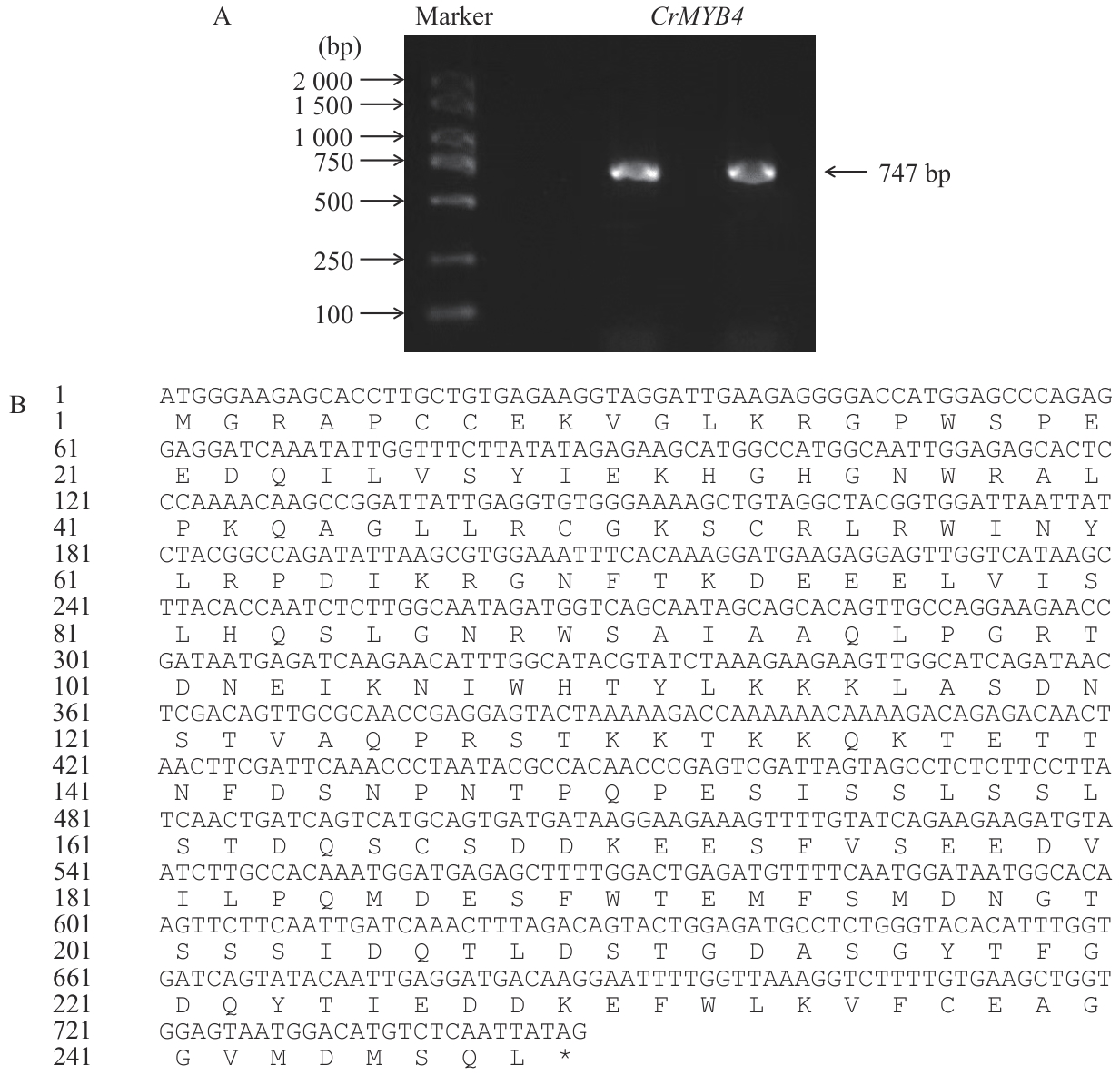
Fig. 1 PCR electrophoresis pattern of CrMYB4, as well as its nucleotide and amino acid sequencesA: PCR electrophoresis pattern. B: Nucleotide and amino acid sequences
理化性质 Physicochemical property | 预测结果 Predict result |
|---|---|
| 氨基酸数量 Amino acids number | 248 |
| 分子量 Molecular weight (kD) | 28.00 |
| 等电点 Isoelectric point | 5.16 |
| 分子式 Formula | C1216H1898N338O398S12 |
| 不稳定性系数 Instability index | 57.00 |
| 脂肪族系数 Aliphatic index | 62.14 |
| 平均亲水性系数 Grand average of hydropathicity | -0.784 |
Table 2 Physicochemical properties analysis of CrMYB4 predicted protein
理化性质 Physicochemical property | 预测结果 Predict result |
|---|---|
| 氨基酸数量 Amino acids number | 248 |
| 分子量 Molecular weight (kD) | 28.00 |
| 等电点 Isoelectric point | 5.16 |
| 分子式 Formula | C1216H1898N338O398S12 |
| 不稳定性系数 Instability index | 57.00 |
| 脂肪族系数 Aliphatic index | 62.14 |
| 平均亲水性系数 Grand average of hydropathicity | -0.784 |

Fig. 2 Bioinformatics analysis of the protein encoded by CrMYB4A: Prediction of the signal peptide. B: Prediction of the hydrophobicity. C: Prediction of the tertiary structure. D: Prediction of the transmembrane structural peptide

Fig. 3 Domain analysis (A) and conservative analysis (B) of CrMYB4
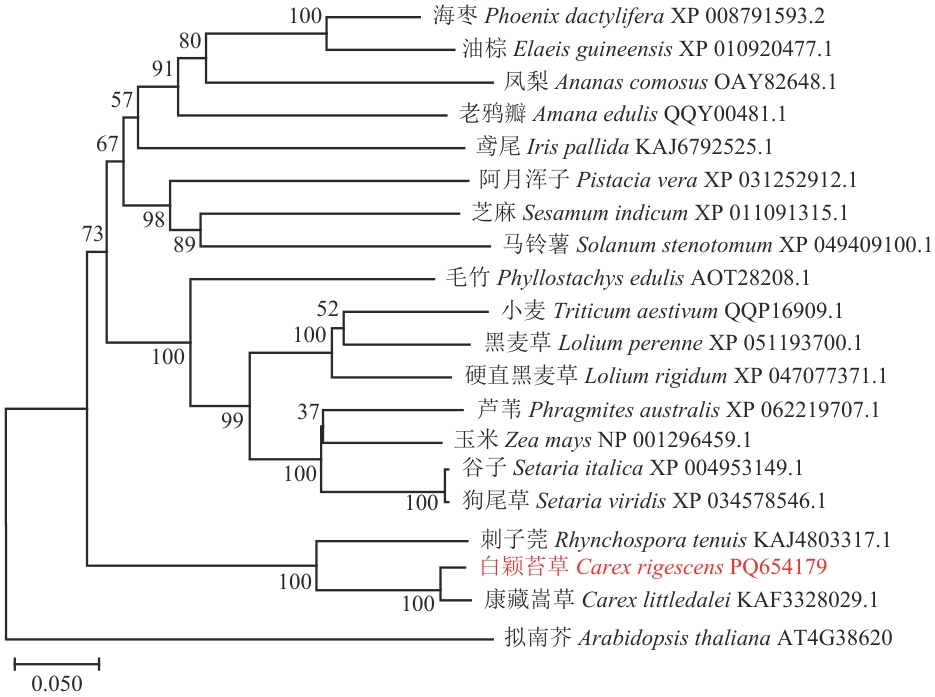
Fig. 4 Phylogenetic tree analysis of CrMYB4
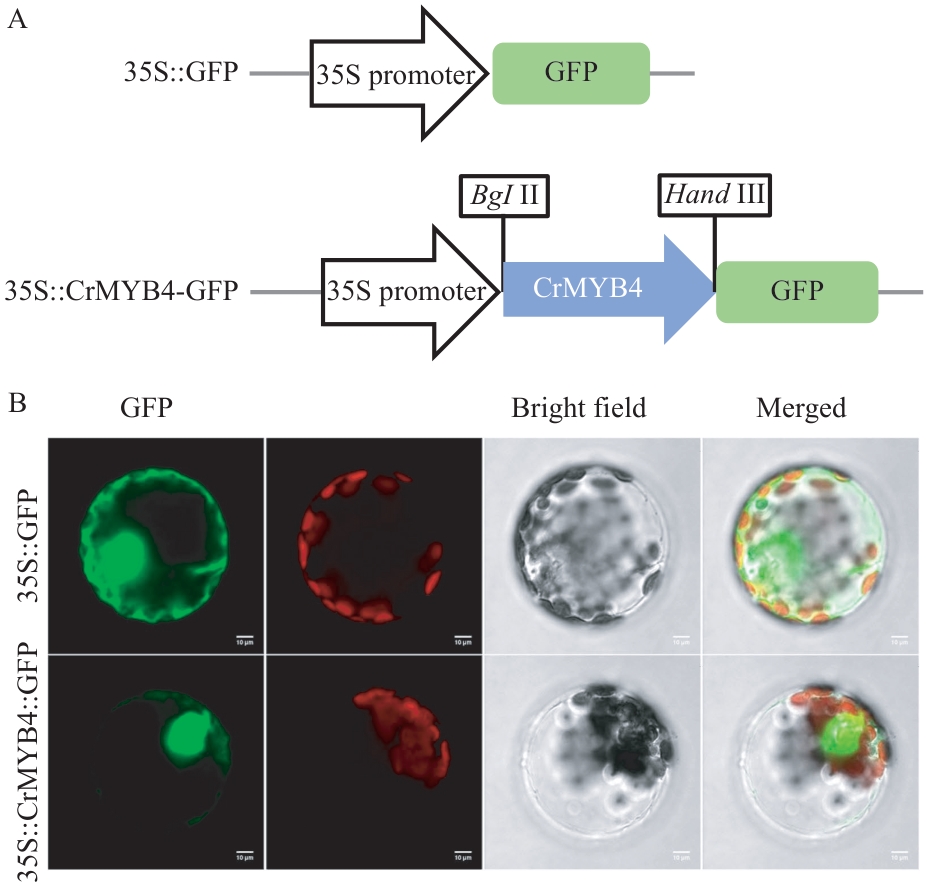
Fig. 5 Subcellular localization of CrMYB4A: Schematic diagram of subcellular localization vector. B: Subcellular localization
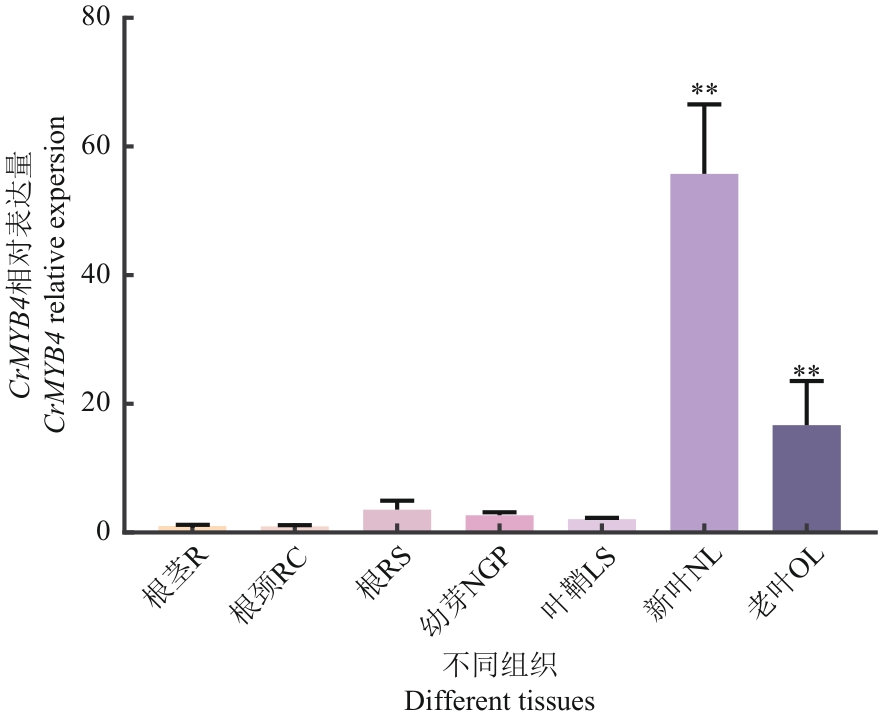
Fig. 6 Expression analysis of CrMYB4 in different tissuesR: Root. RC: Root crown. RS: Root system. NGP: New generation plant. LS: Leave sheath. NL: New leave. OL: Old leave. The data are the mean values ± standard errors of three biological replicates. * P<0.05, ** P<0.01. The same below
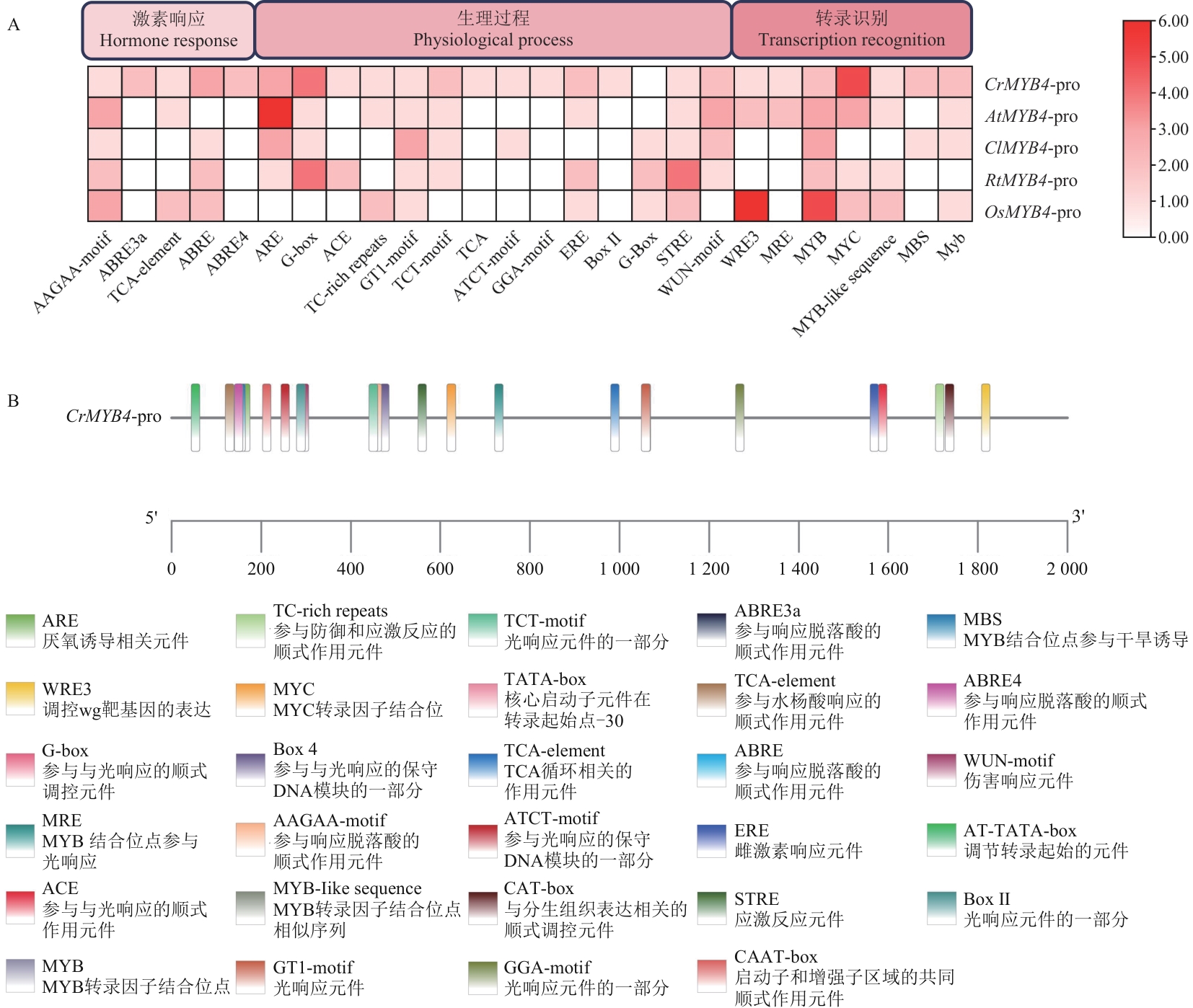
Fig. 7 Analysis of cis-acting elements in the promoter region of CrMYB4A: Number of cis-acting elements in the promoter region (Cr: Carex rigescens; At: Arabidopsis thaliana; Cl: Carex littledalei; Rt: Rhynchospora tenuis; Os: Oryza sativa). B: Distribution and function of cis-acting elements in the promoter region

Fig. 8 Expression analysis of CrMYB4 under different stresses
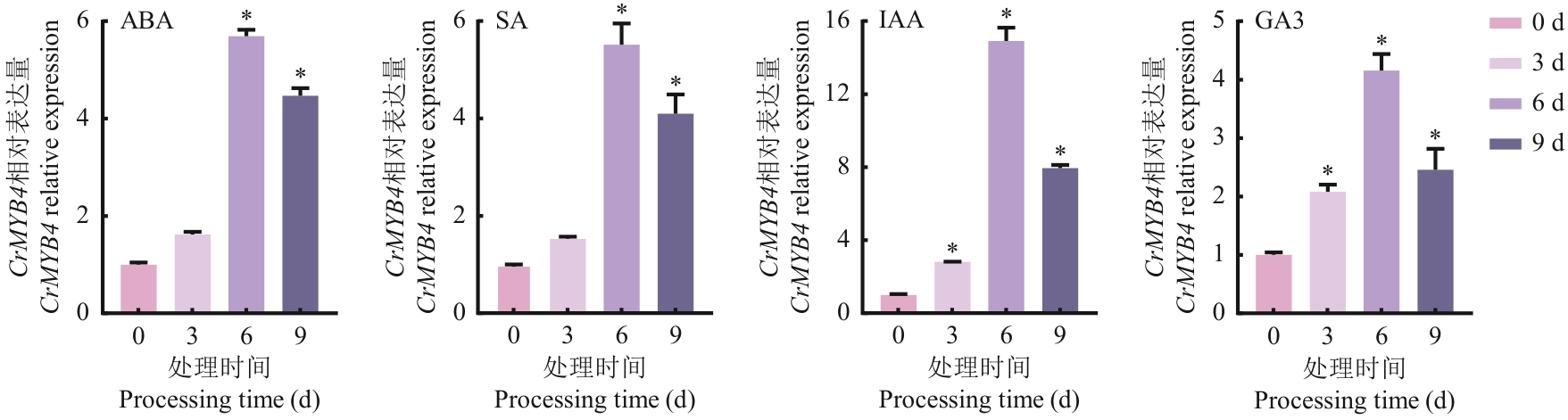
Fig. 9 Expression analysis of CrMYB4 under different exogenous hormone treatments
| [1] | 米海莉, 许兴, 马雅琴, 等. 小麦品种耐盐性的研究 [J]. 干旱地区农业研究, 2003, 21(1): 134-138. |
| Mi HL, Xu X, Ma YQ, et al. Study on salt-tolerance of wheat varieties [J]. Agric Res Arid Areas, 2003, 21(1): 134-138. | |
| [2] | 熊毅, 熊艳丽, 杨晓鹏, 等. 外源褪黑素对盐胁迫下老化燕麦种子萌发及幼苗的影响 [J]. 中国草地学报, 2020, 42(1): 7-14. |
| Xiong Y, Xiong YL, Yang XP, et al. Effects of exogenous melatonin on seeds germination and seedling of aged oat under salt stress [J]. Chin J Grassland, 2020, 42(1): 7-14. | |
| [3] | Dubos C, Stracke R, Grotewold E, et al. MYB transcription factors in Arabidopsis [J]. Trends Plant Sci, 2010, 15(10): 573-581. |
| [4] | Paz-Ares J, Ghosal D, Wienand U, et al. The regulatory c1 locus of Zea mays encodes a protein with homology to myb proto-oncogene products and with structural similarities to transcriptional activators [J]. EMBO J, 1987, 6(12): 3553-3558. |
| [5] | 许文杰, 黄远浩, 韩蓉蓉, 等. 基于全基因组的栀子苷生物合成相关MYB转录因子系统分析 [J]. 药学学报, 2023, 58(8): 2522-2531. |
| Xu WJ, Huang YH, Han RR, et al. Systematic analysis of MYB transcription factors related to the geniposide biosynthesis in Gardenia jasminoides Ellis based on whole genome [J]. Acta Pharm Sin, 2023, 58(8): 2522-2531. | |
| [6] | 关范圆, 郑语嫣, 米芯雨, 等. R2R3型MYB转录因子调控植物胁迫应答的研究进展 [J]. 植物医学, 2024, 3(3): 1-9. |
| Guan FY, Zheng YY, Mi XY, et al. Research advance of the functions of R2R3-MYB transcription factors in plant response to biotic and abiotic stresses [J]. Plant Health Med, 2024, 3(3): 1-9. | |
| [7] | Yu L, Chen HX, Guan QL, et al. AtMYB2 transcription factor can interact with the CMO promoter and regulate its downstream gene expression [J]. Biotechnol Lett, 2012, 34(9): 1749-1755. |
| [8] | Dai XY, Xu YY, Ma QB, et al. Overexpression of an R1R2R3 MYB gene, OsMYB3R-2, increases tolerance to freezing, drought, and salt stress in transgenic Arabidopsis [J]. Plant Physiol, 2007, 143(4): 1739-1751. |
| [9] | Mu RL, Cao YR, Liu YF, et al. An R2R3-type transcription factor gene AtMYB59 regulates root growth and cell cycle progression in Arabidopsis [J]. Cell Res, 2009, 19(11): 1291-1304. |
| [10] | 牛义岭, 姜秀明, 许向阳. 植物转录因子MYB基因家族的研究进展 [J]. 分子植物育种, 2016, 14(8): 2050-2059. |
| Niu YL, Jiang XM, Xu XY. Reaserch advances on transcription factor MYB gene family in plant [J]. Mol Plant Breed, 2016, 14(8): 2050-2059. | |
| [11] | Jin H, Martin C. Multifunctionality and diversity within the plant MYB-gene family [J]. Plant Mol Biol, 1999, 41(5): 577-585. |
| [12] | Yang L, Zhao X, Yang F, et al. PtrWRKY19, a novel WRKY transcription factor, contributes to the regulation of pith secondary wall formation in Populus trichocarpa [J]. Sci Rep, 2016, 6: 18643. |
| [13] | Zhou JL, Lee CH, Zhong RQ, et al. MYB58 and MYB63 are transcriptional activators of the lignin biosynthetic pathway during secondary cell wall formation in Arabidopsis [J]. Plant Cell, 2009, 21(1): 248-266. |
| [14] | Shen H, Poovaiah CR, Ziebell A, et al. Enhanced characteristics of genetically modified switchgrass (Panicum virgatum L.) for high biofuel production [J]. Biotechnol Biofuels, 2013, 6(1): 71. |
| [15] | Vannini C, Locatelli F, Bracale M, et al. Overexpression of the rice Osmyb4 gene increases chilling and freezing tolerance of Arabidopsis thaliana plants [J]. Plant J, 2004, 37(1): 115-127. |
| [16] | 孟祥宇, 谢红梅, 才可新, 等. 人参PgMYB4基因表达载体构建及其对拟南芥的抗旱性分析 [J]. 中草药, 2016, 47(17): 3094-3097. |
| Meng XY, Xie HM, Cai KX, et al. Construction of expression vector of PgMYB4 gene in Panax ginseng and analysis on drought resisting [J]. Chin Tradit Herb Drugs, 2016, 47(17): 3094-3097. | |
| [17] | Zhang FR, Zhang XC, Wan WH, et al. MYB4 in Lilium pumilum affects plant saline-alkaline tolerance [J]. Plant Signal Behav, 2024, 19(1): 2370724. |
| [18] | 田宇. 冬小麦TaMYB4-TaMDHAR模块抗寒功能探究 [D]. 哈尔滨: 东北农业大学, 2022. |
| Tian Y. Study on cold resistance function of TaMYB4-TaMDHAR module in winter wheat [D]. Harbin: Northeast Agricultural University, 2022. | |
| [19] | 朱英洁. 陆地棉抗紫外线MYB基因挖掘及MYB4功能初探 [D]. 曲阜: 曲阜师范大学, 2022. |
| Zhu YJ. Mining of ultraviolet-resistant MYB gene in upland cotton and preliminary study on the function of MYB4 [D]. Qufu: Qufu Normal University, 2022. | |
| [20] | 马万里, 韩烈保, 罗菊春. 草坪植物的新资源——苔草属植物 [J]. 草业科学, 2001, 18(2): 43-45, 56. |
| Ma WL, Han LB, Luo JC. A new lawn plant resource: genus Carex L [J]. Pratacultural Sci, 2001, 18(2): 43-45, 56. | |
| [21] | 杨学军, 武菊英, 滕文军, 等. 北京薹草属植物资源调查与园林应用评价 [J]. 广西植物, 2014, 34(5): 664-669. |
| Yang XJ, Wu JY, Teng WJ, et al. Investigation and landscape application evaluation on Carex resources in Beijing [J]. Guihaia, 2014, 34(5): 664-669. | |
| [22] | 李明娜. 基于蛋白质组学的白颖苔草盐胁迫下应激调控机理的研究 [D]. 北京: 中国农业大学, 2019. |
| Li MN. Study on stress regulation mechanism of Carex albuginosa under salt stress based on protein omics [D]. Beijing: China Agricultural University, 2019. | |
| [23] | 刘雪梅, 李文, 黄管大, 等. 相异度算法结合邻接法构建系统进化树的评估 [J]. 华南理工大学学报: 自然科学版, 2019, 47(6): 136-141, 148. |
| Liu XM, Li W, Huang GD, et al. Feasibility evaluation of dissimilarity algorithm and adjacency method for constructing evolutionary tree [J]. J South China Univ Technol Nat Sci Ed, 2019, 47(6): 136-141, 148. | |
| [24] | Yoo SD, Cho YH, Sheen J. Arabidopsis mesophyll protoplasts: a versatile cell system for transient gene expression analysis [J]. Nat Protoc, 2007, 2(7): 1565-1572. |
| [25] | 李岩, 米鑫丰, 闫丽, 等. 白颖苔草UDP-糖基转移酶UGT72B3基因的克隆与耐盐性分析 [J]. 中国草地学报, 2023, 45(8): 10-22. |
| Li Y, Mi XF, Yan L, et al. Cloning and salt tolerance analysis of UDP-glycosyltransferases UGT72B3 gene in Carex rigescens [J]. Chin J Grassland, 2023, 45(8): 10-22. | |
| [26] | 崔宝禄, 陈忠平, 孙婷婷, 等. 番茄GT-1基因组织表达模式及非生物胁迫、植物生长调节剂响应分析 [J]. 福建农业学报, 2023, 38(2): 144-150. |
| Cui BL, Chen ZP, Sun TT, et al. Expressions and responses to abiotic stresses and plant growth regulator of tomato GT-1 [J]. Fujian J Agric Sci, 2023, 38(2): 144-150. | |
| [27] | 石文昕, 郎俊凯, 许玲兴, 等. 叶面预喷施水杨酸缓解西瓜幼苗高温胁迫的生理效应 [J]. 西北植物学报, 2024, 44(11): 1692-1702. |
| Shi WX, Lang JK, Xu LX, et al. Physiological effects of foliar pre spray of salicylic acid on alleviating high temperature stress in Citrullus lanatus seedlings [J]. Acta Bot Boreali Occidentalia Sin, 2024, 44(11): 1692-1702. | |
| [28] | 赵永晶, 杨洁, 赵晗茜, 等. 荷花CKX基因家族的鉴定及非生物胁迫下的表达模式分析 [J]. 植物生理学报, 2024, 60(12): 1783-1798. |
| Zhao YJ, Yang J, Zhao HQ, et al. Genome-wide identification and expression pattern of the CKX gene family under abiotic stress in Nelumbo nucifera [J]. Plant Physiol J, 2024, 60(12): 1783-1798. | |
| [29] | 崔正阳, 单颖, 岳晓岚, 等. 毛白杨BIN2.1启动子的组织表达及外源激素响应分析[J/OL]. 分子植物育种, 2024. . |
| Cui ZY, Shan Y, Yue XL, et al. Tissue expression and exogenous hormone response of BIN2.1 promoter of Populus tomentosa [J/OL]. Mol Plant Breed, 2024. . | |
| [30] | 胡雅丹, 伍国强, 刘晨, 等. MYB转录因子在调控植物响应逆境胁迫中的作用 [J]. 生物技术通报, 2024, 40(6): 5-22. |
| Hu YD, Wu GQ, Liu C, et al. Roles of MYB transcription factor in regulating the responses of plants to stress [J]. Biotechnol Bull, 2024, 40(6): 5-22. | |
| [31] | Chen BS, Niu FF, Liu WZ, et al. Identification, cloning and characterization of R2R3-MYB gene family in canola (Brassica napus L.) identify a novel member modulating ROS accumulation and hypersensitive-like cell death [J]. DNA Res, 2016, 23(2): 101-114. |
| [32] | 吴琼, 胡明珠, 余晓倩, 等. 赤霞珠葡萄VvMYB4b转录因子的亚细胞定位及表达分析[J/OL].分子植物育种, 2024. . |
| Wu Q, Hu MZ, Yu XQ, et al. Subcellular localization and expression analysis of VvMYB4b transcription factor in Cabernet Sauvignon [J/OL] . Mol Plant Breed, 2024. . | |
| [33] | Yu Y, Liu HZ, Zhang N, et al. The BpMYB4 transcription factor from Betula platyphylla contributes toward abiotic stress resistance and secondary cell wall biosynthesis [J]. Front Plant Sci, 2021, 11: 606062. |
| [34] | Ma LL, Zhang N, Liu P, et al. Single-cell RNA sequencing reveals a key regulator ZmEREB14 affecting shoot apex development and yield formation in maize [J]. Plant Biotechnol J, 2025, 23(3): 766-779. |
| [35] | 李泽凤, 向南星, 魏春梅, 等. 绿萼凤仙花MYB4的克隆及表达分析 [J]. 山东农业科学, 2023, 55(1): 8-14. |
| Li ZF, Xiang NX, Wei CM, et al. Cloning and expression analysis of MYB4 genes in Impatiens chlorosepala [J]. Shandong Agric Sci, 2023, 55(1): 8-14. | |
| [36] | Zhang CX, Bian MD, Yu H, et al. Identification of alkaline stress-responsive genes of CBL family in sweet sorghum (Sorghum bicolor L.) [J]. Plant Physiol Biochem, 2011, 49(11): 1306-1312. |
| [37] | 郭飞翔, 李春霞, 周爽, 等. 绿豆R2R3-MYB转录因子家族鉴定及其类黄酮合成调控基因的筛选 [J]. 作物学报, 2025, 51(1): 117-133. |
| Guo FX, Li CX, Zhou S, et al. Identification of the R2R3-MYB transcription factor family and screening of genes regulating flavonoid synthesis in mung bean [J]. Acta Agron Sin, 2025, 51(1): 117-133. | |
| [38] | 方森. 苹果转录因子MhMYB4抗旱功能鉴定及其作用机制解析 [D]. 郑州: 河南农业大学, 2023. |
| Fang S. Identification of drought resistance function of apple transcription factor MhMYB4 and its mechanism analysis [D]. Zhengzhou: Henan Agricultural University, 2023. | |
| [39] | Wang WW, Ma JY, Liu HX, et al. Genome-wide analysis of the switchgrass YABBY family and functional characterization of PvYABBY14 in response to ABA and GA stress in Arabidopsis [J]. BMC Plant Biol, 2024, 24(1): 114. |
| [40] | Feng L, Teng F, Li N, et al. A reference-grade genome of the xerophyte Ammopiptanthus mongolicus sheds light on its evolution history in legumes and drought-tolerance mechanisms [J]. Plant Commun, 2024, 5(7): 100891. |
| [41] | Nashaat Al-Attala M, Wang XJ, Abou-Attia MA, et al. A novel TaMYB4 transcription factor involved in the defence response against Puccinia striiformis f. sp. tritici and abiotic stresses [J]. Plant Mol Biol, 2014, 84(4/5): 589-603. |
| [42] | Ma GL, Li MZ, Wu YL, et al. Camellia sinensis CsMYB4a participates in regulation of stamen growth by interaction with auxin signaling transduction repressor CsAUX/IAA4 [J]. Crop J, 2024, 12(1): 188-201. |
| [43] | Hao SX, Lu YF, Peng Z, et al. McMYB4 improves temperature adaptation by regulating phenylpropanoid metabolism and hormone signaling in apple [J]. Hortic Res, 2021, 8(1): 182. |
| [1] | ZHANG Xue-qiong, PAN Su-jun, LI Wei, DAI Liang-ying. Research Progress of Plant Phosphate Transporters in the Response to Stress [J]. Biotechnology Bulletin, 2025, 41(7): 28-36. |
| [2] | WANG Cong-huan, WU Guo-qiang, WEI Ming. Functional Mechanism of Plant CBL in Regulating the Responses to Abiotic and Biotic Stresses [J]. Biotechnology Bulletin, 2025, 41(7): 1-16. |
| [3] | HAN Yi, HOU Chang-lin, TANG Lu, SUN Lu, XIE Xiao-dong, LIANG Chen, CHEN Xiao-qiang. Cloning and Preliminary Functional Analysis of HvERECTA Gene in Hordeum vulgare [J]. Biotechnology Bulletin, 2025, 41(7): 106-116. |
| [4] | LI Xia, ZHANG Ze-wei, LIU Ze-jun, WANG Nan, GUO Jiang-bo, XIN Cui-hua, ZHANG Tong, JIAN Lei. Cloning and Functional Study of Transcription Factor StMYB96 in Potato [J]. Biotechnology Bulletin, 2025, 41(7): 181-192. |
| [5] | GONG Yu-han, CHEN Lan, SHANGFANG Hui-zi, HAO Ling-ying, LIU Shuo-qian. Identification and Expression Profile Analysis of the TRB Gene Family in Tea Plant [J]. Biotechnology Bulletin, 2025, 41(7): 214-225. |
| [6] | XU Hui-zhen, SHANTWANA Ghimire, RAJU Kharel, YUE Yun, SI Huai-jun, TANG Xun. Analysis of the Potato SUMO E3 Ligase Gene Family and Cloning and Expression Pattern of StSIZ1 [J]. Biotechnology Bulletin, 2025, 41(6): 119-129. |
| [7] | WU Hao, DONG Wei-feng, HE Zi-tian, LI Yan-xiao, XIE Hui, SUN Ming-zhe, SHEN Yang, SUN Xiao-li. Genome-wide Identification and Expression Analysis of the Rice BXL Gene Family [J]. Biotechnology Bulletin, 2025, 41(6): 87-98. |
| [8] | PEI Jing-qi, ZHAO Meng-ran, HUANG Chen-yang, WU Xiang-li. Discovery and Verification of a Functional Gene Influencing the Growth and Development of Pleurotus ostreatus [J]. Biotechnology Bulletin, 2025, 41(6): 327-334. |
| [9] | HUANG Dan, PENG Bing-yang, ZHANG Pan-pan, JIAO Yue, LYU Jia-bin. Identification of HD-Zip Gene Family in Camellia oleifera and Analysis of Its Expression under Abiotic Stress [J]. Biotechnology Bulletin, 2025, 41(6): 191-207. |
| [10] | LIU Xin, WANG Jia-wen, LI Jin-wei, MOU Ce, YANG Pan-pan, MING Jun, XU Lei-feng. Cloning and Expression Analysis of Three LdBBXs in Lilium davidii var. willmottiae [J]. Biotechnology Bulletin, 2025, 41(5): 186-196. |
| [11] | PENG Shao-zhi, WANG Deng-ke, ZHANG Xiang, DAI Xiong-ze, XU Hao, ZOU Xue-xiao. Cloning, Expression Characteristics and Functional Verification of the Pepper CaFD1 Gene [J]. Biotechnology Bulletin, 2025, 41(5): 153-164. |
| [12] | LIU Yuan, ZHAO Ran, LU Zhen-fang, LI Rui-li. Research Progress in the Biological Metabolic Pathway and Functions of Plant Carotenoids [J]. Biotechnology Bulletin, 2025, 41(5): 23-31. |
| [13] | ZAN Shu-wen, XIE Huan-huan, ZHANG Yu-qin, WANG Wen-Juan, ZHANG Peng-fei, LIANG Jin-jun, WEN Peng-fei. VvAGAMOUS Regulates Carpel Development through VvCRABS CLAW in Grape [J]. Biotechnology Bulletin, 2025, 41(5): 208-217. |
| [14] | BAN Qiu-yan, ZHAO Xin-yue, CHI Wen-jing, LI Jun-sheng, WANG Qiong, XIA Yao, LIANG Li-yun, HE Wei, LI Ye-yun, ZHAO Guang-shan. Cloning of Phytochrome Interaction Factor CsPIF3a and Its Response to Light and Temperature Stress in Camellia sinensis [J]. Biotechnology Bulletin, 2025, 41(4): 256-265. |
| [15] | ZHANG Yi-xuan, MA Yu, WANG Tong-tong, SHENG Su-ao, SONG Jia-feng, LYU Zhao-yan, ZHU Xiao-biao, HOU Hua-lan. Genome-wide Identification and Expression Profiles of DIR Gene Family in Potato [J]. Biotechnology Bulletin, 2025, 41(3): 123-136. |
| Viewed | ||||||
|
Full text |
|
|||||
|
Abstract |
|
|||||
