







Biotechnology Bulletin ›› 2025, Vol. 41 ›› Issue (8): 11-21.doi: 10.13560/j.cnki.biotech.bull.1985.2025-0191
DIAO Chen-yang( ), CUI You-zhi, LI Bing-zhi()
Received:2025-02-23
Online:2025-08-26
Published:2025-08-14
Contact:
LI Bing-zhi
E-mail:diaochenyang@tju.edu.cn;bzli@tju.edu.cn
DIAO Chen-yang, CUI You-zhi, LI Bing-zhi. Research Advances in Targeted Mutagenesis-mediated Microbial Evolutionary Engineering[J]. Biotechnology Bulletin, 2025, 41(8): 11-21.
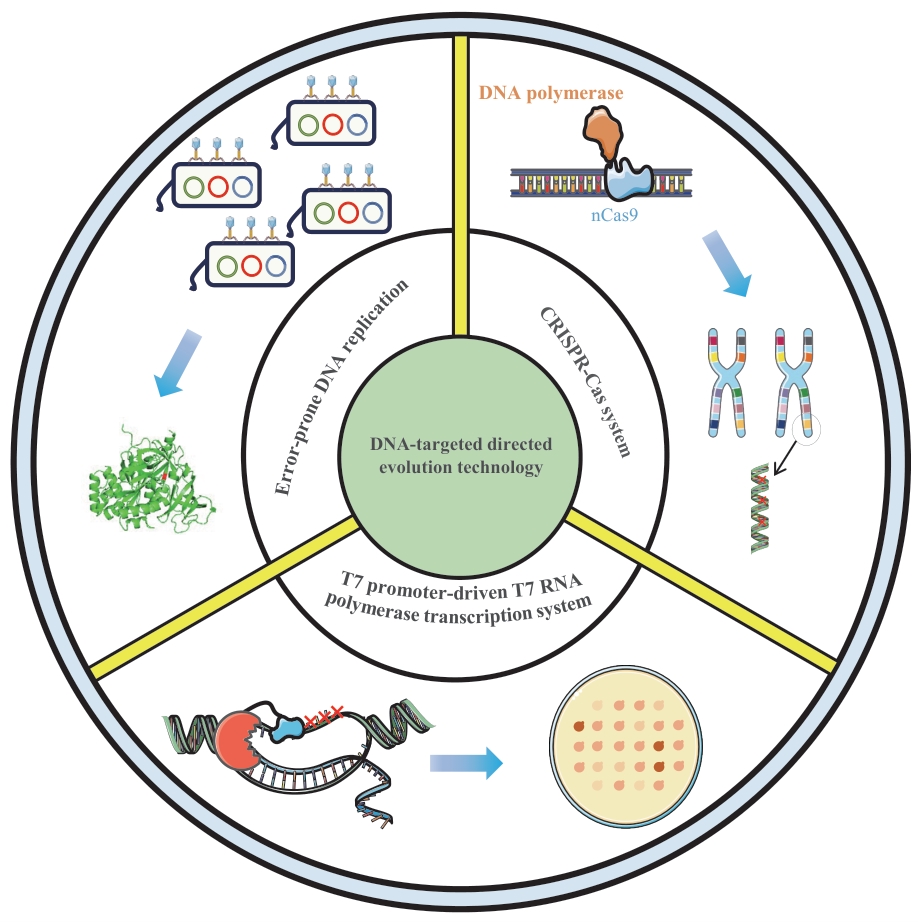
Fig. 1 Schematic diagram of DNA targeted evolution technologies

Fig. 2 Phage-assisted continuous evolution system (PACE)
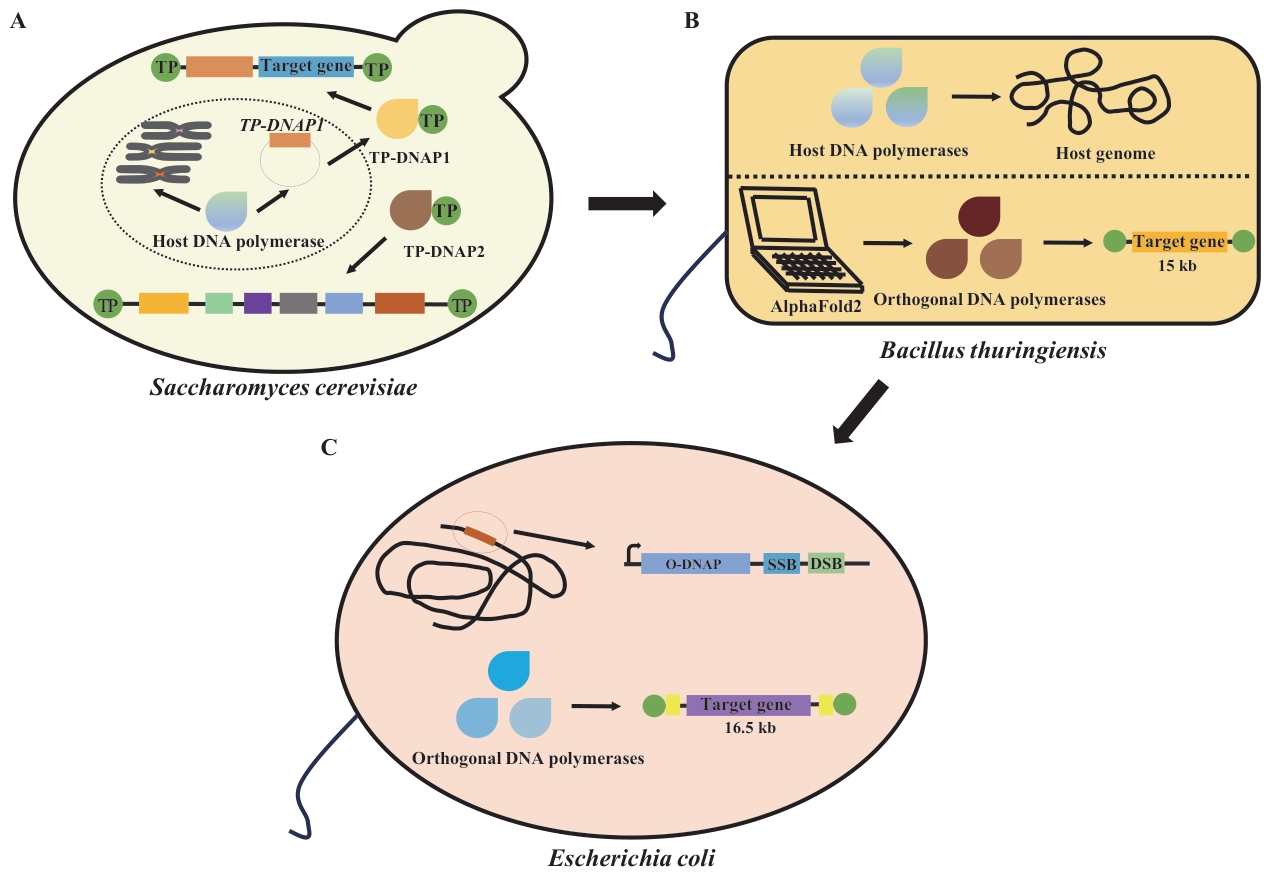
Fig. 3 Research progress on mutation technology based on orthogonal DNA replication systemsA: Orthogonal DNA replication system in Saccharomyces cerevisiae (OrthoRep). B: Orthogonal DNA replication system in Bacillus thuringiensis(BacORep). C: Orthogonal DNA replication system in Escherichia coli (EcORep)

Fig. 4 Schematic diagram of the EvolvR mutation process

Fig. 5 Schematic diagram of the MutaT7 mutation process

Fig. 6 Research progress on targeted mutagenesis systems based on T7 RNA polymerase
| [1] | 祁延萍, 朱晋, 张凯, 等. 定向进化在蛋白质工程中的应用研究进展 [J]. 合成生物学, 2022, 3(6): 1081-1108. |
| Qi YP, Zhu J, Zhang K, et al. Recent development of directed evolution in protein engineering [J]. Synth Biol J, 2022, 3(6): 1081-1108. | |
| [2] | Mills DR, Peterson RL, Spiegelman S. An extracellular Darwinian experiment with a self-duplicating nucleic acid molecule [J]. Proc Natl Acad Sci USA, 1967, 58(1): 217-224. |
| [3] | Chen K, Arnold FH. Tuning the activity of an enzyme for unusual environments: sequential random mutagenesis of subtilisin E for catalysis in dimethylformamide [J]. Proc Natl Acad Sci USA, 1993, 90(12): 5618-5622. |
| [4] | Stemmer WP. Rapid evolution of a protein in vitro by DNA shuffling [J]. Nature, 1994, 370(6488): 389-391. |
| [5] | Leung DW, Chen E, Goeddel DV. A method for random mutagenesis of a defined DNA segment using a modified polymerase chain reaction [J]. 1989, 1:11-15. |
| [6] | McCullum EO, Williams BAR, Zhang JL, et al. Random mutagenesis by error-prone PCR [J]. Methods Mol Biol, 2010, 634: 103-109. |
| [7] | Mao CJ, Xie HJ, Chen SG, et al. Error-prone PCR mutation of Ls-EPSPS gene from Liriope spicata conferring to its enhanced glyphosate-resistance [J]. Pestic Biochem Physiol, 2017, 141: 90-95. |
| [8] | Shao WL, Ma KS, Le YL, et al. Development and use of a novel random mutagenesis method: in situ error-prone PCR (is-epPCR) [J]. Methods Mol Biol, 2017, 1498: 497-506. |
| [9] | Chen KQ, Arnold FH. Enzyme engineering for nonaqueous solvents: random mutagenesis to enhance activity of subtilisin E in polar organic media [J]. Biotechnology, 1991, 9(11): 1073-1077. |
| [10] | Ouyang FJ, Zhao M. Enhanced catalytic efficiency of CotA-laccase by DNA shuffling [J]. Bioengineered, 2019, 10(1): 182-189. |
| [11] | Kunkel TA. Evolving views of DNA replication (In) fidelity [J]. Cold Spring Harb Symp Quant Biol, 2009, 74: 91-101. |
| [12] | Loeb LA, Kunkel TA. Fidelity of DNA synthesis [J]. Annu Rev Biochem, 1982, 51: 429-457. |
| [13] | Kunkel TA, Erie DA. Eukaryotic mismatch repair in relation to DNA replication [J]. Annu Rev Genet, 2015, 49: 291-313. |
| [14] | Kunkel TA, Erie DA. DNA mismatch repair [J]. Annu Rev Biochem, 2005, 74: 681-710. |
| [15] | Harfe BD, Jinks-Robertson S. DNA mismatch repair and genetic instability [J]. Annu Rev Genet, 2000, 34: 359-399. |
| [16] | Kimura S, Sakaguchi K. DNA repair in plants [J]. Chem Rev, 2006, 106(2): 753-766. |
| [17] | Maruyama M, Horiuchi T, Maki H, et al. A dominant (mut D5) and a recessive (dnaQ49) mutator of Escherichia coli [J]. J Mol Biol, 1983, 167(4): 757-771. |
| [18] | Iyer RR, Pluciennik A, Burdett V, et al. DNA mismatch repair: functions and mechanisms [J]. Chem Rev, 2006, 106(2): 302-323. |
| [19] | Greener A, Callahan M, Jerpseth B. An efficient random mutagenesis technique using an E. coli mutator strain [J]. Mol Biotechnol, 1997, 7(2): 189-195. |
| [20] | Callanan MJ, Russell WM, Klaenhammer TR. Modification of Lactobacillus β-glucuronidase activity by random mutagenesis [J]. Gene, 2007, 389(2): 122-127. |
| [21] | Yi X, Khey J, Kazlauskas RJ, et al. Plasmid hypermutation using a targeted artificial DNA replisome [J]. Sci Adv, 2021, 7(29): eabg8712. |
| [22] | Husimi Y. Selection and evolution of bacteriophages in cellstat [J]. Adv Biophys, 1989, 25: 1-43. |
| [23] | Rakonjac J, Model P. Roles of pIII in filamentous phage assembly [J]. J Mol Biol, 1998, 282(1): 25-41. |
| [24] | Nelson FK, Friedman SM, Smith GP. Filamentous phage DNA cloning vectors: a noninfective mutant with a nonpolar deletion in gene Ⅲ [J]. Virology, 1981, 108(2): 338-350. |
| [25] | Boeke JD, Model P, Zinder ND. Effects of bacteriophage f1 gene Ⅲ protein on the host cell membrane [J]. Mol Gen Genet, 1982, 186(2): 185-192. |
| [26] | Riechmann L, Holliger P. The C-terminal domain of TolA is the coreceptor for filamentous phage infection of E. coli [J]. Cell, 1997, 90(2): 351-360. |
| [27] | Fijalkowska IJ, Schaaper RM. Mutants in the Exo I motif of Escherichia coli dnaQ: defective proofreading and inviability due to error catastrophe [J]. Proc Natl Acad Sci USA, 1996, 93(7): 2856-2861. |
| [28] | Esvelt KM, Carlson JC, Liu DR. A system for the continuous directed evolution of biomolecules [J]. Nature, 2011, 472(7344): 499-503. |
| [29] | Ikeda RA, Chang LL, Warshamana GS. Selection and characterization of a mutant T7 RNA polymerase that recognizes an expanded range of T7 promoter-like sequences [J]. Biochemistry, 1993, 32(35): 9115-9124. |
| [30] | Raskin CA, Diaz GA, McAllister WT. T7 RNA polymerase mutants with altered promoter specificities [J]. Proc Natl Acad Sci USA, 1993, 90(8): 3147-3151. |
| [31] | Imburgio D, Rong M, Ma K, et al. Studies of promoter recognition and start site selection by T7 RNA polymerase using a comprehensive collection of promoter variants [J]. Biochemistry, 2000, 39(34): 10419-10430. |
| [32] | Brieba LG, Padilla R, Rui SS. Role of T7 RNA polymerase His784 in start site selection and initial transcription [J]. Biochemistry, 2002, 41(16): 5144-5149. |
| [33] | Carlson JC, Badran AH, Guggiana-Nilo DA, et al. Negative selection and stringency modulation in phage-assisted continuous evolution [J]. Nat Chem Biol, 2014, 10(3): 216-222. |
| [34] | Badran AH, Guzov VM, Huai Q, et al. Continuous evolution of Bacillus thuringiensis toxins overcomes insect resistance [J]. Nature, 2016, 533(7601): 58-63. |
| [35] | Bryson DI, Fan CG, Guo LT, et al. Continuous directed evolution of aminoacyl-tRNA synthetases [J]. Nat Chem Biol, 2017, 13(12): 1253-1260. |
| [36] | Hu JH, Miller SM, Geurts MH, et al. Evolved Cas9 variants with broad PAM compatibility and high DNA specificity [J]. Nature, 2018, 556(7699): 57-63. |
| [37] | Miller SM, Wang TN, Randolph PB, et al. Continuous evolution of SpCas9 variants compatible with non-G PAMs [J]. Nat Biotechnol, 2020, 38(4): 471-481. |
| [38] | Wei T, Lai WS, Chen Q, et al. Exploiting spatial dimensions to enable parallelized continuous directed evolution [J]. Mol Syst Biol, 2022, 18(9): e10934. |
| [39] | Vidal M, Legrain P. Yeast forward and reverse 'n'-hybrid systems [J]. Nucleic Acids Res, 1999, 27(4): 919-929. |
| [40] | Baker K, Bleczinski C, Lin HN, et al. Chemical complementation: a reaction-independent genetic assay for enzyme catalysis [J]. Proc Natl Acad Sci USA, 2002, 99(26): 16537-16542. |
| [41] | Arzumanyan GA, Gabriel KN, Ravikumar A, et al. Mutually orthogonal DNA replication systems in vivo [J]. ACS Synth Biol, 2018, 7(7): 1722-1729. |
| [42] | Ravikumar A, Arzumanyan GA, Obadi MKA, et al. Scalable, continuous evolution of genes at mutation rates above genomic error thresholds [J]. Cell, 2018, 175(7): 1946-1957.e13. |
| [43] | Ravikumar A, Arrieta A, Liu CC. An orthogonal DNA replication system in yeast [J]. Nat Chem Biol, 2014, 10(3): 175-177. |
| [44] | Javanpour AA, Liu CC. Genetic compatibility and extensibility of orthogonal replication [J]. ACS Synth Biol, 2019, 8(6): 1249-1256. |
| [45] | Tian RZ, Zhao RZ, Guo HY, et al. Engineered bacterial orthogonal DNA replication system for continuous evolution [J]. Nat Chem Biol, 2023, 19(12): 1504-1512. |
| [46] | Tian RZ, Rehm FBH, Czernecki D, et al. Establishing a synthetic orthogonal replication system enables accelerated evolution in E. coli [J]. Science, 2024, 383(6681): 421-426. |
| [47] | Anders C, Niewoehner O, Duerst A, et al. Structural basis of PAM-dependent target DNA recognition by the Cas9 endonuclease [J]. Nature, 2014, 513(7519): 569-573. |
| [48] | Zetsche B, Gootenberg JS, Abudayyeh OO, et al. Cpf1 is a single RNA-guided endonuclease of a class 2 CRISPR-Cas system [J]. Cell, 2015, 163(3): 759-771. |
| [49] | Bao ZH, HamediRad M, Xue P, et al. Genome-scale engineering of Saccharomyces cerevisiae with single-nucleotide precision [J]. Nat Biotechnol, 2018, 36(6): 505-508. |
| [50] | Roy KR, Smith JD, Vonesch SC, et al. Multiplexed precision genome editing with trackable genomic barcodes in yeast [J]. Nat Biotechnol, 2018, 36(6): 512-520. |
| [51] | Garst AD, Bassalo MC, Pines G, et al. Genome-wide mapping of mutations at single-nucleotide resolution for protein, metabolic and genome engineering [J]. Nat Biotechnol, 2017, 35(1): 48-55. |
| [52] | Jakočiūnas T, Pedersen LE, LIS AV, et al. CasPER, a method for directed evolution in genomic contexts using mutagenesis and CRISPR/Cas9 [J]. Metab Eng, 2018, 48: 288-296. |
| [53] | Zimmermann A, Prieto-Vivas JE, Cautereels C, et al. A Cas3-base editing tool for targetable in vivo mutagenesis [J]. Nat Commun, 2023, 14(1): 3389. |
| [54] | Hess GT, Frésard L, Han K, et al. Directed evolution using dCas9-targeted somatic hypermutation in mammalian cells [J]. Nat Methods, 2016, 13(12): 1036-1042. |
| [55] | Halperin SO, Tou CJ, Wong EB, et al. CRISPR-guided DNA polymerases enable diversification of all nucleotides in a tunable window [J]. Nature, 2018, 560(7717): 248-252. |
| [56] | Tou CJ, Schaffer DV, Dueber JE. Targeted diversification in the S. cerevisiae genome with CRISPR-guided DNA polymerase I [J]. ACS Synth Biol, 2020, 9(7): 1911-1916. |
| [57] | Jensen ED, Laloux M, Lehka BJ, et al. A synthetic RNA-mediated evolution system in yeast [J]. Nucleic Acids Res, 2021, 49(15): e88. |
| [58] | Park SJ, Ju S, Jung WJ, et al. Robust genome editing activity and the applications of enhanced miniature CRISPR-Cas12f1 [J]. Nat Commun, 2025, 16(1): 677. |
| [59] | Rong M, He B, McAllister WT, et al. Promoter specificity determinants of T7 RNA polymerase [J]. Proc Natl Acad Sci USA, 1998, 95(2): 515-519. |
| [60] | Mehta A, Driscoll DM. Identification of domains in apobec-1 complementation factor required for RNA binding and apolipoprotein-B mRNA editing [J]. RNA, 2002, 8(1): 69-82. |
| [61] | Morimoto R, O'Meara CP, Holland SJ, et al. Cytidine deaminase 2 is required for VLRB antibody gene assembly in lampreys [J]. Sci Immunol, 2020, 5(45): eaba0925. |
| [62] | Ramiro AR, Stavropoulos P, Jankovic M, et al. Transcription enhances AID-mediated cytidine deamination by exposing single-stranded DNA on the nontemplate strand [J]. Nat Immunol, 2003, 4(5): 452-456. |
| [63] | Gerber AP, Keller W. An adenosine deaminase that generates inosine at the wobble position of tRNAs [J]. Science, 1999, 286(5442): 1146-1149. |
| [64] | Wolf J, Gerber AP, Keller W. tadA, an essential tRNA-specific adenosine deaminase from Escherichia coli [J]. EMBO J, 2002, 21(14): 3841-3851. |
| [65] | Moore CL, Papa LJ 3rd, Shoulders MD. A processive protein Chimera introduces mutations across defined DNA regions in vivo [J]. J Am Chem Soc, 2018, 140(37): 11560-11564. |
| [66] | Ting WW, Effendi SSW, Hu RE, et al. Directed evolution of Mesorhizobium loti carbonic anhydrase for carbon dioxide sequestration by MutaT7 and rational codon design [J]. J Taiwan Inst Chem Eng, 2023, 150: 105065. |
| [67] | Park H, Kim S. Gene-specific mutagenesis enables rapid continuous evolution of enzymes in vivo [J]. Nucleic Acids Res, 2021, 49(6): e32. |
| [68] | Álvarez B, Mencía M, de Lorenzo V, et al. In vivo diversification of target genomic sites using processive base deaminase fusions blocked by dCas9 [J]. Nat Commun, 2020, 11(1): 6436. |
| [69] | Mengiste AA, Wilson RH, Weissman RF, et al. Expanded MutaT7 toolkit efficiently and simultaneously accesses all possible transition mutations in bacteria [J]. Nucleic Acids Res, 2023, 51(6): e31. |
| [70] | Seo D, Koh B, Eom GE, et al. A dual gene-specific mutator system installs all transition mutations at similar frequencies in vivo [J]. Nucleic Acids Res, 2023, 51(10): e59. |
| [71] | Wei Z, Zhao D, Wang J, et al. Targeted C-to-T and A-to-G dual mutagenesis system for RhtA transporter in vivo evolution [J]. Appl Environ Microbiol, 2023, 89(10): e0075223. |
| [72] | Cravens A, Jamil OK, Kong DZ, et al. Polymerase-guided base editing enables in vivo mutagenesis and rapid protein engineering [J]. Nat Commun, 2021, 12(1): 1579. |
| [73] | Huang ZR, Chen XR, Liu DF, et al. Enhanced single-base mutation diversity by the combination of cytidine deaminase with DNA-repairing enzymes in yeast [J]. Biotechnol J, 2023, 18(11): e2300137. |
| [74] | Chen HQ, Liu S, Padula S, et al. Efficient, continuous mutagenesis in human cells using a pseudo-random DNA editor [J]. Nat Biotechnol, 2020, 38(2): 165-168. |
| [75] | Butt H, Ramirez JLM, Mahfouz M. Synthetic evolution of herbicide resistance using a T7 RNAP-based random DNA base editor [J]. Life Sci Alliance, 2022, 5(12): e202201538. |
| [76] | Chen QC, Chuai GH, Zhang HH, et al. Genome-wide CRISPR off-target prediction and optimization using RNA-DNA interaction fingerprints [J]. Nat Commun, 2023, 14(1): 7521. |
| [77] | Zhao FY, Zhang T, Sun XD, et al. A strategy for Cas13 miniaturization based on the structure and AlphaFold [J]. Nat Commun, 2023, 14(1): 5545. |
| [78] | Wang XR, Yin XD, Jiang DJ, et al. Multi-modal deep learning enables efficient and accurate annotation of enzymatic active sites [J]. Nat Commun, 2024, 15(1): 7348. |
| [79] | Song YD, Yuan QM, Chen S, et al. Accurately predicting enzyme functions through geometric graph learning on ESMFold-predicted structures [J]. Nat Commun, 2024, 15(1): 8180. |
| [1] | CHENG Hui-juan, WANG Xin, SHI Xiao-tao, MA Dong-xu, GONG Da-chun, HU Jun-peng, XIE Zhi-wen. Effects of Transcription Factor CREA Knockout on the Morphology and the Secretion of β-glucosidase in Aspergillus niger [J]. Biotechnology Bulletin, 2025, 41(6): 344-354. |
| [2] | LIU Hua, SONG Jie, ZENG Hai-juan, WANG Jin-bin, QIAN Yun-fang. Research Progress in Single-base Mutation Detection Methods and Applications [J]. Biotechnology Bulletin, 2025, 41(6): 61-70. |
| [3] | ZHOU Qian, TANG Meng-jun, ZHANG Xiao-yan, LU Jun-xian, TANG Xiu-jun, YANG Xing-xing, GAO Yu-shi. Research Progress in the Control of Multidrug Resistant Bacteria Based on in CRISPR-Cas System [J]. Biotechnology Bulletin, 2025, 41(5): 42-51. |
| [4] | CHEN Xiao-jun, HUI Jian, MA Hong-wen, BAI Hai-Bo, ZHONG Nan, LI Jia-run, FAN Yun-fang. Creating Rice Gerplasm Resources OsALS Rsistant to Herbicide through Single Base Gene Editing Technology [J]. Biotechnology Bulletin, 2025, 41(4): 106-114. |
| [5] | WEN Bo-lin, WAN Min, HU Jian-jun, WANG Ke-xiu, JING Sheng-lin, WANG Xin-yue, ZHU Bo, TANG Ming-xia, LI Bing, HE Wei, ZENG Zi-xian. Establishment of Genetic Transformation and Gene Editing System for a Potato Cultivar Chuanyu 50 [J]. Biotechnology Bulletin, 2025, 41(4): 88-97. |
| [6] | LIANG Li-cun, WANG Ke-fen, SONG Zu-huan, LIU Meng-ting, LI Jia-yu, LUO Hui-ying, YAO Bin, YANG Hao-meng. Improving the Efficiency of Gene Editing by Optimizing sgRNA in Aspergillus tubingensis [J]. Biotechnology Bulletin, 2025, 41(3): 62-70. |
| [7] | XUE Rui-ying, LIU Yong-ju, JIANG Yan-yan, PENG Xin-ya, CAO Dong, LI Yun, LIU Bao-long, BAO Xue-mei. Reducing the Expression of GBSSI Gene in Barley via the Editing in the 5′UTR Region [J]. Biotechnology Bulletin, 2025, 41(3): 83-89. |
| [8] | YAO Xue-chun, LI Lei, WANG Zhi-xian, SHENG Chang-zhong, ZHOU Zeqi, TAN Cherie S. A CRISPR-Cas12a-based Detection Method for Respiratory Syncytial Virus [J]. Biotechnology Bulletin, 2025, 41(1): 103-109. |
| [9] | TONG Wei-jing, LUO Shu, LU Xin-lu, SHEN Jian-fu, LU Bai-yi, LI Kai-mian, MA Qiu-xiang, ZHANG Peng. CRISPR/Cas9 Editing MeHNL Gene to Generate Cassava Plants with Low Cyanogenic Glycoside [J]. Biotechnology Bulletin, 2024, 40(9): 11-19. |
| [10] | HOU Wen-ting, SUN Lin, ZHANG Yan-jun, DONG He-zhong. Application of Gene-editing Technology for Germplasm Innovation and Genetic Improvement in Cotton [J]. Biotechnology Bulletin, 2024, 40(7): 68-77. |
| [11] | LONG Jing, CHEN Jing-min, LIU Xiao, ZHANG Yi-fan, ZHOU Li-bin, DU Yan. Repair Mechanisms of DNA Double-strand Breaks and Their Roles in Heavy Ion Mutagenesis and Gene Editing in Plants [J]. Biotechnology Bulletin, 2024, 40(7): 55-67. |
| [12] | XIAO Yi-meng, YANG Wen, CHENG Yi-yi, LUO Gang. CRISPR-Cas9 Gene Editing Technology and Its Research Progress in Poultry [J]. Biotechnology Bulletin, 2024, 40(5): 38-47. |
| [13] | ZHOU Jia-wei, WU Zhi-qiang. Construction Method of mitoTALENs Mitochondrial Gene Editing Vector in Plants [J]. Biotechnology Bulletin, 2024, 40(10): 172-180. |
| [14] | LI Ming-kun, BI Mei-ying, ZHANG Tian-hang, WU Xiang-yu, YANG Pei-ru, YING Ming. Restoration of Agricultural Function of Rhizobacteria by UgRNA/Cas9 Multi-gene Editing [J]. Biotechnology Bulletin, 2024, 40(10): 275-287. |
| [15] | ZHANG Shuo, KAN Jun-hu, ZHOU Jia-wei, WU Zhi-qiang. Advance in Plant Mitochondrial Genome Editing [J]. Biotechnology Bulletin, 2024, 40(10): 41-52. |
| Viewed | ||||||
|
Full text |
|
|||||
|
Abstract |
|
|||||
