







Biotechnology Bulletin ›› 2025, Vol. 41 ›› Issue (9): 168-181.doi: 10.13560/j.cnki.biotech.bull.1985.2025-0279
LIU Jian-guo1,2( ), LIU Ge-er2(), GUO Ying-xin2, WANG Bin1,2, WANG Yu-kun1,2, LU Jin-feng2, HUANG Wen-ting3, ZHU Yun-na1,2()
Received:2025-03-15
Online:2025-09-26
Published:2025-09-24
Contact:
ZHU Yun-na
E-mail:jgliu@sgu.edu.cn;zhuyn326@126.com
LIU Jian-guo, LIU Ge-er, GUO Ying-xin, WANG Bin, WANG Yu-kun, LU Jin-feng, HUANG Wen-ting, ZHU Yun-na. Integrate Transcriptomic and Metabolomic Analysis of Fruits Quality Differences between ‘Guiyou No. 1’ and ‘Shatianyou’ Pomelo (Citrus maxima)[J]. Biotechnology Bulletin, 2025, 41(9): 168-181.
基因序号 Gene ID | 基因名称 Gene name | 上游引物序列 Forward primers sequence (5′-3′) | 下游引物序列 Reverse primers sequence (5′-3′) | 用途 Usage |
|---|---|---|---|---|
| Cg8g019990 | PAL | GAAAGTCCTGACGATGGGGG | GCATCAACGGGTAAGTTGCG | 荧光定量PCR Quantitative real-time PCR |
| Cg2g026340 | 4CL | GGCTGCTTGCATTTTTCGGA | AGGCAGCACACATAGGATCG | |
| Cg4g020580 | C4H | CTGAGGAGTTTCGGCCAGAG | TGCAATCACAAGCCCCAAGA | |
| Cg1g010540 | GPPK | GGAAGCCGAAGAGATGGAGG | TGAGGGGTTTGTTGTGGCAA | |
| Cg7g018290 | CYP71A | TCTGGGCAATGTCAGAGCTA | GTCTTGGGAGTAGCATCGGG | |
| Cg7g005510 | CSE | CTCCACGGCGAAGAGGATAA | GTGCCACATCCCCTCGTAAA | |
| Cg4g014720 | CAD | GCTCGGATTGACCCAAGAAG | AGCTTCTTTTGGAATTGGCTCTATC | |
| Cg3g013930 | CER | CCTGATCTCGCATTCTCCCC | GGCTCGTGTAGAGACTTCGG | |
| Cg6g013340 | HCT | CCCTTCGCCGAATCATCAGT | ACACGTTCGCCTTTGCATTC | |
| Cg5g006480 | GAPC | GGTGGCAGGGCTGCTTCATT | AGCGTCCTTCTCCAGCCTCA | 荧光定量PCR内参基因 Reference gene for RT-qPCR |
Table 1 RT-qPCR validation gene and primer information
基因序号 Gene ID | 基因名称 Gene name | 上游引物序列 Forward primers sequence (5′-3′) | 下游引物序列 Reverse primers sequence (5′-3′) | 用途 Usage |
|---|---|---|---|---|
| Cg8g019990 | PAL | GAAAGTCCTGACGATGGGGG | GCATCAACGGGTAAGTTGCG | 荧光定量PCR Quantitative real-time PCR |
| Cg2g026340 | 4CL | GGCTGCTTGCATTTTTCGGA | AGGCAGCACACATAGGATCG | |
| Cg4g020580 | C4H | CTGAGGAGTTTCGGCCAGAG | TGCAATCACAAGCCCCAAGA | |
| Cg1g010540 | GPPK | GGAAGCCGAAGAGATGGAGG | TGAGGGGTTTGTTGTGGCAA | |
| Cg7g018290 | CYP71A | TCTGGGCAATGTCAGAGCTA | GTCTTGGGAGTAGCATCGGG | |
| Cg7g005510 | CSE | CTCCACGGCGAAGAGGATAA | GTGCCACATCCCCTCGTAAA | |
| Cg4g014720 | CAD | GCTCGGATTGACCCAAGAAG | AGCTTCTTTTGGAATTGGCTCTATC | |
| Cg3g013930 | CER | CCTGATCTCGCATTCTCCCC | GGCTCGTGTAGAGACTTCGG | |
| Cg6g013340 | HCT | CCCTTCGCCGAATCATCAGT | ACACGTTCGCCTTTGCATTC | |
| Cg5g006480 | GAPC | GGTGGCAGGGCTGCTTCATT | AGCGTCCTTCTCCAGCCTCA | 荧光定量PCR内参基因 Reference gene for RT-qPCR |
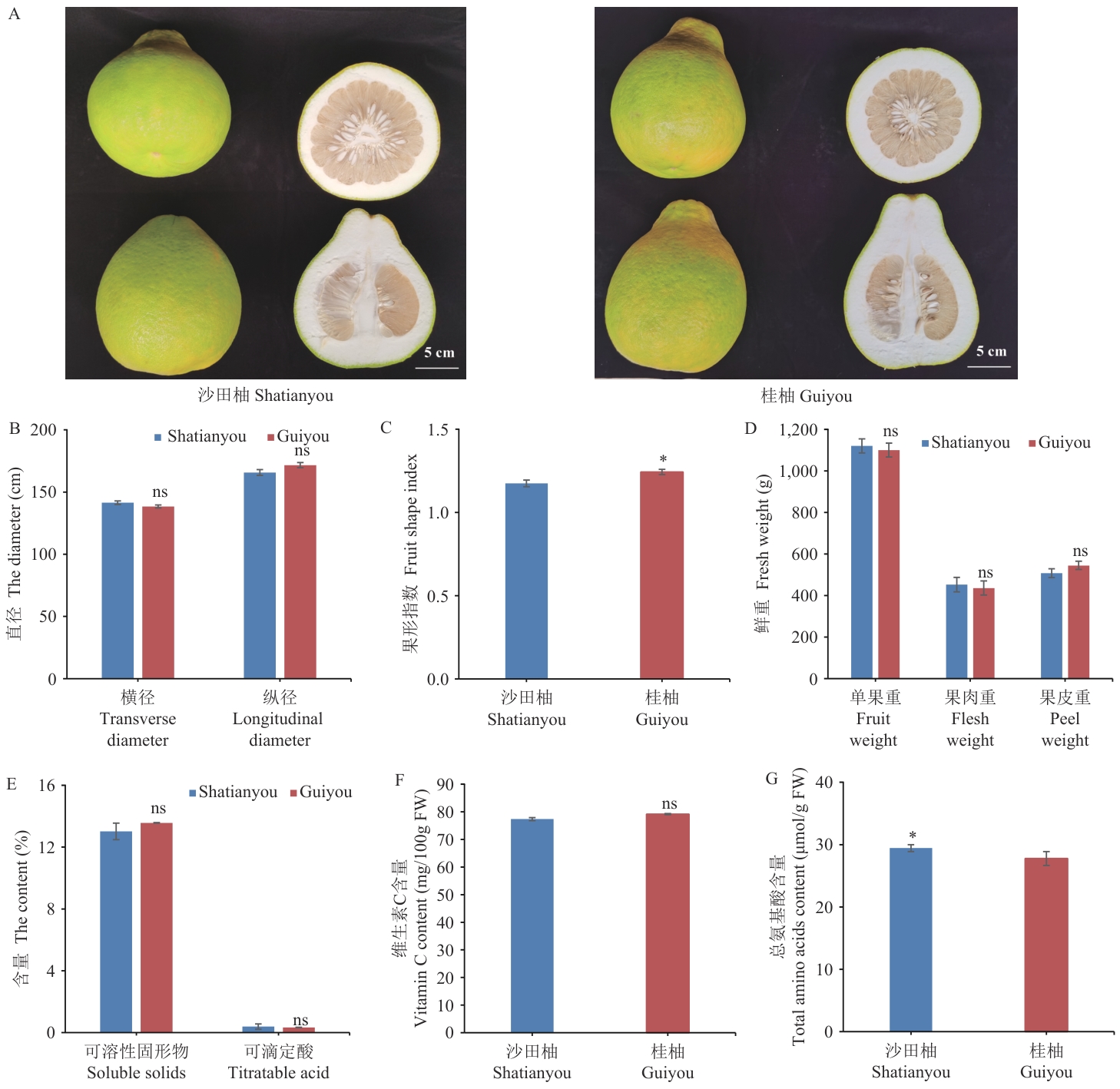
Fig. 1 Phenotypes (A) and quality indexes (B-G) of 'Guiyou No.1' and 'Shatianyou' fruits* indicates significant differences at P < 0.05 level, ns indicates no significant differences
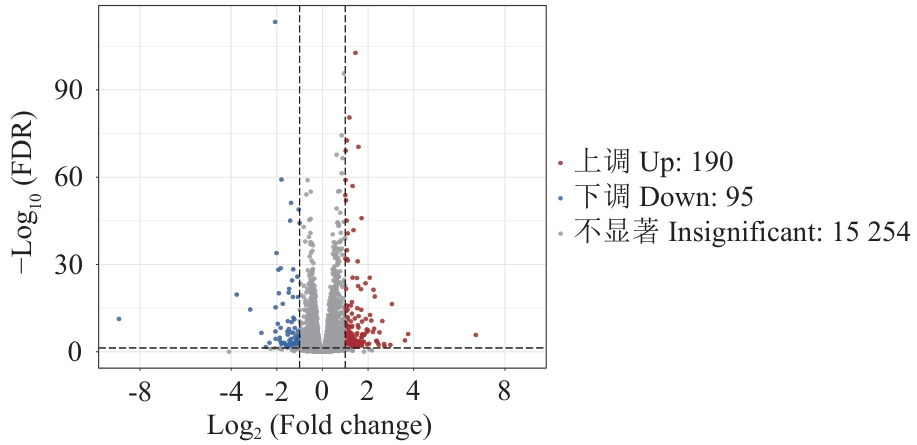
Fig. 2 Volcano of 'Guiyou No.1' and 'Shatianyou' fruits

Fig. 3 GO enrichment analysis (A), KEGG analysis of differentially expressed genes (B), and expressed heatmap involved in metabolites pathways in (C) 'Guiyou No.1' and 'Shatianyou' fruits

Fig. 4 RT-qPCR verification of differentially expressed genes in 'Guiyou No.1' and 'Shatianyou' fruits
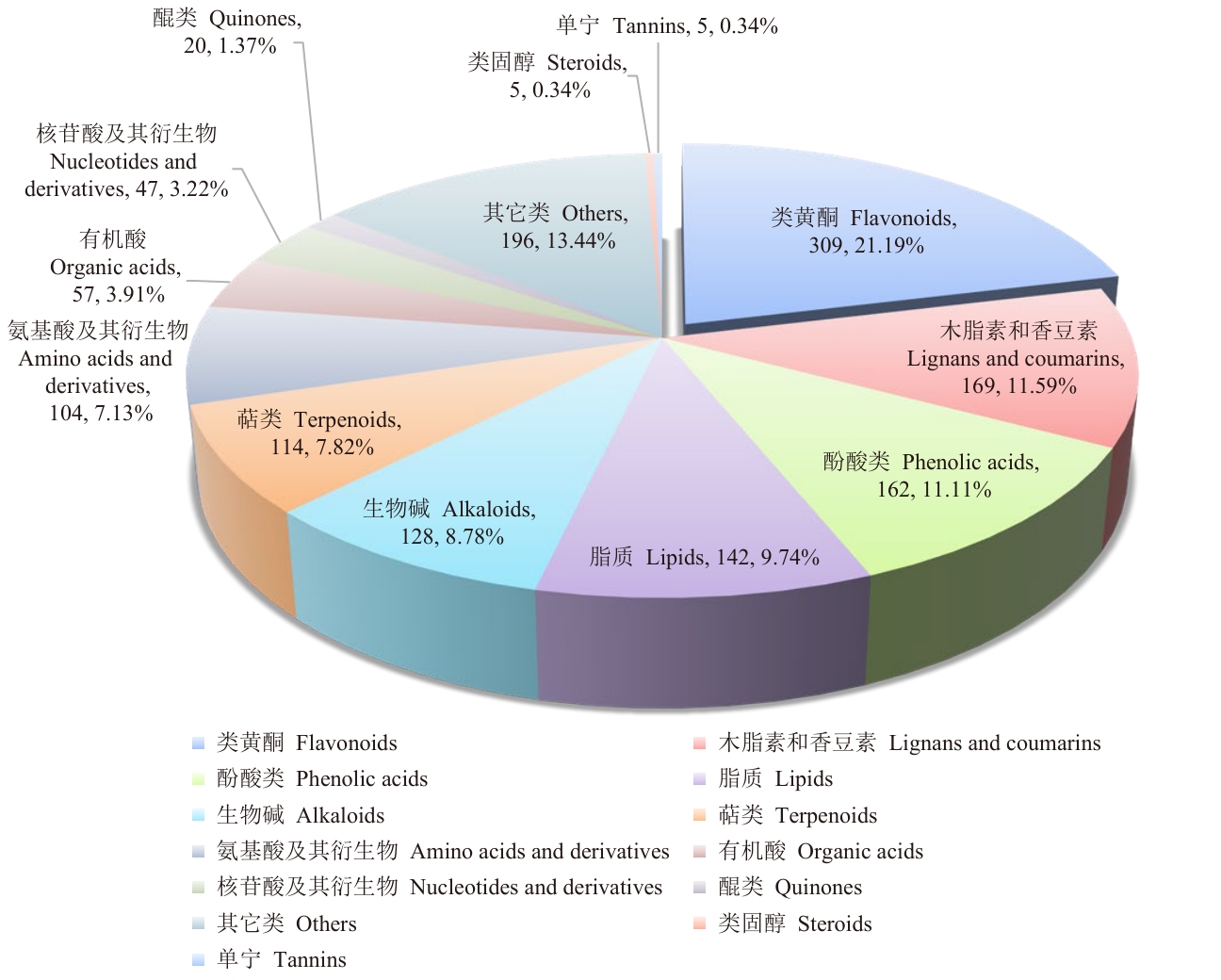
Fig. 5 Pie chart of metabolite category composition in 'Guiyou No.1' and 'Shatianyou'
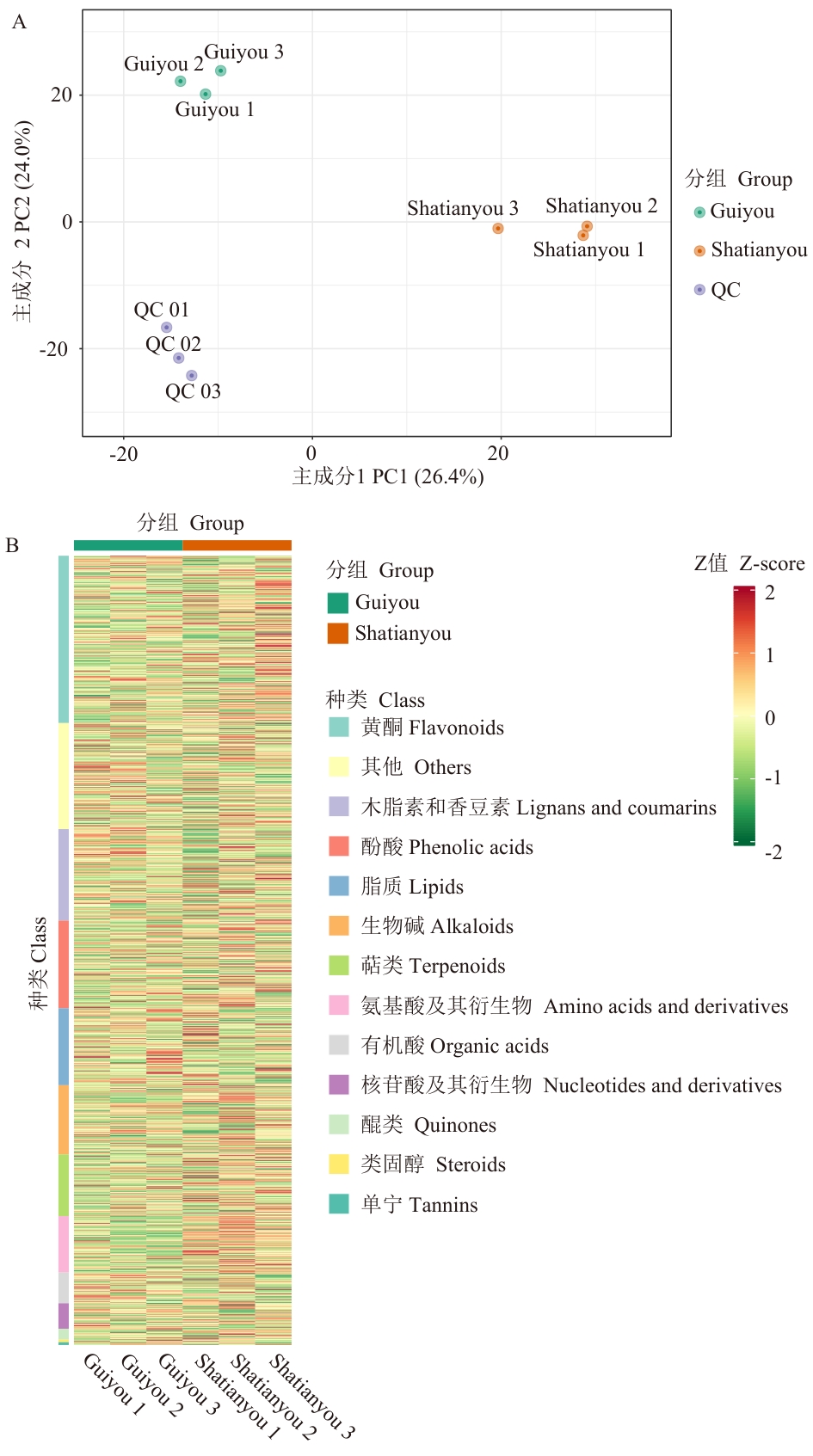
Fig. 6 Principal components analysis (A) and hierarchical clustering analysis (B) of metabolites in 'Guiyou No.1' and 'Shatianyou' fruits

Fig. 7 OPLS-DA score diagram and verification diagram of model of metabolites in 'Guiyou No.1' and 'Shatianyou' fruits, as well as analysis of differential metabolitesA: OPLS-DA score diagram. B: Verification diagram of model. C: Volcano plot. D: Classification of differential metabolites. E: The heatmap of differential metabolites

Fig. 8 Metabolic pathway enrichment analysis of differential metabolites between 'Guiyou No.1' and 'Shatianyou' fruitsA: KEGG classification plot. B: Differential abundance score plot

Fig. 9 Main common mapping pathways of transcription and metabolism in 'Guiyou No.1' and 'Shatianyou' fruitsA: Scatter plot of 9-quadrant associate analyses. B: KEGG enrichment analysis. C: Differential metabolites and genes analysis in major metabolic pathways
| [1] | 蒋黎艳, 李琳, 李佳灵, 等. 不同产地沙田柚籽油组成及风味特征差异的分析 [J]. 中国粮油学报, 2024, 39(7): 130-139. |
| Jiang LY, Li L, Li JL, et al. Analysis of composition and flavor characteristics of Citrus grandis seed oil from different regions [J]. J Chin Cereals Oils Assoc, 2024, 39(7): 130-139. | |
| [2] | 孙慧慧, 余元善, 吴继军, 等. 沙田柚的加工和综合利用研究 [J]. 食品研究与开发, 2018, 39(6): 209-214. |
| Sun HH, Yu YS, Wu JJ, et al. Study on production and comprehensive utilization of Citrus grandis osbeck [J]. Food Res Dev, 2018, 39(6): 209-214. | |
| [3] | 区燕丽, 殷佳佳, 胡曦丹, 等. 不同产区沙田柚化学成分及果实品质比较 [J]. 食品研究与开发, 2024, 45(14): 87-92. |
| Ou YL, Yin JJ, Hu XD, et al. Comparison of chemical composition and fruit quality of Shatian pomelos from different producing areas [J]. Food Res Dev, 2024, 45(14): 87-92. | |
| [4] | 罗伟雄, 马崇坚, 张宇鹏, 等. 长坝沙田柚产业现状及发展对策 [J]. 特种经济动植物, 2022, 25(10): 182-184. |
| Luo WX, Ma CJ, Zhang YP, et al. Present situation and development countermeasures of pomelo industry in Changsha Shatian [J]. Spec Econ Anim Plants, 2022, 25(10): 182-184. | |
| [5] | 区善汉, 梅正敏, 张社南, 等. "桂柚1号" 在广西的表现及栽培技术 [J]. 中国南方果树, 2022, 51(2): 8-11, 17. |
| Ou SH, Mei ZM, Zhang SN, et al. Performance of Guiyou No.1 pomelo in Guangxi and its cultural techniques [J]. South China Fruits, 2022, 51(2): 8-11, 17. | |
| [6] | 区善汉, 廖奎富, 肖远辉, 等. 自花结果沙田柚品种"桂柚1号"选育初报 [J]. 广西农业科学, 2010, 41(1): 4-6. |
| Ou SH, Liao KF, Xiao YH, et al. The selection of self-pollination pomelo variety “Guiyou 1” [J]. Guangxi Agric Sci, 2010, 41(1): 4-6. | |
| [19] | Zhang CZ. Determination of vitamin C in freshly squeezed peach juice by 2, 6- dichloroindophenol titration [J]. China Food Saf Mag, 2021, 24: 53, 55. |
| [20] | 兰天, 段国珍, 祁有朝, 等. 黑果枸杞和黄果枸杞的广泛靶向代谢组学分析 [J]. 食品科学, 2024, 45(12): 52-58. |
| Lan T, Duan GZ, Qi YC, et al. Widely targeted metabolomic analysis of Lycium ruthenicum Murr and Lycium barbarum L. var. auranticarpum K. F. Ching fruits [J]. Food Sci, 2024, 45(12): 52-58. | |
| [21] | Fraga CG, Clowers BH, Moore RJ, et al. Signature-discovery approach for sample matching of a nerve-agent precursor using liquid chromatography-mass spectrometry, XCMS, and chemometrics [J]. Anal Chem, 2010, 82(10): 4165-4173. |
| [22] | 廖奎富, 袁洁, 林林, 等. 桂柚1号与沙田柚主要特征的差异 [J]. 中国南方果树, 2022, 51(4): 6-10. |
| Liao KF, Yuan J, Lin L, et al. Differences between the main characteristics of Guiyou No.1 and Shatianyou [J]. South China Fruits, 2022, 51(4): 6-10. | |
| [23] | Liu H, Qiao JJ, Shangguan JL, et al. Effects of glutamate oxaloacetate transaminase on reactive oxygen species in Ganoderma lucidum [J]. Appl Microbiol Biotechnol, 2023, 107(5/6): 1845-1861. |
| [24] | Gutiérrez-Grijalva EP, López-Martínez LX, Contreras-Angulo LA, et al. Plant alkaloids: structures and bioactive properties [M]//Plant-derived Bioactives. Singapore: Springer Singapore, 2020: 85-117. |
| [25] | 尚军, 吴旺泽, 马永贵. 植物苯丙烷代谢途径 [J]. 中国生物化学与分子生物学报, 2022, 38(11): 1467-1476. |
| Shang J, Wu WZ, Ma YG. Phenylpropanoid metabolism pathway in plants [J]. Chin J Biochem Mol Biol, 2022, 38(11): 1467-1476. | |
| [26] | Duan YY, Liu ZW, Zhang QQ, et al. Dynamic changes in volatile and non-volatile components of Jinggang honey pomelo (Citrus maxima (L.) Osbeck) during growth revealed through an untargeted metabolomics approach [J]. Food Chem, 2025, 478: 143654. |
| [27] | Mandal SM, Chakraborty D, Dey S. Phenolic acids act as signaling molecules in plant-microbe symbioses [J]. Plant Signal Behav, 2010, 5(4): 359-368. |
| [7] | Chen CY, Huang Q, Peng X, et al. Alleviatory effects of salicylic acid on postharvest softening and cell wall degradation of ‘Jinshayou’ pummelo (Citrus maxima Merr.): a comparative physiological and transcriptomic analysis [J]. Food Chem, 2023, 424: 136428. |
| [8] | 曹小敏, 潘思轶. 柑橘属药食同源植物次生代谢物及生物活性研究进展 [J]. 食品科学, 2022, 43(23): 305-315. |
| Cao XM, Pan SY. Progress in research on secondary metabolites and biological activity of medicinal and edible Citrus plants [J]. Food Sci, 2022, 43(23): 305-315. | |
| [9] | 聂嘉琳, 赵希娟. 六种柚果实不同部位次生代谢产物的靶向筛查及其差异研究 [J]. 陕西师范大学学报: 自然科学版, 2021, 49(3): 105-116. |
| Nie JL, Zhao XJ. Targeted screening of secondary metabolites in different parts of six pummelo (Citrus grandis (L.) Osbeck) fruits and their difference investigation [J]. J Shaanxi Norm Univ Nat Sci Ed, 2021, 49(3): 105-116. | |
| [10] | Wang SC, Shen SQ, Wang C, et al. A metabolomics study in citrus provides insight into bioactive phenylpropanoid metabolism [J]. Hortic Res, 2023, 11(1): uhad267. |
| [11] | 赖瑞联, 吴如健, 赖钟雄. 植物类黄酮的分类、药理活性及其生物合成调控研究进展 [J]. 东南园艺, 2024, 12(2): 81-99. |
| Lai RL, Wu RJ, Lai ZX. Research progress on the classification, pharmacological activity, and biosynthesis regulation of plant flavonoid [J]. Southeast Hortic, 2024, 12(2): 81-99. | |
| [12] | Huang Y, Makkumrai W, Fu JL, et al. Genomic analysis provides insights into the origin and divergence of fruit flavor and flesh color of pummelo [J]. New Phytol, 2025, 245(1): 378-391. |
| [13] | Zheng WK, Zhang W, Liu DH, et al. Evolution-guided multiomics provide insights into the strengthening of bioactive flavone biosynthesis in medicinal pummelo [J]. Plant Biotechnol J, 2023, 21(8): 1577-1589. |
| [14] | Kim DS, Lee S, Park SM, et al. Comparative metabolomics analysis of citrus varieties [J]. Foods, 2021, 10(11): 2826. |
| [15] | 林凯, 胡重怡, 郭平, 等. 井冈蜜柚特色风味代谢基础解析 [J]. 江西农业学报, 2021, 33(11): 126-130, 137. |
| Lin K, Hu ZY, Guo P, et al. Analysis of flavor metabolism basis of Jinggang honey pomelo [J]. Acta Agric Jiangxi, 2021, 33(11): 126-130, 137. | |
| [16] | 梁敏妍, 黄翠银, 张羽, 等. 广东仁化县与广西容县沙田柚气候生态适应性比较 [J]. 南方农业学报, 2019, 50(11): 2496-2503. |
| Liang MY, Huang CY, Zhang Y, et al. Climatic and ecological adaptability of Shatian pomelo: a comparative analysis between Renhua of Guangdong and Rongxian of Guangxi [J]. J South Agric, 2019, 50(11): 2496-2503. | |
| [17] | 张志标, 杜小珍, 陶星星, 等. ‘桂柚1号’在广东的引种表现及栽培技术要点 [J]. 东南园艺, 2022, 10(5): 377-380. |
| Zhang ZB, Du XZ, Tao XX, et al. Introduction performance and key points of cultivation techniques of pomelo ‘Guiyou 1’ [J]. Southeast Hortic, 2022, 10(5): 377-380. | |
| [18] | 梅正敏, 区善汉, 刘冰浩, 等. 桂柚1号与沙田柚常温贮藏腐损及主要品质指标的差异 [J]. 中国南方果树, 2023, 52(1): 22-26. |
| Mei ZM, Ou SH, Liu BH, et al. Differences of decay rate and main quality index between Guiyou No.1 and Shantianyou pomelo stored under room temperature [J]. South China Fruits, 2023, 52(1): 22-26. | |
| [19] | 张彩珍. 2, 6-二氯靛酚滴定法测定鲜榨桃汁中维生素C含量 [J]. 食品安全导刊, 2021, 24: 53, 55. |
| [28] | Zhang M, Zhu SY, Ho CT, et al. Citrus polymethoxyflavones as regulators of metabolic homoeostasis: Recent advances for possible mechanisms [J]. Trends Food Sci Technol, 2021, 110: 743-753. |
| [29] | 余祥英, 陈晓纯, 李玉婷, 等. 不同产地和不同贮藏年限陈皮的化学成分研究进展 [J]. 食品安全质量检测学报, 2020, 11(12): 3809-3817. |
| Yu XY, Chen XC, Li YT, et al. Research progress on the chemical composition of Citri reticulatae of different regions and different storage time [J]. J Food Saf Qual, 2020, 11(12): 3809-3817. | |
| [30] | Dong NQ, Lin HX. Contribution of phenylpropanoid metabolism to plant development and plant-environment interactions [J]. J Integr Plant Biol, 2021, 63(1): 180-209. |
| [31] | Ashihara H, Mizuno K, Yokota T, et al. Xanthine alkaloids: occurrence, biosynthesis, and function in plants [J]. Prog Chem Org Nat Prod, 2017, 105: 1-88. |
| [32] | 闫少羽, 崔承彬, 姚新生. 黄皮属植物生物碱的研究进展 [J]. 中国药物化学杂志, 2002, 12(3): 179-186. |
| Yan SY, Cui CB, Yao XS. Research progress on plant alkaloids of genus Clusena [J]. Chin J Med Chem, 2002, 12(3): 179-186. | |
| [33] | Kretschmar JA, Baumann TW. Caffeine in citrus flowers [J]. Phytochemistry, 1999, 52(1): 19-23. |
| [1] | BAI Yu-guo, LI Wan-di, LIANG Jian-ping, SHI Zhi-yong, LU Geng-long, LIU Hong-jun, NIU Jing-ping. Growth-promoting Mechanism of Trichoderma harzianum T9131 on Astragalus membranaceus Seedlings [J]. Biotechnology Bulletin, 2025, 41(8): 175-185. |
| [2] | JIANG Tian-wei, MA Pei-jie, LI Ya-jiao, CHEN Cai-jun, LIU Xiao-xia, WANG Xiao-li. Metabolic Response Analysis of Brachypodium distachyon to Photoperiods [J]. Biotechnology Bulletin, 2025, 41(7): 237-247. |
| [3] | ZHANG Yue, BI Yu, MU Xue-nan, ZHENG Zi-wei, WANG Zhi-gang, XU Wei-hui. Biocontrol Characteristics of Strain JB7 against Fusarium graminearum [J]. Biotechnology Bulletin, 2025, 41(7): 261-271. |
| [4] | LI Cheng-hua, DOU Fei-fei, REN Yu-zhao, LIU Cai-xia, LIU Feng-lou, WANG Zhang-jun, LI Qing-feng. Effect of Exogenous Salicylic Acid on Wheat Infested with Blumeria graminis f. sp. tritici and Its Transcriptome Analysis [J]. Biotechnology Bulletin, 2025, 41(7): 272-280. |
| [5] | GUO Xiu-juan, FENG Yu, WU Rui-xiang, WANG Li-qin, YANG Jian-chun. Transcriptome Analysis of the Effect of Ca 2+ Treatment on the Seed Germination of Flax [J]. Biotechnology Bulletin, 2025, 41(7): 139-149. |
| [6] | WANG Yue-chen, HAN Xin-qi, WEI Wen-min, CUI Zhao-lan, LUO Yang-mei, CHEN Peng-ru, WANG Hai-gang, LIU long-long, ZHANG Li, WANG Lun. Biological Basis Study for Grain Shattering in Proso Millet and Identification of Genes Regulating Grain Shattering [J]. Biotechnology Bulletin, 2025, 41(7): 164-171. |
| [7] | HU Ruo-qun, ZENG Jing-jing, LIANG Wan-feng, CAO Jia-yu, HUANG Xiao-wei, LIANG Xiao-ying, QIU Ming-yue, CHEN Ying. Integrated Transcriptome and Metabolome Analysis to Explore the Carotenoid Synthesis and Metabolism Mechanism in Anoectochilus roxburghii under Different Shading Conditions [J]. Biotechnology Bulletin, 2025, 41(5): 231-243. |
| [8] | YANG Chao-jie, ZHANG Lan, CHEN Hong, HUANG Juan, SHI Tao-xiong, ZHU Li-wei, CHEN Qing-fu, LI Hong-you, DENG Jiao. Functional Identification of the Transcription Factor Gene FtbHLH3 in Regulating Flavonoid Biosynthesis in Fagopyrum tataricum [J]. Biotechnology Bulletin, 2025, 41(4): 134-144. |
| [9] | HUANG Jin-heng, HUANG Xi, ZHANG Jia-yan, ZHOU Xin-yu, LIAO Pei-ran, YANG Quan. Identification and Expression Analysis of the C3H Gene Family in Grona styracifolia across Different Varieties [J]. Biotechnology Bulletin, 2025, 41(4): 243-255. |
| [10] | ZHAO Chang-yan, LIU Yan-tao, JIA Xiu-ping, LIU Sheng-li, LEI Zhong-hua, WANG Peng, ZHU Zhi-feng, DONG Hong-ye, LYU Zeng-shuai, DUAN Wei, WAN Su-mei. Research Progress in the Effect of Melatonin on Crop Physiological Mechanism under Saline-alkali Stress [J]. Biotechnology Bulletin, 2025, 41(2): 18-29. |
| [11] | LI Yan-wei, YANG Yan-yan, SUN Ya-ling, HUO Yu-meng, WANG Zhen-bao, LIU Bing-jiang. Regulation Mechanism of Plant Hormones Related to Onion Bulb Enlargement and Development Based on Transcriptome Analysis [J]. Biotechnology Bulletin, 2025, 41(2): 187-201. |
| [12] | YANG Yong, CAO Rui, KANG Xiao-xiao, LIU Jing, WANG Xuan, ZHANG Hai-e. Identification and Expression Analysis of 13 Gene Families in the Chestnut Flavonoid Synthesis Pathway [J]. Biotechnology Bulletin, 2025, 41(2): 270-283. |
| [13] | KOU Bei-sen, CHENG Meng-meng, GUO Xue-qin, GE Bin, LIU Di, LU Hai, LI Hui. Effects of Histone Deacetylase Inhibitor TSA Treatment on the Stem Development of Poplar [J]. Biotechnology Bulletin, 2025, 41(1): 240-251. |
| [14] | PEI Xu-juan, DI Jing-yi, LIU Hao, GAO Wei-xia. Exploration of Regulatory Elements for Hyaluronic Acid Molecular Weight in Streptococcus zooepidemicus via Transcriptome Analysis [J]. Biotechnology Bulletin, 2025, 41(1): 347-356. |
| [15] | NIE Zhu-xin, GUO Jin, QIAO Zi-yang, LI Wei-wei, ZHANG Xue-yan, LIU Chun-yang, WANG Jing. Transcriptome Analysis of the Anthocyanin Biosynthesis in the Fruit Development Processes of Lycium ruthenicum Murr. [J]. Biotechnology Bulletin, 2024, 40(8): 106-117. |
| Viewed | ||||||
|
Full text |
|
|||||
|
Abstract |
|
|||||
