







Biotechnology Bulletin ›› 2026, Vol. 42 ›› Issue (1): 95-104.doi: 10.13560/j.cnki.biotech.bull.1985.2025-0493
Previous Articles Next Articles
ZHANG Yue1,2( ), DAI Yue-hua1,2, ZHANG Ying-ying1,2, LI Ao-hui1,2, LI Chu-hui1,2, XUE Jin-ai2, QIN Hui-bin1, CHEN Yan1, NIE Meng-en1, ZHANG Hai-ping1()
Received:2025-05-13
Online:2026-01-26
Published:2026-02-04
Contact:
ZHANG Hai-ping
E-mail:953349970@qq.com;nkyzhp@126.com
ZHANG Yue, DAI Yue-hua, ZHANG Ying-ying, LI Ao-hui, LI Chu-hui, XUE Jin-ai, QIN Hui-bin, CHEN Yan, NIE Meng-en, ZHANG Hai-ping. Cloning and Functional Analysis of the Soybean Enoyl-CoA Reductase ECR14 Gene[J]. Biotechnology Bulletin, 2026, 42(1): 95-104.
Table 1 Statistics of cis-acting elements of GmECR14 gene
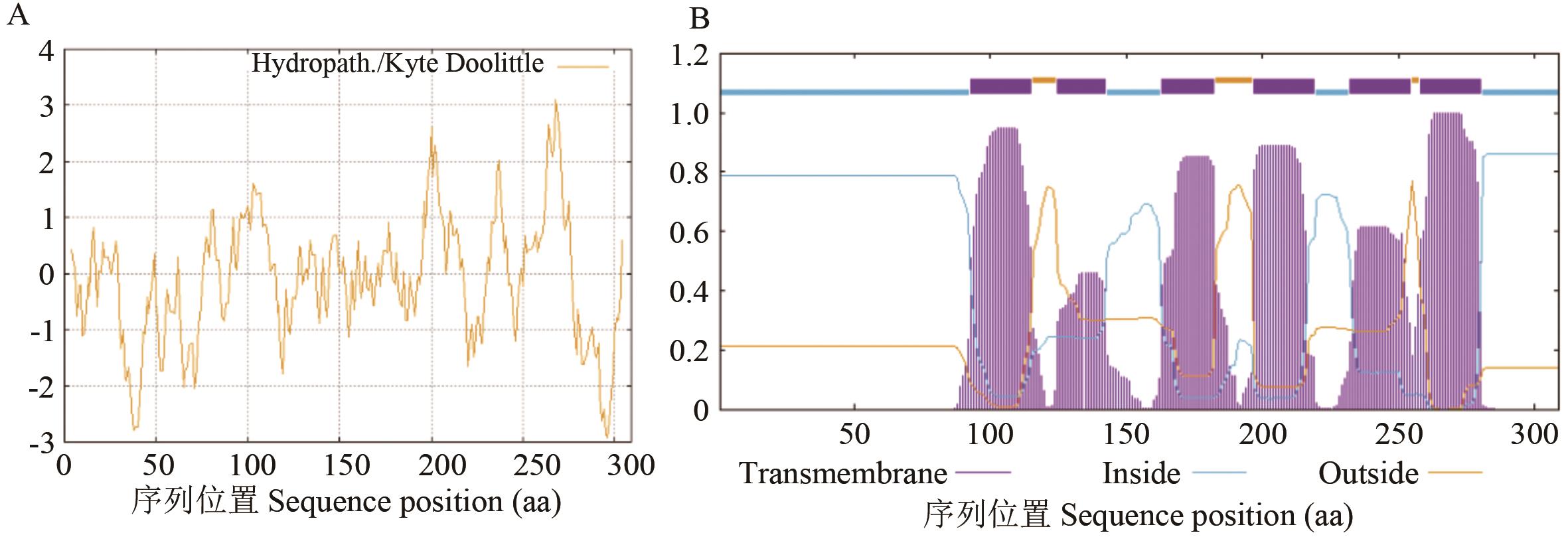
Fig. 1 Analysis of the GmECR14 protein's physicochemical characteristicsA: Forecasting the hydrophilicity profile for the GmECR14 protein. B: Prediction of the GmECR14 protein’s transmembrane domain
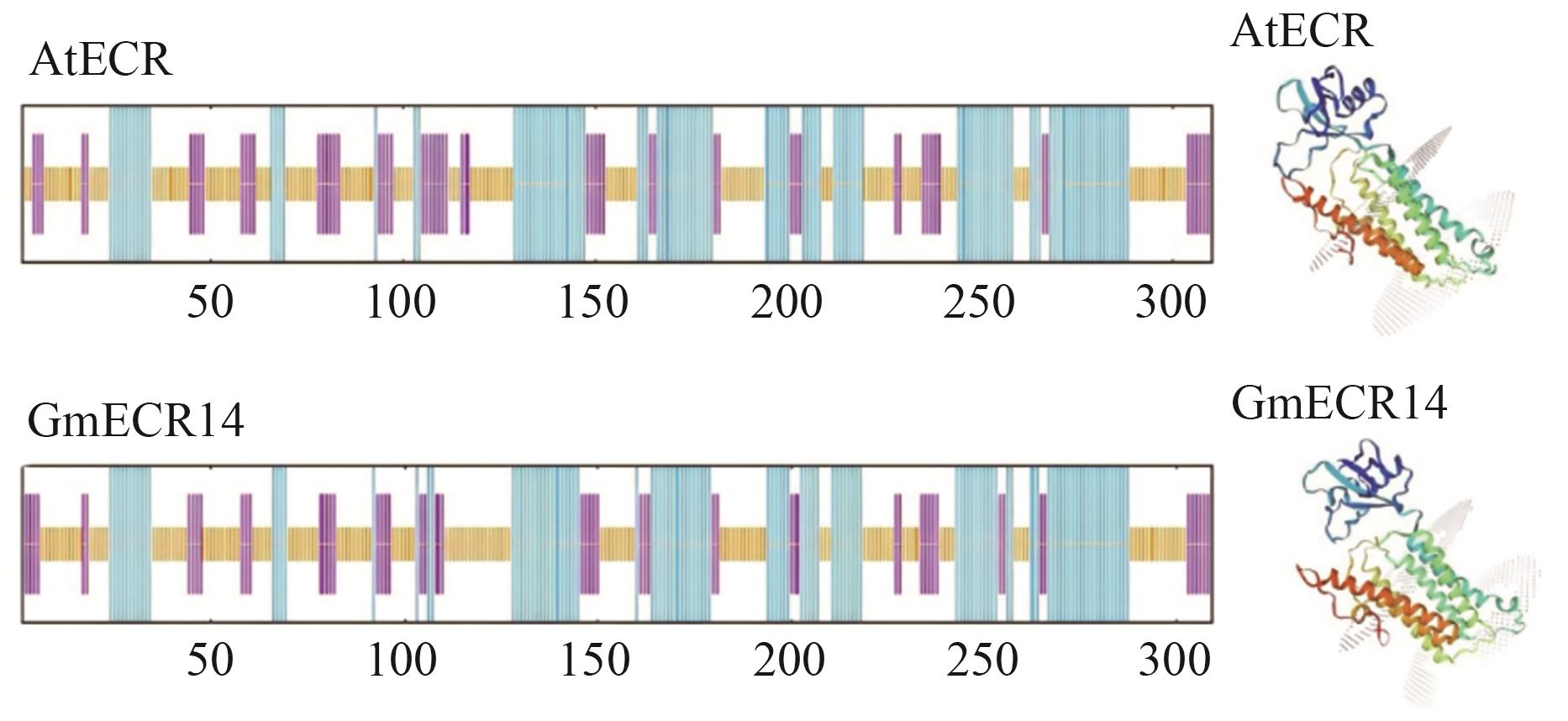
Fig. 2 Secondary structure (left) and tertiary structure (right) of soybean GmECR14 proteins
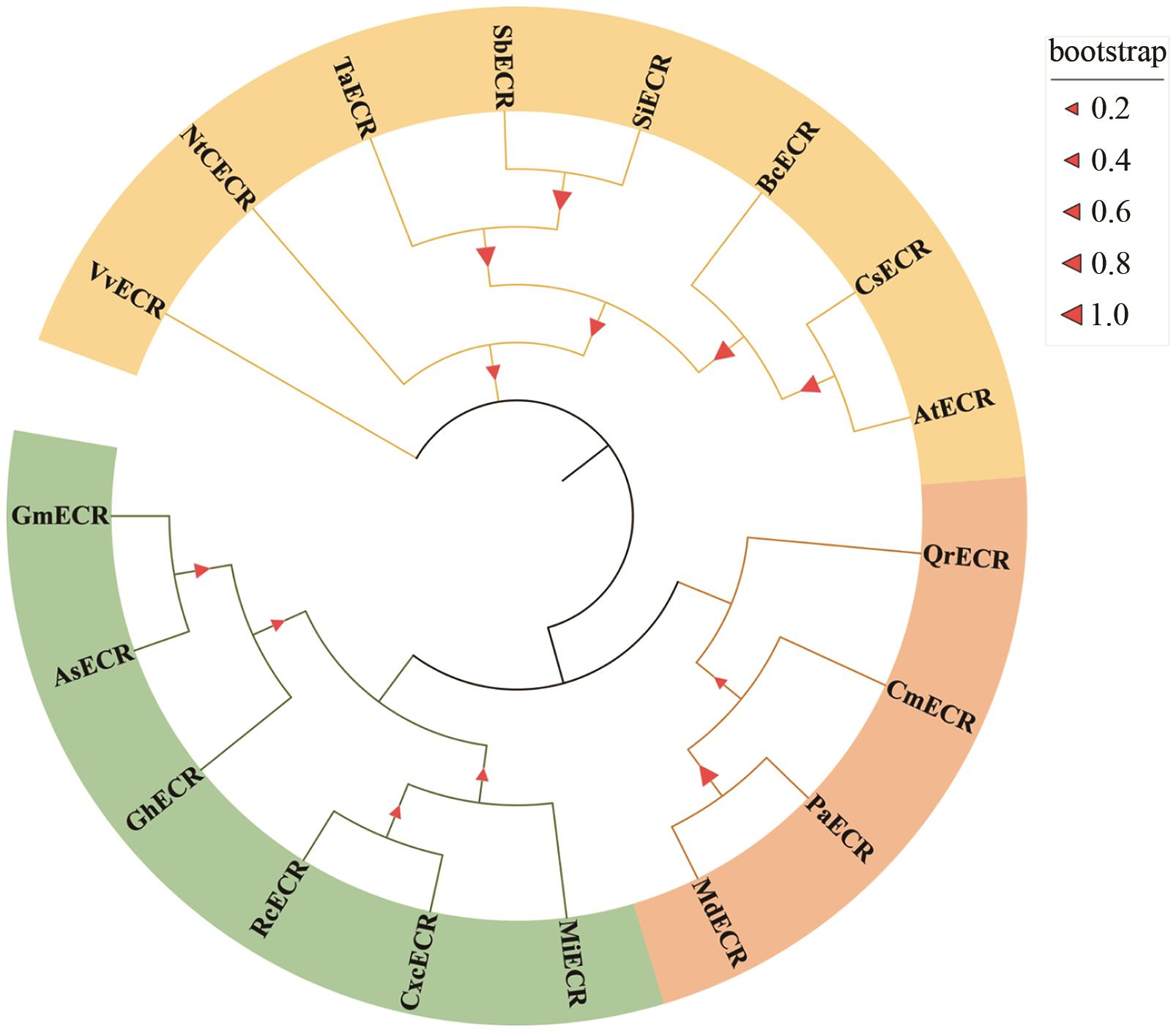
Fig. 3 Phylogenetic tree of GmECR 14 and ECR proteins of other plant speciesGm: Glycine max. At: Arabidopsis thaliana. Bc: Brassica napus L. Cs: Citrus sinensis (L) Osbeck. Si: Setaria italica. Mi: Mangifera indica L. Sb: Sorghum bicolor L. Md: Malus pumila Mill. Cm: Lagenaria Siceraria. Qr: Castanea mollissima Blume. Gh: Gossypium hirsutum. Rc: Ricinus communis L. Pa: Prunus pseudocerasus. As: Arachis hypogaea L. Ta: Triticum aestivum L. Vv: Vitis vinifera L. Cxc: Citrus reticulate Blanco. Ntc: Nicotiana tabacum L.
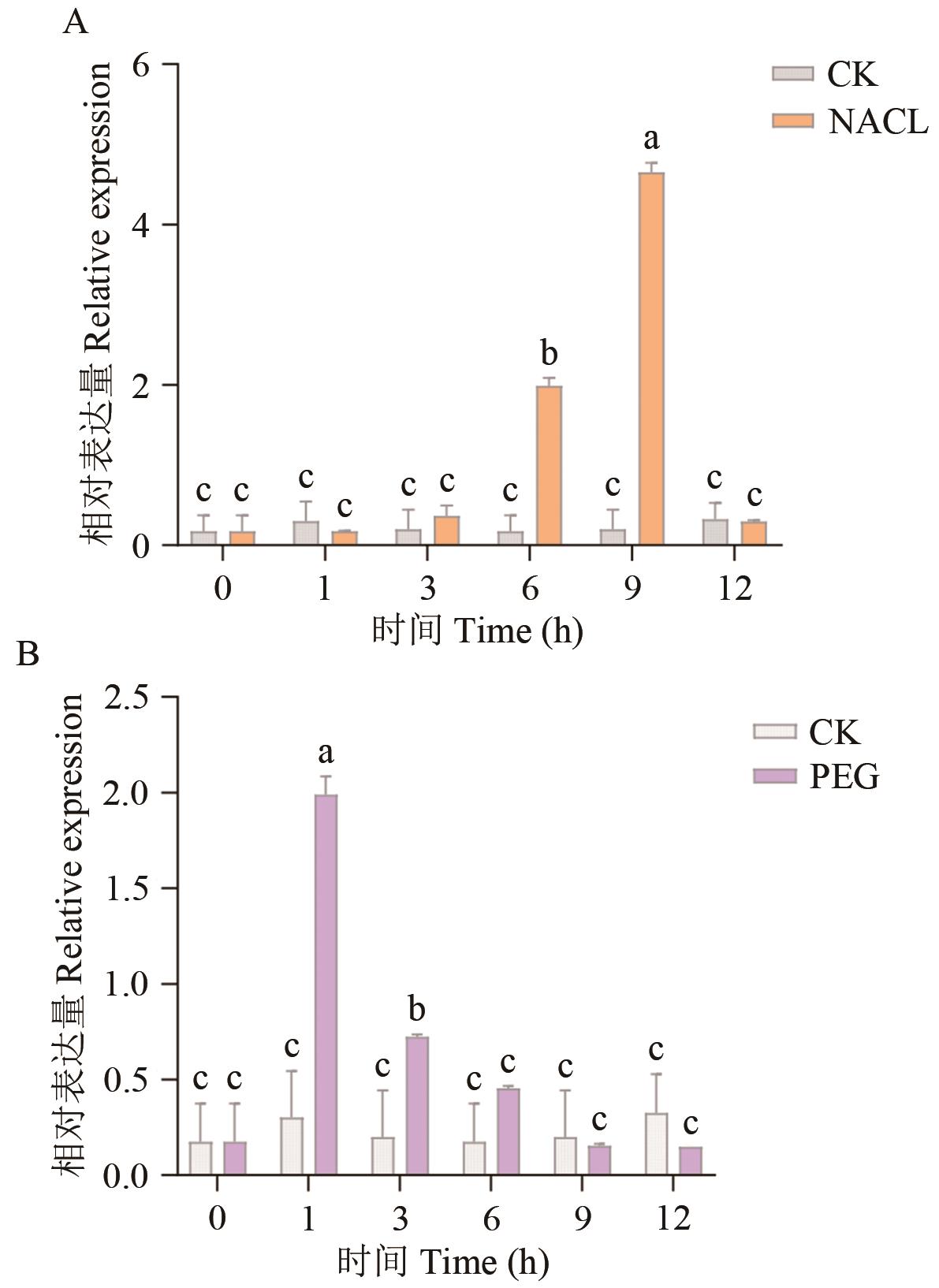
Fig. 4 Analysis of expression pattern of GmECR14Error bars indicate standard errors. The different letters in the figure indicate significant differences (P<0.05). The same below
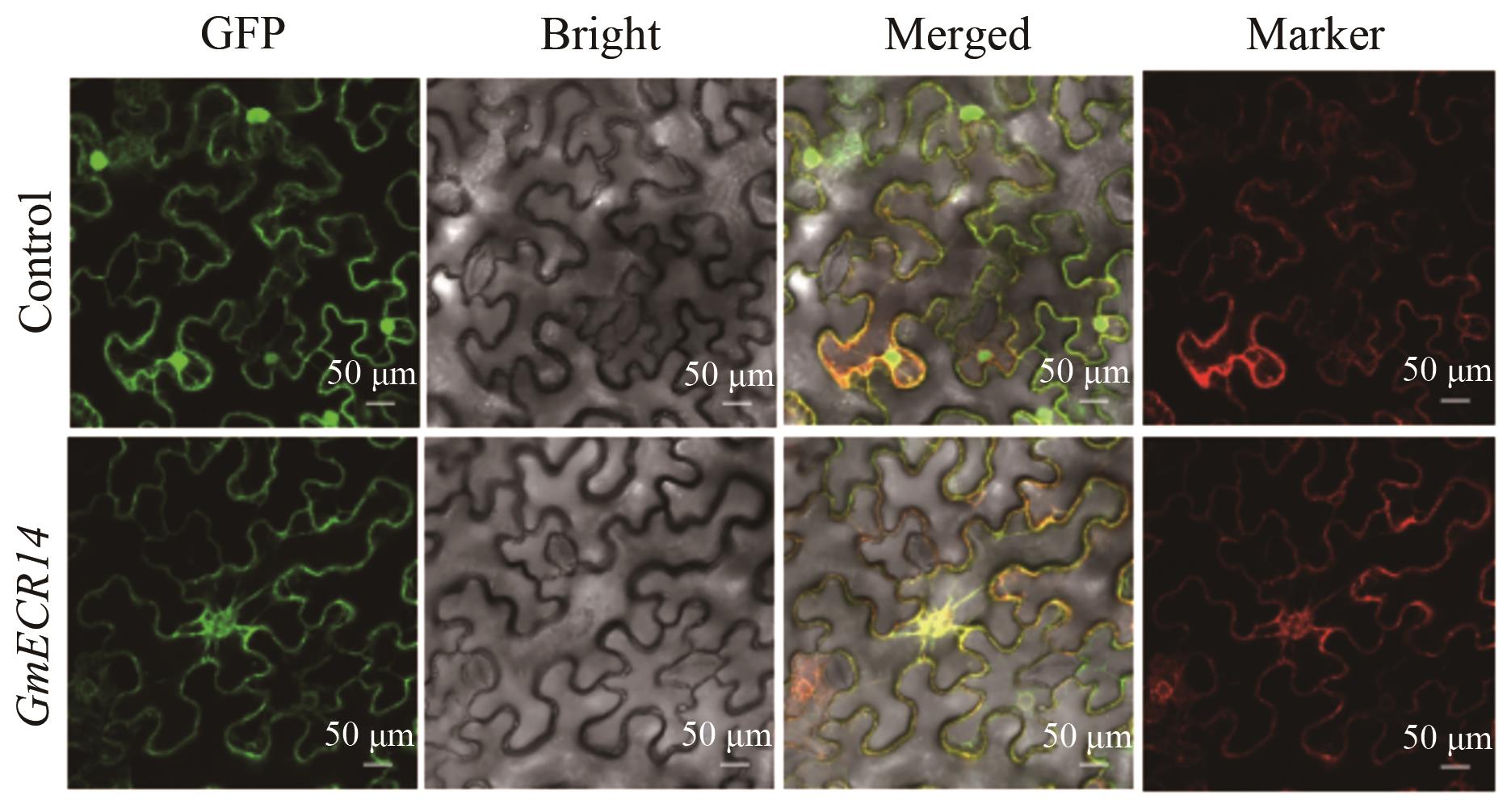
Fig. 5 Subcellular localization of GmECR14 in Nicotiana tabacum
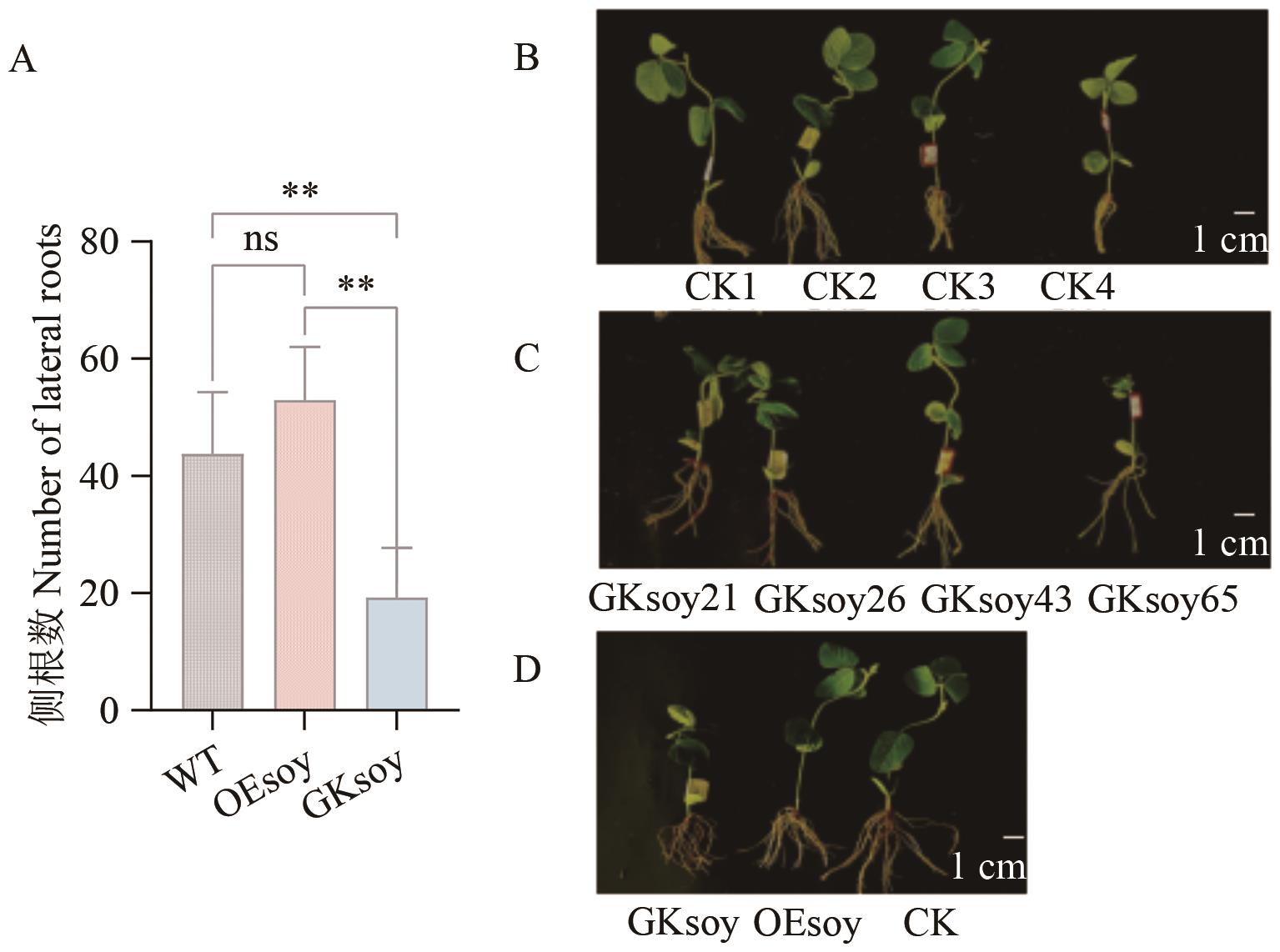
Fig. 6 Soybean hairy root phenotypeA: Difference in the number of lateral roots of soybean hairy roots under different treatments. B: Control hairy roots. C: Knockout-positive soybean hairy roots. D: Comparison of lateral roots of soybean hairy roots under different treatments
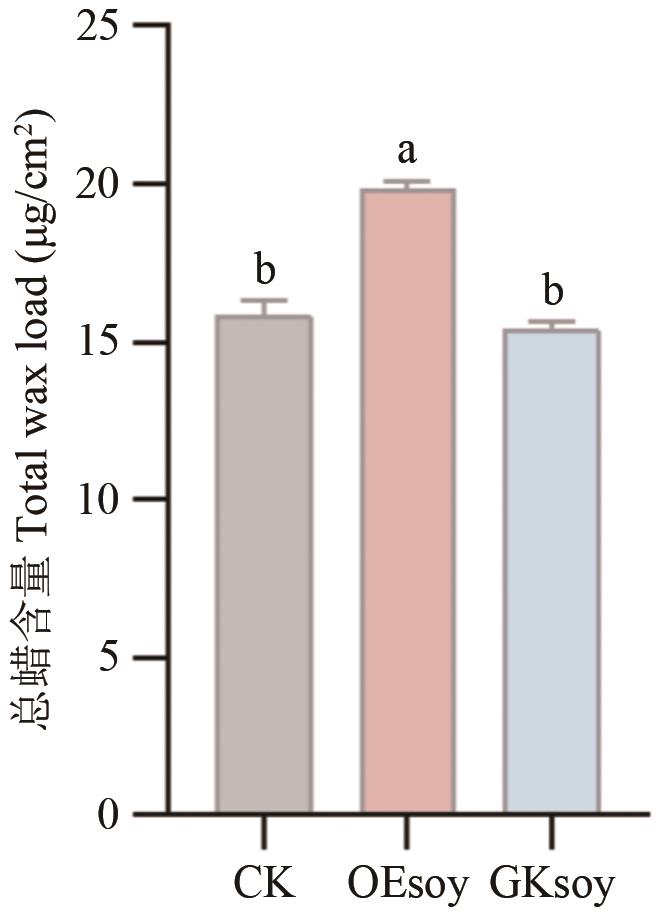
Fig. 7 Total wax load of soybean hairy roots
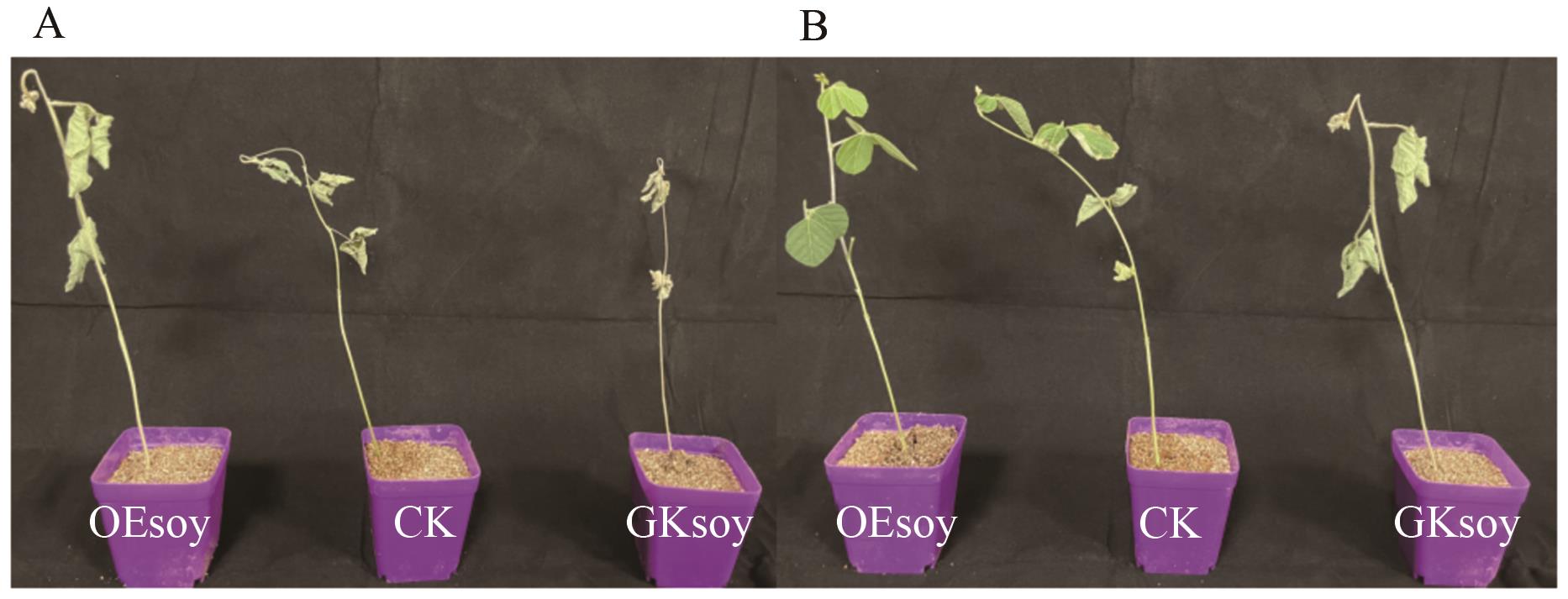
Fig. 8 Phenotypes of soybean hairy roots under drought and salt treatments
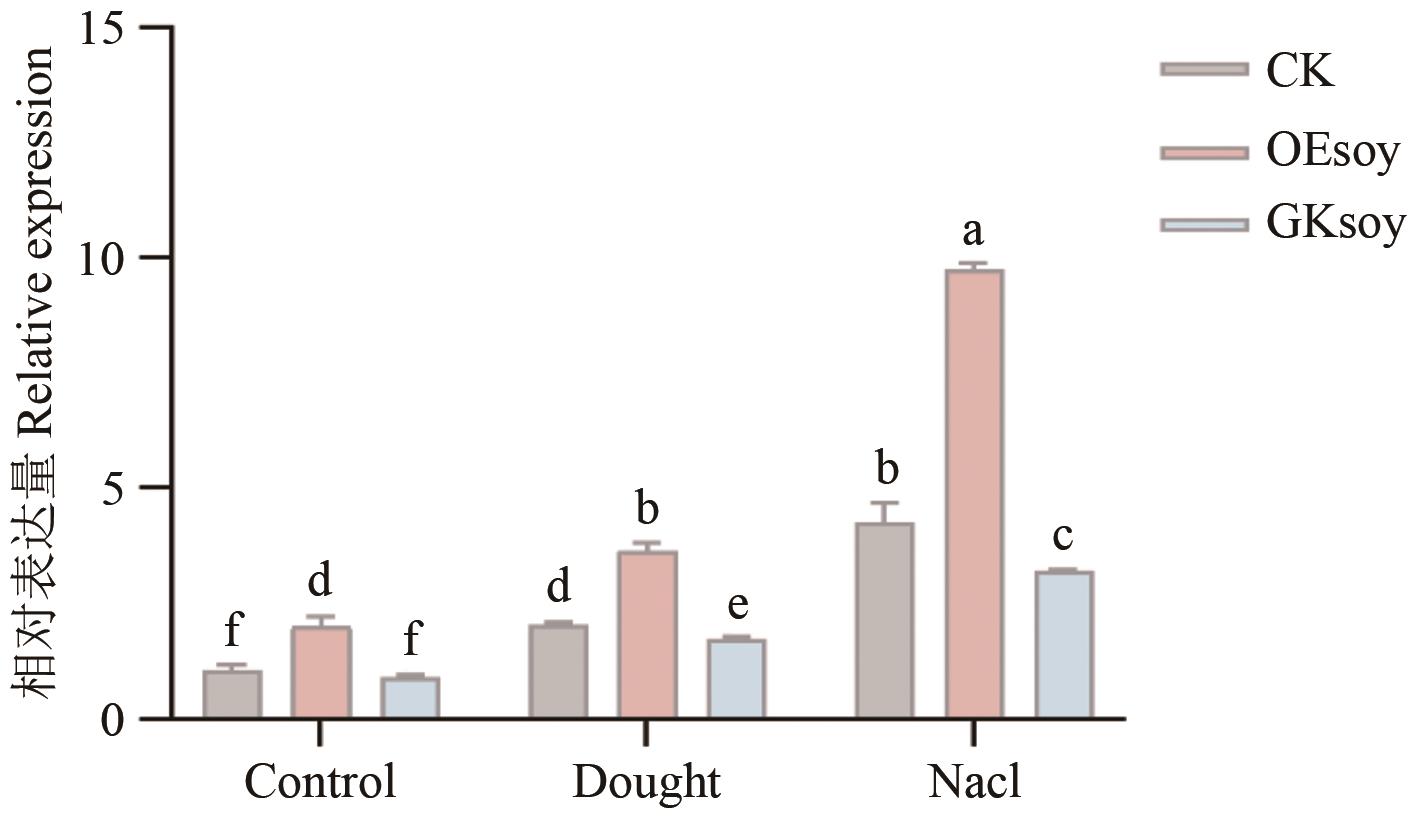
Fig. 9 Relative expressions of GmECR14 gene in the soybean hairy roots under drought and salt treatments
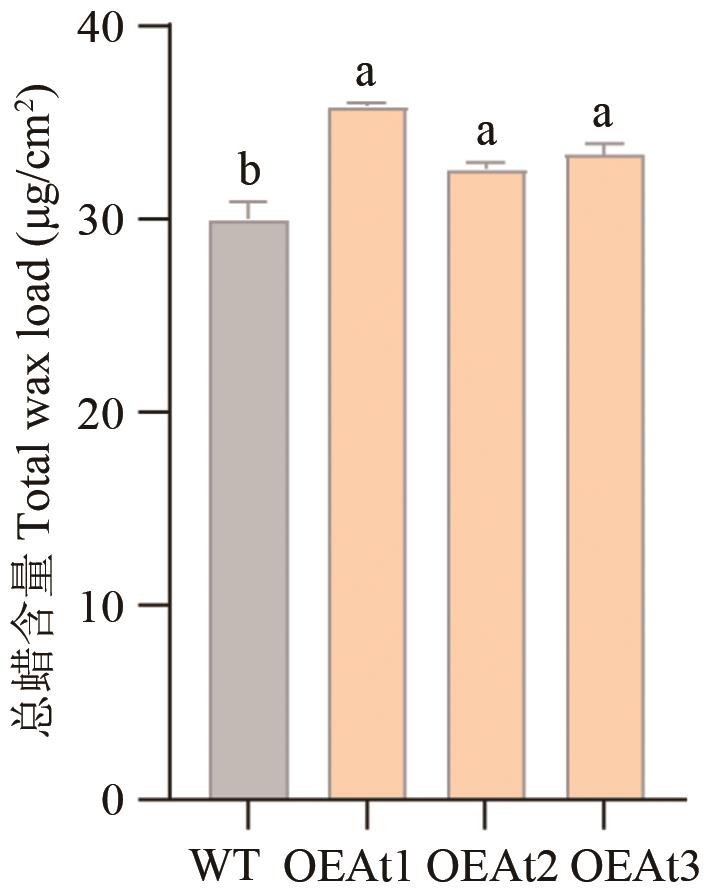
Fig. 10 Total wax load in the leaves of wild-type and GmECR14-transgenec lines
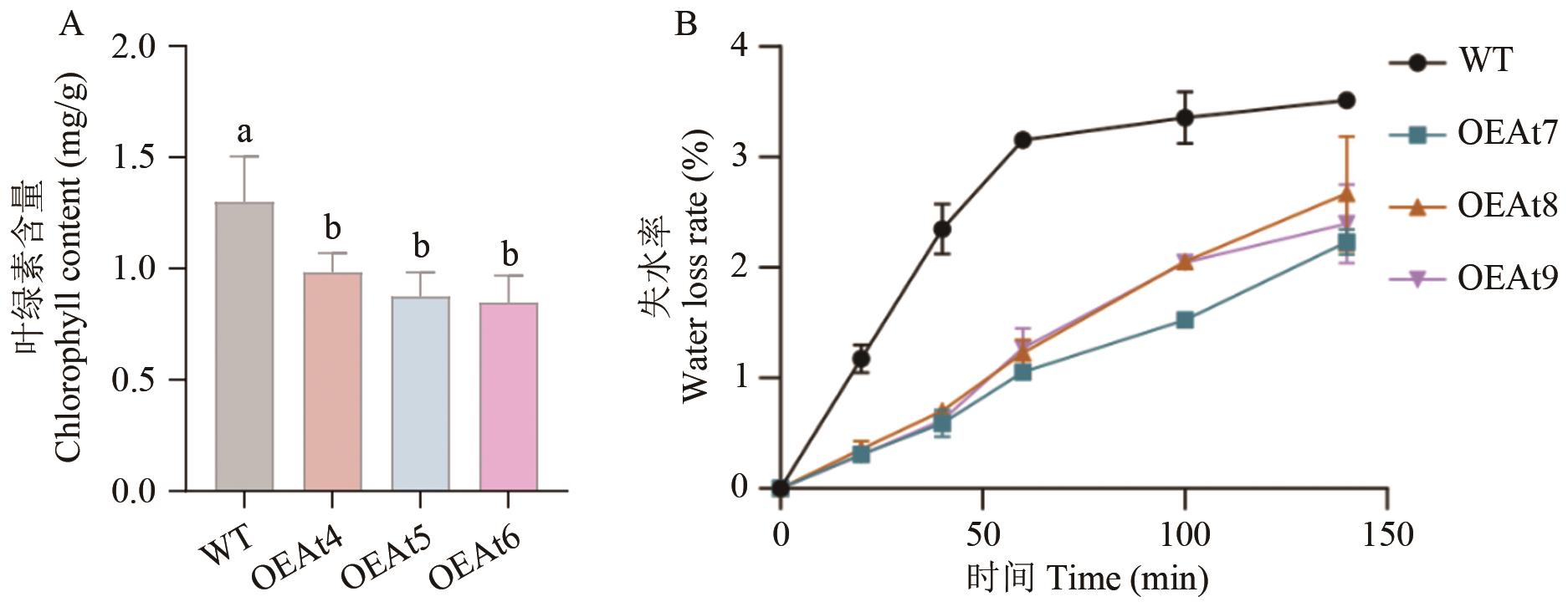
Fig. 11 Variations in GmECR14 heterologous expression of Arabidopsis permeability
| [1] | Jetter R, Riederer M. Localization of the transpiration barrier in the epi- and intracuticular waxes of eight plant species: water transport resistances are associated with fatty acyl rather than alicyclic components [J]. Plant Physiol, 2016, 170(2): 921-934. |
| [2] | 武瑞鑫, 刘贵波. 禾本科植物表皮蜡质形成及其与环境因素的关系 [J]. 草学, 2021(4): 9-18. |
| Wu RX, Liu GB. Research progress on the epidermal wax of Gramineae plants and its responses to environment stress [J]. J Grassland Forage Sci, 2021(4): 9-18. | |
| [3] | Jian L, Kang K, Choi Y, et al. Mutation of OsMYB60 reduces rice resilience to drought stress by attenuating cuticular wax biosynthesis [J]. Plant J, 2022, 112(2): 339-351. |
| [4] | 杨帆. 水分亏缺对棉花叶片表皮蜡质与角质及基因表达谱的影响 [D]. 石河子: 石河子大学, 2022. |
| Yang F. Impact of water deficiency on leaf cuticle wax and cutin and gene expressio networks in cotton (Gossypium hirsutum L.) [D]. Shihezi: Shihezi University, 2022. | |
| [5] | Haslam TM, Kunst L. Extending the story of very-long-chain fatty acid elongation [J]. Plant Sci, 2013, 210: 93-107. |
| [6] | 王立山, 丁兵, 李玉花, 等. 植物表皮蜡质合成转运调控相关基因与干旱响应的研究进展 [J]. 园艺学报, 2018, 45(9): 1831-1843. |
| Wang LS, Ding B, Li YH, et al. Reaserch progress of plant cuticular wax biosynthesis, export and regulation related genes responsed to drought [J]. Acta Hortic Sin, 2018, 45(9): 1831-1843. | |
| [7] | Batsale M, Bahammou D, Fouillen L, et al. Biosynthesis and functions of very-long-chain fatty acids in the responses of plants to abiotic and biotic stresses [J]. Cells, 2021, 10(6): 1284. |
| [8] | Fehling E, Mukherjee KD. Acyl-CoA elongase from a higher plant (Lunaria annua): metabolic intermediates of very-long-chain acyl-CoA products and substrate specificity [J]. Biochim Biophys Acta Lipds Lipid Metab, 1991, 1082(3): 239-246. |
| [9] | 李亚利, 孔任秋, 高宏. 蜡酯生物合成研究进展 [J]. 安徽农业科学, 2013, 41(2): 512-515, 518. |
| Li YL, Kong RQ, Gao H. Research progress on wax ester biosynthesis [J]. J Anhui Agric Sci, 2013, 41(2): 512-515, 518. | |
| [10] | 李莉, 赵米贤, 王建华, 等. 植物表皮蜡质合成、运输及调控机制研究进展 [J]. 中国农业大学学报, 2023, 28(7): 1-19. |
| Li L, Zhao MX, Wang JH, et al. Research progress on genetic mechanisms of plant epidermal wax synthesis, transport and regulation [J]. J China Agric Univ, 2023, 28(7): 1-19. | |
| [11] | Gao YL, Zhang ZX, Cheng J, et al. Genome-wide identification of the CER1 gene family in apple and response of MdCER1-1 to drought stress [J]. Funct Integr Genom, 2022, 23(1): 17. |
| [12] | Kohlwein SD, Eder S, Oh CS, et al. Tsc13p is required for fatty acid elongation and localizes to a novel structure at the nuclear-vacuolar interface in Saccharomyces cerevisiae . [J]. Mol Cell Biol, 2001, 21(1): 109-125. |
| [13] | Gable K, Garton S, Napier JA, et al. Functional characterization of the Arabidopsis thaliana orthologue of Tsc13p, the enoyl reductase of the yeast microsomal fatty acid elongating system [J]. J Exp Bot, 2004, 55(396): 543-545. |
| [14] | Zheng HQ, Rowland O, Kunst L. Disruptions of the Arabidopsis Enoyl-CoA reductase gene reveal an essential role for very-long-chain fatty acid synthesis in cell expansion during plant morphogenesis [J]. Plant Cell, 2005, 17(5): 1467-1481. |
| [15] | Liu DC, Guo WF, Guo XY, et al. Ectopic overexpression of CsECR from navel orange increases cuticular wax accumulation in tomato and enhances its tolerance to drought stress [J]. Front Plant Sci, 2022, 13: 924552. |
| [16] | 李婷婷. 小麦旗叶表皮蜡质QTL定位及烷烃合成酶候选基因的功能分析 [D]. 杨凌: 西北农林科技大学, 2019. |
| Li TT. QTL mapping of flag leaf cuticular wax and functional analysis of candidate alkane synthase gene in wheat [D]. Yangling: Northwest A & F University, 2019. | |
| [17] | Park JA, Kim TW, Kim SK, et al. Silencing of NbECR encoding a putative enoyl-CoA reductase results in disorganized membrane structures and epidermal cell ablation in Nicotiana benthamiana [J]. FEBS Lett, 2005, 579(20): 4459-4464. |
| [18] | 刘虹洁, 王金星, 刘昭军, 等. 大豆种子蛋白和油脂含量调控的研究进展 [J]. 热带亚热带植物学报, 2022, 30(6): 791-800. |
| Liu HJ, Wang JX, Liu ZJ, et al. Research progress on protein and oil contents of soybean seeds [J]. J Trop Subtrop Bot, 2022, 30(6): 791-800. | |
| [19] | 王芳, 于璐, 齐泽铮, 等. 大豆镰刀菌根腐病拮抗菌的筛选及生防效果 [J]. 生物技术通报, 2024, 40(7): 216-225. |
| Wang F, Yu L, Qi ZZ, et al. Screening and biocontrol effect of antagonistic bacteria against soybean root rot [J]. Biotechnol Bull, 2024, 40(7): 216-225. | |
| [20] | Manna M, Thakur T, Chirom O, et al. Transcription factors as key molecular target to strengthen the drought stress tolerance in plants [J]. Physiol Plant, 2021, 172(2): 847-868. |
| [21] | 刘露. 大豆GmNHL1基因的克隆及对干旱、盐胁迫功能分析 [D]. 长春: 吉林农业大学, 2023. |
| Liu L. Cloning and functional analysis of GmNHL1 gene in soybean under drought and salt stress [D]. Changchun: Jilin Agricultural University, 2023. | |
| [22] | 苗淑楠, 高宇, 李昕儒, 等. 大豆GmPDAT1参与油脂合成和非生物胁迫应答的功能分析 [J]. 生物技术通报, 2023, 39(2): 96-106. |
| Miao SN, Gao Y, Li XR, et al. Functional analysis of soybean GmPDAT1 genes in the oil biosynthesis and response to abiotic stresses [J]. Biotechnol Bull, 2023, 39(2): 96-106. | |
| [23] | 何小红, 张习敏, 张宇斌, 等. 遵辣一号及其墨西哥野生祖先种BPC转录因子家族的差异 [J]. 分子植物育种, 2018, 16(8): 2429-2435. |
| He XH, Zhang XM, Zhang YB, et al. Differences in the BPC transcription factor family between Capsicum annuum L. Zunla-1 and its wild ancestor C. annuum var. glabriusculum [J]. Mol Plant Breed, 2018, 16(8): 2429-2435. | |
| [24] | 张飞. 大豆GmPDAT1-B和GmDGAT3-2基因的克隆及功能分析 [D]. 太谷: 山西农业大学, 2019. |
| Zhang F. Cloning and functional characterization of GmPDAT1-B and GmDGAT3-2 genes in Glycine max [D]. Taigu: Shanxi Agricultural University, 2019. | |
| [25] | 苗淑楠. 大豆GmPDAT1参与油脂合成和非生物胁迫应答的功能分析 [D]. 太谷: 山西农业大学, 2023. |
| Miao SN. Functional analysis of soybean GmPDAT1 genes in oil biosynthesis and response to abiotic stresses [D]. Taigu: Shanxi Agricultural University, 2023. | |
| [26] | 薛迎斌, 宋佳, 李枭艺, 等. 大豆GmMADS4基因克隆、亚细胞定位及功能分析 [J]. 华南农业大学学报, 2023, 44(3): 420-429. |
| Xue YB, Song J, Li XY, et al. Cloning, subcellular localization and functional analysis of GmMADS4 in soybean [J]. J South China Agric Univ, 2023, 44(3): 420-429. | |
| [27] | 刘爽. 适用于发根农杆菌介导的毛状根转化的高效 CRISPR/Cas9基因编辑体系的建立 [D]. 聊城: 聊城大学, 2022. |
| Liu S. Establishment of an efficient CRISPR/Cas9 gene editing system in Agrobacterium rhizogene-mediated hairy root transformation [D]. Liaocheng: Liaocheng University, 2022. | |
| [28] | 刘慧娟, 冯志国, 李先文, 等. 采用农杆菌花序浸染法获得转crtB基因拟南芥 [J]. 湖北农业科学, 2013, 52(1): 200-202. |
| Liu HJ, Feng ZG, Li XW, et al. Obtaining crtB transgenic Arabidopsis thaliana by Agrobacterium tumefaciens-Floral dip method [J]. Hubei Agric Sci, 2013, 52(1): 200-202. | |
| [29] | Millar AA, Clemens S, Zachgo S, et al. CUT1 an Arabidopsis gene required for cuticular wax biosynthesis and pollen fertility, encodes a very-long-chain fatty acid condensing enzyme [J]. Plant Cell, 1999, 11(5): 825-838. |
| [30] | 李娇娇. 苹果蜡质合成相关基因MdLACS1的克隆和功能鉴定 [D]. 泰安: 山东农业大学, 2023. |
| Li JJ. Molecular cloning and functional characterization of wax synthesis related gene MdLACS1 in apple [D]. Tai’an: Shandong Agricultural University, 2023. | |
| [31] | Ming Chen GH. The essential nature of sphingolipids in plants as revealed by the functional identification and characterization of the arbidopsis LCB1 subunit of serine palmitoyltransferase [J]. Plant Cell, 2006, 18(12): 3576-3593. |
| [32] | Qin YM, Hu CY, Pang Y, et al. Saturated very-long-chain fatty acids promote cotton fiber and Arabidopsis cell elongation by activating ethylene biosynthesis [J]. Plant Cell, 2007, 19(11): 3692-3704. |
| [33] | Pornsiriwong W, Estavillo GM, Chan KX, et al. A chloroplast retrograde signal, 3'-phosphoadenosine 5'-phosphate, acts as a secondary messenger in abscisic acid signaling in stomatal closure and germination [J]. eLife, 2017, 6: e23361. |
| [34] | Dubey A, Kumar A, Ahmad Malla M, et al. Approaches for the amelioration of adverse effects of drought stress on crop plants [J]. Front Biosci (Landmark Ed), 2021, 26(10): 928. |
| [35] | Nadeem M, Li JJ, Yahya M, et al. Research progress and perspective on drought stress in legumes: a review [J]. Int J Mol Sci, 2019, 20(10): 2541. |
| [36] | 刘亚欣, 高小妹, 黄梦月, 等. 植物角质层蜡质组成、生物合成及响应外界胁迫功能研究进展 [J]. 济南大学学报: 自然科学版, 2024, 38(1): 101-105. |
| Liu YX, Gao XM, Huang MY, et al. Research progresses on composition, biosynthesis, and functions in response to outer stresses of plant cuticular wax [J]. J Univ Jinan Sci Technol, 2024, 38(1): 101-105. | |
| [37] | 李芮. 糜子超长链脂肪醇合成酶基因PmFAR的克隆与功能分析 [D]. 杨凌: 西北农林科技大学, 2020. |
| Li R. Cloning and identification of very-long-chain fatty alcohol Synthetical enzyme gene PmFAR in Panicum miliaceum L . [D]. Yangling: Northwest A & F University, 2020. |
| [1] | REN Yun-er, WU Guo-qiang, CHENG Bin, WEI Ming. Genome-wide Identification of the BvATGs Genes Family in Sugar Beet (Beta vulgaris L.) and Analysis of Their Expression Pattern under Salt Stress [J]. Biotechnology Bulletin, 2026, 42(1): 184-197. |
| [2] | YANG Juan, FENG Hui, JI Nai-zhe, SUN Li-ping, WANG Yun, ZHANG Jia-nan, ZHAO Shi-wei. Cloning and Functional Analysis of AP2/ERF Transcription Factors RcERF4 and RcRAP2-12 in Rose [J]. Biotechnology Bulletin, 2026, 42(1): 150-160. |
| [3] | LI Ya-tao, ZHANG Zhi-peng, ZHAO Meng-yao, LYU Zhen, GAN Tian, WEI Hao, WU Shu-feng, MA Yu-chao. Whole Genome Analysis of Bradyrhizobium sp. Bd1 and the Negative Regulating Function of TetR3 during Cell Growth and Nodulation [J]. Biotechnology Bulletin, 2025, 41(9): 289-301. |
| [4] | HU Lu, WANG Kai, XU Jing-yi, YE Li-hui, WANG Yong-fei, WANG Li-hua, LI Jie-qin. Research Progress in Genetic Transformation Technologies of Maize and Sorghum [J]. Biotechnology Bulletin, 2025, 41(9): 32-43. |
| [5] | HUANG Guo-dong, DENG Yu-xing, CHENG Hong-wei, DAN Yan-nan, ZHOU Hui-wen, WU Lan-hua. Genome-wide Identification and Expression Analysis of the ZIP Gene Family in Soybean [J]. Biotechnology Bulletin, 2025, 41(9): 71-81. |
| [6] | GONG Hui-ling, XING Yu-jie, MA Jun-xian, CAI Xia, FENG Zai-ping. Identification of Laccase (LAC) Gene Family in Potato (Solanum tuberosum L.) and Its Expression Analysis under Salt Stresses [J]. Biotechnology Bulletin, 2025, 41(9): 82-93. |
| [7] | GUAN Zhi-hao, SHAN Zhi-yi, XIONG He, ZHAO Rui-xue. Computational Literature-based Knowledge Discovery for Soybean Coupling Traits [J]. Biotechnology Bulletin, 2025, 41(9): 345-356. |
| [8] | ZHAI Ying, JI Jun-jie, CHEN Jiong-xin, YU Hai-wei, LI Shan-shan, ZHAO Yan, MA Tian-yi. Heterologous Overexpression of Soybean GmNF-YB24 Improves the Resistance of Transgenic Tobacco to Drought [J]. Biotechnology Bulletin, 2025, 41(8): 137-145. |
| [9] | DENG Mei-bi, YAN Lang, ZHAN Zhi-tian, ZHU Min, HE Yu-bing. Efficient CRISPR Gene Editing in Rice Assisted by RUBY [J]. Biotechnology Bulletin, 2025, 41(8): 65-73. |
| [10] | ZHU Li-juan, ZHANG Kai, WEN Xiao-lei, CHU Jia-hao, SHI Feng-yu, WANG Yan-li. Mining the Core Genes Being Tolerant to Cadmium in Wild Soybean by WGCNA [J]. Biotechnology Bulletin, 2025, 41(8): 124-136. |
| [11] | LI Kai-jie, WU Yao, LI Dan-dan. Cloning of Gene CtbHLH128 in Safflower and Response Function Regulating Drought Stress [J]. Biotechnology Bulletin, 2025, 41(8): 234-241. |
| [12] | CHENG Xue, FU Ying, CHAI Xiao-jiao, WANG Hong-yan, DENG Xin. Identification of LHC Gene Family in Setaria italica and Expression Analysis under Abiotic Stresses [J]. Biotechnology Bulletin, 2025, 41(8): 102-114. |
| [13] | LI Xin-ni, LI Jun-yi, MA Xue-hua, HE Wei, LI Jia-li, YU Jia, CAO Xiao-ning, QIAO Zhi-jun, LIU Si-chen. Identification of the PMEI Gene Family of Pectin Methylesterase Inhibitor in Foxtail Millet and Analysis of Its Response to Abiotic Stress [J]. Biotechnology Bulletin, 2025, 41(7): 150-163. |
| [14] | FU Bo-han, MAO Hua, ZHAO Xin-cheng, LU Hong, OU Yong-bin, YAO Yin-an. Cloning of SOS1 Gene Promoters from Poplar and Analysis of Its Response to Salt Stress [J]. Biotechnology Bulletin, 2025, 41(7): 205-213. |
| [15] | ZHANG Ze, YANG Xiu-li, NING Dong-xian. Identification of 4CL Gene Family in Arachis hypogaea L. and Expression Analysis in Response to Drought and Salt Stress [J]. Biotechnology Bulletin, 2025, 41(7): 117-127. |
| Viewed | ||||||
|
Full text |
|
|||||
|
Abstract |
|
|||||
