







Biotechnology Bulletin ›› 2026, Vol. 42 ›› Issue (9): 297-305.doi: 10.13560/j.cnki.biotech.bull.1985.2026-0315
REN Wen-bin1, CHEN Deng-ke1,2, WU Cui-cui1( )
)
Received:2026-03-19
Online:2026-09-26
Published:2026-09-16
Contact:
WU Cui-cui
E-mail:wucuicui19821021@126.com
REN Wen-bin, CHEN Deng-ke, WU Cui-cui. Bioinformatics Analysis and Salt Tolerance Study of the Peanut Transcription Factor AhZHD9[J]. Biotechnology Bulletin, 2026, 42(9): 297-305.

Fig. 1 Cloning and structural analysis of the AhZHD9 CDSA: Amplification of the 1 023 bp coding sequence of AhZHD9 from leaves of peanut cultivar Qinghua 6. B: Gene structure analysis of AhZHD9. C: Conserved domain prediction of the AhZHD9 protein
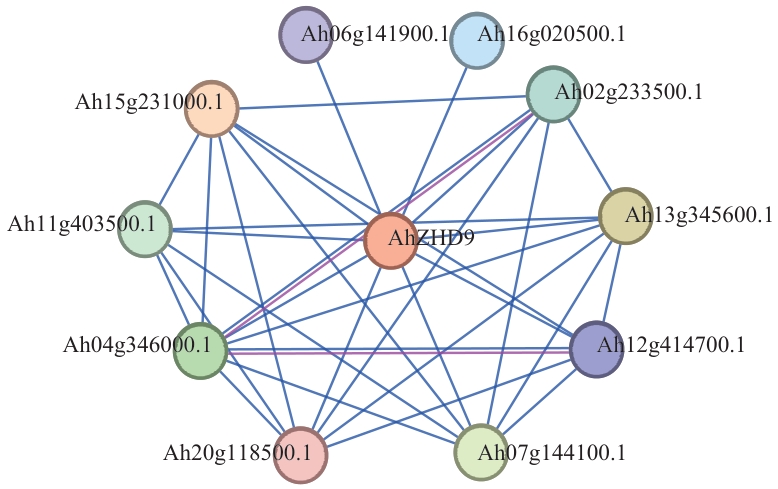
Fig. 2 Protein-protein interaction network analysis of AhZHD9
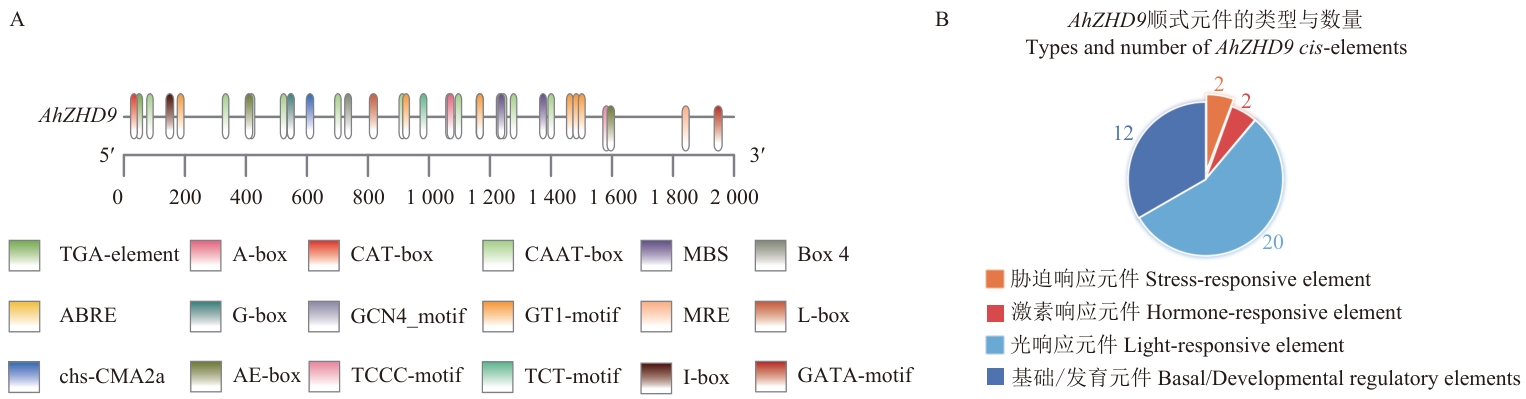
Fig. 3 Analysis of cis-acting elements in the AhZHD9 promoter regionA: Distribution of cis-acting elements in AhZHD9 gene. B: Statistics of cis-acting element types and quantities in the AhZHD9 gene
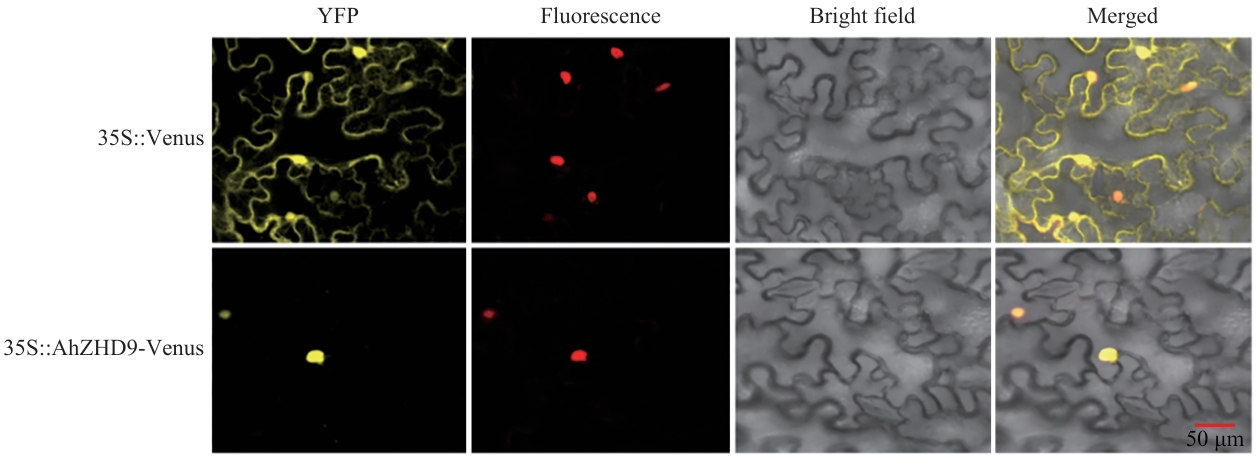
Fig. 4 Subcellular localization of AhZHD9Bright field: Overall cellular structure observed under a light microscope. YFP: Yellow fluorescent signal. Fluorescence: Red fluorescent signal. Merged: Merged image of the three fluorescence signals above. Scale bar: 50 μm
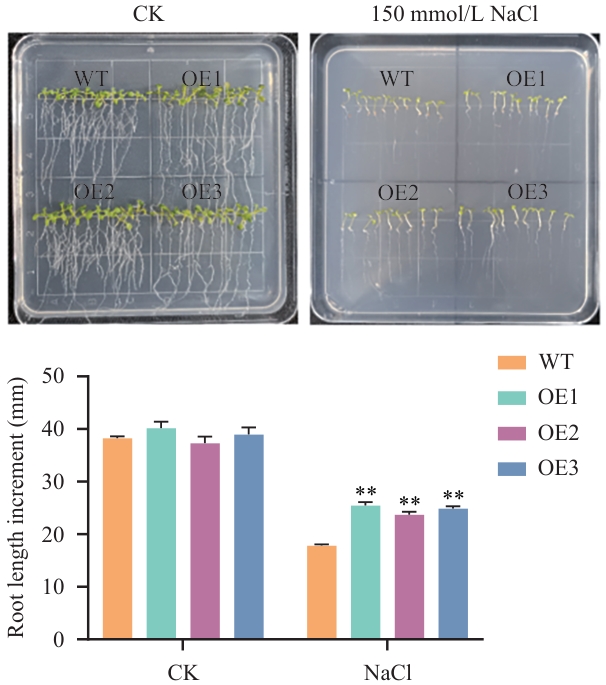
Fig. 5 Root length assay of AhZHD9-overexpressing lines under salt stress* and ** indicate significant differences at the levels of 0.05 and 0.01, respectively. WT indicates wild-type Arabidopsis plants, and OE indicates AhZHD9-overexpressing lines. The same below
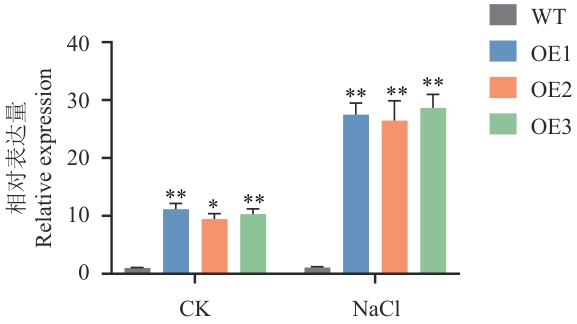
Fig. 6 Relative expression analysis of AhZHD9-overexpressing lines under salt stress
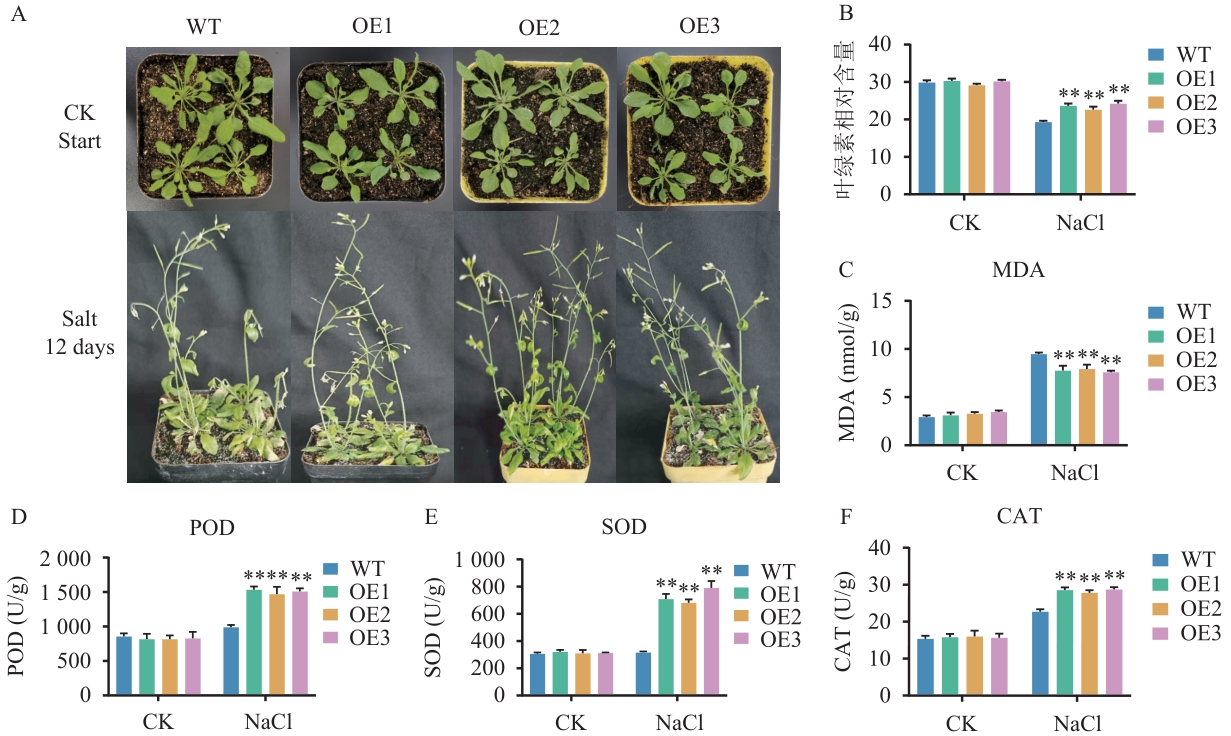
Fig. 7 Phenotypic and physiological analysis of AhZHD9-overexpressing Arabidopsis under salt stressA: Plant phenotype before salt treatment and after 12 d of salt stress. B: Chlorophyll content. C: Malondialdehyde (MDA) content. D: Peroxidase (POD) activity. E: Superoxide dismutase (SOD) activity. F: Catalase (CAT) activity
| [1] | 赵怀玉, 林鸿宣. 植物响应盐碱胁迫的分子机制 [J]. 土壤与作物, 2020, 9(2): 103-113. |
| Zhao HY, Lin HX. Molecular mechanism of plants in responses to salt and alkali stress [J]. Soils Crops, 2020, 9(2): 103-113. | |
| [2] | 陈娜, 邵勤, 李晓鹏. 番茄WRKY转录因子功能的研究进展 [J]. 江苏农业科学, 2023, 51(13): 6-17. |
| Chen N, Shao Q, Li XP. Research progress on WRKY transcription factors and their biological function in tomato (Solanum lycopersicum L.) [J]. Jiangsu Agric Sci, 2023, 51(13): 6-17. | |
| [3] | 陆海芹, 李娜, 蒋凯旋, 等. NAC转录因子调控植物生长发育和胁迫应答的研究进展 [J]. 植物生理学报, 2024, 60(2): 271-283. |
| Lu HQ, Li N, Jiang KX, et al. Research advances on NAC transcription factors regulating plant development and stress responses [J]. Plant Physiol J, 2024, 60(2): 271-283. | |
| [4] | Wang XH, Li YN, Chen Z, et al. MbWRKY50 confers cold and drought tolerance through upregulating antioxidant capacity associated with ROS scavenging [J]. J Plant Physiol, 2025, 310: 154526. |
| [5] | 关范圆, 郑语嫣, 米芯雨, 等. R2R3型MYB转录因子调控植物胁迫应答的研究进展 [J]. 植物医学, 2024, 3(3): 1-9. |
| Guan FY, Zheng YY, Mi XY, et al. Research advance of the functions of R2R3-MYB transcription factors in plant response to biotic and abiotic stresses [J]. Plant Health Med, 2024, 3(3): 1-9. | |
| [6] | 雷宇行. 忍冬耐盐相关bZIP转录因子的挖掘及功能验证 [D]. 长沙: 中南林业科技大学, 2025. |
| Lei Y X. Mining and functional validation of salt stress-related bZIP transcription factors in Lonicera japonica [D]. Changsha: Central South University of Forestry & Technology, 2025. | |
| [7] | Chen SY, Wang XY, Yu YY, et al. WRKY transcription factor RrWRKY56 negatively regulates salt and drought stress tolerance by suppressing RrUSP expression in Rosa rugosa [J]. BMC Plant Biol, 2025, 25: 1666. |
| [8] | Ma BJ, Wu ZG, Yan L, et al. RtNAC081 promotes salt tolerance and plant growth linked to brassinosteroid/abscisic acid signaling in Reaumuria trigyna [J]. Plant J, 2026, 125(5): e70728. |
| [9] | 朱志丹. 波棱瓜AP 2/ERF基因家族鉴定及盐胁迫下HpAP2/ERF144的功能分析 [D]. 成都: 成都大学, 2025.ZhuZD. Identification of the Herpetospermum pedunculosum AP 2/ERF gene family and function analysis of HpAP2/ERF144 under salt stress [D]. Chengdu: Chengdu University, 2025. |
| [10] | Tan QK, Irish VF. The Arabidopsis zinc finger-homeodomain genes encode proteins with unique biochemical properties that are coordinately expressed during floral development [J]. Plant Physiol, 2006, 140(3): 1095-1108. |
| [11] | Zheng XB, Wu Y, Wang H, et al. Genome-wide investigation of the zinc finger-homeodomain family genes reveals potential roles in apple fruit ripening [J]. Front Genet, 2022, 12: 783482. |
| [12] | 余金蔚, 闫菲, 陶增. 植物ZHD类转录因子研究进展 [J]. 植物生理学报, 2022, 58(9): 1639-1645. |
| Yu JW, Yan F, Tao Z. Research progress of ZHD transcription factor in plants [J]. Plant Physiol J, 2022, 58(9): 1639-1645. | |
| [13] | Su XN, Dong YT, Liao Y, et al. Genome-wide identification of the zinc finger-homeodomain (ZF-HD) gene family and their response to cold stress in Rosa chinensis [J]. Genes, 2026, 17(1): 90. |
| [14] | Yang N, Yang ZZ, Zhu ZJ, et al. Identification and expression analysis of ZF-HD transcription factor family and their expression profiles under abiotic and biotic stresses in mango (Mangifera indica) [J]. Physiol Mol Plant Pathol, 2025, 139: 102816. |
| [15] | Gao YM, Zhu LY, An MH, et al. Zinc finger-homeodomain transcriptional factors (ZHDs) in cucumber (Cucumis sativus L.): identification, evolution, expression profiles, and function under abiotic stresses [J]. Int J Mol Sci, 2024, 25(8): 4408. |
| [16] | 陈登科,兰刚,夏芝,等.花生ZF-HD基因家族的鉴定和非生物胁迫响应分析[J].生物技术通报, 2026, 42(4): 114-128. |
| Chen DK, Lan G, Xia Z, et al. Genome-wide identification and abiotic stress response analysis of the ZF-HD gene family in peanut (Arachis hypogaea L.) [J]. Biotechnol Bull, 2026, 42(4): 114-128. | |
| [17] | Chen CJ, Wu Y, Li JW, et al. TBtools-II: a “one for all, all for one” bioinformatics platform for biological big-data mining [J]. Mol Plant, 2023, 16(11): 1733-1742. |
| [18] | Meng EC, Goddard TD, Pettersen EF, et al. UCSF ChimeraX: Tools for structure building and analysis [J]. Protein Sci, 2023, 32(11): e4792. |
| [19] | Clough SJ, Bent AF. Floral dip: a simplified method for Agrobacterium-mediated transformation of Arabidopsis thaliana [J]. Plant J, 1998, 16(6): 735-743. |
| [20] | 路普. 棉花GPCR及MATE基因家族全基因组分析和非生物胁迫功能鉴定 [D]. 北京: 中国农业科学院, 2018. |
| Lu P. Genome wide analysis and functional characterization of GPCR and MATE gene families under abiotic stress in cotton [D]. Beijing: Chinese Academy of Agricultural Sciences, 2018. | |
| [21] | Chong SS, Dugast-Darzacq C, Liu Z, et al. Imaging dynamic and selective low-complexity domain interactions that control gene transcription [J]. Science, 2018, 361(6400): eaar2555. |
| [22] | Ferrie JJ, Karr JP, Tjian R, et al. “Structure”-function relationships in eukaryotic transcription factors: The role of intrinsically disordered regions in gene regulation [J]. Mol Cell, 2022, 82(21): 3970-3984. |
| [23] | 温馨. 紫花苜蓿MsDHN11基因耐旱功能分析 [D]. 兰州: 兰州大学, 2024. |
| Wen X. Drought tolerance functional analysis of MsDHN11 gene in alfalfa [D]. Lanzhou: Lanzhou University, 2024. | |
| [24] | He FH, Umehara T, Saito K, et al. Structural insight into the zinc finger CW domain as a histone modification reader [J]. Structure, 2010, 18(9): 1127-1139. |
| [25] | Zemach A, Grafi G. Characterization of Arabidopsis thaliana methyl-CpG-binding domain (MBD) proteins [J]. Plant J, 2003, 34(5): 565-572. |
| [26] | Pfaff C, Ehrnsberger HF, Flores-Tornero M, et al. ALY RNA-binding proteins are required for nucleocytosolic mRNA transport and modulate plant growth and development [J]. Plant Physiol, 2018, 177(1): 226-240. |
| [27] | Yao XZ, Chen HF, Ai AT, et al. The transcription factor CsS40 negatively regulates TCS1 expression and caffeine biosynthesis in connection to leaf senescence in Camellia sinensis [J]. Hortic Res, 2023, 10(9): uhad162. |
| [28] | Zi YQ, Zhang MJ, Yang XY, et al. Identification of the sweet orange (Citrus sinensis) bHLH gene family and the role of CsbHLH55 and CsbHLH87 in regulating salt stress [J]. Plant Genome, 2024, 17(3): e20502. |
| [29] | Ariyarathne MA, Wone BWM. Overexpression of the Selaginella lepidophylla bHLH transcription factor enhances water-use efficiency, growth, and development in Arabidopsis [J]. Plant Sci, 2022, 315: 111129. |
| [30] | Zhao XB, Wang Q, Yan CX, et al. The bHLH transcription factor AhbHLH121 improves salt tolerance in peanut [J]. Int J Biol Macromol, 2024, 256: 128492. |
| [31] | Li CJ, Wang Q, Wang QQ, et al. The bHLH transcription factor AhbHLH36 enhances salt tolerance via the activation of AhCAT in peanut [J]. Plant Sci, 2026, 362: 112753. |
| [32] | Rizwan HM, He JY, Nawaz M, et al. The members of zinc finger-homeodomain (ZF-HD) transcription factors are associated with abiotic stresses in soybean: insights from genomics and expression analysis [J]. BMC Plant Biol, 2025, 25: 56. |
| [33] | Zhang KP, Yan RQ, Feng XQ, et al. Genome-wide identification and expression analysis of ZF-HD family in sunflower (Helianthus annuus L.) under drought and salt stresses [J]. BMC Plant Biol, 2025, 25: 140. |
| [34] | Li QF, Ren YZ, Long JH, et al. Genome-wide identification of zinc finger-homeodomain (ZF-HD) gene family and expression analysis during abiotic stress in rye [J]. Genet Resour Crop Evol, 2025, 72(8): 9927-9943. |
| [35] | Bi WY, Xu HC, Liu T, et al. Genome-wide identification of the ZF-HD gene family in melon and functional characterization of CmZHD8 in salt stress tolerance [J]. Plants, 2026, 15(4): 550. |
| [36] | Chen XG, Lu XK, Shu N, et al. GhSOS1, a plasma membrane Na+/H+ antiporter gene from upland cotton, enhances salt tolerance in transgenic Arabidopsis thaliana [J]. PLoS One, 2017, 12(7): e0181450. |
| [37] | 张弘怡. 华北驼绒藜响应干旱和盐碱胁迫的分子机制及KaWRKY33/75基因的功能验证 [D]. 呼和浩特: 内蒙古大学, 2025. |
| Zhang HY. Molecular mechanism of K . arborescens responding to drought and saline-alkali stress and KaWRKY 33/75 gene functional verification [D]. Hohhot: Inner Mongolia University, 2025. | |
| [38] | 程珊, 王会伟, 陈晨, 等. 油莎豆MYB转录因子基因CeMYB154克隆及耐盐功能分析 [J]. 生物技术通报, 2025, 41(6): 218-228. |
| Cheng S, Wang HW, Chen C, et al. Cloning of MYB transcription factor gene CeMYB154 and analysis of salt tolerance function in Cyperus esculentus [J]. Biotechnol Bull, 2025, 41(6): 218-228. | |
| [39] | 甘洪萍. 葡萄VvMYB15转录因子响应盐胁迫的功能和分子机理研究 [D]. 泰安: 山东农业大学, 2025. |
| Gan HP. Function and molecular mechanisms of the VvMYB15 transcription factor in response to salt stress in grape [D]. Tai’an: Shandong Agricultural University, 2025. | |
| [40] | Yu ST, Wang CT, Wang Q, et al. Identification and analysis of SOD family genes in peanut (Arachis hypogaea L.) and their potential roles in stress responses [J]. Agronomy, 2023, 13(8): 1959. |
| [41] | Raza A, Sharif Y, Chen K, et al. Genome-wide characterization of ascorbate peroxidase gene family in peanut (Arachis hypogea L.) revealed their crucial role in growth and multiple stress tolerance [J]. Front Plant Sci, 2022, 13: 962182. |
| [1] | SANG Zhi-peng, HOU Dong, WANG Hui-ting, YUE Hong-zhong, LI Ya-li, XIE Jian-ming, LU Wen, XU Zhao-tai. Identification of the Cucumber CsHXKs Gene Family and Regulation of Floral Organ Sugar Accumulation by CsHKL1.2 [J]. Biotechnology Bulletin, 2026, 42(9): 157-168. |
| [2] | DONG Xiang-xiang, HOU Wei-wei, MIAO Bai-ling, CHEN Juan-juan, LI Liang-jie, ZHAI Min, ZHU Qing-song, LIU Song-hu. Overexpression of FvBBX22 from Fragaria Vesca Promotes Anthocyanin Synthesis and Delays Flowering Time in Arabidopsis thaliana [J]. Biotechnology Bulletin, 2026, 42(9): 231-237. |
| [3] | HE Jing-jing, PENG Mao-la-zhuan, YAO Xiao-hua, YAO You-hua, WU Kun-lun, CUI Yong-mei. Cloning and Functional Characterization of HvNAC53 from Hulless Barley [J]. Biotechnology Bulletin, 2026, 42(8): 142-152. |
| [4] | QIN Juan, LU Wei-Wen, LI Jia-Hui, LI Chen, LI Bin, WANG Zhi-ye. Cloning and Expression Analysis of Two G6PDH Genes from Safflower [J]. Biotechnology Bulletin, 2026, 42(8): 217-228. |
| [5] | CUI Xiu-yan, DAI Chun-yang, ZHANG Yi-ting, TIAN Xiang, CHEN Ling, QIAO Zhi-jun, WANG Hai-gang, WANG Jun-jie. Identification of the Pseudo-response Regulator PRR Gene Family in Broomcorn Millet and Its Response to Photoperiod [J]. Biotechnology Bulletin, 2026, 42(8): 133-141. |
| [6] | LI Shu-ting, WANG Ying, DING Jia-hao, HU Rong-fang, LI Chen, SONG Ya-nan, XUE Jin-ai. Genome-wide Identification of the FAT Gene Family and Functional Analysis of CeFATA in Cyperus esculentus [J]. Biotechnology Bulletin, 2026, 42(8): 162-172. |
| [7] | HUANG Xu-sheng, ZHOU Ya-li, JIA Zheng-rong, SHEN Shan, CHEN Jin-chai, ZHOU Guang-li, LI Xin-xin, WANG Ji-ping, LI Run-zhi, JIA Xiao-yun. Whole-genome Identification of the Perilla frutescens ARF Transcription Factor Family and Functional Analysis of Its Role in Abiotic Stress Responses [J]. Biotechnology Bulletin, 2026, 42(7): 148-162. |
| [8] | XIN Qing, ZHENG Yong-jie, LI Yu-hua, TU Bai-lian, LIU Xin-liang, ZHANG Yue-ting, WU Yan-fang. Genome-wide Identification and Expression Analysis of MYC Transcription Factors in Cinnamomum camphora [J]. Biotechnology Bulletin, 2026, 42(7): 214-225. |
| [9] | WANG Hong-rui, ZHAO Yi-ru, RAO Shu-pei, CHEN Jin-huan. Research on the Function of LrCYP78A5 Gene from Lycium ruthenicum in Response to Drought and Salt Stress [J]. Biotechnology Bulletin, 2026, 42(7): 182-192. |
| [10] | RAN Dan-dan, TAI Sen-lin, OU Xiao-hong, ZHOU Tao, XU Jiao. Genome-wide Identification and Characterization of UDP-glycosyltransferase Gene Family in Gastrodia elata [J]. Biotechnology Bulletin, 2026, 42(7): 163-172. |
| [11] | DONG Ya-ru, XIU Yu, ZHAO Dong-xiao, ZHU Hong, ZHU Lin, LIU Hui-fen. Transcriptome-wide Identification of the GRAS Gene Family in Mulberry and Analysis of MnGRAS22 in Response to Salt Stress [J]. Biotechnology Bulletin, 2026, 42(7): 193-203. |
| [12] | YAN Xiao-guang, DU Yan-wei, MA Zhi-yuan, WANG Bin, WANG Guo-liang, HU Dan-zhu. Genome-wide Identification and Expression Pattern Analysis of ZmDIR Gene Family in Maize [J]. Biotechnology Bulletin, 2026, 42(7): 126-137. |
| [13] | XIONG Shi-fa, CHEN Yi-cun, WU Li-wen, SHI Xiang, ZHANG Sheng-jiao, PENG Fang-you, CHEN Tao-mei, WANG Yang-dong. Identification and Functional Analysis of the TCP Gene Family in Quercus fabri [J]. Biotechnology Bulletin, 2026, 42(6): 258-266. |
| [14] | LI Xu-long, XU Shi-qiang, ZHANG Long, LI Jing-yu, HE Wei-xian, CHEN Li-kai, WANG Ji-hua. Genome-wide Identification, Evolution and Expression Pattern Analysis of Terpene Synthase Gene Family in Morinda officinalis [J]. Biotechnology Bulletin, 2026, 42(6): 314-325. |
| [15] | MENG Hong-yu, LIU Ya-nan, WU Jun-xin, SHEN Qiong. Identification and Analysis of the NAC Transcription Factors Gene Family in Cucurbita moschata Duch. [J]. Biotechnology Bulletin, 2026, 42(6): 237-249. |
| Viewed | ||||||
|
Full text |
|
|||||
|
Abstract |
|
|||||
