







生物技术通报 ›› 2026, Vol. 42 ›› Issue (4): 202-215.doi: 10.13560/j.cnki.biotech.bull.1985.2025-0846
魏丽娜1( ), 蒋景龙1(), 邓茜茜1, 李岩1, 李丽2, 邓家锐3, 丁德宽3
收稿日期:2025-08-04
出版日期:2026-04-26
发布日期:2026-04-30
通讯作者:
蒋景龙,博士,教授,研究方向 :柑橘育种与栽培;E-mail: jiangjinglong511@163.com作者简介:魏丽娜,硕士,研究方向 :香橼种质资源收集评价;E-mail: www90506@163.com
基金资助:
WEI Li-na1(), JIANG Jing-long1(), DENG Xi-xi1, LI Yan1, LI Li2, DENG Jia-rui3, DING De-kuan3
Received:2025-08-04
Published:2026-04-26
Online:2026-04-30
摘要:
目的 明确我国香橼资源果实表型变异程度及其种质遗传多样性、群体结构、遗传分化特点,为香橼种质资源保护、优良品种选育提供重要依据。 方法 实地调查我国16个省(市)、37个市(县)的香橼种质资源分布,对采集40份香橼果实进行15个表型性状描述分析,并利用筛选的10对SSR引物对90份香橼叶片进行遗传标记试验。 结果 不同产区香橼果实表型的7个质量性状Shannon-Wiener指数H范围为0.526‒1.365,Simpson指数D范围为0.349‒0.711;8个数量性状变异系数为21%(囊瓣数)-99%(单果重);表型性状聚类将香橼分为3类:Ⅰ(香圆与枳雀)、Ⅱ(香泡)和Ⅲ(枸橼)。10对SSR引物对90份香橼样本进行PCR扩增,结果显示,位点水平香橼等位基因数(Na)、有效等位基因数(Ne)、Shannon’s多样性指数(I)、观察杂合度(Ho)、期望杂合度(He)分别为1.832、1.354、0.331、0.824、0.210;SSR聚类、群体结构和PCoA分析均将香橼分为4类,其中,香圆与枳雀被进一步分开;群体遗传多样性水平由高到低依次为枳雀(Ho=0.682,He=0.199)、枸橼(Ho=0.659,He=0.175)、香泡(Ho=0.436,He=0.133)、香圆(Ho=0.391,He=0.127);Mantel检验显示,香橼遗传距离与地理距离存在显著正相关性(P<0.05);遗传分化分析显示,种质遗传变异主要存在于群体内(73%)。 结论 我国香橼种质资源存在广泛的遗传变异和丰富的多样性。
魏丽娜, 蒋景龙, 邓茜茜, 李岩, 李丽, 邓家锐, 丁德宽. 基于表型性状与SSR标记的香橼种质资源遗传多样性分析[J]. 生物技术通报, 2026, 42(4): 202-215.
WEI Li-na, JIANG Jing-long, DENG Xi-xi, LI Yan, LI Li, DENG Jia-rui, DING De-kuan. Genetic Diversity Analysis of Citri Fructus Germplasm Resources Based on Phenotypic Traits and SSR Markers[J]. Biotechnology Bulletin, 2026, 42(4): 202-215.
| 质量性状 Quality trait | 性状描述及分级 Character description and classification | ||||||
|---|---|---|---|---|---|---|---|
| 1 | 2 | 3 | 4 | 5 | 6 | ||
| 平滑度 Peel smoothness | 光滑 Smooth | 较光滑 Slightly smooth | 粗糙 Rough | ||||
| 果实形状 Fruit shape | 类球形 Spheroid | 高扁圆形 High oblate | 倒卵圆形 Obovoid | 纺锤形 Fusiform | |||
| 果顶形状 Apex shape | 凸 Protruding | 浅凹 Slightly depressed | 平 Flatten | 乳突 Mammillated | 圆 Rounded | ||
| 果顶印圈 Areole ring | 明显 Obvious | 不明显 Indistinct | 无 None | ||||
| 果基形状 Base shape | 深凹 Depressed | 凸 Protruding | 浅凹 Slightly depressed | 平 Flatten | 圆 Rounded | 颈领 Necked | |
| 外果皮颜色 Peel color | 黄色 Yellow | 淡黄 Pale yellow | 黄绿 Green-yellow | 橙红 Orange-red | 橙黄 Orange-yellow | ||
| 白皮层颜色 Albedo color | 白色 White | 淡黄 Pale yellow | |||||
表1 质量性状及分级
Table 1 Quality traits and grading
| 质量性状 Quality trait | 性状描述及分级 Character description and classification | ||||||
|---|---|---|---|---|---|---|---|
| 1 | 2 | 3 | 4 | 5 | 6 | ||
| 平滑度 Peel smoothness | 光滑 Smooth | 较光滑 Slightly smooth | 粗糙 Rough | ||||
| 果实形状 Fruit shape | 类球形 Spheroid | 高扁圆形 High oblate | 倒卵圆形 Obovoid | 纺锤形 Fusiform | |||
| 果顶形状 Apex shape | 凸 Protruding | 浅凹 Slightly depressed | 平 Flatten | 乳突 Mammillated | 圆 Rounded | ||
| 果顶印圈 Areole ring | 明显 Obvious | 不明显 Indistinct | 无 None | ||||
| 果基形状 Base shape | 深凹 Depressed | 凸 Protruding | 浅凹 Slightly depressed | 平 Flatten | 圆 Rounded | 颈领 Necked | |
| 外果皮颜色 Peel color | 黄色 Yellow | 淡黄 Pale yellow | 黄绿 Green-yellow | 橙红 Orange-red | 橙黄 Orange-yellow | ||
| 白皮层颜色 Albedo color | 白色 White | 淡黄 Pale yellow | |||||
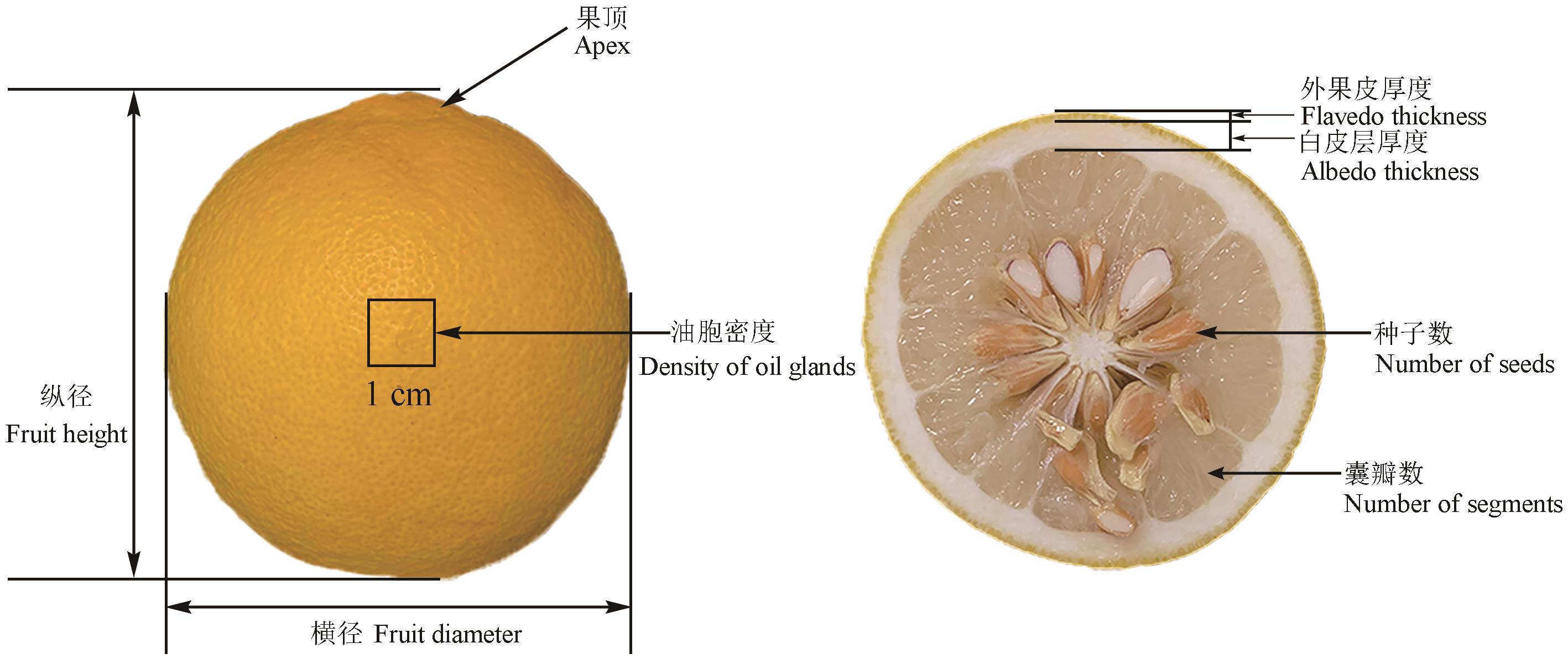
图1 测量示意图
Fig. 1 Measurement diagram
| 引物名称 Primer name | 正向引物序列 Forward primer (5′‒3′) | 反向引物序列 Reverse primer (5′‒3′) | 退火温度 Tm (℃) |
|---|---|---|---|
| Cs2 | TCCACAAGGAGAAGAAACGG | GCGTCTTTACTGTTACCGGG | 56 |
| Cs3 | GTTGCGCAGTTATTCTCAAA | CCGACCACTTTTACCCACTG | 54 |
| Cs6 | AGGTCTACATTGGCATTGTC | ACATGCAGTGCTATAATGAATG | 52 |
| Cs9 | TAAAAACCAACGTCCCCTCA | CGGGCGAGGTAGAAGTAATG | 54 |
| Cs11 | CGCAAATGACTTCCCAGAAT | GCTCCCTCCGATTCTCTCTC | 52 |
| Cs13 | CACGCAGCTTGAGTTTGAAG | GTGCCGTTTAGGGTTTTCCT | 55 |
| Cs14 | CAGGCAGTAACCTCCCAGAC | AGCGAAAGCTAATGATGGTG | 54 |
| Cs15 | CGGGCTAGGCTGAGAGATA | TTCTTTGGAGCCGAACAACT | 52 |
| Cs20 | AGTGAACTGTCCATTGGATTTTCG | GTGTTGAATCCCGACCTTCTACC | 54 |
| Cs21 | GCAGCGCAACAACATAACTA | GGCCAATAGCTTCCATTCA | 52 |
表2 引物信息
Table 2 Information of primers
| 引物名称 Primer name | 正向引物序列 Forward primer (5′‒3′) | 反向引物序列 Reverse primer (5′‒3′) | 退火温度 Tm (℃) |
|---|---|---|---|
| Cs2 | TCCACAAGGAGAAGAAACGG | GCGTCTTTACTGTTACCGGG | 56 |
| Cs3 | GTTGCGCAGTTATTCTCAAA | CCGACCACTTTTACCCACTG | 54 |
| Cs6 | AGGTCTACATTGGCATTGTC | ACATGCAGTGCTATAATGAATG | 52 |
| Cs9 | TAAAAACCAACGTCCCCTCA | CGGGCGAGGTAGAAGTAATG | 54 |
| Cs11 | CGCAAATGACTTCCCAGAAT | GCTCCCTCCGATTCTCTCTC | 52 |
| Cs13 | CACGCAGCTTGAGTTTGAAG | GTGCCGTTTAGGGTTTTCCT | 55 |
| Cs14 | CAGGCAGTAACCTCCCAGAC | AGCGAAAGCTAATGATGGTG | 54 |
| Cs15 | CGGGCTAGGCTGAGAGATA | TTCTTTGGAGCCGAACAACT | 52 |
| Cs20 | AGTGAACTGTCCATTGGATTTTCG | GTGTTGAATCCCGACCTTCTACC | 54 |
| Cs21 | GCAGCGCAACAACATAACTA | GGCCAATAGCTTCCATTCA | 52 |
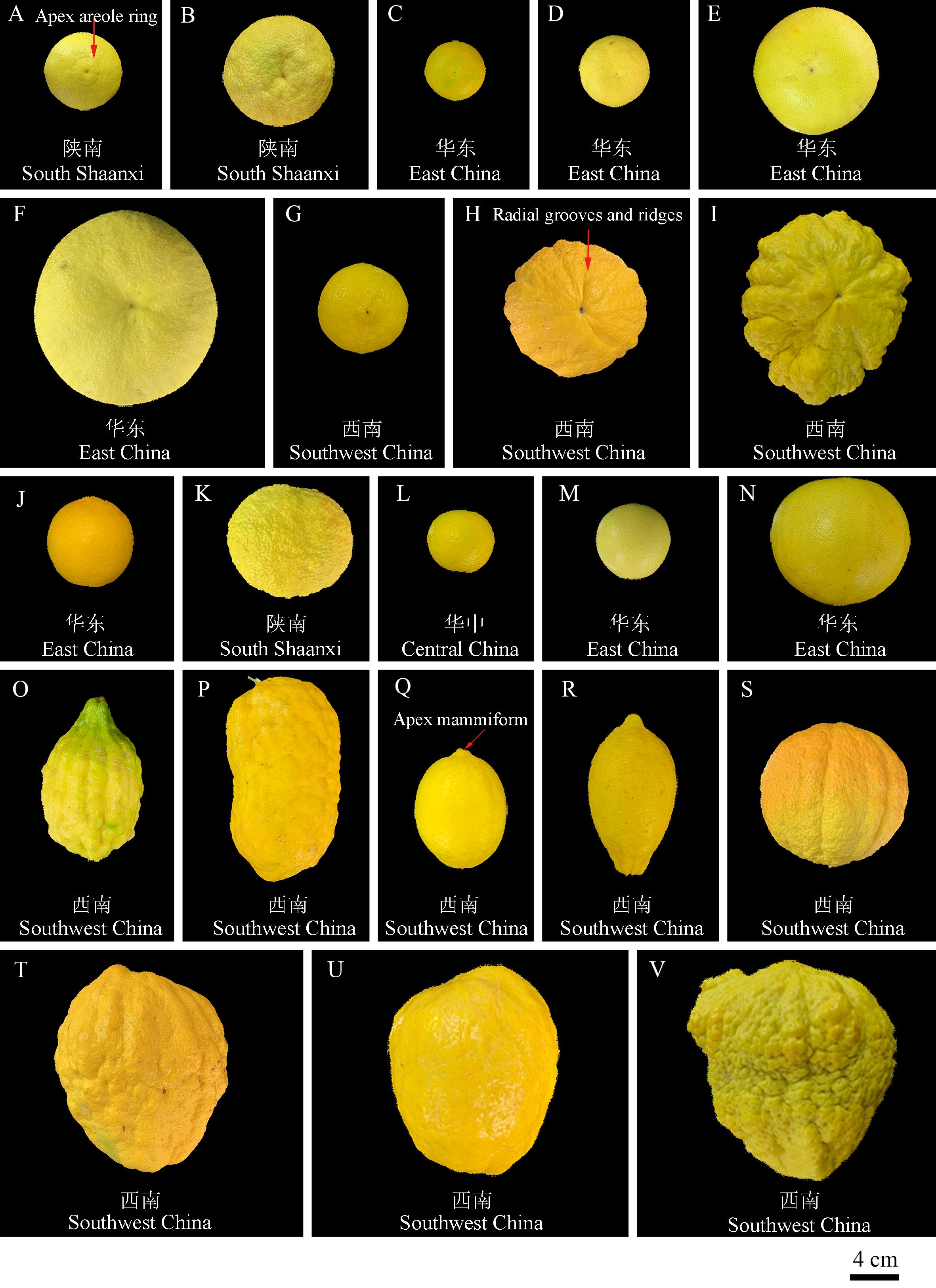
图2 不同产区香橼果实表型差异
Fig. 2 Phenotypic differences of citri fructus fruit from different regions
| 质量性状 Quality trait | 分级及频率 Classification and frequency (%) | Shannon-Wiener指数 Shannon-Wiener index H | Simpson指数 Simpson index D | |||||
|---|---|---|---|---|---|---|---|---|
| 1 | 2 | 3 | 4 | 5 | 6 | |||
| 平滑度 Peel smoothness | 30.0 | 50.0 | 20.0 | - | - | - | 1.030 | 0.620 |
| 果实形状 Fruit shape | 35.0 | 37.5 | 17.5 | 10.0 | - | - | 1.277 | 0.696 |
| 果顶形状 Apex shape | 30.0 | 12.5 | 40.0 | 15.0 | 2.5 | - | 1.365 | 0.711 |
| 果顶印圈 Areole ring | 30.0 | 12.5 | 57.5 | - | - | - | 0.939 | 0.564 |
| 果基形状 Base shape | 10.0 | 5.0 | 65.0 | 5.0 | 12.5 | 2.5 | 1.161 | 0.546 |
| 外果皮颜色 Peel color | 65.0 | 12.5 | 12.5 | 2.5 | 7.5 | - | 1.084 | 0.540 |
| 白皮层颜色 Albedo color | 77.5 | 22.5 | - | - | - | - | 0.526 | 0.349 |
表3 7个质量性状的频率分布及多样性
Table 3 Frequency distribution and diversity of 7 quality traits
| 质量性状 Quality trait | 分级及频率 Classification and frequency (%) | Shannon-Wiener指数 Shannon-Wiener index H | Simpson指数 Simpson index D | |||||
|---|---|---|---|---|---|---|---|---|
| 1 | 2 | 3 | 4 | 5 | 6 | |||
| 平滑度 Peel smoothness | 30.0 | 50.0 | 20.0 | - | - | - | 1.030 | 0.620 |
| 果实形状 Fruit shape | 35.0 | 37.5 | 17.5 | 10.0 | - | - | 1.277 | 0.696 |
| 果顶形状 Apex shape | 30.0 | 12.5 | 40.0 | 15.0 | 2.5 | - | 1.365 | 0.711 |
| 果顶印圈 Areole ring | 30.0 | 12.5 | 57.5 | - | - | - | 0.939 | 0.564 |
| 果基形状 Base shape | 10.0 | 5.0 | 65.0 | 5.0 | 12.5 | 2.5 | 1.161 | 0.546 |
| 外果皮颜色 Peel color | 65.0 | 12.5 | 12.5 | 2.5 | 7.5 | - | 1.084 | 0.540 |
| 白皮层颜色 Albedo color | 77.5 | 22.5 | - | - | - | - | 0.526 | 0.349 |
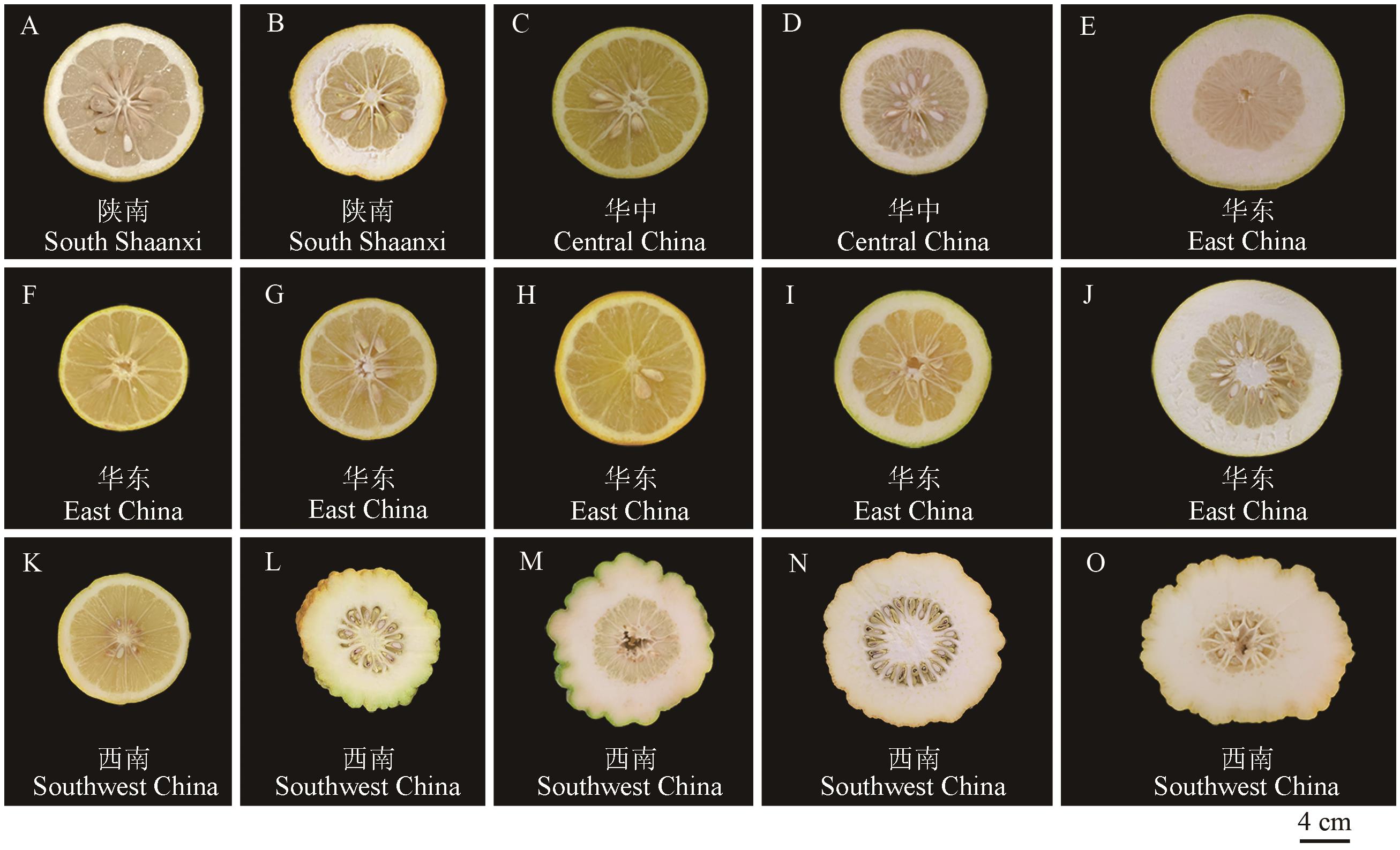
图3 不同产区香橼果实内部特征对比A:香圆;B:枳雀;C‒J:香泡;K‒O:枸橼
Fig. 3 Comparison of internal characteristics of citri fructus fruit from different regionsA: Xiangyuan; B: Zhique; C‒J: Xiangpao; K‒O: Juyuan
| 数量性状 Quantitative trait | 最大值 Max | 最小值 Min | 极差 Range | 平均值 Mean | 标准差 SD | 变异系数 CV (%) |
|---|---|---|---|---|---|---|
| 单果重 Single-fruit weight (g) | 2 239.28 | 93.51 | 2 145.77 | 464.32 | 469.74 | 99 |
| 纵径 Fruit height (cm) | 19.56 | 5.83 | 13.73 | 3.41 | 10.06 | 34 |
| 横径 Fruit diameter (cm) | 17.13 | 5.52 | 11.61 | 2.28 | 9.30 | 25 |
| 油胞密度 Density of oil glands (per cm²) | 108.00 | 8.00 | 100.33 | 15.77 | 22.97 | 69 |
| 外果皮厚度 Flavedo thickness (cm) | 0.34 | 0.09 | 0.26 | 0.07 | 0.20 | 35 |
| 白皮层厚度 Albedo thickness (cm) | 8.67 | 0.38 | 8.29 | 1.50 | 1.63 | 92 |
| 种子数 Number of seeds | 212.00 | 0.00 | 212.00 | 38.13 | 52.72 | 72 |
| 囊瓣数 Number of segments | 20.00 | 8.00 | 12.00 | 2.35 | 11.35 | 21 |
表4 八个数量性状的多样性分析
Table 4 Diversity analysis of eight quantitative traits
| 数量性状 Quantitative trait | 最大值 Max | 最小值 Min | 极差 Range | 平均值 Mean | 标准差 SD | 变异系数 CV (%) |
|---|---|---|---|---|---|---|
| 单果重 Single-fruit weight (g) | 2 239.28 | 93.51 | 2 145.77 | 464.32 | 469.74 | 99 |
| 纵径 Fruit height (cm) | 19.56 | 5.83 | 13.73 | 3.41 | 10.06 | 34 |
| 横径 Fruit diameter (cm) | 17.13 | 5.52 | 11.61 | 2.28 | 9.30 | 25 |
| 油胞密度 Density of oil glands (per cm²) | 108.00 | 8.00 | 100.33 | 15.77 | 22.97 | 69 |
| 外果皮厚度 Flavedo thickness (cm) | 0.34 | 0.09 | 0.26 | 0.07 | 0.20 | 35 |
| 白皮层厚度 Albedo thickness (cm) | 8.67 | 0.38 | 8.29 | 1.50 | 1.63 | 92 |
| 种子数 Number of seeds | 212.00 | 0.00 | 212.00 | 38.13 | 52.72 | 72 |
| 囊瓣数 Number of segments | 20.00 | 8.00 | 12.00 | 2.35 | 11.35 | 21 |
性状 Trait | 单果重 Fruit weight | 纵径 Fruit height | 横径 Fruit diamete | 油胞密度 Density of oil glands | 白皮层厚度 Albedo thickness | 外果皮厚度 Flavedo thickness | 种子数 Number of seeds | 囊瓣数 Number of segments |
|---|---|---|---|---|---|---|---|---|
| 单果重 Fruit weight | 1 | |||||||
| 纵径 Fruit height | 0.906** | 1 | ||||||
| 横径 Fruit diameter | 0.873** | 0.828** | 1 | |||||
| 油胞密度 Density of oil glands | -0.263 | -0.205 | -0.203 | 1 | ||||
| 白皮层厚度 Albedo thickness | 0.153 | 0.195 | 0.249 | -0.033 | 1 | |||
| 外果皮厚度 Flavedo thickness | 0.817** | 0.797** | 0.830** | -0.238 | 0.301 | 1 | ||
| 种子数 Number of seeds | 0.551** | 0.476** | 0.530** | -0.309 | -0.139 | 0.498** | 1 | |
| 囊瓣数 Number of segments | 0.567** | 0.507** | 0.604** | -0.166 | 0.232 | 0.760** | 0.335* | 1 |
表5 数量性状相关性分析
Table 5 Correlation analysis of quantitative traits
性状 Trait | 单果重 Fruit weight | 纵径 Fruit height | 横径 Fruit diamete | 油胞密度 Density of oil glands | 白皮层厚度 Albedo thickness | 外果皮厚度 Flavedo thickness | 种子数 Number of seeds | 囊瓣数 Number of segments |
|---|---|---|---|---|---|---|---|---|
| 单果重 Fruit weight | 1 | |||||||
| 纵径 Fruit height | 0.906** | 1 | ||||||
| 横径 Fruit diameter | 0.873** | 0.828** | 1 | |||||
| 油胞密度 Density of oil glands | -0.263 | -0.205 | -0.203 | 1 | ||||
| 白皮层厚度 Albedo thickness | 0.153 | 0.195 | 0.249 | -0.033 | 1 | |||
| 外果皮厚度 Flavedo thickness | 0.817** | 0.797** | 0.830** | -0.238 | 0.301 | 1 | ||
| 种子数 Number of seeds | 0.551** | 0.476** | 0.530** | -0.309 | -0.139 | 0.498** | 1 | |
| 囊瓣数 Number of segments | 0.567** | 0.507** | 0.604** | -0.166 | 0.232 | 0.760** | 0.335* | 1 |
地理生态因子 Geographical ecological factors | 单果重 Fruit weight | 纵径 Fruit height | 横径 Fruit diamete | 油胞密度 Density of oil glands | 白皮层厚度 Albedo thickness | 外果皮厚度 Flavedo thickness | 种子数 Number of seeds | 囊瓣数 Number of segments |
|---|---|---|---|---|---|---|---|---|
| 纬度 Latitude | -0.037 | 0.117 | 0.093 | -0.158 | -0.051 | -0.023 | -0.158 | -0.004 |
| 经度 Longitude | -0.306 | -0.424** | -0.146 | 0.094 | -0.295 | -0.329* | -0.107 | -0.413** |
| 海拔 Altitude | 0.341* | 0.417** | 0.172 | -0.121 | 0.144 | 0.285 | 0.190 | 0.371* |
表6 数量性状与地理生态因子相关性分析
Table 6 Correlation between the quantitative traits and geographical ecological factors
地理生态因子 Geographical ecological factors | 单果重 Fruit weight | 纵径 Fruit height | 横径 Fruit diamete | 油胞密度 Density of oil glands | 白皮层厚度 Albedo thickness | 外果皮厚度 Flavedo thickness | 种子数 Number of seeds | 囊瓣数 Number of segments |
|---|---|---|---|---|---|---|---|---|
| 纬度 Latitude | -0.037 | 0.117 | 0.093 | -0.158 | -0.051 | -0.023 | -0.158 | -0.004 |
| 经度 Longitude | -0.306 | -0.424** | -0.146 | 0.094 | -0.295 | -0.329* | -0.107 | -0.413** |
| 海拔 Altitude | 0.341* | 0.417** | 0.172 | -0.121 | 0.144 | 0.285 | 0.190 | 0.371* |
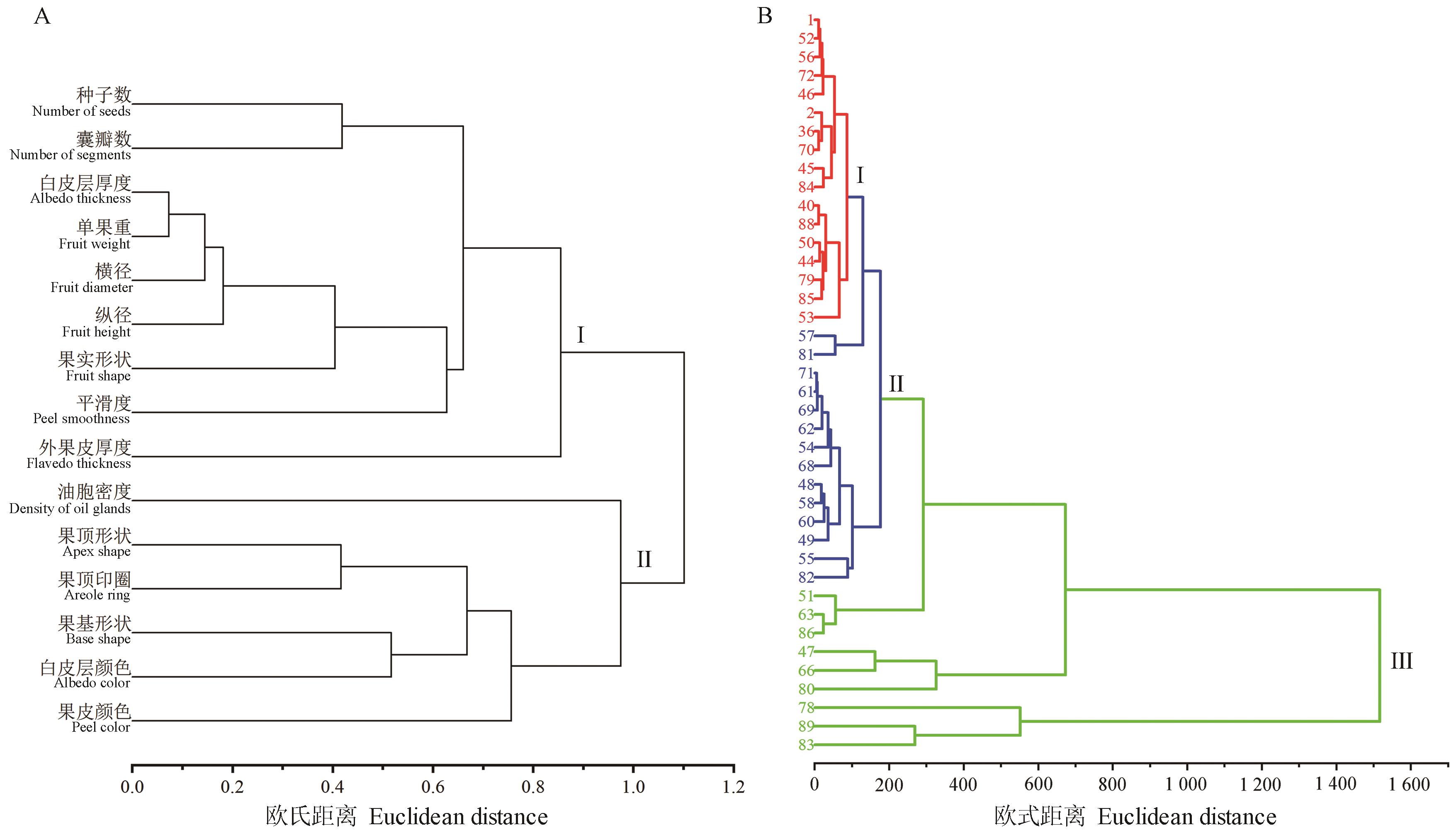
图4 不同产区香橼果实表型特征聚类分析A:15个表型性状的R型聚类分析;B:香橼材料的Q型聚类分析
Fig. 4 Cluster analysis of phenotypic characteristics of citri fructus fruit in different regionsA: R clustering analysis of 15 phenotypic traits. B: Q clustering analysis of citri fructus
性状 Trait | 成分1 PC1 | 成分2 PC2 | 成分3 PC3 |
|---|---|---|---|
| 纵径 Fruit height | 0.875 | -0.240 | 0.135 |
| 横径 Fruit diameter | 0.930 | -0.058 | 0.106 |
| 白皮层厚度 Albedo thickness | 0.915 | -0.098 | 0.274 |
| 外果皮厚度 Flavedo thickness | 0.225 | -0.674 | -0.458 |
| 囊瓣数 Number of segments | 0.638 | 0.447 | -0.176 |
| 种子数 Number of seeds | 0.518 | 0.690 | -0.327 |
| 油胞密度 Density of oil glands | -0.362 | 0.109 | 0.746 |
| 单果重 Fruit weight | 0.931 | -0.105 | 0.201 |
| 特征值 Eigenvalue | 4.191 | 1.224 | 1.049 |
| 贡献率 Contribution rate (%) | 52.393 | 15.304 | 13.111 |
| 累计贡献率 Accumulated contribution rate (%) | 52.393 | 67.698 | 80.809 |
表7 基于8个数量性状的主成分分析
Table 7 Principal component analysis based on 8 quantitative traits
性状 Trait | 成分1 PC1 | 成分2 PC2 | 成分3 PC3 |
|---|---|---|---|
| 纵径 Fruit height | 0.875 | -0.240 | 0.135 |
| 横径 Fruit diameter | 0.930 | -0.058 | 0.106 |
| 白皮层厚度 Albedo thickness | 0.915 | -0.098 | 0.274 |
| 外果皮厚度 Flavedo thickness | 0.225 | -0.674 | -0.458 |
| 囊瓣数 Number of segments | 0.638 | 0.447 | -0.176 |
| 种子数 Number of seeds | 0.518 | 0.690 | -0.327 |
| 油胞密度 Density of oil glands | -0.362 | 0.109 | 0.746 |
| 单果重 Fruit weight | 0.931 | -0.105 | 0.201 |
| 特征值 Eigenvalue | 4.191 | 1.224 | 1.049 |
| 贡献率 Contribution rate (%) | 52.393 | 15.304 | 13.111 |
| 累计贡献率 Accumulated contribution rate (%) | 52.393 | 67.698 | 80.809 |

图5 利用Cs11引物对90份材料扩增的电泳图
Fig. 5 Electrophoretogram amplified by Cs11 primer in 90 materials
| 引物Primer name | 条带数 Number of bands | 等位基因数 Number of alleles (Na) | 有效等位基因数 Number of effective alleles (Ne) | Shannon’s 多样性指数 Shannon’s diversity index (I) | 观察杂合度 Observed heterozygosity (Ho) | 期望杂合度 Expected heterozygosity (He) |
|---|---|---|---|---|---|---|
| Cs2 | 17 | 1.882 | 1.301 | 0.277 | 0.882 | 0.150 |
| Cs3 | 16 | 1.750 | 1.282 | 0.281 | 0.750 | 0.160 |
| Cs6 | 17 | 1.941 | 1.443 | 0.388 | 0.941 | 0.260 |
| Cs9 | 21 | 2.000 | 1.451 | 0.443 | 1.000 | 0.258 |
| Cs11 | 22 | 1.909 | 1.373 | 0.382 | 0.909 | 0.258 |
| Cs13 | 16 | 1.556 | 1.212 | 0.208 | 0.556 | 0.129 |
| Cs14 | 17 | 1.765 | 1.408 | 0.344 | 0.765 | 0.226 |
| Cs15 | 19 | 1.947 | 1.346 | 0.339 | 0.947 | 0.223 |
| Cs20 | 12 | 1.750 | 1.384 | 0.346 | 0.667 | 0.227 |
| Cs21 | 11 | 1.818 | 1.337 | 0.300 | 0.818 | 0.210 |
| 均值 Mean | 16.8 | 1.832 | 1.354 | 0.331 | 0.824 | 0.210 |
表8 10对SSR引物中的遗传多样性指数
Table 8 Genetic diversity indexes in 10 pairs of SSR primers
| 引物Primer name | 条带数 Number of bands | 等位基因数 Number of alleles (Na) | 有效等位基因数 Number of effective alleles (Ne) | Shannon’s 多样性指数 Shannon’s diversity index (I) | 观察杂合度 Observed heterozygosity (Ho) | 期望杂合度 Expected heterozygosity (He) |
|---|---|---|---|---|---|---|
| Cs2 | 17 | 1.882 | 1.301 | 0.277 | 0.882 | 0.150 |
| Cs3 | 16 | 1.750 | 1.282 | 0.281 | 0.750 | 0.160 |
| Cs6 | 17 | 1.941 | 1.443 | 0.388 | 0.941 | 0.260 |
| Cs9 | 21 | 2.000 | 1.451 | 0.443 | 1.000 | 0.258 |
| Cs11 | 22 | 1.909 | 1.373 | 0.382 | 0.909 | 0.258 |
| Cs13 | 16 | 1.556 | 1.212 | 0.208 | 0.556 | 0.129 |
| Cs14 | 17 | 1.765 | 1.408 | 0.344 | 0.765 | 0.226 |
| Cs15 | 19 | 1.947 | 1.346 | 0.339 | 0.947 | 0.223 |
| Cs20 | 12 | 1.750 | 1.384 | 0.346 | 0.667 | 0.227 |
| Cs21 | 11 | 1.818 | 1.337 | 0.300 | 0.818 | 0.210 |
| 均值 Mean | 16.8 | 1.832 | 1.354 | 0.331 | 0.824 | 0.210 |
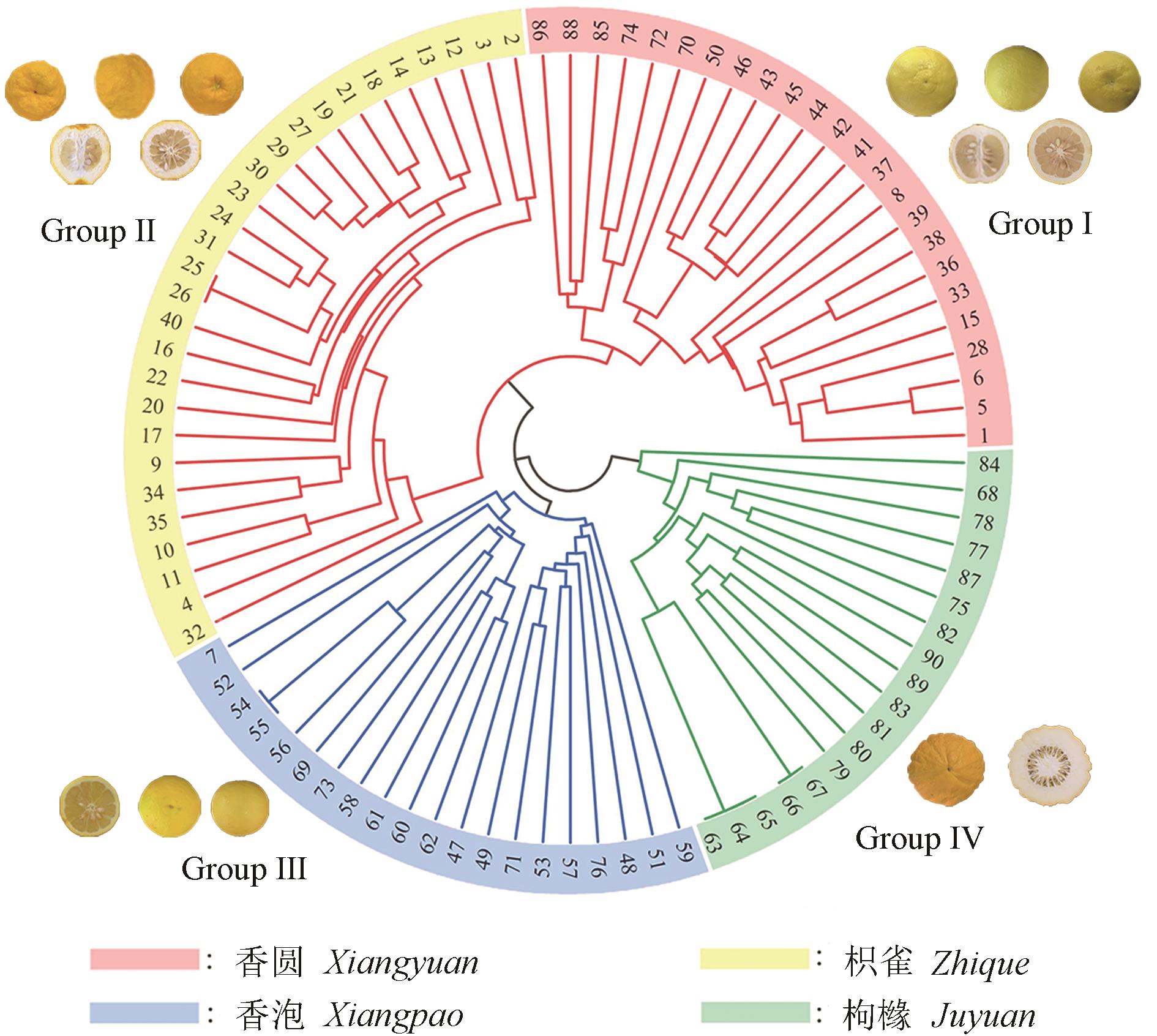
图6 基于Nei遗传距离的UPGMA聚类分析图
Fig. 6 UPGMA clustering analysis chart based on Nei genetic distance
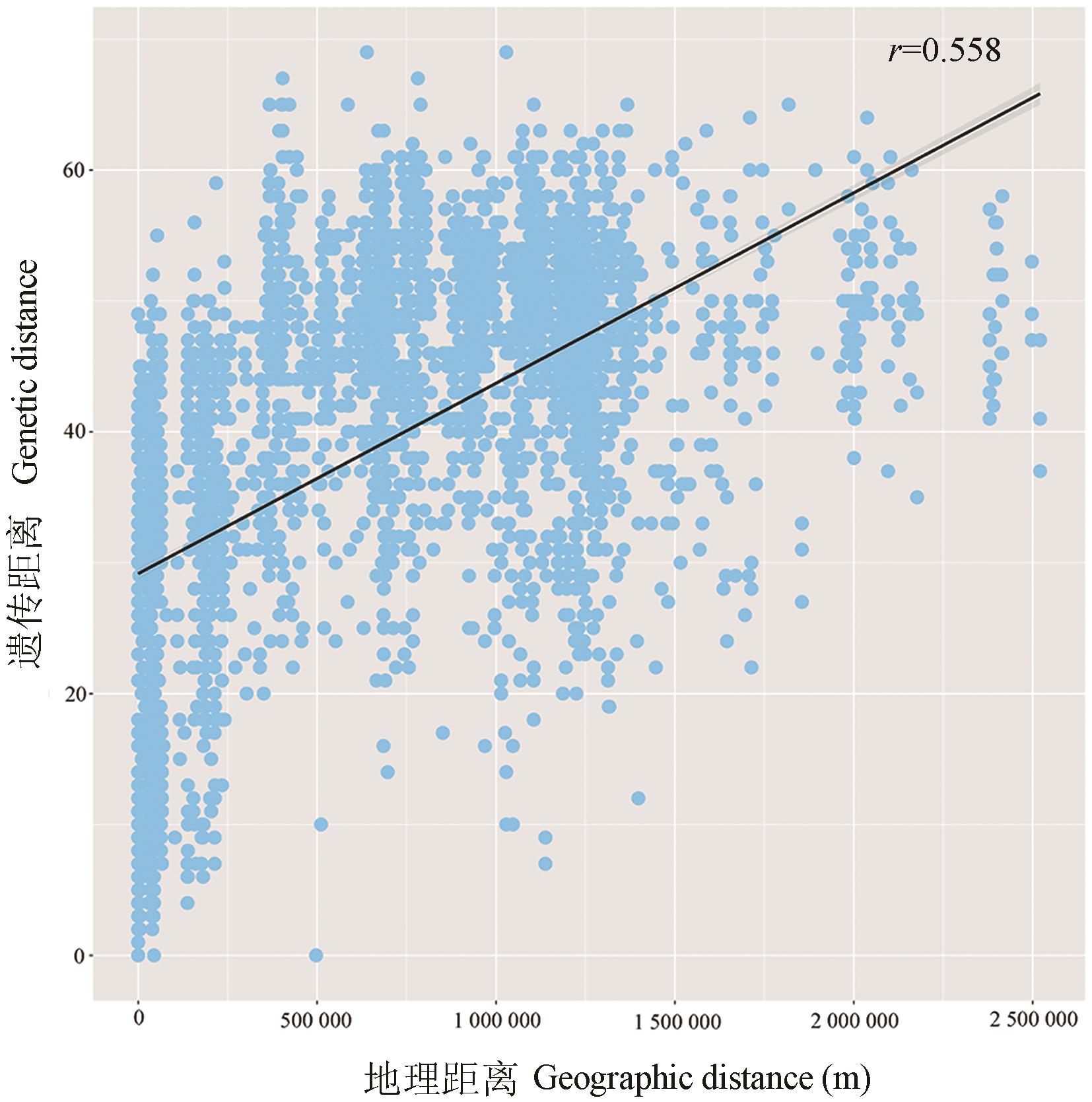
图7 遗传距离与地理距离间的相关性检测
Fig. 7 Correlation test between genetic distance and geographical distance
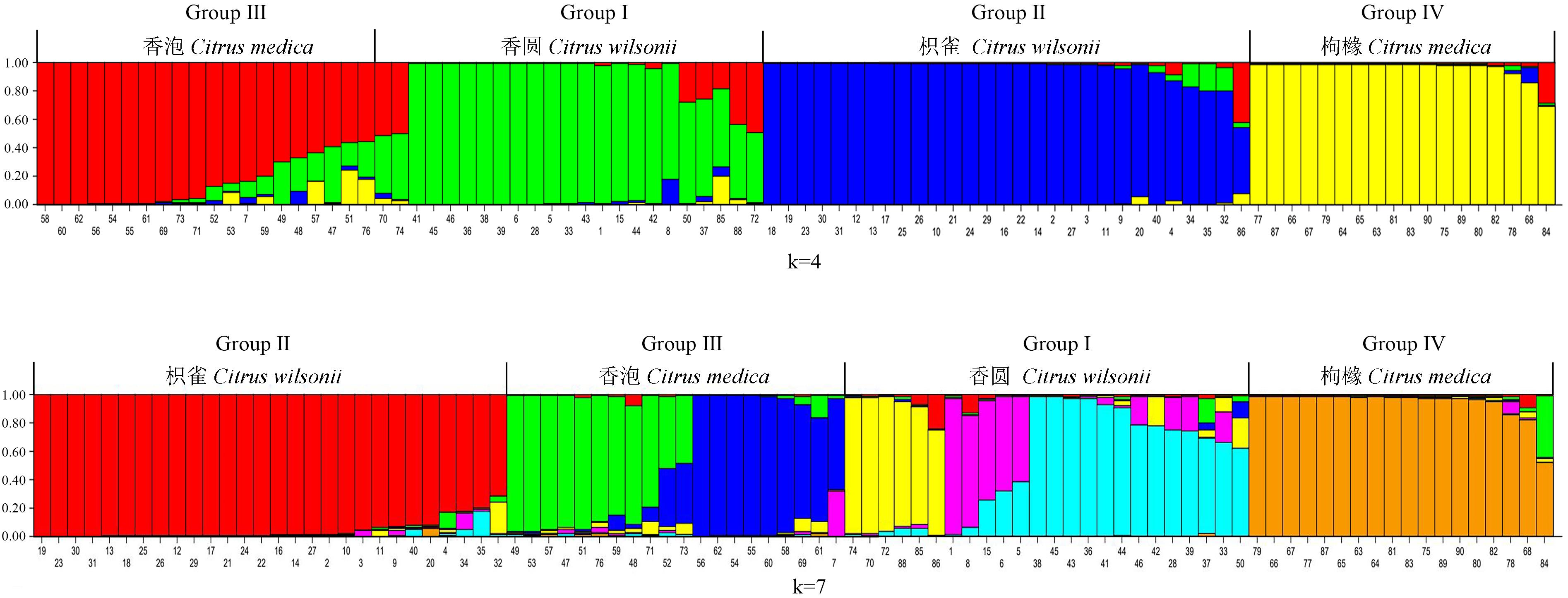
图8 90份样本在k=4或7时的遗传结构
Fig. 8 Genetic structure of 90 samples at k=4 or 7
编号 Code | 样本大小Sample size | 等位基因数 Number of alleles (Na) | 有效等位基因数 Number of effective alleles (Ne) | Shannon’s 多样性指数 Shannon’s diversity index (I) | 观察杂合度 Observed heterozygosity (Ho) | 期望杂合度 Expected heterozygosity (He) | 多态位点百分比 Percentage of polymorphic loci (%) |
|---|---|---|---|---|---|---|---|
| 香圆 Xiangyuan | 23 | 1.458 | 1.250 | 0.218 | 0.391 | 0.127 | 39.11 |
| 枳雀 Zhique | 29 | 1.380 | 1.182 | 0.166 | 0.682 | 0.199 | 68.16 |
| 香泡 Xiangpao | 20 | 1.620 | 1.321 | 0.290 | 0.436 | 0.133 | 43.58 |
| 枸橼 Juyuan | 18 | 1.536 | 1.239 | 0.224 | 0.659 | 0.175 | 65.92 |
| 均值 Mean | - | 1.499 | 1.248 | 0.224 | 0.542 | 0.159 | 54.19 |
表9 四个类群的遗传多样性指数
Table 9 Genetic diversity indexes of four groups
编号 Code | 样本大小Sample size | 等位基因数 Number of alleles (Na) | 有效等位基因数 Number of effective alleles (Ne) | Shannon’s 多样性指数 Shannon’s diversity index (I) | 观察杂合度 Observed heterozygosity (Ho) | 期望杂合度 Expected heterozygosity (He) | 多态位点百分比 Percentage of polymorphic loci (%) |
|---|---|---|---|---|---|---|---|
| 香圆 Xiangyuan | 23 | 1.458 | 1.250 | 0.218 | 0.391 | 0.127 | 39.11 |
| 枳雀 Zhique | 29 | 1.380 | 1.182 | 0.166 | 0.682 | 0.199 | 68.16 |
| 香泡 Xiangpao | 20 | 1.620 | 1.321 | 0.290 | 0.436 | 0.133 | 43.58 |
| 枸橼 Juyuan | 18 | 1.536 | 1.239 | 0.224 | 0.659 | 0.175 | 65.92 |
| 均值 Mean | - | 1.499 | 1.248 | 0.224 | 0.542 | 0.159 | 54.19 |
| 变异来源Source of variance | 自由度Defree of freedom | 总方差Sum of squares deviation | 均方差Mean squares deviation | 变异组分Variance component | 百分比Percent (%) |
|---|---|---|---|---|---|
| 群体间 Among populations | 3 | 443.557 | 147.852 | 5.927 | 27 |
| 群体内 Within populations | 86 | 1 377.476 | 16.017 | 16.017 | 73 |
| 总体 Total | 89 | 1 821.033 | - | 21.944 | 100 |
表10 不同群体间的AMOVA分析
Table 10 AMOVA analysis from different populations
| 变异来源Source of variance | 自由度Defree of freedom | 总方差Sum of squares deviation | 均方差Mean squares deviation | 变异组分Variance component | 百分比Percent (%) |
|---|---|---|---|---|---|
| 群体间 Among populations | 3 | 443.557 | 147.852 | 5.927 | 27 |
| 群体内 Within populations | 86 | 1 377.476 | 16.017 | 16.017 | 73 |
| 总体 Total | 89 | 1 821.033 | - | 21.944 | 100 |
| ID | 香圆 C. wilsonii | 枳雀 C. wilsonii | 香泡 C. medica | 枸橼 C. medica |
|---|---|---|---|---|
| 香圆 Xiangyuan | - | 0.919 | 0.942 | 0.881 |
| 枳雀 Zhique | 0.084 | - | 0.879 | 0.845 |
| 香泡 Xiangpao | 0.059 | 0.130 | - | 0.918 |
| 枸橼 Juyuan | 0.127 | 0.169 | 0.086 | - |
表11 群体间的遗传相似度(对角线上方)与遗传距离
Table 11 Genetic identities (above diagonal) and genetic distance between populations
| ID | 香圆 C. wilsonii | 枳雀 C. wilsonii | 香泡 C. medica | 枸橼 C. medica |
|---|---|---|---|---|
| 香圆 Xiangyuan | - | 0.919 | 0.942 | 0.881 |
| 枳雀 Zhique | 0.084 | - | 0.879 | 0.845 |
| 香泡 Xiangpao | 0.059 | 0.130 | - | 0.918 |
| 枸橼 Juyuan | 0.127 | 0.169 | 0.086 | - |
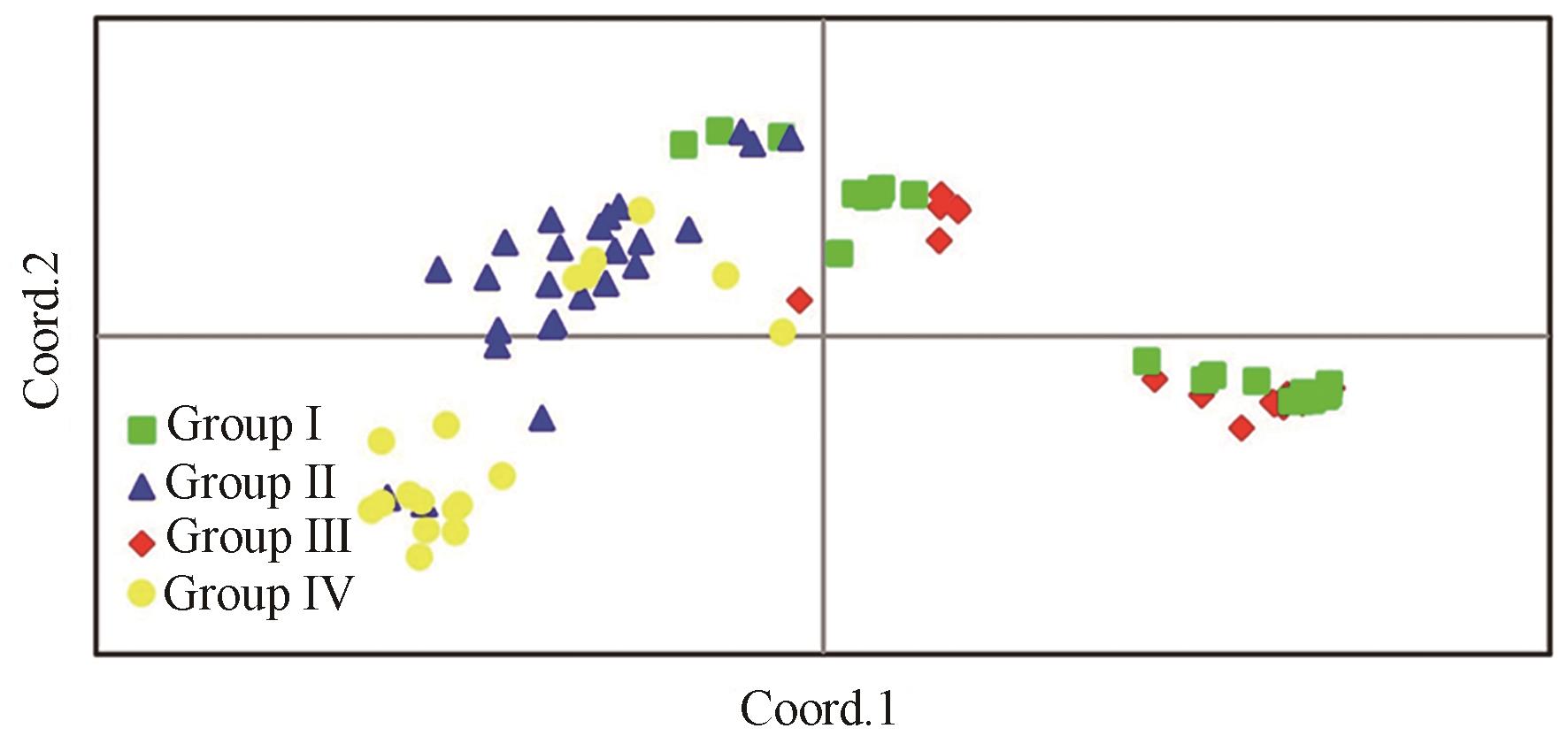
图9 主坐标分析图Group Ⅰ:香圆;Group Ⅱ:枳雀;Group Ⅲ:香泡;Group Ⅳ:枸橼
Fig. 9 Principal coordinate analysis diagram (PCoA)Group Ⅰ: Xiangyuan; Group Ⅱ: Zhique; Group Ⅲ: Xiangpao; Group Ⅳ: Juyuan
| [1] | 国家药典委员会. 中华人民共和国药典-一部: 2025年版 [M]. 北京: 中国医药科技出版社, 2025. |
| People’s republic of China (PRC) pharmacopoeia-part I: 2025 edition [M]. Beijing: China Medical Science Press, 2025. | |
| [2] | 严辉, 高明亮, 查玉玲, 等. 香橼化学成分和药理作用研究进展及其质量标志物预测分析 [J]. 中国现代应用药学, 2022, 39(7): 976-988. |
| Yan H, Gao ML, Zha YL, et al. Research progress on chemical components and pharmacological effects of citri fructus and predictive analysis on its quality marker [J]. Chin J Mod Appl Pharm, 2022, 39(7): 976-988. | |
| [3] | Zhao P, Duan L, Guo L, et al. Chemical and biological comparison of the fruit extracts of Citrus wilsonii Tanaka and Citrus medica L. [J]. Food Chem, 2015, 173: 54-60. |
| [4] | Conforti F, Statti GA, Tundis R, et al. In vitro activities of Citrus medica L. cv. Diamante (Diamante citron) relevant to treatment of diabetes and Alzheimer’s disease [J]. Phytother Res, 2007, 21(5): 427-433. |
| [5] | 杨辉, 杨培君, 李会宁. 中药材香圆挥发油成分GC-MS分析与比较 [J]. 食品与生物技术学报, 2010, 29(2): 219-229. |
| Yang H, Yang PJ, Li HN. Comparison of volatile oils from both fructus aurantii and fructus aurantii immaturus of Citrus wilsonii in Shaanxi by GC-MS [J]. J Food Sci Biotechnol, 2010, 29(2): 219-229. | |
| [6] | Chhikara N, Kour R, Jaglan S, et al. Citrus medica: nutritional, phytochemical composition and health benefits - a review [J]. Food Funct, 2018, 9(4): 1978-1992. |
| [7] | 任丽, 张余, 邓姗, 等. 基于形态标记的新育成辣椒品种特性分析 [J]. 植物遗传资源学报, 2023, 24(6): 1676-1689. |
| Ren L, Zhang Y, Deng S, et al. Characterization of new Capsicum spp. varieties based on morphological markers [J]. J Plant Genet Resour, 2023, 24(6): 1676-1689. | |
| [8] | 郭方其, 吕萍, 吴超, 等. 基于表型性状的切花多头菊种质资源遗传多样性分析 [J]. 分子植物育种, 2020, 18(18): 6205-6215. |
| Guo FQ, Lü P, Wu C, et al. Phenotypic diversity analysis of cutting flower Chrysanthemum germplasm resources based on phenotypic traits [J]. Mol Plant Breed, 2020, 18(18): 6205-6215. | |
| [9] | Laosatit K, Amkul K, Chankaew S, et al. Molecular genetic diversity of winged bean gene pool in Thailand assessed by SSR markers [J]. Hortic Plant J, 2022, 8(1): 81-88. |
| [10] | Ramadugu C, Keremane ML, Hu XL, et al. Genetic analysis of citron (Citrus medica L.) using simple sequence repeats and single nucleotide polymorphisms [J]. Sci Hortic, 2015, 195: 124-137. |
| [11] | Yang XM, Li H, Liang M, et al. Genetic diversity and phylogenetic relationships of citron (Citrus medica L.) and its relatives in southwest China [J]. Tree Genet Genomes, 2015, 11(6): 129. |
| [12] | 刘航秀, 冯迪, 龙春瑞, 等. 枸橼药用植物果实变异及地理分布研究 [J]. 中国中药杂志, 2021, 46(23): 6289-6293. |
| Liu HX, Feng D, Long CR, et al. Fruit variation and geographical distribution of citron [J]. China J Chin Mater Med, 2021, 46(23): 6289-6293. | |
| [13] | 徐静, 谭李梅, 符红艳, 等. 利用分子标记对14份枸橼种质进行多样性分析 [J]. 分子植物育种, 2021, 19(14): 4726-4737. |
| Xu J, Tan LM, Fu HY, et al. Genetic diversity analysis of 14 citron genotypes based on molecular markers [J]. Mol Plant Breed, 2021, 19(14): 4726-4737. | |
| [14] | Maurya A, Mishra BP, Mohan R, et al. Analysis of genetic diversity and environmental associations of wild citron (Citrus medica L.) in northeast India [J]. Sci Hortic, 2024, 338: 113690. |
| [15] | 魏丽娜, 胡佳, 敖义俊, 等. 陕南香圆资源调查与产业开发现状研究 [J]. 中国南方果树, 2024, 53(6): 15-23. |
| Wei LN, Hu J, Ao YJ, et al. Investigation of Citrus wilsonii resources and its industrial development in Southern Shaanxi province [J]. South China Fruits, 2024, 53(6): 15-23. | |
| [16] | 孙旺, 蒋景龙, 胡选萍, 等. 濒危植物秦岭石蝴蝶的SCoT遗传多样性分析 [J]. 西北植物学报, 2020, 40(3): 425-431. |
| Sun W, Jiang JL, Hu XP, et al. Genetic diversity analysis of endangered plant Petrocosmea qinlingensis based on SCoT [J]. Acta Bot Boreali Occidentalia Sin, 2020, 40(3): 425-431. | |
| [17] | Peakall R, Smouse PE. GenAlEx 6.5: genetic analysis in Excel. Population genetic software for teaching and research‒an update [J]. Bioinformatics, 2012, 28(19): 2537-2539. |
| [18] | Earl DA, VonHoldt BM. STRUCTURE HARVESTER: a website and program for visualizing STRUCTURE output and implementing the Evanno method [J]. Conserv Genet Resour, 2012, 4(2): 359-361. |
| [19] | 何庆海, 杨少宗, 李因刚, 等. 枫香树种群种子与果实表型性状变异分析 [J]. 植物生态学报, 2018, 42(7): 752-763. |
| He QH, Yang SZ, Li YG, et al. Phenotypic variations in seed and fruit traits of Liquidambar formosana populations [J]. Chin J Plant Ecol, 2018, 42(7): 752-763. | |
| [20] | Sivakumar J, Sridhar Reddy M, Sergeant K, et al. Principal component analysis-assisted screening and selection of salt-tolerant tomato genotypes [J]. Plant Physiol Rep, 2023, 28(2): 272-288. |
| [21] | Thakur N, Dogra BS, Kaur J, et al. Study on genetic variability and heritability in cherry tomato (Solanum lycopersicum var. cerasiforme) for yield and quality traits [J]. Agric Res J, 2022, 59(6): 1026-1033. |
| [22] | Deviona, Syukur M, Zuhry E, et al. Principal component and cluster analyses of 20 genotypes of chilli (Capsicum sp.) planted on peatlands [J]. IOP Conf Ser: Earth Environ Sci, 2023, 1228(1): 12003. |
| [23] | Bihon W, Ognakossan KE, Tignegre JB, et al. Evaluation of different tomato (Solanum lycopersicum L.) entries and varieties for performance and adaptation in Mali, west Africa [J]. Horticulturae, 2022, 8(7): 579. |
| [24] | 翟彩娇, 葛礼姣, 程玉静, 等. 基于表型性状与SSR标记的冬瓜、节瓜种质资源遗传多样性分析 [J]. 中国农业科学, 2024, 57(17): 3440-3467. |
| Zhai CJ, Ge LJ, Cheng YJ, et al. Genetic diversity analysis of wax gourd and chieh-qua germplasm resources based on phenotypic traits and SSR markers [J]. Sci Agric Sin, 2024, 57(17): 3440-3467. | |
| [25] | 林存学, 杨晓华, 刘海荣. 东北寒地96份李种质资源表型性状遗传多样性分析 [J]. 园艺学报, 2020, 47(10): 1917-1929. |
| Lin CX, Yang XH, Liu HR. Genetic diversity analysis of 96 plum germplasm resources by phenotypic traits in northeast cold area [J]. Acta Hortic Sin, 2020, 47(10): 1917-1929. | |
| [26] | Li JW, Li H, Liu ZW, et al. Molecular markers in tea plant (Camellia sinensis): Applications to evolution, genetic identification, and molecular breeding [J]. Plant Physiol Biochem, 2023, 198: 107704. |
| [27] | Fu YR, Liu FL, Li S, et al. Genetic diversity of the wild Asian Lotus (Nelumbo nucifera) from Northern China [J]. Hortic Plant J, 2021, 7(5): 488-500. |
| [28] | 刘冬峰, 陈巍, 林绍生, 等. 基于SSR标记的浙江地方柚类种质资源遗传关系分析 [J]. 果树学报, 2017, 34(2): 166-174. |
| Liu DF, Chen W, Lin SS, et al. Analysis of genetic relationship of pummelo germplasms by SSR markers in Zhejiang province [J]. J Fruit Sci, 2017, 34(2): 166-174. | |
| [29] | Wang Y, Qi YH, He W, et al. Genetic diversity of pummelo (Citrus grandis osbeck) germplasms in Sichuan Basin inferred from SSR markers [C]//2018 International Conference on Biotechnology and Bioengineering: 8TH Icbb, Budapest, Hungary, 2019: 020004. |
| [30] | Hu Y, Tian L, Shi JW, et al. Genetic structure of cultivated Zanthoxylum species investigated with SSR markers [J]. Tree Genet Genomes, 2018, 14(6): 89. |
| [31] | Lu M, Zhang HS, An HM. Chloroplast DNA-based genetic variation of Rosa roxburghii in southwest China: phylogeography and conservation implications [J]. Hortic Plant J, 2021, 7(4): 286-294. |
| [32] | Liu QW, Song Y, Liu L, et al. Genetic diversity and population structure of pear (Pyrus spp.) collections revealed by a set of core genome-wide SSR markers [J]. Tree Genet Genomes, 2015, 11(6): 128. |
| [33] | Boris KV, Trifonova AA, Dubrovsky ML, et al. Genetic diversity of apple clonal rootstocks from the collection of the michurinsk state agrarian university based on SSR markers [J]. Plants, 2023, 12(16): 2991. |
| [34] | Özkan G, Haliloğlu K, Türkoğlu A, et al. Determining genetic diversity and population structure of common bean (Phaseolus vulgaris L.) landraces from türkiye using SSR markers [J]. Genes, 2022, 13(8): 1410. |
| [35] | 徐皓, 周天华, 张智强, 等. 基于SSR分子标记的延胡索遗传多样性研究 [J]. 西北植物学报, 2018, 38(6): 1032-1038. |
| Xu H, Zhou TH, Zhang ZQ, et al. Genetic diversity of Corydalis yanhusuo W.T.Wang based on SSR molecular markers [J]. Acta Bot Boreali Occidentalia Sin, 2018, 38(6): 1032-1038. |
| [1] | 陈静欢, 房国楠, 朱文豪, 叶广继, 苏旺, 贺苗苗, 杨生龙, 周云. 马铃薯种质资源淀粉表征及相关基因表达分析[J]. 生物技术通报, 2026, 42(1): 170-183. |
| [2] | 卢瑶, 袁平平, 金鑫, 毛向红, 范向斌, 白小东. 基于SSR标记的马铃薯野生种和地方种遗传多样性分析和指纹图谱构建[J]. 生物技术通报, 2025, 41(9): 94-104. |
| [3] | 裴红霞, 汪露瑶, 李生梅, 高晶霞. 基于SCoT、SRAP和SSR分子标记的220份辣椒种质资源遗传多样性分析[J]. 生物技术通报, 2025, 41(8): 165-174. |
| [4] | 段敏杰, 李怡斐, 王春萍, 黄任中, 黄启中, 张世才. 辣椒果实颜色性状与SSR分子标记的关联分析及指纹图谱构建[J]. 生物技术通报, 2025, 41(7): 81-94. |
| [5] | 段永红, 杨欣, 于冠群, 夏俊俊, 宋陆帅, 白小东, 彭锁堂. 125份马铃薯种质资源遗传多样性及主成分分析[J]. 生物技术通报, 2025, 41(6): 130-143. |
| [6] | 牛若宇, 高瞻, 熊显鹏, 祝德, 罗皓天, 马学远, 胡冠菁. 棉花野生种质资源的育种应用研究与前景[J]. 生物技术通报, 2025, 41(4): 21-32. |
| [7] | 韩梦荞, 吴疆, 李丽华, 王昭懿, 邓习, 韦凤杰, 任民, 孙洋洋, 李富欣. 烟草染色体制备体系的建立与优化[J]. 生物技术通报, 2025, 41(3): 44-50. |
| [8] | 于静, 于桂爽, 孙昊杰, 姜春姣, 苑广迪, 杨珍, 王志伟, 王超, 王传堂. 花生种用品质影响因素及相关标记研究[J]. 生物技术通报, 2025, 41(2): 284-294. |
| [9] | 贺涵, 刘传和, 喻梦凡, 袁梦萍, 魏岳荣, 杨敏, 邝瑞彬, 周陈平, 吴夏明, 徐泽. 基于重测序的菠萝基因组InDel标记的开发[J]. 生物技术通报, 2025, 41(2): 65-76. |
| [10] | 宋英培, 王灿, 周会汶, 孔可可, 许孟歌, 王瑞凯. 基于全基因组关联分析和遗传多样性的大豆裂荚性状解析[J]. 生物技术通报, 2025, 41(2): 97-106. |
| [11] | 杜雨晴, 蒋路园, 汪奕衡, 吴宸炜, 杨梦露, 刘旭升, 王晓君, 邱德有, 樊玮, 杨艳芳. 太行山地区南方红豆杉SSR遗传多样性分析[J]. 生物技术通报, 2025, 41(12): 214-224. |
| [12] | 毛向红, 卢瑶, 范向斌, 杜培兵, 白小东. 基于SSR荧光标记毛细管电泳的马铃薯品种遗传多样性分析及分子身份证构建[J]. 生物技术通报, 2024, 40(9): 131-140. |
| [13] | 孔小平, 陈利文, 刘思思, 严湘萍. 胡萝卜抽薹相关性状全基因组关联分析[J]. 生物技术通报, 2024, 40(5): 120-130. |
| [14] | 李思琪, 张文臣, 杨柳, 付庆新, 洪新, 张海旺. 基于SSR标记的文冠果遗传多样性分析及指纹图谱构建[J]. 生物技术通报, 2024, 40(5): 74-83. |
| [15] | 曾鸿运, 许林兵, 吴元立, 黄秉智. 基于ITS Sanger测序的香蕉杂交和自交后代的鉴定[J]. 生物技术通报, 2024, 40(12): 53-60. |
| 阅读次数 | ||||||
|
全文 |
|
|||||
|
摘要 |
|
|||||
